Throughout history, many different religions have maintained the concept of a purely evil being fighting against God, who is considered to be good and righteous and holy. The Babylonians, the Persians, and numerous others all had as a central part of their religion the idea of the struggle between darkness and light. Christians have come to speak of the Antichrist as the embodiment of evil on earth. Barclay explains it this way: “We may lay it down as a general principle that Antichrist stands for the power in the universe which is against God. Just as the Christ is the Holy One and the Anointed King of God, so Antichrist is the Unholy One and the King of all evil. Just as the Christ is the incarnation of God and goodness, so Antichrist is the incarnation of the Devil and of evil….There is a sense in which the development of the idea of the Messiah made the development of the idea of Antichrist inevitable. The Messiah, God’s Anointed One, is bound to meet with opposition; and that opposition is entirely likely to crystallize into one supreme figure of evil. We must remember that Messiah and Christ mean the same thing, being the Hebrew and the Greek respectively for The Anointed One. Where there is the Christ, there will of necessity be the Antichrist, for so long as there is sin there will be opposition to God.”
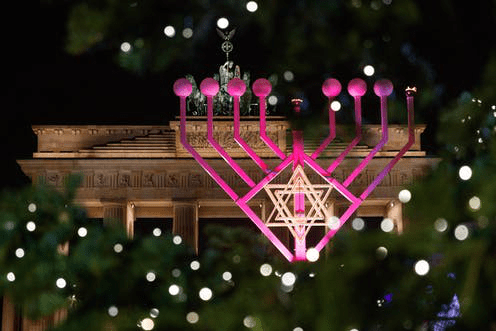
In a few days, from December 10 – 18, Jews around the world will celebrate Hanukkah. Although Hanukkah is technically a minor holiday, its story is an important one. The story of Hanukkah involves a man who embodied evil as previously foretold by Daniel. Again, we turn to Barclay’s description: “But, so far as the later Jews were concerned, the peak of the manifestation of evil was connected with one terrible episode in their history. This is commemorated in Daniel’s picture of the little horn, which waxed great even against heaven, which stopped the daily sacrifice, which cast down the sanctuary (Daniel 8:9-12). The little horn stands for Antiochus Epiphanes of Syria. He determined to introduce Greek ways, language and Greek worship into Palestine, for he regarded himself as the missionary of Greek culture. The Jews resisted. Antiochus Epiphanes invaded Palestine and captured Jerusalem. It was said that eighty thousand Jews were either slaughtered or sold into slavery. To circumcise a child or to possess a copy of the Law was a crime punishable by death. History has seldom, or never, seen so deliberate an attempt to wipe out the religion of a whole people. He desecrated the Temple. He erected an altar to Olympian Zeus in the Holy Place and on it sacrificed swine’s flesh; and he turned the rooms of the Temple into public brothels. In the end the gallantry of the Maccabees restored the Temple and conquered Antiochus; but to the Jews Antiochus was the incarnation of all evil.”
History.com adds: Led by the Jewish priest Mattathias and his five sons, a large-scale rebellion broke out against Antiochus and the Seleucid monarchy. When Mattathias died in 166 B.C., his son Judah, known as Judah Maccabee (“the Hammer”), took the helm; within two years the Jews had successfully driven the Syrians out of Jerusalem, relying largely on guerilla warfare tactics. Judah called on his followers to cleanse the Second Temple, rebuild its altar and light its menorah—the gold candelabrum whose seven branches represented knowledge and creation and were meant to be kept burning every night. According to the Talmud, one of Judaism’s most central texts, Judah Maccabee and the other Jews who took part in the rededication of the Second Temple witnessed what they believed to be a miracle. Even though there was only enough untainted olive oil to keep the menorah’s candles burning for a single day, the flames continued flickering for eight nights, leaving them time to find a fresh supply. This wondrous event inspired the Jewish sages to proclaim a yearly eight-day festival. (The first Book of the Maccabees tells another version of the story, describing an eight-day celebration that followed the rededication but making no reference to the miracle of the oil.)
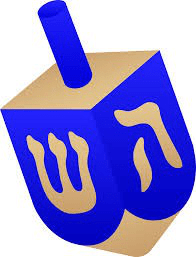
During Hanukkah, children play with a small clay top known as a dreidel, on which are written Hebrew letters. The Hebrew letters inscribed on a dreidel are a Nun, Gimel, Hey or Chai, and Shin. The letters form an acronym for the Hebrew saying Nes Gadol Hayah Sham, which can be translated to “a great miracle happened there,” referring to the miracle around which Hanukkah is centered.
WHY SHOULD HANUKKAH MATTER TO CHRISTIANS? Hanukkah celebrates a victory of God over evil, light over darkness. And when we enter Revelation Chapter 11, we will begin to learn the scope of that continuing battle.
PRAYER: Father God, thank you for your great mercy! Thank you that you are all goodness and that your light has shone in the darkness and that the darkness has NOT overcome it! Help us to learn to love you even more as we continue to study your word. In the matchless Name of King Jesus. Amen.
 Burunche's Blog
Leave a comment