Archive for February, 2021

FEBRUARY 18, 2021 FORGIVENESS 36: WHEN GOD HAS YOU BETWEEN A ROCK AND A HARD PLACE, DON’T WIGGLE!

February 18, 2021

Genesis 43:1 – 10 “Now the famine was still severe in the land. So when Jacob’s sons had eaten all the grain they had brought from Egypt, their father said to them, “Go back and buy us a little more food.”

But Judah replied, “The man solemnly warned us, ‘You will not see my face again unless your brother is with you.’ If you will send our brother with us, we will go down and buy food for you. But if you will not send him, we will not go; for the man told us, ‘You will not see my face again unless your brother is with you.’”

“Why did you bring this trouble upon me?” Israel asked. “Why did you tell the man you had another brother?” They replied, “The man questioned us in detail about ourselves and our family: ‘Is your father still alive? Do you have another brother?’ And we answered him accordingly. How could we possibly know that he would say, ‘Bring your brother here’?”

And Judah said to his father Israel, “Send the boy with me, and we will go at once, so that we may live and not die—neither we, nor you, nor our children. I will guarantee his safety. You may hold me personally responsible. If I do not bring him back and set him before you, then may I bear the guilt before you all my life. If we had not delayed, we could have come and gone twice by now.”

Jacob is not only stubborn but also ungrateful! Jacob sent ten of his sons to Egypt to buy grain. Nine of them returned, leaving Simeon as a hostage until they would return bringing Benjamin with them. The sons have already explained to Jacob what the Egyptian ruler said; yet, Jacob is still whining and trying to manipulate the situation without sending Benjamin. The grain from Egypt has been consumed; this means that the family and all their animals are on the verge of starvation. Despite all the life lessons that Jacob has experienced, he continues to try to control people and situations. But time has run out; if the family doesn’t get grain soon, everyone will die.

v. 11 – 15 “Then their father Israel said to them, “If it must be so, then do this: Put some of the best products of the land in your packs and carry them down as a gift for the man—a little balm and a little honey, spices and myrrh, pistachios and almonds. Take double the silver with you so that you may return the silver that was put back into the mouths of your sacks. Perhaps it was a mistake. Take your brother as well, and return to the man at once. May God Almighty grant you mercy before the man, that he may release your other brother along with Benjamin. As for me, if I am bereaved, I am bereaved.” So the men took these gifts, along with double the amount of silver, and Benjamin as well. They made their way down to Egypt and stood before Joseph.

This story is fascinating from a number of angles, but we are concerned about the lessons to be learned about forgiveness. One aspect that should be considered is the abuse that Jacob has heaped on the nine sons who have returned from Egypt. These poor fellows did their best and it was not their fault that the Egyptian ruler wormed details about their younger brother out of them. These men really are victims of circumstance.

APPLICATION: We are going to let the nine older brothers plus Benjamin go on to Egypt while we look at their predicament. These men have been badly mishandled by their father for their entire lives. Jacob has ordered them around with little regard for them as individuals or as his children.

Many of us have found ourselves in situations not unlike those of Jacob’s sons. Perhaps you joined a company that promised excellent benefits and a good health care package. Now the company has changed hands and you are wondering if you will even have a job, let alone any benefits. Live long enough and you will definitely find yourself between a rock and a hard place at some point. The question for each of us is this: when you find yourself in a hard place, what do you do? Do you blame God? Do you blame other people? Do you scramble to find someone to blame? Do you waste your time hating those who have hurt you? Or do you forgive those who might be responsible? Do you refuse to blame God and do you move forward?

Sometimes situations deteriorate. We came to work in a small mission clinic in January 1993. Thirteen months later, our area was embroiled in a tribal conflict and we became the only source of medical care for 100,000 people from one ethnic group who had nowhere else to go. Later we realized that God had strategically positioned us for that crisis. We quickly realized that we did not have the energy to blame people and to work at the same time. Of necessity we had to forgive and then move on.

The take – home lesson is this: Choose forgiveness. And then ask God to show you what he wants you to do while you are in that difficult situation.

PRAYER: Father God, many of us feel stuck! Our jobs may have evaporated. Our businesses may have gone under. Lord, help us to forgive those we feel are responsible and to refuse to blame you. Show us what you want us to do and what you want us to learn. And bring us into the future you want us to have. In the mighty and precious Name of King Jesus. Amen.

FEBRUARY 17, 2021 FORGIVENESS 35: WHEN FORGIVENESS IS LIKE MEASLES AND ONLY BREAKS OUT IN SPOTS

February 17, 2021

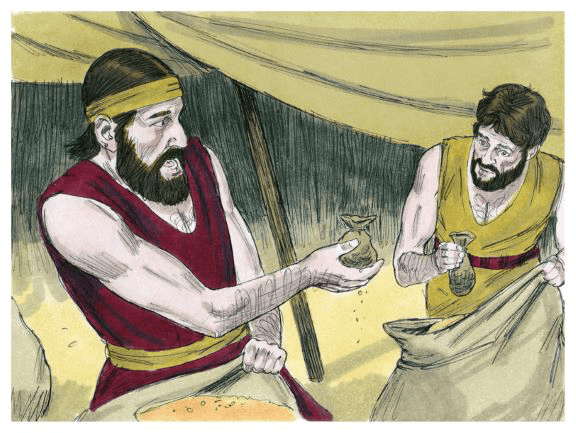
Genesis 42: 25 – 28 “Then Joseph gave orders to fill their bags with grain, to return each man’s silver to his sack, and to give them provisions for their journey. This order was carried out, and they loaded the grain on their donkeys and departed. At the place where they lodged for the night, one of them opened his sack to get feed for his donkey, and he saw his silver in the mouth of the sack. “My silver has been returned!” he said to his brothers. “It is here in my sack.” Their hearts sank, and trembling, they turned to one another and said, “What is this that God has done to us?”

To the guilty, everything becomes a new source of guilt. Until Joseph’s brothers entered Egypt and faced the reality of long – term imprisonment, they never considered the fate to which they consigned him. Now a generous gesture by Joseph is creating more fear and guilt. The brothers return to Canaan and report to Jacob, explaining how and why Simeon has remained in prison in Egypt and the demand for the brothers to bring Benjamin back with them.

v.35 – 38 “As they began emptying their sacks, there in each man’s sack was his bag of silver! And when they and their father saw the bags of silver, they were dismayed. Their father Jacob said to them, “You have deprived me of my sons. Joseph is gone and Simeon is no more. Now you want to take Benjamin. Everything is happening against me!”

Then Reuben said to his father, “You may kill my two sons if I fail to bring him back to you. Put him in my care, and I will return him.” But Jacob replied, “My son will not go down there with you, for his brother is dead, and he alone is left. If any harm comes to him on your journey, you will bring my gray hair down to Sheol in sorrow.”

Talk about dysfunctional families!!! Jacob had six sons with Leah, Reuben being the eldest, and four sons with the two maid servants. Joseph and Benjamin were Jacob’s only sons by Rachel; yet, Jacob is speaking as if only Joseph and Benjamin are his sons and the rest of the men don’t count for anything! How horrible! It becomes obvious that Jacob has never really loved his other sons because he never really loved their mothers. Jacob was a sperm donor but not really a father. No wonder that when Jacob began favoring Joseph so obviously, the older sons were furious and resentful. Does this problem have its roots in the fact that Jacob was his mother’s favorite but not his father’s? Perhaps Jacob has forgive his brother Esau but has never forgiven his father Isaac, even after all these years. Jacob is more concerned about Benjamin who is still with him than about Simeon, left in prison in Egypt. And what caring grandfather would even consider for an instant the murder of two grandsons if anything happened to a favorite son?

APPLICATION: Many of us have made the same mistakes that Jacob has made. We have forgiven some people and have felt pretty smug about it. And perhaps we might even have sought forgiveness from a few people we know we have wronged. But when Jesus was teaching his disciples about forgiveness, he didn’t allow any wiggle room. When Jesus was teaching his disciples to pray, he told them, “Therefore if you are offering your gift at the altar and there remember that your brother has something against you, leave your gift there before the altar. First go and be reconciled to your brother; then come and offer your gift.” Matthew 5:23-24 Later Jesus also warned his disciples, “For if you forgive men their trespasses, your Heavenly Father will also forgive you. if you do not forgive men their trespasses, neither will your Father forgive yours.” Matthew 6:14-15 We don’t get to pick and choose either the people from whom we seek forgiveness or the people whom we forgive! We have to make sure we seek forgiveness from those whom we have wronged and that we forgive those who have hurt us.

Oswald Chambers in his meditation for June 12th from My Utmost for His Highest writes,”God writes the new name on those places only in our lives where He has erased the pride and self-sufficiency and self-interest. Some of us have the new name in spots only, like spiritual measles. In sections we look all right. When we have our best spiritual mood on, you would think we were very high-toned saints; but don’t look at us when we are not in that mood. The disciple is one who has the new name written all over him; self-interest and pride and self-sufficiency have been completely erased.”

Jacob sought Esau’s forgiveness, but there is never any indication that Jacob sought his father Isaac’s forgiveness for having deceived Isaac. Perhaps Jacob felt somehow that Isaac deserved to be deceived because Isaac favored Esau, but that was still no excuse. Jacob’s acts of forgiveness left him with spiritual measles – fine in some places but not in others.

Ask God to show you those people from whom you need to seek forgiveness. Once that is done, you can start forgiving others with a clear conscience.

PRAYER: Father God, please show us those people to whom we need to make amends. Help us to fully and completely seek their forgiveness. And then help us to forgive everyone who has hurt us, keeping nothing back. In the mighty Name of King Jesus. Amen.

GRIEVING IN THE STILLNESS – FEBRUARY 16, 2021

February 16, 2021

It’s 5 AM and outside our house in Saboba, it’s too quiet. This time last Saturday morning you could hear our hospital chaplain’s children sweeping our yard, picking up leaves, and making swirling patterns in front of the house with their brooms. Leading them in these daily chores was Godson, the fourteen year old first – born son. Once the children finished sweeping, they would come in for tea and bread and for teasing by Uncle Bob. But nobody has swept since Saturday morning.

Saturday afternoon, Godson and some other boys had finished helping his grandmother on her small farm and decided to play in the shallows of the River Oti. Oti is a dangerous river with sandbars alternating with sudden drop – offs into deep spots and a swift current. While going after a ball that had been tossed to him, Godson stepped off into one of these holes and drowned! Chaplain called us in tears and we rushed with him to the river side. All we could do was to pray and watch with hundreds of others as those who knew the river searched for Godson’s body. It took nearly five hours to retrieve the body, and they buried Godson Saturday night. Chaplain and the family are still at the family house in their village on the road to the river.

Godson was everything you could ask for in a son. Godson was handsome, bright, hard – working, perceptive, and imaginative. Godson was a problem solver who took initiative. Godson also was a loving and protective big brother for his two younger sisters and his younger brother. At home, Godson was helping care for Chaplain’s animals. Godson was a good student and highly intelligent. Godson was respectful and obedient.

Godson was a Christian and had been baptized at age twelve. Many times Godson had joined his family in prayers for us, prayers that we treasured.

We have lost a Ghanaian grandson. Godson was a bright spot in our lives, particularly for Bob. We are close to Chaplain’s other children, but we were particularly close to Godson.

When tragedy strikes, the natural reaction is to ask God “Why? Why Godson with all his talents and his great personality? Why now?”

Psalm 139:16 tells us, “Your eyes saw my unformed body; all my days were written in Your book and ordained for me before one of them came to be.”

On many occasions when I have lost patients, God has told me that the day that person was born, He, God, knew the day that person would die. This means that the day Godson was born, God knew that Godson would die last Saturday, February 13, 2021. As I prayed for this situation, God asked me this: knowing that Godson was to die that day, was drowning as bad as some other means? Godson’s body was not mutilated. Had Godson been struck and killed by one of the many vehicles now plying the streets of Saboba, his family might have been left with the memory of a broken body. And God showed me something else also.

As I prayed, God showed me that Godson had fulfilled the purpose for which God had created him. For fourteen years Godson was the best son that he could be. How many of us can honestly say that we are fulfilling God’s purposes for our lives?

A favorite pastor friend who is now with Jesus used to tell us, “We are only in advertising. God is in management.” At the end of the day, we have to accept the sovereignty of God. And there’s another lesson here as well.

God sent his only Son, his first – born, his perfect, handsome, charismatic Son, to be a sacrifice for our sins. For thirty – three years God watched, knowing that Jesus would have to die on Good Friday. We are about to enter Lent, a time in which we consider Jesus’s life, death, and resurrection. Lent is a time for soul – searching and for drawing closer to God. If our hearts ache at the loss of Godson, how much more did the Father Heart of God ache as He sent Jesus into the world? How much does the Father Heart of God ache when those who should love Him refuse to do so?

1 Corinthians 15:51-58 tells us, “Listen, I tell you a mystery: We will not all sleep, but we will all be changed— in an instant, in the twinkling of an eye, at the last trumpet. For the trumpet will sound, the dead will be raised imperishable, and we will be changed. For the perishable must be clothed with the imperishable, and the mortal with immortality. When the perishable has been clothed with the imperishable and the mortal with immortality, then the saying that is written will come to pass: “Death has been swallowed up in victory.”

“Where, O death, is your victory? Where, O death, is your sting?”

The sting of death is sin, and the power of sin is the law. But thanks be to God, who gives us the victory through our Lord Jesus Christ! Therefore, my beloved brothers, be steadfast and immovable. Always excel in the work of the Lord, because you know that your labor in the Lord is not in vain.”

Job was a rich man with many children who lost everything in a series of catastrophes. When Job’s friends came to comfort him, their thoughtless platitudes only made things worse. But Job said, “But I know that my Redeemer lives, and in the end He will stand upon the earth. Even after my skin has been destroyed, yet in my flesh I will see God.

I will see Him for myself; my eyes will behold Him, and not as a stranger. How my heart yearns within me! (Job 19:25 – 27)

On Saturday February 13, 2021, Godson stepped from the River Oti into eternity with Jesus. Godson fulfilled the purpose for which God created him. We who are left to mourn can only ask God to “teach us to number our days, so that we will get hearts of wisdom.” (Psalm 90:12)

PRAYER: Father God, thank you for Godson! Thank you for allowing us to know him and love him. Comfort all those who are grieving and strengthen them. Let all of us learn everything we are supposed to from this tragedy. In the mighty Name of King Jesus. Amen.

FEBRUARY 16, 2021 FORGIVENESS 34: HOW DO YOU TREAT THOSE WHO HAVE HURT YOU?

February 16, 2021

Genesis 42:1 – 7 “When Jacob learned that there was grain in Egypt, he said to his sons, “Why are you staring at one another?” “Look,” he added, “I have heard that there is grain in Egypt. Go down there and buy some for us, so that we may live and not die.” So ten of Joseph’s brothers went down to buy grain from Egypt. But Jacob did not send Joseph’s brother Benjamin with his brothers, for he said, “I am afraid that harm might befall him.”

So the sons of Israel were among those who came to buy grain, since the famine had also spread to the land of Canaan. Now Joseph was the ruler of the land; he was the one who sold grain to all its people. So when his brothers arrived, they bowed down before him with their faces to the ground.” When Joseph saw his brothers, he recognized them, but he treated them as strangers and spoke harshly to them. “Where have you come from?” he asked. “From the land of Canaan,” they replied. “We are here to buy food.”

WOW! By now, Joseph’s dream might be fifteen or twenty years in the past. The last thing Joseph has anticipated is that his brothers would show up along with others wanting to buy grain. But here are Joseph’s brothers, bowing down just as they did in his dreams. What Joseph does next doesn’t seem like an act of forgiveness. Joseph accuses his brothers of being spies, but his brothers protest that they are honest men seeking to buy food.

v.13 – 20 “But they answered, “Your servants are twelve brothers, the sons of one man in the land of Canaan. The youngest is now with our father, and one is no more.” Then Joseph said to them, “Just as I said, you are spies! And this is how you will be tested: As surely as Pharaoh lives, you shall not leave this place unless your youngest brother comes here. Send one of your number to get your brother; the rest of you will be confined so that the truth of your words may be tested. If they are untrue, then as surely as Pharaoh lives, you are spies!” So Joseph imprisoned them for three days, and on the third day he said to them, “Do this and you will live, for I fear God. If you are honest, leave one of your brothers in custody while the rest of you go and take back grain to relieve the hunger of your households. Then bring your youngest brother to me so that your words can be verified, that you may not die.” And to this they consented.”

Captured at age seventeen and freed at age thirty, Joseph was in prison for thirteen years. At first, Joseph imprisons all his brothers, but eventually he elects to keep only one of them in custody while allowing the others to return to Canaan to bring Benjamin back with them. Why does Joseph do this? First of all, Joseph must establish his persona as an Egyptian ruler. The Egyptians are a very proud people and generally feel that other races are beneath them. It’s likely that there are those around Joseph who are watching him closely. Any gentleness on Joseph’s part would be interpreted as a sign of weakness. Perhaps Joseph realizes that the famine has yet to hit full stride; he knows his family will not agree to relocate from Canaan unless they have a strong reason to do so. Joseph has to find some means of convincing his family to leave Canaan and move to Egypt.

v. 21 – 24 “Then they said to one another, “Surely we are being punished because of our brother. We saw his anguish when he pleaded with us, but we would not listen. That is why this distress has come upon us.” But Reuben replied: “Didn’t I tell you not to sin against the boy? But you would not listen. Now we must account for his blood!” They did not realize that Joseph understood them, since there was an interpreter between them. And he turned away from them and wept. When he turned back and spoke to them, he took Simeon from them and had him bound before their eyes.”

Why does Joseph keep Simeon in prison? Simeon was a son to Leah and a brother to Reuben. Perhaps Simeon was one of the ones who argued most strongly for Joseph to be sold into slavery. One thing is clear: the brothers still argue just as much as they ever did. A second thing is equally clear: Joseph still loves his brothers. As Joseph hears his brothers rehashing the old arguments about having sold him into slavery, he weeps. Perhaps Joseph weeps because he realizes that not all his brothers agreed to sell him and that some of them were trying to save him. Perhaps Joseph simply remembers the good days before his brothers became jealous.

APPLICATION: What would you do were God to give you control over someone who has hurt you? Although the beginning of this passage makes Joseph sound harsh, in reality Joseph knows that his family’s only hope of survival depends on their moving to Egypt until the famine is over. (Such moves were not unusual; see the story of Ruth.) Without a compelling reason to move, Jacob and his family might stay in Canaan until they die of hunger. Joseph is trying to save his family, including the brothers who sold him into slavery.

God tells us that vengeance is His and not ours. And Jesus told his disciples, “For if you forgive men their trespasses, your Heavenly Father will also forgive you. But if you do not forgive men their trespasses, neither will your Father forgive yours.” (Matthew 6:14-15) Let God settle things; you forgive.

PRAYER: Father God, forgiveness is HARD, especially when people have really hurt us repeatedly and severely! Help us to freely forgive and to let you settle matters for us. In the mighty Name of King Jesus. Amen.

FEBRUARY 15, 2021 FORGIVENESS 33: WHEN YOU HUMBLE YOURSELF AND FORGIVE, GOD CAN PROMOTE YOU!

February 15, 2021

Genesis 41:46 – 52 “Now Joseph was thirty years old when he entered the service of Pharaoh king of Egypt. And Joseph left Pharaoh’s presence and traveled throughout the land of Egypt. During the seven years of abundance, the land brought forth bountifully. During those seven years, Joseph collected all the excess food in the land of Egypt and stored it in the cities. In every city he laid up the food from the fields around it. So Joseph stored up grain in such abundance, like the sand of the sea, that he stopped keeping track of it; for it was beyond measure.

Before the years of famine arrived, two sons were born to Joseph by Asenath daughter of Potiphera, priest of On. Joseph named the firstborn Manasseh, (“Making to forget”) saying, “God has made me forget all my hardship and all my father’s household.” And the second son he named Ephraim, (“Making fruitful,” or “Twice fruitful”) saying, “God has made me fruitful in the land of my affliction.”

From seventeen year old slave to thirty year old Chief Administrator, Joseph’s life has taken a remarkable turn. But none of this would have been possible had Joseph not humbled himself and also forgiven all those who had hurt him. And none of these good things would have happened to Joseph had he remained whiny and full of self – pity.

v. 53 – 57 “When the seven years of abundance in the land of Egypt came to an end, the seven years of famine began, just as Joseph had said. And although there was famine in every country, there was food throughout the land of Egypt. When extreme hunger came to all the land of Egypt and the people cried out to Pharaoh for food, he told all the Egyptians, “Go to Joseph and do whatever he tells you.” When the famine had spread over all the land, Joseph opened up all the storehouses and sold grain to the Egyptians; for the famine was severe in the land of Egypt. And every nation came to Joseph in Egypt to buy grain, because the famine was severe over all the earth.

God is fulfilling Pharaoh’s prophetic dream, just as Joseph interpreted it. Many times when disaster strikes, we blame God, not realizing that He can use everything to work out His purposes. At this point, Joseph has become the most important man in Egypt, actually more important than Pharaoh. Joseph controls the food supplies and Joseph is the one who must keep a close watch on things, knowing that there will be seven years of famine before the situation improves.

APPLICATION: While this appears to be a lull in the story, it really is not. Forgiveness sets us free for the good things God wants to do in our lives. As long as we fail to forgive, we cannot move forward. Does this mean that if you forgive those who have hurt you, you will wind up in a position of high authority as Joseph did? Not necessarily. But forgiveness frees your mind and heart to see new possibilities. When you forgive, God can bless you! (And do you REALLY want the administrative headaches that Joseph took on???)

The verse from James 4:10 says “Humble yourself before the Lord, and He will lift you up.” Psalm 75:6 – 7 says, “For exaltation (promotion) comes neither from the east, nor from the west, nor from the south. But God is the Judge. He puts down one and exalts another.” As long as we refuse to forgive someone else, we are putting ourselves above them and setting ourselves up to judge them. But God is the ultimate Judge and He is the only one who truly knows the human heart. Forgiveness is an act of humility, and God rewards the humble. Proverbs 3:7-8 says, “Do not be wise in your own eyes; fear the LORD and turn away from evil. This will bring healing to your body and refreshment to your bones.”

PRAYER: Father God, thank you for loving us so much that you refuse to allow us to wallow in unforgiveness! Help us to freely and completely forgive all who have hurt us so that we will be open to the bright future you have for us. In the mighty Name of King Jesus. Amen.

FEBRUARY 14, 2021 FORGIVENESS 32: FORGIVENESS CAN PAVE THE WAY FOR PROMOTION

February 14, 2021

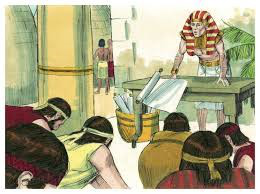
Genesis 4:37 – 45 “This proposal pleased Pharaoh and all his officials. So Pharaoh asked them, “Can we find anyone like this man, in whom the Spirit of God abides?”

Then Pharaoh said to Joseph, “Since God has made all this known to you, there is no one as discerning and wise as you. You shall be in charge of my house, and all my people are to obey your commands. Only with regard to the throne will I be greater than you.”

Pharaoh also told Joseph, “I hereby place you over all the land of Egypt.” Then Pharaoh removed the signet ring from his finger, put it on Joseph’s finger, clothed him in garments of fine linen, and placed a gold chain around his neck. He had Joseph ride in his second chariot, with men calling out before him, “Bow the knee!” So he placed him over all the land of Egypt.

And Pharaoh declared to Joseph, “I am Pharaoh, but without your permission, no one in all the land of Egypt shall lift his hand or foot.”

Pharaoh gave Joseph the name Zaphenath-paneah, (The name means “God speaks and lives.”) and he gave him Asenath daughter of Potiphar, priest of On, to be his wife. And Joseph took charge of all the land of Egypt.

Talk about turn – arounds! That morning when Joseph got up, he was still a slave and in prison. Joseph had to shave, bathe, and put on new clothing before he appeared before Pharaoh. As Joseph was interpreting Pharaoh’s dream, he was probably anticipating a return to prison within a short while. And when Joseph was advising Pharaoh to get an able administrator to handle the grain during the years of plenty, he had no idea that Pharaoh would name him to that position.

Joseph’s life turned around within a few hours. What helped Joseph? Despite all the years that Joseph had spent in captivity, he was neither resentful nor self – pitying. When Joseph left his prison that morning, he was a free man spiritually, even though he was still a prisoner physically. Later, the Psalmist David would say, “If I had cherished iniquity in my heart, the Lord would not have listened. But God has surely heard; He has attended to the sound of my prayer. Blessed be God, who has not rejected my prayer or withheld from me His loving devotion!” (Psalm 66:18-20)

APPLICATION:God could bless Joseph and give him favor with Pharaoh because Joseph was not carrying around unforgiveness. Unforgiveness blocks God from blessing us. Look at all that Joseph had to forgive:

1. Joseph had to forgive his father for spoiling him.

2. Joseph had to forgive his brothers for envying and resenting him and selling him into slavery.

3. Joseph had to forgive those who had sent him to Egypt, no doubt abusing him on the way.

4. Joseph had to forgive Potiphar’s wife for falsely accusing him.

5. Joseph had to forgive Potiphar for believing his wife.

6. Joseph had to forgive the jailers for whatever they had done to him.

7. Joseph had to forgive the chief cup bearer for failing to plead on his behalf when the cup bearer was first restored.

8. Joseph had to forgive himself for all the problems he had created.

What burdens of unforgiveness are you bearing? The more resentment you have, the heavier the burden will be. Your unforgiveness is not hurting the people you hate; it is only hurting you. Why not get rid of those burdens? Pray right now.

PRAYER: Father God, I confess that I have not forgiven __________ for what they have done to me. (You can fill in the blanks; you might want to write out your list if it is long.) Lord, here and now I choose to forgive all of these people. I also choose to forgive myself for harboring resentment. Lord, please free me from the ravages of my own unforgiveness and let me move forward into your glorious will for my life. In the matchless Name of King Jesus. Amen.

FEBRUARY 13, 2021 FORGIVENESS 31: DELAYED GRATITUDE IS BETTER THAN NONE

February 13, 2021

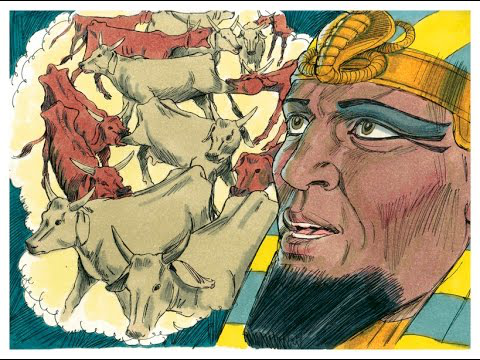
Genesis 41:1 – 13 “After two full years had passed, Pharaoh had a dream: He was standing beside the Nile, when seven cows, sleek and well-fed, came up from the river and began to graze among the reeds. After them, seven other cows, sickly and thin, came up from the Nile and stood beside the well-fed cows on the bank of the river. And the cows that were sickly and thin devoured the seven sleek, well-fed cows.

Then Pharaoh woke up, but he fell back asleep and dreamed a second time: Seven heads of grain, plump and ripe, came up on one stalk. After them, seven other heads of grain sprouted, thin and scorched by the east wind. And the thin heads of grain swallowed up the seven plump, ripe ones. Then Pharaoh awoke and realized it was a dream.

In the morning his spirit was troubled, so he summoned all the magicians and wise men of Egypt. Pharaoh told them his dreams, but no one could interpret them for him.

Then the chief cupbearer said to Pharaoh, “Today I recall my failures. Pharaoh was once angry with his servants, and he put me and the chief baker in the custody of the captain of the guard. One night both the chief baker and I had dreams, and each dream had its own meaning. Now a young Hebrew was there with us, a servant of the captain of the guard. We told him our dreams and he interpreted them for us individually. And it happened to us just as he had interpreted: I was restored to my position, and the other man was hanged.”

Better late than never! Two years after the chief cup bearer has gotten his job back, Pharaoh has profoundly troubling dreams. When none of the court magicians can come up with an interpretation, the cup bearer remembers Joseph and tells Pharaoh how accurately Joseph interpreted his dream and that of the chief baker. Quickly, Pharaoh sends for Joseph, who comes and interprets the dreams.

v. 25 – 36 “At this, Joseph said to Pharaoh, “The dreams of Pharaoh are one and the same. God has revealed to Pharaoh what He is about to do. The seven good cows are seven years, and the seven ripe heads of grain are seven years. The dreams have the same meaning. Moreover, the seven thin, ugly cows that came up after them are seven years, and so are the seven worthless heads of grain scorched by the east wind—they are seven years of famine.

It is just as I said to Pharaoh: God has shown Pharaoh what He is about to do. Behold, seven years of great abundance are coming throughout the land of Egypt, but seven years of famine will follow them. Then all the abundance in the land of Egypt will be forgotten and the famine will devastate the land. The abundance in the land will not be remembered, since the famine that follows it will be so severe. Moreover, because the dream was given to Pharaoh in two versions, the matter has been decreed by God, and He will carry it out shortly.

Now, therefore, Pharaoh should look for a discerning and wise man and set him over the land of Egypt. Let Pharaoh take action and appoint commissioners over the land to take a fifth of the harvest of Egypt during the seven years of abundance. Under the authority of Pharaoh, let them collect all the excess food from these good years, that they may come and lay up the grain to be preserved as food in the cities. This food will be a reserve for the land during the seven years of famine to come upon the land of Egypt. Then the country will not perish in the famine.”

God has prepared Joseph for this hour! Joseph’s years of imprisonment have helped humble him and eliminate any sign of presumption. At the same time, Joseph has occupied several managerial positions, first in Potiphar’s house and then in the prison. Joseph glorifies God before giving any interpretation. After the interpretation, Joseph gives the best advice to Pharaoh that he can. Notice that Joseph does NOT waste any time blaming the chief cup bearer for not mentioning him sooner. Joseph has truly forgiven the chief cup bearer. This act of forgiveness on Joseph’s part means that Joseph is not dragging any unforgiveness around.

APPLICATION: Sometimes people surprise you! Joseph probably viewed the chief cup bearer as a lost cause and forgave him on that basis. But at the right time, God reminded this man and he recommended Joseph to Pharaoh. Delays are not denials. Forgive people and continue to be faithful. Your forgiveness frees you up for whatever God wants to do in your life.

PRAYER: Father God, thank you for forgiving us. Help us to forgive others and to bless them as we do so. In the mighty Name of King Jesus. Amen.

FEBRUARY 12, 2021 FORGIVENESS 30: HOW DO YOU DEAL WITH INGRATITUDE?

February 12, 2021

Genesis 40:1 – 15 “Some time later, the king’s cupbearer and baker offended their master, the king of Egypt. Pharaoh was angry with his two officers, the chief cupbearer and the chief baker, and imprisoned them in the house of the captain of the guard, the same prison where Joseph was confined. The captain of the guard assigned them to Joseph, and he became their personal attendant.

After they had been in custody for some time, both of these men—the Egyptian king’s cupbearer and baker, who were being held in the prison—had a dream on the same night, and each dream had its own meaning.

When Joseph came to them in the morning, he saw that they were distraught. So he asked Pharaoh’s officials who were in custody with him in his master’s house, “Why are your faces so downcast today?”

“We both had dreams,” they replied, “but there is no one to interpret them.”

Then Joseph said to them, “Don’t interpretations belong to God? Tell me your dreams.”

So the chief cupbearer told Joseph his dream: “In my dream there was a vine before me, and on the vine were three branches. As it budded, its blossoms opened and its clusters ripened into grapes. Pharaoh’s cup was in my hand, and I took the grapes, squeezed them into his cup, and placed the cup into his hand.”

Joseph replied, “This is the interpretation: The three branches are three days. Within three days Pharaoh will lift up your head and restore your position. You will put Pharaoh’s cup into his hand, just as you did when you were his cupbearer. But when it goes well for you, please remember me and show me kindness by mentioning me to Pharaoh, that he might bring me out of this prison. For I was kidnapped from the land of the Hebrews, and even here I have done nothing for which they should have put me in this dungeon.”

Being a chief cup bearer to a ruler was a highly important position. For one thing, the ruler might ask you to taste the wine before he himself would drink it; if you didn’t collapse and die, then the wine was safe for the ruler to drink. In the same manner, being the chief baker was also a position of great importance. In a land in which bread was a basic staple at every meal, a ruler expected only the very best. Perhaps Pharaoh was having a bad day, but both these men wound up imprisoned in the house of the captain of the guard – an early version of a white collar prison. And the captain of the guard assigned Joseph to take care of them.

Both these gentlemen had dreams on the same night. Notice that Joseph does NOT say, “Oh, I can interpret your dreams.” Instead, Joseph gives God all the credit before interpreting the dreams. When the chief cup bearer gets an encouraging interpretation, the chief baker then recounts his dream.

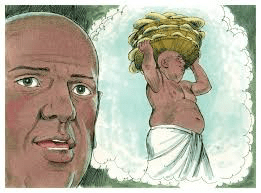
v. 16-23 “I too had a dream: There were three baskets of white bread on my head. In the top basket were all sorts of baked goods for Pharaoh, but the birds were eating them out of the basket on my head.” Joseph replied, “This is the interpretation: The three baskets are three days. Within three days Pharaoh will lift your head off of you and hang you on a tree. Then the birds will eat the flesh of your body.”

On the third day, which was Pharaoh’s birthday, he held a feast for all his officials, and in their presence he lifted up the heads of the chief cupbearer and the chief baker. Pharaoh restored the chief cupbearer to his position, so that he once again placed the cup in Pharaoh’s hand. But Pharaoh hanged the chief baker, just as Joseph had interpreted the dream to them. The chief cupbearer, however, did not remember Joseph; he forgot all about him.”

When the chief cup bearer’s dream came true, Joseph must have been ecstatic! At last he was going to get out of prison. But in the euphoria of being restored to an important position, the chief cup bearer forgot Joseph. And after all, Joseph was a Hebrew while the cup bearer was an Egyptian. As a race, the Egyptians were extremely proud of themselves; perhaps there was an element of racial prejudice at work here.

APPLICATION: Have you ever gone out on a limb to help someone, only to have them take all your efforts for granted? Perhaps you have helped someone get a better job or get a promotion. Perhaps you helped pay school fees for someone’s children, even though you had to scramble to come up with the money. It’s always frustrating and discouraging when you have gone the extra mile to help someone, only to have them forget you, ignore your efforts, or take you for granted.

What’s the lesson of forgiveness here? Sometimes people are very ungrateful and ignore whatever you have done for them. How do you handle such a situation? The best course of action is this: do what you can to help and do it to the glory of God. if people thank you, fine. If people ignore you, forgive them and move on. Don’t get bogged down in unforgiveness. Ingratitude carries its own punishment with it; you don’t have to get involved.

PRAYER: Father God, we ourselves are so ungrateful! You have given us life and health. You have given us a wonderful and beautiful world to live in and to enjoy. And most of all, you sent your son Jesus to die for our sins so that we would not bear that punishment ourselves. Help us to forgive those who are ungrateful and to press on into the glorious future you have for us. In the mighty Name of King Jesus. Amen.

FEBRUARY 11, 2021 FORGIVENESS 29: ARE YOU IN IT FOR THE LONG HAUL?

February 11, 2021

Genesis 39:20 b. – 23 “While Joseph was there in the prison, the LORD was with him and extended kindness to him. He granted him favor in the eyes of the prison warden, who put all those held in the prison under Joseph’s authority, so that he was responsible for all that was done there. The warden did not concern himself with anything under Joseph’s authority, because the LORD was with him and gave him success in whatever he did.”

Hauled off to prison on false charges of attempting to rape his mistress, Joseph has two choices: he can either sit there nursing his hurts or he can forgive and go forward. Pity parties with lots of sulking and unforgiveness leave you unfit for anything else; those nights in prison can get really long and there’s plenty of time to brood if you choose to do so.

Resentment and unforgiveness can feel so good, so RIGHT! Once we begin compiling lists of offenses others have committed against us, we can simply add each new day’s worth of wrongs to the list. But the more we concentrate on how wounded we have been, the less we are able to get beyond those wounds. A victim mentality feeds on itself and creates more victims; those whom we resent become victims of our resentment and our hatred.

Perhaps during those long nights in prison, Joseph begins to remember his family and gets a little homesick. In the stillness, Joseph remembers every time he pestered his older brothers or carried lies about them to their father. Joseph remembers the anguish in the eyes of his brothers who were sons of concubines as they realized each day that they were second class citizens in the family. After managing Potiphar’s household and the prison, Joseph has a much clearer idea of what it takes to be a leader and how destructive it can be to have someone bent on undermining all those around him. For years Joseph had delighted in being the favorite; only now does he realize how his behavior has torn the fabric of the family to pieces.

Joseph chooses to forgive and move forward. Evidently, Joseph is a bright guy with a lot of administrative ability, and the prison warden soon makes him his right hand man. God is blessing Joseph even as He is teaching Joseph. The mouthy brat who lorded it over his older brothers is gone, replaced by a highly intelligent and thoughtful young man. God had Jacob herding sheep and goats in the wilderness for twenty years to mature him. Now God is putting Joseph through a rigorous training as well.

APPLICATION: Many times we may find ourselves in situations from which there is no easy way out. A commitment to a training program or to a particular project may leave us feeling trapped. At the same time, we may be coldly furious at those who have manipulated our situation. We may also be angry with ourselves for getting into the situation in the first place. And we may be angry with God for allowing something of the sort to happen.

The question you must ask yourself is this: what is God trying to teach me in this situation? God doesn’t do anything haphazardly. And God can engineer a situation that seems intolerable to work for your success. Look at Joseph, thrown into prison and yet becoming the number two man in the entire place.

You need forgive those whom you feel have hurt you. You need to forgive anyone in the situation who is contributing to your feeling of helplessness. And you need to forgive yourself.

PRAYER: Father God, thank you that you can work situations that appear to be disasters out for our good. Thank you that you forgive us for our sins against you when we confess them. Help us to forgive those around us and to forgive ourselves at the same time. In the matchless Name of King Jesus. Amen.

FEBRUARY 10, 2021 FORGIVENESS 28: WHAT DO YOU DO WHEN YOU ARE SEXUALLY HARASSED AT WORK???

February 10, 2021

Genesis 39:1 – 6 “Meanwhile, Joseph had been taken down to Egypt, where an Egyptian named Potiphar, an officer of Pharaoh and captain of the guard, bought him from the Ishmaelites who had taken him there. And the LORD was with Joseph, and he became a successful man, serving in the household of his Egyptian master. When his master saw that the LORD was with him and made him prosper in all he did, Joseph found favor in his sight and became his personal attendant. Potiphar put him in charge of his household and entrusted him with everything he owned. From the time that he put Joseph in charge of his household and all he owned, the LORD blessed the Egyptian’s household on account of him. The LORD’s blessing was on everything he owned, both in his house and in his field. So Potiphar left all that he owned in Joseph’s care; he did not concern himself with anything except the food he ate.”

Wow! Sold as a slave, Joseph now finds himself as the steward in the household of Paroah’s captain of the guard, Potiphar. Things are going really well, and Joseph’s master is so pleased that he leaves the running of his entire business to Joseph. But trouble is coming.

v. 6. b. – 9 “Now Joseph was well-built and handsome, and after some time his master’s wife cast her eyes on Joseph and said, “Sleep with me.” But he refused. “Look,” he said to his master’s wife, “with me here, my master does not concern himself with anything in his house, and he has entrusted everything he owns to my care. No one in this house is greater than I am. He has withheld nothing from me except you, because you are his wife. So how could I do such a great evil and sin against God?”

Joseph is a slave, and slaves have no rights. Technically, whatever a master or mistress demanded, the slave would have to comply. But Joseph feared God and respected his master Potiphar and refused. Eventually Potiphar’s wife virtually attacks Joseph when nobody else is around and when Joseph runs outside, she grabs his cloak and pulls it away from him. Potiphar’s wife then calls the household servants and tells them that Joseph tried to rape her but that she fought him off and he left his cloak behind. What are the household servants supposed to do? They might very well be slaves themselves and they might also be jealous of Joseph’s success. Of course, they will back up their mistress. When Potiphar comes home, his wife tells him the same lies, and he has Joseph hauled off to prison. By now, Joseph might be thinking that this is the end of everything for him!

Sexual harassment has existed as long as people have been on the earth. In this story, Joseph was in a terrible position; as a slave, he had no rights whatsoever. It’s likely that once Potiphar sent Joseph to prison, he also had Joseph beaten. Even if Potiphar suspected his wife of lying, he had no proof and the household servants were there to back up her story.

As a female surgeon in training, I encountered my share of sexual harassment, some of it subtle and some quite overt. Being the victim of such attacks can cause you to feel ashamed, dirty, and unworthy. At the same time, you may also be furious that someone would dare to violate your personhood.

APPLICATION: What does this passage teach about forgiveness? At first, it would seem there is no lesson here; however, as we go further into the story, it becomes obvious that Joseph did not worry about hating Potiphar’s wife or Potiphar. Imprisoned on trumped – up charges, Joseph would certainly be justified in feeling sorry for himself and hating those who put him there. There is never any indication that Joseph succumbs to self – pity or unforgiveness. As the story continues, Joseph actually rises to a position of responsibility in the prison itself.

If you are facing sexual harassment on the job, you need to protect yourself as much as possible. Jobs are not easy to come by and many people are the sole support of their families. While you are forgiving those who are harassing you, also pray for God to deliver you. It is not God’s will for you to be a victim of someone else’s lust. You can pray that God will remove the person who is harassing you or that God will move you somewhere safer and better.

PRAYER: Father God, please help those who are reading this who are victims of sexual harassment. Raise up champions for them or move them into safer situations. Help them to forgive those who have hurt them but also help them realize that forgiveness does not mean remaining in a vulnerable situation. In the mighty Name of King Jesus. Amen.