Archive for March, 2021

MARCH 11, 2021 MERCY 11: WHEN GOD CALLED MOSES, HE ALSO CALLED ZIPPORAH!

March 11, 2021

Exodus 4:18 – 26 “Then Moses went back to his father-in-law Jethro and said to him, “Please let me return to my brothers in Egypt to see if they are still alive.” “Go in peace,” Jethro replied. Now the LORD had said to Moses in Midian, “Go back to Egypt, for all the men who sought to kill you are dead.” So Moses took his wife and sons, put them on a donkey, and headed back to Egypt. And he took the staff of God in his hand.

The LORD instructed Moses, “When you go back to Egypt, see that you perform before Pharaoh all the wonders that I have put within your power. But I will harden his heart so that he will not let the people go. Then tell Pharaoh that this is what the LORD says: ‘Israel is My firstborn son, and I told you to let My son go so that he may worship Me. But you have refused to let him go, so I will kill your firstborn son!’”

Now at a lodging place along the way, the LORD met him and was about to kill him. But Zipporah took a flint knife, cut off her son’s foreskin, and touched Moses’ feet with it. “Surely you are a bridegroom of blood to me,” she said. So the LORD let him alone. (When she said, “bridegroom of blood,” she was referring to the circumcision.)

It had been an issue between Moses and Zipporah ever since Moses’s sons were born! Moses tried to demand that his sons be circumcised according to Israelite custom while Zipporah thought the whole idea sounded weird and barbaric. “Let them be circumcised when they get older if they want to,” Zipporah argued. Perhaps Moses succeeded in circumcising one son, but then Zipporah flatly refused to allow the second son to be circumcised. We can’t be sure, but it seems that Moses must have remained quiet. Zipporah thought the whole problem had gone away…. until the night that the angel of the Lord was about to kill Moses. Somehow Zipporah realized that if she cut off the foreskin from the uncircumcised son and touched Moses’s feet with it, the blood on the foreskin would protect Moses.

Why was God ready to kill Moses when He had already commissioned Moses to lead the Israelites out of Egypt? As head of the family, Moses should have insisted on circumcision for both his sons and he had not. God was trying to make sure Moses realized that God’s Will was not a plaything and that Moses could not cherish pet sins in his life. At the same time, God was also sending a strong message to Zipporah, who had not been raised in the Israelite tradition. Moses was about to enter a situation in which his leadership would be repeatedly tried and tested to the max. The last thing that Moses needed was opposition and criticism from his wife. Zipporah needed to realize that when God called Moses to a work, God was also calling Zipporah to support him.

APPLICATION: It’s never easy when one spouse is called to do an extremely difficult/dramatic task and the other has to go along. God never calls just one member of a couple! God always calls couples in pairs; however, sometimes the member with the less dramatic calling may feel that theirs is no calling at all.

God called me to be a missionary when I was eleven years old. When my husband and I first met, I quickly informed him that I had taken a vow of poverty and that I was called to be a missionary. If this man had any problems with either of those two assertions, we could end the relationship immediately! My husband accepted both of those assertions; however, he remained willing to slide along on the coattails of my calling. Then my husband had the chance to spend two weeks on a short term mission trip in a remote part of rural Chile. Every morning of that two weeks, I ran down the street to a church that was open for early morning prayer and prayed earnestly that God would give my husband his own calling. My prayers were answered when my husband got off the airplane, hugged me, and proclaimed, “It’s time to go to the mission field!” While I was pleased and shocked, my husband was astounded; he had had no intention of saying anything of the sort before he got off the plane.

I am a missionary surgeon in a bush hospital. Through the years, our Ghanaian friends have generally introduced us as “Doctor and the husband,” despite my best efforts at correcting them. My calling is the more visible and more dramatic; yet, I could not possibly have succeeded in that role had my husband not been willing to take care of everything else. For years I was the only doctor and I was on call continually with no end to the work. During that time, it was my husband who kept the house and our vehicles running, planned shopping trips, and maintained things at our house. My husband is a gifted mechanic/welder and an EMT. For years, my husband also helped maintain hospital vehicles and other hospital equipment; at the same time, he was also preaching regularly in one of the local churches. One calling was not more important than the other; each of us supported the other.

THERE ARE NO SMALL CALLINGS!!! Some callings are more visible; some callings receive more public attention, but this does not make them more important. Stay at home moms or dads make a big contribution to their families and give kids a sense of security that is hard to find in any other fashion.

Are you frustrated because your spouse receives a lot of attention for the work they do while nobody notices you? Take heart! God sees! God knows! God understands! The same God who called Zipporah to support Moses is also watching you and applauding your faithfulness!

PRAYER: Father God, thank you for your mercy! Thank you that you have a calling for each and every one of us and that you long for us to find that calling and to fulfill your perfect will for us. Thank you that when we are willing to submit to your will, we will find contentment and peace. In the mighty and precious Name of King Jesus. Amen.

MARCH 10, 2021 MERCY 10: LORD, PLEASE SEND SOMEONE ELSE!

March 10, 2021

Exodus 4:6 – 17 “Furthermore, the LORD said to Moses, “Put your hand inside your cloak. ” So he put his hand inside his cloak, and when he took it out, his hand was leprous, white as snow. “Put your hand back inside your cloak,” said the LORD. So Moses put his hand back inside his cloak, and when he took it out, it was restored, like the rest of his skin.

And the LORD said, “If they refuse to believe you or heed the witness of the first sign, they may believe that of the second. But if they do not believe even these two signs or listen to your voice, take some water from the Nile and pour it on the dry ground. Then the water you take from the Nile will become blood on the ground.”

“Please, Lord,” Moses replied, “I have never been eloquent, neither in the past nor since You have spoken to Your servant, for I am slow of speech and tongue.” And the LORD said to him, “Who gave man his mouth? Or who makes the mute or the deaf, the sighted or the blind? Is it not I, the LORD? Now go! I will help you as you speak, and I will teach you what to say.” But Moses replied, “Please, Lord, send someone else.”

Then the LORD’s anger burned against Moses, and He said, “Is not Aaron the Levite your brother? I know that he can speak well, and he is now on his way to meet you. When he sees you, he will be glad in his heart. You are to speak to him and put the words in his mouth. I will help both of you to speak, and I will teach you what to do. He will speak to the people for you. He will be your spokesman, and it will be as if you were God to him. But take this staff in your hand so that you can perform signs with it.”

God is giving Moses more ways of proving to the elders of Israel that God has really sent him. God gives Moses two signs that should convince the most critical observer: changing a healthy hand into a leprous one and back and changing Nile River water into blood. In Moses’s day, leprosy was one of the most feared diseases. Lepers became social outcasts and the destruction of tissue as the leper lost all feeling in hands, feet, and sometimes the face, was horrific in the extreme. And then there was the changing of Nile River water into blood. Egyptian religion was tied to the Nile in many forms. The Nile was the major source of water for all of Egypt, and annual flooding of the Nile brought fresh dirt for farming. The Egyptians venerated the Nile and the idea that anything could taint the water of the Nile would be nearly unthinkable. The Israelites had been in Egypt long enough that they probably had adopted most of the Egyptian ideas about the Nile.

But Moses is still trying to make excuses. Several years ago, I saw a book entitled “Here am I Lord; Send Aaron!” That sums up Moses’s attitude. Some people feel that perhaps Moses stuttered. Perhaps Moses was just uncomfortable with the idea of appearing before the royal court after years of leading followers whose only language was “Baaaa!” At any rate, Moses is trying to wiggle out of this assignment. It’s at this point that God asks Moses, “Who gave man his mouth? Or who makes the mute or the deaf, the sighted or the blind? Is it not I, the LORD? Now go! I will help you as you speak, and I will teach you what to say.”

But Moses is still trying to dodge and begs God to send someone else! Finally God designates Aaron as Moses’s mouthpiece. Moses will tell Aaron what to say and Aaron will speak on Moses’ behalf.

Here in Ghana, when someone is to present a matter to a chief, it is quite common to take someone along as a linguist. At the same time, each chief also has a linguist who speaks on his behalf, even if the chief speaks the same language as the petitioner. In some traditions, linguists were necessary because certain turns of phrase were taboo and commoners might make fatal mistakes when speaking. Perhaps there was such a tradition at the court of Pharaoh and Moses was concerned that he might not speak correctly after all those years in the desert. But God is having none of Moses’s excuses and even reminds him to make sure he takes his staff with him.

APPLICATION: Many times we know what God wants us to do; we just don’t want to do it or we wish someone else would lead the way. Perhaps God is asking you to take a strong moral stand. Perhaps you are in a situation at work in which compromise would seem to be the safest measure. Perhaps God has been working on you to step out and to take a new direction in your life and you wish someone else would do it first!

I love this conversation between God and Moses because it demonstrates how totally human Moses was and how many misgivings he had. Later on, when Moses is bringing down the Ten Commandments from Mount Sinai and when he is meeting with God face to face, it’s hard to remember that Moses really was only a man.

God graphically demonstrates His mercy to Moses in this passage by allowing Moses to negotiate with Him. God didn’t have to assign Aaron to speak for Moses, but God allowed Moses that consideration. Are you worried that you won’t measure up if you step out to do what God wants you to do? Ask God for help. The same God who raised up Aaron to speak for Moses can still help you.

PRAYER: Father God, thank you that you know how weak and fallible we are. Thank you that despite our shortcomings, you still call us to do your work. Help us to follow hard after you, knowing that in our hour of need, you will be there. In the mighty Name of King Jesus. Amen.

MARCH 9, 2021 MERCY 9: WHAT IS THAT IN YOUR HAND???

March 9, 2021

Exodus 4:1 – 5 “Then Moses answered, “What if they refuse to believe me or listen to my voice? For they may say, ‘The LORD has not appeared to you.’”

And the LORD asked him, “What is that in your hand?” “A staff,” he replied. “Throw it on the ground,” said the Lord. So Moses threw it on the ground, and it became a snake, and he ran from it.

“Stretch out your hand and grab it by the tail,” the LORD said to Moses. So he reached out his hand and caught the snake, and it turned back into a staff in his hand. “This is so that they may believe that the LORD, the God of their fathers—the God of Abraham, the God of Isaac, and the God of Jacob—has appeared to you.”

Moses is out there herding sheep, and all he has to work with is his shepherd’s staff. When God asks Moses “What is that in your hand?” Moses probably wonders what is going on. After all, God already knows this staff is all that Moses has with him. But God is about to make an all – important point: God can use anything and anybody to accomplish His work.

As you read through Exodus, keep watching that staff. Moses does miracles with the staff. Moses holds the staff over the Red Sea so that God parts the waters. Later on, Moses holds up that staff with both hands while Joshua defeats the Amalekites. (Aaron and Hur have to help Moses hold up the staff.) Yes, God works through very ordinary people and things to accomplish the extraordinary.

APPLICATION: The question “What is that in your hand?” has particular significance for my husband and me. So many times throughout our work in a small bush hospital in rural Ghana, we have had very few resources. Repeatedly, God has directed us to re – examine our situation to see what He has already provided. And repeatedly, we have found that God HAS been there before us and that there is something we can use.

One prime example of this came when God first led us into missions. In the fall of 1985 I had completed pediatric surgery training. I was working at a clinic and my husband was working as an EMT. Things were going well for us; however, we were quite uncomfortable! We felt a holy restlessness. One day in a hospital elevator, my husband met someone who told him that a missionary surgeon friend was back in town. That missionary surgeon put us in touch with his mission group and they sent us an application. But the application sat on my desk for several weeks. Finally, God prompted me that we should complete the application and submit it. Now the group did not accept us, due to some doctrinal differences; however, once we began applying, the restlessness lifted. From then on, we continued to explore possibilities until we finally were accepted by a group that sent us to Ghana in July 1988.

Yet another example is the time when God directed me to apply to do an Master’s degree in Public Health in 1996. First, God sent an American doctor to Saboba to encourage me; then our Regional Director of Health Services encouraged me. Traveling to Accra, we learned that one of our few contacts in the expatriate community worked in the US Information Services office where she advised people on graduate training programs and where I found a copy of the Tulane University application. Photocopying that application, I completed it and faxed it to New Orleans. I wound up doing the entire application from northeastern Ghana by fax. (No email and no cell phones in those days.) Each time I needed something more to complete the application, somehow, God arranged for it to be there.

The story of our time in New Orleans includes a whole host of miracles; however, none of those would have happened had we not started with the few resources that God gave us. And even today, God continues to ask us to look into our situation to see what He has already given us and to begin with the small things.

What are you hoping to accomplish? Have you prayed about it? And if you have prayed about it, have you examined your circumstances to see if there is anything you should have acted upon that you have ignored because you felt it wasn’t important enough? God is merciful and patient, but you must look in your situation. God is a Gentleman and He is not going to force you. So the question for you today is this: WHAT IS THAT IN YOUR HAND?

PRAYER: Father God, thank you that your mercies are so great that you have already made provision before we even realize that we need something. Please help us not to overlook anything in our situations, realizing that you frequently work through little things. In the matchless Name of King Jesus. Amen.

MARCH 8, 2021 MERCY 8: DO YOU THINK GOD IS SENDING YOU OVER NIAGARA FALLS IN A BARREL?

March 8, 2021

Exodus 3:16 – 22 “Go, assemble the elders of Israel and say to them, ‘The LORD, the God of your fathers, the God of Abraham, Isaac, and Jacob, has appeared to me and said: I have surely attended to you and have seen what has been done to you in Egypt. And I have promised to bring you up out of your affliction in Egypt, into the land of the Canaanites, Hittites, Amorites, Perizzites, Hivites, and Jebusites—a land flowing with milk and honey.’ The elders of Israel will listen to what you say, and you must go with them to the king of Egypt and tell him, ‘The LORD, the God of the Hebrews, has met with us. Now please let us take a three-day journey into the wilderness, so that we may sacrifice to the LORD our God.’

But I know that the king of Egypt will not allow you to go unless a mighty hand compels him. So I will stretch out My hand and strike the Egyptians with all the wonders I will perform among them. And after that, he will release you. And I will grant this people such favor in the sight of the Egyptians that when you leave, you will not go away empty-handed. Every woman shall ask her neighbor and any woman staying in her house for silver and gold jewelry and clothing, and you will put them on your sons and daughters. So you will plunder the Egyptians.”

God is giving Moses his marching orders and Moses is probably wondering if he did the right thing when he went to look at that burning bush! Now God is commanding Moses to first convince the elders of Israel and then take them with him to Pharaoh. While this sounds stressful enough, God is already warning Moses that Pharaoh is NOT going to listen to him and that this refusal will be necessary before the Israelites can leave Egypt. To Moses, this must have sounded like a losing proposition!

APPLICATION: Several years ago, we were sent on our first mission assignment. Several months before we were supposed to leave, I had the chance to discuss our proposed location with a former missionary who was highly knowledgeable about that particular project. From what this man told me, we were being sent into a very difficult situation, one that could fall apart with us in it. I went home and prayed about the problem all that night. By morning, I knew two things: I knew that we were being sent over Niagara Falls in a barrel, but I also knew that God had control of that barrel.

When we proceeded to our assignment, everything happened as I had feared. But God used that situation to move us into the country in which He had chosen for us to serve. Everything we learned during that first two year assignment later became highly useful, and nothing was wasted. To this day, God is still using the language we learned during that assignment and the contacts we made to accomplish His purposes in our lives.

Perhaps you can identify with Moses. You feel as if God is asking you to do the impossible and you wonder how you are going to survive! You really feel as if God is asking you to go over an enormous waterfall without any protection and you are afraid that you are going to drown in the process.

If God is really in your matter and if He is really calling you, then rest assured that He can provide for you and take care of you. Does this mean things are going to be easy? NOPE! But when you KNOW that you are in the center of God’s will for your life, you have that peace that goes beyond all understanding. And if you refuse God’s will for your life, you will be miserable and uncomfortable. Choose to follow God; He can take you to places you would never have dreamed of!

PRAYER: Father God, thank you for loving us so much that you have a perfect plan for our lives! Thank you that when you call us to do hard things, you are already there in our future, waiting for us. Help us to follow hard after you all the days of our lives. In the matchless Name of King Jesus. Amen.

MARCH 7, 2021 MERCY 7: DON’T LIMIT AN ALL – POWERFUL GOD!

March 7, 2021

Exodus 3:12 – 15 “I will surely be with you,” God said, “and this will be the sign to you that I have sent you: When you have brought the people out of Egypt, all of you will worship God on this mountain.” Then Moses asked God, “Suppose I go to the Israelites and say to them, ‘The God of your fathers has sent me to you,’ and they ask me, ‘What is His name?’ What should I tell them?”

God said to Moses, “I AM WHO I AM. This is what you are to say to the Israelites: ‘I AM has sent me to you.’” God also told Moses, “Say to the Israelites, ‘The LORD, the God of your fathers—the God of Abraham, the God of Isaac, and the God of Jacob—has sent me to you.’ This is My name forever, and this is how I am to be remembered in every generation.”

Moses is still having doubts! OK, so there’s a burning bush with a voice coming out of it and the awe of holiness is all over the place. And yes, Moses believes that he is conversing with the God of his fathers. But now Moses has to go back to Egypt, to a group of people who haven’t seen him in forty years and who are only vaguely aware that the God of their fathers exists. Remember, there are no forms of worship for this God at this point. The only kinds of worship the Israelites have been witnessing have been the Egyptian worship practices, with lots of veneration of the dead and a whole panoply of gods.

Before Moses can do anything else, his first challenge is to convince the Israelites that God has really sent him. And that brings up the next problem: what do you call God? God settles the matter Himself by saying “I am that I am.” Prior to this, there was no recorded name for the Lord God Almighty. In Genesis 12:7 God appears to Abraham and speaks with him, but there is never any mention made of the name of God. Later in the same chapter, Abraham builds an altar and calls on the name of the Lord, but we are never told what that name is. Why is this name so important?

Many cultures believe that if you know someone’s secret name, you have control over them. But the Name that God gives Himself does not allow for manipulation or control. God Himself says that He Is. This means that God has always been, is always, and will also be always what He is and nothing else. God goes on to identify Himself as the Lord, the God of Abraham, the God of Isaac, and the God of Jacob.

APPLICATION: How does this passage illustrate God’s mercy?

1. God assures Moses that He will SURELY be with Moses. This statement leaves no room for doubt. If we will only turn our hearts toward God, He will SURELY be with us just as He was with Moses. God does not do this because we deserve His mercy but because He loves us, sinful as we are.

2. God promises Moses that “When you have brought the people out of Egypt, all of you will worship God on this mountain.” God is not planning for anyone to be left behind; His mercy is going to extend to all of the Israelites as well as to Moses. When God chooses to act in mercy, he does a complete work!

3. God is giving Moses authority to speak on His behalf. In effect, the Lord God of the Universe is making Moses His ambassador. God in His mercy is fully aware of all of Moses’s shortcomings and weaknesses, but God also knows how greatly He will be able to use Moses.

4. Moses is only looking at a few weeks or months, but God is looking down the centuries. God is excited because He knows that signs and wonders are coming and that countless generations will bless Moses’s name, quote his words, and even name their children after him.

Many times, we feel a lot like Moses out there in the desert herding sheep. We might be older or living in a remote area. Many of us do not have great social status or public influence. But God sees us totally differently than we do ourselves. THE BIGGEST MISTAKE WE CAN MAKE IS TO LIMIT GOD BECAUSE OF OUR UNBELIEF. Always, always, always give God plenty of wiggle room! If you will allow God to use you, He will do wonderful things and make you a blessing to all those around you.

PRAYER: Father God, thank you for your mercy and your watch care! Thank you that you have far greater plans for us than we have for ourselves. Help us to allow you to use us as you want to and not to limit you. Thank you for loving us and for sending Jesus to die for our sins in the greatest act of mercy of all. Amen.

MARCH 6, 2021 MERCY 6: SEEN ANY BURNING BUSHES LATELY???

March 6, 2021

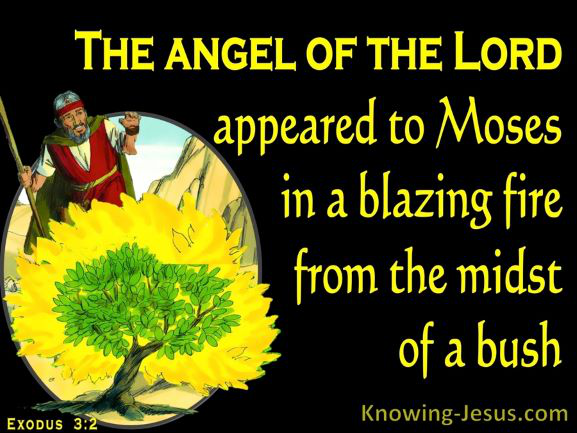
Exodus 3:1 – 10 “Meanwhile, Moses was shepherding the flock of his father-in-law Jethro, the priest of Midian. He led the flock to the far side of the wilderness and came to Horeb, the mountain of God. There the angel of the LORD appeared to him in a blazing fire from within a bush. Moses saw the bush ablaze with fire, but it was not consumed. So Moses thought, “I must go over and see this marvelous sight. Why is the bush not burning up?”

When the LORD saw that he had gone over to look, God called out to him from within the bush, “Moses, Moses!” “Here I am,” he answered. “Do not come any closer,” God said. “Take off your sandals, for the place where you are standing is holy ground.” Then He said, “I am the God of your father, the God of Abraham, the God of Isaac, and the God of Jacob.” At this, Moses hid his face, for he was afraid to look at God.

The LORD said, “I have indeed seen the affliction of My people in Egypt. I have heard them crying out because of their oppressors, and I am aware of their sufferings. I have come down to rescue them from the hand of the Egyptians and to bring them up out of that land to a good and spacious land, a land flowing with milk and honey—the home of the Canaanites, Hittites, Amorites, Perizzites, Hivites, and Jebusites. And now the cry of the Israelites has reached Me, and I have seen how severely the Egyptians are oppressing them. Therefore, go! I am sending you to Pharaoh to bring My people, the Israelites, out of Egypt.” But Moses asked God, “Who am I, that I should go to Pharaoh and bring the Israelites out of Egypt?”

By the time Moses saw that burning bush, he was eighty years old and had been herding sheep for forty years. Moses was married and had at least one son and possibly grandchildren. Egypt had become a distant if painful memory and Moses thought he would spend the rest of his life herding sheep. It wasn’t a bad life, and it certainly beat being a slave in Egypt or being in prison and being tortured. All Moses was hoping for that morning was to find a spring of water for his sheep.

Did Moses even realize that he was on the slopes of a holy mountain? Tough to know. Those who spend their lives outdoors are far more in tune with nature than those who remain inside. Perhaps Moses’s senses were already tingling, signaling that something supernatural was about to happen. At any rate, God knew that Moses had a lot of curiosity, so God caught Moses’ attention with something that shouldn’t exist: a bush that would keep burning but that was not turning to ashes.

God identified Himself and told Moses what He wanted Moses to do. Forty years ago, Moses thought that he could deliver one Israelite from a harsh Egyptian task master, but he never thought of delivering an entire nation. When God informed Moses of the task He wanted Moses to do, Moses had a very natural reaction: “Who? Me?” Moses was probably thinking, “Wait a minute, Lord! If you wanted me to do this, why didn’t you call me when I was young and strong and when I still had some friends in Egypt? Now I’m old and I’ve been away from the Egyptian court for so long that nobody knows me.”

APPLICATION: God’s timing and mercy do not depend on our personal preferences. The very things that Moses saw as drawbacks were the things God was planning to use to accomplish his purpose.

1. Moses had spent 40 years herding sheep in desert conditions. Sheep are stupid, willful, and require a lot of supervision if they are not to get into trouble. Moses needed this experience because the Israelites would behave a lot like those sheep.

2. Moses was no longer a rash middle – aged man, but an elder with experience. In a patriarchal society such as that of the Israelites, these attributes automatically gave Moses the status he would need to convince a group of Israelites that God had really spoken to him.

3. All those years in the desert had made Moses tough and resilient, qualities that he was going to need as he led the Israelites out of Egypt.

The founder of the China Inland Mission, Hudson Taylor, began his work in China but then had to return to England for nine years due to health problems before he could return. It was during those nine years that Taylor gathered others passionate about the Gospel into daily prayer meetings over a map of China. This enforced retreat gave Taylor the chance to consider the mistakes he had made as well as those he had seen other mission groups make. The China Inland Mission was truly born during those nine years of confinement. CIM was responsible for bringing in more than 800 missionaries, starting 125 schools, establishing 300 mission stations in 18 provinces, and directly resulting in 18,000 Christian conversions. CIM was a faith – based mission, depending on voluntary donations. Taylor was fond of saying “God’s work done God’s way will never lack God’s supply.”

Do you feel that you are elderly and that you have been sent to sit on the sidelines for good? Don’t count yourself out so quickly! Remember that Moses wasn’t even called into ministry until he was eighty. God’s mercies are unlimited and His plans are magnificent. No matter how severe your physical limitations, you can always pray. Many of those who gathered for the daily prayers at China Inland Mission headquarters never went to China themselves, but their prayers made the work of thousands who served with CIM possible.

PRAYER: Father God, thank you that you always have something glorious for us to do and that prayer is one of the most important works there is! Help us to open our minds to the possibilities you have for us. Thank you for your mercies that are new every morning! Thank you for your faithfulness! In the mighty Name of King Jesus. Amen.

MARCH 5, 2021 MERCY 5: DO YOU FEEL AS IF GOD HAS FORGOTTEN YOU???

March 5, 2021

Exodus 2:23 – 25 “After a long time, the king of Egypt died. The Israelites groaned and cried out under their burden of slavery, and their cry for deliverance from bondage ascended to God. So God heard their groaning, and He remembered His covenant with Abraham, Isaac, and Jacob. God saw the Israelites and took notice.”

It’s been hundreds of years since Joseph saved Egypt from suffering in a world – wide famine and then moved his own family to Egypt. The Pharaoh who gave the command for all Hebrew boy babies to be thrown into the Nile is dead, his only legacy the fact that the Hebrews remain in slavery.

Perhaps in the beginning, slavery didn’t seem SO bad. The work was not that difficult or that different from things that the Hebrews had already been doing. Really, the Egyptians weren’t asking THAT much extra, and after all, the Hebrews were still being allowed to live in Egypt. But the longer the situation continued, the worse things got. Day by day, year by year, things continued to deteriorate. At first, the Hebrews were working along side Egyptian workers, but gradually the Egyptians became the task masters while the Hebrews did all the heavy work. Nobody quite remembers the day the first chains appeared, but within a short time, the work teams were wearing leg irons so that they couldn’t possibly run away. It’s easy to turn a blind eye while your freedoms are gradually being stripped away from you.

Perhaps many of the Hebrews had even begun to worship some of the Egyptian gods – after all, they seemed to help the Egyptians, so why not? But the longer that slavery continued, the more arduous the work became and the more those supervising the slaves demanded. Somewhere there might have been an Egyptian bean counter – type administrator sitting with his papyrus and calculating how many more blocks the slaves could make if they just worked a little longer and a little harder.

One morning the Israelites woke up and realized that they were totally and completely enslaved! There were no options as to when to work or how much; everything was dictated by the slave drivers. The work stretched from sunup to sundown, and it was endless. As soon as one construction project was completed, another would take its place. The Israelites began to realize that they were trapped! In their bondage, they remembered the stories of Abraham, Isaac, Jacob, and Joseph and they began to cry out to the God who had shown himself in so many ways.

APPLICATION: NOBODY chooses to jump into a totally dysfunctional situation! Women in abusive relationships begin by making excuses for their boyfriends or husbands and in the beginning, things aren’t too bad. Politicians may begin their careers with the highest of motives until they compromise just a little bit…and then a little bit more. But the net result is still the same: at the end of the day, you find yourself stuck in a situation from which there seems to be no escape. What can you do?

The Israelites in Egypt had the right idea. Enslaved by the Egyptians, the Israelites realized that their only hope was to throw themselves on the mercy of the God of their fathers. And when the Israelites cried out, God was listening. God remembered His covenant and he took notice of the Israelites.

Are you caught in a terrible situation with no way out? Cry out to God! The same God who delivered the Israelites from slavery in Egypt can deliver you from whatever mess you are in.

PRAYER: Father God, help us! We have made wrong decisions and now we are stuck with the results. Forgive us for the lies we have told ourselves and deliver us! In the mighty Name of King Jesus. Amen.

MARCH 3, 2021 MERCY 3: GOD HAS UNLIMITED WAYS OF DELIVERANCE

March 3, 2021

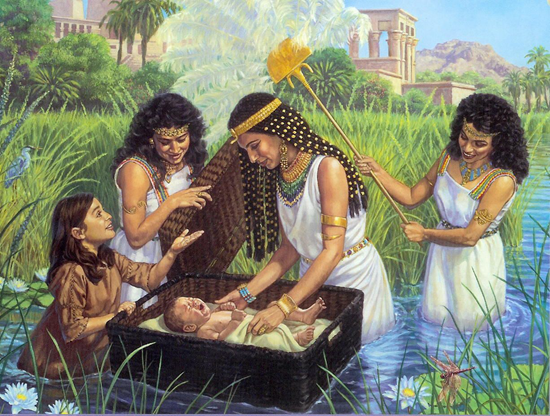
Exodus 2:1 – 10 “Now a man of the house of Levi married a daughter of Levi, and she conceived and gave birth to a son. When she saw that he was a beautiful child, she hid him for three months. But when she could no longer hide him, she got him a papyrus basket and coated it with tar and pitch. Then she placed the child in the basket and set it among the reeds along the bank of the Nile. And his sister stood at a distance to see what would happen to him.

Soon the daughter of Pharaoh went down to bathe in the Nile, and her attendants were walking along the riverbank. And when she saw the basket among the reeds, she sent her maidservant to retrieve it. When she opened it, she saw the child, and behold, the little boy was crying. So she had compassion on him and said, “This is one of the Hebrew children.” Then his sister said to Pharaoh’s daughter, “Shall I go and call one of the Hebrew women to nurse the child for you?” “Go ahead,” Pharaoh’s daughter told her. And the girl went and called the boy’s mother. Pharaoh’s daughter said to her, “Take this child and nurse him for me, and I will pay your wages.” So the woman took the boy and nursed him. When the child had grown older, she brought him to Pharaoh’s daughter, and he became her son. She named him Moses (meaning “to lift out”) and explained, “I drew him out of the water.”

This story about the birth and deliverance of Moses has fascinated believers for thousands of years. Why was Moses’s mother so afraid? Had things gotten worse? Had Pharaoh succeeded in killing some Hebrew boy babies? Was this family in a position of prominence so that they might receive more unwanted attention? Only God knows.

What must this mother have been thinking as she left her three month old son in that basket among the reeds at the edge of the Nile? Moses’s mother must have been a godly woman who trusted that the God who had brought Joseph and then Jacob and his family to Egypt would watch over her son. Notice also that she chose a strategic location in which to put Moses. The bathing place for Pharaoh’s daughter was probably well known. Miriam, Moses’s sister could have easily stood at a distance without raising any suspicions; after all, little girls are notably curious. But even then, Moses’s mother was taking a huge risk; what must she have thought as she walked back up the river bank away from that reed bed?

How did Pharaoh’s daughter know that Moses was a Hebrew baby? Perhaps it was the quality of the material in which Moses was wrapped. Recognizing that this was a Hebrew baby, why did Pharaoh’s daughter decide to save him? Evidently God gave baby Moses favor with Pharaoh’s daughter. At any rate, Moses was saved and his mother became his paid nurse until the time that Moses was old enough to join his royal foster mother.

APPLICATION: God’s hand of mercy is very evident in this story:

1. Moses’s mother was a highly intelligent woman who loved him and who did everything she could to save him.

2. God protected Moses while he was in that basket at the edge of the Nile. Moses could easily have been eaten by a crocodile.

3. God gave Moses favor with Pharaoh’s daughter.

4. Moses’s mother becomes his paid nurse, allowing her to care for him and to begin his training before sending him to the royal palace.

5. Thanks to being adopted by Pharaoh’s daughter, Moses will receive a top – notch Egyptian education.

Sometimes we face challenges that appear insurmountable! Circumstances threaten our safety or the safety of our families. Perhaps we lose jobs or retirement savings evaporate in a Ponzi scheme. The important lesson to learn from Moses’s mother is this: No matter how bleak things may appear, God is still a God of mercy and a God of infinite resourcefulness. The Bible assures us that God is no respecter of persons; in other words, that the same God who saved Baby Moses can also deliver you and help you.

PRAYER: Father God, help! Many of us feel that we have been squeezed until there is nothing left. We feel we have nowhere to turn. Lord, you are the same yesterday, today and forever. You never change. Please help us as you helped Moses’s mother and Moses so long ago. Raise up help for us, and when you do, please help us to be grateful. In the mighty Name of King Jesus. Amen.

MARCH 2, 2021 MERCY 2: GOD HAS MERCY ON BABIES!

March 2, 2021

Exodus 1:15 – 22 “Then the king of Egypt said to the Hebrew midwives, whose names were Shiphrah and Puah, “When you help the Hebrew women give birth, observe them on the birthstools. If the child is a son, kill him; but if it is a daughter, let her live.” The midwives, however, feared God and did not do as the king of Egypt had told them; they let the boys live. So the king of Egypt summoned the midwives and asked them, “Why have you done this? Why have you let the boys live?” The midwives answered Pharaoh, “The Hebrew women are not like the Egyptian women, for they are vigorous and give birth before a midwife arrives.” So God was good to the midwives, and the people multiplied and became even more numerous. And because the midwives feared God, He gave them families of their own. Then Pharaoh commanded all his people: “Every son born to the Hebrews you must throw into the Nile, but every daughter you may allow to live.”

Twice in my professional career as a doctor, I have had to perform first trimester therapeutic abortions to save the life of a mother. Without a doubt, those were some of the most difficult procedures I ever was forced to do. I operated in tears! I prayed before, during, and after the procedure and begged the fetus to forgive me. Life truly does begin at conception and those who argue otherwise are wrong. These days with 4 – D ultrasound, we can readily see infants in the womb sucking their thumbs and responding to pain, to music, and all kinds of things. When Dr. Ben Carson was practicing pediatric neurosurgery, he performed many procedures on fetuses who went on to be delivered at full term and to lead productive lives.

Pharaoh’s plan was simple: eliminate all Hebrew male babies and leave the girls, who would then marry Egyptians. But God foiled Pharaoh’s plot; two God – fearing midwives refused to kill infants and God gave them families as a result. At a time when many babies might not have survived the newborn period, these ladies were blessed with children. God was honoring Shiphrah and Puah. In addition, God thought so much of these two ladies that He preserved their names in His Word. What an honor! And evidently, Pharaoh’s appeals to his own people didn’t get very far either because there is no mention of the Egyptians killing boy infants. Again, perhaps the isolation of the Hebrews in the Land of Goshen section of Egypt worked to protect the boy infants. Remember that to the Egyptians, the herding of any animals was considered low – class. The Egyptians probably thought, “Why not simply ignore those Hebrews? If Pharaoh is so worried about those boy babies, let him send his soldiers.” And perhaps the Egyptians were afraid of bringing curses on themselves for shedding innocent blood.

APPLICATION: This story contains many demonstrations of God’s mercy:

1. The midwives were God – fearing. These days there are many groups pushing abortion throughout the world. God – fearing nurses and doctors may find themselves in trouble for refusing to do abortions.

2. God gave the Hebrew midwives an answer that Pharaoh would accept, thus sparing them.

3. Because the midwives had saved all the babies, God gave them babies of their own.

4. God was protecting the Hebrew boy babies from being thrown into the Nile by the Egyptians. Think about all the men who left Egypt during the Exodus. Had Pharaoh’s plans succeeded, those men would not have existed.

Proverbs 22:8 says “He who sows injustice will reap disaster, and the rod of his fury will be destroyed.” Galatians 6:7 says “Do not be deceived: God is not to be mocked. Whatever a man sows, he will reap in return.” Before the story is over, every family in Egypt will lose their first – born sons.

Times may have changed, but God has not changed. God’s Word remains forever. And the principle of sowing and reaping has not changed either. What goes around, comes around, and the measure we give out is the measure that we receive. God was merciful to the Hebrew midwives because they were faithful. Ultimately, God killed all the first-born sons, including the first – born son of the pharaoh then in power at the time of the first Passover.

We must examine our hearts! The shedding of innocent blood brings curses on a land! Ask God to show you where you are turning away from His Word to follow popular culture, and then repent.

PRAYER: Father God, thank you for your mercy and grace! Thank you for loving us so much that you refuse to leave us unchanged. Lord, cause your face to shine on us, illumine our dark hearts, and show us those places where we have turned away from you to follow popular culture. In the mighty Name of King Jesus. Amen.

MARCH 4, 2021 MERCY 4: WHEN WE HAVE GOOD INSTINCTS BUT BAD TIMING!

March 1, 2021

Exodus 2:11 – 22 “One day, after Moses had grown up, he went out to his own people and observed their hard labor. He saw an Egyptian beating a Hebrew, one of his own people. After looking this way and that and seeing no one, he struck down the Egyptian and hid his body in the sand. The next day Moses went out and saw two Hebrews fighting. He asked the one in the wrong, “Why are you attacking your fellow Hebrew?” But the man replied, “Who made you ruler and judge over us? Are you planning to kill me as you killed the Egyptian?” Then Moses was afraid and thought, “This thing I have done has surely become known.” When Pharaoh heard about this matter, he sought to kill Moses.

But Moses fled from Pharaoh and settled in the land of Midian, where he sat down beside a well. Now the priest of Midian had seven daughters, and they came to draw water and fill the troughs to water their father’s flock. And when some shepherds came along and drove them away, Moses rose up to help them and watered their flock. When the daughters returned to their father Reuel (Jethro), he asked them, “Why have you returned so early today?” “An Egyptian rescued us from the shepherds,” they replied. “He even drew water for us and watered the flock.” “So where is he?” their father asked. “Why did you leave the man behind? Invite him to have something to eat.” Moses agreed to stay with the man, and he gave his daughter Zipporah to Moses in marriage. And she gave birth to a son whom he named Gershom, for he said, “I have become a foreigner in a foreign land.”

Moses had good intentions but lousy timing and acted out of righteous indignation. Consider Moses’ situation: Moses was a Hebrew but raised in the palace as an Egyptian. Had Moses truly been an Egyptian noble, it’s likely that he would have gotten by with a slap on the wrist for killing a brutal Egyptian overseer. After all, those assigned to oversee slaves were generally lower level socially. It’s even possible that had Moses been an Egyptian noble, Pharaoh might have commended him for eliminating a bully who was mistreating valuable slaves.

But Moses was not an Egyptian; he was a Hebrew caught between two cultures. Moses’ mother had kept him until he was a few years old, so it’s likely that she would have told him of his Hebrew heritage. Then Moses went to live with Pharaoh’s daughter and was educated with the princes. Poor Moses! How confusing! One Ghanaian pastor friend ministering in a tribal group traditionally opposed to his own described this situation perfectly. Our friend said that he was “hanging like a bat” between the two tribes, with each tribe suspecting he was sympathetic to the other!

.

APPLICATION: How does this story illustrate the mercy of God?

1. Moses understood two cultures, both that of the Hebrews and that of the Egyptians. Moses would need all of that knowledge in the future.

2. God delivered Moses from this predicament by allowing Moses to escape to the land of Midian, where he became a sheep herder. Until then, Moses had been living in the royal palace in Egypt and had no idea of how to live outdoors or cope with situations in which water was scarce. On his own, Moses would never have chosen such a lifestyle.

3. God allowed Moses to become a sheep herder for another reason as well. Sheep are not easy to handle. Sheep are willful and make stupid choices. If the sheep herder fails to watch closely enough, the sheep will wander into all kinds of danger. There are wild animals that are always ready to attack the sheep. God used decades of herding sheep to prepare Moses to lead the Israelites, who, as it turned out, frequently had a lot in common with those sheep!

Many times when things get rough, we want to complain or blame God. We have no idea that God is mercifully working out His purposes in our lives and preparing us for something higher and greater.

PRAYER: Father God, thank you that you have far bigger plans for us than we have for ourselves. Thank you that you refuse to leave us sitting in one place but that you move us into new situations in which we are forced to learn in order to survive. Thank you that ultimately we will see your hand of mercy in all you are doing in our lives. In the mighty and precious Name of King Jesus. Amen.