Archive for June, 2021

JUNE 20, 2021 MERCY 112: DOES YOUR LIFE BEAR THE SCENT OF HOLINESS?

June 20, 2021

JUNE 20, 2021 MERCY 112: WHAT’S SO SPECIAL ABOUT INCENSE?

Exodus 30:34 – 38 “Then the LORD said to Moses, “Take fragrant spices—gum resin, onycha, galbanum, and pure frankincense—in equal measures, and make a fragrant blend of incense, the work of a perfumer, seasoned with salt, pure and holy. Grind some of it into fine powder and place it in front of the Testimony (the Ark of the Covenant containing the stone tablets) in the Tent of Meeting, where I will meet with you. It shall be most holy to you. You are never to use this formula to make incense for yourselves; you shall regard it as sacred to the LORD. Anyone who makes something like it to enjoy its fragrance shall be cut off from his people.”

Once more, God is giving Moses instructions; this time Moses is receiving the recipe for the sacred incense that is to be used only in the tabernacle and only before the Ark of the Covenant. As with the sacred anointing oil, God is so serious about the composition of this incense that He orders that anybody who takes this recipe and mixes it for himself or herself will become an outcast. To be cast away from one’s family and one’s tribe in that day was to be doomed to wander the earth as a stranger, vulnerable to attack from anybody.

APPLICATION: IS ANYTHING REALLY SACRED ANYMORE? The term “sacred” means to be set apart, to be holy, completely dedicated to God. There are those in popular culture who wish to tear down barriers that have demarcated the sacred from the ordinary for years…. as long as those barriers belong to somebody else! But inside each of us, there are places and things that we still consider sacred, untouchable, inviolable. If someone threatens the parts of our lives that we hold as sacred, we are ready to fight for their protection!

I read obituaries from my home area in America, and it is both fascinating and sad to see the careers, the hobbies, and other things mentioned in these obituaries that define the dead after they are gone. Many families mention the dedication of their loved one to particular sports teams or to special interest groups. For many, dedication to these things approaches the level of a religion. In one recent write up, the deceased was described as having been an enthusiastic flea market participant for fifty years. (Since most of these markets take place on weekends, it is safe to say that such a person might have worshiped in the flea market experience.)There are obituaries honoring a loved one who obviously cared deeply for his or her family. But the memoriams that stand out the most are the ones honoring those whose lives were dedicated to God and to sharing the love of God with others. Here, I am not referring to those who were church members or who sang in the choir, but to those whose faith was so real that others mention it as a defining characteristic after a person had died.

What’s the common thread among all these different interests? Love, community, and fellowship come to mind. Sports fans flock together and share colorful team jerseys, videos, and memories of their team’s sporting events. Those involved in other clubs or in the flea market probably feel that they are gaining a sense of community and acceptance in those activities. Those dedicated to their families certainly have left a legacy of love behind, and hopefully have encouraged others to be equally supportive of their families. But there’s something special about those whose faith was such an integral part of them that it was the first thing people thought to mention.

There is an old devotional that speaks of a container that held the essential oil of roses. Even though this container got broken, the oil had penetrated so far into the container that the pieces still held the scent of roses. God commanded Moses to compound a special incense so that whenever the Israelites smelled that scent, they would realize that the priests were ministering to the Lord on their behalf. The scent of this incense was sacred and was not to be copied to be used for any lesser purpose.

What things do you hold sacred? What beliefs, what friendships, what values do you feel are worth defending? If someone were to write your obituary today, how would they describe you? There’s an old saying that goes, “Only one life – will soon be past. Only what’s done for God will last.” The sacred incense left a perfume that was immediately identifiable as the scent of holiness, and it lingered throughout the Tabernacle. What is the scent of your life?

PRAYER: Father God, help! We are overwhelmed by trivia and the stress of daily living. Many times we feel as if we are drowning with nobody to hep us. But You are our Heavenly Father and You can lead us and guide us and give us lasting peace. Help us to spend so much time with You that Your holiness saturates our very lives. In the matchless Name of King Jesus. Amen.

JUNE 19, 2021 MERCY 111: THE SCENT OF HOLINESS

June 19, 2021

Exodus 30: 22 – 33 “Once again, The LORD said to Moses, “Take the finest spices: 500 shekels of liquid myrrh,(approximately 12.6 pounds or 5.7 kilograms of myrrh), half as much (250 shekels) of fragrant cinnamon, (approximately 6.3 pounds or 2.9 kilograms of cinnamon), 250 shekels of fragrant cane, (approximately 6.3 pounds or 2.9 kilograms of cane), 24500 shekels of cassiah (approximately 12.6 pounds or 5.7 kilograms of cassia), —all according to the sanctuary shekel—and a hin of olive oil. (A hin is approximately 0.97 gallons or 3.67 liters of olive oil.) Prepare from these a holy anointing oil, a fragrant blend, the work of a perfumer; it will be a holy anointing oil.

Use this oil to anoint the Tent of Meeting, the ark of the Testimony, the table and all its utensils, the lampstand and its utensils, the altar of incense, the altar of burnt offering and all its utensils, and the basin with its stand. You are to consecrate them so that they will be most holy. Whatever touches them will be holy. Anoint Aaron and his sons and consecrate them to serve Me as priests.

And you are to tell the Israelites, ‘This will be My sacred anointing oil for the generations to come. It must not be used to anoint an ordinary man, and you must not make anything like it with the same formula. It is holy, and it must be holy to you. Anyone who mixes perfume like it or puts it on an outsider shall be cut off from his people.’”

Anointing oil – the recipe is fairly straight forward, and body oils and lotions of various kinds were already well known to the Israelites. But this oil is to be special and to be used only as God has directed. Although this is the first use of this oil, it will continue to be used to anoint prophets, priests, and kings, as well as to consecrate subsequent temples. (The term “messiah” literally means “the anointed one.”) This oil was to have a very distinctive odor, one that would be intimately identified with holiness and consecration to the Lord. Once this oil had touched an object in the tabernacle, anyone touching that same object would also be considered as holy. With a pentratingly sweet odor, this oil would mark anyone who came into contact with it. But this oil came with a warning: it was to be used ONLY for holy purposes. Anybody compounding this oil for any other use or misuing it would become an outcast, a person without a tribe, cut off from friends, family, and most sources of support. Considering the fact that the Israelites were still in the wilderness, that threat might spell a lingering death for any transgressors.

What is the “sweet cane” referred to in the recipe? There are several explanations. The Hebrew word, qaneh, indicates a fragrant plant with an upright aspect. … The first is a widespread plant of wetlands in the northern hemispheres of both the Old and New Worlds, Acorus calamus L. (Araceae). The rhizome has a peculiar sweet, lingering aroma suitable as a “carrier” in a perfume. Other suggestions include a plant imported from India. Some have even suggested that a form of cannabis might have been used.

APPLICATION: The composition of the anointing oil ensured that it would have a unique flavor that peple would instantly identify with holiness and holy things. The use of anointing oil also symbolizes the power of God’s Holy Spirit as He poured it out on those who believed.

Christians today speak of the anointing of the Holy Spirit. Even without the application of sacred oil, God still marks people for holiness. Those who were blessed to encounter the late Mother Teresa came away impressed by two things: her simplicity and her holiness. One late pastor friend of ours carried the scent of holiness with him wherever he went. Pastor Stan had served in the military and was a skilled craftsman. Stan loved to hunt and fish and was great company wherever he was. But the biggest thing you noticed if you were with Stan was the quiet holiness that was a part of his character, holiness gained from years of prayer, reading the Bible, and being quiet before the Lord.

God doesn’t play favorites; any one of us can gain the scent of holiness if we wish. The key to personal holiness is spending time with God, being quiet before Him, reading His Word and meditating on it.

“But,” you say, “I don’t believe in your God.” No problem. Try doing the things I have just suggested and see what happens. What do you have to lose?

PRAYER: Father God, help all those who read this to have such a desire for holiness that they will long to know You. Thank You that You don’t play favorites and that anybody can become holy, because it’s up to You and not to them, as long as they will listen to You. In the matchless Name of King Jesus. Amen.

JUNE 17, 2021 MERCY 109: IF WE ARE OFFERING BLOOD SACRIFICES, WHY MUST WE GIVE MONEY ALSO?

June 17, 2021

Exodus 30:11 – 16 “Then the LORD said to Moses, “When you take a census of the Israelites to number them, each man must pay the LORD a ransom for his life when he is counted. Then no plague will come upon them when they are numbered. Everyone who crosses over to those counted must pay a half shekel, (0.2 ounces or 5.7 grams of silver) according to the sanctuary shekel, which weighs twenty gerahs.(One shekel or 0.4 ounces or 11.4 grams of silver) This half shekel is an offering to the LORD.

Everyone twenty years of age or older who crosses over must give this offering to the LORD. In making the offering to the LORD to atone for your lives, the rich shall not give more than a half shekel, nor shall the poor give less. Take the atonement money from the Israelites and use it for the service of the Tent of Meeting. It will serve as a memorial for the Israelites before the LORD to make atonement for your lives.”

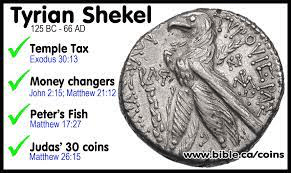
The top photo is of the Tyrian shekel, which might have been used in Jesus’ day. The lower photo is of the two sides of the temple shekel. But what was the point of conducting a census and of requiring a token payment?

The census taken was of men age 20 and older, 20 years being the minimum age for military service. Why the phrase “a ransom for his life when he is counted?” God knew the human heart and He knew that if there were no restrictions, someone would try to wriggle out of paying even such a tiny amount; meanwhile, there were certain things needed to maintain the Tabernacle and to keep its services going properly.

The amount specified was actually quite small and insignificant. Why would God mention this particular amount?

1. God specified a modest amount so that the temple tax would be within the ability of everyone to pay.

2. God specified a flat amount for all the men 20 and above, regardless of their financial status. This was to emphasize that all men were equal before God, but also to make sure that this new religion would not become the special property of the rich. Notice that God said nothing to forbid the wealthy from making additional contributions if they so chose; however, God did not allow the wealthy to show off when paying the atonement money.

v. 16 “Take the atonement money from the Israelites and use it for the service of the Tent of Meeting. It will serve as a memorial for the Israelites before the LORD to make atonement for your lives.” By requiring this payment, God was not indicating that anybody could buy their way out of payment for their sins. God was trying to emphasize that sin required sacrifice – both a blood sacrifice of precious animals and a sacrifice of something else precious, namely money. The Israelites were to continue to observe this command to honor the Lord who held their very lives in His Hand.

APPLICATION: Sometimes we in the industrialized nations feel insulated by prosperity, little realizing that our lives are just as fragile as those of people in the rest of the world. If the recent COVID pandemic has taught us nothing else, it should have taught us not to take relatives or friends for granted. One friend here in Ghana was on admission to a major hospital with what appeared to be COVID symptoms when a brother who appeared to be healthy suddenly sickened and died within 48 hours. (Our friend recovered.)

In the last few days, we have been shocked to learn of the freak death of one young man who was exposed to dangerous chemicals while cleaning out a holding tank. One of this young man’s friends was fighting for his life at last report. Even without pandemics, our lives are still fragile and can be snuffed out in an instant.

God required what came to be known as the temple tax at a fixed rate from all men twenty and above so that they would remember that their lives were in His hands and that all of them were equal before Him. The ultimate point of worship in the Tabernacle was to emphasize that God was One, that He was holy, all – powerful, all – knowing, all – seeing, and that He was to be acknowledged and worshiped whole – heartedly.

Is there any place for God in our lives? Do we pray to Him at all? And if we pray, are we reciting lists of our needs/desires/demands, or are we coming before Him in reverence and awe, waiting to hear from Him?

God did not need money from the Israelites, but God required it so that they would remember to honor Him in their daily lives. Let us find quiet, simple ways of honoring God as we live and work today.

PRAYER: Father God, help us to look to you in everything that we are doing and to allow you to guide us as we go through our days. Thank you that because Jesus has shed His Blood for us, we no longer have to pay a temple tax. Thank you that we owe you everything – our lives, our jobs, our families, and everything we have or are or hope to be. In the mighty Name of King Jesus. Amen.

JUNE 18, 2021 MERCY 110: LONG BEFORE COVID, GOD COMMANDED HAND WASHING

June 15, 2021

Exodus 30:17 – 21 “Again, the LORD said to Moses, “You are to make a bronze basin with a bronze stand for washing. Set it between the Tent of Meeting and the altar, and put water into it, with which Aaron and his sons are to wash their hands and feet. Whenever they enter the Tent of Meeting or approach the altar to minister by presenting an offering made by fire to the LORD, they must wash with water so that they will not die. Thus they are to wash their hands and feet so that they will not die; this shall be a permanent statute for Aaron and his descendants for the generations to come.”

With the recent COVID pandemic, people around the world have learned to do thorough hand washing. Even in market places in rural Ghana, there are hand washing stations and hand sanitizer has become a major sales item for roadside vendors. But why did God command ritual washing of hands and feet? What were the reasons for the placement of the basin between the altar of sacrifice and the entrance to the Tent of Meeting?

For the background information for today’s devotional, we turn to this website: https://www.bible-history.com/tabernacle/tab4the_bronze_laver.htm The words in italics are taken from this teaching. Note that the term “laver” is used in place of “basin.”

Nobody is quite certain what this bronze basin looked like. Unlike many of the other pieces of equipment for the Tabernacle, the basin did not have anything connected directly with it for carrying it. Perhaps there was a large lip that allowed the basin to be carried. One artist has imagined the basin to be encased in a frame that would then be carried. This basin was made of the bronze mirrors contributed by the serving women who assembled at the door of the tabernacle of meeting. (Exodus 38:8) In those days, such mirrors would have been precious treasures for the women who owned them. The making of this bronze basin/laver began with these women giving up their most prized possessions, their mirrors.

What is important here is the use of the basin. The laver/basin served one great purpose, the washing and cleansing of the priest from all defilement. It was for priests only. No one in Israel or the rest of the world for that matter could wash from the laver. What a privilege for the tribe of Levi.

1. The basin was situated between the altar and the door of the Holy Place. It came after the altar, thus indicating that the first act of worship was SACRIFICE.

“The appointed priest, as he entered the gate of the outer court, faced the altar, where he made a sacrifice for himself like any other Israelite. Once beyond the altar he was ready to act as a serving priest and so at the laver he prepared himself for the further service of God. He could then minister at the altar or in the Holy Place because he washed at the laver. The altar always came first for the priest. Salvation and then service. God was approached by way of the blood and the water.”

2. It came before the door (wash before entering.) Within the door of the Holy Place were vessels that represented God Himself. No priest dare enter with any trace of uncleanness. “Be holy as I am holy” was commanded to the priests.

3. It came after leaving the Holy Place (wash before going out) In the outer court everything was bronze. Inside the Holy Place everything was gold . As the priest came out of Gods Presence and back into service he washed at the laver.

4. The priests were to wash their hands and their feet. The hands speak of what they did, their service, their work, everything they put their hands to was important and so their hands needed to be cleansed always, and daily. The initial cleansing was done only once, the daily cleansing was done continuously. The feet represented where they went, their lives and ways. Their walk had to be a holy walk, so their feet were washed always, everyday.

APPLICATION: For Christians, the water of baptism has replaced the water in the basin, just as the blood sacrifice made by Jesus Christ has replaced the blood sacrifices of bulls and lambs. But one fact remains constant: all of mankind suffers from a sin problem. Romans 3:22 -24 says, ”… There is no distinction, for all have sinned and fall short of the glory of God, and are justified freely by His grace through the redemption that is in Christ Jesus.”

In my Facebook feed this morning I saw an article mentioning that some educated people are now turning to Satanism “because it makes sense” and because there is no demand for a commitment of one’s life. MAKE NO MISTAKE! EVERY TIME YOU CHOOSE SATAN AND REFUSE GOD, YOU ARE MAKING A COMMITMENT, AN ETERNAL ONE! A DAMNING ONE!

Each of us makes thousands of choices every day. There is no neutral demilitarized zone in the spirit world. You are either coming closer to God or closer to Satan. When the priests obediently washed their hands and their feet before and after worship in the Holy Place, they were choosing God and choosing life. Later on, we will see that some priests made wrong choices and paid for those choices with their lives. The question for each of us today is this: which direction are we heading? Choose wisely! You are choosing for eternity!

PRAYER: Father God, let everyone who reads this devotional search their hearts and come to You so that You can cleans them. Apart from You we have no hope and no salvation. Let these words reach those who need to hear them. In the matchless Name of King Jesus. Amen.

JUNE 15, 2021 MERCY 107: WHY SACRIFICE LAMBS?

June 15, 2021

Exodus 29:38 – 46 “This is what you are to offer regularly on the altar, each day: two lambs that are a year old. In the morning offer one lamb, and at twilight offer the other. With the first lamb offer a tenth of an ephah of fine flour, mixed with a quarter hin of oil from pressed olives, and a drink offering of a quarter hin of wine. And you shall offer the second lamb at twilight with the same grain offering and drink offering as in the morning, as a pleasing aroma, an offering made by fire to the LORD.

For the generations to come, this burnt offering shall be made regularly at the entrance to the Tent of Meeting before the LORD, where I will meet you to speak with you. I will also meet with the Israelites there, and that place will be consecrated by My glory. So I will consecrate the Tent of Meeting and the altar, and I will consecrate Aaron and his sons to serve Me as priests. Then I will dwell among the Israelites and be their God. And they will know that I am the LORD their God, who brought them out of the land of Egypt so that I might dwell among them. I am the LORD their God.”

Now that God has described the ordination ceremony for Aaron and his sons to become priests, He turns His attention to the order for daily worship. Perfect lambs are to be sacrificed twice a day, morning and evening, along with 1.2 kg of flour mixed with 0.92 liters of pure oil from pressed olive sand 0.92 liters of wine. (Remember that pressing the olives yields a purity much higher than that of grinding the olives in a press. When olives are ground, the resulting oil contains tiny bits of olive or even olive pits.)

Why use pressed olive oil? God doesn’t want the altar spitting sparks. When we first came to northern Ghana 28 years ago, there was no electricity in our town. Anyone wishing to iron something had to use a charcoal iron. Charcoal irons had a lid that flips up, allowing one to put in hot coals. There were holes along the sides of the iron to allow air to get to the hot coals so that they would continue to burn while you were ironing, keeping the iron hot. But if you were unfortunate enough to get charcoal made from soft wood with lots of impurities, look out! The iron might spit sparks of charcoal onto your clothing, forcing you to clean off the charcoal and start all over. And if you were not quick enough, you might even wind up with small holes burnt into your clothing as well!

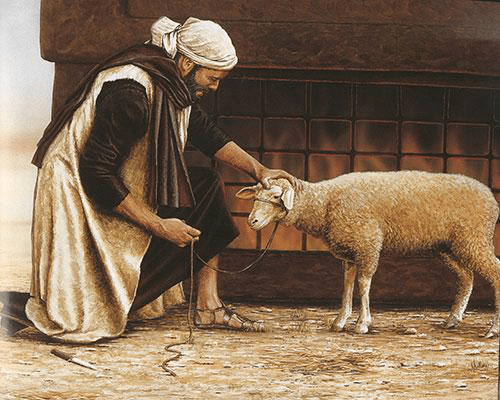
Why sacrifice lambs? Lambs were a symbol of innocence and purity. Anybody dealing with livestock knew that goats were obnoxious and adult sheep were stupid; however, lambs were harmless. Lambs were also highly prized, both for food and also for building up flocks.

God was demanding blood sacrifices to emphasize to the Israelites that they were an inherently sinful people and that their sin needed perpetual atonement. Only blood could pay for sin, but since lambs were lesser animals than humans, this sacrifice had to be repeated twice a day.

The sacrifices were public. The sacrifices were to be made at the entrance to the tent of meeting so that all the Israelites could witness the sacrifices.

God promised to remain close to the Israelites. The gods of the Egyptians were remote deities that had to be propitiated but who could not speak with their followers. God was reminding the Israelites that He had nothing in common with the idols of Egypt or of any other culture.

APPLICATION: God gave the Israelites specific instructions as to the regular order of worship. Without these instructions, worship would have descended into chaos, with people behaving however they liked. God demanded respect and reverence. Of these final assurances, Dennis Prager says the following:

1. God did not just create the world; He also continues to take an active role in human history. That is just one of the great differences between the Unmoved Mover god of Aristotle and the God of Israel.

2. God cares about human suffering.

3. God wants people to be free.

4. God has a special role for the Jewish people which is why He took them out of Egypt.

(Dennis Prager The Rational Bible: Exodus)

The sacrifices at the temple in Jerusalem ended permanently in 70 AD when the Romans overthrew Jerusalem and destroyed the temple built by King Herod. But long before that tragic event, God had already done what men could not do. God sent His only Son Jesus Christ to live as a sinless man and to die as the sacrificial Lamb, shedding His blood for the sins of the whole world. Animal sacrifices had to be repeated because the blood of a lesser being could never completely pay for the sins of a greater one. But Jesus as a sinless man could give up His life freely, completing the ultimate blood sacrifice.

The sacrifice has been made for the sins of the whole world; however, we as sentient human beings have a choice to make: We can choose to believe that Jesus has shed His blood for our sins. In that case, we confess to God that we are sinners and ask God to forgive us and to clean us up. OR we can refuse to believe that Jesus has died for us. God has created each of us with free will, and we can freely choose to accept or reject the sacrifice made on our behalf. But the day we reject Jesus Christ, we are also choosing to die in our sins without any payment for them. The choice is yours. Choose wisely!

PRAYER: Father God, please move in the hearts of all who read this devotional so that they will realize how much You love them and care for them. Help them to fully understand and to believe that Jesus really has died for their sins and that He has conquered death and the grave. In the matchless Name of King Jesus. Amen.

JUNE 14, 2021 MERCY 106: SEVEN DAYS TO ORDAIN THE PRIESTS! WHY???

June 14, 2021

Exodus 29: 29 – 37 “The holy garments that belong to Aaron will belong to his sons after him, so they can be anointed and ordained in them. The son who succeeds him as priest and enters the Tent of Meeting to minister in the Holy Place must wear them for seven days. You are to take the ram of ordination and boil its flesh in a holy place. At the entrance to the Tent of Meeting, Aaron and his sons are to eat the meat of the ram and the bread that is in the basket. They must eat those things by which atonement was made for their ordination and consecration. But no outsider may eat them, because these things are sacred. And if any of the meat of ordination or any bread is left until the morning, burn up the remainder. It must not be eaten, because it is sacred. This is what you are to do for Aaron and his sons based on all that I have commanded you, taking seven days to ordain them. Sacrifice a bull as a sin offering each day for atonement. Purify the altar by making atonement for it, and anoint it to consecrate it. For seven days you shall make atonement for the altar and consecrate it. Then the altar will become most holy; whatever touches the altar will be holy.”

Seven days! For seven days Aaron and his sons were to remain in the tabernacle while sacrifices were made. Not only were Aaron and his sons being consecrated, but the altar itself was also being consecrated at the same time. If you think about it, it makes sense. After all, why have a holy altar if the priests are not holy? And why have consecrated priests if the altar has not been consecrated?

What is so significant about the number seven? Dennis Prager tells us, “Once again there is the number seven, the most important and recurrent number in the Torah because it hearkens back to the creation of the world in seven days. Acknowledging God as the Creator is to acknowledge, among many other things, that life is ultimately meaningful; it is not a haphazard series of coincidences, which is all life is if there is no Creator. In this verse, “seven” suggests the initiation of the priests involves the creation of something new, namely the ritual service of God in the Tabernacle.”

There were restrictions. For this seven day period, Aaron and his sons were to remain within the Tabernacle grounds, presumably so that they could hear from God and become closer to him.

APPLICATION: When we lived in one part of the Northern Region of Ghana, a local chief was elevated to a new status. In preparation for this new position, the chief went into seclusion for a period of time before he was brought out to be “outdoored” in his new position. We were advised that this period of seclusion was to protect the chief spiritually so that nobody could attack him before he assumed his new position. This period of seclusion also involved some animal sacrifices as well. The day the chief was brought out and “outdoored” in his new position, he was given new white clothing to wear. Then the chief was carried through the streets with lots of drumming and dancing. People even sprinkled white talcum powder on the chief as a sign of encouragement, celebration, and purity.

When Aaron and his sons were ordained, it set a precedent for the ordination of all priests who were to follow. God wanted these men to draw near to Him so that they would follow Him obediently and whole – heartedly.

Do we ever withdraw just to be with God and to listen to Him? It’s very easy to get caught up in the demands of daily life, especially if you are the parent of small children. But remember the story of Charles Wesley’s mother. Susanna Wesley had nineteen children (19!!!!!). To find time and a quiet place to pray, Susanna would sit in a corner and throw her apron over her head. The children knew not to disturb Susanna until she uncovered her head again. May we find time and space to withdraw so that we can hear God’s voice.

PRAYER: Father God, help! Our lives are full of all kinds of noise and all kinds of strife. We feel pulled in many directions. Help us to be quiet before you so that you can speak to us. In the mighty and precious Name of King Jesus. Amen.

JUNE 16, 2021 MERCY 108: WHY DID THE ALTAR OF INCENSE HAVE HORNS???

June 13, 2021

Exodus 30:1 – 10 “You are also to make an altar of acacia wood for the burning of incense. It is to be square, a cubit long, a cubit wide, and two cubits high. Its horns must be of one piece. Overlay with pure gold the top and all the sides and horns, and make a molding of gold around it. And make two gold rings below the molding on opposite sides to hold the poles used to carry it. Make the poles of acacia wood and overlay them with gold. Place the altar in front of the veil that is before the ark of the Testimony—before the mercy seat that is over the Testimony—where I will meet with you. And Aaron is to burn fragrant incense on it every morning when he tends the lamps. When Aaron sets up the lamps at twilight, he must burn the incense perpetually before the LORD for the generations to come. On this altar you must not offer unauthorized incense or a burnt offering or grain offering; nor are you to pour a drink offering on it. Once a year Aaron shall make atonement on the horns of the altar. Throughout your generations he shall make atonement on it annually with the blood of the sin offering of atonement. The altar is most holy to the LORD.”

God is giving orders concerning the construction of the altar of incense. This altar is to be positioned in the Holy Place before the curtains that separate the Holy Place from the Most Holy Place. The altar is to be carved from one block of acacia wood and there are to be horns on each corner of the altar, also as part of the altar. (If there are no joints in the wood, the altar will be far stronger and last longer.) The entire altar is to be overlaid with gold and there are to be golden rings and carrying poles also overlaid with gold so that the altar will be portable. Finally, this altar is a special one, designated solely for the purpose of burning specially compounded incense and nothing else. But this description raises several questions:

1. Why does God order horns to be cared on the corners of the altar? One answer comes from the religions that were already being practiced. In those religions, horns were a symbol of strength, superhuman power and deity. Horns also represented salvation and immortality as well, as the horn was extremely durable. In many cultures, horns were a symbol of protection and asylum. The Egyptians also used horns as a symbol of the beginning.

God was using symbols with which the Israelites were already familiar to convey messages on several levels. God wanted the Israelites to remember that He was all – powerful and that He was the One True Living God. It was God alone had delivered the Israelites out of slavery in Egypt. God was – and is – immortal and enduring. Finally, God wanted His people to realize that He was their Source of protection and the One to whom they should turn for asylum. He was there at the creation of the world and He would remain forever.

2. What’s the purpose of burning incense? Dennis Prager gives us a wonderful explanation:

“The ritual service of God in the Tabernacle involved all five senses. The priests smelled the incense; they tasted the sacrificial offerings; they felt the sacrificial blood on their hands; they saw the light of the menorah; and they heard the bells on their clothing.

According to Maimonides, the purpose of the incense was to block out the unpleasant odors that came from the sacrifices. (HMMM! Certainly a possibility!)

Nahum Sarna explains the incense represented God’s invisible, active presence, much like the cloud accompanying the Israelites during the Exodus and during their time in the desert. It was in a cloud of incense God appeared before the High Priest on the holiest day of the year, the Day of Atonement.” (Dennis Prager The Rational Bible: Exodus)

APPLICATION: The incense burned on this altar was made from a special recipe and was to be used solely for that purpose. When the Israelites smelled that incense, they would know that their priests were acting on their behalf to fulfill God’s commands regarding His worship. Hopefully, the smell of the incense would move those around the Tabernacle to pray their own prayers.

Later on, in Psalm 141:2, the psalmist also links the idea of incense with the prayers of the faithful. “May my prayer be set before You like incense, my uplifted hands like the evening offering.” In the Book of Revelation, the prayers of the saints are linked with divine incense. (Revelation 8:3 – 4 “Then another angel, who had a golden censer, came and stood at the altar. He was given much incense to offer, along with the prayers of all the saints, on the golden altar before the throne. And the smoke of the incense, together with the prayers of the saints, rose up before God from the hand of the angel.”

Incense is still used in some churches, notably the Catholic and Anglican churches; however, any one of us may pray and be assured that our prayers will glorify the Lord. It’s an interesting thing about prayer: effective prayers do not have to be loud or eloquent. Some of the most effective prayers in the world probably start with the words, “Help me, Lord!”

Jesus told a story (Luke 18) about two men who went to the temple to pray. The Pharisee, a professional religious person, proudly stood up in front of everybody and recited all of his virtues to God. The tax collector hid in a corner and beat his chest as he begged God to be merciful to him for being a sinner. Jesus advised his hearers that it was the tax collector whose prayers were accepted by God. Today, come to God humbly and simply and tell Him what is on your heart. He is waiting to hear you and to help you.

PRAYER: Father God, so many people have no idea of who you are! Please open eyes and hearts to approach you and to pray to you. And give those who come to you tokens of your love and grace. In the matchless Name of King Jesus. Amen.
JUNE 13, 2021 MERCY 105: WHEN EATING BECOMES AN ACT OF WORSHIP

June 13, 2021

Exodus 29:26 – 30 “Take the breast of the ram of Aaron’s ordination and wave it before the LORD as a wave offering, and it will be your portion. Consecrate for Aaron and his sons the breast of the wave offering that is waved and the thigh of the heave offering that is lifted up from the ram of ordination. This will belong to Aaron and his sons as a regular portion from the Israelites, for it is the heave offering the Israelites will make to the LORD from their peace offerings. The holy garments that belong to Aaron will belong to his sons after him, so they can be anointed and ordained in them. The son who succeeds him as priest and enters the Tent of Meeting to minister in the Holy Place must wear them for seven days.”

Wave offering…heave offering?? When the Israelites heard these instructions, they might have gotten a little confused. The bottom line was this: the priests were not only allowed but ordered to enjoy meat from certain offerings, particularly from the peace offering. What is the significance of eating meat offered for a certain purpose?

David Guzek in his Enduring Word Commentary makes the following points:

1. The best parts of the second ram were to be burnt on the altar as an act of complete devotion…

2. The remaining meat portions of this ram were given to Aaron and the other priests, after those portions were presented to God as a wave offering. It was then cooked and eaten by the priests during the days of their consecration ceremony.

i. The second ram – after the ram presented as a burnt offering – had its life applied to the consecrated priests. First its life was applied with the application of blood to the ear, hand, and foot of the priest. Then through a ritual meal, its life was applied by the priest taking the ram into himself.

ii. The eating did not begin the process of consecration. It came after the washing, the clothing, and the blood-atonement of the priests. The eating speaks of the continuing relationship of the priest with God. ”

iii. As a priest eats food sacrificed to the One True Living God, he reinforces his relationship with God.”

Consider the system of sacrifices with which the Israelites were familiar. The Egyptians sacrificed all kinds of animals; in fact, they sometimes even sacrificed wild animals when they were burying an important person. It was generally understood that eating the meat from such sacrifices would reinforce a believer’s relationship to whatever god was being worshiped. Eating was actually an act of devotion. Later, St. Paul advised the Corinthians, “Consider the people of Israel: Are not those who eat the sacrifices fellow partakers in the altar? Am I suggesting, then, that food sacrificed to an idol is anything, or that an idol is anything? No, but the sacrifices of pagans are offered to demons, not to God. And I do not want you to be participants with demons. You cannot drink the cup of the Lord and the cup of demons too; you cannot partake in the table of the Lord and the table of demons too. Are we trying to provoke the Lord to jealousy? Are we stronger than He? (1 Corinthians 10:18 – 22)

APPLICATION: In commenting on these verses, C. H. Spurgeon said, “Let not this distinction be forgotten; the eating of the sacrifice is not intended to give life, for no dead man can eat, but to sustain the life which is there already. A believing look at Christ makes you live, but spiritual life must be fed and sustained.”

David Guzek goes on to explain: In this way, eating is a good picture of a healthy, continuing relationship with Jesus.

· Eating is personal. No one can eat for you, and no one can have a relationship with Jesus on your behalf.

· Eating is inward. It does no good to be around food or to rub food on the outside of your body – you must take it in. We must take Jesus unto ourselves inwardly, not merely in an external way.

· Eating is active. Some medicines are received passively – they are injected under the skin and go to work. Such medicines could even be received while one sleeps – but no one can eat while asleep. We must actively take Jesus unto ourselves.

· Eating arises out of a sense of need and produces a sense of satisfaction. We will have a healthy relationship with Jesus when we sense our need for Him and receive the satisfaction the relationship brings.

 6/11/2021 Enduring Word Bible Commentary Exodus Chapter 29 https://enduringword.com/bible-commentary/exodus-29/ 5/7

“But,” you ask, “these days, there are no animal sacrifices. How applicable are these instructions?” Good question! Eating is only one aspect of daily life. The question is this: Are we involving God in our daily life choices, or are we relegating Him to a nice cozy quiet little corner of our lives where He can’t break out and amaze or astonish us?

The Ruler of the Universe cannot be stuffed into a box! Just as the priests of Israel were to eat part of the sacrificial meat and bread as an act of oneness with God, so we must realize that God wants to be present with us in all aspects of our lives. A god you can stuff into a box is an idol, but certainly not the One True Living God!

PRAYER: Father God, forgive us! You want to share every part of our lives while we are trying to fence you into a small corner. Come into our hearts and change us so that we will follow you devotedly and whole – heartedly. In the matchless Name of King Jesus. Amen.

JUNE 12, 2021 MERCY 104: WHAT’S A WAVE OFFERING?

June 12, 2021

Exodus 29: 22 – 25 “Take the fat from the ram, the fat tail, the fat covering the entrails, the lobe of the liver, both kidneys with the fat on them, and the right thigh (since this is a ram for ordination), along with one loaf of bread, one cake of bread made with oil, and one wafer from the basket of unleavened bread that is before the LORD. Put all these into the hands of Aaron and his sons and wave them before the LORD as a wave offering. Then take them from their hands and burn them on the altar atop the burnt offering as a pleasing aroma before the LORD; it is an offering made by fire to the LORD.

These verses are the first time God mentions wave offerings, but by no means the last. Generally, a wave offering was something that the priest was to elevate in his hands and wave before the Lord. The contents of the wave offering then became the property of the priest. But in verses 22 – 25, Aaron is to make the first wave offering and then that offering is to be burned. Why?

Perhaps this wave offering represents the “first fruits” of the priesthood. From now on, the priests will be given certain parts of offerings, some of which they alone may eat and some which can be consumed by their families as well. Part of this first offering comes from the parts of the ram that might normally be used for divination; it makes sense that those parts would be burned. But the right thigh, one loaf of bread, one cake of bread made with oil, and one wafer from the basket of unleavened bread can only be interpreted as a first fruits offering on the part of the priests. Remember that offering first fruits is an act of faith, trusting God to give more as needed.

V. 26 – 30 “Take the breast of the ram of Aaron’s ordination and wave it before the LORD as a wave offering, and it will be your portion. Consecrate for Aaron and his sons the breast of the wave offering that is waved and the thigh of the heave offering that is lifted up from the ram of ordination. This will belong to Aaron and his sons as a regular portion from the Israelites, for it is the heave offering the Israelites will make to the LORD from their peace offerings.

God is assuring that his priests will have meat from the offerings. But the priests need to be careful to observe the rituals correctly. Later on, in the time of Samuel, the sons of Levi, the high priest refuse to wait for their portions of meat and want to take as much as possible as soon as possible. (Spoiler alert: they die!)

WHATS THE DIFFERENCE BETWEEN A WAVE OFFERING AND A HEAVE OFFERING?

“The Heave Offering receives its name from the motion used in its presentation where the priest used an up and down motion–lifting it up to the Lord and receiving it back from Him. Likewise, the Wave Offering receives its name from the motion used when the priest presented the Wave Offering in a waving type motion. The sacrifice was held in the offerer’s hands, with the priest’s hands underneath the offerer’s, and it was waved forward toward the altar and then backward from the altar–giving it to the Lord and then receiving it back from Him as a gift to the priest.

The right shoulder, better translated right thigh, of the sacrificial animal was a Heave Offering and the breast-piece was a Wave Offering. Both of these pieces were given to the priest to eat, and the rest of the flesh was given to the offerer to eat, sharing it with his family and friends in the presence of the Lord in His sanctuary.

The Heave and Wave Offerings were part of the Peace Offering, which was one of the five Offerings we read about in the book of Leviticus. (The five types of Levitical Offerings were the Burnt Offering, the Meat Offering, the Peace Offering, the Sin Offering, and the Trespass Offering.)

The Peace Offering was the only offering in which the donor received back a portion of the sacrifice to eat himself. Furthermore, it was the only animal sacrifice that did not deal with making atonement for sin. The Meal Offering was the only Offering of the five that did not involve an animal sacrifice–it was a Meal or Cereal Offering instead of an animal sacrifice. sacrifice. ( What difference between heave-offering and wave-offering? – Biblical Hermeneutics Stack Exchange)

v. 29 -30 “The holy garments that belong to Aaron will belong to his sons after him, so they can be anointed and ordained in them. The son who succeeds him as priest and enters the Tent of Meeting to minister in the Holy Place must wear them for seven days.” God keeps repeating the number seven because it refers back to the creation of the world and to God as Creator. Prager comments, “Acknowledging God as the Creator is to acknowedge, among many other things, that life is ultimately meaningful; it is not a haphazard series of coincidences, which is all life is if there is no Creator.”

APPLICATION: When we first came to Ghana, we learned Twi from a teacher who later became chief of a small town. We quickly learned that there was a very rigorous protocol when one was going to greet a chief and his elders, a protocol that had to be followed on every occasion. Chiefs and visitors would both have “Kyeames,” spokesmen who would speak on their behalf. (“Kyeame” is pronounced Chee – AH – me.)The visitors would tell their Kyeame what they wanted to say, the Kyeame would put it into proper Twi, and then the chief would respond through his Kyeame. The use of Kyeames came about because there were certain phrases and words that were never to be used in front of a chief. Someone making a major verbal blunder might even pay with his life; hence, the need for a Kyeame. As strangers, we might be given a little leeway; however, demonstrating a knowledge of the rituals made a big impression on the chiefs whom we greeted.

There is nothing wrong with rituals as long as you understand the meaning of them; in fact, rituals may save you from frustration and despair. Many of the ritual prayers that began with Moses and Aaron still form part of Jewish worship today. The Catholic Church and many Protestant churches use some form of the Mass because it gives a framework for worship. As worship moves in an orderly fashion, those in attendance can find that a phrase they have taken for granted for years suddenly becomes energized and speaks to them in a completely new way.

Personally, my husband and I recite two prayers from Mark Bubeck’s classic book The Adversary. The two prayers are the “Daily Affirmation of Faith” and the “Spiritual Warfare Prayer.” These prayers are packed with helpful Scripture and can make a big difference in your spiritual life. Both can be downloaded as a PDF from cru.org/content/dam/cru/legacy/2012/02/ Spiritual_Warfare_Prayer.pdf

PRAYER: Father God, thank you for loving us so much that you have given us forms of worship we can follow to bring us closer to you. Help us to find those practices that will keep us growing spiritually. In the mighty Name of King Jesus. Amen.

JUNE 11, 2021 MERCY 103: WHY SMEAR BLOOD ON EARS, THUMBS, AND TOES?

June 11, 2021

Exodus 29:19 – 21 “Take the second ram, and Aaron and his sons are to lay their hands on its head. Slaughter the ram, take some of its blood, and put it on the right earlobes of Aaron and his sons, on the thumbs of their right hands, and on the big toes of their right feet. Sprinkle the remaining blood on all sides of the altar. And take some of the blood on the altar and some of the anointing oil and sprinkle it on Aaron and his garments, as well as on his sons and their garments. Then he and his garments will be consecrated, as well as his sons and their garments.”

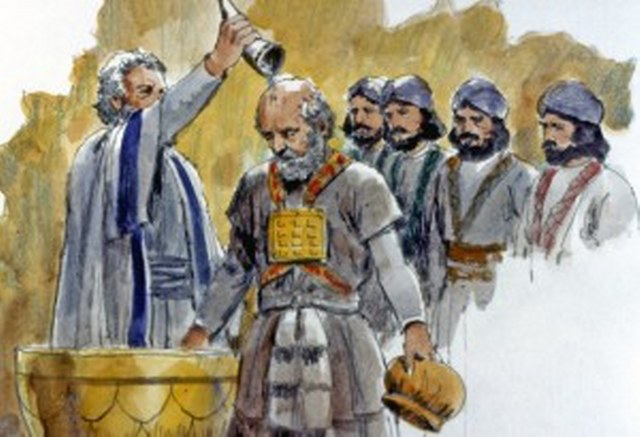
God is instituting consecration ceremonies for his priests and sending a strong message to the Israelites at the same time. The second ram is the ram of ordination. Aaron and his sons lay their hands on the ram’s head as a sign that this ram is being slaughtered so that its blood will be used to purify them and set them apart for the work of their ministry.

First, the ram is slaughtered and the blood collected. Moses then anoints Aaron and his sons with the blood on their right ears, their right thumbs, and their right big toes.

Rabbi Bradley Artson has this to say about this ritual: An ancient commentator, Philo ( Philo, 1st Century Egypt), perceived that, “The fully consecrated must be pure in words and actions and in life; for words are judged by hearing, the hand is the symbol of action, and the foot of the pilgrimage of life.” Thus, Philo reads specific meaning into each of the three body parts by analyzing the special function of each part in terms of their human use.”

At a child’s birth–with ‘brit milah‘ (circumcision), as at the first Passover, when blood was smeared on the lintels of Jewish homes, blood marks the moment or the place as a transition between death and renewed life. Here, too, by placing sacrificial blood on the priest’s extremities, the Torah indicates that the newly-ordained ‘kohen’ has passed through a transitional moment from being a private citizen to becoming a representative of God and a public leader. Ear, hand and foot–an abbreviated code for his entire body–emphasize that service to one’s highest ideals, to one’s people, or to one’s God, must be total. Through his induction into the Temple ritual, he entered a higher state of purity, devotion and of service. To become a nation of priests requires of us no less.”

(Rabbi Bradley Artson, https://www.myjewishlearning.com/article/ears-thumbs-and-toes/)

APPLICATION: For Christians, the Blood of Jesus Christ shed on the cross at Calvary has provided the ultimate Sacrifice and there is no longer a need for animal sacrifices. But to ignore the significance of the ceremony used to consecrate Aaron and his sons is to pass up a vital learning point. Aaron and his sons were anointed so that they would LISTEN to God, that they would WORK for God and for His people, and that they would WALK in God’s ways. Everyone who wishes to truly serve God must make a similar dedication of himself or herself.

While this ritual was very meaningful, not long after this, two of Aaron’s sons disobeyed so flagrantly that God struck them dead on the spot. Aaron and his sons were to remain in the tabernacle for seven days of consecration, being anointed daily. On the eighth day, as Moses and Aaron were offering the first sacrifices for the people at the tabernacle, Nadab and Abihu decided to show off by offering incense that God had not ordered. The two might have been drunk because immediately after their deaths, God ordered Aaron, “You and your sons are not to drink wine or strong drink when you enter the Tent of Meeting, or else you will die; this is a perpetual statute for the generations to come.”(Leviticus 10:9) This points out the fact that you can serve God or yourself, but you cannot do both at the same time.

The whole purpose of the consecration ceremony and the prolonged stay in the Tabernacle was to allow the priests to concentrate on God and their calling as priests. Evidently in the case of Nadab and Abihu, they were focusing on their new status as priests. Did they sneak in wine? We don’t know!

A wise person once said, “You can accomplish almost anything if you don’t worry about who gets the credit.” If we are truly to follow God, God is the One who always should get the credit. To quote the late Pastor Curtis Petrey, “God is in management; we are only in advertising.” As we go through our lives, let us resolve to listen to God, to do His work, and to walk the walk, not merely talk the talk.

PRAYER: Father God, thank you for your glorious Word! Help us to have ears to listen, hands ready to do your Will, feet to walk in your ways, and hearts that are dedicated to you. In the mighty and precious Name of Jesus. Amen.