Archive for October, 2021

OCTOBER 12, 2021 BEING FAITHFUL NO MATTER WHAT 10: IT’S A BOY!!! CONGRATULATIONS!

October 12, 2021

Ruth 4:13 – 22 “So Boaz took Ruth and she became his wife. And he had relations with her, the LORD enabled her to conceive, and she gave birth to a son. Then the women said to Naomi, “Blessed be the LORD, who has not left you this day without a kinsman-redeemer. May his name become famous in Israel. He will renew your life and sustain you in your old age. For your daughter-in-law, who loves you and is better to you than seven sons, has given him birth.”

And Naomi took the child, placed him on her lap, and became a nurse to him. The neighbor women said, “A son has been born to Naomi,” and they named him Obed. He became the father of Jesse, the father of David.

The Line of David: Now these are the generations of Perez: Perez was the father of Hezron, Hezron was the father of Ram, Ram was the father of Amminadab, Amminadab was the father of Nahshon, Nahshon was the father of Salmon, Salmon was the father of Boaz, Boaz was the father of Obed, Obed was the father of Jesse, and Jesse was the father of David.”

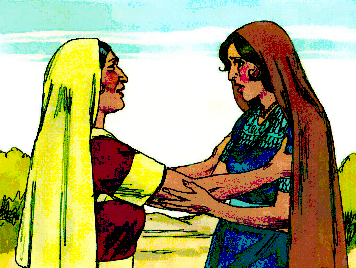
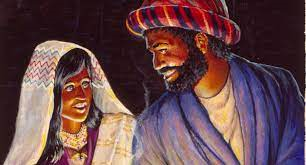
Finally! After all that suffering, all the bereavements, all the struggles, all the worries about starvation, all the shame, and all the anxiety about the actions of the other relatives – finally, Boaz and Ruth are married and have a baby boy, Obed. Naomi is thrilled beyond belief! Now she has a grandson to care for and her husband’s name will not be erased from the roles in Israel. Boaz is thrilled and proud because he has fathered a son so promptly after his marriage; all the elders at the city gate are undoubtedly congratulating him and expressing their admiration.

Ruth is thrilled, proud, and relieved because she has given Boaz a son and because she is now able to bear children. (Remember, there is never any mention of Ruth having had children while she was in Moab. Ruth was probably terrified that she might prove to be barren and thus a failure as a woman. Ruth might well have feared that she would lose the pregnancy or that she would be unable to get pregnant at all. Such a failure could have resulted in Boaz putting Ruth away and taking a younger woman to give him offspring to carry on his name.)

Why wasn’t Ruth able to get pregnant before? Was there some kind of genetic problem in Elimelech’s family that caused both Mahlon and Chilion to die early deaths? And why didn’t Boaz already have children? We don’t know. All we do know is that God enabled Ruth to conceive and Obed was born, continuing the line that would ultimately produce both King David and the Messiah, Jesus.

APPLICATION: INFERTILITY! This problem is one of the cruelest things that can happen to a couple. Sometimes there are compelling reasons why the man or woman cannot contribute to the pregnancy. But many times, there are no reasons that can be found. If a marriage is predicated mainly with the goal of child – bearing, that marriage can easily fail. For a woman who loves her husband and who wants to give him a child, there is nothing more painful than watching other women who do not want their pregnancies abort their infants. In polygamous cultures, the first wife may either be divorced or merely shunned in favor of a younger woman who is fertile.

The Biblical account does not mention any previous children for either Ruth or Boaz. In that culture, both these otherwise admirable people would have been scorned for their failure to reproduce. (Overheard at the city gate: “Oh, Boaz! Well, you can’t deny that he is an excellent businessman and a good farmer. But what good is that wealth doing him? Where will that wealth go when he dies?”) Overheard at the village well: (“Oh Ruth? That woman from Moab who came to Bethlehem with Naomi? Well, my dear, I heard from someone who knows Naomi VERY WELL that woman never got pregnant all the time she was married to Mahlon! Humph! So she’s pretty – so what? She’ll be a hag before she’s thirty!”)

The why’s of infertility may be difficult, but this one thing we do know: God wants to put children in families. For many, adoption is the answer. For some, God withholds biological children but gives them young men and women who need parenting of a kind that their biological parents cannot provide.

For years I ran a bush hospital in a remote part of northeastern Ghana. I still work in that hospital. As the only doctor for more than 100,000 people, I had no time to parent small children and never became pregnant, despite trying. But God has given my husband and me non – biological children, young men and women whose parents are generally peasant farmers. These young people need funding for school and encouragement and guidance as they negotiate their way in a world their parents have never known. My husband and I do not replace biological parents; we come along side biological parents when they are present. But many times one or both parents are dead, leaving the young to fend for themselves. When we can educate the older children in a family to the point that they have professions, they can then help their younger siblings, thus saving the entire family.

Perhaps God has not given you biological children of your own. Why not ask Him to show you how you can help widows and orphans and children at risk? James 1:27 says, “Religion that is pure and undefiled before God, the Father, is this: to visit orphans and widows in their affliction, and to keep oneself unstained from the world.”

PRAYER: Father God, thank You for loving each of us so much that You want us to be in families! Help us to look around us and to see those who need whatever assistance we can give. Thank You that when we care for widows and orphans, we can be sure that we are doing Your work. In the mighty and precious Name of King Jesus. Amen.
OCTOBER 11, 2021 BEING FAITHFUL NO MATTER WHAT 9: BOAZ RISKS EVERYTHING FOR RUTH

October 11, 2021

Ruth 4:1 – 12 “Meanwhile, Boaz went to the gate and sat down there. Soon the kinsman-redeemer of whom he had spoken came along, and Boaz said, “Come over here, my friend, and sit down.” So he went over and sat down. Then Boaz took ten of the elders of the city and said, “Sit here,” and they did so.

And he said to the kinsman-redeemer, “Naomi, who has returned from the land of Moab, is selling the piece of land that belonged to our brother Elimelech. I thought I should inform you that you may buy it back in the presence of those seated here and in the presence of the elders of my people. If you want to redeem it, do so. But if you will not redeem it, tell me so I may know, because there is no one but you to redeem it, and I am next after you.”

“I will redeem it,” he replied.

Then Boaz said, “On the day you buy the land from Naomi and also from Ruth the Moabitess, you must also acquire the widow of the deceased in order to raise up the name of the deceased on his inheritance.” The kinsman-redeemer replied, “I cannot redeem it myself, or I would jeopardize my own inheritance. Take my right of redemption, because I cannot redeem it.”

Now in former times in Israel, concerning the redemption or exchange of property, to make any matter legally binding a man would remove his sandal and give it to the other party, and this was a confirmation in Israel. So the kinsman-redeemer removed his sandal and said to Boaz, “Buy it for yourself.”

At this, Boaz said to the elders and all the people, “You are witnesses today that I am buying from Naomi all that belonged to Elimelech, Chilion, and Mahlon. Moreover, I have acquired Ruth the Moabitess, Mahlon’s widow, as my wife, to raise up the name of the deceased through his inheritance, so that his name will not disappear from among his brothers or from the gate of his home. You are witnesses today.”

“We are witnesses,” said the elders and all the people at the gate. “May the LORD make the woman entering your home like Rachel and Leah, who together built up the house of Israel. May you be prosperous in Ephrathah and famous in Bethlehem. And may your house become like the house of Perez, whom Tamar bore to Judah, because of the offspring the LORD will give you by this young woman.”

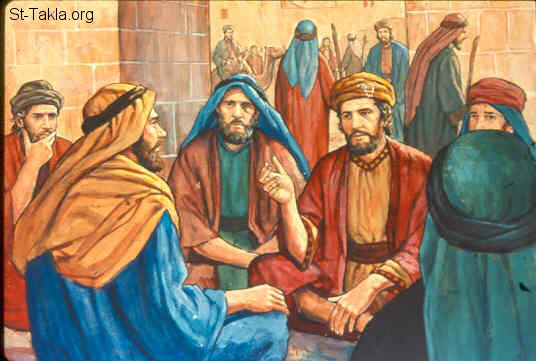
Boaz has sat in the city gate of Bethlehem waiting for Elimelech’s closest male relative to come along. Now Boaz has called a minyan, an assembly of ten city elders, so that he can put the problems of Naomi and Ruth before the assembly. The question to be decided is this: will the closest male relative be willing to marry Ruth, knowing that the first – born son from that union will claim Elimelech’s patrimony and not his? Will this man be willing to take the risk that Ruth will later have other sons who can inherit from him? Boaz himself is willing to take that risk; however, as an observant Jew, he must give this man the chance of first refusal.

Interestingly enough, Boaz does not lead off with the question regarding Ruth but with a straight forward question regarding a land transaction. Land in Israel is ultimately considered to belong to God; however, every effort is to be made to retain the inheritance of those who have died for their progeny. Boaz begins with the land matter because he knows his relative will be interested enough to stay and discuss that.

Once Elimelech’s nearest relative realizes that there is more at stake than merely a land issue, he backs off quickly. Why should this man risk his family losing his inheritance in case Ruth only has one son or in case that son dies without heirs? Nope! This fellow is no risk – taker! If Boaz wants to play dice with his family’s future, fine.

Does Boaz already have a shrewd idea of how his relative would react? Quite likely. Boaz is a leader in town; there are very few secrets to which he is not privy. And if Boaz really is a judge, he might already have had dealings with this many and might know the level of his timidity. But when this man tells Boaz, “Buy it for yourself,” Boaz might be forgiven if he inwardly gives a sigh of relief.

One of the most wonderful parts of this story is the blessings that the elders and “all the people at the gate” pronounce over Boaz. “May the LORD make the woman entering your home like Rachel and Leah, who together built up the house of Israel. May you be prosperous in Ephrathah and famous in Bethlehem. And may your house become like the house of Perez, whom Tamar bore to Judah, because of the offspring the LORD will give you by this young woman.”

At this point, we might ask “Who is Tamar?” Tamar actually married Judah’s first – born son, who was so evil that God killed him. As custom demanded, Tamar then married Onan, Judah’s second – born son; however, when Onan was having sex with Tamar, he withdrew prematurely, so that he would not impregnate Tamar, thus refusing to raise up a son for his dead older brother. God was so furious at Onan that Onan died as well. At that point, Judah was afraid for Tamar to marry his third son. Tamar eventually disguised herself as a cult prostitute and had sex with Judah, and Perez was the result of that somewhat incestuous union. Judah acknowledged that Tamar was more righteous than he was because he had failed to follow God’s commands in refusing to allow his third son to marry Tamar.

Everybody in Bethlehem knew the story of Tamar, because they were descended from Judah and from Perez. And yet, nobody blamed Tamar and they hailed her as the mother of Perez. No mother would advise her daughter to take the drastic measures that Tamar took; however, God allowed Tamar to be remembered honorably and to even become part of the blessing pronounced over Boaz and Ruth.

APPLICATION: There are two main lessons to learn from this passage. First, if God is leading you to take a risk, do so. You must make sure that God and you are on the same page and that God is really leading you, but if God is leading, then step out in faith. Second, those who take divine risks will be divinely rewarded. In purchasing Naomi’s land and espousing Ruth to himself, Boaz was taking the risk that Ruth might have only one son with nobody left to carry on his inheritance. But Boaz became a human ancestor to the Messiah, and the blessings pronounced by the citizens of Bethlehem came true magnificently.

PRAYER: Father God, help us to trust You so that if You do ask us to take risks, we will be willing to step out in faith. Help us to follow hard after You all the days of our lives. In the mighty and precious Name of King Jesus. Amen.
OCTOBER 10, 2021 BEING FAITHFUL NO MATTER WHAT 8: WHO WAS BOAZ?

October 10, 2021

Ruth 4:1 “Meanwhile, Boaz went to the gate and sat down there. Soon the kinsman-redeemer of whom he had spoken came along, and Boaz said, “Come over here, my friend, and sit down.” So he went over and sat down. Then Boaz took ten of the elders of the city and said, “Sit here,” and they did so.”

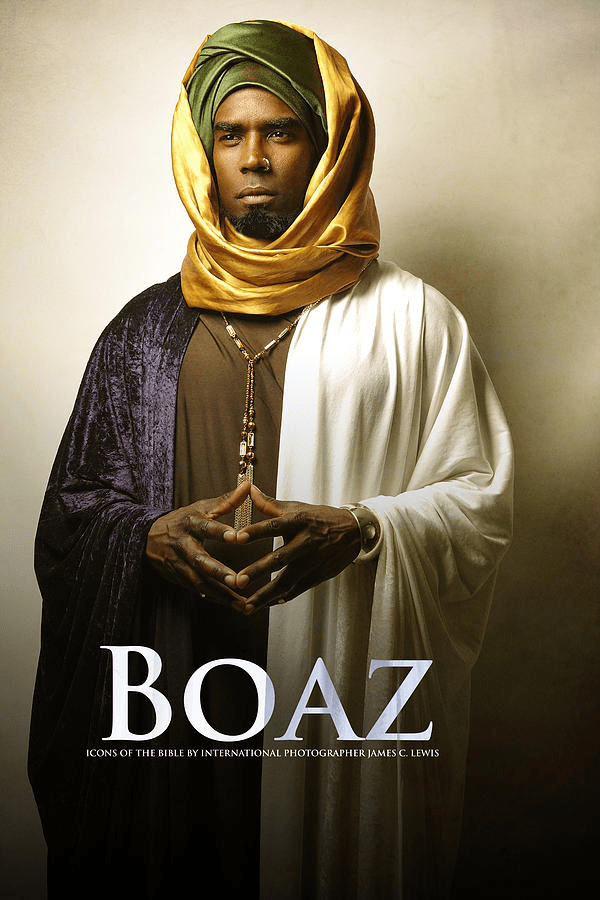
The time has come to ask “Who was Boaz and why was he so significant?” The background to the Book of Ruth is so full of interesting stuff that it is difficult to know where to start. The name “Boaz” in Hebrew means “strength.” According to traditional rabbinic sources as quoted in Wikipedia, Boaz was a prince and a judge in Bethlehem, a righteous man who may have lived at the time of Eli, the High Priest. Traditionally, Moabite men were not allowed to become Israelites because their forbears had refused to help Moses and the Israelites during the Exodus. (Deuteronomy 23:3) But according to Jewish law, the children followed the father, not the mother, so there was no such proscription against Moabite women like Ruth. Boaz was an observant worshiper of God, hence the description of Boaz greeting his workers in Ruth 2:4, “The Lord be with you,” with the workers responding, “The Lord bless you.”

Throughout the description of Boaz and Ruth’s meeting and subsequent interactions, there is never any doubt that Boaz behaved honorably, graciously, and generously. (Notice that while Naomi’s late husband Elimelech had other relatives in Bethlehem, there is never any mention of those men having helped her.)

Wikipedia Boaz further expands on this as follows: ”The midrash Ruth Rabbah states that being a pious man, Boaz on his first meeting with Ruth perceived her conscientiousness in picking up the grain, as she strictly observed the rules prescribed by the Law. This, as well as her grace and her chaste conduct during work, induced Boaz to inquire about the stranger, although he was not in the habit of inquiring after women (Ruth Rabba to ii. 5;Talmudic tractate Shabbat 113b). In the conversation that followed between Boaz and Ruth, the pious proselyte said that, being a Moabite, she was excluded from association with the community of God (Deuteronomy 23:3). Boaz, however, replied that the prohibition in the Scripture applied only to the men of Moab – and not to the women. He furthermore told her that he had heard from the prophets that she was destined to become the ancestress of kings and prophets; and he blessed her with the words: “May God, who rewards the pious, also reward you” (Targum Ruth ii. 10, 11;Pesiḳ, ed. Buber, xvi. 124a). Boaz was especially friendly toward the poor stranger during the meal, when he indicated to her by various symbolic courtesies that she would become the ancestress of the Davidic royal house, including the Messiah(Ruth R.to ii. 14;Shab.113b). As toward Ruth, Boaz had also been kind toward his kinsmen, Naomi’s sons, on hearing of their death, taking care that they had an honorable burial (Ruth Rabba to 2.20). (All quotes from Rabbinical Literature)

Some sources suggest that Boaz oversaw the threshing of the barley and the end of harvest celebrations to ensure that these events would not turn into orgies. Evidently, such things frequently happened in those days.

When Boaz wanted the matter of Ruth and Naomi decided, he called ten other elders to join him, thus bringing together a minyan. Encyclopedia Britannica defines a minyan this way: Minyan, (Hebrew: “number”, ) plural Minyanim, or Minyans, in Judaism, the minimum number of males (10) required to constitute a representative “community of Israel” for liturgical purposes. A Jewish boy of 13 may form part of the quorum after his Bar Mitzvah (religious adulthood). The number ten comes from Numbers 14:27 when God referred to the ten spies who brought back a bad report about the Promised Land as “an evil assembly.” Joshua and Caleb were not included in that assembly because they urged the Israelites to go in and conquer. For the agreements regarding Naomi’s property and Ruth’s future, Boaz required a minyan, of which he could not be part, since he was the one bringing the problem for solution.

APPLICATION: Does character matter? In this day and age when character assassination is routinely accomplished through social media, we sometimes wonder if righteousness is really worth it. But remember this: we are not merely living out our lives in front of people; we are living our lives under God’s scrutiny as well. While people may misjudge you and twist your motives, God knows your heart and your thoughts.

Boaz had a longstanding reputation for righteousness before Ruth and Naomi ever returned to Bethlehem. Had Boaz not been a man of sterling character, God would have found someone else for Ruth as a husband and Boaz would have remained in obscurity. But Boaz eventually lived up to the meaning of his name and became a human ancestor of the Messiah. What an incredible blessing!

Over the years, we have had numerous people attempt to spread stories about us. One group insisted that we “lacked a can – do attitude.” Four years later, we were running a bush hospital in the middle of a tribal war. We never changed. This we have learned: you can survive any lie if you just keep living righteously and consistently. In the long run, God, not man, keeps the books. Character does matter!

PRAYER: Father God, thank You are the One who knows us better than we know ourselves. Help us to model ourselves after righteous men like Boaz. Help us to refuse to listen to slander, to defamation, or to degradation. Help us to follow You all the days of our lives. In the mighty and precious Name of King Jesus. Amen.
OCTOBER 9, 2021 BEING FAITHFUL NO MATTER WHAT 7: EVERYBODY NEEDS A HERO!

October 9, 2021

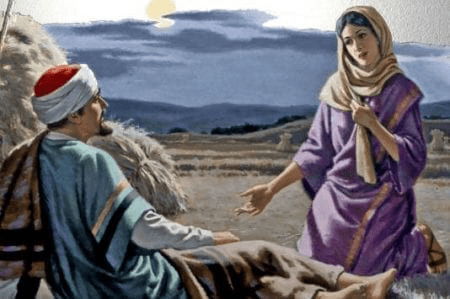
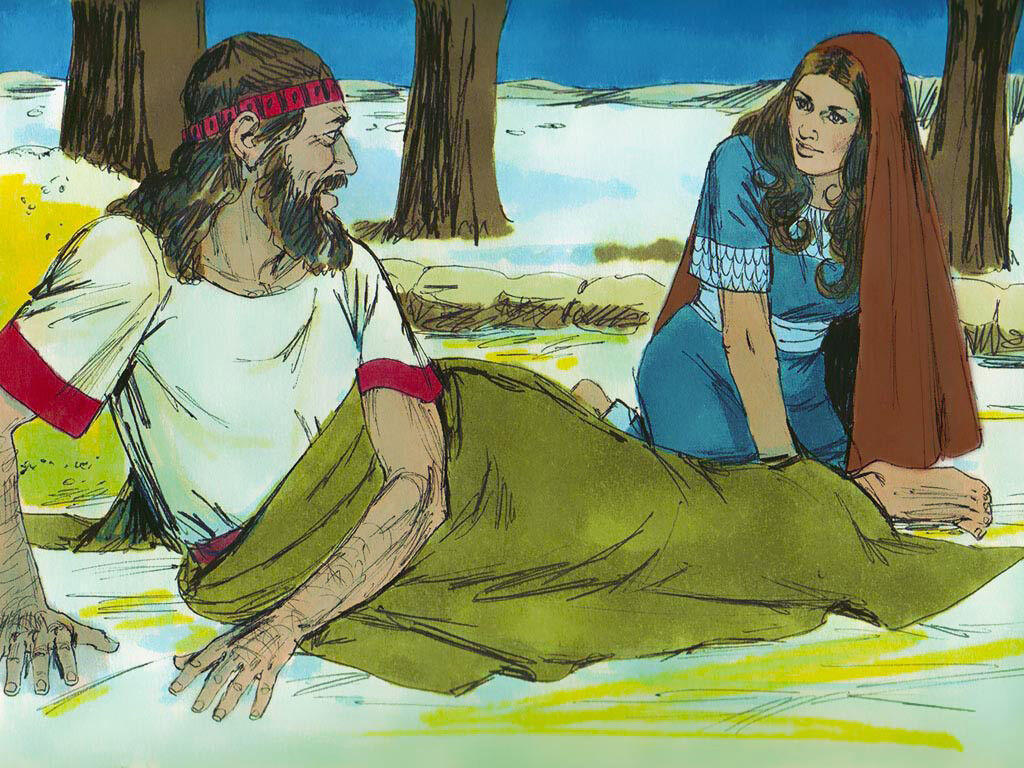
Ruth 3: 8-18 “Who are you?” he asked. “I am your servant Ruth,” she replied. “Spread the corner of your garment over me, for you are a kinsman-redeemer.” Then Boaz said, “May the LORD bless you, my daughter. You have shown more kindness now than before, because you have not run after the younger men, whether rich or poor. And now do not be afraid, my daughter. I will do for you whatever you request, since all my fellow townspeople know that you are a woman of noble character. Yes, it is true that I am a kinsman-redeemer, but there is a redeemer nearer than I. Stay here tonight, and in the morning, if he wants to redeem you, good. Let him redeem you. But if he does not want to redeem you, as surely as the LORD lives, I will. Now lie here until morning.”

So she lay down at his feet until morning, but she got up before anyone else could recognize her. Then Boaz said, “Do not let it be known that a woman came to the threshing floor.” And he told her, “Bring the shawl you are wearing and hold it out.” When she did so, he shoveled six measures of barley (about 58 pounds or 26.3 kilograms of barley) into her shawl. Then he went into the city. When Ruth returned to her mother-in-law, Naomi asked her, “How did it go, my daughter?” Then Ruth told her all that Boaz had done for her. And she said, “He gave me these six measures of barley, for he said, ‘Do not go back to your mother-in-law empty-handed.’” “Wait, my daughter,” said Naomi, “until you find out how things go, for he will not rest unless he has resolved the matter today.”

What were the duties of the kinsman – redeemer? The Bible describes three different types of kinsman – . (https://messianic-revolution.com/l25-21-three-roles-kinsman-redeemer/)

The first type is the one who purchases back land for a family member who is about to lose it due financially crushing circumstances.

The second type is the one who avenges the death of a family member, assuming that family member died as the result of violence or negligence.

The third type is the one who steps in to marry a son-less widow so she can give birth to a son who will carry on the deceased father’s line.

Ruth as a citizen of Moab would not be considered an Israelite; however, if a foreigner renounced his/her land and gods and chose to live in Israel and to worship the One True Living God of Israel, then that person could be considered an Israelite. At this point, it is important to remember Ruth’s assertion to Naomi prior to leaving Moab. (Ruth 1:16 “But Ruth replied: “Do not urge me to leave you or to turn from following you. For wherever you go, I will go, and wherever you live, I will live; your people will be my people, and your God will be my God.”) Having renounced her country and her gods and having chosen to join Naomi in Israel and to worship Naomi’s God, Ruth could now be considered an Israelite. And the amount of barley Boaz gave Ruth this time was twice as much as she had been able to glean on her first day, roughly enough to feed Ruth and Naomi for nearly two months. When Naomi saw that barley, she must have been elated. Boaz had graphically demonstrated that he was going to take definite action, justifying Naomi’s confidence in him.

APPLICATION: Many of us love TV shows or videos in which the tall strong super hero conquers the villains, solves all the problems, saves the innocent, and gets the heroine. You can transfer that theme to any genre such as the wild West, outer space or shows featuring police or fire service. But at the end of the day, we find the idea of a strong protector who rights all wrongs incredibly appealing. For the Israelites, the kinsman – redeemer fulfilled the role of a family hero.

While we don’t know very much about Boaz, we can assume that he was a bit older than Ruth, since he commended Ruth for not having run after younger men, “whether rich or poor.” What did Ruth think when she heard that there was another kinsman – redeemer who was more closely related to Elimelech than was Boaz? Ruth knew Boaz to be honest, kind, and hard – working, but what about this other fellow? Who knows what he might do? Would he be kind to Ruth, or might he treat her as an inferior concubine or even refuse to do anything at all? Had I been Ruth, I would have been begging the God of Israel for H*E*L*P!!!

Why is the story of Ruth and Boaz important for us? We too have a Kinsman – Redeemer; His name is Jesus. Each one of us was born with a sin nature; we might want to be good and noble all the time, but invariably, we fail. Sometimes we fail the most when we are trying the hardest. And God Almighty is a just and holy God, who cannot tolerate anything or anybody sinful to enter heaven. Even if we are willing to die for our own sins, our sacrifice will be tainted because we are inherently sinful. Only the blood sacrifice of a perfect sinless man would be sufficient to pay for our sins.

Jesus Christ came as the Son of God, born to a virgin. Jesus was – and is – fully God and fully man. Although Jesus was without any sin whatsoever, He willingly gave up His life by crucifixion, one of the cruelest deaths any government could ever administer. But because Jesus was – and is – also fully God, He rose from the dead. For those of us who believe in Jesus’ death and resurrection, we can copy Ruth. We can renounce our citizenship in a fallen sinful world and claim citizenship in heaven – not because of any good thing we have done but because Jesus has already paid the price for our sins.

For Ruth and Naomi, Boaz became their earthly savior, but Boaz also died. But for anyone who will believe in Jesus Christ, our citizenship is an eternal one. One day, even though our physical bodies will die, we will be in heaven eternally because of the Blood of Jesus.

PRAYER: Father God, thank you so much for sending Jesus as our Kinsman – Redeemer to live as a man and to shed His Blood for our sins. Help us to fully trust in that sacrifice and to follow hard after You all the days of our lives. In the mighty and precious Name of King Jesus. Amen.
OCTOBER 8, 2021 BEING FAITHFUL NO MATTER WHAT 6: NAOMI AND RUTH TAKE A BIG RISK

October 8, 2021

Ruth 3:1 – 7 “One day Ruth’s mother-in-law Naomi said to her, “My daughter, should I not seek a resting place for you, that it may be well with you? Now is not Boaz, with whose servant girls you have been working, a relative of ours? In fact, tonight he is winnowing barley on the threshing floor. Therefore wash yourself, put on perfume, and wear your best clothes. Go down to the threshing floor, but do not let the man know you are there until he has finished eating and drinking. When he lies down, note the place where he lies. Then go in and uncover his feet, and lie down, and he will explain to you what you should do.”

“I will do everything you say,” Ruth answered. So she went down to the threshing floor and did everything her mother-in-law had instructed her. After Boaz had finished eating and drinking and was in good spirits, he went to lie down at the end of the heap of grain. Then Ruth went in secretly, uncovered his feet, and lay down. At midnight, Boaz was startled, turned over, and there lying at his feet was a woman!”

 Even though the Israelites had been ordered by God to care for widows, orphans, and strangers, Ruth was still very vulnerable. At any point some young man desiring her as a wife might corner her outside town, rape her, and then insist that the sex was consensual. Naomi wanted to find Ruth a good husband, someone who would really care for her, and Boaz as a relative was a natural choice.

Still, Ruth and Naomi were taking a huge risk, and it all depended on the character of Boaz. Naomi undoubtedly knew Boaz before she left Bethlehem, but that was years ago and sometimes people change. When Naomi first left Bethlehem, Boaz had a reputation in town for righteousness and excellent character. Once Naomi and Ruth returned, Naomi would naturally begin chatting with her friends and finding out what was going on. You can almost hear the conversation at the village well. “I remember my husband Elimelech had a cousin named Boaz. What’s he up to these days?” “Oh, Boaz. He’s a great guy and doing fine, but that’s a terrible tragedy. Boaz married this nice young lady, but she died delivering her first baby. Both Boaz’s wife and the child died. It was terrible. Since then, he hasn’t looked at any of the eligible maidens here in Bethlehem. Heaven knows, some of these pushy mothers have certainly tried hard enough!” It might have been after one such conversation that Naomi began making her plans.

Why did Naomi counsel Ruth to wait until Boaz was asleep and then uncover his feet and lie under that covering? Naomi knew that Boaz would be celebrating the end of the harvest with everyone else; this meant that several men might be drunk. By having Ruth wait until Boaz (and all the others) were asleep, Naomi was ensuring that Ruth wouldn’t be grabbed by one of the other men. And by Ruth lying at the feet of Boaz and covering herself with the cloth covering his feet, Ruth was symbolically requesting his protection in marriage.

There are those who have attempted to place sexual connotations on this passage and to indicate that Ruth must have seduced Boaz; however, that would be far contrary to the character of either Ruth or Naomi. I believe that Naomi had gotten sufficient information from her friends to know that Boaz faithfully worshiped God according to the laws of Moses. As a traditionalist, Boaz would appreciate the significance of Ruth uncovering his feet and then lying down and covering herself with that same cloth.

APPLICATION: At first glance, we might ask ourselves what this ancient story has to do with us? So Ruth eventually gets a husband, so what? But look at Ruth’s situation.

1. Ruth was an outsider, a stranger who had come to Bethlehem out of love for her mother – in – law. Perhaps Ruth’s own mother was dead and none of her aunts was kind. Perhaps Ruth’s mother had a toxic personality. Perhaps Ruth’s family had collected a big dowry from Elimelech and Naomi and having spent that dowry, they had no more use for Ruth. The Bible never mentions anything about Ruth’s family at all.

Even if we are living in our own country, many of us may feel estranged from our families. Perhaps we have come out of a loveless situation, one in which those caring for us did the bare minimum and then left us to our own devices. Perhaps we now find ourselves in toxic working situations in which those above us take credit for our work and those below us scheme to undermine us.

2. Ruth was in a very vulnerable position socially. With only Naomi at the house, Ruth had nobody to protect her physically. Again, many of us feel just as if we are walking around with targets on our backs, especially now that women and children are being snatched out of parking lots. We lived in midtown Manhattan for a year; for that year, I felt that anytime I went on the street, someone was sizing me up to mug me. (I always tried to appear as if attacking me would be a worthless exercise.)

3. Naomi was probably now in her forties in an age when many people died by age 35. Even if Naomi could have helped and protected Ruth, Naomi had no resources and no way of telling how much longer she might live. Ruth needed more security than Naomi could provide. For all these reasons, Ruth needed a husband and a protector, someone with enough social position that nobody could complain if he married a Moabite woman. Ruth needed someone with sufficient wealth to care for both Naomi and her.

 We all need love and acceptance and protection. We too need families to which we can belong. If our original nuclear family fails us, we will seek out other families – church, school, or special interest groups. We all have an innate desire for connection. Even those of us who claim to have given up on people frequently cherish dogs or cats or even ferrets or mice – anything that might give us warmth and affection.

Ruth was blessed to have Boaz, who did come to her aid. But what of those of us who see no help in our situations? Deuteronomy 33:27 gives us the answer: “The eternal God is your refuge, and underneath are the everlasting arms. He will drive out your enemies before you, saying, ‘Destroy them!’

For Ruth and Naomi, Boaz eventually became their protector. But for the rest of us, our Protector is the One True Living God. Isaiah 40:10 – 11 says, “See, the Sovereign Lord comes with power, and he rules with a mighty arm. See, his reward is with him, and his recompense accompanies him. He tends his flock like a shepherd: He gathers the lambs in his arms and carries them close to his heart; he gently leads those that have young.

Isaiah 40:28-31 says,” Do you not know? Have you not heard? The Lord is the everlasting God, the Creator of the ends of the earth. He will not grow tired or weary, and his understanding no one can fathom. He gives strength to the weary and increases the power of the weak. Even youths grow tired and weary, and young men stumble and fall; but those who hope in the Lord will renew their strength.
They will soar on wings like eagles; they will run and not grow weary, they will walk and not be faint.”

Boaz became the protector for Ruth and Naomi and a husband for Ruth. But we have a Protector who is far greater than Boaz. Our Protector knows each one of us individually, our hurts, our desires, our struggles, and our trials. Boaz died and was buried, but our Protector is eternal, immortal, all – powerful and all – knowing, all loving and all – wise.

PRAYER: Father God, many of us are afraid to call You “Father” or even hate the term because of the mean ways our earthly fathers have treated us. Many more refuse to own You as Lord because they have suffered at the hands of authority figures and shy away from trusting anybody. Please, Lord, let Your righteousness, Your peace, and Your truth soak into our hearts so that we begin to understand how much You love us. You never fail. You are Jehovah Jireh, our Provider. Help us to trust You all the days of our lives. In the mighty and precious Name of King Jesus. Amen.
OCTOBER 7, 2021 BEING FAITHFUL NO MATTER WHAT 5: THE REWARDS BEGIN

October 7, 2021

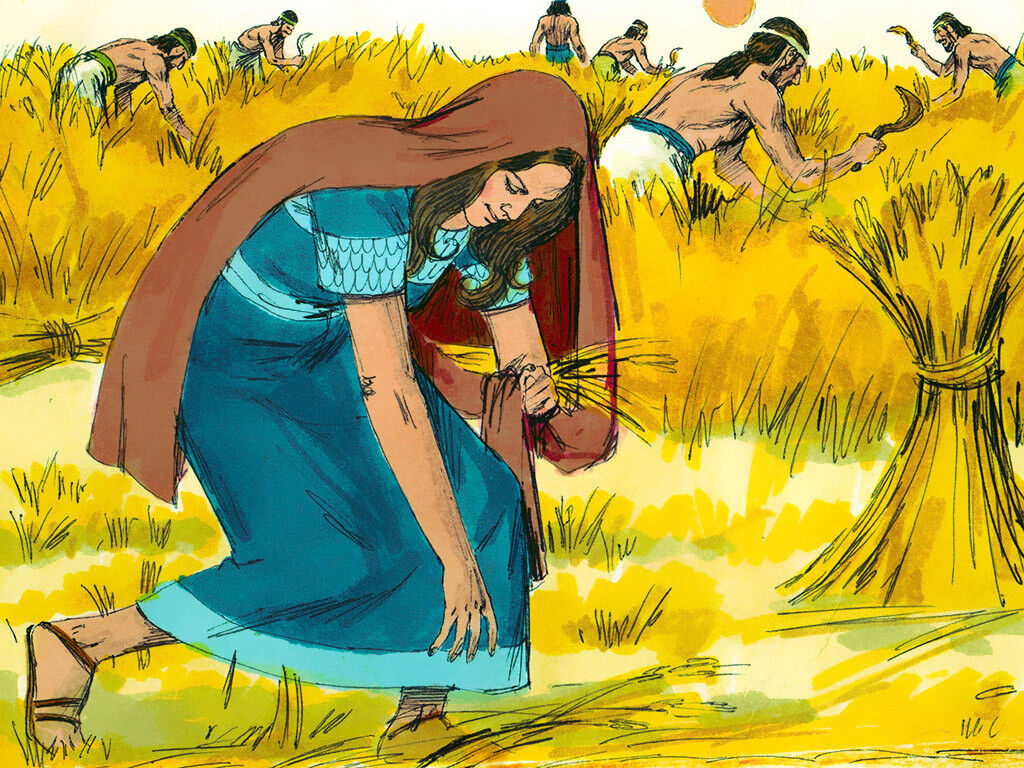
Ruth 2:13 – 23“My lord,” she said, “may I continue to find favor in your eyes, for you have comforted and spoken kindly to your maidservant, though I am not like one of your servant girls.” At mealtime Boaz said to her, “Come over here; have some bread and dip it into the vinegar sauce.” So she sat down beside the harvesters, and he offered her roasted grain, and she ate and was satisfied and had some left over.

When Ruth got up to glean, Boaz ordered his young men, “Even if she gathers among the sheaves, do not insult her. Rather, pull out for her some stalks from the bundles and leave them for her to gather. Do not rebuke her.”

So Ruth gathered grain in the field until evening. And when she beat out what she had gleaned, it was about an ephah of barley. (An ephah is approximately 20 dry quarts or 22 liters (probably about 29 pounds or 13.2 kilograms of barley). She picked up the grain and went into the town, where her mother-in-law saw what she had gleaned. And she brought out what she had saved from her meal and gave it to Naomi. Then her mother-in-law asked her, “Where did you glean today, and where did you work? Blessed be the man who noticed you.” So she told her mother-in-law where she had worked. “The name of the man I worked with today is Boaz,” she said.

Then Naomi said to her daughter-in-law, “May he be blessed by the LORD, who has not withdrawn His kindness from the living or the dead.” Naomi continued, “The man is a close relative. He is one of our kinsman-redeemers.” (The Hebrew word for kinsman-redeemer or guardian-redeemer is a legal term for the kinsman who redeems or vindicates a relative.)

Then Ruth the Moabitess said, “He also told me, ‘Stay with my young men until they have finished gathering all my harvest.’” And Naomi said to her daughter-in-law Ruth, “My daughter, it is good for you to work with his young women, so that nothing will happen to you in another field.” So Ruth stayed close to the servant girls of Boaz to glean grain until the barley and wheat harvests were finished. And she lived with her mother-in-law.”

Ruth returns to Naomi in success. Not only has Ruth had a profitable day gleaning barley, but she has also made a good impression on Boaz, a close relative of Naomi’s late husband Elimelech and a kinsman redeemer. The role of the kinsman redeemer is described in Leviticus 25:25 “If one of your fellow Israelites becomes poor and sells some of their property, their nearest relative is to come and redeem what they have sold.” 

Why hasn’t Naomi already contacted Boaz? Perhaps Naomi is ashamed. After all, when Naomi left Bethlehem with her family, they might have been one of the wealthier families in town and now she is poverty – stricken.

APPLICATION: As we read the story of Ruth and Naomi, it almost seems like a fairy tale and too good to be true. But this story came from people who preserved stories in a long – standing oral tradition. Children were probably drilled in these stories and the details had to be correct at every point. And in the genealogies of Jesus, Ruth and Boaz figure prominently. This story is probably a true one.

One of the most encouraging parts of this story is the continuing devotion of Ruth and Naomi to each other. Obviously, these two women really did love and respect each other, giving a picture of what an ideal relationship between a daughter – in – law and a mother – in – law might be.

Yet another remarkable feature is the amount of barley Ruth was able to glean in one day. The barley Ruth brought would probably feed Ruth and Naomi for nearly a month and certainly must have relieved Naomi’s anxiety a bit. God is already blessing Naomi for returning to Bethlehem and Ruth for accompanying Naomi.

Sometimes we fail to look at our situations and see the small ways in which God is blessing us. This is a mistake. As many people have learned, a grateful heart improves one’s whole outlook as well as one’s health. May we look for the blessings as we go throughout our days.

PRAYER: Father God, help us to look for Your blessings and to be grateful for them. Help us also to share our joy at these blessings with others and help them to see Your blessings in their lives also. In the mighty and precious Name of King Jesus. Amen.
OCTOBER 6, 2021 BEING FAITHFUL NO MATTER WHAT 4: BE SURE THAT FAITHFULNESS GETS NOTICED

October 6, 2021

Ruth 2:1 – 12 “Now Naomi had a relative on her husband’s side, a prominent man of noble character from the clan of Elimelech, whose name was Boaz. And Ruth the Moabitess said to Naomi, “Please let me go into the fields and glean heads of grain after someone in whose sight I may find favor.” “Go ahead, my daughter,” Naomi replied.

So Ruth departed and went out into the field and gleaned after the harvesters. And she happened to come to the part of the field belonging to Boaz, who was from the clan of Elimelech. Just then Boaz arrived from Bethlehem and said to the harvesters, “The LORD be with you.” “The LORD bless you,” they replied. And Boaz asked the foreman of his harvesters, “Whose young woman is this?” The foreman answered, “She is the Moabitess who returned with Naomi from the land of Moab. She has said, ‘Please let me glean and gather among the sheaves after the harvesters.’ So she came out and has continued from morning until now, except that she rested a short time in the shelter.”

Then Boaz said to Ruth, “Listen, my daughter. Do not go and glean in another field, and do not go away from this place, but stay here close to my servant girls. Let your eyes be on the field they are harvesting, and follow along after these girls. Indeed, I have ordered the young men not to touch you. And when you are thirsty, go and drink from the jars the young men have filled.” At this, she fell on her face, bowing low to the ground, and said to him, “Why have I found such favor in your eyes that you should take notice of me, even though I am a foreigner?”

Boaz replied, “I have been made fully aware of all you have done for your mother-in-law since the death of your husband, how you left your father and mother and the land of your birth, and how you came to a people you did not know before. May the LORD repay your work, and may you receive a rich reward from the LORD, the God of Israel, under whose wings you have taken refuge.”

God’s timing is perfect! Just as Ruth and Naomi trudged into town wondering where they would sleep and how they would survive, the barley harvest was starting. Farms were small, and the workers from various households went out to harvest the grain.

Deuteronomy 24:19 says, “When you reap your harvest in your field and forget a sheaf in the field, you shall not go back to get it. It shall be for the sojourner, the fatherless, and the widow, that the Lord your God may bless you in all the work of your hands.” Ruth and Naomi were both widows and sojourners, having just come to Bethlehem.

When Naomi sent Ruth out to glean, she knew that Ruth had the right to do so. But what about the young men working in the fields? Who would protect Ruth from being raped? God in His mercy led Ruth to the part of the field belonging to Naomi’s late husband’s kinsman Boaz. In the small town of Bethlehem, everybody already knew about Ruth’s dedication to Naomi, despite the fact that Ruth was from Moab and no Israel. By this point, the people of Bethlehem probably knew everything about Ruth and were favorably impressed. As soon as Boaz learned that Ruth was working in his field, he arranged for her to be protected and to have water and shelter with his workers.

APPLICATION: Many times, we feel as if all our efforts are fruitless! We strive to do the right thing; however, we are firmly convinced that nobody sees us and nobody cares. But God is omniscient, all – knowing, and God cares deeply about each one of us.

One of the most encouraging things about the story of Ruth is the way in which God provided and protected both Ruth and Naomi. They made a long difficult journey from Moab back to Bethlehem. Upon reaching Bethlehem, Ruth was able to find work that would help feed the two of them. And God gave Ruth favor with Boaz, here described as a “prominent man of noble character.”

Several years ago, a popular song told us that “God is watching from a distance.” But those words are totally inaccurate. God is not watching from a distance; God is as close to us as our heartbeats. God cares about each one of us as if we were His only child. It is rank heresy to claim that God is a distant Deity who is standing back waiting for us to make a mistake so that He can punish us. Psalm 46:1 says, “God is our refuge and strength, an ever-present help in trouble.” Far from being distant and uninterested, God is passionately interested in every aspect of our lives. It is we who have created a gap between ourselves and God.

Each of us has a problem: we are sinners. By ourselves, nothing we can do will be sufficient for us to earn our way into heaven. But John 3:16 tells us that “God so loved the world, that He gave His only Son, that whosoever believes on Him should not die, but should have everlasting life.” That “whosoever” means that everyone who believes on God and the blood sacrifice that Jesus made for our sins will have eternal life. God has done what we ourselves were unable to accomplish. But there are conditions.

We must face the fact that we are sinners. We need to pray to God and confess that we are sinful and unable to help ourselves. We then need to ask God to forgive our sins and to help us to live for Him and not for ourselves.

PRAYER: Father God, we confess that we have continually done wrong things and that nothing good or noble that we do will get us into heaven. Thank you for sending Jesus as the perfect sacrifice for our sins, dying in our place. Please forgive our sins and help us to live for You the rest of our lives. Amen.

OCTOBER 5, 2021 BEING FAITHFUL NO MATTER WHAT 3: WHEN LIFE TURNS BITTER, DON’T GIVE UP!

October 5, 2021

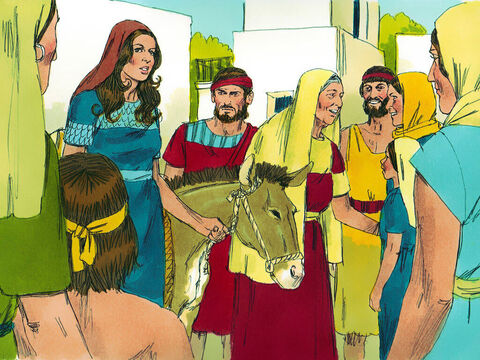
Ruth 1:19 – 22 “So Naomi and Ruth traveled until they came to Bethlehem. When they entered Bethlehem, the whole city was stirred because of them, and the women of the city exclaimed, “Can this be Naomi?”

“Do not call me Naomi, (pleasant) ” she replied. “Call me Mara, (bitter) because the Almighty has dealt quite bitterly with me. I went away full, but the LORD has brought me back empty. Why call me Naomi? After all, the LORD has testified against me, and the Almighty has afflicted me.”

So Naomi returned from the land of Moab with her daughter-in-law Ruth the Moabitess. And they arrived in Bethlehem at the beginning of the barley harvest.

Poor Naomi! Ten years ago, Naomi’s family left Bethlehem with Naomi, her husband, and two sons. Perhaps there may have been several servants and a number of donkeys. Now Naomi is returning as a widow whose sons are dead, accompanied only by her daughter – in – law and a single donkey. When Naomi left, she was tall and graceful and her hair was jet black. As the wife of a wealthy man, Naomi was clothed beautifully and wore a few tasteful gold ornaments. Now Naomi’s hair has turned white from the stress of her bereavement, and her once – cheerful face is marred by sadness. Instead of the fine linen Naomi used to wear, she is clothed in the sack cloth appropriate to mourners. There are no ear rings or nose rings or bracelets or necklaces. Naomi’s feet are shod in worn – out sandals and gritty from the dust of travel. Little wonder that the women of the city are exclaiming, “Can this be Naomi?”

Although Naomi’s appearance has excited comment, the biggest change is Naomi’s personality. Once Naomi was one of the most positive and encouraging people in Bethlehem, truly living up to the meaning of her name. Now Naomi doesn’t even want to claim her name but insists that people should call her “Mara” or “bitter instead because she feels God has abandoned her.

APPLICATION: Ever feel that God has abandoned you and that you are in a deep deep hole with no way out? Welcome to the ranks of those who have suffered! It’s amazing but when you are in the midst of a problem with no visible way out, there are ALWAYS those who are more than willing to offer advice – most of it rubbish!

Several years ago, we returned to America after a very difficult first missionary term. The group that sent us out had overlooked enormous problems with the project to which they sent us. Our living situation was a nightmare for several months. When we attempted to correct some of the problems, we found ourselves misunderstood and severely criticized by the very people who had sent us there.

Once we returned to America, we found ourselves surrounded by well – intentioned friends with no understanding of our situation. We soon learned that it was those who had suffered the most themselves who were the most helpful. I finally told one sympathetic friend who did understand our situation that I didn’t want to hear from anyone else who had not earned their Ph. D. in suffering! We certainly understood how Naomi must have felt when she returned bereaved and penniless to Bethlehem.

BUT in Naomi’s story, there is a tiny ray of hope, no more than a gleam on the horizon. “And they arrived in Bethlehem at the beginning of the barley harvest.” Naomi had no idea that the timing of Ruth’s and her arrival was so important, but God did. All the way from Moab, God guided Ruth and Naomi so that they would arrive in Bethlehem precisely at the correct time. The barley harvest was starting, and farmers needed as much help as possible. Good workers were in short supply, and Ruth was a good worker. God was about to graphically demonstrate that Naomi was wrong and that He had neither testified against her nor afflicted her.

Our story also had a happy ending. God used the struggles we endured during our first missionary term to teach us a number of important lessons very quickly. During our first time in Ghana, we became acquainted with leaders of the Assemblies of God Ghana Church. Eventually the AG Ghana Church invited us to work in their clinic in Saboba, Northern Region, launching us on the continuation of our missionary careers. But our sufferings during our first term were necessary and educational. We learned to trust God and not ourselves, particularly when it appeared that all might be falling apart.

Do you feel that you are in a deep hole? Call out to God! No matter how restricted your hole is, there is always room for God in there. And once there is room for God, He will give you a way out. But be prepared for the way to be tough; most of us learn our most important lessons the hard way. And hang in there! God is not through with you yet.

PRAYER: Father God, thank You that even when our situations look bleak, You are already making a way for us. Thank You that You love us and care for us. Thank You also for leading us through difficulties so that we can be stronger and more compassionate to those around us. In the mighty Name of King Jesus. Amen.

OCTOBER 4, 2021 BEING FAITHFUL, NO MATTER WHAT 2: IS THERE A GOD – SIZED ABYSS IN YOUR LIFE?

October 4, 2021

Ruth 1:6 – 18 “When Naomi heard in Moab that the LORD had attended to His people by providing them with food, she and her daughters-in-law prepared to leave the land of Moab. Accompanied by her two daughters-in-law, she left the place where she had been living and set out on the road leading back to the land of Judah.

Then Naomi said to her two daughters-in-law, “Go back, each of you to your mother’s home. May the LORD show you loving devotion,a as you have shown to your dead and to me. May the LORD enable each of you to find rest in the home of your new husband.” And she kissed them as they wept aloud and said, “Surely we will return with you to your people.” But Naomi replied, “Return home, my daughters. Why would you go with me? Are there still sons in my womb to become your husbands? Return home, my daughters. Go on, for I am too old to have another husband. Even if I thought there was hope for me to have a husband tonight and to bear sons, would you wait for them to grow up? Would you refrain from having husbands? No, my daughters, it grieves me very much for your sakes that the hand of the LORD has gone out against me.”

Again they wept aloud, and Orpah kissed her mother-in-law goodbye, but Ruth clung to her. “Look,” said Naomi, “your sister-in-law has gone back to her people and her gods; follow her back home.”

But Ruth replied: “Do not urge me to leave you or to turn from following you. For wherever you go, I will go, and wherever you live, I will live; your people will be my people, and your God will be my God. Where you die, I will die, and there I will be buried. May the LORD punish me, and ever so severely, if anything but death separates you and me.” When Naomi saw that Ruth was determined to go with her, she stopped trying to persuade her.”

This is one of the most wonderful stories in the Bible, and it comes in the same time period as the Book of Judges, which makes it even more remarkable. Naomi must have been a fantastic lady! One of my friends once described her mother – in – law as her “mother – in – love.” Ruth and Orpah might have agreed with that description.

By now, Ruth and Orpah have been widows for a little while. In that culture, young women would readily re – marry, and there were probably men lined up waiting to marry both these ladies. But Naomi had been so kind and so loving to Ruth and Orpah that they didn’t want to leave her for anything. Finally, Orpah was persuaded to go back, but Ruth absolutely refused. Poor Orpah! This is the last that we ever hear of her. We don’t know if Orpah remarried, nor do we know what happened to her and her family once she returned to Moab. What would have happened to Orpah had she gone on with Ruth and Naomi? Perhaps Orpah would have become as famous and as highly regarded as Ruth. But Orpah chose to return to her familiar life in Moab and idolatry.

Ruth’s dedication to Naomi was incredible. Why was Ruth so willing to leave her own people and to risk remaining as an outcast among the Israelites? The only real answers were love and spiritual hunger. Ruth loved Naomi so much that being separated from her appeared worse than death. Ruth was even willing to leave her traditional gods behind to worship Naomi’s God, and this might be part of the key to the whole thing. Of all the family, it appears that Naomi was the only one who remained a true worshiper of the One True Living God once the family left Bethlehem. Hungry for truth, Ruth saw something in Naomi that was worth giving up everything else – a relationship with a real God and not an idol.

APPLICATION: It was Blaise Pascal who wrote,”“What else does this craving, and this helplessness, proclaim but that there was once in man a true happiness, of which all that now remains is the empty print and trace?

This he tries in vain to fill with everything around him, seeking in things that are not there the help he cannot find in those that are, though none can help, since this infinite abyss can be filled only with an infinite and immutable object; in other words by God himself” Blaise Pascal Pensees

An “abyss” is a deep or seemingly bottomless chasm. Sometimes people have paraphrased Pascal by describing this abyss as a “god – sized vacuum.” No matter how one describes it, Pascal was correct. Only an infinite God can fill a hole that stretches to infinity.

The questions for us as we read this story are these: Are we choosing the safe and familiar, or are we willing to let God really fill the abyss in our lives and lead us into a fearful and glorious unknown future? Have we really let God fill up all the emptiness in our lives, or are we trying to fill it with food, work, sports, or other obsessions? As long as we choose anything less than God, we will remain unsatisfied and unhappy.

St. Augustine in his Confessions said, “Our hearts are restless, until they can find rest in you.” Today, let us ask God to show us anything we have tried to substitute for Him in our hearts. May God help us to truly find our rest in Him.

PRAYER: Father God, thank You for loving for us and for caring for us so much that You choose to be with us. Open our eyes to see the things we have been trying to substitute for You. May we reject everything that is not of You and may You fill our hearts and our lives. In the mighty Name of King Jesus. Amen.

OCTOBER 3, 2021 BEING FAITHFUL, NO MATTER WHAT 1: TEMPORARY FIXES CAN BECOME PERMANENT PROBLEMS

October 3, 2021

Ruth 1: 1 – 5 “In the days when the judges ruled, there was a famine in the land. And a certain man from Bethlehem in Judah, with his wife and two sons, went to reside in the land of Moab. The man’s name was Elimelech, his wife’s name was Naomi, and the names of his two sons were Mahlon and Chilion. They were Ephrathites from Bethlehem in Judah, and they entered the land of Moab and settled there.

Then Naomi’s husband Elimelech died, and she was left with her two sons, who took Moabite women as their wives, one named Orpah and the other named Ruth. And after they had lived in Moab about ten years, both Mahlon and Chilion also died, and Naomi was left without her two sons and without her husband.”

WHAT’S IN A NAME? The name “Bethlehem” literally means “house of bread,” indicating that the area was fertile. “Elimelech” means “my God is king,” while “Naomi” means “pleasant.” But when famine came, Elimelech failed to live up to his name and chose to move to Moab where the people worshiped Chemosh and Astarte. (Astarte was the fertility goddess and her rites always included sexual orgies.)

Why would Elimelech move when others did not? Some people have speculated that Elimelech was originally very wealthy and that he moved to Moab to avoid disgrace. (https://baptistbulletin.org/the-baptist-bulletin-magazine/may-06-issue/moving-to-moab-was-elimelech-wrong/)

Whatever the reason, this move turned out to be disastrous. Elimelech died – perhaps soon after the family had settled in Moab. Naomi’s two sons married Moabite women, something God had forbidden the Israelites to do. There is no mention of any children being born to either of these two men. Ten years after the move, both Mahlon and Chilion died, leaving Naomi alone. The name “Mahlon” can mean “a dance,” indicating something joyful; however, it can also mean “sickness.” “Chilion” can mean “completion;” however, it can also mean “destruction or wasting.” Traditionally, many Jews have believed that the negative meanings of these names indicate the failings of these two men that led to their untimely deaths. Mahlon is suspected of having committed acts of profanation by worshiping his wife’s god Chemosh. Chilion might have also fallen into idolatry, bringing condemnation upon himself.

APPLICATION: Many times, we are confused about which way to go and we are tempted to choose the course that is most expedient. We don’t intend to stay in a questionable situation for very long; we only want to be there temporarily while we wait for things to work out somewhere else.

In some accounts of this story, Elimelech and his family are described as intending to “sojourn” in Moab, that is, to stay there only for a short time and then to return to Bethlehem. But temporary measures have a way of becoming permanent. As the months turned into years, the family became less and less interested in returning to Bethlehem. If the family were to survive, Elimelech would have to start some kind of business; he might have been required to make routine sacrifices to the local gods to do business in Moab. The sons probably made friends with the young people in their new location; certainly, they married Moabite girls. Was Naomi was able to find some women her own age with whom she could socialize, or was she the sole person in the family who longed to return to Bethlehem?

At any rate, the move to Moab proved to be a disaster! Elimelech evidently died shortly after the move. Ten years later, Mahlon and Chilion both died as well, leaving Naomi bereaved and penniless. Naomi’s only remaining relatives were Orpah and Ruth, her two daughters – in – law. Now Naomi was a stranger, an outsider with nobody to care for her or to support her. In a culture in which family was paramount, Naomi had lost her support system; her only viable option was to return to Bethlehem.

What lessons can we take from this part of the story? Each of us needs to search our hearts, our minds, and our lives to see where we have compromised. What “temporary” solutions have we allowed to become permanent? Are we trapped in a living situation that has become toxic? Are we trapped in a profession that has become a burden but that we fear to leave? Have we allowed a family problem to fester when we should have addressed it long ago? Have we settled for less than God’s best for our lives and the lives of our family members because we are afraid to make a change? May God help us to ask ourselves the tough questions and then to make necessary changes!

PRAYER: Father God, thank You that You are infinitely capable and that You have only the best for us in mind! Open our eyes to see where we have compromised and then to return to Your plans for our lives. In the mighty and precious Name of King Jesus. Amen.