Archive for March, 2022

MARCH 31, 2022 SO YOU WANT TO BE A PROPHET #16 1 SAMUEL 11:1-15 DON’T BOTHER TAKING REVENGE – LET GOD HANDLE IT

March 31, 2022

1 Samuel 11:1 – 15 “Soon Nahash the Ammonite came up and laid siege to Jabesh-gilead. All the men of Jabesh said to him, “Make a treaty with us, and we will serve you.” (According to the Berean Study Bible, some sources say, “Nahash, king of the Ammonites, had viciously oppressed the people of Gad and Reuben, gouging out the right eye of each Israelite dwelling there. He would not allow anyone to rescue them, and there was no Israelite east of the Jordan whose right eye had not been gouged out. But 7,000 men had escaped from the Ammonites and settled in Jabesh-gilead.”

But Nahash the Ammonite replied, “I will make a treaty with you on one condition, that I may put out everyone’s right eye and bring reproach upon all Israel.”

“Hold off for seven days,” replied the elders of Jabesh, “and let us send messengers throughout Israel. If there is no one to save us, we will surrender to you.” When the messengers came to Gibeah of Saul and relayed these words in the hearing of the people, they all wept aloud. Just then Saul was returning from the field, behind his oxen. “What troubles the people?” asked Saul. “Why are they weeping?” And they relayed to him the words of the men from Jabesh.

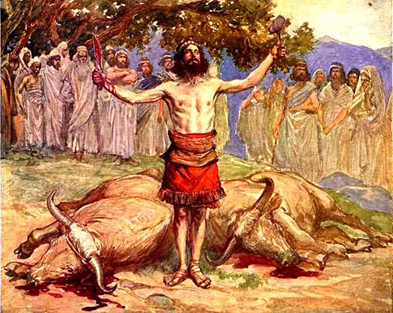
When Saul heard their words, the Spirit of God rushed upon him, and he burned with great anger. He took a pair of oxen, cut them into pieces, and sent them by messengers throughout the land of Israel, proclaiming, “This is what will be done to the oxen of anyone who does not march behind Saul and Samuel.” Then the terror of the LORD fell upon the people, and they turned out as one man. And when Saul numbered them at Bezek, there were 300,000 Israelites and 30,000 men of Judah. So they said to the messengers who had come, “Tell the men of Jabesh-gilead: ‘Deliverance will be yours tomorrow by the time the sun is hot.’” And when the messengers relayed this to the men of Jabesh, they rejoiced.

Then the men of Jabesh said to Nahash, “Tomorrow we will come out, and you can do with us whatever seems good to you.” The next day Saul organized the troops into three divisions, and during the morning watch they invaded the camp of the Ammonites and slaughtered them, until the hottest part of the day. And the survivors were so scattered that no two of them were left together.

Then the people said to Samuel, “Who said that Saul should not reign over us? Bring those men here, so that we can kill them!” But Saul ordered, “No one shall be put to death this day, for today the LORD has worked salvation in Israel.”

Then Samuel said to the people, “Come, let us go to Gilgal and renew the kingship there.” So all the people went to Gilgal and confirmed Saul as king in the presence of the LORD. There they sacrificed peace offerings before the LORD, and Saul and all the Israelites rejoiced greatly.”
It’s about one month since Samuel pronounced Saul as king over Israel, and across the Jordan, the men of Gad and Reuben have suffered severely! Nahash, king of the Ammonites, has gouged out the right eye of every man in the tribes of Gad and Reuben. Why the right eyes? Many archers are right – handed and this is the eye they would use to sight a bow. Lacking a right eye, many archers would be rendered helpless. Now Nahash is trying to come after the 7,000 men who have escaped to Jabesh – gilead. The people of Jabesh – gilead stall for time while their messengers rush to inform Saul.

Saul is returning from the field when these messengers arrive wailing loudly. As soon as Saul hears the threats made by Nahash, the Spirit of God “rushes on him.” Acting quickly and decisively, Saul cuts two of his own oxen to pieces and immediately sends the pieces throughout Israel as a threat to anyone who refuses to march behind Saul and Samuel. The message is simple: show up or this is what will happen to your oxen! As the Israelites look at those bloody chunks of freshly killed oxen, the terror of the Lord falls on them. 300,000 Israelites report, plus 30,000 men from the tribe of Judah. Saul messages the people of Jabesh – gilead that deliverance is on the way.

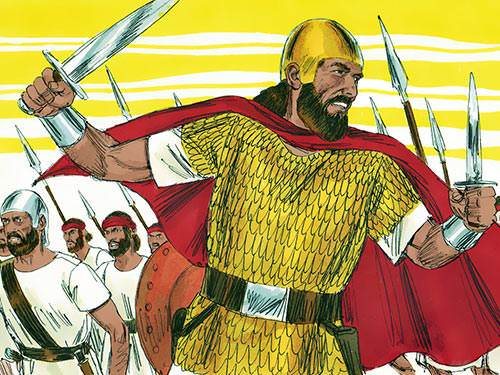
Saul keeps his promise, dividing his troops into three divisions and invading the Ammonite camp during the morning watch, probably starting at 3 AM and fighting until the hottest part of the day, around 1 PM. There are so few survivors that they are scattered across the landscape. With victory adrenaline pumping, the Israelites demand that those who have been trying to undermine Saul be dragged out and slaughtered, but Saul puts the focus back on the Lord. “No one shall be put to death this day, for today the LORD has worked salvation in Israel.” The Israelites obey Saul, and everyone moves to Gilgal, confirming Saul as king and offering peace offerings in worship to the Lord.

APPLICATION: This refusal to take vengeance on critics is probably one of the finest acts of Saul in his early kingship. If only Saul would keep on this path, things would go well. Under the power of the Holy Spirit, Saul has won an enormous victory, one that encourages and inspires all of Israel, including the tribes of Reuben, Gad, and the half tribe of Manasseh who have settled on the east side of the Jordan. Now Saul is encouraging the people to worship the Lord who is the Author of victory.

What happens when we confound our critics? Even though Samuel anointed Saul before all of Israel, there were still plenty of critics opposing that choice. Now Saul has not merely defeated the Ammonites, but he has smashed their forces, leaving only a handful of survivors wandering across the landscape. It is obvious that God has brought about this victory and that God has empowered Saul. For those who have supported Saul all along, it’s pay back time, but Saul stops them.

Are we ever justified in taking vengeance? No. God told the Israelites in Deuteronomy 32:35,Vengeance is Mine; I will repay. In due time their foot will slip; for their day of disaster is near, and their doom is coming quickly.” Later on, Paul wrote to the Romans, advising, “Do not avenge yourselves, beloved, but leave room for God’s wrath. For it is written: “Vengeance is Mine; I will repay, says the Lord.” (Romans 12:19)

Why can’t we take vengeance?

  1. We don’t know all the circumstances. Only God knows. That kid who bullied us in school might have been beaten verbally or physically by abusive parents.
  2. We are likely to carry things too far or to behave inappropriately. Some of the Israelites were ready to kill Saul’s critics; that would have solved nothing and released a flood of retaliation.
  3. We generally fail to recognize our contribution to the problem. Perhaps we have offended someone and now they are retaliating.
  4. The fruits of the Holy Spirit are love, joy, peace, patience, kindness, goodness, faithfulness, gentleness, and self – control. You can have vengeance or the fruits of the Holy Spirit but you can’t have both.
  5. Vengeance only digs deeper and deeper holes in our spirits. There is no such thing as “enough” vengeance. Better to leave the problem to God.
  6. Forgiveness brings healing and spiritual release while vengeance simply ties us up in barbed wire.

PRAYER: Father God, thank You for loving us and for caring for us. Thank You that You are the only One who can handle vengeance and that You have perfect knowledge of our circumstances. Thank You that we can trust You to work all things out to bring Your Kingdom into reality. In the mighty and precious Name of King Jesus. Amen.

MARCH 30, 2022 SO YOU WANT TO BE A PROPHET#15 1 SAMUEL 10:17 – 27 – GOD MAY APPOINT YOU BUT PEOPLE MAY STILL REJECT YOU

March 30, 2022

1 Samuel 10:17 – 27 “After this, Samuel summoned the people to the LORD at Mizpah and said to the Israelites, “This is what the LORD, the God of Israel, says: ‘I brought Israel up out of Egypt, and I rescued you from the hands of the Egyptians and of all the kingdoms that oppressed you.’ But today you have rejected your God, who saves you from all your troubles and afflictions, and you have said to Him, ‘No, set a king over us.’ Now therefore present yourselves before the LORD by your tribes and clans.”

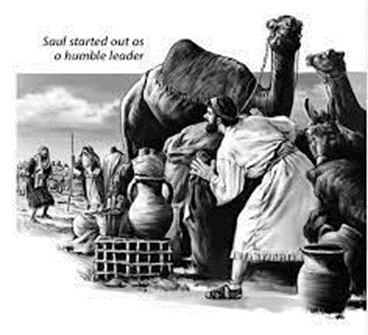
Thus, Samuel had all the tribes of Israel come forward, and the tribe of Benjamin was selected. Then he had the tribe of Benjamin come forward by its clans, and the clan of Matri was selected. (Some sources say, “And he brought the family of the Matrites near man by man.”) Finally, Saul son of Kish was selected. But when they looked for him, they could not find him. So again, they inquired of the LORD, “Has the man come here yet?”

And the LORD replied, “Behold, he has hidden himself among the baggage.”

So, they ran and brought Saul, and when he stood among the people, he was a head taller than any of the others. Samuel said to all the people, “Do you see the one the LORD has chosen? There is no one like him among all the people.”

And all the people shouted, “Long live the king!”

Then Samuel explained to the people the rights of kingship. He wrote them on a scroll and laid it up before the LORD. And Samuel sent all the people away, each to his own home.

Saul also went to his home in Gibeah, and the men of valor whose hearts God had touched went with him.

But some worthless men said, “How can this man save us?” So, they despised him and brought him no gifts; but Saul remained silent about it.”

The time for selecting the king has come, and Samuel has called the Israelites together at Mizpah, “watchtower,” about 8 miles north of Jerusalem. Once more, Samuel reminds the Israelites that they are the ones who have rejected God as King over Israel and have made it necessary to select a human king. Now Samuel is casting lots as a means of indicating God’s choice for a king. Why is it necessary to cast lots and to bring the tribes out one by one? The Israelites firmly believe that God is the one who will control the results of this process. If Samuel simply stands up and informs the Israelites that God has already chosen Saul, the Israelites will probably refuse to listen and will reject Saul.

As the tribes come forth and the lot – casting continues, there are probably men already grumbling in the background, “BENJAMIN??? God has selected the tribe of BENJAMIN? Why not my tribe? Benjamin is the smallest and least important tribe in Israel! There must be some mistake!”) By the time the family of Kish is selected and then Saul is nowhere to be found, the grumbling is probably becoming deafening. But Saul can’t hide forever, and the Lord tells Samuel that Saul is hiding among the baggage. Samuel brings Saul out and proclaims him as king.

“Then Samuel explained to the people the rights of kingship. He wrote them on a scroll and laid it up before the LORD. And Samuel sent all the people away, each to his own home. Saul also went to his home in Gibeah, and the men of valor whose hearts God had touched went with him.

But some worthless men said, “How can this man save us?” So, they despised him and brought him no gifts; but Saul remained silent about it.”

Samuel obeys the Lord and explains the rights of kingship to the people; he then writes all that information on a scroll and lays it up before the Lord, probably placing it in a special jar so that it will be preserved. “Men of valor” accompany Saul back to Gibeah. While most of the people go along with God’s choice of Saul as king, there are still some naysayers muttering in the background. It’s likely that these men are from tribes that were passed over during the selection process. “Hmph! Casting lots? Tell me that decision was not manipulated! Samuel is old; he’s probably been bought off by those fellows from Benjamin! Well, we’ll see what happens when Saul has to actually face an enemy! Either he’ll perform like a king or he won’t.” While everyone else brings gifts to Saul, these guys just sulk.

APPLICATION: Have you ever thought that God selected you for a task, only to find out that there were lots of people poised to reject you? When my husband and I first went to the small village where we have spent most of our missionary careers, we KNEW that God had called us! The Holy Spirit wrapped around us like a warm blanket and we were certain that God wanted us to be there. But when we actually moved into that remote area, there were a number of opponents. One man who had previously worked at the clinic and who was now running a chemist shop and doing procedures spread wild stories about us around town. Young nurses were carrying lies about us to the Regional Director of Health Services in hopes that they would be rewarded by being transferred to a better location. Then came the Northern Ethnic Conflict of 1994, when a number of doctors left the government facilities. We were in Accra when fighting broke out; however, we made it back by the end of March and began operating the next day. As we continued to save lives, the critics became quiet. We learned that we could overcome nearly any lie if we kept consistently serving the people.

There are many things that Saul did not do well in the course of his career as a king, but one thing he did right was this: when faced with criticism, Saul kept still. Saul could have attempted to confront his critics, but that really wouldn’t have solved anything. It was far better for Saul to act and demonstrate that God had chosen the right man.

We are still in the Lenten season. One of the many amazing things about the story of Jesus as he went through the mockery of kangaroo court trials at both a religious and civil level is this: Jesus kept still. Jesus was the Son of God as well as the son of man; had he wanted to, he could have identified each of his accusers and could have told the crowds the innermost thoughts of their hearts. Jesus could have completely embarrassed all those who were in league against him, but he refused. Jesus underwent cruel punishment and the most degrading form of death imaginable for the sake of all who would believe in him.

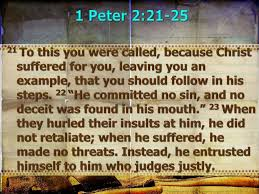
1 Peter 2:21 – 25 tells us, “This is the kind of life you’ve been invited into, the kind of life Christ lived. He suffered everything that came his way so you would know that it could be done, and also know how to do it, step-by-step. He never did one thing wrong, not once said anything amiss. They called him every name in the book and he said nothing back. He suffered in silence, content to let God set things right. He used his servant body to carry our sins to the Cross so we could be rid of sin, free to live the right way. His wounds became your healing. You were lost sheep with no idea who you were or where you were going. Now you’re named and kept for good by the Shepherd of your souls.” (The Message)

If God has called you to do something, listen to God and not to men and women who only want to tear you down! Be certain that it is really God who has called you, but once you are sure, go ahead! There has never been a righteous man or woman or a righteous cause that has not attracted criticism. The more closely you are following God, the stronger the satanic opposition is likely to be.

PRAYER: Father God, thank You for loving us and for caring for us. Thank You for the glorious example that Jesus set for us, that when we face unjust criticism, we don’t always have to defend ourselves because You can set things right. Help us to follow hard after You all the days of our lives. In the mighty and precious Name of King Jesus. Amen.
MARCH 29, 2022 SO YOU WANT TO BE A PROPHET #14 WHEN GOD CALLS YOU, ARE YOU LISTENING OR ARE YOU PLUCKING BLACKBERRIES?

March 29, 2022

1 Samuel 10:1 – 16 “Then Samuel took a flask of oil, poured it out on Saul’s head, kissed him, and said, “Has not the LORD anointed you ruler over His inheritance? When you leave me today, you will find two men at Rachel’s tomb in Zelzah on the border of Benjamin. They will say to you, ‘The donkeys you seek have been found, and now your father has stopped worrying about the donkeys and started worrying about you, asking, “What should I do about my son?”’

Then you will go on from there until you come to the Oak of Tabor. Three men going up to God at Bethel will meet you there, one carrying three young goats, another carrying three loaves of bread, and another carrying a skin of wine. They will greet you and give you two loaves of bread, which you will accept from their hands.

After that you will come to Gibeah of God, where the Philistines have an outpost. As you approach the city, you will meet a group of prophets coming down from the high place, preceded by harps, tambourines, flutes, and lyres, and they will be prophesying. Then the Spirit of the LORD will rush upon you, and you will prophesy with them; and you will be transformed into a different person.

When these signs have come, do as the occasion demands, for God is with you. And you shall go before me to Gilgal, and surely I will come to you to offer burnt offerings and to sacrifice peace offerings. Wait seven days until I come to you and show you what you are to do.”

As Saul turned to leave Samuel, God changed Saul’s heart, and all the signs came to pass that day. When Saul and his servant arrived at Gibeah, a group of prophets met him. Then the Spirit of God rushed upon him, and he prophesied along with them. All those who had formerly known Saul and saw him prophesying with the prophets asked one another, “What has happened to the son of Kish? Is Saul also among the prophets?” Then a man who lived there replied, “And who is their father?” So the saying became a proverb: “Is Saul also among the prophets?”

And when Saul had finished prophesying, he went to the high place.

Now Saul’s uncle asked him and his servant, “Where did you go?” “To look for the donkeys,” Saul replied. “When we saw they were not to be found, we went to Samuel.”

“Tell me,” Saul’s uncle asked, “what did Samuel say to you?”

And Saul replied, “He assured us that the donkeys had been found.” But Saul did not tell his uncle what Samuel had said about the kingship.”

Saul and his servant have eaten with Samuel and the invited guests. Now Samuel is anointing Saul as king; however, Samuel tells Saul that God will confirm this calling by three separate signs. First, two men will meet Saul at Rachel’s tomb, telling him that the donkeys have been found and now his father is concerned about Saul. The second sign will take place at a landmark known as the Oak of Tabor. In a land where there are very few trees, a large oak tree would definitely stand out. There, three men will give Saul two loaves of bread, a symbol of hospitality and acceptance. Then Saul will meet a group of prophets at Gibeah and the Spirit of the Lord will move Saul to prophesy. Finally, Saul is to wait seven days at Gilgal, where Samuel is scheduled to offer burnt offerings and peace offerings and where Samuel will give him further instructions.  Samuel is quite specific about the numbers of people who will meet Saul and their actions so that when Saul encounters these men, he will recognize the truth of Samuel’s prophecy. All the signs come to pass that day, confirming Samuel’s word.

Saul’s uncle meets Saul and his servant, asking them what Samuel has said. Wisely, Saul merely informs his uncle that Samuel has confirmed that the donkeys have been found. Why doesn’t Saul mention that Samuel has anointed him? At this point, Saul is closely following Samuel’s commands and Samuel hasn’t said anything about informing others. Perhaps also, Saul is still struggling to accept the idea that Samuel has anointed him as king. At any rate, Samuel gives the minimum amount of information necessary to be truthful.

APPLICATION: Saul is a dunderhead! Samuel, the foremost leader in Israel, has anointed Saul and has even given him a holy kiss sanctifying him for kingship. As if that isn’t enough, Samuel gives Saul three signs by which Saul will know that this anointing is really from God. Notice the precise descriptions Samuel gives; if Saul meets two men at someplace other than Rachel’s tomb, that cancels the first sign. If Saul meets only one man who gives him one loaf of bread, then whether or not they meet at the Oak of Tabor, this sign also is cancelled. And if Saul does not meet the prophets coming down from the hill at Gibeah or does not come under the influence of the Holy Spirit and prophesy, the third sign will also be nullified. But all three signs are fulfilled, and Saul goes to the high place at Gilgal.

Saul is given three signs from the Lord, and each of those signs comes true. If even one prophecy were to be fulfilled, it would be miraculous, let alone three prophecies as specific as these. If Saul actually has regard for the Lord, by the time the third prophecy is fulfilled, Saul should be on his knees thanking God…..but he isn’t. Saul goes blithely on, taking Samuel’s anointing and his kiss of appointment for granted.

“As Saul turned to leave Samuel, God changed Saul’s heart, and all the signs came to pass that day.” Why did God have to change Saul’s heart? Because previously, Saul had little or no regard for God. Saul is not a believer. There is nothing to indicate that Saul is any more holy than any of the men from his town or his tribe. God has Samuel delay the sacrifices at Gilgal for a week to give Saul time to ponder the calling God has laid on him and hopefully to pray about it. God is calling Saul to come up to a higher spiritual plane, but Saul isn’t listening. Saul just goes to Gilgal and sits.

Elizabeth Barrett Browning, the 19th century British poet, spoke about people like Saul when she observed, “Earth’s crammed with heaven, and every common bush afire with God, but only he who sees takes off his shoes; The rest sit round and pluck blackberries. “In those terms, Saul is just plucking blackberries.

Saul is one of the most tragic figures in the Bible because he has every opportunity for greatness and he blows it! The problem with Saul is that he accepts a God – ordained opportunity as if he deserves it; meanwhile, he has done nothing to distinguish himself. Saul has an ego to match his size, but he has never humbled himself before the Lord.

Why would God choose Saul to become the first king of Israel? Perhaps God chose Saul so that the Israelites would learn the difference between someone who LOOKED good and someone who actually WAS good. God was not playing games when He called Saul; had Saul humbled himself and asked Samuel to help him seek God’s face, Samuel would have been glad to do so and Saul’s entire story would have been vastly different.

We can criticize Saul, but what are we doing with the calling that God has laid on our lives? Do we seriously ask God for guidance so that we will do His perfect Will or do we behave like Saul, taking things for granted and trusting in our own judgement? May all of us realize that we will only see heaven on earth if we will remove our shoes as a symbol of God’s holiness.

PRAYER: Father God, help us to follow hard after You all the days of our lives! Help us to seek Your guidance throughout all the common activities of our days. In the mighty and precious Name of King Jesus. Amen.

MARCH 28, 2022 SO YOU WANT TO BE A PROPHET #13 1 SAMUEL 9:1 – 27 THE TRUE TEST OF A PROPHET IS HUMILITY!!!

March 28, 2022

1 Samuel 9:1 – 27 “Now there was a Benjamite, a powerful man, whose name was Kish son of Abiel, the son of Zeror, the son of Becorath, the son of Aphiah of Benjamin. And he had a son named Saul, choice and handsome, without equal among the Israelites—a head taller than any of the people.

One day the donkeys of Saul’s father Kish wandered off, and Kish said to his son Saul, “Take one of the servants and go look for the donkeys.” So Saul passed through the hill country of Ephraim and then through the land of Shalishah, but did not find the donkeys. He and the servant went through the region of Shaalim, but they were not there. Then they went through the land of Benjamin, and still they did not find them.

When they reached the land of Zuph, Saul said to his servant, “Come, let us go back, or my father will stop worrying about the donkeys and start worrying about us.” “Look,” said the servant, “in this city there is a man of God who is highly respected; everything he says surely comes to pass. Let us go there now. Perhaps he will tell us which way to go.”

“If we do go,” Saul replied, “what can we give the man? For the bread in our packs is gone, and there is no gift to take to the man of God. What do we have?” The servant answered him again. “Look,” he said “I have here in my hand a quarter shekel of silver. I will give it to the man of God, and he will tell us our way.”

(Formerly in Israel, a man on his way to inquire of God would say, “Come, let us go to the seer.” For the prophet of today was formerly called the seer.) “Good,” said Saul to his servant. “Come, let us go.” So they set out for the city where the man of God was. And as they were climbing the hill to the city, they met some young women coming out to draw water and asked, “Is the seer here?”

“Yes, he is ahead of you,” they answered. “Hurry now, for today he has come to the city because the people have a sacrifice on the high place. As soon as you enter the city you can find him before he goes up to the high place to eat. The people will not eat until he comes, because he must bless the sacrifice; after that, the guests will eat. Go up at once; you will find him.” So Saul and his servant went up toward the city, and as they were entering it, there was Samuel coming toward them on his way up to the high place.

Now on the day before Saul’s arrival, the LORD had revealed to Samuel, “At this time tomorrow I will send you a man from the land of Benjamin, and you are to anoint him leader over My people Israel; he will save them from the hand of the Philistines. For I have looked upon My people, because their cry has come to Me.” When Samuel saw Saul, the LORD told him, “Here is the man of whom I spoke; he shall rule over My people.”

Saul approached Samuel in the gateway and asked, “Would you please tell me where the seer’s house is?” “I am the seer,” Samuel replied. “Go up before me to the high place, for you shall eat with me today. And when I send you off in the morning, I will tell you all that is in your heart. As for the donkeys you lost three days ago, do not worry about them, for they have been found. And upon whom is all the desire of Israel, if not upon you and on all your father’s house?”

Saul replied, “Am I not a Benjamite from the smallest tribe of Israel, and is not my clan the least of all the clans of Benjamin? So why would you say such a thing to me?”

Then Samuel took Saul and his servant, brought them into the hall, and seated them in the place of honor among those who were invited—about thirty in all. And Samuel said to the cook, “Bring the portion I gave you and told you to set aside.”

So the cook picked up the leg and what was attached to it and set it before Saul. Then Samuel said, “Here is what was kept back. It was set apart for you. Eat, for it has been kept for you for this occasion, from the time I said, ‘I have invited the people.’” So Saul dined with Samuel that day. And after they had come down from the high place into the city, Samuel spoke with Saul on the roof of his house.

They got up early in the morning, and just before dawn Samuel called to Saul on the roof, “Get ready, and I will send you on your way!” So Saul arose, and both he and Samuel went outside together.

As they were going down to the edge of the city, Samuel said to Saul, “Tell the servant to go on ahead of us, but you stay for a while, and I will reveal to you the word of God.” So the servant went on.”

The Israelites have demanded a king, and God is going to grant that request. The first man God selects as king is Saul from the tribe of Benjamin. Benjamin was one of the smaller tribes; however, Saul is tall, handsome, and extremely good – looking. God wants to make sure the Israelites will not reject Saul on the basis of his appearance. Saul LOOKS like a king!

Why does Saul’s servant talk about giving the seer bread or money? Traditionally, anyone requesting a prophecy or prayer would give the prophet some token of appreciation. While a quarter of a shekel of silver doesn’t seem like much, it was actually 2.85 grams of silver. At today’s prices, the value would be $2.97. Evidently, it’s the intention that counts and not the actual amount.

God has already informed Samuel that He will bring a man from the land of Benjamin, and when Saul shows up, God confirms to Samuel that Saul is the future king of Israel. Saul has already saved back part of the meat from the sacrifice and now invites Saul to eat with him, seating him in the place of honor among thirty invited guests The portion of meat reserved for Saul is described by many commentators as the royal portion, or the portion of honor. The right shoulder was reserved for the priests, so the left shoulder might have been Samuel’s portion. Samuel is already honoring Saul as God’s choice for king even before he informs Saul of that fact.

APPLICATION: What must Samuel have felt like when God told him to select Saul and to honor Saul as he did? Samuel was the prophet, the seer, the one for whom everybody waited. Samuel had ministered for years. Now Samuel was honoring Saul, a young man he’d never even met until now.

Today the world is full of self – styled prophets who are fond of pronouncing “Thus says the Lord” in quavering voices, particularly when backed up by a keyboard player emphasizing every word with a different chord or arpeggio. But the test of a true prophet is whether or not the prophecy comes true, and whether or not the prophet honors the Lord more than he/she honors himself/herself. God has chosen Saul to be king of Israel, and Samuel is already obeying God by honoring Saul, even before anointing him as king. Samuel has given Saul the seat of honor and the best portion of the animal sacrifice. What must those other 30 people in Samuel’s dining room have thought when they witnessed this? Did some of those city elders later remember this day when Saul was actually anointed as king?

The late Kathryn Kuhlman had a fantastic ministry of healing that also included prophecy; however, she always gave credit to God for anything good that happened during her crusades. One individual described a Kathryn Kuhlman service this way:

“Kathryn Kuhlman—Hundreds have been healed just sitting quietly in the audience without any demonstration whatsoever. None. Very often not even a sermon is preached. There have been times when not even a song has been sung.

“No loud demonstration, no loud calling on God as though He were deaf. No screaming, no shouting, within the very quietness of His presence. There were hundreds of times when the presence of the Holy Spirit was so real that one could almost hear the rhythm as thousands of hearts beat as one.”1

In this rapt silence a voice speaks, “I—ah…belieeeeeeeve—ah—in—ah merrrrrrricals—ah!” Suddenly the applause is deafening as thousands watch a tall, slim figure emerge from the shadows in a white, frothy gown. She glides to center stage, and another Kathryn Kuhlman miracle service is underway.

In her international ministry, Miss Kuhlman laid a foundation for the workings of the Holy Spirit in the lives of countless thousands throughout the world. Her unique ministry shifted the focus of the body of Christ from the outward show of the supernatural gifts of the Holy Spirit back to the GIVER of the Gifts, the Holy Spirit.”

“Speak, Lord, for your servant is listening.” From the time Samuel was a young boy, he always listened and obeyed God promptly, even when it was difficult. Some people have criticized Samuel because his sons were rascals; however, throughout the ages, there have been faithful believers whose children have rebelled. Now near the end of Samuel’s ministry, he was demonstrating once more that God’s will was all – important and that he refused to allow his ego to interfere with carrying out God’s commands.

There is a temptation associated with aging – the temptation to demand respect, whether or not it is deserved. But how many of us would be willing to follow Samuel’s example and honor someone young and unknown simply because God said so? May God help us to follow His leading, no matter what the cost to our egos!

PRAYER: Father God, thank You for loving us and for caring for us. Lord, help us to listen for your voice and to obey, no matter the cost. In the mighty and precious Name of King Jesus. Amen.

MARCH 27, 2022 SO YOU WANT TO BE A PROPHET #12 1 SAMUEL 8:1 – 22 WHEN A PEOPLE COULD BE RULED BY GOD BUT DEMAND A HUMAN INSTEAD

March 27, 2022

1 Samuel 8:1 – 22 “When Samuel grew old, he appointed his sons as judges over Israel. The name of his firstborn son was Joel, and the name of his second was Abijah. They were judges in Beersheba. But his sons did not walk in his ways; they turned aside toward dishonest gain, accepted bribes, and perverted justice. So all the elders of Israel gathered together and came to Samuel at Ramah. “Look,” they said, “you are old, and your sons do not walk in your ways. Now appoint a king to judge us like all the other nations.”

But when they said, “Give us a king to judge us,” their demand was displeasing in the sight of Samuel; so he prayed to the LORD. And the LORD said to Samuel, “Listen to the voice of the people in all that they say to you. For it is not you they have rejected, but they have rejected Me as their king. Just as they have done from the day I brought them up out of Egypt until this day, forsaking Me and serving other gods, so they are doing to you. Now listen to them, but you must solemnly warn them and show them the manner of the king who will reign over them.”

So Samuel spoke all the words of the LORD to the people who were asking him for a king. He said, “This will be the manner of the king who will reign over you: He will take your sons and appoint them to his own chariots and horses, to run in front of his chariots. He will appoint some for himself as commanders of thousands and of fifties, and others to plow his ground, to reap his harvest, to make his weapons of war, and to equip his chariots.

And he will take your daughters to be perfumers, cooks, and bakers. He will take the best of your fields and vineyards and olive groves and give them to his servants. He will take a tenth of your grain and grape harvest and give it to his officials and servants. And he will take your menservants and maidservants and your best cattle and donkeys and put them to his own use. He will take a tenth of your flocks, and you yourselves will become his slaves. When that day comes, you will beg for relief from the king you have chosen, but the LORD will not answer you on that day.” Nevertheless, the people refused to listen to Samuel. “No!” they said. “We must have a king over us. Then we will be like all the other nations, with a king to judge us, to go out before us, and to fight our battles.”

Samuel listened to all the words of the people and repeated them in the hearing of the LORD. “Listen to their voice,” the LORD said to Samuel. “Appoint a king for them.” Then Samuel told the men of Israel, “Everyone must go back to his city.”

Samuel was probably one of the holiest prophets Israel ever had; yet, his sons were a terrible disappointment. Why? Samuel was an honest man who never took bribes or extorted money from anyone. There is nothing to indicate that Samuel’s family suffered in any way, and it’s likely that God provided for Samuel’s family. But Samuel’s sons obviously felt that Samuel was stupid and foolish. Here Samuel could have been getting rich all these years and he had steadfastly refused. Samuel’s sons had no regard for God whatsoever! When Samuel’s sons, Joel and Abijah, got their chance, they immediately tried to make up for lost time by getting as much money as possible as quickly as possible. The results were predictable; the Israelites rejected Joel and Abijah. But the Israelites ignored one thing: until now, the Lord had been their king. Had the Israelites cried out to God, He could have easily removed Joel and Abijah, but they didn’t. Instead, the Israelites demanded a king “so we will be like all the other nations, with a king to judge us, to go out before us, and to fight our battles.” No, there was more going on here than merely rejecting two corrupt judges.

To say the Israelites were confused would be a gross understatement. Rejecting Joel and Abijah as judges? No problem. But demanding a king? Where would this king come from? What guarantees that a king would behave any better or any more wisely than Joel and Abijah? Joel and Abijah had limited power and authority while a king would have ultimate power and authority. If the king turned out to be corrupt, what would happen then?

Samuel’s first reaction was to feel hurt and aggrieved; however, God quickly pointed out that these demands were merely a continuation of the Israelites’ rejection of Him. “And the LORD said to Samuel, “Listen to the voice of the people in all that they say to you. For it is not you they have rejected, but they have rejected Me as their king. Just as they have done from the day I brought them up out of Egypt until this day, forsaking Me and serving other gods, so they are doing to you.” What God was telling Samuel was that nothing had changed with the Israelites in a few hundred years. The Israelites really didn’t want to bother with God or His commands; after all, they couldn’t argue with the God who had made them. The Israelites thought it would be much easier to have a human king. God already knew what would happen and ordered Samuel to warn the people.

He said, “This will be the manner of the king who will reign over you: He will take your sons and appoint them to his own chariots and horses, to run in front of his chariots. He will appoint some for himself as commanders of thousands and of fifties, and others to plow his ground, to reap his harvest, to make his weapons of war, and to equip his chariots. And he will take your daughters to be perfumers, cooks, and bakers. He will take the best of your fields and vineyards and olive groves and give them to his servants. He will take a tenth of your grain and grape harvest and give it to his officials and servants. And he will take your menservants and maidservants and your best cattle and donkeys and put them to his own use. He will take a tenth of your flocks, and you yourselves will become his slaves. When that day comes, you will beg for relief from the king you have chosen, but the LORD will not answer you on that day.” Joel and Abijah might have been demanding bribes, but they certainly weren’t going this far! Such demands were way beyond them!

APPLICATION: The Lord God, the Almighty One, the King of Kings and Lord of Lords, had been the King of Israel. God had performed all kinds of signs and wonders, miraculously delivering the Israelites from Egypt, guiding them and providing for them in the Wilderness, and bringing them into the land He had promised. But the Israelites ignored everything God had done for them in their desire to be like all the other nations. None of these nations knew the One True Living God; however, most of the Israelites really didn’t know Him either. Only God knew how many Egyptian statues, amulets and charms the Israelites carried out of Egypt and only God knew how many Israelites had embraced the worship of Baal and the Ashtoroths. This is why God told Samuel that the Israelites had continually rejected him ever since they left Egypt.

Did God’s predictions regarding the king’s abuse of power come true? Absolutely! Under King Solomon, every single prediction Samuel made came to pass, including the use of Israelites as forced labor, essentially as slaves.

We read this account and shake our heads. How could the Israelites be so foolish and so short – sighted? But what about us? Are we willing to have the One True Living God as Lord over our lives, or do we want some corrupt human to serve that role instead? We are two generations away from the events of the Jonestown Massacre that took place on November 18,1978. On that date, a total of 918 people died, either through cyanide injection or by voluntarily drinking poisoned Kool – Aid. All these people were members of the Peoples Temple, a pseudo – religious socialist cult that began innocently but that progressed to the point that all those involved came completely under the control of their leader, Jim Jones. As a result of this horrific event, the phrase “drinking the Kool – Aid” came into being. According to Wikipedia, “Drinking the Kool-Aid” is an expression used to refer to a person who believes in a possibly doomed or dangerous idea because of perceived potential high rewards. The phrase often carries a negative connotation. It can also be used ironically or humorously to refer to accepting an idea or changing a preference due to popularity, peer pressure, or persuasion. In recent years, it has evolved further to mean extreme dedication to a cause or purpose, so extreme that one would “drink the Kool-Aid” and die for the cause.”

The members of the Peoples Temple were good, intelligent, well – intentioned and highly – motivated. But Jim Jones employed classic brain – washing methods, including extreme sleep deprivation, to gain control over these people. Those who managed to drop out of this destructive movement testified to the high character of those who remained. But in the end, it was not God but Jim Jones whom his followers were worshiping, and they and their children paid the ultimate price.

Who is your King? Whom do you worship? Joshua’s challenge is still as valid today as it was when he uttered it to the Israelites:  But if serving the Lord seems undesirable to you, then choose for yourselves this day whom you will serve, whether the gods your ancestors served beyond the Euphrates, or the gods of the Amorites, in whose land you are living. But as for me and my household, we will serve the Lord.” Joshua 24:15

PRAYER: Father God, thank You for loving us and for caring for us. Lord, help us to follow hard after YOU all the days of our lives. Help us not to be ashamed of You or to betray you for the sake of political expediency. In the matchless Name of King Jesus. Amen.

MARCH 26, 2022 SO YOU WANT TO BE A PROPHET #11 1 SAMUEL 7:1- 17 WHERE DID THE NAME EBENEZER COME FROM? WHAT IS YOUR EBENEZER?

March 26, 2022

1 Samuel 7:1 – 17 “Then the men of Kiriath-jearim came for the ark of the LORD and took it into Abinadab’s house on the hill. And they consecrated his son Eleazar to guard the ark of the LORD.

And from that day a long time passed, twenty years in all, as the ark remained at Kiriath-jearim. And all the house of Israel mourned and sought after the LORD.

Then Samuel said to all the house of Israel, “If you are returning to the LORD with all your hearts, then rid yourselves of the foreign gods and Ashtoreths among you, prepare your hearts for the LORD, and serve Him only. And He will deliver you from the hand of the Philistines.” So the Israelites put away the Baals and Ashtoreths and served only the LORD.

Then Samuel said, “Gather all Israel to Mizpah, and I will pray to the LORD on your behalf.”

When they had gathered at Mizpah, they drew water and poured it out before the LORD. On that day they fasted, and there they confessed, “We have sinned against the LORD.” And Samuel judged the Israelites at Mizpah.

When the Philistines heard that the Israelites had gathered at Mizpah, their rulers marched up toward Israel. And when the Israelites learned of this, they feared the Philistines and said to Samuel, “Do not stop crying out to the LORD our God for us, that He may save us from the hand of the Philistines.”

Then Samuel took a suckling lamb and offered it as a whole burnt offering to the LORD. He cried out to the LORD on behalf of Israel, and the LORD answered him. As the Philistines drew near to fight against Israel, Samuel was sacrificing the burnt offering. But that day the LORD thundered loudly against the Philistines and threw them into such confusion that they fled before Israel.

Then the men of Israel charged out of Mizpah and pursued the Philistines, striking them down all the way to an area below Beth-car. Afterward, Samuel took a stone and set it up between Mizpah and Shen. He named it Ebenezer (stone of help), saying, “Thus far the LORD has helped us.”

So the Philistines were subdued, and they stopped invading the territory of Israel. And the hand of the LORD was against the Philistines all the days of Samuel. The cities from Ekron to Gath, which the Philistines had taken, were restored to Israel, who also delivered the surrounding territory from the hand of the Philistines. And there was peace between the Israelites and the Amorites.

So Samuel judged Israel all the days of his life. Every year he would go on a circuit from Bethel to Gilgal to Mizpah, judging Israel in all these places. Then he would return to Ramah because his home was there, and there he judged Israel and built an altar to the LORD.”

Holiness is catching! As long as corrupt Eli was judging Israel, the Israelites were worshiping all kinds of gods. But when Samuel assumed the position of judge, things began to change. The ark remained in the house of Abinadab at Keriath – Jearim for twenty years with Abinadab’s son Eleazar guarding it. During that time, God began moving in the hearts of the Israelites, and they began longing for righteousness. When scripture tells us that the Israelites “mourned and sought after the Lord,” we need to fully appreciate what this means. For the Israelites, mourning was a formal process, often lasting months. Men and women would weep, they would refuse to eat flavorful food, and they would even wear clothing made of rough material and smear ashes on themselves as a sign of grief. The Israelites began praying and earnestly asking for God to move in their lives.

Once it was obvious that the Israelites really were serious about longing for revival, Samuel advised them to get rid of all their idols and to stop sacrificing to fetishes and to prepare their hearts so that the Lord could bless them. Amazingly, the Israelites obeyed! The Israelite society was sick, and the Israelites were sick and tired of being sick and tired. Samuel called the Israelites to a place called Mizpah, where they worshiped, fasted, confessed their sins, and offered sacrifices. Why did the Israelites pour water out on the ground? Water was a precious commodity and the Israelites wanted to make sure God knew that they were serious about their repentance. When the Israelites fasted, they not only abstained from food but also from drinking water, pouring it out as a drink offering instead.

The name “Mizpah” means “watchtower,” and the ancient site was a little north of Jerusalem on the loftiest hill in the vicinity. Mizpah was the place where Jacob and Laban set up a pile of stones as a symbol of their agreement. Now Samuel is worshiping and sacrificing at this holy place. When the Philistines realized that the Israelites had congregated at Mizpah, they thought attacking them would be easy. Wrong! The Philistines attacked just as Samuel was making the animal sacrifice and crying out to the Lord. The Lord answered Samuel in a voice of thunder, terrifying the Philistines, and encouraging the Israelites, who then thoroughly trounced the Philistines. In honor of this victory, Samuel erected a standing stone that he called “Ebenezer,” meaning “stone of help.”  This victory was so overwhelming that the Israelites gained back the territory they had lost to the Philistines. For the rest of Samuel’s life, the Philistines stayed at home, leaving the Israelites alone. Evidently, the Amorites also got word of the way the Lord had moved and they too remained peaceful. While Samuel lived, the Israelites followed the Lord and the Lord kept His promises to them.

APPLICATION: Who or what is your Ebenezer? Have there been any times in your life when God has done something so magnificent, so incredible, that you can readily go back to that date? For some of us, it might be the day we got married. For others, it might be a day when God spared our lives.

One of our dateline Ebenezers is a certain date in the spring of 2019. It was a rainy afternoon in Tamale, Northern Region, Ghana, and my husband and our friend J.K. were driving up one of the main roads. Suddenly, a huge Benz cargo lorry from Burkina Faso crossed the center line, side – swiping our vehicle, turning it on its side, and sending it careening across a deep gutter on the opposite side of the road. Miraculously, neither my husband nor our friend was seriously injured, although the lorry was a total wreck. We attribute their survival to three things: they were going slowly, they both were wearing seatbelts, and God’s hand of mercy protected them.

Sometimes an Ebenezer might be a person whose influence has been so significant that your encounter with them has been life – changing. Your Ebenezer might be a father, a mother, a beloved teacher, a pastor, or even a co – worker.

Each of us has the potential to serve as an Ebenezer for others, many times without realizing it. We have a friend whom God delivered from drugs and alcohol. That friend credits our influence as playing an important part in her salvation, even though we ourselves were totally oblivious to any influence we might have had on her. May God empower each of us so that in the time of someone else’s need, we will be able to serve as their Ebenezer!

PRAYER: Father God, thank You for loving us and for caring for us. Lord, help us to remember that others are watching and to be faithful to You in the little things that make up our daily lives. In the mighty and precious Name of King Jesus. Amen.

MARCH 25, 2022 SO YOU WANT TO BE A PROPHET #10 1 SAMUEL 6:1 – 21 JUST BECAUSE YOU HELP WITH A MIRACLE DOES NOT MEAN YOU MIGHT NOT HAVE TO BE SACRIFICED

March 25, 2022


1 Samuel 6:1 – 21 “When the ark of the LORD had been in the land of the Philistines for seven months, the Philistines summoned the priests and diviners, saying, “What shall we do with the ark of the LORD? Tell us how to send it back to its place.” They replied, “If you return the ark of the God of Israel, do not send it away empty, but by all means return it to Him with a guilt offering. Then you will be healed, and you will understand why His hand has not been lifted from you.”

“What guilt offering should we send back to Him?” asked the Philistines. “Five gold tumors and five gold rats,” they said, “according to the number of rulers of the Philistines, since the same plague has struck both you and your rulers. Make images of your tumors and of the rats that are ravaging the land. Give glory to the God of Israel, and perhaps He will lift His hand from you and your gods and your land. Why harden your hearts as the Egyptians and Pharaoh hardened theirs? When He afflicted them, did they not send the people on their way as they departed?

Now, therefore, prepare one new cart with two milk cows that have never been yoked. Hitch the cows to the cart, but take their calves away and pen them up. Take the ark of the LORD, set it on the cart, and in a chest beside it put the gold objects you are sending Him as a guilt offering. Then send the ark on its way, 9but keep watching it. If it goes up the road to its homeland, toward Beth-shemesh, it is the LORD who has brought on us this great disaster. But if it does not, then we will know that it was not His hand that punished us and that it happened by chance.”

So the men did as instructed. They took two milk cows, hitched them to the cart, and penned up their calves. Then they put the ark of the LORD on the cart, along with the chest containing the gold rats and the images of the tumors.

And the cows headed straight up the road toward Beth-shemesh, staying on that one highway and lowing as they went, never straying to the right or to the left. The rulers of the Philistines followed behind them to the border of Beth-shemesh.

Now the people of Beth-shemesh were harvesting wheat in the valley, and when they looked up and saw the ark, they were overjoyed at the sight. The cart came to the field of Joshua of Beth-shemesh and stopped there near a large rock. The people chopped up the cart and offered the cows as a burnt offering to the LORD. And the Levites took down the ark of the LORD and the chest containing the gold objects, and they placed them on the large rock. That day the men of Beth-shemesh offered burnt offerings and made sacrifices to the LORD.

And when the five rulers of the Philistines had seen this, they returned to Ekron that same day.

As a guilt offering to the LORD, the Philistines had sent back one gold tumor for each city: Ashdod, Gaza, Ashkelon, Gath, and Ekron. The number of gold rats also corresponded to the number of Philistine cities belonging to the five rulers—the fortified cities and their outlying villages. And the large rock on which they placed the ark of the LORD stands to this day in the field of Joshua of Beth-shemesh.

But God struck down some of the people of Beth-shemesh because they looked inside the ark of the LORD. He struck down seventy men, and the people mourned because the LORD had struck them with a great slaughter. The men of Beth-shemesh asked, “Who can stand in the presence of the LORD, this holy God? To whom should the ark go up from here?” So they sent messengers to the people of Kiriath-jearim, saying, “The Philistines have returned the ark of the LORD. Come down and take it up with you.”

One more time, the pagan Philistines prove that they have more regard for the God of Israel than do the Israelites! Faced with certain disaster, the Philistines remind themselves of the God represented by the Ark of the Covenant. Although they still refuse to accept this God as their own, they realize they may need to return the Ark to the Israelites. As farmers, the Philistines known that no milk cow will willing leave her calf, so they propose a test in which two milk cows with new calves are hitched to a cart bearing the Ark. Certainly, if these cows go straight to Israel rather than turning around and heading for their calves, the God of Israel must have been behind the plagues. As fetish worshipers, the Philistines also send along 10 gold statues, 5 images of rats and 5 images of the tumors that afflicted them. This specific mention of rats further reinforces the idea that the plague was bubonic plague, since dysentery is necessarily not spread by rats.

The cows head straight for Beth – shemesh, where the Israelites are harvesting wheat. The watching Philistines are satisfied that their plagues were from the Lord of Israel and that they have averted further disaster, so they return home. The Israelites are overjoyed, but do they celebrate the cows and hang garlands around their necks? Do the cows get fed special feed for their efforts? Nope! The Israelites promptly break the cart into pieces and slaughter the cows, using them as a burnt offering to God.

While there is no record of any Philistine ever looking inside the Ark, the men of Beth – shemesh are not nearly as reverent. Seventy men are struck dead when they arrogantly open the Ark. Are the people of Beth – shemesh sorry for their sins? Are you kidding? The only thing those people can think of is to get rid of the Ark as fast as possible, so they message the people of Kiriath – jearim to come and collect the Ark.

APPLICATION: This story is fascinating because it contains the miracle of the milk cows, the relative reverence of the Philistines, and the lack of reverence of the Israelites. True, the Israelites do offer animal sacrifices, courtesy of the Philistines; however, they totally fail to recognize the holiness of the Ark. Clearly, nobody has bothered to teach the Israelites about their own God and they have no idea how special the Ark is. At least the Philistines placed the Ark in the temple of Dagon, the holiest place they possessed. The Israelites are so dense that they simply view the Ark as a potential source of entertainment, and open it.

The request from the people of Beth – shemesh for the people of Kiriath – jearim to come collect the Ark would be funny if it weren’t so tragic. God has given the people of Beth –shemesh the opportunity to shelter the symbol of His holiness. The people of Beth – shemesh totally mishandle the Ark, reaping the results, but failing to repent and honor God as they should. By now, the Israelites have come to view the Almighty, all – powerful God as little more than another local deity, similar to the Baals and the Ashtoreths they have already come to worship.

Let’s look at those cows for a moment. The cows are perhaps the most innocent actors in this entire story. All these cows want is to return to their calves; however, God impels them to pull the cart with the Ark all the way to Beth – shemesh. The cows are lowing all the way, grieving the loss of their calves, but they are being obedient to God. Once the cows arrive at Beth – shemesh, they are immediately slaughtered and sacrificed. Nobody celebrates the cows or thanks the cows. The cows have fulfilled their mission, and they are killed and their bodies burned. As believers, many times we try to fulfill God’s will, hoping that someone will see how special we are and applaud us. The last thing we want is to go unnoticed, let alone having to be sacrificed!

The question is this: Do we really desire God to fulfill His plans if it means that we are not going to gain recognition? Are we willing to walk away from a project, recognizing that we have completely fulfilled our role in it, or do we insist on hanging on, hoping for additional honors? The cows became burnt offerings; at the end, there was nothing left to show they had ever existed. Are we so committed to God’s perfect Plan that we are willing to have every trace of our involvement be obliterated, as long as God’s work goes forward?

The mission hospital in which we work began the same year I was born. Through the years, many Christian workers have served sacrificially so that lives can be saved and men and women can come to know Christ. We who work there today stand on the shoulders of spiritual giants. Even though we may not know the names of all these workers, God knows. At the end of the day, it is God who keeps the records. Are we willing to trust Him with our reputations?

PRAYER: Father God, thank You for loving us and for caring for us. Lord God, help us to follow You so closely that we are not concerned about receiving praise or recognition but that we want only for you to tell us, “Well done, good and faithful servant. Enter into the joy of your Master.” In the mighty and precious Name of King Jesus. Amen.

MARCH 24, 2022 SO YOU WANT TO BE A PROPHET #9 1 SAMUEL 5:1 – 12 DON’T JOKE WITH THE LIVING GOD! YOU MIGHT WIND UP WITH BUBONIC PLAGUE!

March 24, 2022

1 Samuel 5:1 – 12 “After the Philistines had captured the ark of God, they took it from Ebenezer to Ashdod, carried it into the temple of Dagon, and set it beside his statue.

When the people of Ashdod got up early the next morning, there was Dagon, fallen on his face before the ark of the LORD. So they took Dagon and returned him to his place.

But when they got up early the next morning, there was Dagon, fallen on his face before the ark of the LORD, with his head and his hands broken off and lying on the threshold. Only the torso remained. That is why, to this day, the priests of Dagon and all who enter the temple of Dagon in Ashdod do not step on the threshold. Now the hand of the LORD was heavy on the people of Ashdod and its vicinity, ravaging them and afflicting them with tumors. (Some sources add “And rats appeared in their land, and death and destruction were throughout the city.”)  And when the men of Ashdod saw what was happening, they said, “The ark of the God of Israel must not stay here with us, because His hand is heavy upon us and upon our god Dagon.”

So they called together all the rulers of the Philistines and asked, “What shall we do with the ark of the God of Israel?”

“It must be moved to Gath,” they replied. So they carried away the ark of the God of Israel. But after they had moved the ark to Gath, the LORD’s hand was also against that city, throwing it into great confusion and afflicting the men of the city, both young and old, with an outbreak of tumors.

So they sent the ark of God to Ekron, but as it arrived, the Ekronites cried out, “They have brought us the ark of the God of Israel in order to kill us and our people!”

Then the Ekronites assembled all the rulers of the Philistines and said, “Send away the ark of the God of Israel. It must return to its place, so that it (He) will not kill us and our people!”

For a deadly confusion had pervaded the city; the hand of God was heavy upon it. Those who did not die were afflicted with tumors, and the outcry of the city went up to heaven.”

This account is most likely one of the earliest descriptions of an outbreak of bubonic plague. (J R Soc Med. 2005 Sep; 98(9): 436. doi: 10.1258/jrsm.98.9.436) While some people have argued that there could have been an outbreak of dysentery with accompanying hemorrhoids, such an outbreak would hardly account for the large number of deaths and the mass terror that gripped the Philistine cities as the Lord “ravaged” them. As a physician, I have seen a number of cases with dysentery but practically none with hemorrhoids.  Plague can kill very quickly, sometimes almost overnight. What might have happened? Ashdod was a seaport, and rats from a visiting ship could have easily come to shore, bearing the fleas that carried bubonic plague. Plague was known in Egypt before these events took place. The swellings or tumors that were described are typical of the buboes from which bubonic plague got its name. Buboes typically affect the lymph nodes in the neck, the groin, and the armpit; however, bubonic plague can progress at an alarming rate, causing parts of the body to literally turn black.

 This photo is a picture of the hand of a man who contracted bubonic plague when he came into contact with a rat his cat had brought in. The hand has turned black because the blood supply to that tissue has been cut off by his body forming blood clots in small blood vessels. In medieval times, bubonic plague was known as “the black death;” this photo graphically demonstrates the origin of that description.

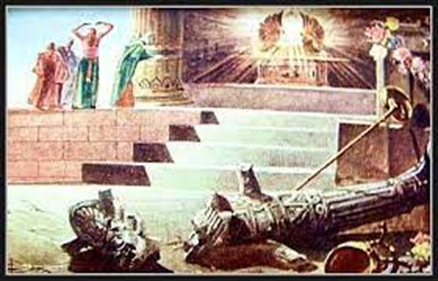
While the plague outbreaks might have been terrifying, what equally shocked the Philistines was the fate of the statue of the God Dagon. Dagon, or Dagan, was an Assyrian god of crop fertility and the legendary inventor of the plow. The Philistines adopted Dagon as their main god, and Dagon was generally represented by a figure that was half man/half fish. Some worshipers believed Dagon was the father of the god Baal. About 1500 Baal began to be worshiped as a god of vegetation and rain. When confronted with the Ark of the Covenant, the Dagon statue fell on its face. When the Dagon statue was replaced, it fell again, shattering its head and its hands as a symbol that Dagon was powerless before the One True Living God.

APPLICATION: Don’t mess with the Living God! That was the lesson the Philistines learned the hard way. While the Israelites were neglecting the worship of the God who had delivered them from slavery and who had saved them so many times, the Philistines had no doubt about God’s mighty power. Plague outbreaks and shattered statues of Dagon were enough to convince the Philistines that bringing the Ark of the Covenant back to Ashdod had been a terrible mistake.

Sometimes we read Bible stories and assume that the gods of the Assyrians, the Philistines, the Egyptians, etc., have no relevance to our lives today. Nothing could be further from the truth. There are still people who are fascinated with ancient religions and who can become ensnared by them. Romans 1:21 – 23 tells us, “For although they knew God, they neither glorified him as God nor gave thanks to him, but their thinking became futile and their foolish hearts were darkened. Although they claimed to be wise, they became foolsand exchanged the glory of the immortal God for images made to look like a mortal human being and birds and animals and reptiles.”

1 Thessalonians 5:5 advises us, For you are all sons of the light and sons of the day; we do not belong to the night or to the darkness. Many times, the lure of hidden ancient knowledge entices us. There is something exhilarating about being one of the inner circle, privy to secret spells, rituals, etc. But you pursue such things at the peril of your immortal soul!

The game “Dungeons and Dragons” describes Dagon as an “obyrith demon lord, Prince of the Depths, possessing vast and forbidden knowledge.” Dungeons and Dragons is a very dangerous game and not something to be played with, period. Nothing good can come of being involved with the demonic at any level! You might think that you are controlling demons; meanwhile, the demons are controlling you.)

One practitioner of Transcendental Meditation told me he had been taught that if he saw demons when he meditated, he was to “wish the demons well” and they would then go away. Demons pay no attention to wishes. To quote Ron Kenoly, the Christian musician, “The church today is engaged in spiritual war, and there is no demilitarized zone!”

The Philistines knew just how powerful the God of Israel was. Sadly, that knowledge did not cause the Philistines to renounce worshiping Dagon and to worship Yahweh instead, even though God loved the Philistines just as much as He did the Israelites. God’s plan for Israel was that Israel would be so holy and so blessed those other nations would see His power and worship him rather than Dagon, Baal, Ishtar, Molech, or any of the other pagan deities.

The question for us today is this: How carefully are we serving the One True Living God? How grateful are we for His mercy and His grace? Are people attracted to God because of us, or are we bad advertising?

PRAYER: Father God, thank You for Your mercy and Your grace. Lord, help us to follow hard after You all the days of our lives! Help us not to get sucked off into demon worship, games based on the occult, or anything else having to do with the occult. Thank You for delivering us from the kingdom of darkness into the Kingdom of Your glorious light. In the mighty and precious Name of King Jesus. Amen.

MARCH 23, 2022 SO YOU WANT TO BE A PROPHET #8 1 SAMUEL 4:1 – 22 WHY TREAT SOMETHING HOLY AS IF IT WERE A FETISH?

March 22, 2022

1 Samuel 4:1 – 22 “thus the word of Samuel came to all Israel. Now the Israelites went out to meet the Philistines in battle and camped at Ebenezer, while the Philistines camped at Aphek. The Philistines arrayed themselves against Israel, and as the battle spread, Israel was defeated by the Philistines, who struck down about four thousand men on the battlefield. When the troops returned to the camp, the elders of Israel asked, “Why has the LORD brought defeat on us before the Philistines today? Let us bring the ark of the covenant of the LORD from Shiloh, so that it may go with us to save us from the hand of our enemies.”

So the people sent men to Shiloh, and they brought back the ark of the covenant of the LORD of Hosts, who sits enthroned between the cherubim. And the two sons of Eli, Hophni and Phinehas, were there with the ark of the covenant of God.

When the ark of the covenant of the LORD entered the camp, all the Israelites raised such a great shout that it shook the ground. On hearing the noise of the shout, the Philistines asked, “What is this loud shouting in the camp of the Hebrews?” And when they realized that the ark of the LORD had entered the camp, the Philistines were afraid. “The gods have entered their camp!” they said. “Woe to us, for nothing like this has happened before. Woe to us! Who will deliver us from the hand of these mighty gods? These are the gods who struck the Egyptians with all kinds of plagues in the wilderness. Take courage and be men, O Philistines! Otherwise, you will serve the Hebrews just as they served you. Now be men and fight!”

So the Philistines fought, and Israel was defeated, and each man fled to his tent. The slaughter was very great—thirty thousand foot soldiers of Israel fell. The ark of God was captured, and Eli’s two sons, Hophni and Phinehas, died.

That same day a Benjamite ran from the battle line all the way to Shiloh, with his clothes torn and dirt on his head. When he arrived, there was Eli, sitting on his chair beside the road and watching, because his heart trembled for the ark of God. When the man entered the city to give a report, the whole city cried out. Eli heard the outcry and asked, “Why this commotion?” So the man hurried over and reported to Eli. Now Eli was ninety-eight years old, and his gaze was fixed because he could not see.

“I have just come from the battle,” the man said to Eli. “I fled from there today.”

“What happened, my son?” Eli asked.

The messenger answered, “Israel has fled before the Philistines, and there has been a great slaughter among the people. Your two sons, Hophni and Phinehas, are both dead, and the ark of God has been captured.”

As soon as the ark of God was mentioned, Eli fell backward from his chair by the city gate, and being old and heavy, he broke his neck and died. And Eli had judged Israel forty years. Now Eli’s daughter-in-law, the wife of Phinehas, was pregnant and about to give birth. When she heard the news of the capture of God’s ark and the deaths of her father-in-law and her husband, she collapsed and gave birth, for her labor pains overtook her.

As she was dying, the women attending to her said, “Do not despair, for you have given birth to a son!”

But she did not respond or pay any heed. And she named the boy Ichabod, saying, “The glory has departed from Israel,” because the ark of God had been captured and her father-in-law and her husband had been killed.

“The glory has departed from Israel,” she said, “for the ark of God has been captured.”

Remember the Ark of the Covenant, the holiest thing in all of the tabernacle? The Ark was to be kept in the Holy of Holies and even the high priest was only supposed to enter there at set times. But Eli had been judging Israel for 40 years, and Eli had little respect or reverence for the Lord. Eli’s sons, Phinehas and Hophni, were far worse than Eli and had no regard for the Lord whatsoever. Phinehas and Hophni were terrorizing those who brought animal offerings and forcing themselves on female worshipers.

The Israelites took on the Philistines in battle and were defeated. Such a disaster should have warned the Israelites that God was no longer blessing them. In Deuteronomy 28:25, God warned the Israelites what would happen if they failed to worship Him. “The Lord will cause you to be defeated before your enemies. You will come at them from one direction but flee from them in seven, and you will become a thing of horror to all the kingdoms on earth.” God gave Moses a prophetic song and had him teach it to all the Israelites, who were then supposed to teach it to all succeeding generations as a warning against leaving Him…..but they didn’t!

When the first attack on the Philistines failed, the Israelites should have repented and sought the Lord; instead, their idea of how to solve this problem was to blame the Lord!!! 1 Samuel 4:3 tells us, When the troops returned to the camp, the elders of Israel asked, “Why has the LORD brought defeat on us before the Philistines today? Let us bring the ark of the covenant of the LORD from Shiloh, so that it may go with us to save us from the hand of our enemies.” What kind of convoluted thinking is this??? First, the Israelites BLAMED the Lord for bringing defeat on them and then they decided to solve the problem by hauling the Ark, a symbol of God’s holiness, into battle. The Ark of the Covenant was always to be kept in the Holy of Holies and was only to be moved when God commanded and with very special precautions.

We don’t know who was high priest before Eli, but he evidently set a bad precedent as well. Joshua 24:31 tells us, “Israel served the Lord throughout the lifetime of Joshua and of the elders who outlived him and who had experienced everything the Lord had done for Israel.” By this point, the Israelites were treating the One True Living God as if He were simply one more local deity. The holy items in the Tabernacle were being regarded as fetishes or charms. While the Philistines remembered the power of the God of Israel, the Israelites themselves did not. The Israelites had abandoned God and now He abandoned them. The Philistines captured the Ark, Phinehas and Hophni were killed, and when Eli got the news, he fell backward, snapping his neck, and dying. To complete the tragedy, Phinehas’ pregnant wife died in childbirth, and as she was dying, she named her son “Ichabod,” a name meaning “The glory has departed,” or “There is no glory!”

APPLICATION: This passage is a bit long, but it makes better sense to tell the entire story at once. God had warned Eli three separate times that his family was doomed for destruction, and each time Eli had failed to repent. Now the day of doom had arrived. Either the priests had failed to teach the Israelites the Law of Moses and the Song of Moses, or the priests might have tried and the Israelites refused to listen. Then after refusing to follow the Lord as previous generations had promised, the Israelites blamed God when they reaped the consequences He had already warned about.

DO WE REALLY LISTEN TO GOD? Sometimes when we pray, we aren’t really listening but we are simply reciting a list of demands. We want God to do our will in His Name, and we want Him to be quick about it! If God tries to correct us, we stop our ears.

DO WE REALLY WORSHIP GOD? The Israelites had allowed worship to degenerated into a series of rituals with little or no regard for the God whom they were supposed to worship.

DO WE RESPECT THE POWER OF GOD? The Israelites had long ceased to remind themselves of the greatness of God and the wonders He had performed for them. The pagan Philistines had a clearer memory of the power of God than did the Israelites.

WHAT WOULD WE DO IF GOD WROTE “ICHABOD” OVER OUR ENDEAVORS? Phinehas’ wife spoke a true word as she lay dying when she said that the glory had departed from Israel. The horrific thing is that any church, any mission, any organization, or any individual that fails to remember that they are to be serving God can find themselves labeled “Ichabod.” God’s work will always continue; however, if we refuse to listen to God, to worship, to respect God’s power, and to serve Him as He desires, we too may find “Ichabod” written over our most cherished endeavors. May such a thing never happen to any of us!

PRAYER: Father God, thank You for loving us and caring for us. Help us to follow hard after You all the days of our lives so that You will never have to write “Ichabod” over us. In the mighty and precious Name of King Jesus. Amen.

MARCH 22, 2022 SO YOU WANT TO BE A PROPHET #7 1 SAMUEL 3:15 – 21 A TRUE PROPHET’S WORDS NEVER FALL TO THE GROUND USELESS

March 22, 2022

1 Samuel 3:15 – 21 “Samuel lay down until the morning; then he opened the doors of the LORD’s house. He was afraid to tell Eli the vision, but Eli called to him and said, “Samuel, my son.”

“Here I am,” answered Samuel.

“What was the message He gave you?” Eli asked. “Do not hide it from me. May God punish you, and ever so severely, if you hide from me anything He said to you.”

So Samuel told him everything and did not hide a thing from him.

“He is the LORD,” replied Eli. “Let Him do what is good in His eyes.”

And Samuel grew, and the LORD was with him, and He let none of Samuel’s words fall to the ground. So all Israel from Dan to Beersheba knew that Samuel was confirmed as a prophet of the LORD. And the LORD continued to appear at Shiloh, because there He revealed Himself to Samuel by His word.

Once more, Eli is given a chance to repent. With a heavy heart, Samuel gives Eli the message the Lord has given him. Once more, Eli has a weak and ineffectual response. God has given Eli one last chance to turn to Him, and Eli is still flipping his hands helplessly instead of falling on his face before the Lord. Even now, Eli might still repudiate his sins and beg God for mercy, hoping that God will relent; however, he fails to do so.

How can Eli possibly react this way? Eli has been the high priest for many years and has entered the Holy of Holies regularly on many occasions. What has led Eli to demonstrate so little respect to the Lord? It’s very sad but quite possible that Eli never really knew the Lord in the first place, that he has spent a lifetime going through the motions without ever experiencing the holiness of God or His righteousness. But if Eli never really knew God in the first place, how was it that he knew enough to advise Samuel to answer, “Speak, Lord, for your servant is listening,” when God was calling Samuel? No, the tragedy of Eli goes even deeper. The only way Eli would have known the proper response to God’s call would be if Eli himself had once answered that call and had then pulled away from God because he felt that God was asking too much of him. It might even be possible that Eli himself was called to be a prophet as a child, only to fall away from that calling.

Eli is one of the tragic figures in the Bible. Eli accuses Hannah of drunkenness; is Eli an alcoholic or are his sons alcoholics? Eli prays a priestly prayer over Hannah and blesses her, allowing God to work through him. Eli knows enough to advise Samuel; however, he fails to repent when God warns him. No, as Eli has aged, his love for the Lord has grown cold and his own comfort has become his main goal. Eli has probably lied to himself, telling himself that he “deserves” to rest, instead of serving the One True Living God.

Meanwhile, Samuel is growing up and God is speaking through him. When Moses was giving the Israelites the Law, God promised to send them prophets. Deuteronomy 18:18 – 22 I will raise up for them a prophet like you (Moses) from among their brothers. I will put My words in his mouth, and he will tell them everything I command him. And I will hold accountable anyone who does not listen to My words that that prophet speaks in My name. But if any prophet dares to speak a message in My name that I have not commanded him to speak, or to speak in the name of other gods, that prophet must be put to death.”

You may ask in your heart, “How can we recognize a message that the LORD has not spoken?” When a prophet speaks in the name of the LORD and the message does not come to pass or come true, that is a message the LORD has not spoken. The prophet has spoken presumptuously. Do not be afraid of him.”

Now God is confirming Samuel as His prophet. “And Samuel grew, and the LORD was with him, and He let none of Samuel’s words fall to the ground. So all Israel from Dan to Beersheba knew that Samuel was confirmed as a prophet of the LORD. And the LORD continued to appear at Shiloh, because there He revealed Himself to Samuel by His word. This passage raises yet another point: The Lord is continuing to appear at Shiloh because Samuel, His prophet, is at Shiloh. God will appear wherever there is someone who will truly speak on His behalf. As long as Samuel is at Shiloh, God will appear there. Sadly, once Samuel dies, Shiloh will be destroyed, possibly by Philistines, during the latter part of King Saul’s reign. This destruction will be so complete that the prophet Jeremiah will refer to Shiloh as an example of what can happen when the glory of the Lord departs from a place.

Jeremiah 7:12 says, “But go now to My place which was in Shiloh, where I set My Name at the first, and

see what I did to it for the wickedness of My people Israel.”

APPLICATION: There is a hymn whose first line is “Once to ev’ry man and nation comes the moment to decide…” The 3rd chapter of 1 Samuel presents us with two pictures: the child Samuel, whose childish faith is honored by the Lord, and the aging priest Eli, whose life – long search for comfort has resulted in his loss of faith, his complete failure as a father, and impending doom for his family and for himself. God gives Eli three warnings, three opportunities to repent and to beg for mercy; yet, Eli appears to be spiritually numb and resigned to a horrible fate. Samuel chooses to follow God and will spend his entire life as God’s mouthpiece. Eli has already settled for mediocrity and feels no need to change.

Francis Schaeffer wrote a book entitled How Shall We Then Live? Each of us faces that question daily. Will we choose to listen to God? Will we dedicate ourselves to His service? Will we be so obedient that we will do whatever God says? Or will we refuse to listen to God, serving only our own interests?

We live in a world of information overload where distractions abound. While Samuel lived in a simpler time, that does not mean that there were no distractions for Samuel; after all, look at Eli. As a Levitical priest, Eli should have been wholly devoted to God, following the precepts laid down in Deuteronomy 6. Eli should have been teaching his sons the Word of God, speaking to them at all times from the time they were old enough to understand…..and yet, he failed to do so. Eli chose to enjoy the benefits of the priesthood without making the heart commitment necessary to truly serve the Lord. The results were disastrous.

James Russell Lowell wrote his poem at a time when America was convulsed over the slavery issue. Today there are different issues, but the same choices.

ONCE TO EVERY MAN AND NATION – JAMES RUSSELL LOWELL

1 Once to ev’ry man and nation 
Comes the moment to decide, 
In the strife of truth and falsehood, 
For the good or evil side; 
Some great cause, some great decision, 
Off’ring each the bloom or blight, 
And the choice goes by forever 
‘Twixt that darkness and that light. 

2 Then to side with truth is noble, 
When we share her wretched crust, 
Ere her cause bring fame and profit, 
And ’tis prosperous to be just; 
Then it is the brave man chooses 
While the coward stands aside, 
Till the multitude make virtue 
Of the faith they had denied. 

3 By the light of burning martyrs, 
Christ, Thy bleeding feet we track, 
Toiling up new Calv’ries ever 
With the cross that turns not back; 
New occasions teach new duties, 
Ancient values test our youth; 
They must upward still and onward, 
Who would keep abreast of truth. 

4 Tho’ the cause of evil prosper, 
Yet the truth alone is strong; 
Tho’ her portion be the scaffold, 
And upon the throne be wrong: 
Yet that scaffold sways the future, 
And, behind the dim unknown, 
Standeth God within the shadow, 
Keeping watch above His own.

PRAYER:  Father God, help us to be like Samuel! Let us truly listen, truly hear, and truly obey! As we age, let us walk ever closer to You and serve You even more thoroughly! Let us love You more each day than we did the day before! In the matchless Name of King Jesus. Amen.