Archive for March, 2022

MARCH 21, 2022 SO YOU WANT TO BE A PROPHET? 1 SAMUEL 3:1 – 14 A TRUE PROPHET MAY START AS A CHILD

March 21, 2022

1 Samuel 3:1 – 14 “And the boy Samuel ministered to the LORD before Eli. Now in those days the word of the LORD was rare and visions were scarce. And at that time Eli, whose eyesight had grown so dim that he could not see, was lying in his room.

Before the lamp of God had gone out, Samuel was lying down in the temple of the LORD, where the ark of God was located. Then the LORD called to Samuel, and he answered, “Here I am.”

He ran to Eli and said, “Here I am, for you have called me.”

“I did not call,” Eli replied. “Go back and lie down.”

So, he went and lay down.

Once again, the LORD called, “Samuel!” So, Samuel got up, went to Eli, and said, “Here I am, for you have called me.” “My son, I did not call,” Eli replied. “Go back and lie down.”

Now Samuel did not yet know the LORD, because the word of the LORD had not yet been revealed to him. Once again, for the third time, the LORD called to Samuel. He got up, went to Eli, and said, “Here I am, for you have called me.”

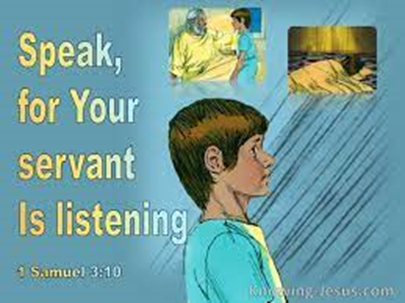
Then Eli realized that it was the LORD who was calling the boy. “Go and lie down,” he said to Samuel, “and if He calls you, say, ‘Speak, LORD, for Your servant is listening.’” So, Samuel went and lay down in his place.

Then the LORD came and stood there, calling as before, “Samuel! Samuel!” And Samuel answered, “Speak, for Your servant is listening.”

Then the LORD said to Samuel, “I am about to do something in Israel at which the ears of all who hear it will tingle. On that day I will carry out against Eli everything I have spoken about his family, from beginning to end. I told him that I would judge his house forever for the iniquity of which he knows, because his sons blasphemed God and he did not restrain them. Therefore, I have sworn to the house of Eli, ‘The iniquity of Eli’s house shall never be atoned for by sacrifice or offering.’”

SO YOU WANT TO BE A PROPHET???? Today there are many self – styled prophets throughout the world. These men and women love to stand before large crowds in big auditoriums with music playing in the background while they pronounce loudly, “Thus says the Lord….” But has the Lord really spoken, or have these people been listening to a different voice? Look at Samuel’s experience. Samuel was only a young boy when God trusted him with the first of many prophecies he was to deliver. Samuel was sound asleep when God began calling him in the night.

  1. Before the lamp of God had gone out, Samuel was lying down in the temple of the LORD, where the ark of God was located.” Samuel was actually sleeping in the temple, close to the Holy of Holies. Samuel had grown up in the temple and wanted to be as near to God as possible. But why should the lamp of God go out? That lamp was supposed to burn continually. This would suggest that for some reason, there wasn’t enough high – quality olive oil or that Eli, Phineas, and Hophni were failing in their duties as priests.
  2. Then Eli realized that it was the LORD who was calling the boy. “Go and lie down,” he said to Samuel, “and if He calls you, say, ‘Speak, LORD, for Your servant is listening.’” Eli knew enough about God to realize that it was God who was calling Samuel; yet, Eli failed to repent and attempt to restrain his sons. GOD WAS SPEAKING TO SAMUEL, BUT ELI DIDN’T CARE ENOUGH TO GO TO THE HOLY OF HOLIES TO INQUIRE FROM THE LORD! At that point, had Eli repented and had he recruited help from local elders and other Levites, he might have at least saved himself. Had Eli repented, God would have pardoned him, even if his sons had persisted in their evil ways. But Eli advised Samuel and went right back to sleep.
  3. Then the LORD came and stood there, calling as before, “Samuel! Samuel!” And Samuel answered, “Speak, for Your servant is listening.” For the first time in Samuel’s life, he was meeting with the Lord. But children have special emotional sensitivity that sometimes gets lost as they grow to adulthood. Jesus advised his disciples that they needed to have the same faith that children would have in a loving Father. Samuel exhibited that sensitivity and that faith. Eli did not hear the Lord calling Samuel; only Samuel heard that Voice.
  4. Then the LORD said to Samuel, “I am about to do something in Israel at which the ears of all who hear it will tingle. On that day I will carry out against Eli everything I have spoken about his family, from beginning to end. I told him that I would judge his house forever for the iniquity of which he knows, because his sons blasphemed God and he did not restrain them. Therefore, I have sworn to the house of Eli, ‘The iniquity of Eli’s house shall never be atoned for by sacrifice or offering.’” WOW! What a message! At this point, Samuel might have been horrified. Although Elkanah probably visited Samuel during the annual feasts, Eli was probably the closest thing to a father figure in Samuel’s short life. Now Samuel had to tell this old man who had been quite kind to him that God was about to destroy his house forever. What a message for a child to have to give an elder! No, Samuel was learning that a prophet’s life was not an easy one.

APPLICATION: Someone has said that prophecy is given to comfort the afflicted and to afflict the comfortable. Certainly, this first prophecy Samuel received was anything but comforting. Why did God give this prophecy to Samuel? God had already warned Eli that he and his sons were on a certain path to destruction. 2 Peter 3:9 tells us, “The Lord is not slow in keeping His promise as some understand slowness, but is patient with you, not wanting anyone to perish but everyone to come to repentance.” What might have happened had Eli repented in tears and trembling? Later on, when King Manasseh, who was one of the most evil kings in Judah, repented, God spared him. God was giving Eli one last warning; only God knows what might have happened had Eli turned at that point and whole – heartedly repented.

2 Chronicles 33:9 – 13 “But Manasseh led Judah and the people of Jerusalem astray, so that they did more evil than the nations the Lord had destroyed before the Israelites. The Lord spoke to Manasseh and his people, but they paid no attention. So the Lord brought against them the army commanders of the king of Assyria, who took Manasseh prisoner, put a hook in his nose, bound him with bronze shackles and took him to Babylon. In his distress he sought the favor of the Lord his God and humbled himself greatly before the God of his ancestors. And when he prayed to him, the Lord was moved by his entreaty and listened to his plea; so he brought him back to Jerusalem and to his kingdom. Then Manasseh knew that the Lord is God.”  

The story of Eli and his sons is a tragic one. Even in Eli’s old age, he could have opposed the evil his sons were doing and exerted his authority to banish them from the temple. Perhaps such a confrontation might have shaken Phineas and Hophni out of their malignant practices. But Eli was blind and becoming more feeble and had already resigned himself to a horrible fate. Eli should serve as a reminder to all of us that aging does not give us a moral free pass. We must continue to serve God and pursue righteousness as long as we live.

Contrast Samuel with Eli. Samuel asked the Lord to speak so that he could obey. Eli knew that God was speaking but refused to even listen. How Eli’s complacency with a horrible fate must have grieved the Lord! As all of us age, let us resolve to copy Samuel’s example and not Eli’s!

PRAYER: Father God, thank You for loving us and for caring for us. Lord, there may be someone reading these words who feels that they have committed an unpardonable sin, one that will irrevocably doom them to hell. Lord, open the eyes of that person’s heart to see Your great mercy and grace! Help them to realize that You are simply waiting for them to turn to You, the ultimate loving Father. Help all of us to pursue You ever harder as we age. In the mighty and precious Name of King Jesus. Amen.

MARCH 20, 2022 SO YOU WANT TO BE A PROPHET? 1 SAMUEL 2:27 – 36 WHEN DOES GOD SAY “THE END?”

March 20, 2022

1 Samuel 2: 27 – 36 “Then a man of God came to Eli and told him, “This is what the LORD says: ‘Did I not clearly reveal Myself to your father’s house when they were in Egypt under Pharaoh’s house? And out of all the tribes of Israel I selected your father to be My priest, to offer sacrifices on My altar, to burn incense, and to wear an ephod in My presence. I also gave to the house of your father all the offerings of the Israelites made by fire.

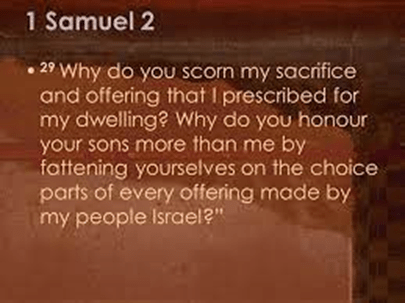
Why, then, do you kick at My sacrifice and offering that I have prescribed for My dwelling place? You have honored your sons more than Me by fattening yourselves with the best of all the offerings of My people Israel.’

Therefore, the LORD, the God of Israel, declares:

‘I did indeed say that your house

and the house of your father

would walk before Me forever.

But now the LORD declares:

Far be it from Me!

For I will honor those who honor Me,

but those who despise Me will be disdained.

Behold, the days are coming when I will cut off your strength and the strength of your father’s house, so that no older man will be left in your house. You will see distress in My dwelling place. Despite all that is good in Israel, no one in your house will ever again reach old age. And every one of you that I do not cut off from My altar, your eyes will fail and your heart will grieve. All your descendants will die by the sword of men. And this sign shall come to you concerning your two sons Hophni and Phinehas: They will both die on the same day.

Then I will raise up for Myself a faithful priest. He will do whatever is in My heart and mind. And I will build for him an enduring house, and he will walk before My anointed one for all time. And everyone left in your house will come and bow down to him for a piece of silver or a morsel of bread, pleading, “Please appoint me to some priestly office so that I can eat a piece of bread.”’”

This passage might be one of the saddest in the Bible. Eli was a Levitical priest with all the rights and privileges that included. Eli’s sons were also priests; however, none of them was righteous. Eli spoiled his sons, refusing to discipline them and allowing them to mishandle the animal sacrifices and force themselves on the women serving at the entrance to the Tent of Meeting. By refusing to discipline these men, Eli brought condemnation on himself, and his sons were about to suffer violent deaths. But there was far more.

A “man of God” came to Eli, giving him several prophecies. Some traditions teach that this man might have been Elkanah, the father of Samuel. By failing to honor the Lord above his sons, Eli brought eternal curses on all of his descendants. Look at this prophecy:

  1. No older man will be left in Eli’s house.
  2. Eli will see distress in the Tent of Meeting
  3. Despite all God’s blessings to Israel, nobody in Eli’s house will ever reach old age again.
  4. God will either cut off Eli’s descendants from the altar or they will go blind and their hearts will grieve.
  5. All Eli’s descendants will die violent deaths by the sword.
  6. Hophni and Phineas, Eli’s two sons, will both die the same day.
  7. God will raise up a faithful priest for whom He will build an enduring house, and Eli’s descendants will come to this man, begging priestly jobs so that they can eat.

Have these curses endured to the present day? Most likely, yes. Even now, there may be descendants of Eli who are dying in early manhood, possibly from violent deaths.

Who is the “faithful priest” to whom God was referring? This priest was not Samuel because Samuel was not from the tribe of Levi, although Samuel did function as a priest. But Samuel’s sons were corrupt; it was the failure of Samuel’s sons that impelled the Israelites to demand a king when Samuel was aging. Many sources believe that the priest referred to here was Zadok, who became high priest under King Solomon and whose descendants ministered to the Lord until the Babylonian captivity. But ultimately, it was Jesus Christ, who was – and is –  prophet, priest, and king, whose ministry has been established for all time.

APPLICATION: Reading this account of Eli’s failures, you might be tempted to think, “Oh, but God is merciful and kind! He would never do such things!” Yes, God is merciful and kind; however, God is also just. Eli had had ample opportunities to repent and to correct his sons. Eli didn’t even have to correct his sons by himself. The Law of Moses allowed for parents to report recalcitrant sons to city elders who could then take action. There is nothing to indicate that Eli ever made any attempts to correct his sons or to engage others to help him do so.

Those coming to the Tent of Meeting were attempting to rebuke Eli’s sons; however, Hophni and Phineas were power – drunk and believed that nobody could touch them. They were wrong. As Levitical priests, they had to answer to God.

God knows the human heart far better than any psychiatrist or counselor. God knows when a person has irrevocably chosen to do evil. Hophni and Phineas had no desire to behave righteously whatsoever. Eli tolerated his sons’ bad behavior, agreeing with them by failing to discipline them.

Later on, the prophet Isaiah spoke to the Israelites, warning them, “Listen and hear my voice;
    pay attention and hear what I say. When a farmer plows for planting, does he plow continually?
    Does he keep on breaking up and working the soil?” (Isaiah 28:23 – 24) God will repeatedly warn and correct all those willing to listen; but for those who harden their hearts, there will come a point of no return. God does not SEND anyone to hell; people CHOOSE to go there by hardening their hearts and refusing to pay attention to Him.

2 Corinthians 6:2 says, For he says, “In the time of my favor I heard you, and in the day of salvation I helped you.” I tell you, now is the time of God’s favor, now is the day of salvation.” None of us knows how much time is left to us. None of us knows how much time is left to our loved ones either. None of us knows the trials and sufferings of those around us. Let us pray earnestly and speak the message of hope the Gospel brings to all those around us so that when we stand before Jesus, we will have nothing of which to be ashamed.

PRAYER: Father God, thank You for loving us and for caring for us. Lord, there may be those who are reading this who don’t know Your goodness and Your love. Lord, please make Yourself real to all who read these words. In the mighty and precious Name of King Jesus. Amen.

MARCH 19, 2022 SO YOU WANT TO BE A PROPHET? 1 SAMUEL 2:12 – 26 EVIL TURNS HOLINESS TO HYPOCRISY

March 19, 2022

1 Samuel 2:12 – 26 “Now the sons of Eli were wicked men; they had no regard for the LORD or for the custom of the priests with the people. When any man offered a sacrifice, the servant of the priest would come with a three-pronged meat fork while the meat was boiling and plunge it into the pan or kettle or cauldron or cooking pot. And the priest would claim for himself whatever the meat fork brought up. This is how they treated all the Israelites who came to Shiloh. Even before the fat was burned, the servant of the priest would come and say to the man who was sacrificing, “Give the priest some meat to roast, because he will not accept boiled meat from you, but only raw.” And if any man said to him, “The fat must be burned first; then you may take whatever you want,” the servant would reply, “No, you must give it to me right now. If you refuse, I will take it by force!” Thus, the sin of these young men was severe in the sight of the LORD, for they were treating the LORD’s offering with contempt.

Now Samuel was ministering before the LORD—a boy wearing a linen ephod. Each year his mother would make him a little robe and bring it to him when she went with her husband to offer the annual sacrifice. And Eli would bless Elkanah and his wife, saying, “May the LORD give you children by this woman in place of the one she dedicated to the LORD.” Then they would go home. So, the LORD attended to Hannah, and she conceived and gave birth to three sons and two daughters. Meanwhile, the boy Samuel grew up in the presence of the LORD.

Now Eli was very old, and he heard about everything his sons were doing to all Israel and how they were sleeping with the women who served at the entrance to the Tent of Meeting. “Why are you doing these things?” Eli said to his sons. “I hear about your wicked deeds from all these people. No, my sons; it is not a good report I hear circulating among the LORD’s people. If a man sins against another man, God can intercede for him, but if a man sins against the LORD, who can intercede for him?” But they would not listen to their father, since the LORD intended to put them to death.

And the boy Samuel continued to grow in stature and in favor with the LORD and with man.”

“Eli’s sons were scoundrels!” That is how one translator has handled the description of these horrible young men. Not only were Eli’s sons mishandling the meat offered to the Lord, but they were also sleeping with the women who were serving at the entrance of the Tent of Meeting. Was this sex consensual? What were these poor ladies going to do? The priests’ servants were already bullying the men making sacrifices; would they have worried about roughing up a woman? If these young priests were forcing themselves on women, what were the servants doing?

God through Moses had already designated the meat that was to come to the priests, and those were choice portions. But the fat was to be burned first. The meat was to be boiled, and only certain parts were to come to the priests, the rest to be offered to the Lord.

How had things gone so wrong? Proverbs 13:24 tells us, “He who spares the rod hates his son, but he who loves him disciplines him diligently.” Evidently, Eli had never disciplined his sons. Perhaps Eli had made excuses that he was too busy and that their mother should have disciplined them. Perhaps Eli loved his sons and wanted them to love him and feared they would reject him if he disciplined them. All we know is that Eli’s sons really were terrible men who were giving the priesthood a deplorable name. Look at the weak rebuke that Eli gave his sons: ““Why are you doing these things?” Eli said to his sons. “I hear about your wicked deeds from all these people. No, my sons; it is not a good report I hear circulating among the LORD’s people. If a man sins against another man, God can intercede for him, but if a man sins against the LORD, who can intercede for him?”

Proverbs 19:18 says, “Discipline your son, for in that there is hope; do not be party to his death.” Eli had refused to properly discipline his sons when they were children, and now they were literally hell – bent on a path leading to their own destruction. But the worst part was the shame and disgrace these men were bringing to the office of the priest. How could anybody approach the Tent of Meeting in a spirit of reverence when they knew that they would be bullied by the priests’ servants and when they saw the way Eli’s sons, Phineas and Hophni were ogling the women serving there? Right – thinking men might begin to feel that they were better off worshiping somewhere else, shunning the Tent of Meeting. In addition, such behavior was reminiscent of the fertility cults that the Lord had already forbidden.

APPLICATION: These days, hypocrisy is rampant. Politicians, businessmen and women, sports figures, and movie stars all purport to be far better than they actually are. But what happens when church leaders pretend to be holy and then actually behave like rogues? What about church members who make a big thing of participating in crusades and revivals but who feel no compulsion to keep agreements? Few things are more disappointing than thinking that someone is trustworthy, only to realize that trust has been misplaced.

For years, our mission hospital has sponsored workers to advanced courses to expand the range of services and to build up the quality of those services we already offer. Those accepting sponsorship sign agreements promising to serve the hospital for a given period and we try to be as careful as possible to select those we think will fulfill such agreements commonly known as bonds. Despite signing bond papers, some trainees still attempt to leave as soon as their training is completed.  Sadly, we have observed that church membership and participation in crusades and outreaches carry no weight when a trainee wants to skip out on a bond obligation.

Why were Eli’s sons so horrible? The question is, how involved was Eli in their early training? What kind of an example did Eli set for his sons? Was Eli a faithful priest, or had Eli formed sexual liaisons with some of the ladies serving at the Tent of Meeting? Who started the mishandling of animal sacrifices? Was it Eli’s sons, or was Eli himself to blame?

Years after Eli and his sons misconducted themselves, King David had an affair with Bathsheba and then arranged to have her husband Uriah killed so that David could marry her. The prophet Nathan rebuked David, telling him, “Nevertheless, because by this deed you have given [a great] opportunity to the enemies of the LORD to blaspheme [Him], the son that is born to you shall certainly die.” (2 Samuel 12:14 Amplified version) What Nathan meant was that David, who claimed to love the Lord, had misrepresented the Lord, giving the enemies of the Lord the chance to say horrible things about the Lord. David himself had demonstrated extreme contempt for the Lord. David’s lack of regard for the Lord was no better than the heart attitude of the Philistines to the god Dagon.

What did David’s men think when they learned how David had betrayed Uriah? When squeaky clean King David failed so miserably, what example did he give his men? Many of those soldiers may not have believed in the Lord; David’s example certainly would not have encouraged them to have a change of heart. What kind of a ripple of evil started with David’s lust and treachery?

The question for all of us is this: Do our deeds match our words? Talk is cheap; will we stand by our vows when things become difficult, or will we try to wiggle out somehow? Eli and his sons demonstrated extreme contempt for the Lord and eventually died because of that contempt. When people see us, are they encouraged to become increasingly holy, or does our bad behavior give others excuses to also misbehave? Are we bad advertising for God?

PRAYER: Father God, help! We want to do the right thing, and yet we may misrepresent You. Lord, let Your light shine through us so that others will be encouraged to trust You. In the mighty and precious Name of King Jesus. Amen.

MARCH 18, 2022 1 SO YOU WANT TO BE A PROPHET? SAMUEL 2:1 – 11 WHAT DOES AN ANCIENT PRAYER HAVE TO DO WITH UKRAINE?

March 18, 2022

1 Samuel 2:1 – 11 “At that time Hannah prayed: “My heart rejoices in the LORD in whom my horn is exalted. My mouth speaks boldly against my enemies, for I rejoice in Your salvation. There is no one holy like the LORD. Indeed, there is no one besides You! And there is no Rock like our God. Do not boast so proudly, or let arrogance come from your mouth, for the LORD is a God who knows, and by Him actions are weighed.

The bows of the mighty are broken, but the feeble are equipped with strength. The well-fed hire themselves out for food, but the starving hunger no more. The barren woman gives birth to seven, but she who has many sons pines away.

The LORD brings death and gives life; He brings down to Sheol and raises up. The LORD sends poverty and wealth; He humbles and He exalts. He raises the poor from the dust and lifts the needy from the ash heap. He seats them among princes and bestows on them a throne of honor.

For the foundations of the earth are the LORD’s, and upon them He has set the world. He guards the steps of His faithful ones, but the wicked perish in darkness; for by his own strength shall no man prevail. Those who oppose the LORD will be shattered. He will thunder from heaven against them. The LORD will judge the ends of the earth and will give power to His king. He will exalt the horn of His anointed.”

Then Elkanah went home to Ramah, but the boy began ministering to the LORD before Eli the priest.”

Long before the Virgin Mary ever uttered a word of the speech known as the Magnificat, Hannah, the mother of Samuel, gave one of the most wonderful speeches recorded in the Bible. This passage shimmers with the inspiration of the Holy Spirit and demonstrates why God chose Hannah to be the mother of one of the most important prophets who ever lived.

For years Hannah had suffered the shame of childlessness! For years Hannah’s rival had tormented her, making sly remarks as they fetched water from the village well, talking behind her back to the neighbors, and doing everything she could to cause Elkanah to put Hannah away, leaving her as the one and only wife. For years Hannah had lived in agony, wondering when her rival’s efforts would be successful and she would be put out of the house to live out the rest of her life in poverty and disgrace. Now God has answered Hannah’s prayers! Hannah has a wonderful handsome son and she has turned her child of promise over to the Lord just as she vowed. Little wonder if Hannah is celebrating! Let’s look at her song of triumph.

“My heart rejoices in the LORD in whom my horn is exalted.” Horns were a sign of strength. Hannah is announcing that it is the Lord who has exalted her strength; clearly, Hannah is giving God credit.

. There is no one holy like the LORD. Indeed, there is no one besides You! And there is no Rock like our God.” This is a quote straight from the Song of Moses in Deuteronomy 32. Hannah has obviously been listening when the Laws of Moses have been read.

Do not boast so proudly, or let arrogance come from your mouth, for the LORD is a God who knows, and by Him actions are weighed.” Without confronting her rival, Hannah is witnessing against the vicious lies she has faced for years.

The barren woman gives birth to seven, but she who has many sons pines away. The LORD brings death and gives life; He brings down to Sheol and raises up. The LORD sends poverty and wealth; He humbles and He exalts. He raises the poor from the dust and lifts the needy from the ash heap. He seats them among princes and bestows on them a throne of honor. “This passage speaks for itself. Hannah is countering the horrible lies that her rival has been spreading around the village. “For the foundations of the earth are the LORD’s, and upon them He has set the world. He guards the steps of His faithful ones, but the wicked perish in darkness; for by his own strength shall no man prevail. Those who oppose the LORD will be shattered. He will thunder from heaven against them. The LORD will judge the ends of the earth and will give power to His king. He will exalt the horn of His anointed.” Long before Samuel ever uttered his first prophecy, Hannah, his mother, was speaking prophetically. God knew what He was doing when He selected Hannah to be Samuel’s mother!

APPLICATION: As I am writing this, Russia is attacking Ukraine while the world watches. Seemingly, there is no way that the Ukrainians can survive… and yet. And yet, God is still the same God who gave Hannah a son and who inspired Hannah to utter this magnificent song of praise. It is estimated that more than 80% of all Ukrainians are fervent believers in Christ. Truly, this conflict is between light and darkness.

Today as we are struggling to find words adequate for the situation in Ukraine, why not pray Hannah’s song as a prayer over the Ukrainian situation? God is still the God of Hannah, the God of Samuel, the God who is a rock and whose ways are perfect.

“. “For the foundations of the earth are the LORD’s, and upon them He has set the world. He guards the steps of His faithful ones, but the wicked perish in darkness; for by his own strength shall no man prevail. Those who oppose the LORD will be shattered. He will thunder from heaven against them. The LORD will judge the ends of the earth and will give power to His king. He will exalt the horn of His anointed.”

PRRAYER: FATHER GOD, DELIVER UKRAINE FROM THE HANDS OF THE ENEMY! CAUSE YOUR NAME TO BE LIFTED UP! CAUSE YOUR NAME TO BE GLORIFIED! CAUSE THOSE OPPRESSORS TO FAIL COMPLETELY! IN THE MIGHTY AND PRECIOUS NAME OF KING JESUS! AMEN!

MARCH 17, 2022 1 SAMUEL 1:19 – 28 SO YOU WANT TO BE A PROPHET – “I PRAYED FOR THIS CHILD. NOW I GIVE HIM TO THE LORD!”

March 17, 2022

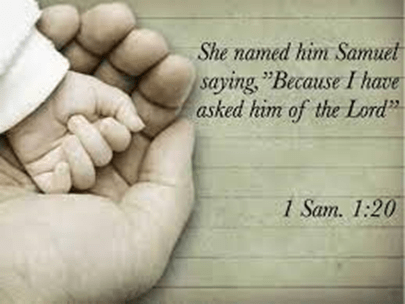
1 Samuel 1:19 – “Early the next morning they arose and worshiped before the Lord and then went back to their home at Ramah. Elkanah made love to his wife Hannah, and the Lord remembered her. So, in the course of time Hannah became pregnant and gave birth to a son. She named him Samuel,(meaning “heard by God”) saying, “Because I asked the Lord for him.”

When her husband Elkanah went up with all his family to offer the annual sacrifice to the Lord and to fulfill his vow, Hannah did not go. She said to her husband, “After the boy is weaned, I will take him and present him before the Lord, and he will live there always.”

 “Do what seems best to you,” her husband Elkanah told her. “Stay here until you have weaned him; only may the Lord make good his word.” So, the woman stayed at home and nursed her son until she had weaned him.

After he was weaned, she took the boy with her, young as he was, along with a three-year-old bull, an ephah of flour and a skin of wine, and brought him to the house of the Lord at Shiloh.When the bull had been sacrificed, they brought the boy to Eli, and she said to him, “Pardon me, my lord. As surely as you live, I am the woman who stood here beside you praying to the Lord.I prayed for this child, and the Lord has granted me what I asked of him. So now I give him to the Lord. For his whole life he will be given over to the Lord.” And he worshiped the Lord there.”

Hannah was an incredible woman! By this point, Samuel was only about three years old; yet, she was sending her toddler live in the house of the Lord forever. What a sacrifice! The bull, the flour, and the wine that Hannah brought paled by comparison. There are few things more appealing than a small child when he or she is asleep in your arms. The soft skin, the downy hair, the curve of the cheeks and the lips, the delicate tracery of the little ears, the trusting little hands reaching to be held – surely Hannah must have admired Samuel many times as she held him…. And yet she gave him up to God’s service, not knowing if she would ever have another child. There are very few mothers who would have been willing to do what Hannah did. When Eli realized the depth of Hannah’s sacrifice, he worshiped the Lord, for he couldn’t do anything else at that point.

APPLICATION: Sometimes modern culture puts so much emphasis on feeling good that we forget that sacrifices may also be a part of life. Hannah’s sacrifice was to bring untold blessings, not only to her family and her, but also to the entire nation of Israel. It was Samuel who would anoint both King Saul and King David. It was Samuel who would try to point the Israelites back to God, and if they failed to return to righteousness, it was certainly not Samuel’s fault. The foundation for Samuel’s ministry was laid by his mother’s sacrifice.

Hudson Taylor was another child for whom his parents had prayed and whom they dedicated to the Lord from the womb. Taylor was a giant of the faith who founded the China Inland Mission, a mission group that grew to a huge number of stations spread across all of China. The work of CIM was always supported by faith contributions. Taylor was fond of asserting that “God’s work done God’s way will never lack God’s supply.”

Sometimes when we lose loved ones, we accuse God of being unkind or unjust, forgetting that God Himself gave His only Son, Jesus, to be born as a man and to die a cruel undeserved death – all for the sins of the entire world.

John 3:16 – 17 says, For God so loved the world that he gave his one and only Son, that whoever believes in him shall not perish but have eternal life. For God did not send his Son into the world to condemn the world, but to save the world through him.” God sent Jesus, knowing beforehand that Jesus would be betrayed by one of his close followers, handed over to religious authorities, and crucified. The translation from The Message perhaps says it best, “Even the first plan required a death to set it in motion. After Moses had read out all the terms of the plan of the law—God’s “will”—he took the blood of sacrificed animals and, in a solemn ritual, sprinkled the document and the people who were its beneficiaries. And then he attested its validity with the words, “This is the blood of the covenant commanded by God.” He did the same thing with the place of worship and its furniture. Moses said to the people, “This is the blood of the covenant God has established with you.” Practically everything in a will hinges on a death. That’s why blood, the evidence of death, is used so much in our tradition, especially regarding forgiveness of sins.” (Hebrews 9:22)

Hannah gave up her only son as a living sacrifice so that he could serve the Lord for his whole life. God gave Jesus as a living sacrifice to die for the sins of the entire world. Nicodemus was a ruler in the synagogue, but he was also in search of God’s truth. Nicodemus came to Jesus by night to ask him questions. When Jesus was explaining things to Nicodemus, he told him, “Whoever believes in him (God’s son) is not condemned, but whoever does not believe stands condemned already because they have not believed in the name of God’s one and only Son. This is the verdict: Light has come into the world, but people loved darkness instead of light because their deeds were evil. Everyone who does evil hates the light, and will not come into the light for fear that their deeds will be exposed. But whoever lives by the truth comes into the light, so that it may be seen plainly that what they have done has been done in the sight of God.” (John 3:18 – 21)

Each one of us must answer this question: who do we say Jesus is? Do we truly believe that Jesus is the Son of God? Then we are not condemned. But if we do not believe that Jesus is the Son of God, then we stand condemned already, just as Jesus told Nicodemus. Do we love light or darkness? Do we love truth or lies? If we live by the truth, we will come into the light.

Perhaps you realize that you have not believed in Jesus. Perhaps you feel that everything about Jesus is a fairy tale for weak people. Try this experiment: ask God to show you whether or not Jesus is real. If you are not afraid to do so, tell God that you are willing to be made willing to believe in Jesus. Then see what God will do. If you are serious about that prayer, God will definitely reveal Himself to you.

PRAYER: Father God, help everyone who reads these words to trust You, the Source of light and life. Reveal Yourself in such a mighty way that there will be no doubt that You ARE the One True Living God and that Jesus IS Your only Son. In the matchless Name of King Jesus. Amen.

MARCH 16, 2022 I SAMUEL 1:1-18 DO YOU REALLY WANT TO BE A PROPHET? SAMUEL’S MOTHER WAS A PRAYER WARRIOR!

March 16, 2022

I Samuel 1:1 – 18: “Now there was a man named Elkanah who was from Ramathaim-zophim in the hill country of Ephraim. He was the son of Jeroham, the son of Elihu, the son of Tohu, the son of Zuph, an Ephraimite. He had two wives, one named Hannah and the other Peninnah. And Peninnah had children, but Hannah had none.
Year after year Elkanah would go up from his city to worship and sacrifice to the LORD of Hosts at Shiloh, where Eli’s two sons, Hophni and Phinehas, were priests to the LORD. And whenever the day came for Elkanah to present his sacrifice, he would give portions to his wife Peninnah and to all her sons and daughters. But to Hannah he would give a double portion, for he loved her even though the LORD had closed her womb.
Because the LORD had closed Hannah’s womb, her rival would provoke her and taunt her viciously. And this went on year after year. Whenever Hannah went up to the house of the LORD, her rival taunted her until she wept and would not eat. “Hannah, why are you crying?” her husband Elkanah asked. “Why won’t you eat? Why is your heart so grieved? Am I not better to you than ten sons?”

So, after they had finished eating and drinking in Shiloh, Hannah stood up. Now Eli the priest was sitting on a chair by the doorpost of the temple of the LORD. In her bitter distress, Hannah prayed to the LORD and wept with many tears. And she made a vow, pleading, “O LORD of Hosts, if only You will look upon the affliction of Your maidservant and remember me, not forgetting Your maidservant but giving her a son, then I will dedicate him to the LORD all the days of his life, and no razor shall ever come over his head.”
As Hannah kept on praying before the LORD, Eli watched her mouth. Hannah was praying in her heart, and though her lips were moving, her voice could not be heard.
So, Eli thought she was drunk and said to her, “How long will you be drunk? Put away your wine!”
“No, my lord,” Hannah replied. “I am a woman oppressed in spirit. I have not had any wine or strong drink, but I have poured out my soul before the LORD. Do not take your servant for a wicked woman; for all this time I have been praying out of the depth of my anguish and grief.”
“Go in peace,” Eli replied, “and may the God of Israel grant the petition you have asked of Him.”
“May your maidservant find favor with you,” said Hannah. Then she went on her way, and she began eating again, and her face was no longer downcast.”

CHILDLESSNESS!!! For women throughout the world, there are few sorrows worse than being unable to conceive or to carry a pregnancy to term. Even in industrialized countries, barren women may find themselves facing divorces because their husband want offspring so badly. In less developed countries, children are even more important because they are needed to help families and because many children die before the age of five. But for women in polygamous marriages, the situation is much worse. Now there is competition among the wives to see who can bear the most children the quickest. That was the situation in which Hannah found herself.


“Hannah had a rival.” This is the way a Ghanaian lady would have described the situation. And the rival had already borne several children. In the world of polygamous marriages, this gave the rival an incredible advantage; if she wanted something, she could argue that she should be given extra attention because of her fruitfulness. In a society in which women needed men for protection, Hannah might have been lucky if her husband didn’t simply divorce her or give her the poorest part of the house in which to live or allow her rival to nearly starve her. But Hannah was fortunate; Elkanah loved her so much that he would give her a double share of the meat from the routine sacrifices.


Why did Eli think Hannah was drunk? Well, Eli himself was not a good role model. Later on, we learn that Eli’s sons had been routinely profaning sacrifices by fishing out the choicest parts of the meat before the sacrifice was offered to the Lord, rather than being satisfied with the portion allotted to the priest. Eli knew about this and did nothing to correct his sons. It’s possible that Eli’s sons had been entering the Tabernacle when they were drunk. Despite all these failings, however, Eli was still able to pronounce a blessing over Hannah, a blessing that would be fulfilled.
APPLICATION: Why does the Bible spend so much time describing Elkanah and Hannah? These people were to become the parents of Samuel, one of the most important prophets in the Old Testament. God wants us to know how virtuous these people were so that we might understand that part of the power of Samuel’s ministry came from his parents and the way they raised him.


“And she made a vow, pleading, “O LORD of Hosts, if only You will look upon the affliction of Your maidservant and remember me, not forgetting Your maidservant but giving her a son, then I will dedicate him to the LORD all the days of his life, and no razor shall ever come over his head.” This statement seems baffling, unless you realize that Hannah is promising to dedicate her son to the Lord and to raise him as a Nazarite, specially dedicated to the Lord. Hannah isn’t sure that she can even bear one child, let alone others; but yet she is willing to give that one child, the first fruits of her womb, back to the Lord. As a potential mother of an only child, Hannah is vowing to make the supreme sacrifice. Hannah is giving her son away even before he has been conceived.


Would we have as much faith and courage as Hannah? Many times, parents want to protect their children to keep them safe; however, the Gospel must reach the unsafe parts of the world also. We have friends who have a son ministering to Indians in a remote part of South America. This young man routinely travels by canoe and sleeps in rough jungle huts unprotected from mosquitoes. As I am writing this, a fellow missionary working in Ukraine has moved to a slightly safer area but is still caring for the disabled. The town in which our colleague has sheltered could be attacked at any point. It has been said that the only things we can give our children are roots and wings. The parents of these missionaries have succeeded in doing both. May God help all of us to do the same for our children.


PRAYER: Father God, thank You for loving us and for caring for us. Lord, let everyone who reads this devotional realize that children are only on loan to us and that they are safest when we give them back to You. Help us to trust You for the safety and well being of our children, but let us not hold them back from following hard after You. In the mighty Name of King Jesus. Amen.

MARCH 15, 2022 BE STRONG! BE COURAGEOUS! JOSHUA 24: 29 – 33 WHEN THE LEGENDS DIE, WHO TAKES OVER?

March 15, 2022

Joshua 24:29 – 33 “After these things, Joshua, son of Nun, the servant of the Lord, died at the age of a hundred and ten. And they buried him in the land of his inheritance, at Timnath Serah in the hill country of Ephraim, north of Mount Gaash. Israel served the Lord throughout the lifetime of Joshua and of the elders who outlived him and who had experienced everything the Lord had done for Israel.  And Joseph’s bones, which the Israelites had brought up from Egypt, were buried at Shechem in the tract of land that Jacob bought for a hundred pieces of silver from the sons of Hamor, the father of Shechem. This became the inheritance of Joseph’s descendants. And Eleazar son of Aaron died and was buried at Gibeah, which had been allotted to his son Phinehas in the hill country of Ephraim.”

Joshua is dead! After so many years of bearing with the complaints and foibles of the Israelites, Joshua has delivered the final message from God to the Israelites and has finally settled in Timnath Serah. At age 110, Joshua has fulfilled God’s purpose for his life. Hudson Taylor, founder of the China Inland Mission, was fond of saying that “Man is immortal until his work is done.” Joshua’s work is completed, and now he is joining Moses, his mentor, in the presence of God.

Eleazar has succeeded Aaron as high priest; however, now Eleazar too is dead. Israel has lost both a prophetic leader as well as a true – hearted high priest. And finally, the bones of Joseph that have been carried along throughout the journey from Egypt are buried in his father Jacob’s land at Shechem. The Israelites have fulfilled their obligation to Joseph. Joseph had the faith to believe that God would return the Israelites to Canaan and therefore ordered them to bring his bones with them to be buried in his father’s land.  

Joseph, Joshua, and Eleazar – each of these men served God whole – heartedly. But what happens now? Who will take up the mantle of leadership? Has anyone been availing themselves of the opportunities to be mentored by Joshua or Eleazar? Once all of the elders who were witnesses to God’s glory died off, Israel descended into chaos. Despite all the admonitions of Moses that the Israelites should teach their children the Word of God, the Israelites have taken God for granted and have been busy amassing riches and houses and lands. It’s quite possible that the Israelites have convinced themselves that they really DESERVE all these goodies and that somehow, despite their fickle natures, they are still God’s favorites.

Remember what Moses said in Deuteronomy 6:1 – 9? “These are the commands, decrees and laws the Lord your God directed me to teach you to observe in the land that you are crossing the Jordan to possess, so that you, your children and their children after them may fear the Lord your God as long as you live by keeping all his decrees and commands that I give you, and so that you may enjoy long life. Hear, Israel, and be careful to obey so that it may go well with you and that you may increase greatly in a land flowing with milk and honey, just as the Lord, the God of your ancestors, promised you.

Hear, O Israel: The Lord our God, the Lord is one. Love the Lord your God with all your heart and with all your soul and with all your strength. These commandments that I give you today are to be on your hearts. Impress them on your children. Talk about them when you sit at home and when you walk along the road, when you lie down and when you get up. Tie them as symbols on your hands and bind them on your foreheads. Write them on the doorframes of your houses and on your gates.”

APPLICATION: Most people have very short attention spans. It is a proven fact that we become what we focus on the most. God wanted the Israelites to focus on Him and to be a holy nation, dedicated to Him. Some of the Israelites probably caught that vision; however, there were a lot of them who were still hauling around Egyptian idols after 50 or 60 years. These people’s children may have known more about the Egyptian gods than they did about the God of Israel.

The problem with charismatic leaders is that once that leader is gone, those who have been sitting back doing as little as possible are totally unprepared for leadership. Look at the leadership training that Joshua went through. Joshua began as Moses’ assistant, even accompanying Moses to Mount Sinai and into the Tabernacle. When Moses needed a spy from Joshua’s tribe, Joshua was selected. When Moses needed someone to stand with him, Joshua was there, facing the criticism right along with Moses. Before Joshua ever became a leader, he had already paid a high price. Joshua knew the problems and pitfalls of leadership.

Why didn’t someone step forward to understudy Joshua? There’s nothing to indicate that Joshua had a megalomaniac tyrannical personality that would discourage helpers. But none of the Israelites wanted to risk anything. Besides, it was so comfortable having Moses and Joshua giving orders.

Are we pursuing God’s best for our lives, or are we settling for comfort? God’s best is frequently VERY uncomfortable; yet, if we refuse to try, we are falling short of a glorious future. God is not worried about your age, your financial status, your mental ability, or any of the other things you might be using as an excuse. God simply wants you to make yourself AVAILABLE. If you will let God control your life, you will be amazed at the results.

PRAYER: Father God, thank You that You want far more for us than we do for ourselves. Help us to love You extravagantly and to follow hard after You all the days of our lives. In the mighty and precious Name of King Jesus. Amen.

MARCH 14, 2022 BE STRONG! BE COURAGEOUS! JOSHUA 24:1 – 28 WHEN THE STONES ARE A WITNESS

March 14, 2022

Joshua 24:1 – 28 “Then Joshua assembled all the tribes of Israel at Shechem. He summoned the elders, leaders, judges and officials of Israel, and they presented themselves before God. Joshua said to all the people, “This is what the Lord, the God of Israel, says: ‘Long ago your ancestors, including Terah the father of Abraham and Nahor, lived beyond the Euphrates River and worshiped other gods. But I took your father Abraham from the land beyond the Euphrates and led him throughout Canaan and gave him many descendants. I gave him Isaac,and to Isaac I gave Jacob and Esau. I assigned the hill country of Seir to Esau, but Jacob and his family went down to Egypt.

“‘Then I sent Moses and Aaron, and I afflicted the Egyptians by what I did there, and I brought you out. When I brought your people out of Egypt, you came to the sea, and the Egyptians pursued them with chariots and horsemen as far as the Red Sea.But they cried to the Lord for help, and he put darkness between you and the Egyptians; he brought the sea over them and covered them. You saw with your own eyes what I did to the Egyptians. Then you lived in the wilderness for a long time.

“‘I brought you to the land of the Amorites who lived east of the Jordan. They fought against you, but I gave them into your hands. I destroyed them from before you, and you took possession of their land. When Balak son of Zippor, the king of Moab, prepared to fight against Israel, he sent for Balaam son of Beor to put a curse on you. But I would not listen to Balaam, so he blessed you again and again, and I delivered you out of his hand.

“‘Then you crossed the Jordan and came to Jericho. The citizens of Jericho fought against you, as did also the Amorites, Perizzites, Canaanites, Hittites, Girgashites, Hivites and Jebusites, but I gave them into your hands.I sent the hornet ahead of you, which drove them out before you—also the two Amorite kings. You did not do it with your own sword and bow. So, I gave you a land on which you did not toil and cities you did not build; and you live in them and eat from vineyards and olive groves that you did not plant.’

 “Now fear the Lord and serve him with all faithfulness. Throw away the gods your ancestors worshiped beyond the Euphrates River and in Egypt, and serve the Lord. But if serving the Lord seems undesirable to you, then choose for yourselves this day whom you will serve, whether the gods your ancestors served beyond the Euphrates, or the gods of the Amorites, in whose land you are living. But as for me and my household, we will serve the Lord.”

Then the people answered, “Far be it from us to forsake the Lord to serve other gods!It was the Lord our God himself who brought us and our parents up out of Egypt, from that land of slavery, and performed those great signs before our eyes. He protected us on our entire journey and among all the nations through which we traveled.And the Lord drove out before us all the nations, including the Amorites, who lived in the land. We too will serve the Lord, because he is our God.

  Joshua said to the people, “You are not able to serve the Lord. He is a holy God; he is a jealous God. He will not forgive your rebellion and your sins.If you forsake the Lord and serve foreign gods, he will turn and bring disaster on you and make an end of you, after he has been good to you.” But the people said to Joshua, “No! We will serve the Lord.” Then Joshua said, “You are witnesses against yourselves that you have chosen to serve the Lord.” “Yes, we are witnesses,” they replied. “Now then,” said Joshua, “throw away the foreign gods that are among you and yield your hearts to the Lord, the God of Israel.”And the people said to Joshua, “We will serve the Lord our God and obey him.”

On that day Joshua made a covenant for the people, and there at Shechem he reaffirmed for them decrees and laws. And Joshua recorded these things in the Book of the Law of God. Then he took a large stone and set it up there under the oak near the holy place of the Lord. “See!” he said to all the people. “This stone will be a witness against us. It has heard all the words the Lord has said to us. It will be a witness against you if you are untrue to your God.”Then Joshua dismissed the people, each to their own inheritance.”

This passage is a bit long, but it is really impossible to chop it into little bits that will still make sense. The first thing to notice is that for one of the few times in Joshua’s life, he is speaking as a prophet. Moses routinely spoke for God; however, this is the longest recorded passage in which Joshua is speaking on behalf of God. Joshua begins with a brief overview of the history of the Israelites, reminding them of their origins, of their sojourn in Egypt, of their deliverance from the Egyptians, and of all the victories that God has allowed them to celebrate.

One shocking thing to note is that despite all Moses’ warnings, despite all Joshua’s warnings, despite all the evidence that idols are worthless, the Israelites are still carrying idols around. Joshua tells the people, “…throw away the foreign gods that are among you and yield your hearts to the Lord, the God of Israel.”WHAT??? Even after all the miraculous things God has done, the Israelites are still hiding idols in their homes, most likely Egyptian idols their parents brought with them when they fled Egypt.

Four times, the Israelites promise to serve the Lord…. But notice that they don’t promise to throw away their idols! Even as the Israelites are promising to serve God and to obey Him, they are still acting in disobedience. If the Israelites really had been serious about putting away their idols, they should have brought them out of their tents and made one of the biggest bonfires in history as they burned them. The gold, silver, and bronze from those idols could have been stripped off, melted down, and given to the Tabernacle as a special offering. Finally, Joshua erects a large standing stone under the oak near Shechem as a witness against the Israelites. Rocks don’t change, and this large rock is there to remind the Israelites of their vows.

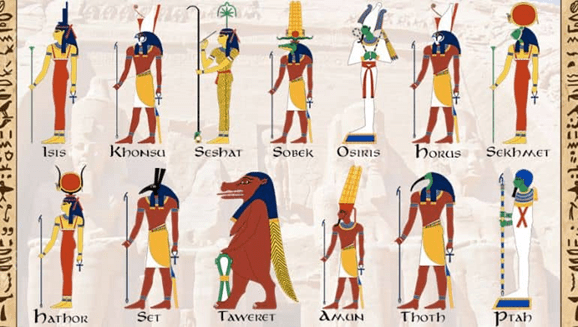
SOME OF THE EGYPTIAN GODS

APPLICATION: Partial obedience is no obedience, and talk is cheap! The Israelites make all kinds of promises but conveniently ignore Joshua’s exhortations that they throw away those idols. Joshua isn’t even dead yet and the Israelites are already trying to twist God’s words. You can almost hear the muttering and mumbling in the back of the crowd, “Throw away that idol of Isis? But that’s what protected my wife during childbirth! Certainly not!”

Joshua is no fool; that’s why he throws down the challenge in verse 15: “But if serving the Lord seems undesirable to you, then choose for yourselves this day whom you will serve, whether the gods your ancestors served beyond the Euphrates, or the gods of the Amorites, in whose land you are living. But as for me and my household, we will serve the Lord.” Joshua is basically telling the Israelites that he has made his choice; if they are foolish enough to refuse to serve God, they will reap the consequences!

What’s the purpose of the standing stone? Such stones were erected as signs of important covenants. The idea was that even if people would prove fickle, the rocks would still remain and the rocks would bear witness against the covenant – breakers. But can stones speak? When Jesus entered Jerusalem on Palm Sunday, the religious authorities begged him to silence the people. But Jesus told them, “I tell you, “He replied, “if they keep quiet, the stones will cry out.” How would stones cry out? Perhaps by shaking in an earthquake. Was there a point at which the standing stone at Shechem silently cried out to God? Did the stone fall over in an earthquake?

Joshua’s challenge remains for each of us today: Whom will we serve? Will we whole – heartedly serve the One True Living God, or will we attempt to compromise as we cling to idols of our own creation? Choose wisely! You are choosing for eternity! But remember, the rocks may still witness against you.

PRAYER: Father God, thank You for loving us and for caring for us. Lord, let everyone who reads this devotional choose to serve You whole – heartedly all the days of their lives, along with their families. In the matchless Name of King Jesus. Amen.

MARCH 13, 2022 BE STRONG! BE COURAGEOUS! JOSHUA 23:1 – 16 – JOSHUA TRIES TO PUT THINGS IN ORDER ONE LAST TIME – HANDOVERS ARE THE DICKENS!

March 13, 2022

Joshua 23:1 – 16

 “After a long time had passed and the Lord had given Israel rest from all their enemies around them, Joshua, by then a very old man, summoned all Israel—their elders, leaders, judges and officials—and said to them: “I am very old. You yourselves have seen everything the Lord your God has done to all these nations for your sake; it was the Lord your God who fought for you.  Remember how I have allotted as an inheritance for your tribes all the land of the nations that remain—the nations I conquered—between the Jordan and the Mediterranean Sea in the west. The Lord your God himself will push them out for your sake. He will drive them out before you, and you will take possession of their land, as the Lord your God promised you.

 “Be very strong; be careful to obey all that is written in the Book of the Law of Moses, without turning aside to the right or to the left. Do not associate with these nations that remain among you; do not invoke the names of their gods or swear by them. You must not serve them or bow down to them. But you are to hold fast to the Lord your God, as you have until now.

“The Lord has driven out before you great and powerful nations; to this day no one has been able to withstand you.  One of you routs a thousand, because the Lord your God fights for you, just as he promised.So be very careful to love the Lord your God.

 “But if you turn away and ally yourselves with the survivors of these nations that remain among you and if you intermarry with them and associate with them, then you may be sure that the Lord your God will no longer drive out these nations before you. Instead, they will become snares and traps for you, whips on your backs and thorns in your eyes, until you perish from this good land, which the Lord your God has given you.

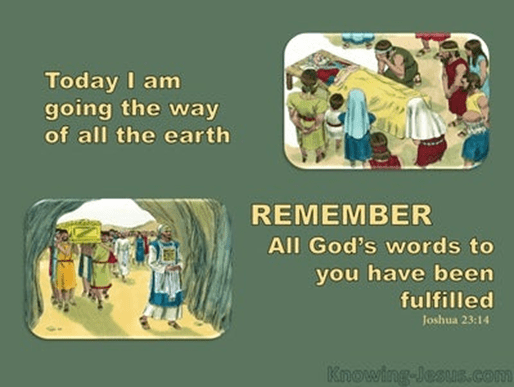
 “Now I am about to go the way of all the earth. You know with all your heart and soul that not one of all the good promises the Lord your God gave you has failed. Every promise has been fulfilled; not one has failed. But just as all the good things the Lord your God has promised you have come to you, so he will bring on you all the evil things he has threatened, until the Lord your God has destroyed you from this good land he has given you.  If you violate the covenant of the Lord your God, which he commanded you, and go and serve other gods and bow down to them, the Lord’s anger will burn against you, and you will quickly perish from the good land he has given you.”

Joshua knows that his time is limited, and he’s going to die quite soon. Joshua also has no illusions regarding the character of the Israelites; they are as fickle as the sheep that Moses used to herd. But words spoken by an elder at the end of his life still hold great significance in this culture, so Joshua is doing his best to instruct, encourage, and warn the Israelites one last time. What are Joshua’s messages to his people?

  •  It is the Lord who has fought for the Israelites and who has empowered Joshua to accomplish the things he has done.
  • The Israelites need to follow God’s commands given to Moses explicitly, not joking with them or attempting to modify them.
  • The Israelites must be extremely careful to avoid all the practices of the Canaanites; if they are stupid enough to embrace Canaanite practices, God will destroy them and they will perish from the land!

APPLICATION: Few things are scarier than having to turn over an organization, an institution, or a business, to one’s successors. You might have begun with the most sterling of values and the highest of motives; however, unless you succeed in getting others to catch your vision, the whole focus can change once you are out of the picture.

Here Joshua is doing his best to advise the Israelites and to warn them. But it’s possible that even as Joshua is saying these words, there are already young men standing at the back of the crowd, just waiting for him to be gone so that they can take over and do things the way they want. Although Moses mentored Joshua, there is no record of Joshua mentoring any one person. Who knows? It’s quite possible that Joshua may have made several attempts to find someone to serve as his assistant and his trainee, only to be disappointed. When all men can think of is loot, their ideas of leadership narrow down to how much larger their shares might be if they were leaders. Even though Joshua has gathered all the elders, leaders, judges, and officials together, there is nothing to indicate that any of them will be capable of succeeding Joshua. It’s likely that Joshua realizes that God is the only One who can develop a successor.

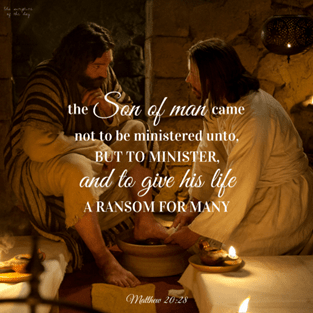
SERVANTHOOD LEADERSHIP! Jesus Christ gave us the best example of a servant/leader. Matthew 20:28 says, “the Son of Man came not to be ministered unto, but to minister, and to give his life a ransom for many.” Jesus came into the world, already knowing that he would die for the sins of those around him. On the night that Jesus was betrayed, he washed the feet of all the disciples, including those of Judas Iscariot, who was just waiting to run to the high priests so he could earn his thirty pieces of silver.

As we are winding up our studies in Joshua, let’s remember that Joshua’s name could equally be spelled “Jesus.” There is no record of Joshua amassing large amounts of loot; the only town Joshua wanted was Timnath Serah. Throughout Joshua’s life, he did what was necessary, facing overwhelming odds and discouragement. And yet, Joshua is one of the finest men portrayed in the Bible. If Joshua’s battle accounts may have made things seem a bit rosier than they actually were, he was only following the common practices of that day.

Each of us has a choice: we can be Joshua and Jesus – style leaders, or we can take advantage of our situations to amass as much wealth and power as possible. But remember what Proverbs 27:23 – 24 tells us. “Be sure you know the condition of your flocks, give careful attention to your herds; for riches do not endure forever, and a crown is not secure for all generations.”

Psalms 90:12 tells us, “Teach us to number our days, that we may gain a heart of wisdom.” Joshua lived out his days with a heart of wisdom. May all of us follow his sterling example!

PRAYER: Father God, help us to realize that You are the most important possession we can have and that the knowledge of You is better than any wealth. Help all in authority to be servant leaders and not tyrants. In the matchless Name of King Jesus. Amen.
MARCH 12, 2022 BE STRONG! BE COURAGEOUS! JOSHUA 22:10 – 34 THE ALTAR OF WITNESS – WHY ARE MEMORIALS IMPORTANT?

March 12, 2022

Joshua 22:10 – 34 “When they came to Geliloth near the Jordan in the land of Canaan, the Reubenites, the Gadites and the half-tribe of Manasseh built an imposing altar there by the Jordan. And when the Israelites heard that they had built the altar on the border of Canaan at Geliloth near the Jordan on the Israelite side, the whole assembly of Israel gathered at Shiloh to go to war against them.

So the Israelites sent Phinehas son of Eleazar, the priest, to the land of Gilead—to Reuben, Gad and the half-tribe of Manasseh. With him they sent ten of the chief men, one from each of the tribes of Israel, each the head of a family division among the Israelite clans.

 When they went to Gilead—to Reuben, Gad and the half-tribe of Manasseh—they said to them: “The whole assembly of the Lord says: ‘How could you break faith with the God of Israel like this? How could you turn away from the Lord and build yourselves an altar in rebellion against him now?  Was not the sin of Peor enough for us? Up to this very day we have not cleansed ourselves from that sin, even though a plague fell on the community of the Lord!And are you now turning away from the Lord?

“‘If you rebel against the Lord today, tomorrow he will be angry with the whole community of Israel.If the land you possess is defiled, come over to the Lord’s land, where the Lord’s tabernacle stands, and share the land with us. But do not rebel against the Lord or against us by building an altar for yourselves, other than the altar of the Lord our God. When Achan son of Zerah was unfaithful in regard to the devoted things, did not wrath come on the whole community of Israel? He was not the only one who died for his sin.’”

Then Reuben, Gad and the half-tribe of Manasseh replied to the heads of the clans of Israel: “The Mighty One, God, the Lord! The Mighty One, God, the Lord! He knows! And let Israel know! If this has been in rebellion or disobedience to the Lord, do not spare us this day.If we have built our own altar to turn away from the Lord and to offer burnt offerings and grain offerings, or to sacrifice fellowship offerings on it, may the Lord himself call us to account.

“No! We did it for fear that someday your descendants might say to ours, ‘What do you have to do with the Lord, the God of Israel?The Lord has made the Jordan a boundary between us and you—you Reubenites and Gadites! You have no share in the Lord.’ So your descendants might cause ours to stop fearing the Lord.“That is why we said, ‘Let us get ready and build an altar—but not for burnt offerings or sacrifices.’ On the contrary, it is to be a witness between us and you and the generations that follow, that we will worship the Lord at his sanctuary with our burnt offerings, sacrifices and fellowship offerings. Then in the future your descendants will not be able to say to ours, ‘You have no share in the Lord.’

“And we said, ‘If they ever say this to us, or to our descendants, we will answer: Look at the replica of the Lord’s altar, which our ancestors built, not for burnt offerings and sacrifices, but as a witness between us and you.’ “Far be it from us to rebel against the Lord and turn away from him today by building an altar for burnt offerings, grain offerings and sacrifices, other than the altar of the Lord our God that stands before his tabernacle.”

 When Phinehas the priest and the leaders of the community—the heads of the clans of the Israelites—heard what Reuben, Gad and Manasseh had to say, they were pleased.And Phinehas son of Eleazar, the priest, said to Reuben, Gad and Manasseh, “Today we know that the Lord is with us, because you have not been unfaithful to the Lord in this matter. Now you have rescued the Israelites from the Lord’s hand.” Then Phinehas son of Eleazar, the priest, and the leaders returned to Canaan from their meeting with the Reubenites and Gadites in Gilead and reported to the Israelites. They were glad to hear the report and praised God. And they talked no more about going to war against them to devastate the country where the Reubenites and the Gadites lived. And the Reubenites and the Gadites gave the altar this name: A Witness Between Us—that the Lord is God.”

PEOPLE HAVE SHORT MEMORIES!!! The Reubenites, Gadites, and half the tribe of Manasseh had crossed the Jordan River ahead of the other Israelites and had been in the vanguard of every battle in Canaan. But now these men were returning to their homes on the east side of the Jordan. Suddenly these men realized that with a river between them, it would be very easy for the rest of the Israelites to forget all their struggles during the conquest of Canaan and to disown them, cutting them off from Israel.

Perhaps these tribes should have discussed it with the others, but after they crossed the Jordan, they erected a huge altar, presumably made from uncut stones. The Israelites on the west side of the Jordan were understandably worried; were these tribes already trying to separate themselves from the nation of Israel? At this point, the Tabernacle had been erected in Shiloh, and Shiloh had become the focus for worship. What were these men trying to do?

The passage is a little long; however, the story is worth examining. This altar was actually a memorial, sort of a giant collection of standing stones. The altar had to be large enough to be seen from the opposite side of the Jordan, even when the Jordan was in flood, and it had to be built far enough away from the river bank that floods would not carry away those stones. Once the other Israelites had fully investigated, they realized that this altar was merely a memorial and not something more sinister.

APPLICATION: Are memorials a good idea? People have been erecting memorials of some kind for thousands of years. Memorials commemorate major battles, major achievements, major historical figures, etc. Recently, there has been a move to destroy memorials in the U.S.; however, such moves are foolish. Rather than destroying memorials, it would be far better to teach the history surrounding those memorials, even if succeeding generations have come to realize that the men and women depicted might not have been as heroic as previously assumed. You do not wipe out evil simply because you destroy a statue or a plaque.

The tribes on the east side of the Jordan had a valid worry. Even when there are memorials, unless succeeding generations learn the meaning of those memorials, people’s memories fade. “Out of sight, out of mind” is still quite true. The only way the tribes on the east side of the Jordan were really going to be able to remain part of Israel was by taking an active part in worship. Moses had commanded the men to come together at least three times a year, and each time Reubenites, Gadites, and Manassehites from the east side of the Jordan came to worship, they would be able to reinforce the idea that they too were Israelites.

These tribes on the east side of the Jordan had made enormous sacrifices, risking their lives to help the other tribes. Sadly, there is no indication that the other tribes ever fully appreciated what had been done for them. Sometimes God calls us to make sacrifices, not so that someone will erect a memorial or praise us, but so that His kingdom can go forward. Our task is to follow God, for if we do, one day He will commend us.

PRAYER: Father God, help us to be faithful and to do Your perfect Will, even when those who are benefiting don’t notice. Help us to remember that we are working for You and You alone. Thank You for calling us to Your kingdom work. In the mighty and precious Name of King Jesus. Amen.