Archive for May, 2022

MAY 31, 2022 DAVID, A MAN AFTER GOD’S OWN HEART #30 2 SAMUEL 20:1 – 26 GO WITH YOUR GUT DECIONS AND MESS UP BIG TIME!

May 31, 2022

2 Samuel 20:1 – 26 “Now a worthless man named Sheba son of Bichri, a Benjamite, happened to be there, and he blew the ram’s horn and shouted: “We have no share in David, no inheritance in Jesse’s son. Every man to his tent, O Israel!” So, all the men of Israel deserted David to follow Sheba son of Bichri. But the men of Judah stayed by their king all the way from the Jordan to Jerusalem.

When David returned to his palace in Jerusalem, he took the ten concubines he had left to care for the palace, and he placed them in a house under guard. He provided for them, but he no longer slept with them. They were confined until the day of their death, living as widows.

Then the king said to Amasa, “Summon the men of Judah to come to me within three days, and be here yourself.”

So, Amasa went to summon Judah, but he took longer than the time allotted him.

And David said to Abishai, “Now Sheba the son of Bichri will do us more harm than Absalom. Take your lord’s servants and pursue him, or he will find fortified cities and elude us.

So, Joab’s men, along with the Cherethites, the Pelethites, and all the mighty men, marched out of Jerusalem in pursuit of Sheba’s son of Bichri. And while they were at the great stone in Gibeon, Amasa joined them.

Now Joab was dressed in military attire, with a dagger strapped to his belt. And as he stepped forward, he slipped the dagger from its sheath. “Are you well, my brother?” Joab asked Amasa. And with his right hand Joab grabbed Amasa by the beard to kiss him.

Amasa was not on guard against the dagger in Joab’s hand, and Joab stabbed him in the stomach and spilled out his intestines on the ground. And Joab did not need to strike him again, for Amasa was dead. Then Joab and his brother Abishai pursued Sheba son of Bichri.

One of Joab’s young men stood near Amasa and said, “Whoever favors Joab, and whoever is for David, let him follow Joab!” But Amasa wallowed in his blood in the middle of the road, and when the man saw that all the troops were stopping there, he dragged the body off the road into a field and threw a garment over it. As soon as Amasa’s body was removed from the road, all the men went on with Joab to pursue Sheba son of Bichri.

Sheba passed through all the tribes of Israel toward Abel-Beth-Maacah, through the entire region of the Berites, who gathered together and followed him.

And Joab’s troops came and besieged Sheba in Abel-Beth-Maacah and built a siege ramp against the outer rampart of the city. As all the troops with Joab were battering the wall to topple it, a wise woman called out from the city, “Listen! Listen! Please tell Joab to come here so that I may speak with him.”

When he had come near to her, the woman asked, “Are you Joab?”

“I am,” he replied.

“Listen to the words of your servant,” she said.

“I am listening,” he answered.

Then the woman said, “Long ago they used to say, ‘Seek counsel at Abel,’ and that is how disputes were settled. I am among the peaceable and faithful in Israel, but you are trying to destroy a city that is a mother in Israel. Why would you swallow up the LORD’s inheritance?”

“Far be it!” Joab declared. “Far be it from me to swallow up or destroy! That is not the case. But a man named Sheba son of Bichri, from the hill country of Ephraim, has lifted up his hand against the king, against David. Deliver him alone, and I will depart from the city.”

“Look,” the woman replied, “his head will be thrown to you over the wall.”

Then the woman went to all the people with her wise counsel, and they cut off the head of Sheba son of Bichri and threw it to Joab. So, he blew the ram’s horn and his men dispersed from the city, each to his own home. And Joab returned to the king in Jerusalem.

Now Joab was over the whole army of Israel; Benaiah son of Jehoiada was over the Cherethites and Pelethites; Adoram was in charge of forced labor; Jehoshaphat son of Ahilud was the recorder; Sheva was the scribe; Zadok and Abiathar were priests; and Ira the Jairite was David’s priest.”     

  In an unsettled situation, someone will always be bidding for power, and here you have Sheba and Joab: Sheba, son of Bichri, is a Benjamite, from the same tribe as Saul and Jonathan and Shimei. Shimei, the man who foolishly cursed David when David was fleeing Jerusalem, has brought 1,000 Benjamites to help carry David’s household and their things across the Jordan and to return them to Jerusalem. Unfortunately, just before that, David panicked and appealed to the men of Judah for help, resulting in a dispute between the men of Judah and the men from the other tribes over the honor of helping David. Had David prayed and waited on the Lord, help would have come without his playing the tribal card. Now David’s move has backfired, alienating the other tribes, and Sheba is trying to seize power by turning the hearts of the other tribesmen away from David. 

Joab has a grudge. While David was in panic mode at Mahanaim, he sent a message to Amasa that Amasa would become military commander in Joab’s place. Joab is furious; there is no way that Joab will allow anybody to take his place, let alone Amasa, who previously was commanding the troops of Absalom. Why should David honor a traitor and ignore Joab, who has remained loyal?

Amasa is supposed to be gathering the troops of Judah; however, he is wasting precious time. David realizes that Sheba must be stopped at once, so he dispatches Joab, his brother Abishai, and his troops to catch Sheba. When Joab meets Amasa at Gibeon, he grabs Amasa by the beard with his right hand as if to kiss him and stabs Amasa with a dagger held in his left hand. (Amasa does not anticipate an attack because he assumes that Joab is right – handed; evidently, Joab is ambidextrous.) Amasa dies, his body is dragged off to the side of the road and covered, and Joab continues to pursue Sheba.

Sheba takes refuge in the city of Abel-Beth-Maacah, a city traditionally known for the wisdom and sound judgement of its people. (Nobody asked the people of Abel if they wanted Sheba to enter their city!) Joab has already erected a siege mound against the city wall and is battering it to bring it down when a female counselor from the city calls to him. This sagacious lady tells Joab that there is no need to destroy the city; wait and the citizens of Abel will take care of Sheba and throw his head over the wall in proof. Relieved to have a possible way out of this situation, the citizens of Abel behead Sheba and throw this grisly trophy over the city wall so it lands at Joab’s feet. Joab disperses the troops and returns to Jerusalem, secure in his position as a successful military commander.

One sad footnote is the condition of the ten concubines whom David left to mind the palace and whom Absalom raped in public. These poor ladies are removed from the palace and placed in a house under guard. Although these women are provided for, the king never sleeps with them again. Was this guard to protect these women, or was it to keep them as virtual prisoners? These ladies were in an impossible position. Absalom had violated these women; therefore, David could no longer have sex with them. At the same time, David could not afford to marry these women off to other men for fear that those men might then assume that they had gotten power over David. The net result is that these ladies live as widows for the rest of their lives.

APPLICATION: Theodore Roosevelt is quoted as having said, “If you could kick the person in the pants responsible for most of your trouble, you wouldn’t sit for a month.” This chapter fully illustrates that point! God has provided Shimei and 1,000 Benjamites to help move David and his followers back to Jerusalem. But while God is making this provision, David has panicked, appealing to his tribesmen of Judah for assistance. At this point, David is not thinking clearly, nor is he viewing himself as king over all of Israel, despite God’s anointing. Instead of finding a quiet place and praying, David is now taking making gut decisions based on emotions.

David’s second poor decision is his appointment of Amasa as commander of his troops, even though Amasa has previously commanded Absalom’s forces. Perhaps this decision has been taken in an attempt to solidify support from those who had previously backed Absalom. Perhaps David is subtly trying to get back at Joab for killing Absalom. At any rate, Amasa is not nearly as competent as Joab, nor is he as experienced a warrior. A savvy tactician would have moved as quickly as possible to organize the men of Judah to pursue Sheba. A more experienced warrior would also not have fallen for Joab’s pseudo – embrace.

Ask any leader and they can point to times when they made gut decisions that turned out to be disasters. Decisions taken during a time of emotional upheaval are frequently wrong. Far better to step back and pray about a situation than to act hastily, only to have to do damage control later.

PRAYER: Father God, thank You for loving us and for caring for us. Lord, help all those in leadership to find quiet places where they can ask You for guidance. When You give guidance, help us to listen and obey. In the matchless Name of King Jesus. Amen.
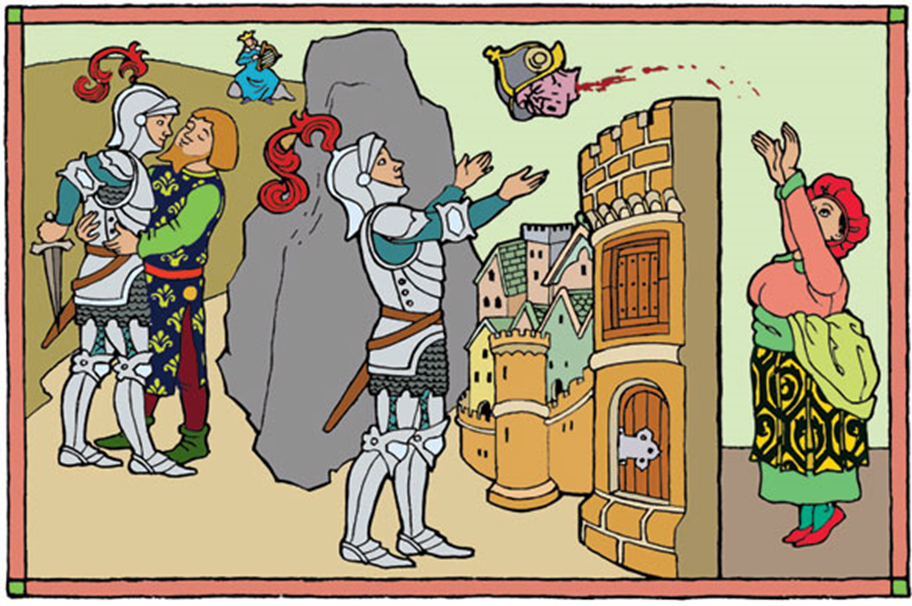

THIS ISN’T QUITE ACCURATE, BECAUSE NOBODY WORE ARMOR LIKE THIS IN DAVID’S DAY. JOAB IS PICTURED WITH THE DAGGER IN HIS RIGHT HAND INSTEAD OF HIS LEFT. BUT HOW ABOUT THAT LADY COUNSLOR THROWING SHEBA’S HEAD OVER THE WALL AS IF SHE WERE TRYING FOR A THREE – POINT BASKETBALL GOAL?

MAY 30, 2022 DAVID, A MAN AFTER GOD’S OWN HEART #29 2 SAMUEL 19:31 – 43 DAVID BLESSES A FRIEND, BUT A TRIBAL CONFLICT IS BREWING!

May 30, 2022

2 Samuel 19: 31 – 43 “Now Barzillai the Gileadite had come down from Rogelim to cross the Jordan with the king and send him on his way from there. Barzillai was quite old, eighty years of age, and since he was a very wealthy man, he had provided for the king while he stayed in Mahanaim.

The king said to Barzillai, “Cross over with me, and I will provide for you at my side in Jerusalem.”

But Barzillai replied, “How many years of my life remain, that I should go up to Jerusalem with the king? I am now eighty years old. Can I discern what is good and what is not? Can your servant taste what he eats or drinks? Can I still hear the voice of singing men and women? Why should your servant be an added burden to my lord the king?

Your servant could go with the king only a short distance past the Jordan; why should the king repay me with such a reward? Please let your servant return, that I may die in my own city near the tomb of my father and mother. But here is your servant Chimham. Let him cross over with my lord the king, and do for him what is good in your sight.”

The king replied, “Chimham will cross over with me, and I will do for him what seems good in your sight, and I will do for you whatever you desire of me.”

So, all the people crossed the Jordan, and then the king crossed over. The king kissed Barzillai and blessed him, and Barzillai returned home.

Then the king went on to Gilgal, and Chimham crossed over with him. All the troops of Judah and half the troops of Israel escorted the king.

Soon all the men of Israel came to the king and asked, “Why did our brothers, the men of Judah, take you away secretly and bring the king and his household across the Jordan, together with all of David’s men?”

And all the men of Judah replied to the men of Israel, “We did this because the king is our relative. Why does this anger you? Have we ever eaten at the king’s expense or received anything for ourselves?”

“We have ten shares in the king,” answered the men of Israel, “so we have more claim to David than you. Why then do you despise us? Were we not the first to speak of restoring our king?”

But the men of Judah pressed even harder than the men of Israel.”

When David fled to Mahanaim in the eastern part of Gilead, east of the Jordan, it was Barzillai the Gileadite who took care of the needs of David and his followers. Weary, distraught, and discouraged, David found Barzillai’s hospitality to be the refreshment he needed to go on. Now David has been restored to the throne and he wants to bless Barzillai for his kindness. Barzillai accompanies David and his followers across the Jordan, but then wishes to return home. David urges Barzillai to return with him to Jerusalem so that David can repay the kindness Barzillai has shown. But Barzillai at eighty is a very wise man indeed. Barzillai thanks David for his kind gesture; however, Barzillai feels that it would be far better for his son Chimham to accompany David.

Now that David has made it safely across the Jordan and is on his way back to Jerusalem, a new problem is arising. Even though Shimei and 1,000 men of Benjamin have helped David across the river and even though half the troops of Israel have also helped David cross, men from the other tribes come to David bringing complaints. These men from the other ten tribes of Israel begin accusing the men of Judah that they have taken David away secretly!

David is partially to blame for this mess because he did message the men of Judah to come help his followers and him cross the Jordan. Perhaps David appealed to the men of Judah because he wasn’t sure of his reception by the other tribes; however, it was a foolish and short – sighted move.

The men from the other ten tribes are embarrassed for having supported Absalom and are seeking a way to assuage their guilt. Now the men from these tribes are picking a fight with the Judeans and the Benjamites as a way of justifying themselves. At this point, David must have his hands to his head!

APPLICATION: David’s gratitude towards Barzillai illustrates why people were willing to follow him, despite his failings. Barzillai’s wise answers echo down the ages. For many of us, as we age, we realize that our wants and our needs become increasingly simpler. The things that seemed so vital and necessary at an earlier stage in our lives are no longer important. Barzillai has enjoyed everything his wealth could afford, but now he realizes that those things are of little importance. Perhaps Barzillai is becoming deaf or losing his sense of taste, but now all Barzillai wants is to live quietly and to be able to be buried at home.

Psalm 90:12 says, ‘So teach us to number our days, that we may gain a heart of wisdom.” Wisdom does not always accompany old age. We can choose to ignore the lessons that God wishes to teach us. But if we will humble ourselves and listen, God can purify us and refine our lives, giving us hearts of wisdom.

As this chapter ends, we get hints of potential tribal conflict with the men of Judah and Benjamin on one side and the men of the other ten tribes on the other. David himself has played the tribal card, and there is trouble ahead. Tribal conflicts are a burden and a curse! We will have to continue our study to see how David is going to handle the problems that are brewing.

PRAYER: Father God, thank You for loving us and for caring for us. Please teach us to number our days so that we can gain hearts of wisdom and refuse to sink to manipulation of people. In the mighty and precious Name of King Jesus. Amen.

MAY 29, 2022 DAVID, A MAN AFTER GOD’S OWN HEART #28 2 SAMUEL 19:16 – 30 A TRAITOR PARDONED AND A SCAM REVEALED

May 29, 2022

“Then Shimei son of Gera, a Benjamite from Bahurim, hurried down with the men of Judah to meet King David, along with a thousand men of Benjamin, as well as Ziba the steward of the house of Saul and his fifteen sons and twenty servants.

They rushed down to the Jordan before the king and crossed at the ford to carry over the king’s household and to do what was good in his sight.

When Shimei son of Gera crossed the Jordan, he fell down before the king and said, “My lord, do not hold me guilty, and do not remember your servant’s wrongdoing on the day my lord the king left Jerusalem. May the king not take it to heart. For your servant knows that I have sinned, so here I am today as the first of all the house of Joseph to come down to meet my lord the king.”

But Abishai son of Zeruiah said, “Shouldn’t Shimei be put to death for this, because he cursed the LORD’s anointed?” And David replied, “Sons of Zeruiah, what have I to do with you, that you should be my adversaries today? Should any man be put to death in Israel today? Am I not indeed aware that today I am king over Israel?”

So, the king said to Shimei, “You shall not die.” Then the king swore an oath to him.”

Then Mephibosheth, Saul’s grandson, went down to meet the king. He had not cared for his feet or trimmed his mustache or washed his clothes from the day the king had left until the day he returned safely. And he came from Jerusalem to meet the king, who asked him, “Mephibosheth, why did you not go with me?”

“My lord the king,” he replied, “because I am lame, I said, ‘I will have my donkey saddled so that I may ride on it and go with the king.’ But my servant Ziba deceived me, and he has slandered your servant to my lord the king.

Yet my lord the king is like the angel of God, so do what is good in your eyes. For all the house of my grandfather deserves death from my lord the king, yet you have set your servant among those who eat at your table. What further right, then, do I have to keep appealing to the king?”

The king replied, “Why say any more? I hereby declare that you and Ziba are to divide the land.”

And Mephibosheth said to the king, “Instead, since my lord the king has safely come to his own house, let Ziba take it all!”  

Remember Shimei? Shimei is a close relative of the late King Saul from the tribe of Benjamin. When David was fleeing Jerusalem, Shimei cursed at him and threw rocks at him. Now the tables have turned, and Shimei realizes that he needs to do damage control ASAP! Shimei and 1,000 Benjamites, plus Ziba, Saul’s former servant with his fifteen sons and twenty servants all rush to the Jordan to help bring King David’s household back across the river. Ziba, of course, is concerned because the lies he has told about Saul’s grandson Mephibosheth are about to be revealed.

As soon as Shimei has crossed the Jordan, he throws himself on the ground before David, begging for forgiveness. Slandering kings is always a risky business, and Shimei realizes that his earlier raging at David may now cost him his life. Notice that Shimei is accompanied by 1,000 Benjamites; Shimei hopes that the size of this retinue will impress David with his sincerity. Despite the urging of one of David’s army commanders, David graciously forgives Shimei, stating that he is sure of his kingship and does not need to spill any blood to prove himself.

Poor Mephibosheth! Mephibosheth is Jonathan’s son and Saul’s grandson and is crippled due to an injury in childhood. When David was fleeing Jerusalem, Mephibosheth wanted to accompany him on a donkey; however, Ziba and his household refused to assist him. Ziba, remember, rushed out to meet David with provisions and told an enormous lie that Mephibosheth was supporting Absalom. David is prepared to divide Saul and Jonathan’s property between Mephibosheth and Ziba; however, Mephibosheth wisely tells David to let Ziba have it all. From this point onwards, Mephibosheth prefers to trust David. Ziba has already proven to be treacherous. For Mephibosheth, it is far safer to have nothing to do with Ziba whatsoever.

APPLICATION: Here David gives a shining example of forgiveness. Shimei knows that David could have him killed, and some of David’s supporters are urging David to do so. But David’s reply is classic: “Should any man be put to death in Israel today? Am I not indeed aware that today I am king over Israel?” David doesn’t need to make any more dramatic gestures. God has restored David, and that’s the end of it.

This story illustrates some of the reasons that people looked up to David as a leader. David has the power to initiate a blood bath among the Benjamites, but he does not. David wants to provide for Jonathan’s son; however, he too realizes that Ziba is a manipulator. David has already promised Mephibosheth that he will care for him because of David’s covenant with Jonathan.

With leadership comes the temptation to abuse power and to take revenge on those who have attempted to undermine you in some fashion. But as leaders, we need to remember what God tells us in Galatians 6:7 – 8 “Do not be deceived: God cannot be mocked. A man reaps what he sows. Whoever sows to please their flesh, from the flesh will reap destruction; whoever sows to please the Spirit, from the Spirit will reap eternal life.” And God specifically warns us against taking revenge in Romans 12:19. “Do not take revenge, my dear friends, but leave room for God’s wrath, for it is written: “It is mine to avenge; I will repay,” says the Lord.”

God knows the human heart far better than we do, and it is much better to leave things to God and allow Him to sort out the people who have opposed us or undermined us. If someone has acted unjustly toward you, it is far better to allow God to bring that person to repentance. “But what if such a person never repents?” you ask. “How am I to get satisfaction?” Continue to pray for such people, asking God to reveal Himself to them, so that they will change and behave righteously. May God help us, so that we will respond to challenges in His Holy Spirit!

PRAYER: Father God, thank You for loving us and for caring for us. Lord, You know the stresses of leadership far far better than anyone else. Help all leaders to look to You and to allow You to sort out those who rebel or undermine. In the mighty and precious Name of King Jesus. Amen.

MAY 28, 2022 DAVID, A MAN AFTER GOD’S OWN HEART #27 2 SAMUEL 19:1 – 15 SOMETIMES YOU HAVE TO IGNORE YOUR OWN GRIEF FOR THE SAKE OF OTHERS!

May 28, 2022

“Then it was reported to Joab, “The king is weeping and mourning over Absalom.” And that day’s victory was turned into mourning for all the people, because on that day they were told, “The king is grieving over his son.”

So, they returned to the city quietly that day, as people steal away in humiliation after fleeing a battle. But the king covered his face and cried out at the top of his voice, “O my son Absalom! O Absalom, my son, my son!”

Then Joab went into the house and said to the king, “Today you have disgraced all your servants who have saved your life and the lives of your sons and daughters, of your wives, and of your concubines. You love those who hate you and hate those who love you! For you have made it clear today that the commanders and soldiers mean nothing to you. I know today that if Absalom were alive and all of us were dead, it would have pleased you!

Now therefore get up! Go out and speak comfort to your servants, for I swear by the LORD that if you do not go out, not a man will remain with you tonight. This will be worse for you than all the adversity that has befallen you from your youth until now!”

So, the king got up and sat in the gate, and all the people were told: “Behold, the king is sitting in the gate.” So, they all came before the king.

Meanwhile, the Israelites had fled, each man to his home. And all the people throughout the tribes of Israel were arguing, “The king rescued us from the hand of our enemies and delivered us from the hand of the Philistines, but now he has fled the land because of Absalom. But Absalom, the man we anointed over us, has died in battle. So why do you say nothing about restoring the king?”

Then King David sent this message to Zadok and Abiathar, the priests: “Say to the elders of Judah, ‘Why should you be the last to restore the king to his palace, since the talk of all Israel has reached the king at his quarters? You are my brothers, my own flesh and blood. So why should you be the last to restore the king?’ And say to Amasa, ‘Aren’t you my flesh and blood? May God punish me, and ever so severely, if from this time you are not the commander of my army in place of Joab!’”

So, he swayed the hearts of all the men of Judah as though they were one man, and they sent word to the king: “Return, you and all your servants.” So, the king returned, and when he arrived at the Jordan, the men of Judah came to Gilgal to meet him and escort him across the Jordan.”

Joab is just about at the end of his tether! Despite David’s orders to spare Absalom, Joab murdered Absalom as Absalom hung in tree branches caught by his hair. Now Joab is attempting to make up for that mistake by blustering at David. But if Joab is revolted at David, he has good reason. Here Joab and David’s soldiers have saved the lives of David, his family, and his followers, and David is behaving as if their lives are less important than Absalom’s. In this case, Joab is right. Blinded by delayed guilt, David is mourning not only for Absalom but also for all of his past mistakes. But that public mourning needs to stop immediately. David needs to set aside his grief for the good of his family, his army, and his followers. If David wants to do any more grieving, he needs to do it in private. David realizes the sense of this warning and sits in the city gate where everyone can see him. (This is likely the city of Mahaniam, east of the Jordan.)

Now the Israelites who have fled to their homes are beginning to remember all the good things that King David has done for them. Absalom, the man they hailed as king, is dead; what should they do?  Why not restore David to the throne? David is aware of the groundswell of support for him from the other tribes of Israel and messages the priests and elders of Judah, hinting them that they should also be demanding his return.

One puzzling part of this message is the message to Amasa, promoting him to head David’s armies in Joab’s place. What’s wrong with David? Joab and David have been at odds with each other ever since David forced Joab to place Uriah in the hottest part of the battle so that Uriah would be killed. Joab began losing trust in David from that point onwards. Joab has killed Absalom, despite David’s orders not to, and has then reproved David for making a public spectacle of his grief over Absalom. Now Joab no longer trusts David, and David no longer trusts Joab. But what about Amasa? 2 Samuel 17:25 tells us that Absalom appointed Amasa as head of his army in place of Joab! If David is so concerned about Joab’s loyalty, why is he choosing Amasa, who was heading Absalom’s army?  To make matters more confusing, we learn that Amasa’s father was married to Joab’s mother’s sister, Joab’s aunt. But David plays the appeal to family and tribal loyalties, and the men of Judah gladly escort David across the Jordan.

APPLICATION: Here David nearly makes a fatal mistake. Caught up in guilt and grief over the results of old sins and the loss of a son, David almost turns his back on all those who have risked their lives on his behalf. There are times when we may share grief with our friends, but this is not the moment for David to do so. Joab’s advice is blunt, to the point, and correct. This situation is not merely all about David, and it’s time for him to reach out to those around him and comfort them.

Is David being wise in reaching out specifically to the men of Judah while ignoring potential supporters from other parts of Israel? Probably not. At this point, David appears to be a bit confused and to be grasping for support.

David’s treatment of Joab is also troubling. Joab is no angel; however, Joab has risked his life many times on David’s behalf and has tried to give him the best military advice he could. David’s order to spare Absalom’s life makes little sense when you realize the scope of the battle and the terrain on which it is being fought. One wonders, however, if Joab has killed Absalom in delayed reprisal for the death of Uriah? Truly, David’s sins with Bathsheba and Uriah continue to generate repercussions.

As leaders, we need to look carefully at this part of David’s life. When you have been attacked, it is tempting to lash out and to take quick decisions to get rid of anyone you feel is not loyal to you. But such decisions may prove to create more problems than they solve. May all of us in leadership learn from David’s mistakes and seek God’s guidance as we continue to lead!

PRAYER: Father God, thank You for loving us and caring for us. Lord, help us to always look to you for guidance and not to make hasty decisions when we are pressured or being attacked. In the mighty and precious Name of King Jesus. Amen.

MAY 27, 2022 DAVID, A MAN AFTER GOD’S OWN HEART #26 2 SAMUEL 18:19 – 33 DAVID GRIEVES ABSALOM’S DEATH

May 27, 2022

2 Samuel 18:19 – 33 “Then Ahimaaz son of Zadok said, “Please let me run and tell the king the good news that the LORD has avenged him of his enemies.”

But Joab replied, “You are not the man to take good news today. You may do it another day, but you must not do so today, because the king’s son is dead.”

So Joab said to a Cushite, “Go, tell the king what you have seen.” The Cushite bowed to Joab and took off running.

Ahimaaz son of Zadok, however, persisted and said to Joab, “Regardless of whatever may happen, please let me also run behind the Cushite!”

“My son,” Joab replied, “why do you want to run, since you will not receive a reward?”

“No matter what, I want to run!” he replied. “Then run!” Joab told him.

So Ahimaaz ran by way of the plain and outran the Cushite.

Now David was sitting between the two gates when the watchman went up to the roof of the gateway by the wall, looked out, and saw a man running alone. So he called out and told the king.

“If he is alone,” the king replied, “he bears good news.”

As the first runner drew near, the watchman saw another man running, and he called out to the gatekeeper, “Look! Another man is running alone!”

“This one also brings good news,” said the king.

The watchman said, “The first man appears to me to be running like Ahimaaz son of Zadok.”

“This is a good man,” said the king. “He comes with good news.”

Then Ahimaaz called out to the king, “All is well!” And he bowed facedown before the king.

He continued, “Blessed be the LORD your God! He has delivered up the men who raised their hands against my lord the king.”

The king asked, “Is the young man Absalom all right?”

And Ahimaaz replied, “When Joab sent the king’s servant and your servant, I saw a great tumult, but I do not know what it was.”

“Move aside,” said the king, “and stand here.”

So he stepped aside.

Just then the Cushite came and said, “May my lord the king hear the good news: Today the LORD has avenged you of all who rose up against you!”

The king asked the Cushite, “Is the young man Absalom all right?”

And the Cushite replied, “May what has become of the young man happen to the enemies of my lord the king and to all who rise up against you to harm you.”

The king was shaken and went up to the gate chamber (the room over the gate) and wept. And as he walked, he cried out, “O my son Absalom! My son, my son Absalom! If only I had died instead of you, O Absalom, my son, my son!”

Having killed Absalom, Joab is now responsible for notifying King David. How will Joab break this news, considering that David has specifically ordered everyone to preserve Absalom’s life? Ahimaaz, one of the sons of Zadok, the priest, begs to be the messenger; however, Joab chooses a young Cushite man from the area of Lower Nubia or Ethiopia. Obviously, Joab is worried about what David will do to the person who brings the news of Absalom’s death and does not want to risk the life of the high priest’s son. Ahimaaz gets permission to run anyway and beats the Cushite to the city where David is lodging.

Notice the wording of the messages that Ahimaaz and the young Cushite man use. Neither man baldly states that Absalom is dead. Ahimaaz simply says, “When Joab sent the king’s servant and your servant, I saw a great tumult, but I do not know what it was.” The man from Cush says, “May what has become of the young man happen to the enemies of my lord the king and to all who rise up against you to harm you.” Certain customs prevail and one does not openly tell a king bad news.

When David realizes that Absalom is dead, he immediately begins wailing over Absalom. David is so distraught that he openly wishes that he had died instead of Absalom. Why would David behave like this? While Absalom was alive, he did everything he could to undermine David and to seize the throne by force; yet, now David is wishing that he had died in Absalom’s place. David realizes that it is his sin with Bathsheba and Uriah that has brought about this terrible consequence. Had David never sinned with Bathsheba and had he never arranged for Uriah’s death, Amnon might never have raped Tamar, Absalom might never have murdered Amnon, and Absalom might never have rebelled. David is fully accepting responsibility for all these tragedies.

APPLICATION: SIN HAS CONSEQUENCES! EVEN WHEN WE REPENT, THOSE CONSEQUENCES DON’T GO AWAY! Proverbs 4:23 reminds us, “Guard your heart above all else, for it determines the course of your life.” In this day when we can access all kinds of media on cell phones, tablets, and computers, it is far too easy to become enticed with evil masquerading as information. David’s problems began when he failed to accompany his forces to the battle field, even though it was the time of year when kings went to war. If David had gone with his men, he would never have seen Bathsheba in the first place.

So many times, we focus only on ourselves, forgetting that whatever we do will affect our families in ways we cannot imagine. The focus on self – realization and self – development is leaving the most vulnerable members of our society at risk. Even seemingly routine activities have become places of danger for our children! Recently, the news described the kidnapping and trafficking of a fifteen – year – old girl who accompanied her father to a basketball game. The girl was seized when she went to the concession stand. So far, eight people have been arrested over this incident. What could possibly cause so many people to do something so monstrous? It’s possible that these people were abused or neglected in some fashion when they were children. Those who have been previously abused can become abusers, unless they turn to God.

We need to search our hearts! Are there evil things hiding in dark corners that will sway us to put those we love in danger? May God help us, so that we will never have to grieve over our children as David did over Absalom.

PRAYER: Father God, thank You for loving us and for caring for us. Lord, help us to allow you to shine the light of Your Holy Spirit into all the dark corners of our hearts, so that we will never put our loved ones in danger as David did. In the matchless Name of King Jesus. Amen.

MAY 26, 2022 DAVID, A MAN AFTER GOD’S OWN HEART #25 2 SAMUEL 18:1 – 13 ABSALOM’S CROWNING GLORY PROVES HIS UNDOING!

May 26, 2022

2 Samuel 18:1 – 13 “Then David reviewed his troops and appointed over them commanders of hundreds and of thousands. He sent out the troops, a third under Joab, a third under Joab’s brother Abishai son of Zeruiah, and a third under Ittai the Gittite. And the king said to the troops, “I will surely march out with you as well.”

But the people pleaded, “You must not go out! For if we have to flee, they will pay no attention to us. Even if half of us die, they will not care; but you are worth ten thousand of us. It is better for now if you support us from the city.”

“I will do whatever seems best to you,” the king replied. So, he stood beside the gate, while all the troops marched out by hundreds and by thousands. Now the king had commanded Joab, Abishai, and Ittai, “Treat the young man Absalom gently for my sake.” And all the people heard the king’s orders to each of the commanders regarding Absalom.

So, David’s army marched into the field to engage Israel in the battle, which took place in the forest of Ephraim. There the people of Israel were defeated by David’s servants, and the slaughter was great that day—twenty thousand men. The battle spread over the whole countryside, and that day the forest devoured more people than the sword.

Now Absalom was riding on his mule when he met the servants of David, and as the mule went under the tangled branches of a large oak, Absalom’s head was caught fast in the tree. The mule under him kept going, so that he was suspended in midair. When one of the men saw this, he told Joab, “I just saw Absalom hanging in an oak tree!”

“You just saw him!” Joab exclaimed. “Why did you not strike him to the ground right there? I would have given you ten shekels of silver and a warrior’s belt!”

The man replied, “Even if a thousand shekels of silver were weighed out into my hands, I would not raise my hand against the king’s son. For we heard the king command you and Abishai and Ittai, ‘Protect the young man Absalom for my sake. ’ If I had jeopardized my own life —and nothing is hidden from the king—you would have abandoned me.”

But Joab declared, “I am not going to wait like this with you!” And he took three spears in his hand and thrust them through the heart of Absalom while he was still alive in the oak tree. And ten young men who carried Joab’s armor surrounded Absalom, struck him, and killed him.

Then Joab blew the ram’s horn, and the troops broke off their pursuit of Israel because Joab had restrained them. They took Absalom, cast him into a large pit in the forest, and piled a huge mound of stones over him. Meanwhile, all the Israelites fled, each to his home.

During his lifetime, Absalom had set up for himself a pillar in the King’s Valley, for he had said, “I have no son to preserve the memory of my name.” So, he gave the pillar his name, and to this day it is called Absalom’s Monument.”

Remember Absalom and his incredible hair? Every year Absalom would cut five pounds, 2.3 kg, of hair from his head. In an earlier day and age, a woman’s hair was referred to as her “crowning glory.” Now Absalom’s crowning glory will become his undoing.

Following Hushai’s advice, Absalom heads a huge army to attack David. But as a savvy military commander, David divides his forces into three groups, headed by Joab, Abishai, and Ittai, and then subdivides those forces into groups of thousands and hundreds. No coward, David is prepared to march out with his forces; however, David’s people sensibly point out that he is the main target. Far better for David to remain behind in the city than for him to be captured. This statement by David’s followers indicates their degree of loyalty and proves that David still enjoys strong support in Israel.

The battle takes place in the forest of Ephraim, a mountainous area east of the Jordan River. Parts of this area are still heavily wooded, and the rugged terrain could easily kill careless people fleeing for their lives. This photo shows that area as it is today; however, in ancient times, the woods were probably far denser than they are now. Twenty thousand men die that day, and the forest accounts for more of the deaths than do the soldiers.

As the armies are setting off, David orders the commanders to be gentle with Absalom for David’s sake, but that doesn’t happen. Lacking organized leadership, Absalom’s forces are in retreat all over the countryside. When Absalom meets David’s soldiers, he turns his mule around and attempts to run away; however, that gorgeous hair gets caught in low – lying branches. The mule gallops off, leaving Absalom hanging in the tree by his hair. A foot soldier sensibly reports Absalom’s plight to Joab, who explodes in anger. When this soldier refuses to kill Absalom for fear of reprisals by David, Joab finds Absalom and thrusts three spears through his heart. Ten young men in Joab’s body guard then finish Absalom off. Joab blows his ram’s horn to call off his troops and then buries Absalom in a pit in the forests, raising a large pile of stones over the body. At this point, all the Israelites flee to their homes. Nobody wants to wait to see what David will do now that Absalom is dead.   

Why is Joab willing to kill Absalom, despite David’s orders to the contrary? When David wanted to eliminate Uriah, he ordered Joab to send Uriah to the hottest part of the battle. In effect, Joab was forced to act as David’s executioner. Joab is still smarting at his unwilling part in the death of an outstanding soldier. Earlier, Joab and his brother Abishai murdered Abner in cold blood as revenge for Abner’s killing of Joab’s brother, Asahel at the Battle of Gibeon. Traditionally, a death in battle would not demand vengeance, and in fact, Abner tried to warn Asahel to stop following him and to leave off the attack. Joab has a grudge against David, and Joab also recognizes that a live Absalom might escape and start rebellion all over again. Given the opportunity, Joab feels secure in ignoring David’s orders and permanently eliminating a threat to the throne. (Perhaps Joab is also angry that Absalom has not invited Joab to head his army, but has chosen Amasa instead.)    

The final comments are very interesting. Despite the fact that Absalom could be a male model and despite the fact that he has had no trouble having sex with ten women in public, Absalom has never fathered a son. In the end, Absalom’s only memorial is a pillar he has raised for himself in the King’s Valley, a sad testimonial to a supremely gifted individual who has wasted his life.

APPLICATION: The story of Absalom is a tangled one, demonstrating how far the Israelites have strayed from the Laws of Moses. In Deuteronomy 17:14 – 20, Moses sets out rules for kingship. Unfortunately, despite David’s relationship with the Lord, he seems unaware of these rules. 14 “When you come to the land which the Lord your God is giving you, and possess it and dwell in it, and say, ‘I will set a king over me like all the nations that are around me,’ 15 you shall surely set a king over you whom the Lord your God chooses; one from among your brethren you shall set as king over you; you may not set a foreigner over you, who is not your brother. 16 But he shall not multiply horses for himself, nor cause the people to return to Egypt to multiply horses, for the Lord has said to you, ‘You shall not return that way again.’ 17 Neither shall he multiply wives for himself, lest his heart turn away; nor shall he greatly multiply silver and gold for himself. 18 “Also it shall be, when he sits on the throne of his kingdom, that he shall write for himself a copy of this law in a book, from the one before the priests, the Levites. 19 And it shall be with him, and he shall read it all the days of his life, that he may learn to fear the Lord his God and be careful to observe all the words of this law and these statutes, 20 that his heart may not be lifted above his brethren, that he may not turn aside from the commandment to the right hand or to the left, and that he may prolong his days in his kingdom, he and his children in the midst of Israel. The king is not to multiply horses or wives and the king is charged to write a copy of the law for himself to study it all the days of his life “that he may prolong his days in his kingdom, he and his children in the midst of Israel.”

Why hasn’t David obeyed these commands of God? There is nothing to indicate that David’s father Jesse was a man of faith. David himself may have been the son of a less favorite wife or even of a concubine; that would certainly explain Jesse’s willingness to send David out to risk his life herding sheep. No, David has not learned about the Lord from his father; David has had personal encounters with the Lord in the wilderness.  Perhaps nobody has ever taught David the Laws of Moses, and he is unaware of these commands. Perhaps David has felt that he is too busy and has depended on the priests to interpret God’s Law for him. Failing to have a personal knowledge of God’s Word, David has patterned his life after that of Saul and other kings around him.

David has done well in refusing to amass a large cavalry; however, he has taken numerous wives and concubines, and he has not made a copy of the Law for himself to study. In polygamous situations, fathering children becomes a form of keeping score, and the only parental guidance the children may receive will likely come from their mothers. Absalom and Tamar’s mother is a princess from Geshur, a kingdom east of the Jordan River in the area of the Golan Heights. According to Wikipedia, the people of Geshur worshiped a moon god in the form of a bull and may also have incorporated Egyptian deities into their religion. David’s polygamy has left his children with confused loyalties and no spiritual foundation.

“But,” you say, “I come from a broken home, and I don’t have any good models for fatherhood. My mother was too busy supporting us to give very much guidance.” All human parents fail at some point; that’s why we need to learn as much as we can about our perfect Heavenly Father. God is the perfect Father, and the more we learn about Him, the more effectively we will be able to parent. God also has instituted motherhood, and God is the One who can guide us so that those of us who are mothers can fulfill our roles successfully. Ask God for help! Ask God for guidance! God will never ignore someone who is sincerely seeking His help. The one thing we must not do is to ignore God’s Word. Failing to study God’s Word and to teach it to our children will leave our children hanging and vulnerable, just like Absalom.

PRAYER: Father God, thank You for loving us and for caring for us. Lord, all of us need guidance as parents and grandparents, as leaders. Speak to our hearts and teach us Your ways, so that those who depend on us will not be left hanging. In the mighty and precious Name of King Jesus. Amen.

MAY 25, 2022 DAVID, A MAN AFTER GOD’S OWN HEART #24 2 SAMUEL 17:1 – 29 HUSHAI, THE COUNTER – SPY, SAVES DAVID!

May 25, 2022

2 Samuel 17:1 – 29 “Furthermore, Ahithophel said to Absalom, “Let me choose twelve thousand men and set out tonight in pursuit of David. I will attack him while he is weak and weary; I will throw him into a panic, and all the people with him will flee; I will strike down only the king and bring all the people back to you. When everyone returns except the man you seek, all the people will be at peace.” This proposal seemed good to Absalom and all the elders of Israel.

Then Absalom said, “Summon Hushai the Archite as well, and let us hear what he too has to say.”

So Hushai came to Absalom, who told him, “Ahithophel has spoken this proposal. Should we carry it out? If not, what do you say?”

Hushai replied, “This time the advice of Ahithophel is not sound.” (Other translations say, “The advice Ahithophel has given is not good at this time.”) 

He continued, “You know your father and his men. They are mighty men, and as fierce as a wild bear robbed of her cubs. Moreover, your father is a man of war who will not spend the night with the troops. Surely by now he is hiding in a cave or some other location. If some of your troops fall first, whoever hears of it will say, ‘There has been a slaughter among the troops who follow Absalom.’ Then even the most valiant soldier with the heart of a lion will melt with fear, because all Israel knows that your father is a mighty man who has valiant men with him.

Instead, I advise that all Israel from Dan to Beersheba—a multitude like the sand by the sea—be gathered to you, and that you yourself lead them into battle. Then we will attack David wherever we find him, and we will descend on him like dew on the ground. And of all the men with him, not even one will remain.

If he retreats to a city, all Israel will bring ropes to that city, and we will drag it down to the valley until not even a pebble can be found.”

Then Absalom and all the men of Israel said, “The advice of Hushai the Archite is better than that of Ahithophel.” For the LORD had purposed to thwart the good counsel of Ahithophel in order to bring disaster on Absalom.

So Hushai told Zadok and Abiathar, the priests, “This is what Ahithophel has advised Absalom and the elders of Israel, and this is what I have advised. Now send quickly and tell David, ‘Do not spend the night at the fords of the wilderness, but be sure to cross over. Otherwise, the king and all the people with him will be swallowed up.’”

Now Jonathan and Ahimaaz were staying at En-rogel, where a servant girl would come and pass along information to them. They in turn would go and inform King David, for they dared not be seen entering the city. But a young man did see them and told Absalom. So, the two left quickly and came to the house of a man in Bahurim. He had a well in his courtyard, and they climbed down into it. Then the man’s wife took a covering and spread it over the mouth of the well and scattered grain over it, so nobody would know a thing.

When Absalom’s servants came to the woman at the house, they asked, “Where are Ahimaaz and Jonathan?”

“They have crossed over the brook,” she replied. The men searched but did not find them, so they returned to Jerusalem. After the men had gone, Ahimaaz and Jonathan climbed up out of the well and went to inform King David, saying, “Get up and cross over the river at once, for Ahithophel has given this advice against you.”

So, David and all the people with him got up and crossed the Jordan. By daybreak, there was no one left who had not crossed the Jordan.

When Ahithophel saw that his advice had not been followed, he saddled his donkey and set out for his house in his hometown. He put his affairs in order and hanged himself. So, he died and was buried in his father’s tomb.

Then David went to Mahanaim, and Absalom crossed over the Jordan with all the men of Israel. Absalom had appointed Amasa over the army in place of Joab. Amasa was the son of a man named Ithra, the Ishmaelite who had married Abigail, daughter of Nahash and sister of Zeruiah, the mother of Joab. So, the Israelites and Absalom camped in the land of Gilead.

When David came to Mahanaim, he was met by Shobi, son of Nahash from Rabbah of the Ammonites, Machir son of Ammiel from Lo-debar, and Barzillai the Gileadite from Rogelim. They brought beds, basins, and earthen vessels, as well as wheat, barley, flour, roasted grain, beans, lentils, honey, curds, sheep, and cheese from the herd for David and his people to eat. For they said, “The people have become hungry, exhausted, and thirsty in the wilderness.”

David and his followers are in a desperate situation! In exhaustion and despair, David has camped on the banks of the Jordan River; however, he needs to cross the Jordan and go eastward for a great distance to avoid capture by Absalom and his men. This is Hushai’s finest hour. Ahithophel advises that Absalom should give him (Ahithophel) twelve thousand men so that he can strike down King David. Once David is dead, everyone else will surrender and follow Absalom. (Question: why is Ahithophel so anxious to lead twelve thousand men against David? What has David done to Ahithophel to offend him so badly?) Absalom thinks this is a great idea; however, Hushai is available, so Absalom seeks his opinion as well.

Hushai’s answer is masterful! “The advice Ahithophel has given is not good at this time.” Notice that Hushai doesn’t discount Ahithophel’s advice; he merely suggests that a presumptive attack might result in casualties that would damage Absalom’s reputation and that the attack be postponed until morning. Instead, Hushai uses dramatic language to suggest that Absalom “gather a multitude like the sand of the sea” and that Absalom should lead the troops to “descend (on David) like dew on the ground.” This colorful language inspires Absalom to imagine himself as a conquering warrior destroying his father – a much more appealing picture than allowing Ahithophel to pose as the hero.

Absalom buys Hushai’s idea. As soon as possible, Hushai dispatches messages to the priests, who in turn inform their sons who are staying close to the Jordan. When one of Absalom’s spies sees the messengers, they hide in a dry well and then rush on to inform David. David and all his people cross the Jordan and David goes on to Mahanaim way to the east. There David’s friends meet him with provisions. Meanwhile, Ahithophel realizes that he has made fatal mistakes. Ahithophel has joined himself to Absalom and has offered to personally kill David, but Absalom has ignored Ahithophel’s advice. Ahithophel realizes that he is now a man without a king, let alone a country. No matter who wins the battle, Absalom or David, there is nothing left for Ahithophel. Ahithophel returns home and commits suicide, preferring that to eventual torture and an ignominious death.

APPLICATION: This part of the story reads like a spy thriller. Hushai acts as a counter – spy, deliberately giving good but not great advice that appeals to Absalom’s sense of the dramatic. Ahithophel might succeed were he to suggest that Absalom lead twelve thousand men to hunt down David and kill him, but Ahithophel wants to take part in the action. Clearly, at some point, David has severely offended Ahithophel and he is out for revenge.

One part of the story that continues to echo is Hushai’s statement that Ahithophel’s advice is good but NOT AT THIS TIME. Actually, Ahithophel’s idea is a sound one and would likely result in David’s death and the defection of his people to Absalom. Absalom’s willingness to procrastinate will eventually prove his undoing.

Although it is good for us to consider our actions, at a certain point, procrastination is of the devil. You can waste so much time mulling things over that you will lose opportunities. In this case, Absalom loses the opportunity to kill David and end things quickly. Absalom also makes another mistake; he is far more interested in getting credit for defeating David than he is in taking quick action. One wonders why Absalom doesn’t modify Ahithophel’s idea and head twelve thousand soldiers himself. On the other hand, Absalom probably has no experience in warfare. There haven’t been any wars around Israel for several years. This lack of experience might contribute to Absalom’s delay in taking action. Absalom is much more of a talker than he is a fighter. The Texans would say that Absalom is “all hat and no cattle.”

Why does God wish to destroy Absalom? In Absalom’s lust for power, he has rebelled against God’s anointed. If God has refused to destroy David over the affair with Bathsheba and Uriah, Absalom has no business doing so. When David had the opportunity to kill Saul, he refused, stating that he would not lift his hand against God’s anointed; however, Absalom has no such qualms. Absalom has failed to realize that unless God anoints him, there is no way that he is going to become king. Again, we must wonder if David has shared any of his faith with his children. Absalom’s willingness to rape his father’s concubines in public would indicate that he had no respect for God whatsoever. It’s even possible that Absalom has been following the Ashtoreths or some other fertility cult as a form of rebellion against his father. Absalom is one of those guys who looks great at a distance but whose character is repugnant once you really get to know him.

In the end, it comes down to the question of which individual will really do God’s will. Absalom is a weak character while David, although flawed, willingly receives correction. David will emerge from this ordeal stronger and more purified than he was before.

Hebrews 12:5 – 6 says, ““My son, do not make light of the Lord’s discipline, and do not lose heart when he rebukes you,because the Lord disciplines the one he loves, and he chastens everyone he accepts as his son.” God loves David and is disciplining him. God also loves Absalom; however, Absalom has turned completely away from God and is headed for destruction. When we find ourselves in difficult situations, may we turn to the Lord and ask Him to teach us everything He wants. The faster we learn, the sooner our trials will finish.

PRAYER: Father God, thank You for loving us and for caring for us. Lord, help us to follow hard after You all the days of our lives. Help us to recognize that trials will make us stronger and will purify us, so that we don’t simply sit in a puddle of self – pity, refusing to budge. Thank You that no trial lasts forever. In the mighty and precious Name of King Jesus. Amen.     
MAY 24, 2022 DAVID, A MAN AFTER GOD’S OWN HEART #23 2 SAMUEL 16:1 – 23 MISINFORMATION, CURSES, AND MANIPULATION – GOD’S WARNINGS COME TRUE FOR DAVID

May 24, 2022

2 Samuel 16:1 – 23 “When David had gone a little beyond the summit, Ziba the servant of Mephibosheth was there to meet him. He had a pair of saddled donkeys loaded with two hundred loaves of bread, a hundred clusters of raisins, a hundred summer fruits, and a skin of wine.

“Why do you have these?” asked the king.

Ziba replied, “The donkeys are for the king’s household to ride, the bread and summer fruit are for the young men to eat, and the wine is to refresh those who become exhausted in the wilderness.”

“Where is your master’s grandson?” asked the king.

And Ziba answered, “Indeed, he is staying in Jerusalem, for he has said, ‘Today, the house of Israel will restore to me the kingdom of my grandfather.’”

So, the king said to Ziba, “All that belongs to Mephibosheth is now yours!”

“I humbly bow before you,” said Ziba. “May I find favor in your eyes, my lord the king!”

As King David approached Bahurim, a man from the family of the house of Saul was just coming out. His name was Shimei son of Gera, and as he approached, he kept yelling out curses. He threw stones at David and at all the servants of the king, though the troops and all the mighty men were on David’s right and left.

And as he yelled curses, Shimei said, “Get out, get out, you worthless man of bloodshed! The LORD has paid you back for all the blood of the house of Saul, in whose place you have reigned, and the LORD has delivered the kingdom into the hand of your son Absalom. See, you have come to ruin because you are a man of bloodshed!”

Then Abishai son of Zeruiah said to the king, “Why should this dead dog curse my lord the king? Let me go over and cut off his head!”

But the king replied, “What have I to do with you, O sons of Zeruiah? If he curses me because the LORD told him, ‘Curse David,’ who can ask, ‘Why did you do this?’” Then David said to Abishai and all his servants, “Behold, my own son, my own flesh and blood, seeks my life. How much more, then, this Benjamite! Leave him alone and let him curse me, for the LORD has told him so. Perhaps the LORD will see my affliction and repay me with good for the cursing I receive today.”

So, David and his men proceeded along the road as Shimei went along the ridge of the hill opposite him. As Shimei went, he yelled curses, threw stones, and flung dust at David. Finally, the king and all the people with him arrived, (at the Jordan) exhausted. And there he refreshed himself.

Then Absalom and all the men of Israel came to Jerusalem, and Ahithophel was with him. And David’s friend Hushai the Archite went to Absalom and said to him, “Long live the king! Long live the king!”

“Is this the loyalty you show your friend?” Absalom replied. “Why did you not go with your friend?”

“Not at all,” Hushai answered. “For the one chosen by the LORD, by the people, and by all the men of Israel—his I will be, and with him I will remain. Furthermore, whom should I serve if not the son? As I served in your father’s presence, so also, I will serve in yours.”

Then Absalom said to Ahithophel, “Give me counsel. What should we do?”

Ahithophel replied, “Sleep with your father’s concubines, whom he left to keep the palace. When all Israel hears that you have become a stench to your father, then the hands of all who are with you will be strengthened.”

So, they pitched a tent for Absalom on the roof, and he slept with his father’s concubines in the sight of all Israel.

Now in those days the advice of Ahithophel was like the consultation of the word of God. Such was the regard that both David and Absalom had for Ahithophel’s advice.”

Remember Ziba, Saul’s servant, who had quietly annexed much of Saul’s possessions and land? Ziba was anything but happy when David ordered him to serve Mephibosheth, Jonathan’s crippled son. Now Ziba’s opportunity has arrived. Ziba meets David with donkeys with bread, raisins, fruits, and wine and lies to David that Mephibosheth has remained in Jerusalem in hopes of getting back everything belonging to Saul’s family. (Later we will learn that Ziba is lying; this guy is a survivor and a manipulator.) David impulsively shifts all Mephibosheth’s possessions to Ziba, giving Ziba exactly what he has hoped for. This move is short – sighted; however, David is stressed and exasperated, not a good combination for making decisions.

Next, Shimei, one of Saul’s relatives, sees David and his followers as they are passing and hurls curses on them. Shimei particularly curses David because he is a “man of bloodshed,” totally ignoring the fact that Saul spent most of his life fighting and that God was the One who chose David to be king. When Abishai, one of David’s body guards, wants to kill Shimei, David stops him, feeling that perhaps God has sent Shimei to curse him. At this point, David leaves Shimei for God to deal with.

Meanwhile, back in Jerusalem, Hushai, David’s counselor, is joining himself to Absalom’s court. Notice Hushai’s explanation. ““Not at all,” Hushai answered. “For the one chosen by the LORD, by the people, and by all the men of Israel—his I will be, and with him I will remain. Furthermore, whom should I serve if not the son? As I served in your father’s presence, so also, I will serve in yours.” Of course, Absalom is absolutely certain that God has chosen him; after all, hasn’t his father deserted Jerusalem? Isn’t David’s flight into exile a sign of God’s favor? Absalom may have a pretty face, but his intellect and his spiritual discernment are only a few millimeters deep. Hushai remains loyal to David, and it is David who has been chosen by the Lord. Notice Hushai doesn’t mention WHOM he is serving, only that he will serve in Absalom’s presence. Hushai would have made an excellent lawyer!

Ahithophel advises Absalom to have sex with the ten concubines David has left behind to keep the palace. This horrible act is designed to encourage those who are supporting Absalom by demonstrating Absalom’s power and prowess. Although Ahithophel may not realize it, his advice fulfills the prophecy brought by Nathan when David stole Bathsheba from Uriah. What Ahithophel fails to realize is that this advice will mark the last time that Absalom will listen to him.

APPLICATION: While fleeing Jerusalem, David is swayed by Ziba’s manipulations. Later on, we will learn that Mephibosheth has tried to reach David, but has been prevented by his lameness. David’s misplaced trust in Ziba is understandable; at present, David feels that everyone is against him, so any sign of help is welcome. This part of the story must serve as a caution to embattled leaders. Not everyone who offers assistance is a friend; many times, such people may be acting in the spirit of Ziba to see what they can get.

Why is Shimei cursing David? Despite the fact of David’s being anointed, there are many of Saul’s family members who have viewed David as an opportunist, conveniently forgetting that David has not ascended to the kingship until Saul’s death. Saul was of the tribe of Benjamin, and many Benjamites have evidently been blaming David for their failure to succeed. Shimei is undoubtedly one of these people. Centuries later, Shakespeare would write, “The fault, dear Brutus, is not in the stars, but in ourselves, that we are underlings.” (Julius Caesar, Act I, Scene III, L. 140-141) But the Benjamites have chosen to blame David.

By speaking judiciously, Hushai manages to join himself to Absalom’s court. Hushai is a brave man, because Absalom is young, ambitious, and easily swayed. If Ahithophel says the wrong thing to Absalom, Hushai might be killed very quickly; however, Absalom’s ego is in an ever – expanding gaseous state. Why shouldn’t both of his father’s counselors join him? God must be smiling on Absalom!

The advice Ahithophel gives may disgust us, but such acts are common practice among conquering kings of this time. One can’t help feeling sorry for the concubines; after all, they have no choice in the matter. In effect, Absalom rapes the concubines publicly, showing off his genitalia in the process. This act of domination is an eerie reminder of the fertility rites practiced by surrounding tribes; certainly, this is not an act of worship of the One True Living God. Has Absalom ever truly believed in God? For that matter, which god does Ahithophel worship? If David has spent his time making war and neglecting to teach his family, Absalom may very well worship one of the fertility deities to begin with. 

At this point, it looks grim for David; in fact, the lives of David and his followers hang in a precarious balance. But the prophecies of God’s punishment of David have been completely fulfilled. David has repented; God has punished. It is time for things to change.

Never in the history of the world has there been a totally virtuous leader or head of an organization, apart from Jesus Christ himself. Even Moses, who spoke with God face to face, lost his temper and with it the opportunity to physically enter the Promised Land. But God is just, and once a leader has repented and has lived through the consequences of his or her failures, God can begin restoration. Perhaps you identify with David at this point. Those under you have rebelled, leaving you searching your mind and heart to know whether you should continue or simply accept events and resign. Hold on! Don’t give up! People have given their opinions; however, you have yet to hear from God. And praise God! He always has the last word!

PRAYER: Father God, thank You for loving us and for caring for us. Lord, there are many leaders who are struggling and who need Your guidance. Help these people to reach out to You, trusting that You will bring them through their challenges into the futures You want for them. In the mighty and precious Name of King Jesus. Amen.

MAY 23, 2022 DAVID, A MAN AFTER GOD’S OWN HEART #22 2 SAMUEL 15:13 – 37 DAVID GETS OUT OF JERUSALEM JUST IN THE NICK OF TIME

May 23, 2022
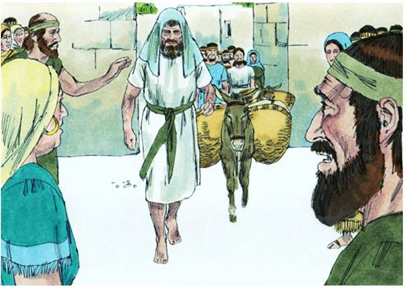
DAVID FLEEING JERUSALEM WITH HIS FEET BARE AND HIS HEAD COVERED

2 Samuel 15:13 – 37 “Then a messenger came to David and reported, “The hearts of the men of Israel are with Absalom.”

And David said to all the servants with him in Jerusalem, “Arise and let us flee, or we will not escape from Absalom! We must leave quickly, or he will soon overtake us, heap disaster on us, and put the city to the sword.”

The king’s servants replied, “Whatever our lord the king decides, we are your servants.”

Then the king set out, and his entire household followed him. But he left behind ten concubines to take care of the palace.

So, the king set out with all the people following him. He stopped at the last house, and all his servants marched past him—all the Cherethites and Pelethites, and six hundred Gittites who had followed him from Gath.

Then the king said to Ittai the Gittite, “Why should you also go with us? Go back and stay with the new king, since you are both a foreigner and an exile from your homeland. In fact, you arrived only yesterday; should I make you wander around with us today while I do not know where I am going? Go back and take your brothers with you. May the LORD show you loving devotion and faithfulness.”

But Ittai answered the king, “As surely as the LORD lives, and as my lord the king lives, wherever my lord the king may be, whether it means life or death, there will your servant be!”

“March on then,” said David to Ittai. So Ittai the Gittite marched past with all his men and all the little ones who were with him.

Everyone in the countryside was weeping loudly as all the people passed by. And as the king crossed the Kidron Valley, all the people also passed toward the way of the wilderness.

Zadok was also there, and all the Levites with him were carrying the ark of the covenant of God. And they set down the ark of God, and Abiathar offered sacrifices until the people had passed out of the city.

Then the king said to Zadok, “Return the ark of God to the city. If I find favor in the eyes of the LORD, He will bring me back and let me see both it and His dwelling place again. But if He should say, ‘I do not delight in you,’ then here I am; let Him do to me whatever seems good to Him.”

The king also said to Zadok the priest, “Are you not a seer? Return to the city in peace—you with your son Ahimaaz and Abiathar with his son Jonathan. See, I will wait at the fords of the wilderness until word comes from you to inform me.”

So Zadok and Abiathar returned the ark of God to Jerusalem and stayed there.

But David continued up the Mount of Olives, weeping as he went up. His head was covered, and he was walking barefoot. And all the people with him covered their heads and went up, weeping as they went.

Now someone told David: “Ahithophel is among the conspirators with Absalom.”

So, David pleaded, “O LORD, please turn the counsel of Ahithophel into foolishness!”

When David came to the summit, where he used to worship God, Hushai the Archite was there to meet him with his robe torn and dust on his head.

David said to him, “If you go on with me, you will be a burden to me. But you can thwart the counsel of Ahithophel for me if you return to the city and say to Absalom: ‘I will be your servant, my king; in the past I was your father’s servant, but now I will be your servant.’

Will not Zadok and Abiathar the priests be there with you? Report to them everything you hear from the king’s palace. Indeed, their two sons, Ahimaaz son of Zadok and Jonathan son of Abiathar, are there with them. Send them to me with everything you hear.”

So, David’s friend Hushai arrived in Jerusalem just as Absalom was entering the city.”

This is the day when God’s prophecies given through Nathan are coming true, and it is even worse than David has anticipated. David gets word that Absalom is about to enter Jerusalem, evidently from the west, so David and his household, including his body guard that has followed him from Gath and their families, flee eastward across the Kidron Valley and up the Mount of Olives. The Gittites are citizens of Gath who have allied themselves with David and the Israelites, worshiping the God of Israel rather than Dagon. Evidently, David used to offer sacrifices on the Mount of Olives before setting up the tabernacle in Jerusalem and bringing the ark back to occupy it.

Despite the fact that Absalom has done everything he can to cement his position with the Israelites, David is still immensely popular. David’s entire household follows him, as do the Gittites and the Cherethites and Pelethites. (The Cherethites and Pelethites may be additional Philistines who are also following David. Some sources suggest that they are mercenaries; however, they are extremely loyal.) Everyone in the countryside is weeping as David passes, proving that Absalom may have deceived some influential people, but that the hearts of the common citizens are still with David. Even Ittai, a Gittite from Gath who has only been with David a single day, insists on accompanying David, a tribute to David’s ability to engender loyalty.

The priests and Levites led by Zadok bring the Ark of the Covenant and Abiathar, Zadok’s son, makes offerings as David’s followers are passing. David encourages Zadok and the others to return to Jerusalem but to send word to him “at the fords of the wilderness,” presumably, the fords of the Jordan River. David’s affirmation of faith as he sends Zadok back to Jerusalem is remarkable. “If I find favor in the eyes of the LORD, He will bring me back and let me see both it and His dwelling place again. But if He should say, ‘I do not delight in you,’ then here I am; let Him do to me whatever seems good to Him.” David recognizes that his punishment is from the Lord and that only God can restore him. David is laying himself and his kingship on a spiritual altar for the Lord to deal with as He wills.

Who is Hushai the Archite? Evidently, Hushai is a wise older man who has been counseling David, possibly after Ahithophel’s defection to Absalom. David’s statement that if Hushai accompanies David’s band of exiles, he will simply be a burden might refer to Hushai’s age and his physical status. David realizes that the brilliant Ahithophel has already switched loyalties to Absalom; if Hushai also joins Absalom, Absalom will merely take it as additional proof of his popularity. David needs someone who can “thwart the counsel of Ahithophel,” and Hushai is the ideal person. David might be heart – broken and grieving, but he is still a savvy military commander.

APPLICATION: David flees Jerusalem because he does not want a blood bath to engulf Jerusalem. Despite the incident with Uriah and Bathsheba, David still inspires enormous confidence and loyalty in people. If you run the numbers, there may have been as many as 1,000 people following David out of Jerusalem, and David waits at the last house on the edge of town to be sure that everyone makes it out safely. Now David and his people must escape to the wilderness beyond the Jordan and wait for word from Jerusalem. Fortunately, David is intimately familiar with local hiding places from the years when Saul was pursuing him.

It is while David and his people are on the run that David composes the 63rd Psalm.

1You, God, are my God, earnestly I seek you; I thirst for you, my whole being longs for you, in a dry and parched land where there is no water.

2 I have seen you in the sanctuary and beheld your power and your glory.
Because your love is better than life, my lips will glorify you.
I will praise you as long as I live, and in your name, I will lift up my hands.
I will be fully satisfied as with the richest of foods; with singing lips my mouth will praise you.

On my bed I remember you; I think of you through the watches of the night.
Because you are my help, I sing in the shadow of your wings.
I cling to you; your right hand upholds me.

Those who want to kill me will be destroyed; they will go down to the depths of the earth.
10 They will be given over to the sword and become food for jackals.

11 But the king will rejoice in God; all who swear by God will glory in him, while the mouths of liars will be silenced.

David abjectly repented following the seizure of Bathsheba and the murder of her husband, and now David is re – affirming his reliance on God. David knows that if the armies of Israel are truly with Absalom, his followers will be defeated in any kind of battle. This moment might be the darkest that David has ever faced; however, he is reminding himself of the goodness and the protection God has given him in the past. Even though David has committed horrible sin, it is this glistening faith that continues to endear him to God.

What can we learn from this part of David’s story? Despite David’s own anxieties, he continues to care for his people. Rather than fleeing at the head of the column, David remains at the edge of Jerusalem until the last member of his cavalcade has passed. David cares about the Ark, the symbol of the Lord God of Israel. Refusing to haul the Ark around, David insists that it be returned to Jerusalem where it will be safe. David recognizes the justice of Absalom’s rebellion and refuses to complain about it, concentrating on dealing with the logistics problems instead. Finally, David commits himself to God, realizing that only God can deliver him. You may face crises in leadership through no fault of your own. If and when those stresses come, remember David’s example.

PRAYER: Father God, thank You for loving us and for caring for us. Lord, there are many who face challenges in their organizations. Be with them and guide them. Help them to realize that You are the Source of all hope and that only You can sort things out. In the mighty and precious Name of King Jesus. Amen.

MAY 22, 2022 DAVID, A MAN AFTER GOD’S OWN HEART #21 2 SAMUEL 15:1 – 13 REBELLION BEGINS IN DAVID’S FAMILY!

May 22, 2022

 2 Samuel 15:1 – 13 “Some time later, Absalom provided for himself a chariot with horses and fifty men to run ahead of him. He would get up early and stand beside the road leading to the city gate.

Whenever anyone had a grievance to bring before the king for a decision, Absalom would call out and ask, “What city are you from?” And if he replied, “Your servant is from one of the tribes of Israel,” Absalom would say, “Look, your claims are good and right, but the king has no deputy to hear you.”

And he would add, “If only someone would appoint me judge in the land, then everyone with a grievance or dispute could come to me, and I would give him justice.”

Also, when anyone approached to bow down to him, Absalom would reach out his hand, take hold of him, and kiss him. Absalom did this to all the Israelites who came to the king for justice. In this way he stole the hearts of the men of Israel.

After four years had passed, Absalom said to the king, “Please let me go to Hebron to fulfill a vow I have made to the LORD. For your servant made a vow while dwelling in Geshur of Aram, saying: ‘If indeed the LORD brings me back to Jerusalem, I will worship the LORD in Hebron.’”

“Go in peace,” said the king. So, Absalom got up and went to Hebron.

Then Absalom sent spies throughout the tribes of Israel with this message: “When you hear the sound of the horn, you are to say, ‘Absalom reigns in Hebron!’”

Two hundred men from Jerusalem accompanied Absalom. They had been invited as guests and they went along innocently, for they knew nothing about the matter. While Absalom was offering the sacrifices, he sent for Ahithophel the Gilonite, David’s counselor, to come from his hometown of Giloh. So, the conspiracy gained strength, and Absalom’s following kept increasing.”

When David committed adultery with Bathsheba and then had her husband killed, God warned David, “Behold, I will raise up evil against you out of your own house; and I will take your wives before your eyes and give them to your neighbor, and he shall lie with your wives in the sight of this sun. For you did it secretly, but I will do this thing before all Israel and before the sun.” (2 Samuel 12:11 – 12) For David, the day of reckoning is fast approaching.

While David might have promised Bathsheba that her son would reign after him, it was common for princes to try to seize a throne by force. When David’s oldest son, Amnon, who might potentially have succeeded him as king, raped his half – sister Tamar, Tamar’s brother Absalom used this as an excuse to kill Amnon, getting him out of the way. David’s sin with Bathsheba shook all of Israel, leaving David’s followers and his subjects wondering just how far they could really trust him. After all, Uriah the Hittite was one of David’s outstanding warriors. If David was willing to have such a man eliminated, who might be next? By this point, David must be sixty years old or more; definitely, he was no longer the boy wonder who had captured the imagination of all of Israel. Now Absalom was about to make his bid for the throne.

ABSALOM AT THE GATE LEADING TO THE PALACE

In a place where most people were not using chariots, Absalom got himself a chariot with a handsome team and fifty men to run ahead of him, informing everyone that Absalom was approaching. These men may have been dressed in special livery that marked them as Absalom’s men. Each morning, Absalom would grandly pull up to the road just outside the city gate that led to the palace and would station himself where he could meet all passers – by. Intercepting those who were coming to the king with a grievance, Absalom would assure them that their cause was a just one, but that there was a backlog of cases to be handled by the royal court. It was going to take these people a long time to get justice. Wasn’t it a shame that the king did not deputize someone to hear them swiftly, someone like Absalom, for example? And then when petitioners would attempt to bow to Prince Absalom, he would embrace them as if they were his closest friends.  Absalom did this daily for four years, and the Bible tells us, “In this way he stole the hearts of the men of Israel.”

Where was King David during these four years? Surely, someone must have carried the news to David as soon as Absalom began his campaign. Was David so sure of himself that he discounted the effect of Absalom’s campaign to undermine him? Perhaps David was trusting in the anointing that God had given him, little remembering that he himself had violated that anointing when he stole Bathsheba and had Uriah murdered. David assumed that the hearts of the Israelites were still with him; however, he was doing nothing to reach out to them while Absalom was doing his utmost to ingratiate himself with the people. If David had been from the American South, the good old boys would have said that “David’s got the big head!” In other words, David had forgotten his humble beginnings and was now trusting in his power as king, forgetting that God had put him there in the first place and it was God who would have to keep him there.

After four years, Absalom judged that the time was ripe for his next move. Absalom got permission from David to go to Hebron to make sacrifices and invited 200 innocent men to accompany him. But Absalom also invited Ahithophel, David’s most trusted counselor, to accompany him to Hebron, and Ahithophel gladly came. Why did Ahithophel join Absalom in Hebron? Surely, Ahithophel must have realized what Absalom was plotting. Did the incident with Bathsheba damage Ahithophel’s confidence in David, or was David ignoring Ahithophel or even worse, refusing to listen to him? At this point, Ahithophel was no longer in Jerusalem, but had returned to his home town, indicating that his advice was not being requested frequently.

APPLICATION: By betraying Uriah’s loyalty, David has cut himself off from the people who have supported him and from his most trusted counselor. Now Absalom has taken advantage of the situation. Things are about to get far worse!

While David is frequently pointed out as a model leader, this part of his career is a model for disaster. The scriptures clearly paint a picture of a man who is now trusting in himself rather than in God and who is blind to the needs and thoughts of those around him. Is it possible that David’s system of justice has broken down or become perverted? If Absalom’s claims have no basis in reality, it’s difficult to imagine that people would continue to believe him.

The lesson for leaders is clear: Stay close to God. Remember where you came from and remain humble. Be aware that there will always be those who want power and are willing to do anything to get it; if you give such people an opportunity, you will be in trouble.

PRAYER: Father God, thank You for loving us and for caring for us. Lord, help all in leadership to remain close to You and to seek Your guidance rather than going their own ways. In the mighty and precious Name of King Jesus. Amen.