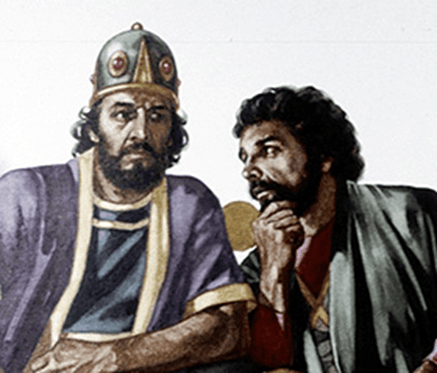
2 Samuel 17:1 – 29 “Furthermore, Ahithophel said to Absalom, “Let me choose twelve thousand men and set out tonight in pursuit of David. I will attack him while he is weak and weary; I will throw him into a panic, and all the people with him will flee; I will strike down only the king and bring all the people back to you. When everyone returns except the man you seek, all the people will be at peace.” This proposal seemed good to Absalom and all the elders of Israel.
Then Absalom said, “Summon Hushai the Archite as well, and let us hear what he too has to say.”
So Hushai came to Absalom, who told him, “Ahithophel has spoken this proposal. Should we carry it out? If not, what do you say?”
Hushai replied, “This time the advice of Ahithophel is not sound.” (Other translations say, “The advice Ahithophel has given is not good at this time.”)
He continued, “You know your father and his men. They are mighty men, and as fierce as a wild bear robbed of her cubs. Moreover, your father is a man of war who will not spend the night with the troops. Surely by now he is hiding in a cave or some other location. If some of your troops fall first, whoever hears of it will say, ‘There has been a slaughter among the troops who follow Absalom.’ Then even the most valiant soldier with the heart of a lion will melt with fear, because all Israel knows that your father is a mighty man who has valiant men with him.
Instead, I advise that all Israel from Dan to Beersheba—a multitude like the sand by the sea—be gathered to you, and that you yourself lead them into battle. Then we will attack David wherever we find him, and we will descend on him like dew on the ground. And of all the men with him, not even one will remain.
If he retreats to a city, all Israel will bring ropes to that city, and we will drag it down to the valley until not even a pebble can be found.”
Then Absalom and all the men of Israel said, “The advice of Hushai the Archite is better than that of Ahithophel.” For the LORD had purposed to thwart the good counsel of Ahithophel in order to bring disaster on Absalom.
So Hushai told Zadok and Abiathar, the priests, “This is what Ahithophel has advised Absalom and the elders of Israel, and this is what I have advised. Now send quickly and tell David, ‘Do not spend the night at the fords of the wilderness, but be sure to cross over. Otherwise, the king and all the people with him will be swallowed up.’”
Now Jonathan and Ahimaaz were staying at En-rogel, where a servant girl would come and pass along information to them. They in turn would go and inform King David, for they dared not be seen entering the city. But a young man did see them and told Absalom. So, the two left quickly and came to the house of a man in Bahurim. He had a well in his courtyard, and they climbed down into it. Then the man’s wife took a covering and spread it over the mouth of the well and scattered grain over it, so nobody would know a thing.
When Absalom’s servants came to the woman at the house, they asked, “Where are Ahimaaz and Jonathan?”
“They have crossed over the brook,” she replied. The men searched but did not find them, so they returned to Jerusalem. After the men had gone, Ahimaaz and Jonathan climbed up out of the well and went to inform King David, saying, “Get up and cross over the river at once, for Ahithophel has given this advice against you.”
So, David and all the people with him got up and crossed the Jordan. By daybreak, there was no one left who had not crossed the Jordan.
When Ahithophel saw that his advice had not been followed, he saddled his donkey and set out for his house in his hometown. He put his affairs in order and hanged himself. So, he died and was buried in his father’s tomb.
Then David went to Mahanaim, and Absalom crossed over the Jordan with all the men of Israel. Absalom had appointed Amasa over the army in place of Joab. Amasa was the son of a man named Ithra, the Ishmaelite who had married Abigail, daughter of Nahash and sister of Zeruiah, the mother of Joab. So, the Israelites and Absalom camped in the land of Gilead.
When David came to Mahanaim, he was met by Shobi, son of Nahash from Rabbah of the Ammonites, Machir son of Ammiel from Lo-debar, and Barzillai the Gileadite from Rogelim. They brought beds, basins, and earthen vessels, as well as wheat, barley, flour, roasted grain, beans, lentils, honey, curds, sheep, and cheese from the herd for David and his people to eat. For they said, “The people have become hungry, exhausted, and thirsty in the wilderness.”
David and his followers are in a desperate situation! In exhaustion and despair, David has camped on the banks of the Jordan River; however, he needs to cross the Jordan and go eastward for a great distance to avoid capture by Absalom and his men. This is Hushai’s finest hour. Ahithophel advises that Absalom should give him (Ahithophel) twelve thousand men so that he can strike down King David. Once David is dead, everyone else will surrender and follow Absalom. (Question: why is Ahithophel so anxious to lead twelve thousand men against David? What has David done to Ahithophel to offend him so badly?) Absalom thinks this is a great idea; however, Hushai is available, so Absalom seeks his opinion as well.
Hushai’s answer is masterful! “The advice Ahithophel has given is not good at this time.” Notice that Hushai doesn’t discount Ahithophel’s advice; he merely suggests that a presumptive attack might result in casualties that would damage Absalom’s reputation and that the attack be postponed until morning. Instead, Hushai uses dramatic language to suggest that Absalom “gather a multitude like the sand of the sea” and that Absalom should lead the troops to “descend (on David) like dew on the ground.” This colorful language inspires Absalom to imagine himself as a conquering warrior destroying his father – a much more appealing picture than allowing Ahithophel to pose as the hero.
Absalom buys Hushai’s idea. As soon as possible, Hushai dispatches messages to the priests, who in turn inform their sons who are staying close to the Jordan. When one of Absalom’s spies sees the messengers, they hide in a dry well and then rush on to inform David. David and all his people cross the Jordan and David goes on to Mahanaim way to the east. There David’s friends meet him with provisions. Meanwhile, Ahithophel realizes that he has made fatal mistakes. Ahithophel has joined himself to Absalom and has offered to personally kill David, but Absalom has ignored Ahithophel’s advice. Ahithophel realizes that he is now a man without a king, let alone a country. No matter who wins the battle, Absalom or David, there is nothing left for Ahithophel. Ahithophel returns home and commits suicide, preferring that to eventual torture and an ignominious death.
APPLICATION: This part of the story reads like a spy thriller. Hushai acts as a counter – spy, deliberately giving good but not great advice that appeals to Absalom’s sense of the dramatic. Ahithophel might succeed were he to suggest that Absalom lead twelve thousand men to hunt down David and kill him, but Ahithophel wants to take part in the action. Clearly, at some point, David has severely offended Ahithophel and he is out for revenge.
One part of the story that continues to echo is Hushai’s statement that Ahithophel’s advice is good but NOT AT THIS TIME. Actually, Ahithophel’s idea is a sound one and would likely result in David’s death and the defection of his people to Absalom. Absalom’s willingness to procrastinate will eventually prove his undoing.
Although it is good for us to consider our actions, at a certain point, procrastination is of the devil. You can waste so much time mulling things over that you will lose opportunities. In this case, Absalom loses the opportunity to kill David and end things quickly. Absalom also makes another mistake; he is far more interested in getting credit for defeating David than he is in taking quick action. One wonders why Absalom doesn’t modify Ahithophel’s idea and head twelve thousand soldiers himself. On the other hand, Absalom probably has no experience in warfare. There haven’t been any wars around Israel for several years. This lack of experience might contribute to Absalom’s delay in taking action. Absalom is much more of a talker than he is a fighter. The Texans would say that Absalom is “all hat and no cattle.”
Why does God wish to destroy Absalom? In Absalom’s lust for power, he has rebelled against God’s anointed. If God has refused to destroy David over the affair with Bathsheba and Uriah, Absalom has no business doing so. When David had the opportunity to kill Saul, he refused, stating that he would not lift his hand against God’s anointed; however, Absalom has no such qualms. Absalom has failed to realize that unless God anoints him, there is no way that he is going to become king. Again, we must wonder if David has shared any of his faith with his children. Absalom’s willingness to rape his father’s concubines in public would indicate that he had no respect for God whatsoever. It’s even possible that Absalom has been following the Ashtoreths or some other fertility cult as a form of rebellion against his father. Absalom is one of those guys who looks great at a distance but whose character is repugnant once you really get to know him.
In the end, it comes down to the question of which individual will really do God’s will. Absalom is a weak character while David, although flawed, willingly receives correction. David will emerge from this ordeal stronger and more purified than he was before.
Hebrews 12:5 – 6 says, ““My son, do not make light of the Lord’s discipline, and do not lose heart when he rebukes you,because the Lord disciplines the one he loves, and he chastens everyone he accepts as his son.” God loves David and is disciplining him. God also loves Absalom; however, Absalom has turned completely away from God and is headed for destruction. When we find ourselves in difficult situations, may we turn to the Lord and ask Him to teach us everything He wants. The faster we learn, the sooner our trials will finish.
PRAYER: Father God, thank You for loving us and for caring for us. Lord, help us to follow hard after You all the days of our lives. Help us to recognize that trials will make us stronger and will purify us, so that we don’t simply sit in a puddle of self – pity, refusing to budge. Thank You that no trial lasts forever. In the mighty and precious Name of King Jesus. Amen.
 Burunche's Blog
Leave a comment