
1 Kings 2:1 – “As the time drew near for David to die, he charged his son Solomon, “I am about to go the way of all the earth. So be strong and prove yourself a man. And keep the charge of the LORD your God to walk in His ways and to keep His statutes, commandments, ordinances, and decrees, as is written in the Law of Moses, so that you may prosper in all you do and wherever you turn, and so that the LORD may fulfill His promise to me: ‘If your descendants take heed to walk faithfully before Me with all their heart and soul, you will never fail to have a man on the throne of Israel.’
Moreover, you know what Joab son of Zeruiah did to me—what he did to Abner son of Ner and Amasa son of Jether, the two commanders of the armies of Israel. He killed them in peacetime to avenge the blood of war. He stained with the blood of war the belt around my waist and the sandals on my feet. So, act according to your wisdom, and do not let his gray head go down to Sheol in peace.
But show loving devotion to the sons of Barzillai the Gileadite, and let them be among those who eat at your table, because they stood by me when I fled from your brother Absalom. Keep an eye on Shimei the son of Gera, the Benjamite from Bahurim who is with you. He called down bitter curses against me on the day I went to Mahanaim, but when he came down to meet me at the Jordan, I swore to him by the LORD: ‘I will never kill you with the sword.’ Now therefore, do not hold him guiltless, for you are a wise man. You know what you ought to do to him to bring his gray head down to Sheol in blood.”
Then David rested with his fathers and was buried in the City of David. The length of David’s reign over Israel was forty years—seven years in Hebron and thirty-three years in Jerusalem.
So, Solomon sat on the throne of his father David, and his kingdom was firmly established.
Now Adonijah son of Haggith went to Bathsheba the mother of Solomon, who asked, “Do you come in peace?”
“Yes, in peace,” he replied. Then he said, “I have something to tell you.”
“Say it,” she answered.
“You know that the kingship was mine,” he said. “All Israel expected that I should reign, but the kingship has turned to my brother, for it has come to him from the LORD. So now I have just one request of you; do not deny me.”
“State your request,” she told him. Adonijah replied, “Please speak to King Solomon, since he will not turn you down. Let him give me Abishag the Shunammite as my wife.”
“Very well,” Bathsheba replied. “I will speak to the king for you.”
So, Bathsheba went to King Solomon to speak to him for Adonijah. The king stood up to greet her, bowed to her, and sat down on his throne. Then the king had a throne brought for his mother, who sat down at his right hand.
“I have just one small request of you,” she said. “Do not deny me.”
“Make your request, my mother,” the king replied, “for I will not deny you.”
So, Bathsheba said, “Let Abishag the Shunammite be given to your brother Adonijah as his wife.”
King Solomon answered his mother, “Why do you request Abishag the Shunammite for Adonijah? Since he is my older brother, you might as well request the kingdom for him and for Abiathar the priest and for Joab son of Zeruiah.”
Then King Solomon swore by the LORD: “May God punish me, and ever so severely, if Adonijah has not made this request at the expense of his life. And now, as surely as the LORD lives—the One who established me, who set me on the throne of my father David, and who founded for me a dynasty as He promised—surely Adonijah shall be put to death today!”
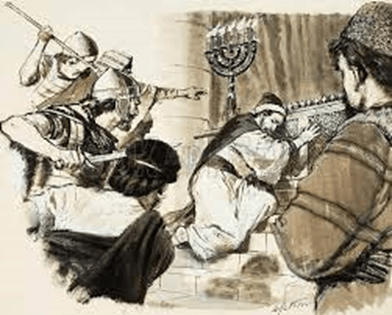
So, King Solomon sent the order to Benaiah son of Jehoiada, who struck down Adonijah, and he died.
Then the king said to Abiathar the priest, “Go back to your fields in Anathoth. Even though you deserve to die, I will not put you to death at this time, since you carried the ark of the Lord GOD before my father David, and you suffered through all that my father suffered.” So, Solomon banished Abiathar from the priesthood of the LORD and thus fulfilled the word the LORD had spoken at Shiloh against the house of Eli. (Abiathar was the final descendant of Eli to serve as high priest. None of his sons succeeded him. This fulfilled God’s prophecy against Eli.)
David is dying, giving Solomon his last advice and commissioning Solomon to settle old scores for David. In Proverbs 4:4, Solomon mentions David having taught him God’s commandments. Perhaps David focused only on Solomon because he planned to make Solomon king after him; however, this means that David failed to teach his other sons in the same fashion.
David’s advice to Solomon is excellent: “And keep the charge of the LORD your God to walk in His ways and to keep His statutes, commandments, ordinances, and decrees, as is written in the Law of Moses, so that you may prosper in all you do and wherever you turn, and so that the LORD may fulfill His promise to me.” David also asks Solomon to treat the sons of Barzillai the Gileadite as his own relatives for the kindness their father showed to David when he fled from Absalom to Mahanaim.
If David were to stop here, he would have done admirably; however, David has a few scores to settle, and now he wants Solomon to handle them for him. Joab has been David’s military commander for years; however, Joab has also murdered two commanders of the armies of Israel, Abner and Amasa, so that he would remain in power. Since Joab was under David’s authority, it is as if David himself has murdered these men. “He killed them in peacetime to avenge the blood of war. He stained with the blood of war the belt around my waist and the sandals on my feet.” David does not mention that Joab has supported Adonijah; however, Solomon fully realizes Joab’s potential as an enemy. David tells Solomon that it’s time to eliminate Joab.
Shimei – this relative of King Saul cursed David when David was fleeing from Absalom; however, once the tide of war had turned, Shimei rushed to the Jordan with 1,000 men to help David and his followers return to Jerusalem. Shimei prostrated himself before David, and David promised that he, David, would never kill Shimei. David has kept that promise, but has no compunction about ordering Solomon to have Shimei killed. Shimei has been a turncoat once; there is nothing to prevent him from supporting Adonijah in the future.
What about Adonijah? All this time, Adonijah has been cooling his heels at home; however, this guy has incredible nerve! Somehow, Adonijah is still clinging to the idea that the kingship was his and that all Israel expected him to reign, even though he acknowledges that the kingship has come to Solomon from the Lord. Now Adonijah gets Bathsheba to ask Solomon to give Adonijah Abishag, David’s former nurse, as his wife. Solomon swiftly recognizes this as another ploy to seize power. Solomon replies to his mother, “Why do you request Abishag the Shunammite for Adonijah? Since he is my older brother, you might as well request the kingdom for him and for Abiathar the priest and for Joab son of Zeruiah.” Adonijah’s arrogance costs him his life; Solomon has him killed that very day.
Abiathar the priest has supported Adonijah, even though it was David who saved his life and who sheltered him. Now Solomon banishes Abiathar from the priesthood, ordering him to go home to his farm at Anathoth. Solomon does not have Abiathar killed out of respect because Abiathar carried the ark before King David, and Solomon honors that service. But by banishing Abiathar, Solomon has now eliminated another potential threat to his kingship. (Side note: generations later, the prophet Jeremiah comes from Anathoth.)
APPLICATION: Personally, I have always had a few problems with David’s orders to Solomon. Is David correct in advising Solomon to eliminate these people? David promised Shimei that he would not kill him. By ordering Solomon to have Shimei killed, David has fulfilled the letter of his promise but has left Shimei thinking that he is safe when he is not. On the other hand, Shimei is a dangerous rabble rouser who might pose a threat to Solomon. While Shimei has sworn allegiance to David, he might yet attempt to undermine Solomon.
It’s hard to feel sympathy for Adonijah. There’s a word in Yiddish, “chutzpah,” meaning extreme audacity. It is said that a man with chutzpah would shoot his parents and then try to throw himself on the mercy of the court because he was an orphan. Adonijah has plenty of chutzpah but very little wisdom! Adonijah is still a very attractive man and can marry any number of lovely well – born maidens. But no, Adonijah has to request David’s former nurse and bed warmer as a wife, citing his royal prerogative. As if that weren’t enough, Adonijah tries to use Bathsheba to make his request for him.
Somehow, Adonijah has overlooked the fact that it was Bathsheba who helped arrange for Solomon’s emergency coronation while Adonijah and his co – conspirators were feasting a few hundred meters away. Bathsheba is a savvy lady; she agrees to put Adonijah’s request before Solomon, knowing full well what Solomon’s reaction will be. All that we have recorded are Bathsheba’s words; however, what we cannot know is Bathsheba’s facial expressions as she is making this request. For all we know, Bathsheba might be shaking her head “no” all the time she is speaking! Solomon quickly recognizes Adonijah’s request as a threat and Adonijah pays for his chutzpah with his life.
What can we learn from the story of Solomon as he consolidates his power? There are two sides to each of these stories. Once Solomon has been anointed as king over all Israel, each of the major conspirators has a window of opportunity during which he can potentially come to Solomon to beg forgiveness and to swear allegiance. Shimei, Joab, Adonijah, and Abiathar all are aware that God has anointed Solomon as king; yet, not a single one of them comes to swear allegiance to Solomon. This causes us to wonder if these men are really accepting Solomon as king, or are they merely waiting for another opportunity to stage an uprising? The silence is deafening, and Solomon rightly assumes that these men remain his enemies.
It is tough to be a leader when those below you are continuing to hatch plots to overthrow you. Countering those plots sucks up time, energy, and resources that would be better applied elsewhere. While Solomon’s methods are extreme, those in leadership must assess their subordinates wisely. It is far better to recommend an unhappy subordinate for a position elsewhere than to keep that person around so that he or she can foment rebellion. May God help all in leadership positions to handle those working under them wisely!
PRAYER: Father God, thank You for loving us and for caring for us. Lord, help all those in leadership positions to make wise decisions when faced with subordinates who are trying to undermine them. You are a God of peace and you bless peace makers. Let leaders seek Your peace in all situations, particularly in managerial ones. In the matchless Name of King Jesus. Amen.













 Burunche's Blog