1 Chronicles 8:1 – 40 “Benjamin was the father of Bela, his firstborn; Ashbel was the second born, Aharah the third, Nohah the fourth, and Rapha the fifth. The sons of Bela: Addar, Gera, Abihud, Abishua, Naaman, Ahoah, Gera, Shephuphan, and Huram.
These were the descendants of Ehud who were the heads of the families living in Geba and were exiled to Manahath: Naaman, Ahijah, and Gera, who carried them into exile and who was the father of Uzza and Ahihud. Shaharaim had sons in the country of Moab after he had divorced his wives Hushim and Baara. His sons by his wife Hodesh: Jobab, Zibia, Mesha, Malcam, Jeuz, Sachia, and Mirmah. These were his sons, heads of families. He also had sons by Hushim: Abitub and Elpaal.
The sons of Elpaal: Eber, Misham, Shemed (who built Ono and Lod with its villages), and Beriah and Shema (who were the heads of families of the inhabitants of Aijalon and who drove out the inhabitants of Gath). Ahio, Shashak, Jeremoth, Zebadiah, Arad, Eder, Michael, Ishpah, and Joha were the sons of Beriah.
Zebadiah, Meshullam, Hizki, Heber, Ishmerai, Izliah, and Jobab were the sons of Elpaal.
Jakim, Zichri, Zabdi Elienai, Zillethai, Eliel, Adaiah, Beraiah, and Shimrath were the sons of Shimei. Ishpan, Eber, Eliel, Abdon, Zichri, Hanan, Hananiah, Elam, Anthothijah, Iphdeiah, and Penuel were the sons of Shashak. Shamsherai, Shehariah, Athaliah, Jaareshiah, Elijah, and Zichri were the sons of Jeroham.
All these were heads of families, the chiefs according to their genealogies, and they lived in Jerusalem. Jeiel the father of Gibeon lived in Gibeon. His wife’s name was Maacah, and Abdon was his firstborn son, then Zur, Kish, Baal, Nadab, Gedor, Ahio, Zecher, and Mikloth, who was the father of Shimeah.These also lived alongside their relatives in Jerusalem.
The Family of Saul
Ner was the father of Kish, Kish was the father of Saul, and Saul was the father of Jonathan, Malchishua, Abinadab, and Esh-baal.
The son of Jonathan: Merib-baal, and Merib-baal was the father of Micah. The sons of Micah: Pithon, Melech, Tarea, and Ahaz. Ahaz was the father of Jehoaddah, Jehoaddah was the father of Alemeth, Azmaveth, and Zimri, and Zimri was the father of Moza. Moza was the father of Binea. Raphah l was his son, Eleasah his son, and Azel his son. Azel had six sons, and these were their names: Azrikam, Bocheru, Ishmael, Sheariah, Obadiah, and Hanan. All these were the sons of Azel. The sons of his brother Eshek: Ulam was his firstborn, Jeush second, and Eliphelet third. The sons of Ulam were mighty men of valor, archers, and they had many sons and grandsons—150 in all.
All these were the descendants of Benjamin.”
Who was the tribe of Benjamin? The site https://study.com/learn/lesson/tribe-of-bejamin.html tells us this: Despite Rachel’s repeated issues with conception, she eventually gave birth to two sons. The first, Joseph, was Jacob’s favorite child, leading Jacob’s other sons to fake his death and sell him into Egyptian slavery. The second of Rachel’s sons was Benjamin. She was ill during her pregnancy with Benjamin, perhaps because of her advanced age, and died while giving birth to him. Because of her distress, she wanted to name her son ”Ben-oni,” meaning ”son of sorrow.” Jacob, wanting to ensure his son was not fated with an ill omen, chose the name ”Ben Yamin,” (Anglicized as ”Benjamin”), which means ”son of the South” or ”son of the right hand.” Although Jacob’s favorite son was Joseph, it was fairly evident that his second favorite son was Benjamin–probably because they were the two sons of his favorite wife.
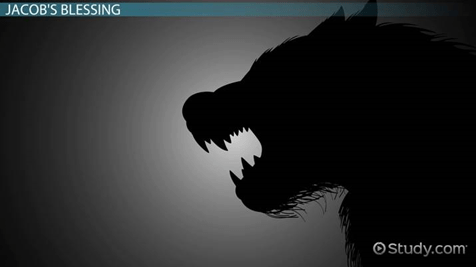
Tribe of Benjamin Genesis 49:27 ““Benjamin is a ravenous wolf; in the morning he devours the prey, in the evening he divides the plunder.” JACOB’S BLESSING
The Book of Genesis ends with Jacob blessing his 12 sons from his death bed, each becoming the head of one of the 12 tribes of Israel. After the Israelites conquered the area, each of the 12 tribes was granted an area of land in Canaan, the region on the eastern coast of the Mediterranean Sea. In the Book of Joshua in the Hebrew Bible, the Tribe of Benjamin is granted the region stretching from the Jordan River in the east right above the Dead Sea to the city of Bethel in the northwest and Jerusalem in the south.
The Benjamite territory contained major significant cities, such as Jericho and Jerusalem. The region was an ideal space for religious, trade, and agricultural purposes. Jerusalem was the holy city that, according to the Jewish tradition, was where the Jewish god Yahweh spared Isaac from being sacrificed by his father; it later became the site of the Temple and the location of the king’s palace. Though Benjamite territory was small, it was located between two of the largest territories: Ephraim, to the north, and Judah, to the south. As the tribe of the later kingship, Judah was a vast and prosperous territory that contained many of the significant cities and events of the Bible. The Tribe of Benjamin’s location bordering these areas as well as directly on the Jordan River and Dead Sea gave Benjamites vast opportunity for trade. The waterways made this territory ideal for agriculture on the eastern edge, and the mountains that cut through the middle of the region provided protection from enemies.
The tribe is best known for its warrior-like people who were skilled in archery, slinging rocks, and left-handed fighting. The tribe also controlled the major city of Jerusalem early in Jewish history and produced the first king, Saul, of the United Kingdom of Israel. Later, the Benjamites united with the Judahites to control the Southern Kingdom of Judah, and most modern-day Jews are descended from one of these tribes.”
APPLICATION: The tribe of Benjamin was small but very fierce! Tangling with someone from Benjamin would be like tangling with a buzz saw – not something recommended if you wanted to survive. God selected Saul to become the first king of Israel because Saul was a big strong warrior and he looked like a king. Saul had the chance to start a dynasty that might have ruled Israel for centuries, if only Saul had been patient. But when the Prophet Samuel warned Saul to wait for him before making any sacrifices, Saul panicked. 1 Samuel 13 tells us that Saul waited at Gilgal for seven days and when Samuel failed to appear and the people were threatening to scatter, Saul forced and made a sacrifice. Almost as soon as Saul had finished, Samuel appeared.
1 Samuel 13:13 – 14 “You have done a foolish thing,” Samuel said. “You have not kept the command the Lord your God gave you; if you had, he would have established your kingdom over Israel for all time. But now your kingdom will not endure; the Lord has sought out a man after his own heart and appointed him ruler of his people, because you have not kept the Lord’s command.”
The tribe of Benjamin might have been celebrated as the tribe of royalty. But when everything was on the line, Saul choked up and made a tragic mistake. Because of Saul’s failure, God chose David and the tribe of Judah to rule. Benjamin did continue to play a very important role in the Southern Kingdom, and when the Babylonians carried off the people of the nation of Judah, it was people from Judah and Benjamin who returned with Ezra and Nehemiah to rebuild Jerusalem.
What kind of heritage are we leaving our descendants? Will our children and grandchildren remember us as people of faith, people of virtue, and people of courage, or will they remember us as something less?
Find Us Faithful Steve Green
- We’re pilgrims on the journey of the narrow road,
And those who’ve gone before us line the way.
Cheering on the faithful, encouraging the weary,
Their lives a stirring testament to god’s sustaining grace. - Surrounded by so great a cloud of witnesses,
Let us run the race not only for the prize,
But as those who’ve gone before us. let us leave to those behind us,
The heritage of faithfulness passed on thru godly lives. - After all our hopes and dreams have come and gone,
And our children sift thru all we’ve left behind,
May the clues that they discover, and the mem’ries they uncover,
Become the light that leads them, to the road we each must find.
Chorus: O may all who come behind us find us faithful,
May the fire of our devotion light their way.
May the footprints that we leave, lead them to believe,
And the lives we live Inspire them to obey.
O may all who come behind us find us faithful.
PRAYER: Father God, thank You for loving us and for caring for us. Lord, help us to follow hard after You all the days of our lives and to teach our children as well. Help us to remember that others are always watching us and taking their cues from our actions. Help us to reflect Your glory. In the mighty and precious Name of King Jesus. Amen.
 Burunche's Blog
Leave a comment