Archive for October, 2022

OCTOBER 31, 2022 ANOTHER LOOK AT THE ISRAELITES PART 2 #18 2 CHRONICLES 17:1 – 19 JEHOSAPHAT PUTS THINGS RIGHT AND THE HIGH PLACES ARE HISTORY!

October 31, 2022

2 Chronicles 17:1 – 19 Jehoshaphat Reigns in Judah (1 Kings 15:23-24)

Asa’s son Jehoshaphat reigned in his place, and he strengthened himself against Israel. He stationed troops in every fortified city of Judah and put garrisons in the land of Judah and in the cities of Ephraim that his father Asa had captured.

Now the LORD was with Jehoshaphat because he walked in the earlier waysa of his father David. He did not seek out the Baals, but he sought the God of his father and walked by His commandments rather than the practices of Israel. So the LORD established the kingdom in his hand, and all Judah brought him tribute, so that he had an abundance of riches and honor. And his heart took delight in the ways of the LORD; furthermore, he removed the high places and Asherah poles from Judah.

In the third year of his reign, Jehoshaphat sent his officials Ben-hail, Obadiah, Zechariah, Nethanel, and Micaiah to teach in the cities of Judah, accompanied by certain Levites—Shemaiah, Nethaniah, Zebadiah, Asahel, Shemiramoth, Jehonathan, Adonijah, Tobijah, and Tob-adonijah—along with the priests Elishama and Jehoram. They taught throughout Judah, taking with them the Book of the Law of the LORD. They went throughout the towns of Judah and taught the people.

And the dread of the LORD fell upon all the kingdoms of the lands that surrounded Judah, so that they did not make war against Jehoshaphat. Some Philistines also brought gifts and silver as tribute to Jehoshaphat, and the Arabs brought him 7,700 rams and 7,700 goats from their flocks.

Jehoshaphat grew stronger and stronger, and he built fortresses and store cities in Judah and kept a large amount of supplies in the cities of Judah. He also had warriors, mighty men of valor, in Jerusalem. These are their numbers according to the houses of their fathers:

From Judah, the commanders of thousands: Adnah the commander, and with him 300,000 mighty men of valor;

next to him, Jehohanan the commander, and with him 280,000; and next to him, Amasiah son of Zichri, the volunteer for the LORD, and with him 200,000 mighty men of valor.

From Benjamin: Eliada, a mighty man of valor, and with him 200,000 armed with bows and shields; and next to him, Jehozabad, and with him 180,000 armed for battle. These were the men who served the king, besides those he stationed in the fortified cities throughout Judah.”

Although King Asa made a good start to his reign, by the end of his 41 years as king, he rejected Hanani the Seer and oppressed some people. Now Asa’s son Jehoshaphat has succeeded him, and things are looking up in Judah. Unlike Asa, Jehoshaphat takes the spiritual needs of his kingdom very seriously. Jehoshaphat fortifies a number of cities, assigning garrisons to each of these cities. Jehoshaphat turns his back on the Baals, choosing to faithfully follow the God of Israel and to take delight in the ways of the Lord. Jehoshaphat even does away with the high places and the remaining Asherah poles that his father failed to remove.

In the third year of Jehoshaphat’s reign, he even sends several officials and teaching priests throughout Judah and Benjamin to teach the people the Law of the Lord. When Jehoshaphat honors God in this fashion, God allows the fear of Him to fall on the surrounding nations so that they leave Judah and Benjamin alone. The Lord responds by establishing Jehoshaphat’s kingdom and giving him favor with neighboring countries. Some of these rulers even begin sending Jehoshaphat rich gifts.

Jehoshaphat also assembles groups of warriors totaling 1,160,000 seasoned men in addition to those he stationed in the fortified cities of Judah. The nation of Judah is doing very well as Jehoshaphat continues to honor the Lord.

APPLICATION: After the disappointments of the last part of Asa’s reign, this description of Jehoshaphat is refreshing. God really blesses Jehoshaphat, and there are several reasons. Jehoshaphat truly honors the Lord and also insists that his citizens learn the Law of the Lord as well. Sending teachers of the Law throughout the kingdom is a step that no king has ever done before, including David.

Yet another point to note is the protection that God gives Jehoshaphat from surrounding marauding nations. Jehoshaphat is being protected by his continuing to regularly worship the Lord himself. Contrast Jehoshaphat’s attitude with the attitudes of previous Solomon and Rehoboam, both of whom viewed worship to be the duty of the priests. Jehoshaphat, on the other hand, delights in the Lord and obviously has a personal relationship with Him.

God is always searching for those who will honor Him and delight in Him. When we seek to know God, He will certainly respond, communicating with us in ways we can understand. As we study Jehoshaphat further, we will realize that eventually he and his country will face dangers; however, Jehoshaphat remains faithful and God delivers them.

PRAYER: Father God, thank You for loving us and for caring for us. Lord, there are many people who don’t believe that You care for them or that You even know that they exist. Please speak to these people’s hearts and make Yourself known to them. In the mighty and precious Name of King Jesus. Amen.   

OCTOBER 30, 2022 ANOTHER LOOK AT THE ISRAELITES PART 2 # 17 2 CHRONICLES 16:1 – 14 ASA TRIES TO HELP HIMSELF AND BLOWS IT!

October 30, 2022

2 Chronicles 16:1 – 14

War between Asa and Baasha (1 Kings 15:16-22)

“In the thirty-sixth year of Asa’s reign, Baasha king of Israel went up against Judah and fortified Ramah to prevent anyone from leaving or entering the territory of Asa king of Judah. So Asa withdrew the silver and gold from the treasuries of the house of the LORD and the royal palace, and he sent it with this message to Ben-hadad king of Aram, who was ruling in Damascus: “Let there be a treaty between me and you, between my father and your father. See, I have sent you silver and gold. Now go and break your treaty with Baasha king of Israel, so that he will withdraw from me.”

And Ben-hadad listened to King Asa and sent the commanders of his armies against the cities of Israel, conquering Ijon, Dan, Abel-maim, and all the store cities of Naphtali. When Baasha learned of this, he stopped fortifying Ramah and abandoned his work. Then King Asa brought all the men of Judah, and they carried away the stones of Ramah and the timbers Baasha had used for building. And with these materials he built up Geba and Mizpah.

Hanani’s Message to Asa

At that time, Hanani the seer came to King Asa of Judah and told him, “Because you have relied on the king of Aram and not on the LORD your God, the army of the king of Aram has escaped from your hand. Were not the Cushites and Libyans a vast army with many chariots and horsemen? Yet because you relied on the LORD, He delivered them into your hand. For the eyes of the LORD roam to and fro over all the earth, to show Himself strong on behalf of those whose heart is fully devoted to Him. You have acted foolishly in this matter. From now on, therefore, you will be at war.”

Asa was angry with the seer and put him in prison because he was so enraged over this matter. And at the same time Asa oppressed some of the people.

The Death and Burial of Asa

Now the rest of the acts of Asa, from beginning to end, are indeed written in the Book of the Kings of Judah and Israel. In the thirty-ninth year of his reign, Asa became diseased in his feet, and his malady became increasingly severe. Yet even in his illness he did not seek the LORD, but only the physicians.

So in the forty-first year of his reign, Asa died and rested with his fathers. And he was buried in the tomb that he had cut out for himself in the City of David. They laid him on a bier that was full of spices and various blended perfumes; then they made a great fire in his honor.”

After God delivered Asa and Judah from an enormous Cushite army, there was peace in Judah. Initially, Asa and the Judeans made a covenant with the Lord, and all was well; however, men have short memories. Asa is now in his 36th year as king and is facing an attack from Baasha, king of the ten tribes of the Northern Kingdom of Israel. Baasha seizes Ramah, a key city on the route in and out of Judah. But Baasha’s army is far smaller than the Cushite army God defeated so many years ago. Now the problem is Asa.

Rather trusting God to deliver Judah, Asa takes all the silver and gold from the temple and palace treasuries and sends it to Ben – hadad in Damascus, begging for his assistance. This move is foolish and shortsighted. Why doesn’t Asa remember what God has done in the past and beg God for deliverance? Remember Asa’s ringing words years earlier? “Then Asa cried out to the LORD his God: “O LORD, there is no one besides You to help the powerless against the mighty. Help us, O LORD our God, for we rely on You, and in Your name we have come against this multitude. O LORD, You are our God. Do not let a mere mortal prevail against You.” (2 Chronicles 14:11)

Asa’s failure to call on the Lord spells trouble for Judah. Evidently, Asa has become complacent or spiritually dull and has forgotten the magnificent oaths sworn at the end of the war with the Cushites. Asa panics and sends all this wealth to Damascus without any assurance of help from the King of Syria. There is nothing to prevent the King of Syria from fighting Baasha, defeating him, and then turning his attention to Judah and raiding Judah. Why should the King of Syria not see how much he can get out of this situation?

Asa’s failure to call on the God of Israel also dishonors God. Nothing happens in a vacuum, and all the nations surrounding Judah are fully aware of God’s previous defeat of the Cushite army. Now Asa, who has been a strong proponent of that God, is turning to earthly assistance. This decision suggests that Asa doesn’t believe God is strong enough to defeat Baasha, even though Baasha’s army is far smaller than that Cushite one. Surrounding nations might be thinking, “Huh! We thought that God was stronger than that!”

After Asa’s fateful mistake, God sends Hanani, the Seer, to rebuke him. “For the eyes of the LORD roam to and fro over all the earth, to show Himself strong on behalf of those whose heart is fully devoted to Him. You have acted foolishly in this matter. From now on, therefore, you will be at war.”  Does Asa take this rebuke to heart and repent? Absolutely not! Instead, Asa goes into a rage, throws Hanani in prison, and also “oppresses some of the people.” Evidently, Asa vents his anger by exercising his royal prerogatives in some fashion. Does Asa beat people or raise taxes? Given the fact that Asa has just sent everything from the treasuries to Damascus, it’s possible that Asa now extorts money from some of the wealthy citizens of the kingdom to rebuild the treasuries.    

Sadly, Asa appears to remain estranged from the Lord for the rest of his life. Only 4 years after this disastrous episode, Asa “becomes diseased in his feet.” The nature of this malady is unclear. Perhaps Asa develops diabetes or a problem with the circulation in his legs. But instead of begging God for healing, Asa relies on human physicians, who can do very little. Asa dies only two years later.

APPLICATION: All of Judah honors King Asa at his death; however, Asa remains a tragic figure. Asa makes a very promising beginning, bringing revival to Judah, destroying shrines, Asherah poles, and pagan altars. But after this revival, Asa enjoys 25 years of peace. There is no indication that Asa grows spiritually during this 25 years. Based on Asa’s later actions, he settles in as king and allows the power to go to his head. Rather than continuing to worship the God of Israel himself, Asa leaves those activities for the priests. When a new crisis comes, Asa refuses to turn to the Lord but acts just like the ruler of any pagan country. And even when God gives Asa another opportunity to turn to Him for healing, Asa refuses, depending on human physicians instead.

Asa starts well but ends poorly. Any of us might make similar mistakes. There is a story about a little girl who came to visit her grandmother and who found that her grandmother was always reading her Bible. “Grandma,” asked the little girl, “why do you read the Bible so much?” “My dear,” replied the grandmother, “when I go to be with Jesus, I want to make sure that I know as much of His Word as possible and that I have obeyed it.” One day, each of us will stand before the Lord, at which time He will ask us “what did you do with My Word?”

One friend who has since gone to be with Jesus always prayed, “Lord, help me to love you more today than I did yesterday.” Each of us should be desiring to love God and to know Him more each day than we did the day before.

OCTOBER 29, 2022 ANOTHER LOOK AT THE ISRAELITES PART 2 #16 2 CHRONICLES 15:1 – 19 DON’T IGNORE THE HGIH PLACES!

October 29, 2022

2 Chronicles 15:1 – 19

“The Prophecy of Azariah

Now the Spirit of God came upon Azariah son of Oded. So he went out to meet Asa and said to him, “Listen to me, Asa and all Judah and Benjamin. The LORD is with you when you are with Him. If you seek Him, He will be found by you, but if you forsake Him, He will forsake you. For many years Israel has been without the true God, without a priest to instruct them, and without the law. But in their distress they turned to the LORD, the God of Israel, and sought Him, and He was found by them. In those days there was no safety for travelers, because the residents of the lands had many conflicts. Nation was crushed by nation, and city by city, for God afflicted them with all kinds of adversity. But as for you, be strong; do not be discouraged, for your work will be rewarded.”

Asa’s Reforms (1 Kings 15:9-15)

When Asa heard these words and the prophecy of Azariah son of Oded the prophet, he took courage and removed the detestable idols from the whole land of Judah and Benjamin and from the cities he had captured in the hill country of Ephraim. He then restored the altar of the LORD that was in front of the portico of the LORD’s temple. And he assembled all Judah and Benjamin, along with those from the tribes of Ephraim, Manasseh, and Simeon who had settled among them, for great numbers had come over to him from Israel when they saw that the LORD his God was with him.

So they gathered together in Jerusalem in the third month of the fifteenth year of Asa’s reign. At that time they sacrificed to the LORD seven hundred oxen and seven thousand sheep from all the plunder they had brought back. Then they entered into a covenant to seek the LORD, the God of their fathers, with all their heart and soul. And whoever would not seek the LORD, the God of Israel, would be put to death, whether young or old, man or woman. They took an oath to the LORD with a loud voice, with shouting, trumpets, and rams’ horns. And all Judah rejoiced over the oath, for they had sworn it with all their heart. They had sought Him earnestly, and He was found by them. So the LORD gave them rest on every side.

King Asa also removed his grandmother Maacah from her position as queen mother because she had made a detestable Asherah pole. Asa chopped down the pole, crushed it, and burned it in the Kidron Valley. The high places were not removed from Israel, but Asa’s heart was fully devoted all his days. And he brought into the house of God the silver and gold articles that he and his father had dedicated. And there was no war until the thirty-fifth year of Asa’s reign.”

Asa continues to clean house spiritually. Despite the claims of Asa’s father, Jerusalem has actually been riddled with shrines, Asherah poles, and every other kind of worship center for demons. It began with Solomon, who had to satisfy 700 wives and 300 concubines by building shrines to all of their gods. Those women did precisely what God had foretold in Deuteronomy 17, swerving Solomon’s heart away from God. Now Asa cleans up the cities he has conquered in Ephraim and restores the altar of the Lord in front of the portico of the Lord’s temple. It is likely that the altar in the Most Holy Place remains intact; however, the altar the common people can see has fallen into disrepair.

Next, Asa calls a convocation of all believers from Judah and Benjamin, including members of other tribes who have settled among them to be close to the temple in Jerusalem. These people swear life – changing oaths. “Then they entered into a covenant to seek the LORD, the God of their fathers, with all their heart and soul. And whoever would not seek the LORD, the God of Israel, would be put to death, whether young or old, man or woman.”

Finally, Asa removes his grandmother Maacah, Absalom’s granddaughter, from her position as queen mother because she has made a detestable Asherah pole. (Obviously, Absalom didn’t waste time learning the ways of the Lord or training his family in them either.) After all of these reforms, Asa has peace in the kingdom for 25 years. There is one niggling detail: the high places are not removed.

To some extent, it would be impossible to remove high places because they are physical locations on tops of hills and mountains. But evidently, there are also shrines and altars left at these places. Why doesn’t Asa deal with these things? Perhaps Satan convinces Asa that he has done enough and besides, nobody will use these places any more. Perhaps Asa fails to recognize the significance of allowing these places to remain untouched. At any rate, those high places are still there, just waiting for the next bunch of idol worshipers.   

BIBLICAL HIGH PLACE

APPLICATION: Asa does very well for 35 years of his reign. When the people of Judah are cutting covenant to serve the Lord, they make extensive sacrifices, blowing horns and shouting and celebrating. But….. the high places? What about the high places?

Viewing events from the hind sight of history, it’s easy to realize why those high places should have been dealt with. But had we lived during the first 35 years of Asa’s rule, we might have done the same thing. There are many things that are not quite right in our lives, things we should deal with, things God wants us to deal with. But we procrastinate, promising ourselves that we will deal with those things later. Years go by, the temporary becomes permanent and entrenched, and when we attempt to eradicate a bad practice or habit, it takes immense amounts of work.

I grew up on a Midwestern farm at a time when we had far fewer herbicides. But we had kid power. Those who raised soybeans paid teens to go through their fields with hoes, uprooting velvet weeds and other weeds. Everyone knew that the sooner you pulled the weeds, the smaller they were and the easier it was to get rid of them. If you waited until the weeds were fully grown, the root system had developed and it might take two people to pull them up!  

Every one of us has pet sins, bad habits that we overlook because we don’t feel they are significant or harmful. Perhaps we waste time watching television or playing computer games. But if we are serving the Living God, our lives are not our own and we must be about His work. Recently, I have realized that my husband and I know entirely too much about the schedule of programs on our favorite satellite TV channels. The shows we enjoy are clean and informative; however, the question remains: what does God want us to do?

I have observed that one temptation connected to aging is the idea that one has worked long enough and earned the right to unlimited leisure. But this concept is scarcely a Godly one. Consider Reverend Billy Graham, who produced video messages and books that inspired millions right up until his death at age 99. The late comedian George Burns lived past the age of 100. When someone asked Mr. Burns his secret, he replied, “How can I die? I’m booked.”

Later today, I am to address a group of pensioners, or “senior citizens,” as the Americans would call them. This group includes many men and women who are educated, literate, and concerned for their communities. I am trying to encourage these people that they are valuable and that they still have things to share.

What can we learn from Asa? Don’t ignore the “high places!” Allow God to dictate the use of your time, rather than merely indulging your whims. Don’t allow high places to develop in the first place and ask God to help you root out those things that are occupying your time, your energy, and your resources but are not from Him.

PRAYER: Father God, thank You for loving us and for caring for us. Lord, show us the high places in our lives and then help us to eradicate them, to repudiate those practices that are wasting Your time. In the mighty and precious Name of King Jesus. Amen.

OCTOBER 28, 2022 ANOTHER LOOK AT THE ISRAELITES PART 2 #15 2 CHRONICLES 14:1 – 15 GOD CAN DELIVER EVEN WHEN THE ODDS ARE AGAINST US! 

October 28, 2022

2 Chronicles 14:1 – 15 “Asa Reigns in Judah (1 Kings 15:9-15)

“Then Abijah rested with his fathers and was buried in the City of David. And his son Asa reigned in his place, and in his days the land was at peace for ten years.

And Asa did what was good and right in the eyes of the LORD his God. He removed the foreign altars and high places, shattered their sacred pillars, and chopped down the Asherah poles. He commanded the people of Judah to seek the LORD, the God of their fathers, and to observe the law and the commandments. He also removed the high places and the incense altars from all the cities of Judah, and under him the kingdom was at peace.

Because the land was at peace, Asa built fortified cities in Judah. In those days no one made war with him, because the LORD had given him rest. So he said to the people of Judah, “Let us build these cities and surround them with walls and towers, with doors and bars. The land is still ours because we have sought the LORD our God. We have sought Him and He has given us rest on every side.” So they built and prospered.

Asa had an army of 300,000 men from Judah bearing large shields and spears, and 280,000 men from Benjamin bearing small shields and drawing the bow. All these were mighty men of valor.

Then Zerah the Cushite came against them with an army of 1,000,000 men and 300 chariots, and they advanced as far as Mareshah. So Asa marched out against him and lined up in battle formation in the Valley of Zephathah near Mareshah.

Then Asa cried out to the LORD his God: “O LORD, there is no one besides You to help the powerless against the mighty. Help us, O LORD our God, for we rely on You, and in Your name we have come against this multitude. O LORD, You are our God. Do not let a mere mortal prevail against You.”

So the LORD struck down the Cushites before Asa and Judah, and the Cushites fled. Then Asa and his army pursued them as far as Gerar. The Cushites fell and could not recover, for they were crushed before the LORD and His army. So the people of Judah carried off a great amount of plunder and attacked all the cities around Gerar, because the terror of the LORD had fallen upon them. They plundered all the cities, since there was much plunder there. They also attacked the tents of the herdsmen and carried off many sheep and camels. Then they returned to Jerusalem.”

King Abijah has died, and his son Asa has succeeded him. Asa makes a very hopeful beginning, carrying out spiritual cleansing throughout Judah and Benjamin. How much cleansing is necessary? “He removed the foreign altars and high places, shattered their sacred pillars, and chopped down the Asherah poles. He commanded the people of Judah to seek the LORD, the God of their fathers, and to observe the law and the commandments. He also removed the high places and the incense altars from all the cities of Judah, and under him the kingdom was at peace.”

Wait!  Isn’t this the same kingdom of Judah about which Abijah made such fantastic claims? Um, er, well, yes, it is. It seems that Abijah vastly exaggerated the faithfulness of the Judeans when he made that speech to Jeroboam and his huge army. Even as Abijah was pontificating on that mountaintop, Judeans were busy worshiping at foreign altars and high places that included sacred pillars and Asherah poles and incense altars throughout the cities of Judah. These facts make God’s deliverance of Abijah and his army even more remarkable; certainly, God knew who was truly worshiping Him and who was merely playing games.

Asa is an amazing figure, precisely because he grew up in the midst of this moral and spiritual mess and yet managed to become a true worshiper of the God of Israel. But now after ten years of peace during which time Asa and the Judeans have fortified their cities, an enormous army is besieging Judah. Asa fully realizes that if he relies on his army alone, Judah is doomed. “Then Asa cried out to the LORD his God: “O LORD, there is no one besides You to help the powerless against the mighty. Help us, O LORD our God, for we rely on You, and in Your name we have come against this multitude. O LORD, You are our God. Do not let a mere mortal prevail against You.”

Asa cries out to God in faith and desperation, and God hears and delivers. God destroys many of the Cushites and Asa and his men chase the remainder all the way down to Gerar in the Negev desert, gathering a great deal of plunder as they go.

APPLICATION: Those familiar with the history of the State of Israel are aware that God has delivered Israel many times, even up to today. During the Six Day War in 1967, Israel destroyed 3 Arab armies in 6 days, despite surprise attacks. Because of these earlier successes, Israel underestimated her enemies; meanwhile, the Arabs had been acquiring new equipment and beefing up their armies. In 1973 Soviet – backed Arab armies attacked Israel on the Saturday of the Yom Kippur weekend, the holiest celebration in Judaism. Initially, the Israelis were taken completely by surprise and suffered heavy casualties. At one point, things looked so black that Prime Minister Golda Meir and her secretary were both considering suicide. But eventually the tide turned.

Despite the war’s nightmarish opening, the IDF succeeded, after the ground steadied under its feet, in staging one of the most dramatic turnarounds in military history, a feat too complex to be described here. The war ended with the Israeli army on the roads to Damascus and Cairo. It was a victory not only over Egypt and Syria but over the Arab world, from North Africa to Iraq, which sent fresh contingents to the battlefronts, even as Israeli troops were being steadily eroded. In Iraq’s case, two tank brigades blocked the Israelis who had reached artillery range of Damascus.”

(The trauma of Israel’s Yom Kippur War was fully justified – The Jerusalem Post (jpost.com)  ABRAHAM RABINOVICH, October 5, 2022

When I traveled to Israel in 1979, memories of the Yom Kippur War were fresh in people’s minds. Many Israelis were certain that only divine intervention saved Israel from complete annihilation. Psalm 121:4 says, “Behold, He who keeps Israel will neither slumber nor sleep.” Sometimes we assume that God stopped honoring these verses when Israel went off into exile; however, consider the fact that it was God who later moved Cyrus, a Persian leader, to encourage Jews to return to Jerusalem and to rebuild the temple.

God continues to watch over Israel for His Name’s sake, because of His promises. Are there many Israelites who are atheists? Yes. But there are also many who continue to worship the God of Israel. Do I approve of everything the Israelis do? No. But God continues to preserve Israel anyway and continues to fulfill ancient prophecies concerning Israel because of His covenants. The Eternal God stands beyond human history.

God’s favor is nothing to be toyed with! Sometimes we assume that because God has helped us in the past, we can misconduct ourselves and then beg for God’s help at the last minute without exhibiting any evidence of repentance. But God is not be either mocked or manipulated. Since God knows our thoughts and our hearts better than we do ourselves, it is ludicrous to assume that we can dupe God. We cannot treat God as if He were some cosmic vending machine.

Do you want God’s favor for your life? Then seek God, pray to Him, worship Him, and confess your sins to Him. God already knows your sins, but when you confess to Him, he can forgive you and can work in your life. What if you have unsaved loved ones who are bent on going their own way? Proverbs 21:1 tells us that “The king’s heart is as a water course in the hand of the Lord, and He turns it where He wills.” Beg God to turn people’s hearts back to Him. God will never over – ride anyone’s free will; however, He can engineer circumstances so that people will see their need of Him and turn to Him themselves.

PRAYER: Father God, thank You for loving us and for caring for us. Lord, help us to turn to You at all times, not just when we are in trouble. We confess that we are sinners and that by ourselves, we cannot make up for our sins. Thank You for sending Your Son Jesus Christ to die for our sins so that all who believe in that sacrifice will have eternal life. In the mighty and precious Name of King Jesus. Amen.

OCTOBER 27, 2022 ANOTHER LOOK AT THE ISRAELITES PART 2 #14 2 CHRONICLES 13:1 – 22 GOD HELPS US EVEN WHEN WE DON’T DESERVE IT!

October 27, 2022

2 Chronicles 13:1 – 22 Abijah Reigns in Judah (1 Kings 15:1-8)

“In the eighteenth year of Jeroboam’s reign, Abijah became king of Judah, and he reigned in Jerusalem three years. His mother’s name was Micaiah daughter of Uriel; she was from Gibeah.

And there was war between Abijah and Jeroboam. Abijah went into battle with an army of 400,000 choice men, while Jeroboam drew up in formation against him with 800,000 choice and mighty men of valor.

Civil War against Jeroboam

Then Abijah stood on Mount Zemaraim, which is in the hill country of Ephraim, and said, “Hear me, O Jeroboam and all Israel! Do you not know that the LORD, the God of Israel, has given the kingship of Israel to David and his descendants forever by a covenant of salt? Yet Jeroboam son of Nebat, servant of Solomon son of David, rose up and rebelled against his master. Then worthless and wicked men gathered around him to resist Rehoboam son of Solomon when he was young, inexperienced, and unable to resist them.

And now you think you can resist the kingdom of the LORD, which is in the hands of David’s descendants. You are indeed a vast army, and you have with you the golden calves that Jeroboam made for you as gods. But did you not drive out the priests of the LORD, the sons of Aaron, and the Levites? And did you not make priests for yourselves as do the peoples of other lands? Now whoever comes to consecrate himself with a young bull and seven rams can become a priest of things that are not gods.

But as for us, the LORD is our God. We have not forsaken Him; the priests who minister to the LORD are sons of Aaron, and the Levites attend to their duties. Every morning and every evening they present burnt offerings and fragrant incense to the LORD. They set out the rows of showbread on the ceremonially clean table, and every evening they light the lamps of the gold lampstand. We are carrying out the requirements of the LORD our God, while you have forsaken Him.

Now behold, God Himself is with us as our head, and His priests with their trumpets sound the battle call against you. O children of Israel, do not fight against the LORD, the God of your fathers, for you will not succeed.”

Now Jeroboam had sent troops around to ambush from the rear, so that while he was in front of Judah, the ambush was behind them. When Judah turned and discovered that the battle was both before and behind them, they cried out to the LORD. Then the priests blew the trumpets, and the men of Judah raised the battle cry. And when they raised the cry, God routed Jeroboam and all Israel before Abijah and Judah.

So the Israelites fled before Judah, and God delivered them into their hands. Then Abijah and his people struck them with a mighty blow, and 500,000 choice men of Israel fell slain. Thus the Israelites were subdued at that time, and the men of Judah prevailed because they relied on the LORD, the God of their fathers.

Abijah pursued Jeroboam and captured some cities from him: Bethel, Jeshanah, and Ephron, along with their villages.

Jeroboam did not again recover his power during the days of Abijah, and the LORD struck him down and he died.

But Abijah grew strong, married fourteen wives, and became the father of twenty-two sons and sixteen daughters. Now the rest of the acts of Abijah, along with his ways and his sayings, are written in the Treatise of the Prophet Iddo.”

It only took Rehoboam a few years to stop seeking the Lord and to revert into idolatry. Now Rehoboam is dead, his son Abijah has become king, and Abijah and Jeroboam are at war. Abijah has 400,000 warriors while Jeroboam has twice that number. Not only does Jeroboam have twice the number of warriors Abijah has but Jeroboam has also brought both of the golden calves he has created when establishing his own religion.

But what’s this? Abijah is standing on a mountain making a long speech. Do you not know that the LORD, the God of Israel, has given the kingship of Israel to David and his descendants forever by a covenant of salt? Yet Jeroboam son of Nebat, servant of Solomon, son of David, rose up and rebelled against his master. Then worthless and wicked men gathered around him to resist Rehoboam son of Solomon when he was young, inexperienced, and unable to resist them.”

Completely ignoring Rehoboam’s deplorable behavior that led to the fracturing of the kingdom, Abijah gives a highly edited version of previous events. Abijah claims that Jeroboam gathered worthless rascals to help him resist Rehoboam when he was young, inexperienced, and unable to resist them. Abijah takes the moral high ground, denouncing Jeroboam’s people for being rebels. Abijah conveniently ignores the fact that when Rehoboam wanted to attack Jeroboam, the prophet Shemaiah brought God’s word, ordering Rehoboam to stop because the division of the kingdom was from the Lord.

Next, Abijah denounces Jeroboam and the Israelites as idol worshipers who have driven the Levitical priests away. This part is true; when Jeroboam set up his own religion, the Levites fled to Judah and Jerusalem. Since then, the Levitical priests have continued to carry out their duties faithfully. Abijah claims that his people have been faithful to the Lord, a claim difficult to believe given Rehoboam’s actions during the latter years of his reign. But the priests are with Abijah, and that’s a good thing.

While Abijah is making this long speech, Jeroboam is sending part of his warriors to surround Abijah’s forces to ambush them. When the Judeans discover the ambush, they cry out to the Lord, the priests blow the trumpets, and God delivers Abijah and his men. Abijah’s warriors kill 500,000 of Jeroboam’s 800,000 men, and Jeroboam retreats. This battle ends Jeroboam’s attempts to attack Judah, and he dies soon afterwards. Abijah has a successful reign, marrying 14 wives and fathering 22 sons and 16 daughters.

APPLICATION: Those of us who know the story of Abijah’s father Rehoboam might wonder how Abijah can possibly make those claims in that speech. Obviously re – writing and editing history is something that has gone on as long as the human race has existed. Abijah claim that his father was merely an innocent young man who was the victim of Jeroboam’s perfidy. Despite Rehoboam’s idolatry during the latter years of his reign, Abijah tries to claim that the Judeans are true worshipers of the God of Israel while Jeroboam’s people are merely idol worshipers.

All of this information is highly questionable, and yet when the Judeans cry out to the Lord for help, God delivers them from a force twice their size. Why would God do this? Doesn’t God know how double – minded these people are? The answer should encourage all of us.

God is amazing. Even though it’s likely that many of these Judeans have been combining worship of God with idolatry, God still delivers them when they call out to Him. Despite Abijah’s uncertain spiritual past, God honors Abijah for his strong statement. “O children of Israel, do not fight against the LORD, the God of your fathers, for you will not succeed.”

Let’s face it, none of us is totally faithful, and none of us deserve God’s grace. But God is faithful, and He answers our cries for help. The same God who delivered Abijah and the men of Judah from an army twice their size can still deliver us as well. Let us continue to worship God and let us trust Him in our times of need!

PRAYER: Father God, thank You for loving us and for caring for us. Lord, help us to trust You and to depend on You as our source of help. In the mighty and precious Name of King Jesus. Amen.

OCTOBER 26, 2022 ANOTHER LOOK AT THE ISRAELITES PART 2 #13 2 CHRONICLES 12:1 – 16 THE WHEELS COME OFF THE BUS FOR REHOBOAM!

October 26, 2022

2 Chronicles 12:1 – 16

Shishak Raids Jerusalem (1 Kings 14:25-28)

“After Rehoboam had established his sovereignty and royal power, he and all Israel with him forsook the Law of the LORD. In the fifth year of Rehoboam’s reign, because they had been unfaithful to the LORD, Shishak king of Egypt came up and attacked Jerusalem with 1,200 chariots, 60,000 horsemen, and countless troops who came with him out of Egypt—Libyans, Sukkites, and Cushites. He captured the fortified cities of Judah and came as far as Jerusalem.

Then Shemaiah the prophet came to Rehoboam and the leaders of Judah who had gathered at Jerusalem because of Shishak, and he said to them, “This is what the LORD says: ‘You have forsaken Me; therefore, I have forsaken you into the hand of Shishak.’” So the leaders of Israel and the king humbled themselves and said, “The LORD is righteous.”

When the LORD saw that they had humbled themselves, the word of the LORD came to Shemaiah, saying, “They have humbled themselves; I will not destroy them, but will soon grant them deliverance. My wrath will not be poured out on Jerusalem through Shishak. Nevertheless, they will become his servants, so that they may learn the difference between serving Me and serving the kings of other lands.”

Egypt Plunders Jerusalem

So King Shishak of Egypt attacked Jerusalem and seized the treasures of the house of the LORD and of the royal palace. He took everything, including the gold shields that Solomon had made. Then King Rehoboam made bronze shields in their place and committed them to the care of the captains of the guard on duty at the entrance to the royal palace. And whenever the king would enter the house of the LORD, the guards would go with him, bearing the shields, and later they would return them to the guardroom.

Because Rehoboam humbled himself, the anger of the LORD turned away from him, and He did not destroy him completely. Moreover, conditions were good in Judah.

Rehoboam’s Reign and Death (1 Kings 14:21-24)

Thus King Rehoboam established himself in Jerusalem. He was forty-one years old when he became king, and he reigned seventeen years in Jerusalem, the city the LORD had chosen from all the tribes of Israel in which to put His Name. His mother’s name was Naamah the Ammonite. And Rehoboam did evil because he did not set his heart to seek the LORD.

Now the acts of Rehoboam, from first to last, are they not written in the records of Shemaiah the Prophet and of Iddo the Seer concerning the genealogies? There was war between Rehoboam and Jeroboam throughout their days. And Rehoboam rested with his fathers and was buried in the City of David. And his son Abijah reigned in his place.”

Rehoboam was a lousy king! After spending 41 years of his life waiting to become king, Rehoboam performed well for the first 3 – 5 years, just long enough for the Levitical priests to leave their lands and villages and to join him in Jerusalem. Having secured the support of the Levitical priests, Rehoboam should have continued as he began, but he didn’t. After a few years, things fell apart.

Actually, Rehoboam should never have been designated as Solomon’s successor in the first place because his mother was an Ammonite woman. Rehoboam wasn’t even a full – blooded Israelite. It’s quite likely that Rehoboam’s mother taught him to worship Milcom, the national god of the Ammonites. Rehoboam obviously had no spiritual training worth mentioning; he only pretended to worship the Lord for the first few years of his reign and then wandered off into idolatry taking all of Judah and Benjamin with him. Rehoboam’s father Solomon had filled Jerusalem with shrines to the pagan gods his wives and concubines worshiped, so these places were close at hand, ready and waiting for new worshipers.

When Rehoboam and all of his subjects turned away from the Lord, the Lord sent Pharoah Shishak from Egypt to attack Judah. Shishak came with a huge army and swiftly took all the fortified cities. With Shishak hammering at the gates of Jerusalem, God sent the prophet Shemaiah to confront Rehoboam and the leaders of Judah. Rehoboam and the leaders humbled themselves; however, God wanted them to learn the difference between serving Him or serving foreign rulers. God allowed Shishak to enter Jerusalem and to seize the treasures of the temple and the palace. Shishak even collected the golden shields Solomon had made for the temple guard. 

It is highly significant that Rehoboam replaced those golden temple shields with showy bronze ones. The bronze would still make a flashy display; however, bronze was far inferior to gold. The substitution of bronze shields for gold ones really signifies the difference between Solomon and Rehoboam. Solomon had a lot of failings; however, he was still God’s choice as king and he did a great deal of good. There is no record of the reason Rehoboam was chosen out of all Solomon’s sons; how did Rehoboam’s Ammonite mother succeed in convincing Solomon to name her son as his successor? It’s quite likely that a number of those wives and concubines would have pressured Solomon to name their sons as heir apparent to the throne. Was the occult involved? Perhaps Solomon had other sons who actually worshiped the Lord and who would have been far better choices.

APPLICATION: This account gives God’s estimation of Rehoboam: “Rehoboam did evil because he did not set his heart to seek the Lord.” All the Levitical priests had moved to Judah and Jerusalem. Rehoboam had no lack of good spiritual advisors, but he never asked God for advice or wisdom. In the movie The Lion King, there was one scene where the little lion cub sang, “Oh I just can’t wait to be king!” The lion cub’s concept of ruling was to force everybody to do his will, no matter what. Much of Rehoboam’s reign resembled the lion cub’s half – baked ideas about kingship. Despite God’s warning that Rehoboam was not to make war against Jeroboam, Rehoboam spent much of his seventeen years fighting Jeroboam.

Ezra the priest and scribe compiled the books we know as 1st and 2nd Chronicles. Ezra lived hundreds of years after the events he was describing, so he could give a clear – headed estimate of the worth of the rulers he recorded. Rulers who did particularly well merited in – depth descriptions of their accomplishments, but those who did poorly sometimes received terse assessments. Ezra’s description of Rehoboam ranks as being quite terse.

Rehoboam is the perfect example of a guy who began with everything and who managed to squander much of it. Solomon left Rehoboam the complete kingdom of Israel, and all Rehoboam had to do to keep the kingdom was to be kind to the people. But Rehoboam behaved like a total jerk, and the kingdom split. Then when Jeroboam set up his own religion, the Levitical priests swarmed to Jerusalem, giving Rehoboam a major source of support. But Rehoboam only faked things for a few years and then went back into idolatry. God punished Rehoboam and all of Judah by bringing them under the hand of the Egyptians, who gleefully plundered the treasures of the temple and the palace. When Rehoboam died, he handed down a kingdom far smaller and far poorer than the one he had inherited. Rehoboam also handed down a diplomatic nightmare with Judah under the thumb of the Pharaoh and Egypt owning all the fortified cities in Judah. All this happened because Rehoboam refused to seek the Lord!

What heritage are we leaving for our children and grandchildren? Are we leaving a heritage of faith? Do our children and grandchildren know that we honor the Lord in our lives and that we seek His guidance? Or have we established ourselves as our own amateur providences, leaving havoc when we die? Rehoboam could have made a course correction at any time, but he failed to do so. May we be wiser than Rehoboam! May we seek God today!

PRAYER: Father God, thank You for loving us and for caring for us. Lord, let all who read this devotional seek You for the decisions of their lives and let them honor You in all that they do. In the mighty and precious Name of King Jesus. Amen.    

OCTOBER 25, 2022 ANOTHER LOOK AT THE ISRAELITES PART 2 #12 2 CHRONICLES 11:1 – 23 GOOD ADVICE ONLY WORKS IF YOU PAY ATTENTION TO IT!

October 25, 2022

Chronicles 11:1 – 23 “ Shemaiah’s Prophecy (1 Kings 12:20-24)

“When Rehoboam arrived in Jerusalem, he mobilized the house of Judah and Benjamin—180,000 choice warriors—to fight against Israel and restore the kingdom to Rehoboam. But the word of the LORD came to Shemaiah the man of God: “Tell Rehoboam son of Solomon king of Judah and all the Israelites in Judah and Benjamin that this is what the LORD says: ‘You are not to go up and fight against your brothers. Each of you must return home, for this word is from Me.’” So they listened to the words of the LORD and turned back from going against Jeroboam.

Rehoboam Fortifies Judah

Rehoboam continued to live in Jerusalem, and he built up cities for defense in Judah. He built up Bethlehem, Etam, Tekoa, Beth-zur, Soco, Adullam, Gath, Mareshah, Ziph, Adoraim, Lachish, Azekah, Zorah, Aijalon, and Hebron, the fortified cities in Judah and Benjamin. He strengthened their fortresses and put officers in them, with supplies of food, oil, and wine. He also put shields and spears in all the cities and strengthened them greatly. So Judah and Benjamin belonged to him.

Jeroboam Forsakes the Priests and Levites

Moreover, the priests and Levites from all their districts throughout Israel stood with Rehoboam. For the Levites left their pasturelands and their possessions and went to Judah and Jerusalem, because Jeroboam and his sons had rejected them as priests of the LORD. And Jeroboam appointed his own priests for the high places and for the goat-demons and calf idols he had made. Those from every tribe of Israel who had set their hearts to seek the LORD their God followed the Levites to Jerusalem to sacrifice to the LORD, the God of their fathers. So they strengthened the kingdom of Judah and supported Rehoboam son of Solomon for three years, because they walked for three years in the way of David and Solomon.

Rehoboam’s Family

And Rehoboam married Mahalath, who was the daughter of David’s son Jerimoth and of Abihail, the daughter of Jesse’s son Eliab. She bore sons to him: Jeush, Shemariah, and Zaham.

After her, he married Maacah daughter of Absalom, and she bore to him Abijah, Attai, Ziza, and Shelomith. Rehoboam loved Maacah daughter of Absalom more than all his wives and concubines. In all, he had eighteen wives and sixty concubines, and he was the father of twenty-eight sons and sixty daughters.

Rehoboam appointed Abijah son of Maacah as chief prince among his brothers, intending to make him king. Rehoboam also acted wisely by dispersing some of his sons throughout the districts of Judah and Benjamin, and to all the fortified cities. He gave them abundant provisions and sought many wives for them.”

After losing ten of the twelve tribes to Jeroboam, Rehoboam initially wants to wage war to get that territory back. Somehow Rehoboam is still convinced that he can force the Israelites to come under his rule! But fortunately, the prophet Shemaiah stops Rehoboam from this ridiculous quest, telling him that it is God’s will for the kingdom to split as it has. Meanwhile, Jeroboam has created two altars with golden calves and has set up his own system of priests, alienating the Levitical priests. The Levitical priests are so appalled that the leave their pasturelands and possessions and move to Judah and Jerusalem. Israelites who truly worship the Lord follow the Levites to Jerusalem. The Levites and these true believers support Rehoboam for the first three years of his eign because he is basically following the ways of his father and grandfather.

Rehoboam systematically fortifies Judah, creating a number of fortified cities. Rehoboam’s sons settle  in these cities. During Rehoboam’s reign, he acquires eighteen wives and sixty concubines. Rehoboam chooses one son to succeed him and settles the other sons throughout Judah, supplying them lavishly and finding wives for them. So far, so good for Rehoboam.

For details of Jeroboam’s career, you must return to 1 Kings 12. Basically, God promises Jeroboam that if Jeroboam will follow God, God will establish Jeroboam’s family as a dynasty. Unfortunately, Jeroboam tries to take matters into his own hands by creating his own religion to keep the Israelites from returning to Jerusalem to worship, thereby setting his family and himself up for disaster. Contrast Jeroboam’s early career with that of Rehoboam. After foolishly attempting to throw his weight around, Rehoboam actually makes so wise decisions … at least in the first three years of his reign.

What can we learn from these two rulers? God made Jeroboam magnificent promises; however, Jeroboam refused to believe God and attempted to become his own amateur providence, with predictable results. Rehoboam made a wretched beginning; however, he did heed Shemaiah and behave wisely, even though Rehoboam himself never had any specific promises from God.

One television program details massive engineering failures. While some of these mistakes might be unavoidable, there are those that occur because someone refuses to heed good advice. In northern Germany, one section of the Autobahn collapsed completely when engineers refused to take into account the unstable peat bogs on which they were constructing this heavily used road. Rather than treating the problem as if they were building a causeway and sinking piles deep into bedrock, the engineers created small piles that only penetrated into the peat. Ignoring advice from some sources, the engineers opted for a cheap solution that resulted in the complete collapse of 40 meters of this important roadway.

The take – home lesson from these two leaders is this: God will advise you if you will listen. Rehoboam listened, at least for a while, while Jeroboam did not. Each of us has a choice: will we listen to God or will we go off on our own, assuming that we know what to do without any divine advice? May God help us to turn to Him for wisdom!

PRAYER: Father God, thank You for loving us and for caring for us. Lord, help us to trust in You rather than in ourselves. In the mighty and precious Name of Jesus. Amen.

OCTOBER 24, 2022 ANTOHER LOOK AT THE ISRAELITES PART 2 #11 2 CHRONICLES 10:1 – 19 HOW TO LOSE MOST OF A KINGDOM – JUST TAKE ADVICE FROM THE WRONG PEOPLE!

October 24, 2022

2 Chronicles 10:1 – 19 Rebellion against Rehoboam (1 Kings 12:1-15)

“Then Rehoboam went to Shechem, for all Israel had gone there to make him king. When Jeroboam son of Nebat heard about this, he returned from Egypt, where he had fled from King Solomon. So they sent for Jeroboam, and he and all Israel came to Rehoboam and said, “Your father put a heavy yoke on us. But now you should lighten the burden of your father’s service and the heavy yoke he put on us, and we will serve you.”

Rehoboam answered, “Come back to me in three days.” So the people departed.

Then King Rehoboam consulted with the elders who had served his father Solomon during his lifetime. “How do you advise me to respond to these people?” he asked.

They replied, “If you will be kind to these people and please them by speaking kind words to them, they will be your servants forever.”

But Rehoboam rejected the advice of the elders; instead, he consulted the young men who had grown up with him and served him. He asked them, “What message do you advise that we send back to these people who have spoken to me, saying, ‘Lighten the yoke your father put on us’?”

The young men who had grown up with him replied, “This is how you should answer these people who said to you, ‘Your father made our yoke heavy, but you should make it lighter.’ This is what you should tell them: ‘My little finger is thicker than my father’s waist! Whereas my father burdened you with a heavy yoke, I will add to your yoke. Whereas my father scourged you with whips, I will scourge you with scorpions.’”

After three days, Jeroboam and all the people returned to Rehoboam, since the king had said, “Come back to me on the third day.” And the king answered them harshly. King Rehoboam rejected the advice of the elders 14and spoke to them as the young men had advised, saying, “Whereas my father made your yoke heavy, I will add to it. Whereas my father scourged you with whips, I will scourge you with scorpions!”

So the king did not listen to the people, and indeed this turn of events was from God, in order that the LORD might fulfill the word that He had spoken through Ahijah the Shilonite to Jeroboam son of Nebat.

The Kingdom Divided (1 Kings 12:16-19)

When all Israel saw that the king had refused to listen to them, they answered the king: “What portion do we have in David, and what inheritance in the son of Jesse? To your tents, O Israel! Look now to your own house, O David!”

So all the Israelites went home, but Rehoboam still reigned over the Israelites living in the cities of Judah.

Then King Rehoboam sent out Hadoram, who was in charge of the forced labor, but the Israelites stoned him to death. And King Rehoboam mounted his chariot in haste and escaped to Jerusalem. So to this day Israel has been in rebellion against the house of David.”

Rehoboam went to Shechem to be crowned as king over all Israel, but there was trouble in the kingdom. Consider Rehoboam for a moment. Rehoboam was the son of an incredibly wealthy and powerful man who went off into idolatry because he sexually allied himself with pagan women. There is never any indication that Solomon attempted to train Rehoboam or to impart wisdom to him in any fashion. In fact, in Ecclesiastes 2:18 – 21 Solomon laments the idea of handing the kingdom over to Rehoboam. “I hated all the things I had toiled for under the sun, because I must leave them to the one who comes after me. And who knows whether that person will be wise or foolish? Yet they will have control over all the fruit of my toil into which I have poured my effort and skill under the sun. This too is meaningless. So my heart began to despair over all my toilsome labor under the sun. For a person may labor with wisdom, knowledge and skill, and then they must leave all they own to another who has not toiled for it. This too is meaningless and a great misfortune.” 

Say what??? Here Solomon was complaining about his successor; yet, he had done nothing to ensure that successor would behave wisely! Solomon had knowledge without wisdom or even common sense. Consider also, Solomon’s whining about “the fruit of my toil into which I have poured my effort and skill under the sun.” True, Solomon commissioned lots of works, but he was not the one out there skidding those cut stones in from the quarries or doing any of the other grunt work. Solomon was sitting in the palace giving orders, receiving rich gifts from ambassadors, and embracing 700 wives and 300 concubines.

How badly did the common people suffer during Solomon’s reign? Look at the complaints raised by Jeroboam. “Your father put a heavy yoke on us. But now you should lighten the burden of your father’s service and the heavy yoke he put on us, and we will serve you.” Solomon had conscripted people from all walks of life, forcing them to work on his building projects and in his palaces, stables, etc. The old men who had advised – or who had tried to advise Solomon were aware of this. The elders gave sage advice to Rehoboam: “If you will be kind to these people and please them by speaking kind words to them, they will be your servants forever.”

Rehoboam was an ignorant rich kid who had no clue as to the suffering of the common people. Rehoboam had been raised to believe that he was entitled to anything he wanted, including complete obedience from the Israelites. Rehoboam firmly believed that he was far better than any of the common people. If Rehoboam’s grandfather David had been alive, he might have been able to set Rehoboam straight; however, Rehoboam’s father suffered from these same delusions. Rehoboam had no desire to sympathize with the common people, so he sought advice from his buddies, all of whom were just as spoiled and clueless as he was.

I suspect Bible translators have cleaned up Rehoboam’s answer over the years. One translation says “My little finger is thicker than my father’s loins.” I suspect what Rehoboam may have said was, “My little finger is thicker than my father’s penis.” At any rate, Rehoboam gave the worst possible answer that he could have. The Israelites harked back to an earlier era and answered him just as they had King David at one point. “What portion do we have in David, and what inheritance in the son of Jesse? To your tents, O Israel! Look now to your own house, O David!”

The Israelites took off so quickly they probably raised a dust cloud that enveloped everything from Shechem to Jerusalem. Rehoboam was left sitting, mouthing worthless threats and wondering what had happened. When Rehoboam sent out Hadoram, the head of the enforced labor, the Israelites gleefully stoned him to death. It suddenly occurred to Rehoboam that he could be next, and he hopped in his chariot and rushed back to the safety of the palace in Jerusalem. The coronation was a dismal flop, and Rehoboam was left with only the tribes of Benjamin and Judah as his kingdom.

APPLICATION: We read this account and think, “Oh, I would never have been so foolish! This guy lost a kingdom because of his arrogance.” Rehoboam’s biggest mistake was in taking advice from the wrong people. Rehoboam did not value the elders, nor did he respect them. Even though these men had advised Solomon, one of the wisest men in the history of the world, Rehoboam wanted nothing to do with them. Rehoboam wanted sycophants, boot lickers who would tell him what he wanted to hear. The elders might try to restrain Rehoboam while his contemporaries wouldn’t dare.

Recently, Dennis Prager has come out with the latest addition to The Rational Bible, Deuteronomy: God, Blessings, and Curses. In this book, Prager makes a telling case against those who have knowledge without wisdom, i.e., those who are educated but who have no moral compass. In Prager’s introduction, he states that “it is impossible to do good without wisdom. Without wisdom, all the good intentions in the world are likley to be worthless. Many of the horrors of the twentieth century were supported by people with good intentions who lacked wisdom.” Prager cites the German people who supported Hitler and who approved of the concentration camps as one terrible example. These people were highly educated; yet, they went along with a program aimed at exterminating an entire race.

Most of us don’t have formal advisors; however, we may have all kinds of news media and social media we access for information. In the last few years, much of the news media has become so biased that it is difficult to discern actual facts. Sometimes those who tell the truth are mocked and disparaged. How can we get true wisdom?

James 1:5 – 8 tells us, “If any of you lacks wisdom, you should ask God, who gives generously to all without finding fault, and it will be given to you.But when you ask, you must believe and not doubt, because the one who doubts is like a wave of the sea, blown and tossed by the wind. That person should not expect to receive anything from the Lord. Such a person is double-minded and unstable in all they do.” Sadly, Rehoboam’s father was not a man of faith, so he had no faith to impart to his son. Rehoboam was so foolish that he didn’t know that he didn’t know, and he suffered for it. May we all pray, asking God to give us hearts of wisdom!

PRAYER: Father God, thank You for loving us and for caring for us. Lord, help us to humble ourselves and ask for Your wisdom, knowing that You will gladly give it. In the mighty and precious Name of King Jesus. Amen.

OCTOBER 23, 2022 ANOTHER LOOK AT THE ISRAELITES PART 2 #10 2 CHRONICLES 9:1 – 31 YOU CAN CHOKE ON RICHES!

October 23, 2022

2 Chronicles 9:1 – 31 The Queen of Sheba (1 Kings 10:1-13)

“Now when the queen of Sheba heard about the fame of Solomon, she came to test him with difficult questions. She arrived in Jerusalem with a very large caravan, with camels bearing spices, gold in abundance, and precious stones.

So she came to Solomon and spoke to him all that was on her mind. And Solomon answered all her questions; nothing was too difficult for him to explain.

When the queen of Sheba saw the wisdom of Solomon, the palace he had built, the food at his table, the seating of his servants, the service and attire of his attendants and cupbearers, and the burnt offerings he offered up at the house of the LORD, it took her breath away.

She said to the king, “The report I heard in my own country about your words and wisdom is true. But I did not believe the reports until I came and saw with my own eyes. Indeed, not half of the greatness of your wisdom was told to me. You have far exceeded the report I heard. How blessed are your men! How blessed are these servants of yours who stand continually before you and hear your wisdom! Blessed be the LORD your God, who has delighted in you to set you on His throne to be king for the LORD your God. Because your God loved Israel enough to establish them forever, He has made you 33king over them to carry out justice and righteousness.”

Then she gave the king 120 talents of gold, a great quantity of spices, and precious stones. There had never been such spices as those the queen of Sheba gave to King Solomon. (120 talents is approximately 4.52 tons or 4.1 metric tons of gold.) (The servants of Hiram and of Solomon, who brought gold from Ophir, also brought algum wood and precious stones. The king made the algum wood into steps for the house of the LORD and for the king’s palace, and into lyres and harps for the singers. Never before had anything like them been seen in the land of Judah.)

King Solomon gave the queen of Sheba all she desired—whatever she asked—far more than she had brought the king. Then she left and returned to her own country, along with her servants.

Solomon’s Wealth and Splendor (1 Kings 10:14-29)

The weight of gold that came to Solomon each year was 666 talents, (666 talents is approximately 25.1 tons or 22.8 metric tons of gold.) not including the revenue from the merchants and traders. And all the Arabian kings and governors of the land also brought gold and silver to Solomon. King Solomon made two hundred large shields of hammered gold; six hundred shekels of hammered gold went into each shield. (600 shekels is approximately 15.1 pounds or 6.8 kilograms of gold.) He also made three hundred small shields of hammered gold; three hundred shekels of gold went into each shield. (300 shekels is approximately 7.5 pounds or 3.4 kilograms of gold.) And the king put them in the House of the Forest of Lebanon.

Additionally, the king made a great throne of ivory and overlaid it with pure gold. The throne had six steps, and a footstool of gold was attached to it. There were armrests on both sides of the seat, with a lion standing beside each armrest. Twelve lions stood on the six steps, one at either end of each step. Nothing like this had ever been made for any kingdom.

All King Solomon’s drinking cups were gold, and all the utensils of the House of the Forest of Lebanon were pure gold. There was no silver, because it was accounted as nothing in the days of Solomon. For the king had the ships of Tarshish that went with Hiram’ s servants, and once every three years the ships of Tarshish would arrive bearing gold, silver, ivory, apes, and peacocks.

So King Solomon surpassed all the kings of the earth in riches and wisdom. All the kings of the earth sought an audience with Solomon to hear the wisdom that God had put in his heart. Year after year, each visitor would bring his tribute: articles of silver and gold, clothing, weapons, spices, horses, and mules.

Solomon had 4,000 stalls for horses and chariots, and 12,000 horses, which he stationed in the chariot cities and also with him in Jerusalem. He reigned over all the kings from the Euphrates to the land of the Philistines, as far as the border of Egypt. The king made silver as common in Jerusalem as stones, and cedar as abundant as sycamore in the foothills. Solomon’s horses were imported from Egypt and from all the lands.

The Death of Solomon (1 Kings 11:41-43) As for the rest of the acts of Solomon, from beginning to end, are they not written in the Records of Nathan the Prophet, in the Prophecy of Ahijah the Shilonite, and in the Visions of Iddo the Seer concerning Jeroboam son of Nebat? Solomon reigned in Jerusalem over all Israel forty years. And Solomon rested with his fathers and was buried in the city of his father David. And his son Rehoboam reigned in his place.”

The Queen of Sheba was likely from some part of Ethiopia and was undoubtedly very beautiful. But this lady was also highly intelligent and came to probe Solomon’s mind, to see if he was really as wise as she had heard. No right – thinking sovereign would ever visit another without bringing gifts. The quality of those gifts would demonstrate how wealthy and powerful one’s own kingdom was. Of course, there was always the risk that rich gifts could tempt someone to invade; however, Ethiopia was a long way from Jerusalem, so perhaps the Queen felt relatively safe. At any rate, the Queen brought a huge quantity of gold, as well as precious wood and spices the likes of which had never been seen before in Jerusalem.

By the end of the Queen’s visit, she was totally blown away by the wealth of Solomon’s court and by his wisdom.  The Queen’s final pronouncement is telling: “Blessed be the LORD your God, who has delighted in you to set you on His throne to be king for the LORD your God. Because your God loved Israel enough to establish them forever, He has made you king over them to carry out justice and righteousness.” The Queen was wise enough to realize the source of all this wisdom and wealth. Too bad Solomon didn’t remain humble; however, continued visits such as this one served to make him proud, allowing him to ignore the spiritual deterioration that was occurring.

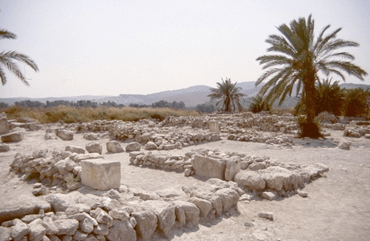
Where were the chariot cities? Solomon had horses and chariots stationed at Hazar, Megiddo, Gezer, and Jerusalem. This picture is of the ruins of Solomon’s stables at Megiddo. There was space for 400 teams of horses.

APPLICATION: Why, if Solomon was so wise, did he not read God’s Law closely and follow the rules for kings in Deuteronomy 17:16 – 20? “The king, moreover, must not acquire great numbers of horses for himself or make the people return to Egypt to get more of them, for the Lord has told you, “You are not to go back that way again.” He must not take many wives, or his heart will be led astray. He must not accumulate large amounts of silver and gold. When he takes the throne of his kingdom, he is to write for himself on a scroll a copy of this law, taken from that of the Levitical priests.It is to be with him, and he is to read it all the days of his life so that he may learn to revere the Lord his God and follow carefully all the words of this law and these decreesand not consider himself better than his fellow Israelites and turn from the law to the right or to the left. Then he and his descendants will reign a long time over his kingdom in Israel.”

Solomon had plenty of knowledge but not so much real wisdom. No matter how knowledgeable Solomon was, he still really messed up! 1. Solomon acquired great numbers of horses and traded freely with Egypt to get them. 2. Solomon had 700 wives and 300 concubines. These women worshiped demons and led Solomon into idol worship. And consider the demands these women would have made, considering the fact that Solomon had already built a palace for Pharaoh’s daughter! 3. Solomon amassed huge wealth for himself. While Solomon was busy building all these cities and amassing untold wealth, the common people were actually suffering. When Solomon’s son, Rehoboam, ascended the throne, the people came to him begging for relief. In Solomon’s lifetime, he controlled EVERYTHING in Israel, and conscripted workers for the palace, for the army, for building projects, for farming, etc. 4. Nowhere in the Book of Ecclesiastes does it mention anything about Solomon making a copy of the Law for himself or studying it. Instead, Ecclesiastes records the frantic efforts of a bored rich man who found that nothing satisfied him!

Even though Solomon had wisdom and riches and fame and everything else he could possibly desire, his failure to follow God’s commands meant that the son who succeeded him had no spiritual foundation whatsoever. Bowing to the demands of 1,000 women, Solomon filled Jerusalem with shrines to every known pagan deity. Solomon failed to use all that wealth and wisdom to benefit his people but instead kept it for himself.

Years ago, I encountered a tale entitled “Christ in the Cupboard.” It seems that a poor family worshiped Jesus, and at a point, asked him to remain with them, so they gave him a place in a large cupboard and shut the door. But later on, the family became quite wealthy. As wealth increased, their worship of Christ decreased. At a crisis point, the father opened the cupboard to allow Jesus to come out and help them; however, he was horrified to find that Jesus was no longer in the cupboard, but Satan was hiding there. All of us should be cautioned by this tale.

Proverbs 30:8 – 9 says, “Keep falsehood and deceitful words far from me. Give me neither poverty nor riches; feed me with the bread that is my portion. Otherwise, I may have too much and deny You, saying, ‘Who is the LORD?’ Or I may become poor and steal, profaning the name of my God.” What happened to Solomon can happen to any of us. If God gives us resources, the appropriate question is “God, how do you want these resources dispersed?” Falling stock markets, Ponzi schemes, shyster financial advisers – there are all kinds of ways that wealth can melt away in an instant. Let us pray the prayer from Proverbs 30 and let us be ever vigilant so that we avoid Solomon’s spiritually fatal mistakes.

PRAYER: Father God, thank You for loving us and for caring for us. Lord, help us to follow hard after You all the days of our lives. Help us to remember that You are the Source of light and life and that You are the Giver of all good things. If You give us more resources, help us to swiftly pass those resources on to those whom You have chosen. In the mighty and precious Name of King Jesus. Amen.
OCTOBER 22, 2022 ANOTHER LOOK AT THE ISRAELITESPART 2 #9 2 CHRONICLES 8:1 – 18 SOLOMON IS SLIP SLIDIN’ AWAY!

October 22, 2022

2 Chronicles 8:1 – 18 Solomon’s Further Achievements (1 Kings 9:10-28)

“Now at the end of the twenty years during which Solomon had built the house of the LORD and his own palace, Solomon rebuilt the cities Hiram had given him and settled Israelites there. Then Solomon went to Hamath-zobah and captured it. He built Tadmor in the wilderness, along with all the store cities that he had built in Hamath. He rebuilt Upper and Lower Beth-horon as fortified cities with walls, gates, and bars, as well as Baalath, all the store cities that belonged to Solomon, all the cities for his chariots and horses —whatever he desired to build in Jerusalem, Lebanon, and throughout the land of his dominion.

As for all the people who remained of the Hittites, Amorites, Perizzites, Hivites, and Jebusites (the people who were not Israelites)— their descendants who remained in the land, those whom the Israelites were unable to destroy—Solomon conscripted these people to be forced laborers, as they are to this day. But Solomon did not consign any of the Israelites to slave labor, because they were his men of war, his officers and captains, and the commanders of his chariots and cavalry. They were also the chief officers for King Solomon: 250 supervisors.

Solomon brought the daughter of Pharaoh up from the City of David to the palace he had built for her. For he said, “My wife must not live in the house of David king of Israel, because the places the ark of the LORD has entered are holy.”

At that time Solomon offered burnt offerings to the LORD on the altar of the LORD he had built in front of the portico. He observed the daily requirement for offerings according to the commandment of Moses for Sabbaths, New Moons, and the three annual appointed feasts—the Feast of Unleavened Bread, the Feast of Weeks, and the Feast of Tabernacles. (Passover, Pentecost, and Sukkoth, the Feast of Booths.)

In keeping with the ordinances of his father David, he appointed the divisions of the priests over their service, and the Levites for their duties to offer praise and to minister before the priests according to the daily requirement. He also appointed gatekeepers by their divisions at each gate, for this had been the command of David, the man of God. They did not turn aside from the king’s command regarding the priests or the Levites or any matter concerning the treasuries.

Thus all the work of Solomon was carried out, from the day the foundation was laid for the house of the LORD until it was finished. So the house of the LORD was completed.

Then Solomon went to Ezion-geber and to Eloth on the coast of Edom. So Hiram sent him ships captained by his servants, along with crews of experienced sailors. They went with Solomon’s servants to Ophir and acquired from there 450 talents of gold, which they delivered to King Solomon. (Eloth or Elath is along the shore of the Red Sea in the land of Edom. 450 talents is approximately 17 tons or 15.4 metric tons of gold.)

This account of Solomon’s achievements is a mixed one. First, the writer describes all of Solomon’s conquests and the cities that he either built or rebuilt. Included in this account is the mention of store cities and chariots and horses. Again, we are reminded that God has already warned Israelite kings not to multiply chariots and horses; however, Solomon obviously feels entitled and is ignoring this command.

This account ends with glowing descriptions of lucrative voyages to Ophir bringing back enormous amounts of the special gold for which Ophir was famed. Nobody actually knows where Ophir was located. There are good cases for locations in Saudi Arabia and various parts of the Indian subcontinent. Some Spanish writers in the sixteenth century even suggested Zimbabwe; however, there is more compelling evidence for the other locations, particularly one in Saudi Arabia that obviously was worked at the time of Solomon.

In the midst of these glowing accounts of Solomon’s conquests, his building, and his other works is a jarring note. Evidently, Solomon’s first wife was Pharaoh’s daughter. While this marriage is undoubtedly a savvy political alliance, Solomon builds a house for this lady outside the City of David “because the places the ark of the LORD has entered are holy.”  WHAT?

The kings of Israel are supposed to marry Israelite women who presumably worship the God of Israel. We have no idea of the beliefs of Pharaoh’s daughter. While there are some scholars who want to contend that this woman might have converted to Judaism, there is no proof of that; besides, if this woman were a convert, Solomon would probably not move her out of the City of David. This alliance raises yet another question: How could Solomon view himself as holy when he was entering into sexual liaisons with non – believers?

Solomon has begun marriages driven by lust or political convenience, a practice he will continue for the rest of his reign as king. This practice will eventually lure Solomon away from God to the point that he will erect shrines to demonic deities throughout Jerusalem just to satisfy his wives and concubines. Even though Solomon has organized the priests and the temple gatekeepers and is making regular sacrifices, he has already begun sliding away from God.

APPLICATION: An old Paul Simon hit says, “Slip sliding away. Slip sliding away.
You know the nearer your destination, the more you’re slip sliding away. “

Solomon was phenomenally successful, and he succeeded in every project he started. Sea voyages to Ophir brought Solomon incredible wealth, and he also received tribute from all sorts of people. Solomon should have been deliriously happy….. but he wasn’t! All you have to do is to read the first few chapters of the Book of Ecclesiastes and you realize that wealth, fame, wisdom, music, poetry, beauty, and sex did nothing for Solomon. Every time Solomon sought for satisfaction in something, he failed to find it! Each time Solomon tried to grasp soul satisfaction, it went slip sliding away from him.

Ecclesiastes 1:1 – 2 tells us, “The words of the Teacher, the son of David, king in Jerusalem: “Futility of futilities,” says the Teacher, “futility of futilities! Everything is futile!” Solomon continues, “All things are wearisome, more than one can describe; the eye is not satisfied with seeing, nor the ear content with hearing. What has been will be again, and what has been done will be done again; there is nothing new under the sun.” (Ecclesiastes 1:8 – 9)

Solomon continues for most of the rest of Ecclesiastes, describing all the various avenues he has explored and found useless as far as satisfying him. What is wrong with Solomon? Unlike Solomon’s father David, who had an active relationship with the Living God, Solomon has only a second – hand faith. Solomon knows all the right words to say and has even had two face – to – face interviews with God, and yet, he is living a relatively godless life. David found his highest satisfaction in praying to God and in praising God. Solomon, on the other hand, may have prayed eloquent prayers in public, but he has employed others to handle the praise. There is no record of Solomon having a private prayer life. Solomon is the man who has everything, except God!  

Many of us who work with poor people have noted that those who are firm believers are happy even in the midst of their poverty. Though possessing relatively little, these people live lives of satisfaction because they are trusting in God as their Source and they worship Him regularly. Contrast these people with many in developed countries who are wealthy beyond the imaginations of the poor and yet who struggle to find satisfaction in drugs, alcohol, or other false avenues.

Each of us has a choice: we can choose to serve the Living God, to pray to Him, to worship Him, and to trust Him as our Source of light and life. Or we can try to be our own gods, struggling to find anything positive by ourselves. St. Augustine wrote of his life before Christ, “When I turned away from You, I lost myself in a multiplicity of things.” But Augustine also later said, “To fall in love with God is the greatest romance; to seek him the greatest adventure; to find him, the greatest human achievement. ”Solomon never learned this lesson, and all Israel suffered as a result! May we not copy Solomon’s mistakes.

PRAYER: Father God, thank You for loving us and for caring for us. Lord, help us to follow hard after You all the days of our lives. Help us to look to You for our significance and to trust You to give meaning to our lives. Thank You for making provision for us, even before we ask You for anything. Help us to praise You for all of our lives. In the mighty and precious Name of King Jesus. Amen.