
2 Chronicles 15:1 – 19
“The Prophecy of Azariah
Now the Spirit of God came upon Azariah son of Oded. So he went out to meet Asa and said to him, “Listen to me, Asa and all Judah and Benjamin. The LORD is with you when you are with Him. If you seek Him, He will be found by you, but if you forsake Him, He will forsake you. For many years Israel has been without the true God, without a priest to instruct them, and without the law. But in their distress they turned to the LORD, the God of Israel, and sought Him, and He was found by them. In those days there was no safety for travelers, because the residents of the lands had many conflicts. Nation was crushed by nation, and city by city, for God afflicted them with all kinds of adversity. But as for you, be strong; do not be discouraged, for your work will be rewarded.”
Asa’s Reforms (1 Kings 15:9-15)
When Asa heard these words and the prophecy of Azariah son of Oded the prophet, he took courage and removed the detestable idols from the whole land of Judah and Benjamin and from the cities he had captured in the hill country of Ephraim. He then restored the altar of the LORD that was in front of the portico of the LORD’s temple. And he assembled all Judah and Benjamin, along with those from the tribes of Ephraim, Manasseh, and Simeon who had settled among them, for great numbers had come over to him from Israel when they saw that the LORD his God was with him.
So they gathered together in Jerusalem in the third month of the fifteenth year of Asa’s reign. At that time they sacrificed to the LORD seven hundred oxen and seven thousand sheep from all the plunder they had brought back. Then they entered into a covenant to seek the LORD, the God of their fathers, with all their heart and soul. And whoever would not seek the LORD, the God of Israel, would be put to death, whether young or old, man or woman. They took an oath to the LORD with a loud voice, with shouting, trumpets, and rams’ horns. And all Judah rejoiced over the oath, for they had sworn it with all their heart. They had sought Him earnestly, and He was found by them. So the LORD gave them rest on every side.
King Asa also removed his grandmother Maacah from her position as queen mother because she had made a detestable Asherah pole. Asa chopped down the pole, crushed it, and burned it in the Kidron Valley. The high places were not removed from Israel, but Asa’s heart was fully devoted all his days. And he brought into the house of God the silver and gold articles that he and his father had dedicated. And there was no war until the thirty-fifth year of Asa’s reign.”
Asa continues to clean house spiritually. Despite the claims of Asa’s father, Jerusalem has actually been riddled with shrines, Asherah poles, and every other kind of worship center for demons. It began with Solomon, who had to satisfy 700 wives and 300 concubines by building shrines to all of their gods. Those women did precisely what God had foretold in Deuteronomy 17, swerving Solomon’s heart away from God. Now Asa cleans up the cities he has conquered in Ephraim and restores the altar of the Lord in front of the portico of the Lord’s temple. It is likely that the altar in the Most Holy Place remains intact; however, the altar the common people can see has fallen into disrepair.
Next, Asa calls a convocation of all believers from Judah and Benjamin, including members of other tribes who have settled among them to be close to the temple in Jerusalem. These people swear life – changing oaths. “Then they entered into a covenant to seek the LORD, the God of their fathers, with all their heart and soul. And whoever would not seek the LORD, the God of Israel, would be put to death, whether young or old, man or woman.”
Finally, Asa removes his grandmother Maacah, Absalom’s granddaughter, from her position as queen mother because she has made a detestable Asherah pole. (Obviously, Absalom didn’t waste time learning the ways of the Lord or training his family in them either.) After all of these reforms, Asa has peace in the kingdom for 25 years. There is one niggling detail: the high places are not removed.
To some extent, it would be impossible to remove high places because they are physical locations on tops of hills and mountains. But evidently, there are also shrines and altars left at these places. Why doesn’t Asa deal with these things? Perhaps Satan convinces Asa that he has done enough and besides, nobody will use these places any more. Perhaps Asa fails to recognize the significance of allowing these places to remain untouched. At any rate, those high places are still there, just waiting for the next bunch of idol worshipers.
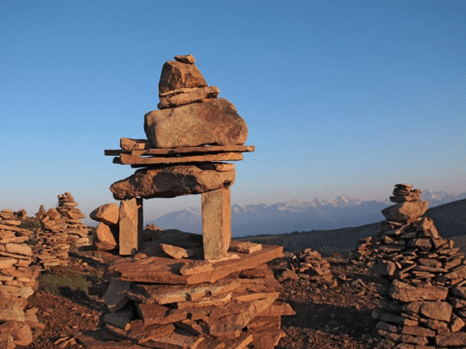
APPLICATION: Asa does very well for 35 years of his reign. When the people of Judah are cutting covenant to serve the Lord, they make extensive sacrifices, blowing horns and shouting and celebrating. But….. the high places? What about the high places?
Viewing events from the hind sight of history, it’s easy to realize why those high places should have been dealt with. But had we lived during the first 35 years of Asa’s rule, we might have done the same thing. There are many things that are not quite right in our lives, things we should deal with, things God wants us to deal with. But we procrastinate, promising ourselves that we will deal with those things later. Years go by, the temporary becomes permanent and entrenched, and when we attempt to eradicate a bad practice or habit, it takes immense amounts of work.
I grew up on a Midwestern farm at a time when we had far fewer herbicides. But we had kid power. Those who raised soybeans paid teens to go through their fields with hoes, uprooting velvet weeds and other weeds. Everyone knew that the sooner you pulled the weeds, the smaller they were and the easier it was to get rid of them. If you waited until the weeds were fully grown, the root system had developed and it might take two people to pull them up!
Every one of us has pet sins, bad habits that we overlook because we don’t feel they are significant or harmful. Perhaps we waste time watching television or playing computer games. But if we are serving the Living God, our lives are not our own and we must be about His work. Recently, I have realized that my husband and I know entirely too much about the schedule of programs on our favorite satellite TV channels. The shows we enjoy are clean and informative; however, the question remains: what does God want us to do?
I have observed that one temptation connected to aging is the idea that one has worked long enough and earned the right to unlimited leisure. But this concept is scarcely a Godly one. Consider Reverend Billy Graham, who produced video messages and books that inspired millions right up until his death at age 99. The late comedian George Burns lived past the age of 100. When someone asked Mr. Burns his secret, he replied, “How can I die? I’m booked.”
Later today, I am to address a group of pensioners, or “senior citizens,” as the Americans would call them. This group includes many men and women who are educated, literate, and concerned for their communities. I am trying to encourage these people that they are valuable and that they still have things to share.
What can we learn from Asa? Don’t ignore the “high places!” Allow God to dictate the use of your time, rather than merely indulging your whims. Don’t allow high places to develop in the first place and ask God to help you root out those things that are occupying your time, your energy, and your resources but are not from Him.
PRAYER: Father God, thank You for loving us and for caring for us. Lord, show us the high places in our lives and then help us to eradicate them, to repudiate those practices that are wasting Your time. In the mighty and precious Name of King Jesus. Amen.
 Burunche's Blog
Leave a comment