Archive for October, 2022

OCTOBER 11, 2022 ANOTHER LOOK AT THE ISRAELITES PART 1 #39 1 CHRONICLES 27:1 – 34 ARE YOU A FRIEND OF THE KING?

October 11, 2022

1 Chronicles 27:1 – 34

“This is the list of the Israelites, the heads of families, the commanders of thousands and of hundreds, and their officers who served the king in every matter concerning the divisions that were on rotating military duty each month throughout the year. There were 24,000 men in each division:

The Twelve Captains for Twelve Months

Jashobeam son of Zabdiel was in charge of the first division, which was assigned the first month. There were 24,000 men in his division. He was a descendant of Perez and chief of all the army commanders for the first month. Dodai the Ahohite was in charge of the division for the second month, and Mikloth was the leader. There were 24,000 men in his division. The third army commander, as chief for the third month, was Benaiah son of Jehoiada the priest. There were 24,000 men in his division. This Benaiah was mighty among the Thirty and was over the Thirty, and his son Ammizabad was in charge of his division. The fourth, for the fourth month, was Joab’s brother Asahel, and his son Zebadiah was commander after him. There were 24,000 men in his division. The fifth, for the fifth month, was the commander Shamhut the Izrahite. There were 24,000 men in his division. The sixth, for the sixth month, was Ira son of Ikkesh the Tekoite. There were 24,000 men in his division. The seventh, for the seventh month, was Helez the Pelonite, an Ephraimite. There were 24,000 men in his division. The eighth, for the eighth month, was Sibbecai the Hushathite, a Zerahite. There were 24,000 men in his division. The ninth, for the ninth month, was Abiezer the Anathothite, a Benjamite. There were 24,000 men in his division. The tenth, for the tenth month, was Maharai the Netophathite, a Zerahite. There were 24,000 men in his division. The eleventh, for the eleventh month, was Benaiah the Pirathonite, an Ephraimite. There were 24,000 men in his division. The twelfth, for the twelfth month, was Heldai the Netophathite, from the family of Othniel. There were 24,000 men in his division.

The Leaders of the Twelve Tribes

These officers were in charge of the tribes of Israel: Over the Reubenites was Eliezer son of Zichri; over the Simeonites was Shephatiah son of Maacah; over Levi was Hashabiah son of Kemuel; over Aaron was Zadok; over Judah was Elihu, one of David’s brothers; over Issachar was Omri son of Michael; over Zebulun was Ishmaiah son of Obadiah; over Naphtali was Jerimoth son of Azriel; over the Ephraimites was Hoshea son of Azaziah; over half the tribe of Manasseh was Joel son of Pedaiah; over half the tribe of Manasseh in Gilead was Iddo son of Zechariah; over Benjamin was Jaasiel son of Abner; and over Dan was Azarel son of Jeroham. These were the leaders of the tribes of Israel.

David did not count the men aged twenty or under, because the LORD had said that He would make Israel as numerous as the stars of the sky. Joab son of Zeruiah began to count the men but did not finish. For because of this census wrath came upon Israel, and the number was not entered in the Book of the Chronicles of King David.

David’s Various Overseers

Azmaveth son of Adiel was in charge of the royal storehouses. Jonathan son of Uzziah was in charge of the storehouses in the country, in the cities, in the villages, and in the fortresses. Ezri son of Chelub was in charge of the workers in the fields who tilled the soil. Shimei the Ramathite was in charge of the vineyards. Zabdi the Shiphmite was in charge of the produce of the vineyards for the wine vats. Baal-hanan the Gederite was in charge of the olive and sycamore trees in the foothills. Joash was in charge of the stores of olive oil. Shitrai the Sharonite was in charge of the herds grazing in Sharon. Shaphat son of Adlai was in charge of the herds in the valleys. Obil the Ishmaelite was in charge of the camels. Jehdeiah the Meronothite was in charge of the donkeys. Jaziz the Hagrite was in charge of the flocks. All these were officials in charge of King David’s property.

The Counselors

David’s uncle Jonathan was a counselor; he was a man of insight and a scribe. Jehiel son of Hachmoni attended the king’s sons. Ahithophel was the king’s counselor. Hushai the Archite was the king’s friend. Ahithophel was succeeded by Jehoiada son of Benaiah, then by Abiathar. Joab was the commander of the king’s army.

Forget all the names, but just look at all these divisions! Remember that David began as the disregarded youngest son, the runt of the litter, the kid they sent out to risk his life herding sheep while his big strong older brothers stayed home. This is the same David who had to hide in caves and even had to go live with the Philistines for a while, just to escape King Saul. Now that God has made David king, God has given David an army, plus untold riches and all kinds of resources.

Many times, we fail to realize that God is not a God of confusion but a God of peace and order. Here we can see the framework of David’s administration, and it is truly admirable. Fighting men are on rotating duties throughout the year. Able men are appointed over the storehouses at all levels, including “the country, the cities, the villages, and the fortresses. There are overseers for vineyards and olive groves as well as separate overseers for the production of olive oil and wine. Different men have charge of herds in various places and certain men are assigned to particular groups of animals such as flocks, camels, and donkeys. Presumably, each of these men has already proven his worth and his skill in these various areas.

Separate mention is made of the king’s counselors and the tutor for the king’s sons. David’s uncle Jonathan is given special notice as a wise counselor and scribe. Ahithophel was regarded as the wisest man in David’s kingdom; however, when David’s son Absalom rebelled against David, Ahithophel joined Absalom’s conspiracy. Ahithophel counseled that Absalom should attack David as quickly as possible so that the Israelites would join Absalom. But Hushai the Archite, David’s friend, succeeded in convincing Absalom that they should wait until morning and then swoop down on David; meanwhile, Hushai sent urgent word to David to cross the Jordan as quickly as possible. When Absalom heeded Hushai’s advice and not Ahithophel’s, Ahithophel belatedly realized that he had backed the wrong man and went home and hanged himself.

APPLICATION: While Hushai the Archite functioned as a counselor, his special role was as the king’s friend. Hushai must have been one of those rare men who could function as a confidante as well as a counselor. Once David came to power, he undoubtedly had plenty of people who wanted to ingratiate themselves with him; however, David needed someone in whom he could confide, someone to whom he could vent without fear that his remarks would echo throughout all of Israel. Hushai was that man. Not only was Hushai loyal, but he was self – effacing. We never hear any mention of Hushai accumulating wealth for himself or throwing his weight around because he had the ear of the king. Given the wealth of details that Ezra found to record, had Hushai misconducted himself, there would certainly have been a record to that effect. No, Hushai was content to share friendship with David without any other considerations. Given David’s history of loyalty, he may well have quietly blessed Hushai with enough wealth for Hushai to be comfortable without drawing undue attention.

Hushai was a friend to an earthly king, but are we friends of the heavenly King? How much time do we spend with God? How much time do we devote to simply reading God’s Word? When we are friends with someone, we want to do those things that will please them, we pay attention to their likes and dislikes, and we enjoy being with them. How does one become a friend of God? First, tell God you want to become friends with Him and then ask Him to help. Second, spend time being quiet and asking God to tell you whatever He wants. Third, read God’s Word.

Start with the Gospel of John or the Book of Psalms and read a few verses. Before you begin, ask God to stop you when you have read what He wants you to read for that day. When God stops you, ask Him to show you what He wants you to learn. Don’t worry if God stops you after only a few verses; what’s important is learning to listen to the promptings He gives you. You will know when you have read too far because the verses stop making sense. Go back to the place where the verses still made sense and re – read them. Eventually, something good will settle in your spirit, and you will know that you have gotten what God wants you to have for that time. May God lead you and guide you as you become His friend!

PRAYER: Father God, thank You for loving us and for caring for us. Lord, many of us would like to be friends with You but we have no idea how to go about it. Help all who read these devotionals to become Your friends. In the matchless Name of King Jesus. Amen.

OCTOBER 10, 2022 ANOTHER LOOK AT THE ISRAELITES PART 1 #29 1 CHRONICLES 26:1 – 32 GUARDING ISRAEL, JUDGING IT, AND PROTECTING ITS TREASURES – ARE YOU TOUGH ENOUGH?

October 10, 2022

OCTOBER 10, 2022 ANOTHER LOOK AT THE ISRAELITES PART 1 #29 1 CHRONICLES 26:1 – 32

GUARDING ISRAEL, JUDGING IT, AND PROTECTING ITS TREASURES – ARE YOU TOUGH ENOUGH?

“These were the divisions of the gatekeepers: From the Korahites: Meshelemiah son of Kore, one of the sons of Asaph. Meshelemiah had sons: Zechariah the firstborn, Jediael the second, Zebadiah the third, Jathniel the fourth, Elam the fifth, Jehohanan the sixth, and Eliehoenai the seventh. And Obed-edom also had sons: Shemaiah the firstborn, Jehozabad the second, Joah the third, Sachar the fourth, Nethanel the fifth, Ammiel the sixth, Issachar the seventh, and Peullethai the eighth. For God had blessed Obed-edom.

Also to his son Shemaiah were born sons who ruled over their families because they were strong, capable men. Shemaiah’s sons were Othni, Rephael, Obed, and Elzabad; his brothers were Elihu and Semachiah, also capable men. All these were descendants of Obed-edom with their sons and brothers; they were capable men with strength to do the work—62 in all from Obed-edom. Meshelemiah also had sons and brothers who were capable men—18 in all.

Hosah the Merarite also had sons: Shimri the first (although he was not the firstborn, his father had appointed him as the first), Hilkiah the second, Tebaliah the third, and Zechariah the fourth. The sons and brothers of Hosah numbered 13 in all.

These divisions of the gatekeepers, through their chief men, had duties for ministering in the house of the LORD, just as their brothers did. They cast lots for each gate, according to their families, young and old alike.

The lot for the East Gate fell to Shelemiah. Then lots were cast for his son Zechariah, a wise counselor, and the lot for the North Gate fell to him. The lot for the South Gate fell to Obed-edom, and the lot for the storehouses to his sons. The lots for the West Gate and the Shallecheth Gate on the ascending highway fell to Shuppim and Hosah.

There were guards stationed at every watch. Each day there were six Levites on the east, four on the north, four on the south, and two pairs at the storehouse. As for the court on the west, there were four at the highway and two at the court. These were the divisions of the gatekeepers who were descendants of Korah and Merari.

The Treasurers, Officers, and Judges

Now their fellow Levites were in charge of the treasuries of the house of God and the treasuries of the dedicated things. From the descendants of Ladan, who were Gershonites through Ladane and heads of the families of Ladan the Gershonite, were Jehieli, the sons of Jehieli, Zetham, and his brother Joel. They were in charge of the treasuries of the house of the LORD.

From the Amramites, the Izharites, the Hebronites, and the Uzzielites: Shebuel, a descendant of Gershom son of Moses, was the officer in charge of the treasuries. His relatives through Eliezer included Rehabiah his son, Jeshaiah his son, Joram his son, Zichri his son, and Shelomith his son. This Shelomith and his brothers were in charge of all the treasuries for the things dedicated by King David, by the heads of families who were the commanders of thousands and of hundreds, and by the army commanders. They dedicated some of the plunder from their battles to the repair of the house of the LORD. Everything dedicated by Samuel the seer, Saul son of Kish, Abner son of Ner, and Joab son of Zeruiah, along with everything else that was dedicated, was under the care of Shelomith and his brothers.

From the Izrahites, Chenaniah and his sons had the outside duties as officers and judges over Israel.

From the Hebronites, Hashabiah and his relatives, 1,700 capable men, had charge of the affairs of Israel west of the Jordan for all the work of the LORD and for the service of the king. As for the Hebronites, Jerijahg was the chief of the Hebronites, according to the genealogies of his ancestors. In the fortieth year of David’s reign the records were searched, and strong, capable men were found among the Hebronites at Jazer in Gilead. Among Jerijah’s relatives there were 2,700 capable men who were heads of families. King David appointed them over the Reubenites, the Gadites, and the half-tribe of Manasseh for every matter pertaining to God and to the affairs of the king.

What? More lists??? Yes, but look at the descriptions of these men and what they were expected to do:

Gatekeepers – these were the men charged with guarding the gates of the temple. “Each day there were six Levites on the east, four on the north, four on the south, and two pairs at the storehouse. As for the court on the west, there were four at the highway and two at the court.” These men were described as “capable men with strength to do the work.” No political favoritism here! David was appointing the brightest, the best, and the most well – suited. Please note the mention of Obed – edom and hi sons. Remember that it was at Obed – edom’s

house that the Ark of the Covenant rested when David made his first ill – fated attempt to move the Ark without regard for God’s instructions to Moses. God blessed Obed – edom mightily, and these sons were the proof.

“Shebuel, a descendant of Gershom son of Moses, was the officer in charge of the treasuries.” Shelomith, a son of Shebuel, and his brothers were in charge of all the treasuries. “This Shelomith and his brothers were in charge of all the treasuries for the things dedicated by King David, by the heads of families who were the commanders of thousands and of hundreds, and by the army commanders. They dedicated some of the plunder from their battles to the repair of the house of the LORD. Everything dedicated by Samuel the seer, Saul son of Kish, Abner son of Ner, and Joab son of Zeruiah, along with everything else that was dedicated, was under the care of Shelomith and his brothers.”

Finally, there were the judges. Many of these men had to work in relative isolation; if they were not righteous, just, and capable, David’s reputation would suffer. One such group of judges was even sent to the east side of the Jordan to watch over the Reubenites, the Gadites, and the half tribe of Manasseh.

APPLICATION:  Sometimes we wonder if it’s really worth while trying to do a good job! So many times, we might feel that nobody is paying attention. But look at all these names that Ezra the scribe recorded. Nearly three millenia later, we still know how capable these men were. God caused Ezra to make this record, and the same God is watching as we work.

Each one of these men did his duty, conscious of the fact that he was not merely working for himself, but for God. Many of those men may have had to work at night when nobody was watching; yet, they remained faithful. As a reward for that faithfulness, God has caused their names to be remembered in His Word. Notice how many of these men are referred to as capable, or well able.  Galatians 6:9 tells us, “ Let us not become weary in doing good, for at the proper time we will reap a harvest if we do not give up.

PRAYER: Father God, thank for loving us and for caring for us. Lord, help us to work heartily, whether or not anybody is watching, knowing that You are always there. Encourage all who do relatively thankless work, so that they will continue to work enthusiastically. In the mighty and precious Name of King Jesus. Amen.

OCTOBER 9, 2022 ANOTHER LOOK AT THE ISRAELITES PART 1 # 28 1 CHRONICLES 25:1 – 31 AND YOU THINK YOU HAVE PROBLEMS WITH WORSHIP TEAMS!!!

October 9, 2022

Chronicles 25:1 – 31 Twenty-Four Divisions of Musicians

“Additionally, David and the commanders of the army set apart some of the sons of Asaph, Heman, and Jeduthun to prophesy with the accompaniment of lyres, harps, and cymbals. The following is the list of the men who performed this service:

From the sons of Asaph: Zaccur, Joseph, Nethaniah, and Asarelah. These sons of Asaph were under the direction of Asaph, who prophesied under the direction of the king.

From the sons of Jeduthun: Gedaliah, Zeri, Jeshaiah, Shimei, Hashabiah, and Mattithiah—six in all—under the direction of their father Jeduthun, who prophesied with the harp, giving thanks and praise to the LORD.

From the sons of Heman: Bukkiah, Mattaniah, Uzziel, Shebuel, Jerimoth, Hananiah, Hanani, Eliathah, Giddalti, Romamti-ezer, Joshbekashah, Mallothi, Hothir, and Mahazioth. All these sons of Heman, the king’s seer, were given to him through the promises of God to exalt him. For God gave Heman fourteen sons and three daughters.

All these were under the direction of their fathers for the music of the house of the LORD with cymbals, harps, and lyres, for the service of the house of God.

Asaph, Jeduthun, and Heman were under the direction of the king. Together with their relatives, who were all trained and skillful in the songs of the LORD, they numbered 288. They cast lots for their duties, young and old alike, teacher as well as pupil.

The first lot, which was for Asaph, fell to Joseph, his sons, and his brothers—12 in all; the second to Gedaliah, his sons, and his brothers—12 in all; the third to Zaccur, his sons, and his brothers—12 in all; the fourth to Izri,d his sons, and his brothers—12 in all; the fifth to Nethaniah, his sons, and his brothers—12 in all; the sixth to Bukkiah, his sons, and his brothers—12 in all; the seventh to Jesarelah, his sons, and his brothers—12 in all; the eighth to Jeshaiah, his sons, and his brothers—12 in all; the ninth to Mattaniah, his sons, and his brothers—12 in all; the tenth to Shimei, his sons, and his brothers—12 in all; the eleventh to Azarel, his sons, and his brothers—12 in all; the twelfth to Hashabiah, his sons, and his brothers—12 in all; the thirteenth to Shubael, his sons, and his brothers—12 in all; the fourteenth to Mattithiah, his sons, and his brothers—12 in all; the fifteenth to Jeremoth, his sons, and his brothers—12 in all; the sixteenth to Hananiah, his sons, and his brothers—12 in all; the seventeenth to Joshbekashah, his sons, and his brothers—12 in all; the eighteenth to Hanani, his sons, and his brothers—12 in all; the nineteenth to Mallothi, his sons, and his brothers—12 in all; the twentieth to Eliathah, his sons, and his brothers—12 in all; the twenty-first to Hothir, his sons, and his brothers—12 in all; the twenty-second to Giddalti, his sons, and his brothers—12 in all; the twenty-third to Mahazioth, his sons, and his brothers—12 in all; and the twenty-fourth to Romamti-ezer, his sons, and his brothers—12 in all.”

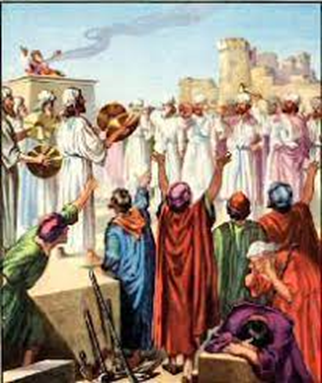
David was a skilled musician and composer, so it’s no surprise that David would be organizing the praise and worship, but look who else was involved? The army commanders also had a hand in this decision. The first assignment was to prophesy with the accompaniment of lyres, harps, and cymbals. Not only David, but also his army commanders realized that the only true path to military success lay in hearing from the Lord and obeying His instructions.

288 men, young and old alike, teacher and pupil, all cast lots for their turns to lead praise and worship and to prophesy. David had things organized so that nobody’s ego could get in the way. There might have been other members of some of these families who would have to take turns within the family; however, David’s organization ensured that each family would have its opportunity and nobody would be overlooked or accidentally eliminated.

Again, we wonder why Ezra bothered recording all these details, but remember that when the Israelites returned from Babylon, there were still members of these families who probably wanted their traditional jobs back. Without Ezra’s record of David’s decisions, there might have been a major fight resulting in somebody huffing off across the landscape to sulk.

APPLICATION: I began singing in churches at the age of 4 and have continued singing in choirs and other choral groups as much as I can. I have been the accompanist for all kinds of worship services and have led group singing acapella on many occasions. Being a worship leader is not about YOU at all! A good worship leader begins by praying and asking God what He wants to do in the service. After praying alone, the worship leader should pray with others. Then the team must be prepared for God to change everything they have carefully planned! God has a way of completely rearranging services to fit Himself, and the worship team must be able to realize when God is doing a new thing and run with it. The most important member of the worship team is the Holy Spirit, and if you fail to recognize that fact, you have no business leading worship! Effective worship means that at the end of the service, everybody says, “Wow! God is great, mighty, and wonderful!” If people are busy complimenting the worship leader at the end of the service, then the wrong person is receiving the glory.

David knew what he was doing when he involved his army commanders. If these rough tough soldiers felt that a worship leader was on track, they were most likely correct. These guys wouldn’t be worried about the standing or reputation of the worship leader; their only test for a good worship leader would be whether or not they could feel the presence of God.

How did some of these families who had more members work out who got to lead worship? Presumably, they would cast lots within the family so that sooner or later, everyone would have the opportunity. One thing I really like is that “young and old, teachers and students alike” had to cast lots. Nobody got to pull rank. For the ancient Israelites, casting lots was also a means of discerning the will of God. Proverbs 16:33 tells us, “The lot is cast into the lap, but its every decision is from the Lord.” When those Israelites were casting lots, they were actually begging God to show them His will for the conduct of worship.

Does God NEED our worship? No. We need to worship and praise to remind ourselves of who God is and how great He is. No matter how talented any of us might be, none of us is indispensable. Worship leaders must hold their responsibilities lightly, realizing that at any point, God can relieve them of their duties and move on. Friends who pastor a church recently faced a crisis when their worship leader took offense at something and quit suddenly. But once that individual was gone, it gave opportunity for others to come forward and for the congregation to explore new means of worship and praise. This congregation is entering into a new season of growth. The only person hurt by the decision of the worship leader is the individual himself.

May God help each of us so that if we are fulfilling a role, we will realize that our calling and our gifting are from God. May we always try to make sure that God receives the praise and not us!

PRAYER: Father God, thank You for loving us and for caring for us. Lord, help us to remember that every talent we have is a gift from You and that we can only give back what You have already given to us. Help us to do everything we can to make sure that You get the glory and not us. In the mighty Name of King Jesus. Amen.

OCTOBER 8, 2022 ANOTHER LOOK AT THE ISRAELITES PART 1 #27 1 CHRONICLES 24:1 – 31 THERE ARE NO LITTLE PEOPLE

October 8, 2022

1 Chronicles 24:1 – 31 “The Divisions of the Priests These were the divisions of the descendants of Aaron. The sons of Aaron were Nadab, Abihu, Eleazar, and Ithamar. But Nadab and Abihu died before their father did, and they had no sons; so Eleazar and Ithamar served as priests.

With the help of Eleazar’s descendant Zadok and Ithamar’s descendant Ahimelech, David divided them according to the offices of their service. Since more leaders were found among Eleazar’s descendants than those of Ithamar, they were divided accordingly. There were sixteen heads of families from the descendants of Eleazar and eight from the descendants of Ithamar. Thus they were divided by lot, for there were officers of the sanctuary and officers of God among both Eleazar’s and Ithamar’s descendants. The scribe, Shemaiah son of Nethanel, a Levite, recorded their names in the presence of the king and of the officers: Zadok the priest, Ahimelech son of Abiathar, and the heads of families of the priests and the Levites—one family being taken from Eleazar, and then one from Ithamar.

The first lot fell to Jehoiarib, the second to Jedaiah, the third to Harim, the fourth to Seorim, the fifth to Malchijah, the sixth to Mijamin, the seventh to Hakkoz, the eighth to Abijah, the ninth to Jeshua, the tenth to Shecaniah, the eleventh to Eliashib, the twelfth to Jakim, the thirteenth to Huppah, the fourteenth to Jeshebeab, the fifteenth to Bilgah, the sixteenth to Immer, the seventeenth to Hezir, the eighteenth to Happizzez,  the nineteenth to Pethahiah,  twentieth to Jehezkel, the twenty-first to Jachin, the twenty-second to Gamul, the twenty-third to Delaiah, and the twenty-fourth to Maaziah.

This was their appointed order for service when they entered the house of the LORD, according to the regulations prescribed for them by their forefather Aaron, as the LORD, the God of Israel, had commanded him.

The Rest of the Levites

Now these were the remaining descendants of Levi: From the sons of Amram: Shubael; from the sons of Shubael: Jehdeiah. As for Rehabiah, from his sons: The first was Isshiah. From the Izharites: Shelomoth; from the sons of Shelomoth: Jahath. From the sons of Hebron: Jeriah was the first, Amariah the second, Jahaziel the third, and Jekameam the fourth. From the sons of Uzziel: Micah; from the sons of Micah: Shamir. The brother of Micah: Isshiah; from the sons of Isshiah: Zechariah. The sons of Merari: Mahli and Mushi. The son of Jaaziah: Beno. The descendants of Merari from Jaaziah: Beno, Shoham, Zaccur, and Ibri. From Mahli: Eleazar, who had no sons.From Kish: Jerahmeel the son of Kish. And the sons of Mushi: Mahli, Eder, and Jerimoth.

These were the sons of the Levites, according to their families. As their brothers the descendants of Aaron did, they also cast lots in the presence of King David and of Zadok, Ahimelech, and the heads of the families of the priests and Levites—the family heads and their younger brothers alike.

Why were these divisions so important? What was the reason for carefully and meticulously recording all these details? Land, money, and food were the big concerns. The tribe of Levi was given some land throughout Israel, rather than having a separate territory of their own. This was so that the priests would serve the Lord where they were located and not congregate in one particular area. Priests and Levites enjoyed certain portions of the sacrifices, and remember the sacrificial animals had to be perfect. That meat was probably much better than anything available in the local market. The priests and Levites also shared in the meal offerings as well as the show bread. There were certain monies available for the upkeep of the temple, and the priests may have shared some of these as well. Competition for any benefits would have been keen; therefore, it was necessary to select leaders and then to draw lots so that nobody could accuse anyone of favoritism.

Centuries later, when Zakaria, the father of John the Baptist, was a priest, he was serving in the temple at his allotted time when the angel Gabriel appeared to him, foretelling John’s birth and ordering that Zakaria should name this son John.

Yet another reason that Ezra recorded all these details was for the benefit of those returning from Babylon. Remember that the exile took place because the Israelites had forgotten their God. As the high priest, Ezra was setting forth these details to restore order to worship as the Israelites rebuilt Jerusalem. Unfortunately, during the Babylonian exile, there were many Levitical families who intermarried with Babylonians. Ezra recorded these details to remind the priests and Levites so that no unqualified person would wind up ministering before the Lord.

APPLICATION: God gave Moses the order for worship as well as the order for service. While Aaron may have passed on that information to the Levites, it was God who gave the orders in the first place, informing Moses, who then informed Aaron. All of nature should teach us that God is a God of order and not the author of confusion. Confusion belongs to the devil.

God wanted worship to go on smoothly, so He gave explicit instructions regarding all the forms of worship, the handling of sacrifices, the handling of the furniture and other items in the temple, and even the necessary disposal of waste after the temple sacrifices. Each group of Levites had its own assignment to be carried out routinely, even if some of the duties were distasteful.

IN THE KINGDOM OF GOD, THERE ARE NO LITTLE PEOPLE, ONLY OBEDIENT ONES!

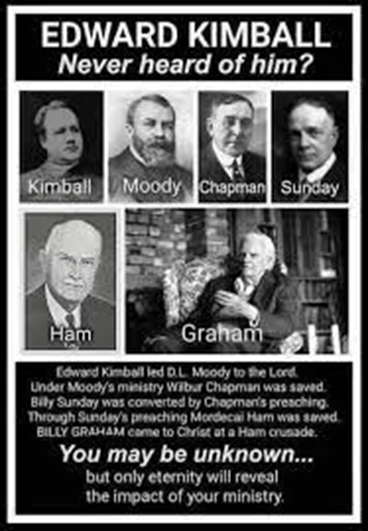
Edward Kimball was teaching a Sunday School class in Boston that included a young shoe store clerk named Dwight L. Moody. One day, God moved Kimball to seek out Moody in the shoe store where Moody was working. Kimball took Moody to the rear of the store and led him to the Lord. Moody became one of the foremost evangelists of the late nineteenth century with an international ministry. Wilbur Chapman got saved under Moody’s ministry and became an evangelist. Chapman was preaching at the Pacific Garden Mission in Chicago in 1886 when a ball player named Billy Sunday stumbled into the meeting and got saved. Billy Sunday went on to have an amazing evangelistic ministry. One of Sunday’s converts was a man named Mordecai Ham. Mordecai Ham was preaching when a twelve-year-old boy named Billy Graham heard him and got saved. Billy Graham’s ministry has touched untold millions and hundreds of other ministries have spun off from Graham’s ministry.  

There were probably priests and Levites who wished that they had more glamorous duties or that they received more public recognition. But all the time those men were hauling out ashes from the sacrifices and cleaning up the temple, they were still working for God. Those duties were just as important as those of the priests who were reading scripture. While men draw distinctions, God does not.

Has God called you to clean toilets or collect garbage? Fine! Clean those toilets or collect that garbage to the glory of God. You are giving vitally important service and God knows all your struggles. Are you working in some small obscure place? God is there, and if God is there, be at rest. You never know who is watching you or the lessons they are learning from you.

One friend who was caught up in drugs and satanism eventually accepted Jesus. While there were many people who helped this lady along the way, the night she came to Jesus, her prayer was “Whatever Bob and Jean have, want it!” When we learned this, we were overwhelmed. We had never tried to preach to this lady; what happened was that God caused her to see something of himself despite all of our shortcomings. May God help each one of us so that we will work to His glory, realizing that others might be watching and learning about God despite our failures!

PRAYER: Father God, thank You for loving us and for caring for us. Lord, help us to follow hard after You all the days of our lives. Help us to work heartily, knowing that no matter what we are doing, we are working for You. In the mighty and precious Name of King Jesus. Amen.

OCTOBER 7, 2022 ANOTHER LOOK AT THE ISRAELITES PART 1 #26 1 CHRONICLES 23:1 – 32 ORA ET LABORA -PRAY AND WORK

October 7, 2022

1 Chronicles 23:1 – 32 “The Divisions of the Levites

When David was old and full of years, he installed his son Solomon as king over Israel. Then he gathered all the leaders of Israel, as well as the priests and Levites.

The Levites thirty years of age or older were counted, and the total number of men was 38,000. “Of these,” said David, “24,000 are to oversee the work of the house of the LORD, 6,000 are to be officers and judges, 4,000 are to be gatekeepers, and 4,000 are to praise the LORD with the instruments I have made for giving praise.”

Then David divided the Levites into divisions according to the sons of Levi: Gershom, Kohath, and Merari.

The Gershonites (Numbers 3:21-26; Numbers 4:21-28; Numbers 4:38-41) The Gershonites: Ladan and Shimei. The sons of Ladan: Jehiel the first, Zetham, and Joel—three in all. The sons of Shimei: Shelomoth, Haziel, and Haran—three in all. These were the heads of the families of Ladan. And the sons of Shimei : Jahath, Zina, Jeush, and Beriah. These were the sons of Shimei—four in all. Jahath was the first and Zizah was the second; but Jeush and Beriah did not have many sons, so they were counted as one family and received a single assignment.

The Kohathites (Numbers 3:27-32; Numbers 4:1-20; Numbers 4:34-37) The sons of Kohath: Amram, Izhar, Hebron, and Uzziel—four in all. The sons of Amram: Aaron and Moses. Aaron and his descendants were set apart forever to consecrate the most holy things, to burn incense before the LORD, to minister before Him, and to pronounce blessings in His name forever. As for Moses the man of God, his sons were named among the tribe of Levi.

The sons of Moses: Gershom and Eliezer. The descendants of Gershom: Shebuel was the first. The descendants of Eliezer: Rehabiah was the first. Eliezer did not have any other sons, but the sons of Rehabiah were very numerous.

The sons of Izhar: Shelomith was the first. The sons of Hebron: Jeriah was the first, Amariah the second, Jahaziel the third, and Jekameam the fourth. The sons of Uzziel: Micah was the first and Isshiah the second.

The Merarites (Numbers 3:33-37; Numbers 4:29-33; Numbers 4:42-49) The sons of Merari: Mahli and Mushi. The sons of Mahli: Eleazar and Kish. Eleazar died without having any sons; he had only daughters. Their cousins, the sons of Kish, married them. The sons of Mushi: Mahli, Eder, and Jeremoth—three in all.

Levite Duties Revised

These were the descendants of Levi by their families—the heads of families, registered individually by name—those twenty years of age or older who worked in the service of the house of the LORD. For David had said, “The LORD, the God of Israel, has given rest to His people and has come to dwell in Jerusalem forever. So now the Levites no longer need to carry the tabernacle or any of the articles for its service.” For according to the final instructions of David, the Levites twenty years of age or older were counted, but their duty was to assist the descendants of Aaron with the service of the house of the LORD, being responsible for the courts and chambers, the purification of all the holy things, and the work of the service of the house of God, as well as for the rows of the showbread, the fine flour for the grain offering, the wafers of unleavened bread, the baking, the mixing, and all measurements of quantity and size.

They were also to stand every morning to give thanks and praise to the LORD, and likewise in the evening. Whenever burnt offerings were presented to the LORD on the Sabbaths, New Moons, and appointed feasts, they were to serve regularly before the LORD in the numbers prescribed for them. So the Levites were to carry out the responsibilities for the Tent of Meeting and the Holy Place, and, under their brothers the descendants of Aaron, the service of the house of the LORD.”

In the beginning, the Levites set themselves apart by killing those who were involved in the orgies sparked by the worship of the golden calf Aaron created while Moses was up on Mount Sinai receiving the Ten Commandments.  (Did Aaron narrowly miss being killed?) Because the Levites were willing to be obedient, God set them apart as a group to minister to Him. During the wanderings in the wilderness, the Levites had specific duties assigned involving the Tabernacle, setting it up, taking it down, and transporting it. But once the Israelites reached the Promised Land, nobody thought to re – assign duties now that the Tabernacle no longer had to be carried. Now David has taken up this administrative task.

“YIPES!” you respond. “How boring can you get? This chapter is nothing but lists. Why even read this stuff?” You are responding this way because you aren’t worried; when Jesus died on Calvary, the huge veil in the temple in Jerusalem that separated the Holy of Holies from the rest of the temple was torn from top to bottom, indicating that God through Jesus Christ was making a way for all mankind to come to Him. For you to worship is simple, and you don’t have to prove your family’s origins. But these lists were compiled at a time when it was crucial to be able to prove one’s lineage. It’s likely that Ezra, the priest who led the first group of Jews back from Babylon to Jerusalem compiled these lists as a means of reminding those returning from exile of the organization David established. The second chapter of Ezra describes men who claimed to be from the priestly line but who could not prove it. There were those who returned from Babylon who struggled to prove that they were actually Jews and therefore allowed to take part in the worship in the temple. For those people, genealogy meant the difference between being accepted as Jews or being barred from worship in the temple for ten generations. Families in these lines enjoyed certain privileges that also set them apart. It was no small thing to be able to prove your Levitical heritage.

APPLICATION: These days, DNA testing and websites such as ancestry.com are extremely popular. Most people would like to be able to prove that they come from good families. One of the many evils of slavery that persist to this day is the fragmentation of families that has left people grasping to learn where their ancestors came from.

Look at what the Levites had to do: For according to the final instructions of David, the Levites twenty years of age or older were counted, but their duty was to assist the descendants of Aaron with the service of the house of the LORD, being responsible for the courts and chambers, the purification of all the holy things, and the work of the service of the house of God, as well as for the rows of the showbread, the fine flour for the grain offering, the wafers of unleavened bread, the baking, the mixing, and all measurements of quantity and size.

They were also to stand every morning to give thanks and praise to the LORD, and likewise in the evening. Whenever burnt offerings were presented to the LORD on the Sabbaths, New Moons, and appointed feasts, they were to serve regularly before the LORD in the numbers prescribed for them. So the Levites were to carry out the responsibilities for the Tent of Meeting and the Holy Place, and, under their brothers the descendants of Aaron, the service of the house of the LORD.”

The Levites had to take orders from the priests, doing all the grunt work in the temple – cleaning, purifying holy things, baking the show bread and displaying it, etc., etc. But those Levites were also to stand every morning and evening to give thanks and praise to the Lord. The motto of the Benedictine order is “Ora et Labora,” meaning “pray and work.” For centuries, the Benedictines have prayed at set times, interspersing their prayers with practical work. In that time, the Benedictines have accomplished wonderful things that have greatly benefitted the world. Those old – time Levites could have readily identified with the Benedictines. Nowadays there is a great deal taught about mindfulness, taking time to reflect on one’s life and surroundings. But if you turn your heart toward God, mindfulness simply becomes another description of prayer. May all of us find ways to combine prayer with our work, so that we will have times of refreshing. Ora et Labora!

PRAYER: Father God, thank You for loving us and for caring for us. Help us to realize that any work to which You have called us is sacred and let us take times to pray as well. In the mighty and precious Name of King Jesus. Amen.

OCTOBER 6, 2022 ANOTHER LOOK AT THE ISRAELITES PART 1 #25 1 CHRONICLES 22:1 – 19 SOLOMON MAY HAVE BUILT THE TEMPLE BUT HIS DAD PAID MOST OF THE BILLS!

October 6, 2022

1 Chronicles 22:1 – 19 “Preparations for the Temple

Then David said, “Here shall be the house of the LORD God, as well as the altar of burnt offering for Israel.” So David gave orders to gather the foreigners in the land of Israel, from whom he appointed stonecutters to prepare finished stones for building the house of God.

David provided a large quantity of iron to make the nails for the doors of the gateways and for the fittings, together with more bronze than could be weighed and more cedar logs than could be counted; for the Sidonians and Tyrians had brought a large quantity of cedar logs to David.

And David said, “My son Solomon is young and inexperienced, and the house to be built for the LORD must be exceedingly magnificent—of fame and glory throughout all lands. Therefore I must make preparations for it.” So David made lavish preparations before his death.

Solomon Anointed to Build the Temple

Then David called for his son Solomon and instructed him to build a house for the LORD, the God of Israel.

“My son,” said David to Solomon, “it was in my heart to build a house for the Name of the LORD my God, 8but this word of the LORD came to me: ‘You have shed much blood and waged great wars. You are not to build a house for My Name because you have shed so much blood on the ground before Me. But a son will be born to you who will be a man of rest. I will give him rest from all his enemies on every side; for his name will be Solomon, and I will grant to Israel peace and quiet during his reign. He is the one who will build a house for My Name. He will be My son, and I will be his Father. And I will establish the throne of his kingdom over Israel forever.’

Now, my son, may the LORD be with you, and may you succeed in building the house of the LORD your God, as He said you would. Above all, may the LORD give you insight and understanding when He puts you in command over Israel, so that you may keep the Law of the LORD your God. Then you will succeed, if you carefully follow the statutes and ordinances that the LORD commanded Moses for Israel. Be strong and courageous. Do not be afraid or discouraged.

Now behold, I have taken great pains to provide for the house of the LORD—100,000 talents of gold, 1,000,000 talents of silver, and bronze and iron too great to be weighed. I have also provided timber and stone, and you may add to them.

You also have many workers: stonecutters, masons, carpenters, and men skilled in every kind of work— in gold and silver, bronze and iron—craftsmen beyond number. Now begin the work, and may the LORD be with you.”

Then David ordered all the leaders of Israel to help his son Solomon: “Is not the LORD your God with you, and has He not granted you rest on every side? For He has given the inhabitants of the land into my hand, and the land has been subdued before the LORD and His people. Now set your heart and soul to seek the LORD your God. Get started building the sanctuary of the LORD God, so that you may bring the ark of the covenant of the LORD and the holy articles of God into the temple that will be built for the Name of the LORD.” (Solomon sounds like and is probably derived from the Hebrew word for peace. 100,000 talents is approximately 3,770 tons or 3,420 metric tons of gold. 1,000,000 talents is approximately 37,700 tons or 34,200 metric tons of silver.)

When we think of the magnificent temple King Solomon built in Jerusalem, we often assume that Solomon was responsible for gathering all the building materials as well as the silver, gold, iron, bronze, etc. WRONG!!! Actually, it was David who gathered most of the material and even made arrangements for timber and stone.

It was David who really wanted to build the temple; however, God stopped him because David had been a warrior and God wanted a man of peace to build the temple. But just look at the extensive list of the materials David prepared so that all Solomon had to do was to organize workmen and get going. “David provided a large quantity of iron to make the nails for the doors of the gateways and for the fittings, together with more bronze than could be weighed and more cedar logs than could be counted; for the Sidonians and Tyrians had brought a large quantity of cedar logs to David.” “Now behold, I have taken great pains to provide for the house of the LORD—100,000 talents of gold, 1,000,000 talents of silver, and bronze and iron too great to be weighed. I have also provided timber and stone, and you may add to them.”

WHEW! Obviously, God blessed David during David’s warfare. But more than material blessings, God was also establishing David’s throne. “But a son will be born to you who will be a man of rest. I will give him rest from all his enemies on every side; for his name will be Solomon, and I will grant to Israel peace and quiet during his reign. He is the one who will build a house for My Name. He will be My son, and I will be his Father. And I will establish the throne of his kingdom over Israel forever.’

APPLICATION: God did establish the throne of David and Solomon in the person of Jesus Christ the Messiah. Jesus’ earthly father Joseph came from the Davidic line. David wanted desperately to build the temple of the Lord and did everything he could to help Solomon. But look at David’s hopes for Solomon. “Now, my son, may the LORD be with you, and may you succeed in building the house of the LORD your God, as He said you would. Above all, may the LORD give you insight and understanding when He puts you in command over Israel, so that you may keep the Law of the LORD your God. Then you will succeed, if you carefully follow the statutes and ordinances that the LORD commanded Moses for Israel. Be strong and courageous. Do not be afraid or discouraged.”

David did not merely hope that Solomon would be a man of peace but that Solomon would also be a man of God and would follow all God’s statutes and ordinances. Sadly, Solomon failed. Despite Solomon’s vaunted wisdom, he never followed the dictates of Deuteronomy 17, where God ordered kings to make copies of the books of the Law for themselves. Solomon not only multiplied horses for himself, but also wound up as a major trader in horses, chariots, and all kinds of other war items throughout the Middle East. Kings were not supposed to multiply wives; however, Solomon had hundreds of wives and concubines, marrying indiscriminately for the sake of political alliances. The spiritual results were disastrous. To satisfy all these women, Solomon built shrines to every demonic deity going, including Molech, a demon that demanded people offer children as live burnt offerings.

How closely did David attend to Solomon’s early training? It’s likely that David left Solomon’s spiritual training to Bathsheba, Solomon’s mother, while he went off to wage wars. Proverbs 22:6 tells us, “Train up a child in the way he should go, and when he is old, he will not depart from it.” Early childhood years are critically important. If our children and grandchildren see us praying, studying our Bibles, and attending church because of the strength and encouragement it gives us, they will remember. We must share our faith with our children while they are young, before social media grabs their attention. Childhood has always suffered satanic assault, but these days, things are far worse. Even when we try to control the influence of social media at home, children still go to school and spend time with friends whose families may have far lower standards.

Those who worshiped the demon Molech handed over their children to be burned alive. But when we refuse to train our children and to share our faith with them, we are doing something just as horrible. May God help us to share our faith while there is still time, so that our children will live Godly and peaceful lives!

PRAYER: Father God, thank You for loving us and for caring for us. Lord, help us to remember all those around us who are watching and to listen for You voice when You order us to share our faith. Help us to particularly share with our children and grandchildren. May Your promises for the salvation of our families come true in every particular! In the mighty Name of King Jesus. Amen.

OCTOBER 5, 2022 ANOTHER LOOK AT THE ISRAELITES PART 1 #24 1 CHRONICLES 21:1 – 30 WHAT’S SO WRONG WITH TAKING A CENSUS?

October 5, 2022

1 Chronicles 21:1 – 30 “David’s Military Census (2 Samuel 24:1-9)

Then Satan rose up against Israel and incited David to take a census of Israel. So David said to Joab and the commanders of the troops, “Go and count the Israelites from Beersheba to Dan and bring me a report, so that I may know their number.”

But Joab replied, “May the LORD multiply His troops a hundred times over. My lord the king, are they not all servants of my lord? Why does my lord want to do this? Why should he bring guilt on Israel?”

Nevertheless, the king’s word prevailed against Joab. So Joab left and traveled throughout Israel, and then he returned to Jerusalem. And Joab reported to David the total number of the troops. In all Israel there were 1,100,000 men who drew the sword, including 470,000 in Judah. But Joab did not include Levi and Benjamin in the count, because the king’s command was detestable to him.

Judgment for David’s Sin (2 Samuel 24:10-14)

This command was also evil in the sight of God; so He struck Israel. Then David said to God, “I have sinned greatly because I have done this thing. Now I beg You to take away the iniquity of Your servant, for I have acted very foolishly.” And the LORD instructed Gad, David’s seer, “Go and tell David that this is what the LORD says: ‘I am offering you three options. Choose one of them, and I will carry it out against you.’” So Gad went and said to David, “This is what the LORD says: ‘Take your choice of either three years of famine, three months of being swept away before your enemies and overtaken by their swords, or three days of the sword of the LORD—days of plague upon the land, with the angel of the LORD ravaging every part of Israel.’ Now then, decide how I should reply to Him who sent me.” David answered Gad, “I am deeply distressed. Please, let me fall into the hand of the LORD, for His mercies are very great; but do not let me fall into the hands of men.”

A Plague on Israel (2 Samuel 24:15-17)

So the LORD sent a plague upon Israel, and seventy thousand men of Israel fell dead. Then God sent an angel to destroy Jerusalem, but as the angel was doing so the LORD saw it and relented from the calamity, and He said to the angel who was destroying the people, “Enough! Withdraw your hand now!” At that time the angel of the LORD was standing by the threshing floor of Ornan the Jebusite. When David lifted up his eyes and saw the angel of the LORD standing between heaven and earth, with a drawn sword in his hand stretched out over Jerusalem, David and the elders, clothed in sackcloth, fell facedown. And David said to God, “Was it not I who gave the order to count the people? I am the one who has sinned and acted wickedly. But these sheep, what have they done? O LORD my God, please let Your hand fall upon me and my father’s house, but do not let this plague remain upon Your people.”

David Builds an Altar (2 Samuel 24:18-25)

Then the angel of the LORD ordered Gad to tell David to go up and build an altar to the LORD on the threshing floor of Ornan the Jebusite. So David went up at the word that Gad had spoken in the name of the LORD.

Now Ornan was threshing wheat when he turned and saw the angel; and his four sons who were with him hid themselves. David came to Ornan, and when Ornan looked out and saw David, he left the threshing floor and bowed facedown before David. Then David said to Ornan, “Grant me the site of this threshing floor, that I may build an altar to the LORD. Sell it to me for the full price, so that the plague upon the people may be halted.”

Ornan said to David, “My lord the king may take whatever seems good. Look, I will give the oxen for the burnt offerings, the threshing sledges for the wood, and the wheat for the grain offering—I will give it all.”

“No,” replied King David, “I insist on paying the full price, for I will not take for the LORD what belongs to you, or offer burnt offerings that cost me nothing.” So David paid Ornan six hundred shekels of gold for the site. And there he built an altar to the LORD and offered burnt offerings and peace offerings. He called upon the LORD, who answered him with fire from heaven on the altar of burnt offering. Then the LORD spoke to the angel, who put his sword back into its sheath. At that time, when David saw that the LORD had answered him at the threshing floor of Ornan the Jebusite, he offered sacrifices there. For the tabernacle of the LORD that Moses had made in the wilderness and the altar of burnt offering were presently at the high place in Gibeon, but David could not go before it to inquire of God, because he was afraid of the sword of the angel of the LORD.”

In this day and age when censuses are commonplace, we might wonder why David was so wrong in calling for a census. In David’s time, censuses were generally used to generate additional taxes and draft more fighting men. Some teachers have suggested that David sinned by attempting to build up his power, rather than relying on God as God ordered in Deuteronomy 17:16 – 20.

“But the king must not acquire many horses for himself or send the people back to Egypt to acquire more horses, for the LORD has said, ‘You are never to go back that way again.’ He must not take many wives for himself, lest his heart go astray. He must not accumulate for himself large amounts of silver and gold. When he is seated on his royal throne, he must write for himself a copy of this instruction on a scroll in the presence of the Levitical priests. It is to remain with him, and he is to read from it all the days of his life, so that he may learn to fear the LORD his God by carefully observing all the words of this instruction and these statutes. Then his heart will not be exalted above his countrymen, and he will not turn aside from the commandment, to the right or to the left, in order that he and his sons may reign many years over his kingdom in Israel.”

Even Joab, who’s not exactly a spiritual giant, realizes this census is a terrible mistake and refuses to count the tribes of Levi and Benjamin. The priests wouldn’t be taxed anyway; however, omitting the tribe of Benjamin means omitting some of the best fighting men.  

The prophet Gad goes to David to rebuke him. God gives David three choices: three years of famine, three months of being swept away before your enemies and overtaken by their swords, or three days of the sword of the LORD—days of plague upon the land, with the angel of the LORD ravaging every part of Israel. David chooses plague and 70,000 men of Israel die! We have no idea how many women and children may have died also. The angel of the Lord is standing near the threshing floor of Ornan the Jebusite, preparing to destroy Jerusalem when God commands him to relent. David sees the angel and begs God for mercy upon his people, accurately stating that the sin is his and not that of his innocent citizens. David prays, “O LORD my God, please let Your hand fall upon me and my father’s house, but do not let this plague remain upon Your people.”

The angel of the Lord then orders David to build an altar on the threshing floor belonging to Ornan the Jebusite. Ornan and his sons have seen the angel and are terrified and more than ready to give David anything he asks for. But David refuses to simply take the land, the sledges, the oxen, and the wheat, paying full price for the land. (600 shekels, or 15.1 lbs. or 6.8 lg of gold.) Notice that only after David has paid for the threshing floor and has built an altar and offered burnt offerings and peace offerings does God order the angel to put away his sword. Notice also that when David makes the offerings, God answers with fire from heaven. After this, David uses the threshing floor of Ornan to make sacrifices because he fears what might happen if he goes to the Tabernacle at Gibeon. David realizes that his people and he have had a very narrow escape and he doesn’t want to take any more chances.

APPLICATION: One of the key phrases in this passage is David’s assertion when Ornan, shaking in his sandals, offers to give David everything just to save his family and himself. “No,” replied King David, “I insist on paying the full price, for I will not take for the LORD what belongs to you, or offer burnt offerings that cost me nothing.”David might have made mistakes, but what distinguishes David from other kings is that he receives correction from the Lord and is willing to sacrifice whatever it takes to make things right. Very few other kings of Israel or Judah are this generous or this honest. David is appalled at the devastation that has resulted from his arrogance. David also begs God to let the plague fall on himself and his family but to deliver the Israelites from the results of his bad judgement. David may be a great sinner, but he is also just as great at repenting!

How much do we sacrifice when we are offering things to the Lord? Do we give of our best, or do we only give our cast – offs and things we haven’t wanted in the first place? If God asks us to get out of our comfort zones, are we willing to do it, or do we argue? One missionary friend recently posted an interesting description of a time when God demanded that she minister to rich people rather than to the poor to whom her heart was drawn. Our friend had to learn that God loves all kinds of people and that her first challenge was to love those to whom God was calling her. God forced our friend to confront her prejudices and to see them as obstructions to ministry. Only then was God able to use our friend. Our friend had to learn how to relate to those far wealthier than herself in such a way that they felt valued and not used. May God help us to hold everything in our lives lightly, so that we are willing to give back what He has given us whenever He asks for it!

PRAYER: Father God, thank You for loving us and for caring for us. Lord, help us to follow hard after You all the days of our lives and to hold everything You have given us lightly. Help us to remember that if You ask us to give up anything, You can replace it with something far far better. In the mighty and precious Name of King Jesus. Amen.

OCTOBER 4, 2022 ANOTHER LOOK AT THE ISRAELITES PART 1 #23 1 CHRONICLES 20:1 – 8 STUPIDITY ONLY BREEDS MORE STUPIDITY!

October 4, 2022

1 Chronicles 20:1 – 8 “The Capture of Rabbah (2 Samuel 12:26-31)

In the spring, at the time when kings march out to war, Joab led out the army and ravaged the land of the Ammonites. He came to Rabbah and besieged it, but David remained in Jerusalem. And Joab attacked Rabbah and demolished it.

David took the crown from the head of their king. It was found to weigh a talent of gold and was set with precious stones, and it was placed on David’s head. And David took a great amount of plunder from the city.

David brought out the people who were there and put them to work with saws, iron picks, and axes. And he did the same to all the Ammonite cities. Then David and all his troops returned to Jerusalem.

Battles against the Philistines (2 Samuel 21:15-22)

Some time later, war broke out with the Philistines at Gezer. At that time Sibbecai the Hushathite killed Sippai, a descendant of the Rephaim, and the Philistines were subdued. And there was still another battle at Gath, where there was a man of great stature with six fingers on each hand and six toes on each foot—twenty-four in all. He too was descended from Rapha, and when he taunted Israel, Jonathan the son of David’s brother Shimei killed him. So these descendants of Rapha in Gath fell at the hands of David and his servants.”

If you thought Goliath was the last of the giants, think again! Anytime you read about the Rephaim or someone from Rapha, you are reading about giants. Recent archaeological digs have revealed giant skeletons, proving that these accounts were accurate and not merely the result of fevered imaginations on the part of the Israelites. The men who defeated these giants were courageous and resourceful, refusing to wimp out when faced with major challenges.

David is still waging war against the Ammonites. Hanun really messed up when he insulted David’s delegation. Had Hanun treated David’s delegation as he should have – merely as a diplomatic visit to be managed judiciously – the kingdom of the Ammonites would have remained intact. But poor stupid Hanun unnecessarily humiliated David’s peaceful delegation, little realizing that David was trying to honor Hanun’s late father Nahash. This major diplomatic blunder eventually resulted in David’s conquest of all the Ammonite cities, with the subjugation of their citizens to forced labor.    

What is missing in this account is the tragic story of David and Bathsheba. Despite the fact that it is springtime and time for David to move to the battlefield, he does not. Perhaps David is tired or has become offended by Joab – who knows? What we do know is that David’s failure to move out to head his troops results in disaster. Bored, David is wandering around the top of his palace one night when he spies Bathsheba bathing on her rooftop. Stunned by Bathsheba’s beauty, David refuses to consider that Bathsheba is the wife of Uriah the Hittite, one of David’s mighty men. David sends for Bathsheba, impregnates her, and then attempts to cover up his sin by bringing Uriah back in hopes that Uriah will have sex with Bathsheba, so that any pregnancy will be attributed to Uriah. When this ploy fails, David forces Joab to place Uriah in the hottest part of a battle, and Uriah is killed. After Uriah’s death, David takes Bathsheba as his wife.

The Bathsheba incident contaminates everyone involved in it – David, Joab, all the fighting men involved in the conspiracy against Uriah. Bathsheba is likely the most innocent party; after all, what can Bathsheba do when the king sends for her? Bathsheba has little or no choice.

Why hasn’t Ezra included the story of Bathsheba when compiling these chronicles? Certainly, everybody in Jerusalem has known that story for years. Perhaps Ezra is hoping to simply overlook the story of David’s failings while moving on to recount David’s successes.

What eventually happens to the Ammonites? Ezekiel 25 contains God’s Word against the Ammonites. In that chapter, God promises to give the Ammonites to the people of the East as a possession, making Rabbah a stable for camels and turning all the Ammonite cities into sheepfolds. God promises to cause the Ammonites to perish and “be lost out of the countries” through complete destruction. These events actually took place when invaders from Assyria and Babylon swooped in, destroying the Ammonites. Only recently have archaeological discoveries verified the existence of the Ammonites; for many years, they were thought not to have existed at all.

APPLICATION: How many of us face giants on a daily basis? These days, honest workers may find themselves facing the giants of lies, manipulation, poor workmanship, and corruption on the part of managers. While we are not called upon to kill giants physically with slingshots or spears, we may still face economic destruction and the loss of our reputations. When the energy giant Enron was brought to its knees, the whistle blowers suffered.  

The question each of us must face is this: are we working for men or for God? When the pressure mounts, will we continue to stand for the right, or will we cave in? We delude ourselves if we think that all these men who faced giants did so without God’s help; God helped them to defeat physical giants, and God can also help us to defeat spiritual ones. In introducing one of his songs, Ron Kenoly states that “the church today is engaged in a spiritual war and there is no demilitarized zone.” Let us take heart and continue to be faithful, knowing that God is still on the throne and that He will give us the victory. But let us not underestimate the evil we are facing; not all soldiers survive their battles. We must be willing to stand for righteousness, no matter the cost!

PRAYER: Father God, thank You for loving us and for caring for us. Lord, many of us are facing giants we hoped to avoid. Help us to remain steadfast and true through Your strength. Give us the determination to stand for righteousness, knowing that You are the One who keeps the records. In the mighty and precious Name of King Jesus. Amen.

OCTOBER 3, 2022 ANOTHER LOOK AT THE ISRAELITES PART 1 #22 1 CHRONICLES 19:1 – 19 WHEN SOMEONE COMES IN PEACE, DON’T EMBARRASS THEM!

October 3, 2022

1 Chronicles 19:1 – 19 “David’s Messengers Disgraced (2 Samuel 10:1-8)

Some time later, Nahash king of the Ammonites died and was succeeded by his son. And David said, “I will show kindness to Hanun son of Nahash, because his father showed kindness to me.”

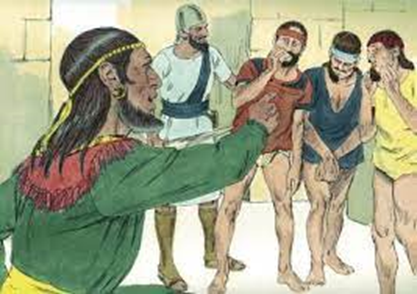
So David sent messengers to console Hanun concerning his father. But when David’s servants arrived in the land of the Ammonites to console him, the princes of the Ammonites said to Hanun, “Just because David has sent you comforters, do you really believe he is showing respect for your father? Have not his servants come to you to explore the land, spy it out, and overthrow it?” So Hanun took David’s servants, shaved their beards, cut off their garments at the hips, and sent them away. When someone came and told David about his men, he sent messengers to meet them, since the men had been thoroughly humiliated. The king told them, “Stay in Jericho until your beards have grown back, and then return.” When the Ammonites realized that they had become a stench to David, Hanun and the Ammonites sent a thousand talents of silver to hire for themselves chariots and horsemen from Aram-naharaim, Aram-maacah, and Zobah. So they hired for themselves thirty-two thousand chariots, as well as the king of Maacah with his troops, who came and camped near Medeba while the Ammonites came from their cities and marched out for battle.

On hearing this, David sent Joab and the entire army of mighty men. The Ammonites marched out and arrayed themselves for battle at the entrance to the city, while the kings who had come stayed by themselves in the open country.

David Defeats Ammon and Aram (2 Samuel 10:9-19)

When Joab saw the battle lines before him and behind him, he selected some of the best men of Israel and arrayed them against the Arameans. And he placed the rest of the forces under the command of his brother Abishai, who arrayed them against the Ammonites.

“If the Arameans are too strong for me,” said Joab, “then you will come to my rescue. And if the Ammonites are too strong for you, then I will come to your rescue. Be strong and let us fight bravely for our people and for the cities of our God. May the LORD do what is good in His sight.”

So Joab and his troops advanced to fight the Arameans, who fled before him. When the Ammonites saw that the Arameans had fled, they too fled before Joab’s brother Abishai, and they entered the city. So Joab went back to Jerusalem.

When the Arameans saw that they had been defeated by Israel, they sent messengers to bring more Arameans from beyond the Euphrates, with Shophach the commander of Hadadezer’s army leading them.

When this was reported to David, he gathered all Israel, crossed the Jordan, advanced toward the Arameans, and arrayed for battle against them. When David lined up to engage them in battle, they fought against him. But the Arameans fled before Israel, and David killed seven thousand of their charioteers and forty – thousand foot soldiers. He also killed Shophach the commander of their army.

When Hadadezer’s subjects saw that they had been defeated by Israel, they made peace with David and became subject to him. So the Arameans were unwilling to help the Ammonites anymore.”

While David might have had his shortcomings, he was always grateful to those who had helped him during his struggles with Saul. At one point, David had to send his parents to live with Nahash, the king of the Ammonites, until things were safer. When Nahash died, it was natural for David to send a delegation to greet Hanun, Nahash’s son, and to give him David’s condolences. But Hanun was young and arrogant and his advisors were probably all young princes who gave him bad advice. The princes warned Hanun that this delegation from Israel must be a spying mission and that he should humiliate them as much as possible.

Now if a more experienced ruler were to receive a group whom he suspected of spying, he could have controlled the situation so they would have gotten minimal information. Hanun could have had his soldiers greet the delegation at the gate and escort the delegation to the palace. Then Hanun could have made a lovely meaningless speech, entertained the delegation nicely, and then have them escorted back out through the city gates to the borders of his territory. The Israelites could have carried positive messages back to David and all would have been well. But Hanun’s advisors were just as foolish as those young men who advised Solomon’s son Rehoboam to speak arrogantly to the Israelites. So Hanun didn’t even give the delegation the chance to state their mission; instead, he began accusing them and insulting them. Next, Hanun seized the Israelites, shaved their beards, and cut their garments at such a short level that their genitalia were exposed. And then he booted them out of the Ammonite territory. (Shaving the beards indicated that the Ammonites had no respect for the Israelites as men.)

David had the delegation stay in Jericho until their beards had grown back; meanwhile, he marshaled his troops to wage war on the Ammonites. Even though the Ammonites hired thirty – two thousand chariots plus the king of Maacah with all his troops, the Israelites defeated these men handily. When the Ammonites sent to king Hadadezer beyond the Euphrates for more troops, David himself took the field, killing seven thousand charioteers and forty – thousand foot soldiers, including the commander of their army. At this point, nobody wanted to help the Ammonites anymore! All that Hanun succeeded in accomplishing was making himself look ridiculous and costing his nation the lives of many fighting men plus the money he expended in hiring mercenaries.

APPLICATION: Proverbs 24:6 tells us that “Only with sound guidance should you wage war, and victory lies in a multitude of counselors.” But you have to be careful about the counselors! Undoubtedly, there were older Ammonite leaders who could have given Hanun excellent advice; however, he didn’t listen to them. Hanun insisted on listening to advisors who were rash and arrogant. The Ammonite nation paid dearly for Hanun’s foolishness.

Where are we getting our advice? To whom do we listen? These days, it is increasingly difficult to find news sources that are actually reporting the truth and not indulging in some form of brain washing. Had Hanun stopped and considered the possible result of his insults to the Israelites, he could have avoided the entire mess. Hanun could have had David as an ally; instead, David became an implacable enemy. May God help us so that we listen carefully to Him and do not allow ourselves to be manipulated!

PRAYER: Father God, thank You for loving us and for caring for us. Lord, help us to hear Your truth and not to be swerved by propaganda. In the mighty and precious Name of King Jesus. Amen.

OCTOBER 2, 2022 ANOTHER LOOK AT THE ISRAELITES PART 1 #21 1 CHRONICLES 18:1 – 17 IT TAKES GREAT PEOPLE TO SUPPORT A GREAT RULER! THERE ARE NO LITTLE PEOPLE IN THE KINGDOM OF GOD!

October 2, 2022

1 Chronicles 18:1 – 17 “David’s Triumphs (2 Samuel 8:1-14; Psalm 60:1-12)

Some time later, David defeated the Philistines, subdued them, and took Gath and its villages from the hand of the Philistines. David also defeated the Moabites, and they became subject to David and brought him tribute.

As far as Hamath, David also defeated King Hadadezer of Zobah, who had marched out to establish his dominion along the Euphrates River. David captured from him a thousand chariots, seven thousand charioteers, and twenty thousand foot soldiers, and he hamstrung all the horses except a hundred he kept for the chariots.

When the Arameans of Damascus came to help King Hadadezer of Zobah, David struck down twenty-two thousand men. Then he placed garrisons in Aram of Damascus, and the Arameans became subject to David and brought him tribute. So the LORD made David victorious wherever he went.

And David took the gold shields that belonged to the officers of Hadadezer and brought them to Jerusalem. And from Tibhath and Cun, cities of Hadadezer, David took a large amount of bronze, with which Solomon made the bronze Sea, the pillars, and various bronze articles.

When King Tou of Hamath heard that David had defeated the entire army of Hadadezer king of Zobah, he sent his son Hadoram to greet King David and bless him for fighting and defeating Hadadezer, who had been at war with Tou. Hadoram brought all kinds of articles of gold and silver and bronze, and King David dedicated these to the LORD, along with the silver and gold he had carried off from all these nations—from Edom and Moab, and from the Ammonites, Philistines, and Amalekites.

Moreover, Abishai son of Zeruiah struck down eighteen thousand Edomites in the Valley of Salt. He placed garrisons in Edom, and all the Edomites were subject to David. So the LORD made David victorious wherever he went.

David’s Officers (2 Samuel 8:15-18)

Thus David reigned over all Israel, administering justice and righteousness for all his people: Joab son of Zeruiah was over the army; Jehoshaphat son of Ahilud was the recorder; Zadok son of Ahitub and Ahimelech son of Abiathar were priests; Shavsha was the scribe; Benaiah son of Jehoiada was over the Cherethites and Pelethites; and David’s sons were chief officials at the king’s side.”

WOW! When God gives someone victory, He doesn’t mess around! Not only does David defeat the Philistines and the Moabites, but he also defeats other kings as far away as the Euphrates River. David is fabulously successful in battle, even capturing 1,000 chariots, 7,000 charioteers, and all the horses for these chariots. Wisely, David only preserves enough horses for 100 chariots, following God’s instructions that a king of Israel is not to multiply chariots or horses for himself.

When we read about King Solomon building the temple, we need to remember that much of the wealth that went into that temple actually came from David’s conquests. The bronze used to create the bronze sea, the pillars, and the various bronze articles in Solomon’s temple also comes from these conquests.

No man is an island and David is no exception to this rule. If David is phenomenally successful, it’s because God has raised up brilliant priests, scribes, administrators, and military leaders who carry out the work of the kingdom. Every one of the men mentioned in this account is a star in his own right. The proof of this assertion is that God has preserved the names of these men so that even thousands of years later, we still know about them.

APPLICATION: Sometimes we work and wonder if anybody is really watching or if anybody really cares. Does it matter if we preserve ethical standards of medical care? If we refuse to cut corners in business, does anybody notice? If we teach our students true historical facts rather than something that is politically expedient, will it really matter, especially if we might pay for our honesty with our jobs?

TAKE HEART! God is watching and God takes note of everything you are doing. None of your efforts are falling to the ground useless. Just look at this list of outstanding professionals who supported David. God could have allowed them to be forgotten; however, we recognize these names because repeatedly these men are honored for their work.

We are living in a day and age when truth is under fire and many wish to re – write history to suit their particular political views. But truth has an uncomfortable habit of rearing its defiant head, even when someone attempts to suppress it. When Jesus was standing trial before Pontius Pilate, Pilate asked Jesus, “What is truth?” God’s Word is truth, whether we like it or not. In the end, we will be judged by our attitude towards God’s Word. If we accept God’s Word as true and righteous, if we honor God’s Word by following it, then we have nothing to fear. But if we have insisted that we can remodel God’s Word to suit ourselves, twisting it to justify our pet sins, there will come a time when our prevarications will shout loudly against us. May God help us to persistently study and honor His Word!

Galatians 6:7 – 9 tells us, “Do not be deceived: God cannot be mocked. A man reaps what he sows. Whoever sows to please their flesh, from the flesh will reap destruction; whoever sows to please the Spirit, from the Spirit will reap eternal life. Let us not become weary in doing good, for at the proper time we will reap a harvest if we do not give up.” God is still on the throne and is still watching to help us! Let us look to Him and remain faithful.

PRAYER: Father God, thank You for loving us and for caring for us. Lord, help us to honor Your Word and to study it. Help us to remain faithful to You wherever You have called us, even in the face of adversity. In the mighty and precious Name of King Jesus. Amen.