Archive for December, 2022

DECEMBER 12, 2022 REBUILD! RESTORE! RENEW! NEHEMIAH 11:1 – 36 GOD’S PROMISE TO JEREMIAH COMES TRUE CENTURIES LATER!

December 12, 2022

Nehemiah 11:1 – 36 Jerusalem’s New Settlers

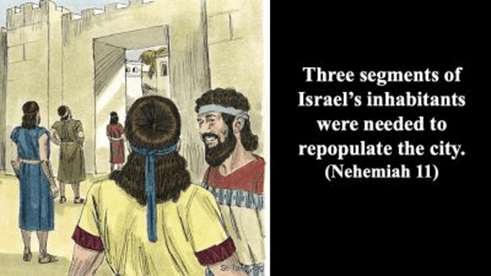
Now the leaders of the people settled in Jerusalem, and the rest of the people cast lots to bring one out of ten to live in the holy city of Jerusalem, while the remaining nine were to dwell in their own cities. And the people blessed all the men who volunteered to live in Jerusalem.

These are the heads of the provinces who settled in Jerusalem (but in the villages of Judah each lived on his own property in their towns—the Israelites, priests, Levites, temple servants, and descendants of Solomon’s servants— while some of the descendants of Judah and Benjamin settled in Jerusalem.)

From the descendants of Judah:

Athaiah son of Uzziah, the son of Zechariah, the son of Amariah, the son of Shephatiah, the son of Mahalalel, a descendant of Perez; and Maaseiah son of Baruch, the son of Col-hozeh, the son of Hazaiah, the son of Adaiah, the son of Joiarib, the son of Zechariah, a descendant of Shelah. The descendants of Perez who settled in Jerusalem totaled 468 men of valor.

From the descendants of Benjamin: Sallu son of Meshullam, the son of Joed, the son of Pedaiah, the son of Kolaiah, the son of Maaseiah, the son of Ithiel, the son of Jeshaiah; and his followers Gabbai and Sallai—928 men. Joel son of Zichri was the officer over them, and Judah son of Hassenuah was over Second District of the city.

From the priests:

Jedaiah son of Joiarib; Jachin; Seraiah son of Hilkiah, the son of Meshullam, the son of Zadok, the son of Meraioth, the son of Ahitub, the chief official of the house of God; and their associates who did the work at the temple—822 men; Adaiah son of Jeroham, the son of Pelaliah, the son of Amzi, the son of Zechariah, the son of Pashhur, the son of Malchijah; and his associates, the leaders of families—242 men; and Amashai son of Azarel, the son of Ahzai, the son of Meshillemoth, the son of Immer; 14and his associates —128 mighty men of valor. Zabdiel son of Haggedolim was their overseer.

From the Levites: Shemaiah son of Hasshub, the son of Azrikam, the son of Hashabiah, the son of Bunni; Shabbethai and Jozabad, two leaders of the Levites, who supervised the work outside the house of God; Mattaniah son of Mica, the son of Zabdi, the son of Asaph, who led in thanksgiving and prayer; Bakbukiah, second among his associates; and Abda son of Shammua, the son of Galal, the son of Jeduthun. The Levites in the holy city totaled 284. And the gatekeepers: Akkub, Talmon, and their associates, who kept watch at the gates—172 men.

Residents Outside Jerusalem

The rest of the Israelites, with the priests and Levites, were in all the villages of Judah, each on his own inheritance. The temple servants lived on the hill of Ophel, with Ziha and Gishpa over them.

Now the overseer of the Levites in Jerusalem was Uzzi son of Bani, the son of Hashabiah, the son of Mattaniah, the son of Mica. He was one of Asaph’s descendants, who were the singers in charge of the service of the house of God. For there was a command from the king concerning the singers, an ordinance regulating their daily activities. Pethahiah son of Meshezabel, a descendant of Zerah son of Judah, was the king’s agent in every matter concerning the people.

As for the villages with their fields, some of the people of Judah lived in Kiriath-arba, Dibon, Jekabzeel, and their villages; in Jeshua, Moladah, and Beth-pelet; in Hazar-shual; in Beersheba and its villages; in Ziklag; in Meconah and its villages; in En-rimmon, Zorah, Jarmuth, Zanoah, Adullam, and their villages; in Lachish and its fields; and in Azekah and its villages. So they settled from Beersheba all the way to the Valley of Hinnom.

The descendants of Benjamin from Geba lived in Michmash, Aija, and Bethel with its villages; in Anathoth, Nob, Ananiah, Hazor, Ramah, Gittaim, Hadid, Zeboim, Neballat, Lod, and Ono; and in the Valley of the Craftsmen. And some divisions of the Levites of Judah settled in Benjamin.”

It’s time to organize so that Jerusalem can be resettled. In fairness, the people cast lots so that one out of every ten families will stay in Jerusalem while the remainder will settle in their ancestral towns and villages. Carefully, Nehemiah and those working with him organize so that there will be leaders throughout all the various districts. But one item should stand out in letters of gold. “The descendents of Benjamin from Geba lived in …….Anathoth.”

Anathoth? What’s the big deal about Anathoth? For the answer, we must go back to the time when things were becoming desperate in Judah.  The story is told in Jeremiah 32:1 – 15 This is the word that came to Jeremiah from the Lord in the tenth year of Zedekiah king of Judah, which was the eighteenth year of Nebuchadnezzar. The army of the king of Babylon was then besieging Jerusalem, and Jeremiah the prophet was confined in the courtyard of the guard in the royal palace of Judah.

Now Zedekiah king of Judah had imprisoned him there, saying, “Why do you prophesy as you do? You say, ‘This is what the Lord says: I am about to give this city into the hands of the king of Babylon, and he will capture it. Zedekiah king of Judah will not escape the Babylonians but will certainly be given into the hands of the king of Babylon, and will speak with him face to face and see him with his own eyes. He will take Zedekiah to Babylon, where he will remain until I deal with him, declares the Lord. If you fight against the Babylonians, you will not succeed.’ ”

Jeremiah said, “The word of the Lord came to me: Hanamel son of Shallum your uncle is going to come to you and say, ‘Buy my field at Anathoth, because as nearest relative it is your right and duty to buy it.’ “Then, just as the Lord had said, my cousin Hanamel came to me in the courtyard of the guard and said, ‘Buy my field at Anathoth in the territory of Benjamin. Since it is your right to redeem it and possess it, buy it for yourself.’

“I knew that this was the word of the Lord; so I bought the field at Anathoth from my cousin Hanamel and weighed out for him seventeen shekels of silver. I signed and sealed the deed, had it witnessed, and weighed out the silver on the scales. I took the deed of purchase—the sealed copy containing the terms and conditions, as well as the unsealed copy—and I gave this deed to Baruch son of Neriah, the son of Mahseiah, in the presence of my cousin Hanamel and of the witnesses who had signed the deed and of all the Jews sitting in the courtyard of the guard. “In their presence I gave Baruch these instructions: ‘This is what the Lord Almighty, the God of Israel, says: Take these documents, both the sealed and unsealed copies of the deed of purchase, and put them in a clay jar so they will last a long time. For this is what the Lord Almighty, the God of Israel, says: Houses, fields and vineyards will again be bought in this land.’

The prophet Jeremiah Is in prison for warning the king and his people to repent. Jerusalem is under siege and might be conquered any day. Things look bleak for Jeremiah; yet, here is God sending a relative offering a land deal to this captive. Jeremiah buys land at Anathoth as a sign that “one day, houses, fields, and vineyards will again be bought in this land.” Now that day has come and families are again settling in Anathoth. God’s prophecies through Jeremiah have come true!

APPLICATION: There are many times when we have prayed and yet God seems to be silent. We are certain that we have understood the will of God clearly, and we wonder like Jeremiah why we are being forced to wait. In Jeremiah’s case, God clearly told him that his purchase of that land was to stand as an assurance to those trusting in God that eventually the Jews would return from Babylon and that land sales would again take place.

Habakkuk 2:2 – 4 says, “Then the LORD answered me: “Write down this vision and clearly inscribe it on tablets, so that a herald may run with it. For the vision awaits an appointed time; it testifies of the end and does not lie. Though it lingers, wait for it, since it will surely come and will not delay. Look at the proud one; his soul is not upright—but the righteous will live by faith—… ” Habakkuk was another prophet living in an uncertain time, watching as the leaders of Judah steadily became worse. God was preparing to use the wicked Chaldeans to punish the wicked Jews and Habakkuk was confused because the Chaldeans were worse than the people they were about to punish. God had to reassure Habakkuk that His will would eventually prevail no matter what.

When we find ourselves assailed by evil, we must pray continually and not give up. Remember Jeremiah and Habakkuk. Our part is to remain faithful while God’s part is to act through history. Eventually, God’s promises to both men came true, and His promises will come true for us as well if we will be steadfast in our faith.

PRAYER: Father God, thank You for loving us and for caring for us. Lord, help us to trust You even when events perplex us. Thank You that Your promises are true and that You are just and righteous in all Your ways. In the mighty and precious Name of King Jesus. Amen.

DECEMBER 11, 2022 REBUILD! RESTORE! RENEW! #10 NEHEMIAH 10:1 – 39 REJECT GOD’S LAWS AGAIN? NEHEMIAH SAYS, “NOT ON MY WATCH!”

December 11, 2022

Nehemiah 10:1 – 39 Signers of the Covenant

“Now those who sealed the document were: Nehemiah the governor, son of Hacaliah, and also Zedekiah, Seraiah, Azariah, Jeremiah, Pashhur, Amariah, Malchijah, Hattush, Shebaniah, Malluch, Harim, Meremoth, Obadiah, Daniel, Ginnethon, Baruch, Meshullam, Abijah, Mijamin, Maaziah, Bilgai, and Shemaiah. These were the priests.

The Levites: Jeshua son of Azaniah, Binnui of the sons of Henadad, Kadmiel, and their associates: Shebaniah, Hodiah, Kelita, Pelaiah, Hanan, Mica, Rehob, Hashabiah, Zaccur, Sherebiah, Shebaniah, Hodiah, Bani, and Beninu.

The leaders of the people: Parosh, Pahath-moab, Elam, Zattu, Bani, Bunni, Azgad, Bebai, Adonijah, Bigvai, Adin, Ater, Hezekiah, Azzur, Hodiah, Hashum, Bezai, Hariph, Anathoth, Nebai, Magpiash, Meshullam, Hezir, Meshezabel, Zadok, Jaddua, Pelatiah, Hanan, Anaiah, Hoshea, Hananiah, Hasshub, Hallohesh, Pilha, Shobek, Rehum, Hashabnah, Maaseiah, Ahijah, Hanan, Anan, Malluch, Harim, and Baanah.

The Vows of the Covenant

“The rest of the people—the priests, Levites, gatekeepers, singers, and temple servants, and all who had separated themselves from the people of the land to obey the Law of God—along with their wives and all their sons and daughters who are able to understand, hereby join with their noble brothers and commit themselves with a sworn oath to follow the Law of God given through His servant Moses and to carefully obey all the commandments, ordinances, and statutes of the LORD our Lord.

We will not give our daughters in marriage to the people of the land, and we will not take their daughters for our sons. When the people of the land bring merchandise or any kind of grain to sell on the Sabbath day, we will not buy from them on a Sabbath or holy day. Every seventh year we will let the fields lie fallow, and will cancel every debt.

We also place ourselves under the obligation to contribute a third of a shekel yearly for the service of the house of our God: for the showbread, for the regular grain offerings and burnt offerings, for the Sabbath offerings, for the New Moons and appointed feasts, for the holy offerings, for the sin offerings to make atonement for Israel, and for all the duties of the house of our God.

We have cast lots among the priests, Levites, and people for the donation of wood by our families at the appointed times each year. They are to bring it to the house of our God to burn on the altar of the LORD our God, as it is written in the Law.

We will also bring the firstfruits of our land and of every fruit tree to the house of the LORD year by year. And we will bring the firstborn of our sons and our livestock, as it is written in the Law, and will bring the firstborn of our herds and flocks to the house of our God, to the priests who minister in the house of our God.

Moreover, we will bring to the priests at the storerooms of the house of our God the firstfruits of our dough, of our grain offerings, of the fruit of all our trees, and of our new wine and oil. A tenth of our produce belongs to the Levites, so that they shall receive tithes in all the towns where we labor. A priest of Aaron’s line is to accompany the Levites when they collect the tenth, and the Levites are to bring a tenth of these tithes to the storerooms of the treasury in the house of our God. For the Israelites and the Levites are to bring the contributions of grain, new wine, and oil to the storerooms where the articles of the sanctuary are kept and where the ministering priests, the gatekeepers, and the singers stay. Thus we will not neglect the house of our God.”

Nehemiah has drawn up a comprehensive covenant based on the Law of Moses and now the Jewish leaders, the priests, and the Levites are all committing themselves in writing to keeping this covenant. What are the provisions of this covenant?

  1. No more intermarriage with non – Jews. Marriage with foreign women got King Solomon into trouble and it had been a problem for the Jews ever since. Even as this covenant was being written, Nehemiah was facing opposition from those who had married into Sanballat’s family.
  2. Strict observance of the weekly Sabbaths and the seventh year Sabbath that included allowing the fields to lie fallow and cancellation of debts.
  3. Details of contributions to support the priests, the Levites, and the work of the temple. These contributions were to include offerings of firstfruits of dough, grain offerings, fruit of any kind, new wine, and oil. The priests and Levites were to collect the ten per cent tithes from all the towns and bring those contributions into the temple. The people pledged themselves to support the house of God.

APPLICATION: Why was such a formal document drawn up and signed by all the leaders, both secular and religious? Nehemiah clearly saw that the areas covered by this covenant were precisely those practices previously neglected by the citizens of Israel and Judah. Repeatedly, God sent prophets to both nations, warning them that failure to repent and follow God’s Laws would result in death, destruction, capture, shameful slavery and exile. Repeatedly, the Judeans and Israelites just kept worshiping idols, ignoring God’s commands, and demonstrating gross ingratitude to the God who had delivered them so many times and who had blessed them abundantly. At this point, Nehemiah’s attitude towards future misbehavior by the Jews was simple: “NOT ON MY WATCH!”

Viewing from the vantage of history, it’s easy to criticize the Jews; however, we have little room to do so. Abortion, child slavery, abuse of human rights, grinding poverty in countries with huge resources – there is not a single country in the world that is not marred by one or more moral and spiritual failings. Many times, we feel helpless in the face of evil; however, we must remember that we serve Nehemiah’s God. The same God who moved king Cyrus to send Jews from Babylon to Jerusalem to rebuild the temple later moved Ezra and Nehemiah to lead the rebuilding. That same God is still at work today. The question for us is simple: will we shrink in the face of evil, or will we stand as Nehemiah did and say, “Not on MY watch!” and then work and pray to see God’s will done in our circumstances?

PRAYER: Father God, thank You for loving us and for caring for us. Lord, help us to follow hard after You, even when things are difficult and even when we would rather quit. Help us to stand for righteousness, knowing that You are supporting us. In the mighty and precious Name of King Jesus. Amen.
DECEMBER 10, 2022 REBUILD! RESTORE! RENEW! #9 NEHEMIAH 9:1 – 38 NEHEMIAH CELEBRATES THE DAY OF ATONEMENT

December 10, 2022

Nehemiah 9:1 – 38 The People Confess Their Sins

“On the twenty-fourth day of the same month, the Israelites gathered together, fasting and wearing sackcloth, with dust on their heads. “Those of Israelite descent separated themselves from all the foreigners, and they stood and confessed their sins and the iniquities of their fathers.

While they stood in their places, they read from the Book of the Law of the LORD their God for a quarter of the day, and they spent another quarter of the day in confession and worship of the LORD their God.

And the Levites—Jeshua, Bani, Kadmiel, Shebaniah, Bunni, Sherebiah, Bani, and Chenani—stood on the raised platform and cried out in a loud voice to the LORD their God. Then the Levites—Jeshua, Kadmiel, Bani, Hashabneiah, Sherebiah, Hodiah, Shebaniah, and Pethahiah—said, “Stand up and bless the LORD your God from everlasting to everlasting: ‘Blessed be Your glorious name, and may it be exalted above all blessing and praise.

You alone are the LORD. You created the heavens, the highest heavens with all their host, the earth and all that is on it, the seas and all that is in them. You give life to all things, and the host of heaven worships You.

You are the LORD, the God who chose Abram, who brought him out of Ur of the Chaldeans and gave him the name Abraham. You found his heart faithful before You, and made a covenant with him to give the land of the Canaanites and Hittites, of the Amorites and Perizzites, of the Jebusites and Girgashites, to give it to his descendants. You have kept Your promise, because You are righteous.

You saw the affliction of our fathers in Egypt; You heard their cry at the Red Sea. You performed signs and wonders against Pharaoh, all his officials, and all the people of his land, for You knew they had acted with arrogance against our fathers.

You made a name for Yourself that endures to this day. You divided the sea before them, and they crossed through it on dry ground. You hurled their pursuers into the depths like a stone into raging waters. You led them with a pillar of cloud by day and a pillar of fire by night, to light for them the way which they should travel.

You came down on Mount Sinai and spoke to them from heaven. You gave them just ordinances, true laws, and good statutes and commandments. You revealed to them Your holy Sabbath, and gave them commandments and statutes and laws through Your servant Moses. In their hunger You gave them bread from heaven; in their thirst You brought them water from the rock.

You told them to go in and possess the land which You had sworn to give them. But they and our fathers became arrogant and stiff-necked and did not obey Your commandments. They refused to listen and failed to remember the wonders You performed among them. They stiffened their necks and appointed a leader to return them to their bondage in Egypt.

But You are a forgiving God, gracious and compassionate, slow to anger and rich in loving devotion, and You did not forsake them. Even after they had cast for themselves an image of a calf and said, “This is your God who brought you up out of Egypt,” and they had committed terrible blasphemies, You in Your great compassion did not forsake them in the wilderness. By day the pillar of cloud never turned away from guiding them on their path; and by the night the pillar of fire illuminated the way they should go. You gave Your good Spirit to instruct them. You did not withhold Your manna from their mouths, and You gave them water for their thirst. For forty years You sustained them in the wilderness, so that they lacked nothing. Their clothes did not wear out, and their feet did not swell.

You gave them kingdoms and peoples and allotted to them every corner of the land . So they took the land of Sihon king of Heshbon and of Og king of Bashan. You multiplied their descendants like the stars of heaven and brought them to the land You had told their fathers to enter and possess. So their descendants went in and possessed the land; You subdued before them the Canaanites dwelling in the land. You delivered into their hands the kings and peoples of the land, to do with them as they wished. They captured fortified cities and fertile land and took houses full of all goods, wells already dug, vineyards, olive groves, and fruit trees in abundance.

So they ate and were filled; they grew fat and delighted in Your great goodness. But they were disobedient and rebelled against You; they flung Your law behind their backs. They killed Your prophets who had admonished them to return to You. They committed terrible blasphemies. So You delivered them into the hands of enemies who oppressed them, and in their time of distress they cried out to You.

From heaven You heard them, and in Your great compassion You gave them deliverers who saved them from the hands of their enemies. But as soon as they had rest, they again did evil in Your sight. So You abandoned them to the hands of their enemies, who had dominion over them.

When they cried out to You again, You heard from heaven, and You delivered them many times in Your compassion. You admonished them to turn back to Your law, but they were arrogant and disobeyed Your commandments. They sinned against Your ordinances, by which a man will live if he practices them. They stubbornly shrugged their shoulders; they stiffened their necks and would not obey.

You were patient with them for many years, and Your Spirit admonished them through Your prophets. Yet they would not listen, so You gave them into the hands of the neighboring peoples. But in Your great compassion, You did not put an end to them; nor did You forsake them, for You are a gracious and compassionate God.

So now, our God, the great and mighty and awesome God who keeps His gracious covenant, do not view lightly all the hardship that has come upon us, and upon our kings and leaders, our priests and prophets, our ancestors and all Your people, from the days of the kings of Assyria until today.

You are just in all that has befallen us, because You have acted faithfully, while we have acted wickedly. Our kings and leaders and priests and fathers did not obey Your law or listen to Your commandments and warnings that You gave them. For even while they were in their kingdom, with the abundant goodness You had given them, and in the spacious and fertile land You set before them, they would not serve You or turn from their wicked ways.

So here we are today as slaves in the land You gave our fathers to enjoy its fruit and goodness—here we are as slaves! Its abundant harvest goes to the kings You have set over us because of our sins. And they rule over our bodies and our livestock as they please. We are in great distress.’ In view of all this, we make a binding agreement, putting it in writing and sealing it with the names of our leaders, Levites, and priests.”

This prayer is amazingly comprehensive. In a few short paragraphs Nehemiah summarizes the history of the Jews from Abraham onwards. Nehemiah also does not mince words when confessing the many repeated failures of the Jews to repent. But in every instance, Nehemiah emphasizes the goodness and faithfulness of God and the patience He has shown to the Israelites from the time of Moses onwards.

Why is Nehemiah praying like this? Nehemiah wants to make sure that the Jews now in Jerusalem remember why their ancestors were taken as captives and slaves into Babylon. Even now that the Jews have returned from Babylon, much of the wealth they are creating is flowing back to Babylon because they are under the Persi8ahn king. Nehemiah wants his people to realize that sin always comes with high prices.

Finally, Nehemiah and the leaders, Levites, and priests make a binding written agreement, sealing it with their names, that henceforth the Jews will serve the Lord. Nehemiah isn’t taking any chances; he wants everything in writing so that later on, if these leaders backslide, he will have the evidence of their covenant.

APPLICATION: Nehemiah’s prayer of intercession is one that we can copy for whatever country we live in. God has gifted countries around the world with incredible resources; however, many times the people in those countries have failed to appreciate God’s gifts and have squandered them. Sometimes outsiders have also come to strip countries of precious resources. Many governments are corrupt, and many societies have abandoned ancient values for expedient ones.

Rather than dissect this prayer, let’s simply read through it a few times, considering the problems of the countries from which we come or in which we live. May God help us as we intercede for the nations!

PRAYER: Father God, thank You for loving us and for caring for us. Lord, let our hearts break with the things that break Yours! We lift up the countries we know and love! We confess that we have turned our backs on Your laws and have deliberately disregarded Your guidance. Revive us, Oh Lord! Revive us! In the mighty and precious Name of King Jesus. Amen.
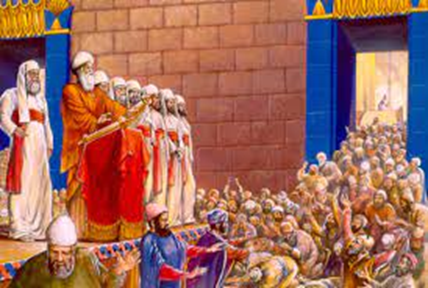
DECEMBER 9, 2022 REBUILD! RESTORE! RENEW! #8 NEHEMIAH 8:1 – 18 THE WORD OF GOD CAN MELT STONY HEARTS!

December 9, 2022

Nehemiah 8:1 – 18 Ezra Reads the Law (Deuteronomy 31:9-13)

“At that time all the people gathered together at the square before the Water Gate, and they asked Ezra the scribe to bring out the Book of the Law of Moses, which the LORD had commanded for Israel. On the first day of the seventh month, Ezra the priest brought the Law before the assembly of men and women and all who could listen and understand. So Ezra read it aloud from daybreak until noon as he faced the square before the Water Gate, in front of the men and women and those who could understand. And all the people listened attentively to the Book of the Law.

Ezra the scribe stood on a high wooden platform built for this occasion. At his right side stood Mattithiah, Shema, Anaiah, Uriah, Hilkiah, and Maaseiah, and at his left were Pedaiah, Mishael, Malchijah, Hashum, Hash-baddanah, Zechariah, and Meshullam. Ezra opened the book in full view of all the people, since he was standing above them all, and as he opened it, all the people stood up. Then Ezra blessed the LORD, the great God, and with their hands uplifted, all the people said, “Amen, Amen!” Then they bowed down and worshiped the LORD with their faces to the ground. The Levites—Jeshua, Bani, Sherebiah, Jamin, Akkub, Shabbethai, Hodiah, Maaseiah, Kelita, Azariah, Jozabad, Hanan, and Pelaiah—instructed the people in the Law as they stood in their places. So they read from the Book of the Law of God, explaining it and giving insight, so that the people could understand what was being read.

Nehemiah the governor, Ezra the priest and scribe, and the Levites who were instructing the people said to all of them, “This day is holy to the LORD your God. Do not mourn or weep.” For all the people were weeping as they heard the words of the Law. Then Nehemiah told them, “Go and eat what is rich, drink what is sweet, and send out portions to those who have nothing prepared, since today is holy to our Lord. Do not grieve, for the joy of the LORD is your strength.”

And the Levites calmed all the people, saying, “Be still, since today is holy. Do not grieve.” Then all the people began to eat and drink, to send out portions, and to rejoice greatly, because they understood the words that had been made known to them.

The Feast of Tabernacles (Leviticus 23:33-44; Zechariah 14:16-21)

On the second day of the month, the heads of all the families, along with the priests and Levites, gathered around Ezra the scribe to study the words of the Law. And they found written in the Law, which the LORD had commanded through Moses, that the Israelites were to dwell in booths during the feast of the seventh month.

So they proclaimed this message and spread it throughout their towns and in Jerusalem, saying, “Go out to the hill country and bring back branches of olive, wild olive, myrtle, palm, and other leafy trees, to make booths, as it is written.”

And the people went out, brought back branches, and made booths on their own rooftops, in their courtyards, in the court of the house of God, and in the squares by the Water Gate and by the Gate of Ephraim. The whole assembly who had returned from exile made booths and lived in them. From the days of Joshua son of Nun until that day, the Israelites had not celebrated like this. And there was great rejoicing.

Day after day, from the first day to the last, Ezra read from the Book of the Law of God. The Israelites kept the feast for seven days, and on the eighth day they held an assembly, according to the ordinance.”

Ezra read the Law and the priests helped people understand. But why were people weeping? When Ezra was reading God’s Word, God’s Holy Spirit was convicting these people of their sins and the sins of their fathers that had caused them to be carried into exile in the first place. When the Jews realized the depth of their sins and the sins of their fathers, they wept bitterly for the loss of the nations of Judah and Israel and for all those years of exile. Hearing the words of Moses, the Jews realized that had their forefathers followed God’s commands to begin with, Jerusalem would never have been destroyed, and they would never have wound up in Babylon. The Jews were weeping in repentance and in remorse.

What happened next was wonderful! Rather than reproaching the people, Ezra, Nehemiah, and the priests encouraged them to celebrate and praise God because they had heard God’s Word, had understood it, and had taken it to heart. Now an enormous party broke out with food and feasting. Those who were wealthy sent portions to those who had less, so that everyone was able to celebrate.

After studying the scriptures, the Jews realized that it was time to celebrate the Feast of Tabernacles and did so with abandon. This celebration of Sukkot outstripped every other celebration of that feast since the return of Joshua. But notice something: the people combined celebrating with the reading of the Law.

APPLICATION: When we truly read and study the Word of God, it convicts us and changes us! 1 John 1:8 – 9 tells us, “If we say we have no sin, we deceive ourselves, and the truth is not in us. But if we confess our sins, He is faithful and just to forgive us our sins and to cleanse us from all unrighteousness.” The more we study God’s Word, the more we realize three things: the holiness of God, our own unworthy and sinful natures, and the magnificent grace of God.

There have always been three responses to the conviction of sins: some people when convicted, shy away, stifling their sense of sin, and trying to deny any unworthiness. Some people respond to the conviction of sin by attempting to become their own saviors, piling up good works. But the Bible tells us that “all our righteousness is as filthy rags.” (Isaiah 64:6 “But we are all like an unclean thing, And all our righteousnesses are like filthy rags; We all fade as a leaf, And our iniquities, like the wind, Have taken us away.” Some people realize that they are helpless without God’s deliverance from sin.

None of us can do anything that will cancel out sins because all of us have been born with a sin nature. But Jesus Christ, through His death and resurrection has made the ultimate sacrifice for those of us who will believe in Him. Romans 8:1 – 2 says, “There is therefore now no condemnation for those who are in Christ Jesus. For the law of the spirit of life in Christ Jesus has set me free from the law of sin and death.”

Once we realize that Jesus’s blood sacrifice on Calvary has freed us from our sins, we can rejoice, no matter our circumstances. At that point, the joy of the Lord truly will be our strength. Joy strengthens immune systems, making it possible for our bodies to fight off diseases. Joy gives us hope and helps us to carry on, even in the midst of the worst circumstances. And joy helps us to worship God, the One who has given us joy in the first place. Today, may the joy of the Lord go with you throughout all your activities!

PRAYER: Father God, thank You for loving us and for caring for us. Lord, thank You for Your joy! May we carry that joy throughout all our lives, knowing that You are the One who has called us, who empowers us, and who saves us. In the mighty and precious Name of King Jesus. Amen.

DECEMBER 8, 2022 REBUILD! RESTORE! RENEW! #7 NEHEMIAH 7:1 – 73 THE STORY OF THE EXILES ONE MORE TIME

December 8, 2022

Nehemiah 7:1 – 73 Securing the City

“When the wall had been rebuilt and I had set the doors in place, the gatekeepers, singers, and Levites were appointed. Then I put my brother Hanani in charge of Jerusalem, along with Hananiah the commander of the fortress, because he was a faithful man who feared God more than most. And I told them, “Do not open the gates of Jerusalem until the sun is hot. While the guards are on duty, keep the doors shut and securely fastened. And appoint the residents of Jerusalem as guards, some at their posts and some at their own homes.”

The List of Returning Exiles (Ezra 2:1-67) Now the city was large and spacious, but there were few people in it, and the houses had not yet been rebuilt. Then my God put into my heart to assemble the nobles, the officials, and the people to be enrolled by genealogy. I found the genealogical register of those who had first returned, and I found the following written in it:

These are the people of the province who came up from the captivity of the exiles carried away to Babylon by Nebuchadnezzar its king. They returned to Jerusalem and Judah, each to his own town, accompanied by Zerubbabel, Jeshua, Nehemiah, Azariah, Raamiah, Nahamani, Mordecai, Bilshan, Mispereth, Bigvai, Nehum, and Baanah.

This is the count of the men of Israel: the descendants of Parosh, 2,172; the descendants of Shephatiah, 372; the descendants of Arah, 652; the descendants of Pahath-moab (through the line of Jeshua and Joab), 2,818; the descendants of Elam, 1,254; the descendants of Zattu, 845; the descendants of Zaccai, 760; the descendants of Binnui, 648; the descendants of Bebai, 628; the descendants of Azgad, 2,322; the descendants of Adonikam, 667;

the descendants of Bigvai, 2,067; the descendants of Adin, 655; the descendants of Ater (through Hezekiah), 98;

the descendants of Hashum, 328; the descendants of Bezai, 324; the descendants of Hariph, 112; the descendants of Gibeon, 95; the men of Bethlehem and Netophah, 188; the men of Anathoth, 128; the men of the family of Beth-azmaveth, 42; the men of Kiriath-jearim, Chephirah, and Beeroth, 743; the men of Ramah and Geba, 621; the men of Michmash, 122; the men of Bethel and Ai, 123; the men of the other Nebo, 52; the descendants of the other Elam, 1,254; the descendants of Harim, 320; the descendants of Jericho, 345; the descendants of Lod, Hadid, and Ono, 721; and the descendants of Senaah, 3,930.

The priests:

the descendants of Jedaiah (through the house of Jeshua), 973; the descendants of Immer, 1,052; the descendants of Pashhur, 1,247; the descendants of Harim, 1,017.

The Levites: the descendants of Jeshua (through Kadmiel, through the line of Hodevahg ), 74.

The singers: the descendants of Asaph, 148.

The gatekeepers: the descendants of Shallum, the descendants of Ater, the descendants of Talmon, the descendants of Akkub, the descendants of Hatita, and the descendants of Shobai, 138 in all.

The temple servants : the descendants of Ziha, the descendants of Hasupha, the descendants of Tabbaoth,

the descendants of Keros, the descendants of Sia, the descendants of Padon, the descendants of Lebanah,

the descendants of Hagabah, the descendants of Shalmai, the descendants of Hanan, the descendants of Giddel,

the descendants of Gahar, the descendants of Reaiah, the descendants of Rezin, the descendants of Nekoda,

the descendants of Gazzam, the descendants of Uzza, the descendants of Paseah, the descendants of Besai,

the descendants of Meunim, the descendants of Nephishesim, the descendants of Bakbuk, the descendants of Hakupha, the descendants of Harhur, the descendants of Bazlith, the descendants of Mehida, the descendants of Harsha, the descendants of Barkos, the descendants of Sisera, the descendants of Temah, the descendants of Neziah, the descendants of Hatipha.

The descendants of the servants of Solomon: the descendants of Sotai, the descendants of Sophereth, the descendants of Perida, the descendants of Jaala, the descendants of Darkon, the descendants of Giddel, the descendants of Shephatiah, the descendants of Hattil, the descendants of Pochereth-hazzebaim, the descendants of Amon. The temple servants and descendants of the servants of Solomon numbered 392 in all.

The following came up from Tel-melah, Tel-harsha, Cherub, Addon, and Immer, but could not prove that their families were descended from Israel: the descendants of Delaiah, the descendants of Tobiah, and the descendants of Nekoda, 642 in all.

And from among the priests: the descendants of Hobaiah, the descendants of Hakkoz, and the descendants of Barzillai (who had married a daughter of Barzillai the Gileadite and was called by their name). These men searched for their family records, but they could not find them and so were excluded from the priesthood as unclean. The governor ordered them not to eat the most holy things until there was a priest to consult the Urim and Thummim.

The whole assembly numbered 42,360, 67in addition to their 7,337 menservants and maidservants, as well as their 245 male and female singers. They had 736 horses, 245 mules, 69435 camels, and 6,720 donkeys.

Offerings by the Exiles (Ezra 2:68-70)

Some of the heads of the families contributed to the project. The governor gave to the treasury 1,000 darics of gold, 50 bowls, and 530 priestly garments. (1000 gold drachmas; that is, approximately 18.5 pounds or 8.4 kilograms of gold coins) And some of the heads of the families gave to the treasury for the project 20,000 darics of gold and 2,200 minas of silver. (20,000 gold drachmas; that is, approximately 370.4 pounds or 168 kilograms of gold coins and 2,200 silver minas; that is, approximately 1.38 tons or 1.25 metric tons of silver) The rest of the people gave a total of 20,000 darics of gold, 2,000 minas of silver, and 67 priestly garments. (Or 2,000 silver minas; that is, approximately 1.26 tons or 1.14 metric tons of silver)

So the priests, Levites, gatekeepers, singers, and temple servants, along with some of the people and the rest of the Israelites, settled in their own towns. And by the seventh month the Israelites had settled in their towns.”

Once more, we are confronted with staggering amounts of statistics regarding the various families, their cities of origin, and their traditional duties such as temple servants, temple singers, servants of King Solomon, etc. The importance of these statistics was simple: unless these families could successfully trace their origin, they could not prove whether or not they were truly Jewish. In the case of the priests, some families had to wait until worship was resumed and the Urim and Thummim were consulted before they knew whether or not they would be allowed to share in the priestly benefits.

Why did Nehemiah repeat this list when it had already been mentioned in the Book of Ezra? Perhaps that Book was not readily available. Perhaps Nehemiah wanted to make certain that people knew he was trying to be as fair as possible. Perhaps Nehemiah was also compiling this report for the king of Persia – remember that Nehemiah was also a governor and therefore had to submit reports. At any rate, the recording was carried out.

One amazing thing was the enormous amount of wealth these exiles brought with them from Babylon. Obviously, many of these people had done quite well for themselves.

APPLICATION: What lessons can we draw from a chapter that mostly consists of lists of names? These names were so important to God that He made sure that they were recorded. Let’s face it, most of us feel pretty obscure. We work, raise families, and go about our lives never realizing that God notices everything we do and that God keeps us on His heart. Were we to ask God about these people, He could tell us all kinds of stories about them and about their children.

Why should such lists encourage us? There are no little people! God knows us! God sees and God cares! Yes, it is worthwhile remaining faithful in the midst of adversity. Yes, it is worthwhile continuing to continue, even when we would like to give up. Eventually, those returning from Babylon were able to settle in their towns and villages. Those of us who are believers have an even better promise. Jesus told his disciples in John 14 that “in my house are many rooms…. I go to prepare a place for you.” One day, if we trust in Jesus, we too will have a place in His heavenly kingdom a forever home.

PRAYER: Father God, thank You for loving us and for caring for us. Lord, help us to trust in Your promises of eternal life and of a place in heaven. Thank You for being faithful, even when our faith falters. In the mighty and precious Name of King Jesus. Amen.  

DECEMBER 7, 2922 REBUILD! RESTORE! RENEW! #6 NEHEMIAH 6:1 – 19 THE PLOTS THICKEN!

December 7, 2022

Nehemiah 6:1 – 19 Sanballat’s Conspiracy

“When Sanballat, Tobiah, Geshem the Arab, and the rest of our enemies heard that I had rebuilt the wall and not a gap was left—though to that time I had not yet installed the doors in the gates— Sanballat and Geshem sent me this message: “Come, let us meet together in one of the villages on the plain of Ono.”

But they were planning to harm me. So I sent messengers to them, saying, “I am doing a great work and cannot come down. Why should the work stop while I leave it to go down to you?” Four times they sent me the same message, and each time I gave the same reply.

The fifth time, Sanballat sent me this same message by his young servant, who had in his hand an unsealed letter that read: “It is reported among the nations—and Geshem agrees—that you and the Jews are plotting to revolt, and this is why you are building the wall. According to these reports, you are to become their king, 7and you have even appointed prophets in Jerusalem to proclaim on your behalf: ‘There is a king in Judah.’ Soon these rumors will reach the ears of the king. So come, let us confer together.” Then I sent him this reply: “There is nothing to these rumors you are spreading; you are inventing them in your own mind.” For they were all trying to frighten us, saying, “Their hands will be weakened in the work, and it will never be finished.”

But now, my God, strengthen my hands.

Later, I went to the house of Shemaiah son of Delaiah, the son of Mehetabel, who was confined to his house. He said: “Let us meet at the house of God inside the temple. Let us shut the temple doors because they are coming to kill you— by night they are coming to kill you!” But I replied, “Should a man like me run away? Should one like me go into the temple to save his own life? I will not go!”

I realized that God had not sent him, but that he had uttered this prophecy against me because Tobiah and Sanballat had hired him. He had been hired to intimidate me so that I would sin by doing as he suggested, so they could give me a bad name in order to discredit me. O my God, remember Tobiah and Sanballat for what they have done, and also Noadiah the prophetess and the other prophets who tried to intimidate me.

Completion of the Wall

So the wall was completed in fifty-two days, on the twenty-fifth of Elul. When all our enemies heard about this, all the surrounding nations were afraid and disheartened, for they realized that this task had been accomplished by our God.

Also in those days, the nobles of Judah sent many letters to Tobiah, and Tobiah’s letters came back to them. For many in Judah were bound by oath to him, since he was a son-in-law of Shecaniah son of Arah, and his son Jehohanan had married the daughter of Meshullam son of Berechiah. Moreover, these nobles kept reporting to me Tobiah’s good deeds, and they relayed my words to him. And Tobiah sent letters to intimidate me.”

Poor Nehemiah! When possible attacks failed because Nehemiah organized those building the wall to protect themselves, next Tobiah, Sanballat, and Geshem tried to intimidate him personally. This evil bunch sent invitations to Nehemiah four times, attempting to lure him into an ambush under the guise of meeting with him. Each time, Nehemiah refused and his response was classic: “I am doing a great work and cannot come down. Why should the work stop while I leave it to go down to you?”

The fifth time, Sanballat sent a young servant with an unsealed letter so that anyone could read it accusing Nehemiah and the Jews of planning to revolt. Obviously, Sanballat hoped that as many people as possible would intercept his messenger and read the letter, thus intimidating the maximum number of people. Sanballat included veiled threats of reporting the matter to the king of Persia if Nehemiah failed to meet with them. Again, Nehemiah wisely replied: “There is nothing to these rumors you are spreading; you are inventing them in your own mind.” Nehemiah prayed and continued to work.

Later, a prophet named Shemaiah urged Nehemiah to hide in the temple, an act that contravened the Law of Moses. Nehemiah refused, realizing this man had been hired to intimidate him as well. Again, Nehemiah gave a classic response: “Should a man like me run away? Should one like me go into the temple to save his own life? I will not go!” Evidently, there were other incidents involving Noadiah, a prophetess, and other prophets hired by Tobiah and Sanballat, all with the intent of harming or discouraging Nehemiah.

Despite all the threats and intimidation, Nehemiah and his builders succeeded in completing the wall in 52 days. Was this wall a perfect structure? No. Recent excavations in Jerusalem have uncovered parts of Nehemiah’s wall, and it is true that it was not nearly as solidly built as much of the other ancient architecture. But the important thing was that the wall WAS completed, and it was wide enough for groups of people to walk on top of it.

After spending all this time in Jerusalem, Nehemiah also realized that part of the opposition was coming from the Jewish leaders themselves. Tobiah and his son had both cleverly married daughters of Jewish leaders, thus making themselves sons – in – law and therefore family members. These Jewish leaders were loath to admit that they had made terrible mistakes by allowing Moabites to marry into their families, so they tried to impress Nehemiah with Tobiah’s virtues, as well as reporting everything Nehemiah said and did to Tobiah.

Once more, we realize that the ancient scribes were careful to record the names of those who had failed to keep God’s commands and who had given their daughters in marriage as a form of gaining political advantage. Obviously Shecaniah and Meshullam were far more concerned with currying favor with Tobiah than they were with being observant Jews. One wonders if they had left Babylon with an eye to the main chance, guessing that they might do very well for themselves in Judah if they could ingratiate themselves with the local rulers. Too bad that Nehemiah was also a ruler as well as a close confidante of the king of Persia.

APPLICATION: Sometimes we must settle for a good effort rather than a perfect one. Coming from Babylon with its impressive architecture, Nehemiah undoubtedly knew good walls when he saw them and realized that his wall around Jerusalem was far from perfect. But the wall was completed, and various individuals and families hung the gates so that Jerusalem was again a recognizable city. No matter how many detractors there were, erecting that wall in such a short time and under such circumstances was a major achievement.

One of the most difficult things Nehemiah had to face was the continual threats and rumors, Had Nehemiah not been so close to the king of Persia, he might have believed some of the rumors. But Nehemiah knew the king and the king knew Nehemiah – after all, for years, the king had trusted Nehemiah to taste all his food and drink and to help protect him. Under such circumstances, Nehemiah’s main problem was sorting out truth from lies, and some of the people lying to him were Jewish leaders who had used their daughters as political pawns.

One of the saddest parts of the entire affair was the prophets who had been bought off by Tobiah and Sanballat. These were men and women who allegedly were hearing from God; yet, the only voices they were actually hearing were all too human and evil at that.

I am particularly fond of Nehemiah’s question “Should a man like me run away?” There have been many times during my missionary service when running away seemed quite appealing. But what kept me from deserting my post was the same thing that kept Nehemiah in Jerusalem: both of us were certain that God had sent us and that God had not changed that assignment. Under such circumstances, all one can do is to pray and hold on.

Perhaps you are facing some difficult challenge. Leaving is sounding increasingly appealing. Learn from the story of Mary Slessor. Mary Slessor was a tiny Presbyterian missionary from Scotland who served in the Cross River State area of Nigeria from 1876 – 1915. Slessor was fearless and became fluent in several tribal languages, frequently settling tribal disputes. (She used to knit for hours while listening to tribesmen arguing.) At one point, the British had the choice of sending in 4,000 troops or Mary Slessor. They sent in Mary Slessor, and she settled the problem. One of Slessor’s favorite sayings was “The post of greatest danger is the post of highest honor.” The same God who gave Nehemiah and Mary Slessor their courage can give you courage as well! Should such a person as you run away? Why run when you serve the King of Kings?

PRAYER: Father God, thank You for loving us and for caring for us. Lord, please encourage those of us who are wondering if we are still doing Your will so that we will KNOW what You want us to do. In the mighty and precious Name of King Jesus. Amen.
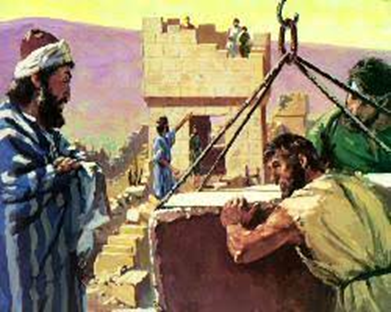
DECEMBER 6, 2022 REBUILD! RESTORE! RENEW #5 NEHEMIAH 5:1 – 19 LEADING BY EXAMPLE – NEHEMIAH SHAMES THE JEWISH RULERS INTO DOING THE RIGHT THING

December 6, 2022

Nehemiah 5:1 – 19 Nehemiah Defends the Oppressed

“About that time there was a great outcry from the people and their wives against their fellow Jews. Some were saying, “We and our sons and daughters are numerous. We must get grain in order to eat and stay alive.” Others were saying, “We are mortgaging our fields, our vineyards, and our homes to get grain during the famine.”

Still others were saying, “We have borrowed money to pay the king’s tax on our fields and vineyards. We and our children are just like our countrymen and their children, yet we are subjecting our sons and daughters to slavery. Some of our daughters are already enslaved, but we are powerless to redeem them because our fields and vineyards belong to others.”

When I heard their outcry and these complaints, I became extremely angry, and after serious thought I rebuked the nobles and officials, saying, “You are exacting usury from your own brothers!”

So I called a large assembly against them and said, “We have done our best to buy back our Jewish brothers who were sold to foreigners, but now you are selling your own brothers, that they may be sold back to us!”

But they remained silent, for they could find nothing to say.

So I continued, “What you are doing is not right. Shouldn’t you walk in the fear of our God to avoid the reproach of our foreign enemies? I, as well as my brothers and my servants, have been lending the people money and grain. Please, let us stop this usury. Please restore to them immediately their fields, vineyards, olive groves, and houses, along with the percentage of the money, grain, new wine, and olive oil that you have been assessing them.”

“We will restore it,” they replied, “and will require nothing more from them. We will do as you say.”

So I summoned the priests and required of the nobles and officials an oath that they would do what they had promised. I also shook out the folds of my robe and said, “May God likewise shake out of His house and possession every man who does not keep this promise. May such a man be shaken out and have nothing!”

The whole assembly said, “Amen,” and they praised the LORD. And the people did as they had promised.

Nehemiah’s Generosity

Furthermore, from the day King Artaxerxes appointed me to be their governor in the land of Judah, from his twentieth year until his thirty-second year (12 years total), neither I nor my brothers ate the food allotted to the governor.

The governors before me had heavily burdened the people, taking from them bread and wine plus forty shekels of silver. (40 shekels is approximately 1 pound or 453.6 grams of silver.)  Their servants also oppressed the people, but I did not do this because of my fear of God. Instead, I devoted myself to the construction of the wall, and all my servants were gathered there for the work; we did not acquire any land.

There were 150 Jews and officials at my table, besides the guests from the surrounding nations. Each day one ox, six choice sheep, and some fowl were prepared for me, and once every ten days an abundance of all kinds of wine was provided. But I did not demand the food allotted to the governor, because the burden on the people was so heavy. Remember me favorably, O my God, for all that I have done for this people.

It never fails. Just give a few rich people the opportunity and the next thing you know, they’re extorting money from the poor. Evidently, there has been a famine and now the poor are mortgaging their familial lands to survive and pay the king’s tax. Some families have even sold their children, particularly their daughters, into slavery.

Nehemiah is truly appalled! He and his men have been doing everything they can to buy back Jews who have wound up enslaved and now these haughty Jewish leaders are practicing usury. Not only are these practices totally contrary to the Law of Moses, but it’s likely that the Samaritans are quietly laughing up their sleeves at the way the richer Jews are oppressing the poorer ones.

Amazingly, the leaders do accept Nehemiah’s rebuke, even swearing oaths before the priests to cease such activities at once. Nehemiah even goes so far as to pronounce a curse on anyone who goes back on his word. “I also shook out the folds of my robe and said, “May God likewise shake out of His house and possession every man who does not keep this promise. May such a man be shaken out and have nothing!” The whole assembly said, “Amen,” and they praised the LORD. And the people did as they had promised.”

Why are the leaders willing to listen to Nehemiah? Nehemiah and his men have already set a sterling example. Not only has Nehemiah been buying back Jews sold into slavery, but he has also steadfastly refused to accept the food allotted to the governor. In addition, Nehemiah has also refused to demand bread and wine and 40 shekels of silver a year from each inhabitant, as have the previous governors. Nehemiah has refused to allow his servants to oppress the people, focusing solely on rebuilding the wall. Finally, Nehemiah has refused to indulge in a land grab, using his resources to buy more people out of slavery. Given such an example, the leaders of Israel have little else they can say.

APPLICATION: “We didn’t need your help; we would have found the money somewhere else.” This conversation took place many years ago. A group of nurses was attempting to strike, paralyzing our hospital. When I tried to encourage them to remember that the hospital had paid for their nursing education, this was their answer. What these people refused to recognize was that I had foregone allowances from the hospital so that the hospital would have more money to pay nursing school fees. At that point, I could really identify with Nehemiah!

Sometimes no example is sufficient to prevent people from behaving in a selfish fashion. It is truly miraculous that Nehemiah was able to influence the Jewish leaders to such an extent that they repented and relented in their persecution of the poor. The key was Nehemiah’s generosity and honesty, plus his refusal to allow his servants to take advantage of their situation. While it was true that Nehemiah was probably entertaining nearly 200 people a day, the amount of food prepared was not excessive for that many people.

Through the years, we have repeatedly observed that upper-level leadership determines the direction any organization will go, whether it is a church, a mission, a school, or a secular business. When leaders determine to serve those around them, they set a positive tone. But when leaders choose to abuse power, the stage is set for disaster. Middle and lower-level managers will copy the example of those above them, creating miserable working conditions. Organizations that have been started to offer services may wind up existing for themselves alone, with resources being diverted rather than used appropriately. Blessedly, our mission hospital continues to offer care to the poor and indigent, despite economic constraints.

May God bless all leaders, so that they follow the example of Nehemiah! And may we all remember that when we are faithful to give generously, God will continue to pour resources into our situations!

PRAYER: Father God, thank You for loving us and for caring for us. Lord, help us to follow Nehemiah’s example and to pray for all those in leadership that they will do so as well. In the mighty and precious Name of King Jesus. Amen.
DECEMBER 5, 2022 REBUILD! RESTORE! RENEW! #4 NEHEMIAH 4 WHEN YOU’RE TRYING TO DO SOMETHING GREAT, THE NAY – SAYERS WILL ALWAYS TURN UP! BE PREPARED TO DEFEND YOURSELF!

December 5, 2022

“Now when Sanballat heard that we were rebuilding the wall, he became furious and was filled with indignation. He ridiculed the Jews before his associates and the army of Samaria, saying, “What are these feeble Jews doing? Can they restore the wall by themselves? Will they offer sacrifices? Will they complete it in a day? Can they bring these burnt stones back to life from the mounds of rubble?”

Then Tobiah the Ammonite, who was beside him, said, “If even a fox were to climb up on what they are building, it would break down their wall of stones!”

Hear us, O God, for we are despised. Turn their scorn back upon their own heads, and let them be taken as plunder to a land of captivity. Do not cover up their iniquity or let their sin be blotted out from Your sight, for they have provoked the builders.

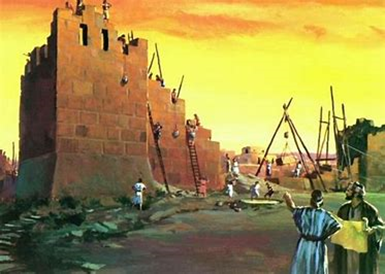
So we rebuilt the wall until all of it was joined together up to half its height, for the people had a mind to work.

When Sanballat and Tobiah, together with the Arabs, Ammonites, and Ashdodites, (Philistines)heard that the repair to the walls of Jerusalem was progressing and that the gaps were being closed, they were furious, and all of them conspired to come and fight against Jerusalem and create a hindrance.

Discouragement Overcome

So we prayed to our God and posted a guard against them day and night.

Meanwhile, the people of Judah said: “The strength of the laborer fails, and there is so much rubble that we will never be able to rebuild the wall.”

And our enemies said, “Before they know or see a thing, we will come into their midst, kill them, and put an end to the work.” At that time the Jews who lived nearby came and told us ten times over, “Wherever you turn, they will attack us.”

So I stationed men behind the lowest sections of the wall, at the vulnerable areas. I stationed them by families with their swords, spears, and bows.

After I had made an inspection, I stood up and said to the nobles, the officials, and the rest of the people, “Do not be afraid of them. Remember the Lord, who is great and awesome, and fight for your brothers, your sons and your daughters, your wives and your homes.”

When our enemies heard that we were aware of their scheme and that God had frustrated it, each of us returned to his own work on the wall. And from that day on, half of my men did the work while the other half held spears, shields, bows, and armor.

The officers stationed themselves behind all the people of Judah who were rebuilding the wall. The laborers who carried materials worked with one hand and held a weapon with the other. And each of the builders worked with his sword strapped at his side. But the trumpeter stayed beside me.

Then I said to the nobles, the officials, and the rest of the people: “The work is great and extensive, and we are spread out far from one another along the wall. Wherever you hear the sound of the horn, rally to us there. Our God will fight for us!”

So we continued the work, while half of the men held spears from the break of dawn until the stars came out. At that time I also said to the people, “Let every man and his servant spend the night inside Jerusalem, so that they can stand guard by night and work by day.”

So neither I nor brothers nor my men nor the guards with me changed out of our clothes; each carried his weapon, even to go for water.”

It never fails! Just as work on the walls of Jerusalem had begun in earnest, Tobiah and Sanballat and all their cronies showed up. Just who were Tobiah, Sanballat and “the Arab,” whose name was Geshem? These men were all regional governors serving under the king of Persia. Tobiah, a.k.a. Tobias, governed an area east of the Jordan River, while Sanballat was a Moabite governing his home territory. Geshem, the Arab, was governing an area south of Judah. All three of these men were from peoples whom the Israelites had driven out when they conquered the Promised Land. The areas these men were from were previously governed by Judah. Obviously, it was in these men’s best interests if Jerusalem remained in ruins, since once rebuilt, Jerusalem would threaten their grasp of power in the area.

As middle – level politicians, these guys would do anything they could to maintain control, and they employed mockery, threats, and intimidation. Mockery: “If even a fox were to climb up on what they are building, it would break down their wall of stones!” Threats: And our enemies said, “Before they know or see a thing, we will come into their midst, kill them, and put an end to the work.” At that time the Jews who lived nearby came and told us ten times over, “Wherever you turn, they will attack us.” Intimidation: At that time the Jews who lived nearby came and told us ten times over, “Wherever you turn, they will attack us.”

Truly, this bunch of bullies had many of the Jews quaking in their sandals. But Nehemiah was equal to the task. First, praying for guidance, Nehemiah next split the work force into two groups with half building and the other half guarding. Even those building had weapons strapped to their sides. Nehemiah himself roamed up and down the construction site, accompanied by a trumpeter. If any attack were to break out, the trumpeter would sound an alarm, signaling all to drop their work and rush to meet the threat.

Nehemiah also stationed warriors and their families at the most vulnerable parts of the wall, giving these men – and perhaps women – a reason to fight fiercely in defense of their families. While this tactic might sound cruel, Nehemiah already realized that many of the Jews who had settled in Jerusalem had resigned themselves to an uneasy peace with their critics and were unwilling to fight unless they had a personal stake in the conflict.

Nehemiah ordered that all the men and their servants sleep in Jerusalem rather than in the outlying villages, so that they would be able to spring into action quickly. Finally, Nehemiah and his men set a stern example by carrying their weapons with them wherever they went, even for water. Nehemiah was so serious about the defense that he and his men did not even take time to make themselves vulnerable to attack by changing their clothes.

APPLICATION: Just attempt something great for God, and Satan and his demons will always show up. Nehemiah faced a number of threats from Tobiah, Sanballat, and Geshem; however, one of the greatest threats Nehemiah had to face was reluctance on the part of the Jews who had already resettled Judah. These people had formed alliances with the locals and had found some kind of normality. Now Nehemiah was demanding that they take action, and frankly, they had no desire to follow his lead. It wasn’t enough for Nehemiah to make stirring speeches; he had to station entire families at the lowest parts of the wall where they were open to attack to get those men to build and stand guard. Nothing less would have moved those people.

Rebuilding situations are never easy. When we returned to our current station after an absence of eight years, things were in a shambles. The hospital was heavily in debt. Workers were so unhappy that they had gone on strike three times the previous year. Most of the hospital vehicles were in bad shape. And there were very few nurses; most of the nursing care was being done by ward assistants trained on the job. To complicate things further, the local health insurance scheme was in its second year and a huge number of people were flocking in to see how they could benefit. Roughly half the people who were turning up were sick while the other half were simply hoping to collect drugs for free. And I was the only doctor.

As time went on, we faced a number of other challenges that were daunting and discouraging. Only God kept us from throwing up our hands and leaving. But God had called us into that place and we knew that only God could change that assignment. Today we have a staff over more than 200 with many specialist nurses in addition to general nurses and midwives. So many people got converted from one remote village that our chaplain started a church there.

As I am writing this, friends at another mission hospital thousands of miles away are facing an uncertain future. Community and church leaders are attempting to take over a large mission hospital serving hundreds of thousands of people on both sides of a national border. Only God can determine the outcome of that situation.

Many times, churches are fond of quoting the slogan “Arise and build!” from Nehemiah, blissfully ignoring all the suffering Nehemiah and his men actually went through to make those building plans a reality. Perhaps today you are in the middle of a Nehemiah situation and you wonder if there will be any relief. Remember the example of Hudson Taylor and the China Inland Mission. During the Boxer Rebellion of 1900, more than 180 missionaries and their families were slaughtered by the rebels, along with many Chinese Christians. In that black hour, Hudson Taylor was found repeatedly singing the hymn,” Jesus, I am resting, resting, in the joy of what thou art.”

The China Inland Mission went on to rebound from that tragedy, with 968 missionaries in China by 1911. CIM continued to work faithfully until the Communists took over in 1950, forcing most missions to withdraw. But the legacy of faith left by CIM continued to operate despite Communist persecution. Today the Chinese church remains vibrant, even as new persecutions are now taking place. Christianity is the fastest growing religion in China with between 93 – 115 million believers. Nothing done for God is ever lost or useless. God can redeem any situation!

PRAYER: Father God, thank You for loving us and for caring for us. Lord, help us to follow hard after You all the days of our lives. Help us to love You and to worship You. May we always be willing to dare great things for You, refusing to become discouraged. In the mighty and precious Name of King Jesus. Amen.
DECEMBER 4, 2022 REBUILD! RESTORE! RENEW! #3 NEHEMIAH 3:1 – 32 WHEN THE RIGHT LEADER SHOWS UP, THINGS HAPPEN!

December 4, 2022

 Nehemiah 3:1 – 32 The Builders of the Walls

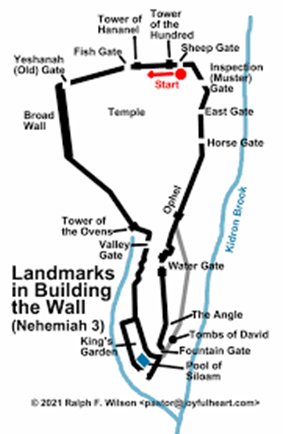
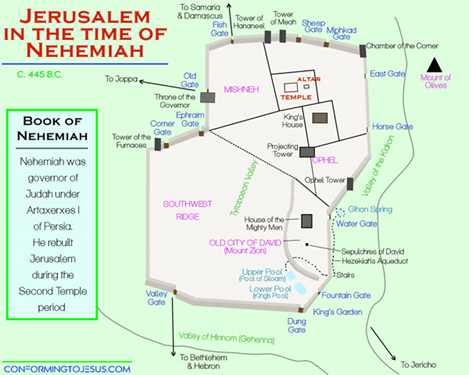
“At the Sheep Gate, Eliashib the high priest and his fellow priests began rebuilding. They dedicated it and installed its doors. After building as far as the Tower of the Hundred and the Tower of Hananel, they dedicated the wall. The men of Jericho built next to Eliashib, and Zaccur son of Imri built next to them.

The Fish Gate was rebuilt by the sons of Hassenaah. They laid its beams and installed its doors, bolts, and bars. Next to them, Meremoth son of Uriah, the son of Hakkoz, made repairs; next to him, Meshullam son of Berechiah, the son of Meshezabel, made repairs; and next to him, Zadok son of Baana made repairs as well. Next to him, the Tekoites made repairs, but their nobles did not put their shoulders to the work under their supervisors.

The Jeshanah Gate was repaired by Joiada son of Paseah and Meshullam son of Besodeiah. They laid its beams and installed its doors, bolts, and bars. Next to them, repairs were made by Melatiah the Gibeonite, Jadon the Meronothite, and the men of Gibeon and Mizpah, who were under the authority of the governor of the region west of the Euphrates. Next to them, Uzziel son of Harhaiah, one of the goldsmiths, made repairs, and next to him, Hananiah son of the perfumer made repairs. They fortified Jerusalem as far as the Broad Wall.

Next to him, Rephaiah son of Hur, ruler of a half-district of Jerusalem, made repairs; next to him, Jedaiah son of Harumaph made repairs across from his house; and next to him, Hattush son of Hashabneiah made repairs. Malchijah son of Harim and Hasshub son of Pahath-moab made repairs to another section, as well as to the Tower of the Ovens. And next to them, Shallum son of Hallohesh, ruler of a half-district of Jerusalem, made repairs, with the help of his daughters.

The Valley Gate was repaired by Hanun and the residents of Zanoah. They rebuilt it, installed its doors, bolts, and bars, and repaired a thousand cubits of the wall as far as the Dung Gate.

The Dung Gate was repaired by Malchijah son of Rechab, ruler of the district of Beth-haccherem. He rebuilt it and installed its doors, bolts, and bars.

The Fountain Gate was repaired by Shallun son of Col-hozeh, ruler of the district of Mizpah. He rebuilt it, roofed it, and installed its doors, bolts, and bars. He also repaired the wall of the Pool of Shelah near the king’s garden, as far as the stairs that descend from the City of David.

Beyond him, Nehemiah son of Azbuk, ruler of a half-district of Beth-zur, made repairs up to a point opposite the tombs of David, as far as the artificial pool and the House of the Mighty.

Next to him, the Levites made repairs under Rehum son of Bani, and next to him, Hashabiah, ruler of a half-district of Keilah, made repairs for his district. Next to him, their countrymen made repairs under Binnui son of Henadad, ruler of the other half-district of Keilah. And next to him, Ezer son of Jeshua, ruler of Mizpah, made repairs to another section opposite the Ascent to the Armory, near the angle in the wall.

Next to him, Baruch son of Zabbai diligently repaired another section, from the angle to the doorway of the house of Eliashib the high priest. Next to him, Meremoth son of Uriah, the son of Hakkoz, made repairs to another section, from the doorway of the house of Eliashib to the end of it. And next to him, the priests from the surrounding area made repairs.

Beyond them, Benjamin and Hasshub made repairs in front of their house, and next to them, Azariah son of Maaseiah, the son of Ananiah, made repairs beside his house. After him, Binnui son of Henadad repaired another section, from the house of Azariah to the angle and the corner, and Palal son of Uzai made repairs opposite the angle and the tower that juts out from the upper palace of the king near the courtyard of the guard. Next to him, Pedaiah son of Parosh and the temple servants living on the hill of Ophel made repairs opposite the Water Gate toward the east and the tower that juts out. And next to them, the Tekoites made repairs to another section, from a point opposite the great tower that juts out to the wall of Ophel.

Above the Horse Gate, each of the priests made repairs in front of his own house. Next to them, Zadok son of Immer made repairs opposite his house, and next to him, Shemaiah son of Shecaniah, the guard of the East Gate, made repairs.

Next to him, Hananiah son of Shelemiah, as well as Hanun the sixth son of Zalaph, made repairs to another section. Next to them, Meshullam son of Berechiah made repairs opposite his own quarters. Next to him, Malchijah, one of the goldsmiths, made repairs as far as the house of the temple servants and the merchants, opposite the Inspection Gate, and as far as the upper room above the corner. And between the upper room above the corner and the Sheep Gate, the goldsmiths and merchants made repairs.”

WOW! All of a sudden, work on the walls of Jerusalem REALLY takes off. But notice something: most of these people were already in Jerusalem prior to Nehemiah’s arrival; they could have started at any time, but they didn’t. Why didn’t these people go ahead and work on the walls? What made the difference? Nehemiah, cupbearer and confidant to King Artaxerxes arrived, analyzed the situation, and then took the lead. Energized by Nehemiah’s example, the priests and people began rebuilding 11 gates and the walls.

Never misbehave with a scribe present! Today we have cell phone videos, but in Nehemiah’s time they had scribes with long memories. Nehemiah carefully listed those who engaged in the rebuilding, their helpers, and the details of the walls and the gates that they rebuilt. Nehemiah also listed those who wimped out. “Next to him, the Tekoites made repairs, but their nobles did not put their shoulders to the work under their supervisors.” OUCH! Those men died and their bones have long since crumbled to dust, but their reluctance to work still stands as a shameful reminder that God is watching us and taking note of all our actions or non – actions.

 The area enclosed by these walls was much smaller than that enclosed by King Hezekiah; however, the population was smaller and they needed to tailor their construction to the people and materials available.  

APPLICATION: Nehemiah faced a tough situation. Those who had already returned to Jerusalem had built good homes for themselves; however, they had neglected work on the city walls. It seems amazing that it took Nehemiah coming all the way from Babylon to jolt people into action.

Blessedly, most of the leaders complied readily, making excellent repairs and restoring the gates. Sadly, some of the very people about whom Nehemiah had high expectations turned out to be foot draggers.

Reading about Nehemiah is very inspiring; however, it can be a different matter when you are the leader fulfilling the same role as Nehemiah. I suspect that whoever recorded this book put the best construction possible on those people who began the work. There were undoubtedly a number of leaders who did not welcome Nehemiah’s arrival. These people had adjusted to a new normal and really didn’t want anyone troubling them. There were those who had already formed underground alliances with local officials. And there may have been those who hoped to wring as much money from Nehemiah as possible while doing as little as possible.

Nehemiah had already prayed and fasted prior to leaving Babylon and now he continued to do so. Anyone choosing to revitalize an institution or an organization should do the same. May God help anyone whom He calls to renew a challenging work!

PRAYER: Father God, thank You for loving us and for caring for us. Lord, help all who are called to revitalize dormant works to seek Your face and to depend on You. In the mighty and precious Name of Jesus. Amen.

DECEMBER 3, 2022 REBUILD! RESTORE! RENEW! #2 NEHEMIAH 2:1 – 20 EVERY GREAT WORK BEGINS WITH DAMAGE ASSESSMENT

December 3, 2022

Nehemiah 2:1 – 20 Nehemiah Sent to Jerusalem

“Now in the month of Nisan, in the twentieth year of King Artaxerxes, when wine was set before him, I took the wine and gave it to the king. I had never been sad in his presence, so the king said to me, “Why is your face sad, though you are not ill? This could only be sadness of the heart.”

I was overwhelmed with fear and replied to the king, “May the king live forever! Why should I not be sad when the city where my fathers are buried lies in ruins, and its gates have been destroyed by fire?”

“What is your request?” replied the king.

So I prayed to the God of heaven and answered the king, “If it pleases the king, and if your servant has found favor in your sight, I ask that you send me to Judah, to the city where my fathers are buried, so that I may rebuild it.”

Then the king, with the queen seated beside him, asked me, “How long will your journey take, and when will you return?” So it pleased the king to send me, and I set a time.

I also said to him, “If it pleases the king, may letters be given to me for the governors west of the Euphrates, so that they will grant me safe passage until I reach Judah. And may I have a letter to Asaph, keeper of the king’s forest, so that he will give me timber to make beams for the gates of the citadel to the temple, for the city wall, and for the house I will occupy.”

And because the gracious hand of my God was upon me, the king granted my requests.

Then I went to the governors west of the Euphrates and gave them the king’s letters. The king had also sent army officers and cavalry with me.

But when Sanballat the Horonite and Tobiah the Ammonite official heard about this, they were deeply disturbed that someone had come to seek the well-being of the Israelites.

Nehemiah Inspects the Walls

After I arrived in Jerusalem and had been there three days, I set out at night with a few men. I did not tell anyone what my God had laid on my heart to do for Jerusalem. The only animal with me was the one on which I was riding.

So I went out at night through the Valley Gate toward the Well of the Serpent and the Dung Gate, and I inspected the walls of Jerusalem that had been broken down and the gates that had been destroyed by fire.

Then I went on to the Fountain Gate and the King’s Pool, but there was no room for the animal under me to get through; so I went up the valley by night and inspected the wall. Then I headed back and reentered through the Valley Gate. The officials did not know where I had gone or what I was doing, for I had not yet told the Jews or priests or nobles or officials or any other workers. Then I said to them, “You see the trouble we are in. Jerusalem lies in ruins, and its gates have been burned down. Come, let us rebuild the wall of Jerusalem, so that we will no longer be a disgrace.”

I also told them about the gracious hand of my God upon me, and what the king had said to me.

“Let us start rebuilding,” they replied, and they set their hands to this good work.

When Sanballat the Horonite, Tobiah the Ammonite official, and Geshem the Arab heard about this, they mocked us and ridiculed us, saying, “What is this you are doing? Are you rebelling against the king?”

So I answered them and said, “The God of heaven is the One who will grant us success. We, His servants, will start rebuilding, but you have no portion, right, or claim in Jerusalem.”

As cupbearer to the King, Nehemiah is in an enviable position; however, it is forbidden for anyone to be sad in the king’s presence. Nehemiah is doing his best to appear cheerful; however, Artaxerxes has ruled for twenty years and is a keen observer. Notice the kind question that Artaxerxes asks Nehemiah: “Why is your face sad, though you are not ill? This could only be sadness of the heart.” With his heart in his shoe soles, Nehemiah explains that it is the deplorable state of affairs in Jerusalem that is causing him to grieve. Rather than banishing Nehemiah from his presence, Artaxerxes continues to question him, giving Nehemiah the courage to ask leave to travel to Jerusalem and help with the rebuilding.

King Artaxerxes gives Nehemiah letters of safe passage as well as a letter to the head of the forestry division for timber. In addition, Artaxerxes also sends along army officers and cavalry. But there are two villainous officials who are fuming at Nehemiah’s arrival – Sanballat, a Horonite, and Tobiah, an Ammonite. Neither of these men want anything good to happen to the Jews.

As soon as Nehemiah arrives, he carries out an inspection by night so he will not be interrupted. Once this inspection has been accomplished, Nehemiah meets with the Jewish leaders and advises them of his intention to rebuild the walls of Jerusalem. Reinvigorated by Nehemiah’s drive and enthusiasm, these leaders agree and begin rebuilding.

Remember Tobiah and Sanballat? Both these men are Samaritans, the group that tried to demand a share in rebuilding the temple, only to be rebuffed. Tobiah and Sanballat feel that if the Samaritans aren’t going to be included in the building program, they will do everything they can to stop Nehemiah. The terrible two begin their campaign by accusing Nehemiah of rebellion against the king. Nehemiah’s answer is a classic one: “The God of heaven is the One who will grant us success. We, His servants, will start rebuilding, but you have no portion, right, or claim in Jerusalem.”

APPLICATION: Sometimes we might feel as if we are perpetually in a Nehemiah situation. As I am writing this study, the Ghanaian currency is depreciating. Our hospital suppliers have warned us that the price they quote right now is only good for the next few minutes; after that, the price might increase. Our hospital needs to increase its services; meanwhile, we are trying to survive. Our friends who are pastoring churches tell me that the collections have become very noisy – only coins and nothing else, and small coins at that!

There is a Chinese curse that says, “May you live in interesting times.” Many of us would be happy to be bored! Nehemiah did not truly choose his situation; God chose Nehemiah and then sent him to Jerusalem. God already knew all about Tobiah and Sanballat, as well as the Jewish leaders who were going to promise but not really deliver. And that is exactly the point. God knew everything about Nehemiah’s situation and God knows everything about yours as well. God is eternal; He does not change. The same God who gave Ezra and Nehemiah such favor with King Artaxerxes can still give you favor with national leaders and can release resources. God does not play favorites and He still answers when we call upon Him.

PRAYER: Father God, thank You for loving us and for caring for us. Lord, thank You that You are the God of Nehemiah and that You can give us favor with rulers and other officials. Thank You that if we are called on to rebuild, You will give us the people, the plans, and the resources. Help us to continue to trust You. In the mighty and precious Name of King Jesus. Amen.