
The following information comes from the Amplified Version of the New King James Bible published by Zondervan.
“The name Nahum means “Consolation” or “comfort.” Nahum came from the city of Elkosh, the location of which is still uncertain. His ministry can be dated with reasonable certainty in the last half of the seventh century B.C., making him a contemporary of Zephaniah, Jeremiah, and Habakkuk. In his message he refers to the fall of No or Thebes in 663 B.C. and predicts the fall of Nineveh, the great Assyrian capital, in 612 B.C. Nahum vividly describes the ruthless tyranny of the Assyrians as they victoriously advanced and conquered nation after nation.
Such heartless brutality could not be tolerated indefinitely by a righteous and holy God. In his prediction Nahum graphically portrays the siege and fall of Nineveh, marking the end of that great and powerful kingdom of Assyria, which dominated the Fertile Crescent for over a century. In a brief admonition to Judah (1:15) Nahum advises his people to observe their religious feasts, since the Assyrians will never again threaten Jerusalem.”
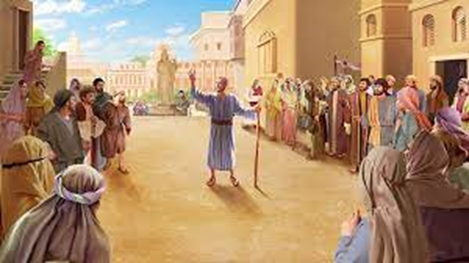
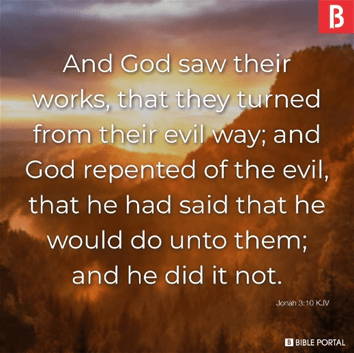
We have just finished considering the short book of Jonah. God sent Jonah to preach to the Assyrians in Nineveh and miraculously they repented and were spared. But the revival only lasted as long as that ruler and his subjects were alive. Subsequent rulers reverted to torture, murder, rape, and pillage as usual. God has heard the cries of the tortured and is finally bringing an end to the evil Assyrian empire.
Why didn’t the Ninevite revival last? Revivals will only last as long as people are willing to continue to humble themselves and seek God’s face. The Ninevites of Jonah’s day saved themselves by harkening to Jonah’s simple message and repenting and fasting en masse. Perhaps those people taught their children, but within a generation or two, the Assyrians reverted to type. Traditional Assyrian values included success in warfare and glorious victories with unspeakable cruelty to the conquered. Humility played no part in traditional Assyrian beliefs. Once the fear of the Lord lifted from Nineveh, things went back to the way they had always been.
It’s possible that after the short-lived revival sparked by Jonah’ s preaching, the Assyrians actually became worse. Jesus warned his disciples that when a demon was cast out of a man, he might return bringing seven other spirits more evil than himself. If a change of heart is not completed by the indwelling of the Holy Spirit, the demons will certainly move in as soon as possible. One of my friends used to sing a song entitled “I’m tired of being stirred but not being changed.” The Assyrians were stirred by Jonah’s preaching, but ultimately, their society was not changed.
Throughout history there have been revivals that have radically changed nations. The Reformation started by Martin Luther and others transformed many countries, although the spin-offs created many problems. The Great Awakening in colonial America is one such example.
“The Great Awakening was a religious revival that impacted the English colonies in America during the 1730s and 1740s. The movement came at a time when the idea of secular rationalism was being emphasized, and passion for religion had grown stale. Christian leaders often traveled from town to town, preaching about the gospel, emphasizing salvation from sins and promoting enthusiasm for Christianity. The result was a renewed dedication toward religion. Many historians believe the Great Awakening had a lasting impact on various Christian denominations and American culture at large.” (https://www.history.com/topics/european-history/great-awakening)
Second Great Awakening (Wikipedia)
Main article: Second Great Awakening
The Second Great Awakening (sometimes known simply as “the Great Awakening”) was a religious revival that occurred in the United States beginning in the late eighteenth century and lasting until the middle of the nineteenth century. While it occurred in all parts of the United States, it was especially strong in the Northeast and the Midwest. This awakening was unique in that it moved beyond the educated elite of New England to those who were less wealthy and less educated. The center of revivalism was the so-called Burned-over district in western New York. Named for its overabundance of hellfire-and-damnation preaching, the region produced dozens of new denominations, communal societies, and reform.
Among these dozens of new denominations were free black churches, run independently of existing congregations that were predominantly of white attendance. During the period between the American revolution and the 1850s, black involvement in largely white churches declined in great numbers, with participation becoming almost non-existent by the 1840s–1850s; some scholars argue that this was largely due to racial discrimination within the church. This discrimination came in the form of segregated seating and the forbiddance of African Americans from voting in church matters or holding leadership positions in many white churches. Reverend Richard Allen, a central founder of the African Methodist Episcopal Church, was quoted describing one such incident of racial discrimination in a predominantly white church in Philadelphia, in which fellow preacher and a former slave from Delaware, Absalom Jones, was grabbed by a white church trustee in the midst of prayer and forcefully told to leave.
Closely related to the Second Great Awakening were other reform movements such as temperance, abolition, and women’s rights. The temperance movement encouraged people to abstain from consuming alcoholic drinks in order to preserve family order. The abolition movement fought to abolish slavery in the United States. The women’s rights movement grew from female abolitionists who realized that they could fight for their own political rights, too. In addition to these causes, reforms touched nearly every aspect of daily life, such as restricting the use of tobacco and dietary and dress reforms. The abolition movement emerged in the North from the wider Second Great Awakening 1800–1840.
Third Great Awakening (Wikipedia)
Main article: Third Great Awakening
The Third Great Awakening in the 1850s–1900s was characterized by new denominations, active missionary work, Chautauquas, and the Social Gospel approach to social issues. The YMCA (founded in 1844) played a major role in fostering revivals in the cities in the 1858 Awakening and after. The revival of 1858 produced the leadership, such as that of Dwight L. Moody, out of which came religious work carried on in the armies during the civil war. The Christian and Sanitary Commissions and numerous Freedmen’s Societies were also formed in the midst of the War. (https://en.wikipedia.org/wiki/Great_Awakening#Second_Great_Awakening)
These revivals made a major impact on American society and yet, eventually, they dwindled off. The problem has remained the same: if those touched by revival fail to teach their children and grandchildren, revival dies. Revival died in Nineveh when those who had repented failed to teach their children and grandchildren the fear of God. Revival can die anywhere at any time when we choose to keep our experiences of repentance to ourselves and fail to teach those coming after us the fear of God. May God help us, so that we do not wind up like the Assyrians!
PRAYER: Father God, thank You for loving us and for caring for us. Lord, help us to teach those around us the fear and awe of You. Do not allow us to become the reason that revival dies. In the mighty and precious Name of King Jesus. Amen.














 Burunche's Blog