Archive for July, 2023

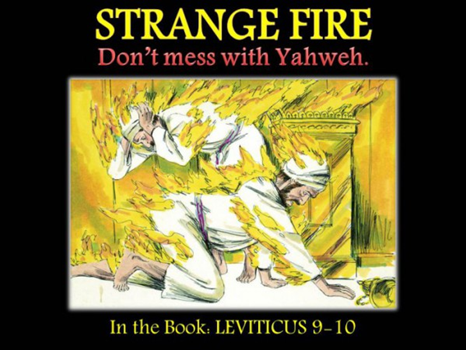
JULY 11, 2023 WHY ALL THESE LAWS? LEVITICUS 10:1-20 DON‘T JOKE WITH GOD, YOU MIGHT GET ZAPPED!

July 11, 2023

THE PROFANE FIRE OF NADAB AND ABIHU

“Then Nadab and Abihu, the sons of Aaron, each took his censer and put fire in it, put incense on it, and offered profane fire before the Lord, which He had not commanded them. So fire went out from the Lord and devoured them, and they died before the Lord. And Moses said to Aaron, “This is what the Lord spoke, saying: ‘By those who come near Me I must be regarded as holy; and before all the people I must be glorified.’ ” So Aaron held his peace.

Then Moses called Mishael and Elzaphan, the sons of Uzziel the uncle of Aaron, and said to them, “Come near, carry your brethren from before the sanctuary out of the camp.” So they went near and carried them by their tunics out of the camp, as Moses had said.

And Moses said to Aaron, and to Eleazar and Ithamar, his sons, “Do not uncover your heads nor tear your clothes, lest you die, and wrath come upon all the people. But let your brethren, the whole house of Israel, bewail the burning which the Lord has kindled. You shall not go out from the door of the tabernacle of meeting, lest you die, for the anointing oil of the Lord is upon you.” And they did according to the word of Moses.

Conduct Prescribed for Priests

Then the Lord spoke to Aaron, saying: “Do not drink wine or intoxicating drink, you, nor your sons with you, when you go into the tabernacle of meeting, lest you die. It shall be a statute forever throughout your generations, that you may distinguish between holy and unholy, and between unclean and clean, and that you may teach the children of Israel all the statutes which the Lord has spoken to them by the hand of Moses.”

And Moses spoke to Aaron, and to Eleazar and Ithamar, his sons who were left: “Take the grain offering that remains of the offerings made by fire to the Lord, and eat it without leaven beside the altar; for it is most holy. You shall eat it in a holy place, because it is your due and your sons’ due, of the sacrifices made by fire to the Lord; for so I have been commanded. The breast of the wave offering and the thigh of the heave offering you shall eat in a clean place, you, your sons, and your daughters with you; for they are your due and your sons’ due, which are given from the sacrifices of peace offerings of the children of Israel. The thigh of the heave offering and the breast of the wave offering they shall bring with the offerings of fat made by fire, to offer as a wave offering before the Lord. And it shall be yours and your sons’ with you, by a statute forever, as the Lord has commanded.”

Then Moses made careful inquiry about the goat of the sin offering, and there it was—burned up. And he was angry with Eleazar and Ithamar, the sons of Aaron who were left, saying, “Why have you not eaten the sin offering in a holy place, since it is most holy, and God has given it to you to bear the guilt of the congregation, to make atonement for them before the Lord? See! Its blood was not brought inside the holy place; indeed you should have eaten it in a holy place, as I commanded.”

And Aaron said to Moses, “Look, this day they have offered their sin offering and their burnt offering before the Lord, and such things have befallen me! If I had eaten the sin offering today, would it have been accepted in the sight of the Lord?” So when Moses heard that, he was content.”

Hoo Boy! Talk about a misplaced sense of entitlement! God has chosen Aaron and his sons to minister in the Tent of Meeting; unfortunately, two of Aaron’s sons figure that they can now “behave anyhow” as the Ghanaians would say. From God’s subsequent commands, it is obvious that Nadab and Abihu have either sneaked alcohol into the Tent of Meeting or they have slipped out against God’s orders and gotten drunk. Once boozed up, they have then decided to show off by loading their censors with incense and waving them around in the Tent of Meeting to show how important they are. Bad move! God looks down, points His finger, and ZAP! No more Nadab and Abihu!

And Moses said to Aaron, “This is what the Lord spoke, saying: ‘By those who come near Me I must be regarded as holy; and before all the people I must be glorified.’ ” So Aaron held his peace.” LESSON #1: DON’T DISRESPECT GOD! Aaron had better hold his peace; he is the one who has raised two rebellious sons with no regard for the Lord. Aaron’s family has not learned much since the golden calf incident. Moses orders Aaron’s cousins to carry what’s left of Nadab and Abihu out of the camp. What we don’t see is any instructions for burial; perhaps there isn’t enough left to bury and it’s better to leave the ashes out in the desert. 

God forbids Aaron and his sons from leaving the Tent of Meeting or from mourning this loss; however, all the Israelites are enjoined to grieve in their place. Next, God commands Aaron and his sons, “Then the Lord spoke to Aaron, saying: “Do not drink wine or intoxicating drink, you, nor your sons with you, when you go into the tabernacle of meeting, lest you die. It shall be a statute forever throughout your generations, that you may distinguish between holy and unholy, and between unclean and clean, and that you may teach the children of Israel all the statutes which the Lord has spoken to them by the hand of Moses.” Wake up, Aaron! God is holding priests to a higher standard. Pagans might get drunk during their religious rituals, but God’s ministers need to remain sober and vigilant.

Moses then gives instructions about the grain offerings and the wave offerings, but now there is a new problem. Aaron has been so distracted by the death of two sons that he has left the entire goat for the sin offering burning and now it is completely burned up. “Why have you not eaten the sin offering in a holy place, since it is most holy, and God has given it to you to bear the guilt of the congregation, to make atonement for them before the Lord? See! Its blood was not brought inside the holy place; indeed you should have eaten it in a holy place, as I commanded.”

Is Aaron repentant? Are you kidding? Once more, Aaron gives mealy-mouthed excuses. “And Aaron said to Moses, “Look, this day they have offered their sin offering and their burnt offering before the Lord, and such things have befallen me! If I had eaten the sin offering today, would it have been accepted in the sight of the Lord?” So when Moses heard that, he was content.”

This ridiculous statement totally ignores the fact that Nadab and Abihu were drunk and disorderly, carrying out an act that God had not commanded. These two were not struck down because they were obedient to the Lord but because they were showing off and disrespectful. Aaron and his sons were to eat the sin offering to bear the guilt of the congregation and to make atonement for them before the Lord. Had Aaron and his sons obeyed God’s commands, there should not have been any problem. Aaron’s excuse is merely the latest in a long line of excuses, excuses Aaron has been making his entire life. If Aaron’s actions were computer software, this would be Golden Calf 2.0.

APPLICATION: We read this and think, “These guys must be a special kind of stupid! Why would anybody disobey an all-powerful God?” Well, people have been disobeying God ever since the human race got started. Why do you think Noah wound up on that boat with all those animals? It was not because his neighbors were so great. What is so sad about this story is the character of Aaron, or lack thereof. Moses has complained to God that he doesn’t speak well, and Aaron has become Moses’s spokesman; however, when it comes to character, Aaron is sadly lacking. And Aaron has also failed as a father. This probably is not the first time that Nadab and Abihu have gotten sloppy drunk, disgracing Aaron and themselves in the process.

Is it possible that Aaron’s dead sons have learned their disrespect for God from their father? Children are amazing mimics, copying parents far more closely than those parents would generally like. Reading the scriptures closely, you get the impression that Aaron loves to dress up and show off, but he does everything he can to avoid taking responsibility for his actions. These days, we may blame social media for being a bad influence on our children; however, what examples are we giving? The tragedy of Nadab and Abihu didn’t begin the day they showed up for worship service drunk; it started when they were little. Has Aaron been secretly drinking? Who knows? But the tragedy of Nadab and Abihu is a family tragedy, not an individual one. May God help us so that we will set Godly examples for our children!

PRAYER: Father God, thank You for loving us and for caring for us. Lord, help all of us to parent our children wisely so that they learn to fear and respect You. In the mighty and precious Name of King Jesus. Amen.

JULY 10, 2023 WHY ALL THESE LAWS? LEVITICUS 9:1-24 FORGET THE FOG MACHINE – GOD CAN SHOW UP BIG-TIME WHEN NECESSARY!

July 10, 2023

The First Offerings of Aaron

“On the eighth day Moses summoned Aaron and his sons and the elders of Israel. He said to Aaron, “Take for yourself a young bull for a sin offering and a ram for a burnt offering, both without blemish, and present them before the LORD. Then speak to the Israelites and say, ‘Take a male goat for a sin offering, a calf and a lamb—both a year old and without blemish—for a burnt offering, an ox and a ram for a peace offering to sacrifice before the LORD, and a grain offering mixed with oil. For today the LORD will appear to you.’”

So they took what Moses had commanded to the front of the Tent of Meeting, and the whole congregation drew near and stood before the LORD. And Moses said, “This is what the LORD has commanded you to do, so that the glory of the LORD may appear to you.”

Then Moses said to Aaron, “Approach the altar and sacrifice your sin offering and your burnt offering to make atonement for yourself and for the people. And sacrifice the people’s offering to make atonement for them, as the LORD has commanded.”

The Sin Offering (Leviticus 6:24-30)

So Aaron approached the altar and slaughtered the calf as a sin offering for himself. The sons of Aaron brought the blood to him, and he dipped his finger in the blood and applied it to the horns of the altar. And he poured out the rest of the blood at the base of the altar. On the altar he burned the fat, the kidneys, and the lobe of the liver from the sin offering, as the LORD had commanded Moses. But he burned up the flesh and the hide outside the camp.

The Burnt Offering (Leviticus 6:8-13)

Then Aaron slaughtered the burnt offering and his sons brought him the blood, and he sprinkled it on all sides of the altar. They brought him the burnt offering piece by piece, including the head, and he burned them on the altar. He washed the entrails and the legs and burned them atop the burnt offering on the altar.

The Offerings for the People

Aaron then presented the people’s offering. He took the male goat for the people’s sin offering, slaughtered it, and offered it for sin like the first one.

He presented the burnt offering and offered it according to the ordinance.

Next he presented the grain offering, took a handful of it, and burned it on the altar in addition to the morning’s burnt offering.

Then he slaughtered the ox and the ram as the people’s peace offering. His sons brought him the blood, and he sprinkled it on all sides of the altar.

They also brought the fat portions from the ox and the ram—the fat tail, the fat covering the entrails, the kidneys, and the lobe of the liver— and placed these on the breasts. Aaron burned the fat portions on the altar, but he waved the breasts and the right thigh as a wave offering before the LORD, as Moses had commanded.

Aaron lifted up his hands toward the people and blessed them. And having made the sin offering, the burnt offering, and the peace offering, he stepped down.

Moses and Aaron Bless the People

Moses and Aaron then entered the Tent of Meeting. When they came out, they blessed the people, and the glory of the LORD appeared to all the people. Fire came out from the presence of the LORD and consumed the burnt offering and the fat portions on the altar. And when all the people saw it, they shouted for joy and fell facedown.”

Aaron and his sons have spent seven days in seclusion in the Tent of Meeting. Now it is time for the priests to be consecrated and for the first offerings to be given. First, Aaron offers the sin offering and the burnt offering to make atonement for himself and for the people. Aaron slaughters a perfect calf, burns the fat on the altar, and smears the blood on the horns of the altar, pouring out the blood at the base of the altar. Aaron burns the rest of the calf outside the camp. Next, Aaron slaughters aperfect  ram for a burnt offering, sprinkling the blood on all sides of the altar. Aaron burns the ram piece by piece, washing the legs and entrails before burning them.

Having made the sacrifices for himself, Aaron now makes the sacrifices for the people- a male goat for the people’s sin offering, a calf and a lamb for a burnt offering, and an ox and a ram for a peace offering. All of these animals must be perfect and without blemish. Aaron lays out the fatty portions of the animals and waves the breast and the right thigh as a

wave offering; however, he does not set fire to these offerings. This meat will later come to the priests. Moses and Aaron then enter the Tent of Meeting. When they come out, they bless the people, and the glory of the LORD appears to all the people. A heavenly fire ball comes out from the presence of the LORD and consumes the burnt offering and the fat portions on the altar. And when all the people see it, they shout for joy and fall facedown! Wow! When Moses advises the people that the Lord will appear to them, he is not kidding!

APPLICATION: These days, some churches are resorting to special effects to enhance their worship services. It is sometimes difficult to find a church in which the musicians stop playing long enough for the pastor to give the sermon. One church we have visited had a continuous light show going during the service; it was very distracting. One television evangelist even boasted that his church had a Starbucks coffee bar in their church. A columnist, disgusted with a church using a fog machine, has referred to these practices as “Six Flags over Jesus.” (For non-Americans, Six Flags is a chain of amusement parks with all kinds of rides and other entertainment. Such a description is NOT a compliment!) But what do these practices have to do with worshiping God?

God does not need special effects; He is perfectly capable of astounding people without any assistance from fog machines, light shows, spooky music, or any other demonstrations of showmanship. Jesus told the Samaritan woman at the well that “God is a spirit, and they who worship Him must worship in spirit and in truth.” If our hearts are not right and if we are not really seeking God, special effects are likely to distract us from finding Him, rather than helping bring us closer. Those who lead worship or who give messages need to make sure that they get out of the way and allow God to act.

The question this chapter does not address is this: Once these people have seen God send fire from heaven, have they had a change of heart, or are they still unrepentant pagans in search of the next thrill? Given the subsequent actions of the Israelites, even when God sends heavenly flames, people treat the event much as modern American treat Fourth of July fireworks; they are great entertainment, but once the fireworks are over, everyone goes back to the way they were living before.

One of our friends used to sing a song entitled, “I’m tired of being stirred but not being changed.” Worship should bring us closer to God. Sermons should bring us closer to God. If church descends to the level of entertainment, it is worth very little. Let us forget about special effects and beg God to do what He does best: change our hearts.

Prayer: Father God, thank You for loving us and for caring for us. Lord, bring us closer to You and help us to follow You all the days of our lives. In the mighty and precious Name of King Jesus. Amen.
JULY 9, 2023 WHY ALL THESE LAWS? LEVITICUS 8:1-36 WHY ANOINT EARS, HANDS, AND FEET?

July 9, 2023

Moses Consecrates Aaron and His Sons (Exodus 29:1-9)

Then the LORD said to Moses, “Take Aaron and his sons, their garments, the anointing oil, the bull of the sin offering, the two rams, and the basket of unleavened bread, and assemble the whole congregation at the entrance to the Tent of Meeting.”

So Moses did as the LORD had commanded him, and the assembly gathered at the entrance to the Tent of Meeting. And Moses said to them, “This is what the LORD has commanded to be done.”

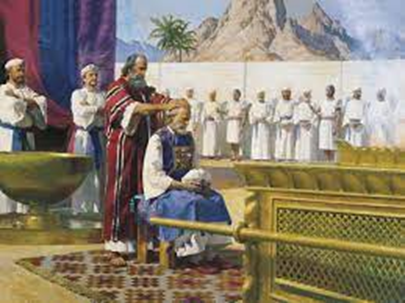
Then Moses presented Aaron and his sons and washed them with water. He put the tunic on Aaron, tied the sash around him, clothed him with the robe, and put the ephod on him. He tied the woven band of the ephod around him and fastened it to him. Then he put the breastpiece on him and placed the Urim and Thummim in the breastpiece. Moses also put the turban on Aaron’s head and set the gold plate, the holy diadem, on the front of the turban, as the LORD had commanded him.

Next, Moses took the anointing oil and anointed the tabernacle and everything in it; and so he consecrated them. He sprinkled some of the oil on the altar seven times, anointing the altar and all its utensils, and the basin with its stand, to consecrate them.

He also poured some of the anointing oil on Aaron’s head and anointed him to consecrate him. Then Moses presented Aaron’s sons, put tunics on them, wrapped sashes around them, and tied headbands on them, just as the LORD had commanded him.

The Priests’ Sin Offering

Moses then brought the bull near for the sin offering, and Aaron and his sons laid their hands on its head. Moses slaughtered the bull, took some of the blood, and applied it with his finger to all four horns of the altar, purifying the altar. He poured out the rest of the blood at the base of the altar and consecrated it so that atonement could be made on it.

Moses also took all the fat that was on the entrails, the lobe of the liver, and both kidneys and their fat, and burned it all on the altar. But the bull with its hide, flesh, and dung he burned outside the camp, as the LORD had commanded him.

The Priests’ Burnt Offering (Exodus 38:1-7; Leviticus 1:1-17)

Then Moses presented the ram for the burnt offering, and Aaron and his sons laid their hands on its head. Moses slaughtered the ram and sprinkled the blood on all sides of the altar. He cut the ram into pieces and burned the head, the pieces, and the fat. He washed the entrails and legs with water and burned the entire ram on the altar as a burnt offering, a pleasing aroma, an offering made by fire to the LORD, just as the LORD had commanded Moses.

The Ram of Ordination (Exodus 29:10-30)

After that, Moses presented the other ram, the ram of ordination, and Aaron and his sons laid their hands on its head. Moses slaughtered the ram and took some of its blood and put it on Aaron’s right earlobe, on the thumb of his right hand, and on the big toe of his right foot. Moses also presented Aaron’s sons and put some of the blood on their right earlobes, on the thumbs of their right hands, and on the big toes of their right feet. Then he sprinkled the blood on all sides of the altar.

And Moses took the fat—the fat tail, all the fat that was on the entrails, the lobe of the liver, and both kidneys with their fat—as well as the right thigh. And from the basket of unleavened bread that was before the LORD, he took one cake of unleavened bread, one cake of bread made with oil, and one wafer, and he placed them on the fat portions and on the right thigh. He put all these in the hands of Aaron and his sons and waved them before the LORD as a wave offering.

Moses took these out of their hands and burned them on the altar with the burnt offering. This was an ordination offering, a pleasing aroma, an offering made by fire to the LORD. He also took the breast—Moses’ portion of the ordination ram—and waved it before the LORD as a wave offering, as the LORD had commanded him.

Next Moses took some of the anointing oil and some of the blood that was on the altar and sprinkled them on Aaron and his garments, and on his sons and their garments. So he consecrated Aaron and his garments, as well as Aaron’s sons and their garments.

And Moses said to Aaron and his sons, “Boil the meat at the entrance to the Tent of Meeting and eat it there with the bread that is in the basket of ordination offerings, as I commanded, saying, ‘Aaron and his sons are to eat it.’ Then you must burn up the remainder of the meat and bread.

You must not go outside the entrance to the Tent of Meeting for seven days, until the days of your ordination are complete; for it will take seven days to ordain you. What has been done today has been commanded by the LORD in order to make atonement on your behalf. You must remain at the entrance to the Tent of Meeting day and night for seven days and keep the LORD’s charge so that you will not die, for this is what I have been commanded.” So Aaron and his sons did everything the LORD had commanded through Moses.”

There are three main parts to this chapter: first, Moses calls the entire congregation as witnesses and then bathes Aaron and his sons with water. Moses dresses Aaron in the priestly garments as God has directed and then dresses Aaron’s sons in linen tunics and head bands as well. While not described here, the priests are also supposed to wear linen breeches, thus avoiding exposing their genitalia as they ascend to the altar. This kind of dress is in stark contrast to that of the pagan priests who might wear little or nothing at all and who will deliberately exhibit their genitalia, the bigger the better. Moses offers a bull as a sin offering for the priests, applying some of the blood to the horns of the altar and pouring the rest of the blood out at the foot of the altar. After offering the kidneys and fat as a burnt offering, Moses takes the rest of the bull and burns that outside the camp.

Next, Moses offers a ram as a burnt offering on behalf of the priests. MOses sprinkles the blood on all sides of the altar, cutting the ram into pieces, washing the entrails and legs, and burning the entire animal on the altar.

Finally, Moses offers the ram of ordination. Aaron and his sons lay their hands on its head. Moses slaughters the ram, taking some of its blood and putting it on Aaron’s right earlobe, on the thumb of his right hand, and on the big toe of his right foot. Moses also presents Aaron’s sons and puts some of the blood on their right earlobes, on the thumbs of their right hands, and on the big toes of their right feet. Moses takes meat and bread and has Aaron and his sons wave these items before the Lord as a sign that they are offering them; however, the priests will later consume most of these items. Finally, Moses sprinkles anointing oil and blood from the altar on the priests and their clothing. The priests then spend seven days in the Tent of Meeting without leaving it to complete their consecration. Presumably, the priests will eat the bread and boiled meat from the sacrifices during that time.

What’s the point of all this? God wants His people to take His worship very seriously! God orders Moses to anoint the right ears, right thumbs, and right big toes of the priests so that they will hear His Word, do what He wants them to do, and go only where He wants them to go. Aaron and his sons are just as sinful as all the other Israelites, so they must undergo special rituals before they are qualified to minister before the Lord. God wants those men to remain in the Tent of Meeting for seven days so that they can commune with Him and consider their priestly calling.

APPLICATION: Those of you who are truly Bible scholars will realize that these descriptions constitute “Leviticus Light,” in other words, a very sketchy analysis of this chapter. Entire books have been written about the symbolism of these offerings; however, here I am trying to describe the main purposes of these rituals. I feel the main thrust of this chapter is that those who minister need cleansing from sin just as much as everybody else, if not more so. 1 John 1:8-10 tells us, “If we say we have no sin, we deceive ourselves, and the truth is not in us. If we confess our sins, He is faithful and just to forgive us our sins, and to cleanse us from all unrighteousness. If we say we have not sinned, we make Him a liar, and His word is not in us.”

When I was a small child in Sunday School, we learned a song that said, “Oh be careful little eyes what you see.” If you look at the verses, you will realize they follow the pattern of anointing God has carried out in this chapter.

1 Oh, be careful, little eyes, what you see, Oh, be careful, little eyes, what you see. There’s a Father up above looking down in tender love, Oh, be careful, little eyes, what you see.

2 Oh, be careful, little ears, what you hear, Oh, be careful, little ears, what you hear. There’s a Father up above looking down in tender love, Oh, be careful, little ears, what you hear.

3 Oh, be careful, little tongue, what you say, Oh, be careful, little tongue, what you say. There’s a Father up above looking down in tender love, Oh, be careful, little tongue, what you say.

4 Oh, be careful, little hands, what you do, Oh, be careful, little hands, what you do. There’s a Father up above looking down in tender love, Oh, be careful, little hands, what you do.

5 Oh, be careful, little feet, where you go, Oh, be careful, little feet, where you go. There’s a Father up above looking down in tender love, Oh, be careful, little feet, where you go.

Whether we are big or little, our Heavenly Father is still looking down in tender love. God wants everything we see, hear, speak, or do, and every place we go to honor Him. But we all fall short because we are human. Moses ritually slaughtered animals and sprinkled blood and anointing oil on the priests to consecrate them. But Jesus Christ has shed His blood on Calvary as the ultimate blood sacrifice. Our only remaining actions are to trust that Jesus has done this for us and to believe on Him.

PRAYER: Father God, thank You for loving us and for caring for us. Lord Jesus, we confess that we are sinners and that we cannot free ourselves from our sins. Help us to trust that You have paid the price for our sins. Help us to follow hard after You all the days of our lives. In Your mighty and precious Name, Jesus. Amen.

JULY 8, 2023 WHY ALL THESE LAWS? LEVITICUS 7:1-38 GUILT OFFERINGS AND PEACE OFFERINGS-WHAT’S THE BIG DIFFERENCE?

July 8, 2023

The Guilt Offering (Leviticus 5:14-19; Leviticus 6:1-7)

“Now this is the law of the guilt offering, which is most holy: The guilt offering must be slaughtered in the place where the burnt offering is slaughtered, and the priest shall sprinkle its blood on all sides of the altar. And all the fat from it shall be offered: the fat tail, the fat that covers the entrails, both kidneys with the fat on them near the loins, and the lobe of the liver, which is to be removed with the kidneys. The priest shall burn them on the altar as an offering made by fire to the LORD; it is a guilt offering. Every male among the priests may eat of it. It must be eaten in a holy place; it is most holy.

The guilt offering is like the sin offering; the same law applies to both. It belongs to the priest who makes atonement with it. As for the priest who presents a burnt offering for anyone, the hide of that offering belongs to him. Likewise, every grain offering that is baked in an oven or cooked in a pan or on a griddle belongs to the priest who presents it, and every grain offering, whether dry or mixed with oil, belongs equally to all the sons of Aaron.

The Peace Offering (Leviticus 3:1-17)

Now this is the law of the peace offering that one may present to the LORD: If he offers it in thanksgiving, then along with the sacrifice of thanksgiving, he must offer unleavened cakes mixed with olive oil, unleavened wafers coated with oil, and well-kneaded cakes of fine flour mixed with oil.

Along with his peace offering of thanksgiving, he is to present an offering with cakes of leavened bread. From the cakes he must present one portion of each offering as a contribution to the LORD. It belongs to the priest who sprinkles the blood of the peace offering. The meat of the sacrifice of his peace offering of thanksgiving must be eaten on the day he offers it; none of it may be left until morning.

If, however, the sacrifice he offers is a vow or a freewill offering, it shall be eaten on the day he presents his sacrifice, but the remainder may be eaten on the next day. But any meat of the sacrifice remaining until the third day must be burned up. If any of the meat from his peace offering is eaten on the third day, it will not be accepted. It will not be credited to the one who presented it; it shall be an abomination, and the one who eats of it shall bear his iniquity.

Meat that touches anything unclean must not be eaten; it is to be burned up. As for any other meat, anyone who is ceremonially clean may eat it. But if anyone who is unclean eats meat from the peace offering that belongs to the LORD, that person must be cut off from his people. If one touches anything unclean, whether human uncleanness, an unclean animal, or any unclean, detestable thing, and then eats any of the meat of the peace offering that belongs to the LORD, that person must be cut off from his people.”

Fat and Blood Forbidden

Then the LORD said to Moses, “Speak to the Israelites and say, ‘You are not to eat any of the fat of an ox, a sheep, or a goat. The fat of an animal found dead or mauled by wild beasts may be used for any other purpose, but you must not eat it.

If anyone eats the fat of an animal from which an offering by fire may be presented to the LORD, the one who eats it must be cut off from his people. You must not eat the blood of any bird or animal in any of your dwellings. If anyone eats blood, that person must be cut off from his people.’”

The Priests’ Portion

Then the LORD said to Moses, “Speak to the Israelites and say, ‘Anyone who presents a peace offering to the LORD must bring it as his sacrifice to the LORD. With his own hands he is to bring the offerings made by fire to the LORD; he shall bring the fat, together with the breast, and wave the breast as a wave offering before the LORD.

The priest is to burn the fat on the altar, but the breast belongs to Aaron and his sons. And you are to give the right thigh to the priest as a contribution from your peace offering. The son of Aaron who presents the blood and fat of the peace offering shall have the right thigh as a portion.

I have taken from the sons of Israel the breast of the wave offering and the thigh of the contribution of their peace offerings, and I have given them to Aaron the priest and his sons as a permanent portion from the sons of Israel.’”

This is the portion of the offerings made by fire to the LORD for Aaron and his sons since the day they were presented to serve the LORD as priests. On the day they were anointed, the LORD commanded that this be given them by the sons of Israel. It is a permanent portion for the generations to come.

This is the law of the burnt offering, the grain offering, the sin offering, the guilt offering, the ordination offering, and the peace offering, which the LORD gave Moses on Mount Sinai on the day He commanded the Israelites to present their offerings to the LORD in the Wilderness of Sinai.“

YIPES! Is this complicated? Well, yes and no. One of the ways of ensuring that the priests will not wander off in search of their fortunes is by ensuring that they benefit in some fashion from the offerings. There is a lot of work involved in maintaining the temple, cleaning it, carrying out ashes, and generally making sure that things take place according to God’s commands.

The priests benefit in several ways: the meat from the guilt offerings and the sin offerings belong to the priests. The priest making the offering keeps the skin of the animal offered. The grain offerings belong to the priests making the offerings. The right thigh and the breast from the peace offerings belong to the priests.

 The fat from any offering is burned on the altar. The meat from a peace offering is to be eaten by people who are ritually clean and to be consumed that day; however, meat from an offering for a vow can be consumed the next day. After that, the meat must be burned. God forbids the Israelites from eating either fat or blood. What is the big deal about blood? Many pagan religions employ the drinking of blood in their rituals. God teaches that blood is life and wants His people to separate themselves from these pagan practices. Those eating peace offerings who are not ritually clean are to become outcasts. Meat that touches anything unclean is not to be eaten but to be burned.

When we are considering these regulations, it is helpful to remember that the Israelites did not enjoy the benefits of refrigeration. Meat that was kept too long would spoil and give someone food poisoning. But if God were to say, “Do not keep meat beyond a certain point because you might get food poisoning, someone somewhere would try doing just that to see if it would really happen.

APPLICATION: Sometimes the number of regulations in Leviticus seems mind – staggering. It helps if we remember that many pagan tribes practiced unspeakably awful rituals involving drinking blood, eating rotten meat and rancid fat, etc. God was trying to protect the Israelites in the only way He could that might work. The Israelites were not a bunch of earnest God- seekers; they were pagans who had spent four hundred years in Egypt and had absorbed much of the death -based Egyptian religious culture. When God took on training the Israelites, He really had a job on His hands!

We might read many of these regulations and feel superior; after all, we would not engage in some of those nasty practices. But God’s purpose in all these regulations was for people to obey Him. How well do we obey God and how many times do we argue with Him, second guessing Him, rebelling against Him? Recently one of my patients has suffered a series of medical catastrophes. I have prayed earnestly for this young man’s healing and have tried to follow God’s guidance; yet, the young man continues to suffer. At this moment, trusting God is a struggle; however, I must realize that God knows the end from the beginning and I do not. One pastor friend used to say that we were only in advertising; God was in management. That is still true. So, we go on trusting where we cannot see and believing that God can work all things for good, including medical disasters.

PRAYER: Father God, thank You for loving us and for caring for us. Lord, help us to follow hard after You all the days of our lives. In the mighty and precious Name of King Jesus. Amen.  

JULY 7, 2023 WHY ALL THESE LAWS? LEVITICUS 6:1-30 NO AMOUNT OF VERBAL TAP DANCING IS GOING TO FOOL GOD!   

July 7, 2023

Sins Requiring a Guilt Offering (Leviticus 5:14-19; Leviticus 7:1-10)

“Then the LORD said to Moses, “If someone sins and acts unfaithfully against the LORD by deceiving his neighbor in regard to a deposit or security entrusted to him or stolen, or if he extorts his neighbor or finds lost property and lies about it and swears falsely, or if he commits any such sin that a man might commit— once he has sinned and becomes guilty, he must return what he has stolen or taken by extortion, or the deposit entrusted to him, or the lost property he found, or anything else about which he has sworn falsely.

He must make restitution in full, add a fifth of the value, and pay it to the owner on the day he acknowledges his guilt. Then he must bring to the priest his guilt offering to the LORD: an unblemished ram of proper value from the flock. In this way the priest will make atonement for him before the LORD, and he will be forgiven for anything he may have done to incur guilt.”

The Burnt Offering (Leviticus 9:12-14)

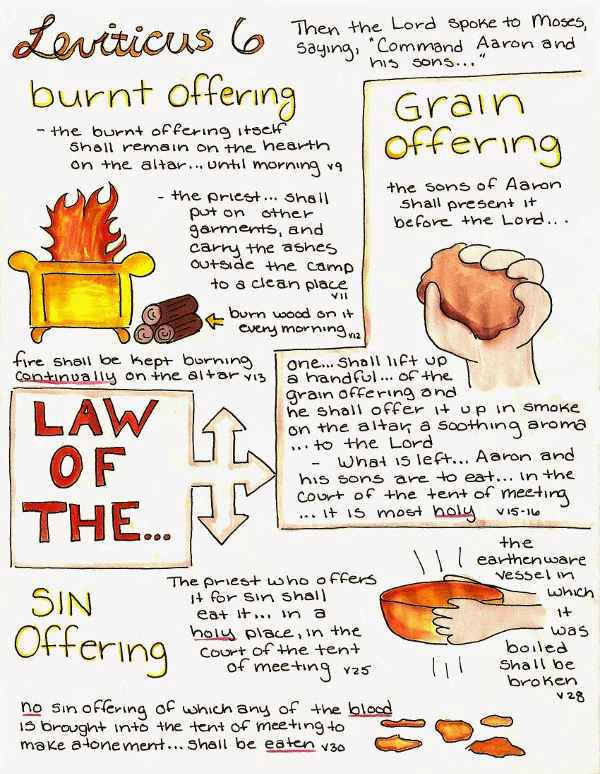
Again the LORD said to Moses, “Command Aaron and his sons that this is the law of the burnt offering: The burnt offering is to remain on the hearth of the altar all night, until morning, and the fire must be kept burning on the altar. And the priest shall put on his linen robe and linen undergarments, and he shall remove from the altar the ashes of the burnt offering that the fire has consumed and place them beside it. Then he must take off his garments, put on other clothes, and carry the ashes outside the camp to a ceremonially clean place.

The fire on the altar shall be kept burning; it must not be extinguished. Every morning the priest is to add wood to the fire, arrange the burnt offering on it, and burn the fat portions of the peace offerings on it. The fire shall be kept burning on the altar continually; it must not be extinguished.

The Grain Offering (Leviticus 2:1-16)

Now this is the law of the grain offering: Aaron’s sons shall present it before the LORD, in front of the altar. The priest is to remove a handful of fine flour and olive oil, together with all the frankincense from the grain offering, and burn the memorial portion on the altar as a pleasing aroma to the LORD.

Aaron and his sons are to eat the remainder. It must be eaten without leaven in a holy place; they are to eat it in the courtyard of the Tent of Meeting. It must not be baked with leaven; I have assigned it as their portion of My offerings made by fire. It is most holy, like the sin offering and the guilt offering. Any male among the sons of Aaron may eat it. This is a permanent portion from the offerings made by fire to the LORD for the generations to come. Anything that touches them shall become holy.”

Then the LORD said to Moses, “This is the offering that Aaron and his sons must present to the LORD on the day he is anointed: a tenth of an ephah of fine flour (2 dry quarts or 2.2 liters (probably about 2.6 pounds or 1.2 kilograms of flour) as a regular grain offering, half of it in the morning and half in the evening. It shall be prepared with oil on a griddle;  you are to bring it well-kneaded and present it as a grain offering broken in pieces, a pleasing aroma to the LORD. The priest, who is one of Aaron’s sons and will be anointed to take his place, is to prepare it. As a permanent portion for the LORD, it must be burned completely. Every grain offering for a priest shall be burned completely; it is not to be eaten.”

The Sin Offering (Leviticus 9:8-11)

And the LORD said to Moses, “Tell Aaron and his sons that this is the law of the sin offering: In the place where the burnt offering is slaughtered, the sin offering shall be slaughtered before the LORD; it is most holy. The priest who offers it shall eat it; it must be eaten in a holy place, in the courtyard of the Tent of Meeting. Anything that touches its flesh will become holy, and if any of the blood is spattered on a garment, you must wash it in a holy place. The clay pot in which the sin offering is boiled must be broken; if it is boiled in a bronze pot, the pot must be scoured and rinsed with water. Any male among the priests may eat it; it is most holy. But no sin offering may be eaten if its blood has been brought into the Tent of Meeting to make atonement in the Holy Place; it must be burned.”

God is continuing to describe the sins He knows His people are already committing. God hates theft of any kind, whether by omission or commission. Moses describes theft by keeping a deposit or security that has been entrusted or stealing it, or extorting money, or finding lost property and hiding the fact that it has been found. The offender must pay back 120% of the value of the item and offer an unblemished ram “of proper value” as a guilt offering. No fair choosing the smallest ram possible and trying to use that as an offering.

Burnt offerings are to remain on the altar all night with the fire burning so that in the morning the priest can remove the ashes from the altar, change out of his robes, and then carry the ashes to a ceremonially clean place. The fire on the altar is to burn continuously so that the priests may burn the fat from the peace offerings.

Grain offerings from people other than priests are to be divided so that a small amount is burnt as an offering while the priests and their sons are allowed to consume the rest. But when a priest is being consecrated, a special grain offering is made, and this grain offering will be completely burned.

Sin offerings are handled in a special fashion. The sin offering must be slaughtered at the entrance to the Tent of Meeting. The priest who offers it shall eat it; it must be eaten in a holy place, in the courtyard of the Tent of Meeting. Anything that touches its flesh will become holy, and if any of the blood is spattered on a garment, you must wash it in a holy place. The clay pot in which the sin offering is boiled must be broken; if it is boiled in a bronze pot, the pot must be scoured and rinsed with water. Any male among the priests may eat it; it is most holy. But no sin offering may be eaten if its blood has been brought into the Tent of Meeting to make atonement in the Holy Place; it must be burned.”

Why all the rules about blood? Pagan sacrifice rituals frequently have included pouring blood indiscriminately. Repeatedly, God emphasizes that the life is in the blood and blood is sacred and must be respected. The sin offering and its blood are most holy and deserve respect. But if the blood of the sin offering has entered the Tent of Meeting, that offering must be completely burned.

APPLICATION: Why all these rules? Once more, God is trying to draw a sharp distinction between the way the pagans have worshiped and the way He wants His people to worship. God wants His people to take their sacrifices seriously and to handle them with respect. God wants His priests to minister correctly and not haphazardly. God is not a God of confusion but a God of peace, and He wants worship to progress in an orderly fashion.

God also is trying to draw a line between the priests and the common people so that people apart from priests will not attempt to offer sacrifices or otherwise profane God’s worship. Centuries later, King Uzziah becomes swollen with pride and forces his way into the temple to offer sacrifices. Not only do the priests rush to evict him, but God immediately strikes him with leprosy and he lives in seclusion for the rest of his life while his son reigns in his stead. The actual penalty for such a trespass is immediate death; however, God allows Uzziah to suffer a living death instead.

How many of us lie or steal by omission? We may excuse ourselves by soft descriptions “I didn’t think it would matter,” “I didn’t think anybody would notice.” But the Ruler of the Universe sees everything and knows our hearts. May God convict us, so that we will leave off such practices and may our lives demonstrate the fruits of the Holy Spirit – love, joy, peace, patience, kindness, goodness, faithfulness, gentleness, self – control.

PRAYER: Father God, thank You for loving us and for caring for us. Lord, we confess that we have lied by omission and commission and that we have not been honest in all our dealings. Please clean us up and help us to follow hard after You all the days of our lives. In the mighty and precious Name of King Jesus. Amen.

JULY 6, 2023 WHY ALL THESE LAWS? LEVITICUS 5:1-19 HELP! WE’VE FALLEN AND WE CAN’T GET UP!  

July 6, 2023

Sins Requiring a Sin Offering (Leviticus 4:1-35)

“If someone sins by failing to testify when he hears a public charge about something he has witnessed, whether he has seen it or learned of it, he shall bear the iniquity. Or if a person touches anything unclean—whether the carcass of any unclean wild animal or livestock or crawling creature—even if he is unaware of it, he is unclean and guilty. Or if he touches human uncleanness—anything by which one becomes unclean—even if he is unaware of it, when he realizes it, he is guilty. Or if someone swears thoughtlessly with his lips to do anything good or evil—in whatever matter a man may rashly pronounce an oath—even if he is unaware of it, when he later realizes it, he is guilty.

If someone incurs guilt in one of these ways, he must confess the sin he has committed, and he must bring his guilt offering to the LORD for the sin he has committed: a female lamb or goat from the flock as a sin offering. And the priest will make atonement for him concerning his sin. If, however, he cannot afford a lamb, he may bring to the LORD as restitution for his sin two turtledoves or two young pigeons—one as a sin offering and the other as a burnt offering. He is to bring them to the priest, who shall first present the one for the sin offering. He is to twist its head at the front of its neck without severing it; then he is to sprinkle some of the blood of the sin offering on the side of the altar, while the rest of the blood is drained out at the base of the altar. It is a sin offering. And the priest must prepare the second bird as a burnt offering according to the ordinance. In this way the priest will make atonement for him for the sin he has committed, and he will be forgiven. But if he cannot afford two turtledoves or two young pigeons, he may bring a tenth of an ephah of fine flour as a sin offering. [A tenth of an ephah is approximately 2 dry quarts or 2.2 liters (probably about 2.6 pounds or 1.2 kilograms of flour).] He must not put olive oil or frankincense on it, because it is a sin offering. He is to bring it to the priest, who shall take a handful from it as a memorial portion and burn it on the altar atop the offerings made by fire to the LORD; it is a sin offering. In this way the priest will make atonement for him for any of these sins he has committed, and he will be forgiven. The remainder will belong to the priest, like the grain offering.”

Laws for Guilt Offerings (Leviticus 6:1-7; Leviticus 7:1-10)

Then the LORD said to Moses, “If someone acts unfaithfully and sins unintentionally against any of the LORD’s holy things, he must bring his guilt offering to the LORD: an unblemished ram from the flock, of proper value in silver shekels according to the sanctuary shekel; it is a guilt offering. (A shekel is approximately 0.4 ounce or 11.4 grams of silver.) Regarding any holy thing he has harmed, he must make restitution by adding a fifth of its value to it and giving it to the priest, who will make atonement on his behalf with the ram as a guilt offering, and he will be forgiven.

If someone sins and violates any of the LORD’s commandments even though he was unaware, he is still guilty and shall bear his punishment. He must bring to the priest an unblemished ram of proper value from the flock as a guilt offering. Then the priest will make atonement on his behalf for the wrong he has committed in ignorance, and he will be forgiven. It is a guilt offering; he was certainly guilty before the LORD.”

The Israelites have a problem: how do you know when you have sinned? As long as the Israelites have been in Egypt, it has been “anything goes.” But now God is trying to reform His people into a holy nation. Many Israelites are still secretly worshiping Egyptian idols. That is why God is laying out all these laws. This chapter describes the following sins:

  1. Failing to testify after hearing a public charge about something you have heard or witnessed. This is a sin of omission, and taking the easy way out is not an option. 2. Touching anything unclean 3. Touching any human uncleanness 4. Swearing thoughtlessly

If someone incurs guilt in one of these ways, he must confess the sin he has committed, and he must bring his guilt offering to the LORD for the sin he has committed…” Then a series of offerings is laid out: A female lamb or goat, two turtledoves or two young pigeons—one as a sin offering and the other as a burnt offering, a tenth of an ephah of fine flour as a sin offering. [A tenth of an ephah is approximately 2 dry quarts or 2.2 liters, probably about 2.6 pounds or 1.2 kilograms of flour.] No olive oil or frankincense is used for this offering.

There is a special description of the penalties for sinning against the holy things, namely withholding first fruits, refusing to make offering for the first born, failing to tithe, or failing to fulfill a vow. In this case, the penalty is more costly: an unblemished ram from the flock, of proper value in silver shekels according to the sanctuary shekel. Regarding any holy thing he has harmed, he must make restitution by adding a fifth of its value to it and giving it to the priest, who will make atonement on his behalf with the ram as a guilt offering, and he will be forgiven.” Bottom line: fulfill your obligations promptly and respect God’s requirements.

Finally, “If someone sins and violates any of the LORD’s commandments even though he was unaware, he is still guilty and shall bear his punishment.” Again, the repayment is an unblemished ram, indicating that such a sin is very serious.

APPLICATION: Years ago, there was a commercial on American television for a device that would summon help for older people if they suffered any kind of emergency while they were alone. The catch phrase was, “Help! I’ve fallen and I can’t get up.” All of us are in that situation; we have fallen into sins and we can’t get out by ourselves.

1 John 1:8-10 tells us, “If we say we have no sin, we deceive ourselves and the truth is not in us. If we confess our sins, He is faithful and just to forgive us our sins and to cleanse us from all unrighteousness. If we say we have not sinned, we make Him out to be liar, and His word is not in us.”

None of us is free from sin. No matter how hard we try, we will do wrong things and say wrong things and think wrong things. Attempting to cover up our sins is futile and a waste of time. If we pretend we haven’t sinned, we are making God out to be a liar. But praise God,  we no longer have to offer animals to pay for our sins! Because Jesus has made the ultimate blood sacrifice, now we can confess our sins and be assured of God’s forgiveness.

Romans 3:22-24 tells us, “And this righteousness from God comes through faith in Jesus Christ to all who believe. There is no distinction, for all have sinned and fall short of the glory of God, and are justified freely by His grace through the redemption that is in Christ Jesus.”  No matter who we are or where we are, we have redemption and hope through Jesus Christ. We are not trapped in our wrong-doing; God has provided a way out.

PRAYER: Father God, thank You for loving us and caring for us. Lord, we confess that we are sinners and that nothing we do is enough to free us from our sins. Thank You for sending Jesus to shed His blood in payment for our sins. Help us to trust in You and to follow hard after You all the days of our lives. In the mighty and precious Name of King Jesus. Amen.
JULY 5, 2023 WHY ALL THESE LAWS? LEVITICUS 4:1-35 IF I REALLY MESS UP, WHAT DO I DO NOW?

July 5, 2023

“Then the LORD said to Moses, “Tell the Israelites to do as follows with one who sins unintentionally against any of the LORD’s commandments and does what is forbidden by them:

If the anointed priest sins, bringing guilt on the people, he must bring to the LORD a young bull without blemish as a sin offering for the sin he has committed. He must bring the bull to the entrance of the Tent of Meeting before the LORD, lay his hand on the bull’s head, and slaughter it before the LORD. Then the anointed priest shall take some of the bull’s blood and bring it into the Tent of Meeting. The priest is to dip his finger in the blood and sprinkle some of it seven times before the LORD, in front of the veil of the sanctuary. The priest must then apply some of the blood to the horns of the altar of fragrant incense that is before the LORD in the Tent of Meeting. And he is to pour out the rest of the bull’s blood at the base of the altar of burnt offering at the entrance to the Tent of Meeting. Then he shall remove all the fat from the bull of the sin offering—the fat that covers the entrails, all the fat that is on them, both kidneys with the fat on them near the loins, and the lobe of the liver, which he is to remove with the kidneys— just as the fat is removed from the ox of the peace offering. Then the priest shall then burn them on the altar of burnt offering. But the hide of the bull and all its flesh, with its head and legs and its entrails and dung— all the rest of the bull—he must take outside the camp to a ceremonially clean place, where the ashes are poured out, and he must burn it on a wood fire on the ash heap.

Now if the whole congregation of Israel strays unintentionally and the matter escapes the notice of the assembly so that they violate any of the LORD’s commandments and incur guilt by doing what is forbidden, when they become aware of the sin they have committed, then the assembly must bring a young bull as a sin offering and present it before the Tent of Meeting. The elders of the congregation are to lay their hands on the bull’s head before the LORD, and it shall be slaughtered before the LORD. Then the anointed priest is to bring some of the bull’s blood into the Tent of Meeting, and he is to dip his finger in the blood and sprinkle it seven times before the LORD in front of the veil. He is also to apply some of the blood to the horns of the altar that is before the LORD in the Tent of Meeting, and he must pour out the rest of the blood at the base of the altar of burnt offering at the entrance to the Tent of Meeting. And he is to remove all the fat from it and burn it on the altar. He shall offer this bull just as he did the bull for the sin offering; in this way the priest will make atonement on their behalf, and they will be forgiven. Then he is to take the bull outside the camp and burn it, just as he burned the first bull. It is the sin offering for the assembly.

When a leader sins unintentionally and does what is prohibited by any of the commandments of the LORD his God, he incurs guilt. When he becomes aware of the sin he has committed, he must bring an unblemished male goat as his offering. He is to lay his hand on the head of the goat and slaughter it at the place where the burnt offering is slaughtered before the LORD. It is a sin offering. Then the priest is to take some of the blood of the sin offering with his finger, apply it to the horns of the altar of burnt offering, and pour out the rest of the blood at the base of the altar. He must burn all its fat on the altar, like the fat of the peace offerings; thus the priest will make atonement for that man’s sin, and he will be forgiven.

And if one of the common people sins unintentionally and does what is prohibited by any of the LORD’s commandments, he incurs guilt. When he becomes aware of the sin he has committed, he is to bring a female goat without blemish as his offering for that sin. He shall lay his hand on the head of the sin offering and slaughter it at the place of the burnt offering. Then the priest is to take some of its blood with his finger, apply it to the horns of the altar of burnt offering, and pour out the rest of the blood at the base of the altar. Then he shall remove all the fat just as it is removed from the peace offering, and the priest is to burn it on the altar as a pleasing aroma to the LORD. In this way the priest will make atonement for him, and he will be forgiven.

If, however, he brings a lamb as a sin offering, he is to bring an unblemished female. And he shall lay his hand on the head of the sin offering and slaughter it as a sin offering at the place where the burnt offering is slaughtered. Then the priest must take some of the blood of the sin offering with his finger, apply it to the horns of the altar of burnt offering, and pour out the rest of its blood at the base of the altar. And he is to remove all the fat, just as the fat of the lamb is removed from the peace offerings, and he shall burn it on the altar along with the offerings made by fire to the LORD. In this way the priest will make atonement for him for the sin he has committed, and he will be forgiven.”


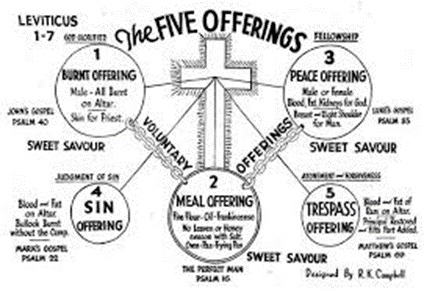
At first this chapter seems both repetitious and tedious. There are several categories of people who might need to make sin offerings:

The anointed priest– As a spiritual leader, the anointed priest is held to a high standard because he represents all the people. The anointed priest must bring a young bull without blemish, lay hands on it, symbolically transferring his guilt to the animal, and then slaughter it at the entrance of the Tent of Meeting. “Then the anointed priest shall take some of the bull’s blood and bring it into the Tent of Meeting. The priest is to dip his finger in the blood and sprinkle some of it seven times before the LORD, in front of the veil of the sanctuary. The priest must then apply some of the blood to the horns of the altar of fragrant incense that is before the LORD in the Tent of Meeting. And he is to pour out the rest of the bull’s blood at the base of the altar of burnt offering at the entrance to the Tent of Meeting. Then he shall remove all the fat from the bull of the sin offering—the fat that covers the entrails, all the fat that is on them, both kidneys with the fat on them near the loins, and the lobe of the liver, which he is to remove with the kidneys— just as the fat is removed from the ox of the peace offering. Then the priest shall then burn them on the altar of burnt offering. But the hide of the bull and all its flesh, with its head and legs and its entrails and dung— all the rest of the bull—he must take outside the camp to a ceremonially clean place, where the ashes are poured out, and he must burn it on a wood fire on the ash heap.

Now if the whole congregation of Israel strays unintentionally and the matter escapes the notice of the assembly so that they violate any of the LORD’s commandments and incur guilt by doing what is forbidden, when they become aware of the sin they have committed, then the assembly must bring a young bull as a sin offering and present it before the Tent of Meeting.” The elders will lay hands on the bull and then slaughter it, after which, the remainder of the sacrifice is carried out just as for the anointed priest.

If a leader sins, he brings an unblemished male goat, lays hands on it thereby transferring his guilt, and slaughters it. The priests handle the blood and body parts as they have for the other sin offerings.

If a commoner sins, he must bring an unblemished female goat or lamb as an offering. The animal will be handled as for the other sin offerings.

Why all these regulations? God wants His people to recognize when they have sinned, and God also wants His people to deal effectively with their guilt. Once the guilty party or parties lay hands on the animal, they are transferring their guilt to the animal. Once the animal has been sacrificed, the guilty parties are freed from guilt until they sin again. But future sins will also have to be paid for with blood sacrifices. Since animals are lower than humans in creation, the blood of a single animal can never be a permanent payment for sins.

APPLICATION: Hebrews 9:11-28 (The Message) tells us, “But when the Messiah arrived, high priest of the superior things of this new covenant, he bypassed the old tent and its trappings in this created world and went straight into heaven’s “tent” – the true Holy Place – once and for all. He also bypassed the sacrifices consisting of goat and calf blood, instead using his own blood as the price to set us free once and for all.

If that animal blood and the other rituals of purification were effective in cleaning up certain matters of our religion and behavior, think how much more the blood of Christ cleans up our whole lives, inside and out. Through the Spirit, Christ offered himself as an unblemished sacrifice, freeing us from all those dead-end efforts to make ourselves respectable, so that we can live all out for God.

Like a will that takes effect when someone dies, the new covenant was put into action at Jesus’ death. His death marked the transition from the old plan to the new one, canceling the old obligations and accompanying sins, and summoning the heirs to receive the eternal inheritance that was promised them. He brought together God and his people in this new way.

Even the first plan required a death to set it in motion. After Moses had read out all the terms of the plan of the law – God’s “will” – he took the blood of sacrificed animals and, in a solemn ritual, sprinkled the document and the people who were its beneficiaries. And then he attested its validity with the words, “This is the blood of the covenant commanded by God.”

He did the same thing with the place of worship and its furniture. Moses said to the people, “This is the blood of the covenant God has established with you.” Practically everything in a will hinges on a death. That’s why blood, the evidence of death, is used so much in our tradition, especially regarding forgiveness of sins.

That accounts for the prominence of blood and death in all these secondary practices that point to the realities of heaven. It also accounts for why, when the real thing takes place, these animal sacrifices aren’t needed anymore, having served their purpose. For Christ didn’t enter the earthly version of the Holy Place; he entered the Place Itself, and offered himself to God as the sacrifice for our sins.

He doesn’t do this every year as the high priests did under the old plan with blood that was not their own; if that had been the case, he would have to sacrifice himself repeatedly throughout the course of history. But instead he sacrificed himself once and for all, summing up all the other sacrifices in this sacrifice of himself, the final solution of sin.

Everyone has to die once, then face the consequences. Christ’s death was also a one-time event, but it was a sacrifice that took care of sins forever. And so, when he next appears, the outcome for those eager to greet him is, precisely, salvation.”

Once Jesus offered himself as a sinless blood sacrifice, there was no further need for slaughtering animals. Now we can accept Jesus’ sacrifice for our sins and then confess our sins to God when we sin, confident that God will forgive us because of the blood of Jesus.

PRAYER: Father God, thank You for loving us and for caring for us. Lord, we know  that we cannot earn our way into heaven. Thank You for sending Jesus to die for our sins so that our sins have been paid for with His blood. Lord, forgive us, help us to change our ways so that we will please You in all that we do. In the mighty and precious Name of King Jesus. Amen.
JULY 4, 2023 WHY ALL THESE LAWS? LEVITICUS 3:1-17  WHY PEACE OFFERINGS? GOD WANTS TO THROW PARTIES!

July 4, 2023


 “If one’s offering is a peace offering and he offers an animal from the herd, whether male or female, he must present it without blemish before the LORD. He is to lay his hand on the head of the offering and slaughter it at the entrance to the Tent of Meeting. Then Aaron’s sons the priests shall sprinkle the blood on all sides of the altar.

From the peace offering he is to bring an offering made by fire to the LORD: the fat that covers the entrails, all the fat that is on them, both kidneys with the fat on them near the loins, and the lobe of the liver, which he is to remove with the kidneys. Then Aaron’s sons are to burn it on the altar atop the burnt offering that is on the burning wood, as an offering made by fire, a pleasing aroma to the LORD.

If, however, one’s peace offering to the LORD is from the flock, he must present a male or female without blemish. If he is presenting a lamb for his offering, he must present it before the LORD. He is to lay his hand on the head of his offering and slaughter it in front of the Tent of Meeting. Then Aaron’s sons shall sprinkle its blood on all sides of the altar.

And from the peace offering he shall bring an offering made by fire to the LORD consisting of its fat: the entire fat tail cut off close to the backbone, the fat that covers the entrails, all the fat that is on them, both kidneys with the fat on them near the loins, and the lobe of the liver, which he is to remove with the kidneys. Then the priest is to burn them on the altar as food, an offering made by fire to the LORD.

If one’s offering is a goat, he is to present it before the LORD. He must lay his hand on its head and slaughter it in front of the Tent of Meeting. Then Aaron’s sons shall sprinkle its blood on all sides of the altar.

And from his offering he shall present an offering made by fire to the LORD: the fat that covers the entrails, all the fat that is on them, both kidneys with the fat on them near the loins, and the lobe of the liver, which he is to remove with the kidneys. Then the priest will burn the food on the altar as an offering made by fire, a pleasing aroma. All the fat is the LORD’s. This is a perpetual statute for the generations to come, wherever you live: You must not eat any fat or any blood.”

What is the point of a peace offering? This offering was not to atone for sins but to celebrate enjoying peace with God. There are several things that are different about this particular offering:

  1. Although the animals had to be perfect and without blemish, they could be either male or female.
  2. The person making the offering lays hands on the animal, indicating that the animal is a substitute for that person, taking away any unintentional offenses against God, so that God and the worshiper will remain in a peaceful and right relationship.
  3. The animal is to be slaughtered at the entrance to the Tent of Meeting by the person making the offering. The priests will then take over.
  4. The part of the offering that is actually burned is the fat, the kidneys encased in the fat, and the lobe of the liver containing the fat while the blood is sprinkled on all sides of the altar. At this time, fat, kidneys, and liver are considered a delicacy and also a source of energy. This offering ensures that God is given the best part of the animals
  5. The meat from the animals is to be shared between the person making the sacrifice and the priests, ensuring lovely celebrations whenever peace offerings are made.
  6. No matter what kind of animal is offered, the regulations regarding the parts of the animal to be burned are still the same. God knows His people will try to slide out and save choice parts or themselves otherwise. God is being specific to avoid senseless haggling.

Ancient religions are full of regulations for all kinds of offerings to propitiate angry gods who might otherwise do terrible things to their worshipers. But the peace offering is actually a celebration approved by the One True Living God. God wants to celebrate being at peace with His people.

 “It was a voluntary sacrifice given to God in three specific instances. First, a peace offering could be given as a freewill offering, meaning that the worshiper was giving the peace offering as a way to say thank you for God’s unsought generosity. It was basically just a way to praise God for His goodness. The second way a peace offering could be given was alongside a fulfilled vow. A good example of this was when Hannah fulfilled her vow to God by bringing Samuel to the temple; on that occasion she also brought a peace offering to express the peace in her heart toward God concerning her sacrifice—it was a way to say, “I have no resentment; I am holding nothing back in the payment of my vow.” The third purpose of a peace offering was to give thanksgiving for God’s deliverance in an hour of dire need. None of these three reasons to sacrifice had anything to do with propitiation, with appeasing God, or with pacifying Him.” (https://www.gotquestions.org/peace-offering.html)

No system is perfect. Such offerings are open to misuse. The wanton wife described in Proverbs 7 hunts down a handsome young man, enticing him with the promise of meat from a peace offering. “Then a woman came out to meet him, with the attire of a harlot and cunning of heart. She is loud and defiant; her feet do not remain at home. Now in the street, now in the squares, she lurks at every corner. She seizes him and kisses him; she brazenly says to him: “I have made my peace offerings; today I have paid my vows. So I came out to meet you; I sought you, and I have found you. I have decked my bed with coverings, with colored linen from Egypt. I have perfumed my bed with myrrh, with aloes, and with cinnamon. Come, let us take our fill of love till morning. Let us delight in loving caresses! For my husband is not at home; he has gone on a long journey. He took with him a bag of money and will not return until the moon is full.” (Proverbs 7:10-20)

Sex and a great steak dinner-what a temptation! Never mind that the foolish young man will die spiritually – and possibly physically – as a result. In this case, the woman is perverting the concept of peace offerings as an excuse to kill a fine animal and get great meat in the process.

APPLICATION: The concept of peace offerings remains viable today, although they generally are not labeled as such. In Ghanaian churches, it is quite common for men and women to give special offerings in gratitude after recovering from an illness, surviving a dangerous situation such as a bad traffic accident, achieving something special, or seeing God fulfill a promise. Generally, these offerings consist of money, although a farmer might donate grain or an animal. Such offerings are generally made in the middle of the church service as a way of sharing joy with the entire congregation.

A popular Gospel song here in Ghana asks, “What shall I render unto the Lord, for He has done so very much for me?” gotquestions.org concludes: “God is not interested in taking from us. That is not His heart at all. But the lie we so often believe is that our good actions bring about His goodness, and our sinful actions must be paid for in personal sacrifice. The peace offering shows that worshipers in the Old Testament were not any more responsible for their salvation than worshipers in the New Testament. Throughout the ages, people have been tempted to think that sacrifices create God’s favor. This belief is evident in our modern understanding of a peace offering as a propitiation for wrongdoing. But only Christ’s sacrifice creates favor with God and covers wrongdoing, and the Old Testament sacrifices were a picture of that future provision.”

We cannot possibly buy God’s favor; we can only thank Him for it. We cannot earn our way into heaven, but we can accept the blood sacrifice that Jesus has already made for us.

PRAYER: Father God, thank You for loving us and for caring for us. Thank You for sending Your Son Jesus to die for our sins so that we might live in peace with You. Help us to believe in that sacrifice and to trust You all the days of our lives. In the mighty and precious Name of King Jesus. Amen.
JULY 3, 2023 WHY ALL THESE LAWS? LEVITICUS 2:1-16 WHY OFFER FIRST FRUITS? WHAT IF NOTHING ELSE COMES?

July 3, 2023

Laws for Grain Offerings (Leviticus 6:14-23)

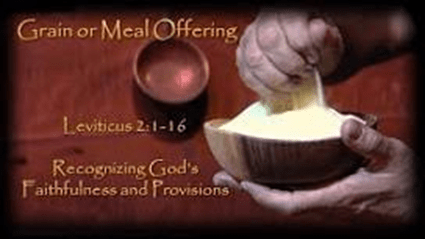
“When anyone brings a grain offering to the LORD, his offering must consist of fine flour. He is to pour olive oil on it, put frankincense on it, and bring it to Aaron’s sons the priests. The priest shall take a handful of the flour and oil, together with all the frankincense, and burn this as a memorial portion on the altar, an offering made by fire, a pleasing aroma to the LORD. The remainder of the grain offering will belong to Aaron and his sons; it is a most holy part of the offerings made by fire to the LORD.

Now if you bring an offering of grain baked in an oven, it must consist of fine flour, either unleavened cakes mixed with oil or unleavened wafers coated with oil. If your offering is a grain offering prepared on a griddle, (a shallow pan for baking or frying) it must be unleavened bread made of fine flour mixed with oil. Crumble it and pour oil on it; it is a grain offering. If your offering is a grain offering cooked in a pan,( a deep pan or stew pan) it must consist of fine flour with oil.

When you bring to the LORD the grain offering made in any of these ways, it is to be presented to the priest, and he shall take it to the altar. The priest is to remove the memorial portion from the grain offering and burn it on the altar as an offering made by fire, a pleasing aroma to the LORD. But the remainder of the grain offering shall belong to Aaron and his sons; it is a most holy part of the offerings made by fire to the LORD.

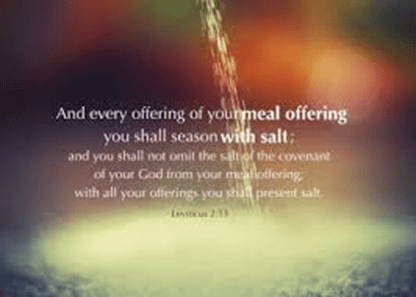
No grain offering that you present to the LORD may be made with leaven, for you are not to burn any leaven or honey as an offering made by fire to the LORD. You may bring them to the LORD as an offering of firstfruits, but they are not to be offered on the altar as a pleasing aroma. And you shall season each of your grain offerings with salt; you must not leave the salt of the covenant of your God out of your grain offering—you are to add salt to each of your offerings.

If you bring a grain offering of firstfruits to the LORD, you shall offer crushed heads of new grain roasted on the fire. And you are to put oil and frankincense on it; it is a grain offering. The priest shall then burn the memorial portion of the crushed grain and the oil, together with all its frankincense, as an offering made by fire to the LORD.”  

 Why is God ordering His people to make grain offerings? God knows that in the Promised Land, the Israelites will be doing a lot of farming, raising grain and olives and grapes, and producing grain, olive oil and wine. Obviously, the Israelites will want to make offerings, so they need regulations; otherwise, there will be a line of smirking farmers hauling moldy grain, sour wine, and poor – grade olive oil to the temple.

“When anyone brings a grain offering to the LORD, his offering must consist of fine flour. He is to pour olive oil on it, put frankincense on it, and bring it to Aaron’s sons the priests. The priest shall take a handful of the flour and oil, together with all the frankincense, and burn this as a memorial portion on the altar, an offering made by fire, a pleasing aroma to the LORD. The remainder of the grain offering will belong to Aaron and his sons; it is a most holy part of the offerings made by fire to the LORD.”

One of the ways the priests benefited from their work was by receiving their share of offerings. Notice that the priests were only to offer a token amount of the fine grain and olive oil plus all the frankincense. The remaining fine grain plus oil belonged to the priests. Other grain offerings included baked or fried unleavened cakes made from flour mixed with oil or unleavened wafers coated with oil.

Why the proscription against leaven? In Egypt leaven was used to brew beer and bake bread. God knew that the Israelites had Egyptian statues, amulets, and all kinds of religious articles hidden in their luggage. God wanted the Israelites to make a complete break with everything reminding them of Egypt. Worshipers could offer honey as part of first fruits offerings but they were not to include honey with any of the baked grain offerings; however, they were to include salt with all the offerings. Not only was salt a precious commodity, but it also was considered as a form of purification.  

“If you bring a grain offering of firstfruits to the LORD, you shall offer crushed heads of new grain roasted on the fire. And you are to put oil and frankincense on it; it is a grain offering. The priest shall then burn the memorial portion of the crushed grain and the oil, together with all its frankincense, as an offering made by fire to the LORD.”  At certain times of the year, the Israelites were to present the first fruits of their harvest. Why the first fruits? When offering the first fruits from the harvest, farmers could not be certain that there would be any more. Offering the first fruits meant taking a risk and trusting God to provide a bountiful harvest.

APPLICATION: These days, nobody is hauling grain into church; however, there are charitable farming organizations that donate grain to areas struck with famine. What can we learn from these ancient instructions?

  1. God deserves our best, not left-overs.
  2. God is not impressed by quantity but by quality. God is not telling the Israelites how much grain  to offer; even the poorest of Israelites might still bring a small offering.
  3. The principal of first fruits still applies. When we offer God our best and trust Him for the rest, He will provide.

Many years ago, my bank account had taken several hits. Expenses of traveling to interview for pediatric surgery training programs, supporting an orphan through World Vision, tithing to my church – Although I had been careful, my bank account was down to $1.37. At that point, God spoke to my heart and asked, “How much do you think that $1.37 will do? Give it to Me.” I shrugged my shoulders, said, “Fine!” and dropped a check for $1.37 in the church offering plate. That is when the miracles began. First, I came home to find a huge bag of fresh vegetables from my neighbors on my doorstep. Next, some friends invited me for supper several times. I was living immediately across the street from the hospital where I was working, so transportation to work was no problem. And I still had enough fuel in my car to take me to church until I got my next paycheck. One night I suddenly realized that my dry supplies such as beans, flour, soy powder, etc., should have run out several weeks earlier but my cannisters were still half full. God had provided more than I could possibly anticipate.

God does not play favorites. If you will trust Him, He will provide. But you must take the first step: trusting Him.

PRAYER: Father God, thank You for loving us and for caring for us. Lord, help all who read these words to trust You as their Provider. In the mighty and precious Name of King Jesus. Amen.
JULY 2, 2023 WHY ALL THESE LAWS? LEVITICUS 1:1-17 BURNT OFFERINGS? YUCK!

July 2, 2023

The Burnt Offering

“Now the Lord called to Moses, and spoke to him from the tabernacle of meeting, saying, “Speak to the children of Israel, and say to them: ‘When any one of you brings an offering to the Lord, you shall bring your offering of the livestock—of the herd and of the flock.

 ‘If his offering is a burnt sacrifice of the herd, let him offer a male without blemish; he shall offer it of his own free will at the door of the tabernacle of meeting before the Lord. Then he shall put his hand on the head of the burnt offering, and it will be accepted on his behalf to make atonement for him. He shall kill the bull before the Lord; and the priests, Aaron’s sons, shall bring the blood and sprinkle the blood all around on the altar that is by the door of the tabernacle of meeting. And he shall skin the burnt offering and cut it into its pieces. The sons of Aaron the priest shall put fire on the altar, and lay the wood in order on the fire. Then the priests, Aaron’s sons, shall lay the parts, the head, and the fat in order on the wood that is on the fire upon the altar; but he shall wash its entrails and its legs with water. And the priest shall burn all on the altar as a burnt sacrifice, an offering made by fire, a sweet aroma to the Lord.

 ‘If his offering is of the flocks—of the sheep or of the goats—as a burnt sacrifice, he shall bring a male without blemish. He shall kill it on the north side of the altar before the Lord; and the priests, Aaron’s sons, shall sprinkle its blood all around on the altar. And he shall cut it into its pieces, with its head and its fat; and the priest shall lay them in order on the wood that is on the fire upon the altar; but he shall wash the entrails and the legs with water. Then the priest shall bring it all and burn it on the altar; it is a burnt sacrifice, an offering made by fire, a sweet aroma to the Lord.

‘And if the burnt sacrifice of his offering to the Lord is of birds, then he shall bring his offering of turtledoves or young pigeons. The priest shall bring it to the altar, wring off its head, and burn it on the altar; its blood shall be drained out at the side of the altar. And he shall remove its crop with its feathers and cast it beside the altar on the east side, into the place for ashes. Then he shall split it at its wings, but shall not divide it completely; and the priest shall burn it on the altar, on the wood that is on the fire. It is a burnt sacrifice, an offering made by fire, a sweet aroma to the Lord.”

The Book of Leviticus follows the Book of Exodus. Exodus tells the story of the escape of the Israelites from Egypt, the issuing of the Ten Commandments from Mount Sinai, and the instructions for constructing the Tabernacle, the portable temple that will accompany the Israelites throughout their journeys. At this point, the Tabernacle has been completely constructed and equipped. Read the instructions in Exodus and you realize that when the Israelites collected gold and silver from the frightened Egyptians, the amount they collected was staggering.

Now God is setting down the rules for burnt offerings. The reason behind these rules is simple: wrong-doing must be paid for with blood. If men and women are not to die, an animal must die as a substitute. Here is what David Guzik in his Enduring Word Commentary says about the sacrificial system:

“ When any one of you brings an offering: In the covenant God made with Israel at Mount Sinai, there were three major parts. The covenant included the law Israel had to obey, sacrifice to provide for breaking the law, and the choice of blessing or curse that would become Israel’s destiny throughout history.

i. The sacrificial system was an essential element of the Mosaic covenant because it was impossible to live up to the requirements of the law. No one could perfectly obey the law, and sin had to be dealt with through sacrifice. Each commanded sacrifice was significant, and they all pointed toward the perfect sacrifice Jesus would offer by His crucifixion (Hebrews 7:279:11-28).

ii. This was not the beginning of God’s sacrificial system. Adam knew of sacrifice (Genesis 3:21), as did Cain and Abel (Genesis 4:3-4), and Noah (Genesis 8:20-21). Israel offered sacrifice at the Passover (Exodus 12). Job 1:5 and Exodus 10:25 also mention burnt sacrifices before the book of Leviticus.

iii. The idea of sacrifice to the gods was not unique to Israel. Other nations and cultures practiced sacrifice, often ultimately involving human sacrifice. The universality of sacrifice is evidence that this concept was known to man before the flood and was carried to different cultures from the survivors of the flood in Noah’s day.”

Those bringing sacrifices were to bring males without blemish-males because male animals were thought to be stronger and without blemish because offering God anything less would be an insult. These animals had to come from the herd so that the Israelites would not simply go out, catch some random wild animal, and try to bring it as a sacrifice. By the same token, the worshipers bringing animals would lay hands on the animal and kill the animal, thus transferring their guilt, while the priests would handle things after that.

David Guzik tells us about the idea behind these sacrifices: “To make atonement for him: The idea behind the Hebrew word for atonement (kophar) is to cover. The idea was that an individual’s sin and guilt were covered over by the blood of the sacrificial victim.

i. Leviticus is a book all about atonement. “The word kipper (“to make atonement”) is used almost fifty times in Leviticus…. It is used about fifty times more in the rest of the OT.” (Harris)

ii. But there is a difference between the Old Testament idea of atonement and the New Testament idea. In the Old Testament, sin is “covered over” until redemption was completed by Jesus on the cross. In the New Testament, sin is done away with – and a true “at-one-ment” was accomplished by Jesus’ sacrifice. The believer is therefore right with God on the basis of what Jesus has done at the cross, not on the basis of what the believer does. “There are two ruling religions around us at this day, and they mainly differ in tense. The general religion of mankind is ‘Do,’ but the religion of a true Christian is ‘Done.’” (Spurgeon)

iii. Significantly, the burnt offering was more about total surrender to God than about sin. Yet this shows that when we come to God with the greatest surrender possible for us, we are still marked by sin and in great need of atonement. Efforts of greater devotion and surrender to God should, if done properly, drive us to greater dependence on God’s perfect sacrifice of atonement in and through Jesus Christ.

iv. “Our only right to offer anything to God, in any form, is created by the one Offering through which we must be sanctified. Every offering is a symbol still of the One.” (Morgan)

For a more complete explanation of this chapter, you can read Guzik’s full discussion at the following link: https://enduringword.com/bible-commentary/leviticus-1/

APPLICATION: God does not play favorites. The list of possible sacrifices starts with very expensive animals such as bulls and goes all the way down to turtledoves or young pigeons. God does not leave anybody out; even the very poor can still bring some kind of sacrificial offering. Generally, people are the ones who draw class distinctions based on money; in God’s sight, all people are equal. Much later, Jesus will commend a desperately poor widow for offering the smallest coins possible because those coins represent everything she has. While rich men are parading into the temple and flourishing their money before inserting it into the treasury, this lady creeps in unnoticed by anyone apart from Jesus.

These days, we don’t need to sacrifice animals any longer because Jesus has already offered Himself as the ultimate blood sacrifice for our sins. Our part now is to accept what Jesus has done for us, confess our sins to Him, and serve Him the rest of our lives.

PRAYER: Father God, thank You for loving us and for caring for us. Lord, we confess that we are sinners and that nothing we do is good enough to earn us a place in heaven. Thank You for sending Jesus to die as the perfect sinless blood sacrifice. We believe that Jesus has died for our sins. Help us now to live for You the rest of our lives. In the mighty and precious Name of King Jesus. Amen.