Archive for May, 2024

MAY 22, 2024 PEACE-WE ALL NEED IT BUT HOW CAN WE GET IT? #50 SOMETIMES YOU MUST LEAVE A BAD SITUATION TO GAIN PEACE

May 22, 2024


Genesis 31:1-21 Jacob Flees from Laban

“Now Jacob heard that Laban’s sons were saying, “Jacob has taken away all that belonged to our father and built all this wealth at our father’s expense.” And Jacob saw from the countenance of Laban that his attitude toward him had changed.

Then the LORD said to Jacob, “Go back to the land of your fathers and to your kindred, and I will be with you.”

So Jacob sent word and called Rachel and Leah to the field where his flocks were, and he told them, “I can see from your father’s countenance that his attitude toward me has changed; but the God of my father has been with me. You know that I have served your father with all my strength. And although he has cheated me and changed my wages ten times, God has not allowed him to harm me. If he said, ‘The speckled will be your wages,’ then the whole flock bore speckled offspring. If he said, ‘The streaked will be your wages,’ then the whole flock bore streaked offspring. Thus God has taken away your father’s livestock and given them to me.

When the flocks were breeding, I saw in a dream that the streaked, spotted, and speckled males were mating with the females. In that dream the angel of God said to me, ‘Jacob!’

And I replied, ‘Here I am.’

Look up,’ he said, ‘and see that all the males that are mating with the flock are streaked, spotted, or speckled; for I have seen all that Laban has done to you. I am the God of Bethel, where you anointed the pillar and made a solemn vow to Me. Now get up and leave this land at once, and return to your native land.’”

Then Rachel and Leah replied, “Do we have any portion or inheritance left in our father’s house? Are we not regarded by him as outsiders? Not only has he sold us, but he has certainly squandered what was paid for us. Surely all the wealth that God has taken away from our father belongs to us and to our children. So do whatever God has told you.”

So Jacob got up and put his children and his wives on camels, and he drove all his livestock before him, along with all the possessions he had acquired in Paddan-aram, to go to his father Isaac in the land in Canaan.

Now while Laban was out shearing his sheep, Rachel stole her father’s household idols. Moreover, Jacob deceived Laban the Aramean by not telling him that he was running away. So he fled with all his possessions, crossed the Euphrates, and headed for the hill country of Gilead.”

Things are not rosy in Laban’s household. Laban’s sons are angry and resentful, being certain that Jacob has stolen their father’s wealth that might eventually come to them. Now we learn that Laban has done everything he can to cheat Jacob, changing Jacob’s wages ten times. God orders Jacob, “Go back to the land of your fathers and to your kindred, and I will be with you.” Rachel and Leah feel their father now regards them as outsiders and not as his daughters, having sold them and then having squandered their doweries. “Surely all the wealth that God has taken away from our father belongs to us and to our children. So do whatever God has told you.”  While Rachel and Leah might be competing to see who can bear more children, they are united in their frustration and hurt. Clearly, their father has regarded them as nothing more than marketable commodities and having sold them, now appears to have no affection for them or their children whatsoever.

While Laban is shearing his sheep, Rachel steals the household gods without anyone’s knowledge and then Jacob loads everyone and flees with all his possessions to Gilead, just east of the Jordan River. Jacob has probably been considering this move for some time; however, he has waited until God has given him the release to leave Laban.

“Do I stay or go? If I go, am I simply a coward?” No situation is static, and sometimes we find that a situation we have thought to be promising turns sour. What do we do when our circumstances have changed? Prior to leaving for the mission field 36 years ago, an older friend closely queried us regarding the nature of our first project. Was this hospital really going to be a non-profit project, or would it benefit a private individual? Once we entered into the situation and studied it for some time, we realized that there were those working behind the scenes who anticipated making a great deal of money from the efforts of our mission. We did our best to alert our mission and the national church; sadly, our mission refused to believe us and prematurely ended our term. At the time, the actions of our mission devastated and wounded us; however, looking back, we now realize that God used those actions to deliver us out of an untenable situation.

God made our decision to leave for us; however, the experience we gained from that first term proved invaluable when we returned two years later with a different sending agency. (While interviewing with that second sending agency, we outlined all the mistakes our first group had made and indicated that if this group was planning to operate in the same fashion, we wanted no part of them.)

Jacob the trickster has met his match in his Uncle Laban. God is using Laban’s devious behavior to train Jacob so that Jacob will never attempt to manipulate others again. But God is also delivering Jacob and his family from Laban’s shameful treatment. God has released Jacob and he has peace in leaving.

PRAYER: Father God, thank You for loving us and for caring for us. Lord, some of us are in a quandary. We are caught in bad situations, but we don’t know whether or not we should leave. Give all those facing such thorny decisions Your peace about their decision. In the mighty and precious Name of King Jesus. Amen.

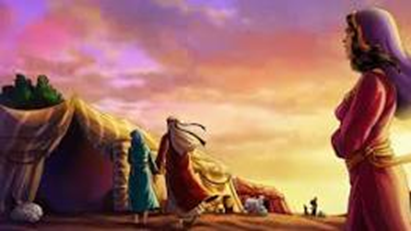
MAY 21, 2024 PEACE-WE ALL NEED IT BUT HOW DO WE GET IT?#49 IF YOU ARE WALKING WITH GOD, HE CAN PROTECT YOU FROM SORCERY AND PROSPER YOU AND GIVE YOU PEACE.

May 21, 2024

Jacob Prospers

Genesis 30:25-43 “Now after Rachel had given birth to Joseph, Jacob said to Laban, “Send me on my way so I can return to my homeland. Give me my wives and children for whom I have served you, that I may go on my way. You know how hard I have worked for you.”

But Laban replied, “If I have found favor in your eyes, please stay. I have learned by divination that the LORD has blessed me because of you.” And he added, “Name your wages, and I will pay them.”

Then Jacob answered, “You know how I have served you, and how your livestock has thrived under my care. Indeed, you had very little before my arrival, but now your wealth has increased many times over. The LORD has blessed you wherever I set foot. But now, when may I also provide for my own household?”

“What can I give you?” Laban asked.

“You do not need to give me anything,” Jacob replied. “If you do this one thing for me, I will keep on shepherding and keeping your flock. Let me go through all your flocks today and remove from them every speckled or spotted sheep, every dark-colored lamb, and every spotted or speckled goat. These will be my wages. So my honesty will testify for me when you come to check on my wages in the future. If I have any goats that are not speckled or spotted, or any lambs that are not dark-colored, they will be considered stolen.”

“Agreed,” said Laban. “Let it be as you have said.”

That very day Laban removed all the streaked or spotted male goats and every speckled or spotted female goat—every one that had any white on it—and every dark-colored lamb, and he placed them under the care of his sons. Then he put a three-day journey between himself and Jacob, while Jacob was shepherding the rest of Laban’s flocks.

Jacob, however, took fresh branches of poplar, almond, and plane trees, and peeled the bark, exposing the white inner wood of the branches. Then he set the peeled branches in the watering troughs in front of the flocks coming in to drink. So when the flocks were in heat and came to drink, they mated in front of the branches. And they bore young that were streaked or speckled or spotted. Jacob set apart the young, but made the rest face the streaked dark-colored sheep in Laban’s flocks. Then he set his own stock apart and did not put them with Laban’s animals.

Whenever the stronger females of the flock were in heat, Jacob would place the branches in the troughs, in full view of the animals, so that they would breed in front of the branches. 42But if the animals were weak, he did not set out the branches. So the weaker animals went to Laban and the stronger ones to Jacob.

Thus Jacob became exceedingly prosperous. He owned large flocks, maidservants and menservants, and camels and donkeys.”

Until Jacob reached Haran, he probably fancied himself as being a little bit smarter than everybody else, but that was before he met tricky Uncle Laban. Uncle Laban has already managed to marry off an unwanted daughter with an eye problem, no mean achievement. Now Uncle Laban has realized that God is blessing all of Jacob’s efforts. Notice Laban has reached this conclusion by divination, not by prayer. Notice also what Jacob says about his time with Laban. “Indeed, you had very little before my arrival, but now your wealth has increased many times over. The LORD has blessed you wherever I set foot. But now, when may I also provide for my own household?”

Jacob proposes to Laban that he will be paid with all the speckled, spotted, and dark sheep and goats. Laban thinks this is a great idea and immediately culls all such animals out of his herd, sending them a three-day journey away from the place where Jacob is minding Laban’s other herds. So far, Laban is winning. But Jacob places peeled branches in front of the water hole when the herds are coming to mate, timing things so the strongest animals will see the peeled branches and give birth to streaked, spotted, and dark offspring. Does this trick actually work? Who knows? While there’s no scientific basis for the results, the outcome is that Jacob winds up with the strongest animals while Laban owns the weaker ones. Jacob also prospers, owning large flocks, maidservants and menservants and camels and donkeys. Clearly, God is blessing Jacob and protecting him from Laban’s tricks. Anybody who has already resorted to divination will not hesitate to descend into witchcraft to attack a rival, and Laban is probably attempting to curse Jacob.

The story of Laban’s attempts to dominate Jacob and to impoverish him brings out an important point: If you are walking in God’s will, He will protect you and prosper you. Here in Ghana, curses and witchcraft are common. Many market days, someone will leave a calabash with various herbs and other things in it at a crossroads to curse passersby. We have prayed over so many people to break off curses that we have a standard prayer in which we break off ancestral curses, generational curses, multiplying curses, and curses tied to any action. We soak the person for whom we are praying in the Blood of Jesus, the Love of Jesus, and the Fire of the Holy Spirit, and we send the Blood of Jesus, the Love of Jesus, and the Fire of the Holy Spirit back along the lines of communication to consume the connections between the individual invoking the curses and the person being cursed.

Dean Sherman, one of the original YWAM missionaries, emphasizes that there is more power in one drop of the Blood of Jesus than in all the forces of hell. Sherman continues that the victory over Satan has already been won at Calvary; however, we must pray, enforcing that victory and invoking the Blood of Jesus. One important thing to remember is Proverbs 26:2 “Like a flitting sparrow, like a flying swallow, So a curse without cause shall not alight.The Message translation reads, “You have as little to fear from an undeserved curse as from the dart of a wren or the swoop of a swallow.” We don’t have to live in fear, even when we find ourselves in a witchcraft-ridden environment.

All of Laban’s efforts to subdue Jacob are coming to naught. Even though Laban has realized that God is blessing Jacob, he has no idea of God’s greatness and power. Meanwhile, Jacob continues to prosper despite Laban’s best efforts. Today, you may find yourself in a situation similar to that of Jacob. Someone you have assumed wants to help you is actually trying to dominate and impoverish you. Are you in the center of God’s will for your life? If you know that you are doing God’s will, then you can trust that God will help you, guide you, and protect you. But beware! There is always a temptation to manipulate and force events. Be certain that you are also waiting for God’s timing, for if you do, you will have peace.

PRAYER: Father God, thank You for loving us and for caring for us. Lord, many of us find ourselves in difficult situations. Those who should be helping are attacking us, and we are stressing out. Lord, help us remember that if You have led us into these situations, You can protect and deliver us. Help us to trust You. In the mighty and precious Name of King Jesus. Amen.

MAY 20, 2024 PEACE-WE ALL NEED IT BUT HOW DO WE GET IT?#48 THE MORE YOU COMPETE, THE LESS PEACE

May 20, 2024

Dan and Naphtali

Genesis 30:1-22 “When Rachel saw that she was not bearing any children for Jacob, she envied her sister. “Give me children, or I will die!” she said to Jacob.

Jacob became angry with Rachel and said, “Am I in the place of God, who has withheld children from you?”

Then she said, “Here is my maidservant Bilhah. Sleep with her, that she may bear children for me, so that through her I too can build a family.” (Literally bear children on my knees)

So Rachel gave Jacob her servant Bilhah as his wife, and he slept with her, and Bilhah conceived and bore him a son. Then Rachel said, “God has vindicated me; He has heard my plea and given me a son.” So she named him Dan. (Dan means he has judged or he has vindicated.)

And Rachel’s servant Bilhah conceived again and bore Jacob a second son. Then Rachel said, “In my great struggles, I have wrestled with my sister and won.” So she named him Naphtali. (Naphtali sounds like the Hebrew for wrestling.)

Gad and Asher

When Leah saw that she had stopped having children, she gave her servant Zilpah to Jacob as a wife. And Leah’s servant Zilpah bore Jacob a son. Then Leah said, “How fortunate!” So she named him Gad. (Gad sounds like the Hebrew for good fortune, or alternately for band of raiders.)

When Leah’s servant Zilpah bore Jacob a second son, Leah said, “How happy I am, for the women call me happy.” So she named him Asher.( Asher means happy.)

Now during the wheat harvest, Reuben went out and found some mandrakes in the field. When he brought them to his mother, Rachel begged Leah, “Please give me some of your son’s mandrakes.”

But Leah replied, “Is it not enough that you have taken away my husband? Now you want to take my son’s mandrakes as well?”

“Very well,” said Rachel, “he may sleep with you tonight in exchange for your son’s mandrakes.”

When Jacob came in from the field that evening, Leah went out to meet him and said, “You must come with me, for I have hired you with my son’s mandrakes.” So he slept with her that night.

Issachar, Zebulun, and Dinah

And God listened to Leah, and she conceived and bore a fifth son to Jacob. Then Leah said, “God has rewarded me for giving my maidservant to my husband.” So she named him Issachar. (Issachar sounds like the Hebrew for wages or reward.)

Again Leah conceived and bore a sixth son to Jacob. “God has given me a good gift,” she said. “This time my husband will honor me, because I have borne him six sons.” And she named him Zebulun. (Zebulun sounds like the Hebrew for honor. )

After that, Leah gave birth to a daughter and named her Dinah.

The Birth of Joseph

Then God remembered Rachel. He listened to her and opened her womb, and she conceived and gave birth to a son. “God has taken away my shame,” she said. She named him Joseph, and said, “May the LORD add to me another son.” (Joseph means “may he add.”)

In case you’ve gotten confused, at this point, there are eleven sons and one daughter, plus four women who are now in a very tangled relationship. It was bad enough when only Rachel and Leah were competing, but now the two sisters are also competing by having given their husband their serving maids as concubines or secondary wives. No peace in this household! Anybody who has raised little boys knows boys make NOISE, get into fights, run around getting into things, pestering their little sister, and accidentally tearing things up. Jacob may be strutting around, boasting of his masculinity, but back in the tents, it’s chaos.

Rachel and Leah’s uneasy relationship has resulted in a kind of armed truce, as evidenced by the story of Leah hiring Jacob for a night with her son’s mandrakes. What are mandrakes? IBible tells us this: “It has large, wrinkled leaves and small, purple flowers, and the root may be several feet long and weigh several pounds. Mandrakes were believed to be a stimulant to help with fertility and conception in barren women. Rachel sees the mandrakes as a way for her to bear a child with Jacob!” https://www.i.bible/behind-the-scenes/mandrakes-in-genesis/#:~:text=It%20has%20large%2C%20wrinkled%20leaves,bear%20a%20child%20with%20Jacob!

Poor Leah! Poor Rachel! Poor Bilhah and Zilpah! The two sisters have competed all their lives, and now are involved in the baby-bearing Olympics. These two women have drawn both their serving maids into the competition, willingly or not. Perhaps Bilhah and Zilpah already have young men interested in them and have no desire to be forced to have sex with Jacob, no matter what his position is. Now the serving maids are being treated as baby – bearing machines through which their mistresses may continue their competition. What if either Bilhah or Zilpah fails to become pregnant? Will they be treated as outcasts?

Sometimes, people are fond of the phrase “healthy competition.” Frequently, these same people are not describing a situation in which they are involved, but are commenting on someone else’s situation. When you are the one whose position is threatened, that competition looks anything but healthy! In this story, the women have been drawn into competition due to cultural norms over which they have no control. But sometimes, we put undue pressure on ourselves by struggling to compete unnecessarily. If we have been raised in families in which love was conditional, we feel that we must strive to perform well or people will fail to value  us. We might find ourselves feeling rejected when no rejection has been intended. We might also feel that we must continue to show off so that we can gain approval from others. If applause and praise do not come quickly or in sufficient quantities, we are likely to blame others, not realizing that the problem lies within ourselves.

God loves each of us for our unique character, even though He knows our failings better than we do ourselves. A pastor friend used to say that God loves each of us so much that if we had been the only person on earth, Jesus would still have died for our sins. We don’t have to compete with others for God’s love; however, many times church members serve not out of love for God but in hopes of gaining praise from others.

Today, examine your heart. Do you feel that you are only as good as your last performance and that people will only love you if you keep performing? Ask God to show you how much He loves you, and then look for His answers. God will never fail or disappoint you.

PRAYER: Father God, thank You for loving us and for caring for us. Lord, many of us have been repeatedly wounded and truly believe that You will not love us if we don’t keep performing. Speak to our hearts and help us to know that You love us without setting conditions or boundaries. In the mighty and precious Name of King Jesus. Amen.  

MAY 19, 2024 PEACE-WE ALL NEED IT BUT HOW DO WE GET IT? #47 GOD ISN’T WORRIED ABOUT YOUR MESS!

May 19, 2024

Jacob Meets Rachel

Genesis 29:1-35 “Jacob resumed his journey and came to the land of the people of the east. He looked and saw a well in the field, and there by it lay three flocks of sheep, because the sheep were watered from this well. And a large stone covered the mouth of the well. When all the flocks had been gathered there, the shepherds would roll away the stone from the mouth of the well and water the sheep. Then they would return the stone to its place over the mouth of the well.

“My brothers,” Jacob asked the shepherds, “where are you from?”

“We are from Haran,” they answered.

“Do you know Laban the grandson of Nahor?” Jacob asked.

“We know him,” they replied.

“Is he well?” Jacob inquired.

“Yes,” they answered, “and here comes his daughter Rachel with his sheep.”

“Look,” said Jacob, “it is still broad daylight; it is not yet time to gather the livestock. Water the sheep and take them back to pasture.”

But they replied, “We cannot, until all the flocks have been gathered and the stone has been rolled away from the mouth of the well. Then we will water the sheep.”

While he was still speaking with them, Rachel arrived with her father’s sheep, for she was a shepherdess. As soon as Jacob saw Rachel, the daughter of his mother’s brother Laban, with Laban’s sheep, he went up and rolled the stone away from the mouth of the well and watered his uncle’s sheep. Then Jacob kissed Rachel and wept aloud. He told Rachel that he was Rebekah’s son, a relative of her father, and she ran and told her father.

When Laban heard the news about his sister’s son Jacob, he ran out to meet him. He embraced him and kissed him and brought him to his home, where Jacob told him all that had happened.

Jacob Marries Leah and Rachel

Then Laban declared, “You are indeed my own flesh and blood.”

After Jacob had stayed with him a month, Laban said to him, “Just because you are my relative, should you work for nothing? Tell me what your wages should be.”

Now Laban had two daughters; the older was named Leah, and the younger was named Rachel. Leah had no sparkle in her eyes, but Rachel was shapely and beautiful. (Some sources say that Leah had weak eyes.) Since Jacob loved Rachel, he answered, “I will serve you seven years for your younger daughter Rachel.”

Laban replied, “Better that I give her to you than to another. Stay here with me.” So Jacob served seven years for Rachel, yet it seemed but a few days because of his love for her.

Finally Jacob said to Laban, “Grant me my wife, for my time is complete, and I want to sleep with her.”

So Laban invited all the men of that place and prepared a feast. But when evening came, Laban took his daughter Leah and gave her to Jacob, and he slept with her. And Laban gave his servant girl Zilpah to his daughter Leah as her maidservant.

When morning came, there was Leah! “What have you done to me?” Jacob said to Laban. “Wasn’t it for Rachel that I served you? Why have you deceived me?”

Laban replied, “It is not our custom here to give the younger daughter in marriage before the older. Finish this week’s celebration, and we will give you the younger one in return for another seven years of work.”

And Jacob did just that. He finished the week’s celebration, and Laban gave him his daughter Rachel as his wife. Laban also gave his servant girl Bilhah to his daughter Rachel as her maidservant.

Jacob slept with Rachel as well, and indeed, he loved Rachel more than Leah. So he worked for Laban another seven years.”

 When the LORD saw that Leah was unloved, He opened her womb; but Rachel was barren. And Leah conceived and gave birth to a son, and she named him Reuben, for she said, “The LORD has seen my affliction. Surely my husband will love me now.” (Reuben means Look, a son and also sounds like the Hebrew for He has seen my misery.)

Again she conceived and gave birth to a son, and she said, “Because the LORD has heard that I am unloved, He has given me this son as well.” So she named him Simeon. (Simeon probably means “one who hears.”)

Once again Leah conceived and gave birth to a son, and she said, “Now at last my husband will become attached to me, because I have borne him three sons.” So he was named Levi. (Levi sounds like the Hebrew for being attached or feeling affection for.)

And once more she conceived and gave birth to a son and said, “This time I will praise the LORD.” So she named him Judah. (Praise) Then Leah stopped having children.

Anyone who thinks polygamy is a great idea should study the story of Jacob, Rachel, and Leah carefully! Jacob falls instantly in love with Rachel; however, Rachel’s older sister Leah has eye problems. Perhaps Leah squints or has a chronic conjunctivitis or even trachoma. Leah is probably a very nice girl; however, in a culture where women may be veiled apart from their eyes, it is the eyes men look at first, and Leah is doomed to remain an old maid. That’s when tricky Uncle Laban comes up with a genius plan. Laban agrees to give Rachel to Jacob as a wife, but after the wedding celebration when Jacob is probably drunk, it’s Leah with whom Jacob has sex and not Rachel. When Jacob wakes up in the morning, he’s horrified to find Leah sharing his bed. Now not only does Jacob have a hangover but he also has a squinty-eyed wife and Rachel is still out there for someone else to marry.

Jacob winds up serving Laban seven years for each girl, or a total of fourteen years. So far Laban is coming out way ahead of the game. God favors Leah with four sons because He knows she is the unfavorite wife. Rachel, meanwhile, remains barren. In the child-bearing sweepstakes, Rachel is falling way behind, and this is a big deal. Women in polygamous marriages frequently are valued depending on the number of children they have borne successfully. Woe betide a woman who miscarries or who is barren! Jacob still loves Rachel more, but he might be getting a bit frustrated with her lack of progeny.

Does God love Leah more than Rachel? No. God loves both of them equally; however, God knows that if Leah does not bear children, Jacob might isolate her or reduce her food allowance so that she is virtually starving. Rachel, on the other hand, is in no danger of mistreatment.

So far, the description of Jacob’s marriage doesn’t sound very peaceful, and things are about to heat up further. We might ask why God is allowing Jacob to marry both sisters. God wants there to be twelve tribes of Israel and the sons born to these two women are the foundations for those tribes. Why twelve? Only God knows the ultimate answer to that question.

One important lesson to draw from the story of Jacob and his family is that God will use anyone who yields himself/herself to Him. God isn’t worried about our frailties or our shortcomings; He knows them better than we do ourselves. But God can overcome any of our failings, provided we will allow Him to do so. And when we yield ourselves to God, we will have perfect peace.

PRAYER: Father God, thank You for loving us and for caring for us. Lord, we praise You for using us despite our shortcomings. Help us to yield ourselves completely to You. In the mighty and precious Name of King Jesus. Amen.

MAY 18, 2024 PEACE-WE ALL NEED IT BUT HOW DO WE GET IT?#46 GOD CAN GIVE YOU PEACE EVEN WHILE YOU ARE IN EXILE

May 18, 2024

Genesis 28:1-22  Jacob Flees to Laban

“So Isaac called for Jacob and blessed him. “Do not take a wife from the Canaanite women,” he commanded. “Go at once to Paddan-aram, to the house of your mother’s father Bethuel, and take a wife from among the daughters of Laban, your mother’s brother. May God Almighty bless you and make you fruitful and multiply you, so that you may become a company of peoples. And may He give the blessing of Abraham to you and your descendants, so that you may possess the land where you dwell as a foreigner, the land God gave to Abraham.”

So Isaac sent Jacob to Paddan-aram, to Laban son of Bethuel the Aramean, the brother of Rebekah, who was the mother of Jacob and Esau.

Esau Marries Mahalath

Now Esau learned that Isaac had blessed Jacob and sent him to Paddan-aram to take a wife there, commanding him, “Do not marry a Canaanite woman,” and that Jacob had obeyed his father and mother and gone to Paddan-aram. And seeing that his father Isaac disapproved of the Canaanite women, Esau went to Ishmael and married Mahalath, the sister of Nebaioth and daughter of Abraham’s son Ishmael, in addition to the wives he already had.

Jacob’s Ladder

Meanwhile Jacob left Beersheba and set out for Haran. On reaching a certain place, he spent the night there because the sun had set. And taking one of the stones from that place, he put it under his head and lay down to sleep.

And Jacob had a dream about a ladder that rested on the earth with its top reaching up to heaven, and God’s angels were going up and down the ladder. And there at the top the LORD was standing and saying, “I am the LORD, the God of your father Abraham and the God of Isaac. I will give you and your descendants the land on which you now lie. Your descendants will be like the dust of the earth, and you will spread out to the west and east and north and south. All the families of the earth will be blessed through you and your offspring. Look, I am with you, and I will watch over you wherever you go, and I will bring you back to this land. For I will not leave you until I have done what I have promised you.”

When Jacob woke up, he thought, “Surely the LORD is in this place, and I was unaware of it.” And he was afraid and said, “How awesome is this place! This is none other than the house of God; this is the gate of heaven!”

The Stone of Bethel

Early the next morning, Jacob took the stone that he had placed under his head, and he set it up as a pillar. He poured oil on top of it, and he called that place Bethel, (House of God) though previously the city had been named Luz.

Then Jacob made a vow, saying, “If God will be with me and watch over me on this journey, and if He will provide me with food to eat and clothes to wear, so that I may return safely to my father’s house, then the LORD will be my God. And this stone I have set up as a pillar will be God’s house, and of all that You give me I will surely give You a tenth.”

For being his father’s favorite, Esau certainly hasn’t exerted himself to try to please his father. Remember those Hittite wives Esau has married? It’s not only Rebekah who is fed up with these women; Isaac is also tired of their wrangling. When Rebekah suggests that Jacob return to her brother Laban in Haran to find a wife, Isaac thinks it’s a great idea. Surely someone from Rebekah’s family will behave better. In a belated attempt to appease Isaac, Esau takes a wife from Ishmael’s family in addition to the two Hittites, not precisely a recipe for peace. What those Hittite ladies may have said or done to this new rival can only be imagined!

Until now, Jacob has never encountered the One True Living God for himself. While Jacob may have heard stories from his father Isaac, it’s likely that he may have dismissed them as myths. Now Jacob is fleeing his brother Esau’s wrath after tricking their father into giving him the blessing that was to be Esau’s. Exhausted, Jacob finds a safe place to sleep and lies down, using a stone for a pillow. And then God shows up. God makes Himself known to Jacob in a dream, identifying as the God of Abraham and Isaac and promising to bless Jacob and to be with him wherever he goes. God even promises that all the families of the earth will be blessed through Jacob and his offspring.

Jacob may be a self-centered manipulator, but he recognizes that he is in a holy place and calls it Bethel, meaning “the House of God.” Jacob vows that if God will keep His promises, Jacob will serve him as his God and will give God one tenth of everything he has. This is the second mention of tithing in the Book of Genesis.

Why Jacob? For that matter, why Abraham or Isaac? The more closely we examine these men, the more repellent they appear; yet, God has chosen them to use and to demonstrate His glory. Jacob is on his way to Haran, where he will meet Uncle Laban, someone far trickier than he is. God is preparing a series of tests and learning experiences for Jacob that will totally change Jacob’s life.

What can we learn from Jacob? God will show up anytime we are open and receptive, and God doesn’t wait until we are cleaned up to show up. That night when Jacob has the dream, he isn’t looking for God, but God IS looking for him. Once Jacob meets God, he has peace that he is going the right way and that God will be with him.

Even though Jacob has left his family to save himself from his brother’s wrath, God is still guiding him. It’s impossible to guide a stationary object; you must be in motion for God to guide you. Even if you start out by heading in a wrong direction, if you will listen to God, God will still direct you and give you His peace.    

PRAYER: Father God, thank You for loving us and for caring for us. Lord, help us to watch for Your appearing and to listen to Your leading in the mighty and precious Name of King Jesus. Amen.

MAY 17, 2024 PEACE-WE ALL NEED IT BUT HOW DO WE GET IT?#45 DON’T DECEIVE YOURSELF IN HOPES OF GETTING PEACE

May 17, 2024

Isaac Blesses Jacob

Genesis 27:18-46 So Jacob went to his father and said, “My father.” “Here I am!” he answered. “Which one are you, my son?” Jacob said to his father, “I am Esau, your firstborn. I have done as you told me. Please sit up and eat some of my game, so that you may bless me.”

But Isaac asked his son, “How did you ever find it so quickly, my son?”

“Because the LORD your God brought it to me,” he replied.

Then Isaac said to Jacob, “Please come closer so I can touch you, my son. Are you really my son Esau or not?”

So Jacob came close to his father Isaac, who touched him and said, “The voice is the voice of Jacob, but the hands are the hands of Esau.” Isaac did not recognize him, because his hands were hairy like those of his brother Esau; so he blessed him.

Again he asked, “Are you really my son Esau?” And he replied, “I am.”

“Serve me,” said Isaac, “and let me eat some of my son’s game, so that I may bless you.”

Jacob brought it to him, and he ate; then he brought him wine, and he drank.

Then his father Isaac said to him, “Please come near and kiss me, my son.”

So he came near and kissed him. When Isaac smelled his clothing, he blessed him and said:

“Ah, the smell of my son is like the smell of a field that the LORD has blessed. May God give to you the dew of heaven and the richness of the earth—an abundance of grain and new wine. May peoples serve you and nations bow down to you. May you be the master of your brothers, and may the sons of your mother bow down to you. May those who curse you be cursed, and those who bless you be blessed.”

The Stolen Blessing

As soon as Isaac had finished blessing him and Jacob had left his father’s presence, his brother Esau returned from the hunt. He too made some tasty food, brought it to his father, and said to him, “My father, sit up and eat of your son’s game, so that you may bless me.”

But his father Isaac replied, “Who are you?”

“I am Esau, your firstborn son,” he answered.

Isaac began to tremble violently and said, “Who was it, then, who hunted the game and brought it to me? Before you came in, I ate it all and blessed him—and indeed, he will be blessed!”

When Esau heard his father’s words, he let out a loud and bitter cry and said to his father, “Bless me too, O my father!”

But Isaac replied, “Your brother came deceitfully and took your blessing.”

So Esau declared, “Is he not rightly named Jacob? (Supplanter/Deceiver) For he has cheated me twice. He took my birthright, and now he has taken my blessing.” Then he asked, “Haven’t you saved a blessing for me?”

But Isaac answered Esau: “Look, I have made him your master and given him all his relatives as servants; I have sustained him with grain and new wine. What is left that I can do for you, my son?”

Esau said to his father, “Do you have only one blessing, my father? Bless me too, O my father!” Then Esau wept aloud.

His father Isaac answered him: “Behold, your dwelling place shall be away from the richness of the land, away from the dew of heaven above. You shall live by the sword, and serve your brother.

But when you rebel, you will tear his yoke from your neck.”

Esau held a grudge against Jacob because of the blessing his father had given him. And Esau said in his heart: “The days of mourning for my father are at hand; then I will kill my brother Jacob.”

When the words of her older son Esau were relayed to Rebekah, she sent for her younger son Jacob and told him, “Look, your brother Esau is consoling himself by plotting to kill you. So now, my son, obey my voice and flee at once to my brother Laban in Haran. Stay with him for a while, until your brother’s fury subsides—until your brother’s rage against you wanes and he forgets what you have done to him. Then I will send for you and bring you back from there. Why should I lose both of you in one day?”

Then Rebekah said to Isaac, “I am weary of my life because of these Hittite women. If Jacob takes a Hittite wife from among them, what good is my life?”

There is a saying that “If something seems too good to be true, it generally is.” This story bears out that statement. Isaac is blind and must depend on his other senses, including his hearing. When Jacob brings the savory food Isaac loves, Isaac recognizes Jacob’s voice; yet, he convinces himself he is dealing with Esau because he wants to believe so. Isaac wants that food, and he wants it now. No matter how hairy Esau is, he can’t possibly be as hairy as a goat! And if Isaac can smell Esau’s clothing, why doesn’t he smell the scent of goat on the skins Jacob has attached to his arms and his neck? The same man who was willing to attempt to deceive King Abimelech doesn’t even consider the possibility of someone else being even trickier than he is.

Esau’s response is also very interesting. “Is he not rightly named Jacob? (Supplanter/Deceiver) For he has cheated me twice. He took my birthright, and now he has taken my blessing.”  Esau has a faulty memory, for he has freely given up his birthright to assuage his hunger, taking no thought for what he has actually done. Traditionally, once Esau is returning from hunting and meets his brother cooking, he should be able to ask for food without any conditions being set. Perhaps Jacob originally asked Esau for his birthright as a joke, never expecting that Esau would actually agree. Esau has given up his birthright; Jacob has not taken it. Isaac does give Esau a blessing, but he doesn’t know what to say and improvises, expressing his frustration and anger as he pronounces over Esau the scanty blessing he has reserved for Jacob.

Talk about a dysfunctional family! Isaac isn’t much of a father, favoring one twin against the other, following his appetites rather than God’s leading. Rebecca is bitter and manipulative. Esau and Jacob are as much victims of their parents’ poor relationship as anything. Nobody in this situation is enjoying any peace despite their best efforts to do so.

What if you have been born into a dysfunctional family? The plain fact is that most families have a certain amount of dysfunction; the question is what do we do with the results? There are innumerable self-help books attempting to advise people on fixing themselves, but God is still the ultimate People Fixer. God is the Peace-giver and God is the One who can help us heal from whatever damage we may have incurred from our families of origin. Let’s pray for God to heal us, rather than depending on gimmicks. Memorizing particular scriptures that speak to you is another very helpful device. Bitterness over family dysfunction will only make things worse instead of better. And we must want to be healed. God cannot change us as long as we are clinging to our hurts, nourishing them and cherishing them.

PRAYER: Father God, thank You for loving us and for caring for us. Lord, You are the One who can heal all emotional damage and make us whole and healthy. Please help us to allow You to heal us. In the mighty and precious Name of King Jesus. Amen.

MAY 16, 2024 PEACE-WE ALL NEED IT BUT HOW DO WE GET IT? #44 MORE DECEPTION, LESS PEACE

May 16, 2024

Jacob’s Deception

Genesis 27:1-17 “When Isaac was old and his eyes were so weak that he could no longer see, he called his older son Esau and said to him, “My son.” “Here I am,” Esau replied.

“Look,” said Isaac, “I am now old and do not know the day of my death. Take your weapons—your quiver and bow—and go out into the field to hunt some game for me. Then prepare a tasty dish that I love and bring it to me to eat, so that I may bless you before I die.”

Now Rebekah was listening to what Isaac told his son Esau. So when Esau went into the field to hunt game and bring it back, Rebekah said to her son Jacob, “Behold, I overheard your father saying to your brother Esau, ‘Bring me some game and prepare me a tasty dish to eat, so that I may bless you in the presence of the LORD before I die.’

Now, my son, listen to my voice and do exactly as I tell you. Go out to the flock and bring me two choice young goats, so that I can make them into a tasty dish for your father—the kind he loves. Then take it to your father to eat, so that he may bless you before he dies.”

Jacob answered his mother Rebekah, “Look, my brother Esau is a hairy man, but I am smooth-skinned. What if my father touches me? Then I would be revealed to him as a deceiver, and I would bring upon myself a curse rather than a blessing.”

His mother replied, “Your curse be on me, my son. Just obey my voice and go get them for me.”

So Jacob went and got two goats and brought them to his mother, who made the tasty food his father loved. And Rebekah took the finest clothes in the house that belonged to her older son Esau, and she put them on her younger son Jacob. She also put the skins of the young goats on his hands and on the smooth part of his neck. Then she handed her son Jacob the tasty food and bread she had made.

Rebekah has given birth to twin boys; however, she loves Jacob, the quiet one who remains at home, while Isaac loves Esau, the brawling macho hunter, for the game Esau brings him. What’s wrong here? Rebekah loves Jacob for his nature, probably similar to hers, while Isaac loves Esau for what he can get from him. Isaac is a spoiled only child, raised to believe that everything should come to him aand that people should do things for him because he is entitled.There is also another problem: Isaac’s willingness to betray Rebekah to save his own skin. When Isaac moved his family to Gerar, he lied about Rebekah, stating that she was his sister rather than telling the truth that she was his wife. Rebekah may have had no idea that Isaac had lied about her status. Only when King Abimelech of Gerar rebuked Isaac did Isaac admit the truth. All these years, Isaac’s faithlessness has rankled with Rebecca, embittering her, and now it’s payback time. There’s also the possibility that Esau has refused to respect his mother, slighting her by taking his cues from his father. And then there are Esau’s wives.  

Esau has married two Hittite women, both of whom are shrews, fighting each other and mocking every word Rebekah utters. Even though Esau and his wives and children have their own tents, they are still living next door to Isaac and Rebekah and screaming fights go on day and night. Sometimes it is even difficult to sleep because of the noise these two women make. Perhaps these women or their children refuse to greet Rebekah in the morning, a major social offense or perhaps they even dare to invade Rebekah’s tent, trying to steal jewelry and anything else that attracts them. Perhaps each of these women has borne several children and they are using their fecundity as a means of mocking Rebecca for only having one set of twins. No doubt about it, these women have gotten on Rebekah’s last nerve!

Rebekah can’t very well advise Isaac to send Esau away; however, she can manipulate the situation so that Jacob winds up with the bulk of the family assets rather than Esau. After all, a guy who will give away his birthright for the sake of one meal is scarcely the one you want to have as the head of the family when Isaac dies. Who knows what other foolish decisions this man might take?

Blinded by bitterness, Rebekah has no notion of God’s will in this situation. Perhaps Esau would mature if given more responsibility; however, Rebecca doesn’t want to take that risk. And perhaps Rebekah fears that once Isaac dies, she will be relegated to an isolated tent and neglected, reduced to near-starvation; it’s happened before and Esau doesn’t appear to have any love or respect for his mother. So the stage is set for another round of deception with Rebekah pushing the situation and manipulating Jacob. Rebekah is afraid and is taking the only means she can think of to protect Jacob and herself, particularly herself.

Hindsight is 20/20, and we know that this decision will result in Jacob fleeing to Rebekah’s brother Laban, where he will remain for twenty years. Reading this story, we might wonder how God can possibly use these people; after all, we routinely refer to the God of Abraham, Isaac, and Jacob. Despite all the chicanery, God will still use these people; however, for the next twenty years, they will have very little tranquility. Manipulation and forcing situations just don’t bring us peace!

PRAYER: Father God, thank You for loving us and for caring for us. Lord, help us to trust You and not to manipulate or force situations into shapes that You never intended. In the mighty and precious Name of King Jesus. Amen.  

MAY 15, 2024 PEACE-WE ALL NEED IT BUT HOW DO WE GET IT? #43 LYING WON’T BRING YOU PEACE

May 15, 2024

Isaac and Abimelech

Genesis 26:1-34 “There was a famine in the land, besides the first famine that was in the days of Abraham. And Isaac went to Abimelech king of the Philistines, in Gerar.

Then the Lord appeared to him and said: “Do not go down to Egypt; live in the land of which I shall tell you. Dwell in this land, and I will be with you and bless you; for to you and your descendants I give all these lands, and I will perform the oath which I swore to Abraham your father. And I will make your descendants multiply as the stars of heaven; I will give to your descendants all these lands; and in your seed all the nations of the earth shall be blessed; because Abraham obeyed My voice and kept My charge, My commandments, My statutes, and My laws.”

So Isaac dwelt in Gerar. And the men of the place asked about his wife. And he said, “She is my sister”; for he was afraid to say, “She is my wife,” because he thought, “lest the men of the place kill me for Rebekah, because she is beautiful to behold.” Now it came to pass, when he had been there a long time, that Abimelech king of the Philistines looked through a window, and saw, and there was Isaac, showing endearment to Rebekah his wife. Then Abimelech called Isaac and said, “Quite obviously she is your wife; so how could you say, ‘She is my sister’?”

Isaac said to him, “Because I said, ‘Lest I die on account of her.’ ”

And Abimelech said, “What is this you have done to us? One of the people might soon have lain with your wife, and you would have brought guilt on us.” So Abimelech charged all his people, saying, “He who touches this man or his wife shall surely be put to death.”

Then Isaac sowed in that land, and reaped in the same year a hundredfold; and the Lord blessed him. The man began to prosper, and continued prospering until he became very prosperous; for he had possessions of flocks and possessions of herds and a great number of servants. So the Philistines envied him. Now the Philistines had stopped up all the wells which his father’s servants had dug in the days of Abraham his father, and they had filled them with earth. And Abimelech said to Isaac, “Go away from us, for you are much mightier than we.”

Then Isaac departed from there and pitched his tent in the Valley of Gerar, and dwelt there. And Isaac dug again the wells of water which they had dug in the days of Abraham his father, for the Philistines had stopped them up after the death of Abraham. He called them by the names which his father had called them.

Also Isaac’s servants dug in the valley, and found a well of running water there. But the herdsmen of Gerar quarreled with Isaac’s herdsmen, saying, “The water is ours.” So he called the name of the well Esek, (Quarrel)  because they quarreled with him. Then they dug another well, and they quarreled over that one also. So he called its name  Sitnah (Enmity.) And he moved from there and dug another well, and they did not quarrel over it. So he called its name Rehoboth,(Spaciousness) because he said, “For now the Lord has made room for us, and we shall be fruitful in the land.”

Then he went up from there to Beersheba. And the Lord appeared to him the same night and said, “I am the God of your father Abraham; do not fear, for I am with you. I will bless you and multiply your descendants for My servant Abraham’s sake.” So he built an altar there and called on the name of the Lord, and he pitched his tent there; and there Isaac’s servants dug a well.

Then Abimelech came to him from Gerar with Ahuzzath, one of his friends, and Phichol the commander of his army. And Isaac said to them, “Why have you come to me, since you hate me and have sent me away from you?”

But they said, “We have certainly seen that the Lord is with you. So we said, ‘Let there now be an oath between us, between you and us; and let us make a covenant with you, that you will do us no harm, since we have not touched you, and since we have done nothing to you but good and have sent you away in peace. You are now the blessed of the Lord.’ ”

So he made them a feast, and they ate and drank. Then they arose early in the morning and swore an oath with one another; and Isaac sent them away, and they departed from him in peace.

It came to pass the same day that Isaac’s servants came and told him about the well which they had dug, and said to him, “We have found water.” So he called it Shebah. Therefore the name of the city is Beersheba to this day.

When Esau was forty years old, he took as wives Judith the daughter of Beeri the Hittite, and Basemath the daughter of Elon the Hittite. And they were a grief of mind to Isaac and Rebekah.”

Like father, like son! Isaac has moved westward into the land of the Philistines to escape a famine. The drought is on and there seems to be more grazing in Gerar. But now Isaac is pulling the same stunt his father pulled and in the same place-claiming Rebekah is his sister so that someone won’t kill him to get Rebekah. Talk about cowardice. But King Abimelech has already learned his lessons about Isaac’s family and watches long enough to see Isaac embracing Rebekah as if she is his wife and not his sister. Quickly, Abimelech puts out the word to his people to leave this man and his family strictly alone! Isaac moves away from the Philistines but remains close to them and his servants open up the wells that Abraham dug when he was in Gerar. Evidently, the Philistines have stopped up these wells out of spite, a short-sighted move in a land where water is at a premium. Finally, Abimelech, one of his close friends, and Phicol, the commander of the army, make a treaty with Isaac because they realize that God is blessing Isaac and they don’t want to mess with God. Ironically, the pagan Philistines appear to have more regard for God and His power than does Isaac. The final statement in this chapter describes Esau’s two wives as troublesome women who are giving Isaac and Rebekah nothing but problems. Neither of these marriages are arranged; Esau has gone out and done whatever he wants with no regard for his parents.

Why would Isaac pull the same stunt that his father pulled previously? Don’t either Abraham or Isaac trust God sufficiently to tell the truth and allow God to protect them? Even though God has promised to make a great nation of both Abraham and Isaac, they continue to attempt to lie and manipulate others. The account is silent about Rebekah’s response or what this cowardly act does to Isaac and Rebekah’s relationship. Poor Rebekah! For the rest of her life, she must live with the fact that her husband was willing to sacrifice her to save his own skin.

It is tempting to criticize Isaac, but are we any better? How far do most of us really trust God when we feel threatened? Sadly, most of us would probably make some attempt to protect ourselves rather than trust in God. We would tell ourselves that we are merely being prudent, but in fact, we are being faithless.

If anybody ever had the right to try to help himself, it would have been Hudson Taylor. Sent as a missionary to China by a small mission group, Taylor found himself in a desperate situation with scanty funding. The group that originally sent Taylor out had no idea of the actual costs of securing a dwelling or purchasing food, assuming living costs in China must be quite cheap. Not only did Taylor struggle to care for himself, but the same group sent out a doctor and his family and demanded that Taylor find an appropriate accommodation for them without sending adequate funds. Taylor’s struggles to survive his first mission term are the stuff of nightmares, and yet, Taylor learned from all these trials and founded the China Inland Mission, based solely on voluntary contributions from individuals. At its height, CIM had more than 1500 mission stations throughout China and was one of the most successful mission groups. One of Taylor’s favorite sayings was that “God’s work done God’s way will never lack God’s supply.”

We work in a small mission hospital in a remote area in a country with a soft currency that is steadily devaluing. Prices of goods and services are rising daily; meanwhile, payments from the national insurance scheme, our major source of reimbursement, continue to delay. Some of our patients and their relatives can scarcely feed themselves while in hospital. We too are supported by voluntary contributions. There is no way we can manipulate this situation; we can only beg God to intervene on our behalf.

The most amazing thing about the story of Isaac is that God knows all of Isaac’s shortcomings and uses him anyhow. There are no perfect people, so God must use imperfect people to do His work. But in our search for peace, we must remember that peace will never come from lying or manipulation, no matter how we attempt to disguise it. The mark of the Holy Spirit is peace, and the Holy Spirit knows more about us than we know about ourselves.

Today, let us ask God for His perfect peace and then be prepared to obey when He points out some area in our lives where we have fallen short by attempting to lie or manipulate. God is not a God of confusion, but a God of peace.

PRAYER: Father God, thank You for loving us and for caring for us. We praise You, that You are the Peace-giver and the Peace-maker, and that through You we can have perfect peace. In the mighty and precious Name of King Jesus. Amen.

MAY 14, 2024 PEACE-WE ALL NEED IT BUT HOW DO WE GET IT? #42 DON’T LET YOUR LUSTS DRIVE YOU!

May 14, 2024

Genesis 25:19-33 Jacob and Esau (Malachi 1:1-5; Romans 9:6-29)

“This is the account of Abraham’s son Isaac. Abraham became the father of Isaac, and Isaac was forty years old when he married Rebekah, the daughter of Bethuel the Aramean from Paddan-aram and the sister of Laban the Aramean.

Later, Isaac prayed to the LORD on behalf of his wife, because she was barren. And the LORD heard his prayer, and his wife Rebekah conceived.

But the children inside her struggled with each other, and she said, “Why is this happening to me?” So Rebekah went to inquire of the LORD, and He declared to her: “Two nations are in your womb, and two peoples from within you will be separated; one people will be stronger than the other, and the older will serve the younger.”

When her time came to give birth, there were indeed twins in her womb. The first one came out red, covered with hair like a fur coat; so they named him Esau. (Hairy) After this, his brother came out grasping Esau’s heel; so he was named Jacob.(“He grasps the heel” or “He deceives”) And Isaac was sixty years old when the twins were born.

When the boys grew up, Esau became a skillful hunter, a man of the field, but Jacob was a quiet man who stayed at home. Because Isaac had a taste for wild game, he loved Esau; but Rebekah loved Jacob.

Esau Sells His Birthright

One day, while Jacob was cooking some stew, Esau came in from the field and was famished. He said to Jacob, “Let me eat some of that red stew, for I am famished.” (That is why he was also called Edom, meaning “Red.”)

“First sell me your birthright,” Jacob replied.

“Look,” said Esau, “I am about to die, so what good is a birthright to me?”

“Swear to me first,” Jacob said.

So Esau swore to Jacob and sold him the birthright. Then Jacob gave some bread and lentil stew to Esau; he ate and drank, and then got up and went away. Thus Esau despised his birthright.”

Jacob and Esau were twins with totally different personalities. Esau (“Hairy”) came out of the womb first, covered with red hair and screaming lustily. Jacob came out of the womb clinging to his brother’s heel. The name Jacob means “supplanter, deceiver, someone who circumvents or usurps.”  If Jacob cried at birth, he cried discretely, not copying his brother.  Esau became a macho man, striding home with fresh game he had just killed while Jacob was quieter, more thoughtful, and far closer to his mother Rebekah. Isaac loved the game Esau killed and felt closer to Esau as a result.

As the first-borne of twins, Esau would naturally inherit his father’s possessions and authority and would inherit twice as much as Jacob, even though he was only a few seconds older than Jacob. As the only son of a very wealthy man, Isaac himself was extremely rich. Upon Isaac’s death, both men would be wealthy; however, Esau could look forward to becoming far richer than Jacob and dominating Jacob for the rest of their lives. But Esau made a horrible mistake.

There was nothing subtle about Esau; he lived for the moment and in the moment. One day, Esau came back from hunting; he was exhausted, hungry, and thirsty as well. While Esau was honing his hunting skills, Jacob had become a skilled chef and was stirring a savory stew over the fire just as Esau returned home. Esau couldn’t see beyond the end of his nose and gladly gave away a bright future for the sake of one good meal. In the book Kim Rudyard Kipling quoted an Indian proverb that said, “So I would lose Delhi for the sake of a fish.” That was the degree of foolishness exhibited by Esau.

Esau’s main failing was a lack of self-control as well as a lack of foresight. Until the day Esau gave away his birthright, he had probably never considered the nature of that birthright. Esau also likely assumed that since he was his father’s favorite, his father could rescind any bad decision Esau had made. Perhaps Esau had already misconducted himself and Isaac had had to make allowances or excuses for him or even to pay money to a family whose daughter he had raped.    

Let’s step out of this story for a moment to consider the natures of these two men. Esau is driven by appetite, never a good idea. Following your lusts will plunge you into one dilemma after another. Jacob, on the other hand, is a planner and a schemer. Jacob is also controlled by his lusts; however, they are more subtle than Esau’s. Jacob realizes that if he’s ever going to get ahead in this family, he’ll have to do it by stealth. Eventually, Jacob will come up against his uncle Laban, a really crafty guy, and experience first-hand the results of deception. Face it, neither of these guys is particularly appealing; yet, God is already planning to use Jacob to found the Jewish nation and to allow Esau to become the founder of the nation of Edom. (God uses imperfect people because that’s the only kind He has to work with.)

Esau’s big mistake is taking the way of expediency to get instant gratification. When we are under pressure, such a choice can seem very appealing. Someone may get on your last nerve and you find yourself dumping your gunny sack of complaints on that person, never a good idea. Speaking in anger and frustration generally leads to saying more than you have intended to say and may get you into trouble. Those involved in Alcoholics Anonymous or Narcotics Anonymous know that if you can simply keep postponing that drink or that fix, you can triumph over your addiction. But AA members will continue to describe themselves as alcoholics for the rest of their lives, knowing that temptation is always lurking and that they can fall at any moment.

Esau doesn’t know any of these things and would probably be offended if you attempted to teach him. Esau’s whole attitude is “I’m all right, Jack! What’s it to you?” But before we criticize Esau or Jacob too closely, we must examine ourselves. How many times have we tried to live only in the moment or scheme to get ahead of those around us? Have those actions pleased God?

If we want peace in ourselves and peace with God, we must do things God’s way and not ours. Living for the moment or scheming will never draw us closer to God, for God already knows all our schemes.  Let us allow God to order our lives, trusting that He knows what is best for us.

PRAYER: Father God, thank You for loving us and for caring for us. Lord, help us to refuse to take shortcuts, knowing that You will guide us into right paths. In the mighty and precious Name of King Jesus. Amen.

MAY 13, 2024 PEACE-WE ALL NEED IT BUT HOW DO WE GET IT? #41 WANT PEACE? FOLLOW GOD’S LEADING.

May 13, 2024


Genesis 24:29-66
“Now Rebekah had a brother whose name was Laban, and Laban ran out to the man by the well. So it came to pass, when he saw the nose ring, and the bracelets on his sister’s wrists, and when he heard the words of his sister Rebekah, saying, “Thus the man spoke to me,” that he went to the man. And there he stood by the camels at the well. And he said, “Come in, O blessed of the LORD! Why do you stand outside? For I have prepared the house, and a place for the camels.”

Then the man came to the house. And he unloaded the camels, and provided straw and feed for the camels, and water to wash his feet and the feet of the men who were with him. Food was set before him to eat, but he said, “I will not eat until I have told about my errand.”
And he said, “Speak on.”

So he said, “I am Abraham’s servant. The LORD has blessed my master greatly, and he has become great; and He has given him flocks and herds, silver and gold, male and female servants, and camels and donkeys. And Sarah my master’s wife bore a son to my master when she was old; and to him he has given all that he has. Now my master made me swear, saying, ‘You shall not take a wife for my son from the daughters of the Canaanites, in whose land I dwell; but you shall go to my father’s house and to my family, and take a wife for my son.’ And I said to my master, ‘Perhaps the woman will not follow me.’ But he said to me, ‘The LORD, before whom I walk, will send His angel with you and prosper your way; and you shall take a wife for my son from my family and from my father’s house. You will be clear from this oath when you arrive among my family; for if they will not give her to you, then you will be released from my oath.’
“And this day I came to the well and said, ‘O LORD God of my master Abraham, if You will now prosper the way in which I go, behold, I stand by the well of water; and it shall come to pass that when the virgin comes out to draw water, and I say to her, “Please give me a little water from your pitcher to drink,” and she says to me, “Drink, and I will draw for your camels also,”—let her be the woman whom the LORD has appointed for my master’s son.’
“But before I had finished speaking in my heart, there was Rebekah, coming out with her pitcher on her shoulder; and she went down to the well and drew water. And I said to her, ‘Please let me drink.’ And she made haste and let her pitcher down from her shoulder, and said, ‘Drink, and I will give your camels a drink also.’ So I drank, and she gave the camels a drink also. Then I asked her, and said, ‘Whose daughter are you?’ And she said, ‘The daughter of Bethuel, Nahor’s son, whom Milcah bore to him.’ So I put the nose ring on her nose and the bracelets on her wrists. And I bowed my head and worshiped the LORD, and blessed the LORD God of my master Abraham, who had led me in the way of truth to take the daughter of my master’s brother for his son. Now if you will deal kindly and truly with my master, tell me. And if not, tell me, that I may turn to the right hand or to the left.”
Then Laban and Bethuel answered and said, “The thing comes from the LORD; we cannot speak to you either bad or good. Here is Rebekah before you; take her and go, and let her be your master’s son’s wife, as the LORD has spoken.”
And it came to pass, when Abraham’s servant heard their words, that he worshiped the LORD, bowing himself to the earth. Then the servant brought out jewelry of silver, jewelry of gold, and clothing, and gave them to Rebekah. He also gave precious things to her brother and to her mother.
And he and the men who were with him ate and drank and stayed all night. Then they arose in the morning, and he said, “Send me away to my master.”

But her brother and her mother said, “Let the young woman stay with us a few days, at least ten; after that she may go.”
And he said to them, “Do not hinder me, since the LORD has prospered my way; send me away so that I may go to my master.”
So they said, “We will call the young woman and ask her personally.” Then they called Rebekah and said to her, “Will you go with this man?”
And she said, “I will go.”
So they sent away Rebekah their sister and her nurse, and Abraham’s servant and his men. And they blessed Rebekah and said to her: “Our sister, may you become the mother of thousands of ten thousands; and may your descendants possess the gates of those who hate them.”
Then Rebekah and her maids arose, and they rode on the camels and followed the man. So the servant took Rebekah and departed.

Now Isaac came from the way of Beer Lahai Roi, for he dwelt in the South. And Isaac went out to meditate in the field in the evening; and he lifted his eyes and looked, and there, the camels were coming. Then Rebekah lifted her eyes, and when she saw Isaac she dismounted from her camel; for she had said to the servant, “Who is this man walking in the field to meet us?”
The servant said, “It is my master.” So she took a veil and covered herself.

And the servant told Isaac all the things that he had done. Then Isaac brought her into his mother Sarah’s tent; and he took Rebekah and she became his wife, and he loved her. So Isaac was comforted after his mother’s death.”

This story is all about people taking a risk, following God’s leading, and finding happiness and peace. Abraham takes a risk by sending his head servant with ten camel loads of wealth. Abraham’s head servant takes a risk by traveling several hundred miles in hopes of finding Abraham’s relatives. And Rebekah takes the biggest risks; she agrees to travel with Abraham’s servant to meet a groom she has never met in a strange country, knowing that she will probably never see her immediate family again. The key is faith, Abraham’s faith in God, the servant’s faith in Abraham’s God, and Rebekah’s trust in Abraham’s servant.

Life doesn’t always come with guarantees, but when we trust God, wonderful things may happen. Here a young woman agrees to marry a man whom she has never met. The blessings Rebekah’s family pronounce over her will come true. “Our sister, may you become the mother of thousands of ten thousands; and may your descendants possess the gates of those who hate them.”

Are you on the brink of a major decision, one that will demand you risk everything? Ask God for guidance and then see what He will do. God will not go against His Word in the Bible. God will send you wise people who can guide you. But if you have no peace about your decision, wait! God gave Rebekah peace and she left everything familiar. The mark of the Holy Spirit is peace and God will always give you His peace. If you have to talk yourself into doing something, it’s probably not God’s will at that time.

PRAYER: Father God, thank You for loving us and for caring for us. Lord, help all those facing difficult decisions to put their trust in You and wait for Your leading. In the mighty and precious Name of King Jesus. Amen.