Archive for July, 2024

JULY 31, 2024 JESUS IS TELLING STORIES-COME LISTEN!#47 KEEP PRAYING! GOD CAN ANSWER IN WAYS YOU CAN’T IMAGINE!

July 31, 2024

Ask, Seek, Knock (Matthew 7:7-12)

Luke 11:5-13 “Then Jesus said to them, “Suppose one of you goes to his friend at midnight and says, ‘Friend, lend me three loaves of bread, because a friend of mine has come to me on a journey, and I have nothing to set before him.’

And the one inside answers, ‘Do not bother me. My door is already shut and my children are with me in bed. I cannot get up to give you anything.’

I tell you, even though he will not get up to provide for him because of his friendship, yet because of the man’s persistence, he will get up and give him as much as he needs.

So I tell you: Ask and it will be given to you; seek and you will find; knock and the door will be opened to you. For everyone who asks receives; he who seeks finds; and to him who knocks, the door will be opened.

What father among you, if his son asks for a fish, will give him a snake instead? Or if he asks for an egg, will give him a scorpion? So if you who are evil know how to give good gifts to your children, how much more will your Father in heaven give the Holy Spirit to those who ask Him!”

For Jesus’ listeners, hospitality is of paramount importance. Even if guests turn up at midnight, they must be welcomed, fed, and given places to sleep. But what if someone shows up and there’s no food in the house? That’s when a householder must go to a friend to beg for bread. And who wants to be wakened up at midnight? In a culture where people generally go to bed shortly after sunset, by midnight they are deeply asleep. Even just waking someone up at that hour is tough-you might have to knock on the door for a long time before anybody comes to see what’s happening. You might even have to shout to wake someone up. Perhaps the family will have a dog, and the dog will start barking, alerting the family that someone is at the door. By the time the head of the house hauls himself out of bed to check on things, he’s going to be angry, but everyone knows that tomorrow night, they might be the ones in need of bread for a guest.

Jesus compares those who pray with that desperate householder who needs to borrow bread. Sometimes we pray very anemic prayers and then blame God if they aren’t answered promptly. But many things can happen when we pray. Satan wants to block the answers to our prayers so that we will become discouraged and pray less and less until we fail to pray at all. That’s why we need to be like that desperate householder with the unexpected guest who continues to knock until he wakes up the neighbors.

Does God give good gifts? Jesus’ answer is a resounding “Yes!” What father among you, if his son asks for a fish, will give him a snake instead? Or if he asks for an egg, will give him a scorpion? So if you who are evil know how to give good gifts to your children, how much more will your Father in heaven give the Holy Spirit to those who ask Him!”  In homes lit only by small lamps burning olive oil, it might be possible for snakes and scorpions to hide in dark corners. Only a careless father would snatch up a coiled-up snake thinking it was a fish or grab a scorpion instead of an egg. Traditionally, fathers are supposed to take good care of their children. But what’s so great about God giving us the Holy Spirit?

John 14:15-17 tells us, “If you love Me, you will keep My commandments. And I will ask the Father, and He will give you another Advocate(Comforter, Helper, Counselor) to be with you forever— the Spirit of truth. The world cannot receive Him, because it neither sees Him nor knows Him. But you do know Him, for He abides with you and will be in you.” If the Holy Spirit is with us, we are always in God’s presence and we have an almighty, all-powerful, all-knowing Comforter, Helper, and Counselor, the Spirit of truth. Long before the internet was ever imagined, God was giving people the Holy Spirit and they were receiving guidance and comfort. Even now when people are depending on cell phone apps for virtually everything, the Holy Spirit far outreaches anything else. We can easily be misinformed by things we read on the internet, but when the Holy Spirit guides us, we are connecting to the Source of wisdom and truth.

We don’t pray perfect prayers, nor do we always ask for the right things. But if we ask God to guide us as we pray, we can rest assured that He will sort things out and answer in ways beyond our fondest hopes. Our part is to be persistent, to keep asking, keep seeking, and keep knocking.

PRAYER: Father God, thank You for loving us and for caring for us. Lord, help us to persist in prayer, even when we aren’t seeing any hint of an answer. Thank You for giving better answers than the things for which we have asked. In the mighty and precious Name of King Jesus. Amen.

JULY 30, 2024 JESUS IS TELLING STORIES-COME LISTEN!#46 THE NARROW GATE IS THE ONLY GATE WORTH ENTERING

July 30, 2024

The Narrow Door (Matthew 7:13-14)

Luke 13:22-30 “Then Jesus traveled throughout the towns and villages, teaching as He made His way toward Jerusalem. “Lord,” someone asked Him, “will only a few people be saved?”

Jesus answered, “Make every effort to enter through the narrow door. For many, I tell you, will try to enter and will not be able. After the master of the house gets up and shuts the door, you will stand outside knocking and saying, ‘Lord, open the door for us.’

But he will reply, ‘I do not know where you are from.’

Then you will say, ‘We ate and drank with you, and you taught in our streets.’

And he will answer, ‘I tell you, I do not know where you are from. Depart from me, all you evildoers.’

There will be weeping and gnashing of teeth when you see Abraham, Isaac, Jacob, and all the prophets in the kingdom of God, but you yourselves are thrown out. People will come from east and west and north and south, and will recline at the table in the kingdom of God. And indeed, some who are last will be first, and some who are first will be last.”

Jesus is doing everything he can to teach people the way to the Kingdom of God, and in every crowd there’s always someone who wants to ask tough questions. This morning’s question is fundamental: “Lord, will only a few people be saved?” Jesus approves of the question and answers it immediately, speaking of entering through a narrow gate.

In many traditional homes at the time of Jesus, there are two gates into the courtyard, one for pedestrians and one for larger things such as wagons or animals. The small gate for people allows the home owner to control entry and to keep undesirables out. Here Jesus is comparing God to a home owner who will only open the narrow gate to those of whom He approves. For welcome guests, there will be feasting and rejoicing, but for those who fail to qualify, they will be cast out into utter darkness where they will weep and gnash their teeth in torment.

For the Jews of Jesus’ day who think they are the only ones who will qualify for heaven, Jesus’ next words come as a revelation. “People will come from east and west and north and south, and will recline at the table in the kingdom of God. And indeed, some who are last will be first, and some who are first will be last.” God invites all the people of the earth to come to His Kingdom, and those who truly seek Him and serve Him will be welcome. But those who think that mere association with Jesus and being a good person are sufficient will be turned away. “But he will reply, ‘I do not know where you are from.’

Then you will say, ‘We ate and drank with you, and you taught in our streets.’

And he will answer, ‘I tell you, I do not know where you are from. Depart from me, all you evildoers.’ “

There have always been those who have truly believed in God and who have served Him while there are also those who have been playing religious games. Jesus tells the story of two men going to the temple to pray. The Pharisee stands in the center of the temple and boasts how observant he is and how much better he is than the other worshipers. The tax collector huddles in a corner, beating his chest and begging God to be merciful to him for his sins. It is the lowly tax collector who actually connects with God and is justified, while the Pharisee goes home hard-hearted and unchanged because he has worshiped himself and not God.

Attend church long enough and you will soon realize that there are those who are church members and then there are those who are really Christians. The Christians exemplify Christ in their behavior and are earnestly trying to follow God’s leading. The church members may attend as many or more services than do the Christians; however, their attitude toward God is lackadaisical and their lifestyles are far from holy.

Who doesn’t want to go to heaven? Heaven is a place of peace, of love, of joy with no room for suffering or sorrow. The alternative is hell, a place of torment where there is no love, no peace, no joy. Sometimes foolish people boast of how they want to go to hell; however, they are speaking out of ignorance. One writer on Quora.com claims that about 15% of all near death experiences involve people going to hell and then returning to life. Generally, these people choose to live far differently after these experiences, stating that they will do anything to avoid hell.

Sometimes people accuse God of sending someone to hell, but this is wrong. God does not send anyone to hell. 2 Peter 3:9-13  tells us, “The Lord is not slack concerning His promise, as some count slackness, but is longsuffering toward us, not willing that any should perish but that all should come to repentance.

But the day of the Lord will come as a thief in the night, in which the heavens will pass away with a great noise, and the elements will melt with fervent heat; both the earth and the works that are in it will be burned up. Therefore, since all these things will be dissolved, what manner of persons ought you to be in holy conduct and godliness, looking for and hastening the coming of the day of God, because of which the heavens will be dissolved, being on fire, and the elements will melt with fervent heat? Nevertheless we, according to His promise, look for new heavens and a new earth in which righteousness dwells.

None of us is good enough to earn our way into heaven; that’s why Jesus Christ came as a man and died as a perfect blood sacrifice for our sins. Jesus has done his part. Our part is to confess that we are sinners, to ask God to forgive us, and to trust that Jesus’ sacrifice is sufficient. Let’s pray.

PRAYER: Father God, thank You for loving us and for caring for us. Dear Lord Jesus, I know that I am a sinner, and I ask for Your forgiveness. I believe You died for my sins and rose from the dead. I turn from my sins and invite You to come into my heart and life. I want to trust and follow You as my Lord and Savior. I thank you that when I follow you, I will have eternal life and live forever in heaven with you. Amen.

JULY 29, 2024 JESUS IS TELLING STORIES-COME LISTEN!#45 ARE YOU WAITING FOR SOMEONE TO RISE FROM THE DEAD BEFORE YOU WILL FOLLOW GOD? WELL, JESUS HAS!

July 29, 2024

Luke 16 The Rich Man and Lazarus (John 5:39-47)

Luke 16:13-15, 19-31 “No servant can serve two masters. Either he will hate the one and love the other, or he will be devoted to the one and despise the other. You cannot serve both God and money.” The Pharisees, who were lovers of money, heard all of this and were scoffing at Jesus. So He said to them, “You are the ones who justify yourselves before men, but God knows your hearts. For what is prized among men is detestable before God.”

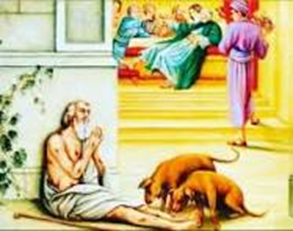
“Now there was a rich man dressed in purple and fine linen, who lived each day in joyous splendor. And a beggar named Lazarus lay at his gate, covered with sores and longing to be fed with the crumbs that fell from the rich man’s table. Even the dogs came and licked his sores.

One day the beggar died and was carried by the angels to Abraham’s side. And the rich man also died and was buried. In Hades, where he was in torment, he looked up and saw Abraham from afar, with Lazarus by his side.

So he cried out, ‘Father Abraham, have mercy on me and send Lazarus to dip the tip of his finger in water and cool my tongue. For I am in agony in this fire.’

But Abraham answered, ‘Child, remember that during your lifetime you received your good things, while Lazarus received bad things. But now he is comforted here, while you are left to suffer. And besides all this, a great chasm has been fixed between us and you, so that even those who wish cannot cross from here to you, nor can anyone cross from there to us.’

Then I beg you, father,’ he said, ‘send Lazarus to my father’s house, for I have five brothers. Let him warn them so they will not also end up in this place of torment.’

But Abraham replied, ‘They have Moses and the prophets; let your brothers listen to them.’

‘No, father Abraham,’ he said, ‘but if someone is sent to them from the dead, they will repent.’

Then Abraham said to him, ‘If they do not listen to Moses and the prophets, they will not be persuaded even if someone rises from the dead.’”

If you have ever wondered why the religious authorities despise Jesus, just examine these statements. Jesus has finished telling the story of the crooked manager and has ended with the emphatic statement “You cannot serve both God and money.” The Pharisees are insulted and horrified. How can Jesus possibly say such things? Obviously this man is an idealistic fool who is simply trying to mock them. This man has no grip on reality and is depending on donations from foolish deluded women and ignorant villagers. Besides, this man has little formal education, so why should anybody listen to him?

Jesus immediately confronts these men. “So He said to them, “You are the ones who justify yourselves before men, but God knows your hearts. For what is prized among men is detestable before God.”  Now the Pharisees are truly infuriated! What does this upstart carpenter mean by calling them detestable? And then Jesus caps it all by telling the story of the rich man and a beggar named Lazarus.

The rich man Jesus describes can easily be any of the Pharisees, “dressed in purple and fine linen and living each day in joyous splendor.” Purple dye comes from the shells of a particular kind of snail and is extremely expensive. Only royalty and the very wealthy can afford purple material, and fine linen is equally expensive. While the homes of the Pharisees might be austere, even that austerity speaks of luxury and exquisite good taste. And of course, there will be at least one beggar outside the doorway. Beggars are common, and many of them have sores due to untended injuries and poor nutrition. By now, the Pharisees are becoming even more indignant. What does Jesus expect them to do anyway? It’s impossible to feed all the beggars that show up. And besides, they are only beggars, scarcely even human, although useful for the occasional errand. So where is Jesus going with this ridiculous tale?

The story gets progressively worse. This starving scabrous beggar dies-no surprise there- but he is carried by the angels to Abraham’s side. WHAT??? What has this beggar ever done to deserve something so wonderful? And then the rich man dies and he winds up in Hades? Certainly not! If the rich man in the story winds up in Hades, that means that even the Pharisees who are listening might also go there after they die, even if they have been scrupulously observant.

Even though the rich man is in Hades, he still considers Lazarus as an errand boy and begs Father Abraham to send Lazarus to dip the tip of his finger in water to cool the rich man’s tongue, something that no Pharisee will ever do for anyone else. But Lazarus has been delivered from ever being at the bidding of the rich man again. There is an uncrossable gulf between heaven and Hades. Next, the rich man begs Abraham to send Lazarus back to warn his five brothers so they won’t end up in Hades. But this rich man has never paid attention to Lazarus in the past, so why does he think his brothers will be any different? Abraham answers sadly, “They have Moses and the prophets; let your brothers listen to them.’

‘No, father Abraham,’ he said, ‘but if someone is sent to them from the dead, they will repent.’

Then Abraham said to him, ‘If they do not listen to Moses and the prophets, they will not be persuaded even if someone rises from the dead.’”

As the crowd listens, entranced, the Pharisees stalk off in a high dudgeon. How can this unspeakable individual dare to make such statements? They certainly have memorized the entire Law of Moses and are sure that they know every bit of the prophecies as well. No, this man is a charlatan and the sooner he is dealt with, the better. What the Pharisees fail to realize is that Jesus is predicting his own death, a death at the hands of the very religious leaders who are scoffing at him.

While the Pharisees have memorized the Law and can quote it readily, they have failed to grasp the spirit of the Law. Throughout the Law, God consistently demands that His people care for the poor, for widows, for orphans, and for strangers. Repeatedly, the Jews are warned to leave gleanings behind, to leave some olives on the trees, and to make provision for the needy around them. The Pharisees have substituted form for substance.

We may look down our noses at the actions of the rich man, but how compassionate are we? Do we really see all those around us as human beings created in God’s image, or do we unwittingly judge some classes of people as being worth more than others? Are we in danger of “living in joyous splendor” while those around us are suffering? While it is true that we cannot fill every need of those around us, we can ask God to guide us to those whom He wants us to help. Let us always have hearts softened by love and mercy, so that we may be God’s hands to help!

PRAYER: Father God, thank You for loving us and for caring for us. Lord, please give us hearts of compassion. Let our hearts break with the things that break Your heart. And show us those whom You want us to help. In the mighty and precious Name of King Jesus. Amen.
JULY 28, 2024 JESUS IS TELLING STORIES-COME LISTEN! #44 WHO ARE YOU GOING TO SERVE?

July 28, 2024

Luke 16: The Parable of the Shrewd Manager

“Jesus also said to His disciples, “There was a rich man whose manager was accused of wasting his possessions. So he called him in to ask, ‘What is this I hear about you? Turn in an account of your management, for you cannot be manager any longer.’

The manager said to himself, ‘What shall I do, now that my master is taking away my position? I am too weak to dig and too ashamed to beg. I know what I will do, so that after my removal from management, people will welcome me into their homes…’

And he called in each one of his master’s debtors. ‘How much do you owe my master?’ he asked the first.

‘A hundred measures of olive oil,’ he answered.

‘Take your bill,’ said the manager. ‘Sit down quickly, and write fifty.’

Then he asked another, ‘And how much do you owe?’

‘A hundred measures of wheat,’ he replied.

‘Take your bill and write eighty,’ he told him.

The master commended the dishonest manager because he had acted shrewdly. For the sons of this age are more shrewd in dealing with their own kind than are the sons of light. I tell you, use worldly wealth to make friends for yourselves, so that when it is gone, they will welcome you into eternal dwellings.

Whoever is faithful with very little will also be faithful with much, and whoever is dishonest with very little will also be dishonest with much. If, then, you have not been faithful with worldly wealth, who will entrust you with true riches? And if you have not been faithful with the belongings of another, who will give you belongings of your own?

No servant can serve two masters. Either he will hate the one and love the other, or he will be devoted to the one and despise the other. You cannot serve both God and money.”

At first, this story seems crazy. Why is Jesus praising a manager who is obviously a crook? While Jesus has praised faithful servants, you would think that this slippery character is the last person Jesus would hold up as a good example.

This guy is already in hot water with his boss for wasting his boss’s possessions. After systematically stealing for years, now those crimes have caught up with him. Facing dismissal, this man is busy assuring himself of a spot somewhere else by ingratiating himself with his boss’s creditors by slyly reducing their outstanding debts.

Jesus is telling this story with tongue in cheek, deliberately praising a crook to shock his audience into thinking seriously. As Jesus is describing this man, lots of people in the audience are nodding, thinking of similar situations they have witnessed. Obviously, once this man leaves his current position, only another crook will employ him, but he’s got to nail down a position someplace.

What are the points of this story? “Whoever is faithful with very little will also be faithful with much, and whoever is dishonest with very little will also be dishonest with much. If, then, you have not been faithful with worldly wealth, who will entrust you with true riches? And if you have not been faithful with the belongings of another, who will give you belongings of your own?” The “true riches” Jesus is referring to are heavenly, not earthly. Jesus wants his audience to realize that they cannot simply live heedlessly, concentrating only on earthly goals. Faithfulness is always important, whether on the job or in following God.

While the crooked manager in the story is trying to assure himself of a secure position for the remainder of his life, Jesus wants his listeners to examine themselves. Are these people simply trying to get as much money as possible or do they realize that they need to be serving God? Jesus warns his listeners that they cannot serve both God and money.

What should we learn from this story? Money is important; we all need to support our families and ourselves. But when money becomes our main goal, we can ignore everything else in our pursuit of riches. Several years ago, the news media interviewed an Asian billionaire. This man assured his interviewers that he had every intention of initiating charitable giving eventually… but he needed more wealth before taking that step. But the billionaire couldn’t tell how much more he would need to feel free to act charitably. Obviously, no amount of wealth would ever satisfy this poor man!

How can we serve God? We should pray and study His Word, the Bible. We can count on God advising us. Psalm 32:8 tells us, “I will teach you and instruct you in the way you should go. I will guide you with My eye upon you.” God does not expect us to do it all ourselves, for He stands ever-ready to assist us.

PRAYER: Father God, thank You for loving us and for caring for us. Lord, help us to serve you and not money. In the mighty and precious Name of King Jesus Amen

JULY 27, 2024 JESUS IS TELLING STORIES-COME LISTEN!#43 THERE’S A  COST TO FOLLOWING JESUS!

July 27, 2024

Luke 9:57-62 The Cost of Discipleship (Matthew 8:18-22; Luke 14:25-33; John 6:60-65)

“As they were walking along the road, someone said to Jesus, “I will follow You wherever You go.” Jesus replied, “Foxes have dens and birds of the air have nests, but the Son of Man has no place to lay His head.”

Then He said to another man, “Follow Me.”

The man replied, “Lord, first let me go and bury my father.”

But Jesus told him, “Let the dead bury their own dead. You, however, go and proclaim the kingdom of God.”

Still another said, “I will follow You, Lord; but first let me bid farewell to my family.”

Then Jesus declared, “No one who puts his hand to the plow and then looks back is fit for the kingdom of God.”

The morning Jesus begins making these statements, the disciples are really scratching their heads. You can almost hear them thinking, “Jesus! What do you think you are doing? Don’t you know that if you want to be inclusive, you shouldn’t be discouraging people this way?” Jesus knows exactly what his disciples are thinking; that’s why he is saying these things.

What the disciples can’t see and what Jesus already knows is that following him is going to be both the very best thing the disciples have ever done and also the most dangerous. Jesus knows that the religious professionals are out to get him any way they can and that sooner or later, they’ll succeed. When that day arrives, anyone found following Jesus will be persecuted and possibly even killed.

Let’s look at what we can learn from these three men. “As they were walking along the road, someone said to Jesus, “I will follow You wherever You go.” Jesus replied, “Foxes have dens and birds of the air have nests, but the Son of Man has no place to lay His head.”  Matthew tells us that this was one of the scribes who made this statement just as Jesus gave orders to cross to the other side of the Sea of Galilee. Jesus recognizes that this man wants to follow him…as long as it’s pleasant and convenient. Right now the sky is blue, the sun is shining, and the birds are singing. But this man has no idea that Jesus must depend on the kindness of others for everything, including a place to sleep. What happens when a cold rain is falling and nobody offers shelter? Jesus might wind up sleeping in a cave, not an inviting thought.

Jesus wants this man to think carefully before he makes commitments he can’t possibly keep. And this man is used to public approval. What happens when Jesus falls into disfavor? What happens if Jesus is dragged before the Sanhedrin, the religious court? John 12:43 tells us that there were many religious leaders who were secret followers of Jesus but who feared to be open about it, “for they loved the glory of men more than the glory of God.”

Then He said to another man, “Follow Me.”

The man replied, “Lord, first let me go and bury my father.”

But Jesus told him, “Let the dead bury their own dead. You, however, go and proclaim the kingdom of God.” Was this man’s father dead already? Chances are good that the man’s father was hale and hearty with every intention of living several more years. No matter how dedicated a son this man appears to be, he’s really concerned with securing his inheritance once his father dies. Should this man’s father die while he is moving around the country with Jesus, he might lose out entirely. Jesus knows all this and that’s why he elicits a response by telling the man to follow him. This man isn’t even pretending to be a follower; he’s merely a listener. No way is this man stepping out into an uncertain future! And why should this man proclaim the kingdom of God? Aren’t there enough rabbis and teachers of the Law already?

“Still another said, “I will follow You, Lord; but first let me bid farewell to my family.”

Then Jesus declared, “No one who puts his hand to the plow and then looks back is fit for the kingdom of God.” Now this sounds really harsh unless we consider the type of farewell this man has in mind. It’s likely that this guy isn’t simply thinking of stopping by the house and kissing everybody goodbye before setting off. No, this man wants proper farewell parties with some recognition of the sacrifice he is making so everybody can admire his willingness to suffer. Jesus knows that taking this man as a disciple would be a disaster, for he would always be finding excuses for running back to his family instead of obeying Jesus. This man’s feet may be headed in one direction, but he will always have his face turned toward home, no matter the fine statements he is making now.

Whether done with animals or with a tractor, plowing requires concentration and fixing your eyes on a distant goal to maintain straight lines when you plow. If you are forever turning your head, your plow will make huge skunk tracks across the field. (Skunks never walk in straight lines but wander around.)  

Jesus is trying to emphasize that discipleship is going to COST! Luke records more of Jesus’ discussion in Luke 14:25-35 “Large crowds were now traveling with Jesus, and He turned and said to them, “If anyone comes to Me and does not hate his father and mother and wife and children and brothers and sisters—yes, even his own life—he cannot be My disciple. And whoever does not carry his cross and follow Me cannot be My disciple.” Condemned criminals were forced to carry parts of their crosses to the execution site before being crucified. In effect, Jesus is warning the crowd that anyone following him must be prepared to die for his loyalty to Jesus.

“Which of you, wishing to build a tower, does not first sit down and count the cost to see if he has the resources to complete it? Otherwise, if he lays the foundation and is unable to finish the work, everyone who sees it will ridicule him, saying, ‘This man could not finish what he started to build.’ 1Or what king on his way to war with another king will not first sit down and consider whether he can engage with ten thousand men the one coming against him with twenty thousand? And if he is unable, he will send a delegation while the other king is still far off, to ask for terms of peace.

In the same way, any one of you who does not give up everything he has cannot be My disciple.

Salt is good, but if the salt loses its savor, with what will it be seasoned? It is fit neither for the soil nor for the manure pile, and it is thrown out. He who has ears to hear, let him hear.” Disciples who talk a good game but who don’t live up to their boasting are like salt that has lost its flavor-useless!

Eventually, the disciples learn the truth of the teachings Jesus is giving this morning. Most of the disciples will die as martyrs, but they will die praising God and the earth will be glad for their lives and their examples. These men will eventually pay the price of discipleship in full.

What of us? We might feel that we have no desire to suffer, but how much control do we really have over our lives? Isn’t it better to follow God and His leading than to wander blindly like someone plowing while distracted? When we follow God, our lives will count for something; if we live only to please ourselves, we will fail and live lives of futility.

PRAYER: Father God, thank You for loving us and for caring for us. Lord, help us to follow hard after You all the days of our lives and not to waver. In the mighty and precious Name of King Jesus. Amen.

JULY 26, 2024 JESUS IS TELLING STORIES-COME LISTEN! #42 GOD, THE STUBBORN LOVER, REFUSES TO GIVE UP EVEN ON BARREN FIG TREES!

July 26, 2024

Luke 13:6-9 The Parable of the Barren Fig Tree

“He also spoke this parable: “A certain man had a fig tree planted in his vineyard, and he came seeking fruit on it and found none. Then he said to the keeper of his vineyard, ‘Look, for three years I have come seeking fruit on this fig tree and find none. Cut it down; why does it use up the ground?’ But he answered and said to him, ‘Sir, let it alone this year also, until I dig around it and fertilize it. And if it bears fruit, well. But if not, after that you can cut it down.’ ”

Unless you understand the context in which Jesus tells this story, it might make much sense. Here are the verses in Luke 13 that precede this parable: Luke 13:1-5 There were present at that season some who told Him about the Galileans whose blood Pilate had mingled with their sacrifices.And Jesus answered and said to them, “Do you suppose that these Galileans were worse sinners than all other Galileans, because they suffered such things? I tell you, no; but unless you repent you will all likewise perish. Or those eighteen on whom the tower in Siloam fell and killed them, do you think that they were worse sinners than all other men who dwelt in Jerusalem? I tell you, no; but unless you repent you will all likewise perish.”

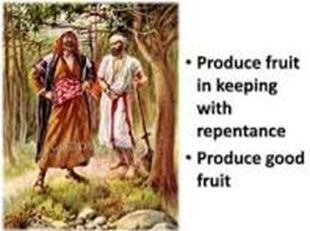
The general view the crowd around Jesus has is that those who suffer must be horrible sinners and therefore worthy of punishment or even death. “Those who suffer must really deserve such horrible fates!” is the thinking of the crowd. Jesus turns that idea on its head, avowing that the victims of two recent tragedies are simply that, victims and not particularly terrible sinners. But Jesus also warns the crowd to repent. By this point, some people are probably thinking, “REPENT? HOW? I feel stuck with what I am!” That’s when Jesus tells the story of the barren fig tree.

The first question we need to ask is this: How soon after a fig tree is planted will it bear fruit? HGTV gives us the answer: “Most fig trees take three to five years to start ripening fruit. Prior to that, figs may form along stems where each leaf attaches, but they won’t ripen.” The owner of the vineyard is impatient and has been expecting fruit from a recently-planted fig tree, refusing to allow it time to develop. At this point, many of Jesus’ listeners are probably standing there thinking, “This guy knows nothing about fig trees! What does he expect?”

The keeper of the vineyard is much smarter and advises his master to allow him time to dig around the tree, breaking up the soil, thereby softening the soil,  allowing the roots to expand for moisture to better reach the roots and to fertilize the tree as well. The crowd thinks, “Well, OK. Great story, Jesus, but what’s the point?”

Jesus links the tragedies of the martyred worshipers and those crushed by a falling tower with his story of a barren fig tree to advise the crowd to examine their lives. When the leaves appear on fig trees, fruit should also appear. But some fig trees will bear leaves but no fruit, promising something they cannot deliver. Jesus is warning his listeners not to be barren fig trees full of leaves without fruit.

What’s the point of mentioning the actions of the gardener? Ah, that’s the main part of the story. Despite our best efforts, we are all barren fig trees promising righteousness without being able to deliver it. But God is a faithful and patient Gardener who refuses to give up on any of us. Just as the gardener in the story plans to carefully tend the tree to give it the best chance to bear, so God persistently continues to bring things into our lives to cause us to repent and turn to Him. God breaks up the hard soil of our prejudices and preconceived notions. God may strip us of anything that will keep us from coming to Him while we stand and wail about how harshly God is dealing with us.

Chuck Colson was a top lawyer for President Nixon until he wound up in prison over the Watergate affair that drove Nixon out of office. At that point, it appeared that Colson’s career was over and in a shambles. But while in prison, Colson had time to read and to reflect. Not only did Colson accept Christ while in prison, but when he came out, he founded Prison Fellowship International. Prison Fellowship describes itself this way: “Prison Fellowship International is the world’s largest, most extensive network of Christian ministries working in the criminal justice field. Through compelling programs and practices, we pursue restoration and healing in response to crime so that offenders are transformed, relationships are reconciled and communities are restored….Prison Fellowship International’s work is accomplished in more than 120 countries on six continents through multi-denominational, indigenous and autonomous National Ministries – powered by more than 60,000 local volunteers. This grassroots presence enables ministry to prisoners, their families and victims in culturally relevant ways.”   

All this ministry has happened because an arrogant Washington, D.C. lawyer, a barren fig tree, went to prison and God the Celestial Gardener, began digging around his roots and fertilizing his soul.

When the gardener in the story began digging around the fig tree’s roots, the fig tree was undoubtedly disturbed! “What’s this guy doing? Why won’t he just let me alone?” But the gardener knew that unless he dug around those roots and spread smelly fertilizer, the fig tree was doomed. The very actions that were disturbing the fig tree were the actions that would save it from destruction.

What about us? Have we repented and are we bearing fruit, or are we leafy fig trees, making a good show but producing nothing? The amazing thing about God is that He will never give up on you. You can pray right now, asking God for forgiveness for your sins and for help to follow Him.

PRAYER: Father God, thank You for loving us and for caring for us. Lord, we confess that we are sinners and nothing we do is enough to cancel out those sins. We want to turn away from our sins, but we are stuck. Please deliver us from our sins and help us to follow hard after You all the days of our lives. In the mighty and precious Name of King Jesus. Amen.

JULY 25, 2024 JESUS IS TELLING STORIES-COME LISTEN! ARE YOU A SHEEP OR A GOAT? MATTHEW 25:31-46

July 25, 2024

Matthew 25:31-46 The Sheep and the Goats

When the Son of Man comes in His glory, and all the angels with Him, He will sit on His glorious throne. All the nations will be gathered before Him, and He will separate the people one from another, as a shepherd separates the sheep from the goats. He will place the sheep on His right and the goats on His left.

Then the King will say to those on His right, ‘Come, you who are blessed by My Father, inherit the kingdom prepared for you from the foundation of the world. For I was hungry and you gave Me something to eat, I was thirsty and you gave Me something to drink, I was a stranger and you took Me in, I was naked and you clothed Me, I was sick and you looked after Me, I was in prison and you visited Me.’

Then the righteous will answer Him, ‘Lord, when did we see You hungry and feed You, or thirsty and give You something to drink? When did we see You a stranger and take You in, or naked and clothe You? When did we see You sick or in prison and visit You?’

And the King will reply, ‘Truly I tell you, whatever you did for one of the least of these brothers of Mine, you did for Me.’

Then He will say to those on His left, ‘Depart from Me, you who are cursed, into the eternal fire prepared for the devil and his angels. For I was hungry and you gave Me nothing to eat, I was thirsty and you gave Me nothing to drink, I was a stranger and you did not take Me in, I was naked and you did not clothe Me, I was sick and in prison and you did not visit Me.’

And they too will reply, ‘Lord, when did we see You hungry or thirsty or a stranger or naked or sick or in prison, and did not minister to You?’

Then the King will answer, ‘Truly I tell you, whatever you did not do for one of the least of these, you did not do for Me.’

And they will go away into eternal punishment, but the righteous into eternal life.”

When the Son of Man comes in His glory, and all the angels with Him, He will sit on His glorious throne. All the nations will be gathered before Him, and He will separate the people one from another, as a shepherd separates the sheep from the goats. He will place the sheep on His right and the goats on His left.”

Once more, Jesus is speaking to an audience well-acquainted with farm animals. Even in cities and towns, goats and sheep freely roam the streets, leaving their droppings behind.  Everyone knows that sheep are docile with sweet dispositions and are easily led, while goats are stubborn, willful, and will go their own way whenever possible. Experienced shepherds must handle sheep and goats differently if they are to succeed. And there’s also another thing: While sheep do have some odor, goats STINK! Bottom line: shepherds will separate sheep from goats and handle the two groups differently. Here the righteous are represented by the sheep while the unrighteous are represented by the goats.

Then the King will say to those on His right, ‘Come, you who are blessed by My Father, inherit the kingdom prepared for you from the foundation of the world. For I was hungry and you gave Me something to eat, I was thirsty and you gave Me something to drink, I was a stranger and you took Me in, I was naked and you clothed Me, I was sick and you looked after Me, I was in prison and you visited Me.’

Then the righteous will answer Him, ‘Lord, when did we see You hungry and feed You, or thirsty and give You something to drink? When did we see You a stranger and take You in, or naked and clothe You? When did we see You sick or in prison and visit You?’

And the King will reply, ‘Truly I tell you, whatever you did for one of the least of these brothers of Mine, you did for Me.’”

One of our friends says, “It’s all about choices.” Throughout their lives, the righteous have consistently chosen to help and to minister to all those around them. Notice that the King says nothing about how deserving the people were who benefited from these efforts, for mercy gives freely without judging. We have many friends who work in various ministries, including prison Bible studies, half-way houses for those released from prison, projects such as Angel Tree for children from poor families, shelters for battered women and children, food banks, etc. At the mission hospital where we work, we support patients and their families who need food and medicine. Recently farming seasons have yielded little, leaving our rural population in great need. Nobody can do everything at once, but when you open your eyes, God can show you the needs He wants you to help address. Here Jesus is saying that whenever we help someone, it is as if we were helping Him.

“Then He will say to those on His left, ‘Depart from Me, you who are cursed, into the eternal fire prepared for the devil and his angels. For I was hungry and you gave Me nothing to eat, I was thirsty and you gave Me nothing to drink, I was a stranger and you did not take Me in, I was naked and you did not clothe Me, I was sick and in prison and you did not visit Me.’

And they too will reply, ‘Lord, when did we see You hungry or thirsty or a stranger or naked or sick or in prison, and did not minister to You?’

Then the King will answer, ‘Truly I tell you, whatever you did not do for one of the least of these, you did not do for Me.’ And they will go away into eternal punishment, but the righteous into eternal life.”

At one point in Charles Dickens’ book A Christmas Carol, Marley’s ghost laments, “Business! Mankind was my business!” Sadly, it was only after Marley had died that he recognized his failure to care. But all of us are still alive and we can begin helping others today. It’s interesting but true that some of the most generous people we know are also the poorest because they know what it means to suffer and therefore have compassion on others. Mother Teresa made a similar observation working with the poor in Calcutta, India. You might feel that you have nothing to give; however, if you go through your closet, there are probably clothes you haven’t worn for some time that would bless someone else. We have a friend who must own 50 or more pairs of shoes, but nobody can wear more than one pair of shoes at a time. Look in the back of your cupboard and see if you don’t have cans of food that would bless others.

Helping others will not allow you to buy your way into heaven. We don’t help because we are trying to manipulate God but out of gratitude for what God has already done for us. Each one of us has been born with a sin problem and nothing we do is sufficient to wipe out our sin and make us acceptable to a holy God. But Jesus has shed his blood on the cross at Calvary as a sacrifice for our sins. When we confess our sins to God and accept what Jesus has done for us, God sees us as righteous. Once we are trusting in Jesus for our righteousness, we want to do things that will please him and not ourselves. Here Jesus is telling his disciples and believers in all times that if we have changed our nature from a goat nature to a sheep nature, we should show others mercy as we have received mercy.

Finally, we should heed the warning embodied in the final sentence of this parable. When we refuse to show others mercy and to help others, it is as if we have refused to help God. Each time we turn away or stop our ears so we can ignore the cries of the poor, we are turning away from God. God is not refusing us; we are refusing God and making eternal choices in the process.

This story follows the stories of the foolish virgins and the man who wasted the money his master gave him to invest. In each story Jesus is trying to warn his followers to be faithful, to be watchful, and to be merciful and charitable. Jesus knows he is about to die, and these are some of his final teachings. Jesus is desperate for his followers to understand the workings of the Kingdom of God because once he is gone, they must carry on.

This story also graphically illustrates a Kingdom principle that Jesus emphasizes repeatedly: the measure you give out is the measure you will receive. The more generous you are, the more God can give you to give others. When George Mueller began taking in orphaned children in Bristol, England, he started quite modestly. Before Mueller died, the orphanages he founded were caring for thousands of children at a time, not only feeding and clothing them but also educating them as well. In addition, Mueller was also supporting the China Inland Mission as well as other Bible teachers in various parts of the world, and he himself traveled the world preaching and encouraging others to trust God.

PRAYER: Father God, thank You for loving us and for caring for us. Lord, help all those who read these words to trust You and to become your sheep, helping and caring for others. In the mighty and precious Name of King Jesus. Amen.

JULY 24, 2024 JESUS IS TELLING STORIES-COME LISTEN! #40 WHAT ARE YOU DOING WITH WHAT GOD HAS GIVEN YOU? MATTHEW 25:14-30

July 24, 2024

Matthew 25:14-30The Parable of the Talents

“For the kingdom of heaven is like a man traveling to a far country, who called his own servants and delivered his goods to them. And to one he gave five talents, to another two, and to another one, to each according to his own ability; and immediately he went on a journey. Then he who had received the five talents went and traded with them, and made another five talents. And likewise he who had received two gained two more also. But he who had received one went and dug in the ground, and hid his lord’s money. 

After a long time the lord of those servants came and settled accounts with them. So he who had received five talents came and brought five other talents, saying, ‘Lord, you delivered to me five talents; look, I have gained five more talents besides them.’ His lord said to him, ‘Well done, good and faithful servant; you were faithful over a few things, I will make you ruler over many things. Enter into the joy of your lord.’ He also who had received two talents came and said, ‘Lord, you delivered to me two talents; look, I have gained two more talents besides them.’ His lord said to him, ‘Well done, good and faithful servant; you have been faithful over a few things, I will make you ruler over many things. Enter into the joy of your lord.’

“Then he who had received the one talent came and said, ‘Lord, I knew you to be a hard man, reaping where you have not sown, and gathering where you have not scattered seed. And I was afraid, and went and hid your talent in the ground. Look, there you have what is yours.’

“But his lord answered and said to him, ‘You wicked and lazy servant, you knew that I reap where I have not sown, and gather where I have not scattered seed. So you ought to have deposited my money with the bankers, and at my coming I would have received back my own with interest. So take the talent from him, and give it to him who has ten talents.

‘For to everyone who has, more will be given, and he will have abundance; but from him who does not have, even what he has will be taken away. And cast the unprofitable servant into the outer darkness. There will be weeping and gnashing of teeth.’

Again, Jesus knows he is in the final days of his life here on earth and is trying to warn his disciples to be ready and to be faithful. It’s quite possible that Jesus and the disciples know a merchant who has done something of the sort. A talent of silver weighs about 75 pounds and would represent between 15-20 years’ wages for a common working man, or as much as one million dollars or more. This merchant is obviously very wealthy to be able to give out a total of 8 talents to his servants. Such a man must have many servants; however, he has chosen to specially bless these three men.

The master understands the relative abilities of these men and gives out his money accordingly. By the time the merchant returns, the first two servants have invested the money entrusted to them and have doubled it, proving they are both canny and faithful. But then there’s servant number three.

Evidently, for years, servant number three has gone around hating and resenting his master, doing the minimum to get by, and generally being a Debbie downer. If the other two servants can find a silver lining in every cloud, this guy can find a cloud for every silver lining. While others are seeing glasses as half-full, this guy is seeing glasses as half empty and about to fall off the table and break anyway. When the master gives servant number three one talent to invest, this man views this gift as a trap. What’s the master trying to do? Is the master trying to lure this man into making mistakes so he can dismiss him from his service? This man suspects his master has never really liked him anyway and is discriminating against him.

This servant doesn’t trust his master and believes the very worst of him, so he simply buries the talent. By not taking any risks, this servant believes he is protecting himself; after all, the master hates him and that’s why the master has only given him one talent while he has given the other two servants more. Listening to this description, the disciples probably wonder why a right-thinking merchant would trust such a man with any amount of money, let alone a whole talent.

Jesus continues the story. After a long trip to a far country lasting several years, the merchant returns and meets with his servants to settle accounts. The first two servants have been fabulously successful, doubling the sums given to them. Perhaps these two have worked together; at any rate, their master is thrilled. Both men receive the highest commendation possible: “His lord said to him, ‘Well done, good and faithful servant; you were faithful over a few things, I will make you ruler over many things. Enter into the joy of your lord.’ “

Now it’s the turn of servant number three. While the other two men have dressed as nicely as possible to honor their master’s return, this man is wearing his ordinary street clothes and comes in dragging his feet and wringing his hands. “Then he who had received the one talent came and said, ‘Lord, I knew you to be a hard man, reaping where you have not sown, and gathering where you have not scattered seed. And I was afraid, and went and hid your talent in the ground. Look, there you have what is yours.’”  This servant practically throws the money at his master’s feet because he is so disgusted.

Say what? If this merchant is such a terrible master, why has this man worked for him for all these years? And if this servant hasn’t felt competent to invest the money himself, why hasn’t he allowed someone else to do it? Giving the money out to a bank would have removed the burden from this man’s head. “But his lord answered and said to him, ‘You wicked and lazy servant, you knew that I reap where I have not sown, and gather where I have not scattered seed. So you ought to have deposited my money with the bankers, and at my coming I would have received back my own with interest.” 

This man has allowed himself to become bitter over nothing; his master undoubtedly has many other servants to whom he has not given any money to be invested. This servant has been given a unique opportunity but he has totally misread the situation and has wasted the chance of a lifetime. And now the master pronounces his judgment: “So take the talent from him, and give it to him who has ten talents.’ For to everyone who has, more will be given, and he will have abundance; but from him who does not have, even what he has will be taken away. And cast the unprofitable servant into the outer darkness. There will be weeping and gnashing of teeth.’”

What is the lesson for us from this story? If we are following God, we are all His servants. God doesn’t make cookie-cutter people; each of us is unique. Each of us has received different abilities from God. God will not hold us responsible for someone else’s gifts; however, we are responsible for the abilities God has given us. We are also responsible for telling others about God and encouraging others as much as possible. In the kingdom of God there are no little people; God wants each of us to use the abilities He has given us. At the same time, we must remember that God is also the One who will give us the strength and the courage to use those abilities. While the merchant in the story gave out his money and then traveled, God is not an absentee Master but a present one. Remember that in Matthew 11:30 Jesus tells us that his yoke is easy and his burden is light. May God help us to use our gifts and talents as wisely as possible!

PRAYER: Father God, thank You for loving us and for caring for us. Lord, help us to use all the talents You have given us to bless those around us. Help us to be faithful stewards. In the mighty and precious Name of King Jesus. Amen.  

JULY 23, 2024 JESUS IS TELLING STORIES-COME LISTEN!#39 WISE OR FOOLISH-WHICH ARE YOU?

July 23, 2024

The Parable of the Wise and Foolish Virgins

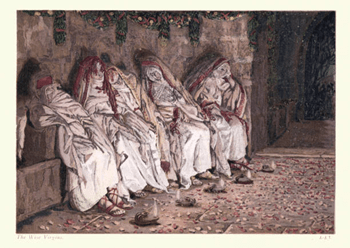
Matthew 25:1-13 “Then the kingdom of heaven shall be likened to ten virgins who took their lamps and went out to meet the bridegroom. Now five of them were wise, and five were foolish. Those who were foolish took their lamps and took no oil with them,  but the wise took oil in their vessels with their lamps. But while the bridegroom was delayed, they all slumbered and slept.

“And at midnight a cry was heard: ‘Behold, the bridegroom is coming; go out to meet him!’ Then all those virgins arose and trimmed their lamps. And the foolish said to the wise, ‘Give us some of your oil, for our lamps are going out.’ But the wise answered, saying, ‘No, lest there should not be enough for us and you; but go rather to those who sell, and buy for yourselves.’ And while they went to buy, the bridegroom came, and those who were ready went in with him to the wedding; and the door was shut.

“Afterward the other virgins came also, saying, ‘Lord, Lord, open to us!’ But he answered and said, ‘Assuredly, I say to you, I do not know you.’

 “Watch therefore, for you know neither the day nor the hour in which the Son of Man is coming.”

Jesus is entering his last few days on earth and he’s doing everything he can to advise and warn his disciples. For us to understand this parable, we need to know some of the traditions surrounding marriage in Jesus’ time. Couples would become engaged during a ceremony in which the groom would give the bride money or something valuable such as a ring. Then there would be a year of betrothal during which the groom would prepare a dwelling place for the bride while the bride would prepare her personal possessions such as clothing, lamps, etc.

While the bride might have a general idea of the date and time at which the groom would come for her, the groom’s father would decide when the groom should collect the bride. Not even the groom would know the precise details until his father would make the announcement. The bride-and her friends-had to keep their lamps ready in case the bridegroom came at night. Even after the wedding had been announced, those wishing to attend the ceremony might wait for several hours before the groom would finally appear. Nobody would want to miss the groom’s arrival because once the groom arrived and the guests entered, the doors would be locked for the sake of security.

Listening to this story, Jesus’ followers were probably snickering to themselves. Who in their right mind would be so stupid as to fail to carry along extra lamp oil? Of course, bridegrooms always arrived with very little notice and generally at night-this was a given. And no sensible guest would fail to make adequate provision, for once inside the marriage feast, the celebration would be worth all the time and effort spent on preparation. Inside the celebration, there would be delicious food and wine with singing and dancing. A wealthy family might even supply special clothing. Yes, wedding celebrations were worth any amount of work.

In these last few days, Jesus repeatedly warns his disciples that just as the bridegroom’s father controls the date and time of the wedding, so his Heavenly Father is the only one who knows the time Jesus will return. Just as the bridegroom arrives when he is least expected, so Jesus’ return will be equally sudden. Anyone refusing to prepare is as foolish as friends of the bride who assume their current oil will be sufficient.

At any point prior to the groom’s arrival, the five foolish virgins could have bought extra oil, but they did not. Those young ladies had plenty of opportunities to prepare, but they were complacent, sure that nobody would ever turn them away. Jesus is warning his followers that they too must not relax, assuming that they will be acceptable to a Holy God on their own merits.  

During such celebrations, there would always be guests known to the bride or her family but not known to the groom. Those entering along with the bridegroom could easily be introduced to the groom so that he would know them; however, those trying to enter after the groom and the main group were inside could find themselves turned away. The final statement by the bridegroom is chilling,” ‘Assuredly, I say to you, I do not know you.’”

At this point, Jesus’ listeners might be gasping. How horrible! To be locked out of a wedding celebration and spurned by the bridegroom-how shameful! And now Jesus delivers a final warning:  “Watch therefore, for you know neither the day nor the hour in which the Son of Man is coming.”

What does this parable mean for us? When Jesus’ followers demanded to know when he would return, Jesus told them, ”And He said to them, “It is not for you to know times or seasons which the Father has put in His own authority.” (Acts 1:7) None of us knows how long we might live, and none of us knows the problems we might encounter. The only time we have is today, this hour, this minute. If we insist on depending on our own righteousness, we are doomed, just like those foolish virgins who were sure they had enough oil without making any additional provisions. But what we cannot do for ourselves, God has already done, sending Jesus to die for our sins. We can refuse to accept that sacrifice or we can humble ourselves to accept it. Once more, Jesus is warning all of us, “Be ready!”

PRAYER: Father God, thank You for loving us and for caring for us. Lord, we confess that we are sinners and that nothing we can do is enough for us to earn our way into heaven. Please help us to trust in Jesus’ sacrifice for our sins. Thank You for Your promise of eternal life when we trust in Jesus. In the mighty and precious Name of King Jesus. Amen.  
JULY 22, 2024 JESUS IS TELLING STORIES-COME LISTEN! #38 ARE YOU READY?

July 22, 2024

Readiness at Any Hour (Matthew 24:36-51; Mark 13:32-37)

Luke 12:35-48 “Be dressed for service and keep your lamps burning. Then you will be like servants waiting for their master to return from the wedding banquet, so that when he comes and knocks, they can open the door for him at once. Blessed are those servants whom the master finds on watch when he returns. Truly I tell you, he will dress himself to serve and will have them recline at the table, and he himself will come and wait on them. Even if he comes in the second or third watch of the night and finds them alert, those servants will be blessed!

But understand this: If the homeowner had known at what hour the thief was coming, he would not have let his house be broken into. You also must be ready, because the Son of Man will come at an hour you do not expect.”

“Lord,” said Peter, “are You addressing this parable to us, or to everyone else as well?”

And the Lord answered, “Who then is the faithful and wise manager, whom the master puts in charge of his servants to give them their portion at the proper time? Blessed is that servant whose master finds him doing so when he returns. Truly I tell you, he will put him in charge of all his possessions.

But suppose that servant says in his heart, ‘My master will be a long time in coming,’ and he begins to beat the menservants and maidservants, and to eat and drink and get drunk. The master of that servant will come on a day he does not anticipate and at an hour he does not expect. Then he will cut him to pieces and assign him a place with the unbelievers.

That servant who knows his master’s will but does not get ready or follow his instructions will be beaten with many blows. But the one who unknowingly does things worthy of punishment will be beaten with few blows. From everyone who has been given much, much will be required; and from him who has been entrusted with much, even more will be demanded.”

Jesus is telling this story immediately after telling the story of the rich fool. Jesus assures his followers, “Therefore I tell you, do not worry about your life, what you will eat, or about your body, what you will wear. For life is more than food, and the body more than clothes. Consider the ravens: They do not sow or reap; they have no storehouse or barn, yet God feeds them. How much more valuable are you than the birds! Who of you by worrying can add a single hour to his life? So if you cannot do such a small thing, why do you worry about the rest? Consider how the lilies grow: They do not labor or spin. Yet I tell you, not even Solomon in all his glory was adorned like one of these. If that is how God clothes the grass of the field, which is here today and tomorrow is thrown into the furnace, how much more will He clothe you, O you of little faith!

And do not be concerned about what you will eat or drink. Do not worry about it. For the Gentiles of the world strive after all these things, and your Father knows that you need them. But seek Hise kingdom, and these things will be added unto you.

Do not be afraid, little flock, for your Father is pleased to give you the kingdom. Sell your possessions and give to the poor. Provide yourselves with purses that will not wear out, an inexhaustible treasure in heaven, where no thief approaches and no moth destroys. For where your treasure is, there your heart will be also.” (Luke 12:22-34)

Having warned listeners not to behave like the rich fool, Jesus now tells the story of servants waiting for their master to return from a wedding banquet. Wedding banquets generally take place at night and can last most of the night. Wedding guests might not return home until the early hours of the morning, meaning that servants must be ready at any moment to open the door for their master. Jesus goes on to say, “Blessed are those servants whom the master finds on watch when he returns. Truly I tell you, he will dress himself to serve and will have them recline at the table, and he himself will come and wait on them. Even if he comes in the second or third watch of the night and finds them alert, those servants will be blessed!”

By now, the disciples are scratching their heads. Nobody has ever heard of a master who turns around to serve the servants, encouraging them to recline at table while he waits on them. And any master who returns during the second or third watch of the night is more likely to go to bed immediately rather than wait on his servants. If that concept is baffling, Jesus continues to baffle his disciples by quoting a local proverb, “If the homeowner had known at what hour the thief was coming, he would not have let his house be broken into.” The disciples are standing there thinking, “Of course. Everybody knows that.” Then Jesus advises, “You also must be ready, because the Son of Man will come at an hour you do not expect.”  

By now, the disciples are beginning to realize there’s more to this story than they have previously realized. That’s when Peter pipes up. “Lord,” said Peter, “are You addressing this parable to us, or to everyone else as well?”

And the Lord answered, “Who then is the faithful and wise manager, whom the master puts in charge of his servants to give them their portion at the proper time? Blessed is that servant whose master finds him doing so when he returns. Truly I tell you, he will put him in charge of all his possessions.

But suppose that servant says in his heart, ‘My master will be a long time in coming,’ and he begins to beat the menservants and maidservants, and to eat and drink and get drunk. The master of that servant will come on a day he does not anticipate and at an hour he does not expect. Then he will cut him to pieces and assign him a place with the unbelievers.

That servant who knows his master’s will but does not get ready or follow his instructions will be beaten with many blows. But the one who unknowingly does things worthy of punishment will be beaten with few blows. From everyone who has been given much, much will be required; and from him who has been entrusted with much, even more will be demanded.”

Why is Jesus telling this story? Jesus wants his followers to be aware that he will soon go to his heavenly Father but that he will also return, and that his servants must be ready at all times. No servant wants their master to return suddenly and find them misbehaving. “The master of that servant will come on a day he does not anticipate and at an hour he does not expect. Then he will cut him to pieces and assign him a place with the unbelievers.”

Jesus also describes servants who know what their master wants but refuse to do it. “That servant who knows his master’s will but does not get ready or follow his instructions will be beaten with many blows. But the one who unknowingly does things worthy of punishment will be beaten with few blows.” What servant wants to be punished? Here Jesus is warning his followers to be faithful so that they will avoid punishment. And then Jesus issues a final warning: “From everyone who has been given much, much will be required; and from him who has been entrusted with much, even more will be demanded.”

No matter how hard we try, we will never be perfect servants. Each one of us has a sin problem and nothing we can do measures up to the holiness of God. But God in His infinite mercy has sent Jesus to die for our sins, offering his blood in place of ours. Our part is to accept what Jesus has done for us and to follow him and serve him the rest of our lives. When we do this, we will please God and He will forgive us. 1 John 1:8-9 tells us, “If we say that we have no sin, we deceive ourselves, and the truth is not in us.If we confess our sins, He is faithful and just to forgive us our sins and to cleanse us from all unrighteousness.” We cannot clean ourselves up, but Jesus can do what we cannot.

PRAYER: Father God,  thank You for loving us and for caring for us. Lord, help us to follow hard after You all the days of our lives. Thank You for sending Jesus as the sacrifice for our sins. Help us to be good and faithful servants, doing Your Will. In the mighty and precious Name of King Jesus. Amen.