Archive for July, 2024

JULY 11, 2024 JESUS IS TELLING STORIES-COME LISTEN! LUKE 15:1-7 GOD CARES ABOUT LOST SHEEP!

July 11, 2024

THE PARABLE OF THE LOST SHEEP LUKE 15:1-7 (Matthew 18:10-14) “

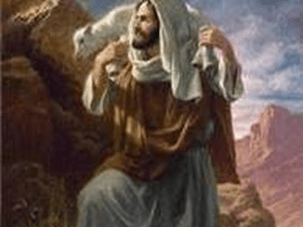
Then all the tax collectors and the sinners drew near to Him to hear Him. And the Pharisees and scribes complained, saying, “This Man receives sinners and eats with them.” So He spoke this parable to them, saying: “What man of you, having a hundred sheep, if he loses one of them, does not leave the ninety-nine in the wilderness, and go after the one which is lost until he finds it? And when he has found it, he lays it on his shoulders, rejoicing. And when he comes home, he calls together his friends and neighbors, saying to them, ‘Rejoice with me, for I have found my sheep which was lost!’ I say to you that likewise there will be more joy in heaven over one sinner who repents than over ninety-nine just persons who need no repentance.”

Well, Jesus is at it again, offending the religious rulers and professional religious people. This time, Jesus has DARED TO RECEIVE SINNERS AND EAT WITH THEM! The scribes and Pharisees are having hissy fits of revulsion; certainly THEY would never do such an unspeakable thing…And that is exactly the point at which Jesus tells this wonderful story.

Jesus asks those who are proudly criticizing him from a distance what they would do if they had a hundred sheep and one got missing? Jesus is asking men who are so careful about their possessions that they even tithe the dill and mint and cumin in their pantries. Some young religious ruler probably offers the answer while his elders shake their heads over the simplicity of the question. These are men who spend much of their time debating minute religious issues, bringing up points only the highly educated can appreciate. Here’s this upstart itinerant preacher talking about sheep, for goodness’ sake.

The answer is a no-brainer; of course these guys are going to hot-foot it out and search until they find that sheep or else dispatch a servant to do so. Nobody wants to lose a sheep, for sheep are expensive. And of course, once this man has retrieved that sheep, he will bring it home rejoicing as he does so. All the neighbors are going to hear how this man suffered as he searched, how the rain fell and the wind tore at his clothing, how he nearly fell on some rocks, and how he could hear wolves howling in the distance as he plucked the errant sheep from the crevice into which it had fallen. Everybody in the neighborhood will hear these stories and share in the joy.

But the religious leaders are uneasy, shuffling their feet as they stand there. Jesus is telling this story for a reason, and these men aren’t certain they will like that reason. And then Jesus concludes, “I say to you that likewise there will be more joy in heaven over one sinner who repents than over ninety-nine just persons who need no repentance.” WHAT??? Jesus is saying that these tax collectors and sinners are like that lost sheep? That if one of these men repents, there will be more joy in heaven than there will be over righteous religious leaders? How ridiculous! How insulting! Of course, God must be more pleased with the religious leaders than with anybody else; after all, they work so hard at their religion.

At this point, most of the religious leaders may move out; however, I would like to think that a few who have truly been hungry for God begin mulling over this teaching in their minds. It is said that there were many religious leaders who followed Jesus in secret but who were afraid to follow him openly because they feared being put out of the synagogue and “they loved the praise of men more than the praise of God.” (John 12:43)

Why is Jesus telling this story? Jesus is speaking to the “sinners and tax collectors” with whom he has been eating. Sharing hospitality and meals builds relationships, and Jesus longs for these men to truly follow God. Jesus wants these men to know just how much God loves them and longs for them to serve Him.

Let’s step out of the story for a bit. Jesus isn’t just telling this story to reach the men with whom he has just broken bread but he is also directing the story at us. Each and every one of us are lost sheep in need of a Shepherd who can save us from our sins. Years ago, Ira D. Sankey wrote a song that graphically depicts this parable.

There were ninety and nine that safely lay
  In the shelter of the flock,
But one was out on the hills away,
  Far off in the cold and dark;
Away on the mountains wild and bare,
Away from the tender Shepherd’s care.
“Lord, Thou hast here Thy ninety and nine;
  Are they not enough for Thee?”
But the Shepherd made answer: “This of Mine
  Has wandered away from Me;
And although the road be rough and steep,
I go to the desert to find My sheep.”
But none of the ransomed ever knew
  How deep were the waters crossed;
Nor how dark was the night which the Lord passed through
  Ere He found His sheep that was lost.
Out in the bleak desert He heard its cry—
All bleeding and helpless, and ready to die.
“Lord, whence are those blood-drops all the way
  That mark out the mountain’s track?”
“They were shed for one who had gone astray
  Ere the Shepherd could bring him back.”
“Lord, whence are Thy hands so rent and torn?”
“They’re pierced tonight by many a thorn.”
And all through the mountains, thunder-riven,
  And up from the rocky steep,
There arose a cry to the gate of heaven,
  “Rejoice! I have found My sheep!”
And the angels echoed around the throne,
“Rejoice, for the Lord brings back His own!”
  Friends, we are the sheep for whom Jesus has suffered, bled, and died. We are the ones whom Jesus wants to bring back from the wilderness of our sins and failures. If you are not certain of your salvation, ask Jesus to help you and guide you to himself, for he will surely do it. And someday in heaven, you can assure Mr. Sankey that his song has come true in your life.    

PRAYER: Father God, thank You for loving us and for caring for us. Lord, many of us feel like lost sheep with no way of escape. Some of us might not even realize that we need deliverance. YOU are the Way-Maker! You are the Redeemer! You are the One who can deliver us from our messes. Lord, speak to the hearts of all who read these words, that they will confess their sins and follow hard after You all the days of their lives. In the mighty and precious Name of King Jesus. Amen.

JULY 10, 2024 JESUS IS TELLING STORIES-COME LISTEN! #26 WHAT KIND OF A FISH ARE YOU? MATTHEW 13:47-50

July 10, 2024

The Parable of the Net (Matthew 4:18-22; Mark 1:16-20; Luke 5:1-11; John 1:35-42)

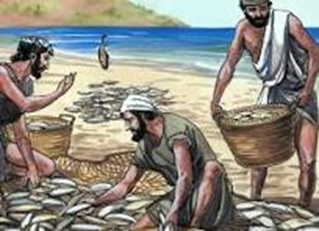
Matthew 13:47-50 Once again, the kingdom of heaven is like a net that was cast into the sea and caught all kinds of fish. When it was full, the men pulled it ashore. Then they sat down and sorted the good fish into containers, but threw the bad away.

So will it be at the end of the age: The angels will come and separate the wicked from the righteous, and throw them into the fiery furnace, where there will be weeping and gnashing of teeth.”

Whenever Jesus tells stories, he always starts with familiar scenes, and today it’s the turn of the fishermen. Fishermen in Jesus’ day go out in the evening and spread their nets all night, pulling them in when they are full to collect the fish that have swum into their nets. In the morning, the fishermen come to shore and begin sorting out their catch.

According to the Loyola Press, “The apostles fished for three main species: St. Peter’s fish, carp, and catfish. The Jews did not eat catfish because it was considered “unclean,” as it did not have fins and scales (Leviticus 11:19). However they were able to sell catfish to Greek communities on the eastern side of the Sea of Galilee….The fish they caught (after they paid the tax man and their hired labor) was sold locally, or salted and preserved to be marketed in places like Jerusalem and even Greece. Fish too small to be marketed were mixed with the entrails of the cleaned fish and salted in a vat. The vats were kept in the sun while the mixture fermented. Eventually the liquid was strained off and marketed as garum, a fish sauce that was used in almost every meal in the Roman empire. Distributers of garum made the equivalent of millions of dollars each year.

Peter and Andrew’s fishing boat would have been 23 feet long and seven feet wide. It had a crew of five: four to row and one to steer and supervise the catch. The supervisor also had to keep a close eye on the weather because storms could quickly develop over the Sea (Matthew 8: 23–27).

The boat could carry a half ton of fish or between 11 to 13 passengers; it was big enough for Jesus to sleep at the bottom of the boat (Mark 4:38). The fishermen used nets made of flax or linen. Most fishing was done at night so that fish would not see and swim around the nets. In modern days nylon nets prevents this problem, and when fishing is permitted, it’s done during the day.

The fishing industry of Jesus’ day was highly profitable, but it was strenuous work and needed major organization. In deep water fishing, two or three boats would work together to set up a net between them and chase fish into the net. This would be done seven or eight times during the night and by morning the fishermen could bring in a half ton of fish.

During the day the men were busy. The caught fish had to be sorted for sale, the nets had to be washed in the lake to remove any silt, and tears in the nets had to be mended. The nets were then hung out to dry and folded for the next catch.” (https://www.loyolapress.com/catholic-resources/scripture-and-tradition/jesus-and-the-new-testament/jesus-in-history/biblical-fishing-101-reeling-in-the-first-fishers-of-faith/

Here Jesus is telling his listeners that there are all kinds of human “fish” on the earth. Just as there are good fish and bad fish, there are also good people and bad people. At the end of the age, angels will sort out the wicked from the righteous. The wicked will be sent to a “fiery furnace where there will be weeping and gnashing of teeth.”

Obviously, nobody wants to wind up in the fiery furnace, but how can we be sure that we are righteous? If we are honest with ourselves, we know that we sin many times each day. By rights, every one of us should suffer punishment for our sins. But Jesus has come and has died a shameful death to pay that sin debt. We have a choice: we can accept what Jesus has done for us, confess that we are sinners, and put our trust in Jesus Christ or we can refuse this gift of eternal life. So the question for each of us is this: what kind of fish do you want to be?

PRAYER: Father God, thank You for loving us and for caring for us. Lord, thank You for sending Jesus to die for our sins. We confess that we are sinners and that nothing we can do will pay for our sins. We accept what Jesus has done for us and we trust in Jesus for our salvation. Thank You for Your promise that when we trust in Jesus, we will enjoy eternal life with You. We pray in the mighty and precious Name of King Jesus. Amen.

JULY 9, 2024 JESUS IS TELLING STORIES-COME LISTEN! #25 WHEN IS IT WORTHWHILE GIVING UP EVERYTHING FOR THE KINGDOM? MATTHEW 13:44-46

July 9, 2024

 “Again, the kingdom of heaven is like treasure hidden in a field, which a man found and hid; and for joy over it he goes and sells all that he has and buys that field.”

 “Again, the kingdom of heaven is like a merchant seeking beautiful pearls, who, when he had found one pearl of great price, went and sold all that he had and bought it.”

These two parables go together naturally because they are both encouragements and warnings. Jesus is encouraging us to pursue the kingdom of heaven with everything that is in us because nothing is worth more than the kingdom of heaven. The kingdom of heaven is like hidden treasure and like a pearl of great price; no sacrifice is too much to gain it. In this day when we have imitation pearls, we might not realize how rare large pearls are.

How are pearls evaluated? Here are the criteria according to the Gemological Institute of America:

1. Size-The size of round and near-round pearls is expressed in terms of their diameter measured in millimeters. One millimeter is about 1/25 of an inch. Other shapes are measured according to their length/depth and diameter/width.

2. Shape-The three main categories of shape are spherical, symmetrical, and asymmetrical (semi-baroque and baroque). Pearls come in seven basic shapes: round, near-round, button, drop, oval, semi-baroque, and baroque.

3. Color-There are three components: bodycolor (dominant, overall color of the pearl), overtone (one or more translucent colors that lie over the bodycolor), and orient (iridescent rainbow colors that shimmer on or just below a pearl’s surface). Note: not all pearls will exhibit all three characteristics.

4. Luster-Luster is the intensity of light reflected from a pearl’s surface. Luster is one of the factors that give a natural or cultured pearl its unique beauty. Pearls with excellent luster have sharp bright reflections on the surface. Different pearl varieties have different standards for luster. The GIA Luster Scale ranges from Excellent to Poor.

5. Surface-Pearls commonly have blemishes or irregularities that are normally confined to the surface. Surface characteristics are judged by size, number, location, visibility, and the types of blemish. If surface characteristics are numerous or severe, they can affect the durability of a pearl and severely lower its value. They have less effect on the pearl’s beauty and value if they are few in number, or if they are minor enough to be hidden by a drill-hole or mounting. The GIA Surface Scale classifies pearls as Clean, Lightly Spotted, Moderately Spotted, or Heavily Spotted.

6. Nacre Quality-Nacre is the substance that makes up a pearl, layer after layer. Thickness is important when evaluating nacre quality to make sure that cultured pearls are durable as well as beautiful. Nacre thickness measurements are provided as optional descriptions on GIA pearl reports. However, GIA pearl reports will clearly note if the nacre coating is too thin and/or damaged, thereby posing a potential impact on a pearl’s durability. Natural or non-bead cultured pearls with nacre quality issues (damage will also be noted).

7. Matching-This relates to the uniformity of pearls in strands, earrings, or other multiple-pearl jewelry items, and is highly dependent upon a skilled grader to determine matching the other six value factors. 

The pearl in Jesus’ story must be a perfect natural pearl with outstanding size, shape, color, luster, an excellent surface, and superb nacre quality. This pearl is unique and beyond all other pearls, so there’s no concern over matching it to another pearl. In Jesus’ day only royalty owned such huge perfect pearls.

You might ask, “Fine, so what happens after you have sold everything to buy that field or to buy that pearl?” The idea is that these treasures are truly priceless as is the kingdom of God. No sacrifice will be too much to gain such treasures. Earlier, Jesus has asked his audience, “What will it profit a man if he gains the whole world but loses his soul?” The answer is simple: your soul is priceless. Far better to gain the kingdom of heaven than to gain the world but lose heaven. Jesus wants his followers to be heavenly minded, not earthly minded.

“But Jesus,” we stutter, “don’t you remember that I have a family to care for and a job to do?” Of course, Jesus knows all these things. But the idea is that we will fix our eyes on heaven and have heaven as our goal, allowing God to help us in these other areas. The men and women who followed Jesus knew heartache and suffering. Many of them died for their faith. But they gained that treasure, that pearl of great price. They gained heaven.

They Cast Their Nets in Galilee by William Alexander Percy

1 They cast their nets in Galilee,
Just off the hills of brown;
Such happy, simple fisherfolk,
Before the Lord came down.
2 Contented, peaceful fishermen,
Before they ever knew
The peace of God that filled their hearts
Brimful, and broke them too.
3 Young John, who trimmed the flapping sail,
Homeless in Patmos died.
Peter, who hauled the teeming net,
Head down was crucified.
4 The peace of God, it is no peace,
But strife closed in the sod.
Yet, let us pray for but one thing:
The marv’lous peace of God.

PRAYER: Father God, thank You for loving us and caring for us. Lord, many of us are worried and distracted by our struggles to survive and to care for those around us. Help us so that no matter how difficult things are, we will still fix our eyes on heaven as our goal. In the mighty and precious Name of King Jesus. Amen.

JULY 8, 2024 JESUS IS TELLING STORIES-COME LISTEN! #24 MATTHEW 13:33 WHAT’S RISING BREAD GOT TO DO WITH THE KINGDOM OF GOD?

July 8, 2024

Matthew 13:33 “Another parable He spoke to them: “The kingdom of heaven is like leaven, which a woman took and hid in three measures of meal till it was all leavened.”

Very few things smell better than bread baking, and very few things taste better than bread fresh from the oven spread with butter. (I’m drooling just thinking about it!) When I was growing up, we made much of our own bread. It was always amazing to me that I could mix a packet of yeast with a little warm water and sugar, allow it to sit for a little bit, and then mix it into the bread dough. We always allowed our dough to rise twice before baking it. The trick was to knead the dough and then punch it down well enough that all the air bubbles would be gone. One small packet of good-quality yeast would make at least 2 large loaves of bread. Another thing I learned was that the yeast had to be completely mixed throughout the bread dough. Partial mixing would result in a weird loaf that wouldn’t rise well or taste good.

My Grandma Delphia made cardamom-scented butterhorn rolls for every special occasion, as well as citron-flavored Swedish limpa rye bread. (It took years before I realized that in nineteenth century Sweden, the unbleached rye flour was considered fit only for poor people. I thought it was a big treat!)

In Jesus’ day, housewives would make a great deal of unleavened bread, the kind we now call pita. Pita requires little more than flour and water. But for special occasions, housewives would create leavened bread that required yeast and sugar to make it rise properly.

What does leaven have to do with the kingdom of heaven? God is really sneaky! Give God any kind of an opening, and before you know it, He is working in your life or in the lives or your family members. God is also the Consummate Opportunist; He will use any occasion, any circumstances, any connections, anything at all to insert Himself into your consciousness and direct your attention to His kingdom. You might think that you are just attending a concert; before you realize it, God is speaking to you through the music. You think you are dropping into a meeting out of curiosity; meanwhile, God already has a plan. And once you open yourself to the leaven of the kingdom of God, watch out! Your life will never be the same again.

C.T. Studd was a physically worn-out 51-year-old former China Inland Mission missionary when he stopped by a Gospel hall in London to listen to a speaker describing the needs of the Belgian Congo. By the time the meeting was over, not only had Studd committed himself to mission work in the Belgian Congo, but he later founded the Worldwide Evangelism Crusade, WEC Mission, that would eventually work in countries around the world. Studd sailed for Africa in 1910 with no support; even his wife disapproved. Studd’s example has inspired thousands of others to risk everything for the sake of the Gospel.

Here are a few quotes from C. T. Studd:
• “Some want to live within the sound of church or chapel bell; I want to run a rescue shop, within a yard of hell.”
• Let us not glide through this world and then slip quietly into heaven, without having blown the trumpet loud and long for our Redeemer, Jesus Christ. Let us see to it that the devil will hold a thanksgiving service in hell, when he gets the news of our departure from the field of battle.
• If Jesus Christ be God and died for me, then no sacrifice can be too great for me to make for Him.
• Only one life, a few brief years, Each with its burdens, hopes, and fears;
Each with its clays I must fulfill. living for self or in His will;
Only one life, ’twill soon be past, Only what’s done for Christ will last.
• Christ wants not nibblers of the possible, but grabbers of the impossible, by faith in the omnipotence, fidelity, and wisdom of the Almighty Saviour Who gave the command. Is there a wall in our path? By our God we will leap over it! Are there lions and scorpions in our way? We will trample them under our feet! Does a mountain bar our progress? Saying, ‘Be thou cast into the sea,’ we will march on. Soldiers of Jesus! Never surrender!

The question for us is simple: Will we allow the leaven of the kingdom of God to enter every part of our lives? Will we allow God to do everything He wants to in us, or are we going to try to limit God? Limiting God is as worthless as trying to keep bread from rising once the yeast has been thoroughly mixed in. But there is one requirement for yeast to work properly once it has been mixed; the bread dough must be allowed to rise in a warm place. Chill the bread dough and it won’t rise, although you can warm it later and allow it to rise. Once God is working in our hearts, we must be careful not to allow ourselves to become cold, thus thwarting the work of the Holy Spirit. Let us pray that we will be receptive to God, so that He may do everything He wants to in our lives!

PRAYER: Father God, thank You for loving us and for caring for us. Lord, help us to always allow Your kingdom to fully come and Your will to fully be done in our lives, no matter the cost. In the matchless and precious Name of King Jesus. Amen.

BUTTERHORN ROLLS (FROM REDDIT)
Recipe:
1 package active dry yeast
1/4 cup water
3/4 cup milk, scalded
1/2 cup shortening
1/2 cup sugar
2 tsp salt
4 1/2 to 4 3/4 cups flour
3 beaten eggs
Instructions:
Activate the yeast in warm water in separate container. Combine hot milk, shortening, sugar and salt; stirring until lukewarm. Add 1 cup of the flour; stir. Add yeast mixture and eggs, beating well. Stir in remaining flour.
Place the dough onto a floured surface and knead for 5 – 8 minutes. Place dough in greased bowl, rolling it once to grease the top of the dough. Cover and let rise until double.
Turn out onto lightly floured surface. Divide dough in thirds and Roll each third into a 9-inch circle. Brush with melted butter. Cut each circle in 12 wedge-shaped pieces. Roll each wedge up (wide end to point)
Arrange rolls, point down on greased baking sheet. Brush tops of rolls with melted butter. Cover and let rise for 45 minutes. Bake at 400 degrees for 10 – 12 minutes.
https://www.reddit.com/r/recipes/comments/dyynd9/my_grandmas_famous_butterhorn_rolls/

JULY 7, 2024 JESUS IS TELLING STORIES-COME LISTEN #23 MATTHEW 13:31-32 WHAT’S SO GREAT ABOUT A MUSTARD SEED?

July 7, 2024

Matthew 13:31-32 The Parable of the Mustard Seed (Mark 4:30-34; Luke 13:18-19)

“He put before them another parable: “The kingdom of heaven is like a mustard seed that a man planted in his field. Although it is the smallest of all seeds, yet it grows into the largest of garden plants and becomes a tree, so that the birds of the air come and nest in its branches.”

Examining seeds, mustard seeds don’t seem very impressive. A mustard seed measures scarcely one millimeter in diameter. If we base our expectations on the size of a seed, we won’t expect much from a mustard seed. But look what Jesus says about this tiny seed. Jesus tells us that growth is assured and that this tiny seed will become the largest of garden plants, a tree big enough for the birds of the air to nest in its branches.

In the same way, most of the time when the kingdom of heaven shows up, its beginnings are anything but impressive. Look at Jesus and his disciples. Here is a carpenter’s son leading a group of twelve men, including fishermen, a tax collector, and a ragtag collection of other men from villages around the Sea of Galilee. Jesus spends most of his time out in the villages teaching people the religious professionals disdain. Then to cap it off, Jesus dies by crucifixion-what a waste! And yet, within a few decades, Christians are being accused as “these men who have turned the whole world upside down!”

Throughout the history of the Christian Church, this pattern continues. Barefoot saints preach to the poor and found religious orders of priests and nuns that spread education and healing among millions of people. A solitary priest nails 95 theses to the door of a church and sparks a reformation that brings revival across Europe. A group meeting on the grounds of a nobleman’s home begin to pray around the clock sparking the sending of Moravian missionaries and leading to the salvation of John and Charles Wesley, who then found the Methodist Church. The Methodist movement is credited with preserving England from the horrors that convulse France when the poor of France rise up and send nobles to the scaffold.

A little shoemaker in England posts a map of the world on the wall over his bench and begins to pray over it. Eventually, this man goes to India, despite discouraging words from church officials and is later described as a Baptist minister, translator, social reformer, and cultural anthropologist who founds the Serampore College and the Serampore University, the first degree-awarding university in India. A British parliamentarian risks his life and fortune to push for the abolition of slavery. A Scottish weaver prays over his loom and eventually goes to Africa, where he becomes a great explorer and evangelist. A young man rides his horse alone through the dark forests of colonial America to evangelize Native Americans. When this man dies from TB at age 31, his father-in-law writes a small biography that inspires countless others to enter the mission field, including that English shoemaker.

 Matthew 17:20 “So Jesus said to them, “Because of your unbelief; for assuredly, I say to you, if you have faith as a mustard seed, you will say to this mountain, ‘Move from here to there,’ and it will move; and nothing will be impossible for you.” When I was young, someone gave me a necklace that had a mustard seed encased in glass as its decoration. This gift was to encourage me to have “mustard seed type” faith. Jesus was trying to teach his disciples that even small faith can accomplish much. William Carey, the English shoemaker/missionary to India was fond of saying, “Expect great things from God; attempt great things for God.” Hudson Taylor, founder of the China Inland Mission repeatedly urged his workers that “God’s work done God’s way will never lack God’s supply.”

Zechariah 4:10 asks, “For who has despised the day of small things?”  Jesus assuredly praises small things, knowing they might have great potential. We are the ones who demand the showy, the forceful, the loud and demonstrative, whether or not these things have substance. When God sent the prophet Samuel to Jesse to select one of his sons to be the next king, Jesse proudly presented the big strong handsome sons, neglecting David, the youngest who was out herding sheep; yet, it was David whom God had chosen. Samuel told Jesse that God saw the heart and not simply the outside appearance.

As we continue in our walks of faith, may we learn the lesson of the mustard seed-let us realize that
“little is much when God is in it.”

LITTLE IS MUCH WHEN GOD IS IN IT Kittie L. Suffield

1 In the harvest field now ripened
There’s a work for all to do;
Hark! the voice of God is calling
To the harvest calling you.

Refrain:
Little is much when God is in it,
Labor not for wealth or fame;
There’s a crown, and you can win it,
If you go in Jesus’ name.

2 Does the place you’re called to labor
Seem too small and little known?
It is great if God is in it,
And He’ll not forget His own. [Refrain]

3 When the conflict here is ended
And our race on earth is run,
He will say, if we are faithful,
“Welcome home, My child, well done!” [Refrain]

PRAYER: Our Father and our God, thank You for loving us and caring for us. Lord, help us to have mustard seed faith, faith that will allow us to help grow the Kingdom of God. In the mighty and precious Name of King Jesus. Amen.

JULY 6, 2024 JESUS IS TELLING STORIES-COME LISTEN! #22 WHY IS GOD SO SLOPPY? WHY DOESN’T GOD PUNISH EVIL PEOPLE IMMEDIATELY? MATTHEW 13:24-30

July 6, 2024

Matthew 13:24-30 The Parable of the Weeds (Ezekiel 17:1-10)

“Jesus put before them another parable: “The kingdom of heaven is like a man who sowed good seed in his field. But while everyone was asleep, his enemy came and sowed weeds among the wheat, and slipped away. When the wheat sprouted and bore grain, then the weeds also appeared.

The owner’s servants came to him and said, ‘Sir, didn’t you sow good seed in your field? Where then did the weeds come from?’

‘An enemy did this,’ he replied.

So the servants asked him, ‘Do you want us to go and pull them up?’

‘No,’ he said, ‘if you pull the weeds now, you might uproot the wheat with them. Let both grow together until the harvest. At that time I will tell the harvesters: First collect the weeds and tie them in bundles to be burned; then gather the wheat into my barn.’”

Once more, Jesus is telling stories to village people, many of whom are farmers. God has sown the good seed of His Word into people’s hearts; however, Satan has been equally busy attempting to deceive. There are those who have believed God’s Word and those who have not. But God is merciful, giving people every chance to turn to Him. 2 Peter 3:9 says, “The Lord is not slow to fulfill his promise as some count slowness, but is patient toward you, not wishing that any should perish, but that all should reach repentance.”

Quite honestly, from a human standpoint, God is sloppy! Given the chance to have divine insight into people’s hearts, many of us would zap people out of existence the first time they did something reprehensible. God, on the other hand, gives people years and years filled with opportunities to turn to Him. In this parable, part of the reason the land owner orders his servants to wait until the plants are fully grown is that wheat and weeds can closely resemble each other for much of the time they are growing. Only when the wheat is fully mature will the farmer be able to tell the wheat from the weeds.

Many times we wonder why good people sometimes die at a young age while nasty ones seem to linger forever. We fail to realize that God is giving the evil people every possible chance to change. Sometimes it’s only as people are aging and facing the possibility of death that they finally become serious about turning to God.

Notice something else: The land owner warns his servants that if they attempt to pull out the weeds before the wheat is ripe, they may also uproot the wheat. Only God knows the proper time for harvesting souls. Disrupt things too soon and someone who has yet to decide to follow God may be destroyed.

One difference between people and wheat is that a wheat crop will ripen all at the same time while people ripen spiritually on an individual basis. Only God knows the potential of a person for good or evil. Years ago, I heard the testimony of a man who had been heavily involved in the Hell’s Angels motorcycle gang in California. This man had helped supervise drug sales and prostitution; meanwhile, his godly mother was continuing to pray for his salvation. Eventually, the man came under conviction and decided to leave the gang, only to realize that gang members would rather kill him than allow him to quit. This man holed up in a telephone booth and called his mother in South Carolina, who then advised him to call the closest minister. Gang members surrounded the phone booth, waiting for the man to come out so they could kill him.

Miraculously, there was a phone book in the booth and the man called the first minister whose name he found. When the minister arrived, he proved to be a huge man who was probably an ex-marine. The minister escorted this man out of the booth and into his car, speeding away and leaving the gang members behind. That man gave his life to God that day and served Him for the rest of his life. Later, when I worked in Charleston, South Carolina, I met the man’s mother and she confirmed the entire story.

The point is clear: Had we seen this man during his days as a Hell’s Angel, we would have assumed that he would follow an increasingly evil path for the rest of his life. But God knew better. Only God knows human hearts and only God knows those who will turn away from their sin and serve Him.

The question for us personally is this: Are we weeds or are we good wheat? Are our lives bearing fruit for God or are we wasting our time pursuing things that don’t matter in the light of eternity? Weeds can’t help being weeds, but we have free will and can make choices. We can choose to serve God. Today, ask God to show you whether you are living for yourself or living for Him. If you need to change, God will gladly help you if you will only ask.

PRAYER: Father God, thank You for loving us and for caring for us. Lord, help us to follow hard after You all the days of our lives. Help us to live for You so that our lives will bear Your fruit. We confess that we are sinners who cannot free ourselves from our sins. Forgive us our sins and help us to live for You from now on. In the matchless Name of King Jesus. Amen.

JULY 5, 2024 JESUS IS TELLING STORIES-COME LISTEN! #21 WHY THROW GOOD SEED ON ROCKS? MATTHEW 13:1-23

July 5, 2024

Matthew 13:1-23 The Parable of the Sower (Mark 4:1-9; Luke 8:4-8)

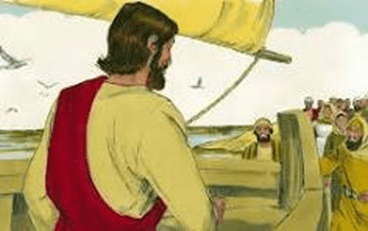
“That same day Jesus went out of the house and sat by the sea. Such large crowds gathered around Him that He got into a boat and sat down, while all the people stood on the shore. And He told them many things in parables, saying, “A farmer went out to sow his seed. And as he was sowing, some seed fell along the path, and the birds came and devoured it. Some fell on rocky ground, where it did not have much soil. It sprang up quickly, because the soil was shallow. But when the sun rose, the seedlings were scorched, and they withered because they had no root. Other seed fell among thorns, which grew up and choked the seedlings. Still other seed fell on good soil and produced a crop—a hundredfold, sixtyfold, or thirtyfold. He who has ears, let him hear.”

The Purpose of Jesus’ Parables (Mark 4:10-12; Luke 8:9,10)

”Then the disciples came to Jesus and asked, “Why do You speak to the people in parables?”He replied, “The knowledge of the mysteries of the kingdom of heaven has been given to you, but not to them. Whoever has will be given more, and he will have an abundance. Whoever does not have, even what he has will be taken away from him. This is why I speak to them in parables: ‘Though seeing, they do not see; though hearing, they do not hear or understand.’ In them the prophecy of Isaiah is fulfilled: ‘You will be ever hearing but never understanding; you will be ever seeing but never perceiving. For this people’s heart has grown callous; they hardly hear with their ears, and they have closed their eyes. Otherwise they might see with their eyes, hear with their ears, understand with their hearts, and turn, and I would heal them.’ But blessed are your eyes because they see, and your ears because they hear. For truly I tell you, many prophets and righteous men longed to see what you see but did not see it, and to hear what you hear but did not hear it.

The Parable of the Sower Explained (Mark 4:13-20; Luke 8:11-15)

Consider, then, the parable of the sower: When anyone hears the message of the kingdom but does not understand it, the evil one comes and snatches away what was sown in his heart. This is the seed sown along the path.

The seed sown on rocky ground is the one who hears the word and at once receives it with joy. But since he has no root, he remains for only a season. When trouble or persecution comes because of the word, he quickly falls away.

The seed sown among the thorns is the one who hears the word, but the worries of this life and the deceitfulness of wealth choke the word, and it becomes unfruitful.

But the seed sown on good soil is the one who hears the word and understands it. He indeed bears fruit and produces a crop—a hundredfold, sixtyfold, or thirtyfold.”

Jesus has come to the seaside and has gotten into a boat floating just off land enough to protect him from the crowds. Sound travels far over water so when Jesus speaks, people can hear very well. Once more the village boy is telling villagers stories with which they can all identify. Many of these people have grown up on farms and have sown crops, scattering the seed as they walk. Jesus speaks about four kinds of soil-compacted soil on a path, rocky soil, soil full of thorns, and good soil. Jesus also admonishes his audience, “He who has ears, let him hear.”

The disciples are frustrated. Why doesn’t Jesus just explain everything to the entire group at once? Why does Jesus speak in parables? Jesus says that the truths of the kingdom will be made clear to those who are prepared to receive them. In any group, there are those actively searching for the Kingdom of God, and they are likely to grasp the meaning of the parables without any further explanation. There are those who may not understand the parables immediately but who will go away, think about them, and realize what Jesus is teaching. There are those whose hearts have been hardened by religion who reject the parables as being simple-minded, childish, and unsophisticated. This group includes religious leaders who spend much of their time debating in the temple over tiny details. Some of these men comprise the most dangerous group of all, namely, those who would report Jesus to the religious hierarchy and to the Romans to curry political favor. The more this last group withdraws from Jesus, the less they will understand.

It’s likely that those who understand Jesus’ parables best are the common people closest to the events Jesus is describing. Although Jesus doesn’t give the explanation of the parable to the entire group, he does explain it to his disciples. 

When anyone hears the message of the kingdom but does not understand it, the evil one comes and snatches away what was sown in his heart. This is the seed sown along the path.

The seed sown on rocky ground is the one who hears the word and at once receives it with joy. But since he has no root, he remains for only a season. When trouble or persecution comes because of the word, he quickly falls away.

The seed sown among the thorns is the one who hears the word, but the worries of this life and the deceitfulness of wealth choke the word, and it becomes unfruitful.

But the seed sown on good soil is the one who hears the word and understands it. He indeed bears fruit and produces a crop—a hundredfold, sixtyfold, or thirtyfold.”

Where do we fit into this parable? Are our hearts and minds prepared for the message of the kingdom of God, or are we rejecting it because it is too simple? Are we enthused when we first hear the message but then refuse to discipline ourselves further to live out the message? How deep are our spiritual roots? What happens if we face trouble or persecution or worry? What if we are depending on money or social position? Can we describe our spiritual condition as that of good soil?

The thing about Jesus’ parables is that they are deceptively simple but working on multiple levels simultaneously. May God help us so that our hearts and minds will be prepared to receive everything God wants to impart to us!

PRAYER: Father God, thank You for loving us and for caring for us. Lord, please calm our hearts and help us to leave everything that distracts us behind so that we can receive Your Word and act on it. Lord, let our hearts be good soil that will produce a hundredfold crop! In the mighty and precious Name of King Jesus. Amen.

JULY 4, 2024 JESUS IS TELLING STORIES-COME LISTEN! #20 WHAT’S SO IMPORTANT ABOUT PATCHES AND WINESKINS? MATTHEW 9:16-17, MARK 2:21-22, LUKE 5:36-38

July 4, 2024

Matthew 9:16-17 The Patches and the Wineskins  

“No one sews a patch of unshrunk cloth on an old garment. For the patch will pull away from the garment, and a worse tear will result.

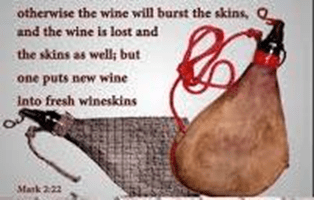
Neither do men pour new wine into old wineskins. If they do, the skins will burst, the wine will spill, and the wineskins will be ruined. Instead, they pour new wine into new wineskins, and both are preserved.”

Although everyone probably understands what Jesus is saying, here he is speaking particularly to housewives whose job it is to mend clothing. When mending a garment, there are two choices: use old material from another garment or use brand new material. The problem with new material is that it will shrink as soon as it is washed for the first time while old material has already been washed several times and has already shrunk as much as it can. Without any old material, a canny housewife must wash the new material two or three times and hang it in the sun before using it to patch a garment. Without pre-shrinking the material, the housewife will be embarrassed when her repair falls apart.

The phenomenon of shrinking material continues to be a challenge. As a 4-H member sewing for competition, I learned to always wash my material before attempting to tailor it into a garment. After washing the material, I would also iron it before beginning to sew. Here in Ghana, we must also soak material in salt water to fix the dyes; otherwise, the dye will run, staining other clothing.

Old leather wineskins have stretched as much as they are going to. As long as the wine in the old wineskins is old, it has already reached its maximum point of fermentation. But new wine is still in the process of fermenting and must be stored in fresh wineskins that are still pliable and stretch.

What’s Jesus trying to illustrate with this parable? Jesus is trying to say that the good news of the Kingdom of God is like new material or new wine. The messages of Jesus will not fit neatly into the current religious structure because God wants to do a new thing and Jesus is His messenger. The old material and old wineskins represent that pre-existing religious structure with all the minute rules and regulations that have been developed over centuries.

There surely must have been Pharisees and religious teachers in the crowd who are fuming over this message. After all, these men have dedicated their lives to observing all these rules; now Jesus is saying that those rules are not important? Some of these men might be fearing for their jobs and positions while those who truly hunger for more of God are waiting to hear what else Jesus is going to say. Jesus has already told listeners that he has not come to set aside the Mosaic Law but to fulfill it. The problem is not with the Mosaic Law but with all the other practices that have been developed during centuries of attempts to interpret it. The professional religious men in Jesus’ day have a large number of dietary rules, rules about what constitutes work on the Sabbath, rules about clothing, and rules about every aspect of daily life. The average person can’t possibly follow all these rules because observing them requires time and money beyond their reach.  

Although we might like to feel superior to the religious leaders of Jesus’ day, we must continue to check our own attitudes. Without meaning to, we may have adopted sets of rules and regulations about approaching God, worshiping God, etc. We might be judging others based on our rules; meanwhile, Jesus has totally different ideas. Some Christian denominations have stringent dress codes, particularly for women. While people should be free to follow their convictions, judging others by these standards can inflict wounds. Several years ago, my husband and I had just returned from a two-year mission term in Ghana and were helping at a Christian camp. One group that came for a week did not approve of trousers, short sleeves, or short hair for women. Unfortunately, I was emptying trash barrels and doing other janitorial work in my jeans and tee-shirts. Because I had been working in a tropical country, I had cut my hair short. The ladies in this group did not welcome me as a Christian sister but glared at me. What they would have done had I had tattoos and dreadlocks, I can only imagine.

Sometimes Christians have been guilty of employing special language in trying to sound more spiritual. There are all kinds of Christian catch-phrases, and there are also all kinds of teachings that bear no relationship to those of Jesus. Such pseudo-religious jargon leaves many people convinced that Christians are supercilious know-it-alls who simply want to appear superior.

What about modes of dress? When we first came to our little village, it was quite common for women working on farms to be naked to the waist or possibly to simply wear a bra. These same ladies would wear tee-shirts and skirts to church along with rubber flip-flops. These days, nobody dresses like that, and only the very poorest wear rubber sandals to church. Now we have a new problem; some young women dress nicely but so immodestly that they shock our Muslim friends.

What should we do with this parable? We must examine ourselves to see if we are dragging around any old wineskins. Are we cherishing practices and beliefs contrary to Jesus’ teachings? Are we demanding that others must fit into molds we have designed while Jesus wants them to come to Him as they are? One fallacy frequently promoted by Christians is that we should clean ourselves up before we come to Jesus. Jesus throws “Come as you are” parties. Come to Jesus and he will clean you up. My husband had smoked two packs of cigarettes a day for twenty years, but when he became a Christian, God convicted him that he stopped smoking. The same thing happened with his drinking alcohol. Nobody at church put a guilt trip on my husband; the Holy Spirit caused him to realize that he did not need cigarettes or alcohol anymore.

If you are not a Christian and someone has been putting guilt trips on you over your appearance, ignore them! Jesus loves you just as you are and if you will trust him, he can tell you what you need to change. My husband has a tattoo on one arm that he has used many times to tell people about Jesus. Jesus can change your spirit and then you will know if there is anything else he wants you to change.

PRAYER: Father God, thank You for loving us and for caring for us. Lord, many of us have been wounded by religious jargon jugglers. Please make Yourself so real to these precious people that they understand that Your love goes far beyond anything they have ever experienced previously. In the mighty and precious Name of King Jesus. Amen.      

JULY 3, 2024 JESUS IS TELLING STORIES-COME LISTEN! #19 IS YOUR HOUSE BUILT ON SAND? MATTHEW 7:24-29

July 3, 2024

The House on the Rock (Luke 6:46-49)

Matthew 7:24-29 “Therefore everyone who hears these words of Mine and acts on them is like a wise man who built his house on the rock. The rain fell, the torrents raged, and the winds blew and beat against that house; yet it did not fall, because its foundation was on the rock.

But everyone who hears these words of Mine and does not act on them is like a foolish man who built his house on sand. The rain fell, the torrents raged, and the winds blew and beat against that house, and it fell—and great was its collapse!”

The Authority of Jesus

When Jesus had finished saying these things, the crowds were astonished at His teaching, because He taught as one who had authority, and not as their scribes.

There are very few flat places in Israel; the geography is mostly up and down with lots of rock. And in many areas, there are wadis-dry stream beds that can suddenly fill with flash floods from water from the mountains. Villagers know better than to build in these stream beds or in other places where sand is plentiful. But there’s always somebody who thinks he’s too smart to listen to reason. It’s possible that just a few days before Jesus begins this teaching, a local man chose to build in a foolish location. While neighbors tried to warn this man, he continued to lay foundation stones, claiming that there hadn’t been a flood there in hundreds of years, so why worry? Well, this builder should have worried, for a torrential rain storm in the mountains sent walls of water cascading down that wadi, tumbling those big stone building blocks as if they were so many child’s wooden blocks.

This story was far too juicy not to share with any strangers, including Jesus. And Jesus would never ignore such a great teaching opportunity. Now Jesus is using that story, and his audience is laughing and then realizing the force of this message. What is the rock that Jesus is talking about? Jesus is urging his listeners to learn the will of their Heavenly Father and then to passionately pursue it. As long as people rely on anything less than God, they are bound to be disappointed.

We read these words and smile at the illustration, but what does this message mean for us? What are the foundations of your life? Are you depending on your profession, on your wealth, on family connections, on political influence? During the recent COVID epidemic, a 43-year-old computer expert received vaccinations, only to suffer neurologic damage from the vaccinations and losing his job. COVID does not discriminate but kills people of every social class and profession. Recent news articles from Moline, Illinois are warning that the John Deere Company is about to lay off 600 workers. This company has been one of the main-stays of the local economy for more than 150 years, and workers at Deere have enjoyed good salaries and great benefits. Now these families are about to lose that financial security. In some countries, political appointees from one party may lose their positions as soon as elections bring in a new party.

Later, Simon Peter will warn that, “And there is no salvation in any other man, for there is no other name under Heaven given to the children of men by which it is necessary to receive life.” (Acts 4:12) Nothing has changed since Peter’s day; we still must trust in Jesus Christ to have a firm foundation for our lives. When we base our lives on anything else or anything less, we are as foolish as the man who built his house in the wadi. The words of an old hymn express this very well.

How firm a foundation, O saints of the Lord,
Is laid for your faith in his excellent Word!
What more can he say than to you he has said
Who unto the Savior for refuge have fled?

In ev’ry condition, in sickness, in health,
In poverty’s vale, or abounding in wealth,
At home and abroad, on the land, on the sea —
The Lord, the Almighty, your strength e’er shall be.

Fear not, I am with you. Oh, be not dismayed,
For I am your God and will still give you aid;
I’ll strengthen you, help you, and cause you to stand,
Upheld by my righteous, omnipotent hand.

When through the deep waters I call you to go,
The rivers of sorrow shall not overflow,
For I will be with you your troubles to bless
And sanctify to you your deepest distress.

Throughout all their lifetime my people shall prove
My sov’reign, eternal, unchangeable love,
And then, when gray hair shall their temples adorn,
Like lambs they shall still on my shoulders be borne.

PRAYER: Father God, thank You for loving us and for caring for us. Lord, help us to base our lives on faith in You, nothing else and nothing less. In the mighty and precious Name of King Jesus. Amen.

JULY 2, 2024 JESUS IS TELLING STORIES-COM LISTEN!#18 MATTHEW 7:13-23 GOOD FRUIT???

July 2, 2024

Matthew 7:13-23 “The Narrow Gate (Luke 13:22-30)

“Enter through the narrow gate. For wide is the gate and broad is the way that leads to destruction, and many enter through it. But small is the gate and narrow the way that leads to life, and only a few find it.”

Let’s talk about gates and doorways. Here in Ghana, as in ancient Israel, one enters a traditional compound through a narrow doorway into one room. These doorways are narrow enough that visitors can’t rush through them with weapons but must enter carefully. The door on the opposite side of the room is equally narrow, making it possible for those in the compound to defend themselves from attack. Even when there are gateways to walled compounds, there are pedestrian gates that are quite narrow while there are larger gates to allow entry to vehicles. Sometimes, those defending cities in Jesus’ day might open the city gates as a ploy to lure attackers into a narrow area just inside the gates where they might be annihilated. Those willing to enter by a narrow gate are demonstrating that they come in peace and may be safely welcomed.  

Here Jesus is advising that those desiring heaven must be careful to do the will of the Heavenly Father. Behaving heedlessly will not get us into heaven.

A Tree and its Fruit (Matthew 12:33-37; Luke 6:43-45)

“Beware of false prophets. They come to you in sheep’s clothing, but inwardly they are ravenous wolves. By their fruit you will recognize them. Are grapes gathered from thornbushes, or figs from thistles? Likewise, every good tree bears good fruit, but a bad tree bears bad fruit. A good tree cannot bear bad fruit, and a bad tree cannot bear good fruit. Every tree that does not bear good fruit is cut down and thrown into the fire. So then, by their fruit you will recognize them.

Not everyone who says to Me, ‘Lord, Lord,’ will enter the kingdom of heaven, but only he who does the will of My Father in heaven. Many will say to Me on that day, ‘Lord, Lord, did we not prophesy in Your name, and in Your name drive out demons and perform many miracles?’

Then I will tell them plainly, ‘I never knew you; depart from Me, you workers of lawlessness!’”

Many of those listening to Jesus’ are farmers or shepherds and many more have gardens. When Jesus describes unscrupulous teachers who prey on their followers, he can see the crowd nodding in agreement. There have always been false prophets willing to predict wonderful futures for the gullible, particularly if they are paid enough money. There are many such men circulating through the villages draining extorting sums from those who can least afford it. It’s even possible that those listening to Jesus have fallen victim to one of these charlatans. When Jesus is talking about grapes from thornbushes and figs from thistles, everyone remembers the names of those scoundrels.

These next pronouncements are troublesome. Most people would like to prophesy or drive out demons or do miracles. Surely, anyone doing such wonders must be close to God, right?
“WRONG!” says Jesus. “Not everyone who says to Me, ‘Lord, Lord,’ will enter the kingdom of heaven, but only he who does the will of My Father in heaven.”  Remember that God knows our hearts and God knows our motives. While God might bless our efforts out of compassion for those who need help, our actions alone will not get us into heaven. God forced Balaam, the pagan prophet who was employed to curse the Israelites, to bless them; yet, Balaam was eventually destroyed along with the Moabites. Simply speaking the words God gave did not save Balaam. The pagan priests and magicians in Pharaoh’s court were also able to imitate some of the miracles Moses did; however, there came a point where they realized that a Power greater than theirs was at work.

Looking at the list of deeds that will not get us into heaven, we might wonder how anyone can make it. Each of us is born with a sin problem; no matter what we do, we cannot earn our way into heaven. Sin must be paid for by a blood sacrifice. Jesus Christ came as a sinless man to die as a one-time sacrifice for our sins. We must trust in what Jesus has done for us and seek to do God’s will; only then will we qualify for heaven.

PRAYER: Father God, thank You for loving us and for caring for us. Lord, we confess that we are sinners and that we are unable to help ourselves. Thank You for sending Jesus to die for our sins. We accept what Jesus has done for us. Please help us to turn away from our sins and live only for You from now on. In the mighty and precious Name of King Jesus. Amen.