Archive for January, 2025

JANUARY 21, 2025 NEW BEGINNINGS FOR A NEW YEAR #21 TRUSTING JESUS TO DO MIRACLES

January 21, 2025

“JOHN 6:1-14 FEEDING THE FIVE THOUSAND

After these things Jesus went over the Sea of Galilee, which is the Sea of Tiberias. Then a great multitude followed Him, because they saw His signs which He performed on those who were diseased. And Jesus went up on the mountain, and there He sat with His disciples.

Now the Passover, a feast of the Jews, was near. Then Jesus lifted up His eyes, and seeing a great multitude coming toward Him, He said to Philip, “Where shall we buy bread, that these may eat?” But this He said to test him, for He Himself knew what He would do.

Philip answered Him, “Two hundred denarii worth of bread is not sufficient for them, that every one of them may have a little.”

One of His disciples, Andrew, Simon Peter’s brother, said to Him, “There is a lad here who has five barley loaves and two small fish, but what are they among so many?”

Then Jesus said, “Make the people sit down.” Now there was much grass in the place. So, the men sat down, in number about five thousand. And Jesus took the loaves, and when He had given thanks, He distributed them to the disciples, and the disciples to those sitting down; and likewise of the fish, as much as they wanted. So, when they were filled, He said to His disciples, “Gather up the fragments that remain, so that nothing is lost.” Therefore, they gathered them up, and filled twelve baskets with the fragments of the five barley loaves which were left over by those who had eaten. Then those men, when they had seen the sign that Jesus did, said, “This is truly the Prophet who is to come into the world.”

The disciples are sweating bullets! 5,000 men plus as many as 5,000 women and children, have followed Jesus to a place where there is a natural amphitheater. 10,000 people have been listening to Jesus and watching him heal the sick and deliver others from demons. Now the crowd have used up all the food they have brought, and one of the biggest noises being heard is the growling of hungry stomachs.

Jesus uses Philip as his straight man. “He said to Philip, “Where shall we buy bread, that these may eat?” But this He said to test him, for He Himself knew what He would do.

Philip answered Him, “Two hundred denarii worth of bread is not sufficient for them, that every one of them may have a little.” Jesus is quietly smiling.

Now Andrew softly observes, “There is a lad here who has five barley loaves and two small fish, but what are they among so many?”  Notice Andrew is the one with enough faith to canvas the crowd for resources while all the other disciples are standing looking helpless.  Jesus grins at Andrew and Andrew grins back, knowing Jesus is about to do something marvelous.


“Then Jesus said, “Make the people sit down.” Now there was much grass in the place. So, the men sat down, in number about five thousand. And Jesus took the loaves, and when He had given thanks, He distributed them to the disciples, and the disciples to those sitting down; and likewise of the fish, as much as they wanted.”
When Jesus does a miracle, he does it completely. Philip has been wringing his hands, worried that it would take the equivalent of 200 days’ wages to buy sufficient bread just to give each man a small piece. Now Jesus has multiplied five loaves and two small fish to satisfy the hunger of approximately 10,000 people.
But wait, there’s more.

“So, when they were filled, He said to His disciples, “Gather up the fragments that remain, so that nothing is lost.” Therefore, they gathered them up, and filled twelve baskets with the fragments of the five barley loaves which were left over by those who had eaten. Then those men, when they had seen the sign that Jesus did, said, “This is truly the Prophet who is to come into the world.” Not only has Jesus fed all these people but there’s even a basket of bread for each of the disciples! You can practically hear Jesus chuckling as the disciples gather up all that bread.

What can we learn from this story? The Bible assures us that “Jesus Christ is the same yesterday, today, and forever. (Hebrews 13:8) Neither the disciples nor the crowds have done anything wrong. Jesus meets these people at their point of need and helps them. When we are following Jesus, we too can confidently ask Him to help us. But we need to be prepared for answers to come in ways we cannot anticipate.

THE KFC MIRACLE: Years ago, I had friends who had taken a step of faith, giving up a luxurious lifestyle so that the father/husband could pursue advanced training in pediatric surgery. Now the family was crowded into a small house in a Detroit suburb, living on a very limited budget. Despite these restrictions, my friends had invited me to stay with them overnight; meanwhile, the wife’s father was also visiting that night. My friend M. and I stopped at a fast-food restaurant to buy supper. As M.’s wife and I set out the food that night, I realized there was no way we could possibly feed four adults and two ravenously hungry teenagers with the amount of food we had. But M. prayed over the food and we began distributing it. But even though everyone ate to their satisfaction, the level of the food never reduced below half in each of the containers. At the end of the meal, we put away leftovers.

My friends did not beg God to multiply the food, only to bless it. My friends were trusting God to lead them and to provide for them. That night, my friends had to face a grilling by a father who thought they were crazy for having taken this radical decision. As the meeting was ongoing, I was doing intercessory prayer in their basement. The meeting was successful, and M.’s father changed his mind, giving his blessing to their decision. The following day, I left Detroit, traveling to Indianapolis for an interview. I have since lost touch with my friends; however, I will never forget the KFC miracle.

As I am writing this, I have just gotten word that a childhood friend who has generously supported the hospital for more than twenty years has died. Our hospital needs more donors, particularly donors from within the country. We must trust that God who moved my friend to help us can move in the hearts of many others to multiply their assistance.

PRAYER: Father God, thank You for loving us and for caring for us. Lord, many of us need miracles of multiplication. Your hand is not shortened. You are the God of heaven and earth and nothing is too difficult for You. Lord, please hear the cries of Your children! In the mighty and precious Name of King Jesus. Amen.

JANUARY 20, 2025 NEW BEGINNINGS FOR A NEW YEAR #20 WHOSE REPORT WILL YOU BELIEVE? WE SHALL BELIEVE THE REPORT OF THE LORD!

January 20, 2025

John 5:31-47 The Fourfold Witness

“If I bear witness of Myself, My witness is not true. There is another who bears witness of Me, and I know that the witness which He witnesses of Me is true. You have sent to John, and he has borne witness to the truth. Yet I do not receive testimony from man, but I say these things that you may be saved. He was the burning and shining lamp, and you were willing for a time to rejoice in his light. But I have a greater witness than John’s; for the works which the Father has given Me to finish—the very works that I do—bear witness of Me, that the Father has sent Me. And the Father Himself, who sent Me, has testified of Me. You have neither heard His voice at any time, nor seen His form. But you do not have His word abiding in you, because whom He sent, Him you do not believe. You search the Scriptures, for in them you think you have eternal life; and these are they which testify of Me. But you are not willing to come to Me that you may have life.”

“I do not receive honor from men. But I know you, that you do not have the love of God in you. I have come in My Father’s name, and you do not receive Me; if another comes in his own name, him you will receive. How can you believe, who receive honor from one another, and do not seek the honor that comes from the only God? Do not think that I shall accuse you to the Father; there is one who accuses you—Moses, in whom you trust. For if you believed Moses, you would believe Me; for he wrote about Me. But if you do not believe his writings, how will you believe My words?”

To understand what Jesus is saying, we need to know the Scriptural basis for his remarks. Deuteronomy 19:15 says “by the mouth of two or three witnesses the matter shall be established.” In traditional Jewish courts, someone making a claim must produce at least two witnesses who agree and three witnesses are even better. Now Jesus is asserting that he has three witnesses.

David Guzik in his Enduring Word Commentary explains it this way: “You have sent to John, and he has borne witness to the truth. Yet I do not receive testimony from man, but I say these things that you may be saved. He was the burning and shining lamp, and you were willing for a time to rejoice in his light.”

a. You have sent to John, and he has borne witness to the truth: Jesus noted that the religious leaders knew of and heard John the Baptist for themselves. They needed to think of and believe what John said about Jesus.

b. He was the burning and shining lamp, and you were willing for a time to rejoice in his light: The religious leaders accepted the work of John the Baptist for a time. They needed to continue to believe John regarding Jesus the Messiah.

i. “The expression of lamp our Lord took from the ordinary custom of the Jews, who termed their eminent doctors the lamps of Israel.” (Clarke)

ii. “He said that John was the lamp which burns and shines. That was the perfect tribute to him. (a) A lamp bears a borrowed light. It does not light itself; it is lit. (b) John had warmth, for his was not the cold message of the intellect but the burning message of the kindled heart. (c) John had light. The function of light is to guide, and John pointed men on the way to repentance and to God. (d) In the nature of things, a lamp burns itself out; in giving light it consumes itself. John was to decrease while Jesus increased. The true witness burns himself out for God.” (Barclay)

iii. To rejoice: “To jump for joy, as we would express it. They were exceedingly rejoiced to hear that the Messiah was come, because they expected him to deliver them out of the hands of the Romans; but when a spiritual deliverance, of infinitely greater moment was preached to them, they rejected both it and the light which made it manifest.” (Clarke)

3. (36) The testimony of the works of Jesus.

“But I have a greater witness than John’s; for the works which the Father has given Me to finish—the very works that I do—bear witness of Me, that the Father has sent Me.”

a. A greater witness than John’s… the very works that I do: Jesus claimed another witness regarding His identity and deity – the very works that He did. This present controversy started with a remarkable healing of a man paralyzed for 38 years. This was one of many works that testified to the deity of Jesus.

b. The very works that I do; bear witness of Me: The majority of the miraculous works of Jesus were simple acts of compassion and mercy, done for simple and needy people. In this, these works… bear witness to the heart of God. The Jews looked for a miraculous Messiah, but they did not look for One who would express His miraculous power in simple acts of compassion and mercy. They looked for the Messiah to use miraculous power to bring military and political deliverance to Israel.

i. Because Jesus’ miraculous works didn’t fit in with what they thought the Messiah would do, they didn’t receive this witness of Jesus’ works.

4. (37-38) The testimony of the Father.

“And the Father Himself, who sent Me, has testified of Me. You have neither heard His voice at any time, nor seen His form. But you do not have His word abiding in you, because whom He sent, Him you do not believe.”

a. The Father Himself, who sent Me, has testified of Me: In virtually every work and word of Jesus, God the Father testified to Jesus’ status as the Son of God. But specifically, the Father testified of the Son in Old Testament prophecy and at the baptism of Jesus (Luke 3:22).

b. But you do not have His word abiding in you: They will not receive the testimony of the Father, because they do not have His word abiding in them. They can’t hear God the Father audibly, or see Him, but they have His word. They are guilty because they do not abide in the word that God gave them.

5. (39) The testimony of the Scriptures.

“You search the Scriptures, for in them you think you have eternal life; and these are they which testify of Me.”

a. You search the Scriptures: In theory the religious leaders in Jesus’ day loved and valued the Scriptures (here used in the sense of the Old Testament). They studied and memorized and thought upon them continually, correctly thinking eternal life was found in God’s revelation.

i. “They read them with a wooden and superstitious reverence for the letter, and never penetrated into the great truths to which they pointed.” (Morris)

ii. “They read it not to search for God but to find arguments to support their own positions. They did not really love God; they loved their own ideas about him.” (Barclay)

iii. Search the Scriptures: “The verb itself (eraunao) implies keen scrutiny, tracking down the message of the Scriptures. The tragedy was that these people, for all their painstaking exploration of the sacred writings, had never found the clue which would lead them to their goal.” (Bruce)

b. These are they which testify of Me: If their study of the Scriptures was accurate and sincere, they would see that they spoke of the Messiah, God the Son. Their recognition of and belief upon Jesus was a measure of their true understanding of the Scriptures.

6. (40-44) The reason for their unbelief.

“But you are not willing to come to Me that you may have life. I do not receive honor from men. But I know you, that you do not have the love of God in you. I have come in My Father’s name, and you do not receive Me; if another comes in his own name, him you will receive. How can you believe, who receive honor from one another, and do not seek the honor that comes from the only God?”

a. But you are not willing to come to Me: The religious leaders were not willing, even though they had all the testimony one could have wanted. They were concerned with man’s honor, not the honor that comes from God (do not seek the honor that comes from the only God).

i. Jesus made it clear that having life is found in fulfilling the command “come to Me.” “Christ is a person, a living person, full of power to save. He has not placed his salvation in sacraments, or books, or priests, but he has kept it in himself; and if you want to have it you must come to him.” (Spurgeon)

ii. Their refusal to come to Jesus was despite their searching of the Scriptures (John 5:39). “They search the Scriptures, but they will not come to Jesus. Is it not, therefore, a good thing to search the Scriptures? Ay, that it is, and the more you search them the better; but still it is not the thing: it is not the saving work. You may be Bible readers and yet perish, but this can never happen if you come to Jesus by faith.” (Spurgeon)

iii. “The words Ye are not willing to come here set forth strikingly the freedom of the will, on which the unbeliever’s condemnation rests.” (Alford)

iv. “Let me tell you, the day will come when you will wring your hands in anguish to think that you despised that life. It may be that it will be so in the throes of death, but it is certain that it will be so amid the terrors of judgment, when there shall open wide before you the gates of hell, and before you shall blaze the lake that burneth with fire and brimstone, which is the second death.” (Spurgeon)

v. I do not receive honor from men: “I do not stand in need of you or your testimony. I act neither through self-interest nor vanity. Your salvation can add nothing to me, nor can your destruction injure me: I speak only through my love for your souls, that ye may be saved.” (Clarke)

b. That you do not have the love of God in you: The reasons for their rejection were fundamentally reasons of the heart, not of the mind. These religious leaders could hide behind supposedly intellectual excuses, but their real lack was love and desire for the honor that comes from God.

c. If another comes in his own name, him you will receive: Jesus prophesied the coming day when the descendants of these religious leaders would embrace a false Christ, an Antichrist, who comes in his own name. The rejection of Jesus left them open to terrible deception.

i. “The words are perhaps spoken primarily of the false or Idol-Messiah, the Antichrist, who shall appear in the latter days (2 Thessalonians 2:8-12); whose appearance shall be according to the working of Satan (their fatherJohn 8:44), shewing himself that he is God2 Thessalonians 2:4.” (Alford)

ii. Though this will ultimately be fulfilled in the very end times, there were lesser fulfillments through history. “An outstanding fulfillment of this prediction came about in AD 132, when one Simeon ban Kosebah claimed to be the Messiah of David’s line, and led a revolt against Rome… Simeon’s messianic pretensions involved himself, his supporters and the people of Judea in the most fearful ruin.” (Bruce)

e. How can you believe, who receive honor from one another, and do not seek the honor that comes from the only God? The fatal error of the religious leaders of Jesus’ day – and ever since – is pride. They longed for prestige and honor from one another and were willing to sacrifice the honor that comes from God alone for the sake of man’s honor.

i. Charles Spurgeon preached a message on John 5:44 (Why Men Cannot Believe in Christ) and in one remarkable section of that sermon he examined of how fame, honor, and celebrity hinder true faith (how can you believe, who receive honor from one another). Following are some lines from that sermon:

· “The mere fact of receiving honor, even if that honor be rightly rendered, may make faith in Christ a difficulty.”

· “When a man gets to feel that he ought to be honored, he is in extreme danger.”

· “Always receiving this undeserved honor, they deceived themselves into believing that they deserved it.”

· “Dear friends, it is very difficult to receive honor and to expect it, and yet to keep your eyesight; for men’s eyes gradually grow dull through the smoke of the incense which is burned before them.”

· “Once more, the praise of men generally turns the receivers of it into great cowards.”

· “But, oh, how many live on the breath of their fellow men; to be approved — to be applauded — that is their heaven; but to be despised, to be sneered at, to be called fool, to have some nickname applied to them; oh no, they would sooner go to hell than bear that.”

ii. “The grand obstacle to the salvation of the scribes and Pharisees was their pride, vanity, and self-love. They lived on each other’s praise. If they had acknowledged Christ as the only teacher, they must have given up the good opinion of the multitude; and they chose rather to lose their souls than to forfeit their reputation among men!” (Clarke)

iii. “Seeking credit as religious men from one another, they necessarily habituated themselves to current ideas, and blotted out Divine glory from their mind.” (Dods)

iv. “They had accused Jesus of acting independently of God; He now accuses them of displaying that independence. The motive of their actions is not love for God but the approval of their fellows.” (Tasker)

7. (45-47) The testimony of Moses.

“Do not think that I shall accuse you to the Father; there is one who accuses you—Moses, in whom you trust. For if you believed Moses, you would believe Me; for he wrote about Me. But if you do not believe his writings, how will you believe My words?”

a. If you believed Moses, you would believe Me: These religious leaders rejected Jesus because they rejected God’s word through Moses. Moses accuses them, because Moses wrote about Jesus and they would not receive the testimony of Moses.

b. For he wrote about Me: Jesus said of the Scriptures that they testify of Me (John 5:39). The words and writings of Moses fulfill this, prophetically speaking of the Messiah in many places.

i. The LORD your God will raise up for you a Prophet like me from your midst, from your brethren. Him you shall hear. (Deuteronomy 18:15)

ii. Then the LORD said to Moses, “Make a fiery serpent, and set it on a pole; and it shall be that everyone who is bitten, when he looks at it, shall live.” So Moses made a bronze serpent, and put it on a pole; and so it was, if a serpent had bitten anyone, when he looked at the bronze serpent, he lived. (Numbers 21:8-9)

iii. Jesus was typified in the rock that gave Israel water in the wilderness (Numbers 20:8-12 and 1 Corinthians 10:4).

iv. The ministry of Jesus was shown in almost every aspect of the seven different kinds of offering that God commanded Israel to bring (Leviticus 1-7).

v. Jesus and His ministry were shown in the Tabernacle and its service. One place where the New Testament makes this connection is with the word propitiation in Romans 3:25, which speaks of the mercy seat on the Ark of the Covenant.

vi. The law of the bondservant speaks of Jesus (Exodus 21:5-6 and Psalm 40:6-8).

vii. No wonder Jesus could say “Behold, I come; in the scroll of the Book it is written of Me” (Psalm 40:7). He could teach a Bible study where beginning at Moses and all the Prophets, He expounded to them in all the Scriptures the things concerning Himself (Luke 24:27).

viii. “Thus the writings of Moses were prophetic. In them nothing was completed. They pointed on to other things, which came to pass when He came. Thus in this word we find at once the authority and limitation of Moses.” (Morgan)

ix. “This is an important testimony by the Lord to the subject of the whole Pentateuch; it is concerning Him. It is also a testimony to the fact, of Moses having written those books, which were then, and are still, known by his name.” (Alford)

c. But if you do not believe his writings, how will you believe My words? Jesus did not call these religious leaders to a new or a different faith. He called them to believe what Moses, what the Scriptures, what His works, what John the Baptist each testified about Jesus: that He is the Messiah, the Son of God and God the Son. If they refused to believe this overwhelming testimony, it was unlikely they would believe Jesus’ own words.”

There’s a popular Gospel song that says, “Whose report will you believe? We shall believe the report of the Lord!” The Jewish religious leaders of Jesus’ day rejected Jesus because he failed to fit their preconceived notions of the way the Messiah was to behave. You might try to put God in a box, but God is fond of exploding boxes-and preconceived notions. Today, let us believe “the report of the Lord!”

PRAYER: Father God, thank You for loving us and for caring for us. Lord, please let all who read these words come to know You as the Only True Living God and Jesus Your Son as their Savior and Lord. In the mighty and precious Name of King Jesus. Amen.

JANUARY 19, 2025 NEW BEGINNINGS FOR A NEW YEAR #19 LISTEN TO THE RIGHT VOICE!

January 19, 2025

John 5:24-30 Life and Judgment Are Through the Son

“Most assuredly, I say to you, he who hears My word and believes in Him who sent Me has everlasting life, and shall not come into judgment, but has passed from death into life. Most assuredly, I say to you, the hour is coming, and now is, when the dead will hear the voice of the Son of God; and those who hear will live. For as the Father has life in Himself, so He has granted the Son to have life in Himself, and has given Him authority to execute judgment also, because He is the Son of Man. Do not marvel at this; for the hour is coming in which all who are in the graves will hear His voice and come forth—those who have done good, to the resurrection of life, and those who have done evil, to the resurrection of condemnation. I can of Myself do nothing. As I hear, I judge; and My judgment is righteous, because I do not seek My own will but the will of the Father who sent Me.”

“Most assuredly, I say to you, he who hears My word and believes in Him who sent Me has everlasting life, and shall not come into judgment, but has passed from death into life.” Jesus has already made radical statements, essentially making himself equal with God. Now Jesus is stressing the need for his audience to listen closely and to believe in God the Father. True believers will receive everlasting life.

“Most assuredly, I say to you, the hour is coming, and now is, when the dead will hear the voice of the Son of God; and those who hear will live. For as the Father has life in Himself, so He has granted the Son to have life in Himself, and has given Him authority to execute judgment also, because He is the Son of Man. Do not marvel at this; for the hour is coming in which all who are in the graves will hear His voice and come forth—those who have done good, to the resurrection of life, and those who have done evil, to the resurrection of condemnation.”  These statements are interesting but also perplexing. One question is “which dead are we talking about?” Is Jesus speaking about spiritually dead people who hear Jesus, believe in God, and pass from spiritual death to life? Is Jesus referring to his eventual descent into hell, where Jesus traditionally is believed to have preached to the physically and spiritually dead? And then there is the matter of judgment. The Heavenly Father has given Jesus authority to judge both the living and the dead.

“I can of Myself do nothing. As I hear, I judge; and My judgment is righteous, because I do not seek My own will but the will of the Father who sent Me.” One of the things that has been difficult for Jesus’ disciples and other listeners to accept is that Jesus himself is listening to his Heavenly Father and judges as his Heavenly Father instructs him.

What’s so important about these verses? Today we have all kinds of voices to which we can listen. Social media forms proliferate frequently, and we might stay on Facebook, YouTube, TikTok, X, Instagram, etc, for hours. The more time we spend in such activities, the more confused we may become, particularly if we simply open our minds to whatever appears on our smart phones and tablets. But as we are viewing indiscriminately, we are also wasting our lives.

There’s a thoughtful poem written by C.T. Studd, founder of the Worldwide Evangelism Crusade. Studd served as a missionary with China Inland Mission and then returned to Great Britan and founded WEC, serving in the Belgian Congo, now DRC, for many years.

Only One Life
“Two little lines I heard one day, Traveling along life’s busy way;
Bringing conviction to my heart, And from my mind would not depart;
Only one life, ’twill soon be past, Only what’s done for Christ will last.

Only one life, yes only one, Soon will its fleeting hours be done;
Then, in ‘that day’ my Lord to meet, And stand before His Judgment seat;
Only one life,’ twill soon be past, Only what’s done for Christ will last.

Only one life, the still small voice, Gently pleads for a better choice
Bidding me selfish aims to leave, And to God’s holy will to cleave;
Only one life, ’twill soon be past, Only what’s done for Christ will last.

Only one life, a few brief years, Each with its burdens, hopes, and fears;
Each with its days I must fulfill, living for self or in His will;
Only one life, ’twill soon be past, Only what’s done for Christ will last.

When this bright world would tempt me sore, When Satan would a victory score;
When self would seek to have its way, Then help me Lord with joy to say;
Only one life, ’twill soon be past, Only what’s done for Christ will last.

Give me Father, a purpose deep, In joy or sorrow Thy word to keep;
Faithful and true what e’er the strife, Pleasing Thee in my daily life;
Only one life, ’twill soon be past, Only what’s done for Christ will last.

Oh let my love with fervor burn, And from the world now let me turn;
Living for Thee, and Thee alone, Bringing Thee pleasure on Thy throne;
Only one life, “twill soon be past, Only what’s done for Christ will last.

Only one life, yes only one, Now let me say, “Thy will be done”;
And when at last I’ll hear the call, I know I’ll say ’twas worth it all”;
Only one life,’ twill soon be past, Only what’s done for Christ will last.”

PRAYER: Father God, thank You for loving us and for caring for us. Lord, help us to invest our lives carefully, with eternity in mind. Thank You for sending Jesus to lead us to You. In the mighty and precious Name of King Jesus. Amen.

JANUARY 18, 2025 NEW BEGINNINGS FOR A NEW YEAR #18 MERCY TRUMPS OBSERVATIONS OF RULES

January 18, 2025

John 5:1-15 Man Healed at the Pool of Bethesda

“After this there was a feast of the Jews, and Jesus went up to Jerusalem. Now there is in Jerusalem by the Sheep Gate a pool, which is called in Hebrew, Bethesda, having five porches. In these lay a great multitude of sick people, blind, lame, paralyzed, waiting for the moving of the water. For an angel went down at a certain time into the pool and stirred up the water; then whoever stepped in first, after the stirring of the water, was made well of whatever disease he had. Now a certain man was there who had an infirmity thirty-eight years. When Jesus saw him lying there, and knew that he already had been in that condition a long time, He said to him, “Do you want to be made well?”

The sick man answered Him, “Sir, I have no man to put me into the pool when the water is stirred up; but while I am coming, another steps down before me.”

Jesus said to him, “Rise, take up your bed and walk.” And immediately the man was made well, took up his bed, and walked.

And that day was the Sabbath. The Jews therefore said to him who was cured, “It is the Sabbath; it is not lawful for you to carry your bed.”

He answered them, “He who made me well said to me, ‘Take up your bed and walk.’ ”

Then they asked him, “Who is the Man who said to you, ‘Take up your bed and walk’?” But the one who was healed did not know who it was, for Jesus had withdrawn, a multitude being in that place. Afterward Jesus found him in the temple, and said to him, “See, you have been made well. Sin no more, lest a worse thing come upon you.”

The man departed and told the Jews that it was Jesus who had made him well.

John 5:16-23 Honor the Father and the Son

“For this reason, the Jews persecuted Jesus, and sought to kill Him, because He had done these things on the Sabbath. But Jesus answered them, “My Father has been working until now, and I have been working.”

Therefore, the Jews sought all the more to kill Him, because He not only broke the Sabbath, but also said that God was His Father, making Himself equal with God. Then Jesus answered and said to them, “Most assuredly, I say to you, the Son can do nothing of Himself, but what He sees the Father do; for whatever He does, the Son also does in like manner. For the Father loves the Son, and shows Him all things that He Himself does; and He will show Him greater works than these, that you may marvel. For as the Father raises the dead and gives life to them, even so the Son gives life to whom He will. For the Father judges no one, but has committed all judgment to the Son, that all should honor the Son just as they honor the Father. He who does not honor the Son does not honor the Father who sent Him.”

The Jewish religious leaders are fuming! The very nerve of this upstart preacher from Galilee! Everybody knows that when an angel troubles the water of the pool of Bethesda, it’s a case of first come, first served. So what if this cripple has been trying to make it to the water first for thirty-eight years? By now, he should have been able to recruit someone to help him, shouldn’t he? The very fact that the man has been unable to secure his healing for thirty-eight years should tell you that this man is really a sinner and that God doesn’t want to heal him! Now this ignoramus from Galilee, of all places, comes along, asks him a few questions, and then orders him to take up his bed and walk! ON THE SABBATH!!! Just who does this guy think he is anyway? To make matters worse, this so-and-so even claims to be the Son of God and claims that God wanted this man to be healed because God is still working. Certainly, if God were still working, He should have informed the religious leaders first, shouldn’t He? How can a Sabbath-breaker possibly be doing the work of God?

God allowed the Assyrians to destroy the Northern Kingdom of Israel and the Babylonians to conquer Judea. While survivors of the Northern Kingdom were scattered, survivors of Judea went into exile in Babylon. Eventually, many of the descendants of the tribes of Judah and Benjamin returned to their ancestral territories, rebuilding the temple and the walls of Jerusalem. As part of this process, those who were religious recognized that God had punished their nation. To avoid further divine punishment, religious leaders and teachers began devising ever-increasing numbers of rules for the devout. Unfortunately, these attempts to satisfy God focused on actions rather than heart attitudes. Many of those who returned to Jerusalem failed to recognize that it was gross idolatry and wickedness on an unprecedented scale that had led to the exile in the first place. Although Ezra and Nehemiah both acknowledged God’s provision and mercy in their writings, many others took refuge in observing minute rules.

Exodus 20:8-11 says, “Remember the Sabbath day, to keep it holy. Six days you shall labor and do all your work, but the seventh day is the Sabbath of the Lord your God. In it you shall do no work: you, nor your son, nor your daughter, nor your male servant, nor your female servant, nor your cattle, nor your stranger who is within your gates. For in six days the Lord made the heavens and the earth, the sea, and all that is in them, and rested the seventh day. Therefore the Lord blessed the Sabbath day and hallowed it.”

By the time of Jesus, rules governing what one can and cannot do on the Sabbath has become quite complicated. Later, when queried about another healing, Jesus will point out that even the most observant Jews will lead their animals out to water or get their animals out of ditches, should the animal wander out and fall into one. But the religious leaders have no concern for this poor man who has suffered for thirty-eight years and who has now been healed. All these critics can think of is the chance to catch Jesus as a Sabbath-breaker. And when Jesus refers to God as his Father, these men are probably rubbing their hands in glee! Now they REALLY have caught Jesus…or have they?

The tragedy for many of the Jewish religious leaders of Jesus’ day is that they claim to be waiting for Messiah; yet, when Messiah comes in the form predicted by Isaiah, they refuse to acknowledge Him. Those who are truly seeking God will eventually believe in Jesus while those who are only interested in rule-keeping will not.

The question for us as believers is this: Are we more interested in enforcing rules than in proclaiming God’s mercy? Are we setting ourselves up to judge others, neglecting to realize that we ourselves might equally qualify for judgment? May God help us, so that we will remain merciful, no matter what!

PRAYER: Father God, thank You for loving us and for caring for us. Lord, teach us how to be merciful and help us to be merciful, for many of us have only learned how to be vicious. In the mighty and precious Name of King Jesus. Amen.

WE RODE THE BUS TOGETHER-REMEMBERING ROBERT W. MAIN AND STANLEY ANDREWS

January 17, 2025

January 17, 2025

When I was growing up, we lived roughly one mile from the Willis Main family. Out in the country in the Middle West, that means we were neighbors. We even were on the same party telephone line together, and at one time I could have told you how many long rings and short ones comprised the Main’s phone ring. (Ours was three long rings.)

The Mains had two kids, Robert, who was three years older, and Fran, who was in my classes at school until we graduated from high school together. In those days, country kids rode school buses, and I rode the bus with Robert for nine years until he graduated from ROVA High School in Oneida, IL.

Robert was a serious student, competing in State Latin Contest under the guidance of Mrs. McKibben, our Latin teacher. I don’t remember Robert competing in any sports or playing an instrument or singing; however, I do remember that he was brilliant, particularly in mathematics.

The Andrews family lived west of us and were on a different phone line. The Andrews family had three kids-Stan, who was six years older than me, Donna, who was one year older than me, and Joyce, who was two years younger. I rode the bus with Stan for six years until he graduated. I remember Stan as also being a serious student, although a looming gap of six years meant I was simply one of the pesky little kids who intruded on Stan’s world.

For some reason, my brothers and I were always the first ones on in the morning and the last ones off at night. This schedule meant that we spent an hour twice a day as the bus followed its route, picking passengers or dropping them off. Both Stan and Robert did quite a bit of their homework during that bus ride.

Riding school buses with others teaches you a lot about human nature in general and the nature of your fellow riders. As a little kid, you swiftly learn which of the older kids you can trust and which ones to avoid. For most of my school career, Adah Isabelle Selman, a.k.a. Adabelle, drove our bus. Adabelle was a big kind woman with a red face and a “take no prisoners” attitude. When you rode with Adabelle, YOU BEHAVED! But older kids could still be snarky and mean, even if they did so quietly. Both Stan and Robert tolerated us younger kids, generally ignoring us, but they were also kind and considerate to us.

Once Stan graduated from high school, I lost touch with him, although I maintained a connection with Donna, one of his younger sisters. Recently Stan died at age 83. Robert, meanwhile, went on to college and then served in the military for two years before becoming an economist for the U.S. government in Washington, D.C.

Robert never married; however, he was a canny investor who lived frugally and invested wisely. But it is Robert’s career as a supporter of our medical mission work that really set him apart. In Robert’s own words, my husband’s and my mission work at the Assemblies of God Hospital, Saboba became his “primo charity.” Through the years, Robert channeled large amounts of money through us to the hospital, allowing us to transform the Outpatient Department building, enclosing the center courtyard, roofing it, and expanding it. Robert helped us build walkways around the hospital so that we no longer had to push wheelchairs over sand and rocks. In 2015 when the hospital was in financial crisis, it was Robert who just happened to make a donation that saved the hospital. Not once did we ever ask Robert for anything. God moved Robert to give at seemingly random times that proved critical to the work of the hospital.

We were privileged to visit Robert twice while in the D.C. area. Robert loved Vietnamese food, something he had learned about during his time in the military. We were delighted when Robert carried us off to his favorite Vietnamese restaurant several times.

Later, Robert and Stan both migrated to Florida, probably because they had enjoyed all the cold icy winters in the north they wanted. Stan died in mid-December 2024. Robert just died January 12, 2025. I called Robert in late December to thank him for his many years of faithful support. I had no idea that this would be the last time I would speak with our friend.

Aging teaches you many things, including the fact that you must hold everything lightly, including your friends. Sometimes shared experiences form bonds we refuse to acknowledge until those same friends leave us. And it’s true that sometimes a halo comes to surround childhood experiences, causing their memories to be more poignant. But repeated acts of kindness and generosity also leave lasting legacies, at least for those fortunate enough to receive them. Those memories are golden.

In the last scenes of the movie “Driving Miss Daisy,” Hoke, the former chauffer, is feeding Miss Daisy her pumpkin pie in a nursing home. But as Hoke is doing this, scenes from the times Hoke and Miss Daisy have spent together are also flashing on the screen. Remembering those bus rides and those who rode with me is something like that. And so, the good memories and the love remain. We rode the school bus together.

JANUARY 17, 2025 NEW BEGINNINGS FOR A NEW YEAR #17 WHEN JESUS SPEAKS, MIRACLES HAPPEN!

January 17, 2025

4:43-54 Welcome at Galilee

“Now after the two days He departed from there and went to Galilee. For Jesus Himself testified that a prophet has no honor in his own country. So, when He came to Galilee, the Galileans received Him, having seen all the things He did in Jerusalem at the feast; for they also had gone to the feast.

A Nobleman’s Son Healed

So, Jesus came again to Cana of Galilee where He had made the water wine. And there was a certain nobleman whose son was sick at Capernaum. When he heard that Jesus had come out of Judea into Galilee, he went to Him and implored Him to come down and heal his son, for he was at the point of death. Then Jesus said to him, “Unless you people see signs and wonders, you will by no means believe.”

The nobleman said to Him, “Sir, come down before my child dies!”

Jesus said to him, “Go your way; your son lives.” So, the man believed the word that Jesus spoke to him, and he went his way. And as he was now going down, his servants met him and told him, saying, “Your son lives!”

Then he inquired of them the hour when he got better. And they said to him, “Yesterday at the seventh hour the fever left him.” So, the father knew that it was at the same hour in which Jesus said to him, “Your son lives.” And he himself believed, and his whole household.

This again is the second sign Jesus did when He had come out of Judea into Galilee.”

Jesus has left Jerusalem and Judea, passing through Samaria and returning to Cana in Galilee. Now a desperate nobleman is begging Jesus to come heal his son, who is dying. At first, Jesus’ response might seem harsh. “Then Jesus said to him, “Unless you people see signs and wonders, you will by no means believe.” Jesus does care about the life of the boy; however, he wants to be sure that this man isn’t simply a thrill seeker. It’s also possible that Jesus is not merely speaking to this nobleman but to all those around him, who might be thrill seekers.

The nobleman isn’t concerned about signs and wonders; he just wants his son to live. “The nobleman said to Him, “Sir, come down before my child dies!” This man feels Jesus is his only hope, and he’s willing to beg if necessary. Jesus knows that if he wastes time traveling between Cana and Capernaum, the boy will be dead by the time he arrives. Rather than waste that time, Jesus assures the nobleman. “Jesus said to him, “Go your way; your son lives.” So, the man believed the word that Jesus spoke to him, and he went his way. And as he was now going down, his servants met him and told him, saying, “Your son lives!” Although John doesn’t record it, the man may have collapsed to his knees in praise to God at this news. Once the nobleman recovers enough to speak, he asks for details. “Then he inquired of them the hour when he got better. And they said to him, “Yesterday at the seventh hour the fever left him.” So, the father knew that it was at the same hour in which Jesus said to him, “Your son lives.” And he himself believed, and his whole household. This again is the second sign Jesus did when He had come out of Judea into Galilee.”

Remember that Galilee has a mixed population of Jews, Greeks, and others from various countries whose ancestors settled there centuries ago. Jesus has already witnessed to an entire Samaritan village enroute to Galilee, and now he heals the son of a nobleman, who might be either Greek or Roman. Everybody in the household knows that the master’s son is dying. Perhaps the boy has malaria or typhoid. The head of the household rushes 26.51 km, or 16.47 miles from Capernaum to Cana, possibly in a wagon or a chariot, hoping to get Jesus to return with him. But Jesus gives the man something better: the life of his child and the assurance that God cares, that God hears, and that God can heal. For the rest of their lives, everyone in the household will believe on Jesus.

These days in Ghana, it’s quite common to see posters advertising revivals and promising signs and wonders. I am always baffled by such things, not because I don’t believe God can do them but because the Holy Spirit is not a tame entity to whom one can dictate. While God does graciously move in many of these meetings, I still feel distinctly uncomfortable about such advertising. Yet another thing that bothers me is posters featuring the photos of the various ministers who are leading the meeting. Whom are we worshiping? Are we really worshiping the One True Living God, or are we worshiping His servants? God will not give His glory to anyone else. When we take glory that should be going to God and hoard it for ourselves, we are in very dangerous territory.

Corrie Ten Boom, the famous Dutch evangelist, used to say that when someone gave her a compliment, she treated it as if it were a bouquet of flowers. She would savor the compliment, but then turn around and offer it up to the Lord, since He was the One who had made everything possible.

Notice what Jesus does not do in this situation. Jesus does not make a big show of healing the boy. Speaking with heavenly authority, Jesus simply tells the man his son is healed. Nothing more is needed. Jesus doesn’t use smoke and mirrors or special lighting or a trained choir or a keyboard player supplying soft background music.

The question for us as believers is this: if we go in the Name of Jesus, operating in His Authority, do we need anything else? I truly believe we do not. We need to simplify, to allow God to move, and avoid anything that might distract those wanting to come to God. May God help us, so that we will do His work in His way!

PRAYER: Father God, thank You for loving us and for caring for us. Lord, help us to constantly look to You, so that we will fulfill Your perfect will for our lives. If You use us to do miracles, help us to give You all the glory, and not take any of it for ourselves. In the mighty and precious Name of King Jesus. Amen.

JANUARY 16, 2025 NEW BEGINNINGS FOR A NEW YEAR #16 YOU NEVER KNOW WHO IS HUNGRY FOR GOD’S PRESENCE!

January 16, 2025

John 4:25-42 A PROSTITUTE BECOMES A MISSIONARY

The woman said to Him, “I know that Messiah is coming” (who is called Christ). “When He comes, He will tell us all things.”

Jesus said to her, “I who speak to you am He.”

And at this point His disciples came, and they marveled that He talked with a woman; yet no one said, “What do You seek?” or, “Why are You talking with her?”

The woman then left her waterpot, went her way into the city, and said to the men, “Come, see a Man who told me all things that I ever did. Could this be the Christ?” Then they went out of the city and came to Him.

In the meantime, His disciples urged Him, saying, “Rabbi, eat.” But He said to them, “I have food to eat of which you do not know.”

Therefore, the disciples said to one another, “Has anyone brought Him anything to eat?”

Jesus said to them, “My food is to do the will of Him who sent Me, and to finish His work. Do you not say, ‘There are still four months and then comes the harvest’? Behold, I say to you, lift up your eyes and look at the fields, for they are already white for harvest! And he who reaps receives wages, and gathers fruit for eternal life, that both he who sows and he who reaps may rejoice together. For in this the saying is true: ‘One sows and another reaps.’ I sent you to reap that for which you have not labored; others have labored, and you have entered into their labors.”

The Savior of the World

And many of the Samaritans of that city believed in Him because of the word of the woman who testified, “He told me all that I ever did.” So when the Samaritans had come to Him, they urged Him to stay with them; and He stayed there two days. And many more believed because of His own word.

Then they said to the woman, “Now we believe, not because of what you said, for we ourselves have heard Him and we know that this is indeed the Christ, the Savior of the world.”

Weary from travel, Jesus has rested at the side of a well and has engaged a local prostitute in conversation. This lady is fetching water at noon to avoid verbal abuse from other women in her village; however, Jesus is introducing her to the idea of living water that will give eternal life. Jesus tells her that he is the Messiah for which believers have longed. This is the only recorded time when Jesus announces himself as Messiah, and he does it to this most unlikely person. But Jesus knows what he’s doing.

The disciples return from buying lunch in the village and are shocked to see Jesus conversing with a woman and a Samaritan at that. Meanwhile, this lady leaves her water pot and rushes into the village, telling the village elders, “Come, see a Man who told me all things that I ever did. Could this be the Christ?”  Fascinated, the men of the village follow this lady back to the well. Having brought lunch, the disciples urge Jesus to eat, but they’re shocked when Jesus tells them, “I have food of which you do not know.” Perplexed, the disciples look at one another, “Has anyone brought Him anything to eat?”

“Jesus said to them, “My food is to do the will of Him who sent Me, and to finish His work. Do you not say, ‘There are still four months and then comes the harvest’? Behold, I say to you, lift up your eyes and look at the fields, for they are already white for harvest! And he who reaps receives wages, and gathers fruit for eternal life, that both he who sows and he who reaps may rejoice together. For in this the saying is true: ‘One sows and another reaps.’ I sent you to reap that for which you have not labored; others have labored, and you have entered into their labors.” Jesus wants the disciples to realize that doing the Will of the Heavenly Father is as important as taking nourishment,  and that the time to tell people about the Kingdom is now.

Who are the “others” who have labored? Jesus is referring to the prophets and to John the Baptist. God has sent all these people to prepare the way, and now the disciples are to preach the good news of the Kingdom of God to all around them. The disciples are about to get another shock.

“And many of the Samaritans of that city believed in Him because of the word of the woman who testified, “He told me all that I ever did.” So when the Samaritans had come to Him, they urged Him to stay with them; and He stayed there two days. And many more believed because of His own word.

Then they said to the woman, “Now we believe, not because of what you said, for we ourselves have heard Him and we know that this is indeed the Christ, the Savior of the world.”

Talk about God standing someone’s prejudices on their heads! Not only do these Samaritans flock to hear Jesus, but they beg him to stay with them and he stays for two whole days. These people who have grown up with a mixture of religions become true believers, and this village is never the same again.

Left to themselves, the disciples would never have preached to the people of that Samaritan village; they would simply have bought lunch, returned to Jesus, and continued their journey as rapidly as possible. But God loves the people of that village and He knows that their hearts are ready for the news about Messiah, something many Jewish religious leaders will later reject.

What can we learn as we proceed through the new year?

  1. God controls our starts and stops. Jesus and the disciples stopped for lunch and Jesus remained at the well by himself. If Jesus had been with the disciples, the Samaritan woman would likely have collected water and returned, never to hear about God’s love. But Jesus was tired and the disciples went into town, giving God the perfect opportunity for a divine conversation.
  2. Never underestimate God’s imagination. This lady was one of the local prostitutes; yet, God turned her into one of the first missionaries. God is not interested in our prejudices.
  3. The entire Samaritan village believed in Jesus, confounding the disciples. Again, God does not respect our fixed beliefs; God knows when hearts are ready to receive Him.  

A British evangelist tells the story of inviting the owner of a coffee shop to a series of meetings he was holding at Cambridge University. The coffee shop lady kept listing one excuse after another while the evangelist kept saying, “Come anyway.” Finally, the lady did come to the meetings, accepted Christ, and even married the evangelist! We never know whose hearts are hungry for God or who is prepared to receive Him. A pastor friend used to say that we are only in advertising while God is in management. Let God have full control of your circumstances, but always be ready to share the Gospel with others. You never know whom God will bring to you!

PRAYER: Father God, thank You for loving us and for caring for us. Lord, please help us to always be willing to share the good news about Your Kingdom, no matter where we are or with whom we find ourselves. In the mighty and precious Name of King Jesus. Amen.
JANUARY 15, 2025 NEW BEGINNINGS FOR A NEW YEAR #15 GOD, YOU WANT ME TO WITNESS TO HER???

January 15, 2025

A SAMARITAN WOMAN MEETS HER MESSIAH 4:1-11

“Therefore, when the Lord knew that the Pharisees had heard that Jesus made and baptized more disciples than John (though Jesus Himself did not baptize, but His disciples), He left Judea and departed again to Galilee. But He needed to go through Samaria.

So He came to a city of Samaria which is called Sychar, near the plot of ground that Jacob gave to his son Joseph. Now Jacob’s well was there. Jesus therefore, being wearied from His journey, sat thus by the well. It was about the sixth hour.

A woman of Samaria came to draw water. Jesus said to her, “Give Me a drink.” For His disciples had gone away into the city to buy food.

Then the woman of Samaria said to Him, “How is it that You, being a Jew, ask a drink from me, a Samaritan woman?” For Jews have no dealings with Samaritans.

Jesus answered and said to her, “If you knew the gift of God, and who it is who says to you, ‘Give Me a drink,’ you would have asked Him, and He would have given you living water.”

The woman said to Him, “Sir, You have nothing to draw with, and the well is deep. Where then do You get that living water? Are You greater than our father Jacob, who gave us the well, and drank from it himself, as well as his sons and his livestock?”

Jesus answered and said to her, “Whoever drinks of this water will thirst again, but whoever drinks of the water that I shall give him will never thirst. But the water that I shall give him will become in him a fountain of water springing up into everlasting life.”

The woman said to Him, “Sir, give me this water, that I may not thirst, nor come here to draw.”

Jesus said to her, “Go, call your husband, and come here.”

The woman answered and said, “I have no husband.”

Jesus said to her, “You have well said, ‘I have no husband,’ for you have had five husbands, and the one whom you now have is not your husband; in that you spoke truly.”

The woman said to Him, “Sir, I perceive that You are a prophet. Our fathers worshiped on this mountain, and you Jews say that in Jerusalem is the place where one ought to worship.”

Jesus said to her, “Woman, believe Me, the hour is coming when you will neither on this mountain, nor in Jerusalem, worship the Father. You worship what you do not know; we know what we worship, for salvation is of the Jews. But the hour is coming, and now is, when the true worshipers will worship the Father in spirit and truth; for the Father is seeking such to worship Him. God is Spirit, and those who worship Him must worship in spirit and truth.”

It’s noon. Jesus and his disciples have been walking on dry rocky paths all morning, and now Jesus is resting by a well while the disciples go into town to buy lunch. As Jesus is resting in the shade, a woman comes with her water jug to fetch water. Jesus immediately takes an interest, for women and children generally fetch water twice a day, early in the morning and early in the evening. Why is this woman coming at noon? Smiling at the lady, Jesus says, “Give me a drink.” While Jesus might really be thirsty, his main purpose is to engage this lady in conversation.

The lady is shocked because Jews generally refuse to have anything to do with Samaritans. This is a long-standing racial issue, going all the way back to the time when the Assyrians conquered the Northern Kingdom and moved in mongrel people from other areas to farm it. The Samaritans learned to worship Yaweh; however, they also continued to worship their own gods in addition, causing the Jews to shun them. Now Jesus engages this woman in a lengthy discussion, during which her status as a prostitute is revealed. But along with the woman’s low social status, Jesus also realizes that she is spiritually thirsty. Amazingly, during this brief conversation, Jesus reveals timeless spiritual truths, things that he has not yet even taught to his disciples.

“Woman, believe Me, the hour is coming when you will neither on this mountain, nor in Jerusalem, worship the Father. You worship what you do not know; we know what we worship, for salvation is of the Jews. But the hour is coming, and now is, when the true worshipers will worship the Father in spirit and truth; for the Father is seeking such to worship Him. God is Spirit, and those who worship Him must worship in spirit and truth.”

Jesus grabs the lady’s attention by talking about living water, water that will become a fountain of water, springing up into everlasting life. When the Samaritan woman tries to engage in a religious dispute regarding the best place to worship, Jesus points her in a totally different direction. True worship is not a matter of geography but a matter of the state of one’s heart.

Looking at this situation, several things appear to be wrong. First, as an observant Jew, Jesus should have nothing to do with a Samaritan, apart from necessary activities such as buying food. Second, this lady is obviously a social outcast because she is fetching water at a time when other women are not around. Perhaps the other village women have been so nasty to this woman that she doesn’t want to listen to verbal abuse, or perhaps they have even refused to allow her to fetch water at the same time they do. Then this person is female and therefore occupies a much lower social status than Jesus does. But there’s something funny about Jesus-Jesus is far more concerned about individuals than he is about outward appearances or social status. And Jesus can sense that this woman desperately needs God’s love. For Jesus, nothing else really matters.

What can we learn from this part of the story? Many times, we have preconceived notions of how we should tell people about Jesus or the class of people to whom we should witness. But Jesus isn’t any more interested in our prejudices than he was in the social strictures of his day.

Years ago, my husband was working as an EMT for an ambulance company in Memphis, TN, when he helped transport a patient from the VA hospital back to his home in Arkansas. As the man was lying on the stretcher, he told my husband, “I’ve been all over the world, and now I’m going home to die.” My husband immediately asked, “Where do you stand with the Lord?” “I’m not sure,” the man replied. “I’ve done a lot of bad stuff.” For the rest of the ambulance ride, my husband shared the love of Jesus with that man, praying with him for forgiveness of his sins before the crew delivered him to his home. That day, that man was able to worship God “in spirit and in truth.” Three days later, we read the man’s obituary in the local newspaper.

When we follow Jesus, we must be prepared to do what Jesus did, telling people about God’s love, no matter when or where we are called upon to do so. We must remember that when we worship God in spirit and in truth, we will have fountains of living water springing up in our hearts. But that living water is to be shared, not hoarded. And the more we give that living water away, the stronger the flow within our hearts and lives.

Is God telling you to speak to somebody, and you aren’t certain what’s happening? Don’t worry! Just go do it. God will give you the words and you will be amazed and blessed by the results.

PRAYER: Father God, thank You for loving us and for caring for us. Lord, please give us Your mind about the people around us, so that we will not hesitate to speak to them about You. In the mighty and precious Name of King Jesus. Amen.

JANUARY 14, 2025 NEW BEGINNIGS FOR A NEW YEAR #14 “ANYBODY CAN DO THE EASY ONES!”

January 14, 2025

Matthew 4:12-22 Jesus Begins His Galilean Ministry

Now when Jesus heard that John had been put in prison, He departed to Galilee. And leaving Nazareth, He came and dwelt in Capernaum, which is by the sea, in the regions of Zebulun and Naphtali, that it might be fulfilled which was spoken by Isaiah the prophet, saying: “The land of Zebulun and the land of Naphtali, by the way of the sea, beyond the Jordan, Galilee of the Gentiles:
The people who sat in darkness have seen a great light, and upon those who sat in the region and shadow of death Light has dawned.”

From that time Jesus began to preach and to say, “Repent, for the kingdom of heaven is at hand.”

Four Fishermen Called as Disciples

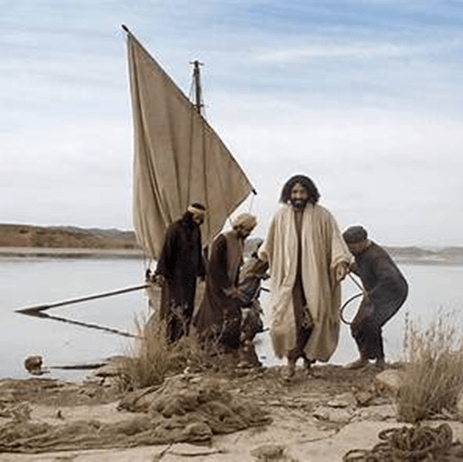
And Jesus, walking by the Sea of Galilee, saw two brothers, Simon called Peter, and Andrew his brother, casting a net into the sea; for they were fishermen. Then He said to them, “Follow Me, and I will make you fishers of men.” They immediately left their nets and followed Him.

Going on from there, He saw two other brothers, James the son of Zebedee, and John his brother, in the boat with Zebedee their father, mending their nets. He called them, and immediately they left the boat and their father, and followed Him.”

Yesterday and today we’ve departed from the Gospel of John temporarily to tell the story of Jesus’ temptations and Jesus’ calling his first disciples. The region Jesus is entering is referred to as “Galilee of the Gentiles” because for centuries, the population has been mixed. Originally, King Solomon gave ten cities in this area to King Hiram of Tyre for providing him with cedars of Lebanon to help build the temple in Jerusalem. When Hiram visited the area, he was not impressed and complained; however, there is no record of Solomon changing and giving Hiram more towns or better ones! Galilee has an unsavory reputation, and the Galileans are looked down upon by Jews from other areas who feel these country bumpkins aren’t truly observant. But God knows the spirits of those in this area, and Jesus is going to draw most of his disciples from here.

When I began surgery residency decades ago, one Fellow in Cardiothoracic Surgery taught me the phrase, “Anyone can do the easy ones.” Through the years, that phrase has stayed with me, and whenever I have been faced with daunting tasks, I have remembered my friend’s observation. Jesus begins his ministry in the least likely place among the least likely people, and yet, forever afterwards, those people and places will be revered because of Jesus. Peter and Andrew, James, and John-these men will be key throughout Jesus’ ministry and will become founders of the Christian Church. John and Peter will write some of the most meaningful books of the New Testament, and their words will resound throughout generations.

As we go into this new year, remember that God may send you to unlikely places where you will work with unlikely people. But when God is in the situation, you can fearlessly proceed.

PRAYER: Father God, thank You for loving us and for caring for us. Lord, help us to trust You as You lead us. Help us to be willing to work with those You send to us. In the mighty and precious Name of King Jesus. Amen.

JANUARY 13, 2025 NEW BEGINNINGS FOR A NEW YEAR #13 NEW YEAR WITH OLD TEMPTATIONS!

January 13, 2025

Matthew 4:1-11 Satan Tempts Jesus

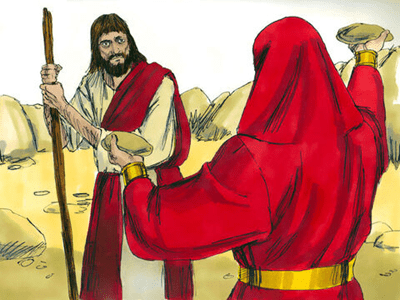
Then Jesus was led up by the Spirit into the wilderness to be tempted by the devil. And when He had fasted forty days and forty nights, afterward He was hungry. Now when the tempter came to Him, he said, “If You are the Son of God, command that these stones become bread.”

But He answered and said, “It is written, ‘Man shall not live by bread alone, but by every word that proceeds from the mouth of God.’”

Then the devil took Him up into the holy city, set Him on the pinnacle of the temple, and said to Him, “If You are the Son of God, throw Yourself down. For it is written:

‘He shall give His angels charge over you,’ and, ‘In their hands they shall bear you up, Lest you dash your foot against a stone.’”

Jesus said to him, “It is written again, ‘You shall not tempt the Lord your God.’”

Again, the devil took Him up on an exceedingly high mountain, and showed Him all the kingdoms of the world and their glory. And he said to Him, “All these things I will give You if You will fall down and worship me.”

Then Jesus said to him, “Away with you, Satan! For it is written, ‘You shall worship the Lord your God, and Him only you shall serve.’”

Then the devil left Him, and behold, angels came and ministered to Him.”

“Then Jesus was led up by the Spirit into the wilderness to be tempted by the devil. And when He had fasted forty days and forty nights, afterward He was hungry.” Notice that Jesus was led up by the Spirit into the wilderness, where there would be no distractions, no pressure from his family or other people. Jesus went to the wilderness specifically so he could be tempted by the devil. Most of us would never go into the wilderness in the first place or deliberately put ourselves in the way of temptation in the second. And to make matters worse, Jesus was fasting for forty days and nights. Evidently, Jesus had drinking water but no food. Now that Jesus was weak from fasting, Satan shows up.

Ever notice that Satan doesn’t bother with temptations when we are spiritually strong but when we are at our weakest? And those temptations seem so reasonable. After all that fasting, Jesus is hungry. Satan’s first suggestion is that Jesus use his divine power to turn stones into bread. After all, Satan and Jesus both know Jesus can do it, so what’s the problem? But Jesus sees the temptation behind the temptation. Satan is really tempting Jesus to become his own amateur providence, to provide for himself, rather than depending on his Heavenly Father. But Jesus uses Scripture to answer Satan. “But He answered and said, “It is written, ‘Man shall not live by bread alone, but by every word that proceeds from the mouth of God.’”   So far, it’s Jesus 1, Satan 0.

What’s the lesson for us here? Trust God and avoid attempts at manipulation. I write fund-raising letters to support our work in the mission hospital where we have spent more than 20 years. One of the constant temptations is to exaggerate needs or misrepresent them to make them more dramatic. But if we are doing God’s work, we must use God’s methods and not Satan’s. One couple of our acquaintance used photos of themselves in front of a worthwhile project to raise funds; however, there was one problem: the project belonged to a different ministry.

“Then the devil took Him up into the holy city, set Him on the pinnacle of the temple, and said to Him, “If You are the Son of God, throw Yourself down. For it is written: ‘He shall give His angels charge over you,’ and, ‘In their hands they shall bear you up, Lest you dash your foot against a stone.’” 

Jesus said to him, “It is written again, ‘You shall not tempt the Lord your God.’”  Once more, Jesus doesn’t take Satan on by himself but answers Satan out of Scripture. While Satan twists Scripture, trying to use Scripture to tempt Jesus, Jesus handles Scripture appropriately and refuses to stupidly throw himself 400 feet from the top of Herod’s temple to the ground. Satan is quoting Psalm 91:11-12 “For He shall give His angels charge over you, to keep you in all your ways. In their hands they shall bear you up, lest you dash your foot against a stone.” The first verses of Psalm 91 tell us, “He who dwells in the secret place of the Most High shall abide under the shadow of the Almighty. I will say of the Lord, “He is my refuge and my fortress; My God, in Him I will trust.” Psalm 91 isn’t simply a set of demands to be lodged against the One True Living God, but an expression of perfect trust in God’s provision. The last thing anyone claiming God’s protection should do is to do something ridiculous and then demand God deliver them.

As we proceed in this new year, we must watch ourselves so that we don’t knowingly put ourselves in jeopardy and then demand God deliver us. How can we do this? We should proceed prayerfully, asking God for guidance. Psalm 32:8 assures us, “I will instruct you and teach you in the way you should go; I will guide you with My eye upon you.”

“Again, the devil took Him up on an exceedingly high mountain, and showed Him all the kingdoms of the world and their glory. And he said to Him, “All these things I will give You if You will fall down and worship me.”

Then Jesus said to him, “Away with you, Satan! For it is written, ‘You shall worship the Lord your God, and Him only you shall serve.’” Then the devil left Him, and behold, angels came and ministered to Him.”

The final temptation is for Jesus to take a shortcut to power by worshiping Satan. But Jesus refuses, quoting Deuteronomy 6:13. Sometimes we might be tempted to take shortcuts rather than allowing God to work the way He wants to. But when we allow God to move, He can do “immeasurably more than all we ask or imagine.” (Ephesians 3:20)

Jesus was victorious in his temptations and with God’s power, we too can be victorious. But notice the one thing Jesus never did: He never relied on himself. As we enter the new year, let us go forward, trusting God to guide us and protect us.

PRAYER: Father God, thank You for loving us and for caring for us. Lord, help us to trust Your guidance and Your provision so that we will fulfill Your perfect Will for our lives. In the mighty and precious Name of Jesus. Amen.