Luke 7:36-50 Jesus Anointed by a Sinful Woman
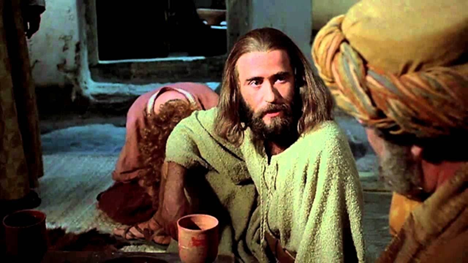
“When one of the Pharisees invited Jesus to have dinner with him, he went to the Pharisee’s house and reclined at the table. A woman in that town who lived a sinful life learned that Jesus was eating at the Pharisee’s house, so she came there with an alabaster jar of perfume. As she stood behind him at his feet weeping, she began to wet his feet with her tears. Then she wiped them with her hair, kissed them and poured perfume on them.
When the Pharisee who had invited him saw this, he said to himself, “If this man were a prophet, he would know who is touching him and what kind of woman she is—that she is a sinner.”
Jesus answered him, “Simon, I have something to tell you.”
“Tell me, teacher,” he said.
“Two people owed money to a certain moneylender. One owed him five hundred denarii, and the other fifty. Neither of them had the money to pay him back, so he forgave the debts of both. Now which of them will love him more?”
Simon replied, “I suppose the one who had the bigger debt forgiven.”
“You have judged correctly,” Jesus said.
Then he turned toward the woman and said to Simon, “Do you see this woman? I came into your house. You did not give me any water for my feet, but she wet my feet with her tears and wiped them with her hair. You did not give me a kiss, but this woman, from the time I entered, has not stopped kissing my feet. You did not put oil on my head, but she has poured perfume on my feet. Therefore, I tell you, her many sins have been forgiven—as her great love has shown. But whoever has been forgiven little loves little.”
Then Jesus said to her, “Your sins are forgiven.”
The other guests began to say among themselves, “Who is this who even forgives sins?”
Jesus said to the woman, “Your faith has saved you; go in peace.”
Even though the religious leaders have been muttering imprecations against Jesus, Simon, a Pharisee, has invited Jesus to dine with him. But Simon has demonstrated his scorn for Jesus in several ways. In a country where everyone walks and people’s feet become filthy, one of the first tasks of a considerate host is to ensure that a servant washes guests’ feet as they arrive. Simon hasn’t bothered. Invited guests are also greeted with a kiss of fellowship. Special guests also receive fragrant anointing oil poured onto their heads. Simon has deliberately neglected to carry out any of his normal duties as a caring host. Why? Does Simon feel he’s socially superior to Jesus? Does Simon want to test Jesus’ legitimacy as a prophet?
Meanwhile, one of the town prostitutes has learned that Jesus is eating with Simon. While Jesus is reclining at table, this woman enters the room. Before Simon can have the woman expelled, she has begun washing Jesus’ feet with her tears, drying them with her hair, and anointing his feet with costly perfumed ointment. Simon is watching and assumes that Jesus has no idea of the identity of this woman or her way of life. Jesus actually knows exactly who this woman is, for he just ministered to her yesterday when she came to him in tears under the conviction of the Holy Spirit.
As Simon is lying there at table thinking Jesus is too stupid to recognize this woman and her profession, Jesus begins gently correcting him. Jesus poses a question: if two men are forgiven debts, which one will love the man who forgave him his debt more, a man who owes a little or a man who owes a lot? “Well, I guess, the one who owes a lot,” muses Simon, unsure where this conversation is headed. That’s when Jesus brings home his lesson.
“Then he turned toward the woman and said to Simon, “Do you see this woman? I came into your house. You did not give me any water for my feet, but she wet my feet with her tears and wiped them with her hair. You did not give me a kiss, but this woman, from the time I entered, has not stopped kissing my feet. You did not put oil on my head, but she has poured perfume on my feet. Therefore, I tell you, her many sins have been forgiven—as her great love has shown. But whoever has been forgiven little loves little.”
Then Jesus said to her, “Your sins are forgiven.”
The other guests began to say among themselves, “Who is this who even forgives sins?”
Jesus said to the woman, “Your faith has saved you; go in peace.”
As a Pharisee, Simon assumes that he is in good favor with God and has no need of repentance or forgiveness. All the time Simon is congratulating himself, he is busy judging this poor woman, condemning her in his heart. While Simon is lying there at the table basking in self-admiration, this woman of low status not only touches Jesus but ministers to him, doing all the things Simon should have done as a good host and has failed to do. Recognizing the lady’s repentance, Jesus assures her that her sins are forgiven and that she may go in peace.
Jesus knows that he has come into the world to teach, to preach, to love, and to eventually die for the sins of the whole world. Here Jesus demonstrates God’s forgiveness of anyone who will come to Him, confessing their sins. The Pharisees don’t see God as a forgiving God but as a Supreme Judge who evaluates people based on their merits. The Pharisees are trying to earn God’s favor by following an enormous number of rules; however, they have no concept of God as a God of love and mercy. Simon is not being merciful to this woman; she has simply slipped into his home so rapidly that he hasn’t had time to get her out. Simon feels neither loving nor merciful toward this woman; however, Jesus does.
Throughout Jesus’ ministry, he demonstrates the Nature of his Heavenly Father, a God of mercy, love, and grace. Reading this story, we might identify with Simon. Perhaps we are faithful church members, active in several outreaches at our churches, and well-versed in the Scriptures. But what about our hearts? Are our hearts as hard as that of Simon the Pharisee and his other guests? Do we think that God grades on a curve and that our sins are not nearly as serious as those of others? If we really feel this way, we are lost, for our sins are just as evil as anyone else’s. Romans 3:23 tells us, “For all have sinned and have fallen short of the glory of God.” The only basis for God forgiving our sins is the blood sacrifice Jesus has made for us on the cross at Calvary.
Simon the Pharisee might not realize it, but he is just as sinful as this woman upon he is heaping his disdain. May we not copy Simon, but may we humble ourselves, confess our sins, and beg God for His Forgiveness and Grace!
PRAYER: Father God, thank You for loving us and caring for us. Lord, we confess that we are sinners and nothing we do is good enough to earn our way into heaven. Please forgive our sins. Thank You for sending Jesus to die on our behalf at Calvary so that we might be forgiven. In the mighty and precious Name of King Jesus. Amen.





 Burunche's Blog