Archive for March, 2025

MARCH 11, 2025 IT WAS ALWAYS ABOUT CALVARY #6 THE MORE YOU MINISTER, THE MORE YOU NEED PRIVATE PRAYER

March 11, 2025

Luke 5:12-16 Jesus Cleanses a Leper

“And it happened when He was in a certain city, that behold, a man who was full of leprosy saw Jesus; and he fell on his face and implored Him, saying, “Lord, if You are willing, You can make me clean.”

Then He put out His hand and touched him, saying, “I am willing; be cleansed.” Immediately the leprosy left him. And He charged him to tell no one, “But go and show yourself to the priest, and make an offering for your cleansing, as a testimony to them, just as Moses commanded.”

However, the report went around concerning Him all the more; and great multitudes came together to hear, and to be healed by Him of their infirmities. So He Himself often withdrew into the wilderness and prayed.”

Consider the plight of those cursed with leprosy. As soon as leprosy is discovered, the sufferer becomes a social outcast, forced to live at the margin of town, cut off from family and friends. Even when the case is quite mild, a leper remains isolated unless there are other lepers with whom he or she can associate. Leprosy affects the nerves carrying pain impulses; the wounds of leprosy come because the leper hurts himself and cannot perceive pain, so neglects wounds until they become open sores and the flesh is rotting.

As Jesus travels around preaching and teaching, he comes to a “certain city” where a wretched man has a body wracked with leprosy. Gathering his courage, this poor man somehow forces his way through the crowds to fall at Jesus’ feet. Under normal circumstances, this man would grasp Jesus’ feet; however, as a leper, he realizes that he is forbidden to touch anyone.

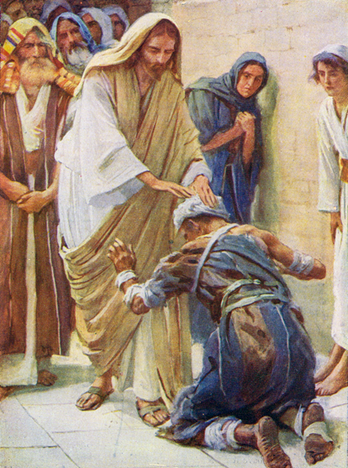
“Lord, if You are willing, You can make me clean.” The leper gasps out this plea, hoping with everything inside him that Jesus will not spurn him or drive him away. But Jesus has pity on the man. “Then He put out His hand and touched him, saying, “I am willing; be cleansed.” The crowd gasps as the man’s face, arms, legs, hands, and feet all become clean and new.

How do we know that this is what has happened in this case? J. John, a British-based evangelist, has a short video in which he describes a Gospel meeting in India to which he was invited. After speaking to the main group, J. John was told that there was a special group that requested prayers for healing. J. John walked to a separate tent to find a huge group of lepers anxiously awaiting him. At that point, J. John seriously asked God if God couldn’t send someone else, but God remained silent. Feeling like a complete fraud, J. John ascended the platform in front of the group of lepers and prayed a very simple prayer. Suddenly, there were cries from the audience, and J. John saw what appeared to be false layers of skin falling from the bodies of the lepers! The Holy Spirit moved, and God healed every leper in the place!

These healings did not come because J. John had so much faith, because he argued with God before he prayed for the lepers. But these poor people suffering from leprosy came with the same plea as the man who came to Jesus. “Lord, if you are willing, you can make me clean.” God was willing and healed every one of those lepers. It was the faith of the lepers and the prayers of other believers, not the faith of the evangelist, that led to the mass healing.

Jesus orders the man to follow the rules laid down by Moses, showing himself to the priests and making the necessary sacrifices. One wonders if the priests go into shock when this man presents himself, for it’s unlikely that any leper has presented for examination since Moses first gave that edict.

This public miracle naturally enhances Jesus’ reputation, causing the crowds that are following to swell to record proportions. During the day, there’s no time for Jesus to withdraw quietly for private prayer. Only at night when the crowds go home can Jesus have time to pray, and even then he must go off into the wilderness to escape the crowds.

One of our missionary friends has quoted her late father, also a missionary, as having said, “I feel like a Coca-Cola and everybody has a straw!” No matter how strong you are or how resilient, remain in ministry long enough and the needs of those around you will drain you dry…unless you are regularly receiving new strength and new hope from God.

How can you spiritually refuel? Copy Jesus. Get away from the crowds to a quiet place where you can sit and give God time to speak to you. Although there are times when the Holy Spirit has spoken in a thunderous voice, generally He speaks in a still small voice. Noisy prayer meetings where people are screaming may appear impressive; however, it’s quite difficult to hear the Holy Spirit if you are making too much noise. Prayer is a dialogue, not a monologue. We must give the Holy Spirit time and space in which to speak.

What does Jesus pray when he retreats to the wilderness at night? We don’t know, but certainly, he thanks God the Father for everything He has done through Jesus that day and asks Him for more strength, more grace, more love, and more power to carry out the Father’s will. We also may pray for these things, as long as our goal is to accomplish the Will of God and not to enhance our own reputations.

PRAYER: Father God, thank You for loving us and for caring for us. Lord, we confess that by ourselves, we have no resources to carry out Your perfect Will. Please give us Your strength, Your grace, Your love, and Your power, so that we may touch all those around us, fulfilling Your Will for their lives. In the mighty and precious Name of King Jesus. Amen.

MARCH 10, 2025 IT WAS ALWAYS ABOUT CALVARY #5 WHY PICK FISHERMEN FOR DISCIPLES?  

March 10, 2025

Luke 5:1-11 Four Fishermen Called as Disciples

“So it was, as the multitude pressed about Him to hear the word of God, that He stood by the Lake of Gennesaret, and saw two boats standing by the lake; but the fishermen had gone from them and were washing their nets. Then He got into one of the boats, which was Simon’s, and asked him to put out a little from the land. And He sat down and taught the multitudes from the boat.

When He had stopped speaking, He said to Simon, “Launch out into the deep and let down your nets for a catch.”

But Simon answered and said to Him, “Master, we have toiled all night and caught nothing; nevertheless, at Your word I will let down the net.” And when they had done this, they caught a great number of fish, and their net was breaking. So they signaled to their partners in the other boat to come and help them. And they came and filled both the boats, so that they began to sink. When Simon Peter saw it, he fell down at Jesus’ knees, saying, “Depart from me, for I am a sinful man, O Lord!”

For he and all who were with him were astonished at the catch of fish which they had taken; and so also were James and John, the sons of Zebedee, who were partners with Simon. And Jesus said to Simon, “Do not be afraid. From now on you will catch men.” So when they had brought their boats to land, they forsook all and followed Him.”

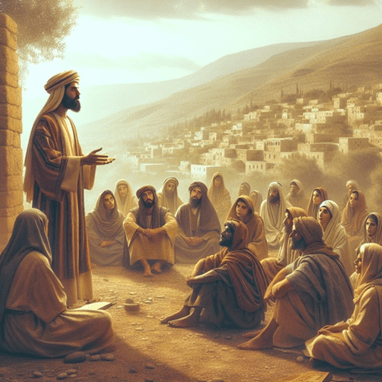
Jesus is preaching on the shore of the Sea of Galilee, but there’s a problem. The crowd is so enthralled by his teaching that they are crowding around, forcing him into the water. Looking around, Jesus sees Simon mending his net and asks Simon to allow him to sit in the boat while Simon pushes the boat out a little bit into the water. Now Jesus has a great place to sit away from the crush of the crowd and in addition, the water will help amplify his voice so that people will hear him better.

Once Jesus finishes teaching, he puts Simon to a test of faith. Everybody knows that fishing is better at night, and last night Simon and his colleagues did their best and caught nothing. Now Jesus orders Simon to launch out into the deep and set his nets. This is one of the weirdest orders Simon has ever received, but there’s something about Jesus that gets his attention. Jesus has a funny smile on his face like he knows something that Simon doesn’t know. Simon shrugs his shoulders and heads for deeper water. Why not humor Jesus? What does he have to lose?

Simon’s disbelief turns to shock as the net begins filling to overflowing. Suddenly, the net is so full of fish that it threatens to tip the boat over. Simon and his brother Andrew wave excitedly at James and John in the other boat, who rush to help bring in the overloaded nets. Before the fishermen are through, both boats are full to overflowing and are threatening to sink.

None of the fishermen can believe this catch. Once the boats return to shore, Simon prostrates himself before Jesus, crying, “Depart from me, for I am a sinful man, O Lord!”  While Simon makes it to his knees first, the other fishermen are similarly in awe. Who is this Jesus? How has he performed this miracle? But something even wilder is about to happen.

“And Jesus said to Simon, “Do not be afraid. From now on you will catch men.” So when they had brought their boats to land, they forsook all and followed Him.” There are other fishermen mending their nets at the same place. These guys were smirking when Simon went back out onto the lake, but now they have nothing to say. The big shock for these onlookers comes when the four fishermen who are dealing with their miraculous catch finish handling the fish, drag their boats up on the shore, drop their nets, and walk away to follow Jesus.

There are several kinds of miracles here. First, there is Simon’s willingness to allow Jesus to sit in his boat. None of the other fishermen care that Jesus is being forced into the water. Next, there’s Simon’s agreement to go back out onto the lake even though he’s already exhausted and even though this is the wrong time of day for fishing. There’s the miraculous catch of fish that overloads two boats. And finally, the greatest miracle of all, four rough tough fishermen who have braved storms on the Sea of Galilee for years are willing to leave everything to follow Jesus. These men are serious hard-nosed businessmen with successful operations, wives, and families. What’s so compelling about Jesus that they will simply walk away from everything? How does Jesus know he’s going to find his first disciples in this situation?

Throughout Jesus’ life, Jesus and his Heavenly Father have a continual dialogue going on. As Jesus walks through Capernaum, God the Father tells Jesus he will find many of his disciples in this town. It’s possible that God has also told Jesus that those ready to follow him will come as soon as he invites them. Anybody who begins giving excuses is not ready for discipleship.

Why would Jesus pick four fishermen as his first disciples? Can Jesus see Calvary from that beach at Capernaum? Even though these men aren’t sure what they are getting into, Jesus already knows following him will demand physical and mental toughness and the will to continue in the face of opposition and abuse. Jesus is aware that he is selecting future church leaders, not merely disciples who will follow him while he ministers on earth. Even at the onset of Jesus’ ministry, he realizes that each step he takes is one step closer to Calvary, where he will fulfill his calling as the spotless Lamb of God.

How many of us have a sense of mission? God has put each of us on earth for a reason, and yet many people fail to realize this fact. Martin Luther once said, “We are to be little Christs to our neighbors, for in so doing we find our true identity as children of God.” Copying Jesus’ behavior is a very serious business, for it means dying to our own desires and seeking to please God in everything we do. Jesus stands at the doors of our lives, beckoning us to come and follow him. Will we make the same choice as Simon and his friends, leaving everything to follow Jesus, or will we begin arguing and trying to negotiate? Later, Jesus will tell would-be disciples who are giving excuses for not following him instantly that “No one who puts his hand to the plow and looks back is fit for the Kingdom of God.” Luke 9:62

May God help us, so that we continually and perpetually answer His Call on our lives, never looking back or arguing, but obeying readily and cheerfully!

PRAYER: Father God, thank You for loving us and for caring for us. Lord, help us to answer and obey as soon as You call. Help us to trust You with every part of our lives. In the mighty and precious Name of King Jesus. Amen.
MARCH 9, 2025 IT WAS ALWAYS ABOUT CALVARY #4 JESUS BEGINS HIS MINISTRY AND DEMONSTRATES HIS AUTHORITY OVER EVIL

March 9, 2025

Luke 4:31-37 Jesus Expels an Unclean Spirit (Mark 1:21–28)

“Then He went down to Capernaum, a town in Galilee, and on the Sabbath He began to teach the people. They were astonished at His teaching, because His message had authority.

In the synagogue there was a man possessed by the spirit of an unclean demon. He cried out in a loud voice, “Ha! What do You want with us, Jesus of Nazareth? Have You come to destroy us? I know who You are—the Holy One of God!”

But Jesus rebuked the demon. “Be silent!” He said. “Come out of him!” At this, the demon threw the man down before them all and came out without harming him.

All the people were overcome with amazement and asked one another, “What is this message? With authority and power He commands the unclean spirits, and they come out!” And the news about Jesus spread throughout the surrounding region.”

Luke 4:38-41 Jesus Heals at Peter’s House (Matthew 8:14–17; Mark 1:29–34)

“After Jesus had left the synagogue, He went to the home of Simon, whose mother-in-law was suffering from a high fever. So they appealed to Jesus on her behalf, and He stood over her and rebuked the fever, and it left her. And she got up at once and began to serve them.

At sunset, all who were ill with various diseases were brought to Jesus, and laying His hands on each one, He healed them. Demons also came out of many people, shouting, “You are the Son of God!” But He rebuked the demons and would not allow them to speak, because they knew He was the Christ.”

Luke 4:42-44 Jesus Preaches in Judea (Mark 1:35–39)

“At daybreak, Jesus went out to a solitary place, and the crowds were looking for Him. They came to Him and tried to keep Him from leaving. But Jesus told them, “I must preach the good news of the kingdom of God to the other towns as well, because that is why I was sent.” And He continued to preach in the synagogues of Judea.”

Jesus has walked away from childhood friends and neighbors who are furious because he has failed to perform on demand in the synagogue at Nazareth and has moved to Capernaum. Now Jesus is starting his ministry by casting out demons, healing all who come to him, and preaching in the local synagogues. Capernaum isn’t that far from Nazareth, so the Nazarenes are probably fuming when they hear what Jesus is doing now. But the Nazarenes have only themselves to blame, for when Jesus came to them, they rejected him.

People in and around Capernaum are much more receptive to Jesus’s ministry. Casting out demons, healing, and preaching will be hallmarks of Jesus’ work for the rest of his ministry. Even at the onset, Jesus knows what he has been called to do and how God wants him to work. Why are these activities so important?

Jesus has come to graphically demonstrate God’s Will for His Kingdom and to call people to new life. Everything that Jesus does and everything that he preaches and teaches is focused on showing what it’s like to be a citizen of the Kingdom of God. If this Kingdom only means suffering and pain, then Jesus’ mission is a useless one. But if the Kingdom means living in freedom from sin and oppression, living in righteousness, peace, and joy in the Holy Spirit, then Jesus’ teachings will be a revelation to all who hear him. When God gave Moses the Law, He did not mean it to become an intolerable burden; however, centuries have passed and now observant Jews are struggling to fulfill long sets of rules devised by religious experts.

Notice that the demons are everywhere, even in the synagogues. Years ago, I read the testimony of a man who was formerly a witch in Nigeria. This man attended church regularly and could spot those church goers plagued by demons. While church members were singing songs about victory over Satan, the demons were laughing hysterically, knowing that they were controlling the believers and not God.

The speed of darkness is the speed of light. Holiness and evil cannot exist in the same space at the same time. When Jesus arrives in Simon’s house, demons flee, acknowledging him as the Son of God.

What are the true marks of a successful ministry? Ministering in the Holy Spirit results in physical and spiritual healing, deliverance from Satan and his demons, and the advent of the Holy Spirit in the lives of all touched by the ministry. When the Holy Spirit is present, there’s no need for noisy background music, screaming prayers, light shows, or smoke machines.

The evangelist Benny Hinn is extremely controversial, and in recent years he has faced strong criticism. But I was present at a Benny Hinn crusade in Charleston, WV in 1978. Hinn called the young people to come forward, filling the front of the Charleston Auditorium. Hinn remained on the stage and simply stretched out his hands and prayed, “Come, Holy Spirit!” All the young people went down on their faces under the power of the Holy Spirit and remained that way for several minutes. There was dead silence in the auditorium-no music, nobody praying out loud, only the sound of these young people weeping under the convicting power of the Holy Spirit.

Many lives were changed that day, and many of those people would tell you now that experience was one of the greatest of their entire lives. The Holy Spirit showed up, and nothing else was necessary. In the silence, God spoke to those young people, assuring them of His love, His mercy, His grace, and His forgiveness.

May all who minister do so as Jesus did, in the power of the Holy Spirit. Holy Spirit ministry gives lasting results while ministry based on special effects fizzles as soon as the sound and light show ends. May God help us, so that we minister as Jesus did!

PRAYER: Heavenly Father, thank You for loving us and for caring for us. Lord, we long for Your touch on our hearts and lives. We envy those whom Jesus healed, for they were blessed beyond all measure. Holy Spirit, we welcome You and beg You to come and abide with us forever. In the mighty and precious Name of King Jesus. Amen.

MARCH 8, 2025 IT WAS ALWAYS ABOUT CALVARY #3 JESUS GETS A SMALL TASTE OF CROWD HATRED AT THE BEGINNING OF HIS MINISTRY

March 8, 2025

Luke 4:14-30 Jesus Begins His Galilean Ministry And Is Rejected in His Home Town

“Then Jesus returned in the power of the Spirit to Galilee, and news of Him went out through all the surrounding region. And He taught in their synagogues, being glorified by all.

Jesus Rejected at Nazareth

So He came to Nazareth, where He had been brought up. And as His custom was, He went into the synagogue on the Sabbath day, and stood up to read. And He was handed the book of the prophet Isaiah. And when He had opened the book, He found the place where it was written:

“The Spirit of the Lord is upon Me,
Because He has anointed Me
To preach the gospel to the poor;
He has sent Me to heal the brokenhearted,
To proclaim liberty to the captives
And recovery of sight to the blind,
To set at liberty those who are oppressed;
To proclaim the acceptable year of the Lord.”

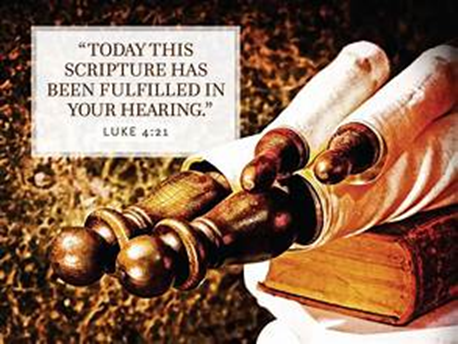
Then He closed the book, and gave it back to the attendant and sat down. And the eyes of all who were in the synagogue were fixed on Him. And He began to say to them, “Today this Scripture is fulfilled in your hearing.” So all bore witness to Him, and marveled at the gracious words which proceeded out of His mouth. And they said, “Is this not Joseph’s son?”

He said to them, “You will surely say this proverb to Me, ‘Physician, heal yourself! Whatever we have heard done in Capernaum, do also here in Your country.’” Then He said, “Assuredly, I say to you, no prophet is accepted in his own country. But I tell you truly, many widows were in Israel in the days of Elijah, when the heaven was shut up three years and six months, and there was a great famine throughout all the land; but to none of them was Elijah sent except to Zarephath, in the region of Sidon, to a woman who was a widow. And many lepers were in Israel in the time of Elisha the prophet, and none of them was cleansed except Naaman the Syrian.”

So all those in the synagogue, when they heard these things, were filled with wrath, and rose up and thrust Him out of the city; and they led Him to the brow of the hill on which their city was built, that they might throw Him down over the cliff. Then passing through the midst of them, He went His way.”

Ah, there’s nothing so sweet as coming back to your home town to be with friends and family…or is there? After surviving temptation by Satan, Jesus has begun traveling throughout the Galilee, preaching and teaching in the synagogues and “being glorified by all.” WOW! Great stuff! So when Jesus returns to Nazareth, his friends and family have high expectations. After all, Jesus has performed miracles in other places, so what might he do in Nazareth? When Jesus enters the synagogue that Sabbath, crowds follow him, eager to watch some great miracle.

Jesus makes a good start by reading the Haftorah for the day, Isaiah 61:1-2. “The Spirit of the Lord is upon Me, Because He has anointed Me To preach the gospel to the poor; He has sent Me to heal the brokenhearted, To proclaim liberty to the captives And recovery of sight to the blind, To set at liberty those who are oppressed; To proclaim the acceptable year of the Lord.” Those watching fail to realize that Isaiah has written this prophecy specifically about Jesus, but Jesus knows and assures the crowd that “Today this Scripture is fulfilled in your hearing.” While some of the crowd are very impressed, there are others who are grumbling to themselves. “Wait a minute! This is Jesus, Joseph’s son! This guy is a carpenter, so why is he applying a Messianic prophecy to himself? We grew up with this guy. We played with him in the streets. There’s no mystery about Jesus.” The faith quotient in the crowd is plummeting, and Jesus can feel it.

Jesus knows exactly what these men are thinking and openly quotes a common proverb, “Physician, heal thyself.” Jesus has already performed miracles in Capernaum, and the home town crowd now expects that he’ll do even greater stuff in Nazareth. Expectations are rapidly turning to demands as these men wait eagerly to see what will happen next.

But Jesus doesn’t work to fulfill anybody’s expectations; he only does the will of his Heavenly Father. Jesus proceeds to inform the crowd that God chooses times and places and follows up by saying that no prophet is accepted in his home country. Jesus continues, reminding them that during the terrible famine, Elijah went to a widow in Zarephath, not to a widow in Israel, and that Elisha healed Naaman, a Syrian, of his leprosy, not a leper from Israel.

The crowds are furious! Never mind that Jesus has accurately discerned their lack of faith and their lust for signs and wonders, he has failed to perform on command and they are outraged! Some of the biggest guys in the crowd seize Jesus, dragging him out of the synagogue and up the street to the top of a high cliff, intending to throw him off the edge. But Jesus’ time to die is three years in the future, and somehow Jesus simply walks through the crowd and out of town.

Why doesn’t Jesus satisfy the home town crowd and perform a few simple miracles to justify his ministry? Surely, somewhere on the edge of town, there must be one or two lepers who need healing. Jesus might simply wave his hand over a leper and people can watch fingers and toes grow back, facial features be reconstructed, etc. The answer is simple: Jesus has come to preach, teach, and heal, but not to put on shows. For all we know, as Jesus leaves town, he might heal the lepers hanging around the outskirts, for lepers are not allowed to mingle with healthy people. It’s not that Jesus lacks compassion but that his sense of mission is too strong for him to cheapen ministry by turning it into a performance.

There is a second aspect of this story: it illustrates how rapidly public acclaim can turn to public damnation. The crowd becomes incensed when Jesus refuses to perform on cue. This lightning-fast reversal of public acclaim foreshadows the events of Palm Sunday and Good Friday. On Palm Sunday Jesus will enter to shouts of “Hosanna to the Son of David!” Five days later, the same people will be screaming, “Crucify him!”

We don’t know what God the Father tells Jesus that evening when Jesus goes to Him in prayer, but it’s quite possible that God the Father warns Jesus that this is what will eventually happen. The take-home lesson for us is simple: Do what is right and refuse to believe public opinion, for people are fickle and easily swayed. We must always listen to God and not to men, for men can change in an instant.

PRAYER: Father God, thank You for loving us and for caring for us. Lord, help us to always listen to You and not to people. Help us to remember that You are the One who calls us to work for You and we are not to cheapen ministry by turning it into a circus act. In the mighty and precious Name of King Jesus. Amen.

MARCH 7, 2025 IT WAS ALWAYS ABOUT CALVARY #2 WHY DID JESUS FACE TEMPTATION AT THE BEGINNING OF HIS MINISTRY?

March 7, 2025

Luke 4:1-13 Satan Tempts Jesus

“Then Jesus, being filled with the Holy Spirit, returned from the Jordan and was led by the Spirit into the wilderness, being tempted for forty days by the devil. And in those days He ate nothing, and afterward, when they had ended, He was hungry.

And the devil said to Him, “If You are the Son of God, command this stone to become bread.”

But Jesus answered him, saying, “It is written, ‘Man shall not live by bread alone, but by every word of God.’”

Then the devil, taking Him up on a high mountain, showed Him all the kingdoms of the world in a moment of time. And the devil said to Him, “All this authority I will give You, and their glory; for this has been delivered to me, and I give it to whomever I wish. Therefore, if You will worship before me, all will be Yours.”

And Jesus answered and said to him, “Get behind Me, Satan! For it is written, ‘You shall worship the Lord your God, and Him only you shall serve.’”

Then he brought Him to Jerusalem, set Him on the pinnacle of the temple, and said to Him, “If You are the Son of God, throw Yourself down from here. For it is written: ‘He shall give His angels charge over you, to keep you,’ and, ‘In their hands they shall bear you up, lest you dash your foot against a stone.’”

And Jesus answered and said to him, “It has been said, ‘You shall not tempt the Lord your God.’”

Now when the devil had ended every temptation, he departed from Him until an opportune time.”

God’s timing is always perfect. Even though Jesus has already been filled with the Holy Spirit, the Holy Spirit descends on Jesus in a special way during John’s baptism of Jesus in the Jordan River. Jesus needs that special anointing, for he is about to face one of the most severe temptations anyone can possibly face.

Jesus withdraws to the wilderness to fast and pray before beginning his earthly ministry. But after 40 days without food, Jesus is hungry, hot, and exhausted. That’s when Satan shows up.

Why does Satan tempt Jesus at the beginning of Jesus’s ministry? Both Satan and Jesus know that Jesus has come as the spotless Lamb of God to sacrifice himself for the sins of the world. Although there are three different temptations, the underlying theme for all three temptations is simple: Satan is tempting Jesus to take shortcuts to power and world domination. Jesus, on the other hand, knows that God’s way is the only way that will work.

First, Satan tempts Jesus to feed himself by changing stones into bread. Later Jesus will multiply bread and fish to feed thousands of people; however, Jesus knows now he must depend on God’s will and not on his own efforts.

Next Satan brings Jesus to a high mountain and shows him all the nations of the world in a moment of time. The temptation: Authority over all the nations of the earth if Jesus will only worship Satan. But Jesus is playing for bigger stakes than world domination, for he is the Son of God and knows that he has come from God and will return to God once he has fulfilled his mission on earth. Why settle for earthly power when that decision means eternal damnation and separation from a beloved Heavenly Father forever? Jesus perfectly answers Satan, “Get behind Me, Satan! For it is written, ‘You shall worship the Lord your God, and Him only you shall serve.’”

Finally, Satan brings Jesus to the top of Herod’s temple, a height of possibly 450 feet or 150 meters. The temptation here is simple: See if God the Father will deliver God the Son from dying if he throws himself off the top of the temple. But Jesus easily sidesteps Satan’s manipulations. “It has been said, ‘You shall not tempt the Lord your God.’”

What makes this final temptation so important? Satan is not simply tempting Jesus but also trying to tempt God the Heavenly Father. Satan is thumbing his nose at the God who has cast him out of heaven for his rebellion, hoping that Jesus is going to aid him in this act of heresy. But Jesus foils Satan’s nefarious plans by refusing to cooperate with Satan.  

Luke completes his account by saying, “Now when the devil had ended every temptation, he departed from Him until an opportune time.”  Satan is an opportunist and always times his temptations for times when we are at our weakest or least guarded. We must always be on guard, for Satan will take every advantage, particularly when we are hungry, angry, lonely, or tired. The acronym HALT stands for those four conditions and is used extensively by those dealing with people addicted to substances or behaviors such as gambling, shopping, etc. Those recovering from addictions are warned to avoid any one of these situations and to correct them whenever possible to avoid falling back into addiction.

In the story recorded by Luke, Jesus is hungry and tired; however, he has just spent weeks praying to his Heavenly Father so he is neither lonely nor angry. And more than anything else, Jesus wants to please his Heavenly Father and resorts to accurately quoting Scripture.

Notice that Satan also quotes Scripture; however, he mis-quotes it. When we don’t study the Word of God, we won’t recognize when Satan is twisting Scripture to fit his own purposes. We must study Scripture to protect ourselves and those around us. We also must remember to avoid becoming hungry, angry, lonely, or tired, lest we fall prey to temptation.

PRAYER: Father God, thank You for loving us and for caring for us. Lord, help us to study Your Word so that we will be prepared for temptation, for it will certainly come. Help us also to come closer to You every day and to love You more each day than we have the day before. In the mighty and precious Name of King Jesus. Amen.

MARCH 6, 2025 IT WAS ALWAYS ABOUT CALVARY #1 WHY WAS JESUS BAPTIZED?

March 6, 2025

Luke 3:21-38 John Baptizes Jesus

“When all the people were baptized, it came to pass that Jesus also was baptized; and while He prayed, the heaven was opened. And the Holy Spirit descended in bodily form like a dove upon Him, and a voice came from heaven which said, “You are My beloved Son; in You I am well pleased.”

The Genealogy of Jesus Christ

“Now Jesus Himself began His ministry at about thirty years of age, being (as was supposed) the son of Joseph, the son of Heli, the son of Matthat, the son of Levi, the son of Melchi, the son of Janna, the son of Joseph, the son of Mattathiah, the son of Amos, the son of Nahum, the son of Esli, the son of Naggai, the son of Maath, the son of Mattathiah, the son of Semei, the son of Joseph, the son of Judah, the son of Joannas, the son of Rhesa, the son of Zerubbabel, the son of Shealtiel, the son of Neri, the son of Melchi, the son of Addi, the son of Cosam, the son of Elmodam, the son of Er, the son of Jose, the son of Eliezer, the son of Jorim, the son of Matthat, the son of Levi, the son of Simeon, the son of Judah, the son of Joseph, the son of Jonan, the son of Eliakim, the son of Melea, the son of Menan, the son of Mattathah, the son of Nathan, the son of David, the son of Jesse, the son of Obed, the son of Boaz, the son of Salmon, the son of Nahshon, the son of Amminadab, the son of Ram, the son of Hezron, the son of Perez, the son of Judah, the son of Jacob, the son of Isaac, the son of Abraham, the son of Terah, the son of Nahor, the son of Serug, the son of Reu, the son of Peleg, the son of Eber, the son of Shelah, the son of Cainan, the son of Arphaxad, the son of Shem, the son of Noah, the son of Lamech, the son of Methuselah, the son of Enoch, the son of Jared, the son of Mahalalel, the son of Cainan, the son of Enosh, the son of Seth, the son of Adam, the son of God.”

This morning, thousands are swarming on both sides of the Jordan River as John the Baptist preaches and then baptizes those repenting of sins. For days, the Holy Spirit has been speaking to John, alerting him that God’s Son is coming to be baptized. When John asks how he will recognize God’s Son, the Holy Spirit tells him that He will descend on the man in the form of a dove. But now weeks have passed, and nothing of the sort has happened. Really, John is about to give up hoping to see God’s Son.

As Jesus approaches the water, John recognizes him as his cousin, but he wonders, “Why is Jesus coming? What has he done, that he needs to repent?” As John stands waist-deep in the water, Jesus puts off his outer garment and stands clothed only with his inner garment wrapped around his waist. Jesus looks at John, nods his head, and enters the water. As John ducks Jesus under the water and then raises him, the heavens open, and a dove flies down, lighting on Jesus’ shoulder. Suddenly, there is a clap of thunder. Although the crowds on the river banks hear the thunder, only John and Jesus understand the words, “You are My beloved Son; in You I am well pleased.”  John is both humbled and relieved, for he has recognized Jesus as the Son of God and he has also fulfilled the command of the Holy Spirit. John knows that if he never baptizes anyone else again, he has completed the ministry for which he has been called.

Why must Jesus be baptized at the onset of his ministry? Baptism is a symbol of death and resurrection. Those being baptized confess their sins and then enter the water or have water poured over them as a sign that they have died to their sins, that their sins have been washed away, and that they are now to live new lives. Jesus is beginning his earthly ministry as he will end it, beginning with a symbolic death and resurrection and ending with real death, real resurrection, and ascension into heaven.

What’s the point of the genealogy? Luke the Physician is a very careful recorder. In many cultures, genealogies are critically important. Here Luke traces Jesus’ genealogy back through King David all the way to “the son of Seth, the son of Adam, the son of God.” Luke uses this genealogy to prove that Jesus truly is the Son of God. Here Luke records Jesus as the Son of God, humbling himself and undergoing baptism as a sign for all believers everywhere and in every time. By being baptized, Jesus has set an example for all those who will believe in him, that they too should be baptized as a sign of repentance and dying to sin.

I realize that the issue of baptism is a thorny one, for there are some groups that believe in infant baptism as a form of infant dedication, some that believe that infant baptism is sufficient while adult baptism is unnecessary, and other groups who feel only baptism of those old enough to make their own decisions is valid. I am not here to argue theology. Personally, I was baptized as an infant and later as an adult as a sign of my commitment to Christ. I have undergone baptism in the Jordan River, in the ocean at Kona, Hawaii, and even in a friend’s swimming pool. The last three baptisms were symbolic acts of re-consecration to ministry at critical points in my Christian walk and were initiated by those around me who felt God calling them to do so.

My advice on adult baptism is to ask God. If you were baptized as an infant and do not feel God calling you to undergo adult baptism, that’s fine. But I can bear witness that my experiences have been quite meaningful and have certainly far exceeded my expectations. What began as acts of obedience turned into unanticipated manifestations of God’s grace.

Even at the beginning of Jesus’ ministry, he always has his eyes fixed on Calvary. Jesus knows he has come into the world as the Lamb of God to be sacrificed for the sins of the world. But Jesus also knows that everything he does will set an example for all those who will believe in him. So Jesus enters the Jordan River, goes under the water, and comes up with signs of God’s approval, consecrating him for ministry.

There’s a wonderful hymn called “Lead Me to Calvary” that expresses the purpose of Lent. Here is the link: https://www.youtube.com/watch?v=1tXhTpXd24s

PRAYER: Father God, thank You for loving us and for caring for us. Lord, help us never to forget what You have done for us all the way throughout Jesus’ ministry. Help us to follow hard after You all the days of our lives. In the mighty and precious Name of King Jesus. Amen.

MARCH 5, 2025 ASH WEDNESDAY LENT 2025 YOU MIGHT HAVE TO SUFFER FOR BEING RIGHTEOUS

March 5, 2025

John 18:28-40 In Pilate’s Court

Then they led Jesus from Caiaphas to the Praetorium, and it was early morning. But they themselves did not go into the Praetorium, lest they should be defiled, but that they might eat the Passover. Pilate then went out to them and said, “What accusation do you bring against this Man?”

They answered and said to him, “If He were not an evildoer, we would not have delivered Him up to you.”

Then Pilate said to them, “You take Him and judge Him according to your law.”

Therefore, the Jews said to him, “It is not lawful for us to put anyone to death,” that the saying of Jesus might be fulfilled which He spoke, signifying by what death He would die.

Then Pilate entered the Praetorium again, called Jesus, and said to Him, “Are You the King of the Jews?”

Jesus answered him, “Are you speaking for yourself about this, or did others tell you this concerning Me?”

Pilate answered, “Am I a Jew? Your own nation and the chief priests have delivered You to me. What have You done?”

Jesus answered, “My kingdom is not of this world. If My kingdom were of this world, My servants would fight, so that I should not be delivered to the Jews; but now My kingdom is not from here.”

Pilate therefore said to Him, “Are You a king then?”

Jesus answered, “You say rightly that I am a king. For this cause I was born, and for this cause I have come into the world, that I should bear witness to the truth. Everyone who is of the truth hears My voice.”

Pilate said to Him, “What is truth?” And when he had said this, he went out again to the Jews, and said to them, “I find no fault in Him at all. “But you have a custom that I should release someone to you at the Passover. Do you therefore want me to release to you the King of the Jews?”

Then they all cried again, saying, “Not this Man, but Barabbas!” Now Barabbas was a robber.”

Today is Ash Wednesday, the start of Lent. We studying Jesus’ progress toward Calvary as recorded in the Book of Luke. Today we are ending our study of principles of ministry drawn from the life of Jesus as recorded by John, the disciple whom Jesus loved.

Be in ministry long enough and you may find yourself on trial for your beliefs and your performance. These verses describe Jesus’ trial at the hands of the Romans. The Jews want to eliminate Jesus, but they want the Romans to do their dirty work for them. Jesus has already undergone extensive questioning at the hands of Annas and Caiaphas; now the Jews send Jesus to the Praetorium, the main Roman government building. The Jews have no desire to enter the Praetorium because they will become ritually unclean and be unable to celebrate Passover. (It’s ironic that the Jews are more worried about their religious rituals than the fact that they are trying to sacrifice the Son of God.) The local Roman ruler, Pontius Pilate, walks out to question the Jewish leaders and learns that they really want him to sentence Jesus to death. But when Pilate inquires about Jesus’ crime, the Jewish leaders begin waffling.

Pilate goes back in and interviews Jesus, quickly realizing that Jesus is innocent and that the Jewish leaders are trying to manipulate him. But when Pilate tries to free Jesus, the mob demands he free Barabbas, a local criminal instead.

What can we learn from this story? Earlier, Jesus has told his disciples that servants are not above their masters, and that if he is persecuted, they will be also. Throughout the history of the Christian Church, Jesus followers have found themselves being arrested, hauled before authorities, and martyred. It’s shocking and frustrating to realize that you can do the right thing and be punished for it.

How will we respond to persecution? We must be willing to suffer for righteousness’ sake. Jesus promises his disciples, “Now when they bring you to the synagogues and magistrates and authorities, do not worry about how or what you should answer, or what you should say. For the Holy Spirit will teach you in that very hour what you ought to say.” (Luke 12:11) 

May God help us so that we will rely on Him when we are on trial.

PRAYER: Father God, thank You for loving us and for caring for us. Lord, help us to trust You when we are under examination. In the mighty and precious Name of King Jesus. Amen.
MARCH 4, 2025 NEW BEGINNINGS FOR A NEW YEAR #63 IF TESTED, WOULD WE DO ANY BETTER THAN SIMON PETER?

March 4, 2025

John 18:12-14 Before the High Priest

“Then the detachment of troops and the captain and the officers of the Jews arrested Jesus and bound Him. “And they led Him away to Annas first, for he was the father-in-law of Caiaphas who was high priest that year. Now it was Caiaphas who advised the Jews that it was expedient that one man should die for the people.

Peter Denies Jesus

15-18 “And Simon Peter followed Jesus, and so did another disciple. Now that disciple was known to the high priest, and went with Jesus into the courtyard of the high priest. But Peter stood at the door outside. Then the other disciple, who was known to the high priest, went out and spoke to her who kept the door, and brought Peter in. Then the servant girl who kept the door said to Peter, “You are not also one of this Man’s disciples, are you?”

He said, “I am not.”

Now the servants and officers who had made a fire of coals stood there, for it was cold, and they warmed themselves. And Peter stood with them and warmed himself.”

Jesus Questioned by the High Priest

19-24 “The high priest then asked Jesus about His disciples and His doctrine.

Jesus answered him, “I spoke openly to the world. I always taught in synagogues and in the temple, where the Jews always meet, and in secret I have said nothing. Why do you ask Me? Ask those who have heard Me what I said to them. Indeed, they know what I said.”

And when He had said these things, one of the officers who stood by struck Jesus with the palm of his hand, saying, “Do You answer the high priest like that?”

Jesus answered him, “If I have spoken evil, bear witness of the evil; but if well, why do you strike Me?”

Then Annas sent Him bound to Caiaphas the high priest.

Peter Denies Twice More

25-27 “Now Simon Peter stood and warmed himself. Therefore, they said to him, “You are not also one of His disciples, are you?”

He denied it and said, “I am not!”

One of the servants of the high priest, a relative of him whose ear Peter cut off, said, “Did I not see you in the garden with Him?” Peter then denied again; and immediately a rooster crowed.”

One thing about John the Apostle-he’s about as humble as they come. What a change for someone whom Jesus has once described as one of the “sons of thunder.” Any time John refers to a disciple as “one whom Jesus loved” or “another disciple,” you know that John is actually referring to himself. John and Peter both follow the soldiers who have arrested Jesus to the house of Annas, who is also considered a high priest. John goes on to say, “Now that disciple was known to the high priest, and went with Jesus into the courtyard of the high priest.” How or why John is known to Annas, we can’t tell. Perhaps John is distantly related to Annas. At any rate, John has no problems entering the courtyard and standing with the crowd there. Nobody challenges John or confronts him in any way; neither does anybody harass him for being a Galilean.

As Peter is standing at the doorway, John returns to speak to the servant girl to allow Peter to enter the courtyard. Evidently, the girl has already recognized John as one of Jesus’ disciples and now asks Peter if he too is a disciple of Jesus. Peter denies being a disciple, brushing by the girl and heading for the fire where others are already warming themselves, for it’s a bitterly cold night.

Inside, Annas is interrogating Jesus, and things are not working out well for Annas. As a high priest, Annas has assumed that he can easily cow this ridiculous Galilean carpenter; however, Jesus appears unimpressed and even at ease. Annas is taken aback, for Jesus answers his questions wisely. When one of the officers strikes Jesus, Jesus asks him why he has done this. Both the officer and Jesus know that Jewish law forbids the officer’s action.

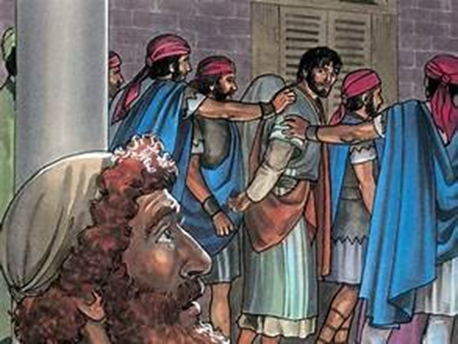
Meanwhile, out in the courtyard, two other men are questioning Peter. Evidently, these men realize fully that John is one of Jesus’ disciples and therefore leave John alone. But Peter attempts to bluster his way through, despite his Galilean accent. It’s possible that even Peter’s clothing betrays him as being a Galilean. And the last man to confront him is a close relative to Malchus, whose ear Peter has cut off. This man also was in the garden with the temple guard and saw Peter there. As Peter is denying Jesus for a third time, a cock crows and Peter remembers Jesus’ prediction that Peter will betray him three times before a cock crows.

Luke 22:60-62 tells us, “Immediately, while he was still speaking, the rooster crowed. And the Lord turned and looked at Peter. Then Peter remembered the word of the Lord, how He had said to him, “Before the rooster crows, you will deny Me three times.”So Peter went out and wept bitterly.”

Peter is a rough tough Galilean fisherman who has risked his life on the Sea of Galilee for years, battling rough seas and stormy weather. Peter has faced times when he can’t catch anything despite fishing all night. For three years, Peter has followed Jesus all over Judea and Samaria, walking long distances, bearing extreme temperature changes, and sometimes suffering hunger and thirst. Give Peter a physical challenge, and he’s your man. But Peter has a weak place. Galileans are considered to be ignorant villagers, lacking any culture or refinement. When Peter has been in Jerusalem, even small children have mocked his Galilean accent. Evidently, either John appears to be more cultured than Peter or John simply allows all the ridicule to run off his back. Satan attacks Peter at Peter’s weakest point: his sensitivity about his Galilean roots. And Peter fails miserably, just as Jesus has predicted.

We read this story and immediately assume that if WE were tested, surely, we would do better than Peter….but would we? None of us is perfect and each of us has some weak point at which we are most vulnerable. Perhaps we pride ourselves on our honesty and hate the thought of anyone accusing us of lying. Perhaps we are impatient when others accuse us. Perhaps we care so passionately about what we are doing that any threat to the stability of our situation triggers a rage response. Perhaps we are tempted to gossip about others. Perhaps, like Peter, we come from a humble background and are unduly sensitive about it. No matter the failing, rest assured that both God and Satan know our weak spots far better than we do.

Jesus was tempted throughout his lifetime. Hebrews 4:15 tells us, “For we do not have a high priest who is unable to empathize with our weaknesses, but we have one who has been tempted in every way, just as we are—yet he did not sin.” How can we withstand temptations? Don’t be like Peter! Peter was so certain that he would never fail, that he never asked God for help. When Jesus was teaching his disciples the prayer that has come to be known as “The Lord’s Prayer,” he taught them to say, “And lead us not into temptation, but deliver us from evil.” The Westminster Shorter Catechism Question 106 explanation says, “we pray, that God would either keep us from being tempted to sin, or support and deliver us when we are tempted.”

How can we avoid making the same mistake as Peter?

  1. Ask God to show us our weak spots
  2. Ask God for help, so that we will rely on Him and not on ourselves.
  3. Ask God to help us so that we become strong in the broken places.

When Jesus warned Peter that Peter would deny him, Peter passed up a golden opportunity. Peter could have immediately begged Jesus to pray for him, so that Peter would not fail. Jesus would have gladly done so, and Peter would have survived the test. Instead, Peter relied on his own resources and failed miserably. Any of us who make the same mistake as Peter will get the same results. We will fail and bitterly regret it for the rest of our lives. May God help us, so that we will remain humble and rely on Him for help!

PRAYER: Father God, thank You for loving us and for caring for us. Lord, we have so many weak spots and so many different ways that we might fail You or deny You. Please help us to rely on You and not on ourselves. In the mighty and precious Name of King Jesus. Amen.

MARCH 3, 2025 NEW BEGINNINGS FOR A NEW YEAR #62 WHO WAS MALCHUS AND WHY IS HIS EAR IMPORTANT?

March 3, 2025

John 18:1-11  Betrayal and Arrest in Gethsemane

When Jesus had spoken these words, He went out with His disciples over the Brook Kidron, where there was a garden, which He and His disciples entered. And Judas, who betrayed Him, also knew the place; for Jesus often met there with His disciples. Then Judas, having received a detachment of troops, and officers from the chief priests and Pharisees, came there with lanterns, torches, and weapons. Jesus therefore, knowing all things that would come upon Him, went forward and said to them, “Whom are you seeking?”

They answered Him, “Jesus of Nazareth.”

Jesus said to them, “I am He.” And Judas, who betrayed Him, also stood with them. Now when He said to them, “I am He,” they drew back and fell to the ground.

Then He asked them again, “Whom are you seeking?”

And they said, “Jesus of Nazareth.”

Jesus answered, “I have told you that I am He. Therefore, if you seek Me, let these go their way,” that the saying might be fulfilled which He spoke, “Of those whom You gave Me I have lost none.”

Then Simon Peter, having a sword, drew it and struck the high priest’s servant, and cut off his right ear. The servant’s name was Malchus.

So Jesus said to Peter, “Put your sword into the sheath. Shall I not drink the cup which My Father has given Me?”

 Jesus has prayed for himself, for the disciples, and even for us. But now the hour of betrayal has come. How does Judas know where to find Jesus? It’s likely that during supper, Jesus has mentioned that the disciples and he will go out to the Garden of Gethsemane later for prayer. Judas knows the place and shows up with a mob of temple soldiers carrying lanterns, torches, and weapons. The Pharisees and priests are leaving nothing to chance.

When this gang appears, Jesus steps forward, asking them whom they are seeking. Jesus already knows that his arrest is coming, but there is no reason for the disciples to suffer in addition. Here Jesus models best quality leadership. If Jesus were a poor leader, he would readily allow the disciples to be arrested as well; after all, why should he suffer alone? But Jesus knows that he’s the only one the religious leaders really are targeting, and he steps forward, protecting the disciples and fulfilling prophecy as he does so.

The High Priest has one unfortunate servant named Malchus who has been forced to accompany the group. Quite possibly, Malchus has been enjoying Jesus’ teaching and has no animosity against Jesus personally. But Malchus is standing there when Peter draws his sword and slashes out, slicing off Malchus’ ear. While John does not describe the scene that follows, other Gospel writers do, and we know that Jesus tells Peter to put away his sword and then reaches out and heals Malchus’ ear, reattaching it to his head instantly.  

While this healing might seem insignificant in light of all the miracles Jesus has performed previously, Malchus has the singular honor of receiving the last miracle Jesus will perform in his earthly life. But for some of us in ministry, Malchus also has another place in our affections.

Margery Foyle, a veteran missionary and author of many books on missionary stress and emotional healing, speaks of “Malchus’ ear situations.” It’s no secret that some of the biggest challenges in ministry come when we try to relate to our fellow ministers or missionaries. Cultural differences, personality clashes, and the simple accumulation of emotional grime from the stresses of daily living can all lead us to make mistakes that might seem as irreparable as Peter’s mistake when he sliced off Malchus’ ear. We say things or do things that offend others deeply, using the knives of our wit to cut just as surely as has Peter’s sword. Once that ear falls to the ground, Peter likely feels horrible! What has he done? But the ear is gone….or is it? That’s when Jesus steps in and heals the situation and Malchus.

To Margery Foyle, “Malchus ear situations” are situations in which we have completely messed up; yet, somehow, we must get past the insults we have offered or the offenses we have committed so that we can continue to work with those whom we have wounded. That’s when we need to pray, “Lord, please heal this situation as You did Malchus’ ear.” Even when we feel that we have told nothing more than the truth, we still must find a means of relating to others. For such crises, Foyle recommends the “Malchus’ ear prayer.”

Notice this prayer has two parts: first, we must acknowledge that we have offended someone. When we refuse to believe that we have acted offensively, God cannot work. It’s only when we confess our sins that God can move.

Notice that this prayer does not demand that we lie to ourselves or to anyone else. Many times, truth is offensive and when we speak truth, we offend. But there are ways and means of speaking truth so as to try to avoid as much offense as possible. Proverbs 21:1 says that “The King’s heart is as a water course in the hand of the Lord and He turns it where He wills.” God can change hearts and minds when we allow Him to do so.

May God help us, so that when we find ourselves in conflict situations, we may pray “Malchus’ ear prayers.”

PRAYER: Father God, thank You for loving us and for caring for us. Lord, we confess that we have offended and continue to offend, even when we have no intention of doing so. Please heal the interpersonal relationships that need healing. In the mighty and precious Name of King Jesus. Amen.

MARCH 2, 2025 NEW BEGINNINGS FOR A NEW YEAR #61 JESUS PRAYED FOR US! BUT DO WE REALLY WANT UNITY?

March 2, 2025

John 17:20-26  Prayer for All Believers

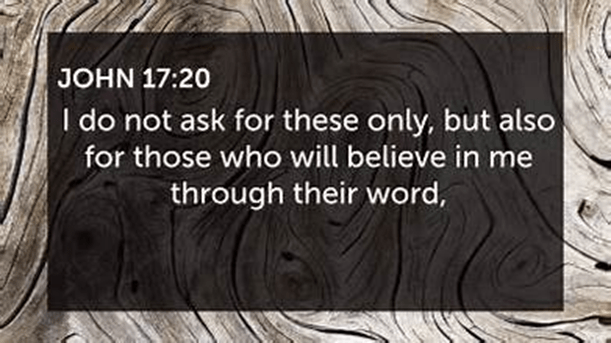
“I am not asking on behalf of them alone, but also on behalf of those who will believe in Me through their message, that all of them may be one, as You, Father, are in Me, and I am in You. May they also be in Us, so that the world may believe that You sent Me.

I have given them the glory You gave Me, so that they may be one as We are one—I in them and You in Me—that they may be perfectly united, so that the world may know that You sent Me and have loved them just as You have loved Me.

Father, I want those You have given Me to be with Me where I am, that they may see the glory You gave Me because You loved Me before the foundation of the world.

Righteous Father, although the world has not known You, I know You, and they know that You sent Me. And I have made Your name known to them and will continue to make it known, so that the love You have for Me may be in them, and I in them.”

“I am not asking on behalf of them alone, but also on behalf of those who will believe in Me through their message, that all of them may be one, as You, Father, are in Me, and I am in You. May they also be in Us, so that the world may believe that You sent Me.” Jesus has prayed for himself and for his disciples, but now he’s doing something incredible. Jesus is praying for all those who will believe in him through the message of the disciples. Even though Jesus knows that he is about to be arrested, interrogated, mocked, tortured, and murdered, he is covering believers for all time in prayer. This means that the night Jesus is betrayed, he is praying for us!  

“I have given them the glory You gave Me, so that they may be one as We are one—I in them and You in Me—that they may be perfectly united, so that the world may know that You sent Me and have loved them just as You have loved Me.” Sometimes we look at ourselves or at fellow believers and we can’t imagine that God’s glory is resting on us. We are all too aware of our shortcomings and the shortcomings of others, and that awareness of failures present big barriers to unity of any kind, let alone perfect unity. But Jesus has loved each one of us, just as his Heavenly Father has loved him.

One problem believers have is that we are all too prone to judge one another. We believe rumors and listen to gossip. We are more than willing to think the worst of one another rather than the best. Love gets lost in the process of self-promotion. But such thoughts and actions are completely antagonistic to Jesus’ desires for his followers.

“Father, I want those You have given Me to be with Me where I am, that they may see the glory You gave Me because You loved Me before the foundation of the world.

Righteous Father, although the world has not known You, I know You, and they know that You sent Me. And I have made Your name known to them and will continue to make it known, so that the love You have for Me may be in them, and I in them.”

We have choices: we can choose to love or we can refuse to love. But if we want to have eternal life and to be with Jesus forever, we have no choice except to love and refuse to judge.

Unity in the body of Christ-even though this is the ideal, so many times we lose sight of Jesus’ call to unity. We want to judge, to criticize, to withhold love…even though we claim to be Jesus followers. Several years ago, we had an unfortunate experience with one mission sending agency. When we consulted a friend serving as a counselor at a missionary training center, he informed us that in his thirty-five years of experience with missions, he had never found a mission, church, or para-church group that functioned along truly Christian lines. Our friend continued that without exception, all of these groups functioned along the same lines as conventional businesses.

If we are serious as believers, we must follow Jesus’ commands and not those of conventional organizations. May God help us, so that we will do those things that fulfill Jesus’ prayers for us!

PRAYER: Father God, thank You for loving us and for caring for us. Lord, help us to love as You have loved and to pursue unity with other believers. In the mighty and precious Name of King Jesus. Amen.