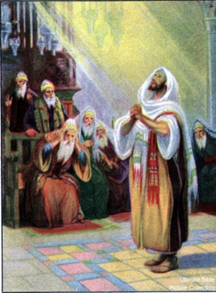
Acts 7:54-60 Stephen the Martyr
“When they heard these things, they were cut to the heart, and they gnashed at him with their teeth. But he, being full of the Holy Spirit, gazed into heaven and saw the glory of God, and Jesus standing at the right hand of God, and said, “Look! I see the heavens opened and the Son of Man standing at the right hand of God!”
“Then they cried out with a loud voice, stopped their ears, and ran at him with one accord; and they cast him out of the city and stoned him. And the witnesses laid down their clothes at the feet of a young man named Saul. And they stoned Stephen as he was calling on God and saying, “Lord Jesus, receive my spirit.” Then he knelt down and cried out with a loud voice, “Lord, do not charge them with this sin.” And when he had said this, he fell asleep.”
Stephen is one of the bright lights of the new church and learned as well as articulate. But now Stephen lies dead in the streets of Jerusalem, having been stoned by furious religious leaders. Is this the complete end for Stephen’s effect on the early church? No, actually Stephen’s death will have lasting effects. Here are the results of a computer search regarding the effects of Stephen’s death.
“Stephen’s martyrdom, the first of a Christian, had a paradoxical effect: it fueled persecution but also led to the spread of Christianity. The stoning of Stephen, and the ensuing persecution of Christians, forced many believers to flee Jerusalem, and they spread the Gospel as they went. His death also had a profound impact on Saul of Tarsus, who later became the Apostle Paul, significantly influencing the growth of the church.
Here’s a more detailed look at the effects:
1. Increased Persecution and Dispersion:
The martyrdom of Stephen triggered a wave of persecution against Christians in Jerusalem, as detailed in Acts 8:1.
Many believers, fearing for their lives, fled the city, dispersing across various regions.
2. Evangelization through Dispersion:
As Christians scattered, they carried the message of Jesus with them, planting seeds of faith in new places.
This “dispersion evangelism” helped the Gospel reach broader audiences beyond Jerusalem.
3. Conversion of Saul (Paul):
The stoning of Stephen, and particularly his courageous and forgiving attitude in death, is believed to have had a profound effect on Saul, a Pharisee who was initially involved in persecuting Christians.
Saul’s later conversion and transformation into the Apostle Paul were significant turning points in the early church’s history.
4. Inspiration for Future Martyrs:
Stephen’s unwavering faith and willingness to die for his beliefs served as a model for future generations of Christians.
His martyrdom demonstrated the power of faith in the face of persecution and became a powerful symbol of Christian resilience.
5. A Turning Point in the Church’s Development:
Stephen’s death marked a significant moment in the early church’s history, moving it beyond its initial Jewish context and towards a broader, Gentile-oriented mission.
His martyrdom helped solidify the understanding of Jesus’ teachings and the nature of Christian discipleship.
6. Forgiveness in Action: Stephen’s Martyrdom and Christ-like Example
Instead of harboring bitterness or seeking vengeance, he extended grace and forgiveness to those who persecuted him. (Biblical Life Lessons)”
In addition to the effects Stephen’s death had on his fellow believers, there are the effects on believers in subsequent generations. Stephen has inspired believers ever since and has served as an example for all those who face persecution. Stephen’s choice to tell the truth even though he realizes he might die for it remains the gold standard for all believers. And we need to forgive those who are persecuting us, just as Jesus ordered.
PRAYER: Father God, thank You for loving us and for caring for us. Lord, give us the boldness of Stephen so that we will remain true, even in the face of persecution resulting in our deaths. In the mighty and precious Name of King Jesus. Amen.
 Burunche's Blog
Leave a comment