Acts 22:1-21 Paul’s Defense at Jerusalem
“Brethren and fathers, hear my defense before you now.” And when they heard that he spoke to them in the Hebrew language, they kept all the more silent.
Then he said: “I am indeed a Jew, born in Tarsus of Cilicia, but brought up in this city at the feet of Gamaliel, taught according to the strictness of our fathers’ law, and was zealous toward God as you all are today. I persecuted this Way to the death, binding and delivering into prisons both men and women, as also the high priest bears me witness, and all the council of the elders, from whom I also received letters to the brethren, and went to Damascus to bring in chains even those who were there to Jerusalem to be punished.”
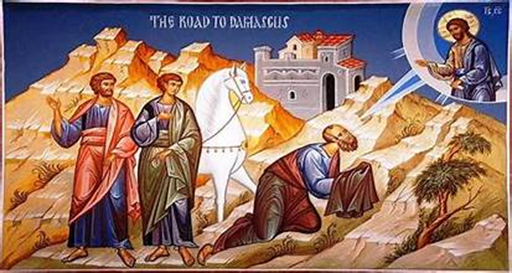
“Now it happened, as I journeyed and came near Damascus at about noon, suddenly a great light from heaven shone around me. And I fell to the ground and heard a voice saying to me, ‘Saul, Saul, why are you persecuting Me?’ So I answered, ‘Who are You, Lord?’ And He said to me, ‘I am Jesus of Nazareth, whom you are persecuting.’”
“And those who were with me indeed saw the light and were afraid, but they did not hear the voice of Him who spoke to me. So I said, ‘What shall I do, Lord?’ And the Lord said to me, ‘Arise and go into Damascus, and there you will be told all things which are appointed for you to do.’ And since I could not see for the glory of that light, being led by the hand of those who were with me, I came into Damascus.”
“Then a certain Ananias, a devout man according to the law, having a good testimony with all the Jews who dwelt there, came to me; and he stood and said to me, ‘Brother Saul, receive your sight.’ And at that same hour I looked up at him. Then he said, ‘The God of our fathers has chosen you that you should know His will, and see the Just One, and hear the voice of His mouth. For you will be His witness to all men of what you have seen and heard. And now why are you waiting? Arise and be baptized, and wash away your sins, calling on the name of the Lord.’”
“Now it happened, when I returned to Jerusalem and was praying in the temple, that I was in a trance and saw Him saying to me, ‘Make haste and get out of Jerusalem quickly, for they will not receive your testimony concerning Me.’ So I said, ‘Lord, they know that in every synagogue I imprisoned and beat those who believe on You. And when the blood of Your martyr Stephen was shed, I also was standing by consenting to his death, and guarding the clothes of those who were killing him.’ Then He said to me, ‘Depart, for I will send you far from here to the Gentiles.’”
Paul is nothing if not brave. Here Paul is, having had to be carried bodily by Roman soldiers into the praetorium to avoid being torn apart by a hostile mob. Now Paul is addressing this furious group in Hebrew, shocking them into silence. Paul gives a brief account of his radical change of heart from persecutor of Christians to a preacher and teacher.
“Now it happened, when I returned to Jerusalem and was praying in the temple, that I was in a trance and saw Him saying to me, ‘Make haste and get out of Jerusalem quickly, for they will not receive your testimony concerning Me… Then He said to me, ‘Depart, for I will send you far from here to the Gentiles.’”
The crowd seems to be cooling off until Paul reports that God has sent him to the Gentiles. This statement is all it takes for the crowd to begin screaming for Paul’s blood.’’
Paul knows the emotions of the crowd, so why does he bother describing his encounter with Jesus? Paul is trying to be as honest as possible, and he wants to make sure that none of the religious authorities fail to hear his testimony. Paul still hopes that some of his former colleagues might have a change of heart if only they will listen to his testimony. But this is also Paul’s last attempt to make these men understand. If Jewish religious leaders refuse to listen, Paul feels he has done everything he can and is now completely free to go to the Gentiles.
When facing opposition, do we tell the whole truth or try to shade things a little to make them more palatable? We must be honest, we have no choice; we know we must tell the truth, even though we anticipate a bad reception. Here Paul gives a clear account of his divine encounter with the risen Jesus Christ, but he’s addressing a hostile audience.
Our responsibility is to tell the truth. The reaction of our audience is their choice, not ours. Once we deliver God’s message, we must trust Him to take care of us and our audience. May God help us so that we will be brave under fire.
PRAYER: Father God, thank You for loving us and caring for us. Lord, help us to be faithful to You, even when we face fierce opposition. In the mighty and precious Name of King Jesus. Amen.
 Burunche's Blog
Leave a comment