Archive for July, 2025

JULY 11, 2025 WE’RE ALL PILGRIMS HEADED SOMEWHERE #9 DOES GOD ALWAYS BLESS US?

July 11, 2025

Psalm 128 Joy for those who follow God’s ways

A song for pilgrims ascending to Jerusalem.

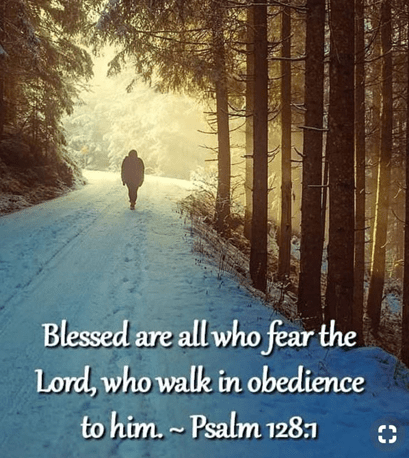
“How joyful are those who fear the Lord—all who follow his ways!
You will enjoy the fruit of your labor. How joyful and prosperous you will be!
Your wife will be like a fruitful grapevine, flourishing within your home. Your children will be like vigorous young olive trees as they sit around your table.
That is the Lord’s blessing for those who fear him.

May the Lord continually bless you from Zion. May you see Jerusalem prosper as long as you live.
May you live to enjoy your grandchildren. May Israel have peace!”

“How joyful are those who fear the Lord—all who follow his ways! You will enjoy the fruit of your labor. How joyful and prosperous you will be!”

It was 4th of July weekend, and up and down the Guadelupe and Medina Rivers, campers of all kind had gathered on the river banks to celebrate the holiday. Both rivers were normally tame delightful streams, perfectly suited for floating in inner tubes or boats and swimming. Campsites were full of RV’s, tents, boats, and vehicles of all kinds. At the height of summer, many of the children’s camps were full of children from 8 onwards, with teen-age counselors helping. As everyone went to bed on Thursday July 3, 2025, both rivers were flowing gently.

But this picture changed radically in the early hours of Friday July 4th. Due to catastrophically heavy rainfall in the watersheds feeding these rivers, a flood surge developed. The Guadelupe River rose 26 feet in 45 minutes. Those people fortunate enough to be awake at 1-3 AM received alerts and evacuated; however, many others were sound asleep, having no idea that they were about to be inundated. Camp Mystic, a Christian camp that had existed for 99 years, sat right in the way of the storm surge, with the youngest campers occupying cabins closest to the Guadelupe River. When the flood waters hit, many of those little girls were swept away by the water. Dick Eastland, the camp director, lost his life heroically trying to save as many of these girls as possible. At this time, 27 girls and counselors have died; however, 850 people have been safely evacuated.

Those camping in riverside parks were swept away, with many winding up in trees or being saved by rescue swimmers and emergency crews. Towns along the river have also been devastated, with riverside homes floating away until they have been reduced to splinters by the force of the water.

Why am I re-telling this story that has occupied international news media for several days? When disasters happen, the first question many people ask is, “Where is God in all this? If God is all-powerful, why do we suffer from floods, fires, earthquakes, tornadoes, and hurricanes?” At this point, at least 82 people are known to have drowned in floods in various parts of the Texas Hill Country and more people are missing. Why has God allowed this to happen? How can we believe in the message of this psalm when facing such disasters?

We must remember that we live in a fallen sinful world. Weather disasters are part of the consequences of the Garden of Eden. Putting it bluntly, bad things can happen-and do happen-to good people. But should we allow tragedies to mar our faith? No! Because of sin, God allows tragedies; however, God remains on the throne and remains a Rewarder of those who fear Him and follow His ways.

Viewing the photos of campers and counselors who have drowned is heart-wrenching. So much brightness and so much promise-how can God possibly have allowed these young lives to be snuffed out? As a physician, there are many times through the years when I have argued strenuously with the Lord as to WHY He has allowed certain people to die while others have survived. And each time, God has reminded me that the day an individual is born, God already knows the day that person will die. There is not a one of those precious little girls who drowned who has been lost to God.

“You will enjoy the fruit of your labor. How joyful and prosperous you will be! Your wife will be like a fruitful grapevine, flourishing within your home. Your children will be like vigorous young olive trees as they sit around your table. That is the Lord’s blessing for those who fear him.” Notice something: God does not tell us how long any of us will live to enjoy our families.

Two local teachers and their families have become flood victims; God knows them and knows where their bodies are. Nobody is guaranteed how long he/she is going to live or how long their children will live either. But if we can enjoy our families as long as we have them, we remain blessed.

May the Lord continually bless you from Zion. May you see Jerusalem prosper as long as you live. May you live to enjoy your grandchildren. May Israel have peace!”  As of July 6, 2025, more than 850 people have been rescued, many from roof tops or even from trees. At least 165 of those rescues have been accomplished using helicopters. While we might mourn those who have died, we should also celebrate the heroism of rescuers who have saved so many. While these people have lost everything apart from their lives, they can rebuild and there has already been an outpouring of support from all parts of America. Ultimately, many of these people will live to enjoy their grandchildren.

Finally, the psalmist adjures pilgrims to continue to pray for the peace of Israel, something all of us should pray for. In fact, all of us should pray for peace, not only for Israel, but also for ourselves and our families.

PRAYER: Father God, thank You for loving us and for caring for us. Lord, help us to praise You, even when disasters overtake us. Help us to trust You and be grateful for every day of our lives. In the matchless and precious Name of King Jesus. Amen.

JULY 10, 2025 WE’RE ALL PILGRIMS HEADED SOMEWHERE #8  GYE NYAME! TRUST GOD!

July 10, 2025

Psalm 127 If God doesn’t help us, we’re lost!

A song for pilgrims ascending to Jerusalem. A psalm of Solomon.

“Unless the Lord builds a house, the work of the builders is wasted. Unless the Lord protects a city, guarding it with sentries will do no good.
It is useless for you to work so hard from early morning until late at night, anxiously working for food to eat; for God gives rest to his loved ones.

Children are a gift from the Lord; they are a reward from him. Children born to a young man are like arrows in a warrior’s hands. How joyful is the man whose quiver is full of them! He will not be put to shame when he confronts his accusers at the city gates.”

This symbol is the Gye Nyame Adinkra symbol, one of the most popular Adinkra symbols in all Ghana. “Gye Nyame” is Twi for “except God,” or “unless God” and is a symbol of the fact that all of us are reliant on God.  

“Unless the Lord builds a house, the work of the builders is wasted. Unless the Lord protects a city, guarding it with sentries will do no good.” When the Twin Towers were erected in New York City, they were hailed as architectural marvels; yet, strikes by two fuel-laden airplanes caused both of them to implode and collapse. Fire fighters are now warning people in America that the fire-retardant materials previously used in construction have been cheapened and weakened. Thirty years ago, those in a house fire had about 17 minutes to escape; now that time has shrunk to 3-4 minutes, and the Red Cross states it’s actually only 2 minutes.

Even as security systems proliferate, plans to evade or disable those systems continue to keep pace as well. There’s a slogan on small Ghanaian buses that reads “Nowhere cool!” Truly, no place is truly secure.

There have been all kinds of doomsday plots for attacking major cities, including destroying or contaminating the water supply, spreading anthrax spores in the air, and other vile schemes. Consider the fact that railroads carrying hazardous materials travel through the heart of most American cities. An accident with such materials could devastate a huge area within moments.

It is useless for you to work so hard from early morning until late at night, anxiously working for food to eat; for God gives rest to his loved ones.” This quote from Randy Armstead says it all. Worrying takes away peace without taking away troubles. Psalm 37:8 tells us, “Refrain from anger and abandon wrath; do not fret—it can only bring harm.” All that worry does is to constrict the blood vessels to our hearts, cause increased acidity and stomach irritation, and reduce our bodies’ abilities to fend off infections.

Psalm 4:8 tells us, “In peace I will lie down and sleep, for you alone, O Lord, will keep me safe.” When we are worried, we can claim this promise, leave our worries to the Lord, and go to sleep!

Children are a gift from the Lord; they are a reward from him. Children born to a young man are like arrows in a warrior’s hands. How joyful is the man whose quiver is full of them! He will not be put to shame when he confronts his accusers at the city gates.” In Bible times, men congregated at the city gates, where leaders would sit to give judgements and opinions and men would do business deals. If a man could appear in these gatherings accompanied by bright industrious sons, his status as a man of substance would be assured. Not only could such a man confront his accusers, but his sons could also speak on his behalf, confounding accusers. Even a humble man would garner respect when accompanied by several handsome articulate sons.

But what if a man is unfortunate enough not to have fathered sons? Or what about a man whose sons have died or whose sons live at a distance? Some men have such a strong fatherly nature that they attract young men hungry for father figures. None of our children live with us in Ghana; yet, my husband has many young men who view him as a father. These young men visit us when they can and maintain close communications with us. We are truly blessed by the care these young men offer us.

May God bless each of you, so that you can trust God, sleep soundly, and be blessed by loving young people!

PRAYER: Father God, thank You for loving us and caring for us. Lord, help us to trust that You know our needs better than we do. Help us to stop worrying and leave our cares in Your Hands. In the mighty and precious Name of King Jesus. Amen.

JULY 9, 2025 WE’RE ALL PILGRIMS HEADED SOMEWHERE #7 KEEP TRUSTING AND SOWING!

July 9, 2025

Psalm 126 The Lord has done great things-A song for pilgrims ascending to Jerusalem.

“When the Lord brought back his exiles to Jerusalem, it was like a dream!
We were filled with laughter, and we sang for joy. And the other nations said, “What amazing things the Lord has done for them.”
Yes, the Lord has done amazing things for us! What joy!

Restore our fortunes, Lord, as streams renew the desert.
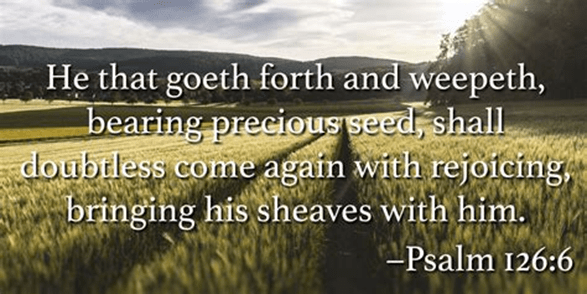
Those who plant in tears will harvest with shouts of joy. They weep as they go to plant their seed, but they sing as they return with the harvest.”

If you have ever found yourself in what seems to be a no-win situation, this psalm is for you. Sometimes, through no faults of our own, we may do our very best, sacrificing time, energy, and resources to an organization, only to have our efforts spurned, scorned, or even criticized. We have contributed as much as possible, practically pouring out our heart’s blood; meanwhile, others have slid in to take credit for our efforts or to complain that we should have done things differently or done even more. No feeling compares to going from despair to jubilation when we feel everything is lost, only to find that God has delivered us.

“When the Lord brought back his exiles to Jerusalem, it was like a dream! We were filled with laughter, and we sang for joy. And the other nations said, “What amazing things the Lord has done for them. Yes, the Lord has done amazing things for us! What joy!”  This is a psalm for pilgrims, so the captivity mentioned here might either refer to David’s exile during Absalom’s persecution or to the return of the captives under Ezra and Nehemiah. No matter which exile is referred to here, either one still represents a miracle. Both returns represented triumphs of survival against overwhelming odds.

David was a very popular king; however, Absalom stole the people’s affections by undermining his father, claiming that he was the only one who could really address the nation’s problems. Absalom was young, handsome, and charismatic, attracting many supporters, including David’s trusted counselor Ahithophel. David prayed that God would cause Absalom to ignore advice that would have resulted in death and destruction for David and his followers. Ultimately, David triumphed and returned to Jerusalem with great festivities.

Centuries later, the Babylonians carried many people from Judea to Babylon, where they lived for seventy years. When King Cyrus ordered the temple in Jerusalem to be re-built, groups under Ezra and later under Nehemiah returned to Jerusalem, erecting a modest temple and the city walls. The trip between Babylon and Jerusalem was dangerous, extending several hundred miles, leaving travelers open to attack by marauders. When Nehemiah re-dedicated the temple and the city wall, it really was a time for celebration with parades, dancing, singing, and blowing of temple trumpets. Not everybody was happy about this successful reconstruction, for there were many surrounding countries more than happy to leave Judah in ruins.

Restore our fortunes, Lord, as streams renew the desert.” As I am writing this, social media is full of horrific videos of the flooding in Texas that has taken more than 51 lives and devastated untold numbers of communities. Many streams in the Texas hill country are small and insignificant, until catastrophic rainfall causes incredible flooding. The Guadelupe River at Ingram, Texas, rose from 0-26 feet in 45 minutes.

Israel has many stream beds that are dry for much of the year, until rains in higher elevations cause floods. When this psalm was written, farmers depended on the water and the silt from these floods to help renew desert lands so that crops would be successful. In modern times, Israel has led the world in the development of drip irrigation, a method in which water hoses with small holes at intervals precisely deliver water to individual plants, saving water and allowing deserts to bloom.

Those who plant in tears will harvest with shouts of joy. They weep as they go to plant their seed, but they sing as they return with the harvest.” God wants us to know that no matter how gloomy things appear right now, we must remain faithful. If we continue to do God’s will, He will give us success and multiply our efforts.

So, take heart! God is still on the throne and God is all-seeing, all-knowing, and all-powerful. God will not allow His servants to fail, for He can fill in the gaps when our efforts and our energy prove insufficient. You can pray this psalm over your life, knowing that God will honor His Word. Romans 15:13 tells us, “I pray that God, the source of hope, will fill you completely with joy and peace because you trust in him. Then you will overflow with confident hope through the power of the Holy Spirit.” May God give you His Hope!

PRAYER: Father God, thank You for loving us and caring for us. Lord, help us to continue even when things appear hopeless, knowing that You are the God of Hope. In the mighty and precious Name of King Jesus. Amen.
JULY 8, 2025 WE’RE ALL PILGRIMS HEADED SOMEWHERE #6 WHEN YOU TRUST GOD, HE SURROUNDS YOU WITH PROTECTION

July 8, 2025

Psalm 125 Prayer for God’s blessing upon His people

A song for pilgrims ascending to Jerusalem.

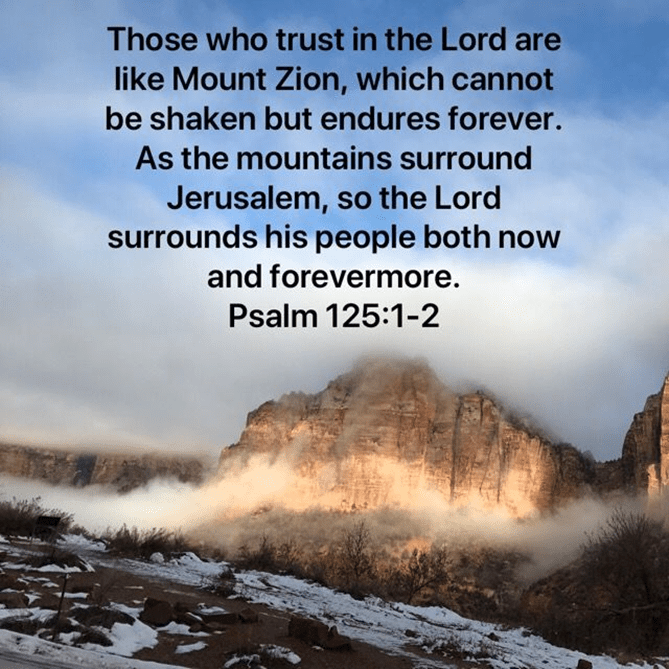
1 Those who trust in the Lord are as secure as Mount Zion; they will not be defeated but will endure forever.
2 Just as the mountains surround Jerusalem, so the Lord surrounds his people, both now and forever.
3 The wicked will not rule the land of the godly, for then the godly might be tempted to do wrong.
4 O Lord, do good to those who are good, whose hearts are in tune with you.
5 But banish those who turn to crooked ways, O Lord. Take them away with those who do evil. May Israel have peace!

Those who trust in the Lord are as secure as Mount Zion; they will not be defeated but will endure forever.” Where can we find true security these days? People who have built lovely homes in wooded areas in the mountains of California or North Carolina have seen their treasured places of retreat destroyed by fires or hurricanes. Several years ago, Bernie Madoff caused retirement funds for millions of vulnerable elderly to evaporate when his Ponzi schemes fell apart. Estimates for the damages from Mr. Madoff’s machinations range from total losses of 17 billion to 64.8 billion. Sadly, many pension schemes of various kinds had invested with Mr. Madoff, assuming that their assets were safe and that the figures he furnished for the growth of their investments were accurate. When things fell apart due to market turn-downs, many retirees found themselves returning to the work force as fast-food workers simply to survive. The lesson from these events is clear: God is the only One in whom we can safely trust.

“2 Just as the mountains surround Jerusalem, so the Lord surrounds his people, both now and forever.” If you are a student of world events, you are likely reading this and questioning this statement. What about all those Israelis who were kidnapped, many of whom were killed? What about innocent Ukrainians dying from Russian attacks, when they wanted nothing more than to be allowed to live peaceably in their own country? What about Christians who are being slaughtered in Northern Nigeria or other places by Muslim extremists?

Jesus told his disciples, “I am leaving you with a gift—peace of mind and heart. And the peace I give is a gift the world cannot give. So do not be troubled or afraid.” (John 14:27) Later, that same night, Jesus assured his followers, “I have told you all this so that you may have peace in me. Here on earth you will have many trials and sorrows. But take heart, because I have overcome the world.” (John 16:33) Even if we find ourselves under attack from Satan or those whom He is using as tools, we can rest assured that God has our backs spiritually. If we die as believers, we will live forever in heaven with God.

“3 The wicked will not rule the land of the godly, for then the godly might be tempted to do wrong.” Other versions read, “The scepter of wickedness shall not rest on the land allotted to the righteous, lest the righteous reach out their hands to iniquity.” Sadly, people take cues for their behavior from their leaders. Corruption in leadership leads to corruption throughout an organization or even a country.

But what if you find yourself suffering under a corrupt leader? This verse is for you, and you can pray it back to God, begging Him to remember this promise. This one verse can become a powerful prayer for removal of ungodly leaders. Many times, people feel that short powerful prayers aren’t sufficient and that they should go on and on when they pray. But Jesus warned his disciples not to do that, telling them, “When you pray, don’t babble on and on as the Gentiles do. They think their prayers are answered merely by repeating their words again and again.Don’t be like them, for your Father knows exactly what you need even before you ask him!” (Matthew 6:7-8)

“4 O Lord, do good to those who are good, whose hearts are in tune with you. 5 But banish those who turn to crooked ways, O Lord. Take them away with those who do evil. May Israel have peace!” When our hearts are in tune with God, we open the way for Him to bless us. When we are in tune with God, we will worship Him, rejoicing in His Word. Worship doesn’t depend on how well you sing, for you can read Scripture as a form of worship. Worship is a matter of the heart; we worship when we acknowledge God as the Creator and Sustainer of all things and the only One who can give us salvation from our sins.

Sadly, those who turn to crooked ways banish themselves. The speed of darkness is the speed of light, for darkness and light cannot occupy the same space at the same time. We had a friend who began friendship with us by claiming to be a strong Christian, singing hymns under his breath, and attending church regularly. During that period, this man appeared to enjoy our company; however, gradually, he changed. As this man’s life deteriorated, he sought fellowship with those who would flatter him, rather than setting examples of righteousness. Our former friend stopped attending church and isolated himself from true believers. Other parts of our friend’s life also began falling apart. Now we can only pray for this man and his family, that he will repent before God removes him with other evil doers and that he and his family will truly know Jesus as Savior and Lord.

“May Israel have peace!” Psalm 122 adjures us to pray for the peace of Jerusalem. Indeed, we should pray for peace in Israel, because true peace in Israel will never come unless peace also comes to all the Middle East. Without peace in the Middle East, the rest of the world will also remain in turmoil, for three great religions are centered in the Middle East-Judaism, Christianity, and Islam.

Spiritual protection, spiritual security, and spiritual peace-God wants you to have all those things today. Why not memorize this very short psalm so you can repeat it to yourself as a source of comfort and a prayer? There is something wonderful about memorizing Scripture, for when you do so, the words you have memorized will come to you when you need them most.

PRAYER: Father God, thank You for loving us and for caring for us. Lord, help us to follow hard after You all the days of our lives. Help us to trust in You, knowing that You will protect and guide us. And do not allow the wicked to rule in our situations. In the mighty and precious Name of King Jesus. Amen.
JULY 7, 2025 WE’RE ALL PILGRIMS HEADED SOMEWHERE #5 GOD HAS FREED US FROM THE DEVIL’S TRAPS!

July 7, 2025

Psalm 124 Help comes from the Lord

“What if the Lord had not been on our side? Let all Israel repeat: What if the Lord had not been on our side when people attacked us?
They would have swallowed us alive in their burning anger. The waters would have engulfed us; a torrent would have overwhelmed us.
Yes, the raging waters of their fury would have overwhelmed our very lives.

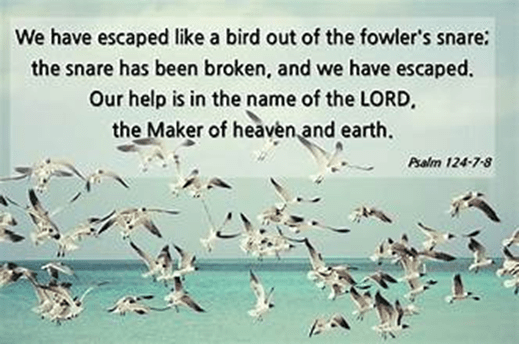
Praise the Lord, who did not let their teeth tear us apart! We escaped like a bird from a hunter’s trap. The trap is broken, and we are free! Our help is from the Lord, who made heaven and earth.”

“What if the Lord had not been on our side? Let all Israel repeat: What if the Lord had not been on our side when people attacked us? They would have swallowed us alive in their burning anger. The waters would have engulfed us; a torrent would have overwhelmed us. Yes, the raging waters of their fury would have overwhelmed our very lives.”

Few things are more frightening than finding yourself a target of someone’s deception, wrath, and betrayal. Many times, we are blind-sided. We have simply been doing our work, continuing to be as faithful as possible when suddenly we are attacked by someone who passionately wants to destroy our reputations and our standing in the community. Before we know what is happening, we find our attackers have been doing everything they can to poison people’s minds against us. We may even find ourselves sitting in public meetings while our attackers scream insults at us.

Sadly, these attackers are generally those whom we previously helped. Such people start by begging for help, either financial or social, as we introduce them to influential leaders. Now that these individuals feel they are working from a position of strength, they desire to tear you apart, even though you are the very one who has assisted them. If you have ever found yourself in such a situation, then this psalm is for you.

The first question we must ask ourselves-and God-in such situations is this: Have we done anything wrong to deserve such attacks? If we pray and ask God to reveal any wrong-doing on our part and God does not do so and if our consciences do not accuse us, we can rest assured that we are innocent.

“Praise the Lord, who did not let their teeth tear us apart! We escaped like a bird from a hunter’s trap. The trap is broken, and we are free! Our help is from the Lord, who made heaven and earth.” If we are innocent, then we can continue to work, trusting that God will protect and defend us. Snares set for catching birds are usually hidden in some innocent-looking place where a bird might feel safe. When the bird settles, something triggers the snare and the bird is caught.

When God is protecting us, God either triggers all the traps before they can catch us or destroys the traps, breaking them to pieces. But more than that, God can also deal with those attacking us so that all their attacks will fail and they will be unable to attack again. The day that we know that God has delivered us from our attackers, we can truly say, “Our help is from the Lord, who made heaven and earth.” May God help each one of us so that we will remain innocent before Him. Then God will deliver us from all the traps and snares Satan can devise.

PRAYER: Father God, thank You for loving us and caring for us. Lord, You are the One who delivers us from every trap and every snare. Help us to follow hard after You all the days of our lives. In the mighty and precious Name of King Jesus. Amen.
JULY 6, 2025 WE’RE ALL PILGRIMS HEADED SOMEWHERE #4 WHERE IS YOUR GAZE FOCUSED?

July 6, 2025

 Psalm 123 Patience for God’s mercy
“I lift my eyes to you, O God, enthroned in heaven.
We keep looking to the Lord our God for his mercy, just as servants keep their eyes on their master, as a slave girl watches her mistress for the slightest signal.
Have mercy on us, Lord, have mercy, for we have had our fill of contempt. We have had more than our fill of the scoffing of the proud and the contempt of the arrogant.”

Today, it’s hot, it’s dusty, and the water in the water bags is warm and tastes nasty. As the small group of pilgrims from a tiny hamlet trudge toward Jerusalem, they are forced off the narrow road by a rich man’s cavalcade consisting of several camels and a richly caparisoned donkey for the rich man. This fellow is so arrogant that he refuses to even greet his fellow pilgrims, but sneers at their meager possessions as he proceeds grandly on his way to Jerusalem. To make matters even worse, some of the camels defecate directly on the path, forcing those coming behind to dodge fresh camel dung or besmirch themselves. One of the children begins asking his father, “Daddy, why didn’t that man greet us? Why is he so mean?” The father can only look at his little son and shrug his shoulders. “I don’t know, son. Perhaps he really doesn’t know God very well.”

Irritating people are everywhere. Sadly, there are many who feel they must build themselves up by tearing others down or sneering at others. This psalm is a short one, but it packs a powerful message: Where are you focusing your gaze, your energy? Are you focusing on an almighty and merciful God, or are you allowing those around you to influence you?

“We keep looking to the Lord our God for his mercy, just as servants keep their eyes on their master, as a slave girl watches her mistress for the slightest signal.” Being a slave means doing everything your master or mistress want as soon as possible, or even anticipating their needs and wants. A faithful servant will study the master or mistress until the servant knows their habits and inclinations better than they do themselves. Slaves might be beaten for failure to anticipate a need or for failure to carry out a task satisfactorily. Here the psalmist is encouraging believers to keep looking at God as closely as a slave does the master or mistress.

“Have mercy on us, Lord, have mercy, for we have had our fill of contempt. We have had more than our fill of the scoffing of the proud and the contempt of the arrogant.” Believers are not worried about being beaten but instead they are hoping to receive God’s mercy. Believers realize that God is so far above any of us that He has no need to scoff or to show contempt. Only humans try to build themselves up by scorning others. We can well imagine that as the camel caravan for our rich man proceeds on up the trail, those plodding behind are chanting, “Have mercy on us, Lord, have mercy, for we have had our fill of contempt. We have had more than our fill of the scoffing of the proud.”

Jesus told the Samaritan woman at the well that “God is a spirit and they who worship Him must worship in spirit and in truth.” (John 4:24) When the two groups reach Jerusalem, which one will truly worship God, the rich man focused on his own importance or the poor villagers? And the question remains for us, where is our focus? Are our hearts fixed on doing God’s will, or are we trying to build up our own importance? Only those whose minds are fixed on God will have peace and joy.

PRAYER: Father God, thank You for loving us and caring for us. Lord, help us to fix our minds and hearts on You and nobody and nothing else. In the mighty and precious Name of King Jesus. Amen.
JULY 5, 2025 WE’RE ALL PILGRIMS HEADED SOMEWHERE #3 WHY PRAY FOR THE PEACE OF JERUSALEM?

July 5, 2025

Psalm 122 Prayer for Jerusalem
A song for pilgrims ascending to Jerusalem. A psalm of David.

“I was glad when they said to me, “Let us go to the house of the Lord.” And now here we are, standing inside your gates, O Jerusalem.

Jerusalem is a well-built city; its seamless walls cannot be breached. All the tribes of Israel—the Lord’s people—    make their pilgrimage here. They come to give thanks to the name of the Lord, as the law requires of Israel. Here stand the thrones where judgment is given, the thrones of the dynasty of David.

Pray for peace in Jerusalem. May all who love this city prosper. O Jerusalem, may there be peace within your walls and prosperity in your palaces. For the sake of my family and friends, I will say, “May you have peace.” For the sake of the house of the Lord our God, I will seek what is best for you, O Jerusalem.”

“I was glad when they said to me, “Let us go to the house of the Lord.” And now here we are, standing inside your gates, O Jerusalem.”

Consider what it must have been like to be one of the pilgrims in Biblical times. Even though Israel is a small country, there are very few flat spots in Israel, apart from the land near the Jordan or the land near the Mediterranean Sea. And much of Israel is very rocky. Now think about walking for days over hilly, dusty, rocky roads in thin-soled sandals to reach Jerusalem. The journey alone would be physically tiring and stressful. And pilgrims could not approach Jerusalem unprepared. To celebrate a major feast in Jerusalem would mean considerable expense for any family, for they would have to feed themselves, find accommodation, and purchase animals for sacrifice, not to mention buying festive outfits to wear at the ceremonies.

But at the same time, celebrating in Jerusalem with thousands of other pilgrims would have been one of the highlights of the year for anybody coming from a small village. Jerusalem was a rich cosmopolitan city, and the street scenes alone would have dazzled the eyes of villagers. Little wonder then, that an invitation to join others as they journeyed to a major feast would have been thrilling and exciting.

There was also something else significant about Jerusalem: Jerusalem was-and is-literally a holy city. Even though Jerusalem today is divided and certain sections can only be entered at specific access points, God’s spirit hovers over Jerusalem. At the time David wrote this psalm, God had not yet removed the Shekinah Glory of His Presence from Jerusalem. Later, when the exiles returned from Babylon and rebuilt the temple, God returned His Presence to Jerusalem and has never removed it since.

Rabbi Dovid Rosenfeld has this to say about the ascent to Jerusalem for the three festivals:  The obligation applied to all males from the age of 13 and up – which is the age of Bar Mitzvah – when a young man becomes obligated in the commandments. Exceptions were people who were elderly or unwell – or otherwise unable to make the trip (Mishna Hagigah 1:1), as well as a ritually-impure person and the uncircumcised. Another possible exception was someone who did not own land (see Tosafot, Pesachim 3b s.v. “mai’alyah”). There was also an obligation for a father to bring his boys from the age that they could walk holding their father’s hand (Mishna there).

This mitzvah extended to all males who lived in the Holy Land, seemingly as far away as the Euphrates (see Mishna Ta’anit 1:3). Thus, for some it was a long trip to Jerusalem and back, but it was not open-ended. Many Jews lived in Babylonia and Egypt during the Second Temple. Many of them did in fact come, but they were not obligated to do so. The Sages estimated that the farthest a person was obligated to travel was a 15-day journey each way (Mishna there). Needless to say, this will be greatly reduced God willing when the Third Temple stands.

The obligation was not simply to appear in the Temple but to bring a special offering – “the burnt offering of the seeing” (see Exodus 23:15: “they shall not appear before Me emptyhanded,” as well as Deut. 16:16-17).There was also a mitzvah (on men and women) to joyously celebrate the holiday, in part by bringing peace offerings which were consumed in Jerusalem. (This consisted of at least one “holiday peace offering” (based on Exodus 23:14), as well as other peace offerings (“joyous peace offerings,”) according to the needs of the family (Deut. 16:14, 27:7).) Thus, almost the entire nation converged on Jerusalem for the three festivals of Pesach, Shavuot, and Sukkot. There was lastly an obligation to stay in Jerusalem the night after the first day of the holiday (see Deut. 16:7Talmud Rosh Hashanah 5a).

In terms of the logistics of these obligations, it was basically a miracle that practically the entire nation was able to arrive in Jerusalem and stay there for the holiday. The Mishna states that one of the regularly-occurring miracles in Temple times was that no person was ever unable to find lodging in Jerusalem (Pirkei Avos 5:5). And the Mishna there similarly states: “They would stand [in the Temple courtyard] crowded together, yet prostrated themselves in ample space.” https://aish.com/ascent-to-jerusalem-for-the-three-festivals/

Jerusalem is a well-built city; its seamless walls cannot be breached.” Those acquainted with Biblical history might ask, “Say what?” At the time David was writing this psalm, Jerusalem undoubtedly had walls and gates, but later Jerusalem was overrun and much of it destroyed by the Babylonians. But perhaps here David is speaking in faith, claiming God’s everlasting protection for Jerusalem. While physical walls can be breached, spiritual walls cannot. Even though God withdrew the Shekinah glory from the temple in the time of Ezekiel, He never stopped brooding over Jerusalem. And God’s glory returned at the time of the dedication of the second temple.

All the tribes of Israel—the Lord’s people— make their pilgrimage here. They come to give thanks to the name of the Lord, as the law requires of Israel.” Here David is referring to God’s commands that He has given through Moses in Exodus and Deuteronomy as mentioned by Rabbi Rosenfeld.  

Here stand the thrones where judgment is given, the thrones of the dynasty of David.” This verse indicates that David is already king at the time he is writing this psalm. God has promised David that there will always be a king from his line to occupy the throne. What David did not know then-but knows now-is that the Eternal King is King Jesus.

“Pray for peace in Jerusalem. May all who love this city prosper. O Jerusalem, may there be peace within your walls and prosperity in your palaces. For the sake of my family and friends, I will say, “May you have peace.” For the sake of the house of the Lord our God, I will seek what is best for you, O Jerusalem.” David served three roles as prophet, priest, and king. Here David is speaking prophetically, for Jerusalem continues to need prayers for peace and prosperity for all who live there. But David is not pledging himself out of selfish interest but out of regard and respect for “the house of the Lord our God.” Even though the only part of Solomon’s temple that is left is the Western Wall, sometimes called the Wailing Wall, that area is bathed in prayer. Pilgrims come from throughout the world to pray there and to leave petitions written on small slips of paper and inserted into the cracks between the stones.

Why should we pray for the peace of Jerusalem? When Jerusalem has true peace, the rest of the world will also. God’s peace radiates out from Jerusalem. Why pray for peace? We cannot plan to attack others when we are truly praying for peace, for God knows when we are faking and God hates hypocrisy. As we pray for the peace of Jerusalem, we will also find ourselves praying for peace in the various situations in which we find ourselves. While praying for Jerusalem might seem lofty and high-minded; in fact, praying for Jerusalem will lead us to prayers for our homes, our families, and all around us.

May God help us as we pray for peace for Jerusalem and for all those impacting our lives! And may we remember that God is still a God of celebration and that He wants us to have joy in our journey.

PRAYER: Father God, thank You for loving us and for caring for us. Lord, we do pray for peace in Jerusalem, in the Middle East, and in the world as a whole. We think about the Ukrainians, still under attack by Russia. We think about Christians in Africa under attack from Boko Haram. Lord, You are the Giver of Peace and only You can bring true peace. May Your Holy Spirit peace reign over all the earth! In the mighty and precious Name of King Jesus. Amen.

JULY 4, 2025 WE’RE ALL PIGRIMS HEADED SOMEWHERE #2 WHERE CAN WE FIND HELP?

July 4, 2025

Psalm 121 A song for pilgrims ascending to Jerusalem.

“I look up to the mountains—does my help come from there?
My help comes from the Lord, who made heaven and earth!

He will not let you stumble; the one who watches over you will not slumber.
Indeed, he who watches over Israel never slumbers or sleeps.

The Lord himself watches over you! The Lord stands beside you as your protective shade.
The sun will not harm you by day, nor the moon at night.

The Lord keeps you from all harm and watches over your life.
The Lord keeps watch over you as you come and go, both now and forever.”

“I look up to the mountains—does my help come from there?” Pilgrims are streaming towards Jerusalem, a city that is built on a tall hill. But these people have been hiking for days, looking at the hills around them.

What’s so important about hills? Throughout the world, people have always erected places of worship in the tops of hills or mountains. Even in the Andes mountains in South America, there are shrines on mountaintops, and sometimes people still worship at these shrines. By locating places of worship on mountain tops, perhaps worshipers hope to be closer to God.

The Jews also have strong traditions of erecting altars on mountain tops. One of the most famous incidents took place on the top of Mount Carmel when the prophet Elijah confronted 400 prophets of Baal. (1 Kings18:20-39) Elijah challenges the prophets of Baal, who fail to make their god do anything. Then Elijah demonstrates the power of God.

“Then Elijah called to the people, “Come over here!” They all crowded around him as he repaired the altar of the Lord that had been torn down. He took twelve stones, one to represent each of the tribes of Israel, and he used the stones to rebuild the altar in the name of the Lord. Then he dug a trench around the altar large enough to hold about three gallons. He piled wood on the altar, cut the bull into pieces, and laid the pieces on the wood.

Then he said, “Fill four large jars with water, and pour the water over the offering and the wood.”

After they had done this, he said, “Do the same thing again!” And when they were finished, he said, “Now do it a third time!” So they did as he said, and the water ran around the altar and even filled the trench.

At the usual time for offering the evening sacrifice, Elijah the prophet walked up to the altar and prayed, “O Lord, God of Abraham, Isaac, and Jacob, prove today that you are God in Israel and that I am your servant. Prove that I have done all this at your command. O Lord, answer me! Answer me so these people will know that you, O Lord, are God and that you have brought them back to yourself.”

Immediately the fire of the Lord flashed down from heaven and burned up the young bull, the wood, the stones, and the dust. It even licked up all the water in the trench! And when all the people saw it, they fell face down on the ground and cried out, “The Lord—he is God! Yes, the Lord is God!”

When the Israelites moved into the Promised Land, they met people who were already worshiping on mountain tops. Sadly, there probably isn’t a single hill in Israel that has escaped being the site of a pagan shrine, particularly a shrine devoted to a fertility cult. Worshipers headed for Jerusalem are well aware of this problem. The question is simple: If the so-called gods worshiped on mountain tops are worthless, who is the One True Living God? Where can worshipers find help?

My help comes from the Lord, who made heaven and earth!”  Hallelujah! Here’s the answer. God has not left us at the mercy of people or events. Our help comes from Eloheinu melekh ha’olam, the Ruler of the Universe, the most powerful being possible. What can God do for us?  

“He will not let you stumble; the one who watches over you will not slumber. Indeed, he who watches over Israel never slumbers or sleeps.”  Sometimes people who wish to attack others may try to curse others in various ways or invoke evil spirits that will attack in dreams. These pilgrims want God’s guidance and protection, even as they sleep. One of our friends has a sign that reads, “I’m awake 24/7 so you might as well go to sleep. Signed, God.”

The Lord himself watches over you! The Lord stands beside you as your protective shade.
The sun will not harm you by day, nor the moon at night.”
There are many myths about the sun and the moon having maleficent effects on people. Witches and wizards may also invoke curses on anyone standing in sunlight or moonlight. But the God of the Universe will protect believers from all harm.

The Lord keeps you from all harm and watches over your life. The Lord keeps watch over you as you come and go, both now and forever.” Pilgrims can trust God at all times and in all places, no matter the circumstances.

As believers, we never know when someone might put curses on us, spread vicious rumors, or otherwise try to destroy us. But this psalm assures us that God will protect us, no matter the circumstances. May we worship the One True Living God who always protects us!

PRAYER: Father God, thank You for loving us and caring for us. Lord, help us to trust You, no matter what. In the mighty and precious Name of King Jesus. Amen.

July 3, 2025 PSALM 120 WE’RE ALL PILGRIMS HEADED SOMEWHERE#1-INTRODUCTION TO THE PSALMS OF ASCENT

July 3, 2025

Face it, many of us have been struggling recently. Family problems, problems at work, financial problems-the list is endless. Included in the Psalms is a special collection called the Songs of Ascent, and these songs have something special to say to us.

Here’s what Got Questions.org says about these psalms. (https://www.gotquestions.org/Songs-of-Ascent.html )

The Songs of Ascent are a special group of psalms comprising Psalms 120—134. They are also called Pilgrim Songs. Four of these songs are attributed to King David (122, 124, 131, 133) and one to Solomon (127), while the remaining ten are anonymous.

The city of Jerusalem is situated on a high hill. Jews traveling to Jerusalem for one of the three main annual Jewish festivals traditionally sang these songs on the “ascent” or the uphill road to the city. According to some traditions, the Jewish priests also sang some of these Songs of Ascent as they walked up the steps to the temple in Jerusalem.

Each of the psalms in this collection begins with the title “A Song of Ascents.” While perhaps they were not originally composed for this purpose, these psalms were later grouped together for use in traveling toward Jerusalem for the yearly Jewish festivals.

The theme of each Song of Ascent offers much encouragement for those who seek to worship God today:

Psalm 120: God’s presence during distress
Psalm 121: Joyful praise to the Lord
Psalm 122: Prayer for Jerusalem
Psalm 123: Patience for God’s mercy
Psalm 124: Help comes from the Lord
Psalm 125: Prayer for God’s blessing upon His people
Psalm 126: The Lord has done great things
Psalm 127: God’s blessing on man’s efforts
Psalm 128: Joy for those who follow God’s ways
Psalm 129: A cry for help to the Lord
Psalm 130: A prayer of repentance
Psalm 131: Surrender as a child to the Lord
Psalm 132: God’s sovereign plan for His people
Psalm 133: Praise of brotherly fellowship and unity
Psalm 134: Praise to God in His temple

The Songs of Ascent continue to find a place among the many hymns and songs of worship of Jews and Christians today. They serve as powerful examples of how we can express our worship and love for God through the power of song.”

Psalm 120  God’s presence during distress In My Distress I Cried to the LORD

A song of ascents.

“1 In my distress I cried to the LORD, and He answered me.

2 Deliver my soul, O LORD, from lying lips and a deceitful tongue.

3 What will He do to you, and what will be added to you, O deceitful tongue?

4 Sharp arrows will come from the warrior, with burning coals of the broom tree!

5 Woe to me that I dwell in Meshech, that I live among the tents of Kedar!

6 Too long have I dwelt among those who hate peace.

7 I am in favor of peace; but when I speak, they want war.”

“In my distress I cried to the LORD, and He answered me.” Many times, we feel as if we are under attack with no hiding place. Where can we find help? Psalm 46:1 tells us, “God is our refuge and strength, an ever-present help in times of trouble.”  One of the wonderful things about God is that He is available 24/7. We can pray to God, knowing that he is always listening and can always answer us and help us. What will these prayers sound like?

“Deliver my soul, O LORD, from lying lips and a deceitful tongue.”  Truth is a precious commodity and rarely found. Thank God that He can deliver us from liars and cheats. Even when it appears that the liars are winning, God is still on the throne and God is the One who keeps the books. In the final analysis, God settles the score.

What will He do to you, and what will be added to you, O deceitful tongue? Sharp arrows will come from the warrior, with burning coals of the broom tree!” Sharp arrows? Burning coals? Even if we don’t see God’s retribution, rest assured that God will deal with those with deceitful tongues.  

“Woe to me that I dwell in Meshech, that I live among the tents of Kedar! Too long have I dwelt among those who hate peace. I am in favor of peace; but when I speak, they want war.”

Meshech is a generic term for a far away place considered to be full of pagans, while Kedar refers to the nomadic tribes surrounding Israel. Ever find yourself stuck in a terrible job situation where everybody is plotting attacks on everyone else? That’s what has happened to the psalmist. This poor writer just wants peace, but the neighbors can only think of picking fights with all comers.

PRAYER: Father God, thank You for loving us and for caring for us. Lord, deliver us from cheats and liars. Help us to trust You, no matter how difficult things seem to be. In the mighty and precious Name of King Jesus. Amen.
JULY 2, 2025 BE STILL AND KNOW #7 WHAT DO WE MEAN WHEN WE SAY “THE LORD OF HOSTS?”  

July 2, 2025

Psalm 46:11 11 “The LORD of Hosts is with us; the God of Jacob is our fortress.” Selah (Pause and calmly think on that)

Many of us might have heard the term “the Lord of Hosts” many times; however, what does this really mean? Clarence L. Haynes, Jr., an American Bible teacher, explains this term for us https://www.biblestudytools.com/bible-study/topical-studies/what-does-it-mean-that-god-is-lord-of-hosts.html

(Clarence is also committed to helping 10,000 people learn how to study the Bible and has just released his first Bible study course called Bible Study Basics. To learn more about his ministry please visit clarencehaynes.com.) Mr. Haynes’ explanation is so complete that I can only share it with you. I have never met Mr. Haynes, nor do I have any financial arrangement with him. But Mr. Haynes is saying everything I have wanted to say, and depriving you of this wonderful description would be shameful.

Why is God called Lord of Hosts? “The name Lord of Hosts, or some variant of it, appears 284 times in the Old Testament. The term in Hebrew is Jehovah Sabaoth. This idea of hosts positions God in a light that I don’t know if we often think of him in, which is in a military light. God is the leader of heaven’s armies. However, this term has can be translated differently depending on which translation of Scripture you use. Let me give you an example using Psalm 46:7:

“The Lord of hosts is with us; The God of Jacob is our refuge.” – (NKJV)

“The Lord of Armies is with us; the God of Jacob is our stronghold.” – (CEB)

“The Lord Almighty is with us; the God of Jacob is our fortress.” – (NIV)

“The Lord of Heaven’s Armies is here among us; the God of Israel is our fortress.” – (NLT)

While the translations may define this word a little differently, there is one consistency among them. They all point to God’s power and authority. Whether you call him Lord of Hosts, Lord of Heaven’s Armies, or Lord Almighty, they all paint a picture of an all-powerful God.

What is a host? (In this context)

A host is an old term that was used to describe an army. Here is how the Oxford Reference defines host: “Derived from the Latin hostis, the term “host” evolved, designating originally an armed expedition against an enemy, then the army itself, and finally, by extension, the obligation to serve in arms.” 

The first designation of this word leaps off the page to me because it is an armed expedition against an enemy. Again, we don’t often think of God in the sense of a general leading an armed brigade, but that is one aspect of who God is. He is the Lord of Heaven’s Armies or the Lord of Hosts. Let’s carry it to another logical but greater conclusion. One of the definitions of Lord of Hosts used in some translations is Lord Almighty. By this, you could even say he is Lord of All. This means if you aligned all the powers of the earth, and add in all of Satan’s power, they are still no match for the Lord of All, the one who is Lord Almighty or Lord of Hosts.

What does the Lord of Hosts do? 

When you use this term, we think of a God who fights on behalf of those who are his own. Remember he is leading an armed expedition against an enemy. In an Old Testament context, we see God in this position as Lord of Hosts every time he fights for Israel. When God was on their side, they were invincible. When God lifted his hand of support, they were totally vulnerable.

When the Israelites were leaving Egypt, the Egyptian army pursued them, and the Israelites were fearful they would overtake them. That is, until the Lord of Hosts stepped in telling the Israelites he would fight for them: Moses answered the people, “Do not be afraid. Stand firm and you will see the deliverance the Lord will bring you today. The Egyptians you see today you will never see again. The Lord will fight for you; you need only to be still.” – Exodus 14:13-14 

Israel was in a difficult place, but they had the Lord of Hosts on their side. They had comfort in knowing that regardless of who the enemy was or the situation they faced, God was fighting for them. Not only was this important as they were leaving Egypt, but this was equally important as they entered the promised land because they would have to fight enemies there. Israel had an assurance of knowing that the Lord of Hosts, the Lord of Heaven’s Armies, the Lord Almighty, was on their side and no enemy would be too great for them to overcome.

What does it mean for us?

As you step into the New Testament, God is still the Lord of Hosts because God never changes. The good news is that God still fights for you. Consider this verse in Romans: “What, then, shall we say in response to these things? If God is for us, who can be against us?” – Romans 8:31

We have the same assurance that the Israelites did. It does not matter what situation in life you find yourself in. God is for you. Since God is for you and he is the Lord of Hosts, there is no one who can ever overcome you if God is on your side.

One necessary requirement.

I do need to offer one word of caution here. Disobedience and sin can cancel out God’s protection. If you remember after the Israelites defeated mighty Jericho, they were defeated by little old Ai. The reason was because of disobedience, which is sin. While it is true God is for us, if you harbor sin in your life God may withhold his protection and covering until you come to a place of repentance. As you walk with God, remember this simple truth: obedience is the place of invincibility; disobedience is the place of vulnerability.

Is this a good name for God?

The name Lord of Hosts is a good name for God because it gives us more understanding of who he is. It reminds us that God is our defender and we don’t have to defend ourselves. In the gospel of John, Jesus makes this statement: “My sheep listen to my voice; I know them, and they follow me.I give them eternal life, and they shall never perish; no one will snatch them out of my hand. My Father, who has given them to me, is greater than all; no one can snatch them out of my Father’s hand. I and the Father are one.” – John 10:27-30

The truth found in these verses in John is possible because God is the Lord of Hosts. You could even imply from these verses that someone, mainly Satan, may try to snatch you out of his hand, but this too is not possible. Remember, God will fight for you, and when the enemy comes, God will not allow him to overtake you. 

God is the Lord of Hosts, the Lord of Heaven’s Armies, the Lord Almighty. This picture of the military God should give you peace knowing that God is watching over you. He is the God that provides, and he is also the God who protects. I encourage you to remember that in your present situation and I want to leave you with one verse that puts this view of God in perfect perspective:

“For he will command his angels concerning you to guard you in all your ways; they will lift you up in their hands, so that you will not strike your foot against a stone.” – Psalm 91:11-12

As the Lord of Hosts, God is undoubtedly watching over you.”

There you have it. Writing to the Romans, Paul says, “What then shall we say in response to these things? If God is for us, who can be against us? He who did not spare His own Son but gave Him up for us all, how will He not also, along with Him, freely give us all things? Who will bring any charge against God’s elect? It is God who justifies. Who is there to condemn us? For Christ Jesus, who died, and more than that was raised to life, is at the right hand of God—and He is interceding for us.

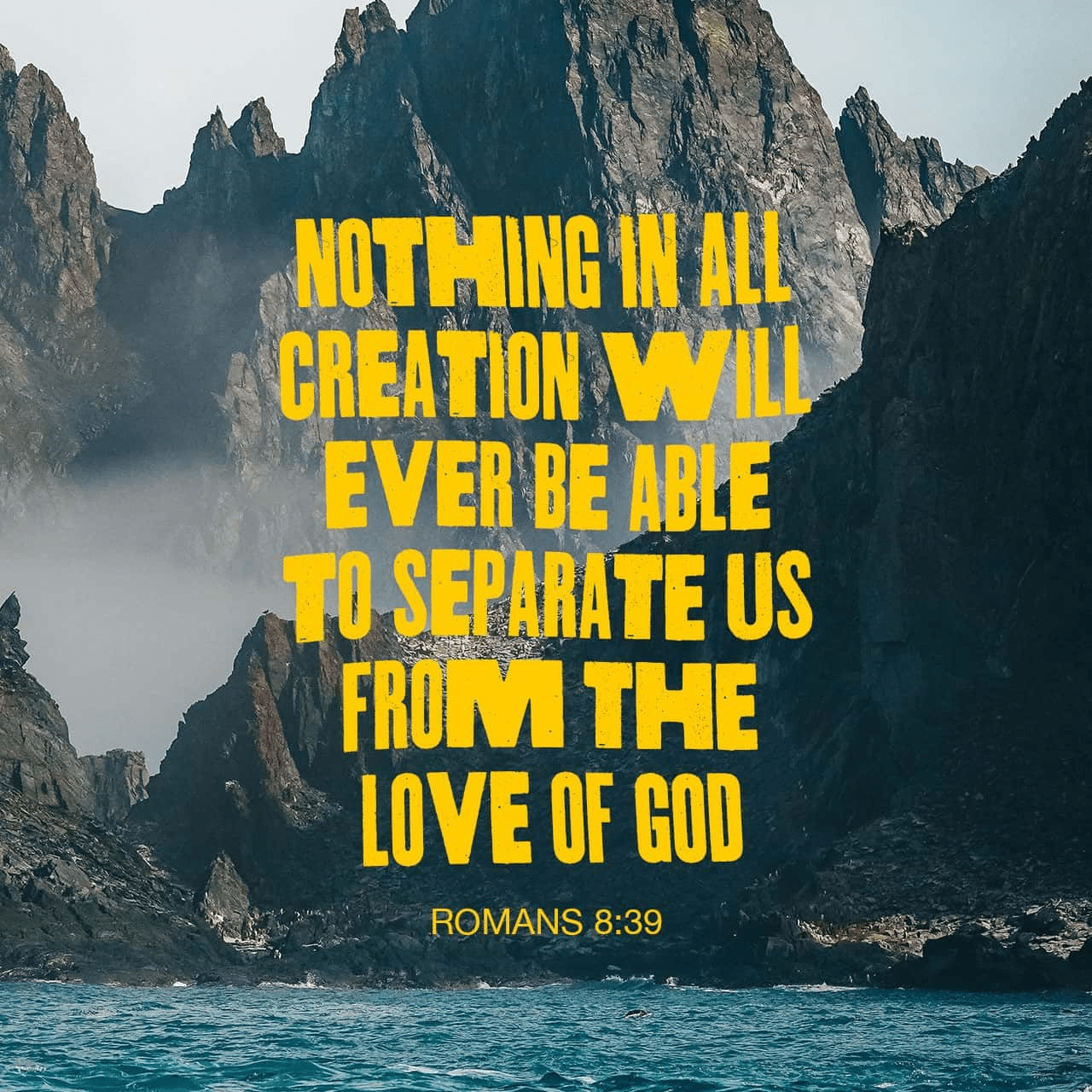
Who shall separate us from the love of Christ? Shall trouble or distress or persecution or famine or nakedness or danger or sword? As it is written: “For Your sake we face death all day long; we are considered as sheep to be slaughtered.” No, in all these things we are more than conquerors through Him who loved us. For I am convinced that neither death nor life, neither angels nor principalities, neither the present nor the future, nor any powers, neither height nor depth, nor anything else in all creation, will be able to separate us from the love of God that is in Christ Jesus our Lord.”

THIS, THIS, THIS IS WHAT WE MEAN WHEN WE SAY, “THE LORD OF HOSTS IS WITH US. THE GOD OF JACOB IS OUR REFUGE!” SELAH! (Pause and calmly think on that.)

PRAYER: Father God, thank You for loving us and for caring for us. Lord, help us to trust You to fight for us and to protect us. In the mighty and precious Name of King Jesus. Amen.