Genesis 8:18-19 Noah disembarked with his sons and wife and his sons’ wives. Then all the animals, crawling creatures, birds—every creature on the face of the Earth—left the ship family by family.
20-21 Noah built an altar to God. He selected clean animals and birds from every species and offered them as burnt offerings on the altar. God smelled the sweet fragrance and thought to himself, “I’ll never again curse the ground because of people. I know they have this bent toward evil from an early age, but I’ll never again kill off everything living as I’ve just done.
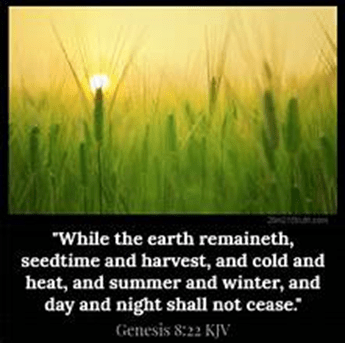
22 For as long as Earth lasts, planting and harvest, cold and heat, summer and winter, day and night will never stop.”
Many of us think we are familiar with the story of Noah and the ark, how Noah and his wife and his three sons and their wives, entered the ark along with breeding pairs of every living land creature, and then endured 150 days of flooding. We have heard the story of how Noah sent out a dove, and when the dove first returned with an olive branch in its mouth, Noah knew that the earth was drying up. When the dove did not return at all, Noah realized it was safe to leave the ark. But look at verse 20: Noah built an altar to God. He selected clean animals and birds from every species and offered them as burnt offerings on the altar. “Um, Noah, wait a minute! You’ve loaded these animals on the ark, fed them, and cared for them all these months, and now you are slaughtering a representative member of each group?” We are aghast! Why does Noah make such offerings?
David Guzik in his Enduring Word Commentary gives us the answer:
B. God’s covenant with Noah.
1. (20) Noah builds an altar and offers a sacrifice.
Then Noah built an altar to the Lord, and took of every clean animal and of every clean bird, and offered burnt offerings on the altar.
a. Then Noah built an altar: Noah’s first act after leaving the ark was to worship God through sacrifice. His gratitude and admiration of God’s greatness led him to worship God.
b. Took of every clean animal and every clean bird: As is the nature of true sacrifice, this was a costly offering unto God. With only seven of each animal on the ark, Noah risked extinction by sacrificing some of these animals. But costly sacrifice is pleasing to God.
i. “Common sense would have said, ‘Spare them, for you will want [need] every one of them.’ But grace said, ‘Slay them, for they belong to God. Give Jehovah his due.’” (Spurgeon)
ii. Believers are called to offer to God sacrifices that cost something. Bodies are presented to God as a living sacrifice (Romans 12:1), resources are given as a sacrifice (Philippians 4:18), and the giving of the sacrifice of praise to God (Hebrews 13:15).
iii. Costly sacrifice pleases God, not because God is greedy and wants to get as much as He can but because God Himself sacrificed at great cost (Ephesians 5:2, Hebrews 9:26, 10:12). God wants costly sacrifice because it shows His people are being conformed into the image of Jesus, who was the greatest display of costly sacrifice. Christians should be like Jesus in this regard: And walk in love, as Christ also has loved us and given Himself for us, an offering and a sacrifice to God for a sweet-smelling aroma (Ephesians 5:2).
iv. Believers should think like David, who said he would never offer to God that which costs me nothing (2 Samuel 24:24).
2. (21-22) God’s promise to Noah and to all mankind.
And the Lord smelled a soothing aroma. Then the Lord said in His heart, “I will never again curse the ground for man’s sake, although the imagination of man’s heart is evil from his youth; nor will I again destroy every living thing as I have done.
“While the earth remains,
Seedtime and harvest,
Cold and heat,
Winter and summer,
And day and night
Shall not cease.”
a. The Lord smelled a soothing aroma: Noah’s costly sacrifice pleased God. It was as if God smelled the aroma of the roasting meat, then He made this wonderful promise to Noah and to man.
i. The Bible speaks anthropomorphically, using a human analogy of a divine action or attribute. God was more pleased by the heart of Noah in his sacrifice than the actual smell of the offering. (My comment: The smell of the offering proved not only to God, but also to Noah, that Noah was serious.)
b. I will never again curse the ground for man’s sake: God promised to never again visit the earth with judgment by a flood on this scale, to destroy every living thing. God did this understanding that the imagination of man’s heart is evil from his youth. This was a promise full of mercy.
i. This is a strange combination of truths; first, that the imagination of man’s heart is evil from his youth and second, God’s promise to never again curse the ground for man’s sake. Man’s evil would seem to invite God’s curse, not put it away. The strange combination is accounted for by Noah’s altar and sacrifice, and God’s pleasure in the sacrifice (the Lord smelled a soothing aroma).
ii. “The sacrifice is the turning-point. Without a sacrifice, sin clamours for vengeance, and God sends a destroying flood; but the sacrifice presented by Noah was typical of the coming sacrifice of God’s only begotten Son, and of the effectual atonement therein provided for human sin.” (Spurgeon)
iii. We can say that after the flood, Noah’s story illustrated many things relevant to the life of the believer.
· Noah showed the believer’s freedom, leaving the ark.
· Noah showed the believer’s faith (in sacrifice).
· Noah showed the believer’s heart (by sacrifice).
· Noah showed the believer’s covenant of mercy (considering sacrifice).
c. Cold and heat, winter, and summer: God promised that after the flood, the earth would have established seasons. This speaks of the profound climatic and ecological changes in the earth since the covering of water vapors around the earth was emptied. Now, there would be seasonal and temperature variations more extreme than existed before the flood.
i. “As there should be no more a general deluge, so should there be no more a serious disarrangement of the course of the seasons and the temperature appropriate thereto. Seed-time and harvest, and cold and heat, and summer and winter, and day and night, are to succeed each other in their perpetually unchanging change, so long as the present reign of forbearance shall last.” (Spurgeon)
ii. The result of this change is found in the rapidly decreasing lifespans. There will never be 900-year-old men after the flood. The mass extinction of animals revealed in the fossil record (such as dinosaurs and other such creatures) probably took place shortly after the flood, when the earth was changed so dramatically and plunged into an ice age.
iii. “How faithfully God fulfills his covenant with the earth! How truly will he keep his covenant with every believing sinner! Oh, trust ye in him, for his promise will stand fast forever!” (Spurgeon) https://enduringword.com/bible-commentary/genesis-8/
Guzik raises a point that has become a hot button today: Climate Change. Popular commentators choose to denigrate entire groups of people, blaming them for climate change; yet, the evidence is clear in many parts of the world that there have always been cycles of climate. Consider the evidence from the Sahara Desert:
The Sahara Desert was once a fertile region, characterized by lush vegetation and abundant wildlife. This period, known as the African Humid Period, occurred approximately 10,000 to 5,000 years ago.
Climate Changes
- The Sahara’s climate has shifted from a green, fertile landscape to the arid desert we see today due to changes in Earth’s orbit and axial tilt.
- Increased rainfall during the African Humid Period supported lakes, rivers, and diverse ecosystems.
Archaeological Evidence
- Fossils and ancient tools found in the region indicate human habitation and agriculture during this fertile phase.
- Rock art depicting animals and human activities suggests a vibrant ecosystem.
Current Understanding
- Research continues to explore the exact timeline and causes of these climatic shifts.
- Some scientists suggest that future climate changes could potentially lead to a return of more humid conditions in parts of the Sahara.
This historical context highlights the Sahara’s dynamic environmental changes over millennia.
(AI Summary of Climate Change in the Sahara Desert)
· Noah showed the believer’s freedom, leaving the ark.
· Noah showed the believer’s faith (in sacrifice).
· Noah showed the believer’s heart (by sacrifice).
· Noah showed the believer’s covenant of mercy (considering sacrifice).
Freedom, faith, heart, and covenant of mercy-Noah demonstrated all these by his sacrifices. Today, allow God to show you the places in your life where you need to apply these lessons.
PRAYER: Father God, thank You for loving us and caring for us. Lord, help us to trust You, no matter what. Help us to demonstrate our faith and our commitment to You by being willing to sacrifice those things most precious to us so that we might keep covenant with You. We ask this in the mighty and precious Name of King Jesus. Amen.
 Burunche's Blog
Leave a comment