Archive for December, 2025

DECEMBER 24, 2025 WHAT’S SO IMPORTANT ABOUT BLOOD? #35 WHAT ABOUT THOSE SHEPHERDS AND THOSE SWADDLING CLOTHS?

December 24, 2025

Luke 2:1-20 The Birth of Jesus

2 1-5 About that time Caesar Augustus ordered a census to be taken throughout the Empire. This was the first census when Quirinius was governor of Syria. Everyone had to travel to his own ancestral hometown to be accounted for. So, Joseph went from the Galilean town of Nazareth up to Bethlehem in Judah, David’s town, for the census. As a descendant of David, he had to go there. He went with Mary, his fiancée, who was pregnant.

6-7 While they were there, the time came for her to give birth. She gave birth to a son, her firstborn. She wrapped him in a blanket and laid him in a manger, because there was no room in the hostel.

8-12 There were shepherds camping in the neighborhood. They had set night watches over their sheep. Suddenly, God’s angel stood among them and God’s glory blazed around them. They were terrified. The angel said, “Don’t be afraid. I’m here to announce a great and joyful event that is meant for everybody, worldwide: A Savior has just been born in David’s town, a Savior who is Messiah and Master. This is what you’re to look for: a baby wrapped in a blanket and lying in a manger.”

13-14 At once the angel was joined by a huge angelic choir singing God’s praises: Glory to God in the heavenly heights, peace to all men and women on earth who please him.

15-18 As the angel choir withdrew into heaven, the shepherds talked it over. “Let’s get over to Bethlehem as fast as we can and see for ourselves what God has revealed to us.” They left, running, and found Mary and Joseph, and the baby lying in the manger. Seeing was believing. They told everyone they met what the angels had said about this child. All who heard the shepherds were impressed.

19-20 Mary kept all these things to herself, holding them dear, deep within herself. The shepherds returned and let loose, glorifying and praising God for everything they had heard and seen. It turned out exactly the way they’d been told!

One pastor friend has an extensive collection of Nativity sets form at least 50 different countries, and I have always enjoyed looking at them. But are they accurate? Forget the nativity sets showing the Holy Family in an open wooden structure with a thatched roof. That stable in Bethlehem was a cave, one of many in the area. Caves are climate-controlled, so the body heat from the animals would naturally keep it comfortable. The manger was not a wooden crate but a stone feed trough. But what about those shepherds? Weren’t they simply dirty and uneducated? Not really.

https://steppesoffaith.substack.com/p/the-real-truth-about-the-shepherds gives fascinating details about those shepherds, the angelic message, and the swaddling cloths:
Most wealthy and influential Jewish people tended to look upon shepherds as lowly and sometimes dangerous. But the shepherds in Luke 2 were quite different. According to the Mishnah, these shepherds had the unique job of performing Temple duties.

The Mishnah is a group of recorded ancient oral traditions that governed the Jewish people following the Maccabean Revolt in 132 B.C. One of its regulations “expressly forbids the keeping of flocks throughout the land of Israel except in the wilderness—and the only flocks otherwise kept would be those for the Temple services” (Bab K.7:7; 80a).

Only priests were allowed to keep the sheep for Temple services. Further, the shepherds were in the nearby fields surrounding Bethlehem, not out in the wilderness where regular sheep were legally kept.

“Now there were in the same country shepherds living out in the fields…” (v8)

These were not every-day shepherds, as many suppose. These were shepherd-priests charged with tending sheep set aside for Temple use, i.e., ceremonial sacrifices to God. It was the priests’ job to make sure the lambs were without blemish and completely unharmed until the appointed time. It was not an easy job, by any means. It required special men.

Additionally, the fact that they were watching sheep in a field and not in pens suggests that the season was warm, further indicating that the sheep were likely in preparation for Passover.

It is easy to assume that the shepherds were lowly and dirty outcasts. The Mishnah claims otherwise. These were unique people assigned the essential job of caring for holy lambs set apart for God. It seems fitting to choose such people to declare the arrival of the long-awaited Lamb of God.

Watching Over Their Flock

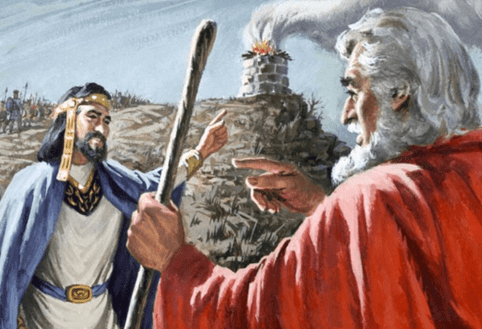
Another statement in the Mishnah says the Messiah would be revealed from the “Migdal Eder,” which translates as “tower of the flock.” It was a lookout tower that stood just outside the city within the Temple priests’ fields.

It was a shepherd-priest’s job to stay in the Migdal Eder all night. With the tower being so tall, the shepherd was literally “watching over the flock by night” (Luke 2:8) while the other shepherds were keeping watch on the ground.

The shepherd-priests stayed in the fields continually, yet their service to the Temple held great cultural and social significance. Even so, due to the nature of their duties, they were still dirty shepherds tending sheep.

And that is when the angels showed up with some very good news.Top of Form

Bottom of Form

Good Tidings of Great Joy

As the shepherds tended their duties, an angel from heaven appeared, saying, “Do not be afraid.” This was a typical greeting to people who initially felt alarmed at their appearance, most recently to Zacharias (1:13) and Mary (1:30). The angel heralded the birth of the Messiah; however, he also gave an update to Moses’ Law.

In beautiful brilliance, the angel hand-delivered a message, telling the shepherd-priests the time for animal sacrifice was nearly over. The Savior, Christ the Lord, had come to be the ultimate and universal sacrifice for sin.

“For there is born to you this day in the city of David a Savior, who is Christ the Lord.” Luke 2:11

Note the three titles the angel uses in the announcement—Savior, Christ, and Lord. This combination of titles is found only here in Luke 2 and nowhere else in the New Testament. Together, they declare Jesus’ deity, authority, mission, and royalty. To this point, only Caesar required being hailed as the Roman Empire’s savior and lord. However, the angel declared that Jesus is the true Savior and Lord.

The shepherd priests would have immediately understood the titles and their contrasting meanings. The appearance of God’s heavenly army singing praise would have further emphasized the enormity of the event.

The Christ, the promised Messiah, the one the priests had heard about from the prophets, the Savior of the world, was finally born. God had come to the earth to save His people, and He would now be the perfect sacrifice to pay for man’s sin once and for all through His death and resurrection.

The Messiah had come! It is little wonder these priests ran “with haste (v16)” to see the baby the angel spoke of.

The Swaddling Cloths

When the shepherd priests found Mary and Joseph with their new baby, they likely noticed Jesus wrapped in swaddling cloths just as the angel told them (v12). But these were not rags or towels Mary and Joseph brought from home or happened to find in the stable, as many suppose. These cloths were extraordinary.

The Greek word for swaddling cloths in Luke 2:7 is sparganoo (“spar-gan-o-o”), meaning “infant clothes.” It was not common for children of poor parents to have anything resembling a diaper or undergarments, leading some to believe that Joseph and Mary borrowed the cloths from someone wealthy, perhaps a Temple priest like Zacharias.

Although it is unknown where Mary and Joseph got the cloths, some scholars speculate that Zacharias and his wife, Elizabeth, Mary’s cousin, gave Mary cloths from the Temple when she visited them earlier in her pregnancy (Lk 1:39-40). Priests used the cloths to keep lambs free of blemishes as they prepared them for ceremonial sacrifice. As High Priest, Zacharias would have had access to them.

Cloths from the Temple symbolized Jesus’ holiness and God’s plan for Him to be the perfect sacrifice for sin. The shepherd-priests would have quickly noticed the allegory.

After the shepherds saw the Messiah with their own eyes, the Bible says they “returned, glorifying and praising God for all the things that they had heard and seen (v. 20).” Author Eugene Peterson wrote in his book, The Message, that the shepherds “let loose, glorifying and praising God,” a reasonable response after having a personal encounter with the Lord, knowing He has come to save us.

How wonderful it is that Jesus the Messiah has come! The perfect Lamb of God without blemish and sin has come to cover our sins with His righteousness so that we never have to be separated from the Father again.

May we all “let loose, glorifying and praising” Him for His indescribable gift.

 PRAYER: Father God, thank You for loving us and caring for us. Lord, we praise You for working out all the details to keep Mary, Joseph, and Baby Jesus safe and to bring special shepherds to share their joy. Help us to rejoice in the salvation Jesus has given to us. In the mighty and precious Name of King Jesus. Amen.

DECEMBER 23, 2025 WHAT’S SO IMPORTANT ABOUT BLOOD? #34 MARY PREGNANT?!?!?! WHAT MUST HER FAMILY THINK?

December 23, 2025

Matthew 1:18-25 The Birth of Jesus

18-19 The birth of Jesus took place like this. His mother, Mary, was engaged to be married to Joseph. Before they enjoyed their wedding night, Joseph discovered she was pregnant. (It was by the Holy Spirit, but he didn’t know that.) Joseph, chagrined but noble, determined to take care of things quietly so Mary would not be disgraced.

20-23 While he was trying to figure a way out, he had a dream. God’s angel spoke in the dream: “Joseph, son of David, don’t hesitate to get married. Mary’s pregnancy is Spirit-conceived. God’s Holy Spirit has made her pregnant. She will bring a son to birth, and when she does, you, Joseph, will name him Jesus—‘God saves’—because he will save his people from their sins.” This would bring the prophet’s embryonic revelation to full term:

Watch for this—a virgin will get pregnant and bear a son; they will name him Immanuel (Hebrew for “God is with us”).

24-25 Then Joseph woke up. He did exactly what God’s angel commanded in the dream: He married Mary. But he did not consummate the marriage until she had the baby. He named the baby Jesus.

If ever there was a juicy piece of gossip for the Nazareth busy bodies to sink their teeth into, this is it! Mary, the daughter of Anne, that paragon of virtue, that model daughter-sweet, biddable, hard-working, kind, loving Mary-is PREGNANT!!! This is scandalous! And what’s more, she claims she is still a virgin, that God has impregnated her…..wait for it…. to bear the Messiah! Well. The ladies at the well have heard all kinds of excuses throughout the years, but this is a new one.

While the ladies at the well are chortling over this revelation, let’s examine Jewish marriage customs in this age. David Guzik in his Enduring Word Commentary gives us the following information: “There were essentially three steps to marriage in the Jewish world of Jesus’ time.

· Engagement: This could happen when the bride and groom to be were quite young, and was often arranged by the parents.

· Betrothal: This made the previous engagement official and binding. During the time of betrothal the couple were known as husband and wife, and a betrothal could only be broken by divorce. Betrothal typically lasted a year. (The year of betrothal was used by both bride and groom to prepare everything they would need once they became a married couple; however, the bride and groom might not even see each other during that year, let alone have sex with each other.)

· Marriage: This took place after the wedding, after the year of betrothal.

 i. We should consider what a great trial this was for a godly young woman like Mary, and for Joseph her betrothed. “Her situation was the most distressing and humiliating that can be conceived. Nothing but the fullest consciousness of her own integrity, and the strongest confidence in God, could have supported her in such trying circumstances, where her reputation, her honour, and her life were at stake.” (Clarke)

ii. The truth of the supernatural conception of Jesus was disbelieved by many then and was later twisted into lies about the parentage of Jesus. References are made to these suspicions in passages like John 8:19 and 8:41. Lies spread that Mary had become pregnant from a Roman soldier. Here, Matthew set the story straight – both then and now.

iii. “There was no other way of his being born; for had he been of a sinful father, how should he have possessed a sinless nature? He is born of a woman, that he might be human; but not by man, that he might not be sinful.” (Spurgeon)

2. (19) Joseph seeks a quiet divorce.

Then Joseph her husband, being a just man, and not wanting to make her a public example, was minded to put her away secretly.

a. Joseph her husband: The previous verse told us that Mary was betrothed to Joseph. This comment shows that even though they were not formally married, Joseph was still considered Mary’s husband by betrothal.

b. Being a just man, and not wanting to make her a public example: Being a just man, Joseph knew that if Mary had been unfaithful to him, it would be impossible to go through with the marriage. Yet his nature as a just man also did not want to make this an unnecessary hardship or stigma upon Mary. Joseph made the understandable decision to seek a quiet divorce.

c. To put her away secretly: This refers to breaking an engagement by divorce. In Jewish culture of that time, a betrothal was binding and one needed a divorce to break the arrangement.

 Many times, we get so caught up in nativity scenes that we forget that Mary’s pregnancy begins by her becoming the talk of the village. Joseph was a wonderful young man; however, he was ready to find the kindest way to break the betrothal when God sent an angel to reassure him. Before things were through, Joseph would have to take Mary to Bethlehem, help deliver Mary’s baby, and then flee with his young family to Egypt, where they would live until King Herod died.

While we focus on Mary and Joseph, we should also remember their families. We know nothing about Joseph’s family apart from his genealogy; however, we do know that Mary’s mother’s name was Anne. For God to choose these two young people means that they were both exemplary individuals from equally exemplary families. How difficult it must have been for those families to face the gossips, the critics, and those envious of them! But we never hear anything about either family abandoning either Mary or Joseph. Once more, we see that God calls groups of people to sacrifice obediently, even when that means disgrace.

May God help us so that we will obey, even when obedience means public disgrace.

PRAYER:  Father God, thank You for loving us and caring for us. Lord, we thank You that Mary and Joseph and their families obeyed. Help us to follow closely after You, no matter what. In the mighty and precious Name of King Jesus. Amen.

DECEMBER 22, 2025 WHAT’S SO IMPORTANT ABOUT BLOOD? #33 SOMETIMES WE MUST ALLOW GOD TO USE US, EVEN IF IT MAKES US APPEAR RIDICULOUS PART 2

December 22, 2025

Isaiah 20:1-2   In the year the field commander, sent by King Sargon of Assyria, came to Ashdod and fought and took it, God told Isaiah son of Amoz, “Go, take off your clothes and sandals,” and Isaiah did it, going about naked and barefooted.

3-6 Then God said, “Just as my servant Isaiah has walked around town naked and barefooted for three years as a warning sign to Egypt and Ethiopia, so the king of Assyria is going to come and take the Egyptians as captives and the Ethiopians as exiles. He’ll take young and old alike and march them out of there naked and barefooted, exposed to mockery and jeers—the bared buttocks of Egypt on parade! Everyone who has put hope in Ethiopia and expected help from Egypt will be thrown into confusion. Everyone who lives along this coast will say, ‘Look at them! Naked and barefooted, shuffling off to exile! And we thought they were our best hope, that they’d rescue us from the king of Assyria. Now what’s going to happen to us? How are we going to get out of this?’”

In 711 B.C. the Assyrians captured the Philistine city of Ashdod on the coast of the Mediterranean Sea. To reach Ashdod, the Assyrian armies had to pass near or through Israel, leaving the Israelites shaking in their sandals and wondering when they would become the next Assyrian target. Naturally, the Israelites might begin searching for more powerful nations that could save them, such as Egypt or Ethiopia. That’s where this prophetic demonstration comes in.

Anybody who claims to be a prophet had better watch out! It’s great to swan around getting credit for things over which you really have no control, claiming that your prophecies have been fulfilled; however, true prophets sometimes suffer a lot. God wants the Israelites to realize that trusting Egypt and Ethiopia are worthless endeavors and that only He can save them.

God knows that the Israelites are thick-headed and rebellious once they fixate on something, so He instructs Isaiah to take off his outer garment and walk around barefooted wearing only his inner garment and a loin cloth for three years. Three years is long enough for Isaiah to walk through a good share of Israel, underscoring the futility of trusting in outside powers. Isaiah is appearing in public as if he were a captive of a foreign power. In those days, captives were forced to wear only their undergarments and go barefoot as a sign of complete subjugation and humiliation. Sometimes, a conquering army would even chop off the simple tunic to expose the captives’ buttocks and also shave half their beards.

2 Samuel 10:1-4 describes such treatment: “Some time after this, the king of the Ammonites died and Hanun, his son, succeeded him as king. David said, “I’d like to show some kindness to Hanun, the son of Nahash—treat him as well and as kindly as his father treated me.” So David sent Hanun condolences regarding his father.

But when David’s servants got to the land of the Ammonites, the Ammonite leaders warned Hanun, their head delegate, “Do you for a minute suppose that David is honoring your father by sending you comforters? Don’t you think it’s because he wants to snoop around the city and size it up that David has sent his emissaries to you?”

So Hanun seized David’s men, shaved off half their beards, cut off their robes halfway up their buttocks, and sent them packing.”

King David was only sending a delegation to sympathize with the Ammonite king on the death of his father, David’s friend. But King Hanun listened to short-sighted advisors who were likely doing everything they could to gain an early advantage with this new king. After all, what could be more dramatic than abusing some Israelite couriers? What began as an innocent diplomatic gesture wound up as a major insult to King David, the ruler of a neighboring power. David had to allow his emissaries to stay outside Jerusalem until their beards grew back.

The weather in Israel can bebitterly cold. Walking around barefoot and undressed sounds like an invitation to pneumonia. Some scholars think perhaps Isaiah only did this for part of the day; however, no matter how many hours Isaiah spent each day undressed like this, he would suffer.

During the Advent and Christmas season, we read the Messianic prophecies Isaiah has recorded and rejoice in them. At last count, there are at least 41 such prophecies. We read Isaiah’s description of his calling as a prophet in Isaiah 6 and marvel at the glorious description of God’s appearance to Isaiah. But it’s easy to ignore the humiliation and suffering Isaiah endured during his ministry of 55-60 years. And then Isaiah may have died as a martyr at the hands of wicked King Manasseh.

Gotquestions.org tells us: The Bible does not disclose how the prophet Isaiah died, but Hebrews 11 may offer a clue. This chapter, often referred to as the “hall of faith,” presents an extraordinary list of Old Testament champions of faith, including a description of several anonymous martyrs and persecuted saints. Hebrews 11:37 states, “Some died by stoning, some were sawed in half, and others were killed with the sword” (NLT). According to some extrabiblical sources, one of those unnamed persons sawed in half was Isaiah the prophet.

Isaiah, whose name means “the Lord is salvation,” is the masterful author of the book of Isaiah. His 55-to-60-year prophetic ministry presented the hope of salvation to the people of Judah in the reigns of the kings Jotham, Ahaz, and Hezekiah. Ancient Jewish-Christian tradition suggests that Isaiah was martyred by King Manasseh, son of Hezekiah. According to the tradition, Isaiah was tied inside a sack, placed within the hollow of a tree trunk, and then sawed in two. This story traces back to a first-century, noncanonical book called the Ascension of Isaiah, which claims to tell the story of Isaiah’s death.

Isaiah came from a prominent family in Jerusalem and was married with two children. So not only did Isaiah suffer humiliation and hardship, but his family did as well. Imagine the gossip at the local well when his wife was collecting water or the temple school attended by his children. And Isaiah’s two sons bore names of prophecy as well.

This Christmas, read as many of the Messianic prophecies in Isaiah as possible. https://www.preceptaustin.org/messianic-prophecies-in-isaiah has a complete list. But while you’re reading those prophecies, remember poor Isaiah walking around semi-naked and barefoot for three years. Remember Isaiah’s family. And remember that obedience is the best sacrifice and sometimes that obedience costs a great deal.

PRAYER: Father God, thank You for loving us and caring for us. Lord, help us to remain obedient, even when it costs us our social position or our reputation. In the mighty and precious Name of King Jesus. Amen.  

DECEMBER 21, 2025 WHAT’S SO IMPORTANT ABOUT BLOOD? #32 SOMETIMES WE MUST ALLOW GOD TO USE US, EVEN IF IT MAKES US APPEAR RIDICULOUS

December 21, 2025

Luke 1:5-7 During the rule of Herod, King of Judea, there was a priest assigned service in the regiment of Abijah. His name was Zachariah. His wife was descended from the daughters of Aaron. Her name was Elizabeth. Together they lived honorably before God, careful in keeping to the ways of the commandments and enjoying a clear conscience before God. But they were childless because Elizabeth could never conceive, and now they were quite old.

How old is “quite old?” Despite this description, Zachariah is still serving as a priest, indicating that he is less than 50 years of age, the age at which priests must stop serving. The main point here is that both Zachariah and Elizabeth “live honorably before God, keeping the commandments, and enjoying a clear conscience before God.” Elizabeth might be post-menopausal, which would definitely render any pregnancy miraculous.

8-12 It so happened that as Zachariah was carrying out his priestly duties before God, working the shift assigned to his regiment, it came his one turn in life to enter the sanctuary of God and burn incense. The congregation was gathered and praying outside the Temple at the hour of the incense offering. Unannounced, an angel of God appeared just to the right of the altar of incense. Zachariah was paralyzed in fear.

13-15 But the angel reassured him, “Don’t fear, Zachariah. Your prayer has been heard. Elizabeth, your wife, will bear a son by you. You are to name him John. You’re going to leap like a gazelle for joy, and not only you—many will delight in his birth. He’ll achieve great stature with God.

15-17 “He’ll drink neither wine nor beer. He’ll be filled with the Holy Spirit from the moment he leaves his mother’s womb. He will turn many sons and daughters of Israel back to their God. He will herald God’s arrival in the style and strength of Elijah, soften the hearts of parents to children, and kindle devout understanding among hardened skeptics—he’ll get the people ready for God.”

18 Zachariah said to the angel, “Do you expect me to believe this? I’m an old man and my wife is an old woman.”

19-20 But the angel said, “I am Gabriel, the sentinel of God, sent especially to bring you this glad news. But because you won’t believe me, you’ll be unable to say a word until the day of your son’s birth. Every word I’ve spoken to you will come true on time—God’s time.”

21-22 Meanwhile, the congregation waiting for Zachariah was getting restless, wondering what was keeping him so long in the sanctuary. When he came out and couldn’t speak, they knew he had seen a vision. He continued speechless and had to use sign language with the people.

23-25 When the course of his priestly assignment was completed, he went back home. It wasn’t long before his wife, Elizabeth, conceived. She went off by herself for five months, relishing her pregnancy. “So, this is how God acts to remedy my unfortunate condition!” she said.

When an angel appears to Zachariah while he’s serving in the temple, Zachariah is terrified and then astounded. The angel Gabriel announces that Zachariah and Elizabeth will have a son that will “herald God’s arrival in the style and strength of Elijah, soften the hearts of parents to children, and kindle devout understanding among hardened skeptics—he’ll get the people ready for God.”

Zachariah returns home to tell Elizabeth, who undoubtedly laughs quietly to herself. But when Elizabeth becomes pregnant, she withdraws for five months, partially to be sure she won’t miscarry.

Why is this story an example of someone yielding their bodies to God as living sacrifices? Consider the response of Zachariah and Elizabeth’s friends and family. While Elizabeth is thrilled, she might also be embarrassed. After all, Elizabeth must be in her 40’s and has responsibilities as a matron. Now where will Elizabeth go for comfort or fellowship? Many of the other mothers are so young that they could be Elizabeth’s daughters; what does she have in common with them? Will people make fun of Elizabeth? At least, Zachariah can bask in the admiration of his fellow priests. After years of shame for not fathering a child, now Zachariah can strut a bit. Of course, there is one small problem: Zachariah has been struck mute until the baby is born and receives the name of John.

Notice something: When the Angel Gabriel meets the Virgin Mary, Mary is given a chance to agree or to refuse. But with Zachariah and Elizabeth, God doesn’t give them a choice but simply a prediction. Why the difference?

 Zachariah and Elizabeth are one or two generations older than Mary, and are secure in their faith. God knows that if He orders something, this couple will obey promptly without arguing or questioning. Not only will this couple obey promptly, but they will also obey completely, raising John as a Nazarite, a rather unusual choice for a priestly family and one that might leave John’s parents open to criticism.

As we approach Christmas, we must ask ourselves this: How much of ourselves are we willing to give to God? If God asks us to do something, will we agree and obey swiftly and completely, particularly if we might wind up looking ridiculous?  May God help us to be obedient at all times!

PRAYER:  Father God, thank You for loving us and caring for us. Lord, help us to be open to Your leading, sensitive to Your Will, and obedient under all circumstances. In the mighty and precious Name of King Jesus. Amen.

DECEMBER 19, 2025 WHAT’S SO IMPORTANT ABOUT BLOOD? #30 SOME THINGS ARE SO PRECIOUS WE MUST OFFER THEM TO THE LORD

December 20, 2025

2 Samuel 23:8-17 This is the listing of David’s top men. Josheb-Basshebeth, the Tahkemonite. He was chief of the Three. He once put his spear to work against eight hundred—killed them all in a day.

9-10 Eleazar son of Dodai the Ahohite was the next of the elite Three. He was with David when the Philistines poked fun at them at Pas Dammim. When the Philistines drew up for battle, Israel retreated. But Eleazar stood his ground and killed Philistines right and left until he was exhausted—but he never let go of his sword! A big win for God that day. The army then rejoined Eleazar, but all there was left to do was the cleanup.

11-12 Shammah son of Agee the Hararite was the third of the Three. The Philistines had mustered for battle at Lehi, where there was a field full of lentils. Israel fled before the Philistines, but Shammah took his stand at the center of the field, successfully defended it, and routed the Philistines. Another great victory for God!

One day during harvest, the Three parted from the Thirty and joined David at the Cave of Adullam. A squad of Philistines had set up camp in the Valley of Rephaim. While David was holed up in the Cave, the Philistines had their base camp in Bethlehem. David had a sudden craving and said, “Would I ever like a drink of water from the well at the gate of Bethlehem!” So the Three penetrated the Philistine lines, drew water from the well at the gate of Bethlehem, and brought it back to David. But David wouldn’t drink it; he poured it out as an offering to God, saying, “There is no way, God, that I’ll drink this! This isn’t mere water, it’s their life-blood—they risked their very lives to bring it!” So David refused to drink it.

This story comes towards the end of David’s life when the writer of 2 Samuel is reflecting on David’s life and describing David’s mighty men. David’s top three soldiers are battle-hardened, as tough as the rocks, and ready for any challenge. These men also passionately love David as their fearless commander-in-chief and will do anything to protect or please him. Countless times, David has risked his life for the lives of his followers, and these men want to return the favor.

David is holed up in the Cave of Adullam, about 13 miles, or 25 kilometers southwest of his home town of Bethlehem. But the Philistines are headquartered in Bethlehem. After years of running, fighting, and hiding to fight again, David is sad, frustrated, and homesick. When are things going to get better? Will there ever be a time when David will not be fighting for his life? One of David’s top three hears David murmuring to himself about how much he would like a drink of water from the well at the gate of Bethlehem. Without waiting or debating, these three soldiers walk and run for three hours to reach Bethlehem. Then these men penetrate the Philistine lines, draw water from the well at the city gate, pouring it into a goat skin container, and run back to the Cave of Adullam.

When the three commanders present David with the water they have secured, David is both astounded and humbled. Never in David’s wildest dreams has he expected anyone to risk their lives in this fashion. Looking at the bright faces of his friends and brothers in battle, David begins to weep silently. This water is a gift beyond price, for these men have risked their lives to get it.

“Well, David,” one of the soldiers says, “go ahead! We’ve gotten this just for you. Is it true that this water tastes unusually good?” David looks at his friends through his tears. “Truly, I have always thought so. But this water is too precious to drink.”

“What do you mean?” the soldier asks.

“This water represents your life-blood,” David replies. “You’ve risked your very lives to bring it. For me to drink it would be sacrilege.” David embraces each of the three men and then returns to the water container. Opening the goatskin, David tips it so that the water begins to flow onto the ground. “The only fitting thing to do with this water is to pour it out as a drink offering,” David says. “For you have risked your lives to bring this water.”

When we consider the life of King David, we might think of his later failing with Bathsheba. But long before the Bathsheba incident, David was a leader who sincerely loved those serving with him, engendering deep loyalty. This story illustrates one of the reasons for that loyalty. At this point in David’s life, he possesses little apart from his weapons, his harp, and the clothes he is wearing. Sometimes feeding and watering an army presents severe challenges; yet, David doesn’t hesitate when offered the chance to satisfy a craving. Pouring that water out onto the ground is just as valid a sacrifice as if David had built an altar, slaughtered prime beasts, and had made a burnt offering.

This Christmas, are we giving ourselves or simply handing out meaningless tokens? Are we giving our time and our love? Most people are far more interested in time spent with them than they are fancy presents. And what are we giving God for Christmas? It’s easy to become so focused on getting things that we fail to understand what God wants from us. God wants our hearts, our minds, our total devotion to Him. God isn’t concerned about our financial status, our level of education, or any of the trappings of our lives.

When David poured out that water from the well at Bethlehem’s gate, he was sacrificing the most precious thing he owned. Are we so in love with God that we will willingly offer our most precious possessions? May God help us to realize that when we give Him something, we will receive far more than we have ever given. We cannot out-give God.

PRAYER: Father God, thank You for loving us and caring for us. Lord, here are our hearts. Please take our hearts and our lives and use us for Your glory. In the mighty and precious Name of King Jesus. Amen.

DECEMBER 19, 2025 WHAT’S SO IMPORTANT ABOUT BLOOD? #30 MINISTRY IS NOT A HALLMARK MOVIE! WOULD YOU DIE FOR YOUR FAITH?

December 19, 2025

1 Samuel 6:13 Now the people of Beth-shemesh were gathering in their wheat harvest in the valley, and they raised their eyes and saw the ark, and rejoiced at seeing it. 14 And the cart came into the field of Joshua the Beth-shemite and stopped there where there was a large stone; and they split the wood of the cart and offered the cows as a burnt offering to the Lord. 15 And the Levites took down the ark of the Lord and the saddlebag that was with it, in which were the articles of gold, and put them on the large stone; and the men of Beth-shemesh offered burnt offerings and sacrificed sacrifices that day to the Lord. 16 When the five governors of the Philistines saw it, they returned to Ekron that day.

These verses are a conclusion to a much larger story. When the prophet Samuel was a boy, the Israelites fought the Philistines. Thinking that bringing the Ark of the Covenant to the battle would bring victory, the Israelites insisted on removing it from the tabernacle. Thus, treating a holy object as if it were a fetish. The Philistines captured the Ark of the Covenant and defeated the Israelites. But the Philistines rapidly learned that the God of the Israelites was furious, for when the Philistines brought the Ark into the temple of Dagon, the statue of Dagon fell before the Ark, breaking off its head and the palms of its hands. Then bubonic plague broke out wherever the Ark was lodged.

In an attempt to rid themselves of curses from the Israelite God, the Philistines fabricated gold copies of the rats and the buboes from the plague, placing them in a bag, and putting the Ark on a cart along with the gold images. Because the Philistines weren’t completely sure if these problems were from God, they hitched two milk cows to the cart. The cows didn’t want to leave their calves; however, under the urging of God, the cows immediately began pulling the cart back towards the Israelite community of Beth-shemesh. As the cows pulled the cart, they lowed for their calves, but they continued to move toward Beth-shemesh.

When the Israelites saw the Ark approaching, they were thrilled! The Israelites immediately called the Levite priests who removed the Ark from the cart, placing it on a large rock. But what happened next? Did the Israelites make pets of the cows? Did they try to reunite the cows with their calves? No. The Israelites broke up the cart, placing the wood on a large stone, and then slaughtered the cows as a burnt offering to the Lord. The cows had done nothing wrong, but they were sacrificed anyway.

“OUCH!” you might say. “This is Christmastime and you are trying to depress us!” No. I am describing this scene of sacrifice because it’s Christmastime, and in many parts of the world, Christians are dying for their faith or are being thrown into prison and tortured. Persecution of Christians worldwide is increasing. In Africa, particularly northern Nigeria and Mozambique, Christians are being slaughtered in their churches as they worship. Some towns in northern Burkina Faso are turning into ghost towns because of Islamic terrorists.

Worldwide, more than 380 million Christians are facing persecution for their faith. Not only are believers being slaughtered in their churches, but others are being imprisoned and tortured, forced to watch as family members are tortured and killed. This link brings up a video: https://vimeo.com/1047127684?fl=pl&fe=cm

This link brings up the main page for Open Doors: https://www.opendoors.org/en-US/persecution/countries/

Many Americans are familiar with Hallmark Christmas movies. The general plot is that some man/woman with a high-powered job in the city is stranded in a small town over Christmas and winds up finding faith/love/family/true meaning of Christmas. What makes these movies so satisfying is that they have happy endings in which people are joyful and at peace. I know people who will binge-watch Hallmark movies for hours, and I say, “God bless ‘em!” There are also Christian novelists who write whole series of books with similar stories, and I am addicted to those stories. (I’m more a book person than a movie person.) Why do we find these movies and books so fulfilling? Much of the time, our lives do not resemble Hallmark movies. We love these stories because they give us hope, and hope is precious.

We work in a deprived area where many families depend on farming land with decreasing fertility and a worsening rainfall pattern. Children can come in with cerebral malaria and anemia and die as we are trying to treat them. Malnutrition is increasing. So far, things are peaceful in our area. But we are conscious that innocent believers are dying for their faith in neighboring countries.


In an earlier age, Tertullian wrote, “The blood of martyrs is the seed of the church.” “The second-century church father Tertullian lived in Carthage, North Africa, when persecution of Christians was at its apex. In those days, the blood of martyrs soaked the earth as believers were fed to the lions, beaten, whipped, sawed in half, put to death by sword, burned in the fire, and chained in prisons. Tertullian maintained that the more Christians were persecuted and “mown down,” the more they would multiply because “the blood of Christians is seed” (“The Apology,” Latin Christianity: Its Founder, Tertullian, Roberts, A., Donaldson, J., and Coxe, A. C., ed., Thelwall, S., trans., vol. 3, The Ante-Nicene Fathers, Christian Literature Company, 1885, p. 55).” https://www.gotquestions.org/blood-martyrs-seed-church.html

Writing to Timothy, Paul says, “For I am already being poured out like a drink offering, and the time for my departure is near.” (2 Timothy 4:6) Paul knew he was going to die at the hands of the Romans; it was only a question of the means by which he would die.

While there are charitable groups trying to minister to those under persecution, there are many faceless millions with no access to such groups. What can we do? We can PRAY!!! Pray to the God who keeps all His children in His heart! Pray for the safety of other believers! Pray for their health and well-being! Pray for God to keep and protect them! And pray that if martyrdom comes, they will stand firm.

There are all kinds of prayer guides for persecuted Christians available on the internet. Let us pray right now.

PRAYER: Father God, thank You for loving us and caring for us. Lord, we lift up believers throughout the world who are undergoing persecution. Please strengthen them, keep them safe, help them to remain faithful, and give them holy boldness so that they will be able to speak Your Word, even when facing death. Help those of us living in safer areas to pray fervently and faithfully, not fitfully. And guide us so that we will pray the prayers You want us to pray. In the mighty and precious Name of King Jesus. Amen.

DECEMBER 18, 2025 WHAT’S SO IMPORTANT ABOUT BLOOD? #29 PARTIAL OBEDIENCE IS FULL REBELLION AND SUCH SACRIFICES ARE WORTHLESS!  

December 18, 2025

1 Samuel 15:15 1-2 Samuel said to Saul, “God sent me to anoint you king over his people, Israel. Now, listen again to what God says. This is the God-of-the-Angel-Armies speaking:

2-3 “‘I’m about to get even with Amalek for ambushing Israel when Israel came up out of Egypt. Here’s what you are to do: Go to war against Amalek. Put everything connected with Amalek under a holy ban. And no exceptions! This is to be total destruction—men and women, children and infants, cattle and sheep, camels and donkeys—the works.’”

7-9 Then Saul went after Amalek, from the canyon all the way to Shur near the Egyptian border. He captured Agag, king of Amalek, alive. Everyone else was killed under the terms of the holy ban. Saul and the army made an exception for Agag, and for the choice sheep and cattle. They didn’t include them under the terms of the holy ban. But all the rest, which nobody wanted anyway, they destroyed as decreed by the holy ban.

10-11 Then God spoke to Samuel: “I’m sorry I ever made Saul king. He’s turned his back on me. He refuses to do what I tell him.”

11-12 Samuel was angry when he heard this. He prayed his anger and disappointment all through the night. He got up early in the morning to confront Saul but was told, “Saul’s gone. He went to Carmel to set up a victory monument in his own honor, and then was headed for Gilgal.”

By the time Samuel caught up with him, Saul had just finished an act of worship, having used Amalekite plunder for the burnt offerings sacrificed to God.

13 As Samuel came close, Saul called out, “God’s blessings on you! I accomplished God’s plan to the letter!”

14 Samuel said, “So what’s this I’m hearing—this bleating of sheep, this mooing of cattle?”

15 “Only some Amalekite loot,” said Saul. “The soldiers saved back a few of the choice cattle and sheep to offer up in sacrifice to God. But everything else we destroyed under the holy ban.”

16 “Enough!” interrupted Samuel. “Let me tell you what God told me last night.”

Saul said, “Go ahead. Tell me.”

17-19 And Samuel told him. “When you started out in this, you were nothing—and you knew it. Then God put you at the head of Israel—made you king over Israel. Then God sent you off to do a job for him, ordering you, ‘Go and put those sinners, the Amalekites, under a holy ban. Go to war against them until you have totally wiped them out.’ So why did you not obey God? Why did you grab all this loot? Why, with God’s eyes on you all the time, did you brazenly carry out this evil?”

20-21 Saul defended himself. “What are you talking about? I did obey God. I did the job God set for me. I brought in King Agag and destroyed the Amalekites under the terms of the holy ban. So the soldiers saved back a few choice sheep and cattle from the holy ban for sacrifice to God at Gilgal—what’s wrong with that?”

22-23 Then Samuel said, “Do you think all God wants are sacrifices—empty rituals just for show? He wants you to listen to him! Plain listening is the thing, not staging a lavish religious production. Not doing what God tells you is far worse than fooling around in the occult. Getting self-important around God is far worse than making deals with your dead ancestors. Because you said No to God’s command, he says No to your kingship.”

24-25 Saul gave in and confessed, “I’ve sinned. I’ve trampled roughshod over God’s Word and your instructions. I cared more about pleasing the people. I let them tell me what to do. Oh, absolve me of my sin! Take my hand and lead me to the altar so I can worship God!”

26 But Samuel refused: “No, I can’t come alongside you in this. You rejected God’s command. Now God has rejected you as king over Israel.”

27-29 As Samuel turned to leave, Saul grabbed at his priestly robe and a piece tore off. Samuel said, “God has just now torn the kingdom from you, and handed it over to your neighbor, a better man than you are. Israel’s God-of-Glory doesn’t deceive and he doesn’t dither. He says what he means and means what he says.”

30 Saul tried again, “I have sinned. But don’t abandon me! Support me with your presence before the leaders and the people. Come alongside me as I go back to worship God.”

31 Samuel did. He went back with him. And Saul dropped to his knees before God and worshiped.

32 Then Samuel said, “Present King Agag of Amalek to me.” Agag came, dragging his feet, muttering that he’d be better off dead.

33 Samuel said, “Just as your sword made many a woman childless, so your mother will be childless among those women!” And Samuel cut Agag down in the presence of God right there in Gilgal.

34-35 Samuel left immediately for Ramah and Saul went home to Gibeah. Samuel had nothing to do with Saul from then on, though he grieved long and deeply over him. But God was sorry he had ever made Saul king in the first place.

After the disastrous pseudo-sacrifice at Gilgal, God-and Samuel-are giving Saul one last chance to prove himself. Sadly, Saul is blowing it! God through Samuel orders Saul to completely wipe out the Amalekites. This fight is to be a scorched earth destruction with nothing left, no people, no animals, no loot, period. But Saul hasn’t learned anything from his last failure. Saul chooses to save the best animals and King Agag. Saul’s excuse is that he’s saving the best animals for sacrifices to God; surely Samuel can’t argue with that. And as for King Agag, perhaps Agag has confided in Saul that he has treasure hidden somewhere and Saul is hoping for a rich payday. Not only does Saul save some of the animals-and possibly some of the other loot as well-but he sets up a victory monument celebrating himself on Mount Carmel before heading east to Gilgal.

Samuel blasts Saul! 22-23 Then Samuel said, “Do you think all God wants are sacrifices—empty rituals just for show? He wants you to listen to him! Plain listening is the thing, not staging a lavish religious production. Not doing what God tells you is far worse than fooling around in the occult. Getting self-important around God is far worse than making deals with your dead ancestors. Because you said No to God’s command, he says No to your kingship.”

Even now, Saul still believes that if he can just get Samuel to pray over him, the situation will be saved. Saul begs Samuel to absolve him of his sin and lead him to worship God. But Saul isn’t really repenting; he’s simply hoping that Samuel can get him out of this mess. Eventually, Samuel does worship God with Saul, but Samuel is truly worshiping while Saul is simply going through the motions.

At the end of the story, both God and Samuel are grieving for having ever made Saul king. Samuel is grieving because he has obeyed God and has prayed for Saul; yet, Saul has failed miserably. God is grieving because Saul has had many opportunities to obey and has continued to make wrong choices. God might also be grieving because He knows what will happen to Saul’s son Jonathan, who is a better man than his father.  

Saul thinks he’s getting away with partial obedience by saving the choicest animals to sacrifice to the Lord. But those animals may have already been dedicated to the demons the Amalekites worship. Once more, we see that total obedience is the best gift we can give God. Partial obedience is rebellion, and rebellion amounts to witchcraft because when we rebel, we are trying to control things ourselves. Saul wants to believe that if the animals are handsome enough, God will overlook his disobedience. But Saul is trying to play games with the Creator of the universe, the One who has spoken everything into existence. God can create better animals than Saul has rescued from the Amalekites.

This Christmas, rather than staging lavish parties, or giving expensive gifts to people who might not care in the first place, why not do those things we know will please God? Feed the hungry. Clothe the poor. Embrace the outcasts. Care for the sick. Love your enemies.

PRAYER: Father God, thank You for loving us and caring for us. Lord, help us to obey instantly and completely. In the mighty and precious Name of King Jesus. Amen.

DECEMBER 17, 2025 WHAT’S SO IMPORTANT ABOUT BLOOD? #28 NO SACRIFICE COUNTS IF YOUR HEART ISN’T RIGHT

December 17, 2025

1 Samuel 13:13 Saul was a young man when he began as king. He was king over Israel for many years.

2 Saul conscripted enough men for three companies of soldiers. He kept two companies under his command at Micmash and in the Bethel hills. The other company was under Jonathan at Gibeah in Benjamin. He sent the rest of the men home.

3-4 Jonathan attacked and killed the Philistine governor stationed at Geba (Gibeah). When the Philistines heard the news, they raised the alarm: “The Hebrews are in revolt!” Saul ordered the reveille trumpets blown throughout the land. The word went out all over Israel, “Saul has killed the Philistine governor—drawn first blood! The Philistines are stirred up and mad as hornets!” Summoned, the army came to Saul at Gilgal.

5 The Philistines rallied their forces to fight Israel: three companies of chariots, six companies of cavalry, and so many infantry they looked like sand on the seashore. They went up into the hills and set up camp at Micmash, east of Beth Aven.

6-7 When the Israelites saw that they were way outnumbered and in deep trouble, they ran for cover, hiding in caves and pits, ravines and brambles and cisterns—wherever. They retreated across the Jordan River, refugees fleeing to the country of Gad and Gilead. But Saul held his ground in Gilgal, his soldiers still with him but scared to death.

8 He waited seven days, the time set by Samuel. Samuel failed to show up at Gilgal, and the soldiers were slipping away, right and left.

9-10 So Saul took charge: “Bring me the burnt offering and the peace offerings!” He went ahead and sacrificed the burnt offering. No sooner had he done it than Samuel showed up! Saul greeted him.

11-12 Samuel said, “What on earth are you doing?”

Saul answered, “When I saw I was losing my army from under me, and that you hadn’t come when you said you would, and that the Philistines were poised at Micmash, I said, ‘The Philistines are about to come down on me in Gilgal, and I haven’t yet come before God asking for his help.’ So I took things into my own hands, and sacrificed the burnt offering.”

13-14 “That was a fool thing to do,” Samuel said to Saul. “If you had kept the appointment that your God commanded, by now God would have set a firm and lasting foundation under your kingly rule over Israel. As it is, your kingly rule is already falling to pieces. God is out looking for your replacement right now. This time he’ll do the choosing. When he finds him, he’ll appoint him leader of his people. And all because you didn’t keep your appointment with God!”

King Saul is in trouble! The prophet Samuel has ordered Saul to wait at Gilgal for seven days so that Samuel will come and they will make sacrifices together. But Samuel is not appearing and Saul’s soldiers are slipping away as they look at the Philistine forces and become intimidated. Saul is frustrated and frightened. Besides, if Saul is king, why can’t he offer a sacrifice by himself? Why wait for Samuel? What makes Samuel so important? Why hasn’t Samuel come as he has promised?

Saul has never been noted for faith, restraint, or self-control, and today is no exception. In a panic, Saul proceeds to make the sacrifices himself. As soon as the last animal has been placed on the altar, Samuel walks up. Eugene Peterson’s Message translation likely describes the scene as it really takes place.

11-12 Samuel said, “What on earth are you doing?”

Saul answered, “When I saw I was losing my army from under me, and that you hadn’t come when you said you would, and that the Philistines were poised at Micmash, I said, ‘The Philistines are about to come down on me in Gilgal, and I haven’t yet come before God asking for his help.’ So I took things into my own hands, and sacrificed the burnt offering.”

13-14 “That was a fool thing to do,” Samuel said to Saul. “If you had kept the appointment that your God commanded, by now God would have set a firm and lasting foundation under your kingly rule over Israel. As it is, your kingly rule is already falling to pieces. God is out looking for your replacement right now. This time he’ll do the choosing. When he finds him, he’ll appoint him leader of his people. And all because you didn’t keep your appointment with God!”

Notice how Saul tries to guilt Samuel. “‘The Philistines are about to come down on me in Gilgal, and I haven’t yet come before God asking for his help.’ So I took things into my own hands, and sacrificed the burnt offering.” The unstated message here is simple: It’s all Samuel’s fault that Saul has had to make these sacrifices. Why hasn’t Samuel sent a messenger to indicate he’s coming?

What Saul fails to realize is that Samuel’s delay has been a test of Saul’s faith, and Saul has failed spectacularly. Had Saul waited until Samuel arrived, he would have proven himself suitable for remaining king, founding a dynasty, and leading the Israelites into a glorious future. But Saul has proven to be faithless and impulsive. Now God is already looking for Saul’s replacement.

Saul’s problem resembles that of Balak and Balaam: he views sacrifices as a form of sorcery, manipulating God to get desired results. Saul neither knows God nor respects Him. Samuel makes sacrifices to worship God because he loves, respects, and fears God. Until now, Samuel has had his doubts about Saul, and now those doubts are confirmed. Samuel must be grieving, for he can already see Saul’s eventual fall.

The tragedy of King Saul is simple: Saul’s heart is wrong, and no sacrifice will make up for that. As we continue through Advent, buying presents and possibly making donations to appeals such as the Salvation Army, we must examine our hearts. Are we doing these things as acts of worship or are we acting out of guilt or the desire to placate our consciences? May God help us so that we will worship Him no matter what we are doing.

PRAYER: Father God, thank You for loving us and caring for us. Lord, as Christmas approaches, let everything we do become an act of worship. In the mighty and precious Name of King Jesus. Amen.

IN PRAISE OF BARN CATS December 15, 2025

December 16, 2025

Recently, on Facebook, someone posted a short video of their father’s barn cat twining itself around his legs in a show of affection. The writer expressed amazement that a barn cat would behave in this fashion, amply demonstrating that a) this person knows next to nothing about barns and b) this person equally knows next to nothing about barn cats.

I was raised on an “Old McDonald” type farm in the 1950’s and 60’s. We had hogs, chickens, beef cattle, sheep, and milk cows. Whenever a farm had milk cows, there would be plenty of cats because they knew they could get a free meal twice a day.

Barn cats are a particular group all on their very own. There are cats who begin as barn cats and then move inside to become house cats, which is fine. Personally, I am an animal lover and as a child, I regularly smuggled kittens into my bed. But there are some cats that are pure barn cats, creatures that enjoy affection and being fed but for whom hunting and prowling are necessary for their well-being. These cats need to walk on the wild side.

The most outstanding of our barn cats was a calico named Mrs. Oliver, after Mrs. Oliver Nelson, the lady from whom we had gotten her as a kitten. Mrs. Oliver was a phenomenal huntress who thought nothing of attacking large rats. Mrs. Oliver had a wonderful disposition, as did many of her children, and we thoroughly enjoyed playing with them and petting them. We fed our cats table scraps and milk straight from the cow.

Once we sold most of our milk cows, we retained Elsie and Whiteface, milking them in a small byre that had an opening in the ceiling leading to the hayloft. When we finished milking a cow, we would always tip the bucket, pouring some milk into a pan sitting by for that purpose. Although the cats might sleep outside in the summer, in the wintertime, you could find them curled up in a bunch close to the opening to the haymow to catch the warm air coming from the cows. Cats have an incredible ability to find the most comfortable spot in which to sleep.

I have written about it somewhere else, but Elsie was the cow that didn’t panic when an orange tomcat attached himself to her left hind leg in an effort to get milk earlier than scheduled. I was milking Elsie by hand at the time, and Elsie looked at me as if to say, “Get that thing off me, why don’t you?” I obliged and the orange tomcat went sailing across the stall.

I loved all the kitties deeply, and I was heart-broken when my parents broke the news of Mrs. Oliver’s death while I was in college. It seemed Mrs. Oliver was up in our corncrib and brought down a rat nearly as big as she was. The rat died; however, Mrs. Oliver also died in the process, demonstrating the fierce spirit of a true barn cat.

The milk cows are gone, and so are the barn cats. But I am certain that wherever there are dairy cows, the cats are still keeping watch over the farm.

So, barn cats represent some of the best of their species-affectionate but also wild, soft and cuddly at times, but ferocious hunters when necessary. In an age when many people are adopting cats as fur babies, dressing them I am particularly drawn to barn cats, who might tolerate domestication but who will revert to the wild and the unpredictable.  

I firmly believe that God will redeem the creation and that we will see our beloved animals in heaven. And I look forward to that day when I hear a plaintive “Meow!” and Mrs. Oliver comes racing to me and I catch her up in my arms.

DECEMBER 16, 2025 WHAT’S SO IMPORTANT ABOUT BLOOD? #27 WHAT ABOUT LIVING SACRIFICES?

December 16, 2025

Numbers 27:Joshua

12-14 God said to Moses, “Climb up into the Abarim Mountains and look over at the land that I am giving to the People of Israel. When you’ve had a good look you’ll be joined to your ancestors in the grave—yes, you also along with Aaron your brother. This goes back to the day when the congregation quarreled in the Wilderness of Zin and you didn’t honor me in holy reverence before them in the matter of the waters, the Waters of Meribah (Quarreling) at Kadesh in the Wilderness of Zin.”

15-17 Moses responded to God: “Let God, the God of the spirits of everyone living, set a man over this community to lead them, to show the way ahead and bring them back home so God’s community will not be like sheep without a shepherd.”

18-21 God said to Moses, “Take Joshua the son of Nun—the Spirit is in him!—and place your hand on him. Stand him before Eleazar the priest in front of the entire congregation and commission him with everyone watching. Pass your magisterial authority over to him so that the whole congregation of the People of Israel will listen obediently to him. He is to consult with Eleazar the priest who, using the oracle-Urim, will prayerfully advise him in the presence of God. He will command the People of Israel, the entire community, in all their comings and goings.”

22-23 Moses followed God’s orders. He took Joshua and stood him before Eleazar the priest in front of the entire community. He laid his hands on him and commissioned him, following the procedures God had given Moses.

For 40 years, Joshua has followed Moses from Egypt, throughout the wilderness, and now to the edge of the Promised Land. Many times, when Moses has spent time with God in the tabernacle, Joshua has remained in the presence of God, even after Moses has returned to the camp. Joshua was one of the spies Moses sent to report on the Promised Land shortly after the Israelites had left Egypt. Moses has known for a long time that Joshua is the one who will lead the Israelites into Canaan.

You might ask why include Joshua in this study of blood sacrifices? After all, no blood is spilled during this ordination, unlike the ordination of priests where sacrificial blood is used to anoint the new priest’s right ear, thumb, and right big toe. But there are all kinds of sacrifices, many of which do not involve slaughtering animals. Here, Joshua is offering himself as a living sacrifice. What does that mean?

Romans 12:1-2 12 So here’s what I want you to do, God helping you: Take your everyday, ordinary life—your sleeping, eating, going-to-work, and walking-around life—and place it before God as an offering. Embracing what God does for you is the best thing you can do for him. Don’t become so well-adjusted to your culture that you fit into it without even thinking. Instead, fix your attention on God. You’ll be changed from the inside out. Readily recognize what he wants from you, and quickly respond to it. Unlike the culture around you, always dragging you down to its level of immaturity, God brings the best out of you, develops well-formed maturity in you.”

Once Moses lays hands on Joshua, Joshua will begin assuming increasing amounts of leadership. Forget family life, friendships, or even free time; Joshua must place God’s Will above everything else in his life. And this commitment will last for the rest of Joshua’s life.

While we generally focus all our attention on Joshua, think about what this commitment means for Joshua’s family. By now, Joshua must be at least 60 years old. It’s likely that Joshua has several children, some of whom might already be married. Joshua’s wife or wives must share him with all the Israelites, especially the leaders. Joshua must respond to crises at any time. Meals, sleep, other family activities-everything can be interrupted at any moment. In such circumstances, it’s easy to become emotionally and physically exhausted.

I have spent at least 15 years as the only doctor at rural mission hospitals in northern Ghana. After years on constant call, I have felt as if I am not really sleeping but that my body is hovering six inches above the bed. The perpetual stress is wearing. After such experiences, I can definitely sympathize with Joshua and Moses!

As we go through this Advent season, many of us may be struggling with financial constraints. There’s a meme that says, “The first Christmas was simple. Yours can be also.” Many families are finding that the most important gifts anyone can give are time and presence. In essence, we should make living sacrifices of ourselves to those around us. Elderly parents, distracted and stressed kids, friends facing holidays after bereavements-all these people need time and presence, and those things are priceless. May God help us to see the needs of those around us, so that we will respond to those needs, blessing them as we do so.

PRAYER: Father God, thank You for loving us and caring for us. Lord, please open our eyes, our minds, and our hearts so we will serve those around us with our time and our presence. In the mighty and precious Name of King Jesus. Amen.