
Genesis 14:14-16 When Abram learned that Lot had been captured, he called together the men born into his household, 318 of them in all, and chased after the retiring army as far as Dan. He divided his men and attacked during the night from several directions, and pursued the fleeing army to Hobah, north of Damascus, and recovered everything—the loot that had been taken, his relative Lot, and all of Lot’s possessions, including the women and other captives.
17-18 As Abram returned from his strike against Chedorlaomer and the other kings at the valley of Shaveh (later called King’s Valley), the king of Sodom came out to meet him, and Melchizedek, the king of Salem (Jerusalem), who was a priest of the God of Highest Heaven, brought him bread and wine.
19-20 Then Melchizedek blessed Abram with this blessing: “The blessing of the supreme God, Creator of heaven and earth, be upon you, Abram; and blessed be God, who has delivered your enemies over to you.” Then Abram gave Melchizedek a tenth of all the loot.
21-24 The king of Sodom told him, “Just give me back my people who were captured; keep for yourself the booty stolen from my city.”
But Abram replied, “I have solemnly promised Jehovah, the supreme God, Creator of heaven and earth, that I will not take so much as a single thread from you, lest you say, ‘Abram is rich because of what I gave him!’ All I’ll accept is what these young men of mine have eaten; but give a share of the loot to Aner, Eshcol, and Mamre, my allies.”
Abraham has really been through it! No thanks to Lot insisting on living close to Sodom, Lot and his family have become hostages of war when the king of Sodom and several other kings rebel against Chedorlaomer and his allies. Here, Abram demonstrates his innate ability as a military commander by sending 318 men out against several much larger armies, attacking them at night, and recovering all the people and the loot.
As Abram returns, he is met by two different kings, Melchizedek, the priest of the God of Highest Heaven, and the king of Sodom. Melchizedek meets Abram with bread and wine as signs of welcome and worship. Melchizedek utters a holy blessings of God over Abram, and Abram responds by giving Melchizedek a tenth of all the loot as an offering. Abram is basking in the comfort of this blessing.
Now, the king of Sodom shows up. But unlike Melchizedek, the king of Sodom is worshiping different gods. While it’s likely the citizens of Sodom worship fertility goddesses such as Ashtar, they worship other gods that encourage flagrant sexual misconduct and even mistreatment of strangers, something that is a gross violation of tradition throughout most parts of the world. We know these facts because later, in Genesis 19, when two angels visit Sodom, the men of Sodom demand that Lot allow them to gang rape his visitors.
The king of Sodom is offering comfort; however, his comfort is undoubtedly an attempt to manipulate Abram. If the king of Sodom can just entice Abram into collecting all the loot, Abram will be indebted to the king, a debt on which the king can collect at any moment. Abram fully realizes the king’s motives and wants no part of them. Perhaps Abram already knows the nature of the people of Sodom and has even tried to warn Lot as Lot moves ever closer to Sodom. Abram refuses to collect any of the loot from Sodom, apart from the portions for the three Amorite leaders who have accompanied him.
Abram makes a wise and holy choice, seeking virtuous comfort, and God blesses him for it. But where do we find comfort? When we are stressed/tired/unhappy/depressed/discouraged /lonely, what comforts us?
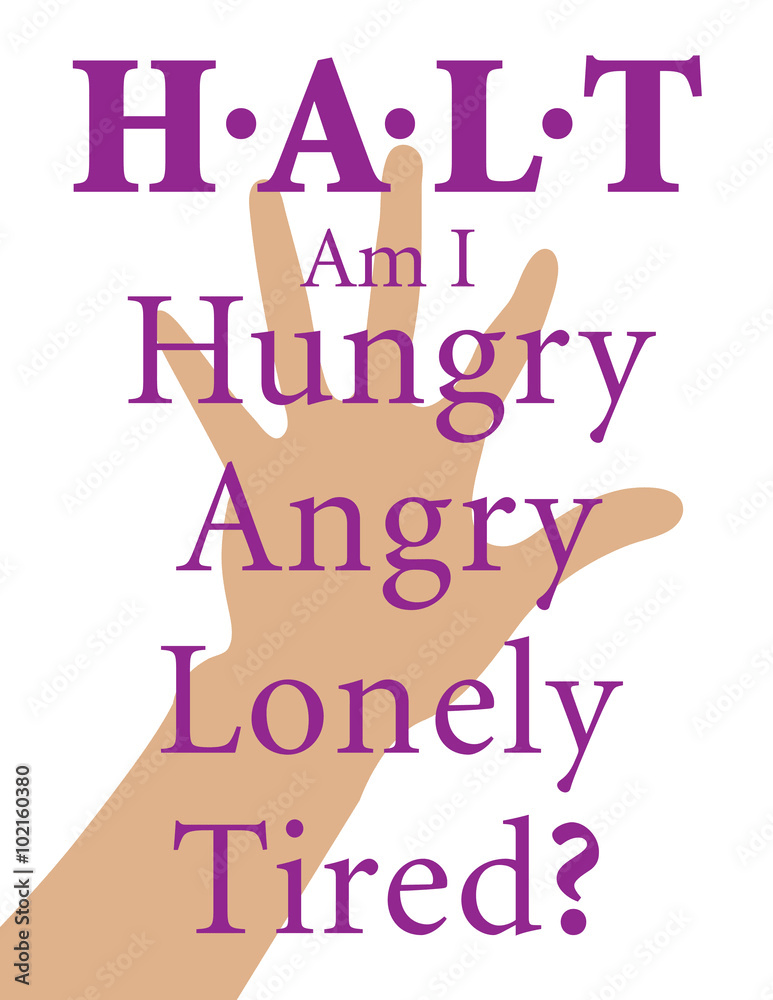
Recovery workers are familiar with the HALT acronym. “The HALT acronym stands for Hungry, Angry, Lonely, and Tired. It’s a simple but effective tool used in recovery to remind a person to pause and assess their emotional and physical before making important decisions or reacting to situations. By addressing these four states, they can avoid impulsive actions that result in self-harming behaviors and take better care of themselves.
Hungry
When someone is in the “Hungry” state within the HALT acronym, they may be experiencing feelings of low energy, irritability, and difficulty concentrating due to insufficient nourishment. Hunger can lead to emotional imbalances, affecting one’s mood and decision-making. Proper nutrition is often underrated in mental health. It is vital for maintaining stable emotions and mental clarity. Ignoring hunger can exacerbate stress and anxiety, making it essential to prioritize regular, balanced meals and snacks to support overall well-being and emotional equilibrium.
Angry
The “Angry” state in the HALT acronym refers to the emotion of anger and its associated impacts. When someone is feeling angry, they may experience heightened frustration, resentment, and hostility. This emotional state can cloud judgment and lead to impulsive, regrettable actions. Uncontrolled anger can strain relationships and escalate conflicts.
Recognizing anger as a risk state allows individuals to take a step back, practice deep breathing, and employ healthy coping mechanisms to manage and diffuse this intense emotion effectively. Addressing the root causes of anger and seeking constructive ways to express it can lead to better emotional regulation and improved overall well-being.
Lonely
The “Lonely” state within the HALT acronym encompasses feelings of isolation and disconnection from others. It can lead to emotional distress, sadness, and a sense of emptiness. Prolonged loneliness can have adverse effects on mental health, contributing to depression and anxiety.
Recognizing loneliness as a risk state allows individuals to seek social connections, reach out to friends or family, and engage in activities that foster a sense of belonging. Prioritizing social support and meaningful relationships can help combat loneliness and promote emotional well-being. Additionally, practicing self-compassion and self-care can be beneficial in addressing feelings of loneliness and cultivating a positive relationship with oneself.
Tired
The “Tired” state in the HALT acronym refers to physical and mental exhaustion. When someone is feeling tired, they may experience reduced focus, increased irritability, and diminished cognitive abilities. Fatigue can impair decision-making and lead to mistakes or accidents. Chronic tiredness can also impact emotional stability and overall mood, making individuals more vulnerable to stress and negative emotions.
Recognizing tiredness as a risk state allows individuals to prioritize rest and sleep, engage in relaxation techniques, and manage their energy levels effectively. Adequate rest and self-care are essential in replenishing energy reserves and supporting emotional well-being.
What Can HALT Be Used For?
The HALT skill, originally developed in the context of addiction recovery, is a powerful tool used to enhance self-awareness and emotional well-being. By recognizing the four states of HALT, individuals can respond to challenging situations in healthier ways. Over time, the HALT skill has evolved beyond addiction recovery and is now widely utilized in various contexts, such as eating disorder recovery and obsessive-compulsive disorder (OCD).1
” https://www.choosingtherapy.com/halt-acronym/
Why should believers be aware of HALT? Nobody wakes up one morning and says, “I’m choosing to be stressed or depressed.” Situations always develop gradually and sneak up on us. Before we realize it, we might be searching for quick comfort in wrong places. Blessedly, God has answers for all of our problems, if we will only look for His answers. We must continue to seek God’s will and God’s comfort. God’s answers work; other answers will never satisfy.
PRAYER: Father God, thank You for loving us and caring for us. Lord, help us to always look for the comfort only You can give. In the mighty and precious Name of King Jesus. Amen.
 Burunche's Blog
Leave a comment