Archive for February, 2026

FEBRUARY 28, 2026-GOD, ARE YOU REALLY CALLING ME? #28 A WORLD-CLASS SCHOLAR STOPS RUNNING FROM GOD

February 28, 2026

He had everything a young man could possibly want-great looks, a brilliant mind, parents willing to sacrifice for his first-class education, and unlimited opportunities. Yes, if anybody had it altogether, that man was Augustine. Aurelius Augustine was born in 354 at Tagaste, Algeria. He was the son of Patricius, a non-believer, and his devout Catholic wife, Monica. Augustine’s mother enrolled her son as a catechumen as a child. However, Augustine’s baptism was deferred to a later time in accordance with custom.

In his early years, Augustine possessed an inquisitive mind. He set his sights on a career that would bring him both wealth and fame. Augustine’s parents heartily endorsed their son’s career goals and wanted to provide their son with the best education.

Following his studies in Tagaste and later in Carthage, Tunisia, Augustine taught rhetoric. He first served as a teacher in his native town and later became a teacher in Rome and Milan.

Augustine traveled from city to city and encountered many opportunities and challenges along the way. He was also on a deep spiritual journey, searching for inner peace and lasting happiness.

Saint Augustine was called to Christianity in 386 AD through a profound spiritual crisis in a Milan garden, prompted by hearing a child’s voice chant “Tolle, lege” (“take up and read”). He opened a Bible to Romans 13:13-14, urging him to abandon sinful living for Christ, which immediately erased his doubts and led to his baptism by Bishop Ambrose. 

Key elements of his conversion included:

  • The “Tolle, Lege” Experience: In a garden, struggling with his immoral lifestyle, Augustine heard a child’s voice say “take up and read, take up and read” (Latin: Tolle, lege), which he interpreted as a divine command.
  • Scripture Passage: He opened to Romans 13:13-14, which reads, “…not in reveling and drunkenness, not in debauchery and licentiousness, not in quarreling and jealousy. Instead, put on the Lord Jesus Christ…”. This instantly filled him with peace and removed his hesitation.
  • Influence of St. Monica and St. Ambrose: His mother, Monica, prayed for his conversion for 17 years, and the preaching of Ambrose of Milan helped him intellectually overcome previous objections to Christianity.
  • Final Decision: Following this experience, he abandoned his career in rhetoric, left his mistress, and was baptized alongside his son, Adeodatus, and friend Alypius in 387 AD. 
  • In Tagaste, Augustine, Adeodatus, and several of their companions prayed, worked, and lived together in fellowship. They shared their insights about Scripture and the Christian vocation and learned from one another.
  • After three years, Augustine was called to become a priest while on a visit to the city of Hippo, about 50 miles from Tagaste. This was contrary to what Augustine might have chosen for himself, but he still chose to accept what he believed was God’s will for him.
  • In Hippo, Augustine established a monastic community that he directed while assisting the bishop, Valerius. Several years later, Augustine succeeded Valerius as head of the diocese.
  • Augustine was hesitant to move into the bishop’s house, since he did not want to disturb the peace of the monastic community. At this point, Augustine wrote his Rule for the community’s continued direction. He then established a third community for clerics in his new episcopal residence. Thus, from the time of his return to Tagaste until his death, Augustine resolutely opted for a monastic style of community life.
  • As bishop, Augustine found his desired life of contemplation and separation from worldly concerns. He focused on his many obligations as leader of the local Church and as a civil official. In addition to his pastoral duties within Hippo, Augustine traveled to church councils in the region of North Africa. He did so 40 to 50 times over the course of the 35 years he served as bishop. Augustine even made the nine-day journey to Carthage for meetings with other bishops about 30 times.
  • Augustine’s extensive travels were physically demanding, but they may be considered modest when they are compared to his writings and sermons. Over the course of Augustine’s lifetime, he wrote over 200 books and nearly 1,000 sermons, letters, and other works.

Eventually, Augustine died on August 28, 430 AD, at the age of 75 in Hippo Regius (modern-day Annaba, Algeria). He passed away from a fever during the siege of the city by the Vandals.

Scholar, teacher, prolific writer, developer of Church policies, founder of the Augustinian monastic order, and indefatigable defender of the faith, particularly his version of it-Saint Augustine packed more into one life than hundreds of people taken together might accomplish. But above all else, Augustine was brutally honest about his life before he accepted Christ, documenting his depredations and moral failures as part of his Confessions.  

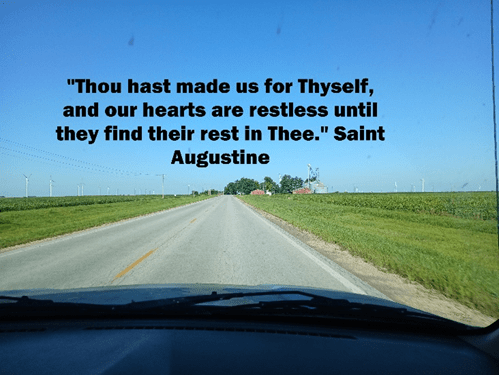
What can we learn from Saint Augustine? Anybody is raw material for sainthood. Augustine could have pursued a brilliant if morally flawed academic career; however, he turned away from a moral mess to wholeheartedly follow Jesus Christ. One of Augustine’s most memorable quotes, one that continues to resonate with many of us is this: Thou movest us to delight in praising Thee; for Thou hast formed us for Thyself, and our hearts are restless till they find rest in Thee. 

This is part of a larger prayer, one well worth studying and repeating. Lord, teach me to praise Thee. “Great art Thou, O Lord, and greatly to be praised; great is Thy power, and of Thy wisdom there is no end. And man, being a part of Thy creation, desires to praise Thee, man, who bears about with him his mortality, the witness of his sin, even the witness that Thou “resistest the proud, ” – yet man, this part of Thy creation, desires to praise Thee. Thou movest us to delight in praising Thee; for Thou hast formed us for Thyself, and our hearts are restless till they find rest in Thee. Lord, teach me to know and understand which of these should be first, to call on Thee, or to praise Thee; and likewise to know Thee, or to call upon Thee.

Oh! how shall I find rest in Thee? Who will send Thee into my heart to inebriate it, s that I may forget my woes, and embrace Thee my only good? What art Thou to me? Have compassion on me, that I may speak. What am I to Thee that Thou demandest my love, and unless I give it Thee art angry, and threatenest me with great sorrows? Is it, then, a light sorrow not to love Thee? Alas! alas! tell me of Thy compassion, O Lord my God, what Thou art to me. “Say unto my soul, I am thy salvation.” So speak that I may hear. Behold, Lord, the ears of my heart are before Thee; open Thou them, and “say unto my soul, I am thy salvation.” When I hear, may I run and lay hold on Thee. Hide not Thy face from me. Let me die, lest I die, if only I may see Thy face.St. Augustine of Hippo, Confessions, 1,1.5

Thou movest us to delight in praising Thee; for Thou hast formed us for Thyself, and our hearts are restless till they find rest in Thee. 

This is part of a larger prayer, one well worth studying and repeating. Lord, teach me to praise Thee. “Great art Thou, O Lord, and greatly to be praised; great is Thy power, and of Thy wisdom there is no end. And man, being a part of Thy creation, desires to praise Thee, man, who bears about with him his mortality, the witness of his sin, even the witness that Thou “resistest the proud, ” – yet man, this part of Thy creation, desires to praise Thee. Thou movest us to delight in praising Thee; for Thou hast formed us for Thyself, and our hearts are restless till they find rest in Thee. Lord, teach me to know and understand which of these should be first, to call on Thee, or to praise Thee; and likewise to know Thee, or to call upon Thee.

Oh! how shall I find rest in Thee? Who will send Thee into my heart to inebriate it, s that I may forget my woes, and embrace Thee my only good? What art Thou to me? Have compassion on me, that I may speak. What am I to Thee that Thou demandest my love, and unless I give it Thee art angry, and threatenest me with great sorrows? Is it, then, a light sorrow not to love Thee? Alas! alas! tell me of Thy compassion, O Lord my God, what Thou art to me. “Say unto my soul, I am thy salvation.” So speak that I may hear. Behold, Lord, the ears of my heart are before Thee; open Thou them, and “say unto my soul, I am thy salvation.” When I hear, may I run and lay hold on Thee. Hide not Thy face from me. Let me die, lest I die, if only I may see Thy face.St. Augustine of Hippo, Confessions, 1,1.5

PRAYER: Father God, thank You for loving us and caring for us. Lord, help us to truly find our rest in You, to fix our minds on You and to follow hard after You all the days of our lives. In the mighty and precious Name of King Jesus. Amen.
FEBRUARY 27, 2026-GOD, ARE YOU REALLY CALLING ME? #27 TRANSFORMED BY THE POWER OF GOD’S WORD!

February 27, 2026

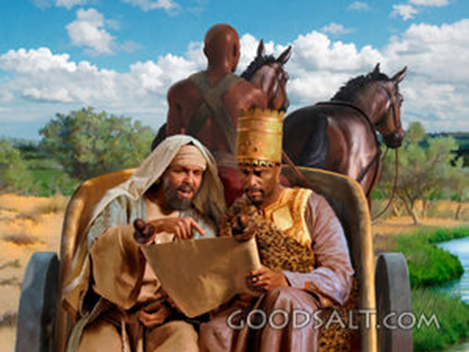
Acts 8:26-40 Now an angel of the Lord spoke to Philip, saying, “Arise and go toward the south along the road which goes down from Jerusalem to Gaza.” This is desert. So he arose and went. And behold, a man of Ethiopia, a eunuch of great authority under Candace the queen of the Ethiopians, who had charge of all her treasury, and had come to Jerusalem to worship, was returning. And sitting in his chariot, he was reading Isaiah the prophet. Then the Spirit said to Philip, “Go near and overtake this chariot.”

So Philip ran to him, and heard him reading the prophet Isaiah, and said, “Do you understand what you are reading?”

And he said, “How can I, unless someone guides me?” And he asked Philip to come up and sit with him. The place in the Scripture which he read was this:

“He was led as a sheep to the slaughter;
And as a lamb before its shearer is silent,
So He opened not His mouth.
In His humiliation His justice was taken away,
And who will declare His generation?
For His life is taken from the earth.”

So the eunuch answered Philip and said, “I ask you, of whom does the prophet say this, of himself or of some other man?” Then Philip opened his mouth, and beginning at this Scripture, preached Jesus to him. Now as they went down the road, they came to some water. And the eunuch said, “See, here is water. What hinders me from being baptized?”

Then Philip said, “If you believe with all your heart, you may.”

And he answered and said, “I believe that Jesus Christ is the Son of God.”

So he commanded the chariot to stand still. And both Philip and the eunuch went down into the water, and he baptized him. Now when they came up out of the water, the Spirit of the Lord caught Philip away, so that the eunuch saw him no more; and he went on his way rejoicing. But Philip was found at Azotus. And passing through, he preached in all the cities till he came to Caesarea.

When the disciples were choosing men to assist in the distribution of supplies to needy Greek Christians, Philip was one of those chosen along with Stephen who was later martyred. Now it was Philip’s turn to let God’s power shine through him.

When Philip got up that morning, the last thing he anticipated was that God would send him out into the desert along the road that goes from Jerusalem to Gaza. But Philip was obedient; if God wanted him to go into the desert, he was already on the way. And this order contained a divine appointment, for an upper-level Ethiopian official had just finished worshiping in Jerusalem and was returning to Ethiopia in his chariot. While Saul’s encounter with God on the road to Damascus was vividly dramatic, by contrast, this man’s encounter with God could not have been quieter, for he was convinced by reading the Book of Isaiah and listening to Philip’s explanation. This man’s biggest qualification to become a believer was the hunger for God in his heart, and that particular morning, God assigned Philip to assuage that hunger.

Timing is everything. Just as Philip appeared, the Ethiopian was reading a portion from Isaiah describing Messiah as the suffering servant. The Ethiopian read this, sighed, and wished someone would explain it to him. Suddenly, prodded by the Holy Spirit, Philip ran up to the chariot just in time to give the desired explanation.

Notice something: even though Philip and the Ethiopian were on a desert road, suddenly, just when it was needed, there was a handy pool of water in which Philip could baptize the Ethiopian. Few things are drier than the Judean desert, and few things are rarer than pools of water; yet, there was the water.

Saul of Tarsus was far more extensively acquainted with the Book of Isaiah than was the Ehiopian; yet, the Ethiopian believed once Philip explained things to him while it took a cataclysmic event to convert Saul. The difference was simple: humility. Saul was arrogant, a “Pharisee of the Pharisees,” certain that he was right and that he was doing God’s will, even though he was actually doing his will in God’s Name. The Ethiopian was a humble seeker after truth; therefore, he recognized truth when he heard it and readily believed in Jesus as Messiah.

John told the story of Jesus meeting a Samaritan woman at a well at noon, a time when she came to avoid scathing criticisms from self-righteous townspeople. Jesus told that lady, “God is Spirit, and those who worship Him must worship in spirit and truth.”  The Ethiopian worshiped in spirit and in truth and believed and was baptized straight away.

Psalm 95:7-11 tells us, “Today, if you will hear His voice: “Do not harden your hearts, as in the rebellion, as in the day of trial in the wilderness, when your fathers tested Me; they tried Me, though they saw My work. For forty years I was grieved with that generation, and said, ‘It is a people who go astray in their hearts, and they do not know My ways.’ So I swore in My wrath, ‘They shall not enter My rest.’”

2 Corinthians 6:1-2 We then, as workers together with Him also plead with you not to receive the grace of God in vain. For He says: “In an acceptable time I have heard you, and in the day of salvation I have helped you.” Behold, now is the accepted time; behold, now is the day of salvation.

The Ethiopian eunuch received Jesus as Savior and Lord, was baptized, and went on his way rejoicing. What about you? Do you honor Jesus as Savior and Lord and Messiah, or are you playing religious games, feeling that you are so special that God should send you a Damascus Road experience? God did what He had to is gain Saul’s attention; however, God honored the Ethiopian’s decision just as surely as He did Saul’s. Jesus told Thomas his disciple, “Thomas, because you have seen Me, you have believed. Blessed are those who have not seen and yet have believed.” (John 20:29)

When we repent and honor Jesus as Savior and Lord, all the saints and angels rejoice. Today, why not make that decision? Why not choose to follow Jesus, so that all of heaven will rejoice?

PRAYER: Father God, thank You for loving us and caring for us. Lord, we confess that we are sinners and that we cannot free ourselves from our sins. We thank You that because You have offered Yourself as the ultimate blood sacrifice, we can claim what You have done for us. Please cleanse us from our sins, forgive us, and help us to follow hard after You all the days of our lives so that we will spend eternity with You. In the mighty and precious Name of King Jesus. Amen.
FEBRUARY 26, 2026-GOD, ARE YOU REALLY CALLING ME? #26 GOD CALLS MURDERERS!

February 26, 2026

Acts 7:54-60 When they heard these things they were cut to the heart, and they gnashed at him with their teeth. But he, being full of the Holy Spirit, gazed into heaven and saw the glory of God, and Jesus standing at the right hand of God, and said, “Look! I see the heavens opened and the Son of Man standing at the right hand of God!”

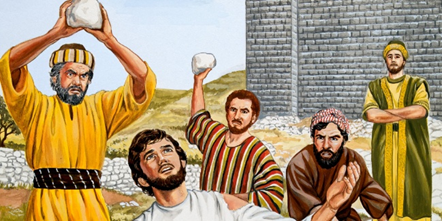
Then they cried out with a loud voice, stopped their ears, and ran at him with one accord; and they cast him out of the city and stoned him. And the witnesses laid down their clothes at the feet of a young man named Saul. And they stoned Stephen as he was calling on God and saying, “Lord Jesus, receive my spirit.” Then he knelt down and cried out with a loud voice, “Lord, do not charge them with this sin.” And when he had said this, he fell asleep.

Stephen never intended to become a martyr. Actually, Stephen’s assignment was to ensure that the Greeks receiving Jesus would not be neglected in the daily distributions of assistance to widows and orphans in the church. But as Stephen worked, signs and wonders followed him wherever he went, and Greeks from the Synagogue of the Freemen brought accusations against him. Stephen testified powerfully about Jesus, destroying all the arguments from his critics and humiliating them in the process. In a rage, Stephen’s accusers whipped up Jewish sentiment against him, inspiring the mob to stone him. And standing at one side, watching the pile of garments the mob had cast off in their haste, was a young scholar from the school of Gamaliel named Saul of Tarsus. Smugly, Saul watched, certain that such a fate was all these upstart followers of a renegade Jewish carpenter deserved. Certainly, he would do his part to stamp out this new sect, even if it meant murder. Of course, God would approve of such deeds!

Acts 8:1-3 Now Saul was consenting to his death.

At that time a great persecution arose against the church which was at Jerusalem; and they were all scattered throughout the regions of Judea and Samaria, except the apostles. And devout men carried Stephen to his burial, and made great lamentation over him.

As for Saul, he made havoc of the church, entering every house, and dragging off men and women, committing them to prison.

Acts 9:1-8 Then Saul, still breathing threats and murder against the disciples of the Lord, went to the high priest and asked letters from him to the synagogues of Damascus, so that if he found any who were of the Way, whether men or women, he might bring them bound to Jerusalem.

As he journeyed, he came near Damascus, and suddenly a light shone around him from heaven. Then he fell to the ground, and heard a voice saying to him, “Saul, Saul, why are you persecuting Me?”

And he said, “Who are You, Lord?”

Then the Lord said, “I am Jesus, whom you are persecuting. It is hard for you to kick against the goads.”

So he, trembling and astonished, said, “Lord, what do You want me to do?”

Then the Lord said to him, “Arise and go into the city, and you will be told what you must do.”

And the men who journeyed with him stood speechless, hearing a voice but seeing no one. Then Saul arose from the ground, and when his eyes were opened, he saw no one. But they led him by the hand and brought him into Damascus. And he was three days without sight, and neither ate nor drank.

Nothing in Saul’s life had prepared him for this experience! All Saul’s life he had lived as a Pharisee of the Pharisees, observing every jot and tittle of the Mosaic Law, studying the Law carefully, and persecuting anyone who refused to follow it minutely. Saul was a brilliant scholar, someone who could destroy any argument with a lifted eyebrow and a few choice words. Certainly, Saul was bound for religious greatness…or was he?

Ananias Baptizes Saul

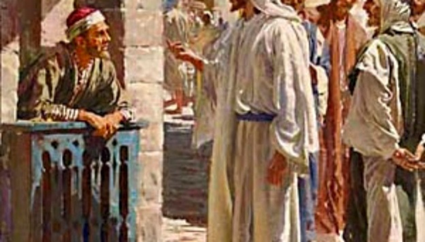
Acts 9:10-19 Now there was a certain disciple at Damascus named Ananias; and to him the Lord said in a vision, “Ananias.”

And he said, “Here I am, Lord.”

So the Lord said to him, “Arise and go to the street called Straight, and inquire at the house of Judas for one called Saul of Tarsus, for behold, he is praying. And in a vision, he has seen a man named Ananias coming in and putting his hand on him, so that he might receive his sight.”

Then Ananias answered, “Lord, I have heard from many about this man, how much harm he has done to Your saints in Jerusalem. And here he has authority from the chief priests to bind all who call on Your name.”

But the Lord said to him, “Go, for he is a chosen vessel of Mine to bear My name before Gentiles, kings, and the children of Israel. For I will show him how many things he must suffer for My name’s sake.”

And Ananias went his way and entered the house; and laying his hands on him he said, “Brother Saul, the Lord Jesus, who appeared to you on the road as you came, has sent me that you may receive your sight and be filled with the Holy Spirit.” Immediately there fell from his eyes something like scales, and he received his sight at once; and he arose and was baptized.

So when he had received food, he was strengthened. Then Saul spent some days with the disciples at Damascus.

Well! Nothing in Saul’s life up til then had prepared him to have someone whose religious qualifications he didn’t know laying hands on him and praying for him. But while Saul sat blind for those three days, God was working in his heart. A brilliant scholar, now Saul was sitting as God brought one scripture to mind after another. As God reminded Saul of His Word, Saul began to realize that he had made a horrible mistake. The Messiah for whom he claimed to long HAD come, and Messiah’s Name was Jesus of Nazareth. Saul had committed the worst sin possible, for he had rejected Messiah. By the time Ananias arrived at the house where Saul was staying, Saul was weeping silent tears of repentance, been cured of spiritual blindness. Now Saul was longing for the touch of Ananias’ hand to release him from his physical blindness, impatient to begin his new life.

Saul Preaches Christ

Acts 9:20-25 Immediately he preached the Christ in the synagogues, that He is the Son of God.

Then all who heard were amazed, and said, “Is this not he who destroyed those who called on this name in Jerusalem, and has come here for that purpose, so that he might bring them bound to the chief priests?”

But Saul increased all the more in strength, and confounded the Jews who dwelt in Damascus, proving that this Jesus is the Christ.

 Now after many days were past, the Jews plotted to kill him. But their plot became known to Saul. And they watched the gates day and night, to kill him. Then the disciples took him by night and let him down through the wall in a large basket.

Nobody had ever accused Saul of Tarsus of being lazy! As soon as Saul regained his sight, he marched into the nearest synagogue and began preaching that Jesus was the Christ, the long-awaited Messiah. Jewish religious leaders who had looked forward to Saul’s arrival now viewed him with consternation. Was this really the hot young religious zealot promised by the religious leaders in Jerusalem? True, this guy was brilliant; however, he was convincingly arguing that Messiah had come and his Name was Jesus of Nazareth! This transformation was an unmitigated disaster; best get rid of this man as soon as possible, for each time he spoke, more Jews were becoming convinced that Jesus was Messiah.

There’s an old story about a fellow who had a mule that needed to be trained. This mule owner engaged an expert trainer to help, and the first thing the trainer did when he arrived was to take a big stick and knock the mule up alongside the head!
“Why did you do that?” the mule owner asked. “Oh, that’s just to get his attention,” the trainer answered. When God struck Saul with blindness on the road to Damascus, that was the spiritual equivalent of knocking Saul up alongside the head with a big stick. Nothing less would have convinced Saul to change his mind and his heart. Even after the experience on the road, God still allowed Saul to endure 3 days of physical blindness so that he could consider how blind he had been spiritually.

Ever since Saul became Paul, people who have been dragging their feet about accepting Jesus as Lord have quoted Saul’s experience, as if they too would accept Jesus if God would demonstrate His power as He did for Saul. What specious nonsense! If such people believe in God sufficiently to demand an experience similar to Saul’s, they should be able to believe without being struck blind for three days. God’s calling is different for each individual, and the idea that God must do something dramatic before an individual will believe indicates the pride of the individual and a total lack of understanding of the nature of God. God is not a performing lion; He will not jump through hoops for the entertainment of crowds. To demand that God perform for us means that we are totally ignorant of the Nature of God or His attributes.

When God struck Saul blind, Saul had no way of knowing whether or not the blindness was temporary or permanent. It took three days for Saul to yield up his will to God, accepting whatever fate God might have in store for him, including permanent blindness. If someone is demanding God to perform to their standards, they will never accept his Lordship, for they will always find some new test.  

God knows each of us far better than we know ourselves. God is the One who calls, and at the end, the only thing that matters is this: Will we honor God and answer His call, or will we dishonor Him by demanding conditions?

PRAYER: Father God, thank You for loving us and caring for us. Lord, help all who read these words to realize that You are the One who calls, You are the One who sets conditions, and You are the One who knows the human heart. Help all who read these words to deal with You truly. In the mighty and precious Name of King Jesus. Amen.
FEBRUARY 25, 2026-GOD, ARE YOU REALLY CALLING ME? #25 GOD, YOU’RE CALLING WHOM???THAT GUY CAN’T POSSIBLY BECOME A DISCIPLE!

February 25, 2026

Luke 5:27-32 Later, as Jesus left the town, he saw a tax collector named Levi sitting at his tax collector’s booth. “Follow me and be my disciple,” Jesus said to him. So Levi got up, left everything, and followed him.

Later, Levi held a banquet in his home with Jesus as the guest of honor. Many of Levi’s fellow tax collectors and other guests also ate with them. But the Pharisees and their teachers of religious law complained bitterly to Jesus’ disciples, “Why do you eat and drink with such scum?”

Jesus answered them, “Healthy people don’t need a doctor—sick people do. I have come to call not those who think they are righteous, but those who know they are sinners and need to repent.”

It’s early morning in the town of Capernaum by the Sea of Galilee. Jesus is ambling down the main street, ostensibly entertaining himself by observing the bustle of roadside merchants, Roman soldiers, women hurrying to do their marketing, tradesmen plying their crafts. As far as those surrounding Jesus can tell, Jesus is simply amused by everything he sees, smiling and greeting people, waving at those at a distance. But Jesus has a purpose this morning; actually, he always has a purpose, something his followers are yet to realize. And this morning, the Holy Spirit is directing Jesus to a strange place, the tax collector’s office.

Nobody likes tax collectors! Tax collectors work for the hated Roman government but enrich themselves by padding people’s bills, inflating them to the advantage of the bill collector. The Pharisees, the professional religious people, scorn the tax collectors, even though some of these same men engage in sharp business practices every bit as heartless as the men whom they are mocking. Levi, son of Alphaeus is one of the tax collectors for Capernaum and has already opened his kiosk to take advantage of early morning business. Levi is well-educated; however, he comes from an impoverished family and has made up his mind that he will never be poor again. That resolve lasts right up until the moment that a shadow falls on Levi’s desk, and he looks up into the face of Jesus.

What does Levi see as he looks into that smiling face with those flashing dark eyes? Sure, Levi has heard about Jesus, who hasn’t? Being in the marketplace, Levi gets all the latest gossip and everybody is marveling over this former carpenter from Galilee who speaks about Yahweh as if he knows Him personally. But now there’s something compelling in those eyes, as if Jesus knows everything about Levi, the shame of poverty, the years of struggling, the scorn from Roman soldiers, the sting of continual rejection by religious leaders. Yes, Jesus sees everything about Levi and knows everything, and yet Jesus is gazing upon Levi as if Levi is a delightful close friend, a brother, and the very person Jesus has most wanted to meet on this bright sunny morning.

Levi is struck speechless, something that almost never happens. Normally, Levi is the one who can talk to anybody, convincing them to pay heavy taxes without clouting him. Now Levi feels as if his tongue is stuck to the roof of his mouth. And then Jesus speaks, “Follow me and be my disciple.” Without consciously thinking about it, Levi stands up, shutting the front of the kiosk. Levi gathers up his records and the money he’s collected, handing them to another one of the tax collectors, and then leaves to speak to Jesus.

“Lord,” Levi says hesitantly, “Would you be pleased to honor me with your presence at a noon meal at my home today?”

Jesus grins at Levi as if he’s simply been waiting for this invitation. “Absolutely, Levi! And be sure to invite your friends as well.”

Well! Levi has thrown dinner parties before, but today’s celebration will be the most important one of his life, as well as the last one he will ever put on. Luke tells the story, and you can imagine that he must have thoroughly interviewed Levi to gain this information.

Later, Levi held a banquet in his home with Jesus as the guest of honor. Many of Levi’s fellow tax collectors and other guests also ate with them. But the Pharisees and their teachers of religious law complained bitterly to Jesus’ disciples, “Why do you eat and drink with such scum?”

Jesus answered them, “Healthy people don’t need a doctor—sick people do. I have come to call not those who think they are righteous, but those who know they are sinners and need to repent.”

That bright morning in Capernaum marked a watershed in Levi’s life. Not only did Levi turn his back on his profession as a tax collector, but he even changed his name to Matthew. The name Levi means “joined, attached, or “united in harmony.” The name Matthew is derived from the Hebrew name  Matityahu, and means “Gift of Yahweh” or “Gift of God.” Matthew truly became a gift of God, for not only did he become one of the original twelve disciples, but he wrote the Gospel aimed most clearly at Jews interested in Jesus. Following Jesus’ crucifixion and resurrection, Matthew preached in Judea for fifteen years before preaching in Macedonia, Persia, Syria, and Ethiopia. In Ethiopia, Matthew converted and protected a woman named Ephigenia, who had consecrated herself to God. When King Hirtacus succeeded the previous king, he sought to marry her and, enraged by Matthew’s refusal, ordered his death. Matthew died from a stab wound in the back while leading a church service.

What could possibly cause a flint-hearted tax collector willing to crush poor people for money to abandon a luxurious home, a steady income, and a comfortable way of life to follow an itinerant preacher? Love! When Jesus looked at Matthew, the unconditional love of God poured from his eyes. Matthew suddenly felt he was in the presence of someone who knew everything about him, including murderous thoughts about his competitors and the Romans, and loved him anyway. That love was so compelling that nothing else mattered.

Later, Matthew might have compared experiences with Peter, Andrew, James, and John. And each one of them would say the same thing: that the love of God as embodied in Jesus Christ was worth any amount of suffering. Later Saint Paul would describe the love of God this way: “For the love of Christ compels us )2 Corinthians 5:14) That love would compel Matthew to write, describing the life of Jesus. That love would drive Matthew to walk all over Judea, preaching. And eventually, that love would compel Matthew to travel to other countries, eventually dying in Ethiopia.

What can we learn from the story of Matthew’s call? Once Jesus calls you, nothing is as important as following him. There’s an old Gospel song that Matthew would have approved of.

In fancy I stood by the shore, one day,
Of the beautiful murm’ring sea;
I saw the great crowds as they thronged the way
Of the Stranger of Galilee;
I saw how the man who was blind from birth,
In a moment was made to see;
The lame was made whole by the matchless skill
Of the Stranger of Galilee.

I heard Him speak peace to the angry waves,
Of that turbulent, raging sea;
And lo! at His word are the waters stilled,
This Stranger of Galilee;
A peaceful, a quiet, and holy calm,
Now and ever abides with me;
He holdeth my life in His mighty hands,
This Stranger of Galilee.

And I felt I could love Him forever,
So gracious and tender was He!
I claimed Him that day as my Savior,
This Stranger,
He’s no Stranger,
But the Savior of Galilee.

PRAYER: Father God, thank You for loving us and caring for us. Lord, please let everyone who reads these words experience Your compelling love. Let them realize that You see them as they are, but You love them anyway. In the mighty and precious Name of King Jesus. Amen.
FEBRUARY 24, 2026-GOD, ARE YOU REALLY CALLING ME? #24 WHEN GOD’S CALL IS SO COMPELLING THAT YOU DROP EVERYTHING

February 24, 2026

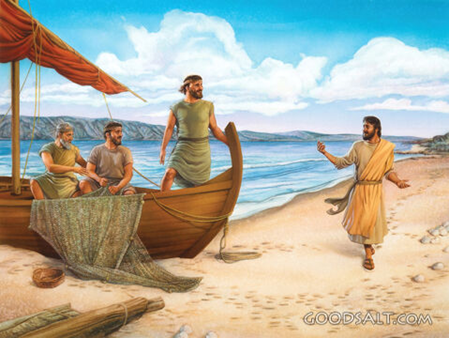
It all started because Jesus walked by the seaside early that morning. Those first disciples were about to get the shock of their lives. That morning, four fishermen were completing an unfulfilling night’s work and hoping for better things the next night. By evening of that same day, they had left their businesses and their families to follow Jesus. But the accounts differ.

Matthew 4:18-22 One day as Jesus was walking along the shore of the Sea of Galilee, he saw two brothers—Simon, also called Peter, and Andrew—throwing a net into the water, for they fished for a living. Jesus called out to them, “Come, follow me, and I will show you how to fish for people!” And they left their nets at once and followed him.

A little farther up the shore he saw two other brothers, James and John, sitting in a boat with their father, Zebedee, repairing their nets. And he called them to come, too. They immediately followed him, leaving the boat and their father behind.

Luke 5:1-11 One day as Jesus was preaching on the shore of the Sea of Galilee, great crowds pressed in on him to listen to the word of God. He noticed two empty boats at the water’s edge, for the fishermen had left them and were washing their nets. Stepping into one of the boats, Jesus asked Simon, its owner, to push it out into the water. So he sat in the boat and taught the crowds from there.

When he had finished speaking, he said to Simon, “Now go out where it is deeper, and let down your nets to catch some fish.”

“Master,” Simon replied, “we worked hard all last night and didn’t catch a thing. But if you say so, I’ll let the nets down again.” And this time their nets were so full of fish they began to tear! A shout for help brought their partners in the other boat, and soon both boats were filled with fish and on the verge of sinking.

When Simon Peter realized what had happened, he fell to his knees before Jesus and said, “Oh, Lord, please leave me—I’m such a sinful man.” For he was awestruck by the number of fish they had caught, as were the others with him. His partners, James and John, the sons of Zebedee, were also amazed.

Jesus replied to Simon, “Don’t be afraid! From now on you’ll be fishing for people!” And as soon as they landed, they left everything and followed Jesus.

John 1:35-51 The following day John was again standing with two of his disciples. As Jesus walked by, John looked at him and declared, “Look! There is the Lamb of God!” When John’s two disciples heard this, they followed Jesus.

Jesus looked around and saw them following. “What do you want?” he asked them.

They replied, “Rabbi” (which means “Teacher”), “where are you staying?”

“Come and see,” he said. It was about four o’clock in the afternoon when they went with him to the place where he was staying, and they remained with him the rest of the day.

Andrew, Simon Peter’s brother, was one of these men who heard what John said and then followed Jesus. Andrew went to find his brother, Simon, and told him, “We have found the Messiah” (which means “Christ”).

Then Andrew brought Simon to meet Jesus. Looking intently at Simon, Jesus said, “Your name is Simon, son of John—but you will be called Cephas” (which means “Peter”).

 Four different Gospel writers have four different accounts of Jesus calling his first disciples. I have omitted Mark’s account because it is so similar to that of Matthew. But which one is the correct account? The answer is all of them. John was a partner or at least a colleague of Andrew and Peter in the fishing business, so they likely told him the story of Andrew introducing Peter to Jesus. That doesn’t preclude Jesus later requesting Peter to push out from land so that Jesus could sit in Peter’s boat and preach without being trampled by the crowds. And if James and John were sitting repairing nets, they would certainly have responded eagerly to Peter’s frantic calls for help as his overburdened nets threatened to sink his boat.

How frequently do eyewitnesses agree? An AI internet search reveals the following: Eyewitnesses rarely agree on all the details of an event. Studies and legal experience show that when multiple people witness the same incident, they usually provide slightly different versions, largely due to variations in perspective, attention, memory, and cognitive filtering. 

Cold Case Christianity

Here is a breakdown of how many witnesses agree, based on psychological research and legal statistics:

  • Rare Absolute Agreement: It is almost unheard of for multiple witnesses to agree on every single detail, even in simple scenarios.
  • Contamination (71% Agreement): A major risk in multiple-witness scenarios is “co-witness contamination,” where witnesses discuss the event afterward. Research indicates that 71% of witnesses may change their accounts to include false information that their co-witnesses mentioned.
  • High Error Rate (1 in 3): The American Psychological Association estimates that roughly one in three (33%) eyewitnesses make an erroneous identification.
  • Multiple Wrong Witnesses (38% of Cases): In cases of wrongful conviction, studies have found that in 38% of cases, multiple eyewitnesses wrongly identified the same innocent person.
  • The “3-Witness Rule” (General Rule of Thumb): In practice, if three different witnesses tell the exact same, perfect story, it can actually be a sign of contamination or coaching, as normal human perception is too varied for perfect consensus. 

Cold Case Christianity +4

Factors Affecting Agreement:

  • Stress and Violence: High-stress events, such as violent crimes, lead to less accurate, inconsistent, and lower-quality recall.
  • Post-Event Discussion: 86% of eyewitnesses discuss the event with others, which can align their stories—but often by creating a shared false memory rather than confirming the truth.
  • Time and Memory Decay: Memory fades rapidly immediately following an event, causing more discrepancies as time passes. 

ScienceDirect.com +1

Conclusion:
While having multiple witnesses is generally better than one, it is normal and expected for them to disagree on specific details. When they do agree, it is sometimes due to memory contamination rather than accurate, independent recollection. 

So, four different writers vary in their descriptions, but the one salient fact is this: Jesus called four Galilean fishermen as his first disciples, and they left everything behind to follow him. If these men had regrets, they never spoke about it. There were some questions, though. When a rich young ruler turned away after Jesus advised him to sell everything and follow him, Peter spoke up. Peter said, “We’ve left our homes to follow you.”

“Yes,” Jesus replied, “and I assure you that everyone who has given up house or wife or brothers or parents or children, for the sake of the Kingdom of God, will be repaid many times over in this life, and will have eternal life in the world to come.” (Luke 18:28-30)

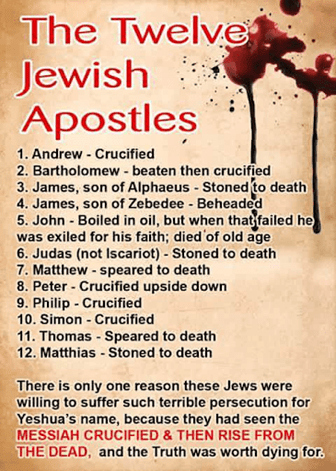
When Jesus spoke, these men heard God calling them so compulsively that they felt they must follow Jesus, even though it cost them everything-wealth, standing in the community, safety, and security. Eventually, eleven of the disciples died as martyrs while John was the only one to die of old age, and even he had been boiled in oil in an attempt to kill him.

What kept these men going? Why were they willing to commit so completely? Saint Paul would later give an answer in Romans 8:35-39. Can anything ever separate us from Christ’s love? Does it mean he no longer loves us if we have trouble or calamity, or are persecuted, or hungry, or destitute, or in danger, or threatened with death? (As the Scriptures say, “For your sake we are killed every day; we are being slaughtered like sheep.”) No, despite all these things, overwhelming victory is ours through Christ, who loved us.

And I am convinced that nothing can ever separate us from God’s love. Neither death nor life, neither angels nor demons, neither our fears for today nor our worries about tomorrow—not even the powers of hell can separate us from God’s love. No power in the sky above or in the earth below—indeed, nothing in all creation will ever be able to separate us from the love of God that is revealed in Christ Jesus our Lord.

Those fishermen followed Jesus and never looked back. If you could interview Andrew or Peter or James or John today, they would simply say, “It was worth it! We lost earth to gain heaven.” Today, what choice will you make? Will you follow Jesus, losing earth to gain heaven?

PRAYER: Father God, thank You for loving us and caring for us. Lord, please speak to the hearts of all who read these words, that they may know You as Savior and Lord. In the mighty and precious Name of King Jesus. Amen.
FEBRUARY 23, 2026-GOD, ARE YOU REALLY CALLING ME? #23 CHARIOTS OF FIRE!

February 23, 2026

1 Kings 19:15-21

Then the Lord told him, “Go back the same way you came, and travel to the wilderness of Damascus. When you arrive there, anoint Hazael to be king of Aram. Then anoint Jehu grandson of Nimshi to be king of Israel, and anoint Elisha son of Shaphat from the town of Abel-meholah to replace you as my prophet. Anyone who escapes from Hazael will be killed by Jehu, and those who escape Jehu will be killed by Elisha! Yet I will preserve 7,000 others in Israel who have never bowed down to Baal or kissed him!”

When Elijah fled from wicked Queen Jezebel, he wound up in a cave at Mount Horeb. There God encouraged Elijah and gave him specific orders to anoint three men to continue the work God had started through him. The first person Elijah anointed was Elisha the son of Shaphat, a wealthy landowner from the village of Abel-Meholah in the Jordan Valley. Elisha was to succeed Elijah in his prophetic ministry.

So Elijah went and found Elisha son of Shaphat plowing a field. There were twelve teams of oxen in the field, and Elisha was plowing with the twelfth team. Elijah went over to him and threw his cloak across his shoulders and then walked away. Elisha left the oxen standing there, ran after Elijah, and said to him, “First let me go and kiss my father and mother good-bye, and then I will go with you!”

Elijah replied, “Go on back, but think about what I have done to you.”

So Elisha returned to his oxen and slaughtered them. He used the wood from the plow to build a fire to roast their flesh. He passed around the meat to the townspeople, and they all ate. Then he went with Elijah as his assistant.

Elisha was working in the field when Elijah walked up and threw his cloak over Elisha’s shoulders. Elisha immediately slaughtered his oxen, fed the meat to the neighbors, bade farewell to his parents, and followed Elijah. But God was about to dramatically confirm Elisha’s call.

2 Kings 2:1-14 Elijah Is Taken into Heaven and Elisha Receives his Call from God

When the Lord was about to take Elijah up to heaven in a whirlwind, Elijah and Elisha were traveling from Gilgal. And Elijah said to Elisha, “Stay here, for the Lord has told me to go to Bethel.”

But Elisha replied, “As surely as the Lord lives and you yourself live, I will never leave you!” So they went down together to Bethel.

The group of prophets from Bethel came to Elisha and asked him, “Did you know that the Lord is going to take your master away from you today?”

“Of course I know,” Elisha answered. “But be quiet about it.”

Then Elijah said to Elisha, “Stay here, for the Lord has told me to go to Jericho.” But Elisha replied again, “As surely as the Lord lives and you yourself live, I will never leave you.” So they went on together to Jericho.

Then the group of prophets from Jericho came to Elisha and asked him, “Did you know that the Lord is going to take your master away from you today?”

“Of course I know,” Elisha answered. “But be quiet about it.”

Then Elijah said to Elisha, “Stay here, for the Lord has told me to go to the Jordan River.”

But again Elisha replied, “As surely as the Lord lives and you yourself live, I will never leave you.” So they went on together.

Fifty men from the group of prophets also went and watched from a distance as Elijah and Elisha stopped beside the Jordan River. Then Elijah folded his cloak together and struck the water with it. The river divided, and the two of them went across on dry ground! When they came to the other side, Elijah said to Elisha, “Tell me what I can do for you before I am taken away.”

And Elisha replied, “Please let me inherit a double share of your spirit and become your successor.”

“You have asked a difficult thing,” Elijah replied. “If you see me when I am taken from you, then you will get your request. But if not, then you won’t.”

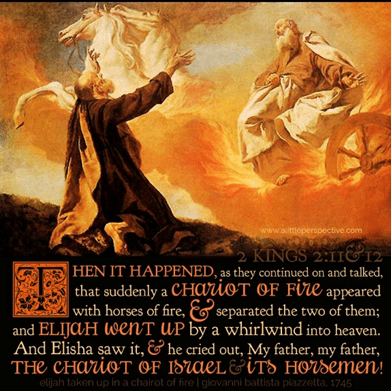
As they were walking along and talking, suddenly a chariot of fire appeared, drawn by horses of fire. It drove between the two men, separating them, and Elijah was carried by a whirlwind into heaven. Elisha saw it and cried out, “My father! My father! I see the chariots and charioteers of Israel!” And as they disappeared from sight, Elisha tore his clothes in distress.

Elisha picked up Elijah’s cloak, which had fallen when he was taken up. Then Elisha returned to the bank of the Jordan River. He struck the water with Elijah’s cloak and cried out, “Where is the Lord, the God of Elijah?” Then the river divided, and Elisha went across.

Elisha had one of the most dramatic calls recorded. First, Elijah threw his cloak over Elisha’s shoulders and then Elisha watched as Elijah was taken up into heaven in a fiery chariot. Elisha’s persistence earned him a double portion of Elijah’s spirit and anointing, setting him up for a magnificent future ministry.

One of the most important things Elisha did was to shadow Elijah, observing Elijah’s every move. From the day that Elijah threw his cloak over Elisha, Elisha copied Elijah’s prayer practices and his behavior as a prophet. Elisha’s humility and his servant’s heart gained him the spiritual power he desired.

What can we learn from Elisha’s call? First, ask God to show you the person whose ministry you are to study. Second, be humble and learn as much as possible. Third, keep praying! Even if you are learning from someone else, God will still give you your own ministry; God never does anything the same way twice. And finally, give God the chance to do miracles; after all, He’s the One who empowers us.

PRAYER: Father God, thank You for loving us and caring for us. Lord, help us to seek Your Will for our lives and to remain humble so that we can learn as much from fellow believers as possible. In the mighty and precious Name of King Jesus. Amen.
FEBRUARY 22, 2026-GOD, ARE YOU REALLY CALLING ME? #22 SOMETIMES GOD’S CALL COMES SUDDENLY

February 22, 2026

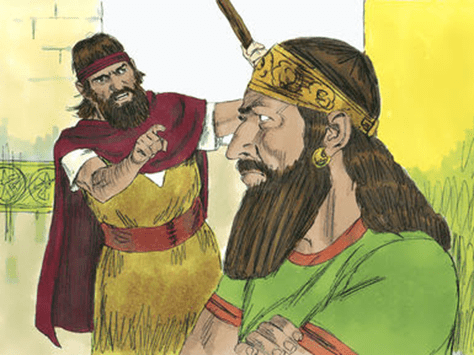
1 Kings 17:1 Now Elijah, who was from Tishbe in Gilead, told King Ahab, “As surely as the Lord, the God of Israel, lives—the God I serve—there will be no dew or rain during the next few years until I give the word!”

Here is what Encyclopedia Britannica tells us about Elijah and Ahab:

The Israelite king Omri had allied himself with the Phoenician cities of the coast, and his son Ahab was married to Jezebel, daughter of Ethbaal, king of Tyre and Sidon. Jezebel, with her Tyrian courtiers and a large contingent of pagan priests and prophets, propagated her native religion in a sanctuary built for Baal in the royal city of Samaria. This meant that the Israelites accepted Baal as well as Yahweh, putting Yahweh on a par with a nature-god whose supreme manifestations were the elements and biological fertility, celebrated often in an orgiastic cult. Jezebel’s policies intensified the gradual contamination of the religion of Yahweh by the Canaanite religion of Baal, a process made easier by the sapping of the Israelites’ faith in Yahweh.

 We never hear how God has called Elijah to prophesy; all we know is that Elijah appears suddenly, announcing to wicked King Ahab that there will be a drought lasting several years. This prophecy marks the beginning of one of the most amazing prophetic careers documented in the Bible. Elijah is such a towering figure spiritually that he appears with Moses, meeting with Jesus on the Mount of Transfiguration.

God appoints Elijah to be His voice at a time when Baal worship is sweeping the Northern Kingdom. After Elijah’s announcement of the drought, God hides him near a brook in a place called Kerith, assigning ravens to bring food until the brook dries up. Then sends him to Zarephath near the coast to a poor widow and her son who are nearly starving to death. God multiplies their food, preserving all of them until the time comes for Elijah to confront prophets of Baal on Mount Carmel. When the boy suddenly sickens and dies, Elijah raises him from the dead.

On Mount Carmel, Elijah confronts 450 prophets of Baal, decisively proving that Baal is no god while Yahweh is the One True Living God. 1 Kings 18:22-24 Then Elijah said to them, “I am the only prophet of the Lord who is left, but Baal has 450 prophets. Now bring two bulls. The prophets of Baal may choose whichever one they wish and cut it into pieces and lay it on the wood of their altar, but without setting fire to it. I will prepare the other bull and lay it on the wood on the altar but not set fire to it. Then call on the name of your god, and I will call on the name of the Lord. The god who answers by setting fire to the wood is the true God!” And all the people agreed.

Baal fails to respond, despite his prophets gashing themselves with knives and generally going crazy trying to elicit a response.

1 Kings 18:30-38 Then Elijah called to the people, “Come over here!” They all crowded around him as he repaired the altar of the Lord that had been torn down. He took twelve stones, one to represent each of the tribes of Israel, and he used the stones to rebuild the altar in the name of the Lord. Then he dug a trench around the altar large enough to hold about three gallons. He piled wood on the altar, cut the bull into pieces, and laid the pieces on the wood.

Then he said, “Fill four large jars with water, and pour the water over the offering and the wood.”

After they had done this, he said, “Do the same thing again!” And when they were finished, he said, “Now do it a third time!” So they did as he said, and the water ran around the altar and even filled the trench.

At the usual time for offering the evening sacrifice, Elijah the prophet walked up to the altar and prayed, “O Lord, God of Abraham, Isaac, and Jacob, prove today that you are God in Israel and that I am your servant. Prove that I have done all this at your command. O Lord, answer me! Answer me so these people will know that you, O Lord, are God and that you have brought them back to yourself.”

Immediately the fire of the Lord flashed down from heaven and burned up the young bull, the wood, the stones, and the dust. It even licked up all the water in the trench! And when all the people saw it, they fell face down on the ground and cried out, “The Lord—he is God! Yes, the Lord is God!”

When the Holy Spirit comes on Elijah, he performs miracles and confronts wicked rulers. Given the chance, most of us might be willing to perform miracles if we were assured that the miracles would take place; however, we would far rather let someone else handle dangerous confrontations. Why does God choose Elijah? We have no idea of Elijah’s appearance, whether he is tall, muscular, and handsome or short, squat, and cross-eyed. But God knows Elijah will obey Him diligently and consistently. Obedience is Elijah’s most important virtue. In the end, perhaps God calls Elijah because God knows Elijah will follow orders, something any of us can do is we only will.

Today, is God calling you to do something? You might feel a holy nudge, but because it’s something so small, you doubt whether or not that’s really God.

 In the early 1950s, an evangelist named Everett Swanson flew from Chicago to South Korea to speak, sing and play for the American troops. Everett came in contact with hundreds of orphans who lost their parents in the war and now lived on the street and were abandoned.

One morning, he saw some cleaning workers picking up piles of something that Everett thought was clothes rags in a truck. He curiously walked up to the truck to take a closer look and was completely terrified when he saw that the “heaps” were not just clothes rags but there were also frozen little bodies, children who died on the street during the night.

Swanson returned to the United States and at home, people started giving him donations to help the children who needed the most help. This was the start of a unique program that enabled people in the West to provide these Korean children with food, clothing, lodging, Bible teaching and medical assistance. Compassion started in 1952 and today we collaborate with more than 8,000 local churches in 29 countries, we help over 2.3 million sponsored children. https://www.compassionfi.fi/history/#:~:text=1952%20Compassion%20International%20is%20founded%20by%20evangelist,the%20plight%20of%20orphans%20in%20South%20Korea.

What began with one man’s shock and horror at the deaths of street children in war-torn South Korea became a huge movement, something beyond its founder’s wildest dreams. Everett Swanson was just a believer with a tender heart who saw needs. What might God do with you if you will let Him?

PRAYER: Father God, thank You for loving us and caring for us. Lord, some of us are feeling Your calling but we are terrified! Please speak to those fearful hearts and assure them that You are the One calling and the One responsible for results. In the mighty and precious Name of King Jesus. Amen.

FEBRUARY 21, 2026-GOD, ARE YOU REALLY CALLING ME? #21 YOU CAN RUN FROM GOD, BUT YOU CAN’T HIDE! JUST ASK JONAH!

February 21, 2026

Jonah 1:1-17Jonah Runs from the Lord

1 The Lord gave this message to Jonah son of Amittai: “Get up and go to the great city of Nineveh. Announce my judgment against it because I have seen how wicked its people are.”

But Jonah got up and went in the opposite direction to get away from the Lord. He went down to the port of Joppa, where he found a ship leaving for Tarshish. He bought a ticket and went on board, hoping to escape from the Lord by sailing to Tarshish (Spain).

But the Lord hurled a powerful wind over the sea, causing a violent storm that threatened to break the ship apart. Fearing for their lives, the desperate sailors shouted to their gods for help and threw the cargo overboard to lighten the ship.

But all this time Jonah was sound asleep down in the hold. So the captain went down after him. “How can you sleep at a time like this?” he shouted. “Get up and pray to your god! Maybe he will pay attention to us and spare our lives.”

Then the crew cast lots to see which of them had offended the gods and caused the terrible storm. When they did this, the lots identified Jonah as the culprit. “Why has this awful storm come down on us?” they demanded. “Who are you? What is your line of work? What country are you from? What is your nationality?”

Jonah answered, “I am a Hebrew, and I worship the Lord, the God of heaven, who made the sea and the land.”

The sailors were terrified when they heard this, for he had already told them he was running away from the Lord. “Oh, why did you do it?” they groaned. And since the storm was getting worse all the time, they asked him, “What should we do to you to stop this storm?”

“Throw me into the sea,” Jonah said, “and it will become calm again. I know that this terrible storm is all my fault.”

Instead, the sailors rowed even harder to get the ship to the land. But the stormy sea was too violent for them, and they couldn’t make it. Then they cried out to the Lord, Jonah’s God. “O Lord,” they pleaded, “don’t make us die for this man’s sin. And don’t hold us responsible for his death. O Lord, you have sent this storm upon him for your own good reasons.”

Then the sailors picked Jonah up and threw him into the raging sea, and the storm stopped at once! The sailors were awestruck by the Lord’s great power, and they offered him a sacrifice and vowed to serve him.

Now the Lord had arranged for a great fish to swallow Jonah. And Jonah was inside the fish for three days and three nights

“Nineveh? Lord, you want me to go WHERE?” At first when the call of God came, Jonah tried to ignore it, hoping God would call someone else or at least let him stay home and prophesy to the Israelites. Why should God care about the people of Nineveh? Those people were horrible idolaters, vicious warriors who would skin their captives alive while they screamed in agony. As far as Jonah was concerned, God could send fire and brimstone to consume Nineveh and Jonah would be thrilled. And the sooner, the better!

But the call wouldn’t go away. Each morning, Jonah would wake up, knowing that God wanted him to leave for Nineveh. While Jonah was trying to pray in the middle of the day, the Holy Spirit would keep pounding the word “Nineveh” into his mind and heart. It reached the point that Jonah could scarcely eat or sleep because God’s call bothered him so much. Finally, in desperation, Jonah booked a voyage on a ship to Tarshish, going in the opposite direction from Nineveh. Too bad Jonah was trying to run from the Creator of the earth, the One who controlled the weather. Once Jonah’s ship was out in the middle of the Mediterranean Sea, a vicious storm blew up. In a last-ditch effort to save the ship, the sailors began examining themselves to see which deity they might have offended, and that’s when Jonah revealed his rebellion against God. Realizing he was the cause of the storm, Jonah urged the sailors to throw him overboard. God appointed a large fish to swallow Jonah, and he survived the ordeal.

With nowhere else to go and nobody else to turn to, Jonah finally repented, chanting a song that sounds like one of the psalms and ending with these phrases: I sank down to the very roots of the mountains. I was imprisoned in the earth, whose gates lock shut forever. But you, O Lord my God, snatched me from the jaws of death! As my life was slipping away, I remembered the Lord. And my earnest prayer went out to you in your holy Temple. Those who worship false gods turn their backs on all God’s mercies. But I will offer sacrifices to you with songs of praise, and I will fulfill all my vows. For my salvation comes from the Lord alone.”

Then the Lord ordered the fish to spit Jonah out onto the beach. (Jonah 2:6-10)

So, Jonah trudged off to Nineveh. What must Jonah have looked like after three days of exposure to gastric juices? Certainly, his skin and hair might have been bleached. At any rate, Jonah preached, and Nineveh thoroughly and completely repented, infuriating Jonah. Even as Jonah was preaching, he was secretly hoping that nobody would repent and that God would destroy Nineveh while he watched and gloated. But God had compassion on the Ninevites and acknowledged their repentance. Finally, God asked Jonah, “But Nineveh has more than 120,000 people living in spiritual darkness, not to mention all the animals. Shouldn’t I feel sorry for such a great city?” (Jonah 4:11)

For my husband and me, Jonah’s story has special significance. In the fall of 1985, we found ourselves in a state of holy restlessness. Our lives were comfortable. I had completed pediatric surgery training and had taken a temporary job working in minor emergency clinics, doing general practice on a walk-in basis. My husband was working at a local ambulance service as an EMT. Everything was fine….only it wasn’t. Then one Sunday, our pastor preached a sermon on Jonah, stating that God would build His call into our lives, and we needed to see if there was anything God had given us that required our action. Earlier that week, my husband had seen a doctor friend who worked with one mission in Nigeria. The friend had sent us applications for his mission group; however, we had not done anything with those applications. Now we completed the applications and submitted them, subsequently interviewing with representatives from the group.

That first mission group refused to accept us because of doctrinal differences; however, God used that process to get us to begin exploring possibilities. Eventually, we connected with the group that sent us to Ghana, arriving in Ghana eighteen months later. That sermon helped launch a career in missions that has extended for nearly 38 years.

The message of Jonah’s call is simple: you can run but you can’t hide. When God calls you, He is relentless about it. Stifling the call will only result in misery. Today, is God calling you to do something? Pray and ask God to reveal His perfect Will, for God is a good Father and He does not play guessing games with his children.

PRAYER:  Father God, thank You for loving us and caring for us. Lord, help us to answer when You call, realizing that Your Will is best for our lives. In the mighty and precious Name of King Jesus. Amen.
FEBRUARY 20, 2026-GOD, ARE YOU REALLY CALLING ME? #20 BUT GOD, I’M JUST A SHEPHERD! LET ME STAY WITH THE SHEEP!

February 20, 2026

Amos 1: 1 The words of Amos, who was among the sheep breeders of Tekoa, which he saw concerning Israel in the days of Uzziah king of Judah, and in the days of Jeroboam the son of Joash, king of Israel, two years before the earthquake.

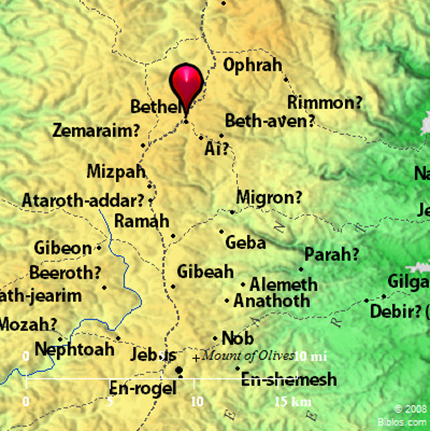
It’s the period between 760-755 B.C. Uzziah is king of Judah and Jeroboam II is king of Israel. Both nations are reveling in prosperity. Amos is quietly caring for sheep and sycamore trees in Tekoa, south of Jerusalem, when God suddenly calls him to prophesy. But God is calling Amos to prophesy to the Northern Kingdom, not to his own people. Why doesn’t God let Amos stay home? Centuries later, Jesus will give this insight: A prophet is not without honor, save in his own country. (Matthew 13:57, Mark 6:4) And God wants to use this sheep herder/sycamore tree farmer to shame and scandalize the religious professionals of the Northern Kingdom. Forget professional advertisers! God is the original Publicist, grabbing people’s attention by any means necessary. Making matters even worse, God has Amos prophesying against Bethel. Why?

When the ten tribes split off from Rehoboam, leaving only Judah and Benjamin, Jeroboam, the first ruler of the Northern Kingdom was terrified to have his people returning to Jerusalem regularly for worship as God had ordered. So Jeroboam erected two enormous altars with golden calves, one at Bethel and the other at Dan in the far northeast. Then Jeroboam convinced his people that there was no need for them to suffer that LOOOOOONG journey to Jerusalem when they could SIMPLY travel to Bethel or Dan and practice his pseudo religion. Now Jeroboam II is ruling the Northern Kingdom, and idolatry is rife. Most priests claiming to serve Yahweh are faking it, and Amaziah, the priest of Bethel, is one of the biggest fakers.

Amos 7:10-17 Then Amaziah the priest of Bethel sent to Jeroboam king of Israel, saying, “Amos has conspired against you in the midst of the house of Israel. The land is not able to bear all his words. For thus Amos has said: ‘Jeroboam shall die by the sword, and Israel shall surely be led away captive from their own land.’”

Then Amaziah said to Amos: “Go, you seer! Flee to the land of Judah. There eat bread, and there prophesy. But never again prophesy at Bethel, for it is the king’s sanctuary, and it is the royal residence.”

Then Amos answered, and said to Amaziah: “I was no prophet, nor was I a son of a prophet,
but I was a sheepbreeder and a tender of sycamore fruit. Then the Lord took me as I followed the flock, and the Lord said to me, ‘Go, prophesy to My people Israel.’

Now therefore, hear the word of the Lord: You say, ‘Do not prophesy against Israel, and do not spout against the house of Isaac.’

“Therefore, thus says the Lord: ‘Your wife shall be a harlot in the city; your sons and daughters shall fall by the sword; your land shall be divided by survey line; you shall die in a defiled land;
and Israel shall surely be led away captive from his own land.’”

OUCH! Amaziah, are you listening at all? Amaziah recognizes that Amos is a seer; however, he hopes that if he sends Amos packing, Amos will take all his gloomy prophecies with him. Sorry, Amaziah! It doesn’t work that way. Once more, we have the example of someone who was quietly working when God suddenly picked him, pulling him out of his comfortable rut and dropping him into a hostile environment.

Amos pronounces God’s judgement on numerous nations, including Judah. But why has God sent Amos to Israel? How bad have things gotten? Amos 2:6-16 gives us the answer:
Thus says the Lord: “For three transgressions of Israel, and for four, I will not turn away its punishment, because they sell the righteous for silver, and the poor for a pair of sandals.
They pant after the dust of the earth which is on the head of the poor, and pervert the way of the humble. A man and his father go in to the same girl, to defile My holy name.
They lie down by every altar on clothes taken in pledge and drink the wine of the condemned in the house of their god.

According to the Law of Moses, Israelites were not to sell other Israelites as slaves, nor were they to oppress the poor. In addition, clothes taken in pledge were to be returned to the owner each night so that he would not suffer from the cold by sleeping naked. Idol worship was expressly and repeatedly forbidden.

“Yet it was I who destroyed the Amorite before them, whose height was like the height of the cedars, and he was as strong as the oaks; yet I destroyed his fruit above and his roots beneath. Also, it was I who brought you up from the land of Egypt, and led you forty years through the wilderness, to possess the land of the Amorite.

I raised up some of your sons as prophets, and some of your young men as Nazirites. Is it not so, O you children of Israel?” Says the Lord.
“But you gave the Nazirites wine to drink, and commanded the prophets saying, ‘Do not prophesy!’

“Behold, I am weighed down by you, as a cart full of sheaves is weighed down. Therefore, flight shall perish from the swift, the strong shall not strengthen his power, nor shall the mighty deliver himself; he shall not stand who handles the bow, the swift of foot shall not escape, nor shall he who rides a horse deliver himself. The most courageous men of might shall flee naked in that day,” says the Lord.

Amaziah doesn’t know it, but eventually, the citizens of the Northern Kingdom will curse his name because he has interfered with God’s warnings to them. Galatians 6:7 tells us, “Don’t be misled—you cannot mock the justice of God. You will always harvest what you plant.”

What can we learn from Amos’ call? First, God is not impressed with our social standing or our education, or lack thereof. Further investigation indicates that Amos is likely a businessman owning a large number of sheep, some of which might have been bred for temple sacrifices in Jerusalem. Amos obviously is a true believer and a worshiper of the One True Living God and has a sound grasp of the fundamentals of the Mosaic Law.

Compare Amos’ story with that of Prophet William Wade Harris of Liberia in 1910 and Babalola of Nigeria in the 1930’s. A Methodist missionary taught William Wade Harris to read and write English and his Grebo language. After working on ships cruising along the West Coast of Africa, Harris returned home, becoming a brick mason and raising a family. But Harris later became an evangelist, preaching against fetish huts and other abuses, converting more than 100,000 people, and urging his converts to burn all their fetishes.

And then there’s Joseph Ayodele Bablola, the African Christian who sparked a massive, Pentecostal-style revival in West Africa—specifically Nigeria—in the 1930’s.

Known as a Prophet and Apostle, Babalola was a key figure in the Aladura Movement (meaning “praying people”), and his 1930 revival at Oke-Oye in Ilesa, Nigeria, is considered a landmark event in African Christianity. 

Key Details of the 1930s Revival:

  • The Catalyst (1928-1930): Babalola, formerly a steam roller driver for the Public Works Department, claimed a direct call from God in 1928 to abandon his job and preach.
  • Miracles and Healing: In September 1930, the revival began in earnest after Babalola was credited with raising a dead child. He became known for healing sicknesses, destroying idols, and using “life-giving water”.
  • Impact: The revival caused thousands to convert, drawing people from across Nigeria and neighboring countries, and resulted in the founding of the Christ Apostolic Church (CAC).
  • Spread: The revival movement spread from Ilesa to Ibadan, Lagos, and other regions, with some gatherings reportedly reaching 40,000 people.
  • Influence in Ghana: In 1936, Babalola carried this revival to the Gold Coast (now Ghana), following earlier, related movements. (This information comes from an internet search.)

God isn’t worried about our ability; He is more interested in our availability. Amos said “Yes” to God and wound up prophesying in the Northern Kingdom. Prophet Harris and Prophet Babalola said “Yes” to God and sparked revivals that changed the face of much of West Africa. What might God do with you if you say “Yes?”

PRAYER: Father God, thank You for loving us and caring for us. Lord, help us to say “Yes” to your call, no matter how difficult that might be. In the mighty and precious Name of King Jesus. Amen.
FEBRUARY 19, 2026-GOD, ARE YOU REALLY CALLING ME? #19 GOD, DO I REALLY HAVE TO GIVE SUCH BAD NEWS???

February 19, 2026

Actions have consequences! Repeatedly, God has warned the Israelites of the consequences if they renounce Him and worship idols. Deuteronomy 28:15-24 embodies one of those warnings.

Curses for Disobedience

15-24 “But if you refuse to listen to the Lord your God and do not obey all the commands and decrees I am giving you today, all these curses will come and overwhelm you: Your towns and your fields will be cursed. Your fruit baskets and breadboards will be cursed. Your children and your crops will be cursed. The offspring of your herds and flocks will be cursed. Wherever you go and whatever you do, you will be cursed.

“The Lord himself will send on you curses, confusion, and frustration in everything you do, until at last you are completely destroyed for doing evil and abandoning me. The Lord will afflict you with diseases until none of you are left in the land you are about to enter and occupy. The Lord will strike you with wasting diseases, fever, and inflammation, with scorching heat and drought, and with blight and mildew. These disasters will pursue you until you die. The skies above will be as unyielding as bronze, and the earth beneath will be as hard as iron. The Lord will change the rain that falls on your land into powder, and dust will pour down from the sky until you are destroyed.

Now it’s 835 B.C. Joel, “Yahweh is God,” son of Pethuel, from a priestly family in Jerusalem, finds himself in a dilemma. The Israelites have lusted after every pagan deity they can find, giving only lip service to the One True Living God who has delivered their ancestors out of slavery and has blessed their land abundantly. Actions do have consequences, and now the Israelites find that God means it when He warns about the curses in Deuteronomy 28. The land is under attack by several different kinds and sizes of locusts. In addition, a harsh drought further complicated by bush fires is also afflicting the land. As a worshiper of the true God, Joel is appalled at the lack of faith and excesses of his countrymen. Now Joel feels impelled to speak out against the evil he has witnessed, calling his people to account for their sins.

Joel 1:1-20 The Lord gave this message to Joel son of Pethuel.

Mourning over the Locust Plague

Hear this, you leaders of the people. Listen, all who live in the land. In all your history, has anything like this happened before? Tell your children about it in the years to come, and let your children tell their children. Pass the story down from generation to generation.
After the cutting locusts finished eating the crops, the swarming locusts took what was left!
After them came the hopping locusts, and then the stripping locusts, too!

Wake up, you drunkards, and weep! Wail, all you wine-drinkers! All the grapes are ruined, and all your sweet wine is gone. A vast army of locusts has invaded my land, a terrible army too numerous to count. Its teeth are like lions’ teeth, its fangs like those of a lioness.
It has destroyed my grapevines and ruined my fig trees, stripping their bark and destroying it,
leaving the branches white and bare.

Weep like a bride dressed in black, mourning the death of her husband. For there is no grain or wine to offer at the Temple of the Lord. So the priests are in mourning. The ministers of the Lord are weeping.

The fields are ruined, the land is stripped bare. The grain is destroyed, the grapes have shriveled, and the olive oil is gone. Despair, all you farmers! Wail, all you vine growers! Weep, because the wheat and barley—all the crops of the field—are ruined.
The grapevines have dried up, and the fig trees have withered. The pomegranate trees, palm trees, and apple trees—all the fruit trees—have dried up. And the people’s joy has dried up with them.

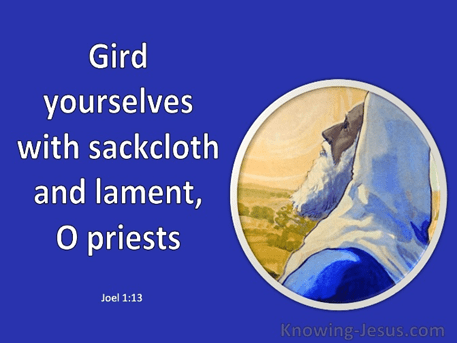
Dress yourselves in burlap and weep, you priests! Wail, you who serve before the altar! Come, spend the night in burlap, you ministers of my God. For there is no grain or wine to offer at the Temple of your God.
Announce a time of fasting; call the people together for a solemn meeting. Bring the leaders
and all the people of the land into the Temple of the Lord your God, and cry out to him there.
The day of the Lord is near, the day when destruction comes from the Almighty. How terrible that day will be!

Our food disappears before our very eyes. No joyful celebrations are held in the house of our God.
The seeds die in the parched ground, and the grain crops fail. The barns stand empty, and granaries are abandoned. How the animals moan with hunger! The herds of cattle wander about confused, because they have no pasture. The flocks of sheep and goats bleat in misery.

Lord, help us! The fire has consumed the wilderness pastures, and flames have burned up all the trees. Even the wild animals cry out to you because the streams have dried up, and fire has consumed the wilderness pastures.

Sometimes God’s calls are dramatic, as in the case of Ezekiel and Isaiah. But sometimes the message embodies the call, as in the case of Joel. It’s likely that as Joel prays several times daily, he begins receiving God’s warnings about the tragic events overtaking the land and God’s call to national repentance. Perhaps Joel first shares these insights with a few priestly friends, only to find himself proclaiming these messages in the outer courts of the temple. From there, Joel finds himself walking the streets of Jerusalem, crying out this message of the need for national repentance.

If you want to be popular, don’t become a prophet! Once God has hold of you, He won’t let go, and you will never be the same again. It’s likely that Joel has never sought the role of prophet, that he has been content to quietly worship God, remaining true while others slip away to fertility cult celebrations and demonic shrines. But the problem with worshiping God is that if you truly worship Him, you are giving Him permission to change your heart and your mind. We frequently fail to realize how the object of our worship will change and mold our hearts. Those worshiping demons will continue to progressively degenerate while those worshiping God will be transformed by His Holiness. God can never meet with sinful people and leave them unchanged.

Just look at Joel: Joel comes quietly into the temple one morning and leaves with a message that he feels impelled to proclaim. Jeremiah described the call of God as a fire burning in his bones, and now Joel feels that same fire.

How does Joel feel about being a prophet? Joel leaves no record about himself or his personal feelings; he only passes on the messages God has given him. An old poem speaks of those God has used as simply being suits of clothing that God puts on to accomplish His purposes. Blessedly, Joel will later give encouraging words. Joel 2:25 tells us, “The Lord says, “I will give you back what you lost to the swarming locusts, the hopping locusts, the stripping locusts, and the cutting locusts.Other older versions say, “I will restore to you the years that the swarming locust has eaten.”  Countless believers have claimed this promise of redemption and have seen God work mightily in their lives as they have seen marriages healed, relationships renewed, and lives completely transformed by the power of the One True Living God.

Joel 2:28-29 tells us, “And it shall come to pass afterward that I will pour out My Spirit on all flesh; your sons and your daughters shall prophesy, your old men shall dream dreams, your young men shall see visions. And also on My menservants and on My maidservants I will pour out My Spirit in those days.” This prophesy was fulfilled at the Day of Pentecost when the Holy Spirit descended on 120 people praying in the Upper Room in Jerusalem.

What can we learn from Joel? When we worship, God can shape us, making us into instruments for His purposes. The highly successful Korean pastor David Yonggi Cho once told an American pastor, “I pray and I obey.” Joel prays, and Joel obeys, and his life is never the same.

PRAYER: Father God, thank You for loving us and caring for us. Lord, help us to pray and then to obey, even if it means we must deliver unpopular messages from You. In the mighty and precious Name of King Jesus. Amen.