He had everything a young man could possibly want-great looks, a brilliant mind, parents willing to sacrifice for his first-class education, and unlimited opportunities. Yes, if anybody had it altogether, that man was Augustine. Aurelius Augustine was born in 354 at Tagaste, Algeria. He was the son of Patricius, a non-believer, and his devout Catholic wife, Monica. Augustine’s mother enrolled her son as a catechumen as a child. However, Augustine’s baptism was deferred to a later time in accordance with custom.
In his early years, Augustine possessed an inquisitive mind. He set his sights on a career that would bring him both wealth and fame. Augustine’s parents heartily endorsed their son’s career goals and wanted to provide their son with the best education.
Following his studies in Tagaste and later in Carthage, Tunisia, Augustine taught rhetoric. He first served as a teacher in his native town and later became a teacher in Rome and Milan.
Augustine traveled from city to city and encountered many opportunities and challenges along the way. He was also on a deep spiritual journey, searching for inner peace and lasting happiness.
Saint Augustine was called to Christianity in 386 AD through a profound spiritual crisis in a Milan garden, prompted by hearing a child’s voice chant “Tolle, lege” (“take up and read”). He opened a Bible to Romans 13:13-14, urging him to abandon sinful living for Christ, which immediately erased his doubts and led to his baptism by Bishop Ambrose.
Key elements of his conversion included:
- The “Tolle, Lege” Experience: In a garden, struggling with his immoral lifestyle, Augustine heard a child’s voice say “take up and read, take up and read” (Latin: Tolle, lege), which he interpreted as a divine command.
- Scripture Passage: He opened to Romans 13:13-14, which reads, “…not in reveling and drunkenness, not in debauchery and licentiousness, not in quarreling and jealousy. Instead, put on the Lord Jesus Christ…”. This instantly filled him with peace and removed his hesitation.
- Influence of St. Monica and St. Ambrose: His mother, Monica, prayed for his conversion for 17 years, and the preaching of Ambrose of Milan helped him intellectually overcome previous objections to Christianity.
- Final Decision: Following this experience, he abandoned his career in rhetoric, left his mistress, and was baptized alongside his son, Adeodatus, and friend Alypius in 387 AD.
- In Tagaste, Augustine, Adeodatus, and several of their companions prayed, worked, and lived together in fellowship. They shared their insights about Scripture and the Christian vocation and learned from one another.
- After three years, Augustine was called to become a priest while on a visit to the city of Hippo, about 50 miles from Tagaste. This was contrary to what Augustine might have chosen for himself, but he still chose to accept what he believed was God’s will for him.
- In Hippo, Augustine established a monastic community that he directed while assisting the bishop, Valerius. Several years later, Augustine succeeded Valerius as head of the diocese.
- Augustine was hesitant to move into the bishop’s house, since he did not want to disturb the peace of the monastic community. At this point, Augustine wrote his Rule for the community’s continued direction. He then established a third community for clerics in his new episcopal residence. Thus, from the time of his return to Tagaste until his death, Augustine resolutely opted for a monastic style of community life.
- As bishop, Augustine found his desired life of contemplation and separation from worldly concerns. He focused on his many obligations as leader of the local Church and as a civil official. In addition to his pastoral duties within Hippo, Augustine traveled to church councils in the region of North Africa. He did so 40 to 50 times over the course of the 35 years he served as bishop. Augustine even made the nine-day journey to Carthage for meetings with other bishops about 30 times.
- Augustine’s extensive travels were physically demanding, but they may be considered modest when they are compared to his writings and sermons. Over the course of Augustine’s lifetime, he wrote over 200 books and nearly 1,000 sermons, letters, and other works.
Eventually, Augustine died on August 28, 430 AD, at the age of 75 in Hippo Regius (modern-day Annaba, Algeria). He passed away from a fever during the siege of the city by the Vandals.
Scholar, teacher, prolific writer, developer of Church policies, founder of the Augustinian monastic order, and indefatigable defender of the faith, particularly his version of it-Saint Augustine packed more into one life than hundreds of people taken together might accomplish. But above all else, Augustine was brutally honest about his life before he accepted Christ, documenting his depredations and moral failures as part of his Confessions.
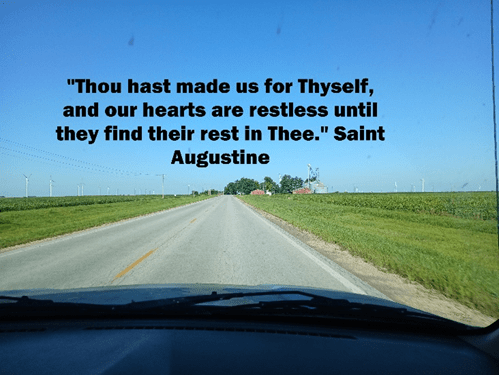
What can we learn from Saint Augustine? Anybody is raw material for sainthood. Augustine could have pursued a brilliant if morally flawed academic career; however, he turned away from a moral mess to wholeheartedly follow Jesus Christ. One of Augustine’s most memorable quotes, one that continues to resonate with many of us is this: Thou movest us to delight in praising Thee; for Thou hast formed us for Thyself, and our hearts are restless till they find rest in Thee.
This is part of a larger prayer, one well worth studying and repeating. Lord, teach me to praise Thee. “Great art Thou, O Lord, and greatly to be praised; great is Thy power, and of Thy wisdom there is no end. And man, being a part of Thy creation, desires to praise Thee, man, who bears about with him his mortality, the witness of his sin, even the witness that Thou “resistest the proud, ” – yet man, this part of Thy creation, desires to praise Thee. Thou movest us to delight in praising Thee; for Thou hast formed us for Thyself, and our hearts are restless till they find rest in Thee. Lord, teach me to know and understand which of these should be first, to call on Thee, or to praise Thee; and likewise to know Thee, or to call upon Thee.
Oh! how shall I find rest in Thee? Who will send Thee into my heart to inebriate it, s that I may forget my woes, and embrace Thee my only good? What art Thou to me? Have compassion on me, that I may speak. What am I to Thee that Thou demandest my love, and unless I give it Thee art angry, and threatenest me with great sorrows? Is it, then, a light sorrow not to love Thee? Alas! alas! tell me of Thy compassion, O Lord my God, what Thou art to me. “Say unto my soul, I am thy salvation.” So speak that I may hear. Behold, Lord, the ears of my heart are before Thee; open Thou them, and “say unto my soul, I am thy salvation.” When I hear, may I run and lay hold on Thee. Hide not Thy face from me. Let me die, lest I die, if only I may see Thy face.” St. Augustine of Hippo, Confessions, 1,1.5
Thou movest us to delight in praising Thee; for Thou hast formed us for Thyself, and our hearts are restless till they find rest in Thee.
This is part of a larger prayer, one well worth studying and repeating. Lord, teach me to praise Thee. “Great art Thou, O Lord, and greatly to be praised; great is Thy power, and of Thy wisdom there is no end. And man, being a part of Thy creation, desires to praise Thee, man, who bears about with him his mortality, the witness of his sin, even the witness that Thou “resistest the proud, ” – yet man, this part of Thy creation, desires to praise Thee. Thou movest us to delight in praising Thee; for Thou hast formed us for Thyself, and our hearts are restless till they find rest in Thee. Lord, teach me to know and understand which of these should be first, to call on Thee, or to praise Thee; and likewise to know Thee, or to call upon Thee.
Oh! how shall I find rest in Thee? Who will send Thee into my heart to inebriate it, s that I may forget my woes, and embrace Thee my only good? What art Thou to me? Have compassion on me, that I may speak. What am I to Thee that Thou demandest my love, and unless I give it Thee art angry, and threatenest me with great sorrows? Is it, then, a light sorrow not to love Thee? Alas! alas! tell me of Thy compassion, O Lord my God, what Thou art to me. “Say unto my soul, I am thy salvation.” So speak that I may hear. Behold, Lord, the ears of my heart are before Thee; open Thou them, and “say unto my soul, I am thy salvation.” When I hear, may I run and lay hold on Thee. Hide not Thy face from me. Let me die, lest I die, if only I may see Thy face.” St. Augustine of Hippo, Confessions, 1,1.5
PRAYER: Father God, thank You for loving us and caring for us. Lord, help us to truly find our rest in You, to fix our minds on You and to follow hard after You all the days of our lives. In the mighty and precious Name of King Jesus. Amen.
 Burunche's Blog
Leave a comment