
Acts 16:11-15 Therefore, sailing from Troas, we ran a straight course to Samothrace, and the next day came to Neapolis, and from there to Philippi, which is the foremost city of that part of Macedonia, a colony. And we were staying in that city for some days. And on the Sabbath day we went out of the city to the riverside, where prayer was customarily made; and we sat down and spoke to the women who met there. Now a certain woman named Lydia heard us. She was a seller of purple from the city of Thyatira, who worshiped God. The Lord opened her heart to heed the things spoken by Paul. And when she and her household were baptized, she begged us, saying, “If you have judged me to be faithful to the Lord, come to my house and stay.” So she persuaded us.
Lydia, featured in Acts 16:13-15, 40, was a wealthy businesswoman and the first documented convert to Christianity in Europe. Originally from Thyatira, she was a dealer of expensive purple cloth living in Philippi. Upon hearing the Apostle Paul, she believed, was baptized with her household, and provided crucial hospitality to the early church.
Key Details About Lydia in the Bible:
- Role and Background: She was a “seller of purple goods”—a luxury trade—and was a “worshipper of God” (a Gentile drawn to Judaism).
- Conversion: When Paul visited Philippi (his second missionary journey), Lydia was praying with other women by the river, where the Lord opened her heart to pay attention to Paul’s message
.Hospitality and Leadership: She immediately offered her home to Paul and his companions (Silas, Timothy, and Luke). Her home became a hub for the new church in Philippi.
- Significance: Lydia is recognized as a pioneering woman of faith, demonstrating, leadership, and independence in the early church.
https://www.thenivbible.com/blog/lydia-from-the-bible/ gives us the following information about Lydia:
Tyrian Purple
Archaeological finds have shed new light upon the purple dye industry in the Mediterranean world. The purple material was the most desirable and expensive, partially due to its colorfastness. This “Tyrian purple” was wool colored with a dye made from tiny Mediterranean mollusks. Additional methods of purple dyeing utilizing plants and other materials were developed. Thyatira was a center for this purple dye industry. Thus, Lydia may have been a dealer in the Thyatira purple cloth, or she may have been an importer of the royal “Tyrian purple.” Either way, she was a smart, and probably wealthy, businesswoman.
One Sabbath day, Lydia went to the river’s shore that had been designated by the Roman authorities of Philippi as a place of prayer and worship for the Jews. There she met Paul and Silas, who had been in Philippi only a short time. While others along the river may have rejected Paul’s words about Jesus, Lydia accepted them and became a believer (Acts 16:14).
Once she believed, she made a confession of her faith to her whole world through baptism, and then she assembled her entire household, told them what had happened to her, and asked them to believe. After her entire household accepted Christ as Savior and was baptized, Lydia invited Paul and Silas to stay in her home (Acts 16:15). When Paul and Silas were thrown into a Philippian prison, Lydia visited them and attended to their needs. Her house became the meeting place of the first European church.
Lydia was quick to perceive that what had been hers before her conversion—home, business and possessions—now belonged to the Lord.
• She had a new partner—the Lord Jesus
• A new purpose—to serve him
• And a new satisfaction—seeking to be effective and successful in order to glorify the Lord.
Lydia’s career aspirations did not hinder her sharing the gospel with family and friends. And she was not too busy to take time for hospitality (Acts 16:15).
Lydia’s Influence Made a Mark on Generations to Come
Lydia’s name appears in the Bible only twice. She was seemingly the first Gentile convert in Europe and the first believer to open her home as a worship center for European Christians. This benefited not only Paul and the early church but also the lives of future generations of believers. Her life was a model of determination, foresight and generosity that offers encouragement to us today. (Article edited from a study feature in the NIV Woman’s Study Bible.)
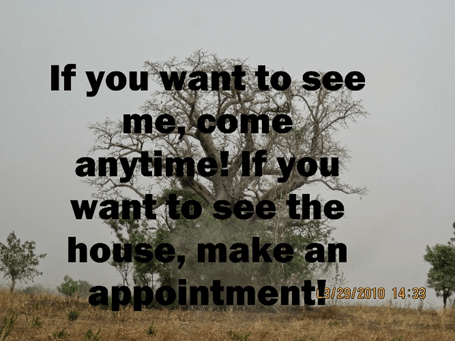
Perhaps you don’t feel hospitality is your calling. You don’t think your house is nice enough or clean enough. We had a friend who has since gone to be with Jesus who was one of the most hospitable ladies we knew. This lady’s house was clean but messy. You might have to shift a pile of magazines off a chair if you wanted a place to sit. But nobody ever left that house unloved, uncomforted, or unfed. Every Christmas and New Year’s Day, our friend would make huge pots of soup and feed all comers. Our friend had a wonderful sign that read “If you’ve come to me, come anytime! If you want to see the house, make an appointment!”
Lydia undoubtedly had a highly organized household with lots of servants, plenty of food and drink, and comfortable rooms for guests. But hospitality doesn’t have to be complicated.
Offer what you have and God will bless it-and you!
PRAYER: Father God, thank You for loving us and caring for us. Lord, help us to realize that You bring people to us, expecting only that we will give what we have in love. In the mighty and precious Name of King Jesus. Amen.
 Burunche's Blog
Leave a comment