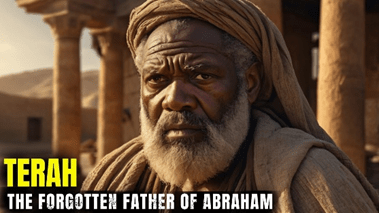
Genesis 11:31-32And Terah took his son Abram and his grandson Lot, the son of Haran, and his daughter-in-law Sarai, his son Abram’s wife, and they went out with them from Ur of the Chaldeans to go to the land of Canaan; and they came to Haran and dwelt there. So the days of Terah were two hundred and five years, and Terah died in Haran.
By the time Terah left Ur of the Chaldees, he was no longer a young man. Why did Terah leave Ur? An internet search reveals the following: According to Genesis 11:31, Terah took his family, including Abram and Lot, from Ur of the Chaldeans to move to Canaan, though the Bible does not explicitly state his specific motivation. Scholars and commentators suggest the move may have been driven by a divine prompting, a desire to leave a sinful region, or possibly as a response to the loss of a family member.
Key details regarding Terah’s journey:
- The Original Plan: Terah set out for Canaan but settled in Haran along the way, where he died.
- Call of God: While Abraham is known for receiving a call, some commentators suggest that God may have first spoken to Terah, prompting him to leave the idolatrous land of Ur.
- The Move from Ur: The move was likely intended to be a complete relocation from a city known to be wicked.
- The Halt in Haran: Terah is often portrayed as stopping in Haran due to a lack of faith or comfort, only going halfway on the journey. Perhaps Terah simply stays in Haran long enough to become comfortable; at that point, staying in a comfortable place might be very appealing. While God has spoken to Abraham, Terah might not be completely convinced.
- There’s also another possibility: Terah is not a young man, and travel is arduous. Perhaps Terah succumbs to a combination of grief over the loss of his son Haran, plus exhaustion in addition to old age.
- While Terah left to go to Canaan, his journey ended early at Haran, setting the stage for Abraham to complete the journey under a direct call from God. Terah, Abraham’s father, was grieving for his son Haran. Terah, it seems, decided to stay in the northern Mesopotamian “city of Haran,” (no connection with his son Haran) rather than continue the journey to Canaan, which was the family’s original intent. The family were in the city of Haran for five years. The people of Haran served the same moon god as the people in Terah’s former location, the southern Mesopotamian “city of Ur”. Terah, Jewish literature records, was a craftsman who made idols. So he may have found a blossoming trade in Haran.
This seems to be upheld by Scripture: “This is what the LORD, the God of Israel, says: ‘Long ago your ancestors, including Terah the father of Abraham and Nahor, lived beyond the Euphrates River and served other gods'” (Josh 24:2). The Hebrew word for “served” can also mean to “work,” hence the tradition that Terah was a craftsman who made idols. And later in the story Rachel, Terah’s great-great-granddaughter, does seem keen to hold on to the Teraphim (household idols) as if they were a family heirloom (Gen 31:19). And, it may be worth noting, we see the name “Terah” alluded to in the word “Teraphim”.
When Isaiah received his call while he was in the temple, there were probably many others there at the same time; however, Isaiah was the only one who saw the Lord. God might have called Terah, only for Terah to obey partially.
What can we learn from Terah? Terah remained in Haran and died there while Abraham risked everything, leaving for Canaan with his family, his flocks, and his herds. Terah might have had a comfortable old age, but he missed the Promised Land. Abraham took the risk and gained incredible blessings, as well as securing the Promised Land for his descendants.
The question for us is simple: Will we listen to God, even if it means risk, or will we settle for comfort? We can settle for comfort, but that will never result in our receiving God’s best for our lives. May God help us so that we will risk everything for His Will.
PRAYER: Father God, thank You for loving us and caring for us. Lord, help us to be willing to lay down our hopes and our dreams so that You can lead us into the futures you have for us. In the mighty and precious Name of King Jesus. Amen.
 Burunche's Blog
March 21, 2026 at 2:39 am
What a Good Devotional!! Had not thought about Torah’s role in the people of God traveling to Canaan. How is the hospital recovering from the fire? God Bless, Martin