Archive for April, 2026

APRIL 11, 2026-WAITING FOR PENTECOST #2 WHY DO OUR HEARTS NEED COURAGE?

April 11, 2026

Psalm 27 The Lord is my light and my salvation; he protects me from danger—whom shall I fear? 2 When evil men come to destroy me, they will stumble and fall! 3 Yes, though a mighty army marches against me, my heart shall know no fear! I am confident that God will save me.

4 The one thing I want from God, the thing I seek most of all, is the privilege of meditating in his Temple, living in his presence every day of my life, delighting in his incomparable perfections and glory. 5 There I’ll be when troubles come. He will hide me. He will set me on a high rock 6 out of reach of all my enemies. Then I will bring him sacrifices and sing his praises with much joy.

7 Listen to my pleading, Lord! Be merciful and send the help I need.

8 My heart has heard you say, “Come and talk with me, O my people.” And my heart responds, “Lord, I am coming.”

9 Oh, do not hide yourself when I am trying to find you. Do not angrily reject your servant. You have been my help in all my trials before; don’t leave me now. Don’t forsake me, O God of my salvation. 10 For if my father and mother should abandon me, you would welcome and comfort me.

11 Tell me what to do, O Lord, and make it plain because I am surrounded by waiting enemies. 12 Don’t let them get me, Lord! Don’t let me fall into their hands! For they accuse me of things I never did, and all the while are plotting cruelty. 13 I am expecting the Lord to rescue me again, so that once again I will see his goodness to me here in the land of the living.

14 Don’t be impatient. Wait for the Lord, and he will come and save you! Be brave, stouthearted, and courageous. Yes, wait and he will help you.

Nobody likes waiting! Forty years ago, when we were teaching Children’s Church, we learned that we needed to change up our activities at least every 10 minutes because of the kids’ short attention spans. Now with instant social media on phones and tablets and channel changers allowing us to flip through TV programs, adults have even shorter attention spans than those kids did forty years ago. We want instant results, and if they are not forthcoming, we are likely to begin sulking as if the universe owed us something. But God works on different timetables than we do. If you are a farmer or a gardener, you know that you can’t plant seeds today and harvest tomorrow. Each crop has its own timetable, and nothing will speed up that process. Plants need a certain amount of time, sunshine, fertilizer, water, and patience.

When raising children, there are also no instant results, at least not positive ones. One act of cruelty might scar a child for a lifetime but helping children develop character is a slow and sometimes painful process. When several farm families have posted Facebook videos of their kids working on farms, the comments have been vicious. The same parents who think nothing of exposing their kids to violent video games appear to feel qualified to criticize farm families allowing their children to take responsibility.

As a farm kid who grew up in the 1950’s and 60’s when farming entailed a lot more hard physical labor, let me share a few of the tasks my brothers and I undertook routinely.

  1. Carrying feed and water to animals and chickens-we began as soon as we were big enough to handle buckets. Did some of the water slop out? Yes. Did we get wet? Yes. Did we learn? Yes.
  2. Checking animals in the field to see if they were healthy. Hog confinement setups were rare, and most farmers raised pigs out in the field in hog pastures. I vividly remember riding out in our pickup to remote hog pastures and then running around the pasture, checking to make sure all the pigs appeared healthy and that none of them appeared to be lame or suffering in some other fashion.
  3. Cleaning the mud out of hog waterers with bare hands-pigs root and bring dirt into their waterers when they drink. The mud must continue to be cleaned by hand. I’m sure there are better watering tanks now, but this was reality. Incidentally, this task even had to be done in winter when the mud was half frozen.
  4. Gathering eggs-before we sold off our chicken flock, we had 500 chickens and sold our eggs commercially. We gathered eggs twice a day.
  5. Milking cows by hand-I began milking by hand as soon as my hands were big enough and strong enough, around the age of 8.
  6. Shoveling off ground feed from the back of a pickup truck. We would send grain into town to the elevator to be ground and then bring it back out. At that point, the feed had to be shoveled by hand into a storage area. I vividly remember shoveling off a half ton of ground feed, one scoop at a time.
  7. Pitching manure-barns and chicken houses had to be cleaned by hand. Some of us still remember how to handle pitch forks.
  8. Carrying ground feed and mineral pellets down the center of feed bunks to beef cattle. A five-gallon bucket weighs 25 pounds when full.
  9. Helping with the family garden. We always had a large garden, and Mom taught us the differences between vegetables and weeds quite early. We learned how to care for vegetables and how to harvest them, handling them gently.
  10. Driving tractors-my brothers began at age 7 while I was an ancient crone of 10 years. My parents began drilling road safety into us as soon as we got bicycles, and we were not allowed on public roads until we were old enough to drive legally.
  11. Above all, we learned to work. I don’t recall either of my brothers or I complaining about our tasks; in fact, we felt honored that our parents trusted us with these responsibilities. We were only one generation away from families where some children had to leave school after eighth grade to help support families during the Depression.

One problem faced by those in urban population is that they have become so divorced from the land that they have never learned these lessons. Farming also teaches other lessons, including patience when crops fail or disasters strike. As I am writing this, ranchers in Nebraska, Oklahoma, Kansas, and Texas are struggling to recover from catastrophic prairie fires that have devastated farms and ranches held in families for several generations. Rebuilding will be difficult; however, these people are spiritually tough because they have had to endure before.

King David faced struggles throughout his lifetime and wrote Psalm 27 out of those experiences. Perhaps today, you feel trapped and wonder if help is ever coming. Remember Psalm 27:14 14 Don’t be impatient. Wait for the Lord, and he will come and save you! Be brave, stouthearted, and courageous. Yes, wait and he will help you.

PRAYER: Father God, thank You for loving us and caring for us. Lord, many of us are crying out, “How long? How long before deliverance comes?” Father, strengthen our hearts and help us to wait and trust where we cannot see. In the mighty and precious Name of King Jesus. Amen.
APRIL 10, 2026-WAITING FOR PENTECOST #1 ARE YOU WILLING TO WAIT?

April 10, 2026

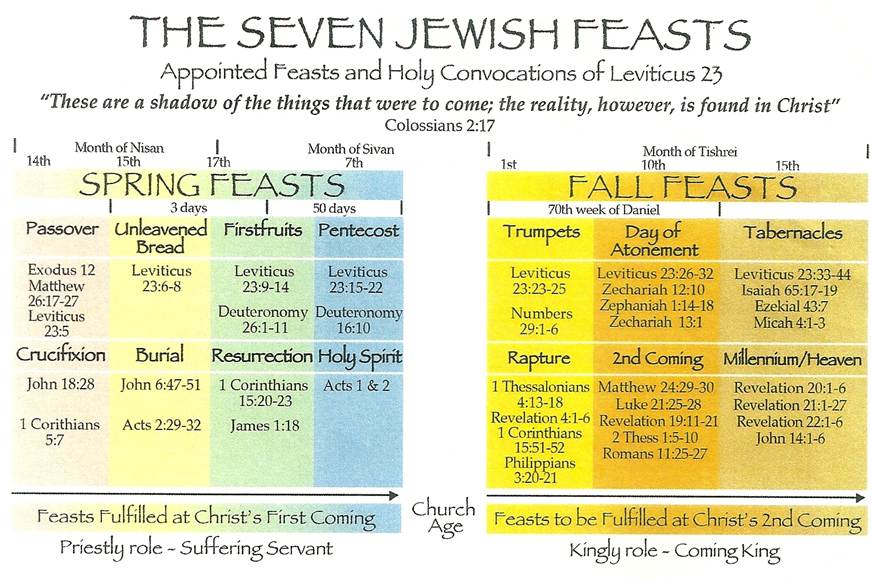
Once Jesus was crucified and rose from the dead at Passover, the disciples looked forward to the next major Jewish feast, the Feast of Pentecost. The figure above outlines the seven major Jewish feasts, as well as their relationship to Christianity. The following description comes from Rabbi Jason, a Messianic Jewish rabbi, from Fusion Global. https://www.fusionglobal.org/connections/from-passover-to-pentecost/

From Passover To Pentecost

“From the day after the Sabbath [of Passover], the day you brought the barley sheaf of the wave offering, count off seven full weeks [to Pentecost]. Count off fifty days up to the day after the seventh Sabbath and then present an offering of new grain to the Lord… I am the Lord your God. “Leviticus 23:15-17, 22

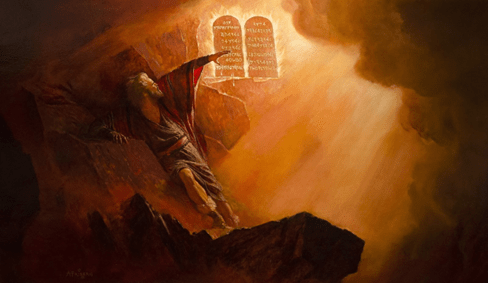
Passover is incomplete without Pentecost, Shavuot in Hebrew. It is for this reason that we count down 49 days from Passover to Pentecost. This means that redemption (Passover) is not complete without the revelation of God’s Word which happened at Sinai on Pentecost with the giving of the 10 Commandments. The reason being is that redemption without revelation leads to a regression into slavery because without the truth you cannot truly be set free spiritually. Passover and Pentecost together lead to both salvation and transformation through Word and Spirit!

On Pentecost, God gave the 10 Commandants as well as the Holy Spirit in the Book of Acts. Acts 2 is actually a re-enactment of Mount Sinai. The booming of the wind is like the thundering at Sinai, and the tongues of fire over the disciples’ heads are akin to the fire that came out of the mouth of God when He uttered the Commandments. Targum Neofiti, an ancient Aramaic paraphrase of the Hebrew Bible describes it as follows, “like torches of fire, a torch of fire to the right and a torch of fire to the left. It flew and winged swiftly in the air…and returning it became engraved on the tablets of the covenant, and all Israel beheld it (Targum Neofiti 19:2). The split tongues of Acts 2 looked like the fire of Sinai, which is said to have inscribed the tablets of the covenant.

In Acts 2, God again imprinted His Word as He did on Sinai. This time, the stone tablets of Sinai were replaced as God wrote His new covenant within their heart:” I will make a new covenant with the house of Israel…I will put My law in their minds, and write it on their hearts…” (Jeremiah 31:31,33)

Application:

The fact the 10 Commandments and Holy Spirit were both given on the same day is still very significant. It was by means of the Word and the Spirit that created the world. And it is through the Word of God and the Holy Spirit that we become new creations. Salvation must lead to transformation which occurs when your mind is renewed by God’s word through the power of the Spirit (Rom. 12:1). Therefore, make sure you read and study the Scriptures regularly and ask the Holy Spirit to illuminate the Word for you.


The website https://www.biblestudy.org/bibleref/holy-days/pentecost.html gives the following information: Pentecost is the third of God’s annual Feast days (periods) celebrated each year. It is also known as the Feast of Weeks, Feast of Harvest or the Day of Firstfruits.

Also, the Feast of the Harvest of the Firstfruits (Pentecost) of your labors, which you have sown in the field (Exodus 23:16, HBFV).

And you shall observe the Feast of Weeks, of the firstfruits of wheat harvest . . . (Exodus 34:22, HBFV).

God commanded that on Pentecost no work is to be done.

And in the day of the firstfruits, when you bring a new grain offering to the Lord after your weeks have been counted, you shall have a holy convocation. You shall do no servile work. (Numbers 28:26, HBFV).

Pentecost represents the consummation of the first harvest, after seven weeks of labor, and also the arrival of the Israelites at Mount Sinai after seven weeks of weary wandering. Tradition states that God gave Israel the Ten Commandments on Pentecost.

The apostle Paul wanted to be at Jerusalem for Pentecost.

For Paul had decided to sail past Ephesus, so that he would not have to spend time in Asia; for he was hurrying to be at Jerusalem, if possible, on the Day of Pentecost (Acts 20:16).

Christians have the firstfruits of God’s spirit within them, allowing them to be the first of many who will ultimately receive salvation. Believers follow in the path of Jesus, the first of the firstfruits in God’s great plan.

The Spirit itself bears witness conjointly with our own spirit, testifying that we are the children of God. Now if we are children, we are also heirs – truly, heirs of God and joint heirs with Christ . . .

For the earnest expectation of the creation itself is awaiting the manifestation of the sons of God . . . For we know that all the creation is groaning together . . . And not only that, but even we ourselves, who have the firstfruits of the Spirit, also groan within ourselves . . . (Romans 8:16 – 17, 19, 22 – 23).

But now Christ has been raised from the dead; He has become the first-fruit of those who have fallen asleep (1Corinthians 15:20).

The 144,000 people of the tribes of Israel, converted during the great tribulation, will also be firstfruits unto God (study Revelation 14:1 – 4).

Why wait?

Just before Jesus ascended into heaven, after his resurrection, he gave a very important command to his disciples. He told them to wait or tarry in Jerusalem so that they could be given the might power of God’s Holy Spirit (Luke 24:46, 49). The Greek word translated as “tarry” is kathizo (Strong’s Concordance #G2523), which means to sit down. Jesus was telling his restless disciples to relax a bit and wait in Jerusalem until they received the power of God. It is then they could go out and preach the gospel to the world! The disciples would only have to wait a short time until Pentecost.

When the day of Pentecost arrived 120 of Jesus’ disciples, which included the twelve apostles, received the promised power of God. Peter spoke to the crowd gathered on the holy day about what the miracles they saw symbolized. They were a shadow fulfillment of what the prophet Joel predicted would happen at the end time just before the return of Christ (see Acts 2).

One of the many lessons of Pentecost is that sometimes we must wait for God to act, in his wisdom, before rushing off to do his will.   

What should we learn from the weeks we spend between Easter and Pentecost?

  1. Ask God to open your mind and heart to anything new He wants to teach you.
  2. Ask God to help you learn patience so that you will wait for Him to enlighten you.
  3. Thank God that He is always doing new things and that there is no end to the things God can show you.

PRAYER: Father God, thank You for loving us and caring for us. Lord, help us to learn all that You want to teach us during this time of waiting. In the mighty and precious Name of King Jesus. Amen.
APRIL 9, 2026-GOD CARES FOR ISRAEL #21 DID THE APOSTLE PETER MESS UP?

April 9, 2026

Acts 1:9-11 It was not long afterwards that he rose into the sky and disappeared into a cloud, leaving them staring after him. As they were straining their eyes for another glimpse, suddenly two white-robed men were standing there among them, and said, “Men of Galilee, why are you standing here staring at the sky? Jesus has gone away to heaven, and some day, just as he went, he will return!”

12-14 They were at the Mount of Olives when this happened, so now they walked the half mile back to Jerusalem and held a prayer meeting in an upstairs room of the house where they were staying.

Here is the list of those who were present at the meeting: Peter, John, James, Andrew, Philip, Thomas, Bartholomew, Matthew, James (son of Alphaeus), Simon (also called “The Zealot”), Judas (son of James), and the brothers of Jesus. Several women, including Jesus’ mother, were also there.

15-20 This prayer meeting went on for several days. During this time, on a day when about 120 people were present, Peter stood up and addressed them as follows:

“Brothers, it was necessary for the Scriptures to come true concerning Judas, who betrayed Jesus by guiding the mob to him, for this was predicted long ago by the Holy Spirit, speaking through King David. Judas was one of us, chosen to be an apostle just as we were. He bought a field with the money he received for his treachery and falling headlong there, he burst open, spilling out his bowels. The news of his death spread rapidly among all the people of Jerusalem, and they named the place ‘The Field of Blood.’ King David’s prediction of this appears in the Book of Psalms, where he says, ‘Let his home become desolate with no one living in it.’ And again, ‘Let his work be given to someone else to do.’

21-22 “So now we must choose someone else to take Judas’ place and to join us as witnesses of Jesus’ resurrection. Let us select someone who has been with us constantly from our first association with the Lord—from the time he was baptized by John until the day he was taken from us into heaven.”

23-26 The assembly nominated two men: Joseph Justus (also called Barsabbas) and Matthias. Then they all prayed for the right man to be chosen. “O Lord,” they said, “you know every heart; show us which of these men you have chosen as an apostle to replace Judas the traitor, who has gone on to his proper place.”

Then they drew straws, and in this manner Matthias was chosen and became an apostle with the other eleven.

By this point, there’s no doubt that Peter is a leader with a personality that can flatten almost any opposition. It’s said that “nature abhors a vacuum,” and the same thing can be said of Peter. Judas Iscariot is dead and gone; now the disciples MUST replace him as quickly as possible….or should they? Notice the language Peter uses: First, Peter quotes Scripture and then states that “we MUST choose someone else to take Judas’ place…” Oh really, Peter? Is this a decision over which you have prayed or are you coming up with this on your own? Employing Scripture to bolster one’s position is nothing new for the religious leaders have been doing that for centuries.

There is nothing to suggest that Peter and the other disciples have actually reached this decision through earnest prayer. True, they have been engaged in prayer meetings; however, those of us with experience have endured prayer meetings that consisted of “too much thunder and not enough rain.” It’s far more likely that Peter has gotten this bright idea and others are simply willing to go along with it. “Sure, Peter, sounds good. And you certainly have Scripture on your side.” But the question is this: Does quoting Scripture allow us to impose our will on God?

Notice that the other disciples never say, “Let’s go off and pray about whether or not God wants us to replace Judas at this time.” Peter is pushing an agenda with the best of motives, and the others are merely allowing themselves to go along. The only time Luke records the disciples praying over this situation is after they have already selected two candidates and are now asking God to control the chance decision. (Incidentally, while this translation speaks of drawing straws, it’s far more likely that the disciples might have thrown dice to choose Judas’ successor.)

Eventually Matthias is chosen. But after being chosen, Matthias fades into obscurity. Some people claim Matthias is actually Nathaniel, the believer spoken of in the Gospel of John. Others dispute this. Nobody seems to know exactly where Matthias preaches or what happens to him. Some people claim he is stoned and beheaded in Jerusalem while others claim he is martyred somewhere else. God undoubtedly uses Matthias; however, he remains a shadowy figure.

The Scripture Peter quotes is correct; however, Peter’s interpretation is wrong. God already has another disciple selected, even though at present he’s bending every effort to annihilate Christians. Eventually the Apostle Paul becomes a believer, traveling throughout the Middle East, preaching and teaching, and writing much of the New Testament.

I love studying about Peter, for he reminds me so much of myself. Peter is a fisherman, a man of action, and the kind of guy who will always make things happen. Peter’s motto is “If you want something done right, do it yourself!” And Peter is going to fix the gap in the twelve apostles, even if it’s not time as yet. There’s nothing wrong with Matthias, save for the fact that God already is preparing Paul to become the substantive twelfth apostle. No matter how hard Peter tries, God simply proceeds to call Paul and to give him a ministry that remains a model for all of us.

What if Peter had not forced this decision but had allowed God to handle it? Eventually, God would have brought Paul in. Did Matthias live long enough to witness Paul’s conversion and subsequent ministry? Perhaps not. It would have been quite difficult for Matthias to see Paul’s rise in the church.

What can we learn from this story? God has His timing, and His ways are perfect. We are impatient and want everything tied up neatly right now. But how many times have we missed God’s best because of our impatience? May God help us so that we will wait for Him and not rush, for when we rush, we can make mistakes.

PRAYER: Father God, thank You for loving and caring for us. Lord, help us to trust Your timing and to wait for You to guide us. In the mighty and precious Name of King Jesus. Amen.
APRIL 8, 2026-GOD CARES FOR ISRAEL #20 JESUS RECOMMISSIONS FAILURES!

April 8, 2026

Matthew 28:16-20 Then the eleven disciples left for Galilee, going to the mountain where Jesus had said they would find him. There they met him and worshiped him—but some of them weren’t sure it really was Jesus!

He told his disciples, “I have been given all authority in heaven and earth. Therefore go and make disciples in all the nations, baptizing them into the name of the Father and of the Son and of the Holy Spirit, and then teach these new disciples to obey all the commands I have given you; and be sure of this—that I am with you always, even to the end d of the world.”

As the disciples climbed that mountain to meet Jesus, they had mixed feelings. Many of the disciples remembered how they had deserted Jesus when he was arrested in the Garden of Gethsemane, not even turning up when he was crucified at Golgotha. And while these men had all seen Jesus once he rose from the dead, in their hearts, they still remembered their perfidy, their cowardice, and wondered what Jesus was going to say to them. Jesus was waiting when they reached the mountaintop, but those who had been the most fearful were now the ones struggling to believe that Jesus was really with them. Still, when other disciples bowed, these men bowed also and found that as they bowed, they too believed that Jesus was really there in the flesh.

Jesus wasted no time in remonstrations or criticisms, but went straight to the point, giving these men a thrilling new commission. Rather than remaining in Jerusalem or Galilee or Judea, these men were to make disciples of ALL nations. Jesus was commanding these men to begin baptizing new believers and to teach them everything he had already taught them. Coming from a culture with strong oral traditions, these men had readily memorized Jesus’ teachings during his three years with them. Now Jesus commanded them to share everything he had already taught them about the kingdom of God.

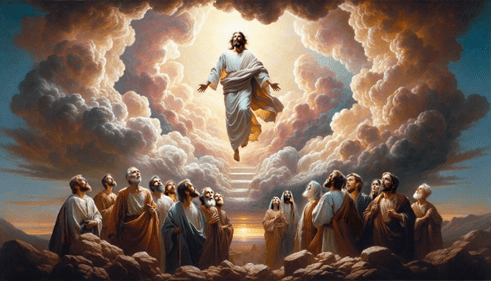
Although Matthew, the former tax collector, was a careful scribe, he did not mention Jesus’ ascending into heaven. The most complete account of the ascension was recorded by Luke the physician, who interviewed many sources before writing his gospel and the Book of Acts.

Acts 1:1-3 Dear friend who loves God: In my first letter I told you about Jesus’ life and teachings and how he returned to heaven after giving his chosen apostles further instructions from the Holy Spirit. During the forty days after his crucifixion, he appeared to the apostles from time to time, actually alive, and proved to them in many ways that it was really he himself they were seeing. And on these occasions, he talked to them about the Kingdom of God.

4-5 In one of these meetings he told them not to leave Jerusalem until the Holy Spirit came upon them in fulfillment of the Father’s promise, a matter he had previously discussed with them.

“John baptized you with water,” he reminded them, “but you shall be baptized with the Holy Spirit in just a few days.”

6-8 And another time when he appeared to them, they asked him, “Lord, are you going to free Israel from Rome now and restore us as an independent nation?”

“The Father sets those dates,” he replied, “and they are not for you to know. But when the Holy Spirit has come upon you, you will receive power to testify about me with great effect, to the people in Jerusalem, throughout Judea, in Samaria, and to the ends of the earth, about my death and resurrection.”

9-11 It was not long afterwards that he rose into the sky and disappeared into a cloud, leaving them staring after him. As they were straining their eyes for another glimpse, suddenly two white-robed men were standing there among them, and said, “Men of Galilee, why are you standing here staring at the sky? Jesus has gone away to heaven, and some day, just as he went, he will return!”

Although we frequently assume that Jesus gave the disciples the Great Commission just as he was about to ascend into heaven, that’s not actually the case. Evidently, during the period between the resurrection and ascension, Jesus spent time instructing the disciples, reassuring them that he had forgiven them for deserting him. Then Jesus began pointing the disciples toward the bright future in store for them. Later on, Saint Paul would describe it in this fashion:  2 Timothy 4:7-8 I have fought long and hard for my Lord, and through it all I have kept true to him. And now the time has come for me to stop fighting and rest. In heaven a crown is waiting for me, which the Lord, the righteous Judge, will give me on that great day of his return. And not just to me but to all those whose lives show that they are eagerly looking forward to his coming back again.

Although the disciples had dim ideas about what might happen, Jesus knew exactly what each of those men would do, the wonderful ministries they would carry out, and the fashion in which they would die still glorifying their Lord. Those men climbed that mountain doubting themselves; however, they came down off the mountain with new orders and new visions of ministry. By accepting those men with their failures and doubts, Jesus transformed them by his words. And even though Jesus had already breathed on them, giving them the Holy Spirit, the Holy Spirit was preparing to descend in a far more magnificent fashion on the Day of Pentecost.

Even before Easter, Jesus was transforming lives. A woman who had become a social outcast because of persistent vaginal bleeding became whole after touching the hem of his garment. Blind Bartimaeus received his sight. Lepers who hadn’t entered villages in years because of their diseases were cleansed, and those confined to mats on the floor went leaping and dancing for joy when Jesus healed them. But one of the greatest miracles Jesus ever did was forgiving the disciples and recommissioning them. God does not play favorites; His power to transform failures into glorious disciples remains available to us today. No matter how far we have sunk, no matter how shameful our sins, God’s love and mercy are greater.

John later wrote in 1 John 1:5-10, “This is the message God has given us to pass on to you: that God is Light and in him is no darkness at all. So if we say we are his friends but go on living in spiritual darkness and sin, we are lying. But if we are living in the light of God’s presence, just as Christ does, then we have wonderful fellowship and joy with each other, and the blood of Jesus his Son cleanses us from every sin.

If we say that we have no sin, we are only fooling ourselves and refusing to accept the truth. But if we confess our sins to him, he can be depended on to forgive us and to cleanse us from every wrong. And it is perfectly proper for God to do this for us because Christ died to wash away our sins. If we claim we have not sinned, we are lying and calling God a liar, for he says we have sinned.”

All of us sin every day. All of us fall short of God’s glory. But God’s mercy is also available to all of us if we will only confess our sins and ask God to forgive us and clean us up. Let’s pray.

PRAYER: Father God, thank You for loving us and caring for us. Lord, we confess that we are sinners and there is nothing we can do to wipe out that sin. But You tell us in Your Word that Jesus has paid the blood price for our sins on Calvary. Please forgive us our sins. Clean us up. Help us to believe in You and in Your Son Jesus Christ. In the mighty and precious Name of King Jesus. Amen.
APRIL 7, 2026-GOD CARES FOR ISRAEL #19 WE DON’T BRING OLD PALM NUTS TO MAKE SOUP!

April 7, 2026

John 21:1-25 Later Jesus appeared again to the disciples beside the Lake of Galilee. This is how it happened:

A group of us were there—Simon Peter, Thomas, “The Twin,” Nathanael from Cana in Galilee, my brother James and I and two other disciples.

Simon Peter said, “I’m going fishing.”

“We’ll come too,” we all said. We did, but caught nothing all night. At dawn we saw a man standing on the beach but couldn’t see who he was.

He called, “Any fish, boys?”

“No,” we replied.

Then he said, “Throw out your net on the right-hand side of the boat, and you’ll get plenty of them!” So we did, and couldn’t draw in the net because of the weight of the fish, there were so many!

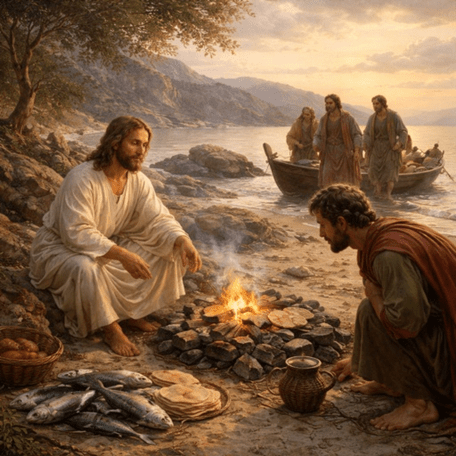
Then I said to Peter, “It is the Lord!” At that, Simon Peter put on his tunic (for he was stripped to the waist) and jumped into the water and swam ashore. The rest of us stayed in the boat and pulled the loaded net to the beach, about 300 feet away. When we got there, we saw that a fire was kindled and fish were frying over it, and there was bread.

“Bring some of the fish you’ve just caught,” Jesus said. So Simon Peter went out and dragged the net ashore. By his count there were 153 large fish; and yet the net hadn’t torn.

When Jesus rose from the dead, he informed Mary Magdalene to tell the disciples that he would meet them in Galilee. But the disciples came to Galilee, and so far, no sign of Jesus. That’s when Peter proposed a fishing trip, his go-to response when things weren’t working well. All the others who were fishermen agreed, and they set out that night with high hopes, but caught nothing. Then as dawn was breaking, they saw a man standing on the shore.

He called, “Any fish, boys?”

“No,” we replied.

Then he said, “Throw out your net on the right-hand side of the boat, and you’ll get plenty of them!” 

So we did, and couldn’t draw in the net because of the weight of the fish, there were so many! Then I said to Peter, “It is the Lord!” At that, Simon Peter put on his tunic (for he was stripped to the waist) and jumped into the water and swam ashore. The rest of us stayed in the boat and pulled the loaded net to the beach, about 300 feet away. When we got there, we saw that a fire was kindled and fish were frying over it, and there was bread.

Jesus’ relationship with Peter began with a miraculous catch of fish, and now the same thing was happening. Still, it was John and not Peter who realized that was Jesus on the shore. For weeks, Peter had been tormenting himself mercilessly with his failures to support Jesus and his renunciation of him at the high priest’s house. Frankly, Peter had convinced himself that he was beyond redemption and that Jesus had likely given up on him. Peter was actually afraid to face Jesus. What could Peter possibly say, “Well, Lord, sorry I let you down, denying you and running off. But when John cried out, “It is the Lord!” Peter was so overjoyed that he quickly donned his tunic and swam to shore. There was Jesus on the shore, calmly frying fish and obviously preparing breakfast.

“Now come and have some breakfast!” Jesus said; and none of us dared ask him if he really was the Lord, for we were quite sure of it. Then Jesus went around serving us the bread and fish.

 This was the third time Jesus had appeared to us since his return from the dead.

After breakfast Jesus said to Simon Peter, “Simon, son of John, do you love me more than these others?”

“Yes,” Peter replied, “you know I am your friend.”

“Then feed my lambs,” Jesus told him.

Jesus repeated the question: “Simon, son of John, do you really love me?”

“Yes, Lord,” Peter said, “you know I am your friend.”

“Then take care of my sheep,” Jesus said.

Once more he asked him, “Simon, son of John, are you even my friend?”

Peter was grieved at the way Jesus asked the question this third time. “Lord, you know my heart; you know I am,” he said.

First, look at the way Jesus speaks to Peter. The name “Simon” means a small pebble, but Jesus has previously re-named Simon as Peter, a huge rock. Now Jesus reverts to Simon’s original name, perhaps because when Jesus needed him to act as a huge rock, he behaved like a small pebble instead. At this point, Peter is relieved, for he has imagined that Jesus would never speak to him again at all. Now let’s look at the questions.

Why does Jesus ask Peter the same question three times? Peter denied Jesus three times, so Jesus is giving him the chance to redeem himself by an equal number. Then there’s the language of the questions. Jesus asks the question twice using the word agapas, which in its Biblical usage often speaks of an all giving, uncaused, unselfish love. Peter answers Jesus using the word philio, which in Biblical usage sometimes has in mind a more reciprocal love, a friendly affection. Some translations express Peter’s answer as, “I am your friend.” Certainly, Peter should understand the distinction between the two kinds of love; however, by now Peter is a realist. While Peter has made extravagant promises about the level of his love for Jesus in the past, claiming that he will never fall away even if all others fall away, now he realizes that he has completely failed to fulfill those promises. Now Peter only promises what he thinks he might be able to deliver, the love of a friend, not an extravagant, all-encompassing love.

Jesus understands Peter’s dilemma but feels he can work with Peter’s current assessment of himself. Now Jesus goes on to outline Peter’s future role in the church.

Jesus said, “Then feed my little sheep. When you were young, you were able to do as you liked and go wherever you wanted to; but when you are old, you will stretch out your hands and others will direct you and take you where you don’t want to go.” Jesus said this to let him know what kind of death he would die to glorify God. Then Jesus told him, “Follow me.”

Jesus knows that eventually Peter will be crucified and that Peter will demand to be crucified upside down, just to honor Jesus. But Jesus also knows that before martyrdom, Peter will spend long years helping lead the church, discipling younger men to take over, and writing some of the most pungent epistles in the New Testament. When Jesus tells Peter, “Follow me,” Peter realizes that Jesus is recommissioning him, restoring him to leadership, and renewing their relationship at a far deeper level than before. The Ashantes in Ghana have a saying that “We don’t bring old palm nuts to make soup.” Jesus is effectively telling Peter that the denials and cowardice are “old palm nuts” and that a new period of ministry is dawning for Peter. Peter, meanwhile, is thrilled for he knows that this day will be the start of something deeper and more glorious than anything he has experienced before.

20-25 Peter turned around and saw the disciple Jesus loved following, the one who had leaned around at supper that time to ask Jesus, “Master, which of us will betray you?” Peter asked Jesus, “What about him, Lord? What sort of death will he die?”

Jesus replied, “If I want him to live until I return, what is that to you? You follow me.”

So the rumor spread among the brotherhood that that disciple wouldn’t die! But that isn’t what Jesus said at all! He only said, “If I want him to live until I come, what is that to you?”

I am that disciple! I saw these events and have recorded them here. And we all know that my account of these things is accurate.

And I suppose that if all the other events in Jesus’ life were written, the whole world could hardly contain the books!

While this translation allows John to identify himself as the disciple whom Jesus loved, most other translations preserve his anonymity. One of the reasons Jesus loved John so much was that John was humble and did not take credit. Even though James and John started out with the nicknames “Sons of Thunder,” John changed during the time he worked with Jesus. It was James and John’s mother who tried to demand choice places for them in Jesus’ kingdom, not either of the men themselves.

John had no illusions about himself; he knew he would eventually die. What John did not anticipate was that he was the only disciple to die a natural death and not to be martyred. Later in life, John contributed three of the shortest but most meaningful epistles to the New Testament and then was granted the visions he described so vividly in the Book of Revelation.

John was the only disciple who accompanied the women all the way to Calvary, and it was John to whom Jesus entrusted the care of his mother Mary. Even though Jesus already knew he would rise from the dead, he also knew his remaining time on earth would be quite short and that Mary would need protection from someone else. Only John had proven faithful, so John was the one chosen to care for Mary. Tradition states that eventually John took Mary to Ephesus, where he built a small house for her and where she died a natural death.

What can we learn from the story of Jesus as he feeds his friends breakfast on that lake shore? The night Jesus was betrayed; he already knew that Peter would deny him three times and that most of the disciples would run away and hide rather than support him. But Jesus received Peter and gave him new commands, not simply reinstating him but charting a new direction for future ministry. Eventually, Peter would be the one receiving the revelation about including gentile believers. Only someone of Peter’s determination and stature could sway other church leaders so that they would open the way to Jesus for all who would believe. Before Peter died, that “friendly” love would indeed become an all-encompassing, all-giving, and unselfish love, a love that would echo down the centuries. Peter would become a symbol for all of us who would ever deny Jesus, trying to take the easy way out, but who would eventually repent.

Jesus’s love for Peter transformed Peter from a little pebble to a huge solid rock. That same love is still available to each one of us. Let us pray.

PRAYER: Father God, we confess that we have denied You many times by our thoughts, by our words, by our deeds. Please forgive us and transform us into strong men and women of faith on whom others can rely. In the mighty and precious Name of King Jesus. Amen.
APRIL 6, 2026-GOD CARES FOR ISRAEL #18 WHAT IF YOU DON’T BELIEVE EASTER HAPPENED?

April 6, 2026

Mark 16: 9-14 It was early on Sunday morning when Jesus came back to life, and the first person who saw him was Mary Magdalene—the woman from whom he had cast out seven demons. She found the disciples wet-eyed with grief and exclaimed that she had seen Jesus, and he was alive! But they didn’t believe her! Later that day he appeared to two who were walking from Jerusalem into the country, but they didn’t recognize him at first because he had changed his appearance. When they finally realized who he was, they rushed back to Jerusalem to tell the others, but no one believed them.

Still later he appeared to the eleven disciples as they were eating together. He rebuked them for their unbelief—their stubborn refusal to believe those who had seen him alive from the dead.

When the women went to the garden tomb that morning, all they wanted to do was to continue preparing Jesus’ body for its burial. But angels met the women, showing them an empty tomb and telling them that Jesus had risen from the dead, just as he had promised. Mary Magdalene even met Jesus, who comforted her and ordered her to tell the disciples to go meet him in Galilee. When the women rushed back to tell the disciples, Peter and John raced to the tomb, also finding it empty. But despite all these reports, most of the disciples refused to believe that a resurrection miracle had taken place. Surely, these ladies must have been deluded by grief. The disciples conveniently forgot that John was the only disciple who accompanied the ladies to witness the crucifixion. All the other disciples were hiding, hoping they wouldn’t be arrested and dragged off as well.

Then there were the two believers traveling to Emmaus who met Jesus but failed to recognize him. Had Jesus really changed his appearance or were these men so blinded by grief that they refused to accept the idea that Jesus was alive? Surely, these men must have heard about the 500 men and women who rose out of their graves to walk the streets of Jerusalem as Jesus was dying. Still, until Jesus revealed himself, the travelers to Emmaus were clueless. And then there was the story about Thomas.

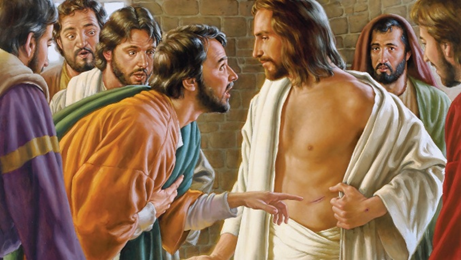
John tells the story in John 20:19-29 That evening the disciples were meeting behind locked doors, in fear of the Jewish leaders, when suddenly Jesus was standing there among them! After greeting them, he showed them his hands and side. And how wonderful was their joy as they saw their Lord!

He spoke to them again and said, “As the Father has sent me, even so I am sending you.” Then he breathed on them and told them, “Receive the Holy Spirit. If you forgive anyone’s sins, they are forgiven. If you refuse to forgive them, they are unforgiven.”

One of the disciples, Thomas, “The Twin,” was not there at the time with the others. When they kept telling him, “We have seen the Lord,” he replied, “I won’t believe it unless I see the nail wounds in his hands—and put my fingers into them—and place my hand into his side.”

Eight days later the disciples were together again, and this time Thomas was with them. The doors were locked; but suddenly, as before, Jesus was standing among them and greeting them.

Then he said to Thomas, “Put your finger into my hands. Put your hand into my side. Don’t be faithless any longer. Believe!”

“My Lord and my God!” Thomas said.

Then Jesus told him, “You believe because you have seen me. But blessed are those who haven’t seen me and believe anyway.”

There are many excellent books about Easter, including the Lee Strobel’s excellent work The Case for Easter.  But one of the most telling statements about the truth of Easter comes from Chuck Colson, a trained lawyer and the founder of Prison Fellowship: “I know the resurrection is a fact, and Watergate proved it to me. How? Because 12 men testified they had seen Jesus raised from the dead, then they proclaimed that truth for 40 years, never once denying it. Every one was beaten, tortured, stoned and put in prison. They would not have endured that if it weren’t true. Watergate embroiled 12 of the most powerful men in the world-and they couldn’t keep a lie for three weeks. You’re telling me 12 apostles could keep a lie for 40 years? Absolutely impossible.”

Through the years, many believers have criticized Thomas as “doubting Thomas,” assuming that THEY would certainly have believed in the resurrection immediately. But such sentiments are unfair to Thomas and unrealistic. Face it, most of us would have refused to believe, even when the women rushed back to report that the tomb was empty. Only when the disciples were confronted with a living Jesus did they abandon disbelief. Think about it; the disciples had witnessed Jesus’ torture and eventual crucifixion. Even though Jesus had prophesied his death and resurrection many times, the disciples really didn’t take him seriously. Surely Jesus must have been speaking figuratively, not realistically. But once the disciples did encounter Jesus, they remained faithful for the rest of their lives.

How faithful were the disciples? Here is a list with their eventual fates, as they paid the ultimate price for following Jesus.

  1. Saint Peter
    Crucified upside down in Rome. His remains were buried in St. Peter’s Basilica, Vatican.
  2. Saint James the Greater
    Beheaded. His remains were buried in St. James Church, Compostela, Spain.
  3. Saint James the Less
    Stoned and beaten to death. His remains are buried in the Holy Apostles Basilica, Rome, Italy.
  4. Saint Jude Thaddeus
    Beaten to death with clubs and hacked with an axe. His remains were buried in St. Peter’s Basilica, Vatican.
  5. Saint Philip
    Crucified by soldiers. His remains are buried in the Church of the Dodici, Rome, Italy.
  6. Saint Thomas
    By blows of spears. His remains were buried in St. Thomas Cathedral, Mylapore, India.
  7. Saint Simon
    Stabbed with a sword. His remains are buried at the Altar of Crucifixion, Vatican.
  8. Saint Bartholomew
    Crucified. His remains were buried in St. Bartholomew Church, Rome, Italy.
  9. Saint Andrew
    Nailed to an “X” shaped Cross. His remains are interred in the Cathedral of Amalfi, Italy.
  10. Saint Matthew
    Crucified. His remains were buried in St. Matthew Cathedral, Messina, Sicily.
  11. Saint John
    Died of natural causes. His remains were buried in St. John Basilica, Ephesus, Turkey.
  12. Saint Mathias
    Crucified. St. Mathias is the replacement of Judas Iscariot who committed suicide after betraying Christ. His remains were buried in St. Mathias Abbey, Trier, Germany.

We shall also include Saint Paul, who was beheaded in Rome. His remains were buried in St. Paul’s Church, Rome, Italy.

As Chuck Colson observed, “Because 12 men testified they had seen Jesus raised from the dead, then they proclaimed that truth for 40 years, never once denying it. Every one was beaten, tortured, stoned and put in prison. They would not have endured that if it weren’t true. Watergate embroiled 12 of the most powerful men in the world-and they couldn’t keep a lie for three weeks. You’re telling me 12 apostles could keep a lie for 40 years? Absolutely impossible.”

Today, each of us has a choice: will we believe in Jesus’ life, death, and resurrection, realizing that he has paid the ultimate blood price for our sins, or will we refuse, foolishly believing that our goodness will be sufficient to earn eternal life. The choice is ours. We should choose wisely.

PRAYER: Father God, thank You for loving us and caring for us. Lord, help us to trust where we cannot see, and to believe in Your Son Jesus Christ. Thank You that because Jesus has paid the blood price for our sins, all who confess their sins and believe in Jesus will one day be with You in heaven. In the mighty and precious Name of King Jesus. Amen.
APRIL 5, 2026-GOD CARES FOR ISRAEL #17 HOPE REBORNE!!!

April 5, 2026

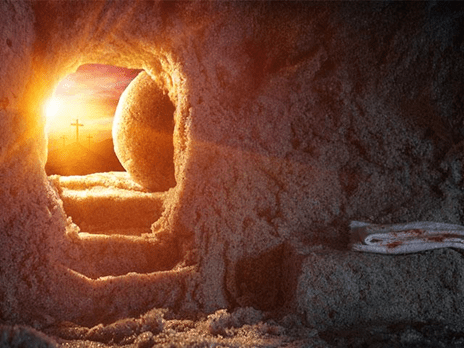
Luke 24:1-4 But very early on Sunday morning they took the ointments to the tomb—and found that the huge stone covering the entrance had been rolled aside. So they went in—but the Lord Jesus’ body was gone.

They stood there puzzled, trying to think what could have happened to it. Suddenly two men appeared before them, clothed in shining robes so bright their eyes were dazzled. The women were terrified and bowed low before them.

5-12 Then the men asked, “Why are you looking in a tomb for someone who is alive? He isn’t here! He has come back to life again! Don’t you remember what he told you back in Galilee—that the Messiah must be betrayed into the power of evil men and be crucified and that he would rise again the third day?”

Then they remembered and rushed back to Jerusalem to tell his eleven disciples—and everyone else—what had happened. (The women who went to the tomb were Mary Magdalene and Joanna and Mary the mother of James, and several others.) But the story sounded like a fairy tale to the men—they didn’t believe it. However, Peter ran to the tomb to look. Stooping, he peered in and saw the empty linen wrappings; and then he went back home again, wondering what had happened.

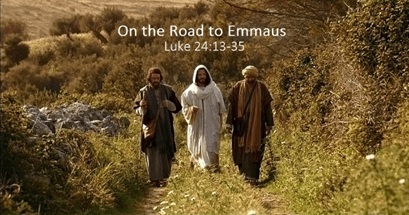
13-18 That same day, Sunday, two of Jesus’ followers were walking to the village of Emmaus, seven miles out of Jerusalem. As they walked along they were talking of Jesus’ death, when suddenly Jesus himself came along and joined them and began walking beside them. But they didn’t recognize him, for God kept them from it.

“You seem to be in a deep discussion about something,” he said. “What are you so concerned about?” They stopped short, sadness written across their faces. And one of them, Cleopas, replied, “You must be the only person in Jerusalem who hasn’t heard about the terrible things that happened there last week.”

19-24 “What things?” Jesus asked.

“The things that happened to Jesus, the Man from Nazareth,” they said. “He was a Prophet who did incredible miracles and was a mighty Teacher, highly regarded by both God and man. But the chief priests and our religious leaders arrested him and handed him over to the Roman government to be condemned to death, and they crucified him. We had thought he was the glorious Messiah and that he had come to rescue Israel.

“And now, besides all this—which happened three days ago— 22-23 some women from our group of his followers were at his tomb early this morning and came back with an amazing report that his body was missing, and that they had seen some angels there who told them Jesus is alive! 24 Some of our men ran out to see, and sure enough, Jesus’ body was gone, just as the women had said.”

25-27 Then Jesus said to them, “You are such foolish, foolish people! You find it so hard to believe all that the prophets wrote in the Scriptures! Wasn’t it clearly predicted by the prophets that the Messiah would have to suffer all these things before entering his time of glory?”

Then Jesus quoted them passage after passage from the writings of the prophets, beginning with the book of Genesis and going right on through the Scriptures, explaining what the passages meant and what they said about himself.

28-35 By this time they were nearing Emmaus and the end of their journey. Jesus would have gone on, but they begged him to stay the night with them, as it was getting late. So he went home with them. As they sat down to eat, he asked God’s blessing on the food and then took a small loaf of bread and broke it and was passing it over to them, when suddenly—it was as though their eyes were opened—they recognized him! And at that moment he disappeared!

They began telling each other how their hearts had felt strangely warm as he talked with them and explained the Scriptures during the walk down the road. Within the hour they were on their way back to Jerusalem, where the eleven disciples and the other followers of Jesus greeted them with these words, “The Lord has really risen! He appeared to Peter!”

Then the two from Emmaus told their story of how Jesus had appeared to them as they were walking along the road and how they had recognized him as he was breaking the bread.

Hope was dead, and the disciples were in despair. But the women went to the tomb, for Jesus’ body still needed to be prepared with spices before being completely consigned to the earth. But the tomb was empty, the soldiers had fled, and now angels were announcing Jesus’ resurrection. The ladies rushed back to Jerusalem with the news, thrilled beyond all telling. Then Peter and John rushed to the tomb. (Luke doesn’t mention John, but John identifies himself as “the other disciple” in his account in John 20.  

Then Jesus joined two believers on the road to Emmaus, explaining himself during the journey. But it was only during the blessing of the bread that the men realized who Jesus was. The two men immediately rushed back to Jerusalem to share their news, joining the others in celebration.

Years ago, the Gaithers wrote a song about Easter that vividly expresses the hopelessness of Good Friday followed by the joy of Easter.

They all walked away, nothing to say,
They just lost their dearest Friend;
All that He said, now He was dead,
So this was the way it would end!

The dreams they had dreamed,
Were not what they seemed,
Now that He was dead and gone;
The garden, the jail, the hammer, the nail,
How could a night be so long?

Then came the morning, night turned into day:
The stone was rolled away, hope rose with the dawn!
Then came the morning,
Shadows vanished before the sun;
Death had lost and life had won,
For morning had come!

The angel, the star, the kings from afar,
The wedding, the water, the wine,
Now it was done, they’d taken her Son,
Wasted before His time!

She knew it was true, she’d watched Him die too,
She’d heard them call Him just a man;
But deep in her heart she knew from the start,
Somehow her Son would live again.

Then came the morning, night turned into day:
The stone was rolled away, hope rose with the dawn!
Then came the morning,
Shadows vanished before the sun;
Death had lost and life had won,
For morning had come!

The old men will dream, the young men will seem
To know what they never have learned.
Your daughters and sons will see what’s to come
Before the Messiah’s return.

Wonders and signs, plans and designs,
Will play out their final day.
Rumors and war will threaten no more,
The waiting bride is caught away!

Here comes the morning, night has turned to day;
The clouds have rolled away, Eternal dawn!
Then comes the morning,
Shadows vanished before the sun.
Death has lost! and life has won,
For morning has come!

Death has lost! and life has won,
For morning has come!

Morning has come!

PRAYER: Father God, thank You for loving us and caring for us. Lord, we celebrate the miracle of Easter and praise You for Jesus’ victory over death and the grave. We thank You that because Jesus lives, we can live also, if we will believe in Jesus and the work he has done for us. In the mighty and precious Name of King Jesus. Amen.
APRIL 4, 2026-GOD CARES FOR ISRAEL #16 WHEN THERE’S NO HOPE LEFT, WHAT DO YOU DO?

April 4, 2026

Matthew 27:45-56 At noon, darkness fell across the whole land until three o’clock. 46 At about three o’clock, Jesus called out with a loud voice, “Eli, Eli, lema sabachthani?” which means “My God, my God, why have you abandoned me?”

Some of the bystanders misunderstood and thought he was calling for the prophet Elijah. 48 One of them ran and filled a sponge with sour wine, holding it up to him on a reed stick so he could drink. But the rest said, “Wait! Let’s see whether Elijah comes to save him.”

Then Jesus shouted out again, and he released his spirit. At that moment the curtain in the sanctuary of the Temple was torn in two, from top to bottom. The earth shook, rocks split apart, and tombs opened. The bodies of many godly men and women who had died were raised from the dead. They left the cemetery after Jesus’ resurrection, went into the holy city of Jerusalem, and appeared to many people.

The Roman officer and the other soldiers at the crucifixion were terrified by the earthquake and all that had happened. They said, “This man truly was the Son of God!”

And many women who had come from Galilee with Jesus to care for him were watching from a distance. Among them were Mary Magdalene, Mary (the mother of James and Joseph), and the mother of James and John, the sons of Zebedee.

The scene burned itself into the brains of all who witnessed it. As a bitter comment on the blindness of the Jews, Pontius Pilate had ordered a sign to be attached to the top of Jesus’ cross. The sign read INRI, Latin shorthand for “Jesus Nazareti Rex Judaorum,” “Jesus of Nazareth, King of the Jews.” (The Roman alphabet lacked the letter “J.”) Hour by hour, the huddled group watched in agony as Jesus struggled to breathe and as he eventually died. Those assembled knew that last cry would haunt them forever. But what would they do now?

The Burial of Jesus

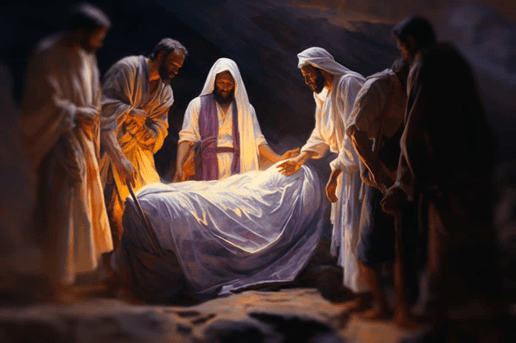
57-61 As evening approached, Joseph, a rich man from Arimathea who had become a follower of Jesus, went to Pilate and asked for Jesus’ body. And Pilate issued an order to release it to him. Joseph took the body and wrapped it in a long sheet of clean linen cloth. He placed it in his own new tomb, which had been carved out of the rock. Then he rolled a great stone across the entrance and left. Both Mary Magdalene and the other Mary were sitting across from the tomb and watching.

The women could only watch so long, for at evening they needed to be indoors, commemorating the Passover. Leaving that tomb was one of the hardest things any of them had ever done. Walking back into Jerusalem, their steps dragged. What would they do now? How could they possibly go on, now that all their hopes and dreams lay dead in that tomb with Jesus?

The Guard at the Tomb

62-66 The next day, on the Sabbath, the leading priests and Pharisees went to see Pilate. They told him, “Sir, we remember what that deceiver once said while he was still alive: ‘After three days I will rise from the dead.’ So we request that you seal the tomb until the third day. This will prevent his disciples from coming and stealing his body and then telling everyone he was raised from the dead! If that happens, we’ll be worse off than we were at first.”

Pilate replied, “Take guards and secure it the best you can.” So they sealed the tomb and posted guards to protect it.

The next day, Roman guards took up their positions. These battle-hardened men wondered what their officers were thinking. Jesus was dead, so what was the point of guarding a corpse? One of the guards, a burly man named Marcus, was joking with a fellow soldier. “So Sextus, the things we do for Mother Roma, right? What are these crazy Jews thinking of? Do they really think those cowardly disciples will come steal this body when most of them didn’t even turn up at the crucifixion? Oh well, things could be worse. We sit here for three days, and then they’ll move us on to another assignment.”

It was the Sabbath, and all Jerusalem was quiet. Those attending temple did so in a subdued fashion. The priests and religious leaders were heaving large sighs of relief. Finally, finally, FINALLY, they had succeeded in getting rid of Jesus of Nazareth. No more ridiculous processions through the streets of Jerusalem. No more embarrassing moments on the teaching steps at the temple. No, Jesus was dead, buried, and through. Now they could return to business as usual.

Meanwhile, somewhere in Jerusalem, Jesus’ followers were gathering for mutual comfort. “We were so sure he was Messiah. He fulfilled all the prophecies. How could all of this have ended so badly? And what’s going to happen to the rest of us? Will Caiaphas and his bunch engage soldiers to swoop down on us as well? And where is God in all of this?

Live long enough, and you will endure times of uncertainty that will echo that Easter Saturday. Someone on whom you have pinned your hopes disappoints you, leaving you wondering how you will cope. You might have left your job for a ministry, only to have the ministry fall apart after you have joined it. Perhaps you have followed a charismatic leader, only to realize you have been duped. The details are not as important as the sense of helplessness, the realization that you don’t know what to do next. At such times, it is important to stop anxious activities and WAIT. We want solutions, and we want them NOW. But God has His own timing, and He knows what He is doing.

What were Jesus’ followers thinking as they sat on that Sabbath? Were they remembering what Jesus had taught about his death and resurrection, or were they merely sunk in grief? And what do we do with Easter Saturday? After the emotional roller coaster that is Good Friday, do we simply go on with our business, anticipating Easter Sunday? This side of the resurrection, we know how the story has played out. Jesus rises from the dead. Marcus and Sextus and all those other guards at the tomb collapse as angels roll away the stone and Jesus calmly marches out, shedding the grave clothes. What’s the use of Easter Saturday?

Easter Saturday should be a time for reflection, for all the events that led up to the crucifixion and contemplating the enormity of Jesus’ sacrificial victory. When Jesus died, as many as 500 saints rose from their graves, showing themselves throughout Jerusalem to the shock of their friends and families. Obviously, Jesus could have died on Friday and arisen on Saturday, so why didn’t he? The answer lay in the hearts of Jesus’ followers. God wanted those men and women to have time to consider everything, to make up their minds to follow even though Jesus was dead. God knew that He was going to send the Holy Spirit to these people on Pentecost, but on Holy Saturday, He wanted them to settle their hearts and minds, even when their hopes appeared dead.

In the midst of his agonies, Job still avowed, “Though He slay me, yet will I trust Him.” (Job 13:15) God allowed Jesus’ followers to endure the uncertainty and hopelessness of Holy Saturday so that He could work in their hearts, preparing them for Jesus’ resurrection. As we contemplate the cross and Jesus’ sufferings, let us ask God to teach us those things He wants us to learn.

PRAYER: Father God, thank You for loving us and caring for us. Lord, help us to trust where we cannot see. Thank You for sending Jesus as the Sacrificial Lamb of God to die for our sins. But thank You even more for the promise of Easter, that because He lives, we can spend eternity with You. In the mighty and precious Name of King Jesus. Amen.
APRIL 3, 2026-GOD CARES FOR ISRAEL #15 JESUS WASHED JUDAS’ FEET TOO!

April 3, 2026

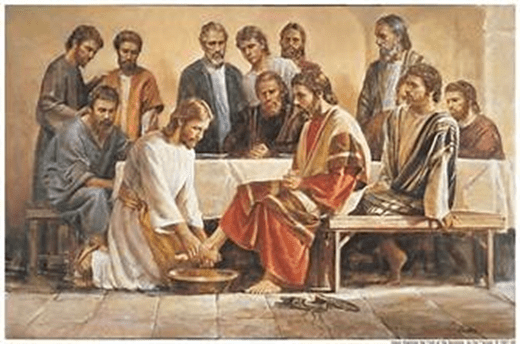
John 13:1-5Before the Passover celebration, Jesus knew that his hour had come to leave this world and return to his Father. He had loved his disciples during his ministry on earth, and now he loved them to the very end. It was time for supper, and the devil had already prompted Judas, son of Simon Iscariot, to betray Jesus. Jesus knew that the Father had given him authority over everything and that he had come from God and would return to God. So he got up from the table, took off his robe, wrapped a towel around his waist, and poured water into a basin. Then he began to wash the disciples’ feet, drying them with the towel he had around him.

10-11 Jesus replied, “A person who has bathed all over does not need to wash, except for the feet,[c] to be entirely clean. And you disciples are clean, but not all of you.” For Jesus knew who would betray him. That is what he meant when he said, “Not all of you are clean.”

Jesus Predicts His Betrayal

18 “I am not saying these things to all of you; I know the ones I have chosen. But this fulfills the Scripture that says, ‘The one who eats my food has turned against me.’

21 Now Jesus was deeply troubled, and he exclaimed, “I tell you the truth, one of you will betray me!”

It’s the night of the Passover meal, and Jesus knows his time is very short, and there are still many things he must teach his disciples. First, Jesus models servant leadership. In Bible times, travelers would always enjoy having their feet washed; however, foot washing was the job of the lowest servant in the household. But that meal was exclusive, involving only Jesus and his disciples. As the disciples entered the room, each of them looked sideways at the others. Lacking servants, somebody would have to wash feet, but who? Competition among the disciples for prominence was already stiff, so washing feet would cause a serious loss of status…or would it? Looking around the room, Jesus smiled wryly and shook his head slightly. That’s when Jesus took off his outside garments, wrapped a towel around his waist, and poured water into a basin, beginning to wash feet. Jesus wasn’t worried about his status, but he was concerned about the unhealthy friction among the disciples.

The foot washing was remarkable enough, but one thing we tend to overlook is this: Jesus washed ALL the disciples’ feet, including Judas Iscariot’s. Jesus already knew that Judas had gone to the religious leaders, plotting to betray him, so why would Jesus serve Judas? Reading the various accounts in the Gospels, it’s obvious that Jesus continued to give Judas every opportunity to repent, to back off, and to refuse to go through with the betrayal. Jesus even made sure Judas received his share of the Passover meal. Judas could have repented and accompanied Jesus and the others to Gethsemane, but he had hardened his heart.

Matthew 26:20-25 When it was evening, Jesus sat down at the table with the Twelve. While they were eating, he said, “I tell you the truth, one of you will betray me.”

Greatly distressed, each one asked in turn, “Am I the one, Lord?”

He replied, “One of you who has just eaten from this bowl with me will betray me. For the Son of Man must die, as the Scriptures declared long ago. But how terrible it will be for the one who betrays him. It would be far better for that man if he had never been born!”

Judas, the one who would betray him, also asked, “Rabbi, am I the one?”

And Jesus told him, “You have said it.”

Traditionally, sharing food indicated an extreme level of trust and a bond that should not be broken. When Judas left the meal, he broke that tradition as well as rejecting Jesus’ acts of service.

Numerous books have been written about Holy Week, about the activities of each day as well as the events of Jesus’ suffering, his death, and resurrection. Judas wasn’t the only disciple to disappoint Jesus that night, for when the soldiers came to arrest Jesus, most of the disciples took to their heels. When John and Peter followed Jesus to the High Priest’s house, onlookers spotted Peter as a Galilean by his regional accent, and Peter repeatedly denied that he even knew Jesus. Eventually, only John and the women would follow Jesus to Calvary, remaining faithful despite everything.

But remember this: Even though Jesus knew that everything was about to fall apart and that he was hours away from suffering and death, he still washed feet. John 13:12-17 After washing their feet, he put on his robe again and sat down and asked, “Do you understand what I was doing? You call me ‘Teacher’ and ‘Lord,’ and you are right, because that’s what I am. And since I, your Lord and Teacher, have washed your feet, you ought to wash each other’s feet. I have given you an example to follow. Do as I have done to you. I tell you the truth, slaves are not greater than their master. Nor is the messenger more important than the one who sends the message. Now that you know these things, God will bless you for doing them.”

So many of us are like the disciples. We are so concerned about appearances and status that we are afraid to look inferior or foolish. And we REALLY don’t want to have to do stinky tasks. I grew up in an old house without indoor plumbing. We had an outhouse 30 meters from the back door; however, during bitter winter weather, the family was forced to use a large chamber pot that then had to be carried out to the outhouse and emptied. As the oldest child, I was the one tasked with emptying that chamber pot. Was it stinky? Yes. I had to be extremely careful to avoid any unfortunate spillages. But I am grateful for having had to do that job. Why? Once you must carry the family chamber pot full of feces and urine to an outhouse to empty it, nothing else will bother you. You have already survived one of the worst tasks there is. When you encounter nauseating work later in life, it won’t matter. (Frankly, given a choice, I would rather have washed stinky feet!)

So remember, as we are considering Jesus’ last words and deeds, that the Son of God took off his robe, tied a towel around his waist, and then washed the stinky, dirty feet of all the disciples, including Judas. And also remember that Jesus told his disciples, “I tell you the truth, slaves are not greater than their master. Nor is the messenger more important than the one who sends the message. Now that you know these things, God will bless you for doing them.” (John 13:16-17)

PRAYER: Father God, thank You for loving us and caring for us. Lord, help us to remember Your example and gladly serve those around us, even those who might have hurt us. In the mighty and precious Name of King Jesus. Amen.
APRIL 2, 2026-GOD CARES FOR ISRAEL #14 BETRAYED FOR THE PRICE OF A SLAVE

April 2, 2026

Matthew 26:1-5 When Jesus had finished saying all these things, he said to his disciples, “As you know, Passover begins in two days, and the Son of Man will be handed over to be crucified.”

At that same time the leading priests and elders were meeting at the residence of Caiaphas, the high priest, plotting how to capture Jesus secretly and kill him. “But not during the Passover celebration,” they agreed, “or the people may riot.”

The religious leaders in Jerusalem were facing a terrible problem. Until now, Jesus of Nazareth had only been a minor irritant, a conundrum to be ignored as much as possible and to be dealt with only when necessary. After all, these men had managed to weather the public adulation for John the Baptist and were secretly relieved when Herod solved that problem by beheading John. Surely, if Caiaphas and the other priests and rulers could just hang on, the Romans would eventually solve the Jesus problem. But now these men were worried. Due to the Passover celebrations, the population of Jerusalem had swelled to five times its normal number, and many of those coming from the hinterlands had witnessed Jesus’ teaching and preaching. Then Jesus made that dramatic entry into Jerusalem, fulfilling prophecy as he did so. Couldn’t this man simply make a big mistake, mishandle himself, mishandle Scripture, and give them a perfect excuse to hand him over to the Romans?

Jesus Anointed at Bethany

6-13 Meanwhile, Jesus was in Bethany at the home of Simon, a man who had previously had leprosy. While he was eating, a woman came in with a beautiful alabaster jar of expensive perfume and poured it over his head.

The disciples were indignant when they saw this. “What a waste!” they said. “It could have been sold for a high price and the money given to the poor.”

But Jesus, aware of this, replied, “Why criticize this woman for doing such a good thing to me? You will always have the poor among you, but you will not always have me. She has poured this perfume on me to prepare my body for burial. I tell you the truth, wherever the Good News is preached throughout the world, this woman’s deed will be remembered and discussed.”

The stories about a woman anointing Jesus vary, depending on which Gospel you read. John claims it was Mary, the sister of Lazarus, who did this, and that she anointed Jesus’ feet and wiped them with her hair. Matthew and Mark claim the anointing took place at the home of Simon the Leper, and that the woman poured the perfume over Jesus’ head. But what’s to prevent the possibility that both anointings actually took place, one by Mary and one by another lady later on? Both anointings took place in Bethany, so it’s possible that once Mary had anointed Jesus’ feet, this other lady heard of Mary’s actions and anointed Jesus’ head.

What’s shocking is the disciples’ reaction to the anointing. Rather than recognize this action as prophetic, all the disciples could think of was the money. Although Matthew doesn’t quote Judas, John claims Judas was the one who complained because he was already stealing from the poor box and coveted the money that perfume would have brought.

Judas Agrees to Betray Jesus

14-16 Then Judas Iscariot, one of the twelve disciples, went to the leading priests and asked, “How much will you pay me to betray Jesus to you?” And they gave him thirty pieces of silver. From that time on, Judas began looking for an opportunity to betray Jesus.

Ever since Judas betrayed Jesus, people have speculated about his motives. Did Judas expect Jesus was going to establish an earthly kingdom? Was Judas disgusted when he realized Jesus’ goals were spiritual rather than political? Did Jesus’ response about the perfume trigger something in Judas? Or did political and religious realities begin to dawn on Judas once he arrived in Jerusalem? Did Judas betray Jesus to save his own skin?

Nobody can answer those questions apart from God, but what is remarkable is that Judas, who loved money and who had been systematically looting the offerings for the poor, agreed to betray Jesus for the price of the lowest form of slave, thirty pieces of silver. This act suggests that Judas had come to hate and resent Jesus for failing to meet Judas’ expectations. If Judas had simply been after money, the religious leaders would gladly have given him any amount he asked, for they longed to be rid of Jesus. But for Judas to agree to a slave’s price demonstrated a resentment far beyond mere avarice. Both Judas and the religious rulers were essentially saying, “Jesus, you have claimed to be the Son of God, the King of Heaven. Here! Look what we can do to you!”

Ever since Judas betrayed Jesus, believers have disparaged Judas. “After all, WE are virtuous and WE would never do such a thing!” Oh really? C. H. Spurgeon once observed, “Yet many have sold Jesus for a less price than Judas received; a smile or a sneer has been sufficient to induce them to betray their Lord.” Recently, sporting news has focused on one professional basketball player who has spoken out against the promotion of LGBTQ within basketball, stating that it is unscriptural. This man has been censured for his stand. But what about all the other players who claim to be Christian? So far, those people have remained silent. Eventually, Judas would demonstrate his betrayal of Jesus with a kiss. We believers must examine our hearts to see if we are fulfilling Spurgeon’s sad observations. On Palm Sunday, churches in Nigeria were attacked and burned; now videos of worshipers singing praises in the ruins are circulating. These people are making themselves targets for destruction; yet they are remaining true. Are we remaining true to Jesus, or do we try to dodge taking a stand, claiming we simply want peace. Peace at any price is no peace. May God help us, so that we will not become little Judases in our own right!

PRAYER: Father God, thank You for loving us and caring for us. Lord, help us to remain true to You, even when it is difficult. In the mighty and precious Name of King Jesus. Amen.