Archive for the ‘Uncategorized’ Category

APRIL 6, 2022 SO YOU WANT TO BE A PROPHET #22 1 SAMUEL 14:47 – 52 ARE YOU GROWING AS A LEADER, OR HAVE YOU STAGNATED?

April 6, 2022

1 Samuel 14:47 – 52 “After Saul had assumed the kingship over Israel, he fought against all his enemies on every side—the Moabites, the Ammonites, the Edomites, the kings of Zobah, and the Philistines. Wherever he turned, he routed them. He fought valiantly and defeated the Amalekites, delivering Israel from the hands of its plunderers.

Now the sons of Saul were Jonathan, Ishvi, and Malchishua. His two daughters were named Merab (his firstborn) and Michal (his younger daughter). His wife’s name was Ahinoam daughter of Ahimaaz. The name of the commander of his army was Abner, the son of Saul’s uncle Ner. Saul’s father Kish and Abner’s father Ner were sons of Abiel.

And the war with the Philistines was fierce for all the days of Saul. So whenever he noticed any strong or brave man, he would enlist him.”

This account is reminiscent of the conquest accounts from the Book of Joshua; on the other hand, Saul was still functioning under God’s anointing, so perhaps he really did succeed the way these verses indicate. When Saul failed to wait for Samuel and offered sacrifices himself, he lost the opportunity for his kingdom to be established for many generations. But God retained Saul as king over Israel, and Samuel continued to pray for him.  Saul still had lots of opportunities to obey God and to leave a godly heritage behind for succeeding generations.

Saul was impetuous and short – sighted. but he did a number of things correctly. “Whenever he (Saul) noticed any strong or brave man, he would enlist him.” These men obviously saw something to admire in Saul; otherwise, they would never have allowed themselves to be enlisted. According to the “Chronology of the United Kingdom” timeline, Saul was probably at least 30 years into his 42 – year reign. Samuel died during the 38th year of Saul’s reign, and things deteriorated noticeably at that point, perhaps because Saul had relied so much on Samuel or perhaps because Samuel was no longer alive to pray on Saul’s behalf. (https://www.bible.ca/archeology/bible-archeology-maps-timeline-chronology-1samuel-16-20-saul-jonathan-david-1019-1012bc.htm )

As Saul continued in his reign, he failed to learn from his mistakes, to grow and to become a better ruler. Samuel was around for 38 of the 42 years of Saul’s reign and probably would have been glad to help Saul and to teach him. Sadly, Saul never took advantage of Samuel as a teacher. Saul thought of himself as a warrior and the longer he was king, the more his ego expanded and the less willing he was to listen to advice if it didn’t agree with his preconceived ideas.

APPLICATION: One problem with leadership is this: You must keep growing or you will stagnate. You must keep re – inventing yourself and allowing your organization to grow. The day you refuse to change is the day things will begin go downhill. Saul did well as long as he was in warrior mode, but there is nothing to indicate that he ever grew spiritually or emotionally. Even though Saul’s impatience had cost him the opportunity to found a dynasty, that didn’t change.

Throughout my medical career, I have noticed that the people who live long and productive lives are those who remain vitally interested in everything around them. Many times, these people take up new hobbies, learn new languages, and continue useful community services such as reading programs for primary school children. Anna Mary Robertson Moses, a.k.a. “Grandma Moses,” was a well – known American painter who did not begin recording scenes from her New England childhood until she was 77. Grandma Moses painted up to a few months before her death at age 101.

The question for all of us as we grow older is this: are we becoming better or more bitter? Those who allow God to continue to change them and make them into His likeness become sweeter as they age. Those who refuse to allow God to renew them are doomed to becoming smaller and more bitter.

Benjamin Franklin observed that “A man wrapped up in himself makes a very small bundle.” Saul remained wrapped up in himself for his entire reign as king. The results were tragic.

PRAYER: Father God, thank You for loving us and for caring for us. Lord, help us to grow into Your likeness. In the mighty and precious Name of King Jesus. Amen.

APRIL 5, 2022 SO YOU WANT TO BE A PROPHET #21 1 SAMUEL 14: 24 – 46 WHEN BEING A DRAMA KING COSTS YOU A MAJOR VICTORY!

April 5, 2022

1 Samuel 14:24 – 46 “Now the men of Israel were in distress that day, for Saul had placed the troops under an oath, saying, “Cursed is the man who eats any food before evening, before I have taken vengeance on my enemies.” So none of the troops tasted any food. Then all the troops entered the forest, and there was honey on the ground. And when they entered the forest and saw the flowing honey, not one of them put his hand to his mouth, because they feared the oath.

Jonathan, however, had not heard that his father had charged the people with the oath. So he reached out the end of the staff in his hand, dipped it into the honeycomb, and put his hand to his mouth; and his eyes brightened (and his strength was renewed.) Then one of the soldiers told him, “Your father bound the troops with a solemn oath, saying, ‘Cursed is the man who eats food today.’ That is why the people are faint.” “My father has brought trouble to the land,” Jonathan replied. “Just look at how my eyes have brightened because I tasted a little of this honey. How much better it would have been if the troops had eaten freely today from the plunder they took from their enemies! Would not the slaughter of the Philistines have been much greater?”

That day, after the Israelites had struck down the Philistines from Michmash to Aijalon, the people were very faint. So they rushed greedily to the plunder, taking sheep, cattle, and calves. They slaughtered them on the ground and ate meat with the blood still in it.

Then someone reported to Saul: “Look, the troops are sinning against the LORD by eating meat with the blood still in it.”

“You have broken faith,” said Saul. “Roll a large stone over here at once.” Then he said, “Go among the troops and tell them, ‘Each man must bring me his ox or his sheep, slaughter them in this place, and then eat. Do not sin against the LORD by eating meat with the blood still in it.’”

So that night everyone brought his ox and slaughtered it there. Then Saul built an altar to the LORD; it was the first time he had built an altar to the LORD.

And Saul said, “Let us go down after the Philistines by night and plunder them until dawn, leaving no man alive!”

“Do whatever seems good to you,” the troops replied.

But the priest said, “We must consult God here.”

So Saul inquired of God, “Shall I go down after the Philistines? Will You give them into the hand of Israel?”

But God did not answer him that day.

Therefore Saul said, “Come here, all you leaders of the troops, and let us investigate how this sin has occurred today. As surely as the LORD who saves Israel lives, even if it is my son Jonathan, he must die!”

But not one of the troops said a word.

Then Saul said to all Israel, “You stand on one side, and I and my son Jonathan will stand on the other side.” And the troops replied, “Do what seems good to you.”

So Saul said to the LORD, the God of Israel, “Why have You not answered Your servant this day? If the fault is with me or my son Jonathan, respond with Urim; but if the fault is with the men of Israel, respond with Thummim.” And Jonathan and Saul were selected, but the people were cleared of the charge.

Then Saul said, “Cast the lot between me and my son Jonathan.” And Jonathan was selected. “Tell me what you have done,” Saul commanded him.

Michmash. Map by BibleAtlas.org.So Jonathan told him, “I only tasted a little honey with the end of the staff that was in my hand. And now I must die?”

And Saul declared, “May God punish me, and ever so severely, if you, Jonathan, do not surely die!”

But the people said to Saul, “Must Jonathan die—he who accomplished such a great deliverance for Israel? Never! As surely as the LORD lives, not a hair of his head will fall to the ground, for with God’s help he has accomplished this today.”

So the people rescued Jonathan, and he did not die. Then Saul gave up his pursuit of the Philistines, and the Philistines returned to their own land.”

SAUL WAS A DUNCE AND AN EGOTIST!  Good commanders consider the welfare of their troops and make sure they will be able to fight as effectively as possible. Saul swore a ridiculous oath, “Cursed is the man who eats any food before evening, before I have taken vengeance on my enemies.” HUH? Whose enemies are we talking about here? The Philistines are the enemies of all of Israel, not merely Saul. But Saul is a drama king and puts his mouth into gear before engaging his brain. The results are disastrous. Instead of the Israelites being able to completely defeat their enemies, these fighters are on the point of collapse, even though God has provided honey to give them energy. But Saul has sworn a terrible oath, and these guys would rather faint than be killed.

Jonathan doesn’t get the memo, so he eats some honey and feels energized. When the Israelites learn that Jonathan has taken some honey, they are so hungry that they begin slaughtering animals and eating them without allowing the blood to drain on the ground as Moses commanded. Saul does well in commanding the soldiers to bring their animals for ritual slaughter and also builds an altar. But where are the priests who should be overseeing the slaughter of the animals? We don’t know if the priests were involved or not.

Saul wants to attack the Philistines by night; however, the priest appropriately advises that they consult the Lord. When God doesn’t give a quick answer, Saul decides that someone has sinned and demands the casting of lots. When the divination process fingers Jonathan, Saul is so power drunk that he is even willing to sacrifice his own son rather than admit that he has made a mistake. Jonathan is saved by a massive show of public support. Saul abandons his plans to attack the Philistines by night, and the Philistines return to their own land.

APPLICATION: Saul has the opportunity to completely wipe out the Philistine forces, if he will just allow God to advise him and will refrain from swearing dramatic oaths. But Saul is a drama king and can’t ignore the chance to utter a sweeping edict. Saul is no worse than most of the rulers of his time; however, Saul hasn’t thought things through at all.

Saul is demanding that his fighting men chase their enemies over rough terrain for hours without any food whatsoever. (Evidently, the soldiers are allowed to drink water.) Saul lacks consistency. If you could graph Saul’s emotions by weather emojis, there would be sunshine, followed by tornadoes, by thunder and lightning and then by more sunshine. One moment Saul is making pretentious announcements and the next he is making sure his soldiers are slaughtering their animals according to the Law of Moses. Saul even builds an altar, presumably using undressed stones as prescribed by God. But the total victory that Saul might have won is lost because he has denied his men the energy – giving honey God has provided for them.

The sad part about King Saul is that he has good people to advise him. Ahijah is Eli’s great grandson and a Levitical priest. But Saul only asks advice from Ahijah when he has run out of ideas and wants Ahijah to perform divination using the ephod, the Urim, and the Thummim. Obviously, Saul has never studied the Law of Moses for himself as God ordered originally. Kings are supposed to write out copies of the law for themselves and then study it thoroughly and repeatedly, something Saul has clearly neglected to do.

 Preparation is essential for any endeavor to succeed. Saul has failed to ground himself in the Word of God and appears driven by his emotions – a dangerous combination. May all of us who are leaders reject the Saul model of leadership!

PRAYER: Father God, thank You for loving us and for caring for us! Lord, help us to be led by Your Holy Spirit and to wait for Your guidance. In the mighty and precious Name of King Jesus. Amen.  

APRIL 4, 2022 SO YOU WANT TO BE A PROPHET #20 1 SAMUEL 14:1 – 23 JONATHAN RISKS EVERYTHING AND WINS!

April 4, 2022
THE PASS BETWEEN BOZEZ AND SENEH

1 Samuel 14:1 – One day Jonathan, son of Saul, said to the young man bearing his armor, “Come, let us cross over to the Philistine outpost on the other side.” But Jonathan did not tell his father.

Meanwhile, Saul was staying under the pomegranate tree in Migron on the outskirts of Gibeah. (Some sources say “in the pomegranate cave.” And the troops who were with him numbered about six hundred men, including Ahijah, who was wearing an ephod. He was the son of Ichabod’s brother Ahitub son of Phinehas, the son of Eli the priest of the LORD in Shiloh. But the troops did not know that Jonathan had left.

Now there were cliffs on both sides of the pass that Jonathan intended to cross to reach the Philistine outpost. One was named Bozez and the other Seneh. One cliff stood to the north toward Michmash, and the other to the south toward Geba. Jonathan said to the young man bearing his armor, “Come, let us cross over to the outpost of these uncircumcised men. Perhaps the LORD will work on our behalf. Nothing can hinder the LORD from saving, whether by many or by few.”

His armor-bearer replied, “Do all that is in your heart. Go ahead; I am with you heart and soul.”

“Very well,” said Jonathan, “we will cross over toward these men and show ourselves to them. If they say, ‘Wait until we come to you,’ then we will stay where we are and not go up to them. But if they say, ‘Come on up,’ then we will go up, because this will be our sign that the LORD has delivered them into our hands.”

So the two of them showed themselves to the outpost of the Philistines, who exclaimed, “Look, the Hebrews are coming out of the holes in which they were hiding!”

So the men of the outpost called out to Jonathan and his armor-bearer, “Come on up, and we will teach you a lesson!”

“Follow me,” Jonathan told his armor-bearer, “for the LORD has delivered them into the hand of Israel.”

And Jonathan climbed up on his hands and feet, with his armor-bearer behind him. And the Philistines fell before Jonathan, and his armor-bearer followed and finished them off. In that first assault, Jonathan and his armor-bearer struck down about twenty men over half an acre of land.

Then terror struck the Philistines in the camp, in the field, and among all the people. Even those in the outposts and raiding parties trembled. Indeed, the earth quaked and panic spread from God.

Now when Saul’s watchmen at Gibeah in Benjamin looked and saw the troops melting away and scattering in every direction, Saul said to the troops who were with him, “Call the roll and see who has left us.”

And when they had called the roll, they saw that Jonathan and his armor-bearer were not there.

Then Saul said to Ahijah, “Bring the ark of God.” (For at that time it was with the Israelites.) While Saul was talking to the priest, the commotion in the Philistine camp continued to increase. So Saul said to the priest, “Withdraw your hand.”

Then Saul and all his troops assembled and marched to the battle, and they found the Philistines in total confusion, with each man wielding the sword against his neighbor. And the Hebrews who had previously gone up into the surrounding camps of the Philistines now went over to the Israelites who were with Saul and Jonathan. When all the Israelites who had been hiding in the hill country of Ephraim heard that the Philistines were fleeing, they also joined Saul and Jonathan in the battle. So the LORD saved Israel that day, and the battle moved on beyond Beth-aven.”

Was Jonathan Saul’s son? The Bible  is a little vague on dates; however, there is a helpful timeline at https://www.bible.ca/archeology/bible-archeology-maps-timeline-chronology-1samuel-16-20-saul-jonathan-david-1019-1012bc.htm. According to this timeline, Saul was born in 1082 and Jonathan was born in 1067 when Saul was 25. By the time of the battles described in 1 Samuel 14, Jonathan might have been at least 20 and would already be a seasoned warrior. The Israelites had been fighting guerilla warfare against the Philistines for many years. While Saul and his men are lodged on the outskirts of Gibeah, Jonathan and his armor bearer take off on a mission of their own. Does Jonathan really believe in God? Certainly, Jonathan’s explanation to his armor – bearer would suggest it. ““Come, let us cross over to the outpost of these uncircumcised men. Perhaps the LORD will work on our behalf. Nothing can hinder the LORD from saving, whether by many or by few.” If Jonathan is a believer, that would help explain one of the reasons that David and he later bond together. Unfortunately, Saul is still depending on other people for faith, and second – hand faith is worthless.

Jonathan and his armor – bearer attack the Philistines, slaughtering twenty men. Then God weighs in, sending an earthquake and creating such panic that the Philistines begin attacking one another! Turncoat Hebrews who have attached themselves to the Philistines suddenly have a change of heart, joining Saul’s forces. Other Israelites who have been hiding in the hills also join Saul’s forces.

APPLICATION: What was the difference between Saul and Jonathan? Saul had the kingship and should have been able to inspire men to join him; however, Saul was sitting with 600 men doing nothing except watching the Philistines when Jonathan and his armor – bearer went out and attacked the Philistines, trusting God to help them. Jonathan had faith and Saul did not.

Saul was settling for being safe and prudent, but when he wanted to hear from God, he had to involve the high priest. Saul was even about to employ the ark as some kind of talisman when the roar of battle from the Philistine camp became deafening. Saul might not have had faith, but he knew a battle when he heard one.

Perhaps today you find yourself caught between Jonathan’s approach and Saul’s. You have prayed and feel that God is calling you to do something wonderful, something so audacious that if God does not help you, you will fail miserably. You can probably identify with Jonathan and his armor – bearer as they climbed up that cliff with those Philistine soldiers waiting to murder them. It’s as if you find yourself scrambling for footing and handholds while you concentrate on the actions you must take as soon as you reach the top of the cliff. One wrong move and you will be annihilated with your work in ruins.

TAKE HEART!!! The same God who empowered Jonathan and his armor – bearer to gain that victory is the very God who is calling you to step out and take risks for Him. Remember Jonathan’s words to his armor – bearer:
Perhaps the LORD will work on our behalf. Nothing can hinder the LORD from saving, whether by many or by few.”

PRAYER: Father God, thank You for loving us and for caring for us. Lord, help all who are reading this devotional to wait on Your guidance but to step out in faith when they feel Your leading. In the mighty and precious Name of King Jesus. Amen.

APRIL 3, 2022 SO YOU WANT TO BE A PROPHET #19 1 SAMUEL 13:16 – 23 HOW DO YOU FIGHT WITHOUT WEAPONS?

April 3, 2022
ANCIENT WEAPONS AND HAND TOOLS

1 Samuel 13:16 – 23 “Now Saul and Jonathan his son and the troops with them were staying in Geba of Benjamin, while the Philistines camped at Michmash. And raiders went out of the Philistine camp in three divisions. One headed toward Ophrah in the land of Shual, another toward Beth-horon, and the third down the border road overlooking the Valley of Zeboim facing the wilderness.

And no blacksmith could be found in all the land of Israel, because the Philistines had said, “The Hebrews must not be allowed to make swords or spears.” Instead, all the Israelites would go down to the Philistines to sharpen their plowshares, mattocks, axes, and sickles. The charge was a pim for sharpening a plowshare or mattock, a third of a shekel for sharpening a pitchfork or an ax, and a third of a shekel for repointing an oxgoad. So on the day of battle not a sword or spear could be found in the hands of the troops with Saul and Jonathan; only Saul and his son Jonathan had weapons. And a garrison of the Philistines had gone out to the pass at Michmash.”

Plowshares, mattocks, axes, oxgoads, pitchforks, and sickles – these were the only weapons the Israelites had to fight the Philistines. WHY? The Israelites had forsaken the One True Living God, and in turn, He had also forsaken them. By this point, the Philistines shouldn’t even have existed; the Israelites should have wiped them out. Instead, the Philistines had so much control over the Israelites that they were making sure the Israelites wouldn’t be able to arm themselves. Why were there no blacksmiths in Israel? Couldn’t some Israelite have sneaked off to learn? Evidently, the Philistines had infiltrated Israelite society so thoroughly that they would know if a blacksmith appeared. This fact suggests that there might have been Israelites who were secretly cooperating with the Philistines and reporting on their own people.

Now three separate Philistine raiding parties had left the camp. The day of battle had arrived, but only Saul and Jonathan had actual weapons; on the other hand, the Israelites had mattocks, axes, oxgoads, pitchforks, and sickles. Wielded effectively, these hand tools could be deadly, although there were no long – range weapons such as spears or bows and arrows.

APPLICATION: Sometimes we come up to situations for which we feel totally unprepared! We look at our resources and despair, feeling that all our efforts are doomed to failure. But the question that God posed to Moses at the burning bush interview is still valid: What is that in your hand?

True, Saul’s men lacked traditional weapons; yet, those hand tools, if sharpened and used intelligently, could do a great deal of damage. The challenge for Saul was going to be that of strategy. Saul and his men would need to take the Philistines by surprise in a situation in which long range weapons and chariots would be ineffective. And the biggest question of all was this: would God help the Israelites?

Over – reliance on technology is a bad mistake. It is better to have simple tools that work than to have something sophisticated that breaks down and requires expensive parts to repair. At the moment, we have a digital refrigerator that is nothing more than a giant doorstop. A power surge hit one day, frying the mother board. Until now, we have been unable to find anyone who can work on the refrigerator.

Sitting in that camp and looking at fighting men armed only with farm tools, Saul might have been tempted to despair. But God had anointed Saul as king and even if Saul had failed in the matter of the sacrifices, God was still honoring that anointing. The saddest part of the whole story was that Saul never really turned to the Lord himself, preferring to rely on Samuel to do all the believing for him.

Faith does not grow when we have everything we need. Faith grows when we are forced to depend on God. When we returned to our village during the Northern Ethnic Conflict of 1994, I had very few surgical instruments with which to operate. One day a woman came with vaginal bleeding; she had lost a pregnancy but retained part of the placenta. With no uterine curettes available, my husband bent a chromed bicycle spoke into the shape of a curette and then attached the large brass valve stem for a big lorry tire as a handle. I used that curette for a long time until I was able to get better instruments. With no electricity, we needed light to do deliveries and start IV’s. My husband rigged up a car battery to a 12-volt light, placing the battery in the lower part of a small bedside stand and then rigging a support for the light so that we had a portable light source that could be wheeled wherever we needed it. Until then, we had been relying on flickering kerosene lamps.

Perhaps today you feel stranded. The place where you worked has folded and you are struggling to pay bills. Why not ask God to show you what He has already built into your situation? What talents or interests do you have? Do you belong to any hobby groups? Don’t overlook anything; you never know what God may use to save you.

PRAYER: Father God, thank You for loving us and for caring for us. Lord, there are many who are reading these words and who wonder if there is anything good or redeemable in their lives. Please open the eyes of these people to see the provision you have already built into their situations. Help Your children to move forward. In the mighty and precious Name of King Jesus. Amen.
APRIL 2, 2022 SO YOU WANT TO BE A PROPHET #18 1 SAMUEL 13:1 – 15 SAUL BLOWS IT BIG TIME!

April 2, 2022

1 Samuel 13:1 – 15 “Saul was thirty years old when he became king, and he reigned over Israel forty-two years. He chose for himself three thousand men of Israel: Two thousand were with Saul at Michmash and in the hill country of Bethel, and a thousand were with Jonathan in Gibeah of Benjamin. And the rest of the troops he sent away, each to his own home.

Then Jonathan attacked the Philistine outpost at Geba, and the Philistines heard about it. So Saul blew the ram’s horn throughout the land, saying, “Let the Hebrews hear!”

And all Israel heard the news: “Saul has attacked an outpost of the Philistines, and now Israel has become a stench to the Philistines!” Then the people were summoned to join Saul at Gilgal.

Now the Philistines assembled to fight against Israel with three thousand chariots, six thousand horsemen, and troops as numerous as the sand on the seashore. They went up and camped at Michmash, east of Beth-aven.

Seeing that they were in danger because their troops were hard-pressed, the men of Israel hid in caves and thickets, among the rocks, and in cellars and cisterns. Some Hebrews even crossed the Jordan into the land of Gad and Gilead. Saul, however, remained at Gilgal, and all his troops were quaking in fear.

And Saul waited seven days for the time appointed by Samuel, but Samuel did not come to Gilgal, and the troops began to desert Saul. So he said, “Bring me the burnt offering and the peace offerings.” And he offered up the burnt offering.

Just as he finished offering the burnt offering, Samuel arrived, and Saul went out to greet him.

“What have you done?” Samuel asked.

And Saul replied, “When I saw that the troops were deserting me, and that you did not come at the appointed time and the Philistines were gathering at Michmash, I thought, ‘Now the Philistines will descend upon me at Gilgal, and I have not sought the favor of the LORD.’ So I felt compelled to offer the burnt offering.”

“You have acted foolishly,” Samuel declared. “You have not kept the command the LORD your God gave you; if you had, the LORD would have established your kingdom over Israel for all time. But now your kingdom will not endure; the LORD has sought a man after His own heart and appointed him ruler over His people, because you have not kept the command of the LORD.”

Then Samuel set out from Gilgal and went up to Gibeah in Benjamin. And Saul numbered the troops who were with him, about six hundred men.”

Saul won a single victory over the Ammonites because of the Lord. But the Ammonites came from the east while the Philistines were right there in Canaan. The Philistines were one of the groups that the Israelites failed to conquer, and now the Israelites were paying for it. How old was Saul at the time of these events? Saul was 30 years old when he became king and reigned until he was 72. Even if Saul was a father as a teenager, his biological son would scarcely be old enough to fight. But what if Jonathan was not Saul’s son, but a nephew? If Saul were a 30 year – old Ghanaian, he could easily refer to a nephew as his son, even if the nephew was nearly as old as he was. The nephew would refer to Saul as his “junior father” and would give him the same respect as a father. If such a relationship prevailed in Israel, it could explain the age question and it could also explain the fact that Samuel was still alive to offer sacrifices.

Saul was NOT a believer and did not know the Lord. Had Saul known the Lord, Saul would have realized that he could pray without offering animal sacrifices; however, Saul’s view of the Lord was very similar to that of the Philistines for their god Dagon. Saul obviously thought there was something magic about sacrifices. When Saul saw his men beginning to desert, he panicked and made the sacrifices himself, even though he was not qualified to do so. Saul made yet another mistake; he failed to give Samuel the full seven days Samuel had advised him to wait. That failure to wait cost Saul and his descendants a kingdom.

What was wrong with what Saul did besides the obvious fact that he failed to wait for Samuel? Nobody was teaching anybody the Law of Moses! In Deuteronomy 17 God described the manner in which kings were to conduct themselves. God ordered that any kings of Israel would personally copy the law for themselves and continue to study that law for their entire reign so that they would fulfill God’s will for their kingship. But the priests were not faithful in their role as teachers, and Saul was a Scriptural illiterate. Without any teaching, it is little wonder that Saul also did not know God’s commands for going to war.

Deuteronomy 20:1 – 8 says, When you go out to war against your enemies and see horses, chariots, and an army larger than yours, do not be afraid of them; for the LORD your God, who brought you out of the land of Egypt, is with you. When you are about to go into battle, the priest is to come forward and address the army, saying to them, “Hear, O Israel, today you are going into battle with your enemies. Do not be fainthearted or afraid; do not be alarmed or terrified because of them. For the LORD your God is He who goes with you to fight for you against your enemies, to give you the victory.”

Furthermore, the officers are to address the army, saying, “Has any man built a new house and not dedicated it? Let him return home, or he may die in battle and another man dedicate it. Has any man planted a vineyard and not begun to enjoy its fruit? Let him return home, or he may die in battle and another man enjoy its fruit. Has any man become pledged to a woman and not married her? Let him return home, or he may die in battle and another man marry her.” Then the officers shall speak further to the army, saying, “Is any man afraid or fainthearted? Let him return home, so that the hearts of his brothers will not melt like his own.”

Samuel failed to remember that God used Gideon and 300 men to deliver Israel. Gideon began with 32,000 men and when he offered anyone who was fearful the chance to go home, 22,000 of them took off in a cloud of dust. Then God pared that number of 10,000 down to 300 men who were actually prepared to fight. (See Judges 8 for Gideon’s story.) Instead of panicking, Saul should have been happy to see the deserters leave before they could dishearten anyone else, and he should even have asked if there was anybody else who needed to leave.

APPLICATION: “Di aboterE!” (Twi) “Gii sula!” (Likpakpaln) “Exercise patience!” When you work in a country where transportation can be a challenge and events take place whenever people arrive, you must learn to be patient. Saul lost a kingdom because he paid no attention to God’s Word and failed to exercise patience. Notice the phrase “I felt compelled.” So many times, we may feel COMPELLED to do something. Our thinking may be very similar to Saul’s: “If I don’t do it now, EVERYTHING is going to go wrong!” We “awfulize” rather than stepping back and praying to see what God wants us to do. Had Saul given Samuel until sundown on the day Samuel had designated, Samuel would have arrived and would have made the sacrifice properly. Saul’s kingdom would have been secure.

Saul really had two problems; he didn’t know the Law of Moses and he was swayed by popular opinion. Undoubtedly, there were lots of men urging Saul to go ahead and make that sacrifice. Even if there were men quietly advising Saul to wait, their voices were drowned out by the noise of the crowd. The problem with crowds is that they are fickle; they will scream advice until that advice proves disastrous, and then they will suddenly disappear, distancing themselves from the leader whom they have pushed into making a bad decision. They may even criticize that leader. “I KNEW he shouldn’t have done that!”

There is a saying in leadership circles, “If you want to make everyone happy, don’t be a leader – sell ice cream!” Shakespeare told us, “Uneasy lies the head that wears a crown.” Saul was used to adulation for his appearance and for his victory over the Ammonites. When the crowd turned ugly, Saul had no spiritual root to keep him in an upright position. The very same thing can happen to any one of us. Will we listen to God and to His Word, or will we listen to the crowds? Listen to God and gain a kingdom. Listen to the crowd and lose a kingdom. The choice is ours.

PRAYER: Father God, thank You for loving us and for caring for us. Lord, help us to whole – heartedly study Your Word so that we will not sin against You. In the mighty and precious Name of King Jesus. Amen.

APRIL 1, 2022 SO YOU WANT TO BE A PROPHET #17 1 SAMUEL 12:1-25 THE PROPHET SAMUEL COULD ACCOUNT FOR HIS CAREER – CAN WE DO THE SAME?

April 1, 2022

1 Samuel 12:1 – 25 “Then Samuel said to all Israel, “I have listened to your voice in all that you have said to me, and I have set over you a king. Now here is the king walking before you, and I am old and gray, and my sons are here with you. I have walked before you from my youth until this day. Here I am. Bear witness against me before the LORD and before His anointed: Whose ox or donkey have I taken? Whom have I cheated or oppressed? From whose hand have I accepted a bribe and closed my eyes? Tell me, and I will restore it to you.”

“You have not wronged us or oppressed us,” they replied, “nor have you taken anything from the hand of man.”

Samuel said to them, “The LORD is a witness against you, and His anointed is a witness today, that you have not found anything in my hand.”

“He is a witness,” they replied.

Then Samuel said to the people, “The LORD is the One who appointed Moses and Aaron, and who brought your fathers up out of the land of Egypt. Now present yourselves, so that I may confront you before the LORD with all the righteous acts He has done for you and your fathers.

When Jacob went to Egypt, your fathers cried out to the LORD, and He sent them Moses and Aaron, who brought your fathers out of Egypt and settled them in this place. But they forgot the LORD their God, and He sold them into the hand of Sisera, the commander of the army of Hazor, and into the hands of the Philistines and the king of Moab, who fought against them.

Then they cried out to the LORD and said, ‘We have sinned, for we have forsaken the LORD and served the Baals and Ashtoreths. Now deliver us from the hands of our enemies, that we may serve You.’ So the LORD sent Jerubbaal, Barak, Jephthah, and Samuel, and He delivered you from the hands of your enemies on every side, and you lived securely. But when you saw that Nahash king of the Ammonites was moving against you, you said to me, ‘No, we must have a king to rule over us’—even though the LORD your God was your king.

Now here is the king you have chosen, the one you requested. Behold, the LORD has placed a king over you. If you fear the LORD and serve Him and obey His voice, and if you do not rebel against the command of the LORD, and if both you and the king who reigns over you follow the LORD your God, then all will be well. But if you disobey the LORD and rebel against His command, then the hand of the LORD will be against you as it was against your fathers.

Now, therefore, stand and see this great thing that the LORD will do before your eyes. Is it not the wheat harvest today? I will call on the LORD to send thunder and rain, so that you will know and see what a great evil you have committed in the sight of the LORD by asking for a king.”

So Samuel called to the LORD, and on that day the LORD sent thunder and rain.

As a result, all the people greatly feared the LORD and Samuel. They pleaded with Samuel, “Pray to the LORD your God for your servants so that we will not die! For we have added to all our sins the evil of asking for a king.”

“Do not be afraid,” Samuel replied. “Even though you have committed all this evil, do not turn aside from following the LORD, but serve the LORD with all your heart. Do not turn aside after worthless things that cannot profit you or deliver you, for they are empty. Indeed, for the sake of His great name the LORD will not abandon His people, because He was pleased to make you His own.

As for me, far be it from me that I should sin against the LORD by ceasing to pray for you. And I will continue to teach you the good and right way. Above all, fear the LORD and serve Him faithfully with all your heart; consider what great things He has done for you. But if you persist in doing evil, both you and your king will be swept away.”  

Samuel is close to the end of his ministry. Now Samuel is giving a final accounting of his ministry and calling the Israelites as witnesses. First, Samuel demands that the Israelites acknowledge that he has never benefited materially from his ministry among them. Next, Samuel reminds the Israelites of all the wonders God has done for them and the many ways God has delivered them throughout the years ever since they first left Egypt.

After doing everything possible to convince the Israelites not to demand a king, Samuel has anointed Saul upon God’s command, and Saul has won a major victory over the Ammonites. Samuel makes it clear that the demands for a king were rooted in fear of attack by the Ammonites, even though God defeated a much larger and more sophisticated army when He wiped out the Egyptians. Those demands have demonstrated a lack of faith in God for which the Israelites must repent. Sadly, the Israelites refuse to repent until Samuel calls on God to send a thunderstorm even though it’s not the season for rain. Only when the thunder and lightning begin and the rain starts beating the Israelites do they beg for Samuel to intercede with God for them.  

APPLICATION: From childhood until old age, Samuel has always done God’s will and has tried to minister as carefully as possible. Despite having an obvious gift of prophecy, Samuel has never stooped to prophesying for profit. While the Israelites are more than willing to agree that Samuel has ministered honestly, nobody seems to realize that it’s now their turn. Samuel has done what God has called him to do; however, once Samuel is gone, who among the Israelites will stand for righteousness?

The Israelites have little or no faith themselves; instead, they are depending on a second – hand faith, faith by proxy. Samuel has been their main man as far as faith goes, but nobody wants to take his place. After all, what benefits has Samuel derived from being God’s prophet? Tragically, the Israelites fail to understand that faith is an individual matter and that each of them must decide whether or not to follow the Lord.

During Samuel’s lifetime, he has actually served as both prophet and priest, even though he was not originally from the tribe of Levi. But Samuel has been faithful and God has honored that faith. Now Samuel’s priesthood is nearly at an end, and he realizes what is likely to happen once he dies.

While the priests may not have studied the Law of Moses thoroughly, Samuel is well – versed in the Scriptures and he remembers the Song of Moses. If the Israelites prove faithless, the oppression they suffered under the Ammonites is only a small taste of future agonies.

Samuel has done everything he can, and now his remaining time on earth will be spent in intercessory prayer for Israel. Who knows how many tragedies have been averted because of Samuel’s prayers?

Sometimes we wonder if our prayers have any effect. Take heart! If Samuel, who was a godly a man as anyone whoever lived continued to pray, then we too should keep praying. You can designate times or locations to trigger certain prayers, but the most important thing is to follow Samuel’s example. Keep praying! Only in eternity will you learn how much your prayers have accomplished! May God help each of us so that at the end of our lives, our testimony will match Samuel’s!

PRAYER: Father God, thank You for loving us and for caring for us. Lord, help us to follow Samuel’s example. Help us to always pray and to never give up! In the mighty and precious Name of King Jesus. Amen.
MARCH 31, 2022 SO YOU WANT TO BE A PROPHET #16 1 SAMUEL 11:1-15 DON’T BOTHER TAKING REVENGE – LET GOD HANDLE IT

March 31, 2022

1 Samuel 11:1 – 15 “Soon Nahash the Ammonite came up and laid siege to Jabesh-gilead. All the men of Jabesh said to him, “Make a treaty with us, and we will serve you.” (According to the Berean Study Bible, some sources say, “Nahash, king of the Ammonites, had viciously oppressed the people of Gad and Reuben, gouging out the right eye of each Israelite dwelling there. He would not allow anyone to rescue them, and there was no Israelite east of the Jordan whose right eye had not been gouged out. But 7,000 men had escaped from the Ammonites and settled in Jabesh-gilead.”

But Nahash the Ammonite replied, “I will make a treaty with you on one condition, that I may put out everyone’s right eye and bring reproach upon all Israel.”

“Hold off for seven days,” replied the elders of Jabesh, “and let us send messengers throughout Israel. If there is no one to save us, we will surrender to you.” When the messengers came to Gibeah of Saul and relayed these words in the hearing of the people, they all wept aloud. Just then Saul was returning from the field, behind his oxen. “What troubles the people?” asked Saul. “Why are they weeping?” And they relayed to him the words of the men from Jabesh.

When Saul heard their words, the Spirit of God rushed upon him, and he burned with great anger. He took a pair of oxen, cut them into pieces, and sent them by messengers throughout the land of Israel, proclaiming, “This is what will be done to the oxen of anyone who does not march behind Saul and Samuel.” Then the terror of the LORD fell upon the people, and they turned out as one man. And when Saul numbered them at Bezek, there were 300,000 Israelites and 30,000 men of Judah. So they said to the messengers who had come, “Tell the men of Jabesh-gilead: ‘Deliverance will be yours tomorrow by the time the sun is hot.’” And when the messengers relayed this to the men of Jabesh, they rejoiced.

Then the men of Jabesh said to Nahash, “Tomorrow we will come out, and you can do with us whatever seems good to you.” The next day Saul organized the troops into three divisions, and during the morning watch they invaded the camp of the Ammonites and slaughtered them, until the hottest part of the day. And the survivors were so scattered that no two of them were left together.

Then the people said to Samuel, “Who said that Saul should not reign over us? Bring those men here, so that we can kill them!” But Saul ordered, “No one shall be put to death this day, for today the LORD has worked salvation in Israel.”

Then Samuel said to the people, “Come, let us go to Gilgal and renew the kingship there.” So all the people went to Gilgal and confirmed Saul as king in the presence of the LORD. There they sacrificed peace offerings before the LORD, and Saul and all the Israelites rejoiced greatly.”

It’s about one month since Samuel pronounced Saul as king over Israel, and across the Jordan, the men of Gad and Reuben have suffered severely! Nahash, king of the Ammonites, has gouged out the right eye of every man in the tribes of Gad and Reuben. Why the right eyes? Many archers are right – handed and this is the eye they would use to sight a bow. Lacking a right eye, many archers would be rendered helpless. Now Nahash is trying to come after the 7,000 men who have escaped to Jabesh – gilead. The people of Jabesh – gilead stall for time while their messengers rush to inform Saul.

Saul is returning from the field when these messengers arrive wailing loudly. As soon as Saul hears the threats made by Nahash, the Spirit of God “rushes on him.” Acting quickly and decisively, Saul cuts two of his own oxen to pieces and immediately sends the pieces throughout Israel as a threat to anyone who refuses to march behind Saul and Samuel. The message is simple: show up or this is what will happen to your oxen! As the Israelites look at those bloody chunks of freshly killed oxen, the terror of the Lord falls on them. 300,000 Israelites report, plus 30,000 men from the tribe of Judah. Saul messages the people of Jabesh – gilead that deliverance is on the way.

Saul keeps his promise, dividing his troops into three divisions and invading the Ammonite camp during the morning watch, probably starting at 3 AM and fighting until the hottest part of the day, around 1 PM. There are so few survivors that they are scattered across the landscape. With victory adrenaline pumping, the Israelites demand that those who have been trying to undermine Saul be dragged out and slaughtered, but Saul puts the focus back on the Lord. “No one shall be put to death this day, for today the LORD has worked salvation in Israel.” The Israelites obey Saul, and everyone moves to Gilgal, confirming Saul as king and offering peace offerings in worship to the Lord.

APPLICATION: This refusal to take vengeance on critics is probably one of the finest acts of Saul in his early kingship. If only Saul would keep on this path, things would go well. Under the power of the Holy Spirit, Saul has won an enormous victory, one that encourages and inspires all of Israel, including the tribes of Reuben, Gad, and the half tribe of Manasseh who have settled on the east side of the Jordan. Now Saul is encouraging the people to worship the Lord who is the Author of victory.

What happens when we confound our critics? Even though Samuel anointed Saul before all of Israel, there were still plenty of critics opposing that choice. Now Saul has not merely defeated the Ammonites, but he has smashed their forces, leaving only a handful of survivors wandering across the landscape. It is obvious that God has brought about this victory and that God has empowered Saul. For those who have supported Saul all along, it’s pay back time, but Saul stops them.

Are we ever justified in taking vengeance? No. God told the Israelites in Deuteronomy 32:35,Vengeance is Mine; I will repay. In due time their foot will slip; for their day of disaster is near, and their doom is coming quickly.” Later on, Paul wrote to the Romans, advising, “Do not avenge yourselves, beloved, but leave room for God’s wrath. For it is written: “Vengeance is Mine; I will repay, says the Lord.” (Romans 12:19)

Why can’t we take vengeance?

  1. We don’t know all the circumstances. Only God knows. That kid who bullied us in school might have been beaten verbally or physically by abusive parents.
  2. We are likely to carry things too far or to behave inappropriately. Some of the Israelites were ready to kill Saul’s critics; that would have solved nothing and released a flood of retaliation.
  3. We generally fail to recognize our contribution to the problem. Perhaps we have offended someone and now they are retaliating.
  4. The fruits of the Holy Spirit are love, joy, peace, patience, kindness, goodness, faithfulness, gentleness, and self – control. You can have vengeance or the fruits of the Holy Spirit but you can’t have both.
  5. Vengeance only digs deeper and deeper holes in our spirits. There is no such thing as “enough” vengeance. Better to leave the problem to God.
  6. Forgiveness brings healing and spiritual release while vengeance simply ties us up in barbed wire.

PRAYER: Father God, thank You for loving us and for caring for us. Thank You that You are the only One who can handle vengeance and that You have perfect knowledge of our circumstances. Thank You that we can trust You to work all things out to bring Your Kingdom into reality. In the mighty and precious Name of King Jesus. Amen.

MARCH 30, 2022 SO YOU WANT TO BE A PROPHET#15 1 SAMUEL 10:17 – 27 – GOD MAY APPOINT YOU BUT PEOPLE MAY STILL REJECT YOU

March 30, 2022

1 Samuel 10:17 – 27 “After this, Samuel summoned the people to the LORD at Mizpah and said to the Israelites, “This is what the LORD, the God of Israel, says: ‘I brought Israel up out of Egypt, and I rescued you from the hands of the Egyptians and of all the kingdoms that oppressed you.’ But today you have rejected your God, who saves you from all your troubles and afflictions, and you have said to Him, ‘No, set a king over us.’ Now therefore present yourselves before the LORD by your tribes and clans.”

Thus, Samuel had all the tribes of Israel come forward, and the tribe of Benjamin was selected. Then he had the tribe of Benjamin come forward by its clans, and the clan of Matri was selected. (Some sources say, “And he brought the family of the Matrites near man by man.”) Finally, Saul son of Kish was selected. But when they looked for him, they could not find him. So again, they inquired of the LORD, “Has the man come here yet?”

And the LORD replied, “Behold, he has hidden himself among the baggage.”

So, they ran and brought Saul, and when he stood among the people, he was a head taller than any of the others. Samuel said to all the people, “Do you see the one the LORD has chosen? There is no one like him among all the people.”

And all the people shouted, “Long live the king!”

Then Samuel explained to the people the rights of kingship. He wrote them on a scroll and laid it up before the LORD. And Samuel sent all the people away, each to his own home.

Saul also went to his home in Gibeah, and the men of valor whose hearts God had touched went with him.

But some worthless men said, “How can this man save us?” So, they despised him and brought him no gifts; but Saul remained silent about it.”

The time for selecting the king has come, and Samuel has called the Israelites together at Mizpah, “watchtower,” about 8 miles north of Jerusalem. Once more, Samuel reminds the Israelites that they are the ones who have rejected God as King over Israel and have made it necessary to select a human king. Now Samuel is casting lots as a means of indicating God’s choice for a king. Why is it necessary to cast lots and to bring the tribes out one by one? The Israelites firmly believe that God is the one who will control the results of this process. If Samuel simply stands up and informs the Israelites that God has already chosen Saul, the Israelites will probably refuse to listen and will reject Saul.

As the tribes come forth and the lot – casting continues, there are probably men already grumbling in the background, “BENJAMIN??? God has selected the tribe of BENJAMIN? Why not my tribe? Benjamin is the smallest and least important tribe in Israel! There must be some mistake!”) By the time the family of Kish is selected and then Saul is nowhere to be found, the grumbling is probably becoming deafening. But Saul can’t hide forever, and the Lord tells Samuel that Saul is hiding among the baggage. Samuel brings Saul out and proclaims him as king.

“Then Samuel explained to the people the rights of kingship. He wrote them on a scroll and laid it up before the LORD. And Samuel sent all the people away, each to his own home. Saul also went to his home in Gibeah, and the men of valor whose hearts God had touched went with him.

But some worthless men said, “How can this man save us?” So, they despised him and brought him no gifts; but Saul remained silent about it.”

Samuel obeys the Lord and explains the rights of kingship to the people; he then writes all that information on a scroll and lays it up before the Lord, probably placing it in a special jar so that it will be preserved. “Men of valor” accompany Saul back to Gibeah. While most of the people go along with God’s choice of Saul as king, there are still some naysayers muttering in the background. It’s likely that these men are from tribes that were passed over during the selection process. “Hmph! Casting lots? Tell me that decision was not manipulated! Samuel is old; he’s probably been bought off by those fellows from Benjamin! Well, we’ll see what happens when Saul has to actually face an enemy! Either he’ll perform like a king or he won’t.” While everyone else brings gifts to Saul, these guys just sulk.

APPLICATION: Have you ever thought that God selected you for a task, only to find out that there were lots of people poised to reject you? When my husband and I first went to the small village where we have spent most of our missionary careers, we KNEW that God had called us! The Holy Spirit wrapped around us like a warm blanket and we were certain that God wanted us to be there. But when we actually moved into that remote area, there were a number of opponents. One man who had previously worked at the clinic and who was now running a chemist shop and doing procedures spread wild stories about us around town. Young nurses were carrying lies about us to the Regional Director of Health Services in hopes that they would be rewarded by being transferred to a better location. Then came the Northern Ethnic Conflict of 1994, when a number of doctors left the government facilities. We were in Accra when fighting broke out; however, we made it back by the end of March and began operating the next day. As we continued to save lives, the critics became quiet. We learned that we could overcome nearly any lie if we kept consistently serving the people.

There are many things that Saul did not do well in the course of his career as a king, but one thing he did right was this: when faced with criticism, Saul kept still. Saul could have attempted to confront his critics, but that really wouldn’t have solved anything. It was far better for Saul to act and demonstrate that God had chosen the right man.

We are still in the Lenten season. One of the many amazing things about the story of Jesus as he went through the mockery of kangaroo court trials at both a religious and civil level is this: Jesus kept still. Jesus was the Son of God as well as the son of man; had he wanted to, he could have identified each of his accusers and could have told the crowds the innermost thoughts of their hearts. Jesus could have completely embarrassed all those who were in league against him, but he refused. Jesus underwent cruel punishment and the most degrading form of death imaginable for the sake of all who would believe in him.

1 Peter 2:21 – 25 tells us, “This is the kind of life you’ve been invited into, the kind of life Christ lived. He suffered everything that came his way so you would know that it could be done, and also know how to do it, step-by-step. He never did one thing wrong, not once said anything amiss. They called him every name in the book and he said nothing back. He suffered in silence, content to let God set things right. He used his servant body to carry our sins to the Cross so we could be rid of sin, free to live the right way. His wounds became your healing. You were lost sheep with no idea who you were or where you were going. Now you’re named and kept for good by the Shepherd of your souls.” (The Message)

If God has called you to do something, listen to God and not to men and women who only want to tear you down! Be certain that it is really God who has called you, but once you are sure, go ahead! There has never been a righteous man or woman or a righteous cause that has not attracted criticism. The more closely you are following God, the stronger the satanic opposition is likely to be.

PRAYER: Father God, thank You for loving us and for caring for us. Thank You for the glorious example that Jesus set for us, that when we face unjust criticism, we don’t always have to defend ourselves because You can set things right. Help us to follow hard after You all the days of our lives. In the mighty and precious Name of King Jesus. Amen.

MARCH 29, 2022 SO YOU WANT TO BE A PROPHET #14 WHEN GOD CALLS YOU, ARE YOU LISTENING OR ARE YOU PLUCKING BLACKBERRIES?

March 29, 2022

1 Samuel 10:1 – 16 “Then Samuel took a flask of oil, poured it out on Saul’s head, kissed him, and said, “Has not the LORD anointed you ruler over His inheritance? When you leave me today, you will find two men at Rachel’s tomb in Zelzah on the border of Benjamin. They will say to you, ‘The donkeys you seek have been found, and now your father has stopped worrying about the donkeys and started worrying about you, asking, “What should I do about my son?”’

Then you will go on from there until you come to the Oak of Tabor. Three men going up to God at Bethel will meet you there, one carrying three young goats, another carrying three loaves of bread, and another carrying a skin of wine. They will greet you and give you two loaves of bread, which you will accept from their hands.

After that you will come to Gibeah of God, where the Philistines have an outpost. As you approach the city, you will meet a group of prophets coming down from the high place, preceded by harps, tambourines, flutes, and lyres, and they will be prophesying. Then the Spirit of the LORD will rush upon you, and you will prophesy with them; and you will be transformed into a different person.

When these signs have come, do as the occasion demands, for God is with you. And you shall go before me to Gilgal, and surely I will come to you to offer burnt offerings and to sacrifice peace offerings. Wait seven days until I come to you and show you what you are to do.”

As Saul turned to leave Samuel, God changed Saul’s heart, and all the signs came to pass that day. When Saul and his servant arrived at Gibeah, a group of prophets met him. Then the Spirit of God rushed upon him, and he prophesied along with them. All those who had formerly known Saul and saw him prophesying with the prophets asked one another, “What has happened to the son of Kish? Is Saul also among the prophets?” Then a man who lived there replied, “And who is their father?” So the saying became a proverb: “Is Saul also among the prophets?”

And when Saul had finished prophesying, he went to the high place.

Now Saul’s uncle asked him and his servant, “Where did you go?” “To look for the donkeys,” Saul replied. “When we saw they were not to be found, we went to Samuel.”

“Tell me,” Saul’s uncle asked, “what did Samuel say to you?”

And Saul replied, “He assured us that the donkeys had been found.” But Saul did not tell his uncle what Samuel had said about the kingship.”

Saul and his servant have eaten with Samuel and the invited guests. Now Samuel is anointing Saul as king; however, Samuel tells Saul that God will confirm this calling by three separate signs. First, two men will meet Saul at Rachel’s tomb, telling him that the donkeys have been found and now his father is concerned about Saul. The second sign will take place at a landmark known as the Oak of Tabor. In a land where there are very few trees, a large oak tree would definitely stand out. There, three men will give Saul two loaves of bread, a symbol of hospitality and acceptance. Then Saul will meet a group of prophets at Gibeah and the Spirit of the Lord will move Saul to prophesy. Finally, Saul is to wait seven days at Gilgal, where Samuel is scheduled to offer burnt offerings and peace offerings and where Samuel will give him further instructions.  Samuel is quite specific about the numbers of people who will meet Saul and their actions so that when Saul encounters these men, he will recognize the truth of Samuel’s prophecy. All the signs come to pass that day, confirming Samuel’s word.

Saul’s uncle meets Saul and his servant, asking them what Samuel has said. Wisely, Saul merely informs his uncle that Samuel has confirmed that the donkeys have been found. Why doesn’t Saul mention that Samuel has anointed him? At this point, Saul is closely following Samuel’s commands and Samuel hasn’t said anything about informing others. Perhaps also, Saul is still struggling to accept the idea that Samuel has anointed him as king. At any rate, Samuel gives the minimum amount of information necessary to be truthful.

APPLICATION: Saul is a dunderhead! Samuel, the foremost leader in Israel, has anointed Saul and has even given him a holy kiss sanctifying him for kingship. As if that isn’t enough, Samuel gives Saul three signs by which Saul will know that this anointing is really from God. Notice the precise descriptions Samuel gives; if Saul meets two men at someplace other than Rachel’s tomb, that cancels the first sign. If Saul meets only one man who gives him one loaf of bread, then whether or not they meet at the Oak of Tabor, this sign also is cancelled. And if Saul does not meet the prophets coming down from the hill at Gibeah or does not come under the influence of the Holy Spirit and prophesy, the third sign will also be nullified. But all three signs are fulfilled, and Saul goes to the high place at Gilgal.

Saul is given three signs from the Lord, and each of those signs comes true. If even one prophecy were to be fulfilled, it would be miraculous, let alone three prophecies as specific as these. If Saul actually has regard for the Lord, by the time the third prophecy is fulfilled, Saul should be on his knees thanking God…..but he isn’t. Saul goes blithely on, taking Samuel’s anointing and his kiss of appointment for granted.

“As Saul turned to leave Samuel, God changed Saul’s heart, and all the signs came to pass that day.” Why did God have to change Saul’s heart? Because previously, Saul had little or no regard for God. Saul is not a believer. There is nothing to indicate that Saul is any more holy than any of the men from his town or his tribe. God has Samuel delay the sacrifices at Gilgal for a week to give Saul time to ponder the calling God has laid on him and hopefully to pray about it. God is calling Saul to come up to a higher spiritual plane, but Saul isn’t listening. Saul just goes to Gilgal and sits.

Elizabeth Barrett Browning, the 19th century British poet, spoke about people like Saul when she observed, “Earth’s crammed with heaven, and every common bush afire with God, but only he who sees takes off his shoes; The rest sit round and pluck blackberries. “In those terms, Saul is just plucking blackberries.

Saul is one of the most tragic figures in the Bible because he has every opportunity for greatness and he blows it! The problem with Saul is that he accepts a God – ordained opportunity as if he deserves it; meanwhile, he has done nothing to distinguish himself. Saul has an ego to match his size, but he has never humbled himself before the Lord.

Why would God choose Saul to become the first king of Israel? Perhaps God chose Saul so that the Israelites would learn the difference between someone who LOOKED good and someone who actually WAS good. God was not playing games when He called Saul; had Saul humbled himself and asked Samuel to help him seek God’s face, Samuel would have been glad to do so and Saul’s entire story would have been vastly different.

We can criticize Saul, but what are we doing with the calling that God has laid on our lives? Do we seriously ask God for guidance so that we will do His perfect Will or do we behave like Saul, taking things for granted and trusting in our own judgement? May all of us realize that we will only see heaven on earth if we will remove our shoes as a symbol of God’s holiness.

PRAYER: Father God, help us to follow hard after You all the days of our lives! Help us to seek Your guidance throughout all the common activities of our days. In the mighty and precious Name of King Jesus. Amen.
MARCH 28, 2022 SO YOU WANT TO BE A PROPHET #13 1 SAMUEL 9:1 – 27 THE TRUE TEST OF A PROPHET IS HUMILITY!!!

March 28, 2022

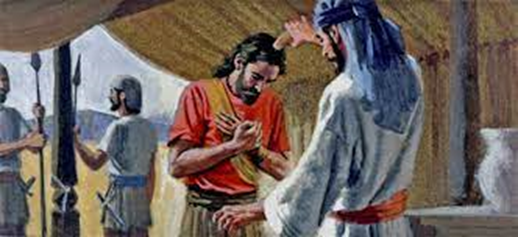
1 Samuel 9:1 – 27 “Now there was a Benjamite, a powerful man, whose name was Kish son of Abiel, the son of Zeror, the son of Becorath, the son of Aphiah of Benjamin. And he had a son named Saul, choice and handsome, without equal among the Israelites—a head taller than any of the people.

One day the donkeys of Saul’s father Kish wandered off, and Kish said to his son Saul, “Take one of the servants and go look for the donkeys.” So Saul passed through the hill country of Ephraim and then through the land of Shalishah, but did not find the donkeys. He and the servant went through the region of Shaalim, but they were not there. Then they went through the land of Benjamin, and still they did not find them.

When they reached the land of Zuph, Saul said to his servant, “Come, let us go back, or my father will stop worrying about the donkeys and start worrying about us.” “Look,” said the servant, “in this city there is a man of God who is highly respected; everything he says surely comes to pass. Let us go there now. Perhaps he will tell us which way to go.”

“If we do go,” Saul replied, “what can we give the man? For the bread in our packs is gone, and there is no gift to take to the man of God. What do we have?” The servant answered him again. “Look,” he said “I have here in my hand a quarter shekel of silver. I will give it to the man of God, and he will tell us our way.”

(Formerly in Israel, a man on his way to inquire of God would say, “Come, let us go to the seer.” For the prophet of today was formerly called the seer.) “Good,” said Saul to his servant. “Come, let us go.” So they set out for the city where the man of God was. And as they were climbing the hill to the city, they met some young women coming out to draw water and asked, “Is the seer here?”

“Yes, he is ahead of you,” they answered. “Hurry now, for today he has come to the city because the people have a sacrifice on the high place. As soon as you enter the city you can find him before he goes up to the high place to eat. The people will not eat until he comes, because he must bless the sacrifice; after that, the guests will eat. Go up at once; you will find him.” So Saul and his servant went up toward the city, and as they were entering it, there was Samuel coming toward them on his way up to the high place.

Now on the day before Saul’s arrival, the LORD had revealed to Samuel, “At this time tomorrow I will send you a man from the land of Benjamin, and you are to anoint him leader over My people Israel; he will save them from the hand of the Philistines. For I have looked upon My people, because their cry has come to Me.” When Samuel saw Saul, the LORD told him, “Here is the man of whom I spoke; he shall rule over My people.”

Saul approached Samuel in the gateway and asked, “Would you please tell me where the seer’s house is?” “I am the seer,” Samuel replied. “Go up before me to the high place, for you shall eat with me today. And when I send you off in the morning, I will tell you all that is in your heart. As for the donkeys you lost three days ago, do not worry about them, for they have been found. And upon whom is all the desire of Israel, if not upon you and on all your father’s house?”

Saul replied, “Am I not a Benjamite from the smallest tribe of Israel, and is not my clan the least of all the clans of Benjamin? So why would you say such a thing to me?”

Then Samuel took Saul and his servant, brought them into the hall, and seated them in the place of honor among those who were invited—about thirty in all. And Samuel said to the cook, “Bring the portion I gave you and told you to set aside.”

So the cook picked up the leg and what was attached to it and set it before Saul. Then Samuel said, “Here is what was kept back. It was set apart for you. Eat, for it has been kept for you for this occasion, from the time I said, ‘I have invited the people.’” So Saul dined with Samuel that day. And after they had come down from the high place into the city, Samuel spoke with Saul on the roof of his house.

They got up early in the morning, and just before dawn Samuel called to Saul on the roof, “Get ready, and I will send you on your way!” So Saul arose, and both he and Samuel went outside together.

As they were going down to the edge of the city, Samuel said to Saul, “Tell the servant to go on ahead of us, but you stay for a while, and I will reveal to you the word of God.” So the servant went on.”

The Israelites have demanded a king, and God is going to grant that request. The first man God selects as king is Saul from the tribe of Benjamin. Benjamin was one of the smaller tribes; however, Saul is tall, handsome, and extremely good – looking. God wants to make sure the Israelites will not reject Saul on the basis of his appearance. Saul LOOKS like a king!

Why does Saul’s servant talk about giving the seer bread or money? Traditionally, anyone requesting a prophecy or prayer would give the prophet some token of appreciation. While a quarter of a shekel of silver doesn’t seem like much, it was actually 2.85 grams of silver. At today’s prices, the value would be $2.97. Evidently, it’s the intention that counts and not the actual amount.

God has already informed Samuel that He will bring a man from the land of Benjamin, and when Saul shows up, God confirms to Samuel that Saul is the future king of Israel. Saul has already saved back part of the meat from the sacrifice and now invites Saul to eat with him, seating him in the place of honor among thirty invited guests The portion of meat reserved for Saul is described by many commentators as the royal portion, or the portion of honor. The right shoulder was reserved for the priests, so the left shoulder might have been Samuel’s portion. Samuel is already honoring Saul as God’s choice for king even before he informs Saul of that fact.

APPLICATION: What must Samuel have felt like when God told him to select Saul and to honor Saul as he did? Samuel was the prophet, the seer, the one for whom everybody waited. Samuel had ministered for years. Now Samuel was honoring Saul, a young man he’d never even met until now.

Today the world is full of self – styled prophets who are fond of pronouncing “Thus says the Lord” in quavering voices, particularly when backed up by a keyboard player emphasizing every word with a different chord or arpeggio. But the test of a true prophet is whether or not the prophecy comes true, and whether or not the prophet honors the Lord more than he/she honors himself/herself. God has chosen Saul to be king of Israel, and Samuel is already obeying God by honoring Saul, even before anointing him as king. Samuel has given Saul the seat of honor and the best portion of the animal sacrifice. What must those other 30 people in Samuel’s dining room have thought when they witnessed this? Did some of those city elders later remember this day when Saul was actually anointed as king?

The late Kathryn Kuhlman had a fantastic ministry of healing that also included prophecy; however, she always gave credit to God for anything good that happened during her crusades. One individual described a Kathryn Kuhlman service this way:

“Kathryn Kuhlman—Hundreds have been healed just sitting quietly in the audience without any demonstration whatsoever. None. Very often not even a sermon is preached. There have been times when not even a song has been sung.

“No loud demonstration, no loud calling on God as though He were deaf. No screaming, no shouting, within the very quietness of His presence. There were hundreds of times when the presence of the Holy Spirit was so real that one could almost hear the rhythm as thousands of hearts beat as one.”1

In this rapt silence a voice speaks, “I—ah…belieeeeeeeve—ah—in—ah merrrrrrricals—ah!” Suddenly the applause is deafening as thousands watch a tall, slim figure emerge from the shadows in a white, frothy gown. She glides to center stage, and another Kathryn Kuhlman miracle service is underway.

In her international ministry, Miss Kuhlman laid a foundation for the workings of the Holy Spirit in the lives of countless thousands throughout the world. Her unique ministry shifted the focus of the body of Christ from the outward show of the supernatural gifts of the Holy Spirit back to the GIVER of the Gifts, the Holy Spirit.”

“Speak, Lord, for your servant is listening.” From the time Samuel was a young boy, he always listened and obeyed God promptly, even when it was difficult. Some people have criticized Samuel because his sons were rascals; however, throughout the ages, there have been faithful believers whose children have rebelled. Now near the end of Samuel’s ministry, he was demonstrating once more that God’s will was all – important and that he refused to allow his ego to interfere with carrying out God’s commands.

There is a temptation associated with aging – the temptation to demand respect, whether or not it is deserved. But how many of us would be willing to follow Samuel’s example and honor someone young and unknown simply because God said so? May God help us to follow His leading, no matter what the cost to our egos!

PRAYER: Father God, thank You for loving us and for caring for us. Lord, help us to listen for your voice and to obey, no matter the cost. In the mighty and precious Name of King Jesus. Amen.