Archive for the ‘Uncategorized’ Category

NOVEMBER 25, 2025 WHAT’S SO IMPORTANT ABOUT BLOOD? #6 TRUE OFFERINGS ARE COSTLY!

November 25, 2025

Genesis 14: 17-20 After Abram returned from defeating Kedorlaomer and his allied kings, the king of Sodom came out to greet him in the Valley of Shaveh, the King’s Valley. Melchizedek, king of Salem, brought out bread and wine—he was priest of The High God—and blessed him:

Blessed be Abram by The High God, Creator of Heaven and Earth. And blessed be The High God, who handed your enemies over to you.

Abram gave him a tenth of all the recovered plunder.

21 The king of Sodom said to Abram, “Give me back the people but keep all the plunder for yourself.”

22-24 But Abram told the king of Sodom, “I swear to God, The High God, Creator of Heaven and Earth, this solemn oath, that I’ll take nothing from you, not so much as a thread or a shoestring. I’m not going to have you go around saying, ‘I made Abram rich.’ Nothing for me other than what the young men ate and the share of the men who went with me, Aner, Eshcol, and Mamre; they’re to get their share of the plunder.”

Abraham has separated from Lot and is living near Hebron with his Amorite friends Aner, Eshcol, and Mamre. Meanwhile, the kings of Sodom and Gomorrah rebel against more powerful kings who have been dominating them. This rebellion proves disastrous, for the powerful forces capture Sodom and Gomorrah, along with all their inhabitants, including Lot and his family. When Abraham gets word, he and his three friends organize and attack the raiders, chasing them north beyond Dan and above Damascus, and recovering all the people and goods they have stolen. As Abraham is returning, he is met by two kings of totally different character. The king of Sodom offers to let Abraham keep all the plunder and just return the people to him. But there is another and far more righteous king who also meets Abraham-Melchizedek. Nobody knows where Melchizedek has come from; all we know is that he is king of Salem, king of peace, that he is a priest of the Most High God, and that he brings out bread and wine and blesses Abraham, praising God for Abraham’s victories.

Where is Salem? Although many scholars have argued that Jerusalem is Salem by an older term, others have identified a city called Salim in northern Israel. If Abraham and his friends chased the raiders north beyond Dan, the location of Salim would be quite logical.

The raiders Abraham has defeated have attacked several places so evidently there is a huge amount of plunder. Abraham responds to Melchizedek’s ministry by giving him a tenth of the plunder recovered from the raiders as an act of worship to God. When the king of Sodom tempts Abraham to keep all the plunder, Abraham refuses, vowing, “I swear to God, The High God, Creator of Heaven and Earth, this solemn oath, that I’ll take nothing from you, not so much as a thread or a shoestring. I’m not going to have you go around saying, ‘I made Abram rich.’ Nothing for me other than what the young men ate and the share of the men who went with me, Aner, Eshcol, and Mamre; they’re to get their share of the plunder.”

Abraham is already rich, and might become far richer were he to act on the suggestion of the king of Sodom. But Abraham wants nothing to do with the king of Sodom; in fact, had Lot and his family not been captured, Abraham would probably have remained in Hebron. Obviously, Abraham knows the true nature of the king of Sodom; on the other hand, Melchizedek is righteous and just and Abraham recognizes a fellow believer. When Abraham gives one tenth of the plunder to Melchizedek, he is worshiping God by this action. True worship costs.

Melchizedek is a mysterious figure who appears suddenly and then is never mentioned again until he is referred to in Psalm 110 and in Hebrews 5. 

Speaking of the Messiah, Psalm 110:4-7 tells us, “God gave his word and he won’t take it back: you’re the permanent priest, the Melchizedek priest. The Lord stands true at your side, crushing kings in his terrible wrath, bringing judgment on the nations, handing out convictions wholesale, crushing opposition across the wide earth. The King-Maker put his King on the throne; the True King rules with head held high!

Hebrews 5:1-3 Every high priest selected to represent men and women before God and offer sacrifices for their sins should be able to deal gently with their failings, since he knows what it’s like from his own experience. But that also means that he has to offer sacrifices for his own sins as well as the peoples’.

4-6 No one elects himself to this honored position. He’s called to it by God, as Aaron was. Neither did Christ presume to set himself up as high priest, but was set apart by the One who said to him, “You’re my Son; today I celebrate you!” In another place God declares, “You’re a priest forever in the royal order of Melchizedek.”

Who was Melchizedek and where did he come from? Scholars have argued over these questions for centuries. Priests act as intermediaries between worshipers and God. Melchizedek is not a priest from the Tribe of Aaron but evidently someone whom God has chosen. Abraham recognizes a true believer ministering appropriately and responds accordingly. God describes Jesus as being a priest forever in the royal order of Melchizedek because Jesus by his life, death, and resurrection has become the high priest for all those who believe. Rather than offering animals, Jesus has sacrificed his own body and blood-the only perfect sacrifice ever offered. Jesus has therefore become both sacrifice and priest through the Will of his Heavenly Father.

Hebrews 5 goes on to tell us: 7-10 While he lived on earth, anticipating death, Jesus cried out in pain and wept in sorrow as he offered up priestly prayers to God. Because he honored God, God answered him. Though he was God’s Son, he learned trusting-obedience by what he suffered, just as we do. Then, having arrived at the full stature of his maturity and having been announced by God as high priest in the order of Melchizedek, he became the source of eternal salvation to all who believingly obey him.

When God was giving Moses the commands embodied in Exodus-Deuteronomy, He ordered the Israelites to sacrifice faultless animals at certain times of the year and to make additional sacrifices for particular sins. But since Jesus has come, he has become both sacrifice and high priest, eliminating the need for animal sacrifice.

Upon meeting Melchizedek, Abraham immediately gives him one tenth of the plunder as an offering to the Most High God. Abraham might argue that he DESERVES all the plunder; in fact, as the conquering leader, Abraham doesn’t even need to hand the people over to the king of Sodom. The king of Sodom is only alive because Abraham and his friends have rescued him.  

Although blood sacrifices are not mentioned in this passage, it’s possible that Abraham and Melchizedek do sacrifice animals as part of their worship together. On the other hand, this plunder has already been gained at the expense of the blood of the fighting men, another form of blood sacrifice.

At one point, a Jebusite named Araunah offers King David his threshing floor and oxen to make a sacrifice to halt a plague. But David refuses. “But the king replied to Araunah, “No, I insist on paying you for it. I will not sacrifice to the LORD my God burnt offerings that cost me nothing.” So David bought the threshing floor and the oxen and paid fifty shekels of silver for them. (2 Samuel 24:24) Real sacrifices always cost in terms of time, effort, money, or laying down one’s own plans in submission to God. When we tell God, “Not my will, but Yours be done,” we are making living sacrifices of ourselves. Let us remember that God will never be anyone’s debtor, and the sacrifices we make pale by comparison with what Jesus has already done for us on the cross at Calvary.

PRAYER: Father God, thank You for loving us and caring for us. Lord, help us to make living sacrifices of everything we are or hope to be, knowing that You can take what we give you and do far above anything we can possibly imagine with our small offerings. In the mighty and precious Name of King Jesus. Amen.
NOVEMBER 24, 2025 WHAT’S SO IMPORTANT ABOUT BLOOD? #5 YOU NEED TO BUILD AN ALTAR BEFORE YOU WORSHIP

November 24, 2025

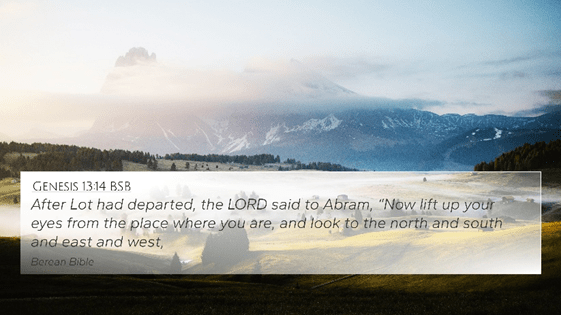
Genesis 13:14-17 “After Lot separated from him, God said to Abram, “Open your eyes, look around. Look north, south, east, and west. Everything you see, the whole land spread out before you, I will give to you and your children forever. I’ll make your descendants like dust—counting your descendants will be as impossible as counting the dust of the Earth. So—on your feet, get moving! Walk through the country, its length and breadth; I’m giving it all to you.”

18 Abram moved his tent. He went and settled by the Oaks of Mamre in Hebron. There he built an altar to God.”

Abraham and Lot have run into a problem; each of them has so much livestock that overgrazing and conflict among their workers has become rampant. As the elder, Abraham has the right to choose the best land for himself; however, to avoid conflict, Abraham allows Lot first choice. Looking eastward at the Jordan River valley, Lot naturally chooses that land for himself. Genesis 13:10-11 tells us, Lot looked. He saw the whole plain of the Jordan spread out, well-watered (this was before God destroyed Sodom and Gomorrah), like God’s garden, like Egypt, and stretching all the way to Zoar. Lot took the whole plain of the Jordan. Lot set out to the east.”

Sadly, Lot fails to consider the wicked nature of the land’s inhabitants, particularly the citizens of Sodom and Gomorrah. The Dead Sea exists at this time, and nobody knows the ancient sites of Sodom and Gomorrah, although some experts believe they are thought to be located on the east side of the Dead Sea in Jordan.  The Dead Sea is part of the Rift Valley and is an area where tectonic plates come together. There might be thermal activity below the earth’s surface in this area, but of course, Lot doesn’t know any of this. At any rate, in the beginning, Lot isn’t worried; he lives in tents and has no intention of moving into town…or does he?

There’s a sharp contrast between Lot and Abraham. Lot is more worried about grabbing everything he can than honoring his uncle. Lot’s choice demonstrates his poor spiritual and emotional condition, for in this culture, age demands respect. By Lot’s selfish choice, he has cursed himself and his family. And there is never any mention of Lot worshiping God in any fashion whatsoever. Having allowed Lot to choose the best grazing for himself, Abraham spends time with God, and God encourages him that God will give Abraham and his children the land forever and that Abraham’s descendants will be too numerous to even count.

What is Abraham’s response to all this? Abraham moves to the Oaks of Mamre near Hebron and immediately builds an altar. Although blood sacrifices are not mentioned specifically, Abraham would not build an altar unless he was planning to sacrifice animals to God. God’s promises prompt Abraham to move away from his nephew Lot and to worship by offering burnt offerings of animals.

Abraham is offering animals because that’s all he can do at this point. But in the fullness of time, God will send Jesus as the perfect Sacrifice, making animal sacrifices unnecessary. Hebrews 10:1-10 tells us “For the law is only a shadow of the good things to come, not the realities themselves. It can never, by the same sacrifices offered year after year, make perfect those who draw near to worship. If it could, would not the offerings have ceased? For the worshipers would have been cleansed once for all, and would no longer have felt the guilt of their sins.

Instead, those sacrifices are an annual reminder of sins, because it is impossible for the blood of bulls and goats to take away sins.  Therefore, when Christ came into the world, He said: “Sacrifice and offering You did not desire, but a body You prepared for Me. In burnt offerings and sin offerings You took no delight. Then I said, ‘Here I am, it is written about Me in the scroll: I have come to do Your will, O God.’”

In the passage above He says, “Sacrifices and offerings, burnt offerings and sin offerings You did not desire, nor did You delight in them” (although they are offered according to the law). Then He adds, “Here I am, I have come to do Your will.” He takes away the first to establish the second. And by that will, we have been sanctified through the sacrifice of the body of Jesus Christ once for all.

Although we don’t need to build stone altars anymore, we do need to create points in our lives where we stop to worship God and where we are willing to sacrifice, whether it be our ambitions or our cherished prejudices-whatever God is demanding we give up to Him. Currently, I am making a living sacrifice of an ankle injury. While riding my bicycle, I ran into a log on a public pathway, spraining my left ankle and cracking a small bone in the lower leg. But had I not gotten injured, careless motorcycle riders would have run into the log, possibly killing themselves. I thank God that my incidental injury that will heal within a few weeks has kept others from disaster.

Today, we need to ask ourselves if there are other living sacrifices God wants us to make. We don’t make sacrifices to earn our way into heaven; we sacrifice to glorify God and to demonstrate our gratitude to Him. May God help us, so that we will continue glorify Him with everything we do!

PRAYER: Father God, thank You for loving us and caring for us. Lord, we give You permission to help Yourself to every part of our lives. In the mighty and precious Name of King Jesus. Amen.  
ARCHIBALD THE ANKLE UPDATE NOVEMBER 23, 2025 WHEN YOU AREN’T MOBILE BUT YOU NEED TO PEE IN THE MIDDLE OF THE NIGHT, WHAT DO YOU DO?

November 23, 2025

I’ll begin with an apology. If the subject of challenges for the handicapped bothers you or if you don’t like to talk about bodily functions, just keep scrolling. But if you’re a little brave, bear with me.

When I was a small child in rural Illinois in the early 1950’s, many farm houses did not have bathrooms or toilets. There were outhouses situated at least 20 or 30 meters from the main house, but what happened in the winter or in the middle of the night when nobody wanted to go outside? That’s when chamber pots or “thunder mugs” came into play. Chamber pots were containers large enough for someone to sit on. The old-fashioned ones might be made of china, and there were pieces of furniture called commodes with spaces large enough for the chamber pot. And then there were large tin cans.

My grandparents got an indoor toilet when I was five, but prior to that, Grandma D. would place a large tin can under the bed so that she could pee into it in the middle of the night rather than going downstairs, and trudging outside to the outhouse. As a small child, I never thought anything about this; I just accepted the idea that it was far more practical than the alternative.

Since Archibald the Ankle has become a thing in my life, I have had occasion to remember Grandma’s solution to that problem. As I have observed previously, our house is not handicapped accessible. I am becoming highly proficient at maneuvering my wheelchair around corners in hallways designed only for the fit and mobile. For me to reach the toilet in the middle of the night requires me shifting from the bed to the wheelchair and then carefully backing the wheelchair out of the bedroom, turning it around, and heading for the toilet, not neglecting to lock the wheels when I finally stop. These manipulations are daunting enough in the daytime. I am not about to attempt them in the middle of the night, for not only might they result in disaster but I would also wake up my long-suffering husband who is already doing so much to help me.

Remembering Grandma D., I have achieved a solution: I place a bucket under our bed and slide it out as necessary. Accessing this thing is not simple, for I have to slide off my clothing and balance on my good leg while levering myself down with one hand on the bed and the other on the bookshelves near the bed. I’m afraid to put all my weight on the bucket for fear of it splitting in the middle of the night, dumping the urine and me all over the floor. And as I am achieving this feat of midnight ballet, I remind myself that Archibald will heal in a few weeks, allowing me to be mobile without the wheelchair while millions of people throughout the world face such challenges all their lives.

Several years ago, I injured my left hip and wound up on crutches for nearly 4 months. I rapidly learned that most public toilets in America are barely handicapped-accessible. Steep ramps, slippery floors, poorly-designed stalls with doors swinging the wrong direction, sinks, water, and soap located so high that they are unreachable for someone in a wheelchair-I observed all those things in the U.S. Here in Ghana, the situation is far worse for many designers of public facilities fail to give any thought to those in wheelchairs or on crutches.

By this point, you are either laughing or grossed out. Just remember to look around you-see the curbs that have no ramps for wheelchairs. See the poorly-designed public spaces. See ramps so steep that their pitch could be used to design ski jumps. And then remember that those with mobility challenges can still be productive workers if given the right opportunities. They already have enough problems; don’t make their lives more difficult.

NOVEMBER 23, 2025 WHAT’S SO IMPORTANT ABOUT BLOOD? #4 NOAH, WHY SLAUGHTER SO MANY CREATURES?

November 23, 2025

Genesis 8:18-19 Noah disembarked with his sons and wife and his sons’ wives. Then all the animals, crawling creatures, birds—every creature on the face of the Earth—left the ship family by family.

20-21 Noah built an altar to God. He selected clean animals and birds from every species and offered them as burnt offerings on the altar. God smelled the sweet fragrance and thought to himself, “I’ll never again curse the ground because of people. I know they have this bent toward evil from an early age, but I’ll never again kill off everything living as I’ve just done.

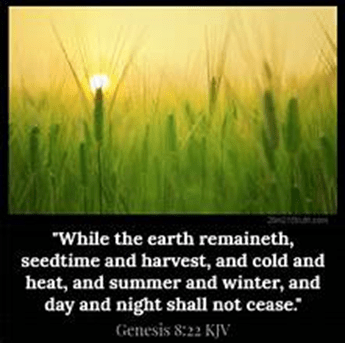
22 For as long as Earth lasts, planting and harvest, cold and heat, summer and winter, day and night will never stop.”

Many of us think we are familiar with the story of Noah and the ark, how Noah and his wife and his three sons and their wives, entered the ark along with breeding pairs of every living land creature, and then endured 150 days of flooding. We have heard the story of how Noah sent out a dove, and when the dove first returned with an olive branch in its mouth, Noah knew that the earth was drying up. When the dove did not return at all, Noah realized it was safe to leave the ark. But look at verse 20: Noah built an altar to God. He selected clean animals and birds from every species and offered them as burnt offerings on the altar. “Um, Noah, wait a minute! You’ve loaded these animals on the ark, fed them, and cared for them all these months, and now you are slaughtering a representative member of each group?” We are aghast! Why does Noah make such offerings?

David Guzik in his Enduring Word Commentary gives us the answer:

B. God’s covenant with Noah.

1. (20) Noah builds an altar and offers a sacrifice.

Then Noah built an altar to the Lord, and took of every clean animal and of every clean bird, and offered burnt offerings on the altar.

a. Then Noah built an altar: Noah’s first act after leaving the ark was to worship God through sacrifice. His gratitude and admiration of God’s greatness led him to worship God.

b. Took of every clean animal and every clean bird: As is the nature of true sacrifice, this was a costly offering unto God. With only seven of each animal on the ark, Noah risked extinction by sacrificing some of these animals. But costly sacrifice is pleasing to God.

i. “Common sense would have said, ‘Spare them, for you will want [need] every one of them.’ But grace said, ‘Slay them, for they belong to God. Give Jehovah his due.’” (Spurgeon)

ii. Believers are called to offer to God sacrifices that cost something. Bodies are presented to God as a living sacrifice (Romans 12:1), resources are given as a sacrifice (Philippians 4:18), and the giving of the sacrifice of praise to God (Hebrews 13:15).

iii. Costly sacrifice pleases God, not because God is greedy and wants to get as much as He can but because God Himself sacrificed at great cost (Ephesians 5:2Hebrews 9:2610:12). God wants costly sacrifice because it shows His people are being conformed into the image of Jesus, who was the greatest display of costly sacrifice. Christians should be like Jesus in this regard: And walk in love, as Christ also has loved us and given Himself for us, an offering and a sacrifice to God for a sweet-smelling aroma (Ephesians 5:2).

iv. Believers should think like David, who said he would never offer to God that which costs me nothing (2 Samuel 24:24).

2. (21-22) God’s promise to Noah and to all mankind.

And the Lord smelled a soothing aroma. Then the Lord said in His heart, “I will never again curse the ground for man’s sake, although the imagination of man’s heart is evil from his youth; nor will I again destroy every living thing as I have done.

“While the earth remains,
Seedtime and harvest,
Cold and heat,
Winter and summer,
And day and night
Shall not cease.”

a. The Lord smelled a soothing aroma: Noah’s costly sacrifice pleased God. It was as if God smelled the aroma of the roasting meat, then He made this wonderful promise to Noah and to man.

i. The Bible speaks anthropomorphically, using a human analogy of a divine action or attribute. God was more pleased by the heart of Noah in his sacrifice than the actual smell of the offering. (My comment: The smell of the offering proved not only to God, but also to Noah, that Noah was serious.)

b. I will never again curse the ground for man’s sake: God promised to never again visit the earth with judgment by a flood on this scale, to destroy every living thing. God did this understanding that the imagination of man’s heart is evil from his youth. This was a promise full of mercy.

i. This is a strange combination of truths; first, that the imagination of man’s heart is evil from his youth and second, God’s promise to never again curse the ground for man’s sake. Man’s evil would seem to invite God’s curse, not put it away. The strange combination is accounted for by Noah’s altar and sacrifice, and God’s pleasure in the sacrifice (the Lord smelled a soothing aroma).

ii. “The sacrifice is the turning-point. Without a sacrifice, sin clamours for vengeance, and God sends a destroying flood; but the sacrifice presented by Noah was typical of the coming sacrifice of God’s only begotten Son, and of the effectual atonement therein provided for human sin.” (Spurgeon)

iii. We can say that after the flood, Noah’s story illustrated many things relevant to the life of the believer.

· Noah showed the believer’s freedom, leaving the ark.

· Noah showed the believer’s faith (in sacrifice).

· Noah showed the believer’s heart (by sacrifice).

· Noah showed the believer’s covenant of mercy (considering sacrifice).

c. Cold and heat, winter, and summer: God promised that after the flood, the earth would have established seasons. This speaks of the profound climatic and ecological changes in the earth since the covering of water vapors around the earth was emptied. Now, there would be seasonal and temperature variations more extreme than existed before the flood.

i. “As there should be no more a general deluge, so should there be no more a serious disarrangement of the course of the seasons and the temperature appropriate thereto. Seed-time and harvest, and cold and heat, and summer and winter, and day and night, are to succeed each other in their perpetually unchanging change, so long as the present reign of forbearance shall last.” (Spurgeon)

ii. The result of this change is found in the rapidly decreasing lifespans. There will never be 900-year-old men after the flood. The mass extinction of animals revealed in the fossil record (such as dinosaurs and other such creatures) probably took place shortly after the flood, when the earth was changed so dramatically and plunged into an ice age.

iii. “How faithfully God fulfills his covenant with the earth! How truly will he keep his covenant with every believing sinner! Oh, trust ye in him, for his promise will stand fast forever!” (Spurgeon) https://enduringword.com/bible-commentary/genesis-8/

Guzik raises a point that has become a hot button today: Climate Change. Popular commentators choose to denigrate entire groups of people, blaming them for climate change; yet, the evidence is clear in many parts of the world that there have always been cycles of climate. Consider the evidence from the Sahara Desert:

The Sahara Desert was once a fertile region, characterized by lush vegetation and abundant wildlife. This period, known as the African Humid Period, occurred approximately 10,000 to 5,000 years ago.

Climate Changes

  • The Sahara’s climate has shifted from a green, fertile landscape to the arid desert we see today due to changes in Earth’s orbit and axial tilt.
  • Increased rainfall during the African Humid Period supported lakes, rivers, and diverse ecosystems.

Archaeological Evidence

  • Fossils and ancient tools found in the region indicate human habitation and agriculture during this fertile phase.
  • Rock art depicting animals and human activities suggests a vibrant ecosystem.

Current Understanding                      

  • Research continues to explore the exact timeline and causes of these climatic shifts.
  • Some scientists suggest that future climate changes could potentially lead to a return of more humid conditions in parts of the Sahara.

This historical context highlights the Sahara’s dynamic environmental changes over millennia.

(AI Summary of Climate Change in the Sahara Desert)

· Noah showed the believer’s freedom, leaving the ark.

· Noah showed the believer’s faith (in sacrifice).

· Noah showed the believer’s heart (by sacrifice).

· Noah showed the believer’s covenant of mercy (considering sacrifice).

Freedom, faith, heart, and covenant of mercy-Noah demonstrated all these by his sacrifices. Today, allow God to show you the places in your life where you need to apply these lessons.

PRAYER: Father God, thank You for loving us and caring for us. Lord, help us to trust You, no matter what. Help us to demonstrate our faith and our commitment to You by being willing to sacrifice those things most precious to us so that we might keep covenant with You. We ask this in the mighty and precious Name of King Jesus. Amen.
NOVEMBER 22, 2025 WHAT’S SO IMPORTANT ABOUT BLOOD? #3 THE BEGINNING OF BLOOD SACRIFICES

November 22, 2025

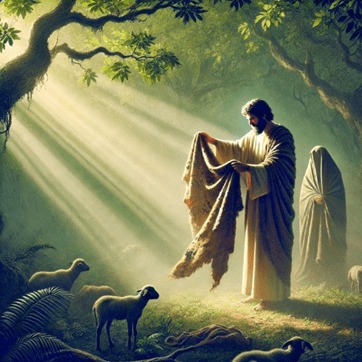
Genesis 3: 21Also for Adam and his wife the Lord God made tunics of skin, and clothed them.

Adam and Eve have sinned, eating forbidden fruit that gives them the knowledge of good and evil. Before this, there was only good; however, now after making this first disobedient choice, they can choose to continue to disobey, doing evil. Now that God is evicting Adam and Eve from Eden, they need protective clothing and God makes tunics of skin, presumably animal skin, indicating that some animals have had to die. Even if God simply has caused the animals to fall asleep and cease breathing, these deaths are still a form of sacrifice.

Genesis 4:1-2 Adam slept with Eve his wife. She conceived and had Cain. She said, “I’ve gotten a man, with God’s help!” Then she had another baby, Abel. Abel was a herdsman and Cain a farmer.

3-5 Time passed. Cain brought an offering to God from the produce of his farm. Abel also brought an offering, but from the firstborn animals of his herd, choice cuts of meat. God liked Abel and his offering, but Cain and his offering didn’t get his approval. Cain lost his temper and went into a sulk.

6-7 God spoke to Cain: “Why this tantrum? Why the sulking? If you do well, won’t you be accepted? And if you don’t do well, sin is lying in wait for you, ready to pounce; it’s out to get you, you’ve got to master it.”

I’ve always wondered what was wrong with Cain’s offering. Perhaps God has made it clear that He wants a blood offering; however, even though Cain could go to Abel and bargain for a perfect lamb, he chooses to haul in produce from his farm. Perhaps God would have been pleased had Cain brought in the best new produce he had; however, Cain might have collected whatever was left over after the harvest and offered that to God instead. God doesn’t want leftovers; He wants first fruits. Giving God the best of the first fruits of the harvest is an act of faith, indicating trust that God will give more. Withholding first fruits from God or giving Him rubbish demonstrates complete disregard for God, His righteousness, His holiness, and His majesty.

Perhaps Cain has gotten the idea that as the eldest, he is special and should not be forced to behave properly. Obviously, Cain is angry with God and is pouting. God tells Cain, “If you do well, won’t you be accepted? And if you don’t do well, sin is lying in wait for you, ready to pounce; it’s out to get you, you’ve got to master it.” These statements sound as if God has already instructed Cain on the ways Cain can please God. But Cain doesn’t WANT to do well! Cain thinks he’s fine and God should accept him just as he is. Cain’s first sin is assuming that he is fine and doesn’t need to repent of anything. Cain’s second sin is refusing to give God his best, and his third sin is refusing to accept correction, reproof, and God’s warning. At this point, Cain still has the opportunity to repent, but Cain is busy being offended and is nursing self-pity.

Millenia later, Oswald Chambers, a noted Christian writer, will state that “Self-pity is of the devil.” Here God is trying to warn Cain; however, Cain has his fingers stuffed in his ears and refuses to listen.

8 Cain had words with his brother. They were out in the field; Cain came at Abel his brother and killed him.

9 God said to Cain, “Where is Abel your brother?”

He said, “How should I know? Am I his babysitter?”

10-12 God said, “What have you done! The voice of your brother’s blood is calling to me from the ground. From now on you’ll get nothing but curses from this ground; you’ll be driven from this ground the hat has opened its arms to receive the blood of your murdered brother. You’ll farm this ground, but it will no longer give you its best. You’ll be a homeless wanderer on Earth.”

Blood means life. Sacrificing an animal indicates that a person realizes he/she should be giving his/her life to whatever god is being worshiped, but asking that god to accept the life of the animal instead. The shedding of innocent blood brings curses on a land; by murdering Abel, Cain has brought curses on any land he farms and on himself.

The saddest part of the Cain and Abel story is this: Not once does Cain ever express any remorse for having murdered Abel. Cain tries to cover up his horrible deed and never confesses. God is the One who confronts Cain. Cain never begs God’s forgiveness, nor does he ask what kind of sacrifice he might do to pay for murdering his brother. All Cain is concerned about is his own skin. There is also no indication that Cain confesses to his parents. Cain simply huffs off, leaving his parents-and God-grieving.

These are the first Biblical recordings regarding blood sacrifices. The pagan world contains myriads of different sacrifices, depending on the deity being worshiped. But look at the difference in the heart attitude between the two brothers: Abel is humble and offers the best lamb he can while Cain appears to think God is lucky Cain has made any offering at all. Centuries later, God will rebuke the Israelites for a similar attitude: “When you offer blind animals for sacrifice, is that not wrong? When you sacrifice lame or diseased animals, is that not wrong? Try offering them to your governor! Would he be pleased with you? Would he accept you?” says the LORD Almighty.” (Malachi 1:8)

Offerings of any kind without repentance are worthless. In Jesus’ day, the Pharisees would make an enormous production of contributing to the temple, even going so far as to have trumpeters preceding them so everybody would know what they were doing. But was there any sign of repentance? Jesus told a story of a Pharisee and a tax collector both going to the temple. The Pharisee stood in the middle of the temple, reciting his virtues to himself and then leaving. The tax collector stood in a corner, beating his chest and begging, “God, be merciful to me, a sinner!” The tax collector repented while the Pharisee did not.  It was the tax collector who left justified before God rather than the Pharisee.  

What good are offerings that don’t cost us anything? Jesus commended one humble widow for putting in two small coins, for she was giving everything she had while the Pharisees were giving out of their abundance and would have plenty left over.

Today, we don’t have to make blood sacrifices anymore because Jesus Christ has shed His blood for our sins on the cross at Calvary. But God’s warning to Cain remains for us today: “If you do well, won’t you be accepted? And if you don’t do well, sin is lying in wait for you, ready to pounce; it’s out to get you, you’ve got to master it.”  How can we “do well?” We do well when we acknowledge that we are sinners and that nothing we do is good enough to make up for our sins. We do well when we confess our sins to God and repent of them, accepting the blood sacrifice Jesus has already made for us.

PRAYER: Father God, thank You for loving us and caring for us. Lord, we confess that we are sinners and that we cannot free ourselves from our sins. But You have loved us so much that You have sent Jesus to live as a sinless man and to die for our sins. We accept Jesus’ sacrifice on our behalf. Lord, help us to live completely and totally for You for the rest of our lives, knowing that one day You will take us to heaven to be with You. In the mighty and precious Name of King Jesus. Amen.

NOVEMBER 21, 2025 WHAT’S SO IMPORTANT ABOUT BLOOD? #2 HOW CAN BLOOD POSSIBLY CLEAN ANYTHING???

November 21, 2025

1

Have you been to Jesus for the cleansing pow’r?
Are you washed in the blood of the Lamb?
Are you fully trusting in His grace this hour?
Are you washed in the blood of the Lamb?

Are you washed in the blood,
In the soul-cleansing blood of the Lamb?
Are your garments spotless? Are they white as snow?
Are you washed in the blood of the Lamb?

2

Are you walking daily by the Savior’s side?
Are you washed in the blood of the Lamb?
Do you rest each moment in the Crucified?
Are you washed in the blood of the Lamb?

3

When the Bridegroom cometh will your robes be white!
Are you washed in the blood of the Lamb?
Will your soul be ready for His presence bright,
And be washed in the blood of the Lamb?

4

Lay aside the garments that are stained with sin,
And be washed in the blood of the Lamb;
There’s a fountain flowing for the soul unclean,
O be washed in the blood of the Lamb.

Elisha Albright Hoffman (1839-1929)

This simple hymn has echoed through the world. It was sung in the filthiest slums of London while General William Booth, Founder of the Salvation Army, pounded his bass drum, calling sinners to repentance. This hymn has found its way to untold numbers of churches and brush arbors where preachers and evangelists have proclaimed the Gospel in thousands of languages. But what does it mean to “be washed in the blood of the Lamb?” What Lamb does the hymn mean, and how can blood possibly clean anything?

When I was a medical student, one of the first things I learned was how to get blood out of a white uniform-apply hydrogen peroxide until it foams away the blood and then rinse with cold water. Left alone, blood stains garments, not cleanses them. But the stains here are sin stains-the filthy rotting marks that evil always leaves on our souls.

Bill Bright, Founder of Campus Crusade, now Cru, developed a pamphlet outlining the Four Spiritual Laws. You can find it at https://www.crosswalk.com/faith/spiritual-life/what-are-bill-brights-four-spiritual-laws.html

The main points are these:

  1. God loves you and offers a wonderful plan for your life.
  2. We are sinful and separated from God. Therefore, we cannot know and experience God’s love and plan for our lives.
  3. Jesus Christ is God’s only provision for our sin. Through Him alone we can know God personally and experience God’s love and plan.
  4. We must individually know Jesus Christ as Savior and Lord; then we can know and experience God’s love and plan for our lives.

Throughout the Old Testament, God repeatedly orders the Israelites to make blood sacrifices as atonement for sins. But these sacrifices must be repeated frequently because the blood of an animal cannot permanently wipe out sin. No matter how much we might love the animals around us-and I am a fervent animal lover-on the scale of creation, human beings still rank higher. Only the blood of a sinless man dying a death he does not deserve can cleanse us from sin. This is why God has sent Jesus to die for our sins. It is the blood that Jesus shed when he died on the cross at Calvary that cleanses us spiritually.

PRAYER:  Father God, thank You for loving us and caring for us. Lord, please let Your Light and Your Truth penetrate our hearts so we will see the great work You have done by sending Jesus. It’s in His mighty and precious Name we pray. Amen.

I mentioned General William Booth, the Founder of the Salvation Army, earlier. Google him-he was an amazing man. Here is Vachel Lindsay’s poem about him:

General William Booth Enters into Heaven

By Vachel Lindsay

[To be sung to the tune of The Blood of the Lamb with indicated instrument]

[BASS DRUM BEATEN LOUDLY]

Booth led boldly with his big bass drum—   

(Are you washed in the blood of the Lamb?)   

The Saints smiled gravely and they said: “He’s come.”   

(Are you washed in the blood of the Lamb?)   

Walking lepers followed, rank on rank,   

Lurching bravoes from the ditches dank,   

Drabs from the alleyways and drug fiends pale—   

Minds still passion-ridden, soul-powers frail:—   

Vermin-eaten saints with mouldy breath,   

Unwashed legions with the ways of Death—   

(Are you washed in the blood of the Lamb?)   

[BANJOS]

Every slum had sent its half-a-score   

The round world over. (Booth had groaned for more.)   

Every banner that the wide world flies   

Bloomed with glory and transcendent dyes.   

Big-voiced lasses made their banjos bang,   

Tranced, fanatical they shrieked and sang:—   

“Are you washed in the blood of the Lamb?”   

Hallelujah! It was queer to see   

Bull-necked convicts with that land make free.   

Loons with trumpets blowed a blare, blare, blare   

On, on upward thro’ the golden air!   

(Are you washed in the blood of the Lamb?)   

[BASS DRUM SLOWER AND SOFTER]

Booth died blind and still by Faith he trod,   

Eyes still dazzled by the ways of God.   

Booth led boldly, and he looked the chief   

Eagle countenance in sharp relief,   

Beard a-flying, air of high command   

Unabated in that holy land.   

[SWEET FLUTE MUSIC]

Jesus came from out the court-house door,   

Stretched his hands above the passing poor.   

Booth saw not, but led his queer ones there   

Round and round the mighty court-house square.   

Yet in an instant all that blear review   

Marched on spotless, clad in raiment new.   

The lame were straightened, withered limbs uncurled   

And blind eyes opened on a new, sweet world.   

[BASS DRUM LOUDER]

Drabs and vixens in a flash made whole!   

Gone was the weasel-head, the snout, the jowl!   

Sages and sibyls now, and athletes clean,   

Rulers of empires, and of forests green!   

[GRAND CHORUS OF ALL INSTRUMENTS.

TAMBOURINES TO THE FOREGROUND]

The hosts were sandalled, and their wings were fire!   

(Are you washed in the blood of the Lamb?)   

But their noise played havoc with the angel-choir.   

(Are you washed in the blood of the Lamb?)   

O shout Salvation! It was good to see   

Kings and Princes by the Lamb set free.   

The banjos rattled and the tambourines   

Jing-jing-jingled in the hands of Queens.   

[REVERENTLY SUNG. NO INSTRUMENTS]

And when Booth halted by the curb for prayer   

He saw his Master thro’ the flag-filled air.   

Christ came gently with a robe and crown   

For Booth the soldier, while the throng knelt down.   

He saw King Jesus. They were face to face,   

And he knelt a-weeping in that holy place.   

Are you washed in the blood of the Lamb?

ARCHIBALD THE ANKLE UPDATE NOVEMBER 20, 2025 OF POWER TAKE OFFS AND WHEELCHAIR BRAKES

November 20, 2025

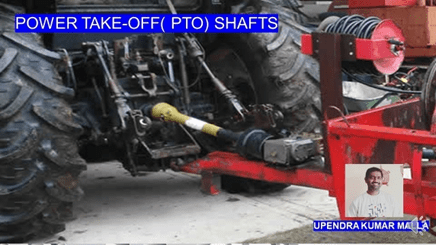
I learned to drive tractors when I was 10 years old, and one of the many lessons Dad taught me was to respect the power take off. The power take off shaft sat below the platform holding the driver’s seat. We connected power take offs to mounted corn pickers, self-unloading wagons, and a host of other implements.

The power take off transmitted power from the tractor to such things as snapping rolls on corn pickers, the rollers that gathered in the corn stalks. Another potential disaster was self-unloading wagons. These wagons had an auger at the base of the wagon that would steadily feed the grain out a spout. In the days when small feedlots were operating, many farmers would drive these wagons along feed bunks, dumping feed for their cattle. Disabling the power take off was not a big deal; however, there were many people who were so impatient that they would stop the tractor but not disengage the power take off. The results of this impatience were disastrous, leading to loss of fingers, hands, arms, feet, legs, and sometimes even life. Anyone foolish enough to be riding on top of a load of feed when the power take off was engaged was simply begging for a horrific injury. Some people have been injured or killed when their clothing has caught in the rotating power take off shaft.

In an effort to keep weight off Archibald, my injured left ankle, I am scooting around our house in a cheapie wheelchair. This morning as I was exiting the bathing room, scooting one of our blue rubber chairs to the door, and then transferring to the wheelchair, I began considering the potential for disaster if the brakes were not properly set on my wheelchair. To set the brakes, I must pull back on two levers, one over each wheel. While those maneuvers only take a few seconds, there’s a real temptation to leave the brakes off in hopes that the wheelchair will not suddenly scoot out from under me, leaving me to crash on the floor. And as I was reminding myself of the absolute need for patience, I remembered the lessons of the power take off.

Isaiah 60:22 tells us, “…At the right time, I, the LORD, will make it happen.” Many times, we want progress and results and we want them immediately. Sadly, most of us are far more likely to pray, “Lord, give me patience NOW!!!”

Somehow, we don’t think that the God who has spoken the universe into existence with a single word, the God who has created us and who knows us better than we do ourselves, that same God doesn’t really know what He is doing and should obey our whimsies and demands. We are so impatient that we are unwilling to take the smallest steps to ensure our own safety, such as disengaging the power take off on a tractor or setting the brakes on a wheelchair. Many of us are so ungrateful that we blame God when disasters strike, even though we have failed to take the necessary steps to prevent them.

This morning, Archibald and I have made it safely through the bathing room and dressing areas and are now ensconced in the sitting room, where we will spend most of the rest of the day. (Chair yoga is becoming a thing!) But I continue to pray for all those who must use wheelchairs-and tractors with power take offs, that we all will have patience so that our foolishness will not result in disasters.

NOVEMBER 20, 2025 WHAT’S SO IMPORTANT ABOUT BLOOD? #1 INTRODUCTION

November 20, 2025

 “The blood that Jesus shed for me
Way back on Calvary
The blood that gives me strength
From day to day
It will never lose its power

It soothes my doubts and it calms my fears
And that same blood dries all of my tears
Oh, the blood that gives me strength
From day to day
It will never lose its power

[Chorus]
It reaches to the highest mountain
And it flows to the lowest valley
Oh, the blood that gives me strength
From day to day
It will never lose its power
Andrae Crouch

Leviticus 17:11 “for the life of the body is in its blood. I have given you the blood on the altar to purify you, making you right with the LORD. It is the blood, given in exchange for a life, that makes purification possible.”

 It all began at the Garden of Eden when God slaughtered animals and gave their skins to Adam and Eve to cover their nakedness. Those animals were the very first blood sacrifices offered on the earth. Then there were Caine and Abel. Abel was a shepherd and sacrificed the very best lamb he had to God while Caine gathered up whatever fruit and vegetables he had and presented it, as if God should be pleased that he had done anything. (Was the basket buzzing with fruit flies because the stuff was already spoiling? Who knows?)

We don’t know how Abel knew God desired a blood sacrifice, but throughout history, blood sacrifices, properly done, have demonstrated total commitment. For the next few weeks, we are going to study the principle of blood sacrifices, the ways in which the Bible describes them, and the reasons that blood is important. We will also study the ways in which we can fake sacrifices and hope to deceive God. Finally, we will study the Blood of Jesus to see why it is so crucially important for believers.

When Noah and his family were able to exit from the Ark, Noah made blood sacrifices. Genesis 8:20-22 tells us, “Then Noah built an altar to the Lord, and took of every clean animal and of every clean bird, and offered burnt offerings on the altar. And the Lord smelled a soothing aroma. Then the Lord said in His heart, “I will never again curse the ground for man’s sake, although the imagination of man’s heart is evil from his youth; nor will I again destroy every living thing as I have done.

 “As long as the earth endures, seedtime and harvest, cold and heat, summer and winter, day and night will never cease.”

Think of it! Noah had raised all those clean animals and birds while on the ark. Each of those animals and birds was special to Noah; yet, Noah willingly sacrificed them to God. Those birds and animals were Noah’s friends; Noah must have been in tears as he slaughtered them for the sacrifice.

Centuries later, King David will proclaim, “I insist on paying a price, for I will not offer to the LORD my God burnt offerings that cost me nothing.” (2 Samuel 24:24)   

Blood sacrifices always cost. Years ago, a local hunter in our area sacrificed his best hunting dog to local gods for help in hunting. The dog’s skull was on a post by the road leading to the village for a long time, proof that this man was serious in his devotion. But an animal’s blood can never fully pay for human sin. Only the blood of an innocent sinless Man can do that. This is why Jesus had to come to earth, live as a man, and die for the sins of the whole world. For all who believe, Jesus has made the ultimate blood sacrifice.

PRAYER: Father God, thank You for loving us and caring for us. Lord, thank You for sending Jesus to die for our sins. We confess that we are sinners and that nothing we can do is good enough to cancel out that sin. Lord, please forgive us. We claim redemption through the blood sacrifice that Jesus has made. It’s in the mighty and precious Name of King Jesus that we pray with thanksgiving. Amen.

ARCHIBALD THE ANKLE UPDATE November 19, 2025-BATHING AS AN OLYMPIC SPORT

November 19, 2025

If you were able to prance into your shower this morning and bathe to your heart’s content, thank God! Today Archibald and I are describing the challenges of getting clean while wheelchair-bound.

My first challenge is selecting clean clothes and deciding what I might wash while I am bathing. This activity requires my transferring from the wheelchair to my bed, close to my dresser, reaching for clean clothes, and placing them in a safe location in the wheelchair. Bob has bought me a nice cloth bag to hang from the back of the wheelchair, so that helps.

Next, I maneuver my wheelchair out of our bedroom and into our bathing area-no mean feat because these corridors were not designed with the handicapped in mind. I cannot enter the bathing room with the wheelchair, so I transfer to one of our blue rubber chairs, being careful to stabilize the chair so that it will not scoot out from under me. This transfer requires putting on the brakes of the wheelchair, placing my good foot in front of the chair, grabbing the arms of the chair, and then kneeling with my injured leg on the seat of the chair. I can then scoot the blue chair back into the bathing area, taking care to put a large towel on the floor to catch the water I am about to spill on it.

Bob brings warm water each morning and pours it into a small bucket sitting in the corner of the shower stall. Using a traditional sponge, what used to be called a sap), I scrub myself, mostly sitting in the chair, and then scoop water from that small bucket, pouring it over myself and allowing the towel on the floor to absorb it. I figure we can buy more towels a lot more cheaply than for me to have an operation. I dry myself off with another towel, hanging it on the towel rack, and then turn, placing my knee on the center of the seat of the blue chair and scooting back across the floor to my wheelchair, where I will get dressed and replace my ankle brace. When I am fit, I can bathe in 5-10 minutes; this process takes nearly 20-30 minutes. And I must rinse out the clothes I slept in before leaving the bathing area.

Why am I bothering to document my minor struggles? I continue to emphasize that my condition is temporary; if I behave wisely, I hope my leg will heal in 6 weeks. But all over the world, millions of people are trapped in wheelchairs with no hope of release. When the house we live in was built in 1996, nobody thought about handicapped accessibility. Some of the doorways in our house are so narrow that it’s all I can do to get the wheelchair through without injuring my hands as I push the wheels. If anything I write helps raise awareness so people will build houses with wider doorways and larger corridors, it will be worth it. Never assume that because you are young and active today, you might never need a wheelchair or crutches. And you might find yourself caring for a crippled loved one. As the tro-tro sayings tell us, “No condition is permanent.”

NOVEMBER 19, 2025 “BUT GOD, DO I REALLY HAVE TO OBEY YOU? WHY? #44 MOSES GETS TO LOOK INTO THE PROMISED LAND BUT NEVER ENTERS IT

November 19, 2025

Deuteronomy 34 The Death of Moses

34 1-3 Moses climbed from the Plains of Moab to Mount Nebo, the peak of Pisgah facing Jericho. God showed him all the land from Gilead to Dan, all Naphtali, Ephraim, and Manasseh; all Judah reaching to the Mediterranean Sea; the Negev and the plains which encircle Jericho, City of Palms, as far south as Zoar.

4 Then and there God said to him, “This is the land I promised to your ancestors, to Abraham, Isaac, and Jacob with the words ‘I will give it to your descendants.’ I’ve let you see it with your own eyes. There it is. But you’re not going to go in.”

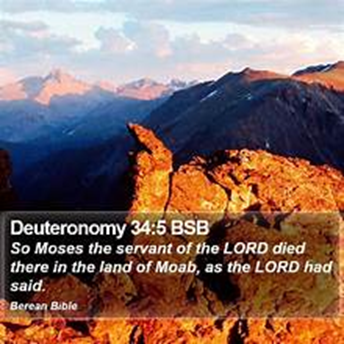
5-6 Moses died there in the land of Moab, Moses the servant of God, just as God said. God buried him in the valley in the land of Moab opposite Beth Peor. No one knows his burial site to this very day.

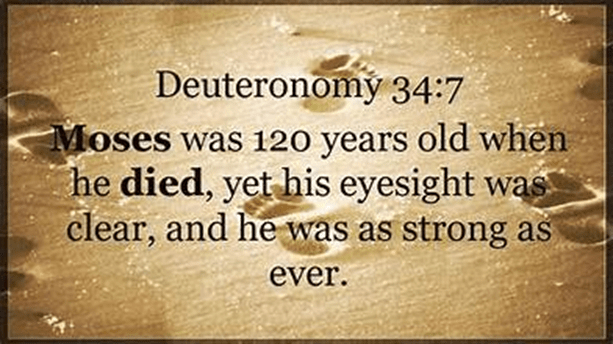
7-8 Moses was 120 years old when he died. His eyesight was sharp; he still walked with a spring in his step. The People of Israel wept for Moses in the Plains of Moab thirty days. Then the days of weeping and mourning for Moses came to an end.

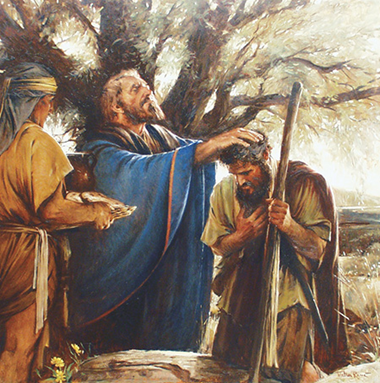
9 Joshua son of Nun was filled with the spirit of wisdom because Moses had laid his hands on him. The People of Israel listened obediently to him and did the same as when God had commanded Moses.

10-12 No prophet has risen since in Israel like Moses, whom God knew face-to-face. Never since has there been anything like the signs and miracle-wonders that God sent him to do in Egypt, to Pharaoh, to all his servants, and to all his land—nothing to compare with that all-powerful hand of his and all the great and terrible things Moses did as every eye in Israel watched.

Well, Moses is at the end of his ministry and he still hasn’t gotten to enter the Promised Land. However, God does allow Moses to ascend to the top of Mount Nebo, the peak of Pisgah, across from Jericho, where he can see all of Canaan. Even though God cannot allow Moses to enter, He still blesses Moses with this vision. God loves Moses, but He must carry out His judgment against Moses for rebelling at the Waters of Meribah.

Moses dies there, and God hides Moses’ body so that nobody can build a shrine or an altar or even attempt to preserve Moses’ body through mummification. Who knows what kind of Egyptian funeral rites some of the Israelites might carry out if given the chance? God wants Moses to be remembered but not to be worshiped.

Even though Moses is 120 years old, he is still physically active with sharp eyesight. God has preserved Moses through his entire ministry, and now Moses simply falls asleep in God’s hands. The Israelites grieve for Moses for thirty days; meanwhile, Joshua assumes command.

One of the loveliest descriptions of Moses comes in the final verses: “No prophet has risen since in Israel like Moses, whom God knew face-to-face. Never since has there been anything like the signs and miracle-wonders that God sent him to do in Egypt, to Pharaoh, to all his servants, and to all his land—nothing to compare with that all-powerful hand of his and all the great and terrible things Moses did as every eye in Israel watched.”

Psalm 116:15 tells us, “Precious in the sight of the Lord is the death of His saints.” Viewing death from our perspective, the death of loved ones means loss and grief. Two weeks ago, we lost our beloved kitty, Mr. Cat, and the hole that loss has left in our hearts is still there. But God’s perspective is the reverse: Now God’s loved ones have been released from what C.S. Lewis called “the shadow lands,” and they will forever be with the Lord. What must it have been like in heaven when Moses died? How great was the rejoicing? What a release for Moses? Now Moses and God could communicate directly. Even though Moses had been meeting God face-to-face, now Moses has no more physical limitations. Moses is in the presence of Pure Love, Pure Light, Pure Holiness, and Pure Joy.

These studies are written for many reasons, but chief is that readers will come to know Jesus as Savior and Lord. Romans 2:11 tells us, “For there is no preferential treatment with God.” (J.B. Phillips translation) God does not play favorites. The God of Abraham, Isaac, Jacob, and Moses is the same God who desires that you love and obey Him. This same God has sent His only Son, Jesus Christ, to live as a man and to die for your sins. Let’s pray.

PRAYER: Father God, thank You for loving us and caring for us. Lord, we confess that we are sinners and that nothing we do is good enough for us to earn our way into heaven. Please forgive us for our sins. We accept the sacrifice Jesus has made for our sins and we are trusting that sacrifice has cancelled our sins and that because we believe, we will spend eternity with You. We ask this in the matchless and precious Name of King Jesus. Amen.