Archive for the ‘Uncategorized’ Category

MAY 29, 2026 REMAINING FAITHFUL AFTER A MOUNTAINTOP EXPERIENCE? #5 PRAISE AFTER PERSECUTION MUST COME FROM THE HOLY SPIRIT!

May 29, 2026

Acts 4:23 As soon as they were freed, Peter and John found the other disciples and told them what the Council had said.

24 Then all the believers united in this prayer:

“O Lord, Creator of heaven and earth and of the sea and everything in them— 25-26 you spoke long ago by the Holy Spirit through our ancestor King David, your servant, saying, ‘Why do the heathen rage against the Lord, and the foolish nations plan their little plots against Almighty God? The kings of the earth unite to fight against him and against the anointed Son of God!’

27 “That is what is happening here in this city today! For Herod the king, and Pontius Pilate the governor, and all the Romans—as well as the people of Israel—are united against Jesus, your anointed Son, your holy servant. 28 They won’t stop at anything that you in your wise power will let them do. 29 And now, O Lord, hear their threats, and grant to your servants great boldness in their preaching, 30 and send your healing power, and may miracles and wonders be done by the name of your holy servant Jesus.”

31 After this prayer, the building where they were meeting shook, and they were all filled with the Holy Spirit and boldly preached God’s message.

The new believers might have been shaking in their sandals. Peter and John have just been released after having been interrogated by Jewish religious authorities. All attempts at intimidation have failed, and the two men have returned to report to their friends. But instead of responding with fear, the group immediately breaks into shouts of praise. And these people are even begging for more holy boldness. 29 And now, O Lord, hear their threats, and grant to your servants great boldness in their preaching, 30 and send your healing power, and may miracles and wonders be done by the name of your holy servant Jesus.”

While this reaction might seem weird, remember that Jesus has already warned the disciples that they will face persecution and that they will even be cast out of the synagogues. Once more, Jesus’ prophecies are being fulfilled. But there is more. As the believers are praising and glorifying God, the Holy Spirit shakes the building, filling all who are there, and empowering them to speak even more boldly.

There’s an interesting thing about courage-the more courageously you stand, generally, the more you are inspired to continue to act courageously. Consider the situation of these believers. Religious authorities have no shortage of informers willing to give lists of names for a small fee. Many of the believers are poor or middle class, lacking any political clout. All these people have families who might suffer as a consequence of their becoming targets.; they have every reason in the world to remain silent and even to hide. And yet, the Holy Spirit emboldens these people so that they are all willing to go out to spread the Gospel, rendering themselves even more visible and more vulnerable.

In 2011 we took part in a Community Health Evangelism training program in Kansas City. Three of the other participants were Korean Christians who were seeking training in preparation for moving across the border into North Korea to witness. These men knew the risks were horrific, for only a few months previously, one North Korean believer had been run over by a bull dozer in the town square while his family was forced to watch. His crime? He showed a Christian video in the privacy of his own home.

There’s a song by Ray Bolz, “I Pledge Allegiance to the Lamb,” that testifies of the sacrifices made by Christians through the centuries. We live and work in West Africa, where parts of Burkina Faso and Northern Nigeria have been decimated by Islamic terrorists attacking Christians. Innocent church goers have been slaughtered as they have gathered for worship. Now we are hearing of increased persecution of Chinese and Russian Christians. Ukraine, which is largely Christian, remains under vicious attack by the Russians. For many people gathering to worship might cost them everything, but they still come to worship and go out to tell others about Jesus. Only the Holy Spirit can give this kind of boldness. May God anoint us with His Holy Spirit so that we too will be bold to tell others about him.

PRAYER: Father God, thank You for loving us and caring for us. Lord, please anoint us with Your Holy Spirit and give us holy boldness to tell others about You. In the mighty and precious Name of King Jesus. Amen.  
MAY 28, 2026 REMAINING FAITHFUL AFTER A MOUNTAINTOP EXPERIENCE? #4 GOD CAN OVERCOME ANY ARGUMENT

May 28, 2026

Acts 4:5 The next day it happened that the Council of all the Jewish leaders was in session in Jerusalem— 6 Annas the High Priest was there, and Caiaphas, John, Alexander, and others of the High Priest’s relatives. 7 So the two disciples were brought in before them.

“By what power, or by whose authority have you done this?” the Council demanded.

8 Then Peter, filled with the Holy Spirit, said to them, “Honorable leaders and elders of our nation, 9 if you mean the good deed done to the cripple, and how he was healed, 10 let me clearly state to you and to all the people of Israel that it was done in the name and power of Jesus from Nazareth, the Messiah, the man you crucified—but God raised back to life again. It is by his authority that this man stands here healed! 11 For Jesus the Messiah is (the one referred to in the Scriptures when they speak of) a ‘stone discarded by the builders which became the capstone of the arch.’ 12 There is salvation in no one else! Under all heaven there is no other name for men to call upon to save them.”

Imagine the Council of all the Jewish leaders with the High Priest, the previous High Priest, John, Alexander, and many of the High Priest’s relatives. When Peter and John healed that cripple, the Council was already preparing to meet. God’s timing is perfect; however, Peter and John would have been just as happy if all the VIPs of the Jewish religion had NOT been meeting in Jerusalem just then! But now the two disciples had no way out; they could only witness to what had happened and God’s reasons for doing so. And the Sadducees were practically foaming at the mouth. These upstarts were preaching that salvation came through faith and not through observing the minutiae of the Mosai Law. And they were claiming that the Messiah had already come and that the very people who claimed to be waiting for him had killed him. Blasphemy!

13 When the Council saw the boldness of Peter and John and could see that they were obviously uneducated non-professionals, they were amazed and realized what being with Jesus had done for them! 14 And the Council could hardly discredit the healing when the man they had healed was standing right there beside them! 15 So they sent them out of the Council chamber and conferred among themselves.

16 “What shall we do with these men?” they asked each other. “We can’t deny that they have done a tremendous miracle, and everybody in Jerusalem knows about it. 17 But perhaps we can stop them from spreading their propaganda. We’ll tell them that if they do it again we’ll really throw the book at them.” 18 So they called them back in, and told them never again to speak about Jesus.

19 But Peter and John replied, “You decide whether God wants us to obey you instead of him! 20 We cannot stop telling about the wonderful things we saw Jesus do and heard him say.”

21 The Council then threatened them further and finally let them go because they didn’t know how to punish them without starting a riot. For everyone was praising God for this wonderful miracle— 22 the healing of a man who had been lame for forty years.

What are the religious leaders going to do? True, these men obviously have rudimentary educations and are not scholars; yet, they have prayed and God has acted. No matter how much anyone might argue, that crippled beggar is still walking and leaping and shouting God’s praises. Everybody in the temple has witnessed the healing. In addition, word about the healing has spread throughout Jerusalem so people who didn’t witness the original healing are now staring at the man who’s been healed. All the authorities can do is to threaten Peter and John, but everyone knows those threats are useless. Word about the healing has now spread far beyond Jerusalem, and this miracle has become the main topic of conversation throughout Judea. God must be chuckling as the religious leaders practically chew their beards in frustration.

There are several events happening here. When Peter and John pray, a cripple is miraculously healed. Then Peter the fisherman preaches another pungent sermon, convincing thousands to believe in Jesus Christ. Meanwhile, religious authorities whose beliefs have hardened into granite are trying to ignore the fact that they might have murdered the Messiah and that their carefully-constructed religious structures are wrong. The Holy Spirit is moving and no human can stop Him.

We read these accounts and wonder if God still does such miracles today. In every generation there have been those who have preached and witnessed miracles. In 1978 I attended a Benny Hinn service in Charleston, WV. As Hinn preached, hundreds of people came forward for healing. When Hinn stretched out his hands over several rows of young people sitting in the front of the auditorium, every one of them swooned under the power of the Holy Spirit. Hinn didn’t give any information ahead of time but merely allowed God to move. Reinhard Bonnke, the South African evangelist, saw 79 million people come to a saving knowledge of Jesus Christ. Many of God’s most effective workers are quite humble, speaking to groups. Our late friend Madame Doris Hockett saw hundreds of healings during her ministry and always gave God the credit. Doris conducted her last services just a few weeks before her death at the age of 86.

What does it take for God to do miracles? We must be faithful and brave enough to risk appearing ridiculous. Sometimes people are healed instantly and sometimes it takes days or weeks or months. But God will always move when we pray, even if the results are not as dramatic as those described in Acts. The main thing for us is to continue to pray and leave the results to God.

PRAYER: Father God, thank You for loving us and caring for us. Lord, help us to be faithful and brave, willing to risk looking foolish and praying anyway. In the mighty and precious Name of King Jesus. Amen.
MAY 27, 2026 REMAINING FAITHFUL AFTER A MOUNTAINTOP EXPERIENCE? #3 FAITHFULNESS SOMETIMES RESULTS IN BACKLASH!

May 27, 2026

Acts 3:11 11 They all rushed out to Solomon’s Hall, where he was holding tightly to Peter and John! Everyone stood there awed by the wonderful thing that had happened.

12 Peter saw his opportunity and addressed the crowd. “Men of Israel,” he said, “what is so surprising about this? And why look at us as though we by our own power and godliness had made this man walk? 13 For it is the God of Abraham, Isaac, Jacob and of all our ancestors who has brought glory to his servant Jesus by doing this. I refer to the Jesus whom you rejected before Pilate, despite Pilate’s determination to release him. 14 You didn’t want him freed—this holy, righteous one. Instead, you demanded the release of a murderer. 15 And you killed the Author of Life; but God brought him back to life again. And John and I are witnesses of this fact, for after you killed him, we saw him alive!

16 “Jesus’ name has healed this man—and you know how lame he was before. Faith in Jesus’ name—faith given us from God—has caused this perfect healing.

17 “Dear brothers, I realize that what you did to Jesus was done in ignorance; and the same can be said of your leaders. 18 But God was fulfilling the prophecies that the Messiah must suffer all these things. 19 Now change your mind and attitude to God and turn to him so he can cleanse away your sins and send you wonderful times of refreshment from the presence of the Lord 20 and send Jesus your Messiah back to you again. 21-22 For he must remain in heaven until the final recovery of all things from sin, as prophesied from ancient times. Moses, for instance, said long ago, ‘The Lord God will raise up a Prophet among you, who will resemble me! Listen carefully to everything he tells you. 23 Anyone who will not listen to him shall be utterly destroyed.’

24 “Samuel and every prophet since have all spoken about what is going on today. 25 You are the children of those prophets; and you are included in God’s promise to your ancestors to bless the entire world through the Jewish race—that is the promise God gave to Abraham. 26 And as soon as God had brought his servant to life again, he sent him first of all to you men of Israel, to bless you by turning you back from your sins.”

Once more, Peter is delivering a fiery sermon. Nobody is more shocked than Peter, for until now, he has always viewed himself as a man of action, not a man of words and certainly not as a polished orator. It’s possible that as these words are coming out Peter’s mouth, Peter is amazed. Why are Peter’s arguments so convincing? Common people know they have a sin problem; however, most of them are struggling simply to survive. The demands of the religious experts have made fellowship with God unachievable. Now the Holy Spirit is working in people’s hearts. By the time Peter and John are arrested, two thousand more believers have joined the original three thousand, making five thousand believers in all.

Acts 4:1-4 While they were talking to the people, the chief priests, the captain of the Temple police, and some of the Sadducees came over to them, 2 very disturbed that Peter and John were claiming that Jesus had risen from the dead. 3 They arrested them and since it was already evening, jailed them overnight. 4 But many of the people who heard their message believed it, so that the number of believers now reached a new high of about five thousand men!

Forces always come in pairs. The Holy Spirit has been moving mightily; however, now Satan is inspiring the religious authorities, especially the Sadducees. Who were the Sadducees?

Biblehub.com gives the following information:

1. The Sadducees are most famously known for their denial of the resurrection. This belief is explicitly mentioned in the New Testament, as seen in Acts 23:8: “The Sadducees say that there is no resurrection, nor angels, nor spirits, but the Pharisees acknowledge them all”. Their rejection of an afterlife was a significant point of contention with the Pharisees, who believed in the resurrection and the existence of angels and spirits.

2. Adherence to the Written Law: The Sadducees held a strict interpretation of the Torah, the first five books of the Hebrew Bible, and rejected the oral traditions that the Pharisees embraced. They believed that only the written Law of Moses was authoritative, which influenced their legal and religious practices.

3. Temple Worship and Sacrificial System: As a group closely associated with the priestly class, the Sadducees placed great emphasis on the Temple and its sacrificial system. They were responsible for maintaining the Temple rituals and were often involved in the administration of its affairs.

4. Political and Social Conservatism: The Sadducees were generally conservative in their social and political outlook, often collaborating with the Roman authorities to maintain their status and influence. This pragmatic approach sometimes put them at odds with other Jewish groups who were more resistant to Roman rule.

Interactions with Jesus and the Early Church

The Sadducees’ interactions with Jesus were marked by theological disputes, particularly concerning the resurrection. In Matthew 22:29-32, Jesus addresses their skepticism by affirming the resurrection and correcting their misunderstanding of the Scriptures: “Jesus replied, ‘You are mistaken because you do not know the Scriptures or the power of God… He is not the God of the dead, but of the living’“.

In the early church, the Sadducees continued to oppose the apostles’ teachings, particularly the proclamation of Jesus’ resurrection. Acts 4:1-2 records their displeasure: “The priests and the captain of the temple guard and the Sadducees came up to Peter and John while they were speaking to the people. They were greatly disturbed because the apostles were teaching the people and proclaiming in Jesus the resurrection of the dead.”

Given the beliefs of the Sadducees, it’s easy to see why Peter’s sermon would bring instant attacks. For the Sadducees, Peter was preaching heresy, and who knows what the Romans might think? No! Peter and John are dangerous rabble rousers and must be silenced swiftly.

Make no mistake! Spiritual warfare is real and dangerous. Ephesians 6 tells us, 10 Last of all I want to remind you that your strength must come from the Lord’s mighty power within you. 11 Put on all of God’s armor so that you will be able to stand safe against all strategies and tricks of Satan. 12 For we are not fighting against people made of flesh and blood, but against persons without bodies—the evil rulers of the unseen world, those mighty satanic beings and great evil princes of darkness who rule this world; and against huge numbers of wicked spirits in the spirit world…18 Pray all the time. Ask God for anything in line with the Holy Spirit’s wishes. Plead with him, reminding him of your needs, and keep praying earnestly for all Christians everywhere. 

Even before Jesus was crucified, he warned the disciples that they would face persecution because of him. Now Peter and John were in for it; however, they remained steadfast. The question for us is this: are we willing to face persecution or even death for our faith, or will we shrink away? May God help us so that we will remain faithful, no matter what.

PRAYER: Father God, thank You for loving us and caring for us. Lord, help us to remain faithful in the face of persecution. In the mighty and precious Name of King Jesus. Amen.
MAY 26, 2026 REMAINING FAITHFUL AFTER A MOUNTAINTOP EXPERIENCE? #2 DOES THE HOLY SPIRIT REALLY WORK?

May 26, 2026

Acts 3:1 Now Peter and John went up together into the temple at the hour of prayer, being the ninth hour.

2 And a certain man lame from his mother’s womb was carried, whom they laid daily at the gate of the temple which is called Beautiful, to ask alms of them that entered into the temple; 3 Who seeing Peter and John about to go into the temple asked for alms. 4 And Peter, fastening his eyes upon him with John, said, Look on us. 5 And he gave heed unto them, expecting to receive something of them.

6 Then Peter said, Silver and gold have I none; but such as I have given I thee: In the name of Jesus Christ of Nazareth rise up and walk. 7 And he took him by the right hand, and lifted him up: and immediately his feet and ankle bones received strength. 8 And he leaping up stood, and walked, and entered with them into the temple, walking, and leaping, and praising God. 9 And all the people saw him walking and praising God: 10 And they knew that it was he which sat for alms at the Beautiful gate of the temple: and they were filled with wonder and amazement at that which had happened unto him.

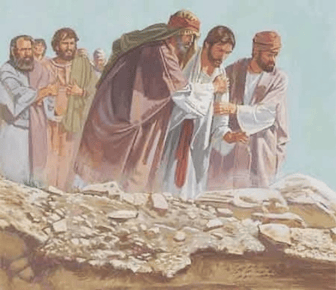
We don’t know this man’s name; we only know that all his life, he has sat at the Beautiful gate to the temple, unable to enter because he is a cripple. (There are various arguments about this, for Leviticus 21 proscribes anyone from the priestly line who is crippled from making offerings; however, it does not bar cripples from entering the temple. But later on, when David is attacking Jerusalem, the Jebusites are so certain of victory that they taunt David., claiming that even the lame and the blind can keep David out. 2 Samuel 5:6 David now led his troops to Jerusalem to fight against the Jebusites who lived there. “You’ll never come in here,” they told him. “Even the blind and lame could keep you out!” For they thought they were safe. 7 But David and his troops defeated them and captured the stronghold of Zion, now called the City of David. 8 When the insulting message from the defenders of the city reached David, he told his troops, “Go up through the water tunnel into the city and destroy those ‘lame’ and ‘blind’ Jebusites. How I hate them.”

That Scripture says nothing about the temple. Infuriated at the Jebusite insults, David responds to them in kind, promising to deal with the so-called lame and blind. Through the years, David’s response to the Jebusites has gotten twisted into a vicious regulation barring cripples from entering the temple to worship; meanwhile, David is actually giving the Jebusites a cheeky retort. But for hundreds of years, crippled believers have been relegated to the surroundings of the temple.

Peter and John are going to pray at 3 PM when they meet this man on the temple steps. Suddenly, Peter and John have a nudge from the Holy Spirit that they are to pray for this man. How long they hesitate, we don’t know. Perhaps Peter looks at John and then John looks back at Peter. Peter shrugs his big shoulders and then commands the man to walk in the Name of Jesus. As Peter prays, the man is healed and immediately begins walking and leaping and praising God as he enters the temple. Onlookers are stunned, for this man is a well-known beggar whose legs have been shriveled since birth, and now those same legs are strong and muscular.  

At this point, Peter and John are probably as thrilled as the crippled man. Even though Jesus previously sent out the disciples to teach, preach, heal, and cast out demons, the disciples went out safe in the knowledge that Jesus’ authority was with them. Perhaps they even had the feeling that if they messed up, Jesus would save the situation. But now Jesus is in heaven, and the disciples are on their own. True, Pentecost has come, and the Holy Spirit has appeared, empowering Peter to preach convincingly. But still, the questions nag. What kind of spiritual authority do the disciples really have? How sufficient is the Holy Spirit? As Peter and John stand there in the temple, they try to remember exactly what Jesus taught them. The night Jesus was betrayed he tried to impart as much information about the Holy Spirit as possible.

John 16:5 “But now I am going away to the one who sent me; and none of you seems interested in the purpose of my going; none wonders why. 6 Instead you are only filled with sorrow. 7 But the fact of the matter is that it is best for you that I go away, for if I don’t, the Comforter won’t come. If I do, he will—for I will send him to you.

8 “And when he has come, he will convince the world of its sin, and of the availability of God’s goodness, and of deliverance from judgment. 9 The world’s sin is unbelief in me; 10 there is righteousness available because I go to the Father and you shall see me no more; 11 there is deliverance from judgment because the prince of this world has already been judged.

12 “Oh, there is so much more I want to tell you, but you can’t understand it now. 13 When the Holy Spirit, who is truth, comes, he shall guide you into all truth, for he will not be presenting his own ideas, but will be passing on to you what he has heard. He will tell you about the future. 14 He shall praise me and bring me great honor by showing you my glory.”

As long as Jesus was in a human body, that body was subject to sickness and even to death. But once Jesus ascended into heaven, the Holy Spirit was released to descend on the disciples and empower them. The Holy Spirit is not limited by time, space, or physical limitations.

It happened while I was in my third year of general surgery training. This poor lady had uterine cancer that had spread throughout her pelvis. She had endured all the chemotherapy and all the radiation therapy she could stand. Her right leg was three times the size of her left and we had to insert a filter into the inferior vena cava to prevent her from throwing blood clots to her lungs. Then she got appendicitis and underwent an open operation for appendectomy. When I anointed this lady with hospital skin lotion and prayed for her, all either of us thought I was asking was for the pain to go away, for she was in constant agony. Two years later, I was rounding on patients to be operated the next day. When I entered one lady’s room, she looked at me and then said, “You don’t recognize me, do you?” The lady in the bed was the lady with the incurable cancer, the lady whose right leg was grotesquely swollen. God had healed her miraculously and she was admitted to have a small incisional hernia repaired at the site of her previous appendectomy scar.

Although I have witnessed many miracles of healing during my medical career, most of them have occurred through other people’s prayers. But we should always pray, no matter how hopeless the situation appears. One lady came to our hospital from Togo, stayed a few days, and then went to the home of a local pastor. At 7:30 that night the lady died. Because of local custom, other women in the family remained in the same room with her, and it was fortunate they did so. Two hours after the lady died, she suddenly began breathing and talking. God raised that woman from the dead.

Why am I telling these stories? If you had questioned Peter and John about the man at the Beautiful gate before they went there, they would undoubtedly have agreed that the man was a hopeless cripple. They would have scoffed at the idea that they were men of great faith. Yet, when the Holy Spirit moved in their hearts, they prayed and God answered.

God doesn’t play favorites. If we will pray, God will continue to answer. We are not responsible for results; we are only responsible for being obedient. So, pray and see what God will do!

PRAYER: Father God, thank You for loving us and caring for us. Lord, help us to pray, not worrying about the results. In the mighty and precious Name of King Jesus. Amen.

MAY 25, 2026 REMAINING FAITHFUL AFTER A MOUNTAINTOP EXPERIENCE? #1 YOU MUST COME BACK DOWN THE MOUNTAIN AND DEAL WITH REALITY

May 25, 2026

Acts 2:42 They devoted themselves to the apostles’ teaching and to fellowship, to the breaking of bread and to prayer. 43 Everyone was filled with awe at the many wonders and signs performed by the apostles. 44 All the believers were together and had everything in common. 45 They sold property and possessions to give to anyone who had need. 46 Every day they continued to meet together in the temple courts. They broke bread in their homes and ate together with glad and sincere hearts, 47 praising God and enjoying the favor of all the people. And the Lord added to their number daily those who were being saved.

Well, Jesus’ promises have been fulfilled. The Holy Spirit has descended, empowering 120 believers, and Peter has preached to crowds in Jerusalem with 3,000 people deciding to follow Jesus. At this point, believers must be intoxicated with the idea that now miracles are going to continue and new dramatic things will happen each day. After all, the apostles are doing signs and wonders, and people are flocking to become Christians. What new thrills will tomorrow bring?

Read a bit further in Acts, and you realize that the backlash from the religious establishment plus the Roman government is about to begin. The Romans really don’t care much about religious as long as their adherents remain obedient Roman citizens, paying taxes and homage to Mother Rome. Jewish religious leaders, however, are very worried. Not only are those leaders with consciences concerned that they might have missed the Messiah, but this new movement threatens to undermine their carefully constructed religious framework. Even though Jesus has taught reverence for the Law and obedience to it, these men are terrified, for they cannot control these Christians as they have the Jews in general. And while Jesus has taught reverence for the Law of Moses, he has scathingly criticized many of the regulations that have evolved in the centuries since. One prime example is that of Pharisees tithing the spices in their pantries but refusing to be compassionate to the poor or even to their own aged parents.

The dilemma new believers are facing is similar to the dilemma faced by Peter, James, and John after their experiences on the Mount of Transfiguration. Matthew tells the story:

Matthew 17:1 After six days Jesus took with him Peter, James and John the brother of James, and led them up a high mountain by themselves. 2 There he was transfigured before them. His face shone like the sun, and his clothes became as white as the light. 3 Just then there appeared before them Moses and Elijah, talking with Jesus.

4 Peter said to Jesus, “Lord, it is good for us to be here. If you wish, I will put up three shelters—one for you, one for Moses and one for Elijah.”

5 While he was still speaking, a bright cloud covered them, and a voice from the cloud said, “This is my Son, whom I love; with him I am well pleased. Listen to him!”

6 When the disciples heard this, they fell facedown to the ground, terrified. 7 But Jesus came and touched them. “Get up,” he said. “Don’t be afraid.” 8 When they looked up, they saw no one except Jesus.

9 As they were coming down the mountain, Jesus instructed them, “Don’t tell anyone what you have seen, until the Son of Man has been raised from the dead.”

10 The disciples asked him, “Why then do the teachers of the law say that Elijah must come first?”

11 Jesus replied, “To be sure, Elijah comes and will restore all things. 12 But I tell you, Elijah has already come, and they did not recognize him, but have done to him everything they wished. In the same way the Son of Man is going to suffer at their hands.” 13 Then the disciples understood that he was talking to them about John the Baptist.

Jesus Heals a Demon-Possessed Boy

14 When they came to the crowd, a man approached Jesus and knelt before him. 15 “Lord, have mercy on my son,” he said. “He has seizures and is suffering greatly. He often falls into the fire or into the water. 16 I brought him to your disciples, but they could not heal him.”

17 “You unbelieving and perverse generation,” Jesus replied, “how long shall I stay with you? How long shall I put up with you? Bring the boy here to me.” 18 Jesus rebuked the demon, and it came out of the boy, and he was healed at that moment.

19 Then the disciples came to Jesus in private and asked, “Why couldn’t we drive it out?”

20 He replied, “Because you have so little faith. Truly I tell you, if you have faith as small as a mustard seed, you can say to this mountain, ‘Move from here to there,’ and it will move. Nothing will be impossible for you.” 

After this mountaintop experience, Jesus, Peter, James, and John had to come back down into the valley where Jesus would have to heal a demon-possessed boy. No sitting around basking in reflected glory. No going off on a retreat to examine the experience that had just occurred. Nope, God immediately allowed Jesus to meet a major problem-demon possession that has resisted the best efforts of the disciples. Remember that by now, the disciples have gained a great deal of experience in casting out demons; this isn’t their first attempt. But this exorcism calls for more prayer and more spiritual authority than the disciples have at this point.

The question facing both groups of people is simple: How do you go on after you have been part of an incredible event? What do you do after the drama is over? In the case of Jesus and the disciples, Jesus exerts his authority and casts out the demon. In the case of the believers in Jerusalem, “They devoted themselves to the apostles’ teaching and to fellowship, to the breaking of bread and to prayer.” These believers worshiped daily in the temple, and began sharing resources together, sharing meals, and helping all those around them, and continuing to pray.

Quiet acts of worship, charity, and loving fellowship scarcely appear to match the startling events that have preceded them. But the fact is that God has not designed us to live on mountaintops. The Christian writer Oswald Chambers has described the problem accurately in his book My Utmost for His Highest (October 1st).

We have all experienced times of exaltation on the mountain, when we have seen things from God’s perspective and have wanted to stay there. But God will never allow us to stay there. The true test of our spiritual life is in exhibiting the power to descend from the mountain. If we only have the power to go up, something is wrong. It is a wonderful thing to be on the mountain with God, but a person only gets there so that he may later go down and lift up the demon-possessed people in the valley (see Mark 9:14-18). We are not made for the mountains, for sunrises, or for the other beautiful attractions in life— those are simply intended to be moments of inspiration. We are made for the valley and the ordinary things of life, and that is where we have to prove our stamina and strength. Yet our spiritual selfishness always wants repeated moments on the mountain. We feel that we could talk and live like perfect angels, if we could only stay on the mountaintop. Those times of exaltation are exceptional and they have their meaning in our life with God, but we must beware to prevent our spiritual selfishness from wanting to make them the only time.

We are inclined to think that everything that happens is to be turned into useful teaching. In actual fact, it is to be turned into something even better than teaching, namely, character. The mountaintop is not meant to teach us anything, it is meant to make us something. There is a terrible trap in always asking, “What’s the use of this experience?” We can never measure spiritual matters in that way. The moments on the mountaintop are rare moments, and they are meant for something in God’s purpose.

Have you recently enjoyed a mountaintop experience, some outstanding program or teaching? Wonderful! Now ask God what He wants you to do. God never intends for us to keep things to ourselves but for us to take what He has given and become better servants. May God help us, so that we will not be selfish, but serving instead!

PRAYER: Father God, thank You for loving us and caring for us. Lord, help us to always look to You for our assignments and not to cling to inspiration as if it were only for us. In the mighty and precious Name of King Jesus. Amen.
MAY 24, 2026-WAITING FOR PENTECOST #45-PENTECOST HAS COME AND NOTHING WILL EVER BE THE SAME!

May 24, 2026

2:1 When the Day of Pentecost had fully come, they were all with one accord in one place. 2 And suddenly there came a sound from heaven, as of a rushing mighty wind, and it filled the whole house where they were sitting. 3 Then there appeared to them divided tongues, as of fire, and one sat upon each of them. 4 And they were all filled with the Holy Spirit and began to speak with other tongues, as the Spirit gave them utterance.

One of my favorite phrases in the entire Bible is Acts 2:1 for one simple statement: When the Day of Pentecost had FULLY COME…Waiting is no fun whatsoever! We want what we want when and how we want it, and most of us hate waiting or delays. But God’s ways are not our ways, and God’s timing is not our timing. The morning of the Day of Pentecost, 120 believers were having a simple prayer meeting. It’s possible that someone might have even prayed, “Come, Holy Spirit!” And suddenly, the Spirit came, and nothing would ever be the same again.

First, there was a “rushing mighty wind.” One of the Transformations videos produced by the Sentinel Organization includes film footage of a baptism service in a small church in a remote part of Alaska. Just as the baptisms start, the place begins shaking and a “rushing mighty wind” roars through the building. Thinking that the sound equipment might be malfunctioning, the guy handling the sound system turns off the sound system, only to have the noise of the wind become even stronger. Although there are no visible tongues of fire descending on people’s heads in the video, the voice of the Holy Spirit is indisputably evident.

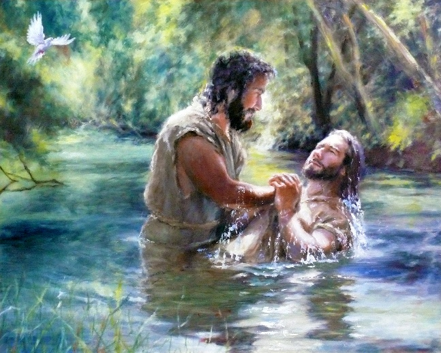
“Then there appeared to them divided tongues, as of fire, and one sat upon each of them.”  Matthew 3:11 documents the prophecy of John the Baptist.“I baptize you withwater for repentance. But after me comes one who is more powerful than I, whose sandals I am not worthy to carry. He will baptize you with the Holy Spirit and fire.” Now John’s prophecy is coming true. Fire purifies and consumes everything that is not permanent. When Isaiah sees God Almighty in the temple, one of the cherubs brings a coal from the altar and touches it to Isaiah’s lips because Isaiah confesses that he is a man of unclean lips and he dwells amidst a people of unclean lips. On Pentecost, the Holy Spirit is purifying the minds of the believers so that they will be able to speak clearly and truthfully of the things of the Kingdom.

The Crowd’s Response

5 And there were dwelling in Jerusalem Jews, devout men, from every nation under heaven. 6 And when this sound occurred, the multitude came together, and were confused, because everyone heard them speak in his own language. 7 Then they were all amazed and marveled, saying to one another, “Look, are not all these who speak Galileans? 8 And how is it that we hear, each in our own language in which we were born? 9 Parthians and Medes and Elamites, those dwelling in Mesopotamia, Judea and Cappadocia, Pontus and Asia, 10 Phrygia and Pamphylia, Egypt and the parts of Libya adjoining Cyrene, visitors from Rome, both Jews and proselytes, 11 Cretans and Arabs—we hear them speaking in our own tongues the wonderful works of God.” 12 So they were all amazed and perplexed, saying to one another, “Whatever could this mean?”

13 Others mocking said, “They are full of new wine.”

Because of the Feast of Pentecost, Jewish believers have come from throughout the world. Now these people hear these back country Galileans speaking perfectly in many different languages. Has this really happened in modern times? In the book Before We Kill And Eat You: Tales of Faith in the Face of Certain Death, H. B. Garlock and his wife Ruthanne Garlock describe a confrontation H.B. and a translator had with cannibals in Liberia. Garlock and his translator had traveled up-country to witness to a tribe that had slaughtered every previous missionary and government official. The book takes its title from the statement of the cannibal chief as his men are about to murder Garlock and his interpreter. The chief asks Garlock, “Before we kill and eat you, do you have anything to say?” Although Garlock spoke one or two tribal languages and his interpreter spoke other languages, Garlock knew nothing of the language spoken by these cannibals. That’s when the Holy Spirit took over. When Garlock opened his mouth, suddenly eloquent speech in the language of the cannibals poured forth and continued for a long time. Garlock never did learn exactly what the Holy Spirit had said, but at the end of the speech, the cannibals had come under the convicting power of the Holy Spirit and they not only released Garlock and his friend, but also helped them on their way. (Later the Garlocks would work in Ghana, living in Yendi in 1935, and we met their son John in 1995.)

But if 120 people suddenly speaking in all the known languages of the Roman Empire isn’t enough to convince onlookers, now Peter stands up and begins to preach.14 But Peter, standing up with the eleven, raised his voice and said to them, “Men of Judea and all who dwell in Jerusalem, let this be known to you, and heed my words. 15 For these are not drunk, as you suppose, since it is only the third hour of the day. 16 But this is what was spoken by the prophet Joel:

17 ‘And it shall come to pass in the last days, says God, That I will pour out of My Spirit on all flesh; Your sons and your daughters shall prophesy, Your young men shall see visions, Your old men shall dream dreams. 18 And on My menservants and on My maidservants, I will pour out My Spirit in those days; And they shall prophesy. 19 I will show wonders in heaven above
And signs in the earth beneath: Blood and fire and vapor of smoke. 20 The sun shall be turned into darkness, And the moon into blood, Before the coming of the great and awesome day of the Lord. 21 And it shall come to pass That whoever calls on the name of the Lord Shall be saved.’

22 “Men of Israel, hear these words: Jesus of Nazareth, a Man attested by God to you by miracles, wonders, and signs which God did through Him in your midst, as you yourselves also know— 23 Him, being delivered by the determined purpose and foreknowledge of God, you have taken by lawless hands, have crucified, and put to death; 24 whom God raised up, having loosed the pains of death, because it was not possible that He should be held by it. 25 For David says concerning Him: ‘I foresaw the Lord always before my face,
For He is at my right hand, that I may not be shaken. 26 Therefore my heart rejoiced, and my tongue was glad; Moreover, my flesh also will rest in hope. 27 For You will not leave my soul in Hades, nor will You allow Your Holy One to ee corruption. 28 You have made known to me the ways of life; You will make me full of joy in Your presence.’

29 “Men and brethren, let me speak freely to you of the patriarch David, that he is both dead and buried, and his tomb is with us to this day. 30 Therefore, being a prophet, and knowing that God had sworn with an oath to him that of the fruit of his body, according to the flesh, He would raise up the Christ to sit on his throne, 31 he, foreseeing this, spoke concerning the resurrection of the Christ, that His soul was not left in Hades, nor did His flesh see corruption. 32 This Jesus God has raised up, of which we are all witnesses…. 40 And with many other words he testified and exhorted them, saying, “Be saved from this perverse generation.” 41 Then those who gladly received his word were baptized; and that day about three thousand souls were added to them. 42 And they continued steadfastly in the apostles’ doctrine and fellowship, in the breaking of bread, and in prayers. 

Rushing winds, tongues of fire, and the gift of languages might seem like enough, but now an even greater miracle occurs. Peter, the relatively uneducated Galilean fisherman with his strong regional accent, begins addressing the crowds. While Peter is a natural leader with a forceful personality, he has remained in the background when meeting the public. Peter probably had a basic education in Torah; however, as soon as he got big enough, he began fishing with his father. Fishing is an honest trade, but it doesn’t bear the same social status as scholarship or being a merchant in town. By the time Peter gets through, 3,000 people decide to follow Jesus.

The results of Peter’s sermon are a lasting testimony to the power of the Holy Spirit’s ability to change hearts. I once heard a testimony from a senior lawyer from Atlanta. This lawyer lived next door to a local pastor who kept inviting the lawyer to his church. Finally, the lawyer decided to visit the church just to satisfy the pastor. That particular Sunday, there were lay witness speakers, and one insurance salesman gave his testimony. The lawyer mentioned that he had listened to polished speakers throughout his long career; had the message been given by a polished speaker, he probably would have ignored it. But two things were evident: this insurance salesman was NOT a polished speaker, but he was a man whose life God had changed profoundly. It was the very lack of polish in the presentation that drew that lawyer to Jesus that morning.

When we first came to Ghana, we met Madames Pauline Smith and Adeline Wichman, two single lady AG missionaries who eventually spent 50 years in missions. Aunt Polly and Aunt Addie taught us that God wasn’t nearly as worried about our ABILITY as He was about our AVAILABILITY. Once we make ourselves available, God can empower us to fulfill His perfect Will for our lives.

The Baptism of the Holy Spirit is available for all believers. Some people are afraid to ask because they fear speaking in tongues. But God will not override anyone’s free will. God can manifest His Holy Spirit in a number of ways, and speaking in tongues is only one of them. God is gentle, and He will lead you into the right gifts and manifestations at the right time if you will only ask Him and then trust Him. But make no mistake. First, you choose to follow Jesus. Then God can baptize you in the Holy Spirit.

PRAYER: Father God, thank You for loving us and caring for us. Lord, many reading these words long for the Baptism of the Holy Spirit. Graciously give that gift to all who ask sincerely and who are prepared for it. In the mighty and precious Name of King Jesus. Amen.
MAY 23, 2026-WAITING FOR PENTECOST #44 WHAT DO YOU DO WHILE YOU’RE WAITING FOR GOD TO MOVE?

May 23, 2026

Acts 1:1 In my first book I told you, Theophilus, about everything Jesus began to do and teach 2 until the day he was taken up to heaven after giving his chosen apostles further instructions through the Holy Spirit. 3 During the forty days after he suffered and died, he appeared to the apostles from time to time, and he proved to them in many ways that he was actually alive. And he talked to them about the Kingdom of God.

4 Once when he was eating with them, he commanded them, “Do not leave Jerusalem until the Father sends you the gift he promised, as I told you before. 5 John baptized with water, but in just a few days you will be baptized with the Holy Spirit.”

The Ascension of Jesus

6 So when the apostles were with Jesus, they kept asking him, “Lord, has the time come for you to free Israel and restore our kingdom?”

7 He replied, “The Father alone has the authority to set those dates and times, and they are not for you to know. 8 But you will receive power when the Holy Spirit comes upon you. And you will be my witnesses, telling people about me everywhere—in Jerusalem, throughout Judea, in Samaria, and to the ends of the earth.”

9 After saying this, he was taken up into a cloud while they were watching, and they could no longer see him. 10 As they strained to see him rising into heaven, two white-robed men suddenly stood among them. 11 “Men of Galilee,” they said, “why are you standing here staring into heaven? Jesus has been taken from you into heaven, but someday he will return from heaven in the same way you saw him go!”

The Book of Luke and the Book of Acts were both written by Luke, a physician who was not one of the original apostles but who documented Jesus’ life and that of the apostles scrupulously.

Luke wrote both his gospel and the Book of Acts for a friend named Theophilus, or “Lover of God.” As a fellow physician, I think that in modern times, Luke would have been a great Internal Medicine specialist or even a Neurologist, for he amassed enormous amounts of detail, interviewing as many people as possible before writing.

Many scholars believe that Luke was a physician who lived in the Hellenistic city of Antioch in Ancient Syria,[c] born of a Greek family,[8][9][10] although some scholars and theologians think Luke was a Hellenic Jew.[11][12] While it has been widely accepted that the theology of Luke–Acts points to a gentile Christian writing for a gentile audience, some have concluded that it is more plausible that Luke–Acts is directed to a community made up of both Jewish and gentile Christians since there is stress on the scriptural roots of the gentile mission (see the use of Isaiah 49:6 in Luke–Acts).[13][14]

Whether Luke was a Jew or gentile, or something in between, it is clear from the quality of the Greek language used in Luke–Acts that the author, held in Christian tradition to be Luke, was one of the most highly educated of the authors of the New Testament. The author’s conscious and intentional allusions and references to, and quotations of, ancient Classical and Hellenistic Greek authors, such as Homer, Aesop, Epimenides, Euripides, Plato, Thucydides, and Aratus indicate that he was familiar with actual Greek literary texts. This familiarity most likely derived from his experiences as a youth of the very homogenous Hellenistic educational curriculum (ἐγκύκλιος παιδεία, enkyklios paideia) that had been, and would continue to be, used for centuries throughout the eastern Mediterranean.[15] (https://en.wikipedia.org/wiki/Luke_the_Evangelist)

Although some gospels give the impression that Jesus ascended into heaven almost as soon as he was resurrected, Luke documents a period of forty days, during which Jesus repeatedly appeared to the disciples. It was only at the end of the forty-day period that Jesus ascended. During that time, the disciples besieged Jesus with questions, the main one being “Lord, has the time come for you to free Israel and restore our kingdom?” After all, Jesus had conquered death and the grave, so why not conquer the Romans and bring in the Kingdom of God instantly? The disciples were hoping for quick and easy answers; however, Jesus wasn’t giving out any information. When the disciples persisted, Jesus simply told them that information was privileged and only the Heavenly Father knew the time table. But then Jesus totally changed the subject.

During Jesus’ last night with the disciples in the Upper Room, he breathed on them to receive the Holy Spirit. Now Jesus was promising that the Holy Spirit would soon come, giving them power to witness throughout the world. Frankly, this was not what the disciples wanted. The disciples felt that they had already suffered enough, so why not simply end everything here and now? But God’s ways are higher than ours and His timing is not ours. The next major event found the disciples standing in awe as Jesus ascended into heaven.

May 17, 2026 was Ascension Sunday, a day on which we celebrate Jesus’ ascension. The disciples must have been devastated as they watched Jesus leave them. What would they do now? How could they possibly go on? True, they had Jesus’ teachings, but teachings couldn’t compare with having Jesus present with them physically. And what was this Holy Spirit that Jesus kept talking about? Jesus had tried to tell the disciples about the Holy Spirit the night he was betrayed.

John 16:5 “But now I am going away to the one who sent me, and not one of you is asking where I am going. 6 Instead, you grieve because of what I’ve told you. 7 But in fact, it is best for you that I go away, because if I don’t, the Advocate won’t come. If I do go away, then I will send him to you. 8 And when he comes, he will convict the world of its sin, and of God’s righteousness, and of the coming judgment. 9 The world’s sin is that it refuses to believe in me. 10 Righteousness is available because I go to the Father, and you will see me no more. 11 Judgment will come because the ruler of this world has already been judged.

12 “There is so much more I want to tell you, but you can’t bear it now. 13 When the Spirit of truth comes, he will guide you into all truth. He will not speak on his own but will tell you what he has heard. He will tell you about the future. 14 He will bring me glory by telling you whatever he receives from me. 15 All that belongs to the Father is mine; this is why I said, ‘The Spirit will tell you whatever he receives from me.’

Jesus knew that he needed to return to heaven so that the Holy Spirit could come be with his followers forever. Even in a resurrected body, Jesus would have been severely limited; however, the Holy Spirit would have no physical limitations, existing in eternity.

We can certainly identify with the disciples. We don’t want mysteries; we want God with the skin on, a Being we can touch. And we would really like God to reveal His time table; however, God in His infinite mercy refuses to do that because He knows that we might try to fix things and totally mess things up. Think about Saul on the road to Damascus, bent on capturing as many Christians as possible to drag them back to Jerusalem. If you had asked any of the disciples, they would have warned you against Saul, and even when God ordered Ananias to go pray for Saul, Ananias tried to beg off. We want God to work our way on our terms, not His. And of course, the difference is that our ways don’t work and His ways do.

What should we do while we are waiting for God to reveal Himself to us? Pray. Worship. Praise God for who He is, even though we don’t understand what He is doing or how He is doing it. When we praise God, we open our minds and hearts to His possibilities and He can enlighten us in special ways. Never mind whether or not you can see your way clear. Do the next thing that lies before you, continue to act faithfully, and God will reveal His Will step by step.

There’s this paradox about living a life of faith: the farther we go on with God, the less we can trace Him and the more we must trust Him. That’s because it takes more faith to trust than it does to move when everything is made clear. Do you feel that you are caught in a cloud with no sense of direction? Look at your situation and see whatever small things God is calling you to do. Remember that God doesn’t sneer at small things but uses them. And as you do the small things bit by bit, God will continue to reveal Himself until one day, you will look back and see that God has been leading you safely all these years.

PRAYER: Father God, thank You for loving us and caring for us. Lord, help us to trust where we cannot see and to continue to walk forward, even if we are only taking baby steps. In the mighty and precious Name of King Jesus. Amen.
MAY 22, 2026-WAITING FOR PENTECOST #43 GET OFF THAT COUCH AND START SOMETHING SMALL!

May 22, 2026

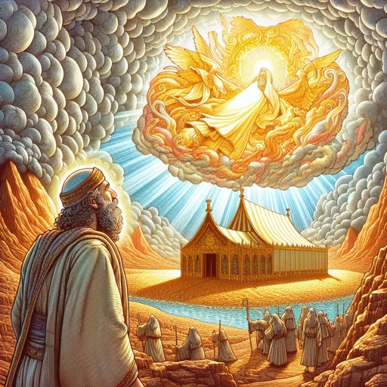
Zechariah 4:1 Then the angel who had been talking with me returned and woke me, as though I had been asleep. 2 “What do you see now?” he asked.

I answered, “I see a solid gold lampstand with a bowl of oil on top of it. Around the bowl are seven lamps, each having seven spouts with wicks. 3 And I see two olive trees, one on each side of the bowl.” 4 Then I asked the angel, “What are these, my lord? What do they mean?”

5 “Don’t you know?” the angel asked.

“No, my lord,” I replied.

6 Then he said to me, “This is what the Lord says to Zerubbabel: It is not by force nor by strength, but by my Spirit, says the Lord of Heaven’s Armies. 7 Nothing, not even a mighty mountain, will stand in Zerubbabel’s way; it will become a level plain before him! And when Zerubbabel sets the final stone of the Temple in place, the people will shout: ‘May God bless it! May God bless it!’”

8 Then another message came to me from the Lord: 9 “Zerubbabel is the one who laid the foundation of this Temple, and he will complete it. Then you will know that the Lord of Heaven’s Armies has sent me. 10 Do not despise these small beginnings, for the Lord rejoices to see the work begin, to see the plumb line in Zerubbabel’s hand.”

(The seven lamps represent the eyes of the Lord that search all around the world.)

In the beginning, it was simply a disaster zone! When the Babylonians overran Jerusalem, they looted, pillaged, burned, and destroyed anything they could. Any gold, silver, brass, or other precious items left in the temple went straight to Babylon while the wooden parts of the temple were burned and many of its stones pulled apart. Then seventy years later, in 539 B.C., King Cyrus of Persia decreed that the temple should be rebuilt. The first group of exiles returned under the leadership of Zerubbabel, a descendant of King David, and Jeshua the high priest. This return is detailed in Ezra 2 and Nehemiah 7, which provide a list of the families and individuals who made the journey. According to Ezra 2:64-65 , “The whole assembly numbered 42,360, besides their 7,337 menservants and maidservants, as well as their 200 male and female singers.” This group laid the foundation for the Second Temple and reinstituted the sacrificial system.

Ezra 3 tells us: In early autumn, when the Israelites had settled in their towns, all the people assembled in Jerusalem with a unified purpose. 2 Then Jeshua son of Jehozadak[b] joined his fellow priests and Zerubbabel son of Shealtiel with his family in rebuilding the altar of the God of Israel. They wanted to sacrifice burnt offerings on it, as instructed in the Law of Moses, the man of God. 3 Even though the people were afraid of the local residents, they rebuilt the altar at its old site. Then they began to sacrifice burnt offerings on the altar to the Lord each morning and evening.

4 They celebrated the Festival of Shelters as prescribed in the Law, sacrificing the number of burnt offerings specified for each day of the festival. 5 They also offered the regular burnt offerings and the offerings required for the new moon celebrations and the annual festivals as prescribed by the Lord. The people also gave voluntary offerings to the Lord. 6 Fifteen days before the Festival of Shelters began, the priests had begun to sacrifice burnt offerings to the Lord. This was even before they had started to lay the foundation of the Lord’s Temple.

The People Begin to Rebuild the Temple

7 Then the people hired masons and carpenters and bought cedar logs from the people of Tyre and Sidon, paying them with food, wine, and olive oil. The logs were brought down from the Lebanon mountains and floated along the coast of the Mediterranean Sea to Joppa, for King Cyrus had given permission for this.

8 The construction of the Temple of God began in midspring, during the second year after they arrived in Jerusalem. The work force was made up of everyone who had returned from exile, including Zerubbabel son of Shealtiel, Jeshua son of Jehozadak and his fellow priests, and all the Levites. The Levites who were twenty years old or older were put in charge of rebuilding the Lord’s Temple. 9 The workers at the Temple of God were supervised by Jeshua with his sons and relatives, and Kadmiel and his sons, all descendants of Hodaviah. They were helped in this task by the Levites of the family of Henadad.

10 When the builders completed the foundation of the Lord’s Temple, the priests put on their robes and took their places to blow their trumpets. And the Levites, descendants of Asaph, clashed their cymbals to praise the Lord, just as King David had prescribed. 11 With praise and thanks, they sang this song to the Lord:

“He is so good! His faithful love for Israel endures forever!”

Then all the people gave a great shout, praising the Lord because the foundation of the Lord’s Temple had been laid.

12 But many of the older priests, Levites, and other leaders who had seen the first Temple wept aloud when they saw the new Temple’s foundation. The others, however, were shouting for joy. 13 The joyful shouting and weeping mingled together in a loud noise that could be heard far in the distance.

For the older people who had known Solomon’s temple, nothing they could create would compare to that glorious structure. Read the descriptions in 2 Chronicles 3-4, and you realize the amount of wealth concentrated in that single building was staggering. It’s likely that all the time Zerubbabel and his colleagues were working on the second temple, older community members were grumbling. “Why can’t Zerubbabel do more? Why can’t he do it better?” But when Solomon was building his temple, he had all the wealth his father David had accumulated to help him and he took advantage of thousands of workers to complete the edifice. Now Zerubbabel was in a totally different situation, facing shortages, political threats, and his own fears that he would not be up to the job.   

God knew the challenges Zerubbabel was facing, so He sent an angel to the prophet Zechariah to transmit messages to Zerubbabel. “This is what the Lord says to Zerubbabel: It is not by force nor by strength, but by my Spirit, says the Lord of Heaven’s Armies. 7 Nothing, not even a mighty mountain, will stand in Zerubbabel’s way; it will become a level plain before him! And when Zerubbabel sets the final stone of the Temple in place, the people will shout: ‘May God bless it! May God bless it!’”

Wow! What a magnificent encouragement. God told Zerubbabel that nothing was going to stand in his way because God’s Spirit would accomplish everything. God promised that Zerubbabel would lay the final stone on the temple. But God also had a second message for Zerubbabel: Zechariah 4:10 Do not despise these small beginnings, for the Lord rejoices to see the work begin, to see the plumb line in Zerubbabel’s hand.”

When we first came to Ghana in the late 1980’s, most boarding school kids had wooden trunks with padlocks in which they kept their things. But there were problems. Generally, the wood was infested with tiny beetles that would gradually reduce those trunks to sawdust. We had furniture in our home with the same problem, and we learned we must inject kerosene into the tiny holes of the furniture if we wanted to stop our living room set from being reduced to a pile of sawdust. If you want to attract nay-sayers, just start some project, and these people will crawl out of the woodwork. Instead of creating piles of sawdust, such people will create confusion and despair, discouraging all those around them.

It’s likely that Zerubbabel was surrounded by such people. Viewing the ruins of Solomon’s temple must have been a daunting task, for not only had the Babylonians burned whatever they could, but they had also pulled stones apart. Looking at the enormous stones remaining in the Wailing Wall today, we should consider the size of the stones Zerubbabel and his workers must have had to move to recreate the foundation of the temple. The stones were there, but how to move them into position? But God commanded Zerubbabel to start, assuring him that even if mountains stood in his way, God could flatten mountains.

Ecclesiastes 11:4 tells us, “Farmers who wait for perfect weather never plant. If they watch every cloud, they never harvest.” C. H. Spurgeon once said, “Begin as you mean to go on, and go on as you began, and let the Lord be all in all to you.” If God has called you to do a work, begin as you mean to go on. Go on as you began, and LET THE LORD BE ALL IN ALL TO YOU! Our biggest problem is that we look at our insufficiency rather than God’s sufficiency. Viewing our inadequacies, we allow ourselves to slump into despair, refusing to even begin. But as Zerubbabel’s story illustrates, if we will begin, God can bless us and help us. What God cannot do and will not do is use dynamite to blast us off our couches where we sit soaking in self-pity and self-accusation.

As I write these words, I have two computer challenges I must sort out that are key to handling our business properly. Were I in America, I could easily get someone to help me; however, I am in our small town in northern Ghana. We are struggling to plan a trip that involves preparations both in Ghana and in the U.S. Succumbing to self-pity seems quite appealing. But God has not despised the day of small beginnings, and I am starting today.

Perhaps you can relate. Perhaps you have been facing challenges and wish you could just go back to bed, allowing someone else to handle the problems. Ask God for help and then make a start, even if it’s a very small one. Remember that God does not despise small beginnings; neither will He despise you, but instead, He will help you. Psalm 46:1 says, “God is our refuge and strength, always ready to help in times of trouble.” Step out in faith! Claim that help! And get off that couch!

PRAYER: Father God, thank You for loving us and caring for us. Lord, help us to start those things You want us to, knowing that You will help us. In the mighty and precious Name of King Jesus. Amen.
MAY 21, 2026-WAITING FOR PENTECOST #42 DANCE FOR THE LORD WHILE YOU’RE WAITING, EVEN IFPEOPLE SNEER AT YOU!

May 21, 2026

MAY 21, 2026-WAITING FOR PENTECOST #42 DANCE FOR THE LORD WHILE YOU’RE WAITING, EVEN IF PEOPLE SNEER AT YOU!

2 Samuel 6:12 Then King David was told, “The Lord has blessed Obed-edom’s household and everything he has because of the Ark of God.” So David went there and brought the Ark of God from the house of Obed-edom to the City of David with a great celebration. 13 After the men who were carrying the Ark of the Lord had gone six steps, David sacrificed a bull and a fattened calf. 14 And David danced before the Lord with all his might, wearing a priestly garment. 15 So David and all the people of Israel brought up the Ark of the Lord with shouts of joy and the blowing of rams’ horns.

The Ark of the Covenant was captured by the Philistines years earlier; however, eventually, God made things so difficult for the Philistines that they sent the Ark back to Israel. (The description of God’s attack on the Philistines is one of the earliest descriptions of bubonic plague.) When the first attempt to collect the ark ended in disaster, the ark wound up in the house of Obed-edom. King David did his research and realized that they had been far too casual about the way they had handled the ark in the past. Now the ark was being card by priests as God had decreed through Moses, and David and others were dancing before the Lord in celebration. But not everybody was thrilled with David’s performance.

Michal’s Contempt for David

16 But as the Ark of the Lord entered the City of David, Michal, the daughter of Saul, looked down from her window. When she saw King David leaping and dancing before the Lord, she was filled with contempt for him.

17 They brought the Ark of the Lord and set it in its place inside the special tent David had prepared for it. And David sacrificed burnt offerings and peace offerings to the Lord. 18 When he had finished his sacrifices, David blessed the people in the name of the Lord of Heaven’s Armies. 19 Then he gave to every Israelite man and woman in the crowd a loaf of bread, a cake of dates, and a cake of raisins. Then all the people returned to their homes.

20 When David returned home to bless his own family, Michal, the daughter of Saul, came out to meet him. She said in disgust, “How distinguished the king of Israel looked today, shamelessly exposing himself to the servant girls like any vulgar person might do!”

21 David retorted to Michal, “I was dancing before the Lord, who chose me above your father and all his family! He appointed me as the leader of Israel, the people of the Lord, so I celebrate before the Lord. 22 Yes, and I am willing to look even more foolish than this, even to be humiliated in my own eyes! But those servant girls you mentioned will indeed think I am distinguished!” 23 So Michal, the daughter of Saul, remained childless throughout her entire life.

Poor Michal! Michal was David’s first wife, given to him by King Saul after David’s victories on Saul’s behalf. (David had to kill 200 Philistines and bring in their foreskins to King Saul.) But when David had to flee, Saul gave Michal to a different husband. Michal wound up being traded back and forth, and meanwhile David married several other wives. But David demanded Michal return to him when he became king. Perhaps Michal was hoping to become the Queen, with more power than David’s other wives. All we know is that when Michal saw David whirling and dancing in the street, she was mortified. It’s likely that David girded up his loins before dancing, not exposing himself, but certainly donning his priestly garment much as he would a robe in which he would go to battle. Whatever David did, Michal sneered, feeling that David had made himself look foolish. Blessedly, David wasn’t worried about that, for he was dancing out of love.

It was the beginning of a YWAM Crossroads Discipleship Training School in Kona, Hawaii, in January 1998. Worship was starting; however, nobody was moving, or clapping. The music was eminently danceable. My husband and I looked at each other, shrugged our shoulders, and got out of our seats, dancing our way to the front of the auditorium. Were we expert dancers? No. But we had spent a decade in Ghana, where people always danced in church, and we felt that if we danced, someone else who was a trained dancer would be encouraged to join us. Soon, one of the other attendees who was a trained dancer came to the front and began doing wonderful interpretive dance. We quietly danced our way back to our seats, having broken the ice.

Here in Ghana, people dance in church regularly. We have found dancing to be a great means of relating to those around us, for nobody expects expatriates to dance at all or to dance well. We dance at weddings. We dance at funerals. We dance at other celebrations. When we join others in a circle, we share community in a way that cannot be surpassed. There have also been other occasions. Years ago, I was attending a West African College of Surgeons Annual Conference when a traditional music group began drumming. Some of my friends and I were dancing in our College robes when a distinguished looking gentleman, also in a College gown, entered the foyer. I continued to dance Asante adowa, only realizing later that I had been dancing for President John Kufuor, the President of Ghana. No wonder my friends had suddenly disappeared!

David danced before the Lord with all his might. We don’t know how well David danced, only that he danced enthusiastically. We can dance for God, knowing that He is smiling at our efforts. We don’t have to be graceful or perfect or even keep good time. God isn’t worried about perfection, for He sees our hearts and He knows when we dance out of love. So dance! Dance in your room where nobody can see you if you are afraid, but don’t let scoffers keep you from rejoicing in the Lord. Dance like no one is watching!

PRAYER: Father God, thank You for loving us and caring for us. Lord, help us to rejoice in You and demonstrate our joy however You lead us. In the mighty and precious Name of King Jesus. Amen.
MAY 20, 2026-WAITING FOR PENTECOST #41 YOU CAN CELEBRATE EVEN IF YOU’RE STILL WAITING FOR A CONCLUSION

May 20, 2026

Exodus 15:1 Then Moses and the people of Israel sang this song to the Lord: “I will sing to the Lord, for he has triumphed gloriously; he has hurled both horse and rider
    into the sea. 2 The Lord is my strength and my song; he has given me victory. This is my God, and I will praise him—my father’s God, and I will exalt him! 3 The Lord is a warrior; Yahweh is his name! 4 Pharaoh’s chariots and army he has hurled into the sea. The finest of Pharaoh’s officers are drowned in the Red Sea. 5 The deep waters gushed over them; they sank to the bottom like a stone.

6 “Your right hand, O Lord, is glorious in power. Your right hand, O Lord, smashes the enemy. 7 In the greatness of your majesty, you overthrow those who rise against you.
You unleash your blazing fury; it consumes them like straw. 8 At the blast of your breath, the waters piled up! The surging waters stood straight like a wall; in the heart of the sea the deep waters became hard.

9 “The enemy boasted, ‘I will chase them and catch up with them. I will plunder them and consume them. I will flash my sword; my powerful hand will destroy them.’  10 But you blew with your breath, and the sea covered them. They sank like lead in the mighty waters.

11 “Who is like you among the gods, O Lord—glorious in holiness, awesome in splendor, performing great wonders? 12 You raised your right hand, and the earth swallowed our enemies.

13 “With your unfailing love you lead the people you have redeemed. In your might, you guide them to your sacred home. 14 The peoples hear and tremble; anguish grips those who live in Philistia. 15 The leaders of Edom are terrified; the nobles of Moab tremble. All who live in Canaan melt away; 16 terror and dread fall upon them. The power of your arm makes them lifeless as stone until your people pass by, O Lord, until the people you purchased pass by.
17 You will bring them in and plant them on your own mountain—the place, O Lord, reserved for your own dwelling, the sanctuary, O Lord, that your hands have established. 18 The Lord will reign forever and ever!”

19 When Pharaoh’s horses, chariots, and charioteers rushed into the sea, the Lord brought the water crashing down on them. But the people of Israel had walked through the middle of the sea on dry ground! 20 Then Miriam the prophet, Aaron’s sister, took a tambourine and led all the women as they played their tambourines and danced. 21 And Miriam sang this song: “Sing to the Lord, for he has triumphed gloriously; he has hurled both horse and rider into the sea.”

Morning has broken, and the Israelites are still reeling from the night’s events. Last night, a tremendous east wind blew, creating a wide dry path through the Red Sea. Shaking in their sandals, the Israelites rushed through as quickly as possible, fearing that the sea might return to its place, swallowing them. Instead, this morning, as the last Israelites reached the distant shore, the Egyptian chariots began attempting the crossing. Just when it seemed that the Egyptians were going to make it safely, the watery walls suddenly collapsed with a roar, drowning 250,000 soldiers with chariots and their horses. The Israelites watched in horrified fascination as bodies of drowned Egyptians began washing up on shore. (For a fascinating discussion of the location of this crossing, along with compelling archaeological evidence, see https://www.holylandsite.com/exodus-redsea-sinai .)

Have the Israelites reached the Promised Land? Far from it! So far, the Israelites have traveled through wilderness and have miraculously crossed a branch of the Red Sea. But God has brought the Israelites safely through deep waters, wiping out the most powerful army of the time. Now celebrations break out, with Miriam, Moses’ sister, leading the women, playing tambourines and dancing. While these people realize they have a long way to go, they are thrilled at God’s deliverance. Such an event demands celebration.

Sometimes we become so focused on results and ultimate goals that we fail to celebrate victories along the way. When we do this, we deprive ourselves of joy. When I was growing up, my parents had opposing ideas about celebration. Mom celebrated-birthdays, holidays, triumphs at school-such events rated pie or cake and ice cream if at all possible. Dad, having ben raised by thrifty Swedish immigrants, was more restrained. It’s not that Dad minded celebrations; however, he simply didn’t know how to initiate them. It took decades of Mom persisting in celebrating before Dad finally got the idea.

As I am writing this, I realize that our missionary careers have been notable for scanty amounts of celebration. It’s not that we haven’t wanted to celebrate; however, as the only doctor for 100,000 people, I spent years feeling guilty if I took any time off at all. And even when my husband would make a special meal for a birthday or anniversary, I might have to drop my fork and rush back to the hospital for an emergency operation.

I love this story of the Israelites celebrating because it encourages me to stop and celebrate also. Look at the situation the Israelites are facing: they have just crossed the Red Sea and are now in the wilderness area near Mount Sinai. Vegetation is sparse and the heat and dust are unrelenting. The crowd of Israelites has been estimated at 2-3 million people, a huge number to lead through a desert region. All these people have to go on is God’s promises, and many of them have little if any knowledge or experience of God whatsoever. And yet…and yet, these people are celebrating. Women are playing tambourines. Someone has found a drum and is keeping time. People are singing and dancing and ululating. Later on, things might be difficult, but now is the time to throw oneself completely into celebration.

The Optimum Health Institute has outlined benefits of celebration: Celebrating is far more than just a momentary indulgence; it is a powerful practice with significant psychological, physiological, and social benefits.

In a world often dominated by stress, deadlines, and the relentless march of daily routines, the act of celebrating might seem like a mere frivolity. Yet, celebrating — whether it’s a personal achievement, a communal milestone, or even a simple moment of joy — plays a crucial role in our well-being. The act of celebrating isn’t just about reveling in success; it has profound psychological, physiological, and social benefits. Let’s delve into the science behind why celebrating is so powerful and how it impacts our lives.

The Psychological Impact of Celebrating

Celebrations are more than just festive activities; they are powerful psychological tools that contribute to positive mental health. One of the most significant psychological benefits of celebrating is its ability to reinforce positive behavior and achievements. According to behavioral psychology, acknowledging and celebrating achievements, no matter how small, strengthens the connection between positive behavior and reward. This process is known as positive reinforcement, which helps to create a cycle of motivation and satisfaction.

When we celebrate, our brain releases dopamine, a neurotransmitter associated with pleasure and reward. Dopamine helps to cement the experience of achievement in our memory, making it more likely that we will repeat the behavior in the future. This is why celebrating personal milestones, whether it’s completing a project or reaching a personal goal, can be so effective in encouraging continued effort and perseverance.

Additionally, celebrating can help to counteract negative emotions and stress. The act of celebrating creates a mental space for joy and relaxation, helping to shift focus away from worries and anxieties. This shift in focus is crucial, as it helps to reduce the effects of chronic stress on our mental health. Regular celebrations, even of minor achievements, can act as a buffer against burnout and depression, promoting a more positive outlook on life.

The Physiological Benefits of Celebrating

The physical effects of celebrating are just as significant as the psychological ones. When we engage in celebratory activities, our body responds with a range of physiological changes that contribute to overall well-being. One of the key physiological responses is the release of endorphins and serotonin, the body’s natural feel-good chemicals. Endorphins promote an overall sense of well-being and can even temporarily relieve pain, while serotonin is a neurotransmitter that will elevate your mood. Endorphins are often released during activities that bring us joy and laughter, such as dancing, laughing with friends, or participating in festive events.

Endorphins not only help to alleviate pain, they also promote a sense of euphoria which decreases the effect of stress hormones and that is particularly beneficial in counteracting the physical effects of stress. Chronic stress is known to contribute to a range of health issues, including cardiovascular problems and weakened immune function. The scientific benefits of stress reduction are well-documented, and include improved cognitive performance, better physical health, and reduced burnout. By celebrating and engaging in joyful activities, we can help mitigate the negative effects of stress, boost the immune system, and promote better overall health.

The Social Significance of Celebrating

Celebratory activities frequently involve social interactions. From family gatherings to public festivals, community celebrations provide opportunities for individuals to connect, share experiences, and build relationships. These social interactions are vital for emotional support and can help to create a sense of belonging and community.

Socializing with others can lead to the release of oxytocin, sometimes called the “love hormone.” Oxytocin is associated with feelings of boding and trust, and its release can enhance our sense of connection and emotional security. This social bonding is crucial for maintaining healthy relationships and fostering a supportive social network, which in turn contributes to overall well-being.

In communal settings, celebrations can serve as a unifying force, bringing together individuals from diverse backgrounds to share in a common experience. This sense of unity can promote social cohesion and contribute to a more harmonious and supportive society. Additionally, celebrating collectively can reinforce cultural traditions and values, helping to preserve and pass on cultural heritage.

The social benefits of celebrating extend to individual relationships as well. Sharing in celebrations with friends and family can strengthen personal bonds and create lasting memories. These shared experiences help to build trust and intimacy, which are essential for maintaining healthy and fulfilling relationships.

The Role of Celebrating in Personal Growth and Development

Celebrating is not just about enjoying the moment; it also plays a role in personal growth and development. Recognizing and celebrating achievements helps to build self-confidence and self-esteem. When we acknowledge our successes, it increases our resilience and reaffirms our capabilities and reinforces our belief in our ability to achieve future goals.

Celebrating milestones also encourages reflection and self-assessment. By taking time to celebrate our achievements, we can evaluate our progress, recognize areas for improvement, and set new goals. This reflective process is essential for personal growth and helps to ensure that we continue to strive for success and self-improvement.

Celebrations can also provide valuable opportunities for learning and development. For example, organizing and participating in celebratory events often involves planning, coordination, and problem-solving. These skills are transferable and can contribute to personal and professional growth. Additionally, the feedback and support received during celebrations can provide valuable insights and motivation for future endeavors. https://www.optimumhealth.org/blog/how-celebrations-enhance-our-lives

Are you feeling down, discouraged, exhausted? Find something small you can celebrate. Even if you feel you are having to manufacture enthusiasm, make a small start. Remember, it takes some of us years to learn to celebrate spontaneously. After all, those Israelites were looking at a daunting wilderness and singing anyway. If they did it, so can we.

PRAYER: Father God, thank You for loving us and caring for us. Lord, help us to celebrate even small events, knowing that You are smiling and celebrating with us. In the mighty and precious Name of King Jesus. Amen.