Archive for the ‘Uncategorized’ Category

JULY 5, 2025 WE’RE ALL PILGRIMS HEADED SOMEWHERE #3 WHY PRAY FOR THE PEACE OF JERUSALEM?

July 5, 2025

Psalm 122 Prayer for Jerusalem
A song for pilgrims ascending to Jerusalem. A psalm of David.

“I was glad when they said to me, “Let us go to the house of the Lord.” And now here we are, standing inside your gates, O Jerusalem.

Jerusalem is a well-built city; its seamless walls cannot be breached. All the tribes of Israel—the Lord’s people—    make their pilgrimage here. They come to give thanks to the name of the Lord, as the law requires of Israel. Here stand the thrones where judgment is given, the thrones of the dynasty of David.

Pray for peace in Jerusalem. May all who love this city prosper. O Jerusalem, may there be peace within your walls and prosperity in your palaces. For the sake of my family and friends, I will say, “May you have peace.” For the sake of the house of the Lord our God, I will seek what is best for you, O Jerusalem.”

“I was glad when they said to me, “Let us go to the house of the Lord.” And now here we are, standing inside your gates, O Jerusalem.”

Consider what it must have been like to be one of the pilgrims in Biblical times. Even though Israel is a small country, there are very few flat spots in Israel, apart from the land near the Jordan or the land near the Mediterranean Sea. And much of Israel is very rocky. Now think about walking for days over hilly, dusty, rocky roads in thin-soled sandals to reach Jerusalem. The journey alone would be physically tiring and stressful. And pilgrims could not approach Jerusalem unprepared. To celebrate a major feast in Jerusalem would mean considerable expense for any family, for they would have to feed themselves, find accommodation, and purchase animals for sacrifice, not to mention buying festive outfits to wear at the ceremonies.

But at the same time, celebrating in Jerusalem with thousands of other pilgrims would have been one of the highlights of the year for anybody coming from a small village. Jerusalem was a rich cosmopolitan city, and the street scenes alone would have dazzled the eyes of villagers. Little wonder then, that an invitation to join others as they journeyed to a major feast would have been thrilling and exciting.

There was also something else significant about Jerusalem: Jerusalem was-and is-literally a holy city. Even though Jerusalem today is divided and certain sections can only be entered at specific access points, God’s spirit hovers over Jerusalem. At the time David wrote this psalm, God had not yet removed the Shekinah Glory of His Presence from Jerusalem. Later, when the exiles returned from Babylon and rebuilt the temple, God returned His Presence to Jerusalem and has never removed it since.

Rabbi Dovid Rosenfeld has this to say about the ascent to Jerusalem for the three festivals:  The obligation applied to all males from the age of 13 and up – which is the age of Bar Mitzvah – when a young man becomes obligated in the commandments. Exceptions were people who were elderly or unwell – or otherwise unable to make the trip (Mishna Hagigah 1:1), as well as a ritually-impure person and the uncircumcised. Another possible exception was someone who did not own land (see Tosafot, Pesachim 3b s.v. “mai’alyah”). There was also an obligation for a father to bring his boys from the age that they could walk holding their father’s hand (Mishna there).

This mitzvah extended to all males who lived in the Holy Land, seemingly as far away as the Euphrates (see Mishna Ta’anit 1:3). Thus, for some it was a long trip to Jerusalem and back, but it was not open-ended. Many Jews lived in Babylonia and Egypt during the Second Temple. Many of them did in fact come, but they were not obligated to do so. The Sages estimated that the farthest a person was obligated to travel was a 15-day journey each way (Mishna there). Needless to say, this will be greatly reduced God willing when the Third Temple stands.

The obligation was not simply to appear in the Temple but to bring a special offering – “the burnt offering of the seeing” (see Exodus 23:15: “they shall not appear before Me emptyhanded,” as well as Deut. 16:16-17).There was also a mitzvah (on men and women) to joyously celebrate the holiday, in part by bringing peace offerings which were consumed in Jerusalem. (This consisted of at least one “holiday peace offering” (based on Exodus 23:14), as well as other peace offerings (“joyous peace offerings,”) according to the needs of the family (Deut. 16:14, 27:7).) Thus, almost the entire nation converged on Jerusalem for the three festivals of Pesach, Shavuot, and Sukkot. There was lastly an obligation to stay in Jerusalem the night after the first day of the holiday (see Deut. 16:7Talmud Rosh Hashanah 5a).

In terms of the logistics of these obligations, it was basically a miracle that practically the entire nation was able to arrive in Jerusalem and stay there for the holiday. The Mishna states that one of the regularly-occurring miracles in Temple times was that no person was ever unable to find lodging in Jerusalem (Pirkei Avos 5:5). And the Mishna there similarly states: “They would stand [in the Temple courtyard] crowded together, yet prostrated themselves in ample space.” https://aish.com/ascent-to-jerusalem-for-the-three-festivals/

Jerusalem is a well-built city; its seamless walls cannot be breached.” Those acquainted with Biblical history might ask, “Say what?” At the time David was writing this psalm, Jerusalem undoubtedly had walls and gates, but later Jerusalem was overrun and much of it destroyed by the Babylonians. But perhaps here David is speaking in faith, claiming God’s everlasting protection for Jerusalem. While physical walls can be breached, spiritual walls cannot. Even though God withdrew the Shekinah glory from the temple in the time of Ezekiel, He never stopped brooding over Jerusalem. And God’s glory returned at the time of the dedication of the second temple.

All the tribes of Israel—the Lord’s people— make their pilgrimage here. They come to give thanks to the name of the Lord, as the law requires of Israel.” Here David is referring to God’s commands that He has given through Moses in Exodus and Deuteronomy as mentioned by Rabbi Rosenfeld.  

Here stand the thrones where judgment is given, the thrones of the dynasty of David.” This verse indicates that David is already king at the time he is writing this psalm. God has promised David that there will always be a king from his line to occupy the throne. What David did not know then-but knows now-is that the Eternal King is King Jesus.

“Pray for peace in Jerusalem. May all who love this city prosper. O Jerusalem, may there be peace within your walls and prosperity in your palaces. For the sake of my family and friends, I will say, “May you have peace.” For the sake of the house of the Lord our God, I will seek what is best for you, O Jerusalem.” David served three roles as prophet, priest, and king. Here David is speaking prophetically, for Jerusalem continues to need prayers for peace and prosperity for all who live there. But David is not pledging himself out of selfish interest but out of regard and respect for “the house of the Lord our God.” Even though the only part of Solomon’s temple that is left is the Western Wall, sometimes called the Wailing Wall, that area is bathed in prayer. Pilgrims come from throughout the world to pray there and to leave petitions written on small slips of paper and inserted into the cracks between the stones.

Why should we pray for the peace of Jerusalem? When Jerusalem has true peace, the rest of the world will also. God’s peace radiates out from Jerusalem. Why pray for peace? We cannot plan to attack others when we are truly praying for peace, for God knows when we are faking and God hates hypocrisy. As we pray for the peace of Jerusalem, we will also find ourselves praying for peace in the various situations in which we find ourselves. While praying for Jerusalem might seem lofty and high-minded; in fact, praying for Jerusalem will lead us to prayers for our homes, our families, and all around us.

May God help us as we pray for peace for Jerusalem and for all those impacting our lives! And may we remember that God is still a God of celebration and that He wants us to have joy in our journey.

PRAYER: Father God, thank You for loving us and for caring for us. Lord, we do pray for peace in Jerusalem, in the Middle East, and in the world as a whole. We think about the Ukrainians, still under attack by Russia. We think about Christians in Africa under attack from Boko Haram. Lord, You are the Giver of Peace and only You can bring true peace. May Your Holy Spirit peace reign over all the earth! In the mighty and precious Name of King Jesus. Amen.

JULY 4, 2025 WE’RE ALL PIGRIMS HEADED SOMEWHERE #2 WHERE CAN WE FIND HELP?

July 4, 2025

Psalm 121 A song for pilgrims ascending to Jerusalem.

“I look up to the mountains—does my help come from there?
My help comes from the Lord, who made heaven and earth!

He will not let you stumble; the one who watches over you will not slumber.
Indeed, he who watches over Israel never slumbers or sleeps.

The Lord himself watches over you! The Lord stands beside you as your protective shade.
The sun will not harm you by day, nor the moon at night.

The Lord keeps you from all harm and watches over your life.
The Lord keeps watch over you as you come and go, both now and forever.”

“I look up to the mountains—does my help come from there?” Pilgrims are streaming towards Jerusalem, a city that is built on a tall hill. But these people have been hiking for days, looking at the hills around them.

What’s so important about hills? Throughout the world, people have always erected places of worship in the tops of hills or mountains. Even in the Andes mountains in South America, there are shrines on mountaintops, and sometimes people still worship at these shrines. By locating places of worship on mountain tops, perhaps worshipers hope to be closer to God.

The Jews also have strong traditions of erecting altars on mountain tops. One of the most famous incidents took place on the top of Mount Carmel when the prophet Elijah confronted 400 prophets of Baal. (1 Kings18:20-39) Elijah challenges the prophets of Baal, who fail to make their god do anything. Then Elijah demonstrates the power of God.

“Then Elijah called to the people, “Come over here!” They all crowded around him as he repaired the altar of the Lord that had been torn down. He took twelve stones, one to represent each of the tribes of Israel, and he used the stones to rebuild the altar in the name of the Lord. Then he dug a trench around the altar large enough to hold about three gallons. He piled wood on the altar, cut the bull into pieces, and laid the pieces on the wood.

Then he said, “Fill four large jars with water, and pour the water over the offering and the wood.”

After they had done this, he said, “Do the same thing again!” And when they were finished, he said, “Now do it a third time!” So they did as he said, and the water ran around the altar and even filled the trench.

At the usual time for offering the evening sacrifice, Elijah the prophet walked up to the altar and prayed, “O Lord, God of Abraham, Isaac, and Jacob, prove today that you are God in Israel and that I am your servant. Prove that I have done all this at your command. O Lord, answer me! Answer me so these people will know that you, O Lord, are God and that you have brought them back to yourself.”

Immediately the fire of the Lord flashed down from heaven and burned up the young bull, the wood, the stones, and the dust. It even licked up all the water in the trench! And when all the people saw it, they fell face down on the ground and cried out, “The Lord—he is God! Yes, the Lord is God!”

When the Israelites moved into the Promised Land, they met people who were already worshiping on mountain tops. Sadly, there probably isn’t a single hill in Israel that has escaped being the site of a pagan shrine, particularly a shrine devoted to a fertility cult. Worshipers headed for Jerusalem are well aware of this problem. The question is simple: If the so-called gods worshiped on mountain tops are worthless, who is the One True Living God? Where can worshipers find help?

My help comes from the Lord, who made heaven and earth!”  Hallelujah! Here’s the answer. God has not left us at the mercy of people or events. Our help comes from Eloheinu melekh ha’olam, the Ruler of the Universe, the most powerful being possible. What can God do for us?  

“He will not let you stumble; the one who watches over you will not slumber. Indeed, he who watches over Israel never slumbers or sleeps.”  Sometimes people who wish to attack others may try to curse others in various ways or invoke evil spirits that will attack in dreams. These pilgrims want God’s guidance and protection, even as they sleep. One of our friends has a sign that reads, “I’m awake 24/7 so you might as well go to sleep. Signed, God.”

The Lord himself watches over you! The Lord stands beside you as your protective shade.
The sun will not harm you by day, nor the moon at night.”
There are many myths about the sun and the moon having maleficent effects on people. Witches and wizards may also invoke curses on anyone standing in sunlight or moonlight. But the God of the Universe will protect believers from all harm.

The Lord keeps you from all harm and watches over your life. The Lord keeps watch over you as you come and go, both now and forever.” Pilgrims can trust God at all times and in all places, no matter the circumstances.

As believers, we never know when someone might put curses on us, spread vicious rumors, or otherwise try to destroy us. But this psalm assures us that God will protect us, no matter the circumstances. May we worship the One True Living God who always protects us!

PRAYER: Father God, thank You for loving us and caring for us. Lord, help us to trust You, no matter what. In the mighty and precious Name of King Jesus. Amen.

July 3, 2025 PSALM 120 WE’RE ALL PILGRIMS HEADED SOMEWHERE#1-INTRODUCTION TO THE PSALMS OF ASCENT

July 3, 2025

Face it, many of us have been struggling recently. Family problems, problems at work, financial problems-the list is endless. Included in the Psalms is a special collection called the Songs of Ascent, and these songs have something special to say to us.

Here’s what Got Questions.org says about these psalms. (https://www.gotquestions.org/Songs-of-Ascent.html )

The Songs of Ascent are a special group of psalms comprising Psalms 120—134. They are also called Pilgrim Songs. Four of these songs are attributed to King David (122, 124, 131, 133) and one to Solomon (127), while the remaining ten are anonymous.

The city of Jerusalem is situated on a high hill. Jews traveling to Jerusalem for one of the three main annual Jewish festivals traditionally sang these songs on the “ascent” or the uphill road to the city. According to some traditions, the Jewish priests also sang some of these Songs of Ascent as they walked up the steps to the temple in Jerusalem.

Each of the psalms in this collection begins with the title “A Song of Ascents.” While perhaps they were not originally composed for this purpose, these psalms were later grouped together for use in traveling toward Jerusalem for the yearly Jewish festivals.

The theme of each Song of Ascent offers much encouragement for those who seek to worship God today:

Psalm 120: God’s presence during distress
Psalm 121: Joyful praise to the Lord
Psalm 122: Prayer for Jerusalem
Psalm 123: Patience for God’s mercy
Psalm 124: Help comes from the Lord
Psalm 125: Prayer for God’s blessing upon His people
Psalm 126: The Lord has done great things
Psalm 127: God’s blessing on man’s efforts
Psalm 128: Joy for those who follow God’s ways
Psalm 129: A cry for help to the Lord
Psalm 130: A prayer of repentance
Psalm 131: Surrender as a child to the Lord
Psalm 132: God’s sovereign plan for His people
Psalm 133: Praise of brotherly fellowship and unity
Psalm 134: Praise to God in His temple

The Songs of Ascent continue to find a place among the many hymns and songs of worship of Jews and Christians today. They serve as powerful examples of how we can express our worship and love for God through the power of song.”

Psalm 120  God’s presence during distress In My Distress I Cried to the LORD

A song of ascents.

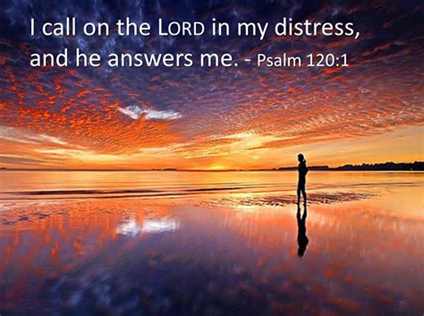
“1 In my distress I cried to the LORD, and He answered me.

2 Deliver my soul, O LORD, from lying lips and a deceitful tongue.

3 What will He do to you, and what will be added to you, O deceitful tongue?

4 Sharp arrows will come from the warrior, with burning coals of the broom tree!

5 Woe to me that I dwell in Meshech, that I live among the tents of Kedar!

6 Too long have I dwelt among those who hate peace.

7 I am in favor of peace; but when I speak, they want war.”

“In my distress I cried to the LORD, and He answered me.” Many times, we feel as if we are under attack with no hiding place. Where can we find help? Psalm 46:1 tells us, “God is our refuge and strength, an ever-present help in times of trouble.”  One of the wonderful things about God is that He is available 24/7. We can pray to God, knowing that he is always listening and can always answer us and help us. What will these prayers sound like?

“Deliver my soul, O LORD, from lying lips and a deceitful tongue.”  Truth is a precious commodity and rarely found. Thank God that He can deliver us from liars and cheats. Even when it appears that the liars are winning, God is still on the throne and God is the One who keeps the books. In the final analysis, God settles the score.

What will He do to you, and what will be added to you, O deceitful tongue? Sharp arrows will come from the warrior, with burning coals of the broom tree!” Sharp arrows? Burning coals? Even if we don’t see God’s retribution, rest assured that God will deal with those with deceitful tongues.  

“Woe to me that I dwell in Meshech, that I live among the tents of Kedar! Too long have I dwelt among those who hate peace. I am in favor of peace; but when I speak, they want war.”

Meshech is a generic term for a far away place considered to be full of pagans, while Kedar refers to the nomadic tribes surrounding Israel. Ever find yourself stuck in a terrible job situation where everybody is plotting attacks on everyone else? That’s what has happened to the psalmist. This poor writer just wants peace, but the neighbors can only think of picking fights with all comers.

PRAYER: Father God, thank You for loving us and for caring for us. Lord, deliver us from cheats and liars. Help us to trust You, no matter how difficult things seem to be. In the mighty and precious Name of King Jesus. Amen.

JULY 2, 2025 BE STILL AND KNOW #7 WHAT DO WE MEAN WHEN WE SAY “THE LORD OF HOSTS?”  

July 2, 2025

Psalm 46:11 11 “The LORD of Hosts is with us; the God of Jacob is our fortress.” Selah (Pause and calmly think on that)

Many of us might have heard the term “the Lord of Hosts” many times; however, what does this really mean? Clarence L. Haynes, Jr., an American Bible teacher, explains this term for us https://www.biblestudytools.com/bible-study/topical-studies/what-does-it-mean-that-god-is-lord-of-hosts.html

(Clarence is also committed to helping 10,000 people learn how to study the Bible and has just released his first Bible study course called Bible Study Basics. To learn more about his ministry please visit clarencehaynes.com.) Mr. Haynes’ explanation is so complete that I can only share it with you. I have never met Mr. Haynes, nor do I have any financial arrangement with him. But Mr. Haynes is saying everything I have wanted to say, and depriving you of this wonderful description would be shameful.

Why is God called Lord of Hosts? “The name Lord of Hosts, or some variant of it, appears 284 times in the Old Testament. The term in Hebrew is Jehovah Sabaoth. This idea of hosts positions God in a light that I don’t know if we often think of him in, which is in a military light. God is the leader of heaven’s armies. However, this term has can be translated differently depending on which translation of Scripture you use. Let me give you an example using Psalm 46:7:

“The Lord of hosts is with us; The God of Jacob is our refuge.” – (NKJV)

“The Lord of Armies is with us; the God of Jacob is our stronghold.” – (CEB)

“The Lord Almighty is with us; the God of Jacob is our fortress.” – (NIV)

“The Lord of Heaven’s Armies is here among us; the God of Israel is our fortress.” – (NLT)

While the translations may define this word a little differently, there is one consistency among them. They all point to God’s power and authority. Whether you call him Lord of Hosts, Lord of Heaven’s Armies, or Lord Almighty, they all paint a picture of an all-powerful God.

What is a host? (In this context)

A host is an old term that was used to describe an army. Here is how the Oxford Reference defines host: “Derived from the Latin hostis, the term “host” evolved, designating originally an armed expedition against an enemy, then the army itself, and finally, by extension, the obligation to serve in arms.” 

The first designation of this word leaps off the page to me because it is an armed expedition against an enemy. Again, we don’t often think of God in the sense of a general leading an armed brigade, but that is one aspect of who God is. He is the Lord of Heaven’s Armies or the Lord of Hosts. Let’s carry it to another logical but greater conclusion. One of the definitions of Lord of Hosts used in some translations is Lord Almighty. By this, you could even say he is Lord of All. This means if you aligned all the powers of the earth, and add in all of Satan’s power, they are still no match for the Lord of All, the one who is Lord Almighty or Lord of Hosts.

What does the Lord of Hosts do? 

When you use this term, we think of a God who fights on behalf of those who are his own. Remember he is leading an armed expedition against an enemy. In an Old Testament context, we see God in this position as Lord of Hosts every time he fights for Israel. When God was on their side, they were invincible. When God lifted his hand of support, they were totally vulnerable.

When the Israelites were leaving Egypt, the Egyptian army pursued them, and the Israelites were fearful they would overtake them. That is, until the Lord of Hosts stepped in telling the Israelites he would fight for them: Moses answered the people, “Do not be afraid. Stand firm and you will see the deliverance the Lord will bring you today. The Egyptians you see today you will never see again. The Lord will fight for you; you need only to be still.” – Exodus 14:13-14 

Israel was in a difficult place, but they had the Lord of Hosts on their side. They had comfort in knowing that regardless of who the enemy was or the situation they faced, God was fighting for them. Not only was this important as they were leaving Egypt, but this was equally important as they entered the promised land because they would have to fight enemies there. Israel had an assurance of knowing that the Lord of Hosts, the Lord of Heaven’s Armies, the Lord Almighty, was on their side and no enemy would be too great for them to overcome.

What does it mean for us?

As you step into the New Testament, God is still the Lord of Hosts because God never changes. The good news is that God still fights for you. Consider this verse in Romans: “What, then, shall we say in response to these things? If God is for us, who can be against us?” – Romans 8:31

We have the same assurance that the Israelites did. It does not matter what situation in life you find yourself in. God is for you. Since God is for you and he is the Lord of Hosts, there is no one who can ever overcome you if God is on your side.

One necessary requirement.

I do need to offer one word of caution here. Disobedience and sin can cancel out God’s protection. If you remember after the Israelites defeated mighty Jericho, they were defeated by little old Ai. The reason was because of disobedience, which is sin. While it is true God is for us, if you harbor sin in your life God may withhold his protection and covering until you come to a place of repentance. As you walk with God, remember this simple truth: obedience is the place of invincibility; disobedience is the place of vulnerability.

Is this a good name for God?

The name Lord of Hosts is a good name for God because it gives us more understanding of who he is. It reminds us that God is our defender and we don’t have to defend ourselves. In the gospel of John, Jesus makes this statement: “My sheep listen to my voice; I know them, and they follow me.I give them eternal life, and they shall never perish; no one will snatch them out of my hand. My Father, who has given them to me, is greater than all; no one can snatch them out of my Father’s hand. I and the Father are one.” – John 10:27-30

The truth found in these verses in John is possible because God is the Lord of Hosts. You could even imply from these verses that someone, mainly Satan, may try to snatch you out of his hand, but this too is not possible. Remember, God will fight for you, and when the enemy comes, God will not allow him to overtake you. 

God is the Lord of Hosts, the Lord of Heaven’s Armies, the Lord Almighty. This picture of the military God should give you peace knowing that God is watching over you. He is the God that provides, and he is also the God who protects. I encourage you to remember that in your present situation and I want to leave you with one verse that puts this view of God in perfect perspective:

“For he will command his angels concerning you to guard you in all your ways; they will lift you up in their hands, so that you will not strike your foot against a stone.” – Psalm 91:11-12

As the Lord of Hosts, God is undoubtedly watching over you.”

There you have it. Writing to the Romans, Paul says, “What then shall we say in response to these things? If God is for us, who can be against us? He who did not spare His own Son but gave Him up for us all, how will He not also, along with Him, freely give us all things? Who will bring any charge against God’s elect? It is God who justifies. Who is there to condemn us? For Christ Jesus, who died, and more than that was raised to life, is at the right hand of God—and He is interceding for us.

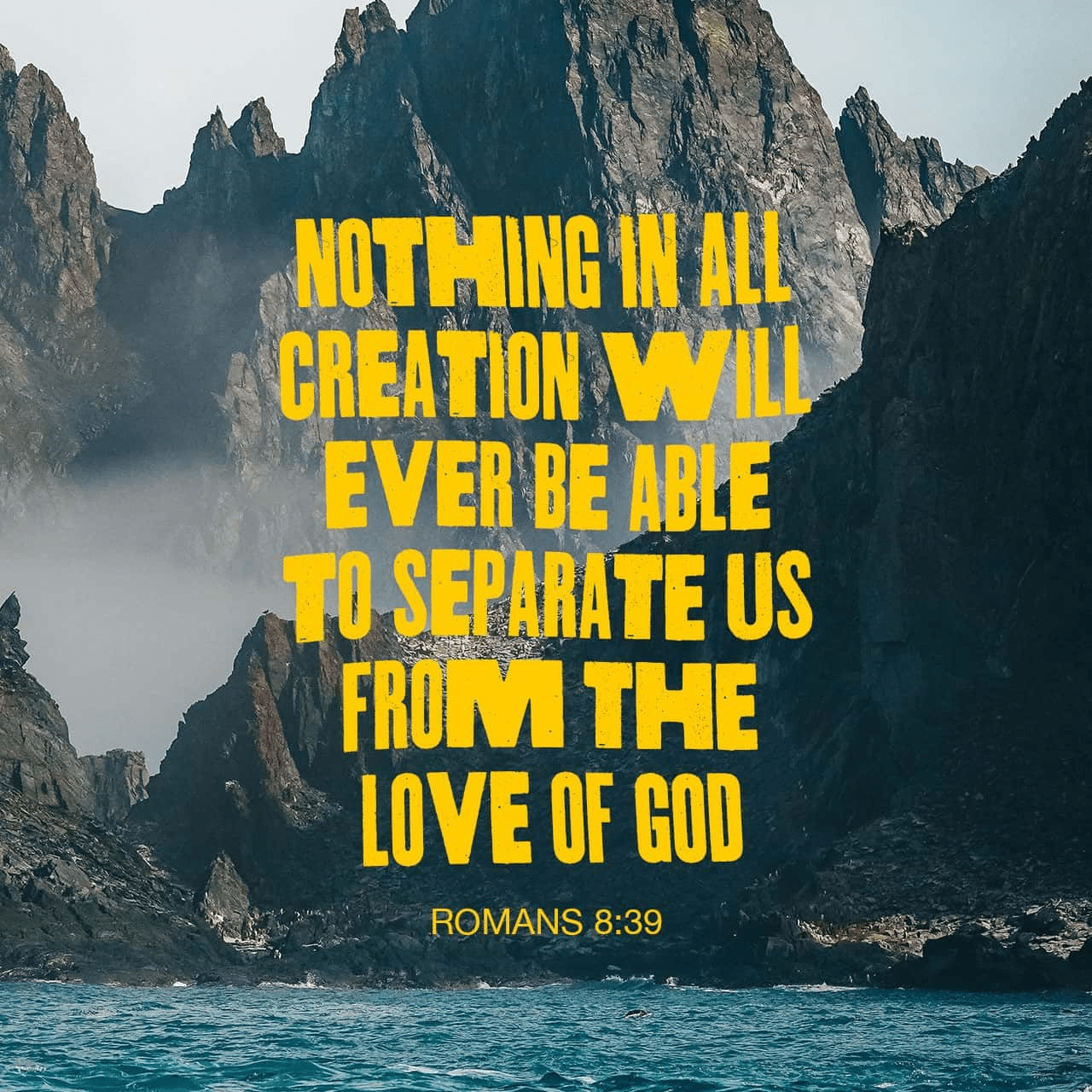
Who shall separate us from the love of Christ? Shall trouble or distress or persecution or famine or nakedness or danger or sword? As it is written: “For Your sake we face death all day long; we are considered as sheep to be slaughtered.” No, in all these things we are more than conquerors through Him who loved us. For I am convinced that neither death nor life, neither angels nor principalities, neither the present nor the future, nor any powers, neither height nor depth, nor anything else in all creation, will be able to separate us from the love of God that is in Christ Jesus our Lord.”

THIS, THIS, THIS IS WHAT WE MEAN WHEN WE SAY, “THE LORD OF HOSTS IS WITH US. THE GOD OF JACOB IS OUR REFUGE!” SELAH! (Pause and calmly think on that.)

PRAYER: Father God, thank You for loving us and for caring for us. Lord, help us to trust You to fight for us and to protect us. In the mighty and precious Name of King Jesus. Amen.
JULY 1, 2025 BE STILL AND KNOW-HOW CAN WE BE STILL? WHAT DOES IT MEAN TO KNOW THAT GOD IS GOD?

July 1, 2025

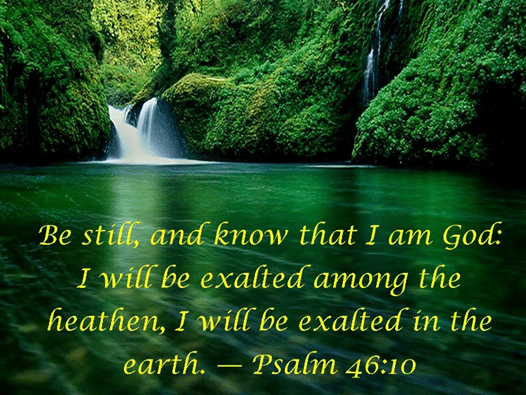
PSALM 46:10 “Be still and know that I am God; I will be exalted among the nations, I will be exalted over the earth.”

Sometimes it isn’t the big stuff that keeps us up worrying at night, but the petty little stuff. Tiny details begin to loom large, creating a situation someone has described as “being stoned to death by popcorn.” We feel as if our minds are little gerbils running on endless wheels, getting nowhere. But is this God’s will for us?

Jesus knew the problems that bedeviled his disciples and addressed these problems in Matthew 6:19-34

Matthew 6:19-21“Don’t store up treasures here on earth, where moths eat them and rust destroys them, and where thieves break in and steal. Store your treasures in heaven, where moths and rust cannot destroy, and thieves do not break in and steal. Wherever your treasure is, there the desires of your heart will also be.”

Financial worries eating at your mind? Just make sure you have treasure in heaven.

Matthew 6:22-23 “Your eye is like a lamp that provides light for your body. When your eye is healthy, your whole body is filled with light. But when your eye is unhealthy, your whole body is filled with darkness. And if the light you think you have is actually darkness, how deep that darkness is!”

What images dominate your mind? Are you terrorizing yourself with your own thoughts? Saint Paul advised the Philippians, “Don’t worry about anything; instead, pray about everything. Tell God what you need, and thank him for all he has done. Then you will experience God’s peace, which exceeds anything we can understand. His peace will guard your hearts and minds as you live in Christ Jesus.

And now, dear brothers and sisters, one final thing. Fix your thoughts on what is true, and honorable, and right, and pure, and lovely, and admirable. Think about things that are excellent and worthy of praise. Keep putting into practice all you learned and received from me—everything you heard from me and saw me doing. Then the God of peace will be with you.” (Philippians 4:6-9) Want peace of mind? Watch your thought life!

What about money? Matthew 6:24-27 “No one can serve two masters. For you will hate one and love the other; you will be devoted to one and despise the other. You cannot serve God and be enslaved to money.

“That is why I tell you not to worry about everyday life—whether you have enough food and drink, or enough clothes to wear. Isn’t life more than food, and your body more than clothing? Look at the birds. They don’t plant or harvest or store food in barns, for your heavenly Father feeds them. And aren’t you far more valuable to him than they are? Can all your worries add a single moment to your life?

Worried about going naked or hungry? Matthew 6:28-34 “And why worry about your clothing? Look at the lilies of the field and how they grow. They don’t work or make their clothing, yet Solomon in all his glory was not dressed as beautifully as they are. And if God cares so wonderfully for wildflowers that are here today and thrown into the fire tomorrow, he will certainly care for you. Why do you have so little faith?

“So don’t worry about these things, saying, ‘What will we eat? What will we drink? What will we wear?’ These things dominate the thoughts of unbelievers, but your heavenly Father already knows all your needs. Seek the Kingdom of God above all else, and live righteously, and he will give you everything you need. “So don’t worry about tomorrow, for tomorrow will bring its own worries. Today’s trouble is enough for today.”

How do we KNOW that God is God? Look at God’s works in nature. Look at the human body. Look at the weather. No matter where we look, we see the grandeur of God. Even though people have been trying to duplicate God’s creative process for centuries, God remains the Master Creator. It is only God who deserves all our praise and all our glory. And when we follow Jesus’ teachings and seek the Kingdom of God, above all else and live righteously, God will give us everything we need.

May we sleep well tonight, knowing that the Creator of the Universe is still in control.

PRAYER: Father God, thank You for loving us and caring for us. Lord, help us to be still and know that You are God. In the mighty and precious Name of King Jesus. Amen.
JUNE 30, 2025 BE STILL AND KNOW #5 DOES GOD REALLY CONTROL WARS? THE PRAYER THAT CHANGED WORLD WAR II

June 30, 2025

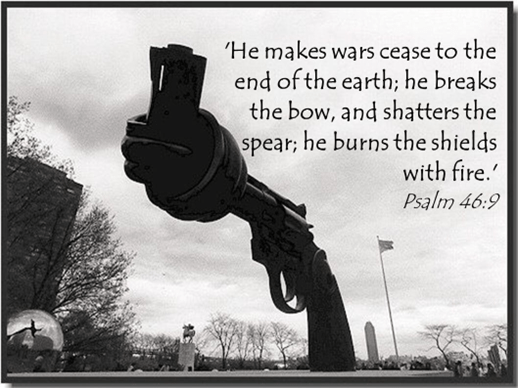
Psalm 46:9 “He makes wars to cease throughout the earth; He breaks the bow and shatters the spear; He burns the shields in the fire.”

Does God CAUSE wars? No. Humans cause wars. Wars are fought for a variety of reasons, but fundamentally, it all comes down to power and money. And money generally translates to power, so power is the underlying motive for war-power over other people, power over land, power over industrial complexes, power to threaten, to kill, and to destroy. Dictators readily embrace the theory that “might makes right,” even when mercilessly attacking neighboring peaceful nations. The deplorable Russian war on Ukraine is a prime example.

Is there such a thing as a “just war?” For centuries, nations have justified attacking other nations by claiming that God is on their side. But Abraham Lincoln summed it up best. When Lincoln was asked if he thought God was on the side of the Union forces during the Civil War, Lincoln replied, “Sir, my concern is not whether God is on our side; my greatest concern is to be on God’s side, for God is always right.”

Recently, there were celebrations for the 81st anniversary of D Day and the Normandy invasion. No right-thinking person can possibly defend the Nazi regime headed by a megalomaniac named Hitler. Before World War II ended, six million Jews died in concentration camps and much of Europe and England lay in ruins.

A thorough study of World War II demonstrates that there were many points in the war when things could have gone totally wrong. The evacuation of more than 300,000 British troops at Dunkirk is a prime example. Weather in the Channel between England and France is notoriously fickle; yet, a flotilla of small boats successfully retrieved ten times as many British soldiers as was originally predicted. Later, when Hitler was bombing London, there came a moment when he pulled back planes that might have destroyed everything.

Intercessors for America describes one incident of fulfilled prayer: In 1944, General George S. Patton ordered one of his chaplains to send “every man in the Third Army” a prayer for the rain in Europe to stop. In just under two weeks, General Patton’s prayers were answered. The rain stopped and the Nazis in the First Army Zone were defeated, all because of prayer.

Here is that prayer: Almighty and most merciful Father, we humbly beseech Thee, of Thy great goodness, to restrain these immoderate rains with which we have had to contend. Grant us fair weather for Battle. Graciously hearken to us as soldiers who call upon Thee that, armed with Thy power, we may advance from victory to victory, and crush the oppression and wickedness of our enemies and establish Thy justice among men and nations. 

General Patton was a great believer in prayer. Patton called the Third Army Chaplain and told him this: “Chaplain, I am a strong believer in Prayer. There are three ways that men get what they want; by planning, by working, and by Praying. Any great military operation takes careful planning, or thinking. Then you must have well-trained troops to carry it out: that’s working. But between the plan and the operation there is always an unknown. That unknown spells defeat or victory, success or failure. It is the reaction of the actors to the ordeal when it actually comes. Some people call that getting the breaks; I call it God. God has His part, or margin in everything, That’s where prayer comes in. Up to now, in the Third Army, God has been very good to us. … This is because a lot of people back home are praying for us. … But we have to pray for ourselves, too. …

I wish you would put out a Training Letter on this subject of Prayer to all the chaplains; write about nothing else, just the importance of prayer. Let me see it before you send it. We’ve got to get not only the chaplains but every man in the Third Army to pray. We must ask God to stop these rains. …”

The Chaplain wrote out that prayer on December 8, 1944, and 250,000 copies were distributed to the troops. At that time, rain and fog were helping the Nazis. By December 16th, the rains abated. The Chaplain reported, “On December 20, to the consternation of the Germans and the delight of the American forecasters who were equally surprised at the turn-about-the rains and the fogs ceased. For the better part of a week came bright clear skies and perfect flying weather. Our planes came over by tens, hundreds, and thousands.” https://ifapray.org/blog/the-power-of-prayer-in-world-war-2/#:~:text=In%201944%2C%20General%20George%20S.%20Patton%20ordered%20one,Army%20Zone%20were%20defeated%2C%20all%20because%20of%20prayer.

How much does God hate war? He hates it so badly that the psalmist describes God destroying every weapon. And God will protect us, not only from physical weapons but also from criticism. Isaiah 54:16-17 tells us, “Behold, I have created the blacksmith who blows the coals in the fire, who brings forth an instrument for his work; and I have created the spoiler to destroy.
No weapon formed against you shall prosper, and every tongue which rises against you in judgment you shall condemn. This is the heritage of the servants of the Lord, and their righteousness is from Me,” says the Lord.”

“But,” you ask, “what about all those who have died in wars? Were they wrong?” No. Those people were serving their countries in the best way they could. There are men and women called to be warriors, and God allows them to fulfill that calling. Only God can judge human hearts; nobody else is qualified. But at the end of time, God will make all wars cease, destroy all weapons, and bring in His peace, the peace that passes understanding.

Why should we pray for peace while wars continue? You never know how much good your prayers will accomplish. Ask God to show you the situations about which He wants you to pray, and then concentrate on those areas. Such prayers are far more effective than generic “give us peace” prayers. And ask God if there are any means by which He wants you to be an answer to your own prayers.

PRAYER: Father God, thank You for loving us and caring for us. Lord, we look at Ukraine and at the Middle East and we are appalled. Yet, You are the One who can destroy every weapon. Lord, bring just and lasting solutions to the war-torn areas throughout the world and give each of us the prayer assignments you want us to have. In the mighty and precious Name of King Jesus. Amen.
JUNE 29, 2025 BE STILL AND KNOW #4 WHAT’S SO AMAZING ABOUT DEVASTATION?

June 29, 2025

Psalm 46:8 “Come, see the works of the LORD, who brings devastation upon the earth.”

Forest fires! Earthquakes! Tsunamis! Last night we watched a program analyzing disasters around the world. This episode examined the Fukushima nuclear reactor disaster in Japan in March 2011, asking why that particular reactor failed after a tsunami when several other similar facilities along the seacoast remained untouched. Turns out, the engineers planning the Fukushima reactor failed to study the most appropriate data as to the ferocity of tsunami waves on the east coast of Japan, getting much of their information from recent events. Other engineering groups went back nearly twelve hundred years and learned that enormous tsunami waves had battered the coast at several hundred-year intervals. Taking this history into account, these engineers developed sea walls that withstood the 2011 tsunami easily; meanwhile the sea walls at Fukushima were woefully inadequate. When the tsunami waves struck the plant, meltdown occurred, destroying the plant and threatening living things for a wide radius. Clean-up activities continue to this day.

Some people have reduced the One True Living God to the level of a stained-glass window figure. But live through one disaster and you will begin to glimpse the power of God.

Why should we study the works of the Lord? The psalmist has already told us that God is our refuge and strength. What good is a refuge if it fails to protect us? The workers at the Fukushima nuclear plant trusted in an inadequate sea wall that allowed waves to overwhelm the plant. Last fall, millions of people in western North Carolina, east Tennessee, and parts of West Virginia found their mountain refuges crumbling and sliding into the valleys after a hurricane hit the East Coast.

What good is a weak God who cannot help and protect us? Psalm 115:2-8 tells us, “Why should the nations say, “Where is their God?” Our God is in heaven; He does as He pleases. Their idols are silver and gold, made by the hands of men. They have mouths, but cannot speak; they have eyes, but cannot see; they have ears, but cannot hear; they have noses, but cannot smell; they have hands, but cannot feel; they have feet, but cannot walk; they cannot even clear their throats. Those who make them become like them, as do all who trust in them.”

What happens to us when we trust in the Lord? For the answer, we continue with Psalm 115.

Psalm 115:9-13O Israel, trust in the LORD! He is their help and shield. O house of Aaron, trust in the LORD! He is their help and shield. You who fear the LORD, trust in the LORD!

He is their help and shield. The LORD is mindful of us; He will bless us. He will bless the house of Israel; He will bless the house of Aaron; He will bless those who fear the LORD—small and great alike.”

When we trust in the Lord, He will be our help and shield. The Lord will bless everyone who fears Him. Psalm 115 gives us the final reassurance.

Psalm 115:16-18 “The highest heavens belong to the LORD, but the earth He has given to mankind. It is not the dead who praise the LORD, nor any who descend into silence. But it is we who will bless the LORD, both now and forevermore. Hallelujah!”

PRAYER: Father God, thank You for loving us and caring for us. Lord, help us to continue to trust You, even when You create devastation. In the mighty and precious Name of King Jesus. Amen.

JUNE 28, 2025 BE STILL AND KNOW #3 GOD WILL HELP YOU WHEN MORNING DAWNS

June 28, 2025

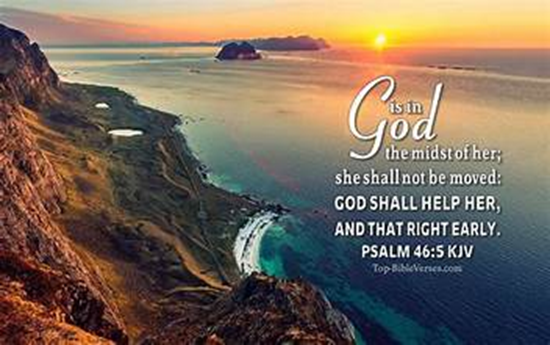
Psalm 46:4-5 “There is a river whose streams delight the city of God, the holy place where the Most High dwells. God is within her; she will not be moved. God will help her when morning dawns.”

It’s been called “the dark night of the soul.” Sooner or later, we all face times where we feel everything is hopeless. No matter how well things may be going, we find ourselves slogging along, wondering if we will ever see things improve, if there will be a ray of light in our darkness.

Wikipedia describes the “dark night of the soul” this way: The term “dark night of the soul” can be used as a synonym for a crisis of faith.[9] More generally, it is “used informally to describe an extremely difficult and painful period in one’s life”.[note 2]

This crisis may endure for a long time. The “dark night” of St. Paul of the Cross in the 18th century endured 45 years, from which he ultimately recovered. The dark night of Mother Teresa, whose own name in religion she selected in honor of Thérèse of Lisieux, “may be the most extensive such case on record”, having endured from 1948 almost until her death in 1997, with only brief interludes of relief, according to her letters.[11][12]

Other authors have made similar references:

Inayat Khan states, “There can be no rebirth without a dark night of the soul, a total annihilation of all that you believed in and thought that you were.”[13] Joseph Campbell states “The dark night of the soul comes just before revelation. When everything is lost, and all seems darkness, then comes the new life and all that is needed.”[14]

Roberto Assagioli states:

Before the full and final victory, however, the soul has to undergo another test: it must pass through the “dark night” which is a new and deeper experience of annihilation, or a crucible in which all the human elements that go to make it up are melted together. But the darkest nights are followed by the most radiant dawns and the soul, perfect at last, enters into complete, constant and inseparable communion with the Spirit, so that – to use the bold statement employed by St John of the Cross – “it seems to be God himself and has the same characteristics as him”.[15]

Generally, these fears gang up on us at 2 AM, when dawn is still a long way off, and the night is at its darkest; however, sometimes these “dark nights” might last for years. There are various ways of combating these fears, but prayer is the very best. One of those who have written about the dark night of the soul is Saint John of the Cross, a sixteenth century saint who wrote a seminal work about this spiritual dilemma, most likely when he was imprisoned in Toledo, Spain. (Certainly, imprisonment would be enough to depress anybody!)

But what if you can’t pray? What if the words simply won’t come? The answer is a simple prayer, commonly known as the “Jesus prayer.” Lord Jesus Christ, Son of God, have mercy on me, a sinner.

Years ago, I read the testimony of an American who had lost his white-collar job and was reduced to working on an assembly line in a factory to feed his family. In desperation, this man began repeating the Jesus prayer with each piece he inspected at the factory, and something magnificent happened. The more this man repeated this prayer, the more he found himself praying for those around him-first, his fellow assembly line workers, then the owners of the factory, then all those around him as he went through his day. Not only did this man find himself immersed in intercessory prayer, but he also realized that his whole attitude toward his work, his family, and his community was shifting on its axis. Where before this man had been bitter about the way his original employer had mishandled him, now he was able to forgive that company and to pray for its workers.

Are you going through a fiery trial? Why not begin praying the Jesus prayer and see what happens. Remember that whether or not you feel like it, God is always with you and God always loves you. And also remember that God WILL help you when morning dawns.

PRAYER: Father God, thank You for loving us and caring for us. Lord Jesus Christ, Son of God, have mercy on all of us! Let all who read these words take joy in You, knowing that Your help is on the way. In Your mighty and precious Name, King Jesus. Amen.

TRIAL BY WEDDING – JUNE 27, 2025

June 27, 2025

As friends announce their children’s or grandchildren’s weddings or their wedding anniversaries on Facebook, I think back to some of the weddings I have endured. Two weddings stand out.

WHO’S THE DONKEY, OR HOW DO YOU KEEP FROM HAVING HYSTERICS IN CHURCH?

The first wedding took place on a hot summer day in my small Midwestern town. Two of my friends were getting married on the same day, and Mom and I should have attended the wedding for one friend and the reception for the other. Mom chose for us to just attend the wedding that was closer. Mom had grown up during the Depression, and those Depression-era kids didn’t waste money; spending the gas money to attend a second wedding was beyond Mom’s comprehension.

We were happily ensconced in a local church, listening to the organist, also a family friend and an accomplished musician, play a thirty-minute prelude. Unfortunately, one of the selections the organist chose was a medley of old songs, one of which was “Donkey Serenade.” Imagine Mom’s and my surprise when we suddenly heard the organist begin playing a song with these words, “There’s a song in the air
But the fair senorita doesn’t seem to care
For the song in the air
Oh, I’ll sing to the mule
If you’re sure she won’t think that I am just a fool
Serenading a mule…”

Call us weird, but at that point, Mom and I both lost it! Was this unfortunate choice of music an editorial remark on the bride, the groom, or the entire wedding? And who was the donkey? I looked at Mom; Mom looked at me, and both of us grabbed our white lace handkerchiefs to smother our giggles. We would have left the church; however, just then, the bride appeared and the organist began playing the wedding march. Hopefully, those around us thought we were weeping tears of joy….

SWEATING ON THE RIVER-AN ORGANIST TAKES ON PURCELL AND PURCELL LOSES!

It was a breathless August night in Burlington, Iowa, a factory town on the Mississippi River. My boyfriend and I had accompanied his parents to the wedding of one of his cousins. The church was not air conditioned, and the heat and humidity were so high that we were all sweating heavily before the wedding even began. A beloved aunt from Indiana had been asked to play for the wedding; unfortunately, Auntie was NOT an accomplished musician. After fumbling through the standard wedding music (likely the big notes versions), Auntie chose to close the program by playing an organ version of Purcell’s Trumpet Voluntary while the congregation filed down to the church basement to congratulate the happy couple.

There were several problems with that basement. Only one room in the basement was air conditioned, and one had to pass through that room to reach the un-air-conditioned fellowship hall where the main reception was to take place. Being no fools, the wedding couple chose to stand in the air-conditioned room to receive their guests, assuming the guests would then pass on to the fellowship hall. But once the first guests realized that this room was the only one that was comfortable, they were in no hurry to go back to suffering in the heat and humidity. This reluctance created a foot traffic bottle neck in the air-conditioned room.

Meanwhile, back in the main body of the church, the congregation was exiting VERY slowly. Having had to drive for nearly two hours to reach the church, we had the misfortune to be sitting at the very back of the church, and the congregation was exiting from front to back. As time crept onward, our ears continued to be assailed by Auntie’s wrestling match with Purcell. In that match, Auntie won and Purcell emphatically lost! “Dah, dah, dah de dah, dah, dah de dah, dah dah dah, !#*&!,  !#* &! ,!#*&! Yes ! You guessed it! Those last three notes in the main theme of the piece? Auntie couldn’t find them, but she succeeded in hitting the SAME WRONG NOTES over and over and over and over and over and over! Auntie was nothing if not consistent. Think of the most irritating sounds you have heard-fingernails on a chalk board, the neighbors’ cats having a fight, someone with a ginormous bass speaker in their vehicle circling your block ad infinitum, microphones screeching in a huge meeting space-none of those sounds could compare with the cacophony of Auntie murdering poor Mr. Purcell’s previously beloved music. Even though we were at the back of the sanctuary, we left other unfortunates to continue to suffer, and Auntie did not disappoint, persisting in repeating her fingering mistakes.

By the time we finally made it down to the basement, the happy couple had already cut the wedding cake; in fact, all we got for our suffering was a few crumbs, plus some nuts and some mints. We didn’t even get any of the punch made with lime sherbert, pineapple juice and ginger ale. The bride’s sisters who were responsible for the reception had obviously underestimated the number of people who would attend as well as their thirst. While we were waiting to exit the sanctuary, those fortunate enough to make it to the basement earlier had drained every bit of liquid available. The only thing left for us to do was to congratulate the couple and leave on our two-hour return journey, hot, tired, hungry, and thirsty. I think we hit a root beer stand on the way home.

JUNE 27, 2025 BE STILL AND KNOW #2 WHAT HAPPENS WHEN MOUNTAINS CRUMBLE?

June 27, 2025

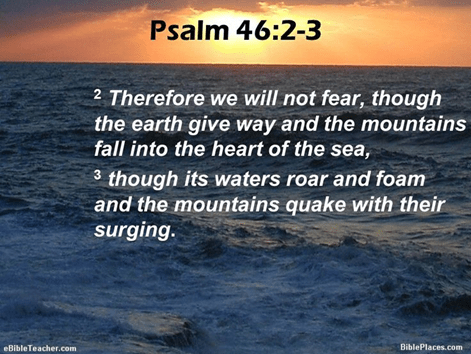
Psalm 46:2-3 “Therefore we will not fear, though the earth is transformed and the mountains are toppled into the depths of the seas, though their waters roar and foam and the mountains quake in the surge. Selah”

How many different threats can frighten us? Physical danger, financial loss, illnesses and deaths of loved ones, job losses, loss of major possessions such as homes, vehicles, etc.-all these things can leave us tossing and turning at night. But somehow, we must survive and continue with our lives.

Now the psalmist is describing scenes that are even more frightening-earthquakes and mudslides with mountains falling into the sea, making sea waters roar and foam.

As I am writing this, we have missionary friends who are pioneering a new work in a central African country after being forced to close a well-run mission hospital somewhere else. Our friends are facing all kinds of challenges: will the government and the Ministry of Health support their efforts? Will they have to build new structures before opening the hospital? Will their previous donors be willing to support this new facility? Will they be able to recruit quality staff? Will local people patronize this new facility? Will they be able to keep this hospital supplied with equipment and medical consumables?

Another friend was the Head of the IRS Division of a thriving company in Memphis, TN…until the morning he went to work and was confronted with a choice: Move to Chicago along with the company headquarters, or take early retirement. Our friend went in as a worker in the morning and came home that night a retiree.

Reading this psalm is like sitting with a wise elder who can reassure us, no matter how horrible the stresses that are threatening us. It has been said that throughout the Bible there are more 365 “do not fear” verses in the Bible, one for each day of the year. Now these verses reassure us that even when earthquakes and floods remodel the landscape, even when our lives fall apart, we don’t have to worry, for God remains our shelter and our refuge.

May God help us, so that we will continue to trust Him, no matter how chaotic our lives become.

PRAYER: Father God, thank You for loving us and caring for us. Lord, help us to trust You, even when things appear to be falling apart. In the mighty and precious Name of King Jesus. Amen.