
Archive for the ‘Uncategorized’ Category

OCTOBER 3, 2024 SO YOU WANT TO BE A DISCIPLE? #64 IF YOU ARE WORKING FOR JESUS, YOU MIGHT HAVE TO DO SOMETHING FOOLISH.

October 3, 2024

Matthew 17: 24-27 Peter and His Master Pay Their Taxes

When they had come to Capernaum, those who received the temple tax came to Peter and said, “Does your Teacher not pay the temple tax?”

He said, “Yes.”

And when he had come into the house, Jesus anticipated him, saying, “What do you think, Simon? From whom do the kings of the earth take customs or taxes, from their sons or from strangers?”

Peter said to Him, “From strangers.”

Jesus said to him, “Then the sons are free. Nevertheless, lest we offend them, go to the sea, cast in a hook, and take the fish that comes up first. And when you have opened its mouth, you will find a piece of money; take that and give it to them for Me and you.”

Now Jesus is facing a new challenge regarding his commitment as an observant Jew, the temple tax. What is this tax? “The temple tax was originally prescribed in the Law of Moses as a half shekel, or poll tax, paid by all males over 20 years old. The tax was intended to support the tabernacle and was considered a ransom for life to the Lord. “ (Exodus 30:13 and 38:25)

https://www.biola.edu/blogs/good-book-blog/2021/why-did-the-son-of-god-pay-ttemple-tax

As the Son of God, Jesus is technically exempt from paying this tax; however, those around him have not recognized this fact. It is not Jesus’ desire to confuse others or to present an obstruction that might keep them from coming to God. Christians must be careful to avoid anything that is not of the Holy Spirit. Being a disciple means allowing the Holy Spirit to guide you in every part of your life, without exceptions. While others may be entertained by questionable videos, there’s no free pass for believers. We cannot pray, give generously, teach Sunday School, and then think these actions allow us to dress in a sexually provocative manner. We can attend all the Christian conferences going, or even handle a congregation as a lay minister, but if we are undermining our work supervisors by spreading lies about them, we are still presenting a bad witness.

As Peter heads off for the lake, he must be muttering to himself, “Well, Jesus, you’ve had me do some weird things before, but fishing with a hook and line and getting money out of the fish’s mouth has got to top them all! This isn’t even the right time of day to catch a fish. Any self-respecting fish are going to be out in deeper water where it’s nice and cool.”

The other disciples are probably wondering where Peter is going and why he is taking a fishing pole and a hook. These guys are used to fishing with nets, but hey, if Jesus tells you to do something, you should at least try. Nobody is more surprised than Peter when he catches a fish immediately; in fact, that fish practically leaps out of the water to take his bait. Shrugging his shoulders, Peter takes the fish off the line and opens its mouth, and there is a shekel. Now, Peter is excited! Dropping the fishing pole and throwing the fish back in the water, Peter runs to Jesus, who is standing a little way from the water. “Lord! Lord!” Peter exclaims, “It worked just as you said! I caught the fish, and there was the money! I’ve never seen anything like it!” Jesus simply smiles because he has known all the time that Peter was in for a surprise.

One of the amazing things about Jesus is that he does not leave his disciples to cope with everything by themselves. In this case, Jesus probably could have gotten half a shekel from someone to pay the tax; in fact, there were likely several people who would have gladly paid it for him. But Jesus allowed Peter to take part in solving this problem so that the two of them were involved jointly. Earlier on, in Matthew 11:28-30, Jesus has already told his disciples, “Come to Me, all you who labor and are heavy laden, and I will give you rest. Take My yoke upon you and learn from Me, for I am gentle and lowly in heart, and you will find rest for your souls. For My yoke is easy and My burden is light.” When two oxen are yoked together, the stronger one helps the weaker one so that both of them are able to work together. Jesus comes alongside us, helping us, guiding us, and leading us into the work he wants for us to accomplish.

For the rest of Peter’s life, he will always remember the day when he went fishing for the temple tax. No matter how bad things get, Peter will trust that Jesus is going to be there helping him. Why does Jesus choose Peter to this rather than any of the other disciples? Peter is the one whom the temple tax collectors have asked for the money, and Peter is also the one crazy enough to step out of a boat on a raging sea and walk to Jesus on the water. Peter might be impulsive and he might lose his temper easily, but Peter also has great faith in Jesus and will obey. Jesus knows that eventually Peter will become one of the heads of the early church and that he will need the reassurance this experience can bring. The other disciples might not have as much faith as Peter, but they too will take encouragement from this simple incident.

Being a disciple is not easy. Here Peter was being asked to pay half a shekel, and he doesn’t have the money. Previously, as a highly successful fisherman, Peter would have paid that amount without even thinking about it. Many times, we may find ourselves in the same situation as Peter, lacking even the tiny amount of money necessary for the temple tax. But God has all kinds of ways of helping us. Hudson Taylor, founder of the China Inland Mission, was fond of saying that “God’s work done God’s way will never lack God’s supply.”  Starting with nothing, CIM eventually grew until in 1934 there were 1,368 missionaries serving 364 stations, including several hospitals. By World War II there were more than 200,000 converts in China. Those discipled by CIM were able to spread the Gospel despite the rise of Communism because they never depended on large church buildings but used pastors and Bible men and women to go into the villages. (CIM is now OMF International. For the inspiring story, go to OMF.org)

Is God asking you to go fishing? Bait that hook and get out there! You never know what will happen when you are willing to look foolish and obey God!

PRAYER: Father God, thank You for loving us and for caring for us. Lord, help us to trust You even when Your orders appear to be foolish. In the mighty and precious Name of King Jesus. Amen.
OCTOBER 2, 2024 SO YOU WANT TO BE A DISCIPLE? #63 YES, BAD THINGS DO HAPPEN TO GOOD PEOPLE, AND DISCIPLES ARE NOT IMMUNE

October 2, 2024

Matthew 17:22-23 Jesus Again Predicts His Death and Resurrection

“Now while they were staying in Galilee, Jesus said to them, “The Son of Man is about to be betrayed into the hands of men, and they will kill Him, and the third day He will be raised up.” And they were exceedingly sorrowful.”

Peter, James, and John have just come down off the mountaintop where they have witnessed Jesus being transfigured and chatting with Moses and Elijah. Surely, surely, SURELY, this means that there are great things ahead and that all this talk Jesus has been making about eventually having to die is not really true. Surely, Jesus is going to fulfill the disciples’ expectations about the Messiah by riding into Jerusalem on a white horse, conquering the Roman legions, reducing the religious professionals to mindless murmurers, and bringing in his earthly kingdom RIGHT NOW….or is he?  

Jesus already knows that his whole life is one long preparation for a sacrificial death; meanwhile, the disciples are vainly hoping Jesus will bring in an earthly kingdom and that they will be his trusted associates. But once more, Jesus is advising them of his upcoming death and resurrection.

Unfortunately, the disciples only hear the first part of the statement and not the second. The disciples understand death. In a time when life expectancy is generally 30-35 years, they have seen all kinds of deaths. During the time of Jesus, there is a high infant mortality rate with many dying from pneumonia or diarrheal diseases, skewing the statistics. Accidents and war claim young people as well, also skewing the statistics. There are examples of longevity, notably Simeon and Anna who met Mary and Joseph in the temple when they presented Jesus as a baby, but they are the exceptions.

When Jesus mentions the resurrection, the sign of Jonah, or any other prophecy about his resurrection, the disciples simply don’t understand. Even though these men have watched as Jesus has raised people from the dead, they still don’t believe that Jesus will rise himself.

Yet another reason the disciples don’t want to hear Jesus is simple: If Jesus is going to die, they too might die also. Most of the disciples are young men with their lives before them; death is something they don’t mention, let alone think about for themselves.

There have always been false teachers eager to avow that if you are a Christian, nothing bad will happen to you. But look at what happened to Jesus’ twelve disciples according to Faith on Hill Church: “What happened to these men after Jesus is based in part on historical record and in part on church tradition. Unfortunately, politics enters into the traditions of men and so we have traditions claiming that James, the brother of John, went to Spain, when the Bible makes it clear that he was the first of the 12 to be martyred (killed) for his faith in Jesus, when he was put to the sword in the early days of the church in Jerusalem.

PETER-Peter was crucified around 66AD in Rome under the persecution of Emperor Nero.

JAMES-James was the first of the 12 to be put to death. King Herod had him killed by the sword in Jerusalem (Acts 12).

JOHN-The writer of the Gospel of John, the book of the Revelation and three epistles bearing his name, John is the only one of the 12 that history says was not put to death for his faith, although he suffered greatly because of Jesus throughout his long life. Tradition says he ended his life ministering in the region around Ephesus in modern day Turkey and is buried there.

ANDREW-The brother of Peter, Andrew traveled north, bringing the good news to what is now Russia and the western regions of the former Soviet Union. He later traveled through modern day Turkey and Greece where he was martyred.

PHILIP-Philip ministered in North Africa and then Asia Minor. Traditions says that a Roman Proconsul was so enraged that his wife had converted to Christianity because of Philip’s preaching that he had Philip brutally put to death.

BARTHOLOMEW/NATHANIEL-Bartholomew was apparently someone who loved to travel. Some accounts have him going to India with Thomas, then Armenia before heading along the trade routes between Ethiopia and the southern Arabian regions.

MATTHEW/LEVI-The gospel writer who had previously been a tax collector, Matthew traveled to modern day Iran and then down to Ethiopia, probably following established trade routes and preaching the gospel along the way. While some accounts do not include how he died, others say he was stabbed to death in Africa.
THOMAS-Although he doubted the resurrection at first, Thomas’ faith in the risen Jesus was strong enough to send him traveling east to Syria and Iraq to preach the gospel, eventually ending up in India were the Marthoma Christian tradition considers him to be their founder. The Marthoma tradition says that Thomas died by stabbing at the hands of four soldiers.

JAMES THE SON OF ALPHAEUS-Very possibly the brother of Matthew/Levi, James is believed to have preached in the regions north of Israel. A non-Christian historical account says that he was stoned and then clubbed to death.

SIMON THE ZEALOT-Simon’s ultimate end is somewhat unclear. When Christianity became the official religion of the Roman Empire it became politically advantageous to be connected with the apostles or notable Christian events or leaders. This means that places like Turkey, Greece, Rome and Jerusalem naturally had more power/influence than churches in places like Britain, France, Africa and Spain. The majority view seems to be that Simon was sawn in half in Persia.

PHILIP-Little is known about Philip’s life after Acts 2. Some have tried to link him with the Philip found later in the book of Acts but the circumstantial evidence doesn’t seem to fit other than sharing the same name. Tradition says that he preached in the Phrygia region of Asia Minor (modern day Turkey) and was martyred for his faith in Jesus in the town of Hierapolis.

JUDAS THADEUS-The early church father Jerome called Jude “Trinomius” which means three names. Mark and Matthew list him by his family name “Thaddeus”, while Luke refers to him as Judas the Brother of James. Tradition holds that he preached the gospel in the area we could think of as Northern Syria, Iraq and Turkey. He was said to have been killed with arrows in Turkey’s mountainous northern region.

MATTHIAS-Tradition says that Matthias traveled north, possibly as far as the Caspian Sea. He was martyred for his faith although the method of his death is unclear.

PAUL-Paul suffered for the Lord throughout his life. In addition to imprisonment and multiple threats to his life, Paul wrote in 2 Corinthians 11:25 that “Three times I was beaten with rods. Once I was stoned. Three times I was shipwrecked. Once I spent a whole night and a day adrift at sea.” Paul was beheaded in Rome in 66 AD, possibly at the same time as Peter…

https://www.faithonhill.com/blog/what-happened-to-the-12-disciples

Notice the description of Paul’s career. 2 Corinthians 11:25 “Three times I was beaten with rods. Once I was stoned. Three times I was shipwrecked. Once I spent a whole night and a day adrift at sea.” Paul was beheaded in Rome in 66 AD, possibly at the same time as Peter.”

In modern times, Richard Wurmbrand, a Romanian pastor, was tortured by being beaten so badly on the soles of his feet that he could never stand when he was addressing audiences. Christians in North Korea may be run over by bull dozers in front of their family members, simply for showing a Christian video in their homes. Muslim believers may be killed by their own families as infidels.

Many Christians have died from various physical illnesses. Edith Schaeffer in her book entitled Affliction has avowed that miraculous healings prove that God can heal miraculously. There are those who are not healed but who are given the grace to endure whatever sufferings their illnesses bring, proving that the grace of God is sufficient for these circumstances as well.

Belief in Jesus Christ does not protect you from suffering, but you have the constant comfort and strength of the Holy Spirit and the knowledge that no matter what happens, God will never leave you or forsake you. Nobody else can offer such a great deal!

PRAYER: Father God, thank You for loving us and for caring for us. Lord, help us to follow hard after You all the days of our lives, knowing that no matter what happens, You will always be there to encourage us, to give us strength, and to guide us. In the mighty and precious Name of Jesus. Amen.

OCTOBER 1, 2024 SO YOU WANT TO BE A DISCIPLE? #62 YOU CAN’T ALWAYS LIVE ON THE MOUNTAINTOP. MINISTRY TAKES PLACE IN THE VALLEY.

October 1, 2024

Matthew 17:1-13 Jesus Transfigured on the Mount.

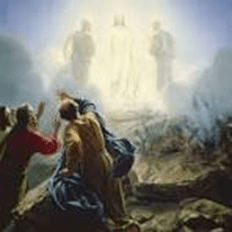
“Now after six days Jesus took Peter, James, and John his brother, led them up on a high mountain by themselves; and He was transfigured before them. His face shone like the sun, and His clothes became as white as the light. And behold, Moses and Elijah appeared to them, talking with Him. Then Peter answered and said to Jesus, “Lord, it is good for us to be here; if You wish, let us make here three tabernacles: one for You, one for Moses, and one for Elijah.”

While he was still speaking, behold, a bright cloud overshadowed them; and suddenly a voice came out of the cloud, saying, “This is My beloved Son, in whom I am well pleased. Hear Him!” And when the disciples heard it, they fell on their faces and were greatly afraid. But Jesus came and touched them and said, “Arise, and do not be afraid.” When they had lifted up their eyes, they saw no one but Jesus only.

Now as they came down from the mountain, Jesus commanded them, saying, “Tell the vision to no one until the Son of Man is risen from the dead.”

And His disciples asked Him, saying, “Why then do the scribes say that Elijah must come first?”

Jesus answered and said to them, “Indeed, Elijah is coming first and will restore all things. But I say to you that Elijah has come already, and they did not know him but did to him whatever they wished. Likewise, the Son of Man is also about to suffer at their hands.” Then the disciples understood that He spoke to them of John the Baptist.”

Oh, the thrill! When Jesus chooses Peter, James, and John to accompany him to the top of a mountain, they have no idea what’s coming. All they know is that Jesus has singled them out for some great honor. Jesus has already been treating Peter as a leader, and now Jame and John have joined Peter in that exclusive club. As the three disciples follow Jesus up the mountainside, they have no idea what’s in store for them; however, they are sure it will be great. But the disciples are totally unprepared to see Jesus’ face and clothes shining like the sun or watching as Moses and Elijah join Jesus on the mountaintop and begin conversing with him.

“Moses! Elijah! My friends!” Jesus exclaims as he embraces them. “Tell me all the news from heaven.”

At this point, Peter wants to do something, anything, to deal with the situation. Sitting and watching are two activities foreign to Peter, so he immediately suggests, “Lord, it is good for us to be here; if You wish, let us make here three tabernacles: one for You, one for Moses, and one for Elijah.” Just as Peter finishes this statement, God envelopes the mountaintop with a thick bright cloud and speaks, saying, “This is My beloved Son, in whom I am well pleased. Hear Him!” 

The disciples fall on their faces in fear and awe and when they open their eyes, all they see is Jesus by himself. “Jesus, did we really see you with Moses and Elijah just now?” “Yes,” Jesus answers, “but you can’t tell anybody about this experience until I have risen from the dead.”

Non-plussed, the disciples feel the urge to say something. If they can’t discuss the incredible thing they have just witnessed, they should at least be able to ask questions. “Why then do the scribes say that Elijah must come first?” The disciples have just seen Elijah, so they figure that Elijah will be a safe topic.

Jesus smiles and replies, “Indeed, Elijah is coming first and will restore all things. But I say to you that Elijah has come already, and they did not know him but did to him whatever they wished. Likewise, the Son of Man is also about to suffer at their hands.” The disciples look at each other. Is Jesus really saying that John the Baptist, Jesus’ cousin who ran around baptizing people, wearing simple clothing and eating locusts and honey, THAT GUY was the modern Elijah??? Sure, the disciples are fully aware of all the prophecies about Elijah coming ahead of the Messiah, but they have always assumed that Elijah would look majestic and aloof, possibly riding in on a white horse. Mental pictures of John standing in the middle of the Jordan River baptizing people  and teaching flash through the disciples’ heads. The disciples remember the last time they saw John’s headless body. At this point, the disciples are likely thinking, “Okay, Jesus, if you say so!”  But if Peter, James, and John think things have been weird this morning, they are in for a surprise, for things are about to get much weirder.

Matthew 17:14-21 A Boy Is Healed

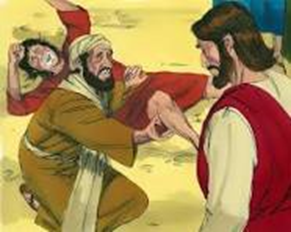
“And when they had come to the multitude, a man came to Him, kneeling down to Him and saying, “Lord, have mercy on my son, for he is an epileptic and suffers severely; for he often falls into the fire and often into the water. So I brought him to Your disciples, but they could not cure him.”

Then Jesus answered and said, “O faithless and perverse generation, how long shall I be with you? How long shall I bear with you? Bring him here to Me.” And Jesus rebuked the demon, and it came out of him; and the child was cured from that very hour.

Then the disciples came to Jesus privately and said, “Why could we not cast it out?”

So Jesus said to them, “Because of your unbelief; for assuredly, I say to you, if you have faith as a mustard seed, you will say to this mountain, ‘Move from here to there,’ and it will move; and nothing will be impossible for you. However, this kind does not go out except by prayer and fasting.”

Entire books have been written about these two passages from Matthew. Here we are simply examining a few lessons for disciples. While Peter, James, and John have been up on the mountaintop observing Jesus’ transfiguration, the rest of the disciples have been at the foot of the mountain teaching, preaching, and healing. Things are going well until one man brings his demon-possessed son. Despite all their best efforts, the disciples cannot rout the demon. Just as the disciples and the boy’s father are becoming completely frustrated, Jesus arrives. Jesus rebukes the demon and heals the boy.

The disciples are thoroughly baffled, for when Jesus sent them out previously, they spoke to demons and the demons left immediately. Why didn’t the demon leave this time? Jesus explains, “Because of your unbelief; for assuredly, I say to you, if you have faith as a mustard seed, you will say to this mountain, ‘Move from here to there,’ and it will move; and nothing will be impossible for you. However, this kind does not go out except by prayer and fasting.”

Notice that Jesus is not criticizing the disciples for their lack of results but is simply stating a principle of the kingdom. Some demons leave as soon as someone lays hands on the person. Other demons are far more stubborn and require what Father Francis McNutt calls “soaking prayers,” repeated and persistent prayers. Here Jesus also advises that particularly stubborn demons will only leave if the person praying has been fasting and praying before he/she encounters the demoniac.

From the mountaintop to the valley where the demons lurk-this morning Peter, James, and John have experienced the ecstasy of the transfiguration and the agony of failure. We don’t know that Peter, James, or John have attempted to get rid of the demon, but it would certainly be reasonable for them to try, given their recent heavenly experience. . We are not made to remain on mountaintops; and indeed, we would be of no use were we to remain there. Ministry can only be done where there are people and people live in the valleys of life.  Oswald Chambers advises that mountaintop experiences are not given so that we will live in a constant state of ecstasy but so that we will learn lessons we may then apply in the valley. In one Peanuts cartoon several decades ago, Charles Schulz has Lucy insisting that “I don’t want any downs! I only want ups and ups and ups!” Most of us would far rather have nothing but exhilarating and inspiring experiences; however, we are like those chargers for the new phones and tablets that take “C” charging cords. If not watched carefully, those chargers may overheat, causing catastrophic fires.

Eugene Peterson has written a book about the pilgrimage psalms entitled A Long Obedience in the Same Direction. Discipleship is not a matter of rebounding from one mountaintop experience to another but consistently obeying. May we apply the lessons learned on the mountaintops when we return to the valleys!

PRAYER: Father God, thank You for loving us and for caring for us. Lord, help us to enjoy those moments of inspiration and then turn their lessons into useful ministry. In the mighty and precious Name of King Jesus. Amen.  
SEPTEMBER 30, 2024 SO YOU WANT TO BE A DISCIPLE? #61 SOMETIMES DISCIPLESHIP MIGHT COST EVERYTHING

September 30, 2024

Matthew 16: 21-28 Jesus Predicts His Death and Resurrection

From that time Jesus began to show to His disciples that He must go to Jerusalem, and suffer many things from the elders and chief priests and scribes, and be killed, and be raised the third day.

Then Peter took Him aside and began to rebuke Him, saying, “Far be it from You, Lord; this shall not happen to You!”

But He turned and said to Peter, “Get behind Me, Satan! You are an offense to Me, for you are not mindful of the things of God, but the things of men.”

When Jesus says this, he has just made the ringing pronouncement, “Blessed are you, Simon Bar-Jonah, for flesh and blood has not revealed this to you, but My Father who is in heaven. And I also say to you that you are Peter, and on this rock I will build My church, and the gates of Hades shall not prevail against it.And I will give you the keys of the kingdom of heaven, and whatever you bind on earth will be bound in heaven, and whatever you loose on earth will be loosed in heaven.”

The name “Simon” means someone who hears; however, here, Jesus refers to Simon as Peter, a rock, indicating that one who hears has now become a rock with solid faith. But if Peter is such a rock of faith, why is he rebuking Jesus?

Sometimes our families and friends might be the biggest hindrances to our calling as disciples. When Jesus makes this startling announcement to his disciples, they are horrified! Surely the Messiah is not going to be killed but will enter Jerusalem triumphantly. Have they all followed Jesus for nothing? What might happen to them? After all the sufferings and all the sacrifices, will their decision to join Jesus result in a quick and painful death?

As the least inhibited and most forward of the disciples, Peter naturally feels it’s his duty to take Jesus off into a quiet corner and try to change his mind. But Jesus’ answer is a shocking one, for he implies that by this rebuke, Peter is doing the work of Satan. Peter is horrified; how can Jesus possibly say such a thing? Peter is only trying to talk common sense into Jesus, for goodness’ sake. But far from accepting Peter’s rebuke, Jesus continues to explain his position even further.

Take Up the Cross and Follow Him

“Then Jesus said to His disciples, “If anyone desires to come after Me, let him deny himself, and take up his cross, and follow Me. For whoever desires to save his life will lose it, but whoever loses his life for My sake will find it. For what profit is it to a man if he gains the whole world, and loses his own soul? Or what will a man give in exchange for his soul? For the Son of Man will come in the glory of His Father with His angels, and then He will reward each according to his works. Assuredly, I say to you, there are some standing here who shall not taste death till they see the Son of Man coming in His kingdom.”

Just in case any of the disciples is still deceived about how easy a time he will have following Jesus, these statements should stop him in his tracks. The phrase “take up his cross” refers to criminals on their way to crucifixion. These wretched individuals are forced to carry the cross piece of their crosses as a form of pre-crucifixion punishment. Here Jesus is implying that he will die by crucifixion and that anyone following him must be prepared to die also.

Jesus wants his disciples to realize the full cost of their discipleship, so that later they won’t complain that nobody ever warned them. But Jesus also wants the disciples to know that there are eternal rewards for following him. “For whoever desires to save his life will lose it, but whoever loses his life for My sake will find it… For the Son of Man will come in the glory of His Father with His angels, and then He will reward each according to his works. Assuredly, I say to you, there are some standing here who shall not taste death till they see the Son of Man coming in His kingdom.”

The big question for all of us as disciples is this: “For what profit is it to a man if he gains the whole world, and loses his own soul? Or what will a man give in exchange for his soul?”  There is literally nothing that we can possibly give that will buy back our souls if we have squandered them. There is a story told about a very wealthy man who died. Someone was asking, “What did he leave behind?” The answer came quickly, “Everything!”

No matter how prestigious our professions, no matter how much wealth we have amassed, how many honors we have gained, or how important we have been in life, one day we will die. On that day, all of those material things will disappear, and we will be left with one simple question: Who do you say Jesus is? If we have followed Jesus all of our lives, we know that we will be with him when we die because we have worshiped Jesus as the Son of God. But if we have worshiped money or wealthy or fame or any other created thing, we will find ourselves standing before the judgment seat of God while he tells us, “Depart from me! I never knew you!”

The only time we have is today, this very moment. Why not take the opportunity to accept Jesus as Savior and Lord and become a disciple? The rewards are heavenly.

PRAYER: Father God, we confess that we are sinners and that nothing we can do is good enough for us to earn our way into heaven. We thank You for sending Jesus, Your son, to die for our sins. Please forgive our sins and help us to follow You all the days of our lives, trusting that our sins are forgiven because Jesus has made the ultimate sacrifice for them. In the mighty and precious Name of King Jesus. Amen.

SEPTEMBER 29, 2024 SO YOU WANT TO BE A DISCIPLE? #60 WHO DO WE REALLY BELIEVE JESUS IS?

September 29, 2024

Matthew 16:13-20 Peter Confesses Jesus as the Christ

“When Jesus came into the region of Caesarea Philippi, He asked His disciples, saying, “Who do men say that I, the Son of Man, am?”

So they said, “Some say John the Baptist, some Elijah, and others Jeremiah or one of the prophets.”

He said to them, “But who do you say that I am?”

Simon Peter answered and said, “You are the Christ, the Son of the living God.”

Jesus answered and said to him, “Blessed are you, Simon Bar-Jonah, for flesh and blood has not revealed this to you, but My Father who is in heaven. And I also say to you that you are Peter, and on this rock I will build My church, and the gates of Hades shall not prevail against it. And I will give you the keys of the kingdom of heaven, and whatever you bind on earth will be bound in heaven, and whatever you loose on earth will be loosed in heaven.”

Then He commanded His disciples that they should tell no one that He was Jesus the Christ.”

Unless you know exactly where Jesus and the disciples were when Jesus made this announcement, you won’t completely understand it. Ray Vander Laan in his excellent teaching That the World May Know says this about Caesarea Philippi:

City of Pagans

Caesarea Philippi, which stood in a lush area near the foot of Mount Hermon, was a city dominated by immoral activities and pagan worship.

Caesarea Philippi stood only twenty-five miles from the religious communities of Galilee. But the city’s religious practices were vastly different from those of the nearby Jewish towns.

In Old Testament times, the northeastern area of Israel became a center for Baal worship. In the nearby city of Dan, Israelite king Jeroboam built the high place that angered God and eventually led the Israelites to worship false gods. Eventually, worship of the baals was replaced with worship of Greek fertility gods.

Caesarea Philippi, which stood in a lush area near the foot of Mount Hermon, became the religious center for worship of the Greek god, Pan. The Greeks named the city Panias in his honor.

Years later, when Romans conquered the territory, Herod Philip rebuilt the city and named it after himself. But Caesarea Philippi continued to focus on worship of Greek gods. In the cliff that stood above the city, local people built shrines and temples to Pan.

Interestingly, Jesus chose to deliver a sort of “graduation speech” to his disciples at Caesarea Philippi. In that pagan setting, he encouraged his disciples to build a church that would overcome the worst evils.

The Gates of Hell

To the pagan mind, the cave at Caesarea Philippi created a gate to the underworld, where fertility gods lived during the winter. They committed detestable acts to worship these false gods.

Caesarea Philippi’s location was especially unique because it stood at the base of a cliff where spring water flowed. At one time, the water ran directly from the mouth of a cave set in the bottom of the cliff.

The pagans of Jesus’ day commonly believed that their fertility gods lived in the underworld during the winter and returned to earth each spring. They saw water as a symbol of the underworld and thought that their gods traveled to and from that world through caves.

To the pagan mind, then, the cave and spring water at Caesarea Philippi created a gate to the underworld. They believed that their city was literally at the gates of the underworld, the gates of hell. In order to entice the return of their god, Pan, each year, the people of Caesarea Philippi engaged in horrible deeds, including prostitution and sexual interaction between humans and goats.

When Jesus brought his disciples to the area, they must have been shocked. Caesarea Philippi was like a red-light district in their world and devout Jews would have avoided any contact with the despicable acts committed there. It was a city of people eagerly knocking on the doors of hell.

Jesus’ Challenge

Jesus presented a clear challenge with his words at Caesarea Philippi: He didn’t want his followers hiding from evil: He wanted them to storm the gates of hell.

Standing near the pagan temples of Caesarea Philippi, Jesus asked his disciples “Who do you say that I am?” Peter boldly replied, “You are the Son of the living God.” The disciples were probably stirred by the contrast between Jesus, the true and living God, and the false hopes of the pagans who trusted in “dead” gods.

Jesus continued, “You are Peter, and on this rock I will build my church, and the gates of Hades will not overcome it” (see Matt. 16:13-20).

Though Christian traditions debate the theological meaning of those words, it seems clear that Jesus? words also had symbolic meaning. His church would be built on the “rock” of Caesarea Philippi, a rock literally filled with niches for pagan idols, where ungodly values dominated.

Gates were defensive structures in the ancient world. By saying that the gates of hell would not overcome, Jesus suggested that those gates were going to be attacked.

Standing as they were at a literal “Gate of Hades,” the disciples may have been overwhelmed by Jesus’ challenge. They had studied under their rabbi for several years, and now he was commissioning them to a huge task: to attack evil, and to build the church on the very places that were most filled with moral corruption.

Jesus presented a clear challenge with his words at Caesarea Philippi: He didn’t want his followers hiding from evil: He wanted them to storm the gates of hell.

Not Ashamed

Jesus’ followers cannot successfully confront evil when we are embarrassed about our faith.

After Jesus spoke to his disciples about storming the gates of hell, he also gave them another word of caution: “If anyone is ashamed of me and my words, the Son of Man will be ashamed of him when he comes in his glory” (Luke 9:26).

Jesus knew that his followers would face ridicule and anger as they tried to confront evil. And his words came as a sharp challenge: no matter how fierce the resistance, his followers should never hide their faith in God.

Jesus taught with passion, even when bystanders may have thought him a fool. And at Caesarea Philippi, he challenged everyone within hearing: “What good is it for a man to gain the whole world, and yet lose or forfeit his very soul?” (v. 25).

In a city filled with false idols, Jesus asked his followers to commit to the one true God. While false gods promised prosperity and happiness, they would ultimately fail to deliver. Jesus didn’t promise an easy life, but he delivered on the promise of salvation; the only kind of prosperity that really matters.

Today, Christians must heed the words of our Rabbi, especially when we are tempted to hide our faith because of embarrassment or fear. Our world is filled with those who have “gained the world” but lost their souls. If we hide our faith, they may never find the salvation they need.

On the offense

As we listen to Jesus’ challenge today, we as Christians should ask ourselves the important question: When it comes to the battle against evil, are we on defense or offense?

In a culture that embraces diversity, it is offensive to suggest that there are certain truths that apply to everyone. Pointing out sin isn’t popular and many Christians are labeled as “intolerant” for refusing to accept certain behaviors and ideas.

Unfortunately, many people have embraced a distorted Christianity that tries to be “politically correct.” They don’t want to offend anyone, so they accept sin rather than confronting it. Ultimately, their words of “love” ring empty because they accept sins that ruin people’s lives.

Other Christians just try to avoid sinful culture altogether. They have been taught to go on the defense, to hide in their churches, schools, and homes and to shut the door on the evil influences of culture.

But Jesus challenged his followers to be on the offense, to proclaim the truth without shame.

Our schools and churches should become staging areas rather than fortresses; places that equip God’s people to confront a sinful world instead of hiding from it. Jesus knows that the pagan world will resist, but he challenges us to go there anyway, and to build his church in those very places that are most morally decayed.

As we listen to Jesus’ challenge today, we as Christians should ask ourselves the important question: Are we on defense or offense? https://www.thattheworldmayknow.com/gates-of-hell-article

I encourage you to check out Vander Laan’s web site as well as the excellent set of teachings embodied in his series That the World May Know.

PRAYER: Father God, help us to learn to know You and then to take that knowledge to a hurting world, to build Your temples right where Satan dwells. Keep us from fear and help us, so that our churches will be staging areas rather than fortresses. In the mighty and precious Name of King Jesus. Amen.

SEPTEMBER 28, 2024 SO YOU WANT TO BE A DISCIPLE? #59 BEWARE OF LEAVEN? WHAT’S LEAVEN?

September 28, 2024

Matthew 16:1-12 The Leaven of the Pharisees and Sadducees

“Then the Pharisees and Sadducees came, and testing Him asked that He would show them a sign from heaven. He answered and said to them, “When it is evening you say, ‘It will be fair weather, for the sky is red’; and in the morning, ‘It will be foul weather today, for the sky is red and threatening.’ Hypocrites! You know how to discern the face of the sky, but you cannot discern the signs of the times. A wicked and adulterous generation seeks after a sign, and no sign shall be given to it except the sign of the prophet Jonah.” 

And He left them and departed. Now when His disciples had come to the other side, they had forgotten to take bread. Then Jesus said to them, “Take heed and beware of the leaven of the Pharisees and the Sadducees.” And they reasoned among themselves, saying, “It is because we have taken no bread.”

But Jesus, being aware of it, said to them, “O you of little faith, why do you reason among yourselves because you have brought no bread? Do you not yet understand, or remember the five loaves of the five thousand and how many baskets you took up? Nor the seven loaves of the four thousand and how many large baskets you took up? How is it you do not understand that I did not speak to you concerning bread?—but to beware of the leaven of the Pharisees and Sadducees.” Then they understood that He did not tell them to beware of the leaven of bread, but of the doctrine of the Pharisees and Sadducees.”

Well, the religious professionals are at it again! This time, these oily guys sidle up to Jesus and say, “Rabbi, if you’re so great, show us a sign from heaven.” Sounds good, right? But Jesus has already been doing miracles, so where do these people think the miracles are coming from? Demon-possessed people are clothed and mentally sound, while the lame, the maimed, the deaf and mute and the blind are freed from their afflictions. If these healings aren’t coming from heaven, where are they coming from? How could such miracles possibly benefit Satan?

Jesus knows these men are only trying to boost their standing in the community and have no real interest in seeking God. The Pharisees and Sadducees might disagree about whether people will go to heaven or simply die and disappear forever, but they have no problems attacking an upstart who appears to threaten their position as religious experts. These men are not interested in truth but are trouble-makers.

What does leaven symbolize in the Bible? Gotquestions.org says this: The Bible mentions leaven, or yeast, in several contexts. In some contexts, the reference to leaven is obviously literal; in other contexts, leaven takes on symbolic connotations.

Leaven causes dough to rise, but the process takes time. The Israelites, when God freed them from captivity in Egypt, had no time to spare, so, in their haste, they baked and ate flat (unleavened) bread for their journey: “With the dough the Israelites had brought from Egypt, they baked loaves of unleavened bread. The dough was without yeast because they had been driven out of Egypt and did not have time to prepare food for themselves” (Exodus 12:39).

To commemorate of His deliverance from Egypt, God instructed the Israelites to celebrate a week of feasting following the Passover Day (the 14th day of the 1st month on the Jewish calendar). This was called the “Feast of Unleavened Bread.” During that time the Israelites were commanded to remove all leaven from their houses and eat no bread that contained leaven (Exodus 12:1513:6–7).

Elsewhere in the Mosaic Law, leaven represents sin or corruption. The law forbade grain offerings made with leaven (Leviticus 2:11). In fact, no yeast was allowed to be burned on the altar in any sacrifice. The grain offering for Aaron and his sons (the priests) was also not to contain leaven and was to be eaten in a holy place (Leviticus 6:17).

Leaven is also mentioned in the New Testament. In Matthew 16:6–12, Jesus compared the false teaching of the Pharisees and Sadducees and Herodians to leaven. The Pharisees had come to Jesus to test Him (verse 1), but Jesus perceived their true intent and the state of their hearts. He later warned His disciples against being taken in by their teachings (verse 12), which He compared to leaven. A small portion of the “leaven” of falsehood can permeate a person’s heart and mind. In Luke 12:1 Jesus specifies that the leaven of the Pharisees is “hypocrisy.” Having a show of piety, without true holiness, is like leaven in that it gradually increases and spreads corruption, puffing up a person with vanity. Lies and hypocrisy can poison one’s whole character.

Paul warned the church at Corinth against tolerating sin in their midst, using leaven as a metaphor (1 Corinthians 5:1–8). There was a man in the church who was guilty of sexual immorality. Paul told them to remove the man from their fellowship because, like leaven, his influence would permeate the whole church. “Don’t you know that a little yeast leavens the whole batch of dough?” Paul asks (verse 6). Then he points them to the Passover and the Feast of Unleavened Bread: “Get rid of the old yeast, so that you may be a new unleavened batch—as you really are. For Christ, our Passover lamb, has been sacrificed” (verse 7)…”
https://www.gotquestions.org/leaven-in-the-Bible.html

In Egypt, leaven was used to brew beer. Throughout the Bible, leaven frequently is used as a symbol of something small that can corrupt everything. Why should disciples worry about leaven? 1 John 2:15-17 says, “Do not love the world or the things in the world. If anyone loves the world, the love of the Father is not in him. For all that is in the world—the lust of the flesh, the lust of the eyes, and the pride of life—is not of the Father but is of the world. And the world is passing away, and the lust of it; but he who does the will of God abides forever.”

How easy is it to imbibe our surrounding culture without even realizing it? Two generations ago, most people attending church would dress in their very best; these days, jeans and brief cut-off shorts are a common sight. Young women may wear low-cut dresses with very short skirts. One famous Ghanaian musician has stopped singing during the offerings when people come to the front of the church because women are wearing such low-cut dresses that he is distracted from worshiping the Lord. Will God love us no matter how we dress? Certainly. But when we dress to please only ourselves without a thought for the impact on others, there may be unexpected consequences. Those wishing to share the Gospel with Muslim friends and neighbors find themselves struggling to explain why Christian young people are dressing in a provocative fashion while Muslim young people are dressing modestly.

Am I against anyone looking attractive? Absolutely not! But there are many ways to look attractive while still dressing modestly. The question is this: Are we dressing to glorify God or to attract members of the opposite sex? We cannot claim to be disciples if we want God to give us a pass when we go to the closet or the dresser to select our clothing.

How pure is our speech? How many times a day do we say “Oh my God” or “OMG,” as if the abbreviation would make it more acceptable? What TV shows or videos are we watching? What are the lyrics in the music that entertains us? What is the spiritual effect of such music?

Several years ago, we lived in an apartment in New Orleans that had an evil presence. When we came home, it would take several hours before the evil presence would leave. We tried leaving the radio tuned to classical music that simply entertained the demons. The same thing held true when we left the radio tuned to Christian stations that played contemporary Christian music. But when we found an African American station that featured old time hymns and a great deal of preaching about the blood of Jesus, we could return to a spiritually clean house. It’s the blood of Jesus that cleanses us from sin and it’s teaching about the blood that routs demons.

Jesus warned his disciples to beware of the teaching of the Pharisees and Sadducees because it gave the appearance of holiness but would lead people into mindlessly following a minute set of rules that could draw them further away from God, rather than closer to Him. The same pitfall still exists for disciples today. Once we become disciples, we must still beware of leaven.

PRAYER: Father God, thank You for loving us and for caring for us. Lord, help us to follow hard after You and to surrender all of our lives to You including the way we dress, the music and movies that entertain us, our manner of speech, and the way we present ourselves in public. In the mighty and precious Name of King Jesus. Amen.

SEPTEMBER 27, 2024 SO YOU WANT TO BE A DISCIPLE? #58 MAKE A START-GOD CAN MULTIPLY RESOURCES WHEN NECESSARY

September 27, 2024

Matthew 15:32-39 Feeding the Four Thousand

“Now Jesus called His disciples to Himself and said, “I have compassion on the multitude, because they have now continued with Me three days and have nothing to eat. And I do not want to send them away hungry, lest they faint on the way.”

Then His disciples said to Him, “Where could we get enough bread in the wilderness to fill such a great multitude?”

Jesus said to them, “How many loaves do you have?”

And they said, “Seven, and a few little fish.”

So He commanded the multitude to sit down on the ground. And He took the seven loaves and the fish and gave thanks, broke them and gave them to His disciples; and the disciples gave to the multitude. So they all ate and were filled, and they took up seven large baskets full of the fragments that were left. Now those who ate were four thousand men, besides women and children. And He sent away the multitude, got into the boat, and came to the region of Magdala.”

Well, it’s been an exhilarating and exhausting three days of ministry as Jesus has healed all those coming to him. But the food people have brought with them is finished, and many of them are so hungry that if they leave for home now, they will collapse. Naturally, the disciples are unhappy! “Master, have you LOOKED at the number of people! You have 4,000 men plus women and children. There must be nearly 10,000 people sitting out there on the hillside! Where can we possibly get enough food for such a mob?”

You really can’t blame the disciples; these are practical men who know how much a hungry crowd can eat. It’s not that the disciples don’t care, but they really have no idea what to do in such a situation. But Jesus isn’t worried because he already knows how he will handle it.

“Peter, what food do you have?” Jesus asks. “Well, we have seven loaves and a few fish, but they’re awfully small,” Peter answers. “No problem,” Jesus says, “Just have people sit down and hand me the bread and the fish.” As the crowd sits on the stony ground, Jesus blesses the bread and the fish and then gives the baskets to his disciples. The disciples begin distributing the bread and the fish, but a marvelous thing happens. As soon as one loaf of bread is finished, another appears in its place. The same thing happens with the fish. Even when some people in the crowd are demanding second helpings, there is still sufficient food to care for them. By the time the feeding is completed, there are still seven large baskets full of fragments left. The disciples are exhausted but happy-now they too can eat, and there will be food for the next few days as well.

We read these miracle stories and wonder if God really does this stuff. Yes, He does. In the fall of 1980, I was interviewing for pediatric surgery, and the airfares took most of my free money. I had bought dry supplies back in August, but now it was October. One night I realized that I should have run out of flour, beans, etc., some time ago but that I had not. The level of the supplies in my cannisters was still only half-way down. That’s when I realized that God was up to something. During this time, I was paying tithes at church and supporting an orphan through World Vision. I was not wasting money on myself. God continued to replenish my food stores until I had completed interviewing and was no longer paying for transportation.

One pastor friend told of how his wife and he made it back from Mississippi all the way to Charleston, WV, on one tank of gas, despite the fact that they should have filled two or three times. Another pastor’s wife told of having nothing in the house but some dried beans and a ham bone. When this lady cooked the beans and the ham bone together, there were large pieces of ham in the stew pot, even though the ham bone had been bare when she put it into the pot.

Notice the conditions for this miracle: The disciples were carrying out their normal duties, and the crowd had done nothing wrong but were following Jesus because they wanted to see him do miracles and because they needed help. Nobody was trying to gain anything from this situation, apart from healing and deliverance. Nobody had failed to plan; events simply overtook the crowd. It’s likely that those people had carried food with them, but three days is enough to exhaust any supplies they might have carried.

God steps in when we are doing His will. Are there ever times when God will deliver even if we have failed to plan or have planned badly? Yes. Sometimes God is merciful and delivers us from our own foolishness. The key concept here is that we look to God and not to ourselves.

This does not mean that God blesses poor planning or wastage of resources. Back when VCR’s were new and very expensive, one pastor friend spent the money from an unexpected windfall on a fancy VCR, only to need expensive dental work later in the week. God intended that windfall to cover the dental work, not something frivolous.We may sometimes find ourselves in difficult circumstances of our own making; but even then, God will deliver us when we humble ourselves and ask Him for help. May God help us to trust Him as we minister, so that we will work fearlessly!

PRAYER: Father God, thank You for loving us and for caring for us. Lord, help us to trust that when You guide us, You will provide. In the mighty and precious Name of King Jesus. Amen.

SEPTEMBER 26, 2024 SO YOU WANT TO BE A DISCIPLE? #57 MINISTRY OPPORTUNITIES COME WHEN YOU LEAST EXPECT THEM-GOD EXPECTS YOU TO HELP ANYWAY

September 26, 2024

Matthew 15:21-31 A Gentile Shows Her Faith

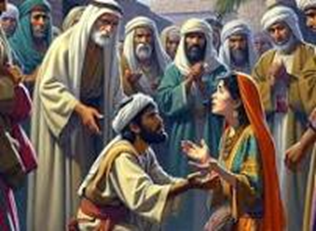
“Then Jesus went out from there and departed to the region of Tyre and Sidon. And behold, a woman of Canaan came from that region and cried out to Him, saying, “Have mercy on me, O Lord, Son of David! My daughter is severely demon-possessed.” But He answered her not a word.

And His disciples came and urged Him, saying, “Send her away, for she cries out after us.” But He answered and said, “I was not sent except to the lost sheep of the house of Israel.”

Then she came and worshiped Him, saying, “Lord, help me!” But He answered and said, “It is not good to take the children’s bread and throw it to the little dogs (puppies).” And she said, “Yes, Lord, yet even the little dogs (puppies) eat the crumbs which fall from their masters’ table.”

Then Jesus answered and said to her, “O woman, great is your faith! Let it be to you as you desire.” And her daughter was healed from that very hour.”

Talk about nuisances! All the disciples are trying to do is to protect Jesus as he goes about ministering to the Jews scattered throughout the area; meanwhile, here’s this pestilential woman who refuses to stop annoying them. So what if her daughter is severely demon-possessed? There are lots of demon-possessed people running around, throwing themselves on the ground and into fire and water. Why is this woman bothering? She isn’t even Jewish, for goodness’ sake. Obviously, Jesus doesn’t want to bother with this lady or he would already have granted her request and healed her daughter.

But this desperate lady refuses to shut up or give up. Jesus has healed other demoniacs, and surely, he can also help her daughter. Finally, the disciples go to Jesus, demanding that he get rid of this lady so they can have some peace. That’s when the lady makes it through the crowd of gate-keeping disciples to Jesus. Initially, Jesus also tells her that he was only sent to the Jews; however, this lady is persistent. When Jesus quotes a local saying about not giving the children’s bread to the dogs, she swiftly responds by reminding him that puppies still allowed to sit under the table to eat any crumbs dropped by the children. Jesus throws back his head and laughs as he assures this woman that her daughter is being healed that instant because of her faith.

Why does Matthew tell this story? Nowhere else do we read that Jesus ever limits himself to working miracles for the Jews. Many of the people of Gennesaret are not Jewish; yet, Jesus heals everybody who touches the tassels of his talith. In the story that follows next, Jesus never makes any racial distinctions as he heals all those who come to him. Perhaps Matthew tells this story just because Jesus tries this lady’s faith to demonstrate the depth of her belief to the disciples and to expand their vision. The One True Living God never intended that He would only limit himself to the Jews, but that Israel was to become a shining light to the nations of what could happen if a people would believe in Him and honor and worship Him. But the Jews failed in their assignment as they wandered into idolatry, resulting in the Babylonians and Assyrians killing them or carrying them off into captivity. Through the years, the Jews have become proud of being true worshipers of Yahweh without considering why God has chosen Israel in the first place.

When Jesus speaks with Nicodemus in John 3, Jesus tells Nicodemus that “God so loved the world that he gave his only son.” If that is the case, why is Jesus telling this woman that he has only been sent to the lost sheep of the house of Israel? Is Jesus saying this to test the faith of the woman or to echo what the disciples are already thinking or both? Perhaps Jesus has allowed this particular incident to take place so that after his death and resurrection, the disciples will come to realize that the scope of their ministry is far broader than they have imagined. Jesus also wants the disciples to know that they cannot schedule ministry but that ministry will simply happen as God brings people to them, whether or not it is convenient or fits their prejudices. If the disciples are bothered by this woman, they won’t believe what’s about to happen.

Jesus Heals Great Multitudes

“Jesus departed from there, skirted the Sea of Galilee, and went up on the mountain and sat down there. Then great multitudes came to Him, having with them the lame, blind, mute, maimed, and many others; and they laid them down at Jesus’ feet, and He healed them. So the multitude marveled when they saw the mute speaking, the maimed made whole, the lame walking, and the blind seeing; and they glorified the God of Israel.”

All Jesus wants is some quiet time to pray and to instruct his disciples, so he leaves for a deserted place on one of the small mountains overlooking the Sea of Galilee. But at this point, Jesus can’t go anywhere without people tracing his path and following him.

As soon as Jesus sits down on a rocky elevation, hordes of people swarm the area. The noise of their voices sounds louder than a storm on the lake. The disciples look helplessly at Jesus, asking what they should do. Jesus looks at the crowd and orders the disciples to have people pass by one by one. As people pass, Jesus heals them. Whether the need is physical, spiritual, or both, Jesus heals all who are coming to him. As the healings commence, now cries of joy and gratitude echo off the mountainside while those watching are cheering, entranced by what they are witnessing. It’s a wild scene as tongues that have never worked from birth are loosened, causing their owners to shout and sing, shriveled limbs are restored while their owners wave them around, previously lame people are jumping and dancing, and previously blind people are shouting, “I can see! I can see! I can see!” Praise swells from the multitude as they cry out, “Baruch atah Adonai, Eloheinu Melech ha’olam!”  “Blessed be the God of Israel! Blessed be the Lord God of the Universe who heals all our diseases!”

Peter shouts in Jesus’ ear, “Master, are you going to try to teach anything today?” Jesus smiles and shouts back, “How can I? Today is a day for healing and deliverance and rejoicing and celebration! I’ll teach some other time.” Jesus knows what the disciples do not, namely, that ministry happens in God’s timing and not in man’s.

My husband Bob was once entering a restaurant, intent on collecting a cup of coffee and going on to other errands when he encountered a friend who needed to talk. Bob turned around, sat down with the man, and began counseling him. That was the day that man entered the Kingdom as a new believer. Bob could have ignored the nudge of the Holy Spirit and could have gone on about his business… but it wouldn’t have been God’s business.

As disciples, our time is not our own, no matter how we might wish it to be. Being a disciple means being available to God whether or not you feel like it or whether or not it fits your agenda. A pastor friend once told us about being in a hospital elevator when he learned a community member had died. He left the hospital, intent on going to his car, when the Holy Spirit ordered him to return to the hospital and pray for that person. The pastor obeyed, laying hands on the man as they were sending his body to the morgue. Nobody was more shocked than that pastor when the man sat up, literally rising from the dead. The man lived for several more years, rejoicing in his salvation.

May God help us so that we are sensitive to His leading and His guidance and we respond to the Holy Spirit when He wants us to minister, rather than to our own sense of urgency about our schedules. When we do our will in God’s Name, nothing happens. But when we do God’s will in God’s Name, the results will be astounding.

PRAYER: Father God, thank You for loving us and for caring for us. Lord, help us to listen so closely to You that we will always minister when and where and to whom You want us to. In the mighty and precious Name of King Jesus. Amen.
SEPTEMBER 25, 2024 SO YOU WANT TO BE A DISCIPLE? #56 CHECK YOUR HEART!

September 25, 2024

Matthew 15:1-20 Defilement Comes from Within

“Then the scribes and Pharisees who were from Jerusalem came to Jesus, saying, “Why do Your disciples transgress the tradition of the elders? For they do not wash their hands when they eat bread.”

He answered and said to them, “Why do you also transgress the commandment of God because of your tradition? For God commanded, saying, ‘Honor your father and your mother;’ and, ‘He who curses father or mother, let him be put to death.’ But you say, ‘Whoever says to his father or mother, “Whatever profit you might have received from me is a gift to God”— then he need not honor his father or mother.’ Thus, you have made the commandment of God of no effect by your tradition. Hypocrites! Well did Isaiah prophesy about you, saying:

‘These people draw near to Me with their mouth, and honor Me with their lips, but their heart is far from Me. And in vain they worship Me, teaching as doctrines the commandments of men.’”

When He had called the multitude to Himself, He said to them, “Hear and understand: Not what goes into the mouth defiles a man; but what comes out of the mouth, this defiles a man.”

 Then His disciples came and said to Him, “Do You know that the Pharisees were offended when they heard this saying?”

But He answered and said, “Every plant which My heavenly Father has not planted will be uprooted. Let them alone. They are blind leaders of the blind. And if the blind leads the blind, both will fall into a ditch.”

Then Peter answered and said to Him, “Explain this parable to us.”

So Jesus said, “Are you also still without understanding? Do you not yet understand that whatever enters the mouth goes into the stomach and is eliminated? But those things which proceed out of the mouth come from the heart, and they defile a man. For out of the heart proceed evil thoughts, murders, adulteries, fornications, thefts, false witness, blasphemies. These are the things which defile a man, but to eat with unwashed hands does not defile a man.”

Jesus and the disciples are about to break bread when the Pharisees swoop in, anxious to attack. As an observant Jew, Jesus would naturally wash his hands before eating, so is it possible that this time, Jesus has specifically commanded his disciples not to wash their hands to see the reaction of the Pharisees? Jesus knows that the Pharisees always have informers poised to carry stories back to them, and sure enough! As soon as Jesus’ group begins to eat with unwashed hands, here come the Pharisees as a group.

“Why do Your disciples transgress the tradition of the elders? For they do not wash their hands when they eat bread.” Oh boy! Jesus has just been waiting for this question. The poor Pharisee who has asked is about to be thoroughly embarrassed, and it couldn’t happen to a nicer guy!

“He answered and said to them, “Why do you also transgress the commandment of God because of your tradition? For God commanded, saying, ‘Honor your father and your mother;’ and, ‘He who curses father or mother, let him be put to death.’ But you say, ‘Whoever says to his father or mother, “Whatever profit you might have received from me is a gift to God”— then he need not honor his father or mother.’

OUCH! Jesus has hit on a well-known fact. Everyone in the crowd can name a destitute relative of some hyper-observant Pharisee who has suffered because that Pharisee has donated to the temple to enhance his reputation rather than supporting the aged as God has intended. But Jesus has barely gotten started.

“Thus you have made the commandment of God of no effect by your tradition. Hypocrites! Well did Isaiah prophesy about you, saying: ‘These people draw near to Me with their mouth, and honor Me with their lips, but their heart is far from Me. And in vain they worship Me, teaching as doctrines the commandments of men.’”  Now the Pharisees are boiling with anger. What has happened to the Law of Moses? Between the time God gave the Law to Moses and now, a huge body of teaching has sprung up in attempts to interpret that law. There are rabbis whose sole purpose in life is to discuss these teachings, parsing them and creating even more minute regulations to observe if one is to please God. The Pharisees have become so obsessed with being R*I*G*H*T that they have forgotten to be merciful.

Now Jesus engages the crowd even further, calling them to come to him and saying, “Hear and understand: Not what goes into the mouth defiles a man; but what comes out of the mouth, this defiles a man.”  

The disciples can see that the Pharisees are really boiling, and they are frantic. These men can have the disciples put out of the synagogues so they can never worship God there again. Jesus is really on shaky ground here. But Jesus isn’t worried; instead, he tells the disciples, “Every plant which My heavenly Father has not planted will be uprooted. Let them alone. They are blind leaders of the blind. And if the blind leads the blind, both will fall into a ditch.”

The disciples aren’t sure they understand Jesus. Surely, Jesus can’t be criticizing the major teachers of Israel. “Then Peter answered and said to Him, “Explain this parable to us.”

So Jesus said, “Are you also still without understanding? Do you not yet understand that whatever enters the mouth goes into the stomach and is eliminated? But those things which proceed out of the mouth come from the heart, and they defile a man. For out of the heart proceed evil thoughts, murders, adulteries, fornications, thefts, false witness, blasphemies. These are the things which defile a man, but to eat with unwashed hands does not defile a man.”

Suddenly, Jesus has moved the conversation from the purely physical to the spiritual, and now the disciples are slowly getting it. Jesus is not demanding that his disciples fail to wash their hands before eating, for they might fall sick if they do so. But Jesus wants his disciples to be aware that heart issues truly defile while physical dirt only requires soap and water for cleansing.

The temptation to behave like a Pharisee is a common one for disciples, for it is far simpler to follow a set of rules than it is to confess our sins to God and allow Him to deal with them. In this story, the Pharisees are busy creating new rules and then observing them; however, they have forgotten God’s fundamental nature as a merciful God. Overall, the Pharisaical attitude is one of harsh criticism and judgement. Charity has become a competition, particularly charity to the temple, causing Jesus to warn his disciples to give secretly without publicity.

Those of us who aspire to be disciples must also check our hearts. Are we following Jesus’ example and exhibiting the fruits of the Holy Spirit in our lives-love, joy, peace, patience, kindness, goodness, faithfulness, gentleness, self-control? (Galatians 5:22-23) If we correct, do we correct gently or harshly? Galatians 6:1 tells us, “Brethren, if a man is overtaken in any trespass, you who are spiritual restore such a one in a spirit of gentleness, considering yourself lest you also be tempted.”  If the Pharisees were to follow this command, they would have asked gently, not attempting to expose or criticize.

True disciples of Jesus check their own hearts before attempting to correct anybody else. If we fail to examine ourselves, others will notice the discrepancy and refuse to accept Jesus because of our poor example. Let us remain humble, gentle, and honest!

PRAYER: Father God, thank You for loving us and for caring for us. Lord, help us to examine ourselves before we criticize anyone else. Help us to act guided by your Holy Spirit, not by any other spirit. In the mighty and precious Name of King Jesus. Amen.
SEPTEMBER 24, 2024 SO YOU WANT TO BE A DISCIPLE? #55 SOMETIMES YOU MUST RETURN TO THE SAME PLACE WHERE THEY PREVIOUSLY REJECTED YOU

September 24, 2024

Matthew 14:34-36 Many Touch Him and Are Made Well

When they had crossed over, they came to the land of Gennesaret. And when the men of that place recognized Him, they sent out into all that surrounding region, brought to Him all who were sick, and begged Him that they might only touch the hem of His garment. And as many as touched it were made perfectly well.”

Mark 6:53-56 “When they had crossed over, they came to the land of Gennesaret and anchored there. And when they came out of the boat, immediately the people recognized Him, ran through that whole surrounding region, and began to carry about on beds those who were sick to wherever they heard He was. Wherever He entered, into villages, cities, or the country, they laid the sick in the marketplaces, and begged Him that they might just touch the hem of His garment. And as many as touched Him were made well.”

Gennesaret has been described this way: “It is a small plain bordering on the W shore of the Sea of Galilee between Capernaum and Magdala. The plain is about four m. long, running N and S along the sea coast, and up to about two m. wide.

The land is level, rising gently from the level of the Sea of Galilee, which is 650 ft. below the Mediterranean. Hills rise sharply on three sides. The main road from Capernaum to Tiberias runs through close to the sea shore.

During the time of Christ, this plain was the garden spot of Pal. Josephus eloquently described the beauty and fertility of the land (Jos. War III. x. 8). The soil was rich like that of the Nile delta. The climate ranges from hot to temperate. Plenty of water for irrigation was available from streams flowing out of the surrounding hills, and from several flowing springs. The land produced an abundance of wild trees and flowers, as well as important crops such as grapes, figs, olives, walnuts (Josephus), rice, wheat, vegetables, melons. The rabbis spoke of this plain as “the Garden of God” and a “paradise.” https://www.biblegateway.com/resources/encyclopedia-of-the-bible/Gennesaret

Remember the people of Gennesaret, also called the Gergesenes? The first time Jesus and his disciples landed on their shore, they were met by two demon-possessed men who had made passage through that area impossible. Jesus cast out the demons, allowing them to enter a herd of swine, who then rushed off a cliff and into the sea, drowning themselves. The people’s response was immediate and shocking. “Then those who kept them (the swine) fled; and they went away into the city and told everything, including what had happened to the demon-possessed men. And behold, the whole city came out to meet Jesus. And when they saw Him, they begged Him to depart from their region.” (Matthew 8:33-34)

Poor citizens of Gennesaret! Rather than being grateful that Jesus had cleared their area of a menace, they could only beg Jesus to leave because they were afraid of his power. But time has passed, and people have had time to think and reflect. In addition, word of Jesus’ miracles has spread from other places, and the people of Gennesaret have realized that they have made a horrible mistake. Now Jesus has returned, giving them a second chance, and they are not about to blow it.

As soon as the boat carrying Jesus touches shore, the word begins to spread throughout the area. Young people begin running throughout the whole region, alerting all those families with sick or demon-possessed members that the Jewish miracle worker has returned. People begin swarming to the market places, carrying their sick on litters, leading the blind and the deaf and dumb to sit by the main roads so that they can touch Jesus as he passes by. Even though these people are not really Jews but of mixed races, they have heard about Jesus and they know that if they can simply touch the hem of his garment, the fringes of his talith, they will be healed. And Jesus obliges, passing through the entire area so that as many people as possible can be freed from their sicknesses and their demons.

After the bitter reception given Jesus and the disciples the first time, it would be quite reasonable for Jesus to have given this place a miss, passing on to somewhere else where he had been previously welcomed. But Jesus is taking orders from God the Father, and God the Father knows that now the people of Gennesaret are spiritually ready. Even though many of these people do not actively worship the One True Living God, they have faith that Jesus can heal them, the kind of faith not seen in Nazareth, Jesus’ home town. The poor Nazarenes were so busy finding fault that they failed to realize that the long-awaited Messiah was in their midst; consequently, Jesus did only a handful of miracles in Nazareth. But now Jesus is in the Gennesaret, and things are totally different. As Jesus touches each person, the Holy Spirit also begins working in their hearts, for nobody can receive a touch from Jesus and remain unchanged. It’s possible that thousands upon thousands are receiving healing and deliverance as Jesus passes by.

As disciples, what can we learn from Jesus’ return to Gennesaret? PUSH is an acronym popular in Christian circles; it stands for Pray Until Something Happens. Many times, we might attempt to tell someone about Jesus, only to be rebuffed. But frequently the people who protest the loudest are doing so because God is working on their hearts and they are trying to resist. The lesson for us is quite clear: Keep praying! Don’t give up! Keep asking God for new opportunities to witness to those who have rebuked and refused to listen. My husband came to know Jesus because one man at his workplace kept telling him he would go to hell if he didn’t accept Jesus. Daily, this man repeated that warning, and daily my husband refused to listen…until one day when God had prepared his heart. That was the day my husband turned around and asked this man how to get the Lord in his life.

Acts 14:19-23 tells the story of how Saint Paul was stoned in the city of Lystra, but survived. Believers collected Paul and went on to other cities to preach and teach, but eventually they also returned to Lystra to strengthen the church there, and that time, there were no problems. Paul could have refused to return to Lystra, but he went there to encourage believers and as a sign that the power of God was greater than the prejudices of men.

What can we learn from these stories? Be consistent and persistent. Don’t give up! Continue to pray for those who have rejected you, for even if they continue to reject you, someone else may succeed where you have failed. Disciples must plant the seeds of the Gospel, content to allow others to follow with encouragement and further teaching. When some people complained to Paul about the ministry of Apollos, Paul answered, “I planted, Apollos watered, but God gave the increase. So then neither he who plants is anything, nor he who waters, but God who gives the increase. Now he who plants and he who waters are one, and each one will receive his own reward according to his own labor.” (1 Corinthians 3:6-8)

May all of us aspiring to be disciples continue to follow after our Master, no matter how much rejection we face!

PRAYER: Father God, thank You for loving us and caring for us. Lord, help us to follow hard after You all the days of our lives and to be faithful in our deeds and persistent in prayer, knowing that You are the One in charge of results. In the mighty and precious Name of King Jesus. Amen.