Posts Tagged ‘family’

PICKING CORN AT CHRISTMAS TIME December 15, 2025

December 15, 2025

When I was growing up on an Illinois farm in the 1950’s and ‘60’s, we had mounted corn pickers without cabs. If a farmer was fortunate, he might have a “heat houser,” a canvas frame with a clear section to see through that would break the wind. But heat housers had no roofs, and if it was raining, sleeting, or snowing, things could be miserable.

I don’t remember what year it was, but I remember that the weather was bad that fall, forcing us to pick corn nearly until Christmas. By early December, the fields were a muddy icy mess and driving became even more of a challenge than usual. It was quite common to break through ice into a mud hole and then struggle to get out to continue picking corn. Those old tractors had “Armstrong” steering-your arms had better be strong because the only power steering available was whatever muscle you had in your arms.

Dressing for such an ordeal was a production. First, the tractor operator might don long underwear and heavy woolen socks, followed by blue jeans and then by coveralls. When insulated coveralls and hooded sweatshirts became available, those of us forced to work in the cold rejoiced. The tractor operator would also wear work boots or the knee-high rubber boots the Brits call Wellingtons. There were no such things as insertable foot warmers. Frost bitten toes were a real possibility. The last piece of clothing would be heavy fuzzy yellow work gloves. These gloves were far thicker than the ones worn in the summer for baling hay or straw. The tractor driver might also have a scarf wrapped around his neck; that scarf could be pulled up to cover one’s mouth when necessary.

How cold could it get? On the Illinois prairie, wind chill is a major force to be reckoned with. With the wind whipping out of the northwest at 40 miles per hour and the temperature dropping well below freezing, those farmers likely suffered the same exposure to cold as Antarctic expeditions.  

When my dad was little, corn was picked by hand, with pickers walking through the field and throwing the ears into narrow wagons that were designed to fit between rows. Those wagons had side boards or “bang boards,” so-called because the ears of corn would strike those boards and then fall into the wagon. Even up through the late 1930’s, one of the local farm boys won a national hand corn picking contest. Some of the great baseball pitchers in the early part of the twentieth century were supposed to have developed strong wrists by the combination of picking corn by hand and milking cows by hand. I can only imagine how truly wretched it would be to be slogging through a muddy icy corn field while picking corn by hand in the middle of a December sleet storm. But somehow, those old-time farmers managed.

I watch videos of entire families sitting comfortably in enclosed cabs with GPS, wireless, and sound systems, and I feel as if I am an alien from another planet. I am happy for those families, that they don’t have to suffer as did their grandparents or great-grandparents. I rejoice that parents are sharing the joy of the land with their children. But it’s not bad to remember that we are able to enjoy the land because someone who came before us was willing to do the tough things, like picking corn at Christmastime.

DECEMBER 15, 2025 ARCHIBALD THE ANKLE UPDATE

December 15, 2025

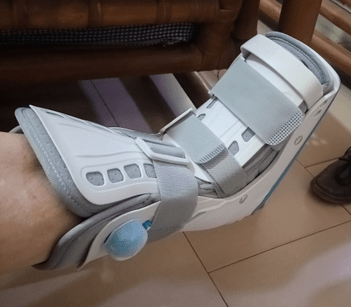
It’s been a little while since Archibald has weighed in. After 6 weeks post injury and 5 weeks in an ankle brace, Archibald now has an orthopedic walking boot. The X-Ray this week indicates there is some healing; however, when I move wrong, I have mild pain. Is there any motion in the fracture if I accidentally put weight on the foot? That’s tough to say. Hopefully, the walking boot is going to stabilize things further; however, it remains to be seen whether I will be able to return to work before Christmas.

Guaging healing by the lack of pain is quite difficult for two reasons: first, I naturally tolerate a great deal of pain; second, I have suffered with fibromyalgia for more than 22 years, resulting in a baseline of pain before adding any pain from an injury. My natural response to pain is blunted.

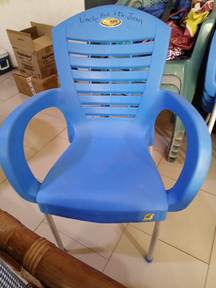
As I continue to whirl around the house in a wheelchair or hop around on one leg, grasping the furniture, I also continue to make new observations. It’s shocking how many parts of our household are not handicapped-accessible. I continue to have to move things down to a level where I can grasp them from a wheelchair. I have learned to use the rubber chairs in our dining room to scoot around by resting my left knee on the chair while I propel myself with my good foot. I am also becoming an expert at bathing in one of those chairs with a towel under the chair to catch the rinse water. Having a chair with a back on it is much more stable than the shower chairs sometimes used in America.

When we went into our regional capital of Tamale on Thursday, I quickly learned that most public buildings are not handicapped-accessible. Even places that have wheelchair ramps have short ramps too steep for the average wheelchair operator.

The wheelchair I am using is made of light metal, and I doubt it would stand up to long-term use. I continue to wonder why someone in Ghana does not take up the production of simple sturdy wheelchairs as well as bicycle wheelchairs. I am certain there is a big need for such things, particularly in villages. Yet another item that should be produced locally is elbow crutches with molded fittings, rather than fittings that pivot. Those pivoting fittings can constitute a hazard when trying to take the crutches off or put them on.

For now, Archibald and I are continuing to use the wheelchair with limited use of the crutches. I just wish fractures came with gauges indicating healing-25%, 50 %, 75 %, etc.

Despite remaining in the house, I am still working, still taking calls from Kids Ward and NICU. Bob is still handing out breakfast biscuits to the kids on the ward. And we are still helping settle bills for medicine, hospital stays, and transfusions for indigent patients.

ARCHIBALD THE ANKLE UPDATE NOVEMBER 23, 2025 WHEN YOU AREN’T MOBILE BUT YOU NEED TO PEE IN THE MIDDLE OF THE NIGHT, WHAT DO YOU DO?

November 23, 2025

I’ll begin with an apology. If the subject of challenges for the handicapped bothers you or if you don’t like to talk about bodily functions, just keep scrolling. But if you’re a little brave, bear with me.

When I was a small child in rural Illinois in the early 1950’s, many farm houses did not have bathrooms or toilets. There were outhouses situated at least 20 or 30 meters from the main house, but what happened in the winter or in the middle of the night when nobody wanted to go outside? That’s when chamber pots or “thunder mugs” came into play. Chamber pots were containers large enough for someone to sit on. The old-fashioned ones might be made of china, and there were pieces of furniture called commodes with spaces large enough for the chamber pot. And then there were large tin cans.

My grandparents got an indoor toilet when I was five, but prior to that, Grandma D. would place a large tin can under the bed so that she could pee into it in the middle of the night rather than going downstairs, and trudging outside to the outhouse. As a small child, I never thought anything about this; I just accepted the idea that it was far more practical than the alternative.

Since Archibald the Ankle has become a thing in my life, I have had occasion to remember Grandma’s solution to that problem. As I have observed previously, our house is not handicapped accessible. I am becoming highly proficient at maneuvering my wheelchair around corners in hallways designed only for the fit and mobile. For me to reach the toilet in the middle of the night requires me shifting from the bed to the wheelchair and then carefully backing the wheelchair out of the bedroom, turning it around, and heading for the toilet, not neglecting to lock the wheels when I finally stop. These manipulations are daunting enough in the daytime. I am not about to attempt them in the middle of the night, for not only might they result in disaster but I would also wake up my long-suffering husband who is already doing so much to help me.

Remembering Grandma D., I have achieved a solution: I place a bucket under our bed and slide it out as necessary. Accessing this thing is not simple, for I have to slide off my clothing and balance on my good leg while levering myself down with one hand on the bed and the other on the bookshelves near the bed. I’m afraid to put all my weight on the bucket for fear of it splitting in the middle of the night, dumping the urine and me all over the floor. And as I am achieving this feat of midnight ballet, I remind myself that Archibald will heal in a few weeks, allowing me to be mobile without the wheelchair while millions of people throughout the world face such challenges all their lives.

Several years ago, I injured my left hip and wound up on crutches for nearly 4 months. I rapidly learned that most public toilets in America are barely handicapped-accessible. Steep ramps, slippery floors, poorly-designed stalls with doors swinging the wrong direction, sinks, water, and soap located so high that they are unreachable for someone in a wheelchair-I observed all those things in the U.S. Here in Ghana, the situation is far worse for many designers of public facilities fail to give any thought to those in wheelchairs or on crutches.

By this point, you are either laughing or grossed out. Just remember to look around you-see the curbs that have no ramps for wheelchairs. See the poorly-designed public spaces. See ramps so steep that their pitch could be used to design ski jumps. And then remember that those with mobility challenges can still be productive workers if given the right opportunities. They already have enough problems; don’t make their lives more difficult.

ARCHIBALD THE ANKLE UPDATE NOVEMBER 20, 2025 OF POWER TAKE OFFS AND WHEELCHAIR BRAKES

November 20, 2025

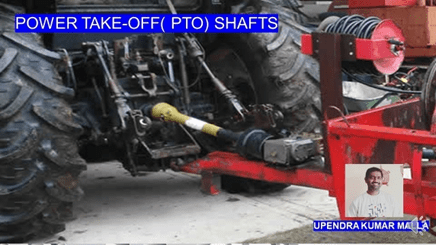
I learned to drive tractors when I was 10 years old, and one of the many lessons Dad taught me was to respect the power take off. The power take off shaft sat below the platform holding the driver’s seat. We connected power take offs to mounted corn pickers, self-unloading wagons, and a host of other implements.

The power take off transmitted power from the tractor to such things as snapping rolls on corn pickers, the rollers that gathered in the corn stalks. Another potential disaster was self-unloading wagons. These wagons had an auger at the base of the wagon that would steadily feed the grain out a spout. In the days when small feedlots were operating, many farmers would drive these wagons along feed bunks, dumping feed for their cattle. Disabling the power take off was not a big deal; however, there were many people who were so impatient that they would stop the tractor but not disengage the power take off. The results of this impatience were disastrous, leading to loss of fingers, hands, arms, feet, legs, and sometimes even life. Anyone foolish enough to be riding on top of a load of feed when the power take off was engaged was simply begging for a horrific injury. Some people have been injured or killed when their clothing has caught in the rotating power take off shaft.

In an effort to keep weight off Archibald, my injured left ankle, I am scooting around our house in a cheapie wheelchair. This morning as I was exiting the bathing room, scooting one of our blue rubber chairs to the door, and then transferring to the wheelchair, I began considering the potential for disaster if the brakes were not properly set on my wheelchair. To set the brakes, I must pull back on two levers, one over each wheel. While those maneuvers only take a few seconds, there’s a real temptation to leave the brakes off in hopes that the wheelchair will not suddenly scoot out from under me, leaving me to crash on the floor. And as I was reminding myself of the absolute need for patience, I remembered the lessons of the power take off.

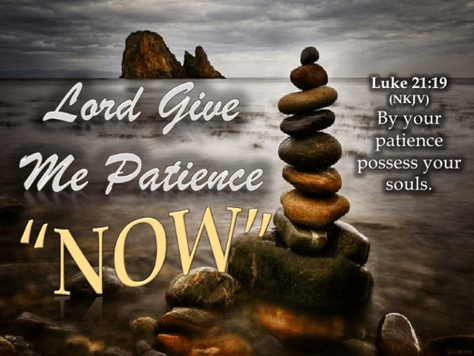
Isaiah 60:22 tells us, “…At the right time, I, the LORD, will make it happen.” Many times, we want progress and results and we want them immediately. Sadly, most of us are far more likely to pray, “Lord, give me patience NOW!!!”

Somehow, we don’t think that the God who has spoken the universe into existence with a single word, the God who has created us and who knows us better than we do ourselves, that same God doesn’t really know what He is doing and should obey our whimsies and demands. We are so impatient that we are unwilling to take the smallest steps to ensure our own safety, such as disengaging the power take off on a tractor or setting the brakes on a wheelchair. Many of us are so ungrateful that we blame God when disasters strike, even though we have failed to take the necessary steps to prevent them.

This morning, Archibald and I have made it safely through the bathing room and dressing areas and are now ensconced in the sitting room, where we will spend most of the rest of the day. (Chair yoga is becoming a thing!) But I continue to pray for all those who must use wheelchairs-and tractors with power take offs, that we all will have patience so that our foolishness will not result in disasters.

ARCHIBALD THE ANKLE UPDATE November 19, 2025-BATHING AS AN OLYMPIC SPORT

November 19, 2025

If you were able to prance into your shower this morning and bathe to your heart’s content, thank God! Today Archibald and I are describing the challenges of getting clean while wheelchair-bound.

My first challenge is selecting clean clothes and deciding what I might wash while I am bathing. This activity requires my transferring from the wheelchair to my bed, close to my dresser, reaching for clean clothes, and placing them in a safe location in the wheelchair. Bob has bought me a nice cloth bag to hang from the back of the wheelchair, so that helps.

Next, I maneuver my wheelchair out of our bedroom and into our bathing area-no mean feat because these corridors were not designed with the handicapped in mind. I cannot enter the bathing room with the wheelchair, so I transfer to one of our blue rubber chairs, being careful to stabilize the chair so that it will not scoot out from under me. This transfer requires putting on the brakes of the wheelchair, placing my good foot in front of the chair, grabbing the arms of the chair, and then kneeling with my injured leg on the seat of the chair. I can then scoot the blue chair back into the bathing area, taking care to put a large towel on the floor to catch the water I am about to spill on it.

Bob brings warm water each morning and pours it into a small bucket sitting in the corner of the shower stall. Using a traditional sponge, what used to be called a sap), I scrub myself, mostly sitting in the chair, and then scoop water from that small bucket, pouring it over myself and allowing the towel on the floor to absorb it. I figure we can buy more towels a lot more cheaply than for me to have an operation. I dry myself off with another towel, hanging it on the towel rack, and then turn, placing my knee on the center of the seat of the blue chair and scooting back across the floor to my wheelchair, where I will get dressed and replace my ankle brace. When I am fit, I can bathe in 5-10 minutes; this process takes nearly 20-30 minutes. And I must rinse out the clothes I slept in before leaving the bathing area.

Why am I bothering to document my minor struggles? I continue to emphasize that my condition is temporary; if I behave wisely, I hope my leg will heal in 6 weeks. But all over the world, millions of people are trapped in wheelchairs with no hope of release. When the house we live in was built in 1996, nobody thought about handicapped accessibility. Some of the doorways in our house are so narrow that it’s all I can do to get the wheelchair through without injuring my hands as I push the wheels. If anything I write helps raise awareness so people will build houses with wider doorways and larger corridors, it will be worth it. Never assume that because you are young and active today, you might never need a wheelchair or crutches. And you might find yourself caring for a crippled loved one. As the tro-tro sayings tell us, “No condition is permanent.”

NOVEMBER 17, 2025-In Memoriam: Russell Lowell Bjorling December 1, 1950-November 17, 2021

November 18, 2025

My brother Rus, his wife Carol, and his daughters, Elizabeth and Amanda

“I am a bear of little brain.” Winnie the Poo

The date should have meant more to me. All day, I kept wondering what was special about November 17th? Oh my heart! Four years ago in August 2021, we returned to America because my brother-in-law Tink was dying from complications of Agent Orange. God brought us back just in time, for we spent only two days with Tink before finding him dead in his house. But we didn’t realize that one of my brothers was also struggling with health problems.

My brother Rus loved Jesus, his family, and animals and farming. Rus was brilliant, a born comedian with impeccable timing, and a passion for learning, whether it was scientific facts or Bible studies. Rus was also a teacher, and one of his students shocked an Israeli guide when she began pointing out landmarks while on a trip to Israel. “Where did you learn all this?” the guide asked. “Oh, my Bible study teacher taught me,” was the answer.

There have been two times in my life when I have noticed small things about a loved one’s health that later turned out to contribute to their deaths. When my parents visited me in the fall of 1979, I noticed my mother had developed “paper money skin,” typical for someone on steroids. Although I attributed it to aging, I was more correct than I realized, for even then Mom was developing small cell lung cancer that made its own steroids. The immune suppression from that cancer allowed the development of fungal brain abscesses that eventually killed Mom several months later.

When we stayed with Rus and his wife Carol, we went for a walk in a nearby park, and I noticed that Rus was behaving like someone with chronic lung disease. Little did I realize that Russ’s lungs had suffered major damage after years of exposure to hog dust and ammonia fumes from poorly ventilated hog confinement setups. (Years before that, one doctor looked at Rus’s chest x-ray and said, “Well, if you’ll give up smoking, your lungs might improve.” Rus looked at the doctor aghast and replied, “But I’ve never smoked in my life.”)

We’ll never know how Rus was exposed to COVID, but in early November 2021, Rus came down with COVID pneumonia. That was a time when controversies raged over proper treatment as well as vaccination, and horror stories about bad side effects of vaccination were beginning to appear. Would it have helped had Rus been vaccinated? Who knows? One of our friends at church had a 43-year-old son who was a computer programmer…until a COVID vaccination damaged his brain so severely that he could no longer do his work. The big problem for Rus was the previous lung damage. Adding COVID to chronic lung disease proved more than Rus’s body could handle.

By the time we learned of Rus’s illness, we were already in Texas, preparing to leave America November 10th for Ghana. Our dilemma was real, for Christmas was approaching, and at Christmastime, our mission hospital in Saboba was-and remains-one of the few facilities at which patients could get operations in our area. We discussed the situation with Rus and his family and prayed fervently. Finally, we chose to return to Saboba, realizing that we might have seen Rus for the last time on earth.  

Rus died with his wife and daughters around him on November 17, 2021. At Rus’s funeral they played “I’ll be Waiting on the Far Side Banks of Jordan.” Here are the lyrics:
“Far Side Banks Of Jordan”

I believe my steps are growing wearier each day
Still I’ve got a journey on my mind
Lures of this old world have ceased to make me want to stay
and my one regret is leaving you behind

If it proves to be his will that I’m the first to go
And somehow I’ve a feeling it will be
When it comes time to travel likewise don’t feel lost
For I will be the first one that you’ll see

And I’ll be waiting on the far side banks of Jordan
I’ll be waiting drawing pictures in the sand
And when I see you coming I will rise up with a shout!
And come running through the shallow waters reaching for your hand

Through this life we’ve laboured hard to earn our meager fare
It’s brought us trembling hands and failing eyes
I’ll just rest here on this shore and turn my eyes away
And then you’ll come then we’ll see paradise.

And I’ll be waiting on the far side banks of Jordan
I’ll be waiting drawing pictures in the sand
And when I see you coming I will rise up with a shout!
And come running through the shallow waters reaching for your hand

For now, Rus is waiting on the far side banks of Jordan. But we do not mourn as those who have no hope, for we KNOW our Redeemer lives and that one day, we will all be together in heaven. So Rus, keep waiting. God still has things for us to do here, but one day, we will cross that Jordan and we will be together with Jesus for eternity.


IN MEMORIAM BILLY GENE PROCTOR SEPTEMBER 22, 2025 PART 3 COMMON SENSE IS NOT COMMON! AND NEITHER IS KINDNESS! BILLY HAD AN ENDLESS SUPPLY OF BOTH!

September 25, 2025

I’ve said it before, but one of the things we appreciated most about Billy Proctor was his endless fund of common sense. These days, we keep realizing that common sense is anything but common; in other words, getting good advice that actually works is a major challenge.

In a previous generation, those in the military rejoiced when they encountered recruits who were farm kids, for these people had not only learned how to work diligently but they also were used to coming up with practical solutions on the fly. Billy P. was that kind of a guy-someone who could analyze details, identify fundamental problems, and devise practical workable solutions. We can’t count the number of times we would call Billy, posing problems, and Billy would always come up with solutions. If Billy couldn’t come up with solutions himself, he would seek out advice or ask leading questions that would aid us in finding solutions.

Billy was also incredibly kind. Billy’s mama had raised him right, so he was a true Southern gentleman who would be polite under all circumstances, even when someone was trying to insult him. Even when Billy found himself engaged in an argument, he remained calm and courteous. Billy was also genuinely kind to all those around him. Repeatedly, we would learn that Billy had quietly helped someone or that Miss Carla and he were volunteering in an outreach to those in inner city Memphis or in some other helping ministry. The Proctors were faithful supporters of the efforts of Getwell Church to aid the community. It was also common to find the Proctors carrying food to shut-ins, offering rides to those needing transport to church or doctors’ appointments, etc.

As a faithful member of Getwell Church, Billy also helped represent us to the church at large and to several Sunday School classes. We can only pray that God will raise up someone to continue to spread our story at Getwell.

Billy was a faithful friend. Until the last few years of Billy’s life, he got together weekly with a group of men to eat lunch at a local restaurant. There were also the men who attended early morning Bible studies and prayer groups, a passion Billy shared with my husband Bob whenever we were staying with the Proctors.

Billy was a CPA’s CPA, someone so passionate about figures and reports being complete that he couldn’t stand to do shoddy work. This passion for correctness was evident in every task Billy tackled. Billy generously applied his talents to helping us manage our finances, multiplying donated monies to fund a host of projects at our mission hospital. Had we adequately compensated Billy for his work, he would have been a millionaire.

We continue to pray for Billy’s family and friends even as we grieve our own loss. The Navajo Indians have a saying that someone is a “valuable man,” meaning that individual’s contributions to society are immeasurable. By anybody’s standards, Billy Gene Proctor was a valuable man. Our loss is heaven’s gain. Rest well, friend, we’ll see you at the feet of Jesus.

IN MEMORIAM BILLY GENE PROCTOR SEPTEMBER 22, 2025 PART 2 PRECIOUS MEMORIES

September 23, 2025
  1. Precious mem’ries, unseen angels,
    Sent from somewhere to my soul;
    How they linger, ever near me,
    And the sacred past unfold.
    1. Refrain:
      Precious mem’ries, how they linger,
      How they ever flood my soul;
      In the stillness of the midnight,
      Precious, sacred scenes unfold.
  2. Precious father, loving mother,
    Fly across the lonely years;
    And old home scenes of my childhood,
    In fond memory appear.
  3. As I travel on life’s pathway,
    Know not what the years may hold;
    As I ponder, hope grows fonder,
    Precious mem’ries flood my soul.

As the movie “Driving Miss Daisy” ends, the theme music continues to play, and scenes from Hoke and Miss Daisy’s relationship flash across the screen. That’s how I feel remembering Billy Proctor. The sweet pictures just keep coming. The music in the background is country Gospel with fiddles, banjoes, and guitars.

Billy loved to travel. After spending three years working in Mexico at the beginning of his career and traveling throughout the United States for Terminix, Billy was a travel specialist who had more practical tips than the average web site. Billy could tell you the best times to travel, when to catch the red-eye specials, when to use your frequent flier miles, and when to hold on to them. Back when travel agents were still available, we used Billy’s friend Harriet on many occasions. In his work, Billy also traveled extensively through the South and was an expert on the best local restaurants. We fondly remember one place near Morgan City, Louisiana, housed in an old airplane hanger that had outstanding Cajun food.

Eventually Billy became the head of the IRS Division of Terminix and it was a tremendous shock when he went in to work one morning at the age of 63, only to face a horrible choice: move to Chicago with his division or take early retirement with a retirement bonus. Billy chose to remain in Olive Branch, preferring to practice as a CPA with a select clientele. While that choice was difficult, it gave Billy the freedom to cherish children and grandchildren and to travel more extensively. Meanwhile, Carla continued to work as a social worker facilitating adoptions for several more years, creating many happy families.

Billy, and Carla became globe trotters. Israel, Scotland with the Edinburgh Tattoo, leaf tours in the fall-Billy and Carla did it all. It was no surprise when I learned that Billy and Carla were two of the few wedding guests who made it to a destination wedding in the Florida Keys, for that was typical for the Proctors.

Billy was a passionate follower of Jesus Christ. Living close to Getwell Church allowed Billy the chance to attend men’s breakfasts and Bible studies as well as small group meetings with Miss Carla. For many years, Billy was involved in the financial affairs of the churches he attended-first at Faith United Methodist and later at Getwell.

One of Billy’s most endearing characteristics was his enormous fund of common sense. As a Mississippi farm boy, Billy never “got beyond his raising” but always remembered the practicalities of situations. We frequently used Billy as a sounding board for a variety of decisions and always found his advice to be sound and helpful.

As the days go on, there will be more visions. For now, we can label these glimpses as more precious memories.

IN MEMORIAM BILLY GENE PROCTOR SEPTEMBER 22, 2025

September 23, 2025

He was a bright farm boy from North Mississippi when he went off to Mississippi State to see what life had to offer apart from driving a tractor. Somewhere during those four years, he found his passion was accounting, a passion that would define the rest of his life even into so-called retirement. While at Mississippi State, he also met a shy coed a bit younger than he, and they fell in love. That second passion would also define the rest of his life. Throughout the years, he grew professionally to become a CPA’s CPA, someone who simply had to ensure that things lined up-columns of figures, family life, and faith.

We first met Billy Proctor in 1983 shortly after we moved to the Memphis area. We were searching for a church home. At that time, Billy and Carla were moving out of their home on the south side of Memphis into a house in Southaven; however, they were in the process of building a home in Olive Branch. We attended church with them and then went to lunch with them. Billy and Carla introduced us to Faith United Methodist. Little did we know that that lunch would only be the first of hundreds of meals that we would share with the Proctors through the years.

We all wound up at Faith United Methodist Church together. At Faith, Billy and his son Michael handled the sound equipment. Billy was always fascinated by machines-farm machines, sound equipment, computers, and cameras. Billy supplemented his income as an accountant by shooting wedding photographs, and he had an artist’s eye for composition. Billy was also a main stay of the MOFIA, Men of Faith In Action, the men’s group at Faith United Methodist.

Those were the halcyon years for Faith. The Holy Spirit was moving powerfully every Sunday, and people were getting saved, baptized, re-dedicated, and called into ministry.

In the fall of 1985 Billy and Carla were preparing to move into their new home in Olive Branch; however, there was a problem. Faith had scheduled an event for the same night the Proctors were supposed to be moving. I reached the Proctor home late in the afternoon to find that the water heater had overflowed, flooding the garage. Somehow, I was able to get the water heater turned off safely without getting electrocuted, and then Bob and I helped the Proctors move. (Bob is a wizard at packing moving trucks!) Little did we realize that the Proctors’ new home would also become one of our “homes away from home” when we left for the mission field.

Sometime in 1987, we asked Billy to help us manage our finances while we were on the mission field. Billy agreed, and that commitment continued up to the day he died. Only God knows how much Billy helped us over the years. Billy handled investments and taxes and a host of other smaller problems.

The only thing in life that is constant is change, and eventually, Faith underwent a series of transformations, including changing the name to Lifespring. Somewhere along in there, the Proctors changed from Faith to Getwell Road United Methodist Church, now Getwell Church. Eventually, we followed the Proctors to Getwell, and in October 2005, Getwell sent a short term mission team to work with us in Saboba. That might have been the first short term mission team Getwell had sent out; since then, they’ve regularly sent teams to a number of places, including Honduras and Ghana. We suspect that Billy had a great deal to do with the team coming to Saboba. The Getwell group bonded with our local pastors, eventually building the Local Council of Churches meeting hall and guest house, a facility that continues to bless our entire community. The Sunday School class Billy attended also donated small refrigerators to our wards, something we desperately needed.

We laughingly refer to our location in Saboba as “Domeabra,” a phrase in Twi that means “if you love me, you will come.” Only dedicated people will journey all the way to Saboba! Billy traveled to Saboba twice, and the first time he came, he told us, “Now I know why I must continue to help you.”

There are no words to describe all the help Billy has given us through the years. Billy and his wife have hosted us numerous times and have shared their passions with us. Billy has handled our taxes, our funds, and other miscellaneous things such as social security and driver’s license renewals. The Proctors have allowed us to use their address as an accommodation address, a big thing when you spend most of your life overseas.

Billy Proctor was one of the bravest people we knew. Sometimes bravery consists of lying there in bed knowing everything hurts and getting up and working anyway. For the last twenty or thirty years, Billy struggled with a host of chronic health problems, any one of which might have incapacitated a lessor individual. Billy rarely complained and persisted in doing as much as he could.

Billy shared friendships with us. Billy was part of a group of men who got together for lunch once a week-most of those men preceded Billy into heaven. Billy faithfully attended the men’s groups and the Wednesday night meetings at Getwell, as well as Sunday morning services and Sunday School.

Billy’s story would be incomplete without telling some of the story of his beloved wife Carla. Born into an upper-class family in the Mississippi Delta, Miss Carla is a stickler for doing things properly, and a delight to all of us who know her. In an earlier age, Miss Carla would have donned white gloves before leaving the house. Were it not for Miss Carla’s devoted care, Mister Billy’s life might have been several years shorter, simply because Miss Carla refused to let him give up. Carla has been a wife, a mother, and a social worker passionate about placing the right children with the right homes.

When we returned from a shattering first missionary term in 1990, Miss Carla was the one who connected me with a Christian psychologist just in time to save me from having to enter a mental hospital with severe depression. For that help alone, my husband and I owe the Proctors a debt we can never adequately repay. Thanks to Carla’s timely help, I made the connection, saw Dr. Philip Gentry as an emergency, and got started on the necessary treatment. That treatment allowed me to work part-time while recovering and healing from long-time emotional hurts. My ability to later upgrade a health center to a small hospital in the middle of a tribal war is directly due to that healing.

When we think of Billy’s entry into heaven yesterday, we think of all the friends with whom he has re-connected-Pastor Curtis Petrey, Dr. Jack, Cecil Williamson, his parents. We can almost hear Curtis greeting Billy in that distinctive LA–Lower Alabama-accent.

For Billy, the words of Saint Paul in 2 Timothy 4:7-8 have come true: “I have fought the good fight, I have finished the race, I have kept the faith.Now there is in store for me the crown of righteousness, which the Lord, the righteous Judge, will award to me on that day—and not only to me, but also to all who have longed for his appearing.”

To Billy, we say, “We have always loved you and continue to love you. We will see you in the morning when Jesus comes to free all of us.” To Billy’s family and many friends, we say, “We grieve with you. We pray for you. May God help us all to be as faithful as Billy has been!” And we also say, “Maranatha! Come, Lord Jesus!”

REFLECTIONS ON TIME AND HOW THERE’S NEVER ENOUGH OF IT

September 18, 2025

September 18, 2025

Today would have been my sister-in-law Roxanne’s 75th birthday. Sadly, Roxanne died two days ago. We knew Roxanne was in failing health and we desperately wanted to be with her one more time, but events in the mission hospital where we work in northeastern Ghana precluded our leaving, and time caught up with us. We comfort ourselves with the fact that my husband Bob called his sister every night, asking about her day, praying for her, and exchanging corny jokes from old TV programs. Roxanne’s death underscores a point: We can never spend too much time with those we love, for one day time runs out and we are left to mourn by ourselves.

We first left America for Ghana in 1988. Through the years, we have lost parents, step-parents, and siblings. We were blessed to be in the U.S. and spend time with my two brothers-in-law before they died. On the other hand, we left America in November 2021, knowing that my beloved brother Russell was dying with COVID pneumonia. If that statement sounds harsh, you must realize that Christmas was approaching and at Christmas time our small hospital is one of the few facilities along the Eastern Corridor of Ghana where people can get emergency operations. While others celebrate, my colleagues and I work long hours under less-than-optimal conditions. (Recently, when we ran short of knife blades, we were making skin incisions with the tips of hypodermic needles.)

Even living in the same town with friends has not prevented us from taking them for granted until it was too late. Charles Talan was one of the finest theater (OR) nurses with whom I have ever worked-an absolute genius and a wizard linguist who spoke perhaps twelve tribal languages fluently. Sadly, Charles battled several health problems during his last few years, and when he collapsed at home one morning, all I could do was to pronounce him dead from a brain hemorrhage once he had been rushed to the hospital. Joshua Beso was one of Charles’ contemporaries, a hard-working man who headed our public health program for years. Again, Joshua suffered a heart attack and died while we were out of town.

I could go on to mention many others. Live long enough and your deposits in heaven far outweigh the number of friends and relatives you have left on earth. What is my point?

I’ve told the story many times, but it’s still worth a re-telling. My small home town in northwestern Illinois is graced by two sets of railroad tracks that have served the major rail network for more than a century. At one point, the sensor for one of the crossing gates developed a problem, resulting in several fatal accidents as unsuspecting motorists attempted to cross in the paths of speeding trains. One morning, it was raining when an elderly farmer living southeast of town tromped into the kitchen, leaving muddy tracks on his wife’s freshly mopped floor. Fuming, the wife fussed at her husband and he gave some smart aleck reply and then left for town. Sadly, that exchange was the last time that lady saw her beloved spouse of more than fifty years. As the husband was crossing the tracks, a speeding train totaled his vehicle, killing him instantly.

After hearing that story, my husband and I have made it a practice to tell each other “I love you” and kiss whenever we are parting for any reason. I’m sure we entertain the staff on the Kids Ward at our hospital, for my husband brings biscuits (cookies) to the kids in the mornings and then kisses me good-bye before returning to the house.

My late mother always said that it was a waste to send flowers to a funeral and that she would rather have people send her the flowers while she was alive to appreciate them. I heartily agree! Write that letter! Send that e-mail or text message or WhatsApp! Make that phone call! My husband called his sister every night, and now he wishes for just one more conversation, one more opportunity to tell her he loves her. The Ashantis say “Nkwa hia,” life is precious. Appreciate those around you while you have them and tell them you love them, tell them they are valuable people whom God loves.

If you are so blessed as to be able to spend birthdays or holidays with loved ones, do it! One of the hardest things we must face is all the family celebrations we have missed because of our work in Ghana. The unfortunate result is that even when we are back in America, family members forget to invite us to events because we have dropped off their radar.

When you spend time with people, you are investing in them. Turn off your cell phone or leave it somewhere and concentrate on the people around you. Don’t lie to yourself that Facetiming is the same thing as being physically present with someone; it’s not. People need physical contact-touching, patting, hugging-and no electronic media can offer that.

This Adinkra symbol is the Sankofa bird, a symbol of forgiveness and also the idea that you can go back to right a wrong or to find something you have lost. Sadly, when someone dies, the idea of Sankofa no longer applies. Death means it’s too late to repair that relationship or to say those loving words or to give that gift.

In closing, I would also like to encourage those of you with relatives serving overseas for any reason to keep those relatives in the loop. Missionaries go because God orders them to, not because they hate their families. Those serving in the military are equally under orders and must obey. We have not left you because we hate you but because we are under assignment from a higher power. Remember us, for we remember you and long to be with you. And treasure those around you, for one day, you will look but they will be gone.

Nkwa hia!