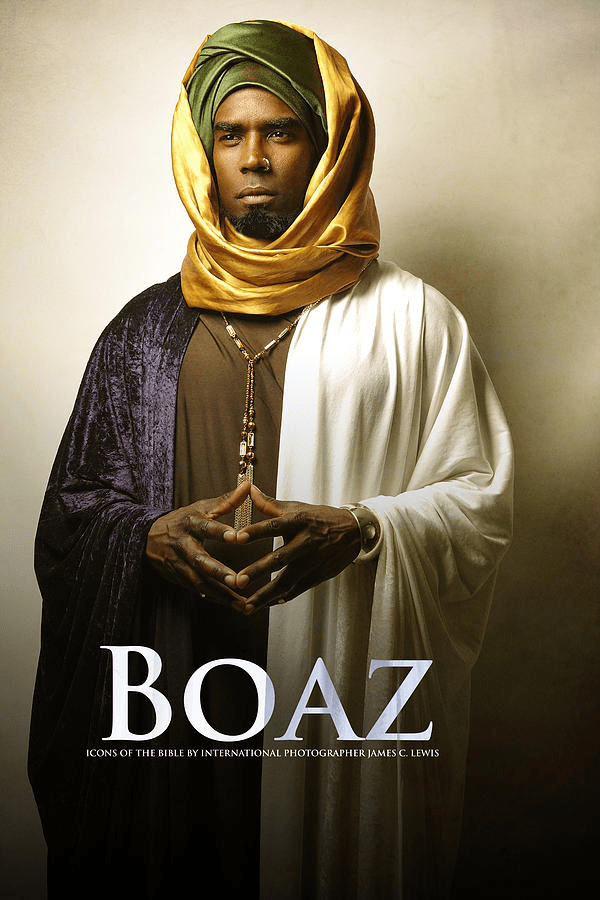
Ruth 4:1 “Meanwhile, Boaz went to the gate and sat down there. Soon the kinsman-redeemer of whom he had spoken came along, and Boaz said, “Come over here, my friend, and sit down.” So he went over and sat down. Then Boaz took ten of the elders of the city and said, “Sit here,” and they did so.”
The time has come to ask “Who was Boaz and why was he so significant?” The background to the Book of Ruth is so full of interesting stuff that it is difficult to know where to start. The name “Boaz” in Hebrew means “strength.” According to traditional rabbinic sources as quoted in Wikipedia, Boaz was a prince and a judge in Bethlehem, a righteous man who may have lived at the time of Eli, the High Priest. Traditionally, Moabite men were not allowed to become Israelites because their forbears had refused to help Moses and the Israelites during the Exodus. (Deuteronomy 23:3) But according to Jewish law, the children followed the father, not the mother, so there was no such proscription against Moabite women like Ruth. Boaz was an observant worshiper of God, hence the description of Boaz greeting his workers in Ruth 2:4, “The Lord be with you,” with the workers responding, “The Lord bless you.”
Throughout the description of Boaz and Ruth’s meeting and subsequent interactions, there is never any doubt that Boaz behaved honorably, graciously, and generously. (Notice that while Naomi’s late husband Elimelech had other relatives in Bethlehem, there is never any mention of those men having helped her.)
Wikipedia Boaz further expands on this as follows: ”The midrash Ruth Rabbah states that being a pious man, Boaz on his first meeting with Ruth perceived her conscientiousness in picking up the grain, as she strictly observed the rules prescribed by the Law. This, as well as her grace and her chaste conduct during work, induced Boaz to inquire about the stranger, although he was not in the habit of inquiring after women (Ruth Rabba to ii. 5;Talmudic tractate Shabbat 113b). In the conversation that followed between Boaz and Ruth, the pious proselyte said that, being a Moabite, she was excluded from association with the community of God (Deuteronomy 23:3). Boaz, however, replied that the prohibition in the Scripture applied only to the men of Moab – and not to the women. He furthermore told her that he had heard from the prophets that she was destined to become the ancestress of kings and prophets; and he blessed her with the words: “May God, who rewards the pious, also reward you” (Targum Ruth ii. 10, 11;Pesiḳ, ed. Buber, xvi. 124a). Boaz was especially friendly toward the poor stranger during the meal, when he indicated to her by various symbolic courtesies that she would become the ancestress of the Davidic royal house, including the Messiah(Ruth R.to ii. 14;Shab.113b). As toward Ruth, Boaz had also been kind toward his kinsmen, Naomi’s sons, on hearing of their death, taking care that they had an honorable burial (Ruth Rabba to 2.20). (All quotes from Rabbinical Literature)
Some sources suggest that Boaz oversaw the threshing of the barley and the end of harvest celebrations to ensure that these events would not turn into orgies. Evidently, such things frequently happened in those days.
When Boaz wanted the matter of Ruth and Naomi decided, he called ten other elders to join him, thus bringing together a minyan. Encyclopedia Britannica defines a minyan this way: Minyan, (Hebrew: “number”, ) plural Minyanim, or Minyans, in Judaism, the minimum number of males (10) required to constitute a representative “community of Israel” for liturgical purposes. A Jewish boy of 13 may form part of the quorum after his Bar Mitzvah (religious adulthood). The number ten comes from Numbers 14:27 when God referred to the ten spies who brought back a bad report about the Promised Land as “an evil assembly.” Joshua and Caleb were not included in that assembly because they urged the Israelites to go in and conquer. For the agreements regarding Naomi’s property and Ruth’s future, Boaz required a minyan, of which he could not be part, since he was the one bringing the problem for solution.
APPLICATION: Does character matter? In this day and age when character assassination is routinely accomplished through social media, we sometimes wonder if righteousness is really worth it. But remember this: we are not merely living out our lives in front of people; we are living our lives under God’s scrutiny as well. While people may misjudge you and twist your motives, God knows your heart and your thoughts.
Boaz had a longstanding reputation for righteousness before Ruth and Naomi ever returned to Bethlehem. Had Boaz not been a man of sterling character, God would have found someone else for Ruth as a husband and Boaz would have remained in obscurity. But Boaz eventually lived up to the meaning of his name and became a human ancestor of the Messiah. What an incredible blessing!
Over the years, we have had numerous people attempt to spread stories about us. One group insisted that we “lacked a can – do attitude.” Four years later, we were running a bush hospital in the middle of a tribal war. We never changed. This we have learned: you can survive any lie if you just keep living righteously and consistently. In the long run, God, not man, keeps the books. Character does matter!
PRAYER: Father God, thank You are the One who knows us better than we know ourselves. Help us to model ourselves after righteous men like Boaz. Help us to refuse to listen to slander, to defamation, or to degradation. Help us to follow You all the days of our lives. In the mighty and precious Name of King Jesus. Amen.


Leave a Reply