Archive for December, 2024

DECEMBER 14, 2024 PLODDING TOWARD BETHLEHEM-FINDING JESUS IN THE BOOK OF ISAIAH #5 JESUS THE MESSIAH, THE PERFECT SHEPHERD

December 14, 2024

Isaiah 40:9-11 O Zion,
You who bring good tidings, get up into the high mountain; O Jerusalem, You who bring good tidings,
Lift up your voice with strength, Lift it up, be not afraid; Say to the cities of Judah, “Behold your God!”

Behold, the Lord God shall come with a strong hand, And His arm shall rule for Him; Behold, His reward is with Him, And His work before Him.

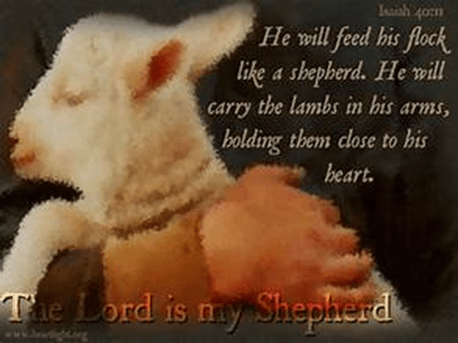
He will feed His flock like a shepherd; He will gather the lambs with His arm, And carry them in His bosom, And gently lead those who are with young.”

John 10:7-18 Jesus the Good Shepherd

“Then Jesus said to them again, “Most assuredly, I say to you, I am the door of the sheep. All who ever came before Me are thieves and robbers, but the sheep did not hear them. I am the door. If anyone enters by Me, he will be saved, and will go in and out and find pasture. The thief does not come except to steal, and to kill, and to destroy. I have come that they may have life, and that they may have it more abundantly.

“I am the good shepherd. The good shepherd gives His life for the sheep. But a hireling, he who is not the shepherd, one who does not own the sheep, sees the wolf coming and leaves the sheep and flees; and the wolf catches the sheep and scatters them. The hireling flees because he is a hireling and does not care about the sheep. I am the good shepherd; and I know My sheep, and am known by My own. As the Father knows Me, even so I know the Father; and I lay down My life for the sheep. And other sheep I have which are not of this fold; them also I must bring, and they will hear My voice; and there will be one flock and one shepherd.

“Therefore My Father loves Me, because I lay down My life that I may take it again. No one takes it from Me, but I lay it down of Myself. I have power to lay it down, and I have power to take it again. This command I have received from My Father.”

When we read Jesus’ description of himself as the good shepherd, we might not realize how much that entails. Shepherds were responsible for every aspect of the care of their flocks. Shepherds had to lead the flocks to good safe pasture and to still clean water. If there were lambs who were hurt, the shepherd would carry them in his cloak next to his heart. When wild animals attacked, the shepherds had to kill them or drive them off, risking their own lives. Hireling shepherds would simply run away, leaving the sheep to their fate. David was willing to face Goliath with his slingshot because he had already killed many wild animals attacking his father’s sheep. (Slingshots were the ancient equivalent of long-range rifles, and most armies had soldiers who were deadly with slingshots in either hand.) Many ancient sheepfolds had high stone walls with a single door opening, and a doorkeeper who would only admit legitimate shepherds with their flocks.

At night, several flocks might be kept in a single sheepfold. At daybreak, the shepherd would call his sheep and they would follow him because they knew his voice. The sheep trusted the shepherd because he had already been kind to them.

When Jesus describes himself as the Good Shepherd, he is fulfilling the prophesy of Isaiah. What does this mean for us? Face it, folks, many of us are battered and bruised, while some of us are facing health challenges, financial challenges, and worries of all kinds. We need a shepherd, someone who will care for us, help us, make sure that we have what we need and that we are protected.

As we are preparing for Christmas, let’s remember that we are not simply preparing for a baby in a manger, but for Heaven’s King, the Messiah, the One who has conquered sin, death, and hell. We can trust Jesus to be our Shepherd because He has proven Himself worthy of all honor and praise and glory.

PRAYER: Father God, thank You for loving us and for caring for us. Lord, we desperately need you to be our Good Shepherd and to deliver us from ourselves. Please enter our trembling hearts and make Your home there. It’s in Your mighty and precious Name that we pray, King Jesus. Amen.
DECEMBER 13, 2024 PLODDING TOWARD BETHLEHEM-FINDING JESUS IN THE BOOK OF ISAIAH #4 PREPARING THE WAY FOR MESSIAH

December 13, 2024

Isaiah 40:1-5 Prepare the Way for the LORD (Matthew 3:1–12; Mark 1:1–8; Luke 3:1–20; John 1:19–28)

“Comfort, comfort My people,” says your God. “Speak tenderly to Jerusalem, and proclaim to her that her forced labor has been completed; her iniquity has been pardoned. For she has received from the hand of the LORD double for all her sins.”

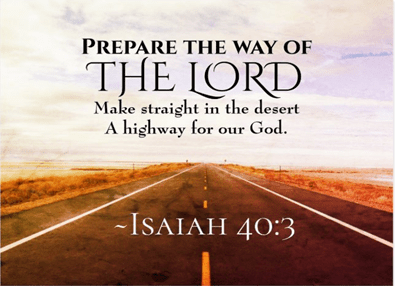
A voice of one calling: “Prepare the way for the LORD in the wilderness; make a straight highway for our God in the desert. Every valley shall be lifted up, and every mountain and hill made low; the uneven ground will become smooth, and the rugged land a plain. And the glory of the LORD will be revealed, and all humanity together will see it.”

Matthew 3:1-3 The Mission of John the Baptist (Isaiah 40:1–5; Mark 1:1–8; Luke 3:1–20; John 1:19–28)

“In those days John the Baptist came, preaching in the wilderness of Judea and saying, “Repent, for the kingdom of heaven is near.” This is he who was spoken of through the prophet Isaiah: “A voice of one calling in the wilderness, ‘Prepare the way for the Lord, make straight paths for Him.’ ”

Mark 1:1-8 The Mission of John the Baptist “This is the beginning of the gospel of Jesus Christ, the Son of God. As it is written in Isaiah the prophet: “Behold, I will send My messenger ahead of You, who will prepare Your way.” “A voice of one calling in the wilderness, ‘Prepare the way for the Lord, make straight paths for Him.’” John the Baptist appeared in the wilderness, preaching a baptism of repentance for the forgiveness of sins. People went out to him from all of Jerusalem and the countryside of Judea. Confessing their sins, they were baptized by him in the Jordan River. John was clothed in camel’s hair, with a leather belt around his waist. His food was locusts and wild honey. And he began to proclaim: “After me will come One more powerful than I, the straps of whose sandals I am not worthy to stoop down and untie. I baptize you with water, e but He will baptize you with the Holy Spirit.”

Luke 3:1-6 The Mission of John the Baptist  

“In the fifteenth year of the reign of Tiberius Caesar, while Pontius Pilate was governor of Judea, Herod tetrarch of Galilee, his brother Philip tetrarch of Ituraea and Trachonitis, and Lysanias tetrarch of Abilene, during the high priesthood of Annas and Caiaphas, the word of God came to John son of Zechariah in the wilderness. He went into all the region around the Jordan, preaching a baptism of repentance for the forgiveness of sins, as it is written in the book of the words of Isaiah the prophet: “A voice of one calling in the wilderness, ‘Prepare the way for the Lord, make straight paths for Him. Every valley shall be filled in, and every mountain and hill made low. The crooked ways shall be made straight, and the rough ways smooth. And all humanity will see God’s salvation.’”

John 1:19-28 The Mission of John the Baptist

And this was John’s testimony when the Jews of Jerusalem sent priests and Levites to ask him, “Who are you?” He did not refuse to confess, but openly declared, “I am not the Christ.” “Then who are you?” they inquired. “Are you Elijah?” He said, “I am not.” “Are you the Prophet?” He answered, “No.” So they said to him, “Who are you? We need an answer for those who sent us. What do you say about yourself?” John replied in the words of Isaiah the prophet: “I am a voice of one calling in the wilderness, ‘Make straight the way for the Lord.’ ”

Then the Pharisees who had been sent asked him, “Why then do you baptize, if you are not the Christ, nor Elijah, nor the Prophet?” “I baptize with water,” John replied, “but among you stands One you do not know. He is the One who comes after me, the straps of whose sandals I am not worthy to untie.” All this happened at Bethany beyond the Jordan, where John was baptizing.”

John the Baptist was Jesus’ cousin and a miracle baby, the son born to Zechariah and Elizabeth when they had despaired of ever becoming pregnant. When Mary visited Elizabeth, the Holy Spirit entered John while he was in Elizabeth’s womb. As a child in a priestly family, John would have been tutored extensively in the Scriptures and would certainly know the prophecies of Isaiah. Who knows how shocked John may have been to realize that he was the chosen messenger referred to in Isaiah 40.

Notice how modestly and carefully John answered the religious authorities. Technically, John was the embodiment of Elijah and the prophet mentioned in the Scriptures; however, he merely quotes Isaiah 40:3. When the religious leaders demanded to know the source of John’s authority to baptize, he doesn’t answer directly but advises them that the Messiah is actually among them.

What can we learn from John the Baptist? While God chose John as the messenger to announce the coming of the Messiah, John did not involve himself in senseless religious arguments. John knew his mission and fulfilled it, leaving others to assume whatever they chose. When God gives you a task, stick to that task and don’t be distracted by critics.

John knew that he was preparing the way for the Messiah, although he was not certain who the Messiah would be. To that end, John was calling all those listening to him to repentance of sins. We have the advantage of knowing that Jesus the Messiah has come and has sacrificed Himself for the sins of the world. Our task is to confess our sins to God, ask for forgiveness, and to repent, changing to follow God for the rest of our lives. There’s a fine old hymn traditionally sung in Advent. As you read these words, may they enter your heart!

PRAYER:Father God, thank You for loving us and for caring for us. Lord, only You can help us prepare our hearts for Your coming. Please forgive our sins, clean us, and make us wholly Yours. In the mighty and precious Name of King Jesus. Amen.

  1. Prepare the way, O Zion! Ye awful deeps, rise high;
    Sink low, ye towering mountains, the Lord is drawing nigh;
    The righteous King of glory, foretold in sacred story.
    Refrain: O blest is He that came in God the Father’s Name.
  2. O Zion, He approacheth, thy Lord and King for aye!
    Strew palms where He advanceth, spread garments in His way.
    God’s promise faileth never, Hosanna sound forever!
    Refrain: O blest is He that came in God the Father’s Name.
  3. Fling wide thy portals, Zion and hail thy glorious King;
    His tidings of salvation to every people bring,
    Who, waiting yet in sadness, would sing His praise in gladness.
    Refrain: O blest is He that came in God the Father’s Name.
  4. He cometh not with warriors, and not with pomp and show,
    Yet smiteth He with terror sin, death, and every foe.
    The Spirit’s sword He wieldeth, not e’en to death He yieldeth.
    Refrain: O blest is He that came in God the Father’s Name.
  5. Give heed, thou sinful people, thy King and Savior own;
    The kingdom He hath founded is not an earthly one;
    No power can overthrow it, nor earthly wisdom know it.
    Refrain: O blest is He that came in God the Father’s Name.

The throne which He ascendeth is fixed in heaven above:
His sanctified dominion is light alone and love.
His praise be ever sounding for grace and peace abounding.
Refrain: O blest is He that came in God the Father’s Name.

DECEMBER 12, 2024 PLODDING TOWARD BETHLEHEM-FINDING JESUS IN THE BOOK OF ISAIAH #3 MESSIAH WILL SIT ON THE THRONE OF DAVID AND WILL REIGN FOREVER

December 12, 2024

Isaiah 9:6-7 Unto us a child is born (Matthew 4:12–17; Mark 1:14–15; Luke 4:14–15)

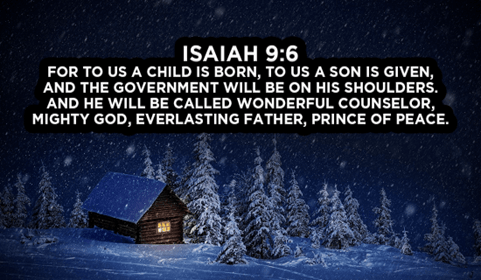
“For unto us a child is born, unto us a son is given, and the government will be upon His shoulders. And He will be called Wonderful Counselor, Mighty God, Everlasting Father, Prince of Peace. Of the increase of His government and peace there will be no end. He will reign on the throne of David and over his kingdom, to establish and sustain it with justice and righteousness from that time and forevermore. The zeal of the LORD of Hosts will accomplish this.”

At Christmastime each year, there are thousands of performances of Handel’s Messiah throughout the world; yet how many of us realize that this magnificent celebration was composed by an elderly man in the throws of bankruptcy and despair? When invited to conduct one of his works for a charity performance in Ireland, Handel decided to compose a new oratorio, turning to Scripture for inspiration. Gripped by the Holy Spirit, Handel wrote the entire oratorio, including the orchestration, in only twenty-five days, barely stopping to eat or sleep. Upon completion, Handel sobbed, “I think that I did see all heaven before me, and the great God Himself!” 

The verses from Isaiah form the words for one of the loveliest songs in the entire oratorio as they assure us that a Child WILL be, in fact, HAS been born, and that when He returns to earth, the government will be on His shoulders. Those of us who know Jesus already know Him as “Wonderful Counselor, Mighty God, Everlasting Father, Prince of Peace.”  We long for the day when this prophecy will be completely fulfilled. “Of the increase of His government and peace there will be no end. He will reign on the throne of David and over his kingdom, to establish and sustain it with justice and righteousness from that time and forevermore. The zeal of the LORD of Hosts will accomplish this.”

“But,” you exclaim, “I don’t see righteous governments in power anywhere in the world.” True. All governments are flawed because all leaders are human; however, Jesus the Messiah is the Son of God, holy and righteous, and wise beyond all knowing. When Jesus returns to rule and reign, he will reign righteously and justly. But for now, Jesus will reign in our hearts if we will allow Him. Our hearts can become little Bethlehems where the Christ Child rules and reigns, and we can have love and peace and joy that can never be taken away from us.

PRAYER: Father God, thank You for loving us and for caring for us. Lord, please come into our hearts, cleanse us from all unrighteousness, take away our sins, and rule and reign in our hearts and lives. In the mighty and precious Name of King Jesus. Amen.

DECEMBER 11, 2024 PLODDING TOWARD BETHLEHEM-FINDING JESUS IN THE BOOK OF ISAIAH #2 MESSIAH WILL HAVE A GALILEAN MINISTRY AND WILL FREE HIS PEOPLE FROM OPPRESSION

December 11, 2024

Isaiah 9:1-5 (Matthew 4:12–17; Mark 1:14–15; Luke 4:14–15)

“Nevertheless, there will be no more gloom for those in distress. In the past He humbled the land of Zebulun and the land of Naphtali, but in the future, He will honor the Way of the Sea, beyond the Jordan, Galilee of the nations: The people walking in darkness

have seen a great light; on those living in the land of the shadow of death, a light has dawned. You have enlarged the nation and increased its joy. The people rejoice before You as they rejoice at harvest time, as men rejoice in dividing the plunder. For as in the day of Midian You have shattered the yoke of their burden, the bar across their shoulders, and the rod of their oppressor. For every trampling boot of battle and every garment rolled in blood will be burned as fuel for the fire.”

What was this “Galilee of the Gentiles?” Biblestudytools.com gives the following information: Galilee was the venue for most of Jesus’ ministry. It was located in modern-day Northern Israel, which in Jesus’ day was part of the Roman Empire. One of the three provinces of ancient Palestine, it included the whole northern section of the country, the Jordan River and Sea of Galilee forming the Eastern border. Lower Galilee, with great plain and hill country running down into the Jordan, was  “one of the richest and most beautiful sections of Palestine,” explains Smith’s Bible Dictionary Upper Galilee, known biblically as “Galilee of the Gentiles,” was mountainous.

Jesus grew up in Nazareth, one of the two major cities of Galilee, says Encyclopedia BritannicaIsaiah 9:1 says, “…but in the future he will honor Galilee of the nations, by the Way of the Sea, beyond the Jordan.” Galilee can be translated to mean wheel or revolution. Though much effort was made by the Roman Empire to keep it a peaceful territory, word of Jesus and His followers threatened to disrupt that peace, and eventually reached all the way to Rome.

Galilee, a piece of land containing approximately twenty towns, was gifted to King Hiram of Tyre by Solomon “for his work in conveying timber from Lebanon to Jerusalem” says Smith’s Bible Dictionary. During the reigns of King David and King Solomon in the 10th century BC, Encyclopedia Britannica says “it came under the northern kingdom of Israel.”  

Historians have varying theories about why Galilee was largely deserted for over half a millennium after the Assyrian invasion.  A century before Jesus, the area was re-populated by Judean immigrants. “Galilee was the most pagan of the Jewish provinces,” says theologian Frederick Bruner. The International Standard Bible Encyclopedia adds, “Their mixed origin explains the differences in speech which distinguished them from their brethren in the South, who regarded Galilee and the Galileans with a certain proud contempt.”

A large population settled there in the century before Christ. “Galilee was a region of great natural fertility,” records Bible Hub, continuing that “It rejects no plant, for the air is so genial that it suits every variety.” It was a rich land and a cultured people. “Josephus (a 1st Century AD Roman-Jewish historian) estimates the population at 3,000,000,” records the International Standard Bible Encyclopedia. “This helps us to understand the crowds that gathered and followed Jesus in this district.” 

During the life of Jesus, Galilee was part of the Roman Empire. Located strategically between Syria and Egypt, Roman leaders and allies were placed in rule there to ensure peace. Ruled by foreigners, relations between the Gentiles and Jewish people were tense. Historically significant is Galilee’s strong resistance to the Roman Empire, putting up the greatest fight among Jewish populations. Easton’s Bible Dictionary notes Galilee was “the scene of some of the most memorable events of Jewish history.”

Jesus lived in Galilee for approximately thirty years. Galilean Jews had a recognizable accent, therefore Jesus’ disciples were easily identified. Jesus left Judea for Galilee when John the Baptist was arrested, to allude the Pharisees (experts in Jewish law). The way in which He traveled from Judea to Galilee is significant. Originally from Nazareth of Galilee, Jesus would have been very familiar with the route most Jews took to avoid going through Samaria. The Jews and Samaritans hated each other, yet Jesus chose to walk through Samaria before beginning His public ministry in Galilee. 

Every step Jesus took on earth was intentional. He had been rejected in His hometown of Nazareth, and so traveled to begin His ministry in the Galilean city of Capernaum. The people Jesus choose to preach to first were “looked upon with contempt as rude and boorish,” Matthew Henry records. The Galilean people were predominately Jewish, but heritage had been blended over the decades, leaving “the purely Jewish element” to be “relatively small.” Christ humbled Himself to begin His preaching, not to scholarly men, but those “fit for soldiers.”

God shows up in the most unlikely places! Of all the places in which to minister in Israel, Galilee seems like the least likely, and yet, that’s where Jesus would spend most of his ministry. God knew that the racially mixed people of Galilee would be spiritually hungry and would flock to hear Jesus. The tough Galilean fishermen might have outlandish accents but they had stout hearts and would become fathers of the Christian Church. Jesus would preach in the Galilee and ignite spiritual flames that would continue to burn until his return.

While we can understand the verses about rejoicing, what about this prediction? “For as in the day of Midian You have shattered the yoke of their burden, the bar across their shoulders, and the rod of their oppressor. For every trampling boot of battle and every garment rolled in blood will be burned as fuel for the fire.” As far as we know, this part of the prophecy has yet to be fulfilled; however, fulfillment might come when Messiah returns. On the other hand, the establishment and continued survival of the State of Israel is nothing short of miraculous, so perhaps this prophecy has already been fulfilled.

What about us? Many of us may have faced rejection or scorn, if not in our families, then at school or in our communities. We may have felt that we, like the Galileans, have been living “in the land of the shadow of death.”  The good news for us is that Jesus, the Messiah, has already come and has conquered death, hell, and the grave. We too may see a great light in our hearts and lives.

This Advent season, why not give yourself the greatest gift of all-surrender your heart and life to the Lord Jesus Christ and receive forgiveness of sins, pardon, and new life? The gifts under the Christmas tree will eventually fall apart, wear out, or otherwise become useless. But the gifts and joy Jesus gives are presents that will become ever brighter and more precious through the years.

PRAYER: Father God, thank You for loving us and for caring for us. Lord, we confess that we are sinners, caught in our own wrong-doing. Please forgive us and deliver us from those sins. Help us to follow hard after You for the rest of our lives, knowing that You give eternal life and that when we die, we will be in heaven with You forever. In the mighty and precious Name of King Jesus. Amen.

DECEMBER 10, 2024 PLODDING TOWARD BETHLEHEM FINDING JESUS IN THE BOOK OF ISAIAH #1 IMMANUEL-GOD WITH US!

December 10, 2024

Isaiah 7:14 Therefore the Lord Himself will give you a sign: Behold, the virgin shall conceive and bear a Son, and shall call His name Immanuel.”

Luke 1:26-31 Christ’s Birth Announced to Mary

“Now in the sixth month the angel Gabriel was sent by God to a city of Galilee named Nazareth, to a virgin betrothed to a man whose name was Joseph, of the house of David. The virgin’s name was Mary. And having come in, the angel said to her, “Rejoice, highly favored one, the Lord is with you; blessed are you among women!”

But when she saw him, she was troubled at his saying, and considered what manner of greeting this was. Then the angel said to her, “Do not be afraid, Mary, for you have found favor with God. And behold, you will conceive in your womb and bring forth a Son, and shall call His name Jesus.” 

We have been studying what the Book of Galatians tells us about holiness and how to become holy with the help of the Holy Spirit. But we are in the season of Advent, a season in which we should be preparing our hearts for the celebration of Christ’s coming. Perhaps no single prophet in the Old Testament has written more about the coming Messiah than has Isaiah.

Who was Isaiah? TheFamousPeople.com says this about Isaiah:

Isaiah was an 8th-century BC Israelite prophet who predicted the coming of Jesus Christ. He is believed to have lived about 700 years before Jesus Christ was born. The Book of Isaiah is named after him. He is considered a significant contributor to Christian and Jewish traditions. Not much is known about his personal life, but there is enough evidence to suggest that he was probably a member of an aristocratic family. He was born in Jerusalem and is said to have been called to be a prophet by a divine vision he had in the year of King Uzziah’s death. From his writings, it is evident that he was thoroughly educated in the language of prophetic speech, and it is sometimes argued that he was born into a family of prophets. As a pious and principled man, he was disturbed by the inequalities in society and the evils perpetrated by men. He sympathized with the poor and the downtrodden. He served as the mouthpiece of God to the common people and tried to warn them of dire consequences if they indulged in sinful activities. He was married and had at least two sons. His wife is referred to as “the prophetess” in his writings…Isaiah died sometime in the 7th century BC. The exact circumstances of his death are not known though certain sources suggest that he was killed by King Manasseh, the 14th king of the Kingdom of Judah.”

The prophecy recorded in Isaiah 7:14 is part of a larger prophecy given to King Ahaz of Judah at a time when the King of Syria and the King of Israel have banded together to attack Jerusalem.

Isaiah 7:10-25 “Moreover the Lord spoke again to Ahaz, saying, “Ask a sign for yourself from the Lord your God; ask it either in the depth or in the height above.”

But Ahaz said, “I will not ask, nor will I test the Lord!”

Then he said, “Hear now, O house of David! Is it a small thing for you to weary men, but will you weary my God also? Therefore the Lord Himself will give you a sign: Behold, the virgin shall conceive and bear a Son, and shall call His name Immanuel. Curds and honey He shall eat, that He may know to refuse the evil and choose the good. For before the Child shall know to refuse the evil and choose the good, the land that you dread will be forsaken by both her kings. 

The Lord will bring the king of Assyria upon you and your people and your father’s house—days that have not come since the day that Ephraim departed from Judah.”

And it shall come to pass in that day that the Lord will whistle for the fly that is in the farthest part of the rivers of Egypt, and for the bee that is in the land of Assyria. They will come, and all of them will rest in the desolate valleys and in the clefts of the rocks, and on all thorns and in all pastures.

In the same day the Lord will shave with a hired razor, with those from beyond the River, with the king of Assyria, the head and the hair of the legs, and will also remove the beard. It shall be in that day that a man will keep alive a young cow and two sheep; so it shall be, from the abundance of milk they give, that he will eat curds; for curds and honey everyone will eat who is left in the land. It shall happen in that day, that wherever there could be a thousand vines
Worth a thousand shekels of silver, it will be for briers and thorns. With arrows and bows men will come there, because all the land will become briers and thorns. And to any hill which could be dug with the hoe, you will not go there for fear of briers and thorns; but it will become a range for oxen and a place for sheep to roam.”

What a strange place for a Messianic prophecy! Here Ahaz, the grandson of King Uzziah, has panicked and has resorted to asking Isaiah for help. Ahaz probably hopes that Isaiah will pray some kind of prayer and make his enemies disappear, but that doesn’t happen. When Isaiah orders Ahaz to ask from the Lord, Ahaz tries to score points for piety by refusing to do so. 

In this prophecy, Isaiah informs King Ahaz that he has nothing to fear from these two men, for God is going to frustrate all their plans. Isaiah also predicts that within 65 years Israel will no longer exist as a nation, and that “the land that you dread will be forsaken by both her kings.” But Isaiah also predicts that the Assyrians will swoop down on Judah and destroy it.

Why does God drop a wonderful prophecy about the coming Messiah into a discourse on political upheaval? The key is in the name “Immanuel,” which means “God with us.” God is with us at all times, whether or not we realize it. And God is always working, even when we think we are in the midst of disasters. Right now, a pastor friend of ours lies in a hospital in Guatemala, recovering from several severe health problems.

Our friend traveled to Guatemala to encourage believers in the forty churches his small congregation in western New York has helped start. While in a remote mountainous area, our friend fell sick, forcing those around him to evacuate him by any means possible until they could reach a large city with a good hospital. On the face of it, it’s difficult to see God’s hand in these events; however, while we assume God has only one purpose in a given situation, meanwhile, God may have seventeen different purposes. Who knows how many people in that hospital are going to hear about Jesus because a gringo pastor has fallen sick? Who knows how many people will increase their faith because of God’s hand in this situation?

As you go through Advent and Christmas, remember that Jesus IS Immanuel, God with us. Jesus is there in the middle of your stresses, your worries, your fears, your doubts, your disappointments ,and your depression. There is no time of the day or night when Jesus fails to be with us. And because Jesus is Immanuel, you can rest assured that God will never abandon you.

PRAYER: Father God, thank You for loving us and for caring for us. Lord, we bless You for sending Jesus, Immanuel, to be with us no matter how we are suffering. Help us to remember that You are always there and that you are closer than our own heartbeats. In the mighty and precious Name of King Jesus. Amen.

DECEMBER 9, 2024 HOW CAN WE POSSIBLY BE HOLY? #26 DON’T DO THINGS FOR THE SAKE OF SHOW

December 9, 2024

Galatians 6:11-16 Paul has one final word.

“See what large letters I am using to write to you with my own hand!

Those who want to make a good impression outwardly are trying to compel you to be circumcised. They only do this to avoid persecution for the cross of Christ. For the circumcised do not even keep the law themselves, yet they want you to be circumcised that they may boast in your flesh.

But as for me, may I never boast, except in the cross of our Lord Jesus Christ, through which the world has been crucified to me, and I to the world. For neither circumcision nor uncircumcision means anything. What counts is a new creation.

Peace and mercy to all who walk by this rule, even to the Israel of God.”

“See what large letters I am using to write to you with my own hand!” Paul is winding up his letter to the Galatians, but why is he making such a point of the fact that he is writing the letter himself and in large letters? Remember that Paul’s “thorn in the flesh” might be an eye problem, and that he even mentions that earlier in Galatians. If Paul is suffering from an eye problem, it makes sense for him to write in large letters so that he himself can read it. Paul also wants the Galatians to know that HE has written everything, and that some secretary has not taken liberties with what he wants to say.

Those who want to make a good impression outwardly are trying to compel you to be circumcised. They only do this to avoid persecution for the cross of Christ. For the circumcised do not even keep the law themselves, yet they want you to be circumcised that they may boast in your flesh.”

At this point, many Jewish leaders are siding with the Romans in an effort to suppress Christianity. By convincing the Romans that this new sect is a threat to the stability of the Roman Empire, the Jewish leaders hope to wipe out the Christians. Paul is writing to the Galatians because Judaizers within the fledgling Christian church are trying to force new Gentile believers to undergo circumcision. These Jewish sympathizers are hoping to report that they have convinced large numbers of male Gentile believers to undergo circumcision, thereby currying favor with the Jewish religious establishment and by extension, with the Roman hierarchy. These false teachers want to have a foot in both the Christian and Jewish camps in hopes of avoiding persecution.

“But as for me, may I never boast, except in the cross of our Lord Jesus Christ, through which the world has been crucified to me, and I to the world. For neither circumcision nor uncircumcision means anything. What counts is a new creation.” Here Paul boldly states the bottom line for this entire letter to the Galatians. In your quest for holiness, don’t become distracted by traditional practices but realize that holiness is a matter of the heart.

What does Paul mean when he says, “through which the world has been crucified to me, and I to the world?” We must take those things that draw us away from God and refuse to have anything to do with them, mentally and emotionally nailing them to crosses so that we will not be tempted to indulge in them again. At the same time, we must be careful to please God rather than people, for there will always be those with hidden agendas, itching to add us to their list of successful converts to their position. If we are to be new creations in Christ Jesus, we must leave all these other things behind, seeking only for God’s perfect Will for our lives.  

“Peace and mercy to all who walk by this rule, even to the Israel of God.” Why does Paul close with this statement? Paul wants to go on record as wishing all believers well, whether they come from a Jewish background or from a Gentile one. By using the phrase “the Israel of God,” Paul affirms that God’s hand remains on Israel and that God has sent His Son, Jesus, the Messiah, to redeem all the people of the world.

What do these last verses of Galatians teach us? Many times, various Christian groups will encourage believers to engage in various practices. While these practices are not harmful in themselves, they can become a stumbling block when believers are more concerned about observing rules and regulations than they are about pleasing God.

Jesus himself said, “Come to me, all you who are weary and burdened, and I will give you rest. Take my yoke upon you and learn from me, for I am gentle and humble in heart, and you will find rest for your souls. For my yoke is easy and my burden is light.” (Matthew 11:28-30) As we prepare for Christmas, let’s remember that trees and presents and decorations and gatherings are nice, but the most important thing we can prepare is our hearts.

PRAYER: THOU DIDST LEAVE THY THRONE E.S. Elliot

1 Thou didst leave Thy throne and Thy kingly crown,
When Thou camest to earth for me;
But in Bethlehem’s home was there found no room
For Thy holy nativity.
O come to my heart, Lord Jesus,
There is room in my heart for Thee.

2 Heaven’s arches rang when the angels sang,
Proclaiming Thy royal degree;
But of lowly birth didst Thou come to earth,
And in great humility.
O come to my heart, Lord Jesus,
There is room in my heart for Thee.

3 The foxes found rest, and the birds their nest
In the shade of the forest tree;
But Thy couch was the sod, O Thou Son of God,
In the deserts of Galilee.
O come to my heart, Lord Jesus,
There is room in my heart for Thee.

4 Thou camest, O Lord, with the living word
That should set Thy people free;
But with mocking scorn, and with crown of thorn,
They bore Thee to Calvary.
O come to my heart, Lord Jesus,
There is room in my heart for Thee.

5 When the heavens shall ring, and the angels sing,
At Thy coming to victory,
Let Thy voice call me home, saying “Yet there is room,
There is room at My side for thee.”
My heart shall rejoice, Lord Jesus,
When Thou comest and callest for me.

DECEMBER 8, 2024 HOW CAN WE POSSIBLY BE HOLY? #25 YOU REAP WHAT YOU SOW. WHAT GOES AROUND, COMES AROUND!

December 8, 2024

Galatians 6:7-10 You Can’t Fool God!

 “Do not be deceived: God is not to be mocked. Whatever a man sows, he will reap in return. The one who sows to please his flesh, from the flesh will reap destruction; but the one who sows to please the Spirit, from the Spirit will reap eternal life.

Let us not grow weary in well-doing, for in due time we will reap a harvest if we do not give up. Therefore, as we have opportunity, let us do good to everyone, and especially to the family of faith.”

Ever feel like nothing you do is enough or that it counts for anything? Some days, no matter how hard you try to be virtuous, no matter how you pursue holiness, you feel like a total failure. You might find yourself in job situations where colleagues take credit for your work and your ideas. Perhaps you have recently learned that someone you have trusted has been systematically attempting to destroy your reputation. At this point, you might feel like giving up. But please don’t!

What we readily forget is that God is the One who sees everything and God is the One who knows the human heart. No matter how things appear to us, God is still on the Throne and God still keeps score. What does God say about these problems?

“Do not be deceived: God is not to be mocked. Whatever a man sows, he will reap in return. The one who sows to please his flesh, from the flesh will reap destruction; but the one who sows to please the Spirit, from the Spirit will reap eternal life.”

When people behave carelessly and think that they are getting away with their bad behavior, they fail to realize that ultimately, God will reward us. When our main aim is to glorify God and to please Him, God will reward us in wonderful ways we cannot even anticipate. And as believers in Jesus Christ, we can trust in His promises of eternal life.

Trusting in those promises, we may persist and go forward. “Let us not grow weary in well-doing, for in due time we will reap a harvest if we do not give up. Therefore, as we have opportunity, let us do good to everyone, and especially to the family of faith.”

No matter how tired or discouraged you might be, hang in there and trust! God sees and will give us the strength we need to fulfill His perfect Will for our lives. Knowing, these truths, we can continue to do good to all those around us, particularly to other believers.

PRAYER: Father God, thank You for loving us and for caring for us. Lord, help us to cling to Your precious promises that we will reap righteousness when we sow righteousness. In the mighty and precious Name of King Jesus. Amen.

DECEMBER 7, 2024 HOW CAN WE POSSIBLY BE HOLY? #24 BEAR SOMEBODY ELSE’S BURDENS? I CAN SCARCELY BEAR MY OWN!

December 7, 2024

Galatians 6:1-6 Carry One Another’s Burdens

“Brothers, if someone is caught in a trespass, you who are spiritual should restore him with a spirit of gentleness. But watch yourself, or you also may be tempted. Carry one another’s burdens, and in this way you will fulfill the law of Christ.

If anyone thinks he is something when he is nothing, he deceives himself. Each one should test his own work. Then he will have reason to boast in himself alone, and not in someone else. For each one should carry his own load. Nevertheless, the one who receives instruction in the word must share in all good things with his instructor.”

If we think the fruits of the Holy Spirit are only there so that we can become some kind of holy display, we’re sadly mistaken! God gives the fruits of the Holy Spirit so that we can be channels of grace to others. Let’s look at this passage carefully.

“Brothers, if someone is caught in a trespass, you who are spiritual should restore him with a spirit of gentleness.” When we catch someone else doing something wrong, frequently our first reaction is to gloat, particularly if the individual in question has been unkind or critical to us. But the Holy Spirit buzzer is sounding and that response is wrong. If we were footballers (soccer players for you Americans), we would be getting red cards. Notice that God expects us to be spiritual-why? Because God gives His Holy Spirit to believers, and therefore we should be led by the Holy Spirit and not by our own passions and desires.

Next, notice that we are to restore this person “with a spirit of gentleness,” the gentleness of the Holy Spirit. How gentle do we have to be? Isaiah 42:1-3 tells us, “Behold! My Servant whom I uphold, My Elect One in whom My soul delights! I have put My Spirit upon Him; He will bring forth justice to the Gentiles. He will not cry out, nor raise His voice, nor cause His voice to be heard in the street. A bruised reed He will not break, and smoking flax He will not quench…”

While reeds in swamps might be quite strong and flexible when intact, once bruised, they can easily be broken beyond healing. The phrase “smoking flax” refers to the flax used as wicks in oil lamps. As long as there is oil, the flax will continue to burn brightly; however, once the oil is running out, the flax may begin to smoke, signaling that it is about to fail completely. When a flax wick begins to smoke, it’s a tricky business to replenish the oil and blow softly on the wick to encourage the flame to burn properly again.

Many times, someone who has appeared quite strong may be faltering. Perhaps this person has been severely bruised or perhaps his supply of spiritual oil is running out and he is about to fail completely. At such times, we are far more vulnerable to temptations of all sorts, particularly those most appealing to our personalities.

“But watch yourself, or you also may be tempted.” We should avoid any self-righteousness, for we too can fall into the same temptations that have ensnared others. For example, someone might be eliminating pornography on someone else’s computer, only to begin to enjoy it themselves.

“Carry one another’s burdens, and in this way you will fulfill the law of Christ.” How can we carry someone else’s spiritual burdens? First, we can pray for them, asking God to heal them in that particular area. Next, we can try to help them avoid temptation; this could mean inviting someone who has just been bereaved to join you for recreation or for a meal, so that they won’t find themselves alone with their temptations. If we want to help, God will certainly show us creative ways of bearing those burdens. Perhaps these burdens are not spiritual but financial. If God shows you a need, you must pray and ask God to guide you as to how you are to help with that need.

“If anyone thinks he is something when he is nothing, he deceives himself. Each one should test his own work. Then he will have reason to boast in himself alone, and not in someone else. For each one should carry his own load.” Oh, how quick we are to judge others and how slow we are to judge ourselves! Through the years, I have learned to back off when an individual or a group begin proclaiming that he/she/they are far too spiritual to associate with anybody else. Such thinking is Satanic and very dangerous. There is only one God, and we are not Him! The ground is level at the foot of the cross of Jesus. We are all sinners in need of a Savior. Again, we must examine ourselves and confess any sins the Holy Spirit reveals to us.

Nevertheless, the one who receives instruction in the word must share in all good things with his instructor.” Why does Paul include this advice as he concludes this section? Instructors are frequently the ones who sensitize us to our own faults; being an instructor may involve lots of risk with very little reward. When we encounter truth-tellers who enlighten us, we should be as kind to them as possible, sharing whatever we have with them. After all, the advice these people have given may have dragged us back from the brink of some yawning spiritual chasm. Why not reward those who have helped deliver us from ourselves?

In one of his books, Leo Rosten quotes the famous Jewish teacher and rabbi Maimonides as having said, “Tell the truth and see the world.” Spiritually restoring people can be a very risky business, for the very ones you are trying to help may turn and attack you. But God continues to call us to a ministry of restoration. Let us follow our Master Jesus, the Messiah, and continue to heal bruised reeds and to restore smoking flax.

PRAYER: Father God, thank You for loving us and for caring for us. Lord, help us to restore others in a spirit of gentleness, remembering that our turn for restoration may come at any point. Help us to share all good things with those who are instructing us and leading us. In the mighty and precious Name of King Jesus. Amen.

DECEMBER 6, 2024 HOW CAN WE POSSIBLY BE HOLY? #23 I LOVE PEOPLE; IT’S MY NEIGHBORS I CAN’T STAND!

December 6, 2024

Galatians 5: 24-26 “Those who belong to Christ Jesus have crucified the flesh with its passions and desires. Since we live by the Spirit, let us walk in step with the Spirit. Let us not become conceited, provoking and envying one another.”

For several days, we have been studying the fruits of the Holy Spirit. But fruit is useless unless it changes our lives. Why should our lives bear the fruit of the Holy Spirit? What do these meditations have to do with Advent; after all, Advent began a few days ago. Advent is the time when we are preparing to celebrate Christmas, the Gift of God’s Son. This season has always been a time for believers to prepare hearts and minds for Christmas. Nothing is more important than a quest for holiness, so that we will be prepared to welcome the Christchild into our hearts.

Every bit of the Book of Galatians is eminently practical. Paul doesn’t waste time in fancy theories, but goes right to the heart of human relations. We might say that we belong to Christ Jesus; however, what does it mean to “crucify the flesh with its passions and desires?” In Paul’s day, crucifixion was one of the ghastliest forms of death available. Nothing was more final than nailing someone to a cross, for death would be inevitable.

Here Paul is advising believers that they must crucify their fleshly natures with their passions and desires, making an end to them finally, so that they can live and walk by the Holy Spirit. As long as believers hang onto any part of their old natures, they cannot possibly be led by the Holy Spirit because light and darkness can’t exist in the same place at the same time. Someone has asked “What is the speed of darkness?” The speed of darkness is the speed of light, for as light comes in, darkness flees.

“Since we live by the Spirit, let us walk in step with the Spirit. Let us not become conceited, provoking and envying one another.” Here in Ghana, lorry drivers are fond of turning their outside rear view mirrors so that they can admire themselves, thus defeating the original purpose of the mirrors. Believers should learn a lesson from these foolish drivers. When we are living and walking by the Holy Spirit, we must be in step with Him, neither running ahead nor lagging behind. Our eyes must be fixed on God and not on ourselves. As soon as we begin focusing on ourselves, admiring ourselves for our holiness, we will be in trouble. One prayer my husband and I pray daily begs God to help us refrain from praying that God should arrange people and circumstances so that we will be more holy.

Only God can measure human holiness; only God truly knows the human heart. The more we focus on our own holiness, the more conceited we will become. Few things are more provoking than someone with a “holier than thou” attitude. That kind of behavior only provokes others to respond by doing everything they can to demonstrate that this person is no holier than anybody else. At the same time we are busy admiring ourselves, we may also be envying others who appear to be more spiritually advanced. We have no idea what’s happening in the lives of those other believers; perhaps they are envying us!

How do we avoid playing spiritual games that only hurt everybody and accomplish nothing positive? Live by the Spirit. Walk by the Spirit. When we are focusing our attention on the Holy Spirit, we will only look at ourselves long enough to confess our faults and ask God to change us.

“Great!” You say, “How do we do that?” The best way to remain focused on God is to memorize His Word. Find a few verses that really speak to your situation at this point. Put those verses on your phone. Write those verses on post it notes and stick them where you will see them. The more you meditate on those verses, the less you will think about yourself and the happier you-and your neighbors-will be.

PRAYER: Father God, thank You for loving us and for caring for us. Lord, help us to fix our minds and hearts on You and on Your Word, so we won’t be obnoxious to our neighbors. In the mighty and precious Name of King Jesus. Amen.

DECEMBER 5, 2024 HOW CAN WE POSSIBLY BE HOLY? #22 WHAT DO YOU MEAN, SELF-CONTROL?

December 5, 2024

Galatians 5:22-23 “But the fruit of the Spirit is love, joy, peace, patience, kindness, goodness, faithfulness, gentleness, and self-control. Against such things there is no law.”

Reading the list of the fruits of the Holy Spirit, we might be tempted to think, “Well, I can be loving and joyful. God can give me peace and help me to be kind, good, faithful, and gentle. But self-control? Lord, you MUST be kidding!”

Throughout our lives, we have learned that there are some things we can control and others that we can’t. While we might be able to control our work schedules to a degree, we have no idea when one of our children will fall sick at school, prompting a hurried trip to collect the child and a rearrangement of duties for the rest of the day. We think we can control our schedules at home until the day we sleep through our alarms and are nearly late for work.

We know we can’t control the weather! Due to a five-hour time zone difference between West Africa and Buffalo, New York, my husband was able to watch the last quarter of the recent Buffalo Bills football game. The Buffalo area was being pounded by a blizzard, and officials had to keep stopping the game to sweep the snow off the field! During the latest rainy season in our area, the rains came late and then those in a neighboring country opened the spillways on a dam. The results were that parts of our area flooded worse than they had ever been flooded previously.

But what’s tougher to control than anything else? Self-control is tougher. Exerting self-control is like playing the game “Whack-a-Mole.” Just when you think you have successfully struck the mole in one place, another mole pops up someplace else. We might not have a problem with overeating, but pressures from advertising are impelling us to spend money wildly for Christmas presents. And if you manage money wisely, how well are you doing with your exercise program? Have you said something regrettable recently? Are you shirking on your duties at home?

Face it, folks; we need divine help! What’s the difference between our stressing and straining to exert self-control and the self-control that is a fruit of the Holy Spirit? Results. When the Holy Spirit enters our hearts and lives, He changes us so that we are able to bear things we previously thought were unbearable. Just as we need the Holy Spirit to enable us to be loving, joyful, peaceful, patient, kind, good, faithful, and gentle, only the Holy Spirit can enable us to truly have self-control.

Why is self-control so important spiritually? Won’t God love us if we fail in a particular area? Yes, God will still love us; however, the more we learn about God, the more we want to tell others about Him. If we are careening through our lives, swaying from one extreme to another, we are bad advertising for God.

“Oh!” you say, “but I’m impulsive. That’s simply my nature.” True, but impulsiveness is not God’s nature. God is all-powerful and all-knowing and therefore has no need to be impulsive. God doesn’t waste time or energy or resources; we are the ones who waste those things.

If we say we are God-followers, we should want to reflect God’s nature and not our own. The problem is that the more we know of God, the more we realize how very short of His majestic nature we fall. It’s a spiritual truth that people become what they have worshipped. When you worship anything less than God, you are opening yourself up to Satanic influence. Worshiping God is the only safe spiritual path.

How can we gain self-control? James 1:19-27 tells us “My beloved brothers, understand this: Everyone should be quick to listen, slow to speak, and slow to anger, for man’s anger does not bring about the righteousness that God desires. Therefore, get rid of all moral filth and every expression of evil, and humbly accept the word planted in you, which can save your souls. Be doers of the word, and not hearers only. Otherwise, you are deceiving yourselves. For anyone who hears the word but does not carry it out is like a man who looks at his face in a mirror, and after observing himself goes away and immediately forgets what he looks like. But the one who looks intently into the perfect law of freedom, and continues to do so—not being a forgetful hearer, but an effective doer—he will be blessed in what he does. If anyone considers himself religious and yet does not bridle his tongue, he deceives his heart and his religion is worthless. Pure and undefiled religion before our God and Father is this: to care for orphans and widows in their distress, and to keep oneself from being polluted by the world.”

The only way we are truly going to gain self-control is to allow God to fill us with His Holy Spirit. And the only way the Holy Spirit can come is when we confess that we are sinners and cannot free ourselves and ask God to deliver us from our sins. God wants to send the Holy Spirit to us; we are the ones hindering Him. When we humble ourselves, God will gladly send the Holy Spirit, and when the Holy Spirit enters our hearts, He will immediately begin changing us into God’s likeness. That process of change will last the rest of our lives.

How do we know God has changed us? Some frustrating problem comes up, and we find ourselves able to deal in a way we never could before. Or someone says something bitter to us, and rather than becoming offended and striking back, we are able to intercede for that person. If overeating has been a problem, we find we are able to control our eating; in fact, we are able to control whatever obsessive behaviors we have previously indulged in. Before, we were trying to do things ourselves, but now the Holy Spirit is empowering us, and we are gaining self-control.

This Christmas, why not give yourself the best gift you can possibly give? Tell God you are powerless to help yourself and beg Him to give You His Holy Spirit. When the Holy Spirit comes, He will immediately begin manifesting His fruits in your life.

PRAYER: Father God, thank You for loving us and for caring for us. Lord, we confess that we are sinners, caught in our own wrong-doing, and that we cannot free ourselves. Thank You that You have sent Jesus Your Son to die for our sins and to deliver us. Please send Your Holy Spirit into our hearts so that we will live lives full of love, joy, peace, patience, kindness, goodness, faithfulness, gentleness, and self-control. We ask this in the mighty and precious Name of King Jesus. Amen.