Posts Tagged ‘jesus’

HAPPY 250TH BIRTHDAY, AMERICA!!! JULY 4, 2026

July 5, 2026

Today is our beloved country’s 250th birthday and for a miracle, we are in America. Back in Ghana where we work, my colleagues are caring for the needs of 120,000 villagers from both sides of the Ghana/Togo border. If I were back there, I too would be making rounds and operating on emergencies.

Although we have many American friends who are intensely patriotic, I submit that living overseas really helps us appreciate America. Due to the World Cup competitions, the world has come to America and many visitors have been charmed and overwhelmed. There’s a lot of anti-American propaganda out there, and much of it is quite believable. Then there are the few tourists whose poor behavior serves to validate these negative claims. But these people fail to represent the land that has formed them.

We passionately love America! We love the land, the people, the diverse cultures. Returning to Memphis and Mississippi, we wrap ourselves in the warm soft accent and naturally adapt those patterns of speech. Traveling to our home areas in the Middle West and western New York state, we automatically fall into the speech patterns of our youth. After years of moving around, the most precise definition of our accents comes from onlookers who observe, “You aren’t from around here, are you?”

Over the last several weeks while the World Cup games have been played, it’s been amazing to see how one song has continued to dominate celebrations, “Take Me Home, Country Roads,” first popularized by John Denver in 1971. Why has this song resonated with people from so many different countries? Here in America, many visitors have found themselves sharing meals and sometimes even homes with American hosts, who have gone out of their way to help strangers in a strange land feel at home. Ultimately, each one of us hopes for a home, a safe haven that will welcome us, shelter us, encourage us, and strengthen us so that we can go forth stronger and better prepared than we were before.  

We have no home in America. Although we have many friends and relatives who are willing to shelter us, our only home remains in a small Ghanaian village half a world away. We miss our Ghanaian friends, our colleagues, and our cat, Gabriel Kitty with a ferocity it’s impossible to describe. At the same time, we are trying to cram in as many visits with friends in America as possible, realizing that this might be the last time we see some of them. In the last few months, we have lost at least 4 or more classmates, and we hope to make it to high school reunions this summer so that we can connect one more time with those remaining.

One of the places we have ministered from time to time is the Central Prison in Tamale, Northern Region. One man who has since been released always led the prisoners in singing the country gospel song “This world is not my home.” The words are trite but very true. One day, each of us will die, and the question is, where will we go then? For Christians, the answer is simple: we will be with the Lord. If you cannot answer that question definitively, I beg you to ask Jesus to make himself so real to you that you KNOW that he has died for your sins and now offers you forgiveness and eternal life, if you will only honor him as Savior and Lord.

This 4th of July, we have sung the national anthem as well as “God Bless America.” But I close with the words to that old gospel classic for your consideration.

  1. This world is not my home, I’m just a-passing through,
    My treasures are laid up somewhere beyond the blue;
    The angels beckon me from heaven’s open door,
    And I can’t feel at home in this world anymore.
    1. Refrain:
      O Lord, You know I have no friend like You,
      If heaven’s not my home, then, Lord, what will I do?
      The angels beckon me from heaven’s open door,
      And I can’t feel at home in this world anymore.
  2. They’re all expecting me, and that’s one thing I know—
    My Savior pardoned me, and now I onward go;
    I know He’ll take me through though I am weak and poor,
    And I can’t feel at home in this world anymore.
  3. I have a loving Savior up in glory-land,
    I don’t expect to stop until I with Him stand;
    He’s waiting now for me in heaven’s open door,
    And I can’t feel at home in this world anymore.
  4. Just up in glory-land we’ll live eternally,
    The saints on every hand are shouting victory,
    Their songs of sweetest praise drift back from heaven’s shore,
    And I can’t feel at home in this world anymore
    .

PRAYER:  Father God, thank You for loving us and caring for us. Lord, please help all who read these words to commit themselves to You so that they will have homes in heaven with You forever. In the mighty and precious Name of King Jesus. Amen.
JUNE 26, 2026 REMAINING FAITHFUL AFTER A MOUNTAINTOP EXPERIENCE? #33 TAKING ON PHILOSOPHERS AND SPEAKING TO THEIR HEARTS

June 26, 2026

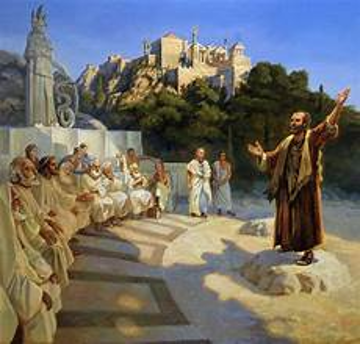
Acts 17:16-34 Paul Preaches in Athens

16 While Paul was waiting for them in Athens, he was deeply troubled by all the idols he saw everywhere in the city. 17 He went to the synagogue to reason with the Jews and the God-fearing Gentiles, and he spoke daily in the public square to all who happened to be there.

18 He also had a debate with some of the Epicurean and Stoic philosophers. When he told them about Jesus and his resurrection, they said, “What’s this babbler trying to say with these strange ideas he’s picked up?” Others said, “He seems to be preaching about some foreign gods.”

19 Then they took him to the high council of the city. “Come and tell us about this new teaching,” they said. 20 “You are saying some rather strange things, and we want to know what it’s all about.” 21 (It should be explained that all the Athenians as well as the foreigners in Athens seemed to spend all their time discussing the latest ideas.)

If you’ve ever studied ancient Greek mythology, you might wonder how any bunch of people as intelligent as the Greeks could possibly have fallen for such a line of codswallop. Encyclopedia Britannica summarizes the ancient Greek religion in this fashion:

Though the worship of the sky god Zeus began as early as the 2nd millennium by, Greek religion in the established sense began c. 750 by and lasted for over a thousand years, extending its influence throughout the Mediterranean world and beyond. The Greeks had numerous gods who controlled various natural or social forces (e.g., Poseidon the sea, Demeter the harvest, Hera marriage). Different deities were worshiped in different localities, but Homer’s epics helped create a unified religion, in which the major gods were believed to live on Mount Olympus under the rule of Zeus.

The Greeks also worshiped various gods of the countryside: Pan, nymphs, naiads, dryads, Nereids, and satyrs (see satyr and silenus), along with the Furies and the Fates. Heroes from the past, such as Heracles and Asclepius, were also venerated. Animal sacrifices were of great importance, usually made at a temple on the altar of the god. Other cultic activities included prayers, libations, processions, athletic contests, and divination, particularly through oracles and birds.

Great religious festivals included the City Dionysia at Athens and the festival of Zeus in the western Peloponnese that included the Olympic Games. Death was seen as a hateful state; the dead lived in the realm of Hades, and only heroes enjoyed Elysium. Great wrongdoers suffered in Tartarus. Mystery religions emerged to satisfy the desire for personal guidance, salvation, and immortality. Greek religion faded with the rise of Christianity and lost its last great advocate with the death of Julian in ad 363. 

In an African context, we would have called these people fetish worshipers. Yes, these people were spiritually hungry and in their hunger were worshiping real spirits; however, these spirits were some of the demons who accompanied Lucifer when he fell from heaven. One third of the angels fell along with Lucifer, allowing for plenty of demons to populate the earth. Even though some of the ideals were lofty, at the end, believers would wind up in Hades, no matter how many sacrifices, prayers, libations, athletic contests, or other acts of worship they had carried out.

Athens was not a major trading center; in fact, Athens was much more an academic community. An AI summary tells us: Athens during Paul’s time was not a wealthy economic hub. Instead, it was more akin to an academic center, similar to modern university towns like Oxford or Harvard. While it had a rich history in philosophy, arts, and politics, the city was not experiencing economic growth like other cities such as Corinth or Ephesus. The focus in Athens was primarily on intellectual pursuits rather than commercial prosperity, which influenced its cultural and social dynamics.

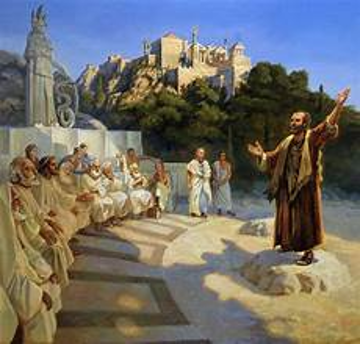
So Paul, one of the brightest minds ever to grace the Christian church in any age, now found himself in Athens, a place where philosophers abounded, education was prized, and many men gathered in hopes of learning something that would make sense of their lives and give them hope. How could Paul possibly reach these people effectively?

22 So Paul, standing before the council, addressed them as follows: “Men of Athens, I notice that you are very religious in every way, 23 for as I was walking along I saw your many shrines. And one of your altars had this inscription on it: ‘To an Unknown God.’ This God, whom you worship without knowing, is the one I’m telling you about.

Immediately, Paul grabbed the attention of his listeners, complimenting them on their search for truth and referring to an altar that might have stood close to where he was speaking. Paul was establishing common ground, identifying with his audience. But why would anybody erect an altar to a god whom they didn’t know? AI tells us: According to the legend recorded by Diogenes Laërtius, during a plague, the Athenians released sacrificial sheep on the Areopagus. Wherever the sheep lay down, they built altars to the appropriate unknown god, believing this would appease the deity and end the plague.

 
While no intact altar with the exact inscription has been found, archaeological findings support the existence of altars dedicated to unnamed deities in ancient Athens, affirming the city’s religious practices. This altar exemplifies the Athenians’ desire to connect with the divine, even in uncertainty, and highlights the cultural and historical layers of their worship.

Paul was speaking to men who instinctively felt that their ancient Greek religion was lacking and who found it unsatisfying. Now Paul continued.

Acts 17:24 “He is the God who made the world and everything in it. Since he is Lord of heaven and earth, he doesn’t live in man-made temples, 25 and human hands can’t serve his needs—for he has no needs. He himself gives life and breath to everything, and he satisfies every need. 26 From one man he created all the nations throughout the whole earth. He decided beforehand when they should rise and fall, and he determined their boundaries.

27 “His purpose was for the nations to seek after God and perhaps feel their way toward him and find him—though he is not far from any one of us. 28 For in him we live and move and exist. As some of your own poets have said, ‘We are his offspring.’ 29 And since this is true, we shouldn’t think of God as an idol designed by craftsmen from gold or silver or stone.

Now Paul had the rapt attention of his audience, for he was proving that he was highly educated and conversant with traditional Greek literature. This was a direct quotation of Greek sources-likely Epimenides for the first phrase and Aratus (or possibly Cleanthes) for the second. Therefore, Paul’s usage reflects both his scholarly exposure to secular writings and his willingness to connect with his audience on common ground.

30 “God overlooked people’s ignorance about these things in earlier times, but now he commands everyone everywhere to repent of their sins and turn to him. 31 For he has set a day for judging the world with justice by the man he has appointed, and he proved to everyone who this is by raising him from the dead.”

32 When they heard Paul speak about the resurrection of the dead, some laughed in contempt, but others said, “We want to hear more about this later.” 33 That ended Paul’s discussion with them, 34 but some joined him and became believers. Among them were Dionysius, a member of the council, a woman named Damaris, and others with them.

Resurrection? What a novel idea! Remember that the Greeks believed that once dead, always dead, and that they would all wind up in Hades unless they did something incredibly heroic. Most of the audience were realistic enough to know that they were simply ordinary people. Now Paul was offering those ordinary people the opportunity for something remarkable, eternal life with a loving Father God who had sent His own son to die for their sins. No more animal sacrifices. No more speculations about one’s eventual fate after death. Even though many in the audience clung to their ancient beliefs, some began glimpsing a new future full of hope.

Notice what Paul did not do during this meeting. Paul did not condemn the Greeks or criticize their traditional religion. Paul simply created an intellectual bond and then described a better way.

“Bob, if you don’t accept Jesus, you’re going to burn in hell!” It was 1979 at a factory in a small town in western New York. My husband found himself confronted by a coworker he later described as a “pushy Baptist.” Several times a day, this man would get in my husband’s face, confronting him with his need for Jesus. Somehow, it worked. Bob’s story is much longer than that, for he first heard the Gospel in a Sunday School at age five and later encountered Bible-believing Christians several times. But it was the “in your face” style of witness that helped turn Bob’s life around. One morning, he found himself turning back to that man and asking, “___, how do I get the Lord in my life?” That morning was the turning point. Bob received Jesus as Savior and Lord, began attending a church where he was mentored, and eventually embarked on a journey that wound up in a small village in northeastern Ghana.

Why tell this story? Believers are as individual as their DNA or their finger prints. God tailors each salvation story to the individual experiencing it. The believers in Athens required a totally different approach from the one that turned Bob around. But God knows people’s hearts and God knows what will work in each situation. May God help each of us so that when we are called upon to witness, we will do so, looking to Him for guidance.

PRAYER: Father God, thank You for loving us and caring for us. Lord, help us to remember that we are surrounded by spiritually hungry people and that You are the One who can best direct our testimonies. In the mighty and precious Name of King Jesus. Amen.
JUNE 26, 2026 REMAINING FAITHFUL AFTER A MOUNTAINTOP EXPERIENCE? #33 TAKING ON PHILOSOPHERS AND SPEAKING TO THEIR HEARTS

June 26, 2026

Acts 17:16-34 Paul Preaches in Athens

16 While Paul was waiting for them in Athens, he was deeply troubled by all the idols he saw everywhere in the city. 17 He went to the synagogue to reason with the Jews and the God-fearing Gentiles, and he spoke daily in the public square to all who happened to be there.

18 He also had a debate with some of the Epicurean and Stoic philosophers. When he told them about Jesus and his resurrection, they said, “What’s this babbler trying to say with these strange ideas he’s picked up?” Others said, “He seems to be preaching about some foreign gods.”

19 Then they took him to the high council of the city. “Come and tell us about this new teaching,” they said. 20 “You are saying some rather strange things, and we want to know what it’s all about.” 21 (It should be explained that all the Athenians as well as the foreigners in Athens seemed to spend all their time discussing the latest ideas.)

If you’ve ever studied ancient Greek mythology, you might wonder how any bunch of people as intelligent as the Greeks could possibly have fallen for such a line of codswallop. Encyclopedia Britannica summarizes the ancient Greek religion in this fashion:

Though the worship of the sky god Zeus began as early as the 2nd millennium by, Greek religion in the established sense began c. 750 by and lasted for over a thousand years, extending its influence throughout the Mediterranean world and beyond. The Greeks had numerous gods who controlled various natural or social forces (e.g., Poseidon the sea, Demeter the harvest, Hera marriage). Different deities were worshiped in different localities, but Homer’s epics helped create a unified religion, in which the major gods were believed to live on Mount Olympus under the rule of Zeus.

The Greeks also worshiped various gods of the countryside: Pan, nymphs, naiads, dryads, Nereids, and satyrs (see satyr and silenus), along with the Furies and the Fates. Heroes from the past, such as Heracles and Asclepius, were also venerated. Animal sacrifices were of great importance, usually made at a temple on the altar of the god. Other cultic activities included prayers, libations, processions, athletic contests, and divination, particularly through oracles and birds.

Great religious festivals included the City Dionysia at Athens and the festival of Zeus in the western Peloponnese that included the Olympic Games. Death was seen as a hateful state; the dead lived in the realm of Hades, and only heroes enjoyed Elysium. Great wrongdoers suffered in Tartarus. Mystery religions emerged to satisfy the desire for personal guidance, salvation, and immortality. Greek religion faded with the rise of Christianity and lost its last great advocate with the death of Julian in ad 363. 

In an African context, we would have called these people fetish worshipers. Yes, these people were spiritually hungry and in their hunger were worshiping real spirits; however, these spirits were some of the demons who accompanied Lucifer when he fell from heaven. One third of the angels fell along with Lucifer, allowing for plenty of demons to populate the earth. Even though some of the ideals were lofty, at the end, believers would wind up in Hades, no matter how many sacrifices, prayers, libations, athletic contests, or other acts of worship they had carried out.

Athens was not a major trading center; in fact, Athens was much more an academic community. An AI summary tells us: Athens during Paul’s time was not a wealthy economic hub. Instead, it was more akin to an academic center, similar to modern university towns like Oxford or Harvard. While it had a rich history in philosophy, arts, and politics, the city was not experiencing economic growth like other cities such as Corinth or Ephesus. The focus in Athens was primarily on intellectual pursuits rather than commercial prosperity, which influenced its cultural and social dynamics.

So Paul, one of the brightest minds ever to grace the Christian church in any age, now found himself in Athens, a place where philosophers abounded, education was prized, and many men gathered in hopes of learning something that would make sense of their lives and give them hope. How could Paul possibly reach these people effectively?

22 So Paul, standing before the council, addressed them as follows: “Men of Athens, I notice that you are very religious in every way, 23 for as I was walking along I saw your many shrines. And one of your altars had this inscription on it: ‘To an Unknown God.’ This God, whom you worship without knowing, is the one I’m telling you about.

Immediately, Paul grabbed the attention of his listeners, complimenting them on their search for truth and referring to an altar that might have stood close to where he was speaking. Paul was establishing common ground, identifying with his audience. But why would anybody erect an altar to a god whom they didn’t know? AI tells us: According to the legend recorded by Diogenes Laërtius, during a plague, the Athenians released sacrificial sheep on the Areopagus. Wherever the sheep lay down, they built altars to the appropriate unknown god, believing this would appease the deity and end the plague.

 
While no intact altar with the exact inscription has been found, archaeological findings support the existence of altars dedicated to unnamed deities in ancient Athens, affirming the city’s religious practices. This altar exemplifies the Athenians’ desire to connect with the divine, even in uncertainty, and highlights the cultural and historical layers of their worship.

Paul was speaking to men who instinctively felt that their ancient Greek religion was lacking and who found it unsatisfying. Now Paul continued.

Acts 17:24 “He is the God who made the world and everything in it. Since he is Lord of heaven and earth, he doesn’t live in man-made temples, 25 and human hands can’t serve his needs—for he has no needs. He himself gives life and breath to everything, and he satisfies every need. 26 From one man he created all the nations throughout the whole earth. He decided beforehand when they should rise and fall, and he determined their boundaries.

27 “His purpose was for the nations to seek after God and perhaps feel their way toward him and find him—though he is not far from any one of us. 28 For in him we live and move and exist. As some of your own poets have said, ‘We are his offspring.’ 29 And since this is true, we shouldn’t think of God as an idol designed by craftsmen from gold or silver or stone.

Now Paul had the rapt attention of his audience, for he was proving that he was highly educated and conversant with traditional Greek literature. This was a direct quotation of Greek sources-likely Epimenides for the first phrase and Aratus (or possibly Cleanthes) for the second. Therefore, Paul’s usage reflects both his scholarly exposure to secular writings and his willingness to connect with his audience on common ground.

30 “God overlooked people’s ignorance about these things in earlier times, but now he commands everyone everywhere to repent of their sins and turn to him. 31 For he has set a day for judging the world with justice by the man he has appointed, and he proved to everyone who this is by raising him from the dead.”

32 When they heard Paul speak about the resurrection of the dead, some laughed in contempt, but others said, “We want to hear more about this later.” 33 That ended Paul’s discussion with them, 34 but some joined him and became believers. Among them were Dionysius, a member of the council, a woman named Damaris, and others with them.

Resurrection? What a novel idea! Remember that the Greeks believed that once dead, always dead, and that they would all wind up in Hades unless they did something incredibly heroic. Most of the audience were realistic enough to know that they were simply ordinary people. Now Paul was offering those ordinary people the opportunity for something remarkable, eternal life with a loving Father God who had sent His own son to die for their sins. No more animal sacrifices. No more speculations about one’s eventual fate after death. Even though many in the audience clung to their ancient beliefs, some began glimpsing a new future full of hope.

Notice what Paul did not do during this meeting. Paul did not condemn the Greeks or criticize their traditional religion. Paul simply created an intellectual bond and then described a better way.

“Bob, if you don’t accept Jesus, you’re going to burn in hell!” It was 1979 at a factory in a small town in western New York. My husband found himself confronted by a coworker he later described as a “pushy Baptist.” Several times a day, this man would get in my husband’s face, confronting him with his need for Jesus. Somehow, it worked. Bob’s story is much longer than that, for he first heard the Gospel in a Sunday School at age five and later encountered Bible-believing Christians several times. But it was the “in your face” style of witness that helped turn Bob’s life around. One morning, he found himself turning back to that man and asking, “___, how do I get the Lord in my life?” That morning was the turning point. Bob received Jesus as Savior and Lord, began attending a church where he was mentored, and eventually embarked on a journey that wound up in a small village in northeastern Ghana.

Why tell this story? Believers are as individual as their DNA or their finger prints. God tailors each salvation story to the individual experiencing it. The believers in Athens required a totally different approach from the one that turned Bob around. But God knows people’s hearts and God knows what will work in each situation. May God help each of us so that when we are called upon to witness, we will do so, looking to Him for guidance.

PRAYER: Father God, thank You for loving us and caring for us. Lord, help us to remember that we are surrounded by spiritually hungry people and that You are the One who can best direct our testimonies. In the mighty and precious Name of King Jesus. Amen.

MAY 29, 2026 REMAINING FAITHFUL AFTER A MOUNTAINTOP EXPERIENCE? #5 PRAISE AFTER PERSECUTION MUST COME FROM THE HOLY SPIRIT!

May 29, 2026

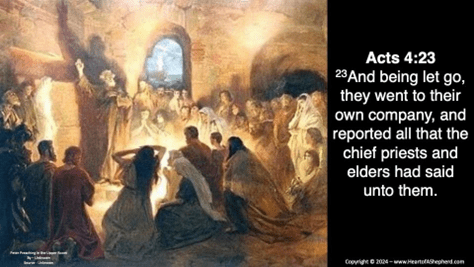
Acts 4:23 As soon as they were freed, Peter and John found the other disciples and told them what the Council had said.

24 Then all the believers united in this prayer:

“O Lord, Creator of heaven and earth and of the sea and everything in them— 25-26 you spoke long ago by the Holy Spirit through our ancestor King David, your servant, saying, ‘Why do the heathen rage against the Lord, and the foolish nations plan their little plots against Almighty God? The kings of the earth unite to fight against him and against the anointed Son of God!’

27 “That is what is happening here in this city today! For Herod the king, and Pontius Pilate the governor, and all the Romans—as well as the people of Israel—are united against Jesus, your anointed Son, your holy servant. 28 They won’t stop at anything that you in your wise power will let them do. 29 And now, O Lord, hear their threats, and grant to your servants great boldness in their preaching, 30 and send your healing power, and may miracles and wonders be done by the name of your holy servant Jesus.”

31 After this prayer, the building where they were meeting shook, and they were all filled with the Holy Spirit and boldly preached God’s message.

The new believers might have been shaking in their sandals. Peter and John have just been released after having been interrogated by Jewish religious authorities. All attempts at intimidation have failed, and the two men have returned to report to their friends. But instead of responding with fear, the group immediately breaks into shouts of praise. And these people are even begging for more holy boldness. 29 And now, O Lord, hear their threats, and grant to your servants great boldness in their preaching, 30 and send your healing power, and may miracles and wonders be done by the name of your holy servant Jesus.”

While this reaction might seem weird, remember that Jesus has already warned the disciples that they will face persecution and that they will even be cast out of the synagogues. Once more, Jesus’ prophecies are being fulfilled. But there is more. As the believers are praising and glorifying God, the Holy Spirit shakes the building, filling all who are there, and empowering them to speak even more boldly.

There’s an interesting thing about courage-the more courageously you stand, generally, the more you are inspired to continue to act courageously. Consider the situation of these believers. Religious authorities have no shortage of informers willing to give lists of names for a small fee. Many of the believers are poor or middle class, lacking any political clout. All these people have families who might suffer as a consequence of their becoming targets.; they have every reason in the world to remain silent and even to hide. And yet, the Holy Spirit emboldens these people so that they are all willing to go out to spread the Gospel, rendering themselves even more visible and more vulnerable.

In 2011 we took part in a Community Health Evangelism training program in Kansas City. Three of the other participants were Korean Christians who were seeking training in preparation for moving across the border into North Korea to witness. These men knew the risks were horrific, for only a few months previously, one North Korean believer had been run over by a bull dozer in the town square while his family was forced to watch. His crime? He showed a Christian video in the privacy of his own home.

There’s a song by Ray Bolz, “I Pledge Allegiance to the Lamb,” that testifies of the sacrifices made by Christians through the centuries. We live and work in West Africa, where parts of Burkina Faso and Northern Nigeria have been decimated by Islamic terrorists attacking Christians. Innocent church goers have been slaughtered as they have gathered for worship. Now we are hearing of increased persecution of Chinese and Russian Christians. Ukraine, which is largely Christian, remains under vicious attack by the Russians. For many people gathering to worship might cost them everything, but they still come to worship and go out to tell others about Jesus. Only the Holy Spirit can give this kind of boldness. May God anoint us with His Holy Spirit so that we too will be bold to tell others about him.

PRAYER: Father God, thank You for loving us and caring for us. Lord, please anoint us with Your Holy Spirit and give us holy boldness to tell others about You. In the mighty and precious Name of King Jesus. Amen.  

TRIBUTE TO RUSSELL DENNIS YOUNG, MAY 14, 2026

May 14, 2026

He was a small man with a quick wit and a word of encouragement for everyone he met. He was a retired factory worker, a skilled craftsman, and a dedicated hunter and fisherman. He often wished that he had lived 150 years earlier so that he could have been a mountain man, and being outdoors was one of his passions. Cooking was another passion, and he always insisted on feeding guests, no matter when they appeared. He was a devoted father and grandfather and great-grandfather. Russ Dennis was a U.S. Navy veteran and remained proud of his service for his entire life. But above all else, Russell Dennis Young loved Jesus Christ and wanted everyone around him to learn about Jesus.

Although Russ Dennis was raised in the Catholic Church, he committed his life to Christ and received the baptism of the Holy Spirit sometime in the 1970’s. By the time I entered the Young family in 1982, Russ was a fervent Jesus believer who would witness to anyone, anytime, anywhere. One of his favorite means of witnessing was to take friends fishing in Lake Ontario. After all, as Russ once said, if his fishing companion didn’t want to hear about Jesus, what was he going to do? Swim two miles back to shore? (In addition to his commitment to Jesus, Russ also had a wicked sense of humor.)

Coming from a family with abundant musical talent, Russ played drums. He also learned to play the trumpet so that he could blow “Taps” at funerals for veterans. One of my husband’s and my fond memories is of Russ Dennis playing “Taps” for my husband’s brother Tink’s funeral in 2021. We can only hope and pray that someone will honor Russ in the same manner.

The last few years, Russ faced all kinds of health challenges, including multiple hospital admissions and kidney failure requiring dialysis. But whenever we would call Russ, he remained upbeat and enthusiastic, praying for us each time we called. We last spoke to Russ a few days before he died, learning that he had entered hospice care.

When we tried calling Russ’s family on May 13th and got no answer, we guessed that Russ might be in his final hours on earth. This morning we learned of Russ’s death through a Facebook post from his son Scotty.

When thinking about Russell Dennis Young and his life, the passage that most comes to mind is one from John Bunyan’s seminal work Pilgrim’s Progress. Bunyan is describing the death of Mr. Valiant-for-Truth. The Scottish author John Buchan quoted it in his book Mr. Standfast:

Then said he, “I am going to my Father’s; and though with great difficulty I am got hither, yet now I do not repent me of all the trouble I have been at to arrive where I am. My sword I give to him that shall succeed me in my pilgrimage, and my courage and skill to him that can get it. My marks and scars I carry with me, to be a witness for me that I have fought His battles who now will be my rewarder.

So he passed over, and all the trumpets sounded for him on the other side.

On May 13, 2026, the trumpets sounded for Russell Dennis Young. For now, those of us left behind must remember, grieve, and treasure our memories as we are grieving. But we know that Jesus has told us that He is the Resurrection and the Life, the Way, the Truth, and the Life. Now Russell Dennis Young is forever with the Lord. And one day, we too will join him.

PRAYER: Father God, thank You for loving us and caring for us. Lord, we praise You for the life of Russell Dennis Young, who has joined You at the Throne. Help us to be as passionate for You and to demonstrate Your love and compassion as he has. In the mighty and precious Name of King Jesus. Amen.
1 When the trumpet of the Lord shall sound,
and time shall be no more,
and the morning breaks, eternal, bright and fair;
When the saved of earth shall gather
over on the other shore,
and the roll is called up yonder,
I’ll be there.

Refrain:
When the roll is called up yonder,
When the roll is called up yonder, I’ll be there.

2 On that bright and cloudless morning
when the dead in Christ shall rise,
and the glory of His resurrection share;
When His chosen ones shall gather
to their home beyond the skies,
And the roll is called up yonder,
I’ll be there. [Refrain]

3 Let us labor for the Master
from the dawn till setting sun;
let us talk of all His wondrous love and care.
Then when all of life is over,
and our work on earth is done,
and the roll is called up yonder,
I’ll be there. [Refrain]

IN HONOR OF AMOS BIYIMBA APRIL 19, 2026

April 20, 2026

He first came to the attention of the missionaries when he rode in on a cow being led by his brother, Bilitiib, one of the early Konkomba Christians. His legs were so riddled with yaws that he couldn’t walk well. The missionaries gave him penicillin, healing the yaws, and then trained him as a cook using their wood stove. From that point onward, he became a member of the AG Clinic staff, eventually completing his career by working as a watchman at the mission bungalow where he had once cooked.

By the time we met Amos Biyimba, 33 years ago, he had become the watchman at the mission bungalow in Saboba where we were living. Amos was a highly intelligent man with a sharp sense of humor. Years earlier, when one overweight missionary nurse was working at the clinic, Amos’ nickname for her was “Usakpen,” which means “she is large.” With no electricity, we spent many evenings sitting with Amos, chatting,

Amos taught his wife to bake bread, and she did so for many years. During the Northern Ethnic Conflict of 1994 when flour was scarce in Saboba, we once brought a large bag of flour to Amos’ place. With our help, Amos’ wife put the bag of flour on her head and carried it into the compound.

Once Amos was physically able, he began farming in addition to his work at the clinic. Even when Amos was elderly, he would tie a cutlass to the back of his bicycle and slowly ride out to work the land. After Amos retired from farming, he still rode his bicycle around Saboba until the last year or so.

When did Amos become a Christian? We never asked and now it’s too late to ask. But by the time we knew Amos, he was a vibrant Christian. If Amos wasn’t in church, it was because he was sick; otherwise, he would always be there. Amos and his wife had several children as well as extended family who were treated like biological children. Nobody was ever turned away from that household. Eventually, Amos lost two of his sons at different times, and his response echoed that of Job, “The Lord gives and the Lord takes away. Blessed be the name of the Lord.”

Although Amos and his wife had a fairly nice traditional compound by local standards, in the last few years, his children built him a lovely house where his older brother’s compound had once stood. We visited Amos regularly, bringing him Lipton tea bags and other small treats. We last visited Amos about a week ago, and it was obvious that our friend was turning his face away from earth and looking toward heaven.

Yesterday morning, Jesus decided that it was time for Amos to join him. We don’t know details, but we are sure that Jesus reached out his hand and that Amos took Jesus’ hand. We like to think that Jesus and Amos danced kinachung all the way into heaven. Now Amos has been reunited with friends and loved ones, with the missionaries who were his friends, and with all the company of heaven.

We cannot grieve, for our friend has been released from a failing body into a glorious new one. 1 Corinthains 15:51-58 tells us: 51 But I am telling you this strange and wonderful secret: we shall not all die, but we shall all be given new bodies! 52 It will all happen in a moment, in the twinkling of an eye, when the last trumpet is blown. For there will be a trumpet blast from the sky, and all the Christians who have died will suddenly become alive, with new bodies that will never, never die; and then we who are still alive shall suddenly have new bodies too. 53 For our earthly bodies, the ones we have now that can die, must be transformed into heavenly bodies that cannot perish but will live forever.

54 When this happens, then at last this Scripture will come true—“Death is swallowed up in victory.” 55-56 O death, where then your victory? Where then your sting? For sin—the sting that causes death—will all be gone; and the law, which reveals our sins, will no longer be our judge. 57 How we thank God for all of this! It is he who makes us victorious through Jesus Christ our Lord!

58 So, my dear brothers, since future victory is sure, be strong and steady, always abounding in the Lord’s work, for you know that nothing you do for the Lord is ever wasted as it would be if there were no resurrection.

1 When the trumpet of the Lord shall sound,
and time shall be no more,
and the morning breaks, eternal, bright and fair;
When the saved of earth shall gather
over on the other shore,
and the roll is called up yonder,
I’ll be there.

Refrain:
When the roll is called up yonder,
When the roll is called up yonder, I’ll be there.

2 On that bright and cloudless morning
when the dead in Christ shall rise,
and the glory of His resurrection share;
When His chosen ones shall gather
to their home beyond the skies,
And the roll is called up yonder,
I’ll be there. [Refrain]

3 Let us labor for the Master
from the dawn till setting sun;
let us talk of all His wondrous love and care.
Then when all of life is over,
and our work on earth is done,
and the roll is called up yonder,
I’ll be there. [Refrain]

PRAYER: Father God, thank You for loving us and caring for us. Lord, we thank You and praise You for the life of our brother Amos Biyimba, for his bright and consistent witness, and for his homecoming. Lord, help us to follow his example of steadfast faith, even in the face of adversity. In the mighty and precious Name of King Jesus. Amen.
MARCH 27, 2026-GOD CARES FOR ISRAEL #8 HOW DID THE KINGDOM OF ISRAEL FALL APART?

March 27, 2026

Deuteronomy 29:9-29 “Therefore, obey the terms of this covenant so that you will prosper in everything you do. All of you—tribal leaders, elders, officers, all the men of Israel—are standing today in the presence of the Lord your God. Your little ones and your wives are with you, as well as the foreigners living among you who chop your wood and carry your water. You are standing here today to enter into the covenant of the Lord your God. The Lord is making this covenant, including the curses. By entering into the covenant today, he will establish you as his people and confirm that he is your God, just as he promised you and as he swore to your ancestors Abraham, Isaac, and Jacob.

“But you are not the only ones with whom I am making this covenant with its curses. I am making this covenant both with you who stand here today in the presence of the Lord our God, and also with the future generations who are not standing here today.

“You remember how we lived in the land of Egypt and how we traveled through the lands of enemy nations as we left. You have seen their detestable practices and their idols made of wood, stone, silver, and gold. I am making this covenant with you so that no one among you—no man, woman, clan, or tribe—will turn away from the Lord our God to worship these gods of other nations, and so that no root among you bears bitter and poisonous fruit.

“Those who hear the warnings of this curse should not congratulate themselves, thinking, ‘I am safe, even though I am following the desires of my own stubborn heart.’ This would lead to utter ruin! The Lord will never pardon such people. Instead his anger and jealousy will burn against them. All the curses written in this book will come down on them, and the Lord will erase their names from under heaven. The Lord will separate them from all the tribes of Israel, to pour out on them all the curses of the covenant recorded in this Book of Instruction.”

“Then the generations to come, both your own descendants and the foreigners who come from distant lands, will see the devastation of the land and the diseases the Lord inflicts on it. They will exclaim, ‘The whole land is devastated by sulfur and salt. It is a wasteland with nothing planted and nothing growing, not even a blade of grass. It is like the cities of Sodom and Gomorrah, Admah and Zeboiim, which the Lord destroyed in his intense anger.’

“And all the surrounding nations will ask, ‘Why has the Lord done this to this land? Why was he so angry?’

“And the answer will be, ‘This happened because the people of the land abandoned the covenant that the Lord, the God of their ancestors, made with them when he brought them out of the land of Egypt. Instead, they turned away to serve and worship gods they had not known before, gods that were not from the Lord. That is why the Lord’s anger has burned against this land, bringing down on it every curse recorded in this book. In great anger and fury the Lord uprooted his people from their land and banished them to another land, where they still live today!’

“The Lord our God has secrets known to no one. We are not accountable for them, but we and our children are accountable forever for all that he has revealed to us, so that we may obey all the terms of these instructions.”

The Israelites are camped on the east side of the Jordan River. Moses knows that God will not allow him to cross the Jordan into the Promised Land. When you read the Book of Deuteronomy, you realize that God uses Moses to repeatedly issue stern warnings in hopes that the Israelites will actually listen this time, although even as Moses is speaking, he doubts that his words will accomplish anything. Moses has been leading these people for forty years and he has no illusions about them.

Much of the Old Testament documents the disastrous moral and spiritual slide of the Israelites into oblivion. After repeated revivals under several judges and under King David, King Solomon promotes whole-scale idolatry even as he is erecting the most magnificent temple ever built. When King Solomon’s hapless son Rehoboam tries to bully the Israelites, ten tribes leave forever, leaving only the tribes of Judah and Benjamin to form the Southern Kingdom. Jeroboam, the leader of the Northern Kingdom, forms his own idolatrous religion and allows gross paganism. Despite the best efforts of prophets to warn members of both kingdoms, eventually, God brings the punishment that He has already promised. The Assyrians conquer the Northern Kingdom in 722 BCE, slaughtering or carrying off most of the population of the Northern Kingdom and importing people from other areas to settle Samaria. Then in 597 BCE and 586 BCE, the Babylonians carry off citizens of Judah, destroying Jerusalem in the process. At that point, the nation of Israel appears to be completely dead; however, God is not through with Israel, not at all.

Isaiah 44:26-28 But I carry out the predictions of my prophets! By them I say to Jerusalem, people will live here again,’ and to the towns of Judah, ‘You will be rebuilt; I will restore all your ruins!’
When I speak to the rivers and say, ‘Dry up!’ they will be dry. When I say of Cyrus, ‘He is my shepherd,’ he will certainly do as I say. He will command, ‘Rebuild Jerusalem’; he will say, ‘Restore the Temple.’”

Isaiah 45:1-4 This is what the Lord says to Cyrus, his anointed one, whose right hand he will empower. Before him, mighty kings will be paralyzed with fear. Their fortress gates will be opened, never to shut again. This is what the Lord says: “I will go before you, Cyrus, and level the mountains. I will smash down gates of bronze and cut through bars of iron. And I will give you treasures hidden in the darkness—secret riches. I will do this so you may know that I am the Lord, the God of Israel, the one who calls you by name. “And why have I called you for this work? Why did I call you by name when you did not know me? It is for the sake of Jacob my servant, Israel my chosen one.

Even as things are falling apart in both Israel and Judah, God is already beginning to speak about a Persian king named Cyrus who will spearhead the rebuilding of the temple and the city of Jerusalem. Is Cyrus a secret believer? Only in heaven will we know the answer to that question; however, Cyrus evidently knows the Voice of God when he hears it.

2 Chronicles 36:21-23 So the message of the Lord spoken through Jeremiah was fulfilled. The land finally enjoyed its Sabbath rest, lying desolate until the seventy years were fulfilled, just as the prophet had said. In the first year of King Cyrus of Persia, the Lord fulfilled the prophecy he had given through Jeremiah. He stirred the heart of Cyrus to put this proclamation in writing and to send it throughout his kingdom: “This is what King Cyrus of Persia says: “The Lord, the God of heaven, has given me all the kingdoms of the earth. He has appointed me to build him a Temple at Jerusalem, which is in Judah. Any of you who are his people may go there for this task. And may the Lord your God be with you!”

Cyrus is also quoted in Ezra 1, and there’s an itemized list of the items from Solomon’s temple that Cyrus is returning to grace the new temple in Jerusalem. Why must citizens of Judah live in Babylon 70 years before returning to Jerusalem? God wants them to experience what it’s like to live in a fully pagan society so that they will appreciate a society built on the worship of the One True Living God. Groups of Jews do return from Babylon under the leadership of Ezra and Nehemiah, and the temple and the walls and gates of Jerusalem are rebuilt.

No matter what people do, God remains faithful and true, just in all His ways. God fulfills His promises, even when people disappoint Him. But God has no patience with a sense of entitlement. The people of both kingdoms wound up in exile because they were sure God would give them a free pass because they were His people. But when people fail to behave as God’s people, God allows them to suffer the consequences of their own actions so that they will repent.

Today, God is calling each one of us to come to Him so that He can transform our lives and our hearts. We are free to choose; however, we are not free from the consequences. When we delay or postpone following God, we are playing with fire, for who knows how long we will live? Today, let us run to God, confess our sins, and accept God’s Son Jesus as Savior and Lord.

PRAYER: Father God, thank You for loving us and caring for us. Lord, let all who read these words turn to You completely. In the mighty and precious Name of King Jesus. Amen.
c

Deuteronomy 29:9-29 “Therefore, obey the terms of this covenant so that you will prosper in everything you do. All of you—tribal leaders, elders, officers, all the men of Israel—are standing today in the presence of the Lord your God. Your little ones and your wives are with you, as well as the foreigners living among you who chop your wood and carry your water. You are standing here today to enter into the covenant of the Lord your God. The Lord is making this covenant, including the curses. By entering into the covenant today, he will establish you as his people and confirm that he is your God, just as he promised you and as he swore to your ancestors Abraham, Isaac, and Jacob.

“But you are not the only ones with whom I am making this covenant with its curses. I am making this covenant both with you who stand here today in the presence of the Lord our God, and also with the future generations who are not standing here today.

“You remember how we lived in the land of Egypt and how we traveled through the lands of enemy nations as we left. You have seen their detestable practices and their idols made of wood, stone, silver, and gold. I am making this covenant with you so that no one among you—no man, woman, clan, or tribe—will turn away from the Lord our God to worship these gods of other nations, and so that no root among you bears bitter and poisonous fruit.

“Those who hear the warnings of this curse should not congratulate themselves, thinking, ‘I am safe, even though I am following the desires of my own stubborn heart.’ This would lead to utter ruin! The Lord will never pardon such people. Instead his anger and jealousy will burn against them. All the curses written in this book will come down on them, and the Lord will erase their names from under heaven. The Lord will separate them from all the tribes of Israel, to pour out on them all the curses of the covenant recorded in this Book of Instruction.”

“Then the generations to come, both your own descendants and the foreigners who come from distant lands, will see the devastation of the land and the diseases the Lord inflicts on it. They will exclaim, ‘The whole land is devastated by sulfur and salt. It is a wasteland with nothing planted and nothing growing, not even a blade of grass. It is like the cities of Sodom and Gomorrah, Admah and Zeboiim, which the Lord destroyed in his intense anger.’

“And all the surrounding nations will ask, ‘Why has the Lord done this to this land? Why was he so angry?’

“And the answer will be, ‘This happened because the people of the land abandoned the covenant that the Lord, the God of their ancestors, made with them when he brought them out of the land of Egypt. Instead, they turned away to serve and worship gods they had not known before, gods that were not from the Lord. That is why the Lord’s anger has burned against this land, bringing down on it every curse recorded in this book. In great anger and fury the Lord uprooted his people from their land and banished them to another land, where they still live today!’

“The Lord our God has secrets known to no one. We are not accountable for them, but we and our children are accountable forever for all that he has revealed to us, so that we may obey all the terms of these instructions.”

The Israelites are camped on the east side of the Jordan River. Moses knows that God will not allow him to cross the Jordan into the Promised Land. When you read the Book of Deuteronomy, you realize that God uses Moses to repeatedly issue stern warnings in hopes that the Israelites will actually listen this time, although even as Moses is speaking, he doubts that his words will accomplish anything. Moses has been leading these people for forty years and he has no illusions about them.

Much of the Old Testament documents the disastrous moral and spiritual slide of the Israelites into oblivion. After repeated revivals under several judges and under King David, King Solomon promotes whole-scale idolatry even as he is erecting the most magnificent temple ever built. When King Solomon’s hapless son Rehoboam tries to bully the Israelites, ten tribes leave forever, leaving only the tribes of Judah and Benjamin to form the Southern Kingdom. Jeroboam, the leader of the Northern Kingdom, forms his own idolatrous religion and allows gross paganism. Despite the best efforts of prophets to warn members of both kingdoms, eventually, God brings the punishment that He has already promised. The Assyrians conquer the Northern Kingdom in 722 BCE, slaughtering or carrying off most of the population of the Northern Kingdom and importing people from other areas to settle Samaria. Then in 597 BCE and 586 BCE, the Babylonians carry off citizens of Judah, destroying Jerusalem in the process. At that point, the nation of Israel appears to be completely dead; however, God is not through with Israel, not at all.

Isaiah 44:26-28 But I carry out the predictions of my prophets! By them I say to Jerusalem, people will live here again,’ and to the towns of Judah, ‘You will be rebuilt; I will restore all your ruins!’
When I speak to the rivers and say, ‘Dry up!’ they will be dry. When I say of Cyrus, ‘He is my shepherd,’ he will certainly do as I say. He will command, ‘Rebuild Jerusalem’; he will say, ‘Restore the Temple.’”

Isaiah 45:1-4 This is what the Lord says to Cyrus, his anointed one, whose right hand he will empower. Before him, mighty kings will be paralyzed with fear. Their fortress gates will be opened, never to shut again. This is what the Lord says: “I will go before you, Cyrus, and level the mountains. I will smash down gates of bronze and cut through bars of iron. And I will give you treasures hidden in the darkness—secret riches. I will do this so you may know that I am the Lord, the God of Israel, the one who calls you by name. “And why have I called you for this work? Why did I call you by name when you did not know me? It is for the sake of Jacob my servant, Israel my chosen one.

Even as things are falling apart in both Israel and Judah, God is already beginning to speak about a Persian king named Cyrus who will spearhead the rebuilding of the temple and the city of Jerusalem. Is Cyrus a secret believer? Only in heaven will we know the answer to that question; however, Cyrus evidently knows the Voice of God when he hears it.

2 Chronicles 36:21-23 So the message of the Lord spoken through Jeremiah was fulfilled. The land finally enjoyed its Sabbath rest, lying desolate until the seventy years were fulfilled, just as the prophet had said. In the first year of King Cyrus of Persia, the Lord fulfilled the prophecy he had given through Jeremiah. He stirred the heart of Cyrus to put this proclamation in writing and to send it throughout his kingdom: “This is what King Cyrus of Persia says: “The Lord, the God of heaven, has given me all the kingdoms of the earth. He has appointed me to build him a Temple at Jerusalem, which is in Judah. Any of you who are his people may go there for this task. And may the Lord your God be with you!”

Cyrus is also quoted in Ezra 1, and there’s an itemized list of the items from Solomon’s temple that Cyrus is returning to grace the new temple in Jerusalem. Why must citizens of Judah live in Babylon 70 years before returning to Jerusalem? God wants them to experience what it’s like to live in a fully pagan society so that they will appreciate a society built on the worship of the One True Living God. Groups of Jews do return from Babylon under the leadership of Ezra and Nehemiah, and the temple and the walls and gates of Jerusalem are rebuilt.

No matter what people do, God remains faithful and true, just in all His ways. God fulfills His promises, even when people disappoint Him. But God has no patience with a sense of entitlement. The people of both kingdoms wound up in exile because they were sure God would give them a free pass because they were His people. But when people fail to behave as God’s people, God allows them to suffer the consequences of their own actions so that they will repent.

Today, God is calling each one of us to come to Him so that He can transform our lives and our hearts. We are free to choose; however, we are not free from the consequences. When we delay or postpone following God, we are playing with fire, for who knows how long we will live? Today, let us run to God, confess our sins, and accept God’s Son Jesus as Savior and Lord.

PRAYER: Father God, thank You for loving us and caring for us. Lord, let all who read these words turn to You completely. In the mighty and precious Name of King Jesus. Amen.

IN MEMORIAM: BOBBY WALTERS

March 12, 2026

1 Corinthians 15:51-58

But let me reveal to you a wonderful secret. We will not all die, but we will all be transformed! It will happen in a moment, in the blink of an eye, when the last trumpet is blown. For when the trumpet sounds, those who have died will be raised to live forever. And we who are living will also be transformed. For our dying bodies must be transformed into bodies that will never die; our mortal bodies must be transformed into immortal bodies.

Then, when our dying bodies have been transformed into bodies that will never die, this Scripture will be fulfilled:

“Death is swallowed up in victory. O death, where is your victory? O death, where is your sting?”

For sin is the sting that results in death, and the law gives sin its power. But thank God! He gives us victory over sin and death through our Lord Jesus Christ.

So, my dear brothers and sisters, be strong and immovable. Always work enthusiastically for the Lord, for you know that nothing you do for the Lord is ever useless.

Sometimes, the men who are the most effective are also the quietest ones in the room. Our friend Bobby was one of the quiet ones, not because he had nothing to say but because he was thoughtful, considering every word before opening his mouth.

Bobby was a true gentleman in every sense of the word. Highly intelligent with a sharp sense of humor, Bobby was one of those men who wait until everyone else had said everything they were going to say and would then make a short telling comment that would be far more effective than all the verbiage that others had already produced.

Bobby was a man of great faith, and he needed that faith. During the more than forty years we have been friends, we have seen Bobby and his wife Cindy face all kinds of challenges, including health problems and family problems of various kinds. When Bobby’s grandson Christopher died tragically in a car accident, Bobby and Cindy found themselves struggling with their own grief as they comforted others. Wherever Bobby and Cindy attended church, Bobby could always be found helping, quietly serving.

Bobby was a fond grandfather whose grandchildren are now posting tributes indicating their love for him. Never underestimate the influence of godly, loving grandparents, for they can be mighty healers when life wounds.

Live long enough and your friends and loved ones begin leaving you to take their places in heaven. While it is true that Christians do not grieve as those who have no hope, it is equally true that we fear the pain of separation and the loneliness when a life partner is no longer there. As we remember Bobby, we also pray for his family and especially for Cindy, his wife. And we beg God to fill family homes with His Holy Spirit and send angels to watch over family members.

PRAYER: Father God, thank You for loving us and caring for us. Lord, we praise You for the life of Bobby Walters even as we mourn his passing. You are infinitely kind and infinitely wise, and You have all our lives in Your hands. Lord, help us to continue to trust You. In the mighty and precious Name of King Jesus. Amen.

PRECIOUS LORD, TAKE MY HAND MARCH 12, 2026

March 12, 2026

We just lost a wonderful friend from our days at Faith United Methodist in Southaven, MS, Bobby Walters. While posting condolence messages, I saw another post from a friend, urging church worship leaders to consider incorporating older worship songs into services. The post continued that those songs might minister to people for they might be the songs sung at the funeral of a close relative or the songs that were sung the night a man fell to his knees and accepted Jesus. I agree whole-heartedly and also urge worship leaders truly passionate about their calling to study hymns and praise songs far older than the ones referred to in that post.

Forty years ago, we were part of a wonderful Spirit-filled congregation at Faith United Methodist in Southaven, MS. The Holy Spirit moved in remarkable ways, and the prayer times at the end of church were not to be missed, for anointed ministry might continue for hours. It’s a sad mistake to cram a prayer time into the middle of a service, for inevitably, the pastor will be tempted to keep things short. Unfortunately, sometimes Holy Spirit ministry can take a long time, and ten minutes in the midst of a service is like demanding a cow only eat two blades of grass. The agreement at Faith was that whoever was the last one out of the building should lock up.

In addition to Sunday morning services, Faith also had Sunday night services, and the ministry and teaching were wonderful. Sunday night was a time when people could share special music, and it was quite common for several people to do solos. I had been asked to sing at one Sunday night service, and I was busily checking out the accompaniment tape options at the local Christian bookstore. (Notice: tapes, not CDs or MP3 downloads; this is the 1980’s.) But when I prayed, the only title God would give me was the Thomas A. Dorsey song “Precious Lord, Take My Hand.” The song is simple and can be sung with or without accompaniment. I argued with the Lord because I wanted to show off, demonstrating my vocal abilities on something more challenging, but He wasn’t budging. So that Sunday night in 1986, when I got up to sing, I introduced the song by explaining that God obviously meant this song for someone in the congregation and that they would know it was for them. I sang; the congregation applauded enthusiastically; and the service eventually ended. That was when the late Nancy Jolley, one of my friends, rushed up to me. Nancy was practically hopping up and down and vibrating with excitement.


“That song was for me!” Nancy exclaimed. Then Nancy explained that she had just returned from her father’s funeral in Illinois and was still grieving. The phrase “Precious Lord, Take My Hand” was the inscription chosen by the family for her father’s tombstone. Nancy went on to say that she had nearly stayed home that Sunday night but felt compelled to come to church. Now Nancy was in tears as she realized that God was already preparing that song just for her.

Since that night in Southaven, MS, I have sung that song several times at funerals, including the funerals of my father-in law and both brothers-in law. I never sing it without being moved.

Thomas Andrew Dorsey is considered the Father of Gospel Music. Dorsey wrote this song upon learning that his wife had just died in childbirth while he was out of town at a meeting. With nowhere else to turn, Dorsey began praying, “Precious Lord, take my hand,” and God gave him the rest of the song. For a great introduction to Dorsey as well as other Gospel musicians, check out the video “Say Amen, Somebody!”

The song lyrics are as follows:

Precious Lord, take my hand,
Lead me on, let me stand,
I am tired, I am weak, I am worn;
Through the storm, through the night,
Lead me on to the light:

Refrain

Take my hand, precious Lord,
Lead me home.

When my way grows drear,
Precious Lord, linger near,
When my life is almost gone,
Hear my cry, hear my call,
Hold my hand lest I fall:

Refrain

When the darkness appears
And the night draws near,
And the day is past and gone,
At the river, I stand,
Guide my feet, hold my hand:

Refrain

For a wonderful performance of this song, view Mahalia Jackson singing it at https://www.youtube.com/watch?v=as1rsZenwNc

So worship leaders, remember that while you might be thrilled by the latest and greatest Christian hits, ministry means you get yourself out of the way and let God work.

And Walters family-if you see this post, please let this song minister to you.

PRAYER: Father God, thank You for loving us and caring for us. Lord, as we reach out, please take our hands and lead us to our heavenly homes that You have prepared for us. In the mighty and precious Name of King Jesus. Amen.

DECEMBER 27, 2025 WE ARE ALL FERAL CATS PART 2

December 27, 2025

This morning, I can hear our new kitten crying pitifully as he sits in his litter box in his cage. Gabriel, our kitten, has been drinking the water and eating the food we have given him, but he longs for his mother. We long to comfort Gabriel, to nestle him in our arms, but he still fears us. Were we to try to cuddle him right now, one of us might wind up in the Emergency Room with stitches!

One of the many names of Jesus is “Immanuel” or “Emmanuel,” meaning “God with us.” But why should God order that his Son be called by such a name? God wants all people to know that He is not sitting someplace far away but that He is as close as their heartbeats. But there’s a problem: Just as we struggle to communicate with little Gabriel the kitten, God keeps sending His Word by various means to communicate with people, many of whom aren’t listening or are deafened by the noise of the world around them.

All we want to do is to comfort Gabriel, to make him feel secure, and to demonstrate the depth of our love for him; yet, we struggle to reassure him. If one of us were able to speak “cat” or even to become a cat with the knowledge we have, it would be much easier to comfort Gabriel. We celebrate Christmas because at Christmas, God accomplished what we cannot: He sent Jesus to be born as a baby to a poor family from an obscure village so that He could demonstrate His love and concern through Jesus. Jesus was also born so that he could love, minister, and die as a blood sacrifice for the sins of the whole world, conquering death, hell, and the grave.

Each time little Gabriel mews pitifully, our hearts break, and we beg God again to help us find some way to comfort him. Now if God is a loving Father, with a great heart of love deeper than anything we can possibly imagine, won’t He have compassion on His suffering children just as we have compassion for our kitten? When we cry, God hears us, even though help doesn’t always come in the form we desire. Again, Isaiah 55:9 reminds us that God’s ways are higher than ours.

On the night before Jesus was crucified, he was struggling to impart everything he possibly could to his disciples while he was still with them. John recorded those conversations. In John 14:7-11, Jesus was trying to reassure his friends.

7 “If you had known Me, you would have known My Father also; and from now on you know Him and have seen Him.”

8 Philip said to Him, “Lord, show us the Father, and it is sufficient for us.”

9 Jesus said to him, “Have I been with you so long, and yet you have not known Me, Philip? He who has seen Me has seen the Father; so how can you say, ‘Show us the Father’? 10 Do you not believe that I am in the Father, and the Father in Me? The words that I speak to you I do not speak on My own authority; but the Father who dwells in Me does the works. 11 Believe Me that I am in the Father and the Father in Me, or else believe Me for the sake of the works themselves.”

If Jesus had been a cat speaking to other cats, he would have told them that he was sent by the Creator of all cats to demonstrate that Creator’s love.

Do we think we occupy the place of God with our kitten? Far from it! We are flawed human beings whose race mostly lost the ability to communicate with the animals when sin entered the world. Throughout the world, there are those individuals blessed in their abilities to communicate with animals. But we firmly believe that God can comfort our kitten and we are begging Him to do so. We are begging for Immanuel to comfort little Gabriel, to be “God with Gabriel.”

Please notice something: we should always worship the Creator, not the creature. Someone grieving the loss of their sixteen-year-old cat mentioned on Facebook that they intended to create an altar to the cat. As a shrine to remember the cat, that might be all right; however, to worship a dead cat would be quite wrong, no matter how precious the memories might be.

So once more, we find ourselves resembling feral cats. We want to trust God, but we have bitter memories, and we aren’t really sure if this “Immanuel” business, this “God with us” stuff is real or not. But the good thing about Jesus is that his followers recorded Jesus’ teachings in four different Gospels, each with its own approach, giving us the information we need about Jesus and his Heavenly Father.

If you are new to the Bible, begin by reading the Gospel of John in a format that speaks to you. Personally, I like the New King James version because it preserves the language of the King James without archaic terms. But other versions such as The Message or The Living Bible are equally good. The important thing is to learn about Jesus, Immanuel, God with us. Let’s pray.

PRAYER: Father God, thank You for loving us and caring for us. Lord, we confess that we are all feral cats. We have been hurt and we don’t trust anybody. Lord, please speak to the hearts of all those reading these words, make Yourself so real to them that they KNOW You are Immanuel, God with them. In the mighty and precious Name of King Jesus. Amen.