Archive for July, 2026

JULY 22, 2026 PEACE-HOW DO WE GET IT AND HOW CAN WE KEEP IT? #6 GOD CAN HELP US TO LEAVE PEACE BEHIND US BEFORE WE DIE, BUT AT A PRICE-FAITHFULNESS

July 22, 2026

Genesis 49:1 Then Jacob called together all his sons and said, “Gather around me, and I will tell you what will happen to each of you in the days to come.

2 “Come and listen, you sons of Jacob; listen to Israel, your father.

3 “Reuben, you are my firstborn, my strength, the child of my vigorous youth. You are first in rank and first in power. 4 But you are as unruly as a flood, and you will be first no longer. For you went to bed with my wife; you defiled my marriage couch.

Woof! Well, if you were preparing yourself for lovely platitudes, forget it! Jacob is now speaking as a prophet of the One True Living God, and he cannot lie, only tell truths about his sons. Genesis 35:22 tells how Reuben forced himself on Bilhah, one of his father’s concubines, the mother of Dan and Naphtali, his half-brothers. Why did Reuben do such a despicable thing? Perhaps Reuben felt that he could get away with it because he was the first-born and the son of Jacob’s first wife, Leah. Perhaps Reuben believed that because Bilhah was a maid servant before she became a concubine, she was of lesser status and therefore more vulnerable. At any rate, Reuben effectively deprived himself of the blessings he would have received as the eldest son the day he raped Bilhah.

5 “Simeon and Levi are two of a kind; their weapons are instruments of violence. 6 May I never join in their meetings; may I never be a party to their plans. For in their anger, they murdered men, and they crippled oxen just for sport. 7 A curse on their anger, for it is fierce; a curse on their wrath, for it is cruel. I will scatter them among the descendants of Jacob; I will disperse them throughout Israel.

The story is told in Genesis 34. Jacob had one daughter, Dinah, who went to visit the Hivite women; however, Shechem, the son of the local ruler Hamor, raped Dinah and then proposed marriage. Jacob’s sons were furious, but they hatched a plot, convincing the Hivite men that if they would undergo circumcision, Dinah would marry Hamor. On the third day when all the men were sore from the circumcision, Simeon and Levi slaughtered them. It’s quite possible that there were other traditional methods of addressing this problem without resorting to such violence. By giving way to wrath, these two men endangered their families. Jacob was angry and frightened, for this heinous act could easily result in his entire family being destroyed.

8 “Judah, your brothers will praise you. You will grasp your enemies by the neck. All your relatives will bow before you. 9 Judah, my son, is a young lion that has finished eating its prey. Like a lion he crouches and lies down; like a lioness—who dares to rouse him? 10 The scepter will not depart from Judah, nor the ruler’s staff from his descendants, until the coming of the one to whom it belongs, the one whom all nations will honor. 11 He ties his foal to a grapevine, the colt of his donkey to a choice vine. He washes his clothes in wine, his robes in the blood of grapes. 12 His eyes are darker than wine, and his teeth are whiter than milk.

Here God is giving one of the earliest prophecies about the Messiah through Jacob’s lips. Eventually, Jesus will fulfill everything Jacob is speaking.

13 “Zebulun will settle by the seashore and will be a harbor for ships; his borders will extend to Sidon. 14 “Issachar is a sturdy donkey, resting between two saddlepacks. 15 When he sees how good the countryside is and how pleasant the land, he will bend his shoulder to the load and submit himself to hard labor.

16 “Dan will govern his people, like any other tribe in Israel. 17 Dan will be a snake beside the road, a poisonous viper along the path that bites the horse’s hooves so its rider is thrown off. 18 I trust in you for salvation, O Lord!

19 “Gad will be attacked by marauding bands, but he will attack them when they retreat.

20 “Asher will dine on rich foods and produce food fit for kings.

21 “Naphtali is a doe set free that bears beautiful fawns.

22 “Joseph is the foal of a wild donkey, the foal of a wild donkey at a spring—one of the wild donkeys on the ridge. 23 Archers attacked him savagely; they shot at him and harassed him.
24 But his bow remained taut, and his arms were strengthened by the hands of the Mighty One of Jacob, by the Shepherd, the Rock of Israel. 25 May the God of your father help you; may the Almighty bless you with the blessings of the heavens above, and blessings of the watery depths below, and blessings of the breasts and womb. 26 May my fatherly blessings on you surpass the blessings of my ancestors, reaching to the heights of the eternal hills. May these blessings rest on the head of Joseph, who is a prince among his brothers.

27 “Benjamin is a ravenous wolf, devouring his enemies in the morning and dividing his plunder in the evening.”

28 These are the twelve tribes of Israel, and this is what their father said as he told his sons good-bye. He blessed each one with an appropriate message.

One of the tricky things about prophecy is the time line. When will these prophecies be fulfilled? Is Jacob speaking only about what has already happened or what is yet to take place? The short answer is “Yes.” God through Jacob is speaking about both and the years will prove the truth of these prophecies.

You might look at some of these prophecies and wonder “What’s peaceful about this stuff?” But understand something. These brothers have been competing ever since they came out of their mothers’ wombs. The tragedy of Jacob is that he failed to value the sons he had until Rachel gave birth to Joseph and Benjamin. So these men lived for decades, longing for their father’s attention and approval and failing to receive it. At least Jacob’s prophecies clarify their situations, even if some of the prophecies such as Reuben’s are less positive than others.

What about the extravagant blessing for Joseph and his sons? At this point, Joseph is the one who has saved and preserved the family. While his brothers might cherish their own resentments, nobody can doubt that without Joseph, they would have starved and died in Canaan. Joseph’s brothers are likely shrugging their shoulders and figuring that time will tell.

As we read these prophecies/blessings we should ask ourselves what we are leaving for our families and our friends. When I was a child, there were still older people in my community who had enjoyed having my great grandfather Nils Carlson as a Sunday School teacher. When I would mention that I was a descendant, these people would get a dreamy look in their eyes. “Oh, he loved us so much!” was the common theme. Children who came from difficult circumstances, homes where true poverty flourished, carried the memories of Nils’ kindness and compassion throughout their adult lives. Whether or not these men and women remembered the Bible stories Nils told, they experienced the pure love of Jesus when they were with him, and those memories sustained them.

Years ago, Steve Green created a song that should express our wishes as we age.

We’re pilgrims on the journey of the narrow road
And those who’ve gone before us line the way
Cheering on the faithful, encouraging the weary
Their lives a stirring testament to God’s sustaining grace
Surrounded by so great a cloud of witnesses
Let us run the race not only for the prize
But as those who’ve gone before us
Let us leave to those behind us
The heritage of faithfulness passed on through godly lives

[Chorus]
Oh, may all who come behind us find us faithful
May the fire of our devotion light their way
May the footprints that we leave lead them to believe
And the lives we live inspire them to obey
Oh, may all who come behind us find us faithful

[Verse 2]
After all our hopes and dreams have come and gone
And our children sift through all we’ve left behind
May the clues that they discover and the memories they uncover
Become the light that leads them to the road we each must find

[Chorus]
Oh, may all who come behind us find us faithful
May the fire of our devotion light their way
May the footprints that we leave lead them to believe
And the lives we live inspire them to obey
Oh, may all who come behind us find us faithful
May the fire of our devotion light their way
May the footprints that we leave lead them to believe
And the lives we live inspire them to obey
Oh, may all who come behind us find us faithful

[Outro]
Oh, may all who come behind us find us faithful

PRAYER: Father God, thank You for loving us and caring for us. Lord, help us to leave a legacy of holiness and godliness to all those who remain. In the mighty and precious Name of King Jesus. Amen.
JULY 21, 2026 PEACE-HOW DO WE GET IT AND HOW CAN WE KEEP IT? #5 GOD CAN GIVE US PEACE WHEN WE ARE AGING

July 21, 2026

Genesis 48:1One day not long after this, word came to Joseph, “Your father is failing rapidly.” So Joseph went to visit his father, and he took with him his two sons, Manasseh and Ephraim.

2 When Joseph arrived, Jacob was told, “Your son Joseph has come to see you.” So Jacob gathered his strength and sat up in his bed.

3 Jacob said to Joseph, “God Almighty appeared to me at Luz in the land of Canaan and blessed me. 4 He said to me, ‘I will make you fruitful, and I will multiply your descendants. I will make you a multitude of nations. And I will give this land of Canaan to your descendants after you as an everlasting possession.’

5 “Now I am claiming as my own sons these two boys of yours, Ephraim and Manasseh, who were born here in the land of Egypt before I arrived. They will be my sons, just as Reuben and Simeon are. 6 But any children born to you in the future will be your own, and they will inherit land within the territories of their brothers Ephraim and Manasseh.

7 “Long ago, as I was returning from Paddan-aram, Rachel died in the land of Canaan. We were still on the way, some distance from Ephrath (that is, Bethlehem). So with great sorrow I buried her there beside the road to Ephrath.”

8 Then Jacob looked over at the two boys. “Are these your sons?” he asked.

9 “Yes,” Joseph told him, “these are the sons God has given me here in Egypt.”

And Jacob said, “Bring them closer to me, so I can bless them.”

10 Jacob was half blind because of his age and could hardly see. So Joseph brought the boys close to him, and Jacob kissed and embraced them. 11 Then Jacob said to Joseph, “I never thought I would see your face again, but now God has let me see your children, too!”

12 Joseph moved the boys, who were at their grandfather’s knees, and he bowed with his face to the ground. 13 Then he positioned the boys in front of Jacob. With his right hand he directed Ephraim toward Jacob’s left hand, and with his left hand he put Manasseh at Jacob’s right hand. 14 But Jacob crossed his arms as he reached out to lay his hands on the boys’ heads. He put his right hand on the head of Ephraim, though he was the younger boy, and his left hand on the head of Manasseh, though he was the firstborn. 15 Then he blessed Joseph and said,

“May the God before whom my grandfather Abraham and my father, Isaac, walked—the God who has been my shepherd all my life, to this very day, 16 the Angel who has redeemed me from all harm—may he bless these boys. May they preserve my name and the names of Abraham and Isaac. And may their descendants multiply greatly throughout the earth.”

17 But Joseph was upset when he saw that his father placed his right hand on Ephraim’s head. So Joseph lifted it to move it from Ephraim’s head to Manasseh’s head. 18 “No, my father,” he said. “This one is the firstborn. Put your right hand on his head.”

19 But his father refused. “I know, my son; I know,” he replied. “Manasseh will also become a great people, but his younger brother will become even greater. And his descendants will become a multitude of nations.”20 So Jacob blessed the boys that day with this blessing: “The people of Israel will use your names when they give a blessing. They will say, ‘May God make you as prosperous as Ephraim and Manasseh.’” In this way, Jacob put Ephraim ahead of Manasseh.

21 Then Jacob said to Joseph, “Look, I am about to die, but God will be with you and will take you back to Canaan, the land of your ancestors. 22 And beyond what I have given your brothers, I am giving you an extra portion of the land that I took from the Amorites with my sword and bow.”

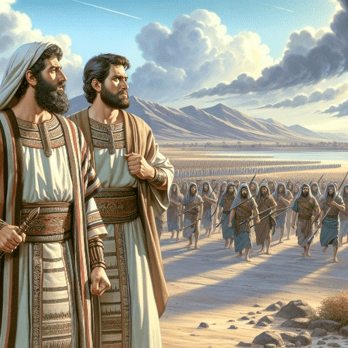
For Jacob, life has become a series of ave miracles. One day, Jacob looks at his camp, his family, and his livestock and fears that they will all starve. What has happened to all God’s promises? Surely Jacob has not imagined all his encounters with God! Then word comes from Egypt that Joseph is alive and well and calling for Jacob and all the family and their herds to come to him. When the family arrives in Egypt, Joseph arranges for them to settle in an area where their animals will have excellent grazing and where the Egyptians will leave them alone. In a few short weeks, Jacob goes from intense emotional turmoil to profound peace and contentment.

Now Jacob is blessing Joseph’s sons. With the prescience that sometimes comes to the dying, Jacob gives the greater blessing and prophecy to Ephraim, the younger son. In that moment, God is using Jacob as a prophet. Notice that when the twelve tribes of Israel are mentioned, we never hear of the tribe of Joseph but rather of the half-tribes of Ephraim and Manasseh. Tomorrow we will examine Jacob’s blessings and prophecies over his sons; however, today we are concerned with the peace God gives Jacob at the end of a long and tumultuous life.

Those of us who are aging find ourselves deeply concerned with the people and the institutions we must leave behind when we die. Questions plague us. Have we done everything we can to resolve the problems facing us? Have we handled people honestly and fairly, according to God’s Word? Have we worded our wills in such a way that our heirs will not find themselves engaged in fire fights with one another? Many of us have seen problems with estates that have fractured families, leaving debts and broken relationships.

One verse that has comforted me through the years is Isaiah 26:3. “You will keep in perfect peace all who trust in you, all whose thoughts are fixed on you!We can trust the One who has given us life and breath, who has brought us through to old age, to assist us to act as peacemakers in our own families.

One sad thing is family disagreements that explode into decades of conflict, resentment, and broken communications. Many times, we take offense unnecessarily, cutting ourselves off from those we love and only realizing our mistakes after long years of silence. If this description sounds familiar, I am begging you to resolve those hurts! Forget those offences! Pray and find ways to heal grievances. You can’t say “I’m sorry” to a grave and have it mean much.

May God who is the Lord of all the earth and the God of peace bring peace to all your conflicts so that you are able to enjoy your family members while you still have them!

PRAYER: Father God, thank You for loving us and caring for us. Lord, help us to forgive our family members, making peace with them and enjoying them while we can. In the mighty and precious Name of King Jesus. Amen.
JULY 20, 2026 PEACE-HOW DO WE GET IT AND HOW CAN WE KEEP IT? #4 GOD CAN MAKE PEACE WITH TROUBLED FAMILY MEMBERS, PART TWO THE STORY OF JOSEPH

July 20, 2026

Genesis 37:2 This is the account of Jacob and his family. When Joseph was seventeen years old, he often tended his father’s flocks. He worked for his half-brothers, the sons of his father’s wives Bilhah and Zilpah. But Joseph reported to his father some of the bad things his brothers were doing.

3 Jacob loved Joseph more than any of his other children because Joseph had been born to him in his old age. So, one day Jacob had a special gift made for Joseph—a beautiful robe. 4 But his brothers hated Joseph because their father loved him more than the rest of them. They couldn’t say a kind word to him.

5 One-night Joseph had a dream, and when he told his brothers about it, they hated him more than ever. 6 “Listen to this dream,” he said. 7 “We were out in the field, tying up bundles of grain. Suddenly my bundle stood up, and your bundles all gathered around and bowed low before mine!”

8 His brothers responded, “So you think you will be our king, do you? Do you actually think you will reign over us?” And they hated him all the more because of his dreams and the way he talked about them.

9 Soon Joseph had another dream, and again he told his brothers about it. “Listen, I have had another dream,” he said. “The sun, moon, and eleven stars bowed low before me!”

10 This time he told the dream to his father as well as to his brothers, but his father scolded him. “What kind of dream is that?” he asked. “Will your mother and I and your brothers actually come and bow to the ground before you?” 11 But while his brothers were jealous of Joseph, his father wondered what the dreams meant.

There was no doubt about it, as one of the sons of Jacob’s favorite wife Rachel, Joseph was a spoiled brat and an insufferable tattle tale. Rachel only bore two sons, Joseph and Benjamin, dying as she delivered Benjamin. Refusing to show love to his other sons, Jacob favored Joseph so much that he made Joseph a special robe dyed in all the colors of the rainbow. That robe nearly cost Joseph his life, for later his brothers would capture him, stripping that robe off, dipping it in sheep’s blood, and using it as evidence that a wild animal had killed him. Meanwhile, those resentful brothers had sold Joseph to slave traders who carried him off to Egypt where he would serve in a noble household before winding up in prison.

If the brothers were hoping that Jacob would now lavish them with the love he had given only to Joseph, they were sadly mistaken, for Jacob grieved seriously for Joseph, focusing his affections on Benjamin. Their attack on Joseph had netted them nothing.

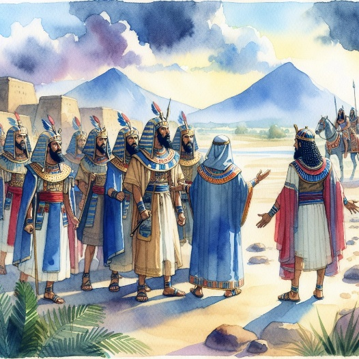
In Egypt, Joseph first prospered as the steward for Pharaoh’s captain of the guard, Potiphar; however, when Potiphar’s wife tried to force Joseph to have sex with her, Joseph ran. Scorned and embarrassed, Potiphar’s wife lied about Joseph, claiming he had tried to rape her. Joseph wound up in prison. But in prison, Joseph’s administrative abilities rapidly gained him respect from the head jailor, who placed him in charge of all the affairs of the prison. That experience would stand Joseph in good stead, for when Joseph rightly interpreted two dreams for Pharaoh, Pharaoh assigned Joseph to handle collecting grain and storing it in advance of a severe famine.

Hunger drove Jacob’s sons to Egypt to buy grain. As soon as Joseph saw his brothers, he recognized them; however, they had no idea that this haughty Egyptian ruler was the younger brother they had sold into slavery. Joseph sold them grain, but then accused them of robbery, jailing them for three days and only releasing them by keeping Simeon as a hostage, demanding that they return with Joseph’s younger brother Benjamin.

Eventually, hunger drove the brothers back to Egypt, bringing Benjamin with them over their father’s stringent protests. That was when Joseph revealed himself in a speech that would echo through the ages.

Genesis 45:3 “I am Joseph!” he said to his brothers. “Is my father still alive?” But his brothers were speechless! They were stunned to realize that Joseph was standing there in front of them. 4 “Please, come closer,” he said to them. So they came closer. And he said again, “I am Joseph, your brother, whom you sold into slavery in Egypt. 5 But don’t be upset, and don’t be angry with yourselves for selling me to this place. It was God who sent me here ahead of you to preserve your lives. 6 This famine that has ravaged the land for two years will last five more years, and there will be neither plowing nor harvesting. 7 God has sent me ahead of you to keep you and your families alive and to preserve many survivors. 8 So it was God who sent me here, not you! And he is the one who made me an adviser to Pharaoh—the manager of his entire palace and the governor of all Egypt.

9 “Now hurry back to my father and tell him, ‘This is what your son Joseph says: God has made me master over all the land of Egypt. So come down to me immediately! 10 You can live in the region of Goshen, where you can be near me with all your children and grandchildren, your flocks and herds, and everything you own. 11 I will take care of you there, for there are still five years of famine ahead of us. Otherwise, you, your household, and all your animals will starve.’”

12 Then Joseph added, “Look! You can see for yourselves, and so can my brother Benjamin, that I really am Joseph! 13 Go tell my father of my honored position here in Egypt. Describe for him everything you have seen, and then bring my father here quickly.” 14 Weeping with joy, he embraced Benjamin, and Benjamin did the same. 15 Then Joseph kissed each of his brothers and wept over them, and after that they began talking freely with him.

Joseph began life as a spoiled brat; however, his suffering in Egypt, being falsely accused, being disappointed by those who had promised help, and then assuming a position as the second greatest ruler in the land-all these things had forced him to become a man of sterling character. It’s likely that during those long nights in prison, Joseph might have thought long and hard about all the vicious tales he had carried about his brothers, repenting and agonizing over how he would apologize if he could only see them again. And Joseph longed to see his aged father. Now in God’s timing, everything Joseph had hoped for came true. God brought peace to this troubled family, healing relationships and moving them to Egypt, where they would thrive and survive until God would move them back into Israel.

There are many lessons about God’s peace making we can learn from Joseph’s story. While we try to demand instant answers, God is not in a hurry. It took decades for Joseph to grow into a man of substance and virtue; meanwhile, God was also working on his brothers. Eventually, Joseph realized that God was the One who had brought him to Egypt and who had gifted him with the administrative ability that would save thousands of people, including his own family. Joseph’s brothers also reached a state of repentance, finally understanding the horrors of slavery.

Some family conflicts are resolved swiftly and readily; however, others might take decades to heal. And sadly, sometimes, those involved refuse God’s invitation to make peace. While most of us would choose to identify with Joseph, we must ask ourselves if we resemble his brothers instead. Are we jealous of a parent’s love, resentful of favors we feel have been granted to another sibling? Are our hearts pure?

The first step toward healing of any situation is that we must prayerfully search our own hearts before we can reconcile, identifying those things for which we must repent. Once we have succeeded in doing so, we will find that the reconciliation process may go forward. But what if the family member with whom we have had conflict refuses to reconcile? When we have done everything we can, we must turn the situation over to God and pray earnestly and regularly that God will bring His Shalom, His total peace.

PRAYER: Father God, thank You for loving us and caring for us. Lord, we confess that we have wounded family members, sometimes without realizing it. Lord, cleanse our hearts and minds and help us to make restitution where that is necessary and to pray persistently for family peace. In the mighty and precious Name of King Jesus. Amen.
JULY 19, 2026 PEACE-HOW DO WE GET IT AND HOW CAN WE KEEP IT? #3 GOD CAN MAKE PEACE WITH TROUBLED FAMILY MEMBERS

July 19, 2026

Genesis 33:1Then Jacob looked up and saw Esau coming with his 400 men. So he divided the children among Leah, Rachel, and his two servant wives. 2 He put the servant wives and their children at the front, Leah and her children next, and Rachel and Joseph last. 3 Then Jacob went on ahead. As he approached his brother, he bowed to the ground seven times before him. 4 Then Esau ran to meet him and embraced him, threw his arms around his neck, and kissed him. And they both wept.

5 Then Esau looked at the women and children and asked, “Who are these people with you?”

“These are the children God has graciously given to me, your servant,” Jacob replied. 6 Then the servant wives came forward with their children and bowed before him. 7 Next came Leah with her children, and they bowed before him. Finally, Joseph and Rachel came forward and bowed before him.

8 “And what were all the flocks and herds I met as I came?” Esau asked.

Jacob replied, “They are a gift, my lord, to ensure your friendship.”

9 “My brother, I have plenty,” Esau answered. “Keep what you have for yourself.”

10 But Jacob insisted, “No, if I have found favor with you, please accept this gift from me. And what a relief to see your friendly smile. It is like seeing the face of God! 11 Please take this gift I have brought you, for God has been very gracious to me. I have more than enough.” And because Jacob insisted, Esau finally accepted the gift.

12 “Well,” Esau said, “let’s be going. I will lead the way.”

13 But Jacob replied, “You can see, my lord, that some of the children are very young, and the flocks and herds have their young, too. If they are driven too hard, even for one day, all the animals could die. 14 Please, my lord, go ahead of your servant. We will follow slowly, at a pace that is comfortable for the livestock and the children. I will meet you at Seir.”

15 “All right,” Esau said, “but at least let me assign some of my men to guide and protect you.”

Jacob responded, “That’s not necessary. It’s enough that you’ve received me warmly, my lord!”

16 So Esau turned around and started back to Seir that same day. 17 Jacob, on the other hand, traveled on to Succoth. There he built himself a house and made shelters for his livestock. That is why the place was named Succoth (which means “shelters”).

18 Later, having traveled all the way from Paddan-aram, Jacob arrived safely at the town of Shechem, in the land of Canaan. There he set up camp outside the town. 19 Jacob bought the plot of land where he camped from the family of Hamor, the father of Shechem, for 100 pieces of silver. 20 And there he built an altar and named it El-Elohe-Israel.

It began at birth when Esau came first but Jacob came out grasping Esau’s heel. From the womb, Esau was covered with hair, hence the name “Esau,” or “Hairy.” Esau was a rough, tough outdoors guy who liked nothing better than hunting and exploring the wilderness. The twins’ father Isaac loved Esau, for Esau brought savory game and regaled his father with tales of his exploits. Perhaps Esau was the kind of man Isaac wished he could have been. Jacob, on the other hand, was quieter, more thoughtful, and craftier, remaining at home, learning to cook, and spending large amounts of time with his mother. Esau was the elder of the twins and could comfortably expect to inherit the portion reserved for the oldest son in any family. Esau might well have flaunted his entitlement, for he never did anything quietly.

The pattern was established early and it led to bitter conflict. While Esau could control himself when hunting, once he returned home, he felt entitled to the best the household could offer. After all, hadn’t he just supplied his beloved father with fresh meat? Surely that should earn him the right to relax, while his useless younger sibling waited on him. And so, Esau gave up his birthright, trading it for the delicious stew Jacob was cooking as Esau returned from the hunt.

Rebekah, the twins’ mother, watched all these events as mothers always do. Perhaps Esau made the mistake of disrespecting his mother, as he strutted around the camp, implying that she was weak and insignificant. That disdain would prove Esau’s undoing for when Isaac was preparing to bless Esau, Rebekah helped Jacob deceive Isaac so Jacob got blessed instead. Words spoken under such circumstances could never be taken back, and so Jacob now had both Esau’s birthright and his blessing. Fearing Esau would slaughter Jacob, Rebekah encouraged Isaac to send Jacob back to her people to find a wife.

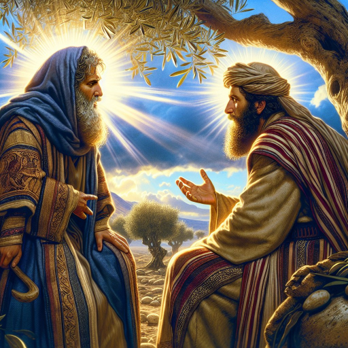
In Genesis 33, Jacob has returned after decades of working for a cruel father-in-law craftier than Jacob ever thought of being. Terrified that Esau will slaughter the family, Jacob sends flocks and herds ahead of him as a gift and then introduces his family in bowing, kneeling groups. But God has been doing a work in Esau’s heart during these years apart. The two brothers actually make peace and agreeing on a plan.

Esau winds up accepting a very generous gift from Jacob. Genesis 32:13 Jacob stayed where he was for the night. Then he selected these gifts from his possessions to present to his brother, Esau: 14 200 female goats, 20 male goats, 200 ewes, 20 rams, 15 30 female camels with their young, 40 cows, 10 bulls, 20 female donkeys, and 10 male donkeys. 16 He divided these animals into herds and assigned each to different servants. Then he told his servants, “Go ahead of me with the animals, but keep some distance between the herds.”

17 He gave these instructions to the men leading the first group: “When my brother, Esau, meets you, he will ask, ‘Whose servants are you? Where are you going? Who owns these animals?’ 18 You must reply, ‘They belong to your servant Jacob, but they are a gift for his master Esau. Look, he is coming right behind us.’”

Although Esau initially tries to refuse the gift, he eventually accepts it. One wonders if this livestock represents what Esau might have received had he gotten the birthright and the blessing that went to Jacob instead of to him.

Why has Jacob taken these actions? Between the time Jacob plans his gift to Esau and the time the two twins meet, Jacob has an encounter with the Angel of God in which he wrestles with the Angel, and eventually gains a blessing. Jacob is not simply acting out of his own generosity but is also operating under the power of the Holy Spirit.

This story should encourage all of us. Most of us have various amounts of familial dysfunction, and many of us have tried to resolve these problems with varying degrees of success. The story of Jacob and Esau proves that God can give peace to families, even under the worst of circumstances. May God help us so that we will turn our family problems over to Him!

PRAYER:  Father God, thank You for loving us and caring for us. Lord, we turn our family problems over to You. Help us to trust You to solve them. In the mighty and precious Name of King Jesus. Amen.  
JULY 18, 2026 PEACE-HOW DO WE GET IT AND HOW CAN WE KEEP IT? #2 GOD CAN CAUSE OUR ENEMIES TO MAKE PEACE WITH US

July 18, 2026

 Genesis 26:12 When Isaac planted his crops that year, he harvested a hundred times more grain than he planted, for the Lord blessed him. 13 He became a very rich man, and his wealth continued to grow. 14 He acquired so many flocks of sheep and goats, herds of cattle, and servants that the Philistines became jealous of him. 15 So the Philistines filled up all of Isaac’s wells with dirt. These were the wells that had been dug by the servants of his father, Abraham.

16 Finally, Abimelech ordered Isaac to leave the country. “Go somewhere else,” he said, “for you have become too powerful for us.”

17 So Isaac moved away to the Gerar Valley, where he set up their tents and settled down. 18 He reopened the wells his father had dug, which the Philistines had filled in after Abraham’s death. Isaac also restored the names Abraham had given them.

19 Isaac’s servants also dug in the Gerar Valley and discovered a well of fresh water. 20 But then the shepherds from Gerar came and claimed the spring. “This is our water,” they said, and they argued over it with Isaac’s herdsmen. So Isaac named the well Esek (which means “argument”). 21 Isaac’s men then dug another well, but again there was a dispute over it. So Isaac named it Sitnah (which means “hostility”). 22 Abandoning that one, Isaac moved on and dug another well. This time there was no dispute over it, so Isaac named the place Rehoboth (which means “open space”), for he said, “At last the Lord has created enough space for us to prosper in this land.”

Water! One of the most precious commodities in all the earth. When water is sufficient, life is sustained. When water fails, crops, animals, and people wither and die. These verses prove that disputes over water rights are as old as the human race. Isaac is living near the Philistines, and God is blessing him abundantly, so abundantly that the Philistines are both frightened and jealous. To make matters even worse, Isaac’s servants appear to be geniuses when it comes to finding springs of water while digging wells. These water sources have been sitting there all the time, and the Philistines themselves could have discovered them for themselves. Now after Isaac’s servants have done all the grunt work of digging the wells, the Philistines come along to claim them. Isaac is in a precarious position, for the land he is on belongs to the Philistines; therefore, all he can do is to abandon the wells, letting the Philistines have them. Isaac memorializes the first two wells by naming them “Sitnah,” for “hostility,” and “Esek,” meaning “argument.” Finally, Isaac’s men dig another well and this time the Philistines don’t cause problems, so Isaac names the well “Rehoboth,” meaning “open space.”

Why don’t the Philistines trouble Isaac over the third well? Perhaps the Philistine shepherds now have enough water or perhaps God honors Isaac’s willingness to give up the first two wells without an argument by giving him a third well. Perhaps God allows a tiny bit of His glory to be revealed so that the Philistines realize Isaac is under the protection of a mighty deity. The “fear of God” is not an abstract concept but a real entity, and God might have thrown the fear of God into the hearts of the Philistines. Ancient peoples might have been more sensitive to the supernatural than we are in this age.

23 From there Isaac moved to Beersheba, 24 where the Lord appeared to him on the night of his arrival. “I am the God of your father, Abraham,” he said. “Do not be afraid, for I am with you and will bless you. I will multiply your descendants, and they will become a great nation. I will do this because of my promise to Abraham, my servant.” 25 Then Isaac built an altar there and worshiped the Lord. He set up his camp at that place, and his servants dug another well.

Beersheba is the site of one of Abraham’s wells which the Philistines might have filled in with dirt. Why anybody would fill in a well in a water-starved land boggles the imagination; however, when people want to be vicious, they are willing to go to all kinds of ridiculous lengths. Notice that God appears to Isaac as soon as he arrives at Beersheba, and Isaac’s response is to build an altar, set up camp, and then dig another well.

26:26 One day King Abimelech came from Gerar with his adviser, Ahuzzath, and also Phicol, his army commander. 27 “Why have you come here?” Isaac asked. “You obviously hate me, since you kicked me off your land.”

28 They replied, “We can plainly see that the Lord is with you. So we want to enter into a sworn treaty with you. Let’s make a covenant. 29 Swear that you will not harm us, just as we have never troubled you. We have always treated you well, and we sent you away from us in peace. And now look how the Lord has blessed you!”

30 So Isaac prepared a covenant feast to celebrate the treaty, and they ate and drank together. 31 Early the next morning, they each took a solemn oath not to interfere with each other. Then Isaac sent them home again, and they left him in peace.

Hmm. OK, so King Abimelech of the Philistines has driven Isaac off his land, presumably at the spear points of his soldiers. Abimelech’s men have previously filled in wells dug by Isaac’s father and have fought over most of the new wells Isaac has dug. Now suddenly Abimelech gets the bright idea to make a covenant with Isaac. At this point, Isaac might be wondering if Abimelech has a hidden agenda with his army hiding somewhere, ready to pounce on Isaac’s camp. But no, Abimelech truly wants peace with Isaac. What’s the key here? Proverbs 16:5-7 tells us, “The Lord detests the proud; they will surely be punished. 6 Unfailing love and faithfulness make atonement for sin. By fearing the Lord, people avoid evil. 7 When people’s lives please the Lord, even their enemies are at peace with them.”

While Isaac might be a very impressive guy, he’s still a stranger; Abimelech could attack Isaac slaughtering his servants and seizing Isaac’s possessions, including grain, flocks, and herds, plus wells. But Isaac is under God’s protection, and Abimelech recognizes that fact. Abimelech might be a pagan worshiping Dagon, but Abimelech is no dummy and realizes that some great God must be protecting Isaac. Abimelech doesn’t want to get crosswise of a God who can bless so abundantly.

The word “peace” appears 429 times in the King James Version of the Bible, with 230 occurrences in the Old Testament and 199 in the New Testament. God is a God of peace and one of His names in Hebrew is Jehovah Shalom, the God of Peace. In this story, God moves men who were previously rejecting Isaac to make peace with him for their own sakes. Notice that all Isaac does is to graciously give up two wells without arguing over them. If we fail to appreciate just what a great sacrifice this is, we have never struggled to provide water for our livestock or our families. Giving up those wells means Abraham must trust God to give him more water sources somewhere else. Simply giving up those two wells represents a major sacrifice. If Abraham cannot find any more water, his wealth will mean nothing.

God uses these disputes to move Isaac back to Beersheba, a spiritually safe place. We know nothing of the circumstances of the countryside of the first two wells; however, it’s important to realize that there are no spiritually neutral places on earth. Perhaps God is protecting Abraham by moving the Philistines to demand those wells. If this is the case, then God is not only giving Abraham peace with his enemies but also providing spiritual protection and peace, even in the midst of this conflict.

Perhaps you feel that you are in a position similar to that of Abraham’s. You have done the best things possible and yet, others have driven you away. Then when you have discovered new resources, the very people who first drove you away show up to claim those new resources as well. You feel used and abused, frustrated and depressed. But don’t give up. God has many Beershebas, and He can provide new and peaceful resources for you. And God can give you peace with your enemies.

PRAYER: Father God, thank You for loving us and caring for us. Lord, we praise You for Your provision and Your watch care. Thank You for providing the things we need even before we realize we need them. Help us to trust You forever. In the mighty and precious Name of King Jesus. Amen.  
JULY 17, 2026 PEACE-HOW DO WE GET IT AND HOW CAN WE KEEP IT? #1 GOD PROMISES AND REASSURES

July 17, 2026

Peace! We all need it! Want to have every nerve in your body tingling? Just watch or listen to news for a few minutes. Data centers, water shortages, heat waves, political wrangling, conflict in the Middle East-there’s no shortage of problems around the world and at home. In the West, 7 states are wrangling over water rights to the water from the Colorado River. In New Mexico, the middle branch of the Rio Grand has dried up completely. I just spoke with a friend who’s about to have a small surgical procedure done on her spine. My friend needs God’s peace in her heart that all will go well, that her back will be healed, and that she will be able to get out of the house, attend church, and see friends again. This morning I just learned that we were double-billed for a car rental. Now I must deal with two different agencies, neither one of which wants anything apart from money.

For the next few weeks, we will look at what the Bible says about peace, where it comes from, how to get it, and how to keep it. The Biblical definition of peace is quite extensive.

In the Bible, peace is defined as a state of harmony and wholeness, transcending mere absence of conflict. The Hebrew word for peace, “shalom,” encompasses not only tranquility but also completeness, prosperity, and well-being in relationships with others and with God.

Biblical Context

Old Testament: The concept of peace often relates to relationships among people, nations, and between God and humanity. It is frequently associated with covenants and promises.

New Testament: Peace is also linked to the teachings of Jesus Christ, who is referred to as the “Prince of Peace”. His message emphasizes spiritual peace and reconciliation.

Types of Peace

Spiritual Peace: Inner tranquility and harmony with God.

Relational Peace: Healthy relationships with others.

Social Peace: Harmony within communities and nations.

Genesis 15:1 Some time later, the Lord spoke to Abram in a vision and said to him, “Do not be afraid, Abram, for I will protect you, and your reward will be great.” But Abram replied, “O Sovereign Lord, what good are all your blessings when I don’t even have a son? Since you’ve given me no children, Eliezer of Damascus, a servant in my household, will inherit all my wealth. 3 You have given me no descendants of my own, so one of my servants will be my heir.”

4 Then the Lord said to him, “No, your servant will not be your heir, for you will have a son of your own who will be your heir.” 5 Then the Lord took Abram outside and said to him, “Look up into the sky and count the stars if you can. That’s how many descendants you will have!”

6 And Abram believed the Lord, and the Lord counted him as righteous because of his faith.

7 Then the Lord told him, “I am the Lord who brought you out of Ur of the Chaldeans to give you this land as your possession.”

8 But Abram replied, “O Sovereign Lord, how can I be sure that I will actually possess it?”

9 The Lord told him, “Bring me a three-year-old heifer, a three-year-old female goat, a three-year-old ram, a turtledove, and a young pigeon.” 10 So Abram presented all these to him and killed them. Then he cut each animal down the middle and laid the halves side by side; he did not, however, cut the birds in half. 11 Some vultures swooped down to eat the carcasses, but Abram chased them away.

12 As the sun was going down, Abram fell into a deep sleep, and a terrifying darkness came down over him. 13 Then the Lord said to Abram, “You can be sure that your descendants will be strangers in a foreign land, where they will be oppressed as slaves for 400 years. 14 But I will punish the nation that enslaves them, and in the end, they will come away with great wealth. 15 (As for you, you will die in peace and be buried at a ripe old age.) 16 After four generations your descendants will return here to this land, for the sins of the Amorites do not yet warrant their destruction.”

17 After the sun went down and darkness fell, Abram saw a smoking firepot and a flaming torch pass between the halves of the carcasses. 18 So the Lord made a covenant with Abram that day and said, “I have given this land to your descendants, all the way from the border of Egypt[a] to the great Euphrates River— 19 the land now occupied by the Kenites, Kenizzites, Kadmonites, 20 Hittites, Perizzites, Rephaites, 21 Amorites, Canaanites, Girgashites, and Jebusites.”

It’s one of the most dramatic moments in the Bible. When Abraham complains that he has no son and that his chief servant is the only one to succeed him, God assures him that He will give Abraham a son, despite Abraham’s old age. Continuing, God also promises that Abraham will die in peace and be buried at a ripe old age. To demonstrate the validity of this promise, God cuts covenant with Abraham, a ritual in which the two parties to the covenant swear that they will be faithful or suffer the same fate as the animals cut apart in the ritual. With Abraham in a near-swoon, God is the One who moves among the animal parts, pledging His everlasting unchangeable honor.

God takes this dramatic step, not only for Abraham but also for all believers who will come after Abraham. God makes fantastic promises of the future of Abraham’s descendants, and we know that all those promises eventually are fulfilled. Abraham receives the assurance he will need to sustain him until Isaac, the son of promise, is born and grows to manhood, fathering children himself.

God never does things the same way twice and none of us are likely to experience such a moment. But God knows our weaknesses and our needs, and God wants us to find our peace in Him, no matter our circumstances. In some parts of the world, attending church might lead to violent death at the hands of terrorists; yet, people continue to go because it is through prayer and worship that they find God. And when they find God, they find peace.

Romans 15:13 tells us, “ I pray that God, the source of hope, will fill you completely with joy and peace because you trust in him. Then you will overflow with confident hope through the power of the Holy Spirit.” Today, may God, the source of hope, fill you COMPLETELY with joy and peace!

PRAYER: Father God, thank You for loving us and caring for us. Lord, fill us completely with joy and peace so that we will overflow with confident hope through the power of the Holy Spirit. In the mighty and precious Name of King Jesus. Amen.
JULY 16, 2026 REMAINING FAITHFUL AFTER A MOUNTAINTOP EXPERIENCE? #53 NO RESERVE, NO RETREAT, NO REGRETS!

July 16, 2026

Paul Preaches at Rome under Guard

17 Three days after Paul’s arrival, he called together the local Jewish leaders. He said to them, “Brothers, I was arrested in Jerusalem and handed over to the Roman government, even though I had done nothing against our people or the customs of our ancestors. 18 The Romans tried me and wanted to release me, because they found no cause for the death sentence. 19 But when the Jewish leaders protested the decision, I felt it necessary to appeal to Caesar, even though I had no desire to press charges against my own people. 20 I asked you to come here today so we could get acquainted and so I could explain to you that I am bound with this chain because I believe that the hope of Israel—the Messiah—has already come.”

21 They replied, “We have had no letters from Judea or reports against you from anyone who has come here. 22 But we want to hear what you believe, for the only thing we know about this movement is that it is denounced everywhere.”

23 So a time was set, and on that day a large number of people came to Paul’s lodging. He explained and testified about the Kingdom of God and tried to persuade them about Jesus from the Scriptures. Using the law of Moses and the books of the prophets, he spoke to them from morning until evening. 24 Some were persuaded by the things he said, but others did not believe. 25 And after they had argued back and forth among themselves, they left with this final word from Paul: “The Holy Spirit was right when he said to your ancestors through Isaiah the prophet,

26 ‘Go and say to this people: When you hear what I say, you will not understand. When you see what I do, you will not comprehend. 27 For the hearts of these people are hardened, and their ears cannot hear, and they have closed their eyes—so their eyes cannot see, and their ears cannot hear, and their hearts cannot understand, and they cannot turn to me and let me heal them.’

28 So I want you to know that this salvation from God has also been offered to the Gentiles, and they will accept it.”

30 For the next two years, Paul lived in Rome at his own expense. He welcomed all who visited him, 31 boldly proclaiming the Kingdom of God and teaching about the Lord Jesus Christ. And no one tried to stop him.

You’ve got to hand it to Paul! Here is this guy being guarded by a Roman soldier, having had his life threatened by Jewish religious authorities in Jerusalem. Now Paul is in Rome, and what’s the first thing he does? Paul invites the local Jewish leaders to witness to them. Blessedly, these men haven’t received any reports about Paul specifically; however, they are intensely interested because Christianity has already made its way to Rome and everybody is talking about these crazy people who believe Messiah has already come and that he has risen from the dead.

As a highly-trained scholar, Paul lays out the case for Jesus Christ as Messiah, bolstering his affirmations with extensive Scripture quotes. Those religious leaders who are more interested in truth than in dogma find Paul’s testimony convincing; however, there are also those whose thinking has petrified and for whom dogma is everything. To those people, Paul quotes Isaiah 6:9, God’s warning to Isaiah that many in Israel will refuse to hear Isaiah’s words because of their hardness of heart. So some men leave, revolted that this upstart is preaching about his Messiah while others leave, only to keep returning, hungry to learn more. Paul will continue his teaching unhindered for the next two years, welcoming everyone who comes.

What must it have been like for those scholars truly seeking revelation to meet with Paul? Entering the room, these men might have looked at this small man with his compact frame and wondered how he could influence anybody. That skepticism would only last until Paul began speaking, at which point, his listeners would find themselves riveted by his words. By this point, Paul has had numerous experiences as an instrument of healing and exorcism and has even seen God raise the dead. Surely, Paul would share stories of God’s magnificent work. Paul speaks several languages fluently, so communication with visitors poses few problems. As Paul continues to speak, visitors are first astounded and then convicted. Many leave Paul’s chambers with burning hearts, changed forever by his words. Jews worship in the temple with new spiritual eyes while former pagans worship with other Christians, anxious to learn more about living lives of holiness.

Roman officials might even come to Paul, as spiritually hungry as all the rest. Many of these educated men have already rejected the pantheon of Roman deities, whose lives are anything but exemplary. Now Paul gives these men new visions of true holiness, and they can’t wait to meet with him again and learn more.

Recently, a movie entitled The Great Awakening has appeared. This movie depicts the life of the eighteenth-century evangelist George Whitefield and his complex relationship with Benjamin Franklin. What set Whitefield apart from other preachers was that he spoke to crowds of as many as 30,000 outdoors, witnessing to all who would come. As a trained actor, Whitefield could project his voice, making himself heard in those settings, and people flocked to listen to him. Along with John Wesley, Whitefield was one of those God used in the first Great Awakening in England and in the American colonies. Whitefield’s passion for the Gospel was only matched by the enthusiasm of his listeners, and God moved mightily through Whitefield’s ministry. Although Whitefield was eloquent, it was the Holy Spirit working through Whitefield who convicted stony hearts and brought people to repentance. In the same way, the Holy Spirit moved through Paul.

William Borden was born into an extremely wealthy family and could have remained in America, enjoying a life of ease. But Borden had made a gift of himself to God, and he felt called to minister to Muslims in China. Borden was in Egypt, studying Arabic and preparing for ministry when he died tragically from meningitis. Borden is said to have written in his Bible, “No reserve, no retreat, no regrets.” Paul could have said much the same thing, for once he had chosen to follow Jesus, he never wavered.

We read about men like Paul and Whitefield and Borden and think, “Well, those men were wonderful, but I could never do anything like that.” Never say “Never.” In 1980, my husband told his younger brother that he (my husband) could never be a missionary. We left for Ghana the first time in 1988. God is far more interested in what He can put into us than in what He gets out of us, for God knows that once His Holy Spirit is working, miracles can take place. The key to being used is quite simple: Tell God He can have all of you, mean it, and make a gift of yourself to God. Then never take back the gift.

PRAYER: Father God, thank You for loving us and caring for us. Lord, help us to give You all of ourselves completely and irrevocably. In the mighty and precious Name of King Jesus. Amen.  
JULY 15, 2026 REMAINING FAITHFUL AFTER A MOUNTAINTOP EXPERIENCE? #52 GOD CAN USE ANYTHING….BUT SNAKEBITE AND DIARRHEA???

July 15, 2026

ACTS 28:1-10 Paul on the Island of Malta

28 Once we were safe on shore, we learned that we were on the island of Malta. 2 The people of the island were very kind to us. It was cold and rainy, so they built a fire on the shore to welcome us.

3 As Paul gathered an armful of sticks and was laying them on the fire, a poisonous snake, driven out by the heat, bit him on the hand. 4 The people of the island saw it hanging from his hand and said to each other, “A murderer, no doubt! Though he escaped the sea, justice will not permit him to live.” 5 But Paul shook off the snake into the fire and was unharmed. 6 The people waited for him to swell up or suddenly drop dead. But when they had waited a long time and saw that he wasn’t harmed, they changed their minds and decided he was a god.

7 Near the shore where we landed was an estate belonging to Publius, the chief official of the island. He welcomed us and treated us kindly for three days. 8 As it happened, Publius’s father was ill with fever and dysentery. Paul went in and prayed for him, and laying his hands on him, he healed him. 9 Then all the other sick people on the island came and were healed. 10 As a result we were showered with honors, and when the time came to sail, people supplied us with everything we would need for the trip.

No sooner have Paul and his companions reached shore, but local people from Malta come to build a fire to welcome them. Paul wants to be useful, so he begins gathering sticks, only to be bitten by a poisonous snake. The Maltese think Paul must be some kind of horrible criminal, since he has already been shipwrecked and is now being bitten by a snake. But Paul shakes off the snake into the fire and remains unharmed; in fact, a few hours later, Paul can’t even find the place on his hand where the snake bit him. Now the Maltese decide that Paul must be some kind of deity since he has survived a shipwreck and a potentially fatal snakebite. But God has more surprises to come.

Publius, the chief official on Malta, welcomes Paul and his companions; however, Publius is frightened. Publius’ aged father has been running diarrhea for days, and is burning up with fever. Publius fears his father will die if nothing is done. As soon as Paul learns of the problem, Paul prays for this suffering old man, and he recovers immediately. Word spreads throughout Malta, and all the sick people on the island come for prayer and healing. It doesn’t hurt that word has already spread about the stranger who survived a snakebite. God ensures that Paul establishes a reputation that spreads throughout Malta so that one way or another, all the inhabitants come to Paul and hear the Gospel in the process. Would we use snakebite and diarrhea to advertise? No. But God will use any circumstance to grab people’s attention so they can learn about new life in Jesus Christ.

Paul Arrives at Rome

11 It was three months after the shipwreck that we set sail on another ship that had wintered at the island—an Alexandrian ship with the twin gods as its figurehead. 12 Our first stop was Syracuse, where we stayed three days. 13 From there we sailed across to Rhegium. A day later a south wind began blowing, so the following day we sailed up the coast to Puteoli. 14 There we found some believers, who invited us to spend a week with them. And so we came to Rome.

15 The brothers and sisters in Rome had heard we were coming, and they came to meet us at the Forum on the Appian Way. Others joined us at The Three Taverns. When Paul saw them, he was encouraged and thanked God.

16 When we arrived in Rome, Paul was permitted to have his own private lodging, though he was guarded by a soldier.

The second something bad happens, many of us are ready to murmur and complain vociferously. “Why me?” we wonder. “Why are all these terrible things happening?” But we fail to see what God sees. Corrie Ten Boom and her sister Betsie wound up in Ravensbrook Concentration Camp because their family had harbored a Jewish family. Betsie eventually died there. But both Corrie and Betsie inspired and encouraged the ladies in that horrible place, and many women learned about Jesus because of the Ten Boom sisters. Those gas chambers became the gateway to heaven for many of those ladies. Later, Corrie used those experiences as she traveled the world, teaching the lessons about forgiveness God had burned into her soul during her time in Ravensbrook. Corrie spoke to those who had suffered just as severely as she had, and had her suffering been any less or her trials any easier, those people would have steadfastly ignored her.  

After leaving Malta, Paul and company enjoy an easy voyage to Italy and work their way up the coast. Paul receives a warm reception in several different places and once in Rome, settles in a private lodging with a Roman soldier guarding him. Throughout Paul’s imprisonment, many soldiers will watch him, and only in eternity will we learn how many of these soldiers received Christ during their tours of duty.

God never wastes experiences. While we feel we are blundering around making mistakes, God can use even our mistakes. When Corrie Ten Boom preached, she often carried a piece of embroidery with her. First Corrie would show the back side of the embroidery, with its dangling strings and no discernible pattern. Then Corrie would turn the embroidery to the right side, showing a beautiful crown. The message is clear: we only see the back side of things while God is working out His plan beautifully. May we continue to trust God and persist in following Him, even when things look messy!

PRAYER: Father God, thank You for loving us and caring for us. Lord, help us to remember that no matter how much we suffer, You can redeem every bit of it. In the mighty and precious Name of King Jesus. Amen.

JULY 14, 2026 REMAINING FAITHFUL AFTER A MOUNTAINTOP EXPERIENCE? #51 GOD IS THE MASTER OF THE WIND AND WAVES!

July 14, 2026

Acts 27:13-44 The Storm at Sea 13 When a light wind began blowing from the south, the sailors thought they could make it. So they pulled up anchor and sailed close to the shore of Crete. 14 But the weather changed abruptly, and a wind of typhoon strength (called a “northeaster”) burst across the island and blew us out to sea. 15 The sailors couldn’t turn the ship into the wind, so they gave up and let it run before the gale.

16 We sailed along the sheltered side of a small island named Cauda, where with great difficulty we hoisted aboard the lifeboat being towed behind us. 17 Then the sailors bound ropes around the hull of the ship to strengthen it. They were afraid of being driven across to the sandbars of Syrtis off the African coast, so they lowered the sea anchor to slow the ship and were driven before the wind.

18 The next day, as gale-force winds continued to batter the ship, the crew began throwing the cargo overboard. 19 The following day they even took some of the ship’s gear and threw it overboard. 20 The terrible storm raged for many days, blotting out the sun and the stars, until at last all hope was gone.

21 No one had eaten for a long time. Finally, Paul called the crew together and said, “Men, you should have listened to me in the first place and not left Crete. You would have avoided all this damage and loss. 22 But take courage! None of you will lose your lives, even though the ship will go down. 23 For last night an angel of the God to whom I belong and whom I serve stood beside me, 24 and he said, ‘Don’t be afraid, Paul, for you will surely stand trial before Caesar! What’s more, God in his goodness has granted safety to everyone sailing with you.’ 25 So take courage! For I believe God. It will be just as he said. 26 But we will be shipwrecked on an island.”

Until now, the sailors have paid little or no attention to Paul. Paul is an intellectual, a teacher, a Jew, and the crew members are a mongrel lot from every nation around the Mediterranean Sea. The ship is originally from Alexandria in Egypt; however, few of the sailors are Egyptian. Even though Paul has attempted to befriend the sailors, they have ignored him. But now the captain and the owner are panicking. Experienced sailors are throwing the cargo and much of the ship’s gear overboard. Those who work on the sea know its power and its savagery. In their desperation, these men have already called on all their gods with no results. Now in their desperation, these men are finally willing to give Paul a hearing. In this hour of crisis with lives in danger, these men listen as Paul assures them that God is going to deliver all of them, allowing them to be shipwrecked on an island. But which island? The storm has blown the ship so far off course, the crew has no idea where they are.

The Shipwreck

27 About midnight on the fourteenth night of the storm, as we were being driven across the Sea of Adria, the sailors sensed land was near. 28 They dropped a weighted line and found that the water was 120 feet deep. But a little later they measured again and found it was only 90 feet deep. 29 At this rate they were afraid we would soon be driven against the rocks along the shore, so they threw out four anchors from the back of the ship and prayed for daylight.

30 Then the sailors tried to abandon the ship; they lowered the lifeboat as though they were going to put out anchors from the front of the ship. 31 But Paul said to the commanding officer and the soldiers, “You will all die unless the sailors stay aboard.” 32 So the soldiers cut the ropes to the lifeboat and let it drift away.

33 Just as day was dawning, Paul urged everyone to eat. “You have been so worried that you haven’t touched food for two weeks,” he said. 34 “Please eat something now for your own good. For not a hair of your heads will perish.” 35 Then he took some bread, gave thanks to God before them all, and broke off a piece and ate it. 36 Then everyone was encouraged and began to eat— 37 all 276 of us who were on board. 38 After eating, the crew lightened the ship further by throwing the cargo of wheat overboard.

39 When morning dawned, they didn’t recognize the coastline, but they saw a bay with a beach and wondered if they could get to shore by running the ship aground. 40 So they cut off the anchors and left them in the sea. Then they lowered the rudders, raised the foresail, and headed toward shore. 41 But they hit a shoal and ran the ship aground too soon. The bow of the ship stuck fast, while the stern was repeatedly smashed by the force of the waves and began to break apart.

42 The soldiers wanted to kill the prisoners to make sure they didn’t swim ashore and escape. 43 But the commanding officer wanted to spare Paul, so he didn’t let them carry out their plan. Then he ordered all who could swim to jump overboard first and make for land. 44 The others held on to planks or debris from the broken ship. So everyone escaped safely to shore.

276 men all make it to shore safely, swimming or holding onto wreckage. All the prisoners are saved because the commanding officer wants to spare Paul. Why? Because throughout the voyage, Paul has been chatting with the commanding officer, describing his travels and sharing experiences. Paul has likely been telling the commander about Jesus and encouraging him to trust Jesus for his salvation. Who knows how many of the other sailors, prisoners, and passengers are now praising Paul’s God for their safe deliverance?

When we read this story, it’s tempting to focus on Paul, ignoring the other 275 men on the ship. But Jesus has shed his blood for those men just as much as for Paul. It’s likely that those soldiers and sailors would never have listened to Paul at any other time had their lives not been in danger. Now God has demonstrated His might and His saving grace in undeniable fashion. Now they are more than ready to listen to Paul’s testimonies.

Psalm 93:3-4 tells us, “You yourself are from the everlasting past. The floods have risen up, O Lord. The floods have roared like thunder; the floods have lifted their pounding waves. But mightier than the violent raging of the seas, mightier than the breakers on the shore—the Lord above is mightier than these!”  As a scholar, Paul is very familiar with these verses, and now as he stands on the shore, he might be chanting, “Blessed art Thou, O Lord of the universe, who delivers us from pounding waves. Blessed art Thou, O Lord of the universe, You who art mightier than the violent raging of the seas, mightier than the breakers on the shore! Blessed art Thou, O Lord of the universe, Who delivers those who fear You!”

What can we learn from Paul? Paul is a persistent opportunist, taking every chance to demonstrate the love of Jesus. While someone lesser might be concerned only with his own safety, Paul has been interceding for the safety of all those on the ship as well as for their salvation. Now on the shore, Paul is going from one man to another, making sure they have not been injured and that they are all right. These prisoners, soldiers, and working men have never encountered a highly educated scholar willing to serve them before. Who knows how many of these men eventually become Christ followers?

When we are serving God, there are no coincidences, but only God-incidences. God can redeem any bad experience and use it for His glory. May we continue to look heavenward, so that we don’t waste any opportunity to serve those around us! PRAYER: Father God, thank You for loving us and caring for us. Lord, help us to remember that our lives are not our own but that all we are and all we have belong to You. Help us to serve You, no matter the circumstances. In the mighty and precious Name of King Jesus. Amen.
JULY 13, 2026 REMAINING FAITHFUL AFTER A MOUNTAINTOP EXPERIENCE? #50 BEING IN THE CENTER OF GOD’S WILL DOES NOT PROTECT YOU FROM DISASTER, BUT HE WILL TAKE YOU THROUGH IT!

July 13, 2026

Acts 27 Paul Sails for Rome

27:1 When the time came, we set sail for Italy. Paul and several other prisoners were placed in the custody of a Roman officer named Julius, a captain of the Imperial Regiment. 2 Aristarchus, a Macedonian from Thessalonica, was also with us. We left on a ship whose home port was Adramyttium on the northwest coast of the province of Asia; it was scheduled to make several stops at ports along the coast of the province.

3 The next day when we docked at Sidon, Julius was very kind to Paul and let him go ashore to visit with friends so they could provide for his needs. 4 Putting out to sea from there, we encountered strong headwinds that made it difficult to keep the ship on course, so we sailed north of Cyprus between the island and the mainland. 5 Keeping to the open sea, we passed along the coast of Cilicia and Pamphylia, landing at Myra, in the province of Lycia. 6 There the commanding officer found an Egyptian ship from Alexandria that was bound for Italy, and he put us on board.

7 We had several days of slow sailing, and after great difficulty we finally neared Cnidus. But the wind was against us, so we sailed across to Crete and along the sheltered coast of the island, past the cape of Salmone. 8 We struggled along the coast with great difficulty and finally arrived at Fair Havens, near the town of Lasea. 9 We had lost a lot of time. The weather was becoming dangerous for sea travel because it was so late in the fall, and Paul spoke to the ship’s officers about it.

10 “Men,” he said, “I believe there is trouble ahead if we go on—shipwreck, loss of cargo, and danger to our lives as well.” 11 But the officer in charge of the prisoners listened more to the ship’s captain and the owner than to Paul. 12 And since Fair Havens was an exposed harbor—a poor place to spend the winter—most of the crew wanted to go on to Phoenix, farther up the coast of Crete, and spend the winter there. Phoenix was a good harbor with only a southwest and northwest exposure.

The remarkable thing about travel in Paul’s day is that people are traveling constantly. Ships are crisscrossing the Mediterranean Sea, carrying people, trade goods, armies, and everything else imaginable. The sea bottom of the Mediterranean is littered with ancient ship wrecks, and the variety of goods they were bearing at the time they sank is amazing. But sea voyages must be timed appropriately. The Mediterranean is a relatively shallow sea that can go from calm to raging in minutes, particularly once late fall arrives. As an experienced traveler, Paul is fully aware of these dangers and attempts to warn the officer in charge of the prisoners; however, the ship’s captain and the owner contradict him. Hoping to make more progress before having to harbor for the winter, the owner puts pressure on the captain, who supports the owner, despite any misgivings he might have personally. The officer in charge of the prisoners is a bluff military man. It’s also possible that the owner promises both the captain and the officer in charge money if they will agree to sailing to Phoenix and resting there for the winter. Too bad they’re never going to make it to Phoenix.

The story of Paul’s voyage and eventual shipwreck gives us a vivid glimpse into the lives of travelers in those days. When people prayed for someone to have travel mercies, they weren’t merely praying for a swift safe ride but also praying against all the terrible things that might happen on the way. Even today, travelers on the Mediterranean are vulnerable to violent storms, armed robberies, fall-out from wars, and other dangers. One site devoted to sailing lists dangers such as the fact that at around 2.5 million square kilometres, the Mediterranean is one of the world’s busiest inland seas. Every year, millions of leisure, fishing and commercial vessels pass through the sea routes between Europe, North Africa and the Middle East. These days, the combination of heavy traffic, local wind phenomena, narrow passages and tourist charter operations creates specific hazards. 

Paul tries his best to warn authorities to break off the voyage; however, the owner hopes to reach a better harbor before stopping. This will prove to be one of the worst decisions of the owner’s life, for eventually the ship will fall apart during a terrible storm off the coast of Malta.

All the time the ship is maneuvering around the coast of Crete, Paul is conscious of impending doom. But Paul knows something nobody else on that ship knows: God wants Paul to make it to Rome; therefore, God is going to arrange that somehow. Not even Paul can predict what will happen next.

George Whitefield, the fiery preacher whose sermons reached 30,000 people at a time and who helped spark the first Great Awakening, was fond of saying that “We are immortal until our work on earth is done.” Sometimes, we find ourselves in situations we know are likely to result in disaster. We do our best to advise people, warning them; however, for various reasons, people refuse to listen. The only certainty on which we can rely is the knowledge that the same God who has called us can also keep us safe and deliver us.

PRAYER: Father God, thank You for loving us and caring for us. Lord, help us to trust You, no matter what forces threaten us. In the mighty and precious Name of King Jesus. Amen.