Archive for June, 2026

JUNE 21, 2026 REMAINING FAITHFUL AFTER A MOUNTAINTOP EXPERIENCE? #28 LEGALISM CAN KILL ANY MOVEMENT SWIFTLY! DO YOU WANT YOUR WAY, OR GOD’S?

June 21, 2026

Acts 15:1-35 The Council at Jerusalem

15 While Paul and Barnabas were at Antioch of Syria, some men from Judea arrived and began to teach the believers: “Unless you are circumcised as required by the law of Moses, you cannot be saved.” 2 Paul and Barnabas disagreed with them, arguing vehemently. Finally, the church decided to send Paul and Barnabas to Jerusalem, accompanied by some local believers, to talk to the apostles and elders about this question. 3 The church sent the delegates to Jerusalem, and they stopped along the way in Phoenicia and Samaria to visit the believers. They told them—much to everyone’s joy—that the Gentiles, too, were being converted.

4 When they arrived in Jerusalem, Barnabas and Paul were welcomed by the whole church, including the apostles and elders. They reported everything God had done through them. 5 But then some of the believers who belonged to the sect of the Pharisees stood up and insisted, “The Gentile converts must be circumcised and required to follow the law of Moses.”

Few things are deadlier than feelings of racial superiority, and many of the Jews have firmly believed they are superior to all other races for centuries. After all, hasn’t God chosen the Israelites, plucking them out of Egypt and repeatedly rescuing them from far more powerful nations? Hasn’t God moved a pagan king, Cyrus, to order the restoration of the temple after it lay in ruins for 70 years? Surely, the Jews must be inherently holier than all other ethnic groups and therefore in line to control the new Jesus believers. And control is definitely a major issue here. While these members of the sect of the Pharisees haven’t been reaching out to preach the Gospel, they are more than willing to come along behind Paul and Barnabas, trying to impose restrictions so that they can maintain some level of power over new believers.

Just as all is going well and Gentiles are flocking into the kingdom through the preaching of Paul and Barnabas, small-minded men rush to demand that these male believers must be circumcised according to the Jewish religion, a religion that Paul and Barnabas have NOT been preaching. Never mind that God has graphically demonstrated to Peter that He has approved Gentiles such as Cornelius and his household by sovereignly baptizing them in the Holy Spirit without forcing them to be circumcised. The lust for power is a deadly failing, and these would-be leaders are determined to exert some form of control. These men have grasped just enough of Jesus’ teachings and his example to know that Jesus is the way to salvation; however, they know little or nothing about most of Jesus’ teachings, for Jesus never ever mentioned circumcision and was noted for eating with sinners who did not follow Jewish dietary rules.

6 So the apostles and elders met together to resolve this issue. 7 At the meeting, after a long discussion, Peter stood and addressed them as follows: “Brothers, you all know that God chose me from among you some time ago to preach to the Gentiles so that they could hear the Good News and believe. 8 God knows people’s hearts, and he confirmed that he accepts Gentiles by giving them the Holy Spirit, just as he did to us. 9 He made no distinction between us and them, for he cleansed their hearts through faith. 10 So why are you now challenging God by burdening the Gentile believers[b] with a yoke that neither we nor our ancestors were able to bear? 11 We believe that we are all saved the same way, by the undeserved grace of the Lord Jesus.”

12 Everyone listened quietly as Barnabas and Paul told about the miraculous signs and wonders God had done through them among the Gentiles.

13 When they had finished, James stood and said, “Brothers, listen to me. 14 Peter has told you about the time God first visited the Gentiles to take from them a people for himself. 15 And this conversion of Gentiles is exactly what the prophets predicted. As it is written: 16 ‘Afterward I will return and restore the fallen house of David. I will rebuild its ruins and restore it, 17 so that the rest of humanity might seek the Lord, including the Gentiles—all those I have called to be mine. The Lord has spoken—18 he who made these things known so long ago.’

19 “And so my judgment is that we should not make it difficult for the Gentiles who are turning to God. 20 Instead, we should write and tell them to abstain from eating food offered to idols, from sexual immorality, from eating the meat of strangled animals, and from consuming blood. 21 For these laws of Moses have been preached in Jewish synagogues in every city on every Sabbath for many generations.”

Ah, the voice of sweet reason in the midst of this maelstrom of legalistic verbiage. Notice that James uses Scripture to undergird his arguments, rather than criticizing these small-mended, would-be Judaizers. By quoting Scripture, James neatly avoids arguments that might descend into personal attacks, even though these men have likely been causing problems already. By referring to the laws of Moses that remain to be followed, James is subtly implying that the sect of the Pharisees is not totally wrong but that their position needs some minor adjustments. The most reasonable among the Pharisaic group begin nodding their heads sagely while others reluctantly agree, cheated of their opportunity to seize control. And now the council writes a letter that will be circulated throughout all the churches.

The Letter for Gentile Believers

22 Then the apostles and elders together with the whole church in Jerusalem chose delegates, and they sent them to Antioch of Syria with Paul and Barnabas to report on this decision. The men chosen were two of the church leaders—Judas (also called Barsabbas) and Silas. 23 This is the letter they took with them:

“This letter is from the apostles and elders, your brothers in Jerusalem. It is written to the Gentile believers in Antioch, Syria, and Cilicia. Greetings!

24 “We understand that some men from here have troubled you and upset you with their teaching, but we did not send them! 25 So we decided, having come to complete agreement, to send you official representatives, along with our beloved Barnabas and Paul, 26 who have risked their lives for the name of our Lord Jesus Christ. 27 We are sending Judas and Silas to confirm what we have decided concerning your question.

28 “For it seemed good to the Holy Spirit and to us to lay no greater burden on you than these few requirements: 29 You must abstain from eating food offered to idols, from consuming blood or the meat of strangled animals, and from sexual immorality. If you do this, you will do well. Farewell.”

30 The messengers went at once to Antioch, where they called a general meeting of the believers and delivered the letter. 31 And there was great joy throughout the church that day as they read this encouraging message.

32 Then Judas and Silas, both being prophets, spoke at length to the believers, encouraging and strengthening their faith. 33 They stayed for a while, and then the believers sent them back to the church in Jerusalem with a blessing of peace. 35 Paul and Barnabas stayed in Antioch. They and many others taught and preached the word of the Lord there.

Someone has once sadly remarked that where two or more believers are gathered, they may instigate a church split. This story is remarkable in several respects, most notably for the respect and concern demonstrated by the church leaders in Jerusalem. No doubt, Peter and the other leaders have repeatedly encountered those belonging to the sect of the Pharisees as they have attempted to force the church to remain as some outpost of Judaism with a few tweaks. But Jesus himself taught that the new wine of the Gospel must not be put into the old dry wineskin of Judaism, for the new wine will ferment, expand, and burst the bounds of Judaism. That process is now taking place, as traditional Jews come to grips with the reality of the Gospel in all its implications for daily life. What is significant here is that the church does not split, but becomes more unified as leaders seek the will of God for their situation. God takes a situation that could have destroyed the fledgling church and uses it to make the church stronger and more unified. And strength and unification are critical, for very soon Christians will become a persecuted minority.

PRAYER: Father God, thank You for loving us and caring for us. Lord, help us to be loving, patient, and kind in dealing with those with whom we disagree, remembering that they might be right and we might be wrong. In the mighty and precious Name of King Jesus. Amen.  

JUNE 20, 2026 REMAINING FAITHFUL AFTER A MOUNTAINTOP EXPERIENCE? #27 BARNABAS AND THE MINISTRY OF HELPS

June 20, 2026

Acts 14:21-28 Paul and Barnabas Return to Antioch of Syria

21 After preaching the Good News in Derbe and making many disciples, Paul and Barnabas returned to Lystra, Iconium, and Antioch of Pisidia, 22 where they strengthened the believers. They encouraged them to continue in the faith, reminding them that we must suffer many hardships to enter the Kingdom of God. 23 Paul and Barnabas also appointed elders in every church. With prayer and fasting, they turned the elders over to the care of the Lord, in whom they had put their trust. 24 Then they traveled back through Pisidia to Pamphylia. 25 They preached the word in Perga, then went down to Attalia.

26 Finally, they returned by ship to Antioch of Syria, where their journey had begun. The believers there had entrusted them to the grace of God to do the work they had now completed. 27 Upon arriving in Antioch, they called the church together and reported everything God had done through them and how he had opened the door of faith to the Gentiles, too. 28 And they stayed there with the believers for a long time.

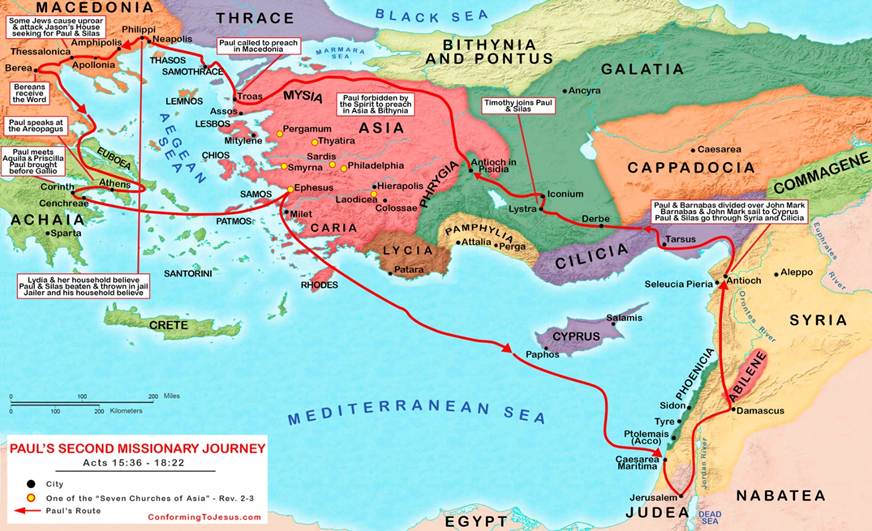
Studying Paul’s missionary journeys can be confusing, so let’s look at an AI-generated summary of this first one. To understand the distance Paul covered during his first missionary journey, consider the following points:

  • The journey spanned approximately 1,400 miles (2,250 kilometers).
  • It began in Antioch of Syria and included regions in Cyprus, Asia Minor, and parts of modern-day Turkey.
  • Key cities visited included Salamis, Paphos, Perga, Antioch in Pisidia, Iconium, Lystra, and Derbe.
  • The journey involved both land and sea travel, contributing to the total distance.
  • Paul and his companions faced various challenges, including persecution and difficult terrain.
  • The journey lasted about 1-2 years, showcasing extensive travel for the time.

Paul and Barnabas racked up a lot of mileage, especially considering the constraints on travel at that time. While Paul gets featured in the accounts, let’s look at Barnabas for a moment. If you have traveled very extensively, you know that a great travel companion can make all the difference. Few things are worse than being stuck with a complainer, someone who finds a cloud for every silver lining. And there are plenty of reasons for complaints as the two walk long distances, sail over rough seas, and travel into new places, never certain where they will spend the night or who will feed them. As a Levite, Barnabas fully understands the challenges of preserving the good parts of the Jewish heritage while proclaiming the Gospel to those without any Jewish background. Paul and Barnabas are breaking new ground, looking heavenward as they try to communicate the good news of new life in Jesus Christ to those from varied backgrounds.

While Paul is the “front man,” the main speaker, Barnabas is an integral part of the team, for he can come along behind Paul, discerning places where people are hung up on erroneous beliefs or false conclusions. Barnabas is one of those fellows who looks so happy that others become happy simply by looking at him. While Paul can preach fiery sermons, rebuking hypocritical Jewish religious leaders and pagan magicians, Barnabas comes in gently, learning the hurts and needs of hearers, explaining and clarifying. At no point does Barnabas ever appear to be jealous of Paul and his many academic accomplishments. Barnabas is obviously well educated; however, he is magnanimous, willing to allow Paul to take the lead while he quietly ministers to those in the back of the crowd who might be afraid to ask questions of Paul. Modern church workers would describe Barnabas as having a ministry of helps.

Look at the list of cities to which the ministry team returns: Lystra, Iconium, and Antioch of Pisidia, Pisidia, Pamphylia. 25 They preached the word in Perga, then went down to Attalia.

26 Finally, they returned by ship to Antioch of Syria, where their journey had begun. Realizing that this trip might be the only opportunity to found churches, the two take additional steps. They encouraged them to continue in the faith, reminding them that we must suffer many hardships to enter the Kingdom of God. 23 Paul and Barnabas also appointed elders in every church. With prayer and fasting, they turned the elders over to the care of the Lord, in whom they had put their trust.

What must the believers in Lystra have thought when Paul returned to them? If anybody had suffered for the Gospel, it was Paul, stoned and dragged out of the city while being left for dead. The images of that day would have burned their way into the minds of the believers in Lystra and all the surrounding towns. No sugar-coated promises would come from Paul, and this was vitally important because these people would later face intense persecution.

Finally, Paul and Barnabas return to Antioch of Syria, the church that had first commissioned them to go to the Gentiles. Here they were able to report and then rest and remain for “a long time.” Ministry must flow both ways, and Paul and Barnabas are now being encouraged and strengthened by the very people to whom they first preached the Gospel.

One of the perpetual challenges in ministry is resting and regeneration. Sometimes believers feel that pastors or missionaries have some special source of energy and do not require times of renewal; yet, this is quite wrong. As I am writing these words, we have just arrived from Ghana and are struggling to finalize speaking schedules while catching up on sleep, getting haircuts, securing new phones/phone numbers, and shopping for items that are difficult to find in our small town in Ghana. We find ourselves falling asleep whenever something isn’t screaming for attention, and we can only pray that we will get sufficient rest to be able to go back and take up the work God has called us to do there. We were thrilled to be able to attend a prayer breakfast, something we normally don’t get to do where we live and work.

May God help each of us to rest and renewal in His timing.

PRAYER: Father God, thank You for loving us and caring for us. Lord, help us to know when to work and when to rest. Give each of us friends and co-workers who will encourage us when we are tired and our enthusiasm is failing. In the mighty and precious Name of King Jesus. Amen.

JUNE 19 2026 REMAINING FAITHFUL AFTER A MOUNTAINTOP EXPERIENCE? #26 RETURNING TO THE PEOPLE WHO HAVE PERSECUTED YOU, PART 2 WHAT THE FACEBOOK STORIES WON’T TELL YOU!

June 19, 2026

Acts 14:19 Then some Jews arrived from Antioch and Iconium and won over the crowds. They stoned Paul and dragged him outside the city, presuming he was dead. 20 But after the disciples had gathered around him, he got up and went back into the city. And the next day he left with Barnabas for Derbe.

I have a confession. I have become addicted to short stories on Facebook, particularly those involving the military. There’s something completely satisfying about the neglected sniper/operator/pilot being the one who saves the day. Many of these stories have the ring of truth and it’s gratifying when heroes or heroines are recognized.

But there are other stories as well. Many of these stories depict grossly dysfunctional families where the eldest child, generally a daughter, is forced to finance her own education and develop her own career while other siblings are indulged. In some stories, the parents rapaciously pillage the virtuous child’s resources, selling her vehicle or her house, and forcing her to take legal action and to cut herself off from her family. At the end, the child who has been abused must build her own family while her blood relatives suffer the consequences of their criminal behavior. Sadly, there are situations similar to this. But the question I have is this: What is the virtuous child supposed to do with his/her anger? How can such people forgive those who have used and abused them?

Jesus isn’t much comfort in this situation, for in Matthew 5:11-12 he tells us, “God blesses you when people mock you and persecute you and lie about you and say all sorts of evil things against you because you are my followers. 12 Be happy about it! Be very glad! For a great reward awaits you in heaven. And remember, the ancient prophets were persecuted in the same way.”

Later on in Matthew 5, continuing the Sermon on the Mount, Jesus advises us, “43 You have heard the law that says, ‘Love your neighbor’ and hate your enemy. 44 But I say, love your enemies! Pray for those who persecute you! 45 In that way, you will be acting as true children of your Father in heaven. For he gives his sunlight to both the evil and the good, and he sends rain on the just and the unjust alike. 46 If you love only those who love you, what reward is there for that? Even corrupt tax collectors do that much. 47 If you are kind only to your friends, how are you different from anyone else? Even pagans do that. 48 But you are to be perfect, even as your Father in heaven is perfect.”

And then there’s the apostle Paul. All Paul wants to do is to tell people about Jesus and help them gain eternal life as believers. But a motley group of business people and Jewish religious leaders stir up so many problems for Paul that the “crowds,” those people who are always hanging around, waiting for some trouble to get into, gleefully stone Paul, dragging him out of the city and leaving him for dead. Pretty bad, huh? If ever this was a group of people who deserved to have the dust of their city shaken off as a curse against them, the citizens of Lystra would certainly qualify….and yet…and yet, Paul picks himself up, shakes himself off, AND GOES BACK INTO THE CITY! Most of us would feel that Paul is a special kind of stupid, but no, he returns to the very city whose rabble have just tried to kill him. True, the next day, he leaves for another place but that’s only after he has made that trip back into Lystra.

What motivates Paul to return to those who have tried to murder him? We must conclude that some people in Lystra did become believers, and Paul wanted to encourage these people before leaving for Derbe. There is no record of Paul appealing to local authorities or invoking the privileges of his Roman citizenship. Paul simply forgives these people and goes on. What’s going on here?

Later, John, the disciple closest to Jesus, will write to believers advising them, “1 John 1:8-9 If we should say that we have no sin, we deceive ourselves and the truth is not in us. If we should confess our sins, He is faithful and righteous, that He may forgive us our sins and may cleanse us from all unrighteousness.”

No matter how virtuous we are, we all sin. Even reading the Facebook stories, it’s clear that the protagonists would have fared better had they refused to allow themselves to be taken for granted. But many of us have been conditioned to believe that love is something that must be earned and that we must continue to perform. Only when abuses become enormous do we stop to realize the pit into which we have fallen. Refusing to acknowledge truth in the hopes of maintaining peace is itself a sin against ourselves, if against nobody else.

What does Jesus want us to do with abusers? We are to forgive them. But that does not mean we must remain in abusive situations unless Jesus specifically orders us to do so. Remember that Jesus advised his disciples to leave places where they were not received. In this story, Paul returns briefly to Lystra, but then moves on to Derbe the next day. Remember the famous quote from Jeremy Taylor: “If thou has a bundle of thorns in thy lot, there is no need to sit down on it.”

So, once more, Paul teaches us by example. Paul forgives the people who have tried to kill him, even returning briefly to their city. But Paul also moves on to places more receptive to the Gospel. May we forgive those who despitefully use us, remembering that forgiveness does not always demand that we must remain within their range to continue to hurt us. Those who run shelters for battered women are well aware that the biggest mistake many women make is waiting too late to run for shelter.

PRAYER: Father God, thank You for loving us and caring for us. Lord, help us to forgive, knowing that we too need forgiveness. But give us holy wisdom so that we will be able to move out of reach of abusers when necessary. In the mighty and precious Name of King Jesus. Amen.
JUNE 18 2026 REMAINING FAITHFUL AFTER A MOUNTAINTOP EXPERIENCE? #25 RETURNING TO THE PEOPLE WHO HAVE PERSECUTED YOU

June 18, 2026

Acts 14: Paul and Barnabas at Iconium

1 At Iconium, Paul and Barnabas went as usual into the Jewish synagogue, where they spoke so well that a great number of Jews and Greeks believed. 2 But the unbelieving Jews stirred up the Gentiles and poisoned their minds against the brothers. 3 So Paul and Barnabas spent considerable time there, speaking boldly for the Lord, who affirmed the message of His grace by enabling them to perform signs and wonders.

4 The people of the city were divided. Some sided with the Jews, and others with the apostles. 5 But when the Gentiles and Jews, together with their rulers, set out to mistreat and stone them, 6 they found out about it and fled to the Lycaonian cities of Lystra and Derbe and to the surrounding region, 7 where they continued to preach the gospel.

God is using Paul and Barnabas to spread the Gospel; however, Satan is moving in the hearts of those opposing them. There are unbelieving Jews, some zealous for their faith and others zealous for their businesses. There are unbelieving Gentiles intransigent in their beliefs in lesser gods and also fearing for their businesses. Why must these two trouble makers show up anyway? Why can’t they take their strange speeches of a resurrected Jewish religious leader somewhere else? Local rulers are worried because there are always informants, ready to rush to higher authorities with reports of any potential threats to the Roman Empire. Throughout the ages, politicians remain the same. When Paul and Barnabas learn of a threat to stone them, they flee to Lystra and Derbe and other smaller villages in the area, preaching the Gospel as they go. Persecution is only motivating Paul and Barnabas to spread the Gospel more effectively, proving that God has a sharp sense of humor. And meanwhile, there’s a man in Lystra who is about to get the shock of his life.

The Visit to Lystra and Derbe

8 In Lystra there sat a man crippled in his feet, who was lame from birth and had never walked. 9 This man was listening to the words of Paul, who looked intently at him and saw that he had faith to be healed. 10 In a loud voice Paul called out, “Stand up on your feet!” And the man jumped up and began to walk.

11 When the crowds saw what Paul had done, they lifted up their voices in the Lycaonian language: “The gods have come down to us in human form!” 12 Barnabas they called Zeus, and Paul they called Hermes, because he was the chief speaker. 13 The priest of Zeus, whose temple was just outside the city, brought bulls and wreaths to the city gates, hoping to offer a sacrifice along with the crowds.

14 But when the apostles Barnabas and Paul found out about this, they tore their clothes and rushed into the crowd, shouting, 15 “Men, why are you doing this? We too are only men, human like you. We are bringing you good news that you should turn from these worthless things to the living God, who made heaven and earth and sea and everything in them. 16 In past generations, He let all nations go their own way. 17 Yet He has not left Himself without testimony to His goodness: He gives you rain from heaven and fruitful seasons, filling your hearts with food and gladness.”

18 Even with these words, Paul and Barnabas could hardly stop the crowds from sacrificing to them.

19 Then some Jews arrived from Antioch and Iconium and won over the crowds. They stoned Paul and dragged him outside the city, presuming he was dead. 20 But after the disciples had gathered around him, he got up and went back into the city. And the next day he left with Barnabas for Derbe.

Well, once more, the crowds prove fickle. When Paul speaks to a man crippled from birth and the man stands on his feet, local citizens are ready to honor Paul and Barnabas as personifications of the Greek gods Zeus and Hermes. The priest of Zeus is thrilled because these men are reinforcing the idea that Zeus really exists, so he brings animals and wreaths to sacrifice at the city gates. Too bad this man is wrong. Paul and Barnabas are aghast, for the last thing they intend is to be venerated. But veneration rapidly becomes agitation and then persecution when Jews from Antioch and Iconium persuade the crowds that they should attack Paul and Barnabas. Paul collapses as they are stoning him, and the angry mob drags him outside the city; however, once the disciples gather around him, he gets up and returns to the city. Does Paul really die, only for the disciples to lay hands on him, serving as channels of the Holy Spirit’s power so that he is resurrected? Paul never says much about the experience, only mentioning that he has been stoned and has returned to the very people who have stoned him.

How do we react when people persecute us? In the course of my career as a bush doctor in a remote mission hospital, I have endured staff strikes and humiliating meetings where those who have taken bribes have screamed insults at me. But at the end of the day, we know that God has called us to be where we are and God has not changed our marching orders. I have endured at least thirteen years as the only doctor in such hospitals and months since where I have continued to serve while colleagues have gone on leave or transferred, causing me to resume my position as the only doctor.

During these periods of distress, God has sustained us with His love, His grace, His mercy, and His assurance that we are in the center of His will for our lives. And the patients with their needs have always been there. I can only focus on a limited number of things at a time; pregnant women with obstructed labor, pale children in desperate need of blood, and men with strangulated hernias or typhoid perforations are far more important than insults delivered by small people.

2 Corinthians 5:13 If we are out of our mind, it is for God; if we are of sound mind, it is for you. 14 For Christ’s love compels us, because we are convinced that One died for all, therefore all died. 15 And He died for all, that those who live should no longer live for themselves, but for Him who died for them and was raised again.…

I love white water canoeing and kayaking. One of the first lessons I had to learn was to look at the river and not at the rocks. If I focused on the rocks, I would wind up on the rocks. I had to focus on the channels of water, finding the best path. The same thing is true in life. Paul and Barnabas sensibly left places where people were threatening to stone them. Even when Paul was stoned, he returned to the city, likely to greet believers there, and then moved on. Paul and Barnabas never lost their focus. May God help us, so that we will maintain our reliance on Him, no matter what kind of opposition we might face.

PRAYER: Father God, thank You for loving us and caring for us. Lord, help us to continue to look to You and not to events around us. In the mighty and precious Name of King Jesus. Amen

JUNE 17 2026 REMAINING FAITHFUL AFTER A MOUNTAINTOP EXPERIENCE? #24 WHAT DOES IT MEAN TO SHAKE THE DUST OF A PLACE OFF YOUR FEET?

June 17, 2026

Acts 13: In Pisidian Antioch

13 After setting sail from Paphos, Paul and his companions came to Perga in Pamphylia, where John left them to return to Jerusalem. 14 And from Perga, they traveled inland to Pisidian Antioch, where they entered the synagogue on the Sabbath and sat down. 15 After the reading from the Law and the Prophets, the synagogue leaders sent word to them: “Brothers, if you have a word of encouragement for the people, please speak.”

16 Paul stood up, motioned with his hand, and began to speak: “Men of Israel and you Gentiles who fear God, listen to me! 17 The God of the people of Israel chose our fathers. He made them into a great people during their stay in Egypt, and with an uplifted arm He led them out of that land. 18 He endured their conduct for about forty years in the wilderness. 19 And having vanquished seven nations in Canaan, He gave their land to His people as an inheritance. 20 All this took about 450 years.

After this, God gave them judges until the time of Samuel the prophet. 21 Then the people asked for a king, and God gave them forty years under Saul son of Kish, from the tribe of Benjamin. 22 After removing Saul, He raised up David as their king and testified about him: ‘I have found David son of Jesse a man after My own heart; he will carry out My will in its entirety.’

23 From the descendants of this man, God has brought to Israel the Savior Jesus, as He promised. 24 Before the arrival of Jesus, John preached a baptism of repentance to all the people of Israel. 25 As John was completing his course, he said, ‘Who do you suppose I am? I am not that One. But He is coming after me whose sandals I am not worthy to untie.’

26 Brothers, children of Abraham, and you Gentiles who fear God, it is to us that this message of salvation has been sent. 27 The people of Jerusalem and their rulers did not recognize Jesus, yet in condemning Him they fulfilled the words of the prophets that are read every Sabbath. 28 And though they found no ground for a death sentence, they asked Pilate to have Him executed.

29 When they had carried out all that was written about Him, they took Him down from the tree and laid Him in a tomb. 30 But God raised Him from the dead, 31 and for many days He was seen by those who had accompanied Him from Galilee to Jerusalem. They are now His witnesses to our people.

32 And now we proclaim to you the good news: What God promised our fathers 33 He has fulfilled for us, their children, by raising up Jesus. As it is written in the second Psalm:

‘You are My Son; today I have become Your Father.’

34 In fact, God raised Him from the dead, never to see decay. As He has said:

‘I will give you the holy and sure blessings promised to David.’

35 So also, He says in another Psalm: ‘You will not let Your Holy One see decay.’

36 For when David had served God’s purpose in his own generation, he fell asleep. His body was buried with his fathers and saw decay. 37 But the One whom God raised from the dead did not see decay.

38 Therefore let it be known to you, brothers, that through Jesus the forgiveness of sins is proclaimed to you. 39 Through Him everyone who believes is justified from everything you could not be justified from by the law of Moses. 40 Watch out, then, that what was spoken by the prophets does not happen to you:

41 ‘Look, you scoffers, wonder and perish! For I am doing a work in your days that you would never believe, even if someone told you.’”

WOOF! Well, never let it be said that Paul plays to an audience. Starting with Moses, Paul uses Scripture to graphically demonstrates that Jesus is really the Messiah. Paul even rebukes his hearers; yet, people are so enthralled that they beg him to continue the message on the next Sabbath.

A Light for the Gentiles (Isaiah 49:1–6)

42 As Paul and Barnabas were leaving the synagogue, the people urged them to continue this message on the next Sabbath. 43 After the synagogue was dismissed, many of the Jews and devout converts to Judaism followed Paul and Barnabas, who spoke to them and urged them to continue in the grace of God.

44 On the following Sabbath, nearly the whole city gathered to hear the word of the Lord. 45 But when the Jews saw the crowds, they were filled with jealousy, and they blasphemously contradicted what Paul was saying.

46 Then Paul and Barnabas answered them boldly: “It was necessary to speak the word of God to you first. But since you reject it and do not consider yourselves worthy of eternal life, we now turn to the Gentiles. 47 For this is what the Lord has commanded us:

‘I have made you a light for the Gentiles, to bring salvation to the ends of the earth.’”

48 When the Gentiles heard this, they rejoiced and glorified the word of the Lord, and all who were appointed for eternal life believed. 49 And the word of the Lord spread throughout that region.

50 The Jews, however, incited the religious women of prominence and the leading men of the city. They stirred up persecution against Paul and Barnabas and drove them out of their district. 51 So they shook the dust off their feet in protest against them and went to Iconium. 52 And the disciples were filled with joy and with the Holy Spirit.

Some of the Jews have listened to Paul and have chosen to follow Jesus; however, the religious leaders incite the religious women of prominence-after all, these women would lose their social standing if everybody follows Jesus. And the leading men of the city will also lose status and possibly business. Meanwhile, Gentiles who have spent centuries suffering as second class citizens, are thrilled. God loves them! Jesus has died for them! This news is the greatest thing they have ever heard.

The prominent citizens drive Paul and Barnabas out of the district. As the two men are leaving, they do something symbolic; they shake the dust off their feet in protest against those who have persecuted them. Those forcing Paul and Barnabas to leave likely don’t even notice this act, but it’s very significant. When Jesus was sending the disciples out to minister, he ordered them to shake the dust off their feet if any town refused to receive them. Jesus even warned that it would be even worse for that town than it had been for Sodom and Gomorrah.

Matthew 10:11-15 11 Whatever town or village you enter, find out who is worthy there and stay at his house until you move on. 12 As you enter the home, greet its occupants. 13 If the home is worthy, let your peace rest on it; but if it is not, let your peace return to you. 14 And if anyone will not welcome you or heed your words, shake the dust off your feet when you leave that home or town. 15 Truly I tell you, it will be more bearable for Sodom and Gomorrah on the day of judgment than for that town.

Does this poor reception hurt Paul and Barnabas? No. Paul and Barnabas are full of joy and the Holy Spirit. But what happens to Pisidian Antioch? Today, Pisidian Antioch is an open-air archaeological site in central Turkey in the Turkish Lakes region. Interestingly enough, the site includes St. Paul’s Church, one of the earliest recorded church buildings, plus the remnants of a Byzantine basilica. Evidently, at some point a sufficient number of citizens became Christians and erected these buildings.

Do we as believers ever have the right to shake the dust of a place off our shoes? This is a tough question without any easy answer. We are prone to rush to judgement while God is far more merciful that we are. In this story, Paul and Barnabas do everything they can to speak the truth but also to minister in love. Only when the local residents drive them completely out of the district do they take a final dramatic step. We must be careful to avoid becoming angry or bitter and running away from a difficult situation. Only God knows human hearts and only God can tell when such a drastic step is necessary. May we remain close to God, allowing Him to be the One who says whether we stay or go.

PRAYER: Father God, thank You for loving us and caring for us. Lord, help us to trust Your guidance as we speak Your Word to those around us. Give us holy boldness but also help us to speak the truth in love. In the mighty and precious Name of King Jesus. Amen.
JUNE 16, 2026 REMAINING FAITHFUL AFTER A MOUNTAINTOP EXPERIENCE? #23 ARE YOU PRAYING FOR GOVERNMENT OFFICIALS OR SIMPLY COMPLAINING ABOUT THEM?

June 16, 2026

Acts 13: Paul’s First Missionary Journey Begins (Acts 15:36–41; Acts 18:23–28)

1 Now in the church at Antioch there were prophets and teachers: Barnabas, Simeon called Niger, Lucius of Cyrene, Manaen (who had been brought up with Herod the tetrarch), and Saul. 2 While they were worshiping the Lord and fasting, the Holy Spirit said, “Set apart for Me Barnabas and Saul for the work to which I have called them.” 3 And after they had fasted and prayed, they laid their hands on them and sent them off.

Paul/Saul and Barnabas have ministering and teaching in Antioch of Syria, and things are going beautifully. The congregation is growing, and people are receptive. By every criterion, their ministry is booming. And that’s when God chooses to shake things up. While the congregation is praying and fasting, God directs them to set Barnabas and Saul apart for a special work. The congregation obeys instantly, praying and fasting further and then commissioning Saul and Barnabas, sending them off.

If things are going so well in Antioch, why does God pluck the two most outstanding leaders to send them somewhere else? The answer is simple: Barnabas and Saul have taught so effectively that they have worked themselves out of a job at Antioch. The church is growing, and new leaders are developing who can continue the work. Now God needs Barnabas and Saul elsewhere.

When we first entered missions, we were told repeatedly that one of the main jobs of a missionary is to work himself/herself out of a job, developing local Christians so that they can take over the work. We remain in Ghana because we work in a deprived area to which it is difficult to recruit qualified medical personnel. My husband was instrumental in establishing the Local Council of Churches group, but at this point, others are taking the lead. Does this mean our efforts are unnecessary? On the contrary, our population is growing and the needs for evangelism will always be there. In the case of Saul and Barnabas, their missionary careers are just getting started. It’s going to be a wild ride!

On Cyprus

4 So Barnabas and Saul, sent forth by the Holy Spirit, went down to Seleucia and sailed from there to Cyprus. 5 When they arrived at Salamis, they proclaimed the word of God in the Jewish synagogues. And John was with them as their helper.

6 They traveled through the whole island as far as Paphos, where they found a Jewish sorcerer and false prophet named Bar-Jesus, 7 an attendant of the proconsul, Sergius Paulus. The proconsul, a man of intelligence, summoned Barnabas and Saul because he wanted to hear the word of God. 8 But Elymas the sorcerer (for that is what his name means) opposed them and tried to turn the proconsul from the faith.

9 Then Saul, who was also called Paul, filled with the Holy Spirit, looked directly at Elymas 10 and said, “O child of the devil and enemy of all righteousness, you are full of all kinds of deceit and trickery! Will you never stop perverting the straight ways of the Lord? 11 Now look, the hand of the Lord is against you, and for a time you will be blind and unable to see the light of the sun.” Immediately mist and darkness came over him, and he groped about, seeking someone to lead him by the hand.

12 When the proconsul saw what had happened, he believed, for he was astonished at the teaching about the Lord.

It’s a good thing that Christians in Antioch are still praying for Saul and Barnabas, for on Cyprus they find themselves confronting an agent of the devil. Elymas, a local sorcerer, has nicknamed himself “Bar-Jesus,” or “Son of Jesus.” This name is blasphemous as well as deceitful. Were Elymas to name himself correctly, he should call himself “Bar-Satan,” for his entire focus is on gaining and maintain spiritual and political power. The local Roman proconsul is highly intelligent and spiritually desperate. When Barnabas and Saul preach the word of God, the proconsul is thrilled; however, Elymas does everything in his power to undermine them, realizing that his grip on the proconsul is slipping. That’s when Saul confronts Elymas.

“O child of the devil and enemy of all righteousness, you are full of all kinds of deceit and trickery! Will you never stop perverting the straight ways of the Lord? 11 Now look, the hand of the Lord is against you, and for a time you will be blind and unable to see the light of the sun.” Immediately mist and darkness came over him, and he groped about, seeking someone to lead him by the hand.

As Saul is speaking, Elymas is immediately struck blind, being forced to depend on others to guide him. This event unmasks the treachery Elymas has been promoting. The proconsul realizes that the spiritual power behind Saul and Barnabas is far greater than anything Elymas has. In addition, the Holy Spirit has been speaking to the heart of the proconsul, and he realizes that Saul and Barnabas are holy men who are teaching God’s truth. Recognizing the gulf between the spiritual darkness of Elymas and the light of Christ, the proconsul becomes a believer.

We do ourselves a disfavor if we ignore this small story, for it carries much weight. Roman officials are sent throughout the Empire to govern in obscure places. But the Roman pantheon of gods offers nothing in the way of holiness or righteousness, and many Roman officials find themselves hungry for spiritual truth. Although neither Saul nor Barnabas know this proconsul, God has known his name from the foundations of the world and God loves him and longs for him to be reconciled to God. God sovereignly selects Barnabas and Saul because Barnabas is a man of good will and Saul is a brilliant intellectual. The two men complement each other in their giftings, and this combination is something the proconsul has never experienced before. As a politician, the proconsul is used to those seeking favors with gifts or flattery; however, these two men offer neither. But there is no faking the presence of the Holy Spirit, and the Holy Spirit draws the proconsul to Himself.

Later, writing to Timothy, a young church leader, Saul/Paul will advise, “I urge, then, first of all, that petitions, prayers, intercession and thanksgiving be made for all people— for kings and all those in authority, that we may live peaceful and quiet lives in all godliness and holiness.” – 1 Timothy 2:1-2

Pray for all government officials! Pray for those with whom you agree and those with whom you disagree. Pray that God will enlighten them, that they will work in righteousness, justice, mercy and peace. And pray for the peace of all countries, for God is a God of peace.

PRAYER: Father God, thank You for loving us and caring for us. Lord, help us to pray regularly and consistently for all those in leadership positions of any kind. Help us to pray especially hard for international leadership. May revival spread throughout the world. In the mighty and precious Name of King Jesus. Amen.
JUNE 15, 2026 REMAINING FAITHFUL AFTER A MOUNTAINTOP EXPERIENCE? #22 THERE’S ONLY ONE GOD AND YOU’RE NOT IT!

June 15, 2026

Acts 12: The Death of Herod

20 Now Herod was in a furious dispute d with the people of Tyre and Sidon, and they convened before him. Having secured the support of Blastus, the king’s chamberlain, they asked for peace, because their region depended on the king’s country for food. 21 On the appointed day, Herod donned his royal robes, sat on his throne, and addressed the people. 22 And they began to shout, “This is the voice of a god, not a man!”

23 Immediately, because Herod did not give glory to God, an angel of the Lord struck him down, and he was eaten by worms and died.

Herod Agrippa I, the grandson of Herod the Great, has been cutting quite a political swath, persecuting Christians and having James slaughtered. After Peter disappears from prison, Herod is so incensed that he huffs off to Caesarea, that magnificent artificial port city on the coast built by his grandfather. But there’s a problem.

Somehow, the people of Tyre and Sidon have gotten crosswise of Herod Agrippa. While Tyre and Sidon are major trading ports, they need the grain produced by Herod’s country, so they can’t afford to be at odds with him. Fearing economic disaster and impending starvation, the citizens of these two cities engage Blastus, the king’s chamberlain, to speak for them. Impressed by his own grandeur, Herod dresses in magnificent robes and haughtily receives the emissaries. When Herod begins his oration, the people cry out, “the voice of a god and not of a man!” As Herod is preening himself, feeling that this is the pinnacle of his royal career, he is suddenly convulsed by severe abdominal pains. Blastus, recognizing the emergency, summons other aids who help support Herod as he tries to make a triumphal exit. But back at the palace, Herod is in deep trouble.

The Jewish/Roman historian Josephus describes Herod’s last days. “He put on a garment made wholly of silver, and of a contexture truly wonderful, and came into the theatre early in the morning; at which time the silver of his garment, being illuminated by the fresh reflection of the sun’s rays upon it, shone out after a surprising manner, and was so resplendent as to spread a horror over those that looked intently upon him; and presently his flatterers cried out, one from one place, and another from another (though not for his good), that he was a god…A severe pain also arose in his belly, and began in a most violent manner… when he had been quite worn out by the pain in his belly for five days, he departed this life.” (Antiquities, XIX.8.2)

As a physician, I have long found this description fascinating. Did Herod suffer an attack of Crohn’s disease or ulcerative colitis, with intestinal spasm and bowel perforations resulting in fistulas carving their ways through the abdominal wall? Did he suffer a typhoid perforation or appendicitis? The possibilities are endless, but the result is that after only five days, Herod dies. The citizens of Tyre and Sidon are probably quite relieved, for surely Herod’s successor won’t be as horrible as Herod. The next Herod is Herod Agrippa II, the King Herod whom Paul tried to convert.

Herod Agrippa I was a horrible man; however, he didn’t have to suffer such an ignominious death. Herod’s problem was that he believed his own publicity. Surrounded by sycophants, bootlickers whose flattery knew no bounds, Herod Agrippa I worshiped only himself. It has been said that “A man wrapped up in himself makes a very small bundle.” Herod was totally and completely self-enamored, and paid for it with his life.

Acts 12:24 But the word of God continued to spread and multiply.

25 When Barnabas and Saul had fulfilled their mission to Jerusalem, they returned, bringing with them John, also called Mark.

Herod dies, and it’s likely that all those around him breathe a sigh of relief. Few things are more difficult than dealing with a ruler whose ego is boundless. Notice something: Herod has James slaughtered. The church goes on. Herod dies, and the word of God continues to spread and multiply. Many times, we are so caught up in current disasters that we forget that the Kingdom of God continues to grow and flourish. Who knows how many people might have witnessed Herod’s demise and taken a warning?

The temptation to found personality cults exists everywhere, and perhaps is nowhere more evident than in the church. Here in Ghana, it’s common for church signs to bear glamorous photos of the pastor and his wife, the unstated implication being that if you attend that church, you too will be wealthy and wear gorgeous clothing. Many church members lavish adulation on pastors that should only go to God. The temptation is also very evident in medicine. There is an apocryphal story that God is in a hospital cafeteria when he begins cutting ahead of everyone else in line. A bystander observes, “Oh, he thinks he’s a doctor.” Sadly, the malpractice crisis in medicine began when too many doctors thought of themselves as God. May God help all of us so that we remember that we are only in advertising and God is in management, and that God will not tolerate any competitors.

PRAYER: Father God, thank You for loving us and caring for us. Lord, help us to worship You and serve You, knowing that You are the One True Living God and that nobody can take Your place. In the mighty and precious Name of King Jesus. Amen.
JUNE 14, 2026 REMAINING FAITHFUL AFTER A MOUNTAINTOP EXPERIENCE? #21 IS GOD FAIR?

June 14, 2026

Acts 12: James Killed, Peter Imprisoned

1 About that time, King Herod reached out to harm some who belonged to the church. 2 He had James, the brother of John, put to death with the sword.

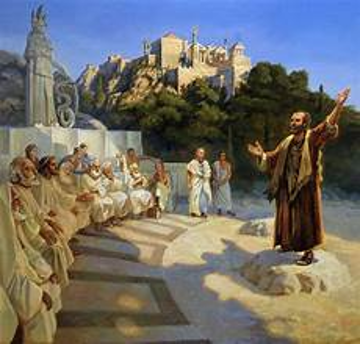
When the news came, at first, nobody could believe it. James, son of Zebedee and brother of John, steadfast James, who accompanied Jesus at the Garden of Gethsemane, stalwart, courageous James was dead. In an effort to curry favor with Jewish religious leaders, King Herod Agrippa had James seized and stabbed while his friends looked on in horror. That night, believers gathered, praying and begging God for answers. And as if that weren’t enough, Herod proceeded to arrest Peter during Passover, throwing him in prison. Herod was so worried that he had four squads of soldiers, four men to a squad, guarding Peter.

3 And seeing that this pleased the Jews, Herod proceeded to seize Peter during the Feast of Unleavened Bread. 4 He arrested him and put him in prison, handing him over to be guarded by four squads of four soldiers each. Herod intended to bring him out to the people after the Passover.

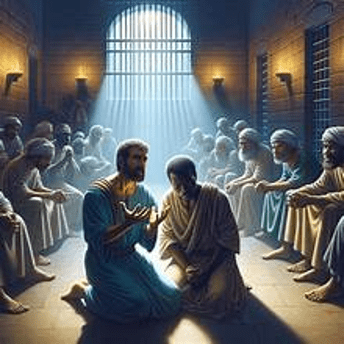
“Well,” thought Peter as he sat in prison that night, “I wonder what’s going to happen next. Is Herod planning to keep me in jail until Passover is through, only to slaughter me as he has James?” Time passed, and Peter became increasingly worried. Now it was the night before he was to face trial, and he knew what kind of trial that would be.

“Jesus,” Peter prayed, “ I might be with you very soon.” In the meantime, Peter remained in prison, bound with two chains between two soldiers with two other sentries guarding the prison entrance. Things appeared hopeless.

The Rescue of Peter

5 So Peter was kept in prison, but the church was fervently praying to God for him.

6 On the night before Herod was to bring him to trial, Peter was sleeping between two soldiers, bound with two chains, with sentries standing guard at the entrance to the prison. 7 Suddenly an angel of the Lord appeared and a light shone in the cell. He tapped Peter on the side and woke him up, saying, “Get up quickly.” And the chains fell off his wrists. 8 “Get dressed and put on your sandals,” said the angel. Peter did so, and the angel told him, “Wrap your cloak around you and follow me.”

9 So Peter followed him out, but he was unaware that what the angel was doing was real. He thought he was only seeing a vision. 10 They passed the first and second guards and came to the iron gate leading to the city, which opened for them by itself. When they had gone outside and walked the length of one block, the angel suddenly left him.

11 Then Peter came to himself and said, “Now I know for sure that the Lord has sent His angel and rescued me from Herod’s grasp and from everything the Jewish people were anticipating.”

Peter really thought it was a vision. Surely, he was still in that prison chained to those two soldiers. But an angel appeared, ordering him to get dressed and follow him. Not until the iron gate to the city swung open by itself did Peter realize that he was out of prison. The angel led Peter for a short distance and then left him.

12 And when he had realized this, he went to the house of Mary the mother of John, also called Mark, where many people had gathered together and were praying. 13 He knocked at the outer gate, and a servant girl named Rhoda came to answer it. 14 When she recognized Peter’s voice, she was so overjoyed that she forgot to open the gate, but ran inside and announced, “Peter is standing at the gate!”

15 “You are out of your mind,” they told her. But when she kept insisting it was so, they said, “It must be his angel.”

16 But Peter kept on knocking, and when they opened the door and saw him, they were astounded. 17 Peter motioned with his hand for silence, and he described how the Lord had brought him out of the prison. “Send word to James and to the brothers,” he said, and he left for another place.

18 At daybreak there was no small commotion among the soldiers as to what had become of Peter. 19 After Herod had searched for him unsuccessfully, he examined the guards and ordered that they be executed. Then he went down from Judea to Caesarea and spent some time there.

Although the church had been praying, they really didn’t expect very much. Morning would soon come, the night breeze was freshening, birds were beginning to sing, and hope had gone. Would Herod have soldiers cut Peter down as he had James, or would he crucify Peter? Then Peter knocked at the gate of Mary’s house, where those praying had gathered. When the servant girl tried to report that Peter was free and at the gate, nobody believed her. When Rhoda insisted, finally someone trudged reluctantly to the gate, only to be astounded when Peter greeted them. But Peter was no fool. After greeting the believers and charging them to send messages, he left for an undisclosed location.

Sadly, the sentries who had been guarding Peter paid with their lives for his escape. And Herod, incensed at being thwarted, left for Caesarea on the coast where he could enjoy the sea air.

Two different disciples, each equally faithful. But James paid with his life as the first recorded martyr while Peter was miraculously delivered. Was God fair? Is He fair? Why did the two men suffer such different fates?

A late pastor friend was fond of saying that we are only in advertising while God is in management. Isaiah 55:8-9 tells us, “My thoughts are nothing like your thoughts,” says the Lord. And my ways are far beyond anything you could imagine. For just as the heavens are higher than the earth, so my ways are higher than your ways and my thoughts higher than your thoughts.” As I am writing these words, I am thinking about all the Christians in northern Nigeria who have been slaughtered in their churches, all the school children kidnapped by Islamic militants. There is a great deal of evil in the world.

I have no ready answers for any of these questions. I only know that God loved James right through the gates of heaven, just as He has every martyr in the history of the world. Eventually, Peter would also be martyred, enduring crucifixion in a head-down position because he felt unworthy to suffer in the same fashion as Jesus.

Years ago, Edith Schaeffer wrote a book entitled Affliction in which she contended that the grace of God was sufficient for all circumstances. So there are those who are healed or delivered from prison as Peter was, demonstrating that the power of God can easily accomplish that. On the other hand, there are those who are not healed or who are martyred, demonstrating that the grace of God is sufficient for those circumstances as well. Edith’s own husband, Francis Schaeffer, a famous theologian and Christian apologist, was dying with cancer at the time she wrote the book. The testimony of the Schaeffer family serves as a timeless witness that yes, the grace of God is sufficient for those suffering with cancer.

God is not fair as we count fairness, for we feel everyone should be treated exactly the same way. But God is merciful and just, knowing us better than we know ourselves. May we always trust in God, secure in the knowledge that He will never leave us or forsake us and that He will gladly bring believers to His heavenly home.

PRAYER: Father God, thank You for loving us and caring for us. Lord, help us to trust Your goodness and mercy, even when things are difficult. In the mighty and precious Name of King Jesus. Amen.
JUNE 13, 2026 REMAINING FAITHFUL AFTER A MOUNTAINTOP EXPERIENCE? #20 BE AN ENCOURAGER!

June 13, 2026

The Church in Antioch of Syria

Acts 11:19 Meanwhile, the believers who had been scattered during the persecution after Stephen’s death traveled as far as Phoenicia, Cyprus, and Antioch of Syria. They preached the word of God, but only to Jews. 20 However, some of the believers who went to Antioch from Cyprus and Cyrene began preaching to the Gentiles about the Lord Jesus. 21 The power of the Lord was with them, and a large number of these Gentiles believed and turned to the Lord.

Peter’s testimony about the events at Cornelius’ house electrified the church! So God sovereignly chose to baptize Gentiles in the Holy Spirit and wasn’t’ even demanding that they keep any of the multitude of Jewish laws. What were things coming to? And now believers were preaching the Gospel in Antioch and Gentiles were flocking to the Lord. We generally fail to give credit to these early believers, for in preaching to Gentiles, they are exposing themselves to uncleanness, making it difficult if not impossible to worship in the temple without undergoing ritual purification. Remember that many of these early believers are thorough-going Jews, schooled in the minutiae of the Jewish religion. But God is working in the hearts of these people just as much as He is in thehearts of their converts.

22 When the church at Jerusalem heard what had happened, they sent Barnabas to Antioch. 23 When he arrived and saw this evidence of God’s blessing, he was filled with joy, and he encouraged the believers to stay true to the Lord. 24 Barnabas was a good man, full of the Holy Spirit and strong in faith. And many people were brought to the Lord.

Although we know this man by the name Barnabas, “Son of Encouragement,” his true name was Joseph and he was a Levite from Cyprus. Barnabas must have been a joy to be around. Whenever people met Barnabas, they were always encouraged and uplifted. Joy is contagious, and Barnabas was a joyful man. Barnabas was also brilliant and humble. Barnabas could see that these new converts needed more teaching than he could give them, and he knew exactly where to find a great teacher. Paul had been cooling his heels in his home town of Tarsus ever since he caused so many problems in Jerusalem that the church leaders had to pack him off to Caesarea and put him on a ship back to Tarsus.  But Paul’s time of waiting is over, and now he joins Barnabas in one of the greatest partnerships of all time.

25 Then Barnabas went on to Tarsus to look for Saul. 26 When he found him, he brought him back to Antioch. Both of them stayed there with the church for a full year, teaching large crowds of people. (It was at Antioch that the believers were first called Christians.)

27 During this time some prophets traveled from Jerusalem to Antioch. 28 One of them named Agabus stood up in one of the meetings and predicted by the Spirit that a great famine was coming upon the entire Roman world. (This was fulfilled during the reign of Claudius.) 29 So the believers in Antioch decided to send relief to the brothers and sisters in Judea, everyone giving as much as they could. 30 This they did, entrusting their gifts to Barnabas and Saul to take to the elders of the church in Jerusalem.

When revival breaks out, people become generous, sharing whatever they have. Now these new believers in Antioch band together to send relief gifts to Jerusalem with Paul and Barnabas. Such phenomena continue to the present day. One outstanding example of charity during ongoing revival is the deeds that accompanied the Methodist movement under John Wesley. Humble villagers shared their resources. Wealthy individuals coming under the influence of the Holy Spirit became equally generous. It has been said that the only thing that prevented Great Britain from suffering a bloody revolution similar to that of France was the Methodist revival.

Jewish believers might not realize it, but their church will continue to move further and further away from traditional Judaism the longer things go on and the more believers are persecuted. Now people on the streets of Antioch of Syria are calling these believers Christians, a title that will echo down through the ages.

It’s likely that those believers from Cyprus and Cyrene who were preaching in Antioch were merchants going about their normal pursuits. But wherever these people went, their customers and colleagues could tell there was something different about them. These people were joyful, fair, and loving-qualities not common among many groups of merchants. Once people began asking why these people were different, the way was open to speak about Jesus.

In mission circles, it’s popular to speak about people groups, small groups with particular interests or particular trades. I once spoke with a young man in Long Island who owned a sail boat. “If I accept Jesus, will I have to give up my boat?” he asked.

“No,” I replied. “You can reach people in the sailing community who would never listen to me for an instant.”

When Moses had his interview with God at the burning bush, God asked Moses, “What is that in your hand?” All Moses had in his hand was his shepherd’s staff, but that staff was sufficient for God to use it in all kinds of ways. When we yield our lives to God, God will send us to people with whom we can identify. My husband has a prayer ministry to uniformed service members because he is a U.S. Navy veteran. Only when we reach heaven will we know how many lives my husband has touched. God can use our professions, our hobbies, and our recreation to reach people if we will only yield our lives to Him. So today, what is that in your hand? There are people waiting whom you can reach for God if you will open your life and your heart to Him.

PRAYER: Father God, thank You for loving us and caring for us. Lord, help us to tell others about You and to demonstrate Your love and encouragement wherever we go. In the matchless Name of King Jesus. Amen.

JUNE 12, 2026 REMAINING FAITHFUL AFTER A MOUNTAINTOP EXPERIENCE? #19 GOD ISN’T INTERESTED IN OUR PREJUDICES #3

June 12, 2026

Acts 11 Peter Explains His Actions

11:1 Soon the news reached the apostles and other believers in Judea that the Gentiles had received the word of God. 2 But when Peter arrived back in Jerusalem, the Jewish believers criticized him. 3 “You entered the home of Gentiles and even ate with them!” they said.

Well, it was going to happen sooner or later. Jesus had no problem eating with tax collectors and allowing a prostitute to bathe his feet with her tears and wipe them with her hair; however, the Jewish believers are pickier than Jesus. Forgetting that Jesus has adjured them to go throughout the world making disciples of every nation, the Jews are horrified that Peter has entered a Gentile home and has even eaten with them. There appears to be a major disconnect between the idea of telling people about Jesus and sharing fellowship with them. But these Jewish believers are in for a shock.

4 Then Peter told them exactly what had happened. 5 “I was in the town of Joppa,” he said, “and while I was praying, I went into a trance and saw a vision. Something like a large sheet was let down by its four corners from the sky. And it came right down to me. 6 When I looked inside the sheet, I saw all sorts of tame and wild animals, reptiles, and birds. 7 And I heard a voice say, ‘Get up, Peter; kill and eat them.’

8 “‘No, Lord,’ I replied. ‘I have never eaten anything that our Jewish laws have declared impure or unclean.’

At this point, Peter’s listeners are nodding sagely, agreeing with Peter’s orthodox position. Surely God agrees with them…or does He?

9 “But the voice from heaven spoke again: ‘Do not call something unclean if God has made it clean.’ 10 This happened three times before the sheet and all it contained was pulled back up to heaven.

11 “Just then three men who had been sent from Caesarea arrived at the house where we were staying. 12 The Holy Spirit told me to go with them and not to worry that they were Gentiles. These six brothers here accompanied me, and we soon entered the home of the man who had sent for us. 13 He told us how an angel had appeared to him in his home and had told him, ‘Send messengers to Joppa, and summon a man named Simon Peter. 14 He will tell you how you and everyone in your household can be saved!’

15 “As I began to speak,” Peter continued, “the Holy Spirit fell on them, just as he fell on us at the beginning. 16 Then I thought of the Lord’s words when he said, ‘John baptized with water, but you will be baptized with the Holy Spirit.’ 17 And since God gave these Gentiles the same gift he gave us when we believed in the Lord Jesus Christ, who was I to stand in God’s way?”

18 When the others heard this, they stopped objecting and began praising God. They said, “We can see that God has also given the Gentiles the privilege of repenting of their sins and receiving eternal life.”

Orthodox or not, these men are bright enough to remember Jesus’ teachings that you can’t put new wine into old wineskins or the old wineskins will burst as the new wine ferments and expands. And as Peter is speaking, the Holy Spirit is also moving in the hearts of his listeners. These men are neither cruel nor vindictive, but simply stuck in one mode of thinking. As Peter speaks, these men are forced to re-evaluate every assumption they have made as to the nature of being a Jesus follower. In the beginning, these men have assumed that Jesus followers will naturally be observant Jews, but God seems to be turning that idea on its head. How else has this Roman learned about Simon Peter and how else has the Holy Spirit descended on everyone in Cornelius’ household without any formal laying on of hands? Truly, God is making His Will known, and it’s not lining up with anybody’s previous assumptions.

When I was in med school, I worked in a lab with a research scientist who had a poster on the wall that read “we have always done it that way!” The obvious implication was that in scientific inquiry, such thinking would be deadly. But the phrase is just as deadly in spiritual matters. God is forever doing new things. Isaiah 43:19 tells us, “For I am about to do something new. See, I have already begun! Do you not see it? I will make a pathway through the wilderness. I will create rivers in the dry wasteland.” Lamentations 3:22-23 says, “The faithful love of the Lord never ends! His mercies never cease. Great is his faithfulness; his mercies begin afresh each morning.”

Jesus told his disciples that he had not come to set the Law of Moses aside but to fulfill it. But once Jesus shed his blood on the cross at Calvary, mankind was no longer locked into a system of animal sacrifices to make propitiation for sin. That Calvary sacrifice completely blew away the idea of earning one’s way into heaven. Jesus’ death was the “newest thing” that God had ever done.

Why did God choose Peter to witness to Cornelius? Peter had his faults; he was impetuous and given to bulling his way through situations. But Peter was also intensely practical and open to the leading of the Holy Spirit. And Peter had enough gumption that when other Jewish believers attempted to cow him into agreeing with them, he stood up and forthrightly described the amazing vision God had given him.

Peter is one of my favorite disciples because I can identify with him. I too have made grandiose statements of faith, only to fail. Sometimes I too attempt to force situations. But Peter’s example gives me hope. Later on, Peter will falter a bit, only for Paul to correct him. But the morning that Peter defends the leading of the Holy Spirit and His descent on a group of Gentiles is a glorious moment in Peter’s life. May all of us have holy boldness so that when God does a new thing in our lives, we are willing to stand and testify, rather than trying to downgrade it.

PRAYER: Father God, thank You for loving us and caring for us. Lord, help us to discern Your perfect Will and then to do it. Help us to be willing to stand against criticism and opposition, even when it comes from our friends and colleagues. In the mighty and precious Name of King Jesus. Amen.