Archive for June, 2026

JUNE 12, 2026 REMAINING FAITHFUL AFTER A MOUNTAINTOP EXPERIENCE? #19 GOD ISN’T INTERESTED IN OUR PREJUDICES #3

June 12, 2026

Acts 11 Peter Explains His Actions

11:1 Soon the news reached the apostles and other believers in Judea that the Gentiles had received the word of God. 2 But when Peter arrived back in Jerusalem, the Jewish believers criticized him. 3 “You entered the home of Gentiles and even ate with them!” they said.

Well, it was going to happen sooner or later. Jesus had no problem eating with tax collectors and allowing a prostitute to bathe his feet with her tears and wipe them with her hair; however, the Jewish believers are pickier than Jesus. Forgetting that Jesus has adjured them to go throughout the world making disciples of every nation, the Jews are horrified that Peter has entered a Gentile home and has even eaten with them. There appears to be a major disconnect between the idea of telling people about Jesus and sharing fellowship with them. But these Jewish believers are in for a shock.

4 Then Peter told them exactly what had happened. 5 “I was in the town of Joppa,” he said, “and while I was praying, I went into a trance and saw a vision. Something like a large sheet was let down by its four corners from the sky. And it came right down to me. 6 When I looked inside the sheet, I saw all sorts of tame and wild animals, reptiles, and birds. 7 And I heard a voice say, ‘Get up, Peter; kill and eat them.’

8 “‘No, Lord,’ I replied. ‘I have never eaten anything that our Jewish laws have declared impure or unclean.’

At this point, Peter’s listeners are nodding sagely, agreeing with Peter’s orthodox position. Surely God agrees with them…or does He?

9 “But the voice from heaven spoke again: ‘Do not call something unclean if God has made it clean.’ 10 This happened three times before the sheet and all it contained was pulled back up to heaven.

11 “Just then three men who had been sent from Caesarea arrived at the house where we were staying. 12 The Holy Spirit told me to go with them and not to worry that they were Gentiles. These six brothers here accompanied me, and we soon entered the home of the man who had sent for us. 13 He told us how an angel had appeared to him in his home and had told him, ‘Send messengers to Joppa, and summon a man named Simon Peter. 14 He will tell you how you and everyone in your household can be saved!’

15 “As I began to speak,” Peter continued, “the Holy Spirit fell on them, just as he fell on us at the beginning. 16 Then I thought of the Lord’s words when he said, ‘John baptized with water, but you will be baptized with the Holy Spirit.’ 17 And since God gave these Gentiles the same gift he gave us when we believed in the Lord Jesus Christ, who was I to stand in God’s way?”

18 When the others heard this, they stopped objecting and began praising God. They said, “We can see that God has also given the Gentiles the privilege of repenting of their sins and receiving eternal life.”

Orthodox or not, these men are bright enough to remember Jesus’ teachings that you can’t put new wine into old wineskins or the old wineskins will burst as the new wine ferments and expands. And as Peter is speaking, the Holy Spirit is also moving in the hearts of his listeners. These men are neither cruel nor vindictive, but simply stuck in one mode of thinking. As Peter speaks, these men are forced to re-evaluate every assumption they have made as to the nature of being a Jesus follower. In the beginning, these men have assumed that Jesus followers will naturally be observant Jews, but God seems to be turning that idea on its head. How else has this Roman learned about Simon Peter and how else has the Holy Spirit descended on everyone in Cornelius’ household without any formal laying on of hands? Truly, God is making His Will known, and it’s not lining up with anybody’s previous assumptions.

When I was in med school, I worked in a lab with a research scientist who had a poster on the wall that read “we have always done it that way!” The obvious implication was that in scientific inquiry, such thinking would be deadly. But the phrase is just as deadly in spiritual matters. God is forever doing new things. Isaiah 43:19 tells us, “For I am about to do something new. See, I have already begun! Do you not see it? I will make a pathway through the wilderness. I will create rivers in the dry wasteland.” Lamentations 3:22-23 says, “The faithful love of the Lord never ends! His mercies never cease. Great is his faithfulness; his mercies begin afresh each morning.”

Jesus told his disciples that he had not come to set the Law of Moses aside but to fulfill it. But once Jesus shed his blood on the cross at Calvary, mankind was no longer locked into a system of animal sacrifices to make propitiation for sin. That Calvary sacrifice completely blew away the idea of earning one’s way into heaven. Jesus’ death was the “newest thing” that God had ever done.

Why did God choose Peter to witness to Cornelius? Peter had his faults; he was impetuous and given to bulling his way through situations. But Peter was also intensely practical and open to the leading of the Holy Spirit. And Peter had enough gumption that when other Jewish believers attempted to cow him into agreeing with them, he stood up and forthrightly described the amazing vision God had given him.

Peter is one of my favorite disciples because I can identify with him. I too have made grandiose statements of faith, only to fail. Sometimes I too attempt to force situations. But Peter’s example gives me hope. Later on, Peter will falter a bit, only for Paul to correct him. But the morning that Peter defends the leading of the Holy Spirit and His descent on a group of Gentiles is a glorious moment in Peter’s life. May all of us have holy boldness so that when God does a new thing in our lives, we are willing to stand and testify, rather than trying to downgrade it.

PRAYER: Father God, thank You for loving us and caring for us. Lord, help us to discern Your perfect Will and then to do it. Help us to be willing to stand against criticism and opposition, even when it comes from our friends and colleagues. In the mighty and precious Name of King Jesus. Amen.
JUNE 11, 2026 REMAINING FAITHFUL AFTER A MOUNTAINTOP EXPERIENCE? #18 GOD ISN’T INTERESTED IN OUR PREJUDICES PART 2

June 11, 2026

Acts 10: 24 They arrived in Caesarea the following day, and Cornelius was waiting for him and had called together his relatives and close friends to meet Peter. 25 As Peter entered his home, Cornelius fell to the floor before him in worship.

26 But Peter said, “Stand up! I’m not a god!”

27 So he got up, and they talked together for a while and then went in where the others were assembled.

28 Peter told them, “You know it is against the Jewish laws for me to come into a Gentile home like this. But God has shown me in a vision that I should never think of anyone as inferior. 29 So I came as soon as I was sent for. Now tell me what you want.”

When Peter enters the house, Cornelius looks at him and immediately falls to his knees. Unless we realize the Roman mindset of racial superiority over all conquered people, we fail to realize the incredible significance of this act. Romans don’t bow to others; others bow to Romans, particularly to Roman commanders. Even the Jewish religious leaders demonstrate respect, although they draw the line at bowing. Even Cornelius’ family members and friends are aghast at this act of humility, for they too are Romans to the core. But the Holy Spirit is with Peter, and Cornelius senses the presence of the Holy Spirit.

So many times, as believers we fail to remember that we are not representing ourselves, but representing the One True Living God. We fail to realize that others are seeing something we are not. When we act by the inspiration of the Holy Spirit, others feel the Spirit’s influence. Conversely, when we act without the Holy Spirit’s influence, people will feel the influence of whatever spirit is moving us. Sobering thought, right?

Notice that Peter is still vainly trying to cling to his prejudices as he explains that God has sent him to a gentile home. Despite the heavenly vision, despite God repeating the vision three times, Peter is still moved by the teaching he has received since childhood. But Peter also has obeyed, coming promptly. Change is never easy, and Peter is changing, but it’s painful.

30 Cornelius replied, “Four days ago I was praying as usual at this time of the afternoon, when suddenly a man was standing before me clothed in a radiant robe! 31 He told me, ‘Cornelius, your prayers are heard and your charities have been noticed by God! 32 Now send some men to Joppa and summon Simon Peter, who is staying in the home of Simon, a tanner, down by the shore.’ 33 So I sent for you at once, and you have done well to come so soon. Now here we are, waiting before the Lord, anxious to hear what he has told you to tell us!”

Wow! At this point, Peter is shocked. First, it’s obvious that God has graphically revealed Himself to this Roman authority. Now Peter realizes that God is the One who has directed Cornelius where and how to send for him. And now this man is anxious, ANXIOUS to hear what God has told Peter to tell him and his family and friends. What an opportunity!

34 Then Peter replied, “I see very clearly that the Jews are not God’s only favorites! 35 In every nation he has those who worship him and do good deeds and are acceptable to him. 36-37 I’m sure you have heard about the Good News for the people of Israel—that there is peace with God through Jesus, the Messiah, who is Lord of all creation. This message has spread all through Judea, beginning with John the Baptist in Galilee. 38 And you no doubt know that Jesus of Nazareth was anointed by God with the Holy Spirit and with power, and he went around doing good and healing all who were possessed by demons, for God was with him.

39 “And we apostles are witnesses of all he did throughout Israel and in Jerusalem, where he was murdered on a cross. 40-41 But God brought him back to life again three days later and showed him to certain witnesses God had selected beforehand—not to the general public, but to us who ate and drank with him after he rose from the dead. 42 And he sent us to preach the Good News everywhere and to testify that Jesus is ordained of God to be the Judge of all—living and dead. 43 And all the prophets have written about him, saying that everyone who believes in him will have their sins forgiven through his name.”

Peter begins to tell the company about Jesus, assuming that he will give a message, that they will ask questions, and that things will progress gradually. Not once does Peter anticipate what God is about to do.

44 Even as Peter was saying these things, the Holy Spirit fell upon all those listening! 45 The Jews who came with Peter were amazed that the gift of the Holy Spirit would be given to Gentiles too! 46-47 But there could be no doubt about it, for they heard them speaking in tongues and praising God.

How do Peter and his friends recognize that the Holy Spirit has descended on all those in Cornelius’ house? They hear the assembled company speaking in tongues and praising God. Those receiving the Holy Spirit must have spoken in recognizable tongues; otherwise, the Jews would have termed it as gibberish. Perhaps some of the Jews were from various places with regional languages or dialects. God could certainly ensure that those speaking in tongues would say something intelligible.

Peter asked, “Can anyone object to my baptizing them, now that they have received the Holy Spirit just as we did?” 48 So he did, baptizing them in the name of Jesus, the Messiah. Afterwards Cornelius begged him to stay with them for several days.

We’ll never know what Peter thought he was coming to do at Cornelius’ house. Perhaps Peter planned to tell the company about Jesus, to gradually take them along, and eventually baptize them. But God has taken over, baptizing everyone in the household in the Holy Spirit. What can Peter do? All that is left is to conduct believer’s baptism in water.

Why is this story so important? There are many lessons to be drawn from this story; however, one of the most important points is that God remains sovereign. When we are doing God’s work, God might take over at any point, bypassing our carefully constructed plans and acting powerfully in ways we cannot anticipate. Generally, our plans are far too small! While Peter might have had good intentions, he might never have laid hands on Cornelius and his group to receive the Holy Spirit. That’s when God stepped in. Later, Peter will use this act of God as evidence that God wants the gentiles as well as the Jews to come to a saving faith.

Years ago, J.B. Phillips wrote a book entitled Your God is Too Small. In that book. Phillips conclusively demonstrated that most of us have no conception of the power of God or any idea of God’s greatness. The book is a small classic and well worth reading. When given a divine vision and marching orders, Peter obeyed; however, until Peter entered Cornelius’ house, his ideas about God were far too small. For the rest of Peter’s life, God would continue to expand Peter’s views of His greatness and majesty.

a

How big is the God you claim to serve? Are you serving the Lord God, Creator and Master of the Universe, or have you squeezed God into some kind of a little box? When Peter thought he knew what God would do, God proceeded to send the Holy Spirit on an unlikely group of people. Never be afraid to trust that the God who has created you can sustain you and lead you into new avenues of ministry.

PRAYER: Father God, thank You for loving us and caring for us. Lord, help us to follow hard after You, even when You are ignoring our prejudices and preferences. In the mighty and precious Name of King Jesus. Amen.

JUNE 10, 2026 REMAINING FAITHFUL AFTER A MOUNTAINTOP EXPERIENCE? #17 GOD ISN’T INTERESTED IN OUR PREJUDICES PART 1

June 10, 2026

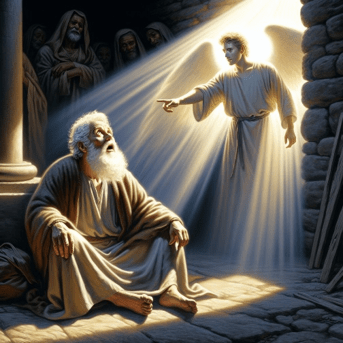
Acts 10:1 In Caesarea there lived a Roman army officer, Cornelius, a captain of an Italian regiment. 2 He was a godly man, deeply reverent, as was his entire household. He gave generously to charity and was a man of prayer. 3 While wide awake one afternoon he had a vision—it was about three o’clock—and in this vision he saw an angel of God coming toward him.

“Cornelius!” the angel said.

4 Cornelius stared at him in terror. “What do you want, sir?” he asked the angel.

And the angel replied, “Your prayers and charities have not gone unnoticed by God! 5-6 Now send some men to Joppa to find a man named Simon Peter, who is staying with Simon, the tanner, down by the shore, and ask him to come and visit you.”

7 As soon as the angel was gone, Cornelius called two of his household servants and a godly soldier, one of his personal bodyguard, 8 and told them what had happened and sent them off to Joppa.

If Cornelius had not been sent to this tiny country with its intransigent population that clung to the Mosaic Laws, he might have remained a worshiper of Mithras. But despite all the oaths, all the blood sacrifices, all the rituals, Cornelius could find no peace. Only when Cornelius came to Israel, to Herod’s port city of Caesarea, did he begin to catch traces of holiness.  And once that hunger for holiness had been kindled, Cornelius found himself increasingly drawn into the Jewish religion. But one problem remained: the problem of sin. How could animal sacrifices possibly pay for the sins of a man? And what about the lives of many of the Jewish religious leaders? Surely, there has to be something more, some additional way to experience God. Charitable acts help, but they’re not satisfying. Cornelius wants a God big enough to truly worship.

9-10 The next day as they were nearing the city, Peter went up on the flat roof of his house to pray. It was noon and he was hungry, but while lunch was being prepared, he fell into a trance. 11 He saw the sky open and a great canvas sheet, suspended by its four corners, settle to the ground. 12 In the sheet were all sorts of animals, snakes, and birds forbidden to the Jews for food.

13 Then a voice said to him, “Go kill and eat any of them you wish.”

14 “Never, Lord,” Peter declared, “I have never in all my life eaten such creatures, for they are forbidden by our Jewish laws.”

15 The voice spoke again, “Don’t contradict God! If he says something is kosher, then it is.”

16 The same vision was repeated three times. Then the sheet was pulled up again to heaven.

17 Peter was very perplexed. What could the vision mean? What was he supposed to do?

Just then the men sent by Cornelius had found the house and were standing outside at the gate, 18 inquiring whether this was the place where Simon Peter lived!

19 Meanwhile, as Peter was puzzling over the vision, the Holy Spirit said to him, “Three men have come to see you. 20 Go down and meet them and go with them. All is well, I have sent them.”

Peter is perplexed. True, he has been a fisherman for years; however, he has always observed the Jewish dietary laws and has tried to follow the commands of Moses. But now God Himself is sending a vision indicating that nothing is unclean as far as God is concerned. And the vision is repeated three times, three being a sign of divinity and infinity. When God wants to assure believers that a message is from Him, he confirms it by repeating it three times.

Just as Peter is scratching his head in confusion, the messengers from Cornelius appear at the door, seeking Simon Peter by name. Here’s another conundrum; how have these Romans learned Peter’s name? Peter has tended to avoid Romans as much as possible. But the Holy Spirit informs Peter that these men have come to see him and that He, the Holy Spirit has sent them.

21 So Peter went down. “I’m the man you’re looking for,” he said. “Now what is it you want?”

22 Then they told him about Cornelius the Roman officer, a good and godly man, well thought of by the Jews, and how an angel had instructed him to send for Peter to come and tell him what God wanted him to do.

23 So Peter invited them in and lodged them overnight. The next day he went with them, accompanied by some other believers from Joppa.

It’s a funny thing about God; He delights in turning our cherished prejudices upside down and inside out. We are SURE we know the people who are acceptable to God; meanwhile, God is busy delivering people whom we deem beyond salvation.

Years ago, I heard a testimony from a man who had been a fervent member of the Hell’s Angels somewhere in the northwest. As a highly intelligent man with strong administrative talents, this guy had been one of the chief organizers of the various crimes his group was involved in-drug dealing, prostitution, and a host of other unsavory activities. Meanwhile, this man’s mother continued to pray for him faithfully. Years passed, and this man resisted everything his mother could say; however, he could not resist the Holy Spirit. Eventually, this guy came under the conviction of the Holy Spirit and wanted to leave the Hell’s Angels; however, he knew too much. The motorcycle gang members were hunting this man to eliminate him before he could report their activities to law authorities.

Things became critical and the guy wound up in a phone booth with gang members closing in on him. He called his mother, who ordered him to look up local churches in the phone book and call the first pastor God brought to mind. There were several miracles-first, the gang members didn’t drag him out of the phone booth; second, there was a phone book, and third, when he called a local pastor, the man who turned up was a former Marine who looked bigger and tougher than any of the gang members! The fourth miracle happened when the gang members allowed the pastor to lead the man from the phone booth to his pickup truck. The pastor took this man home with him and led him to the Lord. A few months after witnessing this man’s testimony, I moved to Charleston, SC, where I met the man’s mother when I joined a local church there. This precious lady verified everything that her son had said, and added that he had become an evangelist with a particular ministry to motorcycle gang members.

Nobody is beyond salvation. Nobody is beyond the reach of the Holy Trinity, Father, Son and Holy Spirit. May we copy Peter’s willingness to listen to the Holy Spirit and be channels of God’s love to all those around us, no matter how they appear.

PRAYER: Father God, thank You for loving us and caring for us. Lord, help us to be channels of Your love to all those around us, irrespective of appearances. In the mighty and precious Name of King Jesus. Amen.  
JUNE 9, 2026 REMAINING FAITHFUL AFTER A MOUNTAINTOP EXPERIENCE? #16 AND SOMETIMES GOD USES YOU TO DO MIRACLES DESPITE YOURSELF

June 9, 2026

Acts 9:32 Peter traveled from place to place to visit them, and in his travels came to the believers in the town of Lydda. 33 There he met a man named Aeneas, paralyzed and bedridden for eight years.

34 Peter said to him, “Aeneas! Jesus Christ has healed you! Get up and make your bed.” And he was healed instantly. 35 Then the whole population of Lydda and Sharon turned to the Lord when they saw Aeneas walking around.

Peter has witnessed miracles before. Right after the descent of the Holy Spirit on the Day of Pentecost, God allowed Peter to be a channel of His healing. As Peter walked through the streets of Jerusalem, anyone on whom his shadow fell was healed instantly. At first, Peter was likely unaware of what was happening. There’s no evidence that these miracles of healing continue throughout his ministry. Why do the miracle healings cease? Only God knows. But God is still working through Peter.

Why does Peter speak to Aeneas, proclaiming healing? The Holy Spirit is directing Peter, and as Peter looks at Aeneas, the Holy Spirit tells Peter to lay hands on him. The instant healing of Aeneas sparks a revival in which two entire towns turn to the Lord.

36 In the city of Joppa there was a woman named Dorcas (“Gazelle”), a believer who was always doing kind things for others, especially for the poor. 37 About this time she became ill and died. Her friends prepared her for burial and laid her in an upstairs room. 38 But when they learned that Peter was nearby at Lydda, they sent two men to beg him to return with them to Joppa. 39 This he did; as soon as he arrived, they took him upstairs where Dorcas lay. The room was filled with weeping widows who were showing one another the coats and other garments Dorcas had made for them. 40 But Peter asked them all to leave the room; then he knelt and prayed. Turning to the body he said, “Get up, Dorcas,” and she opened her eyes! And when she saw Peter, she sat up! 41 He gave her his hand and helped her up and called in the believers and widows, presenting her to them.

42 The news raced through the town, and many believed in the Lord. 43 And Peter stayed a long time in Joppa, living with Simon, the tanner.

Peter is still in Lydda, where Aeneas has been healed. Now Peter moves to the port city of Joppa when a wonderful believing lady named Dorcas dies and her friends beg Peter to come. The death of Dorcas is a community tragedy, for Dorcas has been making garments for widows. In a time when widows without caring children can go naked or hungry, Dorcas has been an enormous blessing. Dorcas’ friends are devastated, and they decide to beg God for a miracle. Peter agrees, lays hands on Dorcas, only for God to raise Dorcas from the dead. This miracle sets Joppa on fire spiritually, causing many people to trust in Jesus. Peter remains in Joppa, staying with Simon the tanner, another believer. Little does Peter realize that God has moved him to Joppa for an amazing revelation.

The most impressive aspects of these verses are the healing of Aeneas and the resurrection of Dorcas. But if we only focus on the dramatic, we miss the way God is quietly moving Peter like a chess piece on a game board. Peter is moving around to minister to believers, simply going from place to place as the Holy Spirit guides him. Now God is moving Peter to Joppa because it is on the coast and close to Caesarea, where there’s a Roman official hungry for truth about God.

In God’s economy, there are no mistakes and no wasted motions. While we think we are experiencing random events, God is managing everything. Years ago, we were traveling down I-55 from Illinois to Memphis. We briefly pulled off the interstate to use toilet facilities and then proceeded. Somewhere near Sikeston, Missouri, we came upon a fresh traffic accident. A sedan car headed north with 5 passengers had crossed the median, striking a motor home headed south. A man and his wife were traveling to their new retirement home, and the husband was driving a motor home towing a car behind it. The wife was driving a large pickup truck towing a bass boat. As an EMT, my husband immediately moved to the car; unfortunately, everyone in that vehicle was dead. Meanwhile, I examined the husband, realizing that he had suffered an intestinal injury from his seat belt. When the ambulance arrived, the husband and wife rode to the hospital together while my husband drove our vehicle and I drove the large pickup truck towing the bass boat. At the hospital, the husband went immediately to operation, where the surgeon learned that my diagnosis was correct. We comforted the wife, remaining with her until her husband was out of surgery. At that point, we proceeded on to Memphis. God had our schedule precisely arranged so that we would arrive precisely in time.

One of our friends is fond of describing “God-incidences” rather than coincidences. May we all trust that God is arranging our steps and our stops.

PRAYER: Father God, thank You for loving us and caring for us. Lord, help us to remember that You are the One who arranges our lives. Help us to trust You. In the mighty and precious Name of King Jesus. Amen.
JUNE 8, 2026 REMAINING FAITHFUL AFTER A MOUNTAINTOP EXPERIENCE? #15 DON’T EXPECT OTHERS TO BE IMPRESSED WITH YOUR EXPERIENCE

June 8, 2026

He (Paul) stayed with the believers in Damascus for a few days 20 and went at once to the synagogue to tell everyone there the Good News about Jesus—that he is indeed the Son of God!

21 All who heard him were amazed. “Isn’t this the same man who persecuted Jesus’ followers so bitterly in Jerusalem?” they asked. “And we understand that he came here to arrest them all and take them in chains to the chief priests.”

22 Paul became more and more fervent in his preaching, and the Damascus Jews couldn’t withstand his proofs that Jesus was indeed the Christ.

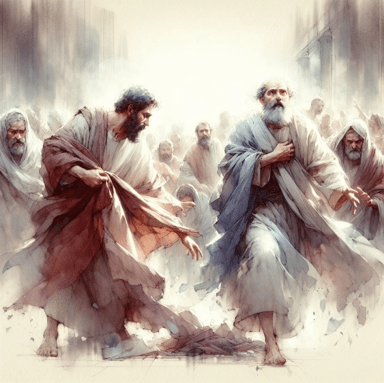
23 After a while the Jewish leaders determined to kill him. 24 But Paul was told about their plans, that they were watching the gates of the city day and night prepared to murder him. 25 So during the night some of his converts let him down in a basket through an opening in the city wall!

Never let it be said that Paul is a shrinking violet! No sooner has Paul regained his vision than he immediately goes to the synagogues in Damascus, testifying about Jesus and presenting irrefutable arguments that Jesus is the Messiah and that he has already lived, died, and has been resurrected. This is NOT the message the Jews in Damascus have been anticipating. What’s worse, many Jews are now believing in Jesus because of Paul’s compelling testimonies. Jewish religious leaders are incensed; if this guy isn’t going to help them, then he needs to be eliminated. Getting wind of these threats, some of Paul’s new converts load him into a large basket and let him down from a window on the city wall at night. Paul was anticipating a triumphal entry into Damascus, but now he’s blindly entered the city with others leading him and leaving ignominiously as a fugitive. Paul’s entry into new life as a Christian has become a trial by fire.

26 Upon arrival in Jerusalem he tried to meet with the believers, but they were all afraid of him. They thought he was faking! 27 Then Barnabas brought him to the apostles and told them how Paul had seen the Lord on the way to Damascus, what the Lord had said to him, and all about his powerful preaching in the name of Jesus. 28 Then they accepted him, and after that he was constantly with the believers 29 and preached boldly in the name of the Lord. But then some Greek-speaking Jews with whom he had argued plotted to murder him. 30 However, when the other believers heard about his danger, they took him to Caesarea and then sent him to his home in Tarsus.

Once Paul reaches Jerusalem, the apostles have no idea what to do with this new colleague. There’s no doubt that Paul is brilliant, able to dissect the most challenging points of Scripture. In later generations, discussions similar to Paul’s will be referred to as apologetics. But Paul’s confrontational tactics infuriate Jewish intellectuals, particularly some Greeks who find Paul quoting Greek philosophers to support the position of Jesus as Messiah. Are these Greeks the same group that caused problems for Stephen? Possible. Remember, as Greek believers, these people must struggle for recognition by the Hebrews. Reporting Paul to the Sanhedrin might gain these people more recognition within Judaism. Concerned about Paul’s safety as well as their own, the fledgling church in Jerusalem sends Paul to Herod’s magnificent port of Caesarea, where he takes a ship back to his home city of Tarsus.

31 Meanwhile, the church had peace throughout Judea, Galilee and Samaria, and grew in strength and numbers. The believers learned how to walk in the fear of the Lord and in the comfort of the Holy Spirit.

Once more, we read simple verses that bear in-depth consideration. Frankly, the early church is not yet prepared to defend itself from all the problems a fiery evangelist like Paul can cause. The church needs peace and time to grow in strength and numbers and to learn how to walk in the fear of the Lord and the comfort of the Holy Spirit. Church leaders must work out requirements for spiritual leadership, communication, and emergency preparedness. Paul also needs time to develop his life of faith.

During the Last Supper, Jesus warns his disciples that they will be persecuted. John 15:19 The world would love you if you belonged to it; but you don’t—for I chose you to come out of the world, and so it hates you. 20 Do you remember what I told you? ‘A slave isn’t greater than his master!’ So since they persecuted me, naturally they will persecute you. And if they had listened to me, they would listen to you! 21 The people of the world will persecute you because you belong to me, for they don’t know God who sent me.

Jesus knows that he will endure suffering and eventual death. But for Jesus’ followers, they need time to develop prayer lives, to learn how to relate to the Holy Spirit, and to walk in the fear of the Lord. These people require time to develop lives of faith so that when persecution come, they would be able to endure and triumph. But what about Paul? How did his faith develop?

https://www.gotquestions.org/Paul-in-Arabia.html

Paul was in Arabia (including Damascus and the surrounding desert) for at least three years immediately after his conversion. Some speculate that Paul spent this time in relative seclusion, perhaps living as a desert hermit and sorting out the implications of his new faith. However, the biblical record emphasizes that he immediately began preaching in the synagogues. Acts 9:22 does not present the picture of a man who is just “figuring it out”: “Saul grew more and more powerful and baffled the Jews living in Damascus by proving that Jesus is the Messiah.” When he left Damascus, with its significant Jewish population, it is reasonable to assume that he did the very thing that Jesus had called him to do—preach the gospel to the Gentiles. This does not eliminate the possibility that he spent solitary time in study of the Scriptures, prayer, and contemplation as he probably did throughout his life. Even in prison near the end of his death, he asks Timothy to bring “my scrolls, especially the parchments” (2 Timothy 4:13). However, the point in Galatians 1 is that Paul already had a vigorous apostolic ministry before meeting with the apostles in Jerusalem, and from Acts 9 this ministry started immediately. For three years he spread the gospel in Damascus and in the surrounding countryside (see the helpful discussion in The Epistle to the Galatians: The New International Greek Text Commentary by F. F. Bruce, Eerdmans, 1982, p. 97).

Although Acts seems to imply that Paul went straight from Damascus to Jerusalem, it’s more likely that he spent three years in what is now Syria, praying and learning about Jesus. Only after this period, did Paul go to Jerusalem.

What can we learn from Paul’s three years in “Arabia” and the experiences of the early Christians? Developing a vibrant faith takes time; spiritual maturity is not something achieved in an instant. How can we develop our faith? I return to the prayer of our late friend, who always prayed, “Lord, help me to love You more each day than I did the day before.” When we trust God to lead us into His Truth and we study His Word, we can trust that God will do exactly that.

PRAYER: Father God, thank You for loving us and caring for us. Lord, help us to learn how to walk in the fear of the Lord and in the comfort of the Holy Spirit. Help us to love You more each day than we did the day before. In the mighty and precious Name of King Jesus. Amen.

JUNE 7, 2026 REMAINING FAITHFUL AFTER A MOUNTAINTOP EXPERIENCE? #14 WHAT IF YOU WEREN’T ON THE MOUNTAINTOP?

June 7, 2026

Acts 9:1 But Paul, threatening with every breath and eager to destroy every Christian, went to the High Priest in Jerusalem. 2 He requested a letter addressed to synagogues in Damascus, requiring their cooperation in the persecution of any believers he found there, both men and women, so that he could bring them in chains to Jerusalem.

3 As he was nearing Damascus on this mission, suddenly a brilliant light from heaven spotted down upon him! 4 He fell to the ground and heard a voice saying to him, “Paul! Paul! Why are you persecuting me?”

5 “Who is speaking, sir?” Paul asked.

And the voice replied, “I am Jesus, the one you are persecuting! 6 Now get up and go into the city and await my further instructions.”

7 The men with Paul stood speechless with surprise, for they heard the sound of someone’s voice but saw no one! 8-9 As Paul picked himself up off the ground, he found that he was blind. He had to be led into Damascus and was there three days, blind, going without food and water all that time.

Well, it finally happened. Saul of Tarsus, a.k.a. Paul, that fiery Pharisee of the Pharisees, is on his way to Damascus, hoping to seize Christians there and drag them back to Jerusalem in chains. Such an action should prove conclusively that Paul is truly a guardian of the faith…or is he? Even though Paul didn’t throw stones at Stephen, he watched the cloaks of the men who did the stoning. But while Paul was standing there sneering at Stephen, he also heard Stephen testifying that Stephen was seeing the heavens open and witnessing Jesus sitting at the right hand of God. The memory of that testimony has rankled Paul’s equanimity ever since. Imagine! This man claims to have seen God Almighty as he is dying? How? Surely that statement must be the result of a rock striking Stephen’s head…or did he REALLY see God?

Shrugging off the growing conviction that Stephen really did see God and Jesus, Paul collects letters of reference to the synagogues in Damascus and sets off, determined to wipe out the expanding cell of Jesus believers there. Paul is arguing with himself for the hundredth time and is nearly at Damascus when suddenly a piercing bright light shines around him, blinding him. Stunned, Paul falls to the ground and a voice from heaven cries out, “Paul! Paul! Why are you persecuting me?”

5 “Who is speaking, sir?” Paul asked.

And the voice replied, “I am Jesus, the one you are persecuting! 6 Now get up and go into the city and await my further instructions.”

The men with Paul hear a voice; however, they don’t witness the bright light. Meanwhile, Paul has been blinded by the light and must be led into Damascus. Paul’s companions lead him to a house owned by a man named Judas, where Paul spends the next three days praying and fasting. And now God is preparing the next act in this play.

10 Now there was in Damascus a believer named Ananias. The Lord spoke to him in a vision, calling, “Ananias!”

“Yes, Lord!” he replied.

11 And the Lord said, “Go over to Straight Street and find the house of a man named Judas and ask there for Paul of Tarsus. He is praying to me right now, for 12 I have shown him a vision of a man named Ananias coming in and laying his hands on him so that he can see again!”

13 “But Lord,” exclaimed Ananias, “I have heard about the terrible things this man has done to the believers in Jerusalem! 14 And we hear that he has arrest warrants with him from the chief priests, authorizing him to arrest every believer in Damascus!”

15 But the Lord said, “Go and do what I say. For Paul is my chosen instrument to take my message to the nations and before kings, as well as to the people of Israel. 16 And I will show him how much he must suffer for me.”

Ananias has had visions before, but this one is both thrilling and shocking. Christians in Damascus are well aware of Paul and his plans and have even been discussing what they should do when he arrives. Now suddenly, God is ordering Ananias to go to Paul, exposing himself as a Jesus follower, and risking his life and the lives of his family and friends and their families. Ananias is terrified, for such exposure might mean persecution and death; however, amazingly, Ananias obeys God without questioning or arguing.

Reading this story, it’s easy to gloss over the enormity of Ananias’ simple act of obedience. The risks involved are monumental. And even if Paul is receptive, what about the men who have accompanied him? Paul isn’t the only zealot in Jerusalem, and his companions might be just as dangerous. Throughout the history of Christianity, there have been countless believers whose obedience has led to untold blessings for millions of people. Charles G. Finney was an atheist lawyer in Adams, New York, when a group of young people decided to pray earnestly for his conversion. Finney became one of the foremost revivalist preachers of the mid-nineteenth century and a man of inspiring faith. It was a Sunday School teacher concerned for one of the young men in his class who led Dwight L. Moody to the Lord in the back of the shoe store where Moody was working. Moody became one of the greatest evangelists of the nineteenth century. David Wilkerson left a small coal mining town in Pennsylvania to go to the slums of New York City to evangelize gang members.

17 So Ananias went over and found Paul and laid his hands on him and said, “Brother Paul, the Lord Jesus, who appeared to you on the road, has sent me so that you may be filled with the Holy Spirit and get your sight back.”

18 Instantly (it was as though scales fell from his eyes) Paul could see and was immediately baptized. 19 Then he ate and was strengthened.

It’s tough to know who is more shocked at the results of Ananias’ prayer, Paul or Ananias. Ananias has come and he has obediently laid hands on Paul; however, he has no idea what God is about to do. Can God heal Paul without the physical manifestation of scales falling from his eyes? Of course. But God is just as concerned for Ananias as he is for Paul, and God knows that Ananias needs to be able to witness some physical manifestation to bolster his faith. Ananias is going to take the tale of Paul’s healing back to all the other believers in Damascus, and they will be strengthened and encouraged by his witness. God is very economical and He always gets the maximum amount of benefit out of any of His actions.

On the Day of Pentecost, the Holy Spirit descends on those gathered in the Upper Room, giving them a true mountaintop experience. But now Paul has his own unique mountaintop experience, one that cannot be argued away. Through the years, there have been many arguments regarding Paul’s “thorn in the flesh,” that many regard as some kind of eye problems. Is it possible that Paul’s eyes incur some injury from that heavenly light on the road to Damascus? Certainly, such an injury would cause Paul to remember his encounter with Jesus for the rest of his life.  

Many people have demanded that God give them a dramatic Damascus Road experience so that they can believe in God. But Paul was sincerely searching for God and trying to serve Him; he simply was doing it all wrong. The men with Paul heard Jesus’ voice but did not see anything. Perhaps God has been sending experiences, but people are looking in the wrong direction. Remember Elizabeth Barrett Browning: “Earth is crammed with heaven, and every common bush afire with God. And only those who see take off their shoes; the rest sit round and pluck blackberries.”

Paul’s experience is unique; but remember that God loves you just as much as He does Paul. Sometimes  we fail to recognize mountaintop experiences because they’re not dramatic. The Holy Spirit can come in all kinds of ways, and many times He comes quietly and simply. May God give us receptive hearts so that we will be open to His presence whenever and however He chooses to manifest Himself.

PRAYER: Father God, thank You for loving us and caring for us. Lord, give us open hearts to receive Your goodness and Your mercy and Your love. In the matchless Name of King Jesus. Amen.

JUNE 6, 2026 REMAINING FAITHFUL AFTER A MOUNTAINTOP EXPERIENCE? #13 AND SOMETIMES GOD PICKS YOU UP AND SENDS YOU TO NEW PLACES

June 6, 2026

Acts 8:26 But as for Philip, an angel of the Lord said to him, “Go over to the road that runs from Jerusalem through the Gaza Desert, arriving around noon.” 27 So he did, and who should be coming down the road but the Treasurer of Ethiopia, a eunuch of great authority under Candace the queen. He had gone to Jerusalem to worship 28 and was now returning in his chariot, reading aloud from the book of the prophet Isaiah.

29 The Holy Spirit said to Philip, “Go over and walk along beside the chariot.”

30 Philip ran over and heard what he was reading and asked, “Do you understand it?”

31 “Of course not!” the man replied. “How can I when there is no one to instruct me?” And he begged Philip to come up into the chariot and sit with him.

32 The passage of Scripture he had been reading from was this:

“He was led as a sheep to the slaughter, and as a lamb is silent before the shearers, so he opened not his mouth; 33 in his humiliation, justice was denied him; and who can express the wickedness of the people of his generation? For his life is taken from the earth.”

34 The eunuch asked Philip, “Was Isaiah talking about himself or someone else?”

35 So Philip began with this same Scripture and then used many others to tell him about Jesus.

36 As they rode along, they came to a small body of water, and the eunuch said, “Look! Water! Why can’t I be baptized?”

37 “You can,” Philip answered, “if you believe with all your heart.”

And the eunuch replied, “I believe that Jesus Christ is the Son of God.”

38 He stopped the chariot, and they went down into the water and Philip baptized him. 39 And when they came up out of the water, the Spirit of the Lord caught away Philip, and the eunuch never saw him again, but went on his way rejoicing. 40 Meanwhile, Philip found himself at Azotus! He preached the Good News there and in every city along the way, as he traveled to Caesarea.

In the beginning, there were seven men chosen to oversee the feeding of widows of various ethnic groups. Stephen served as administrator, while others filled various positions. Philip was one of those selected for this task. While Stephen was a gifted orator, Philip was one of those guys who had never met a stranger. Philip’s mother used to say that Philip could talk the legs off a donkey. Philip would simply smile, shrug his shoulders, and find someone else with whom he could chat. Philip has just been in Samaria telling Samaritans about Jesus and marveling at the results the Holy Spirit has brought. But never in Philip’s wildest dreams has he imagined how God is about to use him.As one of Stephen’s colleagues in the Christian program for feeding widows, Philip has fled Jerusalem after Stephen’s death and has been preaching in Samaria. Now God gives Philip a weird order. “Go over to the road that runs from Jerusalem through the Gaza Desert, arriving around noon.” The first miracle is that Philip hears God; the second is that Philip obeys implicitly, arriving precisely when God commands. God’s timing is perfect and Philip soon finds himself witnessing to the Treasurer of Ethiopia, one of the key officers under Candace, Queen of Ethiopia. And now for the third miracle: the Ethiopian is reading from the Book of Isaiah, the Scripture that contains more prophesies about the Messiah than any other Old Testament book. Philip sidles up and introduces himself.

The Ethiopian is entranced by the description of the suffering Messiah and begins asking Philip piercing questions. Thrilled, Philip immediately begins telling about Jesus, quoting many other Scripture passages describing Jesus. The fourth miracle comes when the Ethiopian asks to be baptized. How does this man know about baptism? Has Philip told about Jesus being baptized by John the Baptist or the teachings of Jesus about baptism? We don’t know; perhaps the Holy Spirit speaks to his heart. And there is a pool of water available. Those of us living in temperate climates might pass over that small statement; however, this is a DESERT place and water of any kind is very scarce, let alone a pool large enough to accommodate a baptism. Philip conducts the baptism, thrilling the Ethiopian official. Then as the two men are coming up out of the water, God picks Philip and transports him to Azotus on the coast. The Ethiopian official goes on his way rejoicing while Philip, equally joyful, preaches his way up the coast from Azotos to Caesarea.

Stephen and Philip-two men who both answer the call to serve; yet, their fates are quite different. Stephen dies swiftly, his death forcing believers to leave Jerusalem, scattering throughout the known world. Philip lives for many more years, eventually being martyred in Phrygia, now part of modern Turkey, by being crucified upside down in a death similar to that of Peter’s. What makes the difference for the two men?

God is the One who calls and equips. God knows that Stephen will speak convincingly to his murderers, witnessing to them even as he is dying. Whether or not Saul/Paul realizes it, God uses Stephen’s death to convince him when the time comes. Only in eternity will we know how many others came to faith in Christ as Stephen lay dying.

Evidently, Philip has a winsome personality, the kind of fellow who can speak to people, gain their trust, and then explain Scripture with a heart of burning love. Not only has Philip closely studied Jesus’ life and teachings, but he also has a deep breadth of knowledge of the Scripture. Some people are born to teach the Bible while others only gain that ability after years of study. But nobody can be an effective Bible teacher unless he or she passionately loves God and His Word.

Writing to Timothy, Paul advises, “And so I solemnly urge you before God and before Christ Jesus—who will someday judge the living and the dead when he appears to set up his Kingdom— 2 to preach the Word of God urgently at all times, whenever you get the chance, in season and out, when it is convenient and when it is not. Correct and rebuke your people when they need it, encourage them to do right, and all the time be feeding them patiently with God’s Word.

3 For there is going to come a time when people won’t listen to the truth but will go around looking for teachers who will tell them just what they want to hear. 4 They won’t listen to what the Bible says but will blithely follow their own misguided ideas.

5 Stand steady, and don’t be afraid of suffering for the Lord. Bring others to Christ. Leave nothing undone that you ought to do.” (2 Timothy 4:1-5)

Stephen’s career as a believer was cut short by an early martyrdom. Philip traveled extensively, preaching wherever he went and eventually dying for his faith. The question for us is this: Do we love God? Do we love His Word? If we will only ask, God will give us a love for Him. The more we love God, the more we will love His Word as well. One blessed friend who is now with Jesus used to pray, “Lord help me to love You more each day than I did the day before.” Let that be our prayer.

PRAYER: Father God, thank You for loving us and caring for us. Lord, our hearts are heavy and cold. Please send Your Holy Spirit to light the fire of love for You in our hearts. Let that fire burn forever. In the mighty and precious Name of King Jesus. Amen.
JUNE 5, 2026 REMAINING FAITHFUL AFTER A MOUNTAINTOP EXPERIENCE? #12 GOD MIGHT SEND YOU TO PEOPLE YOU DON’T EVEN LIKE!

June 5, 2026

Acts 8:1 Paul was in complete agreement with the killing of Stephen.

And a great wave of persecution of the believers began that day, sweeping over the church in Jerusalem, and everyone except the apostles fled into Judea and Samaria. 2 (But some godly Jews came and with great sorrow buried Stephen.) 3 Paul was like a wild man, going everywhere to devastate the believers, even entering private homes and dragging out men and women alike and jailing them.

4 But the believers who had fled Jerusalem went everywhere preaching the Good News about Jesus! 

When Jesus was giving his final address to his disciples, he told them, “But when the Holy Spirit has come upon you, you will receive power to testify about me with great effect, to the people in Jerusalem, throughout Judea, in Samaria, and to the ends of the earth, about my death and resurrection.” Until now, the believers have managed to huddle in Jerusalem. True, their numbers are growing; however, nobody seems ready to leave the city. But when persecution strikes, these people have no choice but to go everywhere and preach the Good News as they go.

5 Philip, for instance, went to the city of Samaria and told the people there about Christ. 6 Crowds listened intently to what he had to say because of the miracles he did. 7 Many evil spirits were cast out, screaming as they left their victims, and many who were paralyzed or lame were healed, 8 so there was much joy in that city!

Samaria! Ah, Samaria! When the Assyrians decimated the Northern Kingdom, they moved in all kinds of people from other lands to farm the land. These people brought their own religions with them; however, they suffered attacks from lions until they sent for Jewish teachers who taught them the Law of Moses. But the religion of the Samaritans remained a syncretistic one, combining Jewish traditions with idolatry. For the Jews, the Samaritans were dangerous half-breeds. And when the Jews refused to allow the Samaritans to have any hand in rebuilding Jerusalem, the Samaritans reciprocated. For centuries, there was enmity between Jews and Samaritans. Now here’s Philip, one of the other heads of the feeding program in Jerusalem, preaching to Samaritans, doing miracles, casting our demons, and healing all comers. Samaria has never seen anything like this before!

9-11 A man named Simon had formerly been a sorcerer there for many years; he was a very influential, proud man because of the amazing things he could do—in fact, the Samaritan people often spoke of him as the Messiah. 12 But now they believed Philip’s message that Jesus was the Messiah, and his words concerning the Kingdom of God; and many men and women were baptized. 13 Then Simon himself believed and was baptized and began following Philip wherever he went, and was amazed by the miracles he did.

Now word reaches Jerusalem of revival in Samaria, and Peter and John rush to help Philip. As soon as they arrive, they begin praying for people to receive the Holy Spirit. People’s lives are being transformed and joy is bathing their faces.

14 When the apostles back in Jerusalem heard that the people of Samaria had accepted God’s message, they sent down Peter and John. 15 As soon as they arrived, they began praying for these new Christians to receive the Holy Spirit, 16 for as yet he had not come upon any of them. For they had only been baptized in the name of the Lord Jesus. 17 Then Peter and John laid their hands upon these believers, and they received the Holy Spirit.

18 When Simon saw this—that the Holy Spirit was given when the apostles placed their hands upon people’s heads—he offered money to buy this power.

19 “Let me have this power too,” he exclaimed, “so that when I lay my hands on people, they will receive the Holy Spirit!”

20 But Peter replied, “Your money perish with you for thinking God’s gift can be bought! 21 You can have no part in this, for your heart is not right before God. 22 Turn from this great wickedness and pray. Perhaps God will yet forgive your evil thoughts— 23 for I can see that there is jealousy and sin in your heart.”

24 “Pray for me,” Simon exclaimed, “that these terrible things won’t happen to me.”

25 After testifying and preaching in Samaria, Peter and John returned to Jerusalem, stopping at several Samaritan villages along the way to preach the Good News to them too.

Simon the magician was enjoying a local reputation as the Messiah until Philip came preaching about Jesus. Swiftly, Simon realized that all his machinations were useless and that Jesus was the true Messiah; however, there was the matter of people receiving the Holy Spirit. If Simon were to give up his pseudo miracles and his demonic involvement, perhaps he could still make profit from praying for people to receive the Holy Spirit. But Peter and John realize Simon’s true motives and confront him. Simon repents; while we hear nothing further, we hope that repentance remains for the rest of Simon’s life. And now Peter and John preach their way back to Jerusalem, going from one Samaritan village to the next.

The Book of Acts focuses a lot on Peter and John; however, don’t overlook Philip. Philip is the one who first went to Samaria, overcoming his strong prejudices, and who began preaching in the Samaritan villages and doing miracles. Peter and John came to help and to strengthen the work, but Jesus remained the focus. Ministry is always a team effort, not a solitary one.

Sometimes God calls us to witness when we don’t want to. During my general surgery residency, we had a patient with chronic abdominal pain whose diagnosis had defied every test and every kind of treatment we could offer. I had discharged this patient and was back in my apartment across the street from the hospital when I got a call that the patient was there and still in pain. I absolutely did not want to dress in my scrubs and go over there; however, God insisted that I go. I was so resistant that I told the Lord that if He didn’t give me the words, I would be sitting there with my teeth in my mouth with nothing to say. (I know, not a model of obedience.) Trudging back to the hospital, I began speaking with this lady. Before I knew it, I was giving this lady part of my testimony about how Jesus had changed my life. Then I prayed for this lady, and suddenly the pain went away entirely. Ten minutes later, the lady’s friends picked her up, and she left for her home two hours away. I firmly believe that lady received Jesus and was healed that day.

Why tell this story? When we give God even a sliver of obedience, He can use it. My attitude was terrible, but I went and God did the rest. Never be afraid to step out, for God can handle your lousy attitudes.

PRAYER: Father God, thank You for loving us and caring for us. Lord, help us to be obedient, even when you send us to people whom we don’t like. In the mighty and precious Name of King Jesus. Amen.
JUNE 4, 2026 REMAINING FAITHFUL AFTER A MOUNTAINTOP EXPERIENCE? #11 SOMETIMES MOUNTAINTOP EXPERIENCES ARE TO PREPARE US FOR CONFRONTATIONS

June 4, 2026

Act 7:1 Then the High Priest asked him, “Are these accusations true?”

2 This was Stephen’s lengthy reply: “The glorious God appeared to our ancestor Abraham in Iraq before he moved to Syria, 3 and told him to leave his native land, to say good-bye to his relatives and to start out for a country that God would direct him to. 4 So he left the land of the Chaldeans and lived in Haran, in Syria, until his father died. Then God brought him here to the land of Israel, 5 but gave him no property of his own, not one little tract of land.

“However, God promised that eventually the whole country would belong to him and his descendants—though as yet he had no children! 6 But God also told him that these descendants of his would leave the land and live in a foreign country and there become slaves for 400 years. 7 ‘But I will punish the nation that enslaves them,’ God told him, ‘and afterwards my people will return to this land of Israel and worship me here.’

8 “God also gave Abraham the ceremony of circumcision at that time, as evidence of the covenant between God and the people of Abraham. And so Isaac, Abraham’s son, was circumcised when he was eight days old. Isaac became the father of Jacob, and Jacob was the father of the twelve patriarchs of the Jewish nation. 9 These men were very jealous of Joseph and sold him to be a slave in Egypt. But God was with him, 10 and delivered him out of all of his anguish, and gave him favor before Pharaoh, king of Egypt. God also gave Joseph unusual wisdom so that Pharaoh appointed him governor over all Egypt, as well as putting him in charge of all the affairs of the palace…

39 “But our fathers rejected Moses and wanted to return to Egypt. 40 They told Aaron, ‘Make idols for us, so that we will have gods to lead us back; for we don’t know what has become of this Moses, who brought us out of Egypt.’ 41 So they made a calf idol and sacrificed to it, and rejoiced in this thing they had made.

42 “Then God turned away from them and gave them up, and let them serve the sun, moon, and stars as their gods! In the book of Amos’ prophecies the Lord God asks, ‘Was it to me you were sacrificing during those forty years in the desert, Israel? 43 No, your real interest was in your heathen gods—Sakkuth, and the star god Kaiway, and in all the images you made. So I will send you into captivity far away beyond Babylon.’

44 “Our ancestors carried along with them a portable Temple, or Tabernacle, through the wilderness. In it they kept the stone tablets with the Ten Commandments written on them. This building was constructed in exact accordance with the plan shown to Moses by the Angel. 45 Years later, when Joshua led the battles against the Gentile nations, this Tabernacle was taken with them into their new territory, and used until the time of King David.

46 “God blessed David greatly, and David asked for the privilege of building a permanent Temple for the God of Jacob. 47 But it was Solomon who actually built it. 48-49 However, God doesn’t live in temples made by human hands. ‘The heaven is my throne,’ says the Lord through his prophets, ‘and earth is my footstool. What kind of home could you build?’ asks the Lord. ‘Would I stay in it? 50 Didn’t I make both heaven and earth?’

The Synagogue of the Freedmen has provided false witnesses; however, they can’t agree and their testimony is faltering. Finally, the High Priest questions Stephen. Stephen responds with a lengthy discourse, summarizing the spiritual history of the Jewish people from Abraham onwards. Unfortunately, Stephen describes the entire history, warts and all, including the exile to Babylon because the Israelites refused to worship God and pursued idols instead. The religious leaders love to pontificate about Abraham, Isaac, and Jacob and to speak knowingly about Moses and his Law. But now Stephen is describing things best left hidden.

51 “You stiff-necked heathen! Must you forever resist the Holy Spirit? But your fathers did, and so do you! 52 Name one prophet your ancestors didn’t persecute! They even killed the ones who predicted the coming of the Righteous One—the Messiah whom you betrayed and murdered. 53 Yes, and you deliberately destroyed God’s laws, though you received them from the hands of angels.”

Here Stephen is referring to the prophet Isaiah as well as other prophets who were stoned, sawed in two, or beaten to death. Those who spoke the most about the coming Messiah also suffered the most. The religious leaders are horrified, for they have been grandly referring to these prophets for years as if they were intimate friends. Now Stephen is unmasking the hypocrisy, and these men refuse to stand for it.

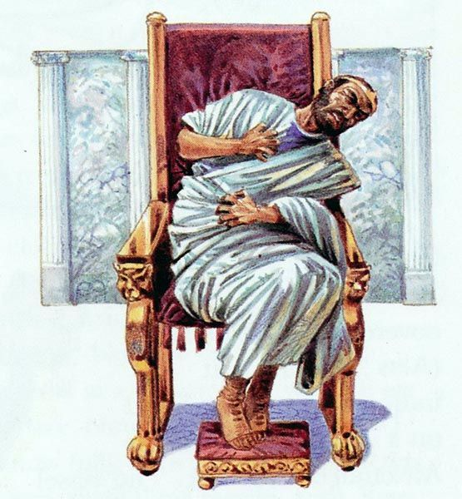
54 The Jewish leaders were stung to fury by Stephen’s accusation and ground their teeth in rage. 55 But Stephen, full of the Holy Spirit, gazed steadily upward into heaven and saw the glory of God and Jesus standing at God’s right hand. 56 And he told them, “Look, I see the heavens opened and Jesus the Messiah standing beside God, at his right hand!”

57 Then they mobbed him, putting their hands over their ears, and drowning out his voice with their shouts, 58 and dragged him out of the city to stone him. The official witnesses—the executioners—took off their coats and laid them at the feet of a young man named Paul.

59 And as the murderous stones came hurtling at him, Stephen prayed, “Lord Jesus, receive my spirit.” 60 And he fell to his knees, shouting, “Lord, don’t charge them with this sin!” and with that, he died.

As Stephen is finishing, he receives a vision of Jesus standing at the right hand of God. As soon as Stephen describes that vision, the mob attacks, with the religious leaders stopping their ears while others drag Stephen out of the city to stone him so they won’t desecrate the city. The exact site of the stoning is unknown; however, it took place outside one of the city gates.

This account makes for gruesome reading, and it’s the first time that Saul of Tarsus is mentioned. Saul doesn’t throw any stones; however, he watches the cloaks of those doing the stoning. Perhaps Saul is trying to distance himself from the violence, feeling himself superior. It really doesn’t matter, for Saul is witnessing a true account of Jesus as Messiah at the right hand of God. That vision is going to haunt Saul.

Sometimes we feel that having enjoyed a mountaintop experience, we are entitled to lives of ease and peace. Spoiler alert: there is no such thing as entitlement in the Kingdom of God, apart from the fact that all of us are sinners and therefore entitled to eternal damnation. Only because of the shed blood of Jesus Christ do we receive forgiveness of sins and eternal life. Mountaintop experiences are given so that we will have the strength and courage to go on when we descend into the valleys. It’s easy to forget the lessons of the mountaintop once we are struggling with myriads of problems. How can we maintain focus?

We must remember that if God has called us, then God will guide us and God will protect us until we have completed His work. Hudson Taylor, founder of the China Inland Mission, was fond of saying that “Man is immortal until his work is done.” But we must keep looking to God, not looking inside ourselves. God is the One who calls and who empowers, so God is the One who must direct. May we keep our eyes on God at all times!

PRAYER: Father God, thank You for loving us and caring for us. Lord, help us to trust You at all times, even when things become scary and difficult. In the mighty and precious Name of King Jesus. Amen.
JUNE 3, 2026 REMAINING FAITHFUL AFTER A MOUNTAINTOP EXPERIENCE? #10 A MOUNTAINTOP EXPERIENCE THAT FAILS TO TEACH YOU TO SERVE IS WORTHLESS!

June 3, 2026

Acts 6:1 But with the believers multiplying rapidly, there were rumblings of discontent. Those who spoke only Greek complained that their widows were being discriminated against, that they were not being given as much food in the daily distribution as the widows who spoke Hebrew. 2 So the Twelve called a meeting of all the believers.

“We should spend our time preaching, not administering a feeding program,” they said. 3 “Now look around among yourselves, dear brothers, and select seven men, wise and full of the Holy Spirit, who are well thought of by everyone; and we will put them in charge of this business. 4 Then we can spend our time in prayer, preaching, and teaching.”

5 This sounded reasonable to the whole assembly, and they elected the following: Stephen (a man unusually full of faith and the Holy Spirit), Philip, Prochorus, Nicanor, Timon, Parmenas, Nicolaus of Antioch (a Gentile convert to the Jewish faith, who had become a Christian).

6 These seven were presented to the apostles, who prayed for them and laid their hands on them in blessing.

Well, it had to happen sooner or later. Once large amounts of resources were coming into the church to be distributed, somebody was going to complain that their ethnic group was being slighted. And that might have truly been the case, for the original disciples were Hebrews, and many of them might not have spoken Greek. The Greek widows might have been shy to come forward for assistance, or they might have assumed that things would happen automatically; meanwhile, the disciples were having to make things up as they went along.

The disciples wisely realized that they must re-examine their calling. Trying to preach and teach as well as administering a feeding program was more than anyone could handle by themselves, no matter how energetic or skillful they were. Humbly, the disciples did not simply sit down and arbitrarily pick people; instead, they solicited advice from seasoned believers as to whom to select for this program. The men thus selected became church leaders and evangelists in their own right. Looking at the names of those selected to administer the feeding program, we see that both Jews and Greeks were included. Some of those men might also have been well enough educated to speak Latin, a distinct help when interacting with the Roman government. The ability to speak fluent Latin would definitely impress a Roman governor resentful at being stuck with this obstinate group of Hebrews.

7 God’s message was preached in ever-widening circles, and the number of disciples increased vastly in Jerusalem; and many of the Jewish priests were converted too.

8 Stephen, the man so full of faith and the Holy Spirit’s power, did spectacular miracles among the people.

9 But one day some of the men from the Jewish cult of “The Freedmen” started an argument with him, and they were soon joined by Jews from Cyrene, Alexandria in Egypt, and the Turkish provinces of Cilicia, and Asia Minor. 10 But none of them was able to stand against Stephen’s wisdom and spirit.

What was the Jewish cult of the “Freedmen?” Jerusalem had one temple, the place of sacrifice, but many synagogues. The Synagogue of the Freedmen had Jews from North Africa (Cyrene and Alexandria are in Libya and Egypt, respectively) and modern-day Turkey (“Cilicia and Asia”) who once had been slaves or prisoners of Rome, and who had settled in Jerusalem after being freed. The Synagogue of the Freedmen had these freed Jews and their children. https://www.bibleversestudy.com/acts/acts6-synagogue-of-the-freedmen.htm

Why would these former slaves pick a grievance with Stephen? While these people are Jewish believers, in Jerusalem they are ethnic outsiders, perpetually scorned by Jewish religious leaders. And they began life as slaves. In many cultures, a history of former slavery is sufficient to limit a family’s social standing for generations. When we first came to our little village 33 years ago, we were told of families descended from slaves. These people were now two or three generations away from slavery; yet, there were those who remembered and perpetuated the stories. Opposing Stephen might have been a ploy to gain recognition and legitimacy with the head Jewish religious leaders at the main temple. After all, everybody knew that these Jesus believers were unpopular with the Jewish religious big men. For all we know, someone might even have slipped leaders from the Freedmen’s Synagogue some money, encouraging them to argue with Stephen.

11 So they brought in some men to lie about him, claiming they had heard Stephen curse Moses, and even God. 12 This accusation roused the crowds to fury against Stephen, and the Jewish leaders arrested him and brought him before the Council. 13 The lying witnesses testified again that Stephen was constantly speaking against the Temple and against the laws of Moses.

14 They declared, “We have heard him say that this fellow Jesus of Nazareth will destroy the Temple and throw out all of Moses’ laws.” 15 At this point everyone in the Council chamber saw Stephen’s face become as radiant as an angel’s!

Some things never change, and false accusations continue to abound. Sometimes lies have long legs Now the same accusations Jesus faced are now surfacing again.. What’s so ridiculous is that if Stephen is a fervent Jesus follower, he would certainly know that Jesus told his disciples, “17 Don’t misunderstand why I have come—it isn’t to cancel the laws of Moses and the warnings of the prophets. No, I came to fulfill them and to make them all come true. 18 With all the earnestness I have I say: Every law in the Book will continue until its purpose is achieved. 19 And so if anyone breaks the least commandment and teaches others to, he shall be the least in the Kingdom of Heaven. But those who teach God’s laws and obey them shall be great in the Kingdom of Heaven.” (Matthew 5:17-19) Encouraging people to ignore the Law of Moses would be anathema to Stephen.

Jesus never threatened to destroy the temple but was rather prophesying his death and resurrection. But when people passionately desire to believe lies, they will refuse to acknowledge truth. Jesus did prophesy that eventually the temple would be destroyed, but he was prophesying about the Roman destruction of Jerusalem that took place in 70 A.D., not claiming that he himself would do anything to the temple. But the religious leaders are not interested in truth but in maintaining power.

The Torah specifically denounces anyone bearing false witness. Deuteronomy 19:15-21 tells us, 15 “Never convict anyone on the testimony of one witness. There must be at least two, and three is even better. 16 If anyone gives false witness, claiming he has seen someone do wrong when he hasn’t, 17 both men shall be brought before the priests and judges on duty before the Lord at the time. 18 They must be closely questioned, and if the witness is lying, 19 his penalty shall be the punishment he thought the other man would get. In this way you will purge out evil from among you. 20 Then those who hear about it will be afraid to tell lies on the witness stand. 21 You shall not show pity to a false witness. Life for life, eye for eye, tooth for tooth, hand for hand, foot for foot; this is your rule in such cases.”

How ironic! Here are the very men who claim to uphold the Mosaic Law deliberately soliciting false testimony, knowing full well that they are endangering the lives of their own false witnesses. While claiming to fulfill every tiny bit of the Law, these men are committing sacrilege.

Why is Stephen being persecuted in the first place? As Stephen is distributing foodstuffs, he is telling people about Jesus, encouraging people, and praying for people. That trifold ministry is extremely powerful, for those being served realize that Stephen is truly acting as a channel of God’s love. The same people who have received encouragement from Stephen will now be able to share with others and encourage them, spreading the ministry in places and among people whom Stephen will never reach. Those opposing Stephen may have all kinds of good reasons that they have used to convince themselves, but they are actually fighting God.

We are never told of Stephen’s reaction when he is selected. Evidently, Stephen simply agrees and begins joyfully doing the work. Stephen does not protest to the disciples that he too should be on the main preaching and teaching team. Stephen does not complain about hardships, long hours, the difficulties of settling arguments among the widows. Stephen simply accepts the assignment and carries it out to perfection.

In missionary circles, there’s a lot of talk about various people groups. One set of friends used to minister to taxi drivers in Hong Kong, who generally lived in their cabs when they weren’t picking passengers. Another friend ministered to factory workers in Taiwan, visiting them in their dormitories. In December 2003, we lived in a slum in Accra while a young friend was having heart surgery at Korle-Bu Teaching Hospital. We were taking tro-tro’s, the small buses most people depend on to commute throughout Accra. We developed a simple “Cough drop evangelism,” giving out cough drops to the tro-tro drivers and telling them a little about Jesus. My husband has a prayer ministry here in Ghana. Having served in the U.S. Navy, my husband wears his Veteran’s cap in public. This allows him to approach uniformed personnel of all kinds-police, fire service, prisons, immigrations, customs-and pray for them. Not once has anybody refused prayer; in fact, those who have seen him previously request prayer again. For Stephen and those working with him, those Greek widows constituted a unique people group, one reached by kindness and generosity.

Look around you. Perhaps there are lonely people who would be encouraged if you repeatedly made some small gesture. And remember God uses mountaintop experiences to fit us for service.

PRAYER: Father God, thank You for loving us and caring for us. Lord, help us to be sensitive to the needs of those around us so that we might be Your hands and feet to serve them. In the mighty and precious Name of King Jesus. Amen.