Archive for December, 2025

DECEMBER 31, 2025 WHAT’S SO IMPORTANT ABOUT BLOOD? #42 THE SACRIFICES OF JESUS’ EARTHLY PARENTS!  

December 31, 2025

Luke 2:39-40 When they finished everything required by God in the Law, they returned to Galilee and their own town, Nazareth. There the child grew strong in body and wise in spirit. And the grace of God was on him.

41-45 Every year Jesus’ parents traveled to Jerusalem for the Feast of Passover. When he was twelve years old, they went up as they always did for the Feast. When it was over and they left for home, the child Jesus stayed behind in Jerusalem, but his parents didn’t know it. Thinking he was somewhere in the company of pilgrims, they journeyed for a whole day and then began looking for him among relatives and neighbors. When they didn’t find him, they went back to Jerusalem looking for him.

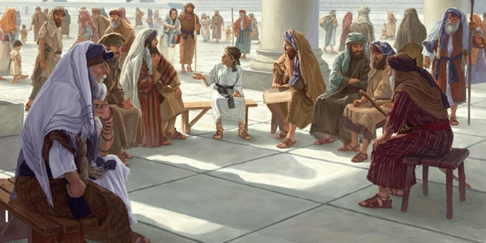
46-48 The next day they found him in the Temple seated among the teachers, listening to them and asking questions. The teachers were all quite taken with him, impressed with the sharpness of his answers. But his parents were not impressed; they were upset and hurt.

His mother said, “Young man, why have you done this to us? Your father and I have been half out of our minds looking for you.”

49-50 He said, “Why were you looking for me? Didn’t you know that I had to be here, dealing with the things of my Father?” But they had no idea what he was talking about.

51-52 So he went back to Nazareth with them, and lived obediently with them. His mother held these things dearly, deep within herself. And Jesus matured, growing up in both body and spirit, blessed by both God and people.

It all started out so well. Joseph, Mary, and Jesus went up to Jerusalem for Passover. While Luke doesn’t mention it, by this point, Jesus probably had several younger siblings who went along as well. If Joseph and Mary were struggling to control a bunch of little kids in the midst of a chaotic crowd, that would explain why they lost sight of Jesus. After all, Jesus was now twelve and about to go through his bar mitzvah, at which point he would be considered as a man who could help make up a minyan, a group of ten men for prayers. Jesus was close to several of the other families from Nazareth; he probably had attached himself to one of those. But once free from Jerusalem and its craziness, Joseph and Mary realized that they hadn’t seen Jesus in more than twenty-four hours and that he wasn’t with the other travelers from Nazareth.

Fearing the worst, Joseph and Mary returned to Jerusalem. After checking the place where the family had lodged, Jesus’ parents went to the temple. As they entered the temple, they could see a large group of scholars clustered together around a much smaller figure. Quietly approaching the group, they realized Jesus was at its center, and the scholars were taking turns asking him questions. What shocked Joseph and Mary was the attitude of the scholars, for they were listening to Jesus seriously, treating him as if he were one of them.

“Jesus!” Mary gasped. “What are you doing?”

“Oh hi, Mother,” Jesus replied.

 Perplexed and angry, Mary continued, “Young man, why have you done this to us? Your father and I have been half out of our minds looking for you.”

“But Father, Mother,” Jesus replied,” why were you looking for me? Didn’t you know that I had to be here, dealing with the things of my Father?”

Mary and Joseph were confused and upset. What did Jesus mean by this statement? What other Father was Jesus referring to, if not to Joseph? Joseph looked at Mary, and Mary looked back at Joseph, shrugging her shoulders.

Finally, Joseph asserted himself, “Well, son, while we are glad that you have such hunger for the things of God, we must return to Nazareth.”

“Certainly, Abba,” Jesus replied. Jesus went around the circle, courteously taking leave of each of them individually.

“Young man, when your parents give permission, you really must return. You show unusual promise,” the eldest scholar stated.

“Oh, thank you, sir. You are too kind. I will certainly return,” replied Jesus, smiling to himself. Little did those scholars realize that Jesus was already thinking years ahead, anticipating that return. By then, many of those men would already have died. Jesus hoped they had heard enough that they would truly know God in His glory and power.

Bowing to all the august group once more, Jesus followed his parents out of the temple and down the steps to the road that led back to Nazareth. Rejoining the group, Jesus returned to Nazareth, to his father’s shop, and to village life. But Mary remembered Simeon’s prophecies and Hannah’s songs. In the stillness of night, Mary wondered what Jesus would eventually do.
“Had they done the right thing by retrieving Jesus from the temple, or should they have allowed him to find his own way home? Were Joseph and she interfering with Jesus’ ministry? How would they know when it was time for Jesus to begin that ministry? It certainly wasn’t easy knowing that Jesus was divine and that at some point, he would leave Nazareth for the larger world.”

If we ignore these few verses, we fail to learn from an important portion of Jesus’ life. After exhibiting his mental and spiritual brilliance, Jesus returned to Nazareth, where we hear virtually nothing about him until he presents himself to John the Baptist at the River Jordan at age 30. For eighteen years, Jesus lived quietly and obediently with his parents, working with his father as a carpenter and perhaps as a stone mason and a part-time farmer. What kind of pressure did Jesus encounter to become married? Ancient rabbis advised age eighteen as the ideal age for young men to marry, although girls might marry as soon as they began menstruating. But there were also some people who remained celibate, with John the Baptist being a prime example.

What kind of pressure did Mary and Joseph suffer because Jesus did not marry? Remember, this family is living in a small village where everybody knows everyone else’s business-or at least thinks they do! Each time Mary fetched water from the village well, she could expect a barrage of questions from the local gossips. “So, Mary, this son of yours, Jesus? Is he actually going to remain single? He’s making a good living, so why doesn’t he pick one of our girls to marry? I can suggest at least three different young ladies, any one of whom would be thrilled to marry him.”

Meanwhile, Joseph would be enduring similar queries. “Joseph, what’s wrong with your eldest son? He seems normal, so why hasn’t he married already? Or has he taken some kind of religious vow? Why don’t you simply meet with one of the local families and select a wife for him?”

Gotquestions.org has this to say about Jesus and celibacy:

Since Jesus was the ideal and model man, it is easy to wonder why He did not marry and father children during His earthly life. As a hard-working and skilled carpenter, a man with a magnetically good character and winsome personality, and with His years of fame and miracle-working, it is likely that more than one woman gave Him opportunity to marry.

No Scripture directly answers the question of why Jesus never married. Several possibilities have been suggested to explain Jesus’ singleness:

1. Jesus did not marry because He had limited time on earth. His strenuous travel and demanding work load would have prevented Him from rightly fulfilling the roles of husband and father. And a wife would have been a distraction to Jesus’ primary mission. A married Jesus would have had to place His wife’s needs above those of the world He came to rescue (see 1 Corinthians 7:32–35).

2. For three years, Jesus lived as a homeless healer-teacher (Luke 9:58). He would not have asked any woman to share such a life. While He now waits for His marriage to His betrothed Bride, the Church, He is preparing for her a heavenly home (John 14:2–3), readying for her a perfect and eternal place of protection.

3. Jesus knew that He had come to die (Isaiah 52:13–53:121 Peter 1:19–20Luke 18:31–33). If He married, He certainly would leave a widow, probably with small children to rear alone. He was incapable of deliberately causing such unnecessary pain.

4. If Jesus had married, His widow most likely would have been glamorized, idolized, deified, and likely physically endangered because of her relationship with Jesus.

5. Another reason that Jesus didn’t marry is likely that He did not wish to produce a blood successor or generate debate over who that successor would be or whether or not His successor should also be considered the “Son of God.” Jesus’ purpose was not to establish an earthly kingdom or a dynasty (see John 18:36).

6. Jesus did not marry because of His uniqueness. In his History of the Christian Church, Philip Schaff writes, “Jesus’ poverty and celibacy have nothing to do with asceticism, but represent, on the one hand the condescension of His redeeming love, and on the other His ideal uniqueness and His absolutely peculiar relation to the whole church, which alone is fit or worthy to be His bride. No single daughter of Eve could have been an equal partner of the Savior of mankind, or the representative head of the new creation” (Vol. III, p. 68). Schaff goes on to explain, “While Jesus was fully human, and therefore fully capable of perfectly fulfilling all aspects of marriage, He also was fully divine. Therefore, no one with only a human nature could be a suitable mate for Him.”

7. Jesus did not marry because He was not on earth to choose one woman above all others. He came to rescue and restore all who would receive Him. For Jesus to form a marital relationship with one woman would inevitably have confused generations to come about the meaning of His relationship with His spiritual Bride, the Church, to whom He was already betrothed (Ephesians 5:25–27Revelation 19:7–1021:922:172 Corinthians 11:2). Jesus reserved Himself for His true, eternal Bride. If He had picked one woman to elevate above all others, He would have contradicted and undermined His ministry to all.

8. In human marriage, husband and wife become “one flesh” (Genesis 2:24). If the divine Jesus, who knew no sin, married a sinful woman (“for all have sinned,” Romans 3:23), His relationship to His wife would have raised some confusing uncertainties. If Jesus had become “one flesh” with a sinner, would that connection have tainted Him with sin? If they had had children, what kind of nature would these children have had? As physical children of the Son of God, what kind of relationships would they have had to God the Father?

These ideas reinforce the New Testament’s descriptions of Jesus as the ideal Man, the only purely righteous and good One who clearly and consistently pointed to eternity. Jesus did not marry because human marriage was not necessary to His mission of saving the world. Although marriage is a picture of Christ’s relationship with the church (Ephesians 5:31–32), it is only a temporary state in light of eternity. Those who by God’s grace through faith are included in that Bride of Christ have every reason to anticipate with eagerness Jesus’ coming to receive them into greater glory and joy than they ever have known on earth
.

For eighteen years, Jesus absorbed everything there was to learn about village life, using those illustrations in later sermons. Jesus also remained obedient and prayerful. But never ignore the sacrifices made by Joseph and Mary. Instead of celebrating Jesus’ marriage and baby namings, Jesus’ earthly parents had to remain patient, tolerating vicious criticism and embarrassing questions from their friends and neighbors. Blood sacrifices are over swiftly, but this sacrifice lasted nearly two decades. Jesus was called to be the Savior of the world. Mary and Joseph were called to raise, protect, and defend Jesus until he left for ministry, leaving an example for all of us. May God help us to remain faithful, even when we must wait decades for God to act!

PRAYER: Father God, thank You for loving us and caring for us. Lord, help us to remain faithful, even when the fulfillment of Your will takes a long time. In the mighty and precious Name of King Jesus. Amen.
DECEMBER 30, 2025 WHAT’S SO IMPORTANT ABOUT BLOOD? #41 BLESSED BE NOTHING!

December 30, 2025

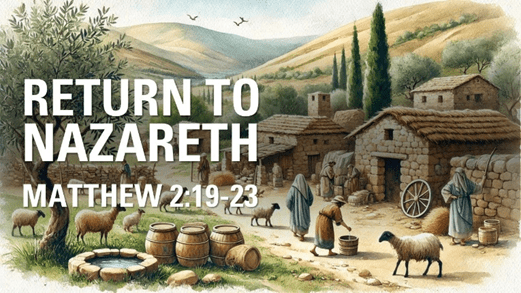
Matthew 2:19-20 Later, when Herod died, God’s angel appeared in a dream to Joseph in Egypt: “Up, take the child and his mother and return to Israel. All those out to murder the child are dead.”

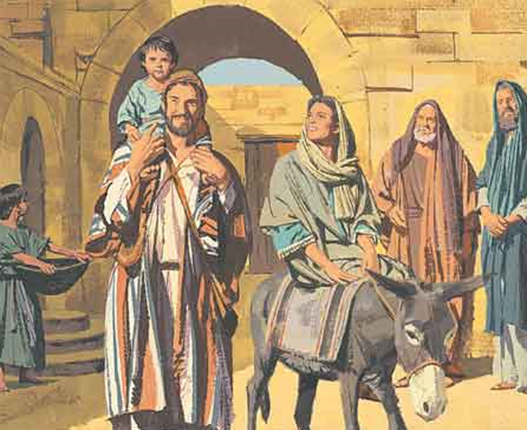
21-23 Joseph obeyed. He got up, took the child and his mother, and reentered Israel. When he heard, though, that Archelaus had succeeded his father, Herod, as king in Judea, he was afraid to go there. But then Joseph was directed in a dream to go to the hills of Galilee. On arrival, he settled in the village of Nazareth. This move was a fulfillment of the prophetic words, “He shall be called a Nazarene.”

Twice God has spoken to Joseph in dreams, and now God speaks one final time. An angel appears in a dream ordering Joseph to return to Israel because “all those out to murder the child are dead.” Wicked King Herod dies, but there’s still danger. King Herod the Great has been succeeded by his son Archelaus, a weak, vicious man who has no problems slaughtering those who oppose him. Archelaus rules half the territory his father ruled, so God warns Joseph once more to settle in Nazareth in the Galilee. Joseph is a carpenter; however, he may also be a stone mason, skills that would be very welcome in a village.

Nazareth proves to be an excellent location for the Holy Family. Not only can Joseph provide necessary services for Nazareth, but the Romans are also building Sepphoris, a model village about 4 miles from Nazareth. The ruins of Sepphoris are open to tourists today, and the magnificent mosaics are well worth viewing. It’s possible that Joseph might have worked on some of the construction projects at Sepphoris.

One pastor’s wife used to tell us, “Blessed be nothing!” Why does God want His Son to grow up in a small village? Even though Jesus is the Son of God, he needs to fully experience what it means to be the “son of man,” and village life can teach that better than any other location.

  1. Jesus needs to understand poverty. Throughout the world, the poor are far more numerous than the rich. Jesus needs to know down to the marrow of his bones the work it takes to provide for a family. Evidence suggests that Joseph likely farmed in addition to doing carpentry or stone masonry. How else will Jesus understand farmers scattering seed, or a village lady desperately searching for the one silver coin she has lost or a shepherd seeking out the one foolish sheep stranded in the mountains? And how else will Jesus be able to crack jokes about a man so unobservant that he runs his face into a beam of wood carried by a carpenter because he’s searching out specks of dust in his neighbor’s eyes?
  2. The relative poverty of Nazareth prepares Jesus for the poverty he will face during his ministry. Once Jesus leaves the family home in Nazareth, he will never be able to claim anyplace as home again until he reaches heaven. Jesus will walk everywhere he goes and will depend on others to feed him. When Jesus calls out a Pharisee for failing to order his servants to wash Jesus’ feet, it’s because those feet have walked long distances over dirty rocky paths that day. There is no evidence to suggest that Jesus owns more than one set of clothing, automatically giving him sympathy with the poorest of the poor. Even more telling, when Jesus and Peter need to pay the temple tax, Jesus tells Peter to go fishing and to reach into a fish’s mouth for the coin that will cover both of them.
  3. Jesus must fully understand the temptations common to the poor. Proverbs 30:7-9 tells us, “Two things I ask of You—do not refuse me before I die: Keep falsehood and deceitful words far from me. Give me neither poverty nor riches; feed me with the bread that is my portion. Otherwise, I may have too much and deny You, saying, ‘Who is the LORD?’ Or I may become poor and steal, profaning the name of my God.…” Even though Jesus is the Son of God and has passed through severe temptations, he continues to be tempted for the remainder of his life. It can get bitterly cold in Israel. Think of Jesus and the disciples, passing through a village on a chill evening as others are withdrawing into small cozy homes perfumed with the fragrant odor of spicey soup. As the little group proceed up the street, local citizens enter their courtyards, baring them against night dangers. Will someone invite Jesus and the disciples in or must they struggle to find food and shelter? Without exception, Jesus must resist the temptation to become his own providence, to miraculously provide for his followers and himself. The moment Jesus fails to rely on his Heavenly Father, Satan has already gained a victory.
  4. Jesus must fully understand what it means to be a social outcast.Face it, nobody is going to beg a poor person to come to their home without an ulterior motive. Even the relatives of poor people are likely to view them in terms of the work they might get from them while handing out a meager reward. Jesus must live this reality so that he can teach about it. In addition, Nazareth is in the Galilee, a region noted for a mixture of Greco-Roman culture plus an overlay of Jewish piety. Jews in other places sneer at the Galileans, feeling they are semi-heretics, poorly educated, and certainly second-class Jews.
  5. Jesus needs poverty for credibility. Poor people won’t accept Jesus’ messages if he finishes teaching and runs back to a gated compound where he can enjoy a luxurious lifestyle being catered to by lots of servants.

Matthew 20:28 “For the Son of Man came not to be served, but to serve, and to give His life a ransom for many.” Jesus doesn’t need wealth, for ultimately he will own the riches of heaven. But Jesus does need poverty, for the poverty of Nazareth, its socially unfavorable location, and the struggles that ensue will combine to shape Jesus and to fit him for ministry. As our friend was fond of saying, “Blessed be nothing!”

PRAYER: Father God, thank You for loving us and caring for us. Lord, we bless You and praise You for sending Jesus to Nazareth, where he would learn the lessons and gain the experience necessary for his ministry. Thank You that no experience, no suffering, is ever wasted in Your Economy. In the mighty and precious Name of King Jesus. Amen.
DECEMBER 29, 2025 WHAT’S SO IMPORTANT ABOUT BLOOD? #40 WHAT ABOUT THOSE GIFTS FROM THE WISE MEN?

December 29, 2025

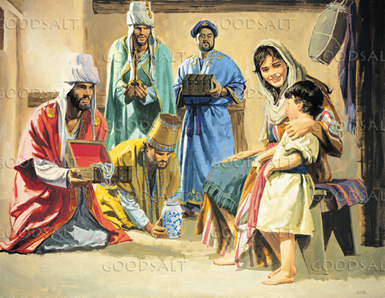
Matthew 2:11 “They entered the house and saw the child in the arms of Mary, his mother. Overcome, they kneeled and worshiped him. Then they opened their luggage and presented gifts: gold, frankincense, myrrh.

12 In a dream, they were warned not to report back to Herod. So they worked out another route, left the territory without being seen, and returned to their own country.”

 By the time the Magi found Joseph, Mary, and Jesus, the family was still in Bethlehem; however, Jesus was several months old and might even have been walking. This is a bigger thing than we realize, for this little family was about to have to run for their lives. Now that Jesus was a toddler, his body was much stronger than if he had been a newborn. The Magi were thrilled and immediately bowed and then opened their gifts, rich gifts such as neither Mary nor Joseph had ever seen.

What about those gifts? Again, David Guzik tells us: When they had opened their treasures, they presented gifts to Him: gold, frankincense, and myrrh: It was common – especially in the East – that one would never appear before royalty or a person of importance without bringing gifts. Considering who these wise men believed the young Child to be, it is not surprising that they gave such lavish gifts.

i. The idea that there were three wise men comes from the fact that there were three gifts. We may say that gold speaks of royalty, incense speaks of divinity, and myrrh speaks of death. Yet it is almost certain that the Magi did this unawares; they simply wanted to honor the King of the Jews.

d. They presented gifts to Him: The precious gifts were not presented to Mary or Joseph, but to Jesus Himself. Yet undeniably, the infant Jesus did not use or spend any of these precious gifts, but His parents used them, hopefully wisely, on His behalf and benefit.

i. In the same way, when we give to Jesus today, we do not give to Him directly, but to His people, who use those gifts on His behalf and benefit – and hopefully wisely.”

What the Magi didn’t know as they were presenting those gifts was that Joseph, Mary, and Jesus were about to become fugitives. That gold from the Magi would support the family once they had to flee to Egypt and may have even helped them when they later came back from Egypt to settle in Nazareth.

That night, as the Magi were sleeping, the eldest among them suddenly awoke. God had just warned him in a dream, and he and his companions needed to leave immediately. Moving as silently as possible, the entire company packed up. As experienced travelers, these men could gather their things efficiently. Nobody needed a light, for the moonlight was bright that night. Leading their camels and the donkeys that had accompanied them, the Magi and their servants quietly left Bethlehem, passing Jerusalem on a secondary path that would lead them northward and eastward to safety.

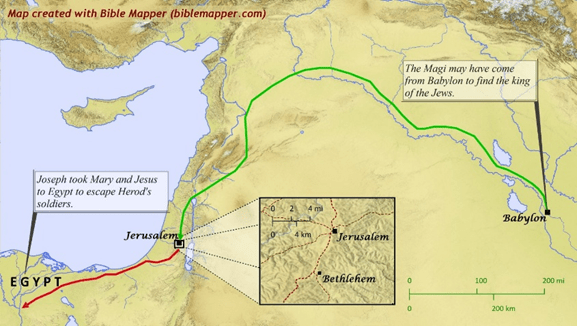
What about the routes the Magi took to and from Jerusalem and Bethlehem? Scholars have suggested the routes traced on this map as a possibility. The big challenge would have been escaping Bethlehem without going through Jerusalem. But these Magi were seasoned travelers and very savvy about finding guides with local knowledge. It’s quite possible that the Magi presented their gifts and then quietly left Bethlehem at night after the gates of Jerusalem had been closed. If the caravan was able to take a back road and keep their camels from making too much noise, they could reach the fords of the Jordan pretty swiftly. The big trick would be leaving without Herod’s spies noticing anything. But perhaps Herod was so certain that he had deceived the Magi that he failed to assign spies or else God blinded their eyes. At any rate, the Magi made it safely back home.

So, the Magi made it to the East safely; that trip took 500-1000 miles, depending on where the various members of the company were from. What about Joseph, Mary, and Jesus? As soon as Herod realized that the Magi weren’t going to report to him, he would be livid!

Luke 2:13 After the scholars were gone, God’s angel showed up again in Joseph’s dream and commanded, “Get up. Take the child and his mother and flee to Egypt. Stay until further notice. Herod is on the hunt for this child, and wants to kill him.”

Once more, God speaks to Joseph in a dream. Some scholars estimate that the Holy Family would have traveled a total of 2000 kilometers or 1240 miles round trip from Bethlehem to Egypt and back to Nazareth. (https://www.catholicnewsagency.com/news/253276/the-holy-family-traveled-more-than-1200-miles-from-israel-to-egypt-and-back) There was a large Jewish community in Egypt, and Joseph headed there. Egypt was a Roman province outside Herod’s jurisdiction, giving the Holy Family legal protection as well.

14-15 Joseph obeyed. He got up, took the child and his mother under cover of darkness. They were out of town and well on their way by daylight. They lived in Egypt until Herod’s death. This Egyptian exile fulfilled what Hosea had preached: “I called my son out of Egypt.”

16-18 Herod, when he realized that the scholars had tricked him, flew into a rage. He commanded the murder of every little boy two years old and under who lived in Bethlehem and its surrounding hills. (He determined that age from information he’d gotten from the scholars.) That’s when Jeremiah’s revelation was fulfilled: A sound was heard in Ramah, weeping and much lament. Rachel weeping for her children, Rachel refusing all solace,
Her children gone, dead and buried.”

Once more, Herod proved how bloodthirsty he was when his power was threatened. Lacking specific information, Herod wasn’t taking any chances and ordered the slaughter of all little boys two years old and younger in the vicinity of Bethlehem.

We read this account and wonder why God allowed these innocent little boys to die. Why couldn’t God have worked some kind of miracle to spare all those lives? But we don’t know how God may have tried to influence Herod. It’s quite possible that some of Herod’s religious advisors attempted to mitigate his fury, only to find themselves in danger of being killed themselves. We must remember that the whole universe tilts on the axis of free will. People are not puppets, and they can make terrible choices. Think about the six million Jews who died in concentration camps during World War II. Herod and Hitler had a lot in common.

Traditionally, there are twenty-five different sites where the Holy Family is supposed to have stopped to rest on their way to Egypt. Traditional hospitality would have demanded that such travelers be welcomed, fed, and given water and a place to sleep. Only in heaven will we know the names of those who helped this couple and their little son to escape wicked King Herod. As we approach Christmas, we should look around us. Do we have anything that we might give to someone else? Even in industrialized countries, many children shiver in the cold for lack of warm clothing or attend school with empty stomachs. We might feel that we have very little, but we can still bless those around us. May God give us open eyes and soft hearts so that we will be able to help those around us as did those nameless hosts when they sheltered the Holy Family.

PRAYER: Father God, thank You for loving us and caring for us. Lord, please help us to share what we have, trusting that You will multiply it. In the mighty and precious Name of King Jesus. Amen.
DECEMBER 28, 2025 WHAT’S SO IMPORTANT ABOUT BLOOD? #39WHO WERE THE WISE MEN? WHERE DID THAT STAR COME FROM?

December 28, 2025

Matthew 2:Scholars from the East

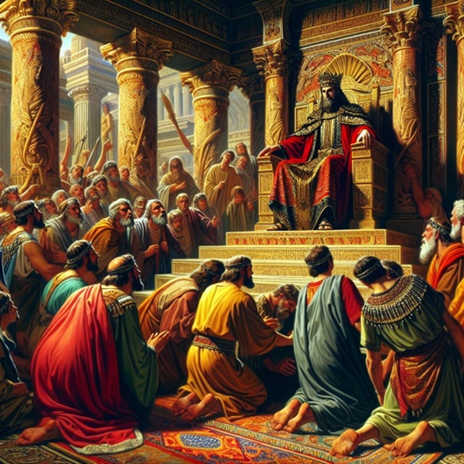
2 1-2 After Jesus was born in Bethlehem village, Judah territory—this was during Herod’s kingship—a band of scholars arrived in Jerusalem from the East. They asked around, “Where can we find and pay homage to the newborn King of the Jews? We observed a star in the eastern sky that signaled his birth. We’re on pilgrimage to worship him.”

3-4 When word of their inquiry got to Herod, he was terrified—and not Herod alone, but most of Jerusalem as well. Herod lost no time. He gathered all the high priests and religion scholars in the city together and asked, “Where is the Messiah supposed to be born?”

5-6 They told him, “Bethlehem, Judah territory. The prophet Micah wrote it plainly:

It’s you, Bethlehem, in Judah’s land, no longer bringing up the rear. From you will come the leader who will shepherd-rule my people, my Israel.”

7-8 Herod then arranged a secret meeting with the scholars from the East. Pretending to be as devout as they were, he got them to tell him exactly when the birth-announcement star appeared. Then he told them the prophecy about Bethlehem, and said, “Go find this child. Leave no stone unturned. As soon as you find him, send word and I’ll join you at once in your worship.”

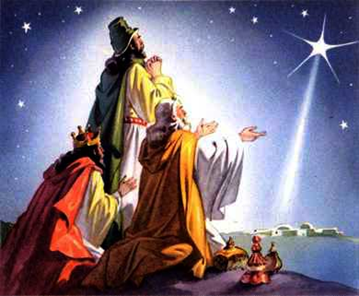
9-10 Instructed by the king, they set off. Then the star appeared again, the same star they had seen in the eastern skies. It led them on until it hovered over the place of the child. They could hardly contain themselves: They were in the right place! They had arrived at the right time!

Who were these scholars from the East? From Pastor David Guzik: “They were not kings but wise men, which means they were astronomers. There were not only three, but probably a great company. They seem to have come not on the birth night, but probably several months later… Being from the East, they would have been among Jews who were exiled from Judah and Israel centuries before. “That many Jews were mixed with this people there is little doubt; and that these eastern magi, or philosophers, astrologers, or whatever else they were, might have been originally of that class, there is room to believe. These, knowing the promise of the Messiah, were now, probably, like other believing Jews, waiting for the consolation of Israel.” (Clarke)

iii. There was a general expectation of a messiah or great man from Judea. Not very long after Jesus was born, the Roman historian Seutonius wrote: “There had spread over all the Orient an old and established belief, that it was fated at that time for men coming from Judea to rule the world.” Tacitus, another Roman historian of the general period, wrote: “There was a firm persuasion…that at this very time the East was to grow powerful, and rulers coming from Judea were to acquire universal empire.” (Cited in Barclay)

iv. “The tradition that the Magi were kings can be traced as far back as Tertullian (died c. 225). It probably developed under the influence of Old Testament passages that say kings will come and worship the Messiah (cf. Psalms 68:293172:10-11Isaiah 49:760:1-6).” (Carson)

v. Church traditions even tell us their names – supposedly Melchior, Caspar, and Balthasar. You can see their supposed skulls in the great cathedral at Cologne, Germany.”

What about that star? Guzik continues:

f. For we have seen His star in the East: There are many different suggestions for the natural origin of this remarkable star. Some say it was a conjunction of Jupiter and Saturn; some, other planetary conjunctions; others suggest a supernova; and some think of comets or a specifically created unique star or sign.

i. Whatever it was, it is significant that God met them in their own medium: He guided the astronomers by a star. This was also in fulfillment of Numbers 24:17: A Star shall come out of Jacob; a Scepter shall rise out of Israel. This was widely regarded by ancient Jewish scholars as a Messianic prediction.

ii. Notice, it was His star: “The star was Christ’s star itself, but it also led others to Christ. It did this very much because it moved in that direction. It is a sad thing when a preacher is like a sign-post pointing the way but never following it, on his own account. Such were those chief priests at Jerusalem: they could tell where Christ was born, but they never went to worship him; they were indifferent altogether to him and to his birth.” (Spurgeon)

g. And have come to worship Him: The wise men came first to Jerusalem, assuming that the leaders of the Jews would be aware and excited about the birth of their Messiah. The wise men are about to find that this wasn’t the case at all.

This website https://www.biblestudytools.com/bible-study/topical-studies/6-things-to-know-about-the-star-the-magi-followed.html gives us fascinating information:

Here are six things to know about the star the magi followed:

1. Visibility

The star was visible from at least as far away as Persia, the former kingdom of Babylon, which was in the same region as modern-day Iran.

The magi came from afar, with many scholars believing at least some of them came from modern-day Iran. Some others hypothesize that they could have come from as far as India. While tradition depicts three magi, wise men, or even sometimes translated as kings, the Bible is unclear about how many came. The number three comes from the three gifts they brought: gold, frankincense, and myrrh.

2. Foretold by Daniel

The magi may have been looking for the star as a sign in the sky heralding the Messiah because they followed the teachings of Daniel. 

One of the many questions that goes unanswered in the Bible is, how did these wise men from far away know to be looking for a sign in the sky for a Jewish king? How did they know this Jewish king would hold significance for them?

While there are a few theories, one of the stronger ones is that the magi were men who served in the city of Babylon, followers of the teachings of the Prophet Daniel. During the time of the exile, 597 BC to 538 BC, several young Jewish men rose to prominent positions at the Babylonian court, serving God in a pagan land. This included Daniel. It is possible that people influenced by Daniel during his lifetime continued to follow his teachings, his religion, and looked forward to the same promise of redemption. Astrology was a practice at the time, so they may have been looking to the heavens for signs of the promises of Daniel’s God.

Other theories suggest that just like Jewish religion made its way into Africa, such as with the Queen of Sheba (1 Kings 10) and the Ethiopian Eunuch (Acts 8:26-40) it may have made its way deeper into parts of central Asia. In recent years, people groups further into Asia have claimed to be followers of Judaism, and are theorized to be one of the lost tribes of Israel. If true, their existence could support the idea that worship of the one true God was more global than often believed at the time of Jesus’ birth.

3. Astrological Phenomenon

Some astronomers believe the “star” may have been a comet, a supernova, the planet Jupiter, or the constellation we call Aries. Others believe it was an alignment of Jupiter, Saturn, the moon, and the sun in the constellation of Aries.

While it can be easy to assume the star over Bethlehem was a bright, universally visible spot in the sky, the Bible is actually silent on how many people were able to see it, and – if it was visible to the multitudes – what people thought of it. The magi knew what it meant, and they followed it, but if it was noticeable to others is unclear.

Part of why the magi may have been aware of it was because they may have studied astrology, the reading of the location of the stars and the planets. When looking for a scientific explanation, there are only a handful of things that can create that bright of a light in the sky. If it was not just a star miraculously placed there by God for that purpose, which is entirely possible, then God could have used other natural wonders to create such a bright light, including supernovas and planets.

4. It Disappeared for a Time

The star disappeared for a time when the magi were in Jerusalem, which is why they asked Herod where the child was.

The Magi followed the star to Jerusalem, and stopped at Herod’s palace for clarity. Then the Bible records, “After hearing the king, they went on their way. And there it was — the star they had seen at its rising. It led them until it came and stopped above the place where the child was” (Matthew 2:9). The star rose again after they left the palace in Jerusalem to go to nearby Bethlehem.

God used this star, whether a natural or unnatural phenomenon, to guide the magi so they could provide the appropriate gifts for the young Messiah, and so they could testify to His arrival.

5. Herod’s Ignorance

King Herod did not seem concerned about the appearance of the star, but only at the birth of a king who could be a rival to his throne, meaning he may not have understood Scripture well.

The Bible records, “After Jesus was born in Bethlehem of Judea in the days of King Herod, wise men from the east arrived in Jerusalem, saying, ‘Where is he who has been born king of the Jews? For we saw his star at its rising and have come to worship him.’ When King Herod heard this, he was deeply disturbed, and all Jerusalem with him. So he assembled all the chief priests and scribes of the people and asked them where the Messiah would be born” (Matthew 2:1-4).

Herod did not seem to recognize the significance of the star, nor why the birth of this king of the Jews would be a blessing for all mankind. Even though many people at this time did not understand the true purpose of the Messiah’s mission, Herod only saw a threat to his power.

6. It Was Long-Awaited

The star was prophesied as far back as the Pentateuch, by Moses. In the Book of Numbers, the Prophet Balaam was given a prophecy about a coming ruler who would strike down Israel’s enemies. The details included some about his birth, as recorded in the Book of Numbers:

“I see him, but not now;
I perceive him, but not near.
A star will come from Jacob,
and a scepter will arise from Israel.

He will smash the forehead of Moab
and strike down all the Shethites”

(Numbers 24:17).

The star referred to Jesus, but also to the star that signaled his birth as a sign for the people who were looking for it. These Scriptures may have been what the Magi used to look for a Savior.

The bright star in the dark sky has become one of the symbols of Christmas and new hope for believers around the world. Even non-believers will often put a star at the top of their tree in celebration. Christians should use this symbol as a way to share the gospel, the good news about the reason that Christmas is celebrated.

“Today in the city of David a Savior was born for you, who is the Messiah, the Lord” (Luke 2:11).

Jesus came to pay the price for the sins of all people, and if they put their faith in him, repenting of their sins, then anyone can be saved from hell and into eternal life.”

This star appeared at a time when people scanned the skies for signs of God’s will. There were plenty of Jewish astrologers in Jerusalem as well as astrologers in other places. Why didn’t the Jewish astrologers recognize this star? One possibility is that God did not reveal the star to everyone. Prior to the arrival of the magi in Jerusalem, nobody seemed to be agonizing over the appearance of a super-bright star and its meaning. This suggests that God selectively allowed the magi to see the star. Yet a second possibility is that the magi were actively searching for the Messiah while many others were only giving pious lip service to the idea. For those in comfortable socio-religious positions, the idea of a Messiah might have posed a threat to their status and well-being. What if the Messiah failed to agree with them?

In the end, the magi followed the star, worshiped Jesus, and then discretely returned home by a route different from the one they had followed to reach Jerusalem. Herod was left fuming in his palace. Tomorrow we will discuss what happened next.

There’s a popular Christmas meme that reads “Wise men still seek Him.” Are we seeking Jesus, or are we copying the Jewish scholars who refused to pay attention and who lost out on the greatest news of all time as a result? May God help us to continue to listen to Him!

PRAYER: Father God, thank You for loving us and caring for us. Lord, You have promised that all who seek You will find You. Please help us to find You and to obey You completely. In the mighty and precious Name of King Jesus. Amen.
DECEMBER 27, 2025 WE ARE ALL FERAL CATS PART 2

December 27, 2025

This morning, I can hear our new kitten crying pitifully as he sits in his litter box in his cage. Gabriel, our kitten, has been drinking the water and eating the food we have given him, but he longs for his mother. We long to comfort Gabriel, to nestle him in our arms, but he still fears us. Were we to try to cuddle him right now, one of us might wind up in the Emergency Room with stitches!

One of the many names of Jesus is “Immanuel” or “Emmanuel,” meaning “God with us.” But why should God order that his Son be called by such a name? God wants all people to know that He is not sitting someplace far away but that He is as close as their heartbeats. But there’s a problem: Just as we struggle to communicate with little Gabriel the kitten, God keeps sending His Word by various means to communicate with people, many of whom aren’t listening or are deafened by the noise of the world around them.

All we want to do is to comfort Gabriel, to make him feel secure, and to demonstrate the depth of our love for him; yet, we struggle to reassure him. If one of us were able to speak “cat” or even to become a cat with the knowledge we have, it would be much easier to comfort Gabriel. We celebrate Christmas because at Christmas, God accomplished what we cannot: He sent Jesus to be born as a baby to a poor family from an obscure village so that He could demonstrate His love and concern through Jesus. Jesus was also born so that he could love, minister, and die as a blood sacrifice for the sins of the whole world, conquering death, hell, and the grave.

Each time little Gabriel mews pitifully, our hearts break, and we beg God again to help us find some way to comfort him. Now if God is a loving Father, with a great heart of love deeper than anything we can possibly imagine, won’t He have compassion on His suffering children just as we have compassion for our kitten? When we cry, God hears us, even though help doesn’t always come in the form we desire. Again, Isaiah 55:9 reminds us that God’s ways are higher than ours.

On the night before Jesus was crucified, he was struggling to impart everything he possibly could to his disciples while he was still with them. John recorded those conversations. In John 14:7-11, Jesus was trying to reassure his friends.

7 “If you had known Me, you would have known My Father also; and from now on you know Him and have seen Him.”

8 Philip said to Him, “Lord, show us the Father, and it is sufficient for us.”

9 Jesus said to him, “Have I been with you so long, and yet you have not known Me, Philip? He who has seen Me has seen the Father; so how can you say, ‘Show us the Father’? 10 Do you not believe that I am in the Father, and the Father in Me? The words that I speak to you I do not speak on My own authority; but the Father who dwells in Me does the works. 11 Believe Me that I am in the Father and the Father in Me, or else believe Me for the sake of the works themselves.”

If Jesus had been a cat speaking to other cats, he would have told them that he was sent by the Creator of all cats to demonstrate that Creator’s love.

Do we think we occupy the place of God with our kitten? Far from it! We are flawed human beings whose race mostly lost the ability to communicate with the animals when sin entered the world. Throughout the world, there are those individuals blessed in their abilities to communicate with animals. But we firmly believe that God can comfort our kitten and we are begging Him to do so. We are begging for Immanuel to comfort little Gabriel, to be “God with Gabriel.”

Please notice something: we should always worship the Creator, not the creature. Someone grieving the loss of their sixteen-year-old cat mentioned on Facebook that they intended to create an altar to the cat. As a shrine to remember the cat, that might be all right; however, to worship a dead cat would be quite wrong, no matter how precious the memories might be.

So once more, we find ourselves resembling feral cats. We want to trust God, but we have bitter memories, and we aren’t really sure if this “Immanuel” business, this “God with us” stuff is real or not. But the good thing about Jesus is that his followers recorded Jesus’ teachings in four different Gospels, each with its own approach, giving us the information we need about Jesus and his Heavenly Father.

If you are new to the Bible, begin by reading the Gospel of John in a format that speaks to you. Personally, I like the New King James version because it preserves the language of the King James without archaic terms. But other versions such as The Message or The Living Bible are equally good. The important thing is to learn about Jesus, Immanuel, God with us. Let’s pray.

PRAYER: Father God, thank You for loving us and caring for us. Lord, we confess that we are all feral cats. We have been hurt and we don’t trust anybody. Lord, please speak to the hearts of all those reading these words, make Yourself so real to them that they KNOW You are Immanuel, God with them. In the mighty and precious Name of King Jesus. Amen.  

DECEMBER 27, 2025 WHAT’S SO IMPORTANT ABOUT BLOOD? #38 WHY WOULD GOD USE A BLOODY DESPOT TO DO HIS WORK?

December 27, 2025

Matthew 2: Scholars from the East

2 1-2 After Jesus was born in Bethlehem village, Judah territory—this was during Herod’s kingship—a band of scholars arrived in Jerusalem from the East. They asked around, “Where can we find and pay homage to the newborn King of the Jews? We observed a star in the eastern sky that signaled his birth. We’re on pilgrimage to worship him.”

3-4 When word of their inquiry got to Herod, he was terrified—and not Herod alone, but most of Jerusalem as well. Herod lost no time. He gathered all the high priests and religion scholars in the city together and asked, “Where is the Messiah supposed to be born?”

5-6 They told him, “Bethlehem, Judah territory. The prophet Micah wrote it plainly:

It’s you, Bethlehem, in Judah’s land, no longer bringing up the rear. From you will come the leader who will shepherd-rule my people, my Israel.”

7-8 Herod then arranged a secret meeting with the scholars from the East. Pretending to be as devout as they were, he got them to tell him exactly when the birth-announcement star appeared. Then he told them the prophecy about Bethlehem, and said, “Go find this child. Leave no stone unturned. As soon as you find him, send word and I’ll join you at once in your worship.”

It’s 1956, and my third-grade class is performing at the Christmas program at my grade school in our small Midwestern town. Now the boys are singing/shouting, “We three kings of Orient are, bearing gifts, we travel afar. Field and fountain, moor and mountain, following yonder star.” It’s a wonderful Christmas carol, one that helps us remember those Persian scholars, the magi, who were searching for a Savior. We know these men found the infant Jesus. But who was King Herod the Great? How many wise men were there? Where did they come from? Why did God warn them not to return to Herod? For the next few days, we’re going to take a close look at this story, for it hold the key to much of Jesus’ future ministry. While it’s true that we celebrate the coming of the Magi on the Feast of Epiphany January 6th, we’re going to speed things up a little.

Pastor David Guzik in his Enduring Word Bible Commentary gives us some excellent information. For the complete discussion, see https://enduringword.com/bible-commentary/matthew-2/  

We need to know King Herod’s nature. “This was the one known as Herod the Great. Herod was indeed great; in some ways great as a ruler, builder, and administrator; in other ways great in politics and cruelty.

i. “He was wealthy, politically gifted, intensely loyal, an excellent administrator, and clever enough to remain in the good graces of successive Roman emperors. His famine relief was superb and his building projects (including the temple, begun 20 B.C.) were admired even by his foes. But he loved power, inflicted incredibly heavy taxes on the people, and resented the fact that many Jews considered him a usurper. In his last years, suffering an illness that compounded his paranoia, he turned to cruelty and in fits of rage and jealousy killed close associates.” (Carson)

ii. “Augustus, the Roman Emperor, had said, bitterly, that it was safer to be Herod’s pig than Herod’s son. (The saying is even more epigrammatic in Greek, for in Greek hus is the word for a pig, and huios is the word for a son).” (Barclay)”

2. (3) Herod is troubled at the news brought by the wise men. When Herod the king heard this, he was troubled, and all Jerusalem with him.

a. When Herod the king heard this, he was troubled: Herod was constantly on guard against threats to his rule, especially from his own family. He assassinated many family members whom he suspected of disloyalty. His being troubled is completely in character.

i. Herod, who wanted to be accepted by the Jews whom he ruled, was not a Jew at all but an Edomite, and Rome recognized him as a vassal king over Judea. The Jews tempered their great hatred of him with admiration for his building projects, such as the magnificent improvements made to the second temple.

ii. Barclay reminds us of what a bloody, violent ruler Herod was: “He had no sooner come to the throne than he began by annihilating the Sanhedrin…he slaughtered three hundred court officers…he murdered his wife Mariamne, and her mother Alexandra, his eldest son Antipater, and two other sons, Alexander and Aristobulus.”

b. He was troubled, and all Jerusalem with him: The fact that all Jerusalem was troubled with Herod is significant. This was due either to the fact that the people of Jerusalem rightly feared what sort of paranoid outburst might come from Herod upon hearing of a rival king being born, or because of the size and dignity of this caravan from the East.

i. This trouble is again testimony to the greatness of Jesus, even as a young child. “Jesus of Nazareth is so potent a factor in the world of mind that, no sooner is he there in his utmost weakness, a new-born King, than he begins to reign. Before he mounts the throne, friends bring him presents, and his enemies compass his death.” (Spurgeon)

Reading how terrible Herod was, we might ask, “Why would God use someone like this in any fashion?” But we must remember Isaiah 55:9, which tells us that God’s ways are far higher than ours. God uses Herod’s paranoid query to his court scholars to help the magi learn where to look for baby Jesus.

Herod has already annihilated the Sanhedrin, has slaughtered 300 court officers, and has murdered several of his own family members. When Herod summons the remaining priests and Jewish religious scholars to his palace demanding to know the birthplace of the Messiah, these men rush to the court. These men quote Micah 5:1 “But you, Bethlehem-Ephrathah, least among the clans of Judah, from you shall come forth for me one who is to be ruler in Israel; whose origin is from of old, from ancient times.”

Bethlehem was known as the City of David, and the Messiah was to come from David’s royal lineage. In Herod’s day, Bethlehem was a tiny village about 6 miles from Jerusalem. Modern Bethlehem is practically a Jerusalem suburb. The wise men take off for Bethlehem while Herod rubs his hands in glee, thinking that he has duped these crazy astronomers into doing his investigation for him. At the same time, Herod is likely wondering, “Bethlehem? Why Bethlehem? Why not Jerusalem or some other major city. Bethlehem has nothing to recommend it-what a scraggly little place!

When we read the Christmas story, we frequently read only from Luke 2 and stop once the angels have returned to heaven and the shepherds have returned to their sheep. But if we unpack that story, there are many more miracles to discover. Here, God uses one of the most despicable rulers living to help the magi find Baby Jesus. Are the magi taken in by Herod’s oily pronouncements? Are you kidding? The magi are men of experience and Herod’s reputation has even reached Persia. So the magi take the advice of Herod’s scholars and try to distance themselves from Herod as they continue their quest.

We must always be prepared for God to do amazing things in our lives, using the most unlikely people. Here a tyrannical murderer plays a role he fails to understand. What is sad is that the religious scholars who advise the magi on the Messiah’s location refuse to heed their own advice, but remain in Jerusalem where they piously continue to await a Messiah who has already come just a short distance from their courts.

At Christmas and throughout the year, we have a choice: will we be like the magi, willing to risk everything to come to Jesus, or will we copy those religious scholars who could have come to Jesus but who failed to do so because they cherished other notions about what the Messiah would look like? As another Christmas carol urges, “O come, let us adore him!”

PRAYER: Father God, thank You for loving us and caring for us. Lord Jesus, we adore You for coming to earth as a helpless baby and enduring all the stresses of a human life. Thank You for Your great gift of salvation. In Your mighty and precious Name, Lord Jesus. Amen.

WE ARE ALL FERAL CATS! DECEMBER 26, 2025

December 26, 2025

We have mourned for two months, ever since losing our beloved kitty Mr. Cat. As conscientious and loving cat owners, we have mercilessly beat ourselves up-should we have gotten medical attention earlier? Did he die because we somehow neglected him, even though we thought we were doing everything correctly? It’s no exaggeration to say that the two of us have been reduced to tears on a daily basis.

Christmas morning, one of our friends came holding a small sack. When we asked him what was in the sack, he said, “A cat.” And there was a two-month-old male kitten, grey with dark stripes. We immediately named the cat Gabriel because he came bringing good news at Christmas.

Poor little Gabriel is still in shock. Just a day ago, he was running freely around our friend’s compound. Now we have confined him to a large cage, albeit with food, water, a litter box, and a box he can use as a den to hide in. For now, we are using the cage while we try for him to get used to us. Eventually, we hope he will have the run of the house, as well as the outdoors. We are offering him our fingers and hands to sniff, but we are not forcing ourselves on him.

Will we be able to tame Gabriel so that he will become a purring cuddly kitty? Who knows? Cats are always individuals, and you must respect their personalities. Forcing a cat only injures everyone. But when we picked Gabriel out of the sack, I picked him by the scruff of his neck and set him on my chest, where he promptly curled up without biting or scratching. I am hoping for good things in the future.

When it comes to loving God, we are all like feral cats. We want our freedom, and we aren’t interested in being tamed. We have no idea that God’s nature is love and that He only wants good things for us. Even when God provides everything for us, we are still like poor little Gabriel; we fear that this Great Being may harm us. But there is good news for all of us.

Romans 8:18-23 “For I consider that the sufferings of this present time are not worthy to be compared with the glory that is to be revealed to us. For the eagerly awaiting creation waits for the revealing of the sons and daughters of God. For the creation was subjected to futility, not willingly, but because of Him who subjected it, in hope that the creation itself also will be set free from its slavery to corruption into the freedom of the glory of the children of God. For we know that the whole creation groans and suffers the pains of childbirth together until now. And not only that, but also we ourselves, having the first fruits of the Spirit, even we ourselves groan within ourselves, waiting eagerly for our adoption as sons and daughters, the redemption of our body.”

There is one difference between Gabriel the kitty and us: As humans we have a sin problem. When sin entered the world, God was forced to subject the entire creation to futility because of the sins of mankind. Gabriel is part of the creation that waits for redemption. Gabriel does not need a Savior, but we humans do.

Jesus has promised that one day, he will return, not as a baby but as a conquering king. On that great day, all creation will be released from the consequences of human sin.

Isaiah 11:6-9 tells us, “The wolf also shall dwell with the lamb,
The leopard shall lie down with the young goat,
The calf and the young lion and the fatling together;
And a little child shall lead them.
7 The cow and the bear shall graze;
Their young ones shall lie down together;
And the lion shall eat straw like the ox.
8 The nursing child shall play by the cobra’s hole,
And the weaned child shall put his hand in the viper’s den.
9 They shall not hurt nor destroy in all My holy mountain,
For the earth shall be full of the knowledge of the Lord
As the waters cover the sea.”

In that day, none of us will act out of fear, for in that day, there will be no more feral cats. God’s love will unite us all in His Creation as He intended it from the beginning of time, for the knowledge of God and the peace of God will fill the earth as the waters cover the sea.

A DIFFERENT KIND OF CHRISTMAS-DECEMBER 26, 2025

December 26, 2025

For us, Christmas began on December 23rd this year when we drove to our regional capital of Tamale to do some last-minute shopping, to bless some friends, and to bring Ernest Babiwan Ugru home with all his belongings.

Leaving Saboba at 6:30 that morning, we drove to Tamale. As we passed through D.C. Kura, we bought 3 large bags of charcoal from our friend Fati, our regular charcoal supplier. Proceeding to Sang, we picked GH¢ 200 worth of yams for our friend Reverend Alhassan Fuseini, a.k.a. Big Man.

Arriving in Tamale, we collected Ernest near his lodging in Kukuo. Ernest is one of our special people. Several years ago, Ernest stayed with Taala Ruth as a translator and advocate when Dr. Ibrahim was caring for her at the Al-Shifaa hospital at Datoyili. That same year, Ernest began training as a Physician Assistant at the University of Development Studies in Tamale. Ernest’s father died many years ago, and his mother farms and does petty trading in a village near Saboba. Now Ernest has completed his classroom work and is returning to Saboba, where he will be helping at the hospital while preparing for his licensure exams. While completing clinical work at Tamale Teaching Hospital, Ernest so impressed one of the visitors that the man offered him a job. Blessedly, Ernest informed the man that he was already obligated to return to Saboba.

After picking Ernest, we left one of our pickup tires for repair and drove on to Kumbungu, where we left two bags of charcoal and the yams with Pastor Big Man. Returning to Tamale, we did some small shopping, steadfastly avoiding the central part of Tamale and its snarls of traffic. One of our missionary friends who had been a chaplain in the U.S. Army and who had driven Hum-vees all over the Middle East once told us that he felt Tamale was the most dangerous place in which he had ever driven. Lorries, tro-tro’s, yellow-yellows, Motokings, motorcycles, bicycles, and pedestrians all compete for the same piece of road at the same time. We let one of our friends drive for us; he can handle the stress of the traffic much better than we do.

We got lunch and then collected Ernest’s things. Even though Ernest had already sent several items by goods lorry to Saboba, his remaining possessions filled the bucket of our pickup. truck. With Ernest and I competing for space in the back seat with the items Bob and I had purchased, the lorry was packed out!

As we were heading toward Saboba, Ernest was calling his mother in the village. I could hear her excited comments. Although it would have been nice to pick charcoal for friends in the village, we had no room. We pulled into Saboba and went straight to the house where Ernest will be staying for the next several months. When Ernest’s friend in Saboba failed to find an accommodation, we remembered some friends, called them, and learned they had one room left. Now Ernest is happily ensconced with a loving family who will treat him as another son.

Christmas Eve afternoon found us on our way to Yendi. A friend’s wife in Tamale had gotten permission to leave work at 2 PM. After struggling through long lines queuing for vehicles, the young lady made it and was now headed to Yendi; meanwhile, we learned that Ernest needed two market tables. It was market day in Yendi; due to a delay in the arrival of vehicles, we had time to buy the market tables for Ernest, fuel our vehicle, and then park near the drop-off point for the Tamale cars. After a short wait, we picked the young lady and returned triumphantly to Saboba in time for Christmas Eve church services.

Christmas morning, we attended a joyful service at the Catholic Church in Saboba. We fellowship with a number of churches; however, many churches now have sound systems that can blast the entire congregation into the middle of next week. While the Catholics have a sound system, they regulate the volume a bit, making it possible for us to listen while not suffering. After long years of working in high noise environments with inadequate ear protection, Bob finds that loud amplifiers make listening painful.

And Christmas brought another wonderful moment. As many of our friends know, we lost our beloved Mr. Cat the end of October and have been grieving ever since. Christmas morning, a friend brought us a grey 2-month-old male kitten whom we have named Gabriel. Since this kitten is semi-feral, we are proceeding slowly with his socialization. We are praying that Gabriel has a long and happy life and that he will truly be a comfort for both of us.

“But,” you ask, “you haven’t mentioned Christmas presents.” True. We haven’t exchanged presents as such for several years. Working with poor people, we see so many tragic situations that we feel it’s more important to help those in need. We will do special things for each other; however, those deeds can’t be wrapped in brightly colored paper.

At 1 AM on Christmas Eve morning, I received a call from Musah, the head nurse at the Children’s Ward. A poor child who had been operated two days earlier for a typhoid perforation had just died. The mother was by herself with no family members or money. These people were from a community nearly 80 miles away and had bypassed two government hospitals to come to Saboba. We settled the bill for the family, and later some relatives came to collect the mother and the child’s body.

The two previous farming seasons have not been good, and this year was only slightly better. People are still suffering and falling sick without resources. We know we love each other and Jesus loves us. It seems far more important to buy more breakfast biscuits to hand out at the Children’s Ward than to buy each other presents. For after all, we have already received the greatest Gift anyone can possibly receive: the Gift of Eternal Life through Christ Jesus, our Savior and Lord.

DECEMBER 26, 2025 WHAT’S SO IMPORTANT ABOUT BLOOD? WHAT ARE YOU SEARCHING FOR?

December 26, 2025

Luke 2:21-40Blessings

21 When the eighth day arrived, the day of circumcision, the child was named Jesus, the name given by the angel before he was conceived.

22-24 Then when the days stipulated by Moses for purification were complete, they took him up to Jerusalem to offer him to God as commanded in God’s Law: “Every male who opens the womb shall be a holy offering to God,” and also to sacrifice the “pair of doves or two young pigeons” prescribed in God’s Law.

As Jewish law demanded, Jesus underwent circumcision at the age of eight days, but why the mention of purification? We read this and don’t even consider purification, but both Mary and Joseph required purification. The website https://www.bibleversestudy.com/luke/luke2-purification-of-mary.htm gives us this information: “What is meant by “their purification” (Luke 2:22)?
The purification of Mary and Joseph. Mary was ceremonially unclean after having given birth and Joseph was also ceremonially unclean for having touched Mary while she was bleeding, so the Jewish law required the purification of Mary, as well as Joseph.

How long did their purification require?
The purification of Mary required forty days: Then the LORD spoke to Moses, saying, “Speak to the children of Israel, saying: ‘If a woman has conceived and borne a son, then she shall be unclean seven days; as in the days of her customary impurity she shall be unclean. And on the eighth day the flesh of his foreskin shall be circumcised. Then she shall continue in the blood of her purification thirty-three days. She shall not touch any holy thing nor come into the sanctuary until the days of her purification are completed’” (Leviticus 12:1-4). The purification of Joseph required less than one day: “If a woman has a discharge, and the discharge from her body is blood, she shall be set apart seven days, and whoever touches her shall be unclean until evening” (Leviticus 15:19). So as a couple, “the days of their purification according to the law of Moses were completed” (Luke 2:22) forty days – the longer of the two-after Mary gave birth to Jesus.”

So, forty days after Jesus was born, Joseph and Mary went to the temple to offer Jesus to God and sacrifice two young doves or pigeons as a blood offering on Jesus’ behalf. But God was about to do something wonderful.

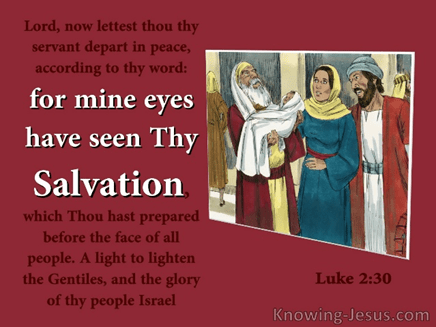
Luke2:25-32 In Jerusalem at the time, there was a man, Simeon by name, a good man, a man who lived in the prayerful expectancy of help for Israel. And the Holy Spirit was on him. The Holy Spirit had shown him that he would see the Messiah of God before he died. Led by the Spirit, he entered the Temple. As the parents of the child Jesus brought him in to carry out the rituals of the Law, Simeon took him into his arms and blessed God: God, you can now release your servant; release me in peace as you promised. With my own eyes I’ve seen your salvation; it’s now out in the open for everyone to see: A God-revealing light to the non-Jewish nations, and of glory for your people Israel.

33-35 Jesus’ father and mother were speechless with surprise at these words. Simeon went on to bless them, and said to Mary his mother, “This child marks both the failure and the recovery of many in Israel, a figure misunderstood and contradicted—the pain of a sword-thrust through you—But the rejection will force honesty, as God reveals who they really are.”

36-38 Anna the prophetess was also there, a daughter of Phanuel from the tribe of Asher. She was by now a very old woman. She had been married seven years and a widow for eighty-four. She never left the Temple area, worshiping night and day with her fastings and prayers. At the very time Simeon was praying, she showed up, broke into an anthem of praise to God, and talked about the child to all who were waiting expectantly for the freeing of Jerusalem.

39-40 When they finished everything required by God in the Law, they returned to Galilee and their own town, Nazareth. There the child grew strong in body and wise in spirit. And the grace of God was on him.

First, Luke introduces us to Simeon, a faithful believer who has been longing for the advent of the Messiah, living “in the prayerful expectancy of help for Israel.” Year after year, Simeon has waited. God has promised Simeon that he will see the Messiah before he dies. Perhaps God made that promise to Simeon when he was a young man. And now, Simeon is elderly and still hoping. Some days, Simeon’s knees rebel when he climbs those temple steps, but Simeon continues to appear in the temple every day. After all, if Messiah truly comes, won’t he come to the temple first?

There Is something special in the atmosphere of Jerusalem that morning. The Jerusalem stones seem to glow with a special light. As Simeon climbs the stairs that morning, he prays as he has for years. “Blessed are You, Lord God of the Universe! Let today be the day I am privileged to greet Your Messiah!”

Simeon has just entered the temple and is looking around when he sees a young couple coming with a newborn baby. The baby’s mother is just a teen-age girl, and her husband standing close to her is little older. But as Simeon stares at the couple, suddenly the light of the Holy Spirit illumines the little family, and Simeon knows beyond any doubt that this infant is God’s promised Messiah. With deep peace in his heart, Simeon approaches the couple. Greeting them courteously, Simeon asks if he might hold the baby to give it an elder’s blessing. Simeon takes the baby in his arms and speaks words that have echoed down the centuries. “God, you can now release your servant; release me in peace as you promised. With my own eyes I’ve seen your salvation; it’s now out in the open for everyone to see: A God-revealing light to the non-Jewish nations, and of glory for your people Israel.”

This pronouncement is shocking enough, but there is more to follow. Simeon turns his attention to Mary and Joseph. “This child marks both the failure and the recovery of many in Israel, a figure misunderstood and contradicted—the pain of a sword-thrust through you—But the rejection will force honesty, as God reveals who they really are.”

While Mary and Joseph are struggling to absorb everything Simeon has said, the Prophetess Anna, age 104, approaches as well. Everybody knows Anna, for she has spent the last eighty-four years in the temple, praying and fasting and being fed by the priests and fellow worshipers. But true prophets are rare at this time, and prophetesses even more so. Anna is greatly respected, for her prophecies are few but very accurate. Now Anna begins singing hymns of praise to God over the child and prophesying about him to the other worshipers.

Once more, blood figures prominently in the story of Jesus’ life. Because Joseph was forced to deliver Jesus, he was exposed to Mary’s blood and became ritually unclean, requiring purification. Mary required purification as a routine matter. Then there was the small amount of blood Jesus would lose during the circumcision. And finally, this poor couple would sacrifice two young doves or pigeons as a blood sacrifice. Even though the adult Jesus would shed his blood for the sins of the world, offering purification for sin. But in the beginning, others shed blood for him.

The stories of Simeon and Anna are short but thrilling. Here are two faithful believers who have waited most of their lives to see the fulfillment of God’s promises, and today, their hopes and dreams have been fulfilled. We never hear about either of these people again; perhaps, having spoken blessings over Jesus, they both die that same night, Simeon at his home and Anna in some quiet corner of the temple where she has a few blankets and cloths on which she sleeps. But I want to believe that when family and friends find these two faithful elders, they are smiling and the glory of God is on their faces.

Aging is a strange and challenging process. As our time on earth begins to draw to a close, we need to examine ourselves. Are we, like Simeon and Anna, longing to see God work in people’s lives? Are we looking for evidences of the Messiah, or are we too distracted?

Some of us can identify with Simeon, if not with Anna. We long to see manifestations of the Holy Spirit, and we wonder, “Will this be the day?” Simeon and Anna both died, satisfied with the knowledge that Messiah was come. For those of us who believe that Jesus is the Christ, the Anointed One, the Sone of God, we long for the day when heavenly trumpets will sound, the skies will open, and Jesus will return, not as a helpless baby but as a conquering king. And we bow with Simeon and cry in our hearts, “Maranatha! Come Lord Jesus!”

PRAYER: Father God, thank You for loving us and caring for us. Lord, help us to share the Gospel, the Good News of Jesus wherever we go. Lord, bring as many people as possible to repentance and to salvation in Jesus Christ. In the mighty and precious Name of King Jesus. Amen.

DECEMBER 25, 2025 WHAT’S SO IMPORTANT ABOUT BLOOD? #36 THE BLOOD OF CHILDBIRTH THAT LED TO THE BLOOD OF SALVATION

December 25, 2025

Luke 2:1-5 Christ Born of Mary

And it came to pass in those days that a decree went out from Caesar Augustus that all the world should be registered. This census first took place while Quirinius was governing Syria. So all went to be registered, everyone to his own city.

Joseph also went up from Galilee, out of the city of Nazareth, into Judea, to the city of David, which is called Bethlehem, because he was of the house and lineage of David, to be registered with Mary, his betrothed wife, who was with child. So it was, that while they were there, the days were completed for her to be delivered. And she brought forth her firstborn Son, and wrapped Him in swaddling cloths, and laid Him in a manger, because there was no room for them in the inn.

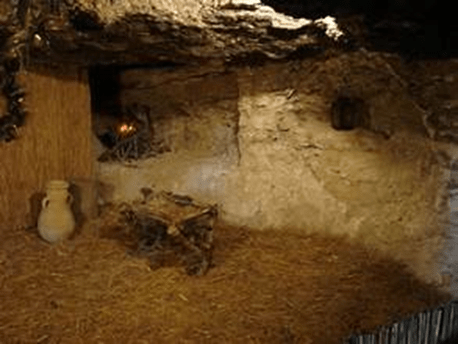
This photo has been taken at the Church of the Nativity in Bethlehem. It shows the interior of the stable/cave where Jesus was born. The only thing wrong with the photo is the manger, for all indications are that the manger would have been a stone feed trough rather than a wooden construction. Stone is far more durable and wood was at a premium even in Jesus’ day.

When you look at that place, there’s nothing warm or Christmasy about it, although there were probably animals that helped keep the place warm. At least the cave wouldn’t have been drafty and the temperature would have been constant. But contrast that place with a modern delivery suite like the one pictured below. Two midwives and a doctor are assisting this lady to deliver in a nice clean well-lighted room. To quote the carol, “All is calm, all is bright.”

Had Mary delivered at home, there would have been ta local midwife to help, and her mother and other female relatives would have been there as well. The lighting might not have been much; however, the place would have been as clean as several women could make it, and there would have been plenty of clean cloths to catch the blood. Once baby Jesus was born, he would have been cleaned and then rubbed with salt before being wrapped in swaddling cloths.

But that night, Mary had only Joseph to help her. The pains had begun earlier that afternoon. Mary sat on the donkey while Joseph desperately searched for a place for them to stay. By the time the inn keeper grudgingly gave permission for them to occupy the stable, Mary was becoming frantic. As the couple entered the stable, Mary felt a gush of warm liquid flowing down her legs, and she knew her membranes had ruptured. Gasping, Mary waited as Joseph lit an oil lamp and spread cloths on the cleanest part of the floor so she could lie down. Although Mary was young, she had watched many women give birth back in the village and now she was the one who had to instruct Joseph. Mary could feel the pains getting stronger and closer together.


“Joseph,” Mary moaned, “the baby is about to come. Do you have string to tie the cord? Do you have a knife? And do you have any cloths laid out?”

“Yes, yes, and yes,” Joseph replied. “I might be a man, but your mother warned me I might have to become a midwife. And I have cloths laid out on this manger; it seems clean.”

“That’s …..fine!” Mary grunted as the pains intensified.

“Yahweh, help us!” cried Joseph.

Suddenly, Mary screamed, “Joseph!” Mary’s body stiffened as she gave first one giant push and then a second one. After that last push, Mary felt relief; meanwhile, Joseph was busy laying the baby on a cloth, wiping its nose and mouth, and swatting it on the bottom.

“Come on, you, breathe!” Joseph muttered as he worked on the baby. And the baby responded by crying loudly. Joseph tied the umbilical cord and cut it, then swiftly wiped the baby down, wrapping it firmly in the swaddling cloths and laying it in the stone feed trough near Mary.

Turning to Mary, Joseph was shocked at the blood that was flowing, but then the afterbirth came out, and the bleeding stopped. Joseph helped Mary clean herself up and then the two of them began admiring the baby.

I can sympathize with Joseph. As a doctor in a remote rural area, I have delivered babies in all sorts of places. One lady was on her way to the hospital but had to stop two miles out and lie down under a tree. Someone brought word and we arrived just in time for me to catch the baby. Another lady was walking to our maternity ward when she squatted; I saw her just in time to sprint to her side and collect the baby without gloves or any protective clothing whatsoever. And then there was the night when I was at our Children’s Ward, only for a ten-year-old boy to run in, shouting that a lady wanted to deliver outside. Again, I found myself shoving a rubber apron under the lady’s bottom just in time to catch the baby. Alone in the dark, 20 meters from the Children’s Ward, I pinched the umbilical cord with my fingers and shouted for help. Thankfully, someone called a midwife, who came with all the necessary equipment.

We view Nativity scenes, forgetting the sheer terror of the young couple. These tableaus are sanitized for public consumption; meanwhile, things began with a young mother and her husband delivering a baby by themselves. Although some people have theorized that surely a woman-perhaps the inn keeper’s wife-might have assisted, I doubt it. That night in Bethlehem was sheer chaos, and the innkeeper’s wife was probably tied up feeding people and directing servants.

And then there’s the blood. Depending on where the placenta attaches and how deeply it attaches to the uterus, all kinds of problems can occur, any one of them leading to catastrophic hemorrhage. Although God in His infinite mercy allowed Mary’s placenta to attach and detach normally, she still would have bled. So Mary shed her blood for her son Jesus long before he would shed his blood for the sins of the world.

During the pregnancy, Mary and Joseph had been tried in the court of public opinion in Nazareth and had become an object of scorn and ridicule. According to custom, the young couple should not have had sex until after they had gone through the marriage ceremony, having spent the betrothal year simply preparing. In a small town, nobody would have believed Mary’s story about an angel or the Holy Ghost impregnating her. And now they were in Bethlehem, where Joseph’s family came from originally. If Joseph had any relatives left in Bethlehem, they were already tied up with other relatives. And then there was the scandal of Mary’s pregnancy. No, far better to let Mary and Joseph find their own place to stay.

The sacrifices of reputation, comfort, health, and safety are an important part of the Christmas story. So is the blood that Mary shed soaking whatever cloth she laid on. Good things always cost. Great things cost a great deal. Joseph and Mary gave everything they had to bring Jesus into the world. And when Jesus became a man, he returned that favor by dying for the sins of all of us. May God bless all of us as we celebrate the unspeakable gift of eternal life through Christ Jesus!

PRAYER: Father God, thank You for loving us and caring for us. Lord, we have no words sufficient to praise You for the gifts You have given us! Your love, Your mercy, Your forgiveness, and eternal life. Forgive our sins and help us to follow hard after You all the days of our lives. In the mighty and precious Name of King Jesus. Amen.