Archive for March, 2026

MARCH 4, 2026-GOD, ARE YOU REALLY CALLING ME? #32 WHY CAN’T I JUST REMAIN AS A FOLLOWER AND NOT BECOME A DISCIPLE?

March 4, 2026

John 8:31-32 Jesus said to the people who believed in him, “You are truly my disciples if you remain faithful to my teachings. And you will know the truth, and the truth will set you free.”

Definition of a disciple: a follower or pupil of a teacher, leader, or philosopher.

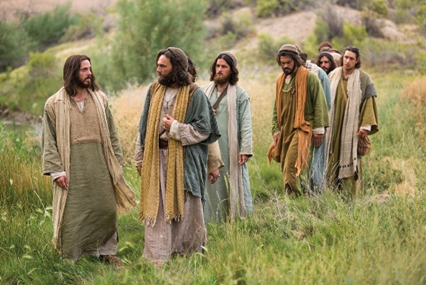
When Jesus began his ministry, he had lots of interested people who followed him wherever he went for the sake of the teachings he gave. Matthew 7:28-29 tells us, “When Jesus had finished saying these things, the crowds were amazed at his teaching, for he taught with real authority—quite unlike their teachers of religious law.” The difference was simple; the teachers of the law could only transmit the law with all the arguments surrounding it. Much of that teaching must have sounded like this: “Well, on the one hand, this portion of the Law of Moses says ______. But on the other hand, another portion disagrees with it.” The problem wasn’t in the Law but in the myriads of attempts to explain the Law that had developed since God gave it to Moses. While these academic discussions might have satisfied those interested in such things, others seeking for spiritual knowledge would remain unsatisfied. Jesus, on the other hand, presented things plainly, simply, and with God-given authority, and his listeners recognized the difference. Later, when religious authorities sent their soldiers to arrest Jesus, the soldiers refused, stating that “No man has ever spoken like this one.” (John 7:46 Temple guards sent to arrest Jesus returned empty-handed and told the leading priests and Pharisees that they could not seize him because his teaching was uniquely authoritative and compelling.) 

So Jesus had many followers; however, his disciples were far fewer. What makes the difference between a follower and a disciple, and why should we become disciples rather than remaining as followers?

Being a follower is simple; you go, you listen, and you only commit to the degree to which you feel comfortable. As a follower, you can always distance yourself, walking away if things become difficult. But discipleship is a totally different matter. The following aspects of discipleship are gleaned from a number of different sources, every one of which is well worth investigating on its own.

The Bible defines discipleship as a lifelong process of following Jesus, committing to his teachings, and transforming to be like him while helping others do the same. It requires self-denial, carrying one’s cross (Luke 9:23), and loving other believers (John 13:35), all centered on the Great Commission to make disciples of all nations (Matthew 28:19-20). 

Key Biblical Aspects of Discipleship:

  • Following and Abiding: Discipleship is not just learning, but adhering to Jesus’ teachings, which leads to freedom and truth (John 8:31-32Mosaic International.
  • The Cost: True discipleship requires placing Jesus above all else, including family and one’s own life (Luke 14:26-27) Bible Study Tools, C.S. Lewis Institute.
  • The Great Commission: Disciples are called to actively make more disciples by teaching others to obey everything Jesus commanded (Matthew 28:19-20) {Link: Jesus Film Project, Cru.org.
  • Bearing Fruit: Abiding in Christ results in producing spiritual fruit, such as love, obedience, and good works (John 15:5-8GotQuestions.org.
  • Mentoring/Replication: Paul emphasizes passing on the faith to others who will in turn teach others (2 Timothy 2:2Life on Life

Discipleship is essentially a transformation from self-centeredness to Christ-centeredness (Galatians 2:20), aimed at growing into spiritual maturity and service Discipleship.org

In Colossians 1:28-29, Paul writes, “Him we proclaim, warning everyone and teaching everyone with all wisdom, that we may present everyone mature in Christ. For this I toil, struggling with all His energy that He powerfully works within me.”

Why should we passionately desire to become disciples when we know it might become difficult, painful, or even end in a violent death as it has for many people in places such as northern Nigeria or Sudan? The answer is simple: when we truly love Jesus, we want to grow as close to Him as possible. The more we learn about Jesus, the more we love Him, and the more we love Him, the more we will want to learn about Him. One friend who has since gone to be with Jesus always prayed, “Lord, help me to love you more today than I did yesterday.” We might echo that prayer and add, “Lord, help me to be more like You today than I was yesterday.”

C.H. Spurgeon, the famous British evangelist of the nineteenth century, once said, “Our knowledge of Christ is somewhat like climbing one of our Welsh mountains. When you are at the base you see but little… Climb the first rising knoll, and the valley lengthens and widens… Mount still, and the scene enlarges… Now, the Christian life is of the same order. When we first believe in Christ, we see but little of Him. The higher we climb the more we discover of His beauties.”
— C.H. Spurgeon (from Morning and Evening, based on Isaiah 40:9) 

There’s an old Gospel song entitled “The Longer I Serve Him, The Sweeter He Grows.” This is absolutely true! Don’t settle for being a follower when you can become a disciple!

PRAYER:  Father God, thank You for loving us and caring for us. Lord, please help all who read these words to become disciples, passionately in love with You. In the mighty and precious Name of King Jesus. Amen.


MARCH 3, 2026-GOD, ARE YOU REALLY CALLING ME? #31 IF YOU CAN READ THIS, THANK A TEACHER! AND IF THE EPISTLES MOVE YOU, THANK GAMALIEL!

March 3, 2026

Acts 5:12-16 The apostles were performing many miraculous signs and wonders among the people. And all the believers were meeting regularly at the Temple in the area known as Solomon’s Colonnade. But no one else dared to join them, even though all the people had high regard for them. Yet more and more people believed and were brought to the Lord—crowds of both men and women. As a result of the apostles’ work, sick people were brought out into the streets on beds and mats so that Peter’s shadow might fall across some of them as he went by. Crowds came from the villages around Jerusalem, bringing their sick and those possessed by evil spirits, and they were all healed.

A new sect has appeared, one inspired by a Galilean carpenter, of all people. And unlike so many of the previous rebellious groups, these people are preaching about the kingdom of God and healing people and delivering them from demons. BUT these Jesus followers are proclaiming that the long-awaited Messiah has come in the presence of Jesus and that after a shameful death by crucifixion, he has risen from the dead and ascended into heaven.
“HERESY!” think Jewish high council members…all except Gamaliel.

Acts 5:29-39 But Peter and the apostles replied, “We must obey God rather than any human authority. The God of our ancestors raised Jesus from the dead after you killed him by hanging him on a cross. Then God put him in the place of honor at his right hand as Prince and Savior. He did this so the people of Israel would repent of their sins and be forgiven. We are witnesses of these things and so is the Holy Spirit, who is given by God to those who obey him.”

When they heard this, the high council was furious and decided to kill them. But one member, a Pharisee named Gamaliel, who was an expert in religious law and respected by all the people, stood up and ordered that the men be sent outside the council chamber for a while. Then he said to his colleagues, “Men of Israel, take care what you are planning to do to these men! Some time ago there was that fellow Theudas, who pretended to be someone great. About 400 others joined him, but he was killed, and all his followers went their various ways. The whole movement came to nothing. After him, at the time of the census, there was Judas of Galilee. He got people to follow him, but he was killed, too, and all his followers were scattered.

“So my advice is, leave these men alone. Let them go. If they are planning and doing these things merely on their own, it will soon be overthrown. But if it is from God, you will not be able to overthrow them. You may even find yourselves fighting against God!”

Later, Paul is defending himself against accusations brought by Jewish religious leaders. Acts 22:3 tells us, “Then Paul said, “I am a Jew, born in Tarsus, a city in Cilicia, and I was brought up and educated here in Jerusalem under Gamaliel. As his student, I was carefully trained in our Jewish laws and customs. I became very zealous to honor God in everything I did, just like all of you today.

Rabbi Gamaliel was one of the most respected teachers of the Law, a voice of reason among a group of religious hotheads. Who was Gamaliel? Encyclopedia Britannica gives the following information:

According to tradition—but not historical fact—Gamaliel succeeded his father, Simon, and his grandfather, the renowned sage Hillel (to whose school of thought he belonged), as nasi (president) of the Sanhedrin, the supreme Jewish court. It is certain, though, that Gamaliel held a leading position in the Sanhedrin and that he enjoyed the highest repute as a teacher of the Law. He was the first to be given the title rabban (“our master” or “our teacher”). Like his grandfather, Gamaliel was also given the title ha-Zaqen (the Elder). According to tradition, Gamaliel’s grandson was Gamaliel II, also a noted nasi of the Sanhedrin, and his grandson was Judah ha-Nasi (Judah the Prince), who was instrumental in compiling the Mishna.

Gamaliel established a number of lenient ordinances—in particular, laws affecting women and non-Jews. Of his teachings, only one saying is preserved, in the first book of the Pirkei Avot (“Chapters of the Fathers,” often called “Ethics of the Fathers”) within the Mishna: “Make for yourself a mentor, remove yourself from doubt, and do not frequently tithe by estimation.” Gamaliel’s renown is summed up in these words recorded in the Talmud: “When Rabban Gamaliel the Elder died, regard for the Torah [Jewish Law] ceased, and purity and piety died.”

According to Christian tradition, Gamaliel embraced Christianity and was baptized by St. Peter and St. John. His body was supposedly discovered in the 5th century and transported to a cathedral in Pisa, Italy. In Eastern Orthodoxy he is considered a saint with a feast day of August 2, the supposed day that his relics were found, and among Roman Catholics his feast day is August 3.

The Jewish Encyclopedia says this about Gamaliel:

Key aspects of the Jewish view of Gamaliel include:

  • Supreme Authority: He was a respected authority in the Sanhedrin, known for his deep knowledge of the law.
  • “Rabban” Status: He was held in such high esteem that he was the first to be called Rabban, a title higher than Rabbi.
  • Legal Leniency: Gamaliel introduced several legal reforms aimed at Tikkun Olam (repairing the world) and easing restrictions for women and non-Jews.
  • Scholarly Legacy: Only one of his sayings is directly preserved in Pirkei Avot (Ethics of the Fathers): “Make for yourself a mentor, remove yourself from doubt, and do not frequently tithe by estimation”.
  • Talmudic Mention: He is characterized as a towering figure whose death coincided with a significant decline in the level of scholarship and piety in Israel. 

Americans have a favorite saying, “If you can read this, thank a teacher!” Christians should amend that saying to “If the Epistles move you, thank Gamaliel!” What makes a good teacher? An internet search reveals the following:

A good teacher combines subject expertise with core traits like patience, empathy, and adaptability to foster an engaging, inclusive learning environment. They are effective communicators, passionate about their craft, and build strong relationships with students to foster trust and academic success. Ultimately, a good teacher goes beyond delivering information; they build genuine connections that encourage academic risk-taking and personal growth.

 Tikkun Olam (Hebrew for “repairing the world”) is a Jewish concept referring to actions taken to fix, improve, and heal the world, bringing it closer to a state of harmony with divine intent. It encompasses social justice, environmentalism, charity, and ethical behavior, often aiming to alleviate suffering and foster a more equitable society.

By all accounts, Gamaliel passionately taught his students so that each one of them would go out to heal the world by their teaching, their scholarship, and their actions. Later, Saint Paul would write to the Ephesians about the variety of God’s callings. Ephesians 4:11-13 Now these are the gifts Christ gave to the church: the apostles, the prophets, the evangelists, and the pastors and teachers. Their responsibility is to equip God’s people to do his work and build up the church, the body of Christ. This will continue until we all come to such unity in our faith and knowledge of God’s Son that we will be mature in the Lord, measuring up to the full and complete standard of Christ.

When Paul was writing these words, he must have been fondly remembering Gamaliel with his passion, his insight, his sly sense of humor, and his intense love for God. For the rest of Paul’s life, one of his chief sources of inspiration would have been Gamaliel, the prince of scholars and a seeker for truth. And when August 2nd and 3rd come, remember Saint Gamaliel, one of the inspirations for the Epistles.

PRAYER: Father God, thank You for loving us and caring for us. Lord, thank You for creating teachers and gifting them with passion, courage, and dedication. Please help us to bless those who teach us and give us teachable minds. In the mighty and precious Name of King Jesus. Amen.

MARCH 2, 2026-GOD, ARE YOU REALLY CALLING ME? #30 THE MINISTRY OF A BUSINESSWOMAN

March 2, 2026

Acts 16:11-15 Therefore, sailing from Troas, we ran a straight course to Samothrace, and the next day came to Neapolis, and from there to Philippi, which is the foremost city of that part of Macedonia, a colony. And we were staying in that city for some days. And on the Sabbath day we went out of the city to the riverside, where prayer was customarily made; and we sat down and spoke to the women who met there. Now a certain woman named Lydia heard us. She was a seller of purple from the city of Thyatira, who worshiped God. The Lord opened her heart to heed the things spoken by Paul. And when she and her household were baptized, she begged us, saying, “If you have judged me to be faithful to the Lord, come to my house and stay.” So she persuaded us.

Lydia, featured in Acts 16:13-15, 40, was a wealthy businesswoman and the first documented convert to Christianity in Europe. Originally from Thyatira, she was a dealer of expensive purple cloth living in Philippi. Upon hearing the Apostle Paul, she believed, was baptized with her household, and provided crucial hospitality to the early church. 

Key Details About Lydia in the Bible:

  • Role and Background: She was a “seller of purple goods”—a luxury trade—and was a “worshipper of God” (a Gentile drawn to Judaism).
  • Conversion: When Paul visited Philippi (his second missionary journey), Lydia was praying with other women by the river, where the Lord opened her heart to pay attention to Paul’s message

.Hospitality and Leadership: She immediately offered her home to Paul and his companions (Silas, Timothy, and Luke). Her home became a hub for the new church in Philippi.

  • Significance: Lydia is recognized as a pioneering woman of faith, demonstrating, leadership, and independence in the early church. 

 https://www.thenivbible.com/blog/lydia-from-the-bible/ gives us the following information about Lydia:

Tyrian Purple

Archaeological finds have shed new light upon the purple dye industry in the Mediterranean world. The purple material was the most desirable and expensive, partially due to its colorfastness. This “Tyrian purple” was wool colored with a dye made from tiny Mediterranean mollusks. Additional methods of purple dyeing utilizing plants and other materials were developed. Thyatira was a center for this purple dye industry. Thus, Lydia may have been a dealer in the Thyatira purple cloth, or she may have been an importer of the royal “Tyrian purple.” Either way, she was a smart, and probably wealthy, businesswoman.

One Sabbath day, Lydia went to the river’s shore that had been designated by the Roman authorities of Philippi as a place of prayer and worship for the Jews. There she met Paul and Silas, who had been in Philippi only a short time. While others along the river may have rejected Paul’s words about Jesus, Lydia accepted them and became a believer (Acts 16:14).

Once she believed, she made a confession of her faith to her whole world through baptism, and then she assembled her entire household, told them what had happened to her, and asked them to believe. After her entire household accepted Christ as Savior and was baptized, Lydia invited Paul and Silas to stay in her home (Acts 16:15). When Paul and Silas were thrown into a Philippian prison, Lydia visited them and attended to their needs. Her house became the meeting place of the first European church.

Lydia was quick to perceive that what had been hers before her conversion—home, business and possessions—now belonged to the Lord.

• She had a new partner—the Lord Jesus
• A new purpose—to serve him
• And a new satisfaction—seeking to be effective and successful in order to glorify the Lord.

Lydia’s career aspirations did not hinder her sharing the gospel with family and friends. And she was not too busy to take time for hospitality (Acts 16:15).

Lydia’s Influence Made a Mark on Generations to Come

Lydia’s name appears in the Bible only twice. She was seemingly the first Gentile convert in Europe and the first believer to open her home as a worship center for European Christians. This benefited not only Paul and the early church but also the lives of future generations of believers. Her life was a model of determination, foresight and generosity that offers encouragement to us today. (Article edited from a study feature in the NIV Woman’s Study Bible.)

Perhaps you don’t feel hospitality is your calling. You don’t think your house is nice enough or clean enough. We had a friend who has since gone to be with Jesus who was one of the most hospitable ladies we knew. This lady’s house was clean but messy. You might have to shift a pile of magazines off a chair if you wanted a place to sit. But nobody ever left that house unloved, uncomforted, or unfed. Every Christmas and New Year’s Day, our friend would make huge pots of soup and feed all comers. Our friend had a wonderful sign that read “If you’ve come to me, come anytime! If you want to see the house, make an appointment!”

 Lydia undoubtedly had a highly organized household with lots of servants, plenty of food and drink, and comfortable rooms for guests. But hospitality doesn’t have to be complicated.

Offer what you have and God will bless it-and you!

PRAYER: Father God, thank You for loving us and caring for us. Lord, help us to realize that You bring people to us, expecting only that we will give what we have in love. In the mighty and precious Name of King Jesus. Amen.
MARCH 1, 2026-GOD, ARE YOU REALLY CALLING ME? #29 IS ENCOURAGEMENT REALLY A MINISTRY?

March 1, 2026

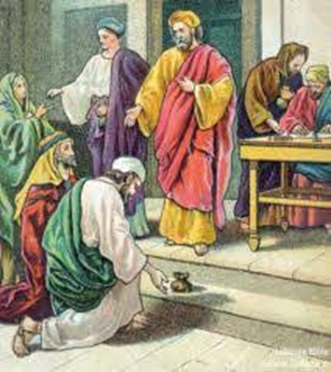
Acts 4:32-37 Now the multitude of those who believed were of one heart and one soul; neither did anyone say that any of the things he possessed was his own, but they had all things in common. And with great power the apostles gave witness to the resurrection of the Lord Jesus. And great grace was upon them all. Nor was there anyone among them who lacked; for all who were possessors of lands or houses sold them and brought the proceeds of the things that were sold and laid them at the apostles’ feet; and they distributed to each as anyone had need.

And Joses, who was also named Barnabas by the apostles (which is translated Son of Encouragement), a Levite of the country of Cyprus, having land, sold it, and brought the money and laid it at the apostles’ feet.

Joses didn’t think he’d done anything very wonderful. Moved by the Holy Spirit, Joses sold some land he had inherited and donated the money to the apostles. Joses was one of those men with a perpetual smile. No matter how bad the weather, no matter how frightening the threats from Jewish religious leaders, no matter how many personal conflicts others were having, Joses continued to smile and deal quietly and effectively with problems. Donating the proceeds from the land sale just seemed to be the right thing to do. Too bad that some others in the church, a couple named Ananias and Sapphira, sold land and then held back some of the proceeds while lying that they were donating the full price just as Joses had done. Those lies resulted in Ananias and Sapphira being struck dead by the Lord.

Say the name “Joses” to most Christians and they won’t recognize it. But say “Barnabas” and lots of people will recognize the name instantly. “Barnabas” means “son of encouragement” and is an affectionate nickname Joses earned by his sunny disposition and his willingness to cheer others on, seeing the best in them. From this point on, Joses would forever be known as Barnabas.

Acts 9:26-30 And when Saul had come to Jerusalem, he tried to join the disciples; but they were all afraid of him and did not believe that he was a disciple. But Barnabas took him and brought him to the apostles. And he declared to them how he had seen the Lord on the road, and that He had spoken to him, and how he had preached boldly at Damascus in the name of Jesus. So he was with them at Jerusalem, coming in and going out. And he spoke boldly in the name of the Lord Jesus and disputed against the Hellenists, but they attempted to kill him. When the brethren found out, they brought him down to Caesarea and sent him out to Tarsus.

“Saul of Tarsus has become a Christian??? Are you kidding me?” Once Saul escaped from Damascus, he immediately made his way to Jerusalem, where he expected the Christians to welcome him with open arms. But these were the same people Saul had recently been persecuting, and they had no intention of trusting this guy. For all the Christians knew, Saul might be play-acting to entice Christians to expose themselves so that Jewish religious leaders could capture them. Only when Barnabas met with Saul and then met with church leaders did the church leaders relax. But the church leaders rapidly realized they had a tiger by the tail, for Saul immediately took on the Hellenists, the very people whose accusations had led to Stephen’s death. Church leadership had to hustle Saul off to the port of Caesarea, where he caught a ship for Tarsus.

Acts 11:19-26 Now those who were scattered after the persecution that arose over Stephen traveled as far as Phoenicia, Cyprus, and Antioch, preaching the word to no one but the Jews only. But some of them were men from Cyprus and Cyrene, who, when they had come to Antioch, spoke to the Hellenists, preaching the Lord Jesus. And the hand of the Lord was with them, and a great number believed and turned to the Lord.

Then news of these things came to the ears of the church in Jerusalem, and they sent out Barnabas to go as far as Antioch. When he came and had seen the grace of God, he was glad and encouraged them all that with purpose of heart they should continue with the Lord. For he was a good man, full of the Holy Spirit and of faith. And a great many people were added to the Lord.

Then Barnabas departed for Tarsus to seek Saul. And when he had found him, he brought him to Antioch. So it was that for a whole year they assembled with the church and taught a great many people. And the disciples were first called Christians in Antioch.

One of the hallmarks of Barnabas’ ministry was his humility. Recognizing that Saul was a brilliant scholar and speaker, Barnabas had no problems recruiting Saul and bringing him to Antioch to teach.

Acts 13:1-5 Now in the church that was at Antioch there were certain prophets and teachers: Barnabas, Simeon who was called Niger, Lucius of Cyrene, Manaen who had been brought up with Herod the tetrarch, and Saul. As they ministered to the Lord and fasted, the Holy Spirit said, “Now separate to Me Barnabas and Saul for the work to which I have called them.” Then, having fasted and prayed, and laid hands on them, they sent them away.

So, being sent out by the Holy Spirit, they went down to Seleucia, and from there they sailed to Cyprus. And when they arrived in Salamis, they preached the word of God in the synagogues of the Jews. They also had John Mark as their assistant.

As a Cypriot, for Barnabas, returning to Cyprus was returning home. And Saul and Barnabas were taking John Mark, a young cousin of Barnabas, with them as an assistant. This first missionary journey would set the tone for the rest of Barnabas’ life, for he would continue traveling, preaching, and encouraging for the rest of his life. When Judaizers tried to force Gentile converts to Christianity to follow Jewish laws, Saul, now Paul, and Barnabas were the ones sent to Jerusalem to settle the matter with church leaders. (Acts 15)

Eventually, Barnabas separated from Paul, not because he disliked him but because Paul refused to take John Mark along on his second missionary journey. John Mark had left Paul and Barnabas at Pamphylia, refusing to accompany them at that point. Paul rejected John Mark as an unreliable quitter, while Barnabas felt John Mark was simply young and inexperienced and had the potential to do far better. Once more, Barnabas was living up to that nickname. Although this dispute created some friction, ultimately, Barnabas and John Mark returned to Cyprus while Paul recruited Silas to accompany him, thus doubling the number of missionary outreach teams.

According to tradition and the apocryphal Acts of Barnabas, Saint Barnabas was martyred around AD 61 in Salamis, Cyprus. He was reportedly stoned to death by Jews who were angered by his successful preaching. Another account suggests he was bound with a rope, dragged, and then burned to death. There’s one thing we can be sure of: Barnabas died trying to point as many people to Jesus as possible, remaining a “son of encouragement” to the very end.

What can we learn from Barnabas? Barnabas was faithful, generous, honest, and humble. Although Barnabas interacted well with people, there’s nothing to indicate that he was unusually wealthy or highly educated. Barnabas demonstrated his humility while recruiting Saul from Tarsus, thus launching Saul’s missionary travels. Barnabas salvaged John Mark’s career as a missionary when Saul would have marked him as a failure. Barnabas continued to see the best in people and to encourage them to live up to the divine standard wherever he went.

Any one of us can be a son or daughter of encouragement. If we eat in a restaurant or buy something in a store and we receive excellent service, my husband will find the supervisor and praise the worker in front of their supervisor. My husband thanks janitors, cleaners, and other service personnel who remain invisible to many passers-by. Kind words and sincere smiles cost nothing but may save lives. There’s a frequently repeated story of a high school kid who was walking home when he noticed one of his classmates carrying a huge load of books. The boy helped carry the books and then invited the other boy back to his home, where they played video games together and then enjoyed supper together. After that day, the boys became friends, sharing meals, playing, and attending school games together. At graduation, the boy who had carried the huge load of books gave a speech as the top student in his class. That was the day that everyone learned that when he was heading home with all his books, he had cleaned out his locker and was going home to kill himself because he felt nobody cared about him. When the second boy helped him and then shared games and a meal with him, the depressed boy changed his mind, rejecting the idea of suicide. You never know when you might become someone else’s lifeline.

PRAYER: Father God, thank You for loving us and caring for us. Lord, help us to become enthusiastic encouragers, knowing that You are the Source of all comfort, all hope, and all joy. In the mighty and precious Name of King Jesus. Amen.