Paul Preaches at Rome under Guard
17 Three days after Paul’s arrival, he called together the local Jewish leaders. He said to them, “Brothers, I was arrested in Jerusalem and handed over to the Roman government, even though I had done nothing against our people or the customs of our ancestors. 18 The Romans tried me and wanted to release me, because they found no cause for the death sentence. 19 But when the Jewish leaders protested the decision, I felt it necessary to appeal to Caesar, even though I had no desire to press charges against my own people. 20 I asked you to come here today so we could get acquainted and so I could explain to you that I am bound with this chain because I believe that the hope of Israel—the Messiah—has already come.”
21 They replied, “We have had no letters from Judea or reports against you from anyone who has come here. 22 But we want to hear what you believe, for the only thing we know about this movement is that it is denounced everywhere.”
23 So a time was set, and on that day a large number of people came to Paul’s lodging. He explained and testified about the Kingdom of God and tried to persuade them about Jesus from the Scriptures. Using the law of Moses and the books of the prophets, he spoke to them from morning until evening. 24 Some were persuaded by the things he said, but others did not believe. 25 And after they had argued back and forth among themselves, they left with this final word from Paul: “The Holy Spirit was right when he said to your ancestors through Isaiah the prophet,
26 ‘Go and say to this people: When you hear what I say, you will not understand. When you see what I do, you will not comprehend. 27 For the hearts of these people are hardened, and their ears cannot hear, and they have closed their eyes—so their eyes cannot see, and their ears cannot hear, and their hearts cannot understand, and they cannot turn to me and let me heal them.’
28 So I want you to know that this salvation from God has also been offered to the Gentiles, and they will accept it.”
30 For the next two years, Paul lived in Rome at his own expense. He welcomed all who visited him, 31 boldly proclaiming the Kingdom of God and teaching about the Lord Jesus Christ. And no one tried to stop him.
You’ve got to hand it to Paul! Here is this guy being guarded by a Roman soldier, having had his life threatened by Jewish religious authorities in Jerusalem. Now Paul is in Rome, and what’s the first thing he does? Paul invites the local Jewish leaders to witness to them. Blessedly, these men haven’t received any reports about Paul specifically; however, they are intensely interested because Christianity has already made its way to Rome and everybody is talking about these crazy people who believe Messiah has already come and that he has risen from the dead.
As a highly-trained scholar, Paul lays out the case for Jesus Christ as Messiah, bolstering his affirmations with extensive Scripture quotes. Those religious leaders who are more interested in truth than in dogma find Paul’s testimony convincing; however, there are also those whose thinking has petrified and for whom dogma is everything. To those people, Paul quotes Isaiah 6:9, God’s warning to Isaiah that many in Israel will refuse to hear Isaiah’s words because of their hardness of heart. So some men leave, revolted that this upstart is preaching about his Messiah while others leave, only to keep returning, hungry to learn more. Paul will continue his teaching unhindered for the next two years, welcoming everyone who comes.
What must it have been like for those scholars truly seeking revelation to meet with Paul? Entering the room, these men might have looked at this small man with his compact frame and wondered how he could influence anybody. That skepticism would only last until Paul began speaking, at which point, his listeners would find themselves riveted by his words. By this point, Paul has had numerous experiences as an instrument of healing and exorcism and has even seen God raise the dead. Surely, Paul would share stories of God’s magnificent work. Paul speaks several languages fluently, so communication with visitors poses few problems. As Paul continues to speak, visitors are first astounded and then convicted. Many leave Paul’s chambers with burning hearts, changed forever by his words. Jews worship in the temple with new spiritual eyes while former pagans worship with other Christians, anxious to learn more about living lives of holiness.
Roman officials might even come to Paul, as spiritually hungry as all the rest. Many of these educated men have already rejected the pantheon of Roman deities, whose lives are anything but exemplary. Now Paul gives these men new visions of true holiness, and they can’t wait to meet with him again and learn more.
Recently, a movie entitled The Great Awakening has appeared. This movie depicts the life of the eighteenth-century evangelist George Whitefield and his complex relationship with Benjamin Franklin. What set Whitefield apart from other preachers was that he spoke to crowds of as many as 30,000 outdoors, witnessing to all who would come. As a trained actor, Whitefield could project his voice, making himself heard in those settings, and people flocked to listen to him. Along with John Wesley, Whitefield was one of those God used in the first Great Awakening in England and in the American colonies. Whitefield’s passion for the Gospel was only matched by the enthusiasm of his listeners, and God moved mightily through Whitefield’s ministry. Although Whitefield was eloquent, it was the Holy Spirit working through Whitefield who convicted stony hearts and brought people to repentance. In the same way, the Holy Spirit moved through Paul.
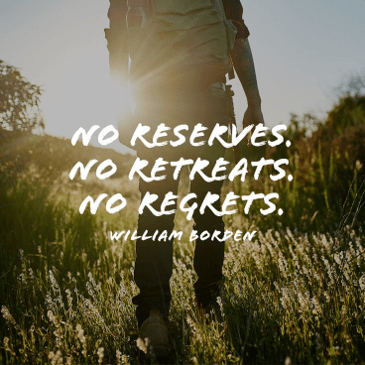
William Borden was born into an extremely wealthy family and could have remained in America, enjoying a life of ease. But Borden had made a gift of himself to God, and he felt called to minister to Muslims in China. Borden was in Egypt, studying Arabic and preparing for ministry when he died tragically from meningitis. Borden is said to have written in his Bible, “No reserve, no retreat, no regrets.” Paul could have said much the same thing, for once he had chosen to follow Jesus, he never wavered.
We read about men like Paul and Whitefield and Borden and think, “Well, those men were wonderful, but I could never do anything like that.” Never say “Never.” In 1980, my husband told his younger brother that he (my husband) could never be a missionary. We left for Ghana the first time in 1988. God is far more interested in what He can put into us than in what He gets out of us, for God knows that once His Holy Spirit is working, miracles can take place. The key to being used is quite simple: Tell God He can have all of you, mean it, and make a gift of yourself to God. Then never take back the gift.
PRAYER: Father God, thank You for loving us and caring for us. Lord, help us to give You all of ourselves completely and irrevocably. In the mighty and precious Name of King Jesus. Amen.


Leave a comment