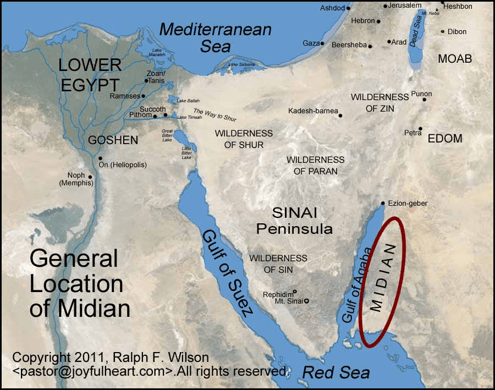
Exodus 2:11 Many years later, when Moses had grown up, he went out to visit his own people, the Hebrews, and he saw how hard they were forced to work. During his visit, he saw an Egyptian beating one of his fellow Hebrews. 12 After looking in all directions to make sure no one was watching, Moses killed the Egyptian and hid the body in the sand.
13 The next day, when Moses went out to visit his people again, he saw two Hebrew men fighting. “Why are you beating up your friend?” Moses said to the one who had started the fight.
14 The man replied, “Who appointed you to be our prince and judge? Are you going to kill me as you killed that Egyptian yesterday?”
Then Moses was afraid, thinking, “Everyone knows what I did.” 15 And sure enough, Pharaoh heard what had happened, and he tried to kill Moses. But Moses fled from Pharaoh and went to live in the land of Midian.
Somehow, Moses had a sense that he would ultimately deliver the Hebrews; however, his idea of timing and God’s were totally different. When Moses sees one Egyptian beating a Hebrew nearly to death, he kills the Egyptian overseer and hides the body. But everybody recognizes Moses and the word spreads throughout the Hebrew community. Pharoah hears of the incident, probably from someone hoping for a reward, and tries to kill Moses, forcing Moses to flee Egypt and run to the land of Midian. What’s wrong with Moses’ ideas? Moses is thinking about individuals; meanwhile, God intends to deliver an entire nation. God always thinks in bigger terms than we do.
When Moses arrived in Midian, he sat down beside a well. 16 Now the priest of Midian had seven daughters who came as usual to draw water and fill the water troughs for their father’s flocks. 17 But some other shepherds came and chased them away. So Moses jumped up and rescued the girls from the shepherds. Then he drew water for their flocks.
18 When the girls returned to Reuel, their father, he asked, “Why are you back so soon today?”
19 “An Egyptian rescued us from the shepherds,” they answered. “And then he drew water for us and watered our flocks.”
20 “Then where is he?” their father asked. “Why did you leave him there? Invite him to come and eat with us.”
21 Moses accepted the invitation, and he settled there with him. In time, Reuel gave Moses his daughter Zipporah to be his wife. 22 Later she gave birth to a son, and Moses named him Gershom, [Gershom sounds like a Hebrew term that means “a foreigner there.] for he explained, “I have been a foreigner in a foreign land.”
When Moses flees Egypt for Midian, all he hopes for is to save his own life. But once more, God has a much larger plan, one that includes taking Moses on a forty-year desert survival training program. Notice something: the shepherd girls Moses encounters are not from any old family but their father is the “priest of Midian.” This family is God-fearing, even if they might call God by a different name. Reul, the priest, takes Moses into his family, acting as a father. Up to this point, Moses has had tutors and has been treated as a son by Pharoah’s daughter; however, he has never experienced a true father-son relationship. Now God places Moses in a traditional close-knit family so that he can experience the love of a father, the affection of a wife and son, and also learn to revere that loving father. Moses experiences the peace possible in a loving family for the first time in his life.
Even the surroundings are peaceful. After the turmoil and intrigue surrounding Pharaoh’s court, Moses finds himself in the open spaces and quiet of the wilderness of Midian, where he might have to battle the weather but he doesn’t have to confront wicked people. That peace seeps into Moses’ soul, and he is content. Moses becomes quiet and thoughtful, weighing his words, refusing to violate the silence. At this point, Moses assumes that he will spend the rest of his life herding sheep in Midian and raising a family there.
God gives Moses forty years of peace in Midian to heal the hurts Moses has suffered. Those forty years also give Moses a sense of perspective, allowing him to evaluate the Egyptian gods and see them for the false deities they actually are. Moses has time to consider his Egyptian experiences, retaining those things of value while discarding everything else. Moses needs to go through this process for eventually, he will lead two million people who have been plucked out of Egypt and dropped into a desert with scanty time to evaluate anything. Moses must be able to function from a position of peace if he is to resist those disruptive influences.
Many of us have been raised to perform and we measure our worth by our achievements. But as one veteran missionary told us, “God is more interested in you as a human BEING, not as a human DOING.” God’s peace is not dependent on our meeting higher and higher standards, and in fact, those very standards can keep us from receiving God’s peace because we can be so focused on our own performance.
Today, why not ask God to give you His peace, the peace that passes understanding? God will certainly give you peace when you seek Him with all your heart.
PRAYER: Father God, thank You for loving us and caring for us. Lord, help us to leave our anxieties to You and be bathed in Your peace. In the mighty and precious Name of King Jesus. Amen.


Leave a Reply